O R I G I N A L R E S E A R C H A R T I C L E
Open Access
It's Time to Start Changing the Game: A
12-Week Workplace Team Sport Intervention
Study
Andrew Brinkley
*, Hilary McDermott, Rachel Grenfell-Essam and Fehmidah Munir
Abstract
Background:A 12-week multi-team sport programme was provided to employees of a large services organisation and conducted in workplaces. This programme was used to investigate the short-term effect of regular sports team participation on individual employee and organisational health.
Methods:A large services organisation participated in this study. Two regional worksites of office workers were assigned as the team sport (intervention) (n =28 participants) or control (n =20 participants) groups. The team sport sessions were underpinned by psychological behaviour change theory and consisted of weekly 1-h team sport sessions for 12 weeks. Measures of aerobic fitness, physical activity behaviour, group cohesion, interaction and communication, psychological wellbeing, health, anthropometrics and workplace experiences were recorded pre-and post-intervention. Data were analysed using a series of mixed ANOVAs.
Results:After 12 weeks significant improvements were observed in VO2max (+ 4.5 ± 5.8 ml/min kg,P< .002,η2p= . 182), interpersonal communication within teams (+ 3%,P< .042,η2p= .087) and mean weekly physical activity duration (+ 154.74′,P< .002,η2p= .071) in the intervention group. A significant (P< .012,η
2
p= .130) effect on body composition was observed in the intervention group.
Conclusions:Participation in team sport may be an effective method to improve the aerobic fitness and physical activity behaviour of employees, and promote interpersonal communication between colleagues. Individual health outcomes and social interactions have the capacity to influence the health of the organisation. The extent of which these findings are replicable across a scope of organisations should be examined objectively over the long term.
Keywords:Communication, Fitness, Health, Quasi-experimental, Wellbeing, Workplace health, Workplace
Key Points
This manuscript presents the first attempt to examine the efficacy of a workplace health promotion programme using a variety of team sports. This programme was the first of its kind implemented in a Financial Times and London Stock Exchange (FTSE 100) company and the first underpinned by self-determination theory. Past workplace team sport studies have examined
markers of health without validated measures. This
study tested the efficacy of workplace team sport across individual, social group and organisational health outcomes.
This study provides support for the use of team sport to promote individual, social group and organisational health within a workplace setting. The findings of this study provide evidence for
employers and occupational health teams considering implementing team sport into their workplaces.
Background
Within Europe, almost half of working age adults are failing to meet physical activity (PA) guidelines [1]. Modifiable inactive behaviours are associated with
non-* Correspondence:[email protected]
School of Sport, Exercise and Health Sciences, National Centre for Sport and Exercise Medicine, Loughborough University, Loughborough, Leicestershire LE11 3TU, UK
communicable diseases (e.g. coronary heart disease and type-2 diabetes) and the prevalence of premature mor-tality [2]. An inactive workplace has been linked with diminished organisational health outcomes, increased sickness absence, reduced productivity and workplace engagement [3]. Workplace PA interventions can posi-tively influence employee and organisational health [3]. Exercise/gym classes, walking, active-transport, educa-tional training, active work stations and activity chal-lenges have been utilised in the workplace with varying degrees of effectiveness [3]. However, research to date is yet to comprehensively examine the efficacy of sport and team sport on health outcomes [4]. Indeed, a further critique of workplace PA literature has been the failure to assess the efficacy of participation against social group and organisational health outcomes (e.g. communica-tion, team performance, job satisfaction) [5].
Participation in workplace team sport has the capacity to improve individual, social group and organisational health outcomes [4]. Several randomised control trial (RCT) and quasi-experimental studies demonstrate that participation in competitive or non-competitive team sports can significantly improve cardiorespiratory fitness, musculoskeletal function [6–9] and psychological well-being [10]. These factors have the capacity to contribute to the reduced prevalence of non-communicable diseases associated with sickness absence, diminished productivity and all-cost mortality [2–5]. Qualitative studies suggest participation in team sports may also improve workplace relationships, communication and team cohesion [11–14]. Improvements in individual health and social group outcomes are known to contribute to the function of the organisation [3]. However, perhaps due to a limited level of funding and expertise, and the non-clinical community setting (i.e. the workplace), the research examining partici-pation in team sport has been limited by the reliance on qualitative methods (e.g. focus groups and individual interviews) and interventions that lack strong theoretical underpinnings [4]. Researchers are yet to examine the impact of participation in workplace team sport on social group health outcomes (e.g. cohesion, communication, interpersonal relationships) with validated measures. Furthermore, the type of sport played is reported in most manuscripts but not the intensity it is played at, or the dur-ation, volume and frequency of participation [11–14]. This challenges researchers in determining what ‘dose’of team sport equals the benefits reported in the literature [4].
Participation in team sport is challenged by social com-parisons with colleagues and superiors, the organisational culture and the facilities available within the workplace [15], and psychological barriers relating to autonomy, competence and relatedness [15, 16]. Self-determination theory (SDT) [17] suggests supporting people’s innate needs for autonomy (i.e. feeling free and fully volitional to
engage in team sport), competence (i.e. feeling capable to complete a skill in team sport) and relatedness (i.e. feeling supported, understood and valued by a social group) through the provision of an activity (e.g. team sport) may promote wellbeing and autonomous motivation [14–16]. Good evidence indicates supporting basic needs is an effective behaviour change strategy within a workplace, sports and exercise setting [15–17]. For these reasons, workplace team sport interventions should be under-pinned by behaviour change theories with a focus on the social environment [15–17].
This study evaluated the impact of a workplace team sport intervention (i.e. ‘Changing the Game’; CTG) underpinned by SDT. The primary intention of this study was to examine the impact of CTG on aerobic fitness (estimated VO2max). Secondary intentions were
to investigate participation in CTG’s impact on individ-ual, social group and organisational health outcomes. These included subjective vitality, leisure-time PA, quality of life, occupational stress and fatigue, group cohesion, relationships with superiors and colleagues, communication, job satisfaction, individual and team job performance, and work engagement.
The intervention study was evaluated using a process evaluation underpinned by the RE-AIM approach [18]. This was conducted to evaluate the effectiveness of the intervention approach and its theoretical underpinning [18] and will be reported elsewhere (i.e. findings due for publication in late 20171).
Methods
Design
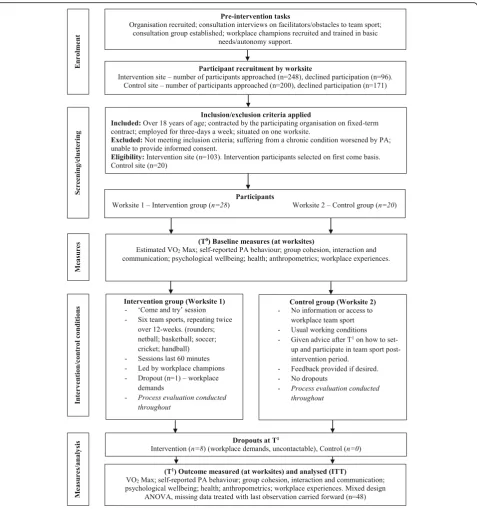
The intervention was a 12-week non-randomised study (quasi-experimental design), which comprised two regional worksites from the same large service organisation (located an estimated 130 km apart). One worksite was assigned to the CTG (intervention group), while the other continued with normal working conditions (control group). Non-randomised intervention designs in health promotion are frequently adopted where feasibility and practicality issues challenge implementation [19]. In the current study, access to a local sport facility determined the intervention site. The participants were measured pre- (T0) and post- (T1) intervention at their respective workplaces. A schematic overview of the study’s design, recruitment and attrition rate is provided in Fig. 1. Ethical approval was obtained from Loughborough University’s Ethical Advisory Panel (Human Participants sub-committee). The study conforms to and was conducted in accordance with the Declaration of Helsinki.
Intervention
(30 m × 18 m) located 400 m from the participating or-ganisation. The sessions were funded by the researchers’ university and consisted of rounders (weeks 1 and 7), netball (weeks 2 and 8), basketball (weeks 3 and 9), soc-cer (weeks 4 and 10), cricket (weeks 5 and 11) and hand-ball (weeks 6 and 12). The sessions included a 10-min warm-up and familiarisation period, and a 40-min game (breaks given when requested by participants). The sports were chosen by the research team due to their
moderate-intensity, transferability of skills and adaptabil-ity. Evidence suggests sports with transferable skills may support the needs for competence [15–17]. The sessions were delivered by two female workplace champions trained by the first author in the basic rules of each sport and in supporting basic needs for autonomy, competence and relatedness in their sports participation (training information available on request from the corresponding author). Prior to the intervention
participants were invited to take part in a taster session to help minimise perceptions of negative competence [15–17]. Throughout the CTG sessions, participants were encouraged to place an emphasis on having fun, to reflect on their individual and team skills development and social growth rather than competition and perform-ance. Workplace champions discussed the potential ben-efits of participating in team sport with the participants who were able to opt out of any stage of the team sport sessions. Participants were given the opportunity to take ownership and alter any rule, skill or tradition associated with the sports as a team. This supportive leadership style can promote autonomous motivation and adher-ence to participation [15–17]. Adaptations made to the rules of each sport (e.g. removing double dribbles in bas-ketball) has the capacity to support a participant’s need for competence, provide self-efficacy and promote the adoption of more autonomous forms of motivation (i.e. identified, integrated and intrinsic regulation) [17]. Needs for relatedness refer to the development and maintenance of interpersonal relationships with individ-uals (e.g. colleagues) and within workplace teams or groups [16, 17]. Relatedness may have been fostered through the social support, group identity and cohesion of colleagues and superiors playing team sports [15–17].
Participants
A services organisation listed on the Financial Times and London Stock Exchange (FTSE) 100 located in the UK participated in this study. This organisation has a global workforce of 7048 employees (5080 operate in UK), across multiple worksites with employees in predominately office-based roles. This organisation was selected based on its size and structure and was recruited by email. A consultation group of employees, managers, workplace champions and employer represen-tatives guided the intervention through a participatory approach [20]. The role of the consultation group was to advise on challenges specific to the participating organ-isation and discuss the implementation, delivery and evaluation of the programme within their organisation. Regular meetings were conducted with this working group throughout the intervention period.
Criterion-based sampling based on the inclusion and exclusion criteria was adopted.
Participants were recruited between May and June 2016, within the organisation through email, social media notifications and posters that outlined the pur-pose of the study. To ensure participants were motivated to participate, employees in both the intervention and control groups were recruited under the assumption they may be receiving team sport through their work-place. The intervention group was selected by access to a sports hall. More specifically, the intervention group
was selected by its proximity to a sports hall, while the control group was selected from an isolated worksite. The control group did not have regular interactions with the intervention worksite. Employees interested in par-ticipating were sent an electronic or paper copy of the information sheet and informed consent form. Informed consent was obtained from all individual participants included in the study. Participants were screened and excluded from participation if they were under 18 years of age, were sub-contracted by another organisation, were contracted to work less than 3 days-a-week, had planned absences during the intervention period or were unable to provide informed consent. Following comple-tion of the study, the control group was provided infor-mation on how to participate in workplace team sport.
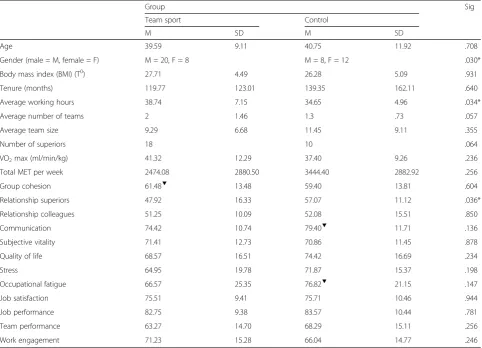
Twenty eight participants (n= 8 females) in the inter-vention group were aged between 24 to 56 years (39.59 ± 9.11), and 20 participants (n = 12 females) in the control group age ranged between 24 to 64 years (40.75 ± 11.92). All participants worked within a team and represented a range of office-based job roles and levels of superiority (25% were in positions of superior-ity). The proportion of female participants (29%) reflects the proportion of females working within the organisa-tion (i.e. 30% reported in 2016 annual report). Addiorganisa-tional demographics are provided in Table 1.
Measures
Primary Outcome Measure
Estimated maximal oxygen consumption (i.e. VO2max)
was recorded through a Chester step test (CST) [21]. The CST was conducted in accordance with a validated protocol [21]. Participants stepped on/off a 30-cm high exercise step until 80% MHR. Exercise heart rate was measured by a Polar™ T31 monitor and watch, and perceived exertion was indicated with the 15-point Borg scale [22]. The CST offers a feasible and ecologically valid means to examine maximal oxygen uptake with working age adults in community settings without discouraging participants prior to the intervention [23]. The CST was selected based on its re-test reliability [23]. A recent review [23] concluding the CST offers the most valid estimation of maximal oxygen uptake when compared to other step test protocols. The CST has correlated strongly (r = 0.92) with the output of VO2
max gas analysis conducted on a maximal oxygen usage treadmill test [21].
Secondary Outcome Measures
estimated the total metabolic equivalent of task (MET) [24]. A self-report diary provided the day-to-day vari-ation in frequency and durvari-ation of PA over the interven-tion period. PA diaries have strongly correlated with the output of objective measures of PA on indicators of dur-ation (r = 0.82) [25]. Sub-scales from the Copenhagen Psychosocial Questionnaire-II were used to measure social cohesion and interpersonal relationships within the workplace [26]. Interpersonal communication within workplace teams was captured using five items reported in another study (Cronbach alpha = .95) [27]. Wellbeing was assessed using the Subjective Vitality Scale [28]; quality of life was measured with the Satisfaction with Life Scale [29]; the Perceived Stress Scale [30] measured self-reported stress; and occupational fatigue was assessed with the Need for Recovery Scale [31]. Job satisfaction was assessed with the Single-Item of Job Satisfaction [32]. Perceptions of individual job perform-ance (four items) were measured on 5-point Likert scale [33]. Team performance was measured with the ‘team effectiveness’sub-scale of the Aston Team Performance Inventory [34]. The Utrecht Work Engagement Scale
(short form) captured work engagement [35]. All mea-sures using scales were delivered in paper form and completed by hand.
Data Analysis
A meta-analysis found medium Cohen’s effect sizes ranging from d = .47 to .57 for objectively estimated assessments of VO2max [5]. A power calculation using
G*Power [36] indicated 36 participants were required to observe a medium effect in the primary outcome, where
f= .25, power is .95 and the error of probability is set at .05. A 35% attrition rate was applied. Analysis was con-ducted using IBM SPSS Statistics version 23, andP< .05 was considered statistical significant. Outliers were win-sorized to the nearest non-outlying value. Self-reported items are represented with 0–100 scores (i.e. 0 is unfavourable). Normality was assessed through a Shapiro-Wilk test. Typically, data were normally distrib-uted; however, where this is not the case, this is indi-cated in tables with a ▼. The magnitude of change is represented by a 95% confidence interval. Differences at T0were assessed using a series of independent samplet
Table 1Participant demographic and baseline data (T0)
Group Sig
Team sport Control
M SD M SD
Age 39.59 9.11 40.75 11.92 .708
Gender (male = M, female = F) M = 20, F = 8 M = 8, F = 12 .030*
Body mass index (BMI) (T0) 27.71 4.49 26.28 5.09 .931
Tenure (months) 119.77 123.01 139.35 162.11 .640
Average working hours 38.74 7.15 34.65 4.96 .034*
Average number of teams 2 1.46 1.3 .73 .057
Average team size 9.29 6.68 11.45 9.11 .355
Number of superiors 18 10 .064
VO2max (ml/min/kg) 41.32 12.29 37.40 9.26 .236
Total MET per week 2474.08 2880.50 3444.40 2882.92 .256
Group cohesion 61.48▼ 13.48 59.40 13.81 .604
Relationship superiors 47.92 16.33 57.07 11.12 .036*
Relationship colleagues 51.25 10.09 52.08 15.51 .850
Communication 74.42 10.74 79.40▼ 11.71 .136
Subjective vitality 71.41 12.73 70.86 11.45 .878
Quality of life 68.57 16.51 74.42 16.69 .234
Stress 64.95 19.78 71.87 15.37 .198
Occupational fatigue 66.57 25.35 76.82▼ 21.15 .147
Job satisfaction 75.51 9.41 75.71 10.46 .944
Job performance 82.75 9.38 83.57 10.44 .781
Team performance 63.27 14.70 68.29 15.11 .256
Work engagement 71.23 15.28 66.04 14.77 .246
tests. The primary and secondary outcomes were assessed using mixed design ANOVAs under the intention-to-treat principle [37]. Missing data were treated with the last ob-servation carried forward method. For clarity, data were also examined with a series of mixed design ANCOVAs controlling for T0 data, gender, age, BMI and average working hours. These returned no contrasting findings. Significant findings were followed up with paired samplet
tests. Data is represented by mean ± standard deviation.
Results
Observations at Baseline (T0)
Participant demographic data at baseline is presented in Table 1. The number of participants differed on a week-by-week basis (between 12 and 27 participants). One participant dropped out without attending any sessions. A series of independent sample t test found that at T0 the intervention and control groups did not significantly differ on the primary outcome of estimated VO2max, or
on any of the secondary outcomes apart from relation-ships with superiors (P < .036). The groups did not significantly differ in age, tenure, average team size, number of workplace teams or superiority. However, the
groups did significantly differ on gender (P < .03) and average hours worked (P< .034). More specifically, 29% of the intervention group were female, while 60% of the control group were female. The control group worked 4.0907 h less per week than the intervention group. These were controlled for in the subsequent analysis.
Main Analysis
Primary Outcome
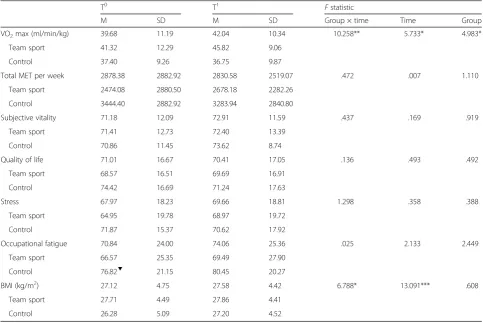
Participation in workplace team sport significantly improved estimated VO2max (P< .002,η2p= .182), when compared to
the control group (see Table 2). A mixed design ANOVA captured a group × time interaction for mean estimated VO2 max (see Fig. 2). Follow-up paired samples t test
observed a significant (P < .0001, d = .774) increase in estimated VO2max of 4.5 ± 5.80 ml/min/kg (95% CI 2.248–
6.752) in the intervention group. However, a non-significant reduction (P < .568,d= .129) of .65±5.00 ml/min/kg (95% CI−2.299–1.694) was observed in the control group.
Secondary Outcomes
A mixed design ANOVA revealed a significant group × time interaction on PA duration (minutes) (P < .002,
Table 2Individual health outcomes for the team sport (intervention) and control groups assessed at baseline (T0) and at the end of the intervention (T1)
T0 T1 Fstatistic
M SD M SD Group × time Time Group
VO2max (ml/min/kg) 39.68 11.19 42.04 10.34 10.258** 5.733* 4.983*
Team sport 41.32 12.29 45.82 9.06
Control 37.40 9.26 36.75 9.87
Total MET per week 2878.38 2882.92 2830.58 2519.07 .472 .007 1.110
Team sport 2474.08 2880.50 2678.18 2282.26
Control 3444.40 2882.92 3283.94 2840.80
Subjective vitality 71.18 12.09 72.91 11.59 .437 .169 .919
Team sport 71.41 12.73 72.40 13.39
Control 70.86 11.45 73.62 8.74
Quality of life 71.01 16.67 70.41 17.05 .136 .493 .492
Team sport 68.57 16.51 69.69 16.91
Control 74.42 16.69 71.24 17.63
Stress 67.97 18.23 69.66 18.81 1.298 .358 .388
Team sport 64.95 19.78 68.97 19.72
Control 71.87 15.37 70.62 17.92
Occupational fatigue 70.84 24.00 74.06 25.36 .025 2.133 2.449
Team sport 66.57 25.35 69.49 27.90
Control 76.82▼ 21.15 80.45 20.27
BMI (kg/m2) 27.12 4.75 27.58 4.42 6.788* 13.091*** .608
Team sport 27.71 4.49 27.86 4.41
Control 26.28 5.09 27.20 4.52
η2
p= .071) (see Table 2). The intervention group
partici-pated in significantly (P < .006) more PA per week than the control group (154.74 min) (95% CI 47.36–261.85). A mixed design ANOVA detected a significant group × time interaction on communication (P< .042,η2p= .087)
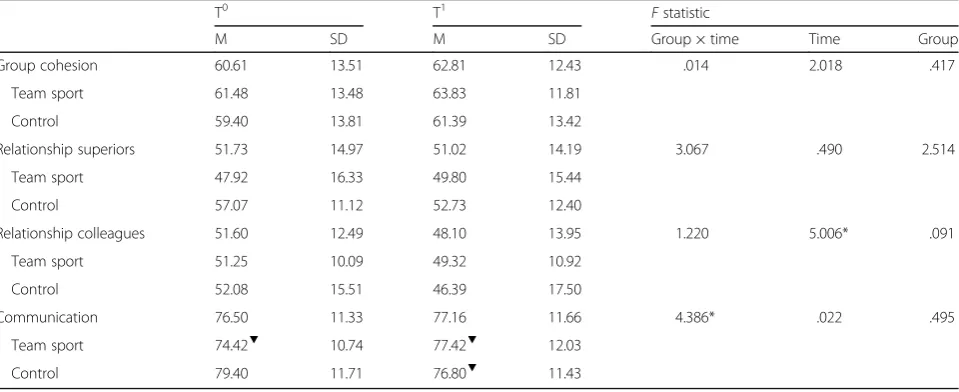
(see Table 3). A follow-up paired samplesttest observed a non-significant improvement (P< .85, d= .337) of 3.0 in interpersonal communication within workplace teams (95% CI −.446–6.446) in the intervention group and a non-significant (P< .235, d= .274) decrease of 2.6 (95% CI −7.033–1.833) in the control group (see Fig. 3). A significant interaction was identified on relationships with colleagues over time only (P< .045,η2p= .085) (see
Table 3). Further, a mixed design ANOVA captured a group × time interaction for mean BMI (P < .012,
η2
p = .130) (see Table 2). A follow-up paired samples t
test observed a minor non-significant (P < .203,
d= .246) increase in BMI of .146 ± .593 kg/m2(95% CI .0837–.3765) in the intervention group. However, a significant (P < .008, d = .658) increase in BMI of .920 kg/m2 (95% CI .2659–1.574) was observed in the control group. All other secondary outcome variables were non-significant for group, time or group × time (see Tables 2, 3 and 4).
Discussion
Summary of Findings
This non-randomised intervention study examined the impact of participating in workplace team sport upon a primary outcome of estimated VO2max and secondary
outcomes of individual, social group and organisational health. To our knowledge, this intervention study
Fig. 2Interaction effect between T0and T1for intervention and control group on estimated VO
2max (ml/min/kg). Error bars represent standard error
Table 3Social group outcomes for the team sport (intervention) and control groups at baseline (T0) and at the end of the intervention (T1)
T0 T1 Fstatistic
M SD M SD Group × time Time Group
Group cohesion 60.61 13.51 62.81 12.43 .014 2.018 .417
Team sport 61.48 13.48 63.83 11.81
Control 59.40 13.81 61.39 13.42
Relationship superiors 51.73 14.97 51.02 14.19 3.067 .490 2.514
Team sport 47.92 16.33 49.80 15.44
Control 57.07 11.12 52.73 12.40
Relationship colleagues 51.60 12.49 48.10 13.95 1.220 5.006* .091
Team sport 51.25 10.09 49.32 10.92
Control 52.08 15.51 46.39 17.50
Communication 76.50 11.33 77.16 11.66 4.386* .022 .495
Team sport 74.42▼ 10.74 77.42▼ 12.03
Control 79.40 11.71 76.80▼ 11.43
represents the first attempt to examine the impact of a multi-team sport programme within a workplace setting on multiple indicators of health.
A 10.32% increase in VO2 max was observed in the
intervention group. Other intervention studies examin-ing the impact of workplace soccer on aerobic fitness have observed improvements of 5% [8, 9]. Improvements in VO2 max are attributable to the prolonged exposure
to high-intensity PA (HIPA) [9, 38]. HIPA improves cardiac output and skeletal muscle oxidation and capillarisation [8, 9, 38]. Decreased VO2 max (−1.75%)
in the control group may be explained by the sedentary job roles performed by these employees [2]. A previous review of research with intervention designs suggests sedentary behaviour has a detrimental impact on cardiac output [2].
Team sport may have a protective effect on BMI. Increases in the control group’s BMI (3.5%) may be at-tributable to the increased plasma glucose, triglycerides, lipoprotein and waist circumference associated with sed-entary job roles [2]. Increases in energy expenditure in the intervention group may have caused participants to compensate by increasing nutritional intake and there-fore BMI (.54%) [39]. This finding should be treated with caution given the absence of an RCT design, biomarkers, DEXA scans, skinfolds and nutritional intake. Adopting these measures may draw firmer conclusions.
Non-randomised (quasi-experimental) designs are however robust [18]. An RCT design may have been unethical, unfeasible or unrealistic to promote health within this workplace setting [18]. Likewise, quasi-experimental designs are effective at evaluating the
Fig. 3Interaction effect between T0and T1for intervention and control group on interpersonal team communication. Error bars represent standard error
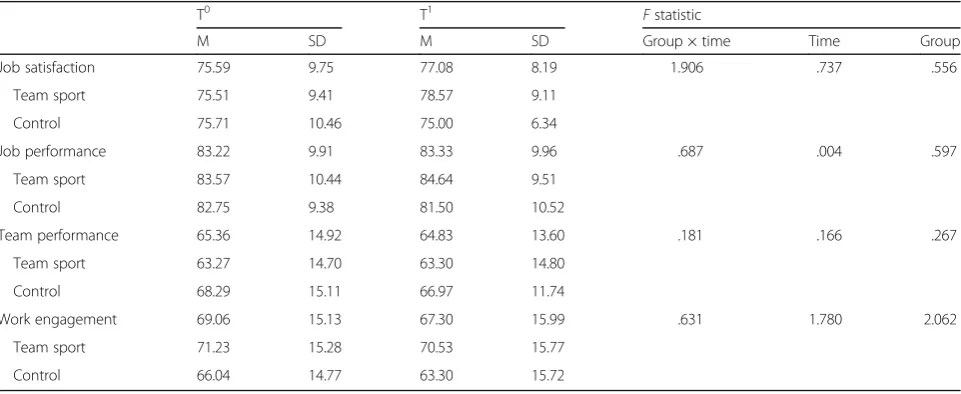
Table 4Organisational health outcomes for the team sport (intervention) and control groups at baseline (T0) and at the end of the intervention (T1)
T0 T1 Fstatistic
M SD M SD Group × time Time Group
Job satisfaction 75.59 9.75 77.08 8.19 1.906 .737 .556
Team sport 75.51 9.41 78.57 9.11
Control 75.71 10.46 75.00 6.34
Job performance 83.22 9.91 83.33 9.96 .687 .004 .597
Team sport 83.57 10.44 84.64 9.51
Control 82.75 9.38 81.50 10.52
Team performance 65.36 14.92 64.83 13.60 .181 .166 .267
Team sport 63.27 14.70 63.30 14.80
Control 68.29 15.11 66.97 11.74
Work engagement 69.06 15.13 67.30 15.99 .631 1.780 2.062
Team sport 71.23 15.28 70.53 15.77
Control 66.04 14.77 63.30 15.72
efficacy of interventions and may be preferred due to feasibility, and the practical challenges of conducting a controlled design [18].
CTG did improve interpersonal communication within teams over time (3% in intervention group). This finding provides the first empirical support for several qualita-tive studies exploring the benefits of participation in workplace team sport [10–13]. Improvements in com-munication may be explained by the time employees spent together participating in an activity of common interest with shared goals [10]. Qualitative evidence indi-cates employees learn more about their colleagues’ com-munication style in a non-work environment with shared goals [10–13].
The employees in this study did not exclusively partici-pate with their day-to-day colleagues, and therefore, the effect on working relationships, cohesion and team productivity may have been confounded. Future investi-gations examining workplace team sport may consider re-examining social group outcomes with a cluster RCT design whereby individual work teams are clustered into study arms. Although markers of individual health out-comes (e.g. psychological wellbeing) and organisational health outcomes (e.g. job satisfaction, productivity, work-engagement) did not significantly improve follow-ing participation, it would be unwise to suggest that team sport does not influence individual and organisa-tional health. Rather, post hoc power analysis using G*Power [36] revealed most secondary outcome mea-sures were unpowered (apart from quality of life) and unable to detect a significant interaction. Quality of life has shown to be a subjective state, and therefore, our findings may have been confounded by factors internal (e.g. salary, working practises) and external (e.g. personal relationships, lifestyle choices) [40] to the intervention. It may be of interest to researchers to re-examine markers of individual and organisational health with ad-equately powered outcome measures through day level (i.e. directly pre-post team sport) and over the long term (e.g. 6 months, 12 months).
Limitations
The participants in this study represent a one large pri-vate services organisation. To prevent contamination, care was taken to select two isolated regional worksites. The groups did however differ in gender and average working hours at T0. Therefore, the study groups may not have been counterfactual. Given the absence of a RCT design and these differences between the groups, the results may have been confounded and caution should be applied when interpreting these findings. Al-though CTG was successful at recruiting female partici-pants, only 29% of the intervention group were female. While this figure is proportionate to the number of
females who work in the organisation (30% reported in 2016 annual report), researchers still may wish to under-stand why less female employees participate in team sport with their colleagues. Likewise, 89% of intervention group and 85% of control group participants reported meeting PA guidelines [1]. This figure is higher than the national average for working-age adults (67% of males, 55% of females). This may suggest workplace team sport attracts primarily active employees, rather inactive em-ployees at risk of non-communicable illnesses and dis-eases. Future research may consider investigating the impact of workplace team sport with inactive employees. A further limitation is the low number of employees initially recruited into a fully funded study from a large organisation. The current study’s process evaluation in-dicates recruitment over a 1-month period and ineffect-ive communication strategy reduced the reach of the programme (process evaluation due for publication in 20171). Intrapersonal, interpersonal, organisational and environmental factors may have facilitated participation or created obstacles for attendance [15]. Consistent with previous qualitative research, workplace demands, cul-ture and practises challenged the consistent participation of employees [15]. Future research should continue to account for these factors using a participatory approach to implementation [20].
PA behaviour may be influenced by team sport partici-pation over time. While the IPAQ and self-reported diary provide adequate psychometric properties, future research measuring PA would benefit from the addition of objective measures [41]. To maintain self-efficacy and competence, the current study avoided examination of sport intensity with heart rate monitors. While logical, this is a limitation of the study. Further, research may consider measuring intensity with heart rate monitors or perceived exertion (RPE) (e.g. the Borg Scale). Finally, data representing communication and occupational fa-tigue was not normally distributed and should be treated with caution. Future research may consider readdressing team sports impact on these outcomes.
Conclusions
understand why employees choose to participate in team sport and promote programmes which encourage participation. The current study suggests this may be achieved by promoting team sports which are supportive of autonomy, competence and relatedness. Researchers should consider testing the efficacy of a multi-team sport programme within a workplace setting over the long term with cluster RCT designs (i.e. randomise on work-place team level) and further objective measures of health (e.g. objective measures of physical activity, skin-fold, DEXA scans, sickness absence).
Endnotes 1
The process evaluation referenced in this article is due for publication in 2017. More specifically, this study is under-review at the time of acceptance of the current study. The process-evaluation provides further detail and information regarding the CTG’s reach, efficacy, adoption (e.g. participant adherence), implementation (e.g. theoret-ical underpinnings) and potential maintenance.
Acknowledgements
The authors of this study would like to thank the participants who took part in this study.
This activity was conducted under the auspices of the National Centre for Sport and Exercise Medicine (NCSEM) England. The NCSEM is a collaboration between several universities, NHS trusts and sporting and public bodies. The research was supported by the National Institute for Health Research (NIHR) Leicester Biomedical Research Centre, which is a partnership between University Hospitals of Leicester NHS Trust, Loughborough University and the University of Leicester. The views expressed are those of the authors and not necessarily those of the NCSEM, NHS, the NIHR or the Department of Health.
Funding
The project of which the intervention is a part of was a fully funded studentship by the authors’university.
Authors’Contributions
AB, HM and FM designed the study. AB recruited, collected measures and managed the intervention. AB and RGE conducted the analysis. All authors contributed to the manuscript and interpretation of the results.
Ethics Approval and Consent to Participate
All procedures performed in the studies involving human participants were in accordance with the ethical standards of Loughborough University’s Ethical Advisory Panel (Human Participants sub-committee). The study conforms to and was conducted in accordance with the 1964 Helsinki declaration and its later amendments, and comparable ethical standards.
Competing Interests
Andrew Brinkley, Hilary McDermott, Rachel Grenfell-Essam and Fehmidah Munir declare that they have no conflicts of interest relevant to this intervention study.
Publisher’s Note
Springer Nature remains neutral with regard to jurisdictional claims in published maps and institutional affiliations.
Received: 24 April 2017 Accepted: 14 August 2017
References
1. Townsend N, Wickramasighe K, Williams J, Bhatnager P, Rayner M. Physical activity statistics 2015. London: British Heart Foundation; 2015.
2. Hamilton MT, Healy GN, Dunstan DW, Zderic TW, Owen N. Too little exercise and too much sitting: inactivity physiology and the need for new recommendations on sedentary behaviour. Curr Cardiovasc Risk Reps. 2012; 2(4):292–8. doi: 10.1007/s12170-008-0054-8
3. Batt ME. Physical activity interventions in the workplace: the rationale and future direction for workplace wellness. Br J of Spor Medi. 2009;43(1):47–8. doi: 10.1136/bjsm.2008.053488
4. Brinkley A, McDermott H, Munir F. What benefits does team sport hold for the workplace? A systematic review. J Spor Sci. 2017;35(2):136–48. doi: 10. 1080/02640414.2016.1158852
5. Conn VS, Hafdahl AR, Cooper PS, Brown LM, Lusk SL. Meta-analysis of workplace physical activity interventions. Am J Prev Med. 2009;37(4):330–9. doi: 10.1016/j.amepre.2009.06.008
6. Barene S, Holtermann A, Oseland H, Brekke OL, Krustrup P. Effects on muscle strength, maximal jump height, flexibility and postural sway after soccer and zumba exercise among female hospital employees: a 9-month randomised control trial. J Spor Sci. 2016; doi: 10.1080/026404414.2016. 1140906
7. Barene S, Krustrup P, Holtermann A. Effects of the workplace health promotion activities soccer and zumba on muscle pain, work ability and perceived physical exertion among female hospital employees. PLoS One. 2014;9(12) doi: 10.1371/journal.pone.0115059
8. Barene S, Krustrup P, Brekke OL, Holtermann A. Soccer and Zumba as health-promoting activities among female hospital employees: a 40-weeks cluster randomized intervention study. J Spor Sci. 2014;32(16):1539–49. doi: 10.1080/02640414.2014.906043
9. Barene S, Krustrup P, Jackman SR, Brekke OL, Holtermann A. Do soccer and Zumba exercise improve fitness and indicators of health among female hospital employees? A 12-week RCT. Scand J Med Sci Spor. 2013;24(6):990–9. doi: 10.1111/sms.12138
10. Scherrer P, Sheridan L, Sibson R, Ryan MM, Henley N. Employee engagement with a corporate physical activity program: the global corporate challenge. Inter J Bus Stud. 2010;18(1):125–39.
11. Joubert YT. Sports contribution to open communication in a workplace: a qualitative study. J Psych Afr. 2014;24(2):203–6. doi: 10.1080/14330237. 2014.903072
12. Joubert YT, De Beer H. Experiences of employees who participate in organisational team sport activities. J Emerg Trends Econo Manag Sci. 2010; 1(1):51–9.
13. Joubert YT, De Beer JJ. Benefits of team sport for organisations. S Afr J Res Spor Phys Educ Recreat. 2011;33(3):59–72.
14. Lee AL. Sports in the workplace do they pay? In: Diamant L, editor. Psychology of sports, exercise, and fitness: social and personal issues. New York: Hemisphere Publishing Corporation; 1991. p. 167–86.
15. Brinkley A, Freeman J, McDermott H, Munir F. What are the facilitators and obstacles to participation in workplace team sport? A qualitative study. AIMS Pub Heal. 2017;4(1):94–126. doi: 10.3934/publichealth.2017.1.94 16. Gucciardi DF, Jackson B. Understanding sport continuation: an integration
of the theories of planned behaviour and basic needs theory. J Sci Med Spor. 2015;18(1):31–6. doi: 10.1016/j.jsams.2013.11.011
17. Deci EL, Ryan RM. The“what”and“why”of goal pursuits: human needs and the self-determination of behavior. Psycho Inqu. 2000;11(4):227–68. doi: 10. 1207/S15327965PLI1104_01
18. Dzewaltowski DA, Glasgow RE, Klesges LM, Estabrooks PA, Brock E. RE-AIM: evidence-based standards and a web resource to improve translation of research into practice. Ann Behav Med. 2004;28(2):75–80. doi: 10.1207/ s15324796abm2802_1
19. Schelvis RMC, Oude Hengel KM, Burdorf A, Blatter A, Strijk JE, van der Beek AJ. Evaluation of occupational health interventions using a randomized controlled trial: challenges and alternatives research designs. Scand J Work Environ Heal. 2015;41(5):491–503.
20. Nielsen K, Randall R, Holten AL, González ER. Conducting organisational-level occupational health interventions: what works? Work Stress. 2010;24(3): 234–59. doi: 10.1080/02678373.2010.515393
21. Sykes K, Roberts A. The Chester step test—a simple yet effective tool for the prediction of aerobic capacity. Physiother. 2004;90(4):183–8.
22. Borg G. Psychophysical scaling with applications in physical work and the perception of exertion. Scand J Work Environ Heal. 1990;16(1):55–8. 23. Bennett H, Parfitt G, Davidson K, Eston R. Validity of submaximal step tests
24. Craig CL, Marshall AL, Sjöström M, Bauman AM, Booth ML, Ainsworth BE, et al. International physical activity questionnaire: 12 country reliability and validity. Med Sci Spor Exerc. 2003;195(9131/03):3508–1381. doi: 10.1249/01. MSS.0000078924.61453.FB
25. Connor SO, McCafferey N, Whyte E, Moran K. The novel use of a SenseCam and accelerometer to validate training load and training information in self-recall training diary. J Spor Sci. 2016;34(3):303–10. doi: 10.1080/02640414. 2015.1050600
26. Kristensen TS. A new tool for assessing psychosocial work environment factors: the Copenhagen psychosocial questionnaire. In M Hagberg, B Knave, L Lillienberg, H Westberg (Ed’s). x2001—expo and assess in Epidem and Pract. 2001; 210-213.
27. González-Romá V, Hernández A. Climate uniformity: its influence on team communication quality, task conflict, and team performance. J Appl Psych. 2014;99(6):1042–58. doi: 10.1037/a0037868
28. Frederick CM, Ryan RM. Differences in motivation for sport and exercise and their relations with participation and mental health. J Spor Behav. 1993;16(3):124.
29. Diener E, Emmons RA, Larsen RJ, Griffin S. The satisfaction with life scale. J Pers Assess. 1985;49(1):71–5. doi: 10.1207/s15327752jpa4901_13 30. Cohen S, Kamarck T, Mermelstein R. A global measure of perceived stress.
J Heal Soci Behav. 1983;24(4):385–96. doi: 10.2307/2136404
31. Veldhoven VM, Broersen S. Measurement quality and validity of the “need for recovery scale”. Occup Environ Med. 2003;60(1):3–9. doi: 10. 1136/oem.60.suppl.1.i3
32. Dolbier CL, Webster JA, McCalister KT, Mallon MW, Steinhardt MA. Reliability and validity of a single-item measure of job satisfaction. Am J Heal Promot. 2005;19(3):194–8. doi: 10.4278/0890–1171-19.3.194
33. Munir F, Houdmont J, Clemes S, Wilson K, Kerr R, Addley K. Work engagement and its association with occupational sitting time: results from the Stormont study. BMC Publ Heal. 2015;15(1):30. doi:10.1186/s12889-015-1427-9 34. West MA, Markiewicz L, Dawson JF. Aston team performance inventory:
management set. London: ASE; 2006.
35. Schaufeli WB, Bakker AB, Salanova M. The measurement of work engagement with a short questionnaire a cross-national study. Educ Psych Meas. 2006;66(4):701–16. doi: 10.1177/0013164405282471
36. Faul F, Erdfelder E, Lang AG, Buchner A. G*Power 3: a flexible statistical power analysis program for the social, behavioural, and biomedical sciences. Behav Res Meth. 2007;39(2):175–91. doi: 10.3758/BF03193146
37. Elkins MR, Moseley AM. Intention-to-treat analysis. J Phys 2015; 61(3): 165-167. doi: 10.1016/j.jphys.2015.013.
38. Krustrup P, Christensen JF, Randers MB, Pedersen H, Sundstrup E, Jakobsen MD, et al. Muscle adaptations and performance enhancements of soccer training for untrained men. Eur J Appl Physiol. 2010;108(6):1247–58. doi: 10. 1007/s00421-009-1319-8
39. King NA, Horner K, Hills AP, Byrne NM, Wood RE, Bryant E, et al. Exercise, appetite and weight management: understanding the compensatory responses in eating behaviour and how they contribute to variability in exercise-induced weight loss. Br J Spor Med. 2012;46(5):315–22. doi: 10. 1136/bjsm.2010.082495
40. Gill DL, Hammond CC, Reifsteck EJ, Jehu CM, Williams RA, Adams MM, et al. Physical activity and quality of life. J Prev Medi Publ Heal. 2013;46(1):28–34. doi: 10.3961/jpmph.2013.46.S.S28
41. Kelly P, Fitzsimons C, Baker. Should we reframe how we think about physical activity and sedentary behaviour measurement? Validity and reliability reconsidered. Int J Behav Nutr Phys Act. 2016; doi: 10.1186/ s12966-016-0351-4