RESEARCH
Development and performance of a novel
vasopressor-driven mortality prediction model
in septic shock
Saraschandra Vallabhajosyula
1,2,3*, Jacob C. Jentzer
1,2, Aditya A. Kotecha
3,4, Dennis H. Murphree Jr.
5,
Erin F. Barreto
3,5,6, Ashish K. Khanna
7,8and Vivek N. Iyer
2,3Abstract
Background: Vasoactive medications are essential in septic shock, but are not fully incorporated into current mortal-ity prediction risk scores. We sought to develop a novel mortalmortal-ity prediction model for septic shock incorporating quantitative vasoactive medication usage.
Methods: Quantitative vasopressor use was calculated in a cohort of 5352 septic shock patients and compared using norepinephrine equivalents (NEE), cumulative vasopressor index and the vasoactive inotrope score models. Having best discrimination prediction, log10NEE was selected for further development of a novel prediction model for 28-day and 1-year mortality via backward stepwise logistic regression. This model termed ‘MAVIC’ (Mechanical ventilation, Acute Physiology And Chronic Health Evaluation-III, Vasopressors, Inotropes, Charlson comorbidity index) was then compared to Acute Physiology And Chronic Health Evaluation-III (APACHE-III) and Sequential Organ Failure Assess-ment (SOFA) scores in an independent validation cohort for its accuracy in predicting 28-day and 1-year mortality. Measurements and main results: The MAVIC model was superior to the APACHE-III and SOFA scores in its ability to predict 28-day mortality (area under receiver operating characteristic curve [AUROC] 0.73 vs. 0.66 and 0.60) and 1-year mortality (AUROC 0.74 vs. 0.66 and 0.60), respectively.
Conclusions: The incorporation of quantitative vasopressor usage into a novel ‘MAVIC’ model results in superior 28-day and 1-year mortality risk prediction in a large cohort of patients with septic shock.
Keywords: Septic shock, Vasopressors, Inotropes, Norepinephrine, MAVIC model
© The Author(s) 2018. This article is distributed under the terms of the Creative Commons Attribution 4.0 International License (http://creat iveco mmons .org/licen ses/by/4.0/), which permits unrestricted use, distribution, and reproduction in any medium, provided you give appropriate credit to the original author(s) and the source, provide a link to the Creative Commons license, and indicate if changes were made.
Introduction
Sepsis is a leading public health problem with an increasing incidence in recent epidemiological data [1]. Despite recent advances, the mortality with sepsis and septic shock remains as high as 30–50% [2, 3]. Current prognostication systems for critical illness, such as the Acute Physiology And Chronic Health Evaluation-III (APACHE-III) and Sequential Organ Failure Assessment (SOFA) scores, assess end-organ damage, laboratory and physiological derangements and chronic comorbidities
to aid in accurate mortality prediction [4]. The recent Sepsis-3 definitions emphasize the incorporation of the SOFA score into defining sepsis severity, including septic shock [4]. However, since the initial development of the SOFA score, advances in cardiovascular critical care have resulted in changes to the types, doses and combinations of vasoactive medications warranting a refinement of the SOFA score [5–7]. Previous work from our institution has shown that refining the cardiovascular component of the SOFA score results in significantly improved pre-diction of intensive care unit (ICU), hospital and 28-day mortality in patients with critical illness [5]. More impor-tantly, their modified cardiovascular SOFA score was as reliable as the total SOFA score for mortality prediction. This highlights the critical importance of cardiovascular
Open Access
*Correspondence: [email protected]
1 Department of Cardiovascular Medicine, Mayo Clinic, 200 First Street SW, Rochester, MN 55905, USA
Page 2 of 9 Vallabhajosyula et al. Ann. Intensive Care (2018) 8:112
integrity in overall prognostication. We have previously reported that nearly 60–70% of septic patients in the ICU have concomitant cardiac and renal end-organ damage [8, 9]. Cardiovascular dysfunction in sepsis is associated with poor short-term and long-term outcomes, and the use of high-dose vasopressors appears to further worsen prognosis in these situations [2, 3, 6, 8, 10]. Circulatory failure and shock remain the most widely noted forms of cardiovascular dysfunction in patients with sepsis. Given the importance and ubiquity of vasopressor use in septic shock, we sought to develop a novel risk prognostication system using a quantitative vasoactive medication scor-ing system approach. [6, 7]
Using a contemporary cohort of septic shock patients, we thus sought to develop and validate a novel risk prog-nostication model for 28-day mortality incorporating the best discriminative ability of three contemporary vaso-active medication scoring systems. This model was then compared to existing SOFA and APACHE-III prognostic risk scores.
Materials and methods
This was a retrospective cohort study of adult septic shock patients admitted to all ICUs at the Mayo Clinic in Rochester, Minnesota from January 1, 2010 to December 31, 2015. The characteristics of these ICUs and patient population included in this study have been described previously [11]. Briefly, the Mayo Clinic is a 2059 bed hospital over two campuses in Rochester Minnesota and has 14 sub-specialty ICUs that are staffed continually by board-certified intensivists. This study was approved by the Mayo Clinic Institutional Review Board. The Sep-sis-3 criteria was used to define septic shock as sepsis requiring vasopressor use to maintain mean arterial pres-sure ≥ 65 mm Hg and blood lactate ≥ 2 mmol/L despite fluid resuscitation [4]. Adult (> 18 years) patients diag-nosed with septic shock admitted to the ICU for ≥ 24 h were included in this study. We excluded patients who declined Minnesota research authorization and also those with repeat ICU admissions, end-of-life treat-ment limiting decisions and patients without post-ICU follow-up.
Data: definitions, sources and management
Demographics, comorbidities and clinical data were automatically abstracted from the Multidisciplinary Epidemiology and Translational Research in Intensive Care Laboratory (METRIC) DataMart as previously described [2, 3, 8, 10, 12]. This customized iterative data repository automatically abstracts vital signs, infusion rates, fluid balance, urine output data, ventilator eters, hemodynamic variables and laboratory param-eters every 15 min in real time. All patients with sepsis
and septic shock have blood cultures and lactate levels checked and receive 30 ml/kg intravenous fluid and anti-microbial therapy within 3 h of sepsis onset as detected by electronic search algorithm. This is a part of an ongo-ing quality improvement initiative in the ICUs at Mayo Clinic [13, 14]. Acute kidney injury was electronically abstracted by a customized, validated search algorithm that screens all ICU patients [15]. Total and peak vaso-pressor doses for the first 24 h were abstracted from the METRIC DataMart. The SOFA and APACHE-III scores are calculated at admission and at 24 h using customized algorithms. We used the 24-h SOFA and APACHE-III scores in this study. Mortality data were abstracted from the Mayo Clinic databases, the State of Minnesota elec-tronic death certificates and the Rochester Epidemiology Project death data system [16]. Two independent review-ers (SV and AAK) reviewed the electronically abstracted variables and, when needed, performed manual chart reviews to ensure accuracy and fidelity of data.
The primary aim was to develop a novel risk stratifica-tion model incorporating vasoactive medicastratifica-tion scoring systems in the prediction of 28-day mortality in patients with septic shock. This novel model was then compared to currently existing standard severity of illness scoring systems, i.e., SOFA and APACHE-III scores. The second-ary aim was to evaluate the ability of this model to pre-dict 1-year mortality.
Vasoactive medication scoring systems
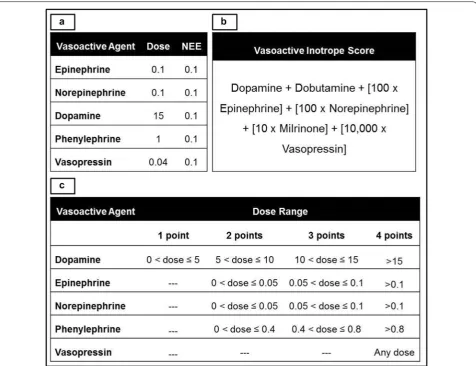
Total and peak simultaneous doses of vasoactive medi-cations in the first 24-h were abstracted from the MET-RIC DataMart. We used the following scoring systems to quantify overall peak vasoactive medication require-ments: (a) norepinephrine equivalents (NEE) [7], (b) vas-oactive inotropic score (VIS) [17, 18] and (c) cumulative vasopressor index (CVI) [19]. The dose equivalency and calculations for these scoring systems are presented in Fig. 1. Peak simultaneous doses during the first 24 h of the ICU stay were used to develop these indices that were used for further analysis.
of log10NEE, log10VIS and log10CVI for 28-day mortal-ity on a derivation subset of the cohort. The scoring sys-tem with the highest discrimination was used further for model development in the multivariate analyses.
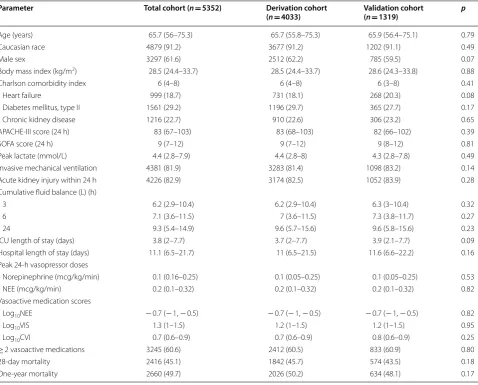
Using an outcome-agnostic sampling algorithm, the cohort was divided into derivation (75%) and validation (25%) subsets. As seen in Table 1, the outcomes for both 28-day and 1-year mortality are relatively balanced, thus no specific resampling approach was required. For the multivariable modeling, regression analysis with back-ward stepwise variable selection was conducted in order to derive a model for predicting 28-day and 1-year mor-tality using variables generated in the first 24 h of ICU stay. The variable selection component of this model was based on a liberal p < 0.20 for inclusion [20]. Following training on the derivation subset, model performance was assessed on the 25% holdout set. Two-tailed p < 0.05
was considered statistically significant. All statistical analyses were performed with JMP version 10.0.1 (SAS Institute, Cary, NC).
Results
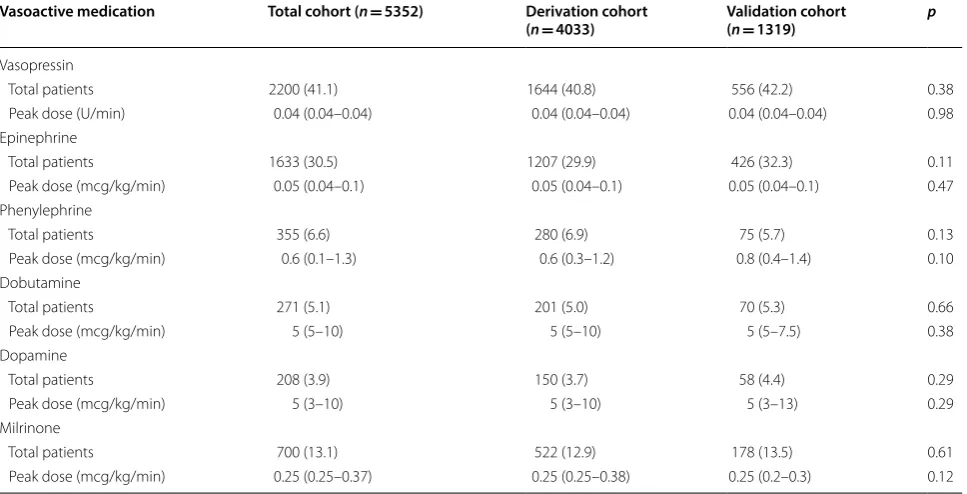
During the period from January 1, 2010 through Decem-ber 31, 2010, there were a total of 7516 ICU admissions for septic shock, of which 5352 (71.3%) patients were included (Fig. 2). The derivation and validation cohorts comprised 4033 (75.4%) and 1319 (24.6%) patients, respectively. Baseline characteristics for the total popu-lation and the individual cohorts are detailed in Table 1. The median vasopressor doses and vasoactive medica-tion scores were comparable between the two cohorts (Tables 1, 2). In the total population, 28-day and 1-year mortalities were 45.1% and 49.7%, respectively, there were no significant differences in mortality between the
Page 4 of 9 Vallabhajosyula et al. Ann. Intensive Care (2018) 8:112
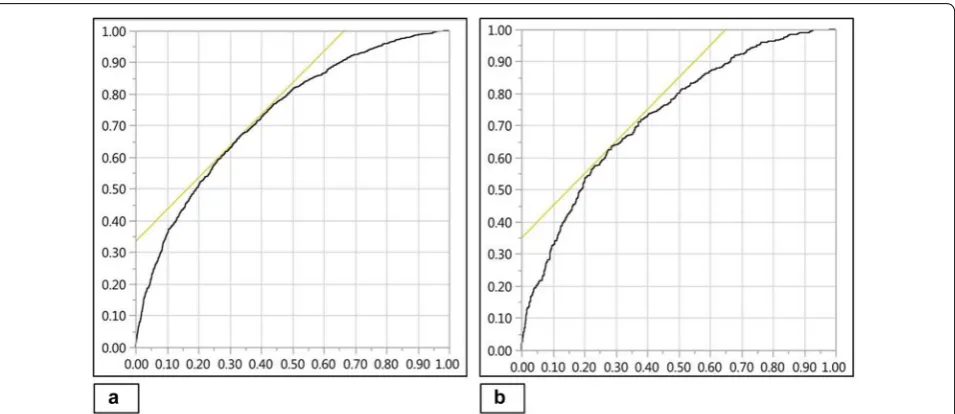
derivation and validation cohorts (Table 1). All three vas-oactive medication scoring systems were associated with unadjusted 28-day mortality in the derivation cohort— log10NEE (OR 2.3 [95% CI 2.1–2.6]; p < 0.001), log10VIS (OR 2.9 [95% CI 2.5–3.3]; p < 0.001) and log10CVI (OR 1.2 [95% CI 1.1–1.2]; p < 0.001). Log10NEE and log10VIS dem-onstrated fair discrimination (0.63, 0.61) prediction and log10CVI demonstrated poor discrimination (0.52) for 28-day mortality in derivation cohort (Fig. 3). Log10NEE was used for further analysis in the multivariate model and for the development of a prediction model.
Model development, validation and comparison
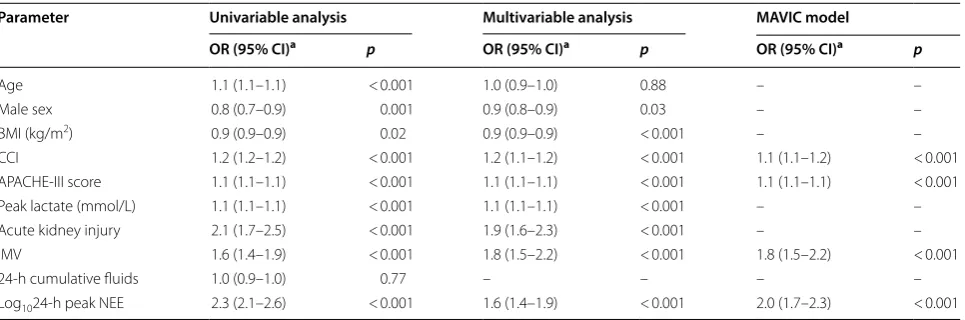
Using univariable analysis, significant predictors of 28-day mortality in the derivation cohort are identified
as noted in Table 3. After adjusting for age, sex, severity of illness, comorbidity and use of mechanical ventila-tion, log10NEE was an independent predictor of 28-day mortality (OR 1.6 [95% CI 1.4–1.9]; p < 0.001). The mul-tivariate model was reduced using a stepwise backward elimination process based on a liberal p < 0.20. The final model incorporated Mechanical ventilation, APACHE-III, Vasopressors and Inotropes (log10NEE) and Charl-son comorbidity index (MAVIC) as significant predictors of 28-day mortality in patients with septic shock. This model demonstrated good discrimination of 28-day mor-tality (AUROC 0.73) in the validation cohort (Fig. 4). In comparison with the MAVIC model, standardized sever-ity of illness scoring systems such as the APACHE-III (AUROC 0.66) and SOFA score (AUROC 0.59) showed Table 1 Characteristics of the population at baseline and within 24 h of ICU admission
Count (percentage) or median (interquartile range)
APACHE Acute Physiology And Chronic Health Evaluation, CVI cumulative vasopressor index, ICU intensive care unit, NEE norepinephrine equivalents, SOFA Sequential Organ Failure Assessment, VIS vasoactive inotropic score
Parameter Total cohort (n= 5352) Derivation cohort
(n= 4033) Validation cohort (n= 1319) p
Age (years) 65.7 (56–75.3) 65.7 (55.8–75.3) 65.9 (56.4–75.1) 0.79
Caucasian race 4879 (91.2) 3677 (91.2) 1202 (91.1) 0.49
Male sex 3297 (61.6) 2512 (62.2) 785 (59.5) 0.07
Body mass index (kg/m2) 28.5 (24.4–33.7) 28.5 (24.4–33.7) 28.6 (24.3–33.8) 0.88
Charlson comorbidity index 6 (4–8) 6 (4–8) 6 (3–8) 0.41
Heart failure 999 (18.7) 731 (18.1) 268 (20.3) 0.08
Diabetes mellitus, type II 1561 (29.2) 1196 (29.7) 365 (27.7) 0.17
Chronic kidney disease 1216 (22.7) 910 (22.6) 306 (23.2) 0.65
APACHE-III score (24 h) 83 (67–103) 83 (68–103) 82 (66–102) 0.39
SOFA score (24 h) 9 (7–12) 9 (7–12) 9 (8–12) 0.81
Peak lactate (mmol/L) 4.4 (2.8–7.9) 4.4 (2.8–8) 4.3 (2.8–7.8) 0.49
Invasive mechanical ventilation 4381 (81.9) 3283 (81.4) 1098 (83.2) 0.14
Acute kidney injury within 24 h 4226 (82.9) 3174 (82.5) 1052 (83.9) 0.28
Cumulative fluid balance (L) (h)
3 6.2 (2.9–10.4) 6.2 (2.9–10.4) 6.3 (3–10.4) 0.32
6 7.1 (3.6–11.5) 7 (3.6–11.5) 7.3 (3.8–11.7) 0.27
24 9.3 (5.4–14.9) 9.6 (5.7–15.6) 9.6 (5.8–15.6) 0.23
ICU length of stay (days) 3.8 (2–7.7) 3.7 (2–7.7) 3.9 (2.1–7.7) 0.09
Hospital length of stay (days) 11.1 (6.5–21.7) 11 (6.5–21.5) 11.6 (6.6–22.2) 0.16
Peak 24-h vasopressor doses
Norepinephrine (mcg/kg/min) 0.1 (0.16–0.25) 0.1 (0.05–0.25) 0.1 (0.05–0.25) 0.53
NEE (mcg/kg/min) 0.2 (0.1–0.32) 0.2 (0.1–0.32) 0.2 (0.1–0.32) 0.82
Vasoactive medication scores
Log10NEE − 0.7 (− 1, − 0.5) − 0.7 (− 1, − 0.5) − 0.7 (− 1, − 0.5) 0.82
Log10VIS 1.3 (1–1.5) 1.2 (1–1.5) 1.2 (1–1.5) 0.95
Log10CVI 0.7 (0.6–0.9) 0.7 (0.6–0.9) 0.8 (0.6–0.9) 0.25
≥ 2 vasoactive medications 3245 (60.6) 2412 (60.5) 833 (60.9) 0.80
28-day mortality 2416 (45.1) 1842 (45.7) 574 (43.5) 0.18
lower discrimination for 28-day mortality. Formal com-parisons of all model AUROCs via DeLong test found all p < 0.001, indicating statistically significant differences.
The MAVIC model, likewise, demonstrated superior-ity in discrimination for 1-year mortalsuperior-ity (AUROC 0.73) as compared to APACHE-III (AUROC 0.66) and SOFA scores (AUROC 0.60) in the validation cohort. As with
Fig. 2 Study population. ICU intensive care unit
Table 2 Peak vasoactive medication dosing in first 24 h
Total (percentage) or median (interquartile range)
Vasoactive medication Total cohort (n= 5352) Derivation cohort
(n= 4033) Validation cohort (n= 1319) p
Vasopressin
Total patients 2200 (41.1) 1644 (40.8) 556 (42.2) 0.38
Peak dose (U/min) 0.04 (0.04–0.04) 0.04 (0.04–0.04) 0.04 (0.04–0.04) 0.98
Epinephrine
Total patients 1633 (30.5) 1207 (29.9) 426 (32.3) 0.11
Peak dose (mcg/kg/min) 0.05 (0.04–0.1) 0.05 (0.04–0.1) 0.05 (0.04–0.1) 0.47
Phenylephrine
Total patients 355 (6.6) 280 (6.9) 75 (5.7) 0.13
Peak dose (mcg/kg/min) 0.6 (0.1–1.3) 0.6 (0.3–1.2) 0.8 (0.4–1.4) 0.10
Dobutamine
Total patients 271 (5.1) 201 (5.0) 70 (5.3) 0.66
Peak dose (mcg/kg/min) 5 (5–10) 5 (5–10) 5 (5–7.5) 0.38
Dopamine
Total patients 208 (3.9) 150 (3.7) 58 (4.4) 0.29
Peak dose (mcg/kg/min) 5 (3–10) 5 (3–10) 5 (3–13) 0.29
Milrinone
Total patients 700 (13.1) 522 (12.9) 178 (13.5) 0.61
Page 6 of 9 Vallabhajosyula et al. Ann. Intensive Care (2018) 8:112
28-day mortality, comparison via DeLong test found all differences to be statistically significant.
Discussion
To the best of our knowledge, this is the first large obser-vational study to use vasoactive scoring systems for pre-diction of mortality in adult patients with septic shock. Norepinephrine equivalents had superior discrimination for 28-day mortality compared to either the CVI or VIS in septic shock patients. Using data available within the first 24 h, NEE and three other independent predictors of 28-day mortality were combined to develop a parsi-monious 4-component prognostic model (MAVIC). This MAVIC model was subsequently validated in a randomly
generated validation cohort from the same population. The MAVIC model demonstrated superior discrimina-tory ability compared to the APACHE-III and SOFA scores for 28-day and 1-year mortality in septic shock.
Historically, in adult patients with sepsis and cardio-genic shock, vasoactive medication scoring systems have predominantly been used to classify the extent of hemo-dynamic support [21–23]. Vasoactive medications are used in an empiric fashion and often there are limited bedside data on cumulative vasopressor requirements [24]. Vasoactive medications are a severity of illness indicator; however, they are incompletely accounted for in scoring systems. More recent data have shown vaso-active medication requirements to be an independent
Fig. 3 Discrimination of vasoactive scoring systems for 28-day mortality. AUROC curve for log10NEE = 0.63 (a); log10VIS = 0.61 (b); and log10CVI = 0.52 (c). AUROC area under receiver operating characteristic, CVI cumulative vasopressor index, NEE norepinephrine equivalents, VIS vasoactive inotrope score
Table 3 28-day mortality predictors in the derivation cohort
APACHE-III Acute Physiology And Chronic Health Evaluation-III, BMI body mass index, CCI Charlson comorbidity index, CI confidence interval, IMV invasive mechanical ventilation, NEE norepinephrine equivalents, OR odds ratio
a Unit odds ratios are represented for continuous variables
Parameter Univariable analysis Multivariable analysis MAVIC model
OR (95% CI)a p OR (95% CI)a p OR (95% CI)a p
Age 1.1 (1.1–1.1) < 0.001 1.0 (0.9–1.0) 0.88 – –
Male sex 0.8 (0.7–0.9) 0.001 0.9 (0.8–0.9) 0.03 – –
BMI (kg/m2) 0.9 (0.9–0.9) 0.02 0.9 (0.9–0.9) < 0.001 – –
CCI 1.2 (1.2–1.2) < 0.001 1.2 (1.1–1.2) < 0.001 1.1 (1.1–1.2) < 0.001
APACHE-III score 1.1 (1.1–1.1) < 0.001 1.1 (1.1–1.1) < 0.001 1.1 (1.1–1.1) < 0.001
Peak lactate (mmol/L) 1.1 (1.1–1.1) < 0.001 1.1 (1.1–1.1) < 0.001 – –
Acute kidney injury 2.1 (1.7–2.5) < 0.001 1.9 (1.6–2.3) < 0.001 – –
IMV 1.6 (1.4–1.9) < 0.001 1.8 (1.5–2.2) < 0.001 1.8 (1.5–2.2) < 0.001
24-h cumulative fluids 1.0 (0.9–1.0) 0.77 – – – –
predictor of adverse outcomes [11, 25–27]. The need for high-dose vasopressors reflects a potentially fatal under-lying condition with a high risk of complications, but the direct association remains to be proven. Though the VIS has been used to prognosticate in a smaller cohort of 138 pediatric patients with sepsis [28], this is the first large study using existing vasoactive scoring systems in the prognostication of adult septic shock patients. Prior stud-ies have used either norepinephrine or cumulative vaso-pressor requirements to demonstrate higher mortality in patients with septic shock [27, 29]. In about 20–40% of septic patients, persistent vasoplegia results in refractory shock necessitating high-dose vasoactive medications, with a very high attributable mortality [29]. Refractory vasoplegia in sepsis is multi-factorial and usually fatal, leading investigators to evaluate alternate mechanisms of restoring vascular tone in these patients [6, 30]. High doses of vasopressors are associated with significant adverse events such as arrhythmias, myocardial infarc-tions, digital injury/ischemia and acute kidney injury [26,
27].
Existing prognostic scores (APACHE and SOFA) have several limitations [31]. The APACHE-III does not incor-porate either vasopressor use or myocardial dysfunction in sepsis, both of which have mortality implications [2, 3,
8, 11]. The SOFA score also has some similar limitations as shown in the study by Yadav et al. [5]. They modified the cardiovascular component of the SOFA score and incorporated more detailed vasoactive medication dos-age as well as organ failure assessment using serum lac-tate and the shock index. Their modified cardiovascular
SOFA showed superior discriminatory power for ICU, in-hospital as well as 28-day mortality [5]. This study was limited in its ability to prognosticate in septic shock patients since it included all ICU patients. We performed an exploratory analysis using the modified cardiovascu-lar SOFA in this population and it showed a poor dis-crimination for 28-day mortality (AUROC 0.51). This can partly be explained by the high modified cardiovas-cular SOFA score of 3 and 4 in this population reflec-tive of their cardiovascular morbidity. Furthermore, the NEE model uses a more granular scoring system com-pared to the modified cardiovascular SOFA that might explain these differences. In another study, Johnson et al. [32] used a simplified version of the APACHE-IV score and developed a similar parsimonious scoring system in unselected critically ill patients without compromising the accuracy; however, it lacked adequate vasopressor data.
It is noteworthy that our model appears to further enhance risk assessment in patients with septic shock, who by definition comprise a high-risk cohort with a car-diovascular SOFA score of 3–4. Thus, our model appears to capture additional prognostic information than the individual SOFA component scores. Furthermore, with the advent of real-time sophisticated critical-illness com-putational algorithms, our model appears capable of incorporating real-time vasopressor use to provide clini-cians with reliable and up-to-date prognostic information [12, 33].
The vasoactive scoring systems used in this study have been previously been used in the evaluation of
Page 8 of 9 Vallabhajosyula et al. Ann. Intensive Care (2018) 8:112
septic shock patients; however, they have not been compared head-to-head [7, 17, 19]. In this study, we demonstrate NEE to have superior predictive perfor-mance for 28-day mortality relative to the VIS and CVI. This can be explained by multiple hypotheses. First, given the ubiquitous use of norepinephrine as the first-line vasopressor in septic shock it is likely that norepinephrine usage dominates the various scor-ing systems [34]. As noted in Table 1, individual peak norepinephrine doses formed nearly 40% of the peak total dose of NEE lending credence to this hypothesis. Second, the VIS scoring system was used and validated primarily to define inotrope requirements in pedi-atric and cardiac surgery populations, both of which significantly differ from the current population [17,
28]. Finally, the dose equivalency in the literature dif-fers on the optimal conversion factors for vasoactive medications resulting in varied calibration with out-comes. The NEE conversion system used in this study is consistent with recent high-impact trials including the angiotensin II for the treatment of vasodilatory shock and vasopressin versus norepinephrine infusion in patients with septic shock trials [7, 35]. However, the NEE used by Brown et al. [29] to report high-dose vasopressors differs from our study.
This study has certain limitations. The use of a ret-rospective design is subject to selection and infor-mation bias that could have confounded the results. These patients were identified using the Sepsis-3 cri-teria retroactively during the study duration when the 2001 consensus criteria were in use; and this may have impacted case selection. All treatment decisions, including choice of vasoactive medication and arte-rial pressure goal, were at the discretion of the treating physician and no universal protocol for hemodynamic management of septic patients was in place during the study period. Despite protocoled hemodynamic management, a significant portion of the patients had a positive fluid balance at the end of day 1 suggestive of higher acuity of illness in this population. Alternate endpoints to critical illness such as functional sta-tus, disposition and return to work were not assessed in this study that could provide a greater emphasis on patient-centered outcomes and quality of life. We focused on early risk prognostication and thus could have overlooked late cardiovascular deterioration in these patients that could have contributed to 28-day mortality. Finally, the single-institution nature of this study limits external generalizability in the absence of validation studies at other centers. Strengths of the study include the large patient population studied and the use of a well-validated electronic database with 15-min data capture capabilities.
Conclusions
We report the development and validation of a novel MAVIC mortality prediction model for septic shock patients admitted to the ICU. The MAVIC model incor-porates cumulative vasoactive medication usage within the first 24 h and outperforms both APACHE-III and SOFA scores for 28-day mortality prediction in septic shock patients. Vasopressor burden during early criti-cal illness appears to be a marker for unfavorable out-comes. Newer scoring systems for critically ill patients with septic shock are needed that emphasize cardio-vascular morbidity and vasoactive medication use to aid in early and reliable prognostication. Further vali-dation of this model externally and in non-septic shock populations is desirable prior to acceptance in clinical practice.
Abbreviations
APACHE-III: Acute Physiology And Chronic Health Evaluation-III; AUROC: area under receiver operating characteristic curve; CI: confidence interval; CVI: cumulative vasopressor index; ICU: intensive care unit; MAVIC: Mechanical ventilation, APACHE-III, Vasopressors, Inotropes, Charlson comorbidity index; METRIC: Multidisciplinary Epidemiology and Translational Research in Inten-sive Care Laboratory; NEE: norepinephrine equivalents; OR: odds ratio; SOFA: Sequential Organ Failure Assessment; VIS: vasoactive inotrope score.
Authors’ contributions
SV, JCJ, AKK and DHM contributed to study design, literature review, data analysis and statistical analysis. SV, JCJ, AAK and DHM contributed to data management, data analysis and drafting manuscript. SV, JCJ, AAK, DHM, EFB, AKK and VNI contributed to access to data. JCJ, EFB, AKK and VNI contributed to manuscript revision, intellectual revisions and mentorship. All authors read and approved the final manuscript.
Author details
1 Department of Cardiovascular Medicine, Mayo Clinic, 200 First Street SW, Rochester, MN 55905, USA. 2 Division of Pulmonary and Critical Care Medicine, Department of Medicine, Mayo Clinic, Rochester, MN, USA. 3 Multidisciplinary Epidemiology and Translational Research in Intensive Care (METRIC) Labora-tory, Mayo Clinic, Rochester, MN, USA. 4 Division of Pulmonary and Critical Care Medicine, Department of Medicine, Henry Ford Hospital/Wayne State University, Detroit, MI, USA. 5 Department of Health Sciences Research, Robert D. and Patricia E. Kern Center for the Science of Health Care Delivery, Mayo Clinic, Rochester, MN, USA. 6 Department of Pharmacy, Mayo Clinic, Rochester, MN, USA. 7 Center for Critical Care, Anesthesiology Institute, Cleveland Clinic, Cleveland, OH, USA. 8 Department of Outcomes Research, Cleveland Clinic, Cleveland, OH, USA.
Acknowledgements None.
Competing interests
All authors report no financial or intellectual conflicts of interest related to this manuscript.
Availability of data and materials
The datasets used and/or analyzed during the current study are available from the corresponding author on reasonable request.
Ethics approval and consent to participate
This study was approved by the Mayo Clinic Institutional Review Board (IRB #16-005271) as minimal risk to subjects and a waiver of informed consent.
Funding
This research did not receive any specific grant from funding agencies in the public, commercial or not-for-profit sectors.
Prior presentation
Slide Presentation, 47th Critical Care Congress, Society of Critical Care Medi-cine, San Antonio TX (February 2018)
Publisher’s Note
Springer Nature remains neutral with regard to jurisdictional claims in pub-lished maps and institutional affiliations.
Received: 15 June 2018 Accepted: 16 November 2018
References
1. Kumar G, Kumar N, Taneja A, Kaleekal T, Tarima S, McGinley E, et al. Nation-wide trends of severe sepsis in the 21st century (2000–2007). Chest. 2011;140(5):1223–31.
2. Vallabhajosyula S, Kumar M, Pandompatam G, Sakhuja A, Kashyap R, Kashani K, et al. Prognostic impact of isolated right ventricular dysfunc-tion in sepsis and septic shock: an 8-year historical cohort study. Ann Intensive Care. 2017;7(1):94.
3. Vallabhajosyula S, Sakhuja A, Geske JB, Kumar M, Poterucha JT, Kashyap R, et al. Role of admission troponin-T and serial troponin-T testing in predicting outcomes in severe sepsis and septic shock. J Am Heart Assoc. 2017;6(9):e005930.
4. Singer M, Deutschman CS, Seymour CW, Shankar-Hari M, Annane D, Bauer M, et al. The third international consensus definitions for sepsis and septic shock (sepsis-3). JAMA. 2016;315(8):801–10.
5. Yadav H, Harrison AM, Hanson AC, Gajic O, Kor DJ, Cartin-Ceba R. Improv-ing the accuracy of cardiovascular component of the sequential organ failure assessment score. Crit Care Med. 2015;43(7):1449–57.
6. Jentzer JC, Vallabhajosyula S, Khanna AK, Chawla LS, Busse LW, Kashani KB. Management of refractory vasodilatory shock. Chest. 2018;154(2):416–26.
7. Khanna A, English SW, Wang XS, Ham K, Tumlin J, Szerlip H, et al. Angiotensin II for the treatment of vasodilatory shock. N Engl J Med. 2017;377(5):419–30.
8. Vallabhajosyula S, Sakhuja A, Geske JB, Kumar M, Kashyap R, Kashani K, et al. Clinical profile and outcomes of acute cardiorenal syndrome type-5 in sepsis: an eight-year cohort study. PLoS ONE. 2018;13(1):e0190965. 9. Plataki M, Kashani K, Cabello-Garza J, Maldonado F, Kashyap R, Kor DJ,
et al. Predictors of acute kidney injury in septic shock patients: an obser-vational cohort study. Clin J Am Soc Nephrol. 2011;6(7):1744–51. 10. Vallabhajosyula S, Jentzer JC, Geske JB, Kumar M, Sakhuja A, Singhal A,
et al. New-onset heart failure and mortality in hospital survivors of sepsis-related left ventricular dysfunction. Shock. 2018;49(2):144–9.
11. Kotecha A, Vallabhajosyula S, Apala DR, Frazee E, Iyer VN. Clinical outcomes of weight-based norepinephrine dosing in underweight and morbidly obese patients: a propensity-matched analysis. J Intensive Care Med. 2018. https ://doi.org/10.1177/08850 66618 76818 0.
12. Herasevich V, Pickering BW, Dong Y, Peters SG, Gajic O. Informatics infrastructure for syndrome surveillance, decision support, reporting, and modeling of critical illness. Mayo Clin Proc. 2010;85(3):247–54.
13. Harrison AM, Thongprayoon C, Kashyap R, Chute CG, Gajic O, Pickering BW, et al. Developing the surveillance algorithm for detection of failure to recognize and treat severe sepsis. Mayo Clin Proc. 2015;90(2):166–75. 14. Siontis B, Elmer J, Dannielson R, Brown C, Park J, Surani S, et al.
Multifac-eted interventions to decrease mortality in patients with severe sepsis/ septic shock-a quality improvement project. PeerJ. 2015;3:e1290. 15. Ahmed A, Vairavan S, Akhoundi A, Wilson G, Chiofolo C, Chbat N, et al.
Development and validation of electronic surveillance tool for acute kidney injury: a retrospective analysis. J Crit Care. 2015;30(5):988–93.
16. Rocca WA, Yawn BP, St Sauver JL, Grossardt BR, Melton LJ 3rd. History of the Rochester Epidemiology Project: half a century of medical records linkage in a US population. Mayo Clin Proc. 2012;87(12):1202–13. 17. Gaies MG, Jeffries HE, Niebler RA, Pasquali SK, Donohue JE, Yu S, et al.
Vasoactive-inotropic score is associated with outcome after infant cardiac surgery: an analysis from the Pediatric Cardiac Critical Care Consortium and Virtual PICU System Registries. Pediatr Crit Care Med. 2014;15(6):529–37.
18. Nguyen HV, Havalad V, Aponte-Patel L, Murata AY, Wang DY, Rusanov A, et al. Temporary biventricular pacing decreases the vasoactive-inotropic score after cardiac surgery: a substudy of a randomized clinical trial. J Thorac Cardiovasc Surg. 2013;146(2):296–301.
19. Trzeciak S, McCoy JV, Phillip Dellinger R, Arnold RC, Rizzuto M, Abate NL, et al. Early increases in microcirculatory perfusion during protocol-directed resuscitation are associated with reduced multi-organ failure at 24 h in patients with sepsis. Intensive Care Med. 2008;34(12):2210–7. 20. Bedogni G. Clinical prediction models—a practical approach to
development, validation and updating. J R Stat Soc Ser A (Stat Soc). 2009;172(4):944.
21. Janiczek JA, Winger DG, Coppler P, Sabedra AR, Murray H, Pinsky MR, et al. Hemodynamic resuscitation characteristics associated with improved survival and shock resolution after cardiac arrest. Shock. 2016;45(6):613–9. 22. Du Z, Jia Z, Wang J, Xing Z, Jiang C, Xu B, et al. Effect of increasing mean
arterial blood pressure on microcirculation in patients with cardiogenic shock supported by extracorporeal membrane oxygenation. Clin Hemor-heol Microcirc. 2018;70(1):27–37.
23. Erwin BL, Denaburg MA, Barker AB, McArdle PJ, Windham ST, Morgan CJ. Evaluation of vasopressin for septic shock in patients on chronic renin-angiotensin-aldosterone system inhibitors. Crit Care Med. 2017;45(12):e1226–32.
24. Jentzer JC, Coons JC, Link CB, Schmidhofer M. Pharmacotherapy update on the use of vasopressors and inotropes in the intensive care unit. J Cardiovasc Pharmacol Ther. 2015;20(3):249–60.
25. Dunser MW, Ruokonen E, Pettila V, Ulmer H, Torgersen C, Schmittinger CA, et al. Association of arterial blood pressure and vasopressor load with septic shock mortality: a post hoc analysis of a multicenter trial. Crit Care. 2009;13(6):R181.
26. Schmittinger CA, Torgersen C, Luckner G, Schroder DC, Lorenz I, Dunser MW. Adverse cardiac events during catecholamine vasopressor therapy: a prospective observational study. Intensive Care Med. 2012;38(6):950–8. 27. Sviri S, Hashoul J, Stav I, van Heerden PV. Does high-dose vasopressor
therapy in medical intensive care patients indicate what we already suspect? J Crit Care. 2014;29(1):157–60.
28. McIntosh AM, Tong S, Deakyne SJ, Davidson JA, Scott HF. Validation of the vasoactive-inotropic score in pediatric sepsis. Pediatr Crit Care Med. 2017;18(8):750–7.
29. Brown SM, Lanspa MJ, Jones JP, Kuttler KG, Li Y, Carlson R, et al. Survival after shock requiring high-dose vasopressor therapy. Chest. 2013;143(3):664–71.
30. Kotecha A, Vallabhajosyula S, Coville HH, Kashani K. Cardiorenal syndrome in sepsis: a narrative review. J Crit Care. 2018;43:122–7.
31. Keegan MT, Gajic O, Afessa B. Comparison of APACHE III, APACHE IV, SAPS 3, and MPM0III and influence of resuscitation status on model perfor-mance. Chest. 2012;142(4):851–8.
32. Johnson AE, Kramer AA, Clifford GD. A new severity of illness scale using a subset of Acute Physiology And Chronic Health Evaluation data elements shows comparable predictive accuracy. Crit Care Med. 2013;41(7):1711–8. 33. Aakre C, Franco PM, Ferreyra M, Kitson J, Li M, Herasevich V. Prospective
validation of a near real-time EHR-integrated automated SOFA score calculator. Int J Med Inform. 2017;103:1–6.
34. Rhodes A, Evans LE, Alhazzani W, Levy MM, Antonelli M, Ferrer R, et al. Surviving Sepsis Campaign: international guidelines for management of sepsis and septic shock: 2016. Intensive Care Med. 2017;43(3):304–77. 35. Russell JA, Walley KR, Singer J, Gordon AC, Hebert PC, Cooper DJ, et al.