O R I G I N A L R E S E A R C H
Patients
’
Experience and Needs During
Perioperative Care: A Focus Group Study
This article was published in the following Dove Press journal: Patient Preference and Adherence
Milena Gobbo 1
Roberto Saldaña2
Marcos Rodríguez3
Javier Jiménez4
María I García-Vega5
José M de Pedro6
Luis Cea-Calvo6
1Positivamente Psychology Center,
Madrid, Spain;2Confederation of Patients
with Crohn’s Disease and Ulcerative
Colitis, Madrid, Spain;3General Surgery
Department, University Hospital Gregorio Marañón, Madrid, Spain;
4Anesthesiology Department, University
Hospital of Getafe, Madrid, Spain;
5Anesthesiology Department, Jiménez
Díaz Hospital Foundation, Madrid, Spain;
6Medical Affairs Department, Merck
Sharp & Dohme Spain, Madrid, Spain
Purpose: Information regarding patients’ needs, fears and experiences/perceptions in the perioperative setting is limited. Through two focus groups, we explored the needs, fears and experiences of patients who had recently undergone, or were scheduled for, surgery under general anaesthesia, with regard to the entire perioperative process.
Materials and Methods: Adults were invited to participate in a focus group if they had (a) undergone abdominal or gynaecological surgery with general anaesthesia in the past 4 months (focus group 1) or (b) been indicated for abdominal or gynaecological surgery and were waiting for the assigned surgery date (focus group 2). Discussions were audio recorded and, through thematic analysis, patients’needs and experiences/perceptions regarding perioperative surgical stages were obtained/coded. Analysis of code co-occurrence was performed using a codes matrix.
Results: Focus groups consisted of 13 females, 1 male (50% aged >45 years). The immediate postoperative period generated the highest number of co-occurrences, followed by the indication of surgery. The most frequent code was the need for information, especially at the indication of surgery, the pre-anaesthesia clinic and in the postoperative period. Fears were described particularly at the indication of surgery, the waiting period, the surgical room, anaesthesia induction and the postoperative period, particularly after hospital discharge; pain was cited most commonly in the postoperative period. Stress/anxiety and emotional impact were also cited in the postoperative period including home arrival.
Conclusion: Information collected in these patients’ focus groups should inform future research and healthcare planning. Patients demand receiving more comprehensive and under-standable information and more involvement in several steps; this could reduce fears and stress/anxiety described across the perioperative process. Importantly,findings also extend to the postoperative period and home arrival.
Keywords:anaesthesia, experience, focus group, patients, perioperative care, surgery
Introduction
A fundamental priority for health-care systems worldwide is to improve the health of the population and, in this regard, they are responsible for the distribution of health in the population (health equity) and they should be responsive to the needs of the population and deliver services efficiently.1The worldwide growth in the prevalence of chronic diseases2places an enormous clinical andfinancial burden on health-care systems and it has been suggested that this requires the transformation of current acute-oriented health-care systems into moreflexible systems able to deliver effective and high-quality chronic care and also preventive measures to patients and healthy populations.3This transforma-tion will require a“top down–bottom up”approach involving shared decision-making with well-informed patients at the centre of the care process.3In this regard, Wagner et al
Correspondence: Milena Gobbo Positivamente Psychology Center, Av. del Pdte. Carmona, 10 BIS, 1º A, Madrid 28020, Spain
Email [email protected]
Patient Preference and Adherence
Dove
press
open access to scientific and medical research
Open Access Full Text Article
Patient Preference and Adherence downloaded from https://www.dovepress.com/ by 118.70.13.36 on 26-Aug-2020
developed a Chronic Care Model and proposed systematic transformation of health-care systems to provide proactive, integrated and patient-centred clinical assistance.4This model has become a reference for quality-of-care for patients requir-ing chronic treatment, and pivotal to the success of this model is the interaction between well-informed active patients, and well-prepared proactive and coordinated health-care providers. Together with clinical effectiveness and safety indica-tors, evaluation of patient experiences with the healthcare system can contribute to the overall care process through the development and assessment of quality indicators to identity areas for improvement. In a systematic review, Doyle et al described a positive association between patients’experiences with clinical effectiveness and safety in a wide range of diseases and care settings, and with adherence to prescribed medicines and to preventive care.5 While research into the needs and experiences of patients in the chronic disease setting has expanded in recent years, information on the experiences of surgical patients with peri-operative care is limited.6A systematic review offive relevant studies highlighted several factors which can affect patients’ subjective experiences and satisfaction during the periopera-tive period, including the importance of pre-admission contact; provision of relevant, specific education and information; the need for improved communication skills; continuity of care after surgery by the same nurse whenever possible; and main-tenance of patient privacy.7
The indication of surgery is a critical moment in a person’s life and can trigger different needs, feelings or fears. A positive patient experience may be important for obtaining favourable outcomes although results to date have been variable. Interestingly, Kennedy et al reported a significant relationship between high overall patient satisfaction and low mortality.8 A better understanding of patients’feelings, beliefs or fears may help health-care providers to plan and optimize the man-agement of individuals during the perioperative period. In addition, recording the experiences of patients that have pre-viously undergone a surgical procedure may also help identify areas of the perioperative care process that can be improved.
Thus, the aim of the current exploratory focus group study was to obtain information pertaining to perioperative care from two groups:firstly, in patients who had previously undergone surgery, their experience over the entire perio-perative period, with specific emphasis on several predefined relevant moments or situations was monitored; and sec-ondly, the feelings, beliefs and fears/expectations of patients due to undergo a surgical procedure (but still waiting for a surgery date) was also surveyed. The information provided
by these focus groups will be of the utmost importance to plan future research and to implement actions aimed to improve the patient’s experience with perioperative care.
Materials and Methods
We conducted a qualitative exploratory study with two focus groups of patients: (1) patients with a history of recent abdominal or gynaecological surgery and (2) patients who had recently been indicated for abdominal or gynaecological surgery.
Patients were invited to participate by two gastroenterolo-gists, one abdominal surgeon, one gynaecologist, one anaes-thesiologist, and from the Spanish Confederation of Patients with Inflammatory Bowel Disease (ACCU). Invited partici-pants had to be adults (aged >18 years) who had (a) undergone abdominal or gynaecological surgery with general anaesthesia in the past 4 months (focus group 1) or (b) been indicated for abdominal or gynaecological surgery and were waiting for the assigned surgery date (or contacted if the surgery date had not been set; focus group 2). Patients who, in the opinion of the investigator, were not adequate participants for focus groups (cognitive impairment, major depression or other serious con-ditions [eg, end-stage disease], or with physical limitations), were not invited to participate. Theoretical sampling or struc-tural sampling was performed to recruit patients with different demographic characteristics and background diseases, with the aim of including men and women, patients of different age ranges, with digestive or gynaecological surgery, affiliated or not to patients’ associations and with open laparoscopic surgery.
The study was approved by the appropriate Clinical Research Ethics Committee. All patients provided signed informed consent to participate in the focus groups and for audio recording.
The focus groups were conducted on consecutive days in a quiet, comfortable room, by a focus group moderator and an assistant. A discussion map (mainly depicting the different steps of the perioperative process from the patient perspective) was provided to patients to guide the discussion. Discussions were audio recorded, and subsequently transcribed verbatim. Nonverbal behaviour was monitored by the assistant modera-tor (who did not take part in the discussion) by takingfield notes that were later incorporated into the transcript. A thematic analysis of the discourse content was performed using ATLAS.ti®software (version 8.4) to identify quotations and assign codes. The common themes and concepts that supported each of the categories were identified in two steps: (1) deductive analysis was used to assign codes previously
Patient Preference and Adherence downloaded from https://www.dovepress.com/ by 118.70.13.36 on 26-Aug-2020
identified about the perioperative process; (2) inductive analy-sis was performed to identify emergent codes relevant to the study goals. A list of the needs and experiences/perceptions of the patients with respect to each of the defined surgical stages was obtained, as well as other aspects that, in the opinion of the patients, were important for them and should be considered for planning the whole perioperative care period in the most satisfactory way possible.
Analysis of codes co-occurrence tables was performed using a codes matrix in which thefigures reflect the number of times an inductive code (needs or experiences/perceptions) was associated with a deductive code (specific moments of the perioperative process) during patients’ discourse (co-occurrence). This association of co-occurrence identified important concepts that might be associated with each other and could play a key role in comprehending the perioperative process.
Because all patients in the focus groups had a history of surgery (all patients waiting for surgery had a surgical experi-ence in the past) and the discourses did not yield meaningful differences, consolidated outcomes are presented.
Results
Description of the Sample
The sample of patients who accepted the invitation to parti-cipate in the focus groups consisted of 13 females and 1
male. Seven patients were aged <45 years, six were aged
≥45 years and one was aged >65 years. All patients had a history of past surgery with general anaesthesia and, with the exception of one patient, were from third-level hospitals (large hospitals with all specialties and facilities) in Spain. Table 1summarises the participants’characteristics.
Codes and Co-Occurrences of Different
Codes
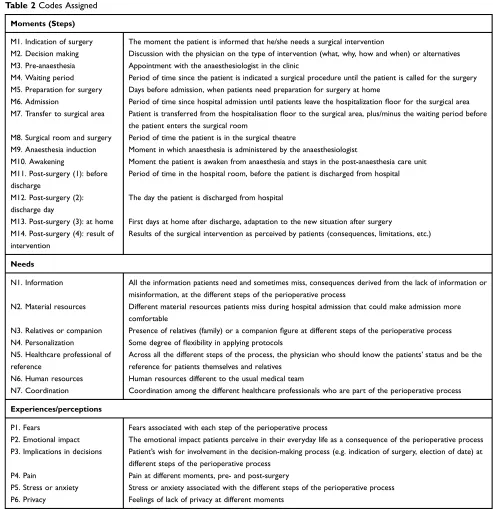
Table 2shows the overarching themes and different codes identified (different moments of the perioperative process, patients’needs and experiences). By thematic analysis, 14 codes were assigned to the different moments of the peri-operative process. Thirteen further emerging codes were identified representing patients’ needs (concrete requests with regard to the different steps of the process, 7 codes) and experiences or perceptions (6 codes).
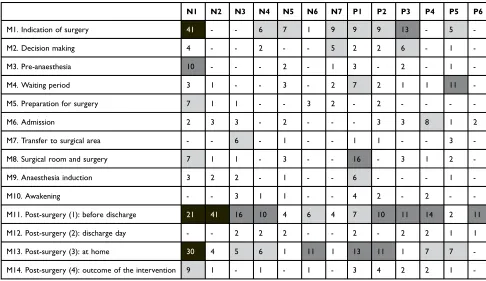
The different co-occurrences of codes are displayed in Table 3, identifying the codes that were discussed most frequently by patients. The immediate postoperative period was the moment of the process that generated the highest number of co-occurrences, followed by the indication of surgery. The code that appeared most frequently was the need for information, especially at the indication of surgery, the pre-anaesthesia clinic and in the postoperative period, including after home arrival. Material resources, companions
Table 1Main Characteristics of Participants in the Focus Groups
Patient Gender Age, Years Surgical Indication Open Surgery/Laparoscopy Affiliated to a Patients’Association
Focus group 1. All patients who underwent abdominal or gynaecological surgery with general anaesthesia within the past 4 months
1 Female >45 Gynaecological Laparoscopy No
2 Female <45 Gynaecological Open surgery No
3 Female <45 Cholecystectomy Laparoscopy No
4 Female >45 Cholecystectomy Open surgery No
5 Female >45 IBD-related Open surgery Yes
6 Female <45 IBD-related Open surgery Yes
7 Female <45 IBD-related Laparoscopy Yes
8 Male >45 IBD-related Open surgery No
Focus group 2. All patients who had undergone surgery in the past, and had been recently indicated for abdominal or gynaecological surgery with general anaesthesia (currently in the waiting period)
1 Female <45 Gynaecological Laparoscopy No
2 Female >45 Gynaecological Open surgery No
3 Female >45† Colon cancer Laparoscopy No
4 Female <45 Cholecystectomy Laparoscopy No
5 Female >45 Cholecystectomy Laparoscopy No
6 Female <45 IBD-related Open surgery Yes
Note:†aged >65 years.
Abbreviation: IBD, Inflammatory Bowel Disease (Crohn’s disease or ulcerative colitis).
Patient Preference and Adherence downloaded from https://www.dovepress.com/ by 118.70.13.36 on 26-Aug-2020
(a relative or close friend) and some personalisation were cited as needs in the postoperative period. The need for a “health-care professional of reference” (one well-identified physician who knows the patient’s clinical history and current status) was cited across different steps of the process. Among the perceptions and experiences, fear was cited especially at the indication of surgery, the waiting period, the surgical room, anaesthesia induction and the post-operative period, particularly after hospital discharge, whilst
pain was cited most commonly in the postoperative period. Stress/anxiety, emotional impact and pain were cited after home arrival.
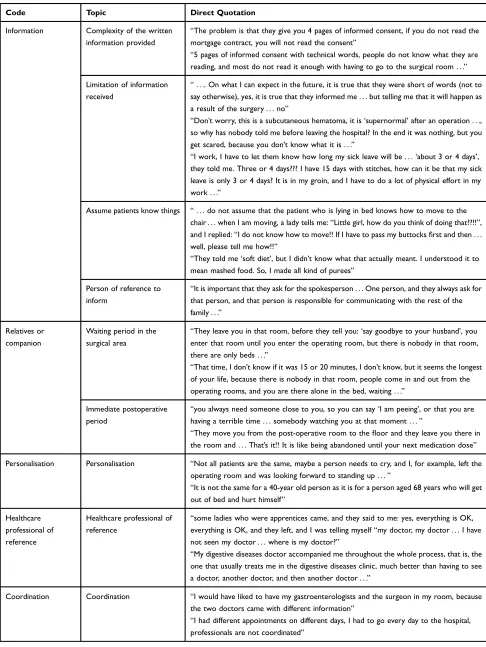
Relevant Topics: Needs (
Table 4
)
InformationIn general, patients complained about the complexity of the written information provided (information on the surgery or anaesthesia and informed consent) and missed more oral Table 2Codes Assigned
Moments (Steps)
M1. Indication of surgery The moment the patient is informed that he/she needs a surgical intervention
M2. Decision making Discussion with the physician on the type of intervention (what, why, how and when) or alternatives
M3. Pre-anaesthesia Appointment with the anaesthesiologist in the clinic
M4. Waiting period Period of time since the patient is indicated a surgical procedure until the patient is called for the surgery
M5. Preparation for surgery Days before admission, when patients need preparation for surgery at home
M6. Admission Period of time since hospital admission until patients leave the hospitalizationfloor for the surgical area
M7. Transfer to surgical area Patient is transferred from the hospitalisationfloor to the surgical area, plus/minus the waiting period before
the patient enters the surgical room
M8. Surgical room and surgery Period of time the patient is in the surgical theatre
M9. Anaesthesia induction Moment in which anaesthesia is administered by the anaesthesiologist
M10. Awakening Moment the patient is awaken from anaesthesia and stays in the post-anaesthesia care unit
M11. Post-surgery (1): before discharge
Period of time in the hospital room, before the patient is discharged from hospital
M12. Post-surgery (2): discharge day
The day the patient is discharged from hospital
M13. Post-surgery (3): at home First days at home after discharge, adaptation to the new situation after surgery
M14. Post-surgery (4): result of intervention
Results of the surgical intervention as perceived by patients (consequences, limitations, etc.)
Needs
N1. Information All the information patients need and sometimes miss, consequences derived from the lack of information or
misinformation, at the different steps of the perioperative process
N2. Material resources Different material resources patients miss during hospital admission that could make admission more
comfortable
N3. Relatives or companion Presence of relatives (family) or a companionfigure at different steps of the perioperative process
N4. Personalization Some degree offlexibility in applying protocols
N5. Healthcare professional of
reference
Across all the different steps of the process, the physician who should know the patients’status and be the
reference for patients themselves and relatives
N6. Human resources Human resources different to the usual medical team
N7. Coordination Coordination among the different healthcare professionals who are part of the perioperative process
Experiences/perceptions
P1. Fears Fears associated with each step of the perioperative process
P2. Emotional impact The emotional impact patients perceive in their everyday life as a consequence of the perioperative process
P3. Implications in decisions Patient’s wish for involvement in the decision-making process (e.g. indication of surgery, election of date) at
different steps of the perioperative process
P4. Pain Pain at different moments, pre- and post-surgery
P5. Stress or anxiety Stress or anxiety associated with the different steps of the perioperative process
P6. Privacy Feelings of lack of privacy at different moments
Patient Preference and Adherence downloaded from https://www.dovepress.com/ by 118.70.13.36 on 26-Aug-2020
discussion with their physicians in an understandable lan-guage. They also discussed that information received should not be limited to the medical problem and the surgery itself as the solution, but also to possible alternative treatments and the potential consequences or subsequent limitations after surgery, including an approach to the length of sick leave considering patients’ professional activities. In this regard, several patients complained that their limitations after what was considered a successful surgery by their physicians had been much more severe than explained, if they were explained at all. Patients agreed that health-care professionals frequently assume that patients know obvious things that they are not really informed about. Finally, they agreed on the need to nominate a relative as a“person of reference”to receive information from health-care professionals, to avoid misunderstandings or missing information.
Relatives or Companion
Having a close relative or companion was highlighted by patients, particularly at several steps of the perioperative pro-cess in which they are missed. The two moments where patients missed the company of relatives the most were the transfer to the surgical area (specifically, the waiting period in the ward before patientsfinally enter the surgical room), and
the immediate postoperative period, when the patient awakens from anaesthesia. Patients agreed that the waiting period in the ward before entering the surgical room was one of the situa-tions that generated more anxiety, because many times they were left alone with no company or health-care professionals and the waiting seemed endless. They also highlighted the importance of company after discharge, and the inconvenience of an excess of visitors in the hospital room after surgery.
Other Needs
Other needs that arose from the discourse were the need for some degree of personalization – understanding the importance of protocols, but considering some patients’ situations or preferences, and the need to have a“ health-care professional of reference”across the entire periopera-tive process. Patients with inflammatory bowel disease (IBD) treated in specialized IBD units acknowledged how important it was for them having had their usual gastroenterologist always involved in the overall process. Lack of coordination between health-care professionals was raised as an issue by several patients, sometimes leading to duplication of visits or lab tests, especially during the preoperative period. Finally, patients high-lighted the importance of having access to different Table 3Co-Occurrence of Codes Which Emerged from the Patient Focus Groups: Needs and Experiences/Perceptions
N1 N2 N3 N4 N5 N6 N7 P1 P2 P3 P4 P5 P6
M1. Indication of surgery 41 - - 6 7 1 9 9 9 13 - 5
-M2. Decision making 4 - - 2 - - 5 2 2 6 - 1
-M3. Pre-anaesthesia 10 - - - 2 - 1 3 - 2 - 1
-M4. Waiting period 3 1 - - 3 - 2 7 2 1 1 11
-M5. Preparation for surgery 7 1 1 - - 3 2 - 2 - - -
-M6. Admission 2 3 3 - 2 - - - 3 3 8 1 2
M7. Transfer to surgical area - - 6 - 1 - - 1 1 - - 3
-M8. Surgical room and surgery 7 1 1 - 3 - - 16 - 3 1 2
-M9. Anaesthesia induction 3 2 2 - 1 - - 6 - - - 1
-M10. Awakening - - 3 1 1 - - 4 2 - 2 -
-M11. Post-surgery (1): before discharge 21 41 16 10 4 6 4 7 10 11 14 2 11
M12. Post-surgery (2): discharge day - - 2 2 2 - - 2 - 2 2 1 1
M13. Post-surgery (3): at home 30 4 5 6 1 11 1 13 11 1 7 7
-M14. Post-surgery (4): outcome of the intervention 9 1 - 1 - 1 - 3 4 2 2 1
-Notes:Definitions of N1 to N7 and P1 to P6 are displayed inTable 2. Data are presented as the number of times an inductive code (needs or experiences/perceptions) was associated with a deductive code (specific moments of the perioperative process) during patients’discourse. The gray scale identifies the most frequent co-occurrences- (-) means no co-occurrence
Patient Preference and Adherence downloaded from https://www.dovepress.com/ by 118.70.13.36 on 26-Aug-2020
Table 4Codes Which Emerged from the Patient Focus Groups: Needs
Code Topic Direct Quotation
Information Complexity of the written
information provided
“The problem is that they give you 4 pages of informed consent, if you do not read the
mortgage contract, you will not read the consent”
“5 pages of informed consent with technical words, people do not know what they are
reading, and most do not read it enough with having to go to the surgical room . . .”
Limitation of information received
“. . .. On what I can expect in the future, it is true that they were short of words (not to
say otherwise), yes, it is true that they informed me . . . but telling me that it will happen as
a result of the surgery . . . no”
“Don’t worry, this is a subcutaneous hematoma, it is‘supernormal’after an operation . . .,
so why has nobody told me before leaving the hospital? In the end it was nothing, but you
get scared, because you don’t know what it is . . .”
“I work, I have to let them know how long my sick leave will be . . .‘about 3 or 4 days’,
they told me. Three or 4 days??? I have 15 days with stitches, how can it be that my sick leave is only 3 or 4 days? It is in my groin, and I have to do a lot of physical effort in my
work . . .”
Assume patients know things “. . . do not assume that the patient who is lying in bed knows how to move to the
chair . . . when I am moving, a lady tells me:“Little girl, how do you think of doing that??!!”,
and I replied:“I do not know how to move!! If I have to pass my buttocksfirst and then . . .
well, please tell me how!!”
“They told me‘soft diet’, but I didn’t know what that actually meant. I understood it to
mean mashed food. So, I made all kind of purees”
Person of reference to inform
“It is important that they ask for the spokesperson . . . One person, and they always ask for
that person, and that person is responsible for communicating with the rest of the
family . . .”
Relatives or companion
Waiting period in the surgical area
“They leave you in that room, before they tell you:‘say goodbye to your husband’, you
enter that room until you enter the operating room, but there is nobody in that room,
there are only beds . . .”
“That time, I don’t know if it was 15 or 20 minutes, I don’t know, but it seems the longest
of your life, because there is nobody in that room, people come in and out from the
operating rooms, and you are there alone in the bed, waiting . . .”
Immediate postoperative period
“you always need someone close to you, so you can say‘I am peeing’, or that you are
having a terrible time . . . somebody watching you at that moment . . .”
“They move you from the post-operative room to thefloor and they leave you there in
the room and . . . That’s it!! It is like being abandoned until your next medication dose”
Personalisation Personalisation “Not all patients are the same, maybe a person needs to cry, and I, for example, left the
operating room and was looking forward to standing up . . .”
“It is not the same for a 40-year old person as it is for a person aged 68 years who will get
out of bed and hurt himself”
Healthcare professional of reference
Healthcare professional of reference
“some ladies who were apprentices came, and they said to me: yes, everything is OK,
everything is OK, and they left, and I was telling myself“my doctor, my doctor . . . I have
not seen my doctor . . . where is my doctor?”
“My digestive diseases doctor accompanied me throughout the whole process, that is, the
one that usually treats me in the digestive diseases clinic, much better than having to see
a doctor, another doctor, and then another doctor . . .”
Coordination Coordination “I would have liked to have my gastroenterologists and the surgeon in my room, because
the two doctors came with different information”
“I had different appointments on different days, I had to go every day to the hospital,
professionals are not coordinated”
Patient Preference and Adherence downloaded from https://www.dovepress.com/ by 118.70.13.36 on 26-Aug-2020
specialists (eg, psychologist, physiotherapist, nutritionist) during the entire period, but mainly after surgery, and of adapting several“material resources”like hospital clothes or devices (eg, oxygen masks) to patients’size, or room temperature to a patient’s status and preferences.
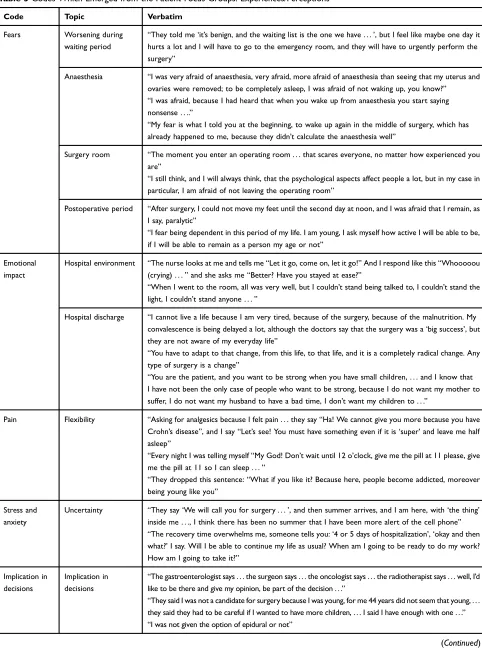
Relevant Topics: Experiences or
Perceptions (
Table 5
)
Fears
Most relevant fears of patients were concentrated in three moments: the waiting period, surgery itself (anaesthesia and surgery) and hospital discharge, including home arri-val. The “waiting period” between the indication of sur-gery and the assigned sursur-gery date triggered fear and anxiety/stress for the possibility that the underlying condi-tion may worsen or even need emergency surgery. This feeling was more pronounced when a date for the surgery had not yet been assigned. Patients missed closer follow-up of their condition during this waiting period.
With regard to anaesthesia, the main fears described by patients were fear of not waking up, fear of waking up during surgery and fear of waking up after surgery with a lack of control or inappropriate behaviour. Several patients highlighted that their fear of anaesthesia (especially of not waking up) was even higher than their fear of the surgery itself. With regard to surgery, patients agreed that the surgery room environment itself generates fear and was described as “intimidating”, and they feared the appearance of complica-tions during surgery (including death).
The main fears described during the immediate post-operative period related to a lack of understanding of what is normal or not after surgery, especially pain or discomfort and, after hospital discharge, related to having to cope with a new situation, generally with limitations in everyday life when patients arrive home. Some patients complained that they perceived such limitations to be larger than they expected or were told by their clinical teams.
Emotional Impact
Patients agreed that surgical interventions trigger different emotions, many of them needing some solace or relief in different ways. Some patients felt the need for relief by crying or simply by being alone for some time. They acknowledged that, besides the surgery, the hospital envir-onment itself generates feelings of sadness.
The postoperative period, especially when arriving home after hospital discharge, generates a strong emotional impact
on patients for two reasons. Firstly, patients claimed that the “success of the surgery”does not always correlate with their feelings of“being well”. On the other hand, adapting to the new situation at home generates anxiety for the urgency to resume normal life and minimize any impact on patients’ relatives, particularly children. This is magnified when patients perceive that their limitations for everyday life are larger than expected. Patients missed more information on what to do/not do, or some recommendations for the con-valescence period at home.
Pain
In general, patients perceived that pain is normal during the postoperative period (“it is part of the process”), but they claimed that sometimes the clinical teams are not
flexible with analgesia. Patients considered that somefl ex-ibility with analgesics, including exceptional extra doses of potent drugs (when feasible), is important. They claimed to have experienced “unnecessary” pain due to the reluctance of physicians to use more potent analgesics. Having pain and needing to“wait for the next scheduled dose”was a frequent situation that generated unnecessary discomfort.
Stress and Anxiety
In general, stress and anxiety were linked to the above-mentioned patients’ fears, but were also described in situations with no“immediate threat”, the most impor-tant being the waiting period (due to uncertainty around the surgery date) and hospital discharge (due to the uncer-tainty of how to cope with everyday life and how long limitations would last).
Implication in Decisions
Some patients claimed that they wished to have been more informed and implicated in decisions taken by the clinical teams, at least regarding several aspects like the best moment to perform the surgery or the kind of anaesthesia when several options are available.
Privacy
Patients agreed that the lack of privacy in hospital is an issue. Whilst preferring individual rooms, patients acknowledge that this is rarely possible. However, they missed privacy when, for example, the clinical team inform a patient on the outcomes of surgery or on specific disease-related issues. Patients also complained that, although progress has been made in this regard, data privacy was not always guaranteed.
Patient Preference and Adherence downloaded from https://www.dovepress.com/ by 118.70.13.36 on 26-Aug-2020
Table 5Codes Which Emerged from the Patient Focus Groups: Experiences/Perceptions
Code Topic Verbatim
Fears Worsening during
waiting period
“They told me‘it’s benign, and the waiting list is the one we have . . .’, but I feel like maybe one day it
hurts a lot and I will have to go to the emergency room, and they will have to urgently perform the
surgery”
Anaesthesia “I was very afraid of anaesthesia, very afraid, more afraid of anaesthesia than seeing that my uterus and
ovaries were removed; to be completely asleep, I was afraid of not waking up, you know?”
“I was afraid, because I had heard that when you wake up from anaesthesia you start saying
nonsense . . ..”
“My fear is what I told you at the beginning, to wake up again in the middle of surgery, which has
already happened to me, because they didn’t calculate the anaesthesia well”
Surgery room “The moment you enter an operating room . . . that scares everyone, no matter how experienced you
are”
“I still think, and I will always think, that the psychological aspects affect people a lot, but in my case in
particular, I am afraid of not leaving the operating room”
Postoperative period “After surgery, I could not move my feet until the second day at noon, and I was afraid that I remain, as
I say, paralytic”
“I fear being dependent in this period of my life. I am young, I ask myself how active I will be able to be,
if I will be able to remain as a person my age or not”
Emotional impact
Hospital environment “The nurse looks at me and tells me“Let it go, come on, let it go!”And I respond like this“Whooooou
(crying) . . .”and she asks me“Better? Have you stayed at ease?”
“When I went to the room, all was very well, but I couldn’t stand being talked to, I couldn’t stand the
light, I couldn’t stand anyone . . .”
Hospital discharge “I cannot live a life because I am very tired, because of the surgery, because of the malnutrition. My
convalescence is being delayed a lot, although the doctors say that the surgery was a‘big success’, but
they are not aware of my everyday life”
“You have to adapt to that change, from this life, to that life, and it is a completely radical change. Any
type of surgery is a change”
“You are the patient, and you want to be strong when you have small children, . . . and I know that
I have not been the only case of people who want to be strong, because I do not want my mother to
suffer, I do not want my husband to have a bad time, I don’t want my children to . . .”
Pain Flexibility “Asking for analgesics because I felt pain . . . they say“Ha! We cannot give you more because you have
Crohn’s disease”, and I say“Let’s see! You must have something even if it is‘super’and leave me half
asleep”
“Every night I was telling myself“My God! Don’t wait until 12 o’clock, give me the pill at 11 please, give
me the pill at 11 so I can sleep . . .”
“They dropped this sentence:“What if you like it? Because here, people become addicted, moreover
being young like you”
Stress and anxiety
Uncertainty “They say‘We will call you for surgery . . .’, and then summer arrives, and I am here, with‘the thing’
inside me . . ., I think there has been no summer that I have been more alert of the cell phone”
“The recovery time overwhelms me, someone tells you:‘4 or 5 days of hospitalization’,‘okay and then
what?’I say. Will I be able to continue my life as usual? When am I going to be ready to do my work?
How am I going to take it?”
Implication in decisions
Implication in decisions
“The gastroenterologist says . . . the surgeon says . . . the oncologist says . . . the radiotherapist says . . . well, I’d
like to be there and give my opinion, be part of the decision . . .”
“They said I was not a candidate for surgery because I was young, for me 44 years did not seem that young, . . .
they said they had to be careful if I wanted to have more children, . . . I said I have enough with one . . .”
“I was not given the option of epidural or not”
(Continued)
Patient Preference and Adherence downloaded from https://www.dovepress.com/ by 118.70.13.36 on 26-Aug-2020
Discussion
In recent years, patient experiences, satisfaction and expectations have become increasingly important as out-come measures, and this is in line with the healthcare goal of improving the patient’s experience with clinical care.9 Key aims of perioperative medicine include the identifi ca-tion and optimal care of high-risk surgical patients, with a focus on patient-centred decision-making throughout the perioperative period. This should help limit unwarranted variations in practice, with consequent reductions in pre-ventable complications, and improved patient satisfaction, long-term morbidity and survival.10 However, in general, there is a limited amount of information available regard-ing patients’experiences across the different perioperative stages,6and it is recognized that the traditional model of perioperative medicine requires improved coordination and organization.11The current study assessed information provided during patient focus groups to ascertain the needs, fears and experiences of patients who had recently undergone, or were scheduled for, abdominal or gynaeco-logical surgery under general anaesthesia, with regard to the entire perioperative process, and can be a basis for future quantitative research and healthcare planning.
The main topics highlighted by patients during the focus groups were reflected within specific moments during the perioperative process. The immediate postoperative period was the moment that generated the highest number of co-occurrences, followed by the indication of surgery, and the need for information was the code with the highest number of co-occurrences. Other key moments occurred at pre-anaesthesia, anaesthesia induction, surgical room and surgery, post-surgery prior to discharge and post-surgery at home. Specific fears with regard to surgery and anaesthesia were highlighted in patients’discourse, as well as anxiety/emotional impact and pain after surgery. The first step in improving patients’perioperative experience is recognition and aware-ness among the entire perioperative team of these specific moments, so that preventive measures can be implemented.
Previously, patients’perceptions of quality-of-care during the perioperative period were investigated in a cross-sectional
descriptive survey using the Quality from the Patient’s Perspective (QPP) questionnaire in 170 patients undergoing general (90) or orthopaedic (80) surgery in Sweden.12Overall, patient perception of the quality-of-care was good with high levels of satisfaction for most QPP items. However, only about half the group were satisfied with their opportunity to partici-pate in discussions relating to the operating room or post-anaesthesia care unit (PACU). The authors concluded that the participation and information needs in the postoperative setting seem to be personal and situation specific.12Thesefindings are in line with those from our patient focus groups which indi-cated that the main patient needs are for understandable infor-mation across the different steps of the perioperative process, particularly at the indication of surgery, pre-anaesthesia, as well as in the postoperative period. Moreover, our focus group findings highlight the importance of greater patient input and participation in decisions at several steps of the perioperative period, particularly at the indication of surgery and before hospital discharge, extending the findings from Forsberg et al12 beyond the operating room or PACU. It is worth noting that home arrival generated a high number of co-occurrences with important codes like information, stress/anxi-ety, emotional impact, pain and fears, suggesting that more attention must be placed on this part of the process by health-care professionals.
For patients undergoing surgery, there is a strong asso-ciation between patient satisfaction and both“perceptions of good communication” and “transfer of information”. Confidence and trust in the clinical team is also an impor-tant determinant of the patient’s experience.13 Although patients who underwent surgery at a tertiary-care hospital in Spain generally rated their satisfaction with periopera-tive care as good, several areas of nursing care that could be improved were highlighted, including provision of bet-ter advice; keeping patients betbet-ter informed; exhibiting more patience; and spending more time with patients.14 Increasing patients’awareness of nursing interventions can also result in improved patients’satisfaction with nursing care.15 A small exploratory study of patients who under-went abdominal surgery with a general anaesthetic Table 5(Continued).
Code Topic Verbatim
Privacy Data privacy “Data protection is very fashionable, but I share a room with a partner . . . Ifind out all his data, hefinds
out about mine”
Privacy “How do you feel? I feel naked with everybody entering the room”
Patient Preference and Adherence downloaded from https://www.dovepress.com/ by 118.70.13.36 on 26-Aug-2020
revealed that patients felt they were not adequately informed of the procedure, were fearful of losing psycho-logical and physical control, and lacked support from professionals to diminish their fears. Overall, they indi-cated that they would have liked to have known more about the surgical experience and what to expect.16 Interestingly, in this study, patients were more fearful of anaesthesia than of the actual surgical procedure and acknowledged the importance of the presence of nursing staff and family members as much as possible. Many of these factors were also discussed by patients in our focus groups, highlighting areas for improvement in the perio-perative process.
The findings from our study also highlighted that the waiting period was one of the moments which was most associated with patient fear, triggering anxiety and stress. A recent qualitative study highlighted the complex rela-tionship between greater symptom severity and less toler-ance with wait times, challenging the commonly held belief that waiting for healthcare is always negative.17 In another study involving women undergoing outpatient sur-gery, participants described developing anxiety when walking to the operation room, which increased with pro-longed preoperative waiting times.18Breakdown or lack of communication during the preoperative period and preo-perative waiting times were identified as major factors affecting patients’ experiences and satisfaction with care. Closer and more regular follow-up of patients by the perioperative team, particularly during waiting periods, should help to reduce anxiety and stress levels.
The above studies generally analysed the care process holistically over the entire perioperative period. However, similar to the moments (steps) identified in our study, Jones et al investigated patient-reported experiences by stages such as: admission, ward environment (including patient-staff interactions); pre-surgery, surgery, discharge and post-discharge.13 Some key factors which positively impacted overall patient satisfaction included: the need for privacy for clinical discussions and examinations; absence of night-time noise; high standards of cleanliness; confi -dence and trust in doctors and nurses; staff to provide emotional support; good communication skills, involving the patient and answering important questions; treated with dignity; involvement in discharge process with suffi -cient notice; discussions about home environment; discus-sions on potential warning signs post-discharge; provision of written information including contact information for any concerns; medication advice/instructions; and
instructing the family about providing patient care.13 Interestingly, many of these factors which positively infl u-ence patient satisfaction also address concerns reported from the perioperative experience of patients undergoing hand and wrist surgery, based on patient journey maps.19 The entire patient experience was associated with insecur-ity, reassurance by staff, loneliness, and a lack of informa-tion. Prior to surgery, lack of control was the most prominent experience and, during surgery, acceptance and curiosity were present.19 Taken together with the
findings from our qualitative focus groups, there are clearly areas of the perioperative process which can be improved to assist health-care providers in planning and optimising the management of individuals during the peri-operative period.
The current study has some limitations. Only one male accepted participation in the focus groups and, although we did not detect specific differences with the needs and experi-ences of females, we cannot rule out different outcomes if more males had participated. All patients who were waiting for surgery had undergone surgery in the past, and thus the perceptions of“naïve to surgery”patients are not captured in this study. Surgical procedures were limited to abdominal or gynaecological. Consequently, the results do not cover the opinions of the overall population of individuals undergoing, or scheduled for, any surgery. In addition, with the exception of one patient, all patients came from third-level hospitals in the public Spanish Health System. These third-level hospitals have access to all the necessary specialists and facilities, and it is possible that the outcomes may have been different for patients coming fromfirst- or second-level hospitals (smaller size, fewer specialties). However, the information obtained came from different patient profiles and pertained to the whole perioperative process, from the indication of surgery to home arrival, and is rich enough to serve as the basis for future quantitative research. Outcomes from this study provide valuable clues for simple actions that, regardless of the health-care system, could improve patients’experience and welfare.
Conclusion
In conclusion, given the current lack of information regarding patients’ needs, fears and perceptions across the different steps of the perioperative process, the out-comes of the focus groups reported herein should help to inform future research and healthcare planning. In general, patients demand receiving more comprehensive and under-standable information across the whole perioperative pro-cess, more involvement in several steps and, when
Patient Preference and Adherence downloaded from https://www.dovepress.com/ by 118.70.13.36 on 26-Aug-2020
feasible, some degree of personalization. Setting appropri-ate expectations with regard to surgery outcomes was also mentioned as an important need: physicians’and patients’ perceptions on “a positive outcome of surgery” seem to differ. Patients expressed several fears and stress/anxiety about surgery and anaesthesia that could be overcome with more targeted information and patients’ involvement. Finally, from these patients’ perspectives, pain manage-ment could be improved at the different steps. Importantly,
findings also extend to the postoperative period and home arrival, an essential step in the process that seems to be poorly attended. On the basis of this research, quantitative studies will yield more information on patients’needs and experiences with the entire perioperative process.
Ethics Approval
The study was approved by the Clinical Research Ethics Committee of the University Hospital of Getafe, Madrid, Spain.
Patient Consent
All patients provided signed informed consent to partici-pate in the focus groups and for audio recording.
Acknowledgments
This study was endorsed by the Confederation of Patients with Crohn’s Disease and Ulcerative Colitis of Spain and by the Spanish SENSAR group (Safety Reporting System in Anesthesia and Resuscitation). Under the guidance of the authors, medical writing support was provided by David P. Figgitt PhD, ISMPP CMPP™ and Steve P. Clissold PhD, ISMPP CMPP™, Content Ed Net, with funding from Merck Sharp & Dohme Spain, a subsidiary of Merck & Co. Inc, Kenilworth, New Jersey, USA.
Author Contributions
All authors made substantial contributions to conception and design, acquisition of data, or analysis and interpreta-tion of data; took part in drafting the article or revising it critically for important intellectual content; gave final approval of the version to be published; and agree to be accountable for all aspects of the work.
Disclosure
José M de Pedro and Luis Cea-Calvo are full-time employees of Merck Sharp & Dohme Spain. Milena Gobbo reports personal fees from MSD, during the con-duct of the study; personal fees from Sanofi, Pfizer,
Abbvie, Sandoz, outside the submitted work. Roberto Saldaña reports grants from MSD, during the conduct of the study; grants from MSD, Abbvie, Janssen, Pfizer, Roche, Dr. Falk, Ferring, and Takeda, outside the sub-mitted work. María I García-Vega reports personal fees from MSD, during the conduct of the study. The rest of the authors report no other conflicts of interest in this work.
References
1. WHO (World Health Organization). Everybody’s business: strength-ening health systems to improve health outcomes. WHO’s Framework for Action;2007. Available from:https://www.who.int/ healthsystems/strategy/everybodys_business.pdf. Accessed January 30, 2020.
2. Murray CJ, Vos T, Lozano R, et al. Disability adjusted life years (DALYs) for 291 diseases and injuries in 21 regions, 1990? 2010: a systematic analysis for the global burden of disease study 2010.Lancet.2012;380 (9859):2197–2223. doi:10.1016/S0140-6736(12)61689-4
3. Bengoa R. Transforming health care: an approach to system-wide implementation. Int J Integr Care. 2013;13:e039. doi:10.5334/ ijic.1206
4. Wagner EH, Austin BT, Von Korff M. Organizing care for patients with chronic illness.Milbank Q.1996;74(4):511–544. doi:10.2307/ 3350391
5. Doyle C, Lennox L, Bell D. A systematic review of evidence on the links between patient experience and clinical safety and effectiveness.
BMJ Open.2013;3(1):e001570. doi:10.1136/bmjopen-2012-001570 6. Davis Y, Perham M, Hurd AM, et al. Patient and family member
needs during the perioperative period.J Perianesth Nurs.2014;29 (2):119–128. doi:10.1016/j.jopan.2013.05.013
7. Rhodes L, Miles G, Pearson A. Patient subjective experience and satisfaction during the perioperative period in the day surgery setting: a systematic review. Int J Nurs Pract. 2006;12(4):178–192. doi:10.1111/j.1440-172X.2006.00575.x
8. Kennedy GD, Tevis SE, Kent KC. Is there a relationship between patient satisfaction and favorable outcomes? Ann Surg. 2014;260 (4):592–598. doi:10.1097/SLA.0000000000000932
9. Figueroa JF, Feyman Y, Zhou X, Joynt Maddox K. Hospital-level care coordination strategies associated with better patient experience.BMJ Qual Saf.2018;27(10):844–851. doi:10.1136/bmjqs-2017-007597 10. Al-Shammari L, Douglas D, Gunaratnam G, Jones C. Perioperative
medicine: a new model of care?Br J Hosp Med (Lond).2017;78 (11):628–632. doi:10.12968/hmed.2017.78.11.628
11. Duncan MJ. Perioperative surgical home,fixing a fragmented process to improve quality of care.Mo Med.2019;116(1):53–57.
12. Forsberg A, Vikman I, Wälivaara BM, Engström Å. Patients’perceptions of quality of care during the perioperative procedure.J Perianesth Nurs.
2015;30(4):280–289. doi:10.1016/j.jopan.2014.05.012
13. Jones CH, O’Neill S, McLean KA, Wigmore SJ, Harrison EM. Patient experience and overall satisfaction after emergency abdominal surgery.
BMC Surg.2017;17(1):76. doi:10.1186/s12893-017-0271-5
14. Sillero Sillero A, Zabalegui A. Satisfaction of surgical patients with perioperative nursing care in a Spanish tertiary care hospital.SAGE Open Med. 2018;6:2050312118818304. doi:10.1177/205031211 8818304
15. Tekin F, Findik UY. Level of perception of individualized care and satisfaction with nursing in orthopaedic surgery patients. Orthop Nurs.2015;34(6):371–374. doi:10.1097/NOR.0000000000000194 16. Costa MJ. The lived perioperative experience of ambulatory surgery
patients. AORN J. 2001;74(6):874–881. doi:10.1016/S0001-2092(06) 61505-6
Patient Preference and Adherence downloaded from https://www.dovepress.com/ by 118.70.13.36 on 26-Aug-2020
17. Carr T, Teucher U, Casson AG. Waiting for scheduled surgery: a complex patient experience.J Health Psychol.2017;22(3):290–301. doi:10.1177/ 1359105315603464
18. Markovic M, Bandyopadhyay M, Manderson L, Allotey P, Murray S, Vu T. Day surgery in Australia: qualitative research report.J Sociol.
2004;40(1):74–84. doi:10.1177/1440783304040454
19. de Ridder EF, Dekkers T, Porsius JT, Kraan G, Melles M. The perioperative patient experience of hand and wrist surgical patients: an exploratory study using patient journey mapping.Patient Exp J.
2018;5(3):97–107. doi:10.35680/2372-0247.1273
Patient Preference and Adherence
Dove
press
Publish your work in this journal
Patient Preference and Adherence is an international, peer-reviewed, open access journal that focuses on the growing importance of patient preference and adherence throughout the therapeutic conti-nuum. Patient satisfaction, acceptability, quality of life, compliance, persistence and their role in developing new therapeutic modalities and compounds to optimize clinical outcomes for existing disease
states are major areas of interest for the journal. This journal has been accepted for indexing on PubMed Central. The manuscript management system is completely online and includes a very quick and fair peer-review system, which is all easy to use. Visit http:// www.dovepress.com/testimonials.php to read real quotes from pub-lished authors.
Submit your manuscript here:https://www.dovepress.com/patient-preference-and-adherence-journal
Patient Preference and Adherence downloaded from https://www.dovepress.com/ by 118.70.13.36 on 26-Aug-2020