© 2015 Electronic Journal of Science Education (Southwestern University/Texas Christian University) Retrieved from http://ejse.southwestern.edu
Communicating Evolution: An Exploration of Students’ Skills in an Essential Practice of Science
Kristin L. Cook
Bellarmine University, USA
Alandeom W. Oliveira
State University of New York: Albany, USA
Abstract
The Next Generation Science Standards emphasize the importance of developing students’ abilities to effectively communicate science, including topics that are highly scrutinized in the American public sphere such as evolution. However, student attainment of controversial
communicative competence (the ability to competently communicate about controversial science
topics) has received little attention from educational researchers. The present paper addresses this issue by examining student communication of evolution (their choices when creating a public website) at the end of an instructional unit. Our exploratory analysis indicated students’ efforts to communicate evolution are characterized by varied levels of openness to dialogue (dialogic expansion and contraction). Further, our findings suggest a parallel between dialogically imbalanced communicative approaches (i.e., excessive use of dialogic contraction or expansion) and reduced levels of conceptual and NOS competence. Implications for science education are discussed; including the need for explicitly guiding students in critically analyzing varied forms of science communication.
Correspondence concerning this article should be addressed to: Dr. Kristin Cook, Bellarmine University, 2001 Newburg Road, Louisville, KY, [email protected]
Keywords: evolution education, evolution communication, dialogism, high school, nature of science
Introduction
Effective communication of controversial science topics has become a skill of paramount importance in contemporary society. Scientists are now more than ever faced with the daunting task of engaging in communicative exchanges about topics viewed by the general populace as controversial and involving unresolved disputes over issues of socioeconomic interests, political power, moral judgments, and religious implications of scientific theory or research practice (Nelkin, 1995; Martin & Richards, 1995). Consistent with this larger trend, American school students are increasingly being expected to develop communicative skills and the ability to effectively engage in science communication. This is particularly evident in the Next Generation
Science Standards (NGSS Lead States, 2013) wherein “communicating information” is
Electronic Journal of Science Education ejse.southwestern.edu become proficient “communicating scientific and/or technical information or ideas… in multiple formats (i.e., orally, graphically, textually, mathematically).”
Among the ideas that students are expected to communicate effectively is evolution (within the high school performance expectations, students are required to “Communicate scientific information that common ancestry and biological evolution are supported by multiple lines of empirical evidence (HS-LS4-1).”), a topic that is highly scrutinized in the American public sphere. While there are many unresolved ethical implications inherent in science topics such as stem cells or genetic engineering, evolution is a topic that embeds further consideration as it is not only conceptually (and for some, religiously) challenging, but understanding and communicating about it requires an understanding of the epistemology of science. Communicating about evolution necessarily requires taking up the basic issues of what counts as evidence in science and how the field builds, evaluates, and refines knowledge. For this reason, student communication of evolution occurs at the intersection of three distinct spheres of communication or discourses, namely scientific, public, and classroom and that relates to students’ levels of conceptual competence (knowledge of evolutionary concepts) as well as NOS competence (views of the nature of science). Evolution communication is thus a complex task of negotiating discourses that can be quite controversial in an American biology classroom.
Despite growing recognition of communication as an important aspect of science learning, student attainment of controversial communicative competence (the ability to competently communicate controversial science topics) has received little attention from researchers of science education. Instead, research on evolution education has focused on effective curricular designs (Cook, 2009; Khourey-Bowers, 2006), the importance of explicitly teaching the nature of the science alongside evolution (Cook, 2009; Anderson, 2007), and enabling students to contrast their beliefs with current scientific principles (Geraedts & Boersma, 2006; Ford & Wargo, 2012). While much attention has been given to students’ conceptual development (e.g., students’ ideas and conceptions) and acceptance of evolution (Donnelley et al. 2009; Deniz et al., 2008), students’ evolution communication itself (communicative forms, strategies, and skills) remains to be examined in more depth.
With the overarching goal of achieving a more sophisticated understanding of the communicative dimension of evolution instruction, the present study examines a classroom in which secondary students were charged with the task of communicating their understandings of evolution and the nature of science to the general public via a public forum: the creation of a website. Our analytical efforts are aimed specifically at better understanding the ways in which students approach this communicative task and how their communicative choices relate to their conceptual understandings of evolution and the nature of science. As such, the questions guiding our research were:
1. How competently do students in our study approach the task of communicating a controversial topic such as evolution?
Electronic Journal of Science Education ejse.southwestern.edu Controversial Communicative Competence
Our theoretical perspective on evolution communication is centered on the notion of competence. Like language scholars (Hymes, 1987; Saville-Troike, 2003), we conceive of
communicative competence as the ability to communicate appropriately in an authentic situation
or social context (with a clear awareness of what can be said, how it can be said, and how it can be interpreted by interlocutors). Competent communication requires knowledgeability about the topic under consideration, the linguistic codes in use (e.g., appropriate language), and the sociocultural context in which communication takes place (cultural values and ideologies, social norms, etc.). Drawing from Mikhail Bakhtin’s (1981) ideas of dialogism, a competent communicator is critically and reflectively aware of the range of alternative ways that a given topic can be approached and strategically avoids potentially problematic approaches (e.g., use of linguistic forms that may be unclear, misconstrued, or offensive to others). Language theorists often identify this range of communicative alternatives as the paradigmatic dimension of discourse (de Saussure, 1972). Likewise, a basic premise of our theoretical perspective is that students’ references to evolution are indicative of paradigmatic choices being made among multiple ways of communicating evolutionary theory. When made appropriately and effectively, these choices are indicative of communicative competence.
In this study, student communication of evolution is viewed as a social activity that occurs at the intersection of three spheres of discourses—scientific, public, and classroom (see Figure 1) and that relates to students’ levels of conceptual competence and views of the nature of science. As such, students of evolution theory are faced with the challenging task of communicating within overlapping social contexts. Language and imagery that is appropriate and rhetorically effective in one context (e.g., technical vocabulary) can be inappropriate, inaccurate and/or even offensive in another, hence requiring careful planning and strategic modification or adaptation of communicative artifacts. Further, controversial communicative
competence requires students to demonstrate not only communicative competence (the ability to
Electronic Journal of Science Education ejse.southwestern.edu In the Bakhtinian notion (1981) of dialogism, a distinction is made between dialogically contractive and expansive paradigmatic choices. One option that speakers have is to communicate evolution in a dialogically contractive manner. In this case, evolution is factually declared to the audience, that is, is treated as a “given” (a closed matter) without any reference or acknowledgement being made to alternative voices. This contractive form of evolution communication is characteristic of scientific and classroom discourses wherein dissent from evolutionary perspective is simply precluded. Such dialogic contraction leads to the establishment of an imposing and demanding interpersonal stance toward the audience (Martin & White, 2005). Factual communication implicitly denies the audience the right to subscribe to alternative, non-scientific views, and as such has the potential to threaten the addressees’ sense of personal dignity or face, hence creating the impression of impoliteness (Brown & Levinson, 1978). Consistent with this theoretical stance, research in evolution education has shown that many students and parents have reservations and often take offense when evolution is taught as an unquestionable “fact” (Donnelly, Kazempour, & Airshokoohi, 2009; Woods & Scharmann 2001).
In contrast, speakers also have the option of communicating evolutionary theory in a dialogically expansive way by acknowledging and verbally creating “room” for alternative positions or viewpoints on biological change. When there is some degree of dialogic expansion, the evolutionary position is verbally communicated against a heteroglossic background of other voices (Martin & White, 2005); that is, evolution is presented as a topic to an extent open to debate and contestation from members of the public who may subscribe to different a view. Rather than authoritatively demanding or presuming agreement, the speaker resorts to redressive work (Brown & Levinson, 1978)—politeness strategies that reduce the potential threat to the audience’s face.
Electronic Journal of Science Education ejse.southwestern.edu expansive” method of communication evolution is also problematic in that opening the discussion of a scientific idea to nonscientific views does not necessarily seem to help learners learn evolution, and it is not clear it helps communicating the science. Indeed, our earlier work (Cook, Buck, & Park Rogers, 2012) in this area has indicated students need to be prepared in a manner that allows them to effectively participate in the social discussion of evolution and requires that teachers avoid engaging students in high-level evaluative thinking before cognitive engagement in basic evolutionary concepts and the nature of science is attained.
In the present study, we examine the extent to which evidence of such paradigmatic choices can be found in artifacts produced by students for the purpose of communicating evolution to the general public subsequent to their participation in a project-based unit on the topic of evolution. In doing so, we aim to uncover the ways in which learners of evolution negotiate scientific, public, and classroom spheres of communication and how their showcasing of their conceptual competence (of evolution and the nature of science) underscores their ability to competently communicate about socially controversial science topics.
Literature Review
In this section, we review what research has revealed regarding student’s conceptual competence of evolution understandings and views of nature of science. We then detail literature that has examined the ways in which students communicate about evolution.
Student Understandings and Views of Evolution
Research in this area has pointed to the lack of connection between students’ understanding of natural selection and their acceptance of evolution (Brem et al., 2003; Sinatra et al., 2003, Deniz et al., 2008). While a student may grasp the theory and understand how it is useful as an explanatory force in biology, that student may not necessarily agree with evolutionary ideas or view them in a positive light. Like several other studies, Sinatra et al.’s (2003) investigation of undergraduate students indicated there was no relation between knowledge and acceptance of evolution. Some researchers have argued, however, that knowledge of macroevolutionary content (i.e., deep time, speciation, common ancestry and phylogenetics) may be linked to acceptance of evolution (Nadelson & Southerland, 2010; Walter et al., 2013). Thus, learning opportunities to promote conceptual change have targeted such content instruction. Many critics have argued that such contradictory results with regard to the connection between student understanding and acceptance is due to the variety of measurements and participants used in the studies (Southerland & Sinatra, 2005).
Electronic Journal of Science Education ejse.southwestern.edu With regard to the ways in which students view evolution education, Donnelly et al. (2009) found that high school students’ acceptance or rejection of evolution is related to students’ ideas about how evolution instruction ought to be framed in the classroom. Similarly, Woods and Scharmann (2001) found that high school students had a range of ideas about how evolution ought to be taught including ‘balanced treatment’ of evolution and creationist views, evolution taught but not as ‘fact,’ and complete rejection of teaching evolution. These researchers also determined that most high school students thought evolution should be taught even though the majority in this study did not fully accept the theory. Brem et al. (2003) further supported this notion when they found that a majority of both evolutionist and creationist college biology students thought both topics (evolution and creationism) should be taught. Because acceptance of evolution is connected to students’ perception of evolution education, researchers recommend teachers ought to delineate the difference between science and other disciplines, address the distinction between acceptance of and understanding evolution, and discuss with students the laws pertaining to the teaching of evolution as well as the usefulness of the theory in modern-day applications (Donnelly et al, 2009; Cook, 2009).
Dialogism in Evolution Education
Research on students’ communication of evolution has suggested the need for learners to dialogue with others about what they are learning. Classroom dialogue has been shown to increase student understanding of the tenets of evolution and fosters receptivity to learning evolution. Scharmann (1990) reports a significant positive impact of placing freshmen undergraduate students in discussion groups charged with the task of resolving potential conflicts themselves and then presenting a consensus opinion. Similarly, Ash (2003) analyzed dialogic interactions of families discussing natural selection and adaptation at museums. Evidence is provided in both of these studies that giving students an opportunity to communicatively exchange their positions regarding the theory of evolution can lead to improvement in students’ understandings of the nature of science and attitudes toward evolution.
Ford and Wargo (2012) had students participate in a set of instructional activities that were dialogically framed through oral explanation, argumentation, and presentations about alternative evolutionary theories (Paley, Lamarck, and Darwin). Providing evidence that talk and discussion can yield learning gains, this study emphasizes the importance of teaching evolutionary content dialogically through adoption of curricular materials that allow students to develop a dialogic understanding of evolutionary theory by deeply and reflectively engaging in the communication of evolutionary theories. Ford and Wargo’s research on teaching students about natural selection through an experience in which students initially research dialogically framed material about evolution and competing viewpoints as a precursor to argumentation explores nuances related to Bakhtin’s ideas of dialogism. Importantly, they assert neither social interactions among peers nor discursive dialogue with the teacher is a necessity for dialogic learning and understanding of evolution, but rather it is the dialogic framing of the learning experience itself (even given monologic peer and teacher discussions) that supports students’ understanding.
Public Communication of Evolution
Electronic Journal of Science Education ejse.southwestern.edu project-based learning units on their engagement and learning of evolution. The final units, centered on concepts of co-evolution, were ultimately made available to K-12 educators. Students’ experience developing units based on the content they had learned deepened their understanding of content in that students were able to identify points of weakness in their understanding. Results also indicated that students were able to focus on the larger themes and broader implications of co-evolution in society in their attempts to make sense of content and make it meaningful to a K-12 audience.
A recent study of a partnership of Italian high school students and an international team of scientists and museum professionals investigated the public communication of evolution through a development of a museum exhibit (Padovani, Buckler, Gualtieri, & Vescogni, 2013). The collaboration resulted in a mutually beneficial experience whereby professionals learned from the students how to make the exhibit more user-friendly and engaging, while students felt a deep sense of ownership and connectedness to the topic of study. As students were assisting in the creation of the museum exhibit on symmetry (with a focus specifically on earth science and evolution concepts), they were able to develop their understanding of the topics as well as develop skills to communicate those understandings to the public. Researchers assert that using informal science education as a bridge to link science researchers with students creates an environment where students learn content and discourse skills through actively participating in the public communication of science.
We add to this developing body of research of the importance of dialogic curricular designs with regard to student understanding of evolution and NOS by investigating the ways in which students, given dialogic framing of the curriculum, communicate and synthesize their ideas about evolution given specific public communicative tasks. In doing so, we attempt to untangle what their communicative choices reveal about their positioning regarding evolution.
Methods
Electronic Journal of Science Education ejse.southwestern.edu Context
Because of the rich and detailed analysis, this study focuses on three high school biology students learning and communicating about evolution in a small, rural mid-western town in the United States. This school was the site of a larger study on project-based learning reform efforts and as such the research team had been working in the school for two years preceding this particular Biology course. These three students (Nate [Male, Caucasian], Jose [Male, Latino], and CeCe [Female, Caucasian]) were selected from a larger class of ten (N=10; 6 Caucasian, 2 African American, 2 Latino; 5 male, 5 female). These students represented students who possessed different levels of understandings of the nature of science (high, mid, and low) as determined by a pre and post VNOS-B test and possessed varied degrees of conceptual knowledge of evolution by the end of the unit. These selection criteria were reflective of our analytical goal of examining the extent to which students’ communicative competence was paralleled by NOS competence and conceptual competence.
Nate, Jose, and CeCe lived in a very conservative part of the Midwest where religious affiliation is a strong part of personal and community identity. Even before the implementation of the evolution unit, students’ parents had already expressed concerns and reservations about the teaching of evolution, and the teacher himself had petitioned the research team (who was already present in the school studying the project-based reform the school was undergoing) to assist him in developing and implementing an evolution unit centered on the modern-day applications of the theory and the fundamental aspects of the nature of science. The unit was taught by Mr. White, a second-year biology teacher who had a bachelor’s degree in biology and chemistry, was trained in project-based science teaching, and had successfully taught several project-based Biology units to this particular student population.
During the four-week instructional unit (see Table 1 for a brief description of instructional design and Cook, 2009, for complete unit and assessment criteria), students first investigated the development of antibiotic resistance in bacteria by conducting a hands-on experiment wherein a resistant gene was introduced into E. coli to confer resistance to ampicillin. In doing so, students simulated antibiotic resistance in Methicillin-resistant Staphylococcus aureus (MRSA) and then later go onto to connect their experience with modern-day examples of invasive species, biotechnology, etc. Explicit and reflective consideration was also given to the core tenets of the nature of science by using an online 5E learning cycle (Engage, Explore, Explain, Elaborate, and Evaluate) to learn about the tenets of the nature of science and reflect on how the theory of evolution underscores those tenets. Students researched the historical development of evolutionary ideas, evaluating differences and similarities in Lamarck, Darwin, and Wallace’s work. Students were then assigned a culminating project in which they were to research the evidence for evolution using online resources and create an informational website that would be posted online (Appendix A). Students’ assigned goal was to inform others (members of the general public) about evolution and the nature of science by synthesizing and sharing what they learned throughout the unit.
Table 1. Description of the project-based unit on evolution. Week Instructional Activities
Electronic Journal of Science Education ejse.southwestern.edu bacterial colonies on ampicillin plates allows them to see this possible bacterial transformation occur.
2
3
Students expand their understanding by connecting their findings about MRSA and antibiotic resistant bacteria to other contemporary issues, such as conservation, invasive species, and
biotechnology. In a PBS activity
(http://www.pbs.org/wgbh/evolution/educators/lessons/lesson6/act2.html), students collaboratively use resources to illuminate how evolution affects each of us in our daily lives. Teams select a topic to investigate and present at a round table discussion with their classmates, ultimately creating a group concept map with their ideas to show current applications of evolution.
Using the online source, http://www.pbs.org/wgbh/evolution/educators/course/session1/ index.html, students conduct a 5E learning cycle (engage, explore, explain, elaborate, and evaluate) to learn the tenets of the nature of science and reflect on how the theory of evolution reflects those tenets.
4 Students research the evidence and the history of the theory of evolution that ultimately informs its applicability to contemporary issues (i.e. molecular, embryological, fossilized, homologous and analogous structures evidence). Invoking discussion about researchers who have contributed to evolutionary biology, students critically analyze the theories of Darwin, Wallace, and Lamarck (http://www.pbs.org/ wgbh/evolution/educators/course/session2/explore_a.html). To address the standards on the historical perspective, students read actual texts written by these scientists and discuss implications of their theories. The teacher also explicitly addresses misconceptions such as Lamarck’s notion of acquired characteristics. Finally, students create an informational website that will be posted online to educate others about what they have learned throughout the unit.
Students were also asked to keep a journal in which they wrote about their personal thoughts about evolution as they developed the websites. Mr. White felt it was important for students to have a platform during the unit on which to showcase their attitudes toward and feelings about the teaching of evolution. Collected at the end of the unit, these journals constituted another data source, providing us with additional information regarding students’ evolution and NOS views.
Data Collection
Electronic Journal of Science Education ejse.southwestern.edu
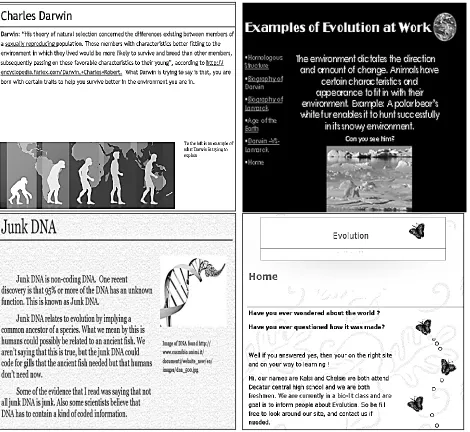
Table 2. Sample Pages from Students’ Evolution Websites.
Data Analysis
To determine how evolution was communicated (students’ paradigmatic choices), we conducted a comparative text analysis. According to Russell (2002), text analysis seeks to identify recurrent trends in the communicative practices of members of a social group by means of a systematic examination of corpora of naturally occurring texts. Comparative, interpretive, and qualitative in nature, our text analysis focused specifically on the verbal formulations deployed by students in the production of their evolutionary texts. Of particular concern was determining the extent to which these lexical resources were indicative of student adoption of a dialogically contractive or expansive stance toward the public when communicating evolution. This analysis was informed by recent research in systemic functional linguistics showing that dialogism is realized lexically by writers through strategic deployment of dialogically expansive
Electronic Journal of Science Education ejse.southwestern.edu alternative viewpoints) and dialogistically contractive formulations (discursive moves that close dialogue such as factual declarations). As Martin and White (2005) emphasize, dialogic expansion is a type of communication wherein a writer’s locutions make “space” for alternative perspectives, whereas dialogic contraction is characterized by the predominance of verbal locutions that simply exclude and completely reject dialogic alternatives. Table 3 shows an example of our coding of students’ websites, in which we categorize students’ communicative choices as dialogically contractive or expansive and further explicate the discursive moves and commutative stance.
Table 3. Dialogic Formulations in Students’ Communication of Evolution.
Formulation Type Examples Communicative Stance
Dialogically Contractive
What is the theory of Evolution? Evolution is any process of formation or growth. Changes of inherited traits amongst the population… Who is Charles Darwin? Charles Darwin is an English Naturalist that believed all organisms evolved from a common ancestor through natural selection. Who is Lamarck?... [Jose]
Evolution is change in the inherited traits of a population of organisms from one generation to the next. [Jose]
Evolution is the theory in which the single celled organisms have evolved with time and over the years growing and having to adapt with the world... [Nate]
Proclaiming evolution – informing the
layperson about evolution; presenting the facts about evolution to the public; and, adopting an expert-public alignment (unequal social status).
Discursive Moves – display questions (close-ended queries designed to allow addressees to publically display their knowledge of the right answers); official definitions (statement of standard meanings accepted by the scientific community); and, extreme examples (illustration by means of reference to extreme cases or situations rather than more typical instances).
Dialogically Expansive
Have you ever wondered about the world? Have you ever questioned how it was made? Well if you answered yes, then you’re on the right site and on your way to learning! [CeCe]
What is evolution? Some might have that question when hearing the word evolution and others may already have a good picture of what evolution is. [Nate]
Entertaining evolution: creating a
dialogic space for the communication of evolution; encouraging the public to consider the possibility of evolution; and, engaging the public in a dialogue about evolution (equal social status).
Discursive Moves – expository
questions (queries designed to introduce and encourage consideration of a particular proposition); and,
entertainment formulations
(“wondering”).
Electronic Journal of Science Education ejse.southwestern.edu Findings
Data are presented below for each student’s competence (NOS, conceptual, and communicative).
Nate
NOS Competence. Nate consistently displayed informed views of the nature of science. For example, he showcased his informed view of theories when he stated that theories are well supported with scientific evidence, though subject to revision given substantial counter-evidence: The way this applies to the theory of common descent and theory of evolution is that they are true for now, but can be revised in the future if new, substantial, and opposing information arises, then the theories can be revised to fit the new information.
Nate also understood the creativity in science and when discussing the similarities between art and science during his interview stated,
That’s the same way with science, with evidence. It could be interpreted differently. I think you have to have a lot of creativity when you're thinking of something because an atom, to think of something that tiny to have the protons and neutrons and you can't even see it at all, you have to have a lot of thought.
Here, Nate illustrates his understanding that science is empirically-based, creative, subjective, and tentative—all indicative of his informed conceptions of NOS.
Nate’s understanding of the nature of science was also evident in his website. He explicitly linked his NOS ideas to the development of evolutionary theory—emphasizing how new evidence can support or modify existing ideas. Supporting evidence was visually communicated through the inclusion of cladograms depicting change in beak size and shape and biological examples such as giraffes with varied neck lengths and ancient organisms in a fossilized state. These visuals depicted the various lines of evidence supporting evolution (i.e., homologous structures, embryology, and hemoglobin comparisons).
Nate’s website read like a presentation of current and historic evidence, along with a clear scaffold of what constitutes science as an endeavor. He demarcated the limits of scientific boundaries with a brief presentation of alternative theories (i.e., creationism and the beliefs of Native Americans) by stating “while science can explain the natural reasons for some things, it
cannot explain the supernatural. Science does have its limits and the supernatural is its limit.”
Nate understood how the process of science works why these aforementioned alternative conceptions would not be included under the purview of science.
Conceptual Competence. Nate demonstrated his achievement of a competent level of conceptual understanding of evolution in his post-interview when he stated: “I thought I knew what evolution was, but it turns out I was thinking the idea of Lamarck rather than what really
was- what Darwin found out...it was the DNA mutations that really changed.” Nate was able to
Electronic Journal of Science Education ejse.southwestern.edu demonstrated a sophisticated level of conceptual understanding of the genetic mechanisms of evolution in his website (see Figure 2 and Table 3 above).
Communicative Competence. Nate demonstrated his high level of communicative competence by effectively combining dialogically contractive and expansive communicative strategies. Statements like “evolution is the theory in which the single celled organisms have evolved with
time and over the years growing and having to adapt with the world” proclaimed the ideas and
evidence behind evolution. In this way, he sought toinform the layperson by presenting the facts about evolution and adopted an expert-public alignment. On one occasion, however, Nate posed the question, “What is evolution? Some might have that question when hearing the word evolution and others may already have a good picture of what evolution is.” In this particular instance, Nate employs a dialogically expansive type of discourse whereby hecreates a dialogic space for the communication of evolution—encouraging the public to consider the possibility of evolution and attempting to engage the public in a dialogue about evolution.
Although subtle, Nate’s website did at times indicate his support of non-scientific ideas on evolution. While the goal of the website was to present only the theory of evolution to the public, Nate also mentioned alternative hypotheses in his website. In a page devoted entirely to these alternative theories, he stated:
The theory of Creationism goes against the theory of evolution. Creationism goes on the belief that everything was created by a God. Everything includes the Earth, the sky, the humans, the animals, and the whole universe. The gods of Christianity, Catholicism, Judaism, and Islam are usually associated with Creationism. There are also ancient civilizations, such as the Native Americans, that have their own creation stories.
Electronic Journal of Science Education ejse.southwestern.edu Jose
NOS Competence. Jose possessed some adequate conceptions of the nature of science tenets. He adequately understood the creative and subjective aspects of the nature of science, but struggled with the idea of theory and law. When asked what distinguished the two, he stated,
“like a law is something that we know is true and that you go by every single day and you follow.
A theory is kind of like what you think and what your predictions are.” Over and over in his interviews, he made claims about theories not being as “strong” as laws. He also stated that
“somebody else could come back and change the theory as make it different…it’s not like
everybody is going to know the right theory,” which suggested a view of theories as subject to
change. However, he does not point to counterevidence nor to repeated results when discussing the process of theory revision in science. Moreover, Jose dismissed theories by describing how science operated on conjecture:
Cause if they've [scientists] done all kinds of studies and know what it is and they know what it looks like, then that's like scientific knowledge cause they know what it is. But at the same time, it could be like an opinion because they don't know all the facts. They [the scientists] don't know everything about it.
Repeatedly throughout his interviews, Jose referenced these perceived similarities between theories and opinions.
Conceptual Competence. When asked about evolution in his pre-interview, Jose claimed, “that we started out as apes or something like that and we evolved into humans. I’ve
heard that and seen pictures and stuff.” By the end of the unit, Jose was still unable to describe
what happened in the MRSA lab and how and why the bacteria were able to survive the antibiotic media. And, on his website, he did not showcase his understanding of Lamarck’s idea of acquired characteristics being challenged by Darwin’s ideas about natural selection. Most of his culminating project suggested common and persistent misconceptions about evolutionary theory. For example, Jose’s used a visual that depicting the ape to human metaphorical walk across time, with his caption to the picture reading “What Scientists Believe Happened.”
Electronic Journal of Science Education ejse.southwestern.edu whereby Jose dissociated himself from human evolution while positioning himself counter to scientists. Jose also presented a cladogram with no caption to illustrate evolution as a macro-process (both in human and fish body shape changes over time). And, he wrote, “in modern biology it is generally accepted that all living organisms on Earth are descended from a common
ancestor.” Again, he attributes the presented idea to scientists rather than a generally accepted
principle. Furthermore, Jose did not discuss various lines of evidence for evolution nor did he present the nature of science anywhere in his culminating project.
Jose’s choice of representations included an iconic image of Darwin (see Figure 4) when presenting details on his life and work. This symbolic visual depicted evolution in terms of human identity and action.
Indeed, Jose focused much of his website on the human agents behind evolutionary theory (i.e. Darwin, Lamarck, and Wallace). In his website, Jose included lengthy historical facts focused mainly on the personal lives of both Darwin and Lamarck rather than their scientific work or significance of conceptual contributions such as evolution by natural selection. His work seemed to be cut text from online sources—for instance, in one lengthy section, he pasted,
“Lamarck was born…in an impoverished aristocratic family. Male members of the Lamarck
family served in the French army. Lamarck's eldest brother was killed in combat… other
brothers were still in service when Lamarck was in his teenage years.” These personal narrative
accounts of each scientist’s life took up the majority of space on his website and did not seem to be in his own voice.
Communicative Competence. Jose’s presentation of evolution on his website was entirely dialogically contractive (see Table 3 above). At no time did he invite the reader into a conversation about the theory; instead he included factual information most likely gleaned from science textbooks and other online sources to showcase his conceptual competence. Jose’s website read like a text of facts and historical information. He presented information that he believed scientists would say about evolution, rather than synthesizing the information he had learned within the context of the instructional unit (i.e., MRSA lab, modern-day implications of evolution, and the nature of science).
Electronic Journal of Science Education ejse.southwestern.edu with the hypothetical audience. By resorting mainly to copied text cut and pasted from other informational websites and textbooks, he avoided expressing his own “voice” and was unable to demonstrate an ability to engage in public dialogue about evolution.
CeCe
NOS Competence. CeCe displayed nature of science conceptions that were often inconsistent with current science education literature and reform documents. Though she understood some limited aspects of the tentative and creative nature of science, she did not grasp the difference between theories and laws—an important precursor to understanding why evolution is considered a evidenced-based theory. Further, CeCe also struggled with the empirical base of scientific claims, often referring to scientific knowledge as nothing more than people’s opinions:
You could go into different research and there could be three different things. I mean, they have the same data basically, but they could know more from different stuff they’ve done. There’s opinions and everyone has the right for one.
CeCe’s ideas about NOS indicated an uninformed understanding about what constituted science and pointed instead to a relativistic perspective.
Conceptual Competence. CeCe’s understanding of evolution was lacking in conceptual sophistication. This was particularly evident during a discussion about her website when she provided the following as an example of adaptation:
A family that lives in California moves to Alaska. This would be the way humans would learn to adapt from warm whether to cold weather and still able to meet lives needs and survive or a stray dog finds a family, the dog has to learn to obey the rules, and the family has to learn to have a new pet.
This example shows how CeCe did not grasp natural selection’s reliance on changes in DNA over time as the vehicle through which evolution occurs. Instead, she presents evolution as a teleological or purpose-driven process through which living beings make themselves more comfortably suited to a particular environment. Likewise, CeCe’s presentation of DNA in her website also pointed to a low level of understanding of the micro-processes of DNA change and importance of DNA to the micro-process of natural selection. She stated, “DNA can change over time just like evolution. DNA really don't change over time, but scientist find things about DNA
each and everyday and the research just gets better and better.” CeCe did not showcase an
understanding that DNA can and does change (i.e., mutate), which in part leads to the variation upon which natural selection acts. Later, she went on to state that “some people get the origin of
life confused with evolution, but it’s really just the change of living things.” Here, she indicates
that evolution poses no threat to discussions about the origin of life, but rather contributes to our collective understanding about how present and past life changes to adapt to their current conditions. Evolution (and science in general) is presented as part of the path toward knowledge with no indication of the unique type of knowledge science contributes to modern thought.
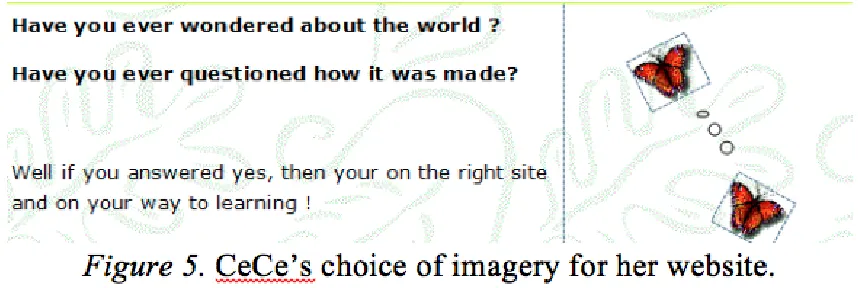
Communicative Competence. CeCe opened her website with the following statement:
“Have you ever wondered about the world? Have you ever questioned how it was made? Well, if
you answered yes, then you’re on the right site and on your way to learning!” This opener
Electronic Journal of Science Education ejse.southwestern.edu Figure 5). She invited the public into learning about evolutionary theory and the nature of science by indicating that science can help answer broad questions about the world.
CeCe’s website was predominantly characterized by dialogic expansiveness (see Table 3 above). She consistently positioned herself as “entertaining” evolution by creating a dialogic space for the communication of the theory; encouraging the public to consider the possibility of evolution and engaging the public in a dialogue about evolution (indicating equal social status). To do so, she strategically resorted to discursive moves such as rhetorical questions, entertainment formulations (“wondering”), and acknowledgement formulations (“you’re on your way to
learning!”). CeCe’s communicative style led to the creation of a free, open-minded thinking
space whereby the public could engage with questions of importance and science could weigh in on those questions. However, in contrast to Nate who used actual tables of hemoglobin gene comparisons, CeCe did not incorporate evidence-based representations in her website nor provided a historical account of the origin of evolution theory.
Discussion
The above examination of evolution communication illuminates the variety of ways that students can discursively approach a publically controversial science topic. As discussed below, students’ communicative choices undergird important conceptual and communicative aspects of the topic of evolution at the intersection of public, scientific, and classroom discourses.
Evolution Communication
Electronic Journal of Science Education ejse.southwestern.edu to deliberation, she created a dialogic space that invited the imagined audience to discover evolution together—leveling her expertise with that of the reader. These formulations bore a “were-are-in-it-together” stance whereby the audience was invited to consider and also be open about the possibility of evolution. She remained untethered to the scientific perspective throughout her communication. Nate, however, strategically combined dialogically expansive and contractive formulations. He conveyed an awareness of competing theories while privileging evolution as the best explanation within the parameters of science, hence demonstrating the highest level of controversial communicative competence of our participants. Unlike Jose, who declaratively communicated evolution (to the complete exclusion of other perspectives), and CeCe, who seemed excessively open to alternative perspectives, Nate demonstrated a level of commitment to the scientific theory of evolutionthat was non-exclusive and less likely to have the unintended effect of a face-threating act (i.e., lead to loss of face or offense by others), thus being able to competently reach a balance between dialogic contraction and expansion in his communicative efforts.
Recent scholarly work in science communication has shown that adoption of a transmission-based approach wherein the producer (science expert) sets out to send a message (scientific information) to an uneducated public (receiver) is ineffective and socially problematic. This approach is clearly evident in the work of science communicators like Gross (2009), who writes, “scientific knowledge is always limited by ignorance” (p. 264). Adoption of simplistic engineering-based models of communication such as “message transmission” (Leach, Yates, & Scalon, 2008) and “one-way dissemination” (Lewenstein, 1995; Logan, 1991) reduces science communication to the linear flow of a message from a sender to an uninformed receiver. This deficit-oriented approach can lead to further polarization in controversial public discourse: “condescending claims of ‘public ignorance’ too often serve to further alienate key audiences, especially in the case of evolutionary science, when these charges are mixed with atheist critiques of religion” (Nisbet & Scheufele, 2009, p.1768). Indeed, this approach neglects the pre-existing knowledge of the receiver, which is formed through the combined impact of their education, their experiences, and the value-system or “frame” in which they live their life. Successful science communication requires careful consideration of the understandings and concerns of the receiver, to ensure that the message has a chance to be received and incorporated into improved understandings. Rather than setting out to change people’s minds, it is more effective to adopt a lay expertise approach wherein science is presented without simply dismissing or excluding values, knowledge, and ways of knowing outside the scientific realm (Secko, Amend, & Friday, 2013). This is precisely what Nate competently accomplished in his design of the website. By strategically combining dialogic contraction and abstraction, Nate positioned himself as a “lay expert” who was knowledgeable of evolutionary concepts (conceptually competent) and the scientific endeavor (NOS competent) and yet remained respectful of alternative, non-scientific perspectives on biological change.
Electronic Journal of Science Education ejse.southwestern.edu respect and politeness. Controversial communicative competence requires the ability to promote a positive and non-threatening social context wherein respectful expression, exploration, and critique of ideas can occur and in which the audience feels comfortable expressing their beliefs and opinions.
Communicative Competence about Evolution
Another noticeable trend in our findings was the alignment in students’ communicative, conceptual, and NOS competence. Jose’s contractive use of the webpage as a discursive space exclusively to display factual knowledge (the “right” answers) is aligned with his uninformed understanding of the tentative nature of science. Consistent with his view of science as an endeavor aimed at uncovering absolute truths, Jose approached evolution communication as a task that involved objective and accurate transmission of established and unquestioned facts. Further, Jose’s selection of an image of metaphorical walk through time reflected his personal misconception of evolution as the biological transformation of monkey into humans—an indication of his lack of conceptual competence. Similarly, CeCe’s dialogically expansive communication of evolution without the inclusion of evidence-based representations was consistent with her uninformed views about the empirical nature of science and weak grasp of evolutionary concepts. Her use of a wandering butterfly in a metaphorical and mystical journey largely devoid of content was consistent with her limited understanding of evolutionary ideas. Such findings suggest a parallel between dialogically imbalanced communicative approaches (i.e., excessive use of dialogic contraction or expansion) and reduced levels of conceptual and NOS competence. Whether being too contractive or too expansive in their communication, their work did not showcase personal understanding or meaning-making about evolution or how the tenets of NOS undergird evolutionary understanding.
In contrast, Nate understood evolution and the nature of science very well. He showcased his conceptual competence by presenting a wealth of empirical evidence supporting evolution, including several visual representations accurately depicting the various lines of evidence supporting evolution (homologous structures, embryology, and hemoglobin comparisons). Moreover, Nate clearly demarcated the boundaries of science in his website. He presented evolution as a well-supported theory among a variety of ideas about the changes in life forms on earth. Alternative theories mentioned in his website were clearly identified as being outside the boundaries of science and as constituting non-scientific ways of knowing, thus demonstrating his high NOS competence.
Electronic Journal of Science Education ejse.southwestern.edu while helping science educators better understand the complex relationship between student communication and thinking about evolution in classroom settings.
Implications and Conclusion
As efforts are made to engage students with public-oriented communication about contentious topics such as evolution and to support their development of this essential practice of science, educators need to better support students’ understanding and critique of the ways in which they verbally approach communicative tasks. Communicating science to the general public entails synthesizing a wealth of specialized information and crossing borders from formal and informal discourses. More than unproblematic transmission of factual information, these communicative efforts invariably require communicators to coherently and effectively weave ideas, social relationships, and communicative strategies (Leach, Yates & Scalon; 2008) within the larger sphere of multiple and often competing discourses (scientific, public, and classroom)—a complex task indeed. Such complexity highlights the need for pedagogical support and guidance. Teachers need to guide their students in synthesizing the ideas learned in class and to clarify how these ideas can be effectively expressed in various written forms when setting out to achieve different communicative aims and to address audiences whose personal beliefs and/or background knowledge of evolution may be different from their own.
The emphasis on communication in the NGSS incorporates the evaluation of “the validity and reliability of multiple claims that appear in scientific and technical texts or media reports, verifying the data when possible (HS-PS4-4).” It is essential to teach students how to evaluate claims when preparing to communicate about evolution. The recommendations for the teaching of evolution from the National Center for Science Education and the National Research Council suggest it is not helpful to discuss ideas that have two different rule systems for deciding the basis for an idea as competing ideas (i.e., directly discussing evolution and religion as competing ideas). It is key, however, to talk about how different disciplines (science, philosophy, religion, ethical decision making) have different ways of comparing ideas and justifying knowledge. This emphasis on scientific ways of knowing is present in NOS instruction, but should also be explicitly linked to complex communication tasks such as the one presented here.
Electronic Journal of Science Education ejse.southwestern.edu interpretations of one another’s websites in an effort to bring to light how messages are being received and how the presentation of ideas characterizes the author. In supporting students’ communication skills, teachers need to help students develop a better understanding of how different groups might filter or reinterpret the information when it reaches them, given their personal value systems and beliefs (Nisbet, 2005). Such communication-centered approach to evolution instruction, we believe, can encourage students to extend beyond the walls of the classroom and foster more meaningful classroom experiences that can promote higher levels of student engagement, conceptual understanding, and development of essential science communication skills.
References
Abd-El-Khalick, F., Bell, R. L., & Lederman, N. G. (1998). The nature of science and instructional practice: Making the unnatural natural. Science Education, 82(4), 417- 437. Anderson, R. (2007). Teaching the theory of evolution in social, intellectual, and pedagogical
context. Science Education, 10, 664-677.
Ash, D. (2003). Dialogic inquiry in life science conversations of family groups in a museum.
Journal of Research in Science Teaching, 40, 138-162.
Bakhtin, M. M. (1981). The dialogic imagination. Austin, TX: University of Texas Press.
Bogdan, R.C., & Biklen, S.K. (2003). Qualitative research for education: An introduction to
theory and methods (4th ed). Boston, MA: Allyn and Bacon.
Boroditsky, L. (2001). Does language shape thought? Mandarin and English speakers’ conceptions of time. Cognitive Psychology, 43, 1-22.
Brommer, C., Holzman, J, & Rose, J. (2007). Cases, writing, and students becoming teachers: A new way to enhance undergraduate science education. The FASEB
Journal, 21, 478-501.
Brem, S., Ramsey, M., & Schindel, J. (2003). Perceived consequences of evolution: College students perceive negative personal and social impact in evolutionary theory. Science
Education, 87, 181–206.
Brown, P., & Levinson, S. C. (1978). Politeness: Some universals of language usage. Cambridge: Cambridge University Press.
Cavallo, A., White, K., & McCall, D. (2011). The mismatch among students' views about nature of science, acceptance of evolution, and evolutionary science understandings. Science
Education Review, 10(2), 37-42.
Cook, K. (2009). A project-based evolution unit for high school: Teaching content through application. The American Biology Teacher, 71, 95-100.
Cook, K., Buck, G., & Park Rogers, M. (2012). Preparing educators to teach evolution in a project-based approach. The Science Educator, 21, 44-56.
Creswell, J.W. (2003). Research design: Qualitative, quantitative, and mixed methods
approaches. Thousand Oaks, CA: Sage Publications.
De Saussure, F. (1972). Course in general linguistics. La Salle, IL: Open Court Classics.
Deniz, H., Donnelly, L. A., & Yilmaz, I. (2008). Exploring the factors related to acceptance of evolutionary theory among Turkish Preservice biology teachers: Toward a more informative conceptual ecology for biological evolution. Journal of Research in Science
Electronic Journal of Science Education ejse.southwestern.edu Donnelly, L., Kazempour, M., & Amirshokoohi, A. (2009). High school students’ perceptions
of evolution instruction: Acceptance and evolution learning experiences. Research in
Research in Science Education, 39(5), 643-660.
Ford, M. & Wargo, B. (2012). Dialogic framing of scientific content for conceptual and epistemic understanding. Science Education, 96(3), 369-391.
Gentner, D., Imai, M., & Boroditsky, L. (2002). As time goes by: Evidence for two systems in processing time→space metaphors. Language and Cognitive Processes, 17, 537-565. Geraedts, C.L., & Boersma, K.T. (2006). Reinventing natural selection. International Journal of
Science Education, 28, 843-870.
Gross, M. (2009). Communicating ignorance and the development of post-mining landscapes.
Science Communication, 29, 264-270.
Hymes, D. (1987). Communicative competence. In U. Ammon, N. Dittmar, & K.J. Mattheider (eds). Sociolinguistics: An international handbook of the science of language and society (pp. 219-29). Berlin: Walter de Gruyter.
Khourey-Bowers, C. (2006). Structured academic controversy: A peaceful approach to controversial issues. The American Biology Teacher, 68(5), 43-47.
Leach, J., Yates, S., & Scanlon, E. (2008). Models of science communication. In R. Holliman, E. Whitelegg, E. Scanlon, S. Smidt, & J. Thomas (Eds.), Investigating science communication in the information age: Implications for public engagement and popular media (pp. 128-146). New York: Oxford University Press.
Lewenstein, B.V. (1995). Science and the media. In S. Jasanoff, G.E. Markle, J.C. Petersen, & T. Pinch (Eds.), Handbook of science and technology studies (pp. 343-360). Thousand Oaks, CA: Sage.
Lincoln, Y.S., &, E.G. Guba (1985). Naturalistic inquiry. Newbury Park, CA: Sage Publications. Lombrozo, T., Thanukos, A., & Weisberg, M. (2008). The importance of understanding the nature of science for accepting evolution. Evolution: Education and Outreach, 1(3), 290-298.
Martin, B., & Richards, E. (1995). Scientific knowledge, controversy and public decision making. In S. Jasanoff, G.E. Markle, J.C. Petersen, & T. Pinch (eds.). Handbook of
science and technology studies (pp. 506-526). Newbury Park, CA: Sage.
Martin, J.R., & White, P.R.R. (2005). The language of evolution: Appraisal in English. New York: Palgrave.
McGlone, M.S., & Harding, J.L. (1998). Back (or forward?) to the future: The role of perspective in temporal language comprehension. Journal of Experimental Psychology:
Learning, Memory, and Cognition, 24, 1211-1223.
Nadelson, LS, & Southerland, SA (2010). Examining the interaction of acceptance and understanding: How does the relationship change with a focus on macroevolution?
Evolution: Education and Outreach, 3, 82–88.
Nelkin, D. (1995). Science controversies: The dynamics of public disputes in the United States. In S. Jasanoff, G.E. Markle, J.C. Petersen, & T. Pinch (eds.). Handbook of science and
technology studies (pp. 444-456). Newbury Park, CA: Sage.
Nisbet, M. (2005). The competition for worldviews: Values, information, and public support for stem cell research. International Journal of Public Opinion Research, 17(1), 90-112. Nisbet, M. C. & Scheufele, D. A. (2009). What’s next for science communication? Promising
Electronic Journal of Science Education ejse.southwestern.edu NGSS Lead States (2013). Next Generation Science Standards: For states, by states.
Washington, DC: National Academies Press.
National Research Council (NRC) (2012). A framework for K-12 science education: Practices,
crosscutting concepts, and core ideas. Committee on a Conceptual Framework for New
K-12 Science Education Standards. Board on Science Education, Division of Behavioral and Social Sciences and Education. Washington, DC: The National Academies Press. Oliveira, A., Cook, K., & Buck, G. (2011). Framing evolution discussion intellectually. Journal
for Research in Science Teaching, 48(3), 257-280.
Padovani, V., Buckler, C., Gualtieri, A., & Vescogni, A. (2013). To teach is to learn: high-school students, local university and informal science educators collaborate in communicating science to the public. Evolution: Education and Outreach, 6:7.
Roberts, D. (2008). Scientist says creation debate too hostile. Retrieved October 23rd, 2009 from http:/ /media.www.dailyutahchronicle.com/news/scientist-says-creation-debate-too-hostile-1.343233#4.
Russell, D. R. (2002). Writing in the academic disciplines: A curricular history. Carbondale, IL: Southern Illinois University Press.
Saville-Troike, M. (2003). The ethnography of communication: An introduction (3rd ed). Malden, MA: Blackwell.
Scharmann, L.C. (1990). Enhancing an understanding of the premises of evolutionary theory: The influence of a diversified instructional strategy. School Science and Mathematics, 90, 91-100.
Scharmann, L., Smith, M., James, M., & Jensen, M. (2005). Explicit reflective nature of science instruction: Evolution, intelligent design, and umbrellaology. Journal of Science Teacher
Education, 16, 27-41.
Secko, D. M., Amend, E., & Friday, T. (2013). Four models of science journalism: A synthesis and practical assessment. Journalism Practice, 7(1): 62-80.
Sinatra, G., Southerland, S., McConaughy, F., & Demastes, J. (2003). Intentions and beliefs in students' understanding and acceptance of biological evolution. Journal of Research in
Science Teaching, 40, 510–528.
Southerland, S. A., & Sinatra, G. (2005). The shifting roles of acceptance and dispositions in understanding biological evolution. In S. Alsop (Ed.), Beyond Cartesian dualism: Encountering affect in the teaching and learning of science (pp. 69–78). The Netherlands: Kluwer Academic Publishing.
Walter, E., Halverson, K., & Boyce, C. (2013). Investigating the relationship between college students’ acceptance of evolution and tree thinking understanding. Evolution: Education
and Outreach, 6, 26.
Williams, R.F (2012). Image schemas in clock-reading: Latent errors and emerging expertise.
The Journal of the Learning Sciences, 21, 216-246.
Woods, C. S., & Scharmann, L. C. (2001). High school students’ perceptions of evolutionary theory. Electronic Journal of Science Education, 6.