R E S E A R C H
Open Access
Status of nutrients important in brain
function in phenylketonuria: a systematic
review and meta-analysis
Gina A. Montoya Parra
1*, Rani H. Singh
2, Aysun Cetinyurek-Yavuz
1, Mirjam Kuhn
1and Anita MacDonald
3Abstract
Background:
Despite early and ongoing dietary management with a phe-restricted diet, suboptimal
neuropsychological function has been observed in PKU. The restrictive nature of the PKU diet may expose patients
to sub-optimal nutritional intake and deficiencies which may impact normal brain function. A systematic review of
the published literature was carried out, where possible with meta-analysis, to compare the status of nutrients
(Nutrients: DHA, EPA phospholipids, selenium, vitamins B
6, B
12, E, C, A, D, folic acid, choline, uridine, calcium,
magnesium, zinc, iron, iodine and cholesterol) known to be important for brain development and functioning
between individuals with PKU and healthy controls.
Results:
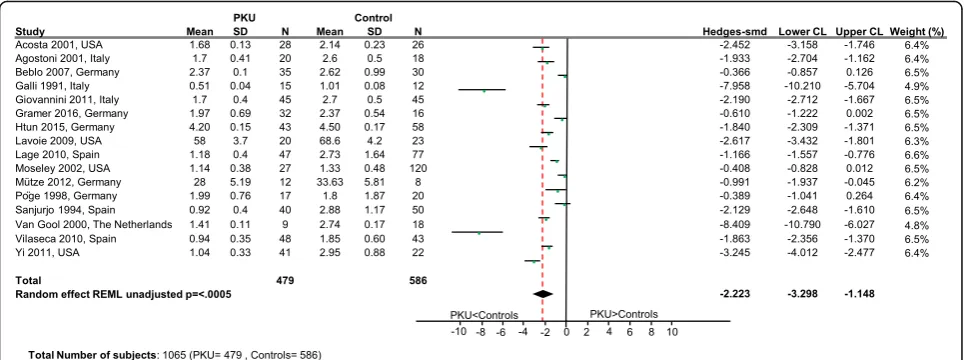
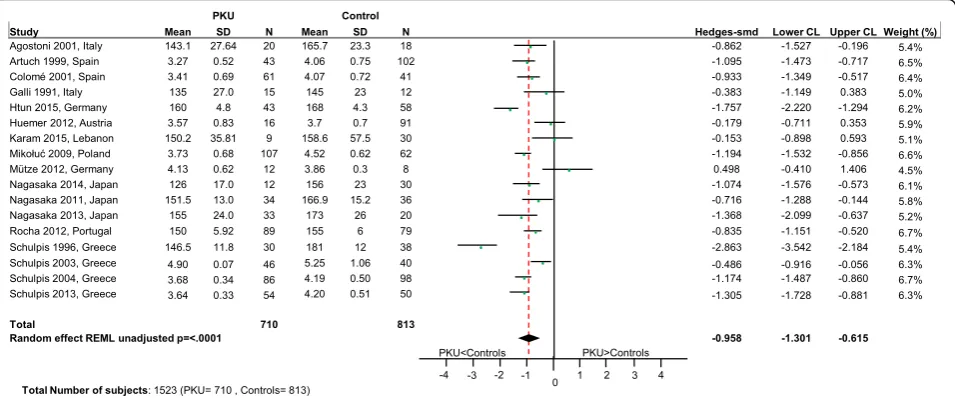
Of 1534 publications identified, 65 studies met the entry criteria. Significantly lower levels of DHA, EPA and
cholesterol were found for PKU patients compared to healthy controls. No significant differences in zinc, vitamins
B
12, E and D, calcium, iron and magnesium were found between PKU patients and controls. Because of
considerable heterogeneity, the meta-analyses findings for folate and selenium were not reported. Due to an
insufficient number of publications (< 4) no meta-analysis was undertaken for vitamins A, C and B
6, choline, uridine,
iodine and phospholipids.
Conclusions:
The current data show that PKU patients have lower availability of DHA, EPA and cholesterol.
Compliance with the phe-restricted diet including the micronutrient fortified protein substitute (PS) is essential to
ensure adequate micronutrient status. Given the complexity of the diet, patients
’
micronutrient and fatty acid status
should be continuously monitored, with a particular focus on patients who are non-compliant or poorly compliant
with their PS. Given their key role in brain function, assessment of the status of nutrients where limited data was
found (e.g. choline, iodine) should be undertaken. Standardised reporting of studies in PKU would strengthen the
output of meta-analysis and so better inform best practice for this rare condition.
Keywords:
Phenylketonuria (PKU), Brain, Plasma, Nutrient, Nutritional requirement, Metabolism, Fatty acids,
Docosahexaenoic acid (DHA), Eicosapentanoic acid (EPA), Cholesterol, choline, Vitamins, Micronutrients,
phospholipids, compliance
Background
Phenylketonuria (OMIM 261600) is a rare genetic
dis-order characterized by impaired conversion of
phenyl-alanine (phe) to tyrosine (tyr) due to deficient activity of
the hepatic enzyme L-phenylalanine-4- hydroxylase [
1
].
If untreated, the resulting high blood phe concentrations
cross the blood brain barrier causing detrimental effects
on brain development and function [
2
]. For the majority
of patients with PKU, treatment is a phe-restricted diet
that aims to prevent excessive accumulation of phe while
also meeting requirements for growth and development
[
3
].
Because
of
the
severe
restriction
of
many
protein-containing foods, the diet requires
supplementa-tion with a phe-free protein substitute (PS) and a wide
range of other nutrients including omega-3 fatty acids,
vitamins, minerals and trace elements. However, nutrient
intakes [
4–6
] and status [
7–9
] may be affected by factors
such as poor dietary compliance, bioavailability of
* Correspondence:[email protected]1Danone Nutricia Research, Nutricia Advanced Medical Nutrition, Utrecht, The
Netherlands
Full list of author information is available at the end of the article
different nutrient sources, different management
ap-proaches in metabolic centres [
2
] and historical
differ-ences in the composition of the PS e.g. changes in
selenium fortification practices [
2
,
4
,
10–12
]. Despite
early and continuous low phe dietary management, PKU
patients have been shown to have suboptimal
neuro-psychological function compared to healthy controls, in
particular lower IQ, slower information processing [
13
,
14
] and suboptimal executive functioning [
15–17
].
Tyr deficiency has been suggested as one reason for
the decreased neuropsychological performance and
cog-nitive dysfunction in PKU [
18
]. It has been suggested
that tyr supplementation could have an important role
in the treatment of PKU [
19
], however blood tyr
concen-trations do not correlate with cognitive outcomes in
PKU, tyr supplementation alone does not prevent severe
mental retardation [
20
] and 24 h tyr plasma levels show
high variability. Reduced serotonin synthesis may be the
result of reduced tryptophan (trp) brain concentrations
caused by reduced blood-brain barrier transport of trp at
elevated plasma phe concentrations [
21
,
22
]. Different
hypotheses focusing on the pathogenesis of PKU and
disturbed amino acids transport from blood to brain on
cerebral neurotransmitter and protein synthesis have
been proposed, a detailed examination of this evidence
is beyond the scope of this review.
Under normal physiological conditions, many other
nutrients have an important role in brain development
and function affecting multiple processes regulating
neurotransmitter pathways, synaptic transmission,
mem-brane fluidity and signal-transduction pathways [
23
].
Table
1
provides a summary of the key role of nutrients
involved in brain development and functioning such as
structural components of membranes, antioxidants,
neurotransmitter precursors and co-factors [
23–29
]. For
many of these nutrients, food sources are restricted in
PKU diets (Table
1
) and reduced levels of biomarkers
for some of these nutrients have been observed in PKU
Table 1
Role of selected nutrients in brain function and their food sources [
23
,
24
]
Nutrient Role in brain function Main food sources
DHA, EPA and phospholipids (PL)
DHA is abundant in the brain. DHA and EPA are components of different PL in synaptic cell membranes. Involved in membrane fluidity and function [48,103].
DHA and EPA: oily fish.
PL: soya, rapeseed, sunflower, eggs, milk.
Choline Component of PL. Precursor of neurotransmitter acetylcholine. Modulates neuronal membrane formation.
Meat, dairy products, grains, eggs and fish.
Uridine Constituent of nucleotides, nucleic acids, precursor of brain phosphatidylcholine in membranes [104,105].
Ribonucleic acid form in foods not bioavailable. As uridine monophosphate in human milk. De-novo synthesis to meet requirements.
Cholesterol Essential component of neuronal membranes [25], involved in signalling, synaptic plasticity, learning and memory [106]. Also converted to bioactive oxysterols and vitamin D [107]
Eggs and fat containing foods.
Vitamin D Neuro-steroid, modulates neurotransmission. Helps maintain calcium balance and signalling. Contributes to synaptic plasticity [82,83].
Limited dietary sources; mainly oily fish, e gg, fortified foods.
Vitamins A, C and E, selenium, zinc
Critical role as antioxidants in the brain.
Zinc also has a role as a neurosecretory product in the synaptic vesicles of specific neurons [108].
Vitamin A: offal, dairy products, eggs, carrots and dark green leafy vegetables.
Vitamin C: fruits and vegetables Vitamin E: nuts, seeds, oily fish, egg yolk and whole grain cereals.
Selenium: meat, fish, legumes, grains (variable content in soil).
Zinc: meat, legumes, eggs, fish, grains.
Calcium Important intra-cellular brain messenger [109] required for synaptic plasticity and secretion of neurotransmitters.
Dairy products.
Magnesium Co-factor in multiple enzyme reactions and regulates
N-methyl-D-aspartate receptors. Role in release of neuropeptides in the brain [110].
Nuts, whole grains, fish, seafood, several vegetables.
Iron Important in oxygen transport for optimal cognitive function. Meat, fish, cereals, legumes, nuts, egg yolks, some vegetables, potatoes and fortified foods.
Vitamins B6, B12and folate
Vitamin B6: neurotransmitter synthesis.
Vitamin B12and folate: important for oxygen transport for optimal cognitive function. Vitamin B12is involved in myelin synthesis.
Vitamin B6: grains, legumes, nuts, seeds, potatoes, meat and fish.
Vitamin B12: meat (especially offal), fish, dairy products, eggs.
Folate: dark green leafy vegetables, legumes, fruits and fortified cereals.
[
5
,
30–36
]. Poor status of some antioxidant nutrients
have been associated with impaired cerebral function
[
30
] and neuropsychological disturbances in PKU [
37
].
Improvements in markers of cognition (visual function
and fine motor skills) have been found following
sup-plementation with docosahexaenoic acid (DHA) in
children with PKU [
31
,
38
]. In addition to raised phe,
sub-optimal levels of some of these nutrients could
have an impact on cognition in PKU patients. Given
this background, this is the first systematic review to
investigate the status of multiple nutrients involved in
brain function. Although the review will not
investi-gate the functional outcomes of any altered levels of
these nutrients found, there is a rationale that in PKU
optimal levels of these nutrients, are key to achieve an
optimal cognitive potential. Specifically, we have
systemat-ically reviewed, and performed meta-analysis where
pos-sible, the nutrient status of DHA, eicosapentanoic acid
(EPA), phospholipids, selenium, vitamins B
6, B
12, E, C, A,
D, folic acid, choline, uridine, calcium, magnesium, zinc,
iron, iodine and cholesterol that are important for optimal
brain function. This will indicate whether differences in
nutrient status exist between individuals with PKU and
healthy, non-PKU controls.
Methods
Search strategy and selection criteria
Literature published from 1990 to July 2016 was
system-atically searched in the Cochrane Central Register of
Controlled Trials, Medline and Embase electronic
data-bases in accordance with the PRISMA guidelines. The
nutrients identified of interest were: DHA, EPA
phos-pholipids, selenium, vitamins B
6, B
12, E, C, A, D folic
acid, choline, uridine, calcium, magnesium, zinc, iron,
iodine and cholesterol. To avoid the risk of bias, general
search terms were chosen (such as nutrition and diet) to
ensure that papers reporting nutrient levels as a
second-ary outcome would also be included. Further details of
the search strategy are presented in the Additional file
1
.
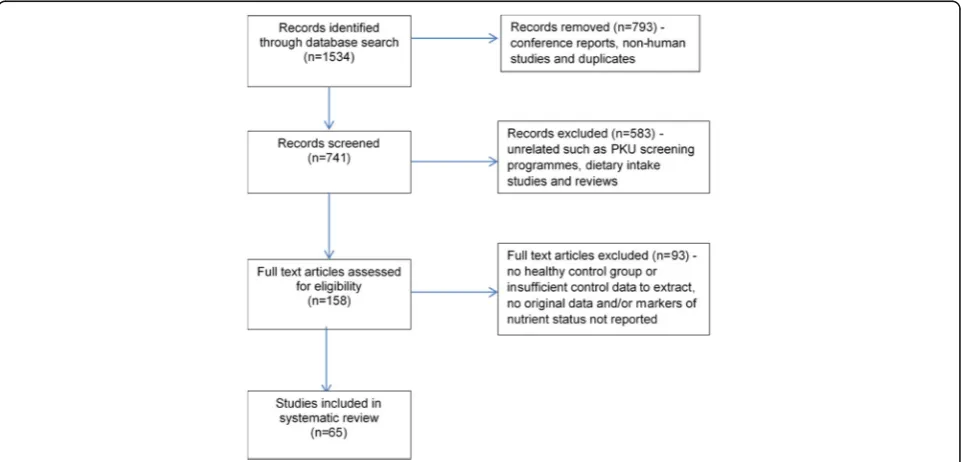
The search strategy identified 1534 publications
(Fig.
1
). Following the removal of conference reports,
animal studies and obvious duplicates, the titles and
ab-stracts of the remaining 741 were screened for relevance
by a reviewer. Studies that may have contained results of
biomarkers of a nutrient of interest, even if not explicitly
mentioned in the title or abstract, were retained. One
hundred and fifty-eight publications were identified as
potentially relevant. Potentially eligible articles that were
in a language other than English were translated. A 10%
sample of the excluded articles was reviewed by a second
reviewer to ensure none had been excluded that may
have been relevant to the review.
The full-text publications considered possibly relevant
were reviewed against the following inclusion criteria:
contained a treated PKU population and healthy
con-trols, observational or intervention study published in a
peer-reviewed journal, included extractable data for
bio-markers of the nutrients of interest, identified numbers
of participants and their characteristics. The exclusion
criteria were: untreated patients with PKU, studies in
maternal PKU, in-vitro or animal studies and, if
re-ported, studies in which the healthy control group took
a vitamin and/or mineral supplement that contained any
of the nutrients under review. All of the publications
considered potentially relevant were reviewed by a
sec-ond reviewer to determine if the same conclusion was
reached about their suitability for inclusion or exclusion
and any disagreements were resolved through
discus-sion. Where the retrieved documents revealed
duplica-tion of the same patient populaduplica-tion, the publicaduplica-tion with
the most complete set of data was included.
Data extraction
Data was extracted from the 65 publications that met the
eligibility criteria (Fig.
1
). Details of the participant
charac-teristics, plasma phe control and nutrient
supplementa-tion, if provided, were extracted and relevant nutrient
biomarkers of interest for PKU subjects and healthy
con-trols were extracted from each study into a standard form
by one of the reviewers and checked by a second reviewer.
Biomarkers for the nutrients under review for all PKU
subjects within a study were extracted, irrespective of phe
control. Where the PKU population was sub-grouped (e.g.
by phe control or baseline intervention group), the data
were combined. The only subgroup excluded, where it
was possible, was mild PKU (hyperphenylalaninaemia
[HPA]), due to their less restrictive diet. Where more than
one biomarker of interest for a nutrient was reported, a
hierarchical approach was taken i.e. levels in plasma/
serum were extracted over levels in erythrocytes, and
levels in erythrocytes were extracted over other indicators
of nutrient status. The most widely accepted indicator of
status was extracted e.g. serum ferritin rather
concentra-tions of iron in serum. For intervention studies, only the
baseline data was utilised.
Statistical analysis
Reported comparisons of nutrient levels in PKU
pa-tients and controls were integrated and summarized
into a final result per nutrient, using meta-analysis
methods [
39
]. The PRISMA (Preferred Reporting Items
for Systematic Reviews and Meta-Analyses) guidelines
for
the
reporting
of
systematic
reviews
and
meta-analyses were followed in ensuring that an
evidence-based minimum set of items were extracted
[
40
]. For each nutrient, the information extracted from
the articles included: levels expressed in mean and
standard deviation of plasma/serum/other matrices in
PKU patients and in controls, number of subjects and
the average age per group. Where means and SDs were
not reported, these values were estimated from other
statistical measures. To allow comparison across
stud-ies, the standardized mean difference (SMD) was used
to standardize the results of the studies to the same
scale, which expresses the size of the effect in each
study relative to the variability observed in that study.
These data were analysed using the random-effect
meta-analysis model [
39
] fitted by restricted maximum
likelihood estimation (REML) in SAS 9.4 (SAS Institute,
Cary NC) using proc. mixed procedure. For this analysis,
a minimum of four studies is generally recognized to be
required [
41
,
42
]. For parameters with a small number of
studies where heterogeneity is not too high, fixed effect
meta-analysis has been implemented using proc. mixed
procedure in SAS 9.4 (SAS Institute, Cary NC). Due to
small number of studies for some nutrients, it is preferred
to calculate the 95% confidence intervals using a
t-distribution (with a degrees of freedom = number of
studies-1) instead of using a normal distribution. Estimate
of the between-study variance in a random-effects
meta-analysis is presented by Tau
2where
p
< 0.05 refers to
a considerable amount of heterogeneity, and I
2statistic
(introduced by Higgins and Thompson [
43
]) where and
I
2> 95% indicates considerable amount of heterogeneity.
Results
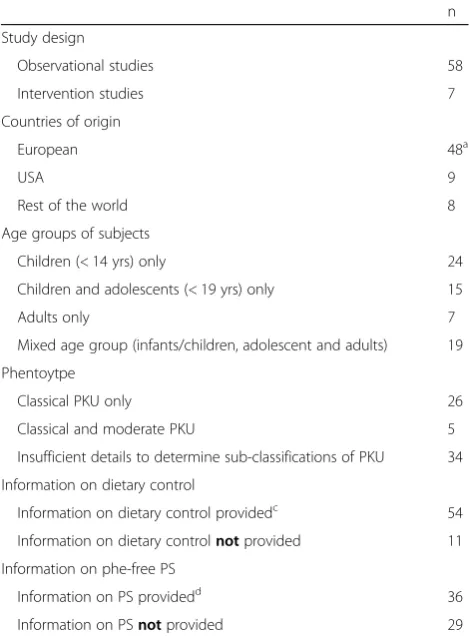
Sixty-five publications were identified that provided
out-comes for one or more of the nutrients reviewed, and
the characteristics of these studies and the PKU
popula-tions included are summarized in Table
2
.
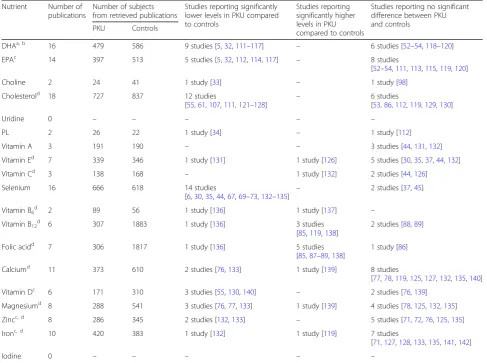
Table
3
summarises the studies included in the
sys-tematic review and the differences in the outcomes in
nutrient status markers between PKU patients and
healthy controls in the individual studies. Where
≥
4
studies were retrieved for a nutrient, meta-analyses of
the data were performed and the overall effect estimate
is presented (SMD with confidence intervals [CI]),
illus-trated in forest plots), although it should be noted that
there was significant heterogeneity within the datasets
for all nutrients. When the heterogeneity is high (I
2>
95%) and there is no statistically significant difference
between the groups the overall conclusion is estimated
and presented in the forest plots. Otherwise when
het-erogeneity is high for a given nutrient, the overall effect
is not reported as it would not correctly represent the
between group difference. Where < 4 studies were
re-trieved, the forest plots have been included to provide a
graphical display of the data from individual studies
which shows to which extent study results overlap
with-out presenting the overall estimate.
Nutrients for which meta-analysis undertaken: DHA, EPA,
cholesterol, zinc, vitamins B
12, E and D, calcium, iron,
magnesium, folate and selenium
not reach statistical significance but might be clinically
relevant (p
= 0.0534; Fig.
5
).
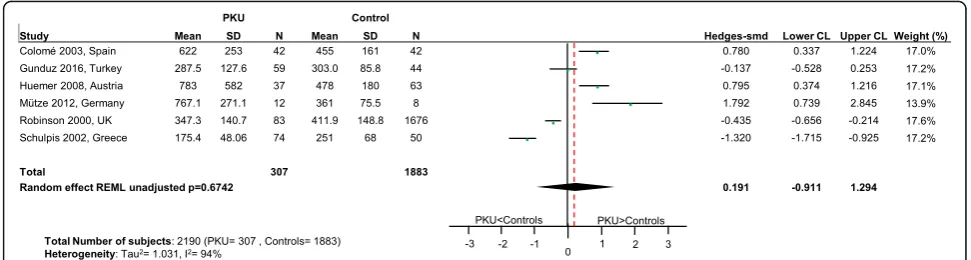
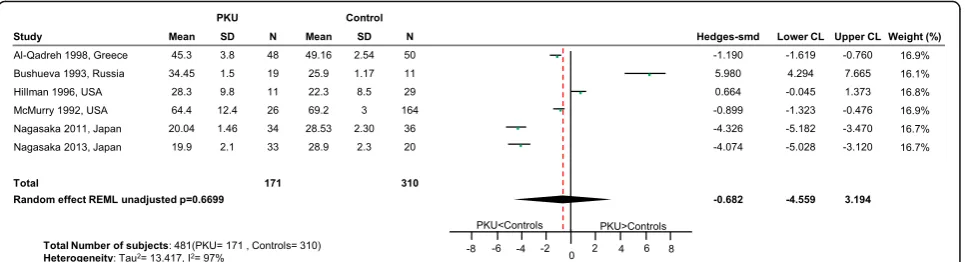
No differences in status between PKU patients and
healthy controls were apparent for vitamins B
12(p
= 0.67;
Fig.
6
), E (p
= 0.64; Fig.
7
) and D (p = 0.67; Fig.
8
), calcium
(p
= 0.32; Fig.
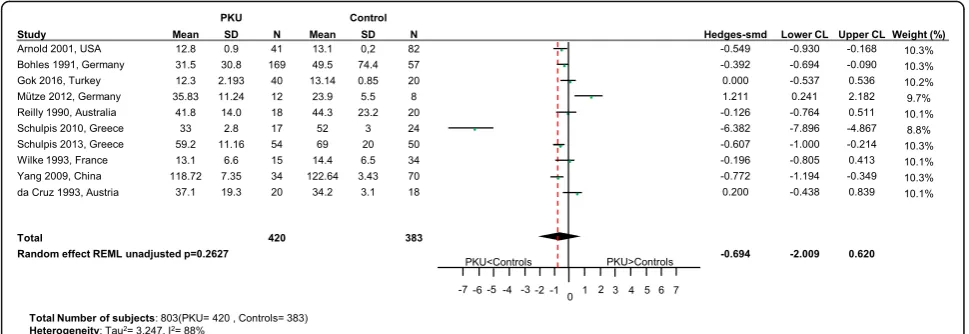
9
), iron (p
= 0.26; Fig.
10
) and magnesium
(p
= 0.94; Fig.
11
).
For folate (Fig.
12
) and selenium (Fig.
13
), the
hetero-geneity within the data was excessively high, so the overall
conclusion of the meta-analysis was not reported. For
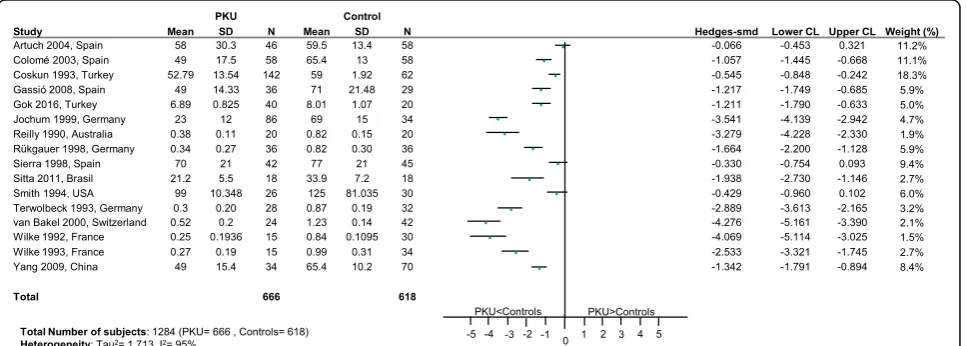
sel-enium, whether the PS was supplemented or not varied
for the seventeen studies identified. Therefore for studies
(n
= 5) where it was clearly stated in the publication that
the PS was selenium-fortified [
6
,
30
,
37
,
44
,
45
], as there is
less
between-study
variation,
a
further
subgroup
meta-analysis was undertaken for these five studies. This
suggested that there was no difference in status between
PKU patients taking a selenium-fortified PS compared to
healthy controls (p
= 0.0513; SMD: -0.61; 95% CI [
−
1.23,
0.006]; 5 studies; 208 PKU patients; Tau
2= 0.193. It should
be noted that four of the five studies in the subgroup
ana-lysis recruited subjects from the same European centre.
Nutrients for which systematic review only undertaken (no
meta-analysis possible): Vitamins A, C and B
6, PLs, choline,
iodine and uridine (forest plots presented as additional files)
As summarized in Table
3
, for vitamins A (3 studies;
Additional file
2
) C (3 studies; Additional file
3
), B
6(2
studies; Additional file
4
) and PLs (2 studies;
Add-itional file
5
), an insufficient number of publications were
retrieved to perform meta-analyses. No studies reporting
plasma concentrations of choline, iodine or uridine status
(plasma uridine or uridine monophosphate) in PKU were
retrieved. However, two studies reported brain choline
concentrations, which correlate with plasma choline levels,
were found in PKU patients using proton magnetic
reson-ance spectroscopy (1H-MRS), [
46
,
47
]) (Additional file
6
).
Discussion
To the best of our knowledge, this is the first systematic
review and meta-analysis of published studies
investigat-ing differences between PKU patients and healthy
con-trols in the status of multiple nutrients involved in brain
function. The nutrients investigated affect multiple
structural and metabolic pathways within the brain and
the potential implications of the altered nutrient status
found or indeed the lack of data for some of these
nutri-ents is discussed.
DHA, EPA, cholesterol, PL and choline are key
struc-tural components of neuronal membranes. Lower status
of DHA, EPA and cholesterol levels are suggested by the
meta-analyses for PKU patients compared to healthy
controls. In healthy individuals, there is evidence of
lim-ited endogenous synthesis of DHA and EPA from the
parent n-3 essential fatty acid,
α
linolenic acid [
48–50
]
and in PKU patients the by-products of excessive phe
may further inhibit synthesis of DHA [
51
]. Our findings
of poorer DHA and EPA status concur with a previous
meta-analysis carried out by Lohner et al. [
36
], who
found suboptimal n-3 LC-PUFA status in PKU patients.
As there have been many studies that have reported
poor fatty acids status of PKU patients over the last 20
yrs, dietary advice has been modified and some PS have
since been fortified with DHA, EPA and the parent
es-sential fatty acids. Interestingly, some recent studies
[
52–54
], where a few or all the patients were taking a
fortified PS (essential or long chain n-3 fatty acids) or a
modified fat diet, found no difference in DHA and EPA
status in PKU patients compared to healthy controls.
Cholesterol is also a key component of neuronal
mem-branes with 24S-hydroxycholesterol (24 s-OHC) [
25
] a
specific metabolite of brain cholesterol metabolism
Table 2
Characteristics of the eligible studies
n
Study design
Observational studies 58
Intervention studies 7
Countries of origin
European 48a
USA 9
Rest of the world 8
Age groups of subjects
Children (< 14 yrs) only 24
Children and adolescents (< 19 yrs) only 15
Adults only 7
Mixed age group (infants/children, adolescent and adults) 19
Phentoytpe
Classical PKU only 26
Classical and moderate PKU 5
Insufficient details to determine sub-classifications of PKU 34
Information on dietary control
Information on dietary control providedc 54
Information on dietary controlnotprovided 11
Information on phe-free PS
Information on PS providedd 36
Information on PSnotprovided 29
Notes:a
3 Austria, 1 Czech Republic, 2 France, 9 Germany, 7 Greece, 3 Italy, 2 The Netherlands, 2 Poland, 1 Portugal, 1 Russia, 11 Spain, 1 Switzerland, 3 Turkey and 2 UK.
b
3 Japan, 2 Brazil, 1 Australia, 1 China and 1 Lebanon.
c
Either details of baseline Phe control at entry provided or the study entry criteria required that patients had to be well-controlled.
d
Either information detailing the specific PS used by patients or whether a supplementary source of the nutrients that were the subject of this review were taken by PKU subjects.
measurable in blood. Decreased levels of plasma
24 s-OHC in PKU individuals have been reported which
may indicate reduced cholesterol synthesis in the brain
and/or
disturbed
conversion
from
cholesterol
to
24S-OHC [
55
]. Some animal studies have reported that
cholesterol synthesis maybe suppressed in PKU with
re-duced activity of two key cholesterol synthesis enzymes
[
55
]. Furthermore, Colome et al., 2003 [
44
] reported a
relationship between high plasma phenylalanine levels
and an inhibition of cholesterogenesis, although the low
fat and saturates intakes typical in PKU diets may also
result in lower serum cholesterol levels. The finding of
significantly lower total plasma cholesterol levels in PKU
patients in this meta-analysis may suggest altered brain
levels and given the importance of this nutrient for brain
function, further studies directly measuring 24 s-OHC in
patients with PKU should be considered.
A phe-dependent down regulation of the
hydroxy-methylglutaryl
(HMG)-CoA
reductase
and
the
mevalonate-5-pyrophosphate decarboxylase activities,
may potentially reduce the synthesis of both
choles-terol and coenzyme Q10 (CoQ10) through their
com-mon mevalonate pathway [
56
–
58
]. CoQ10, a lipid
component acting as an electron carrier in the
mitochondrial respiratory chain, has been negatively
correlated with phe levels in serum of PKU patients
[
59
–
61
]. However, it is suggested that that HPA has less
profound effect upon CoQ10 synthesis than cholesterol
synthesis [
57
,
62
] in PKU low plasma levels of CoQ10
may be caused by increased oxidative stress [
45
].
Table 3
Systematic review results and key outcomes on differences in nutrient status between PKU patients and healthy controls
Nutrient Number of publications
Number of subjects from retrieved publications
Studies reporting significantly lower levels in PKU compared to controls
Studies reporting significantly higher levels in PKU compared to controls
Studies reporting no significant difference between PKU and controls
PKU Controls
DHAa, b 16 479 586 9 studies [5,32,111–117] – 6 studies [52–54,118–120]
EPAc 14 397 513 5 studies [5,32,112,114,117] – 8 studies
[52–54,111,113,115,119,120]
Choline 2 24 41 1 study [33] – 1 study [98]
Cholesterold 18 727 837 12 studies
[55,61,107,111,121–128]
– 6 studies
[53,86,112,119,129,130]
Uridine 0 – – – – –
PL 2 26 22 1 study [34] – 1 study [112]
Vitamin A 3 191 190 – – 3 studies [44,131,132]
Vitamin Ed 7 339 346 1 study [131] 1 study [126] 5 studies [30,35,37,44,132]
Vitamin Cd 3 138 168 – 1 study [132] 2 studies [44,126]
Selenium 16 666 618 14 studies
[6,30,35,44,67,69–73,132–135]
– 2 studies [37,45]
Vitamin B6d 2 89 56 1 study [136] 1 study [137] –
Vitamin B12d 6 307 1883 1 study [136] 3 studies
[85,119,138]
2 studies [88,89]
Folic acidd 7 306 1817 1 study [136] 5 studies
[85,87–89,138]
1 study [86]
Calciumd 11 373 610 2 studies [76,133] 1 study [139] 8 studies
[77,78,119,125,127,132,135,140]
Vitamin Dc 6 171 310 3 studies [55,130,140] – 2 studies [76,139]
Magnesiumd 8 288 541 3 studies [76,77,133] 1 study [139] 4 studies [78,125,132,135]
Zincc, d 8 286 345 2 studies [132,133] – 5 studies [71,72,76,125,135]
Ironc, d 10 420 383 1 study [132] 1 study [119] 7 studies
[71,127,128,133,135,141,142]
Iodine 0 – – – – –
Notes:aAll DHA significance levels are for total plasma lipids or plasma phospholipids except for [53,54] which reported erythrocyte lipid levels bFor [143], the statistical significance of a stated lower DHA level was not reported, therefore this study was not included in the outcomes above c
Differing findings for sub-grouped PKU only patients compared to controls reported for EPA [118], zinc [144], iron [145] and vitamin D [77]. These data are not included in this table. The data for all PKU patients from these publications were pooled for the meta-analysis
dFor all studies by Schulpis et al. [124–128,136], the PKU group was sub-grouped into well controlled PKU and poorly controlled PKU. Differences
Only two studies reporting on PL status were
identi-fied; Galli et al. reported no significant difference in 15
children with PKU compared to controls and Pietz et al.,
using
31P-MR spectroscopy [
34
] reported significantly
lower baseline brain membrane bound PL levels, but no
differences in mobile PL or catabolic metabolites in 11
PKU patients.
Antioxidant nutrients such as zinc, selenium and vitamins
A, C and E play a key role in detoxifying reactive
intermedi-ates in the brain. Where intakes of antioxidant nutrients are
poor, such as in PKU, antioxidant defenses may be
compro-mised, contributing to the highly oxidative environment
ob-served in PKU. Increased markers of oxidative stress have
been observed in PKU populations; for example, Colome et
al. [
44
] found plasma lipid peroxidation to be increased in
PKU and Artuch et al. [
45
] observed that ubiquinone-10
concentrations were significantly lower in PKU patients
compared with healthy controls. High levels of circulating
phe are known to exacerbate excessive production of
react-ive oxygen species [
63
]. It is suggested that systemic
oxida-tive stress causes increased lipid peroxidation and altered
plasmatic fatty acid profiles [
64
]. Also associated with a high
number of double bonds, DHA/EPA are particularly
sus-ceptible to peroxidative breakdown, offering an additional
explanation for the lower levels of these fatty acids as found
in the current meta-analysis.
Fig. 3EPA levels in PKU patients versus healthy controls. Results of meta-analyses for EPA levels in PKU patients versus healthy controls. Abbreviations: EPA, eicosapentaenoic acid; LCL, lower confidence limit; REML, restricted maximum likelihood; SD, standard deviation; SMD, standardized mean difference; UCL, upper confidence limit
For the antioxidant nutrients, we found no apparent
dif-ference in status for vitamin E and zinc, too few studies
identified to carry out meta-analyses for vitamins A and
C, or the degree of heterogeneity was too high to draw a
definitive conclusion for selenium. Selenium is a nutrient
of particular concern in PKU given that dietary sources
are very limited, and intakes are typically very poor when
compliance with the PS prescription is inadequate. The
selenium content of vegetation varies depending on the
concentrations in soil, with Europe and China typically
having lower concentrations than North America [
65
].
Selenium supplementation of PKU diets was introduced
in the mid-1980s [
6
] when selenium essentiality became
more widely accepted. Although there may be a
suggestion from the limited cluster analysis in this review
and evidence from intervention studies [
66
,
67
] that
selen-ium supplementation is effective in improving status, it is
also observed that 14 of the 16 studies in this review had
confidence intervals on the left side of the plot, suggesting
lower levels in PKU patients compared to controls.
There-fore, although improvement in selenium status is observed
in clinical practice with supplementation, the findings
from this meta-analysis are inconclusive because of the
high heterogeneity within the data. This may be due to
several factors including: variable selenium intakes
de-pending on whether the PS was fortified/not over the
timeframe of the literature review; variation in patient
compliance with PS over a wide age range and
Fig. 5Zinc levels in PKU patients versus healthy controls. Results of meta-analyses for Zinc levels in PKU patients versus healthy controls Abbreviations: LCL, lower confidence limit; REML, restricted maximum likelihood; SD, standard deviation; SMD, standardized mean difference; UCL, upper confidence limit
bioavailability of different sources of selenium [
68
] and/or
low concentrations of selenium in grains and vegetables
(many studies identified were in European populations).
Furthermore, both the PKU and the healthy control
groups in the studies were found to have selenium status
that was low or close to lower European population norms
in some studies [
44
,
45
,
67
,
69–74
] Therefore, at this time
further research is warranted investigating selenium status
in PKU and the effects of supplementation including
measurement of plasma selenoprotein P (SEPP1) as a
more informative marker of status.
Adherence to the phe-restricted diet is necessary to
achieve plasma phe control including compliance with
PS as the predominant source of many nutrients in the
PKU diet, such as vitamin B
12, calcium, vitamin D, zinc
and iron and to ensure adequate micronutrient status.
However, patients who are non- or poorly- compliant
with their PS prescription are at greatest risk of
subopti-mal intakes of these nutrients. For example, there have
been several case studies reporting poor vitamin B
12sta-tus in patients as a consequence of a relaxed PKU diet
[
7
,
75
] and low intakes of calcium have been reported in
patients with PKU [
76–78
] particularly if compliance is
poor in older children/adults. The meta-analysis found
no difference in plasma calcium levels in PKUs
com-pared to healthy controls; however, plasma calcium is
not a suitable biomarker of status [
79
]. So no conclusion
about the status of calcium related to brain function in
PKU can be drawn from this finding. We did not find a
between group difference in vitamin D status between
PKUs and healthy controls, however, minimal cutaneous
synthesis is now assumed and recommended dietary
in-takes for vitamin D have increased globally in recent
years [
80
,
81
]. There is also emerging knowledge of the
role of vitamin D as a
‘
neuro-steroid
’
and regulator of
brain serotonin synthesis [
82
,
83
]. Given this increasing
knowledge on vitamin D requirements, dietary intakes of
vitamin D by those with PKU should be monitored to
ensure recommended intakes are achieved.
Intakes of folic acid are much less likely to be
com-promised given that good food sources, such as fruit
and vegetables, are allowed in controlled or
unre-stricted quantities in the diet and that PS are routinely
supplemented. In the meta-analysis for folic acid the
excessively high heterogeneity across the studies
under-mined its reliability to draw a conclusion on between
group differences in status. Nonetheless 6 of the 7
stud-ies [
84–89
] had confidence intervals on the right side
Fig. 7Vitamin E levels in PKU patients versus healthy controls. Results of meta-analyses for Vitamin E levels in PKU patients versus healthy controls. Abbreviations: LCL, lower confidence limit; REML, restricted maximum likelihood; SD, standard deviation; SMD, standardized mean difference; UCL, upper confidence limit
of the plot (Fig.
6
), suggesting positive differences
be-tween PKU patients and healthy controls. Intakes of
folic acid by patients who are compliant with their PS
prescription may be higher than desired when
com-bined with intakes from normal foods that are also
good sources of folic acid, and indeed high serum folate
levels have been observed in PKU [
90–92
]. Vitamin B
12deficiency may be masked where circulating folate
levels are high [
93
] and Walter et al. [
9
] reported that
functional vitamin B
12deficiency can occur in the
pres-ence of normal B
12concentrations in PKU. Although
we observed no apparent difference in vitamin B
12sta-tus in PKU patients compared to healthy controls
sug-gesting that supplementation is effective in maintaining
nutrient status comparable to controls, the
physio-logical effect of potentially high folate intakes and levels
needs consideration.
The systematic review found limited or no
publica-tions matching our entry criteria on nutritional status
of some nutrients (vitamins A, C, B
6, choline, uridine,
iodine and PL). Although the status of some nutrients
such as vitamin C is unlikely to be compromised in
PKU, others such as choline and iodine warrant
con-sideration. In healthy individuals, de-novo synthesis of
choline is not sufficient to meet requirements and
recommended or adequate intakes (AI) have been
established [
94
,
95
], however, sub-optimal intakes of
choline are reported in the general population
com-pared to the recommended AI [
96
,
97
]. The main
choline-rich food groups are restricted in PKU, and
many PS are supplemented with choline. Dezortova et
al. reported significantly lower brain choline
concen-trations (p
< 0.05) in 15 adult PKU patients on a
moderate/strict
diet
compared
to
controls
[
33
].
Whereas, Sijens [
98
] reported no significant difference
in brain choline levels between 10 adult PKU patients
(including both compliant and non-compliant) and
those of healthy controls. No detail on dietary intake
of choline was provided in these studies. Because of
the wide-ranging role of choline in brain function, if
present, inadequate choline status in PKU may have an
impact on neurological outcomes and so dietary intakes
Fig. 9Calcium levels in PKU patients versus healthy controls. Results of meta-analyses for Calcium levels in PKU patients versus healthy controls Abbreviations: LCL, lower confidence limit; REML, restricted maximum likelihood; SD, standard deviation; SMD, standardized mean difference; UCL, upper confidence limit
should be monitored and studies investigating choline
sta-tus should be considered. This systematic review revealed
no publications matching our inclusion criteria comparing
iodine status of PKU patients with healthy controls.
How-ever, in PKU, an altered free thyroid hormone
concentra-tions in PKU, in association with an impaired activity of
thyroxine-5-deiodinase enzyme is described [
35
,
99
],
Given that intakes of iodine from normal foods in
PKU diets are likely to be very low and that iodine has
an important role in thyroid function and brain
develop-ment [
100
], the possibility of insufficiency among poorly
compliant patients in particular should be considered.
Limitations and recommendations
The robustness of the conclusions drawn from any
systematic review and meta-analysis is limited by the
quality, quantity and content of the available data. In
addition, the relationship between nutrient intakes
and status is complex, and depends on many factors
such as the bioavailability of nutrients, nutrient
inter-actions and individual metabolism. Although these
meta-analyses provide valuable insight into the status
of nutrients, there was a high degree of within- and
between- study heterogeneity. This may be due to a
number of factors such as: variation in nutrient
in-take; historical differences in the fortification of PS;
degree of dietary compliance; the wide age range of
patients affecting compliance; broad phe tolerance
de-termining natural food intakes and changes in
man-agement during the 25 years of literature included in
this review. Also, there was a lack of information in
sev-eral papers on dietary intake and compliance including
nutrient fortification of the PS/not. Another limitation is
that over the timeframe of the systematic review,
im-proved markers of nutritional status have been identified
for example, all of the studies reported plasma selenium
Fig. 11Magnesium levels in PKU patients versus healthy controls. Results of meta-analyses for Magnesium levels in PKU patients versus healthy controls. Abbreviations: LCL, lower confidence limit; REML, restricted maximum likelihood; SD, standard deviation; SMD, standardized mean difference; UCL, upper confidence limit
concentrations as the status marker, whereas more
re-cently plasma selenoprotein P (SEPP1) has been
consid-ered to be a more informative marker of status.
Comparison with healthy controls assumes that their
nu-tritional status is adequate however for some nutrients e.g.
iron or vitamin D, status can be compromised in
other-wise healthy populations [
101
].
As for all studies measuring nutritional status, it is
im-portant that the most relevant biomarkers are measured,
and sampling procedures strictly followed. It is
recom-mended that more details of patient characteristics (severity
of PKU) and dietary information (details of protein
toler-ance, PS dosage, BH4 intake and adherence) is reported in
studies. Given the small numbers of patients available for
study in PKU and in the absence of multi-centre studies,
systematically reviewing the literature and undertaking
meta-analysis to inform and support best practice is a
valu-able tool. To allow extraction of data on key items from
studies for future meta-analyses, we recommend that a
standardised approach for the reporting of observational
studies should be followed as this would allow more robust
and definitive conclusions to be drawn from meta-analyses.
Concluding remarks
Whilst changes in fortification practices of PS and dietary
advice more generally have led to improvements in status
for some of the nutrients reviewed, to ensure optimal
out-come in PKU, patients
’
micronutrient and fatty acid status
should continue to be monitored, with a particular focus
on patients who are non-compliant or poorly compliant
with their PS. We noted that for several of the nutrients
we identified as being of interest in this review, only a few
or no publications matching our inclusion criteria were
found. We expect that for those nutrients for which
pa-tients depend almost exclusively on their PS, such as
cho-line and iodine, nutrient insufficiency among poorly
compliant PKU patients should be explored. As is
stand-ard practice, the importance of dietary compliance should
continue to be emphasized to patients including
adher-ence to the PS as an invaluable source of micronutrients.
Dietary management is complex and changing with the
advent of new pharmaceutical adjunctive therapies (e.g
tetrahydrobiopterin and phenylalanine ammonium lysase)
where a more liberal diet with more natural protein may
be taken, for these patient groups it is important to ensure
Fig. 13Selenium levels in PKU patients versus healthy controls. Selenium levels in PKU patients versus healthy controls. Abbreviations: LCL, lower confidence limit; REML, restricted maximum likelihood; SD, standard deviation; SMD, standardized mean difference; UCL, upper confidence limit
that there is an ongoing adequate intake of a range of
micronutrients. Although the meta-analyses revealed
dif-ferences between healthy controls and PKU patients in
nutrient status for some of nutrients, we did not
investi-gate whether poor status has a role in the pathophysiology
of any of the neurological deficits observed in treated PKU
patients. However, status of key nutrients known to have a
role in cognitive development and functioning should be
monitored.
Our recommendations for the biochemical monitoring
for relevant nutrients for PKU brain function (using the
European PKU guidelines [
2
] and the PKU Nutrition
Management Guidelines of the Southeast Regional
New-born Screening Collaborative (SERC) and Genetic
Meta-bolic
Dietitians
International
(GMDI)
[
102
]
for
direction) are given in Table
4
.
Additional files
Additional file 1:Search Strategy (PDF 244 kb).
Additional file 2:Vitamin A levels in PKU patients versus healthy controls. Vitamin A levels in PKU patients versus healthy controls. Abbreviations: LCL, lower confidence limit; REML, restricted maximum likelihood; SD, standard deviation; SMD, standardized mean difference; UCL, upper confidence limit (PDF 271 kb).
Additional file 3:Vitamin C levels in PKU patients versus healthy controls. Vitamin C levels in PKU patients versus healthy controls. Abbreviations: LCL, lower confidence limit; REML, restricted maximum likelihood; SD, standard deviation; SMD, standardized mean difference; UCL, upper confidence limit (PDF 169 kb).
Additional file 4:Vitamin B6 levels in PKU patients versus healthy controls. Vitamin B6 levels in PKU patients versus healthy controls. Abbreviations: LCL, lower confidence limit; REML, restricted maximum likelihood; SD, standard deviation; SMD, standardized mean difference; UCL, upper confidence limit (PDF 165 kb).
Additional file 5:Phospholipid levels in PKU patients versus healthy controls. Phospholipid levels in PKU patients versus healthy controls. Abbreviations: LCL, lower confidence limit; REML, restricted maximum likelihood; SD, standard deviation; SMD, standardized mean difference; UCL, upper confidence limit (PDF 166 kb).
Additional file 6:Choline levels in PKU patients versus healthy controls. Choline levels in PKU patients versus healthy controls. Abbreviations: LCL, lower confidence limit; REML, restricted maximum likelihood; SD, standard deviation; SMD, standardized mean difference; UCL, upper confidence limit (PDF 166 kb).
Abbreviations
BMD:Bone mineral density; CoQ10: Coenzyme Q10; DHA: Docosahexaenoic acid; EPA: Eicosapentanoic acid; HMG-CoA: Hydroxymethylglutaryl coenzyme A; HPA: Hyperphenylalaninaemia; LCPUFA: Long chain polyunsaturated fatty acids; phe: Phenylalanine; PKU: Phenylketonuria; PLs: Phospholipids; PRISMA: Preferred Reporting Items for Systematic Reviews and Meta-Analyses; PS: Protein substitute; REML: Restricted maximum likelihood estimation; SEPP1: Selenoprotein P; SMD: Standardized mean difference; trp: Tryptophan; tyr: Tyrosine
Acknowledgements
The authors thank Dr. E. Cabral Monteiro for the support with the search strategy, A. Nabbe for the contribution to the statistical analysis, C. Dignum and H. Rose for professional writing services and second reviewers of data extracted, Dr. M van Rijn for her advice for data interpretation, Dr. M.C. de Wilde for his advice for the data analysis, extraction and management.
Funding
This review has been supported by Danone Nutricia Research.
Availability of data and materials
The datasets generated and/or analysed in this review are available from the corresponding author on reasonable request.
Authors’contributions
GAMP, MK, and AMD designed the study. GAMP extracted and analyzed the data with help of an external second reviewer, ACY performed the statistical analyses and together with GAMP produced the figures. GAMP prepared the first and revised drafts of this manuscript according to the suggestions from co-authors. RHS, AMD, ACY, GAMP and MK interpreted the data and revised the manuscript. All authors approved the final version.
Ethics approval and consent to participate Not applicable.
Competing interests
G.A.M.P, A.C.Y and M.K are Danone Nutricia Research employees. A.M.D. has received research funding and honoraria from Nutricia, Vitaflo International and Merck Serono. She is a member of the European Nutrition Expert Panel (Biomarin), member of Sapropterin Advisory Board (Biomarin), member of the Advisory Board entitled ELEMENT (Danone-Nutricia), and member of an Advisory Board for Arla and Applied Pharma Research. R.H.S. has served on the global medical advisory board for Nutricia and Biomarin, as well as the national medical advisory board for Horizon and SOBI.
Publisher
’
s Note
Springer Nature remains neutral with regard to jurisdictional claims in published maps and institutional affiliations.
Author details
1
Danone Nutricia Research, Nutricia Advanced Medical Nutrition, Utrecht, The Netherlands.2Metabolic Genetics and Nutrition Program, Emory University, Atlanta, GA, USA.3Department of Metabolic Diseases, Birmingham Children’s Hospital, Birmingham, UK.
Table 4
Assessment of Biochemical Status for nutrients/metabolites
Routinely Annuala, b, biannualb Haemoglobin, mean corpuscular volume, and ferritina, b; micronutrients (vitamins and minerals including: calcium, zinc, and selenium (SEPP1)) or hormones (parathyroid hormone) if clinically indicateda
Vitamin D 25-OHb
Our recommendation: DHAc, EPAc, Cholesterol
Conditionalc,b Annual or as indicatedb Vitamin B12(plasma methylmalonic acid, total homocysteine), erythrocyte folate, zinc, copper, essential fatty acids (linoleic acid and alpha-linolenic acid).
Every 5 years beginning
with baseline at age 5b Bone density (DXA scan) b
Bone mineral density (BMD)aduring late adolescence; if abnormal, the measurement should be repeated after 1 year
a
[2],b[102] excluding maternal PKU
3
Received: 6 March 2018 Accepted: 5 June 2018
References
1. Scriver CR. In: Scriver CR BA, Sly WS, Valle D, Childs B, Kinzler KW, Vogelstein B, editors. Editor Hyperphenylalaninemia: phenylalanine hydroxylase deficiency, in The Metabolic and Molecular Bases of Inherited Disease. New York: Hill McGraw; 2001. p. 1667–724.
2. van Spronsen FJ, et al. Key European guidelines for the diagnosis and management of patients with phenylketonuria. Lancet Diabetes Endocrinol. 2017;5(9):743–56.
3. MacDonald A, et al. Nutrition in phenylketonuria. Mol Genet Metab. 2011; 104(SUPPL):S10–8.
4. Evans S, et al. The micronutrient status of patients with phenylketonuria on dietary treatment: an ongoing challenge. Ann Nutr Metab. 2014;65(1):42–8. 5. Van Gool CJAW, Van Houwelingen AC, Hornstra G. The essential fatty acid
status in phenylketonuria patients under treatment. J Nutr Biochem. 2000; 11(11–12):543–7.
6. Smith AM, et al. Phenylketonuria affects the selenium status of children, adolescents, and young adults. J Trace Elem Exp Med. 1994;7(1):39–45. 7. Aung TT, et al. Vitamin B12 deficiency in an adult phenylketonuric patient.
J Inherit Metab Dis. 1997;20(4):603–4.
8. Feillet F, Agostoni C. Nutritional issues in treating phenylketonuria. J Inherit Metab Dis. 2010;33(6):659–64.
9. Walter JH. Vitamin B12 deficiency and phenylketonuria. Mol Genet Metab. 2011;104(Suppl):S52–4.
10. Al Hafid N, Christodoulou J. Phenylketonuria: a review of current and future treatments. Transl Pediatr. 2015;4(4):304–17.
11. Belanger-Quintana A, et al. Up to date knowledge on different treatment strategies for phenylketonuria. Mol Genet Metab. 2011;104:S19–25. 12. Lammardo AM, et al. Main issues in micronutrient supplementation in
phenylketonuria. Mol Genet Metab. 2013;110:S1–5.
13. Albrecht J, Garbade SF, Burgard P. Neuropsychological speed tests and blood phenylalanine levels in patients with phenylketonuria: a meta-analysis. Neurosci Biobehav Rev. 2009;33(3):414–21.
14. Anderson PJ, et al. Are neuropsychological impairments in children with early-treated phenylketonuria (PKU) related to white matter abnormalities or elevated phenylalanine levels? Dev Neuropsychol. 2007;32(2):645–68. 15. Brumm VL, Grant ML. The role of intelligence in phenylketonuria: a review
of research and management. Mol Genet Metab. 2010;99(Suppl 1):S18–21. 16. Christ SE, et al. Executive function in early-treated phenylketonuria: profile and underlying mechanisms. Mol Genet Metab. 2010;99(Suppl 1):S22–32. 17. Leuzzi V, et al. Executive function impairment in early-treated PKU subjects
with normal mental development. J Inherit Metab Dis. 2004;27(2):115–25. 18. Smith ML, et al. Randomised controlled trial of tyrosine supplementation on
neuropsychological performance in phenylketonuria. Arch Dis Child. 1998; 78(2):116–21.
19. Webster D, Wildgoose J. Tyrosine supplementation for phenylketonuria. Cochrane Database Syst Rev. 2010;4(8):Cd001507.
20. van Spronsen FJ, Smit PG, Koch R. Phenylketonuria: tyrosine beyond the phenylalanine-restricted diet. J Inherit Metab Dis. 2001;24(1):1–4. 21. van Spronsen FJ, Hoeksma M, Reijngoud DJ. Brain dysfunction in
phenylketonuria: is phenylalanine toxicity the only possible cause? J Inherit Metab Dis. 2009;32(1):46–51.
22. de Groot MJ, et al. Pathogenesis of cognitive dysfunction in phenylketonuria: review of hypotheses. Mol Genet Metab. 2010;99(Suppl 1):S86–9.
23. Gomez-Pinilla F. Brain foods: the effects of nutrients on brain function. Nat Rev Neurosci. 2008;9(7):568–78.
24. Bourre JM. Effects of nutrients (in food) on the structure and function of the nervous system: update on dietary requirements for brain. Part 1: micronutrients. J Nutr Health Aging. 2006;10(5):377–85.
25. Martin MG, Pfrieger F, Dotti CG. Cholesterol in brain disease: sometimes determinant and frequently implicated. EMBO Rep. 2014;15(10):1036–52. 26. Zeisel SH. Nutritional genomics: defining the dietary requirement and
effects of choline. J Nutr. 2011;141(3):531–4.
27. Zeisel SH, da Costa KA. Choline: an essential nutrient for public health. Nutr Rev. 2009;67(11):615–23.
28. Morris MC. Nutritional determinants of cognitive aging and dementia. Proc Nutr Soc. 2012;71(1):1–13.
29. Prado EL, Dewey KG. Nutrition and brain development in early life. Nutr Rev. 2014;72(4):267–84.
30. Gassió R, et al. Cognitive functions and the antioxidant system in phenylketonuric patients. Neuropsychology. 2008;22(4):426–31. 31. Agostoni C, et al. Effects of long-chain polyunsaturated fatty acid
supplementation on fatty acid status and visual function in treated children with hyperphenylalaninemia. J Pediatr. 2000;137(4):504–9.
32. Moseley K, Koch R, Moser AB. Lipid status and long-chain polyunsaturated fatty acid concentrations in adults and adolescents with phenylketonuria on phenylalanine-restricted diet. J Inherit Metab Dis. 2002;25(1):56–64. 33. Dezortová M, et al. MR in phenylketonuria-related brain lesions. Acta
radiologica (Stockholm, Sweden : 1987. 2001;42(5):459–66.
34. Pietz J, et al. Cerebral energy metabolism in phenylketonuria: findings by quantitative in vivo 31P MR spectroscopy. Pediatr Res. 2003;53(4):654–62. 35. van Bakel MM, et al. Antioxidant and thyroid hormone status in
selenium-deficient phenylketonuric and hyperphenylalaninemic patients. Am J Clin Nutr. 2000;72(4):976–81.
36. Lohner S, Fekete K, Decsi T. Lower n-3 long-chain polyunsaturated fatty acid values in patients with phenylketonuria: a systematic review and meta-analysis. Nutr Res (New York, N.Y. 2013;33(7):513–20.
37. Sierra C, et al. Antioxidant status in hyperphenylalaninemia. Clin Chim Acta. 1998;276(1):1–9.
38. Koletzko B, et al. Does dietary DHA improve neural function in children? Observations in phenylketonuria. Prostaglandins Leukot Essent Fat Acids. 2009;81(2–3):159–64.
39. van Houwelingen HC, Arends LR, Stijnen T. Advanced methods in meta-analysis: multivariate approach and meta-regression. Stat Med. 2002;21(4):589–624. 40. Moher D, et al. Preferred reporting items for systematic reviews and
meta-analyses: the PRISMA statement. Int J Surg. 2010;8(5):336–41.
41. Borenstein M, Hedges LV, Higgins JPT, Rothstein HR. Introduction to meta-analysis. Hoboken, NJ: Wiley; 2009.
42. Cochrane-Collaboration. T., Cochrane handbook for systematic reviews of interventions. Hoboken, NJ: Wiley-Blackwell; 2008.
43. Higgins JP, Thompson SG. Quantifying heterogenity in a meta-analysis. Stat Med. 2002;21(11):1539–58.
44. Colomé C, et al. Lipophilic antioxidants in patients with phenylketonuria. Am J Clin Nutr. 2003;77(1):185–8.
45. Artuch R, et al. A longitudinal study of antioxidant status in phenylketonuric patients. Clin Biochem. 2004;37(3):198–203.
46. Cohen BM, et al. Decreased brain choline uptake in older adults. An in vivo proton magnetic resonance spectroscopy study. JAMA. 1995;274(11):902–7. 47. Rijpma A, et al. Effects of Souvenaid on plasma micronutrient levels and
fatty acid profiles in mild and mild-to-moderate Alzheimer's disease. Alzheimers Res Ther. 2015;7(1):51.
48. Calder PC. Mechanisms of action of (n-3) fatty acids. J Nutr. 2012;142(3): 592S–9S.
49. Koletzko B, et al. Omega-3 LC-PUFA supply and neurological outcomes in children with phenylketonuria (PKU). J Pediatr Gastroenterol Nutr. 2009; 48(Suppl 1):S2–7.
50. Plourde M, Cunnane SC. Extremely limited synthesis of long chain polyunsaturates in adults: implications for their dietary essentiality and use as supplements. Appl Physiol Nutr Metab. 2007;32(4):619–34.
51. Infante JP, Huszagh VA. Impaired arachidonic (20:4n-6) and
docosahexaenoic (22:6n-3) acid synthesis by phenylalanine metabolites as etiological factors in the neuropathology of phenylketonuria. Mol Genet Metab. 2001;72(3):185–98.
52. Gramer G, et al. Long-chain polyunsaturated fatty acid status in children, adolescents and adults with phenylketonuria. Prostaglandins Leukot Essent Fat Acids. 2016;109:52–7.
53. Htun P, et al. Fish-free diet in patients with phenylketonuria is not associated with early atherosclerotic changes and enhanced platelet activation. PLoS One. 2015;10(8):e0135930.
54. LaVoie SM, Harding CO, Gillingham MB. Normal fatty acid concentrations in young children with phenylketonuria. Top Clin Nutr. 2009;24(4):333–40. 55. Nagasaka H, et al. Oxysterol changes along with cholesterol and vitamin D
changes in adult phenylketonuric patients diagnosed by newborn mass-screening. Clinica chimica acta; international journal of clinical chemistry. 2013;416:54–9.
56. Shefer S, et al. Is there a relationship between 3-hydroxy-3-methylglutaryl coenzyme a reductase activity and forebrain pathology in the PKU mouse? J Neurosci Res. 2000;61(5):549–63.
58. Hargreaves IP. Coenzyme Q10 in phenylketonuria and mevalonic aciduria. Mitochondrion. 2007;7:S175–80.
59. Artuch R, et al. Plasma phenylalanine is associated with decreased serum ubiquinone-10 concentrations in phenylketonuria. J Inherit Metab Dis. 2001; 24(3):359–66.
60. Artuch R, et al. Conzyme-Q10 concentration in human phenylketonuria (multiple letters). J Inherit Metab Dis. 2003;26(8):821–3.
61. Artuch R, et al. Decreased serum ubiquinone-10 concentrations in phenylketonuria. Am J Clin Nutr. 1999;70(5):892–5.
62. Castillo M, Zafra MF, Garcia-Peregrin E. Inhibition of brain and liver 3-hydroxy-3-methylglutaryl-CoA reductase and mevalonate-5-pyrophosphate decarboxylase in experimental hyperphenylalaninemia. Neurochem Res. 1988;13(6):551–5.
63. Rocha JC, Martins MJ. Oxidative stress in phenylketonuria: future directions. J Inherit Metab Dis. 2012;35(3):381–98.
64. Oborna I, et al. Increased lipid peroxidation and abnormal fatty acid profiles in seminal and blood plasma of normozoospermic males from infertile couples. Hum Reprod. 2010;25(2):308–16.
65. Fairweather-Tait SJ, Collings R, Hurst R. Selenium bioavailability: current knowledge and future research requirements. Am J Clin Nutr. 2010;91(5): 1484S–91S.
66. Sitta A, et al. Beneficial effect of l-carnitine and selenium supplementation on oxidative stress in phenylketonuric patients. J Inherit Metab Dis. 2011;34:S103. 67. Wilke BC, et al. Selenium, glutathione peroxidase (GSH-Px) and lipid
peroxidation products before and after selenium supplementation. Clin Chim Acta. 1992;207(1–2):137–42.
68. Nève J. Human selenium supplementation as assessed by changes in blood selenium concentration and glutathione peroxidase activity. J Trace Elem Med Biol. 1995;9(2):65–73.
69. Sitta A, et al. Evidence that L-carnitine and selenium supplementation reduces oxidative stress in phenylketonuric patients. Cell Mol Neurobiol. 2011;31(3):429–36.
70. Coskun T, et al. Serum selenium levels in phenylketonuric children on low phenylalanine diet. Doga - Turkish Journal of Medical Sciences. 1993;18(2):161–5.
71. Reilly C, et al. Trace element nutrition status and dietary intake of children with phenylketonuria. Am J Clin Nutr. 1990;52(1):159–65.
72. Rükgauer M, Klein J, Kruse-Jarres JD. Chromium, copper, manganese, selenium, and zinc in the serum of children with phenylketonuria. Aktuelle Ernährungsmedizin. 1998;23(1):23–7.
73. Terwolbeck, K., et al., Low selenium status, thyroid hormones, and other parameters in children with phenylketonuria (PKU), in Trace elements in man and animals - TEMA 8: Proceedings of the Eighth International Symposium on Trace Elements in Man and Animals. Dresden; 1993. p. 538. ISBN: 3894859997.
74. EFSA. Scientific Opinion on Dietary Reference Values for selenium. EFSA Panel on Nutrition, Dietetic products and allergies. EFSA J. 2014;12(10):67. 75. Hanley WB, et al. Vitamin B12 deficiency in adolescents and young adults
with phenylketonuria. Eur J Pediatr. 1996;155(Suppl 1):S145–7.
76. Hillman L. Decreased bone mineralization in children with phenylketonuria under treatment. Eur J Pediatr, Supplement. 1996;155(1):S148–52. 77. McMurry MP, et al. Bone mineral status in children with phenylketonuria
-relationship to nutritional intake and phenylalanine control. Am J Clin Nutr. 1992;55(5):997–1004.
78. Pérez-Dueñias B, et al. New approach to osteopenia in phenylketonuric patients. Acta Paediatr, International Journal of Paediatrics. 2002;91(8):899–904. 79. Efsa Panel on Dietetic Products, N. and Allergies. Scientific opinion on
dietary reference values for calcium. EFSA J. 2015;13(5):4101.
80. EFSA NDA Panel (EFSA Panel on Dietetic Products, Nutrition and Allergies). Scientific opinion on dietary reference values for vitamin D. EFSA J. 2016; 14(10):4547,145.
81. Medicine., I.o. Dietary Reference Intakes for Calcium and Vitamin D. Washington, DC: The National Academies Press; 2011.
82. Harms LR, et al. Vitamin D and the brain. Best Pract Res Clin Endocrinol Metab. 2011;25(4):657–69.
83. Patrick RP, et al. Vitamin D and the omega-3 fatty acids control serotonin synthesis and action, part 2: relevance for ADHD, bipolar disorder, schizophrenia, and impulsive behavior. FASEB J : official publication of the Federation of American Societies for Experimental Biology. 2015;29(6):2207–22. 84. Colomé C, et al. Plasma thiols and their determinants in phenylketonuria.
Quimica Clinica. 2003;22(2):71–5.
85. Huemer M, et al. Total homocysteine, B-vitamins and genetic polymorphisms in patients with classical phenylketonuria. Mol Genet Metab. 2008;94(1):46–51. 86. Huemer M, et al. Free asymmetric dimethylarginine (ADMA) is low in
children and adolescents with classical phenylketonuria (PKU). J Inherit Metab Dis. 2012;35(5):817–21.
87. Lucock M, et al. The impact of phenylketonuria on folate metabolism. Mol Genet Metab. 2002;76(4):305–12.
88. Robinson M, et al. Increased risk of vitamin B12 deficiency in patients with phenylketonuria on an unrestricted or relaxed diet. J Pediatr. 2000;136(4):545–7. 89. Gündüz M, et al. Comparison of atherogenic risk factors among poorly
controlled and well-controlled adolescent phenylketonuria patients. Cardiol Young. 2016;26(5):901–8.
90. MacDonald A, et al. Long-term compliance with a novel vitamin and mineral supplement in older people with PKU. J Inherit Metab Dis. 2008; 31(6):718–23.
91. Rohr FJ, Munier AW, Levy HL. Acceptability of a new modular protein substitute for the dietary treatment of phenylketonuria. J Inherit Metab Dis. 2001;24(6):623–30.
92. Stoelen LH, et al. High plasma folate levels in adults with PKU on protein substitute. J Inherit Metab Dis. 2010;33:S170.
93. Malouf M, Grimley EJ, Areosa SA. Folic acid with or without vitamin B12 for cognition and dementia. Cochrane Database Syst Rev. 2003;4:CD004514. 94. Institute of Medicine, F.a.N.B. Dietary Reference Intakes for Thiamine,
Riboflavin, Niacin, Vitamin B6, Folate, Vitamin B12, Pantothenic Acid, Biotin, and Choline. Washington, DC: National Academy Press; 1997.
95. EFSA NDA P. EFSA panel on dietetic products, N.A.a., Scientific opinion on Dietary Reference Values for choline. EFSA J. 2016;14(8):4484.
96. Vennemann FB, et al. Dietary intake and food sources of choline in European populations. Br J Nutr. 2015;114(12):2046–55.
97. Wallace TC, Fulgoni VL 3rd. Assessment of Total choline intakes in the United States. J Am Coll Nutr. 2016;35(2):108–12.
98. Sijens PE, et al. 1H MR chemical shift imaging detection of phenylalanine in patients suffering from phenylketonuria (PKU). Eur Radiol. 2004;14(10):1895–900. 99. Calomme MR, et al. Thyroid function parameters during a selenium
repletion/depletion study in phenylketonuric subjects. Experientia. 1995; 51(12):1208–15.
100. Redman K, et al. Iodine deficiency and the brain: effects and mechanisms. Crit Rev Food Sci Nutr. 2016;56(16):2695–713.
101. Beverley Bates, L.C., Sonja Nicholson Polly Page, Ann Prentice, Toni Steer and Gillian Swan (eds) National Diet and Nutrition Survey Results from Years 5 and 6 (combined) of the Rolling Programme (2012/2013–2013/2014). 2016: PHE publications gateway number: 2016248.
102. SERC&GMDI, PKU Nutrition Management Guidelines. 2016:https:// southeastgenetics.org/ngp/guidelines.php/90/
PKU%20Nutrition%20Guidelines/Version%201.12. Accessed 9 May 2018. 103. Dyall SC. Long-chain omega-3 fatty acids and the brain: a review of the
independent and shared effects of EPA, DPA and DHA. Front Aging Neurosci. 2015;7:52.
104. van Wijk N, et al. Targeting synaptic dysfunction in Alzheimer's disease by administering a specific nutrient combination. J Alzheimers Dis. 2014;38(3):459–79. 105. Wurtman RJ. A nutrient combination that can affect synapse formation.
Nutrients. 2014;6(4):1701–10.
106. Schreurs BG. The effects of cholesterol on learning and memory. Neurosci Biobehav Rev. 2010;34(8):1366–79.
107. Nagasaka H, et al. Changes of lipoproteins in phenylalanine hydroxylase-deficient children during the first year of life. Clin Chim Acta. 2014;433:1–4. 108. Frederickson CJ, et al. Importance of zinc in the central nervous system: the
zinc-containing neuron. J Nutr. 2000;130(5S Suppl):1471S–83S. 109. Hidalgo C, Carrasco MA. Redox control of brain calcium in health and
disease. Antioxid Redox Signal. 2011;14(7):1203–7.
110. de Baaij JH, Hoenderop JG, Bindels RJ. Magnesium in man: implications for health and disease. Physiol Rev. 2015;95(1):1–46.
111. Agostoni C, et al. Biochemical effects of supplemented long-chain polyunsaturated fatty acids in hyperphenylalaninemia. Prostaglandins Leukot Essent Fat Acids. 2001;64(2):111–5.
112. Galli C, et al. Reduced plasma C-20 and C-22 polyunsaturated fatty acids in children with phenylketonuria during dietary intervention. J Pediatr. 1991; 119(4):562–7.
114. Lage S, et al. Fatty acid profile in patients with phenylketonuria and its relationship with bone mineral density. J Inherit Metab Dis. 2010;33(3):363–71. 115. Sanjurio P, et al. Polyunsaturated fatty acid status in patients with
phenylketonuria. J Inherit Metab Dis. 1994;17(6):704–9. 116. Vilaseca MA, et al. Long-chain polyunsaturated fatty acid status in
phenylketonuric patients treated with tetrahydrobiopterin. Clin Biochem. 2010;43(4–5):411–5.
117. Yi SHL, et al. A cross-sectional study of docosahexaenoic acid status and cognitive outcomes in females of reproductive age with phenylketonuria. J Inherit Metab Dis. 2011;34(2):455–63.
118. Acosta PB, et al. Intake and blood levels of fatty acids in treated patients with phenylketonuria. J Pediatr Gastroenterol Nutr. 2001;33(3):253–9. 119. Mütze U, et al. Metabolomics of dietary fatty acid restriction in patients with
phenylketonuria. PLoS One. 2012;7(8):e43021.
120. Pöge AP, et al. Long-chain polyunsaturated fatty acids in plasma and erythrocyte membrane lipids of children with phenylketonuria after controlled linoleic acid intake. J Inherit Metab Dis. 1998;21(4):373–81. 121. Colomé C, et al. Is there a relationship between plasma phenylalanine and
cholesterol in phenylketonuric patients under dietary treatment? Clin Biochem. 2001;34(5):373–6.
122. MikołućB, et al. Realization of nutrition recommendations and the serum lipid profile in children with PKU in Poland. Pediatr Pol. 2009;84(3):217–23. 123. Rocha JC, et al. Dietary treatment in phenylketonuria does not lead to
increased risk of obesity or metabolic syndrome. Mol Genet Metab. 2012; 107(4):659–63.
124. Schulpis KH. Haemostatic variables in phenylketonuric children under dietary treatment. J Inherit Metab Dis. 1996;19(5):603–9.
125. Schulpis KH, et al. The association of serum lipids, lipoproteins and apolipoproteins with selected trace elements and minerals in phenylketonuric patients on diet. Clin Nutr. 2004;23(3):401–7. 126. Schulpis KH, et al. Effect of diet on plasma total antioxidant status in
phenylketonuric patients. Eur J Clin Nutr. 2003;57(2):383–7.
127. Schulpis KH, et al. The beneficial effect of adherence to the therapeutic diet on the main protein-energy wasting and several other biomarkers in children with phenylketonuria. Journal of Pediatric Biochemistry. 2013;3(2):99–106. 128. Schulpis KH, et al. The effect of diet on total antioxidant status,
ceruloplasmin, transferrin and ferritin serum levels in phenylketonuric children. Acta Paediatr, International Journal of Paediatrics. 2010;99(10): 1565–70.
129. Karam PE, et al. Cardiovascular disease biomarkers in patients with inborn errors of protein metabolism: a pilot study. J Hum Nutr Diet : the official journal of the British Dietetic Association. 2015;28(4):344–9.
130. Nagasaka H, et al. Cross-sectional study of bone metabolism with nutrition in adult classical phenylketonuric patients diagnosed by neonatal screening. J Bone Miner Metab. 2011;29(6):737–43.
131. Mikoluc B, et al. Impact of lipophilic antioxidants and level of antibodies against oxidized low-density lipoprotein in polish children with phenylketonuria. Antioxid Redox Signal. 2012;16(2):179–82.
132. Yang F, Yao H, Wang C. Effect of low phenylalanine diet on micro-nutrients and anti-oxidative capacity in patients with phe
![Table 1 Role of selected nutrients in brain function and their food sources [23, 24]](https://thumb-us.123doks.com/thumbv2/123dok_us/774917.1574470/2.595.68.536.339.730/table-role-selected-nutrients-brain-function-food-sources.webp)