DOI:10.21276/ijprhs.2018. 2018. 02.20
V Soni and K K Chandrulet al. CODEN (USA)-IJPRUR, e-ISSN: 2348-6465
Original Article
Preparation, Characterization,
In-vitro
Drug Release
and
ex-vivo
Bioavailability Study of Telmisartan
Tablets Prepared by Crystallo co-agglomeration
Method
Varinder Soni
1, 2, *, Kaushal Kishore Chandrul
21
Khalsa College of Pharmacy, Amritsar, Punjab, India
2
Shri Venkateshwara University, Gajraula, Amroha, India
A R T I C L E I N F O A B S T R A C T
______
1. INTRODUCTION
Drug delivery or administration of dosage form by oral route (tablets, capsules, solutions, syrups, elixirs, suspensions, gels and powders) is the easiest and simplest way of administering drugs. It has high levels of patient acceptance
International Journal of Pharma Research and Health Sciences
Available online at
www.pharmahealthsciences.net
Received: 31 Mar 2018 Accepted: 10 Apr 2018
The aim of the present study was to carry out the development of an oral formulation of telmisartan. In process to improve dissolution and oral bioavailability, we used crystallo co-agglomeration method of preparation. By using crystallo co-co-agglomeration method, our tablets of telmisartan were prepared, characterized and further carried out for its ex-vivo bioavailability study. By crystallo co-agglomeration, the recrystallization of drug occurs with changing in form of crystal and thus there is an improvement in the compressibility of drug. The hydrophilicity of the telmisartan microparticle was increased, leading to enhanced dissolution and oral bioavailability by changing in the polymers. Results of in-vitro drug released study of the surface-modified formulation clearly indicates the inter-relationship between concentration of drug, hydrophilic polymer i.e. Hydroxy Propyl Beta cyclodextrin (HPBC), crystallo co-agglomeration and dissolution technique. Cumulative drug released (%CDR) showed rapid dissolution of up to 83.39% within 30 minutes in dissolution medium (pH 6.8) and oral bioavailability higher than that of the commercial product. To be successful in direct compression with tablet formulation, particle modification of a drug is required to impart the formula which reduces the weight and cost of the formulation. Further it also aims at studying the suitability of agglomerates in formulating Fast dissolving tablets by direct tabletting and their performance (dissolution rate, Disintegration, hardness, tensile strength, friability, porosity) comparing with the tablets prepared from powder blend of telmisartan with excipients and the tablets available in market. Moreover, the result of the in vivo study in rats also showed 12 fold increases in Cmaxvalue in less than 30 mins of
administration which support the findings of the solubility as well as in-vitro release study. Thus, formulation of TEL by SCA technique and by along with HPBC could be a promising approach to improve its solubility, dissolution, and bioavailability to a greater extent. Conclusively, TEL prepared by SCA could be a new therapeutic approach with enhanced dissolution profile and bio-availability of the drug.
Keywords:crystallo co-agglomeration, telmisartan, spherical agglomeration and bioavailability.
Corresponding author *
Varinder Soni
with long-term compliance. Apart from these advantages, oral dosage forms also offers advantages in stability of prepared formulation, small bulk & accurate dose, reduced total drug exposure and most important is its economical cost 1. Due to number of advantages, most of the new chemical entities (NCE) are intended to be preferred as solid dosage form. Among all these oral dosage form, tablets are the most considerable and always preferred by the virtue of distinct advantages. It is the most popular and common dosage form capturing 70% of the total medicines are dispensed in the form of tablets2. These tablets have been prepared or formulated by a preferable process of simple mixing and compressing powder to save the huge amount of money and time as compared to granule tablets. To carry out the direct compression operations, we required less equipments which again covered less space and technique is very simple depends upon generating appropriate particle size, flowability and compactiblity of the powder 3. Although, it covered broad market of dispensed dosage form with easy method of compression many drugs showed its limiting factors i.e. low solubility of drugs, absorption only occurs in the upper small intestine, significantly absorption being reduced and it results in small absorption window. Consequently, drugs have not being released completely from its dosage form in the gastrointestinal tract and due to this bioavailability will be decreased and low4, 5.Therefore, one of the major current challenges of the pharmaceutical industry is to improve the solubility and in-vitro drug dissolution study of drugs. Low drug solubility profile of a drug is a crucial and limiting step for oral drug bioavailability, particularly for drugs which posses very low gastrointestinal solubility and high permeability (BCS class II drugs)6. By improving the solubility of these drugs, it is possible to increase their dissolution and bioavailability by reducing its dose too 7 .To overcome this problem of low solubility and low bio-availability, the physic chemical properties of drug need to be modified. To improve the drug release profile of such drugs i.e. telmisartan, the use of spherical crystallization technique come into existence as an efficient alternative for obtaining particles of suitable size for tablet compression. Keeping in mind, the above mentioned problems the following are the objectives defined in proposed research work. By spherical agglomeration method, the recrystallization of drug occurs with change in crystal form and improved in the compressibility of drug8. Telmisartan is an antihypertensive drug and angiotensin II receptor blocker (ARB). It shows very high binding affinity of 3000 times more than AT2for the angiotensin II receptor
type 1 (AT1). It has the longest half-life (t1⁄2) than any ARB
drugs i.e. 24 hours with largest volume of distribution 9. Crystalline form of telmisartan consists of long irregular shape needles. Due to presence of irregular shape, it has very low bulk density and very poor flow property as well as compressibility. Furthermore, telmisartan is insoluble in water and this makes a rapid release of molecules by
disintegration of the tablet more difficult10. Due to its low disintegration and dissolution profile, telmisartan seems to be particularly unacceptable for the preparation of tablets. Moreover, large quantities of telmisartan are necessary, whereas it is generally desirable to obtain a tablet of a small size (between 10 and 15 mm in diameter at the most) to increase patient compliance11.
There are number of reports are available in the literature for the enhancement and increasement of solubility, in-vitro drug release study and its bio-availability. There are numbers of drugs being reported in literature, who increased the dissolution profile of drugs by using spherical agglomeration technique such as ibuprofen12, aceclofenac13, mebendazole 14, gliclazide 15 and mefenamic acid 16. By taking these reports as a reference, we hypothesize our research work for incresement in solubility profile of telmisartan spherical crystal agglomerates techniques. So far, there is no work reported in literature for the enhancement of solubility profile of telmisartan, hence. Our report would be the first whereby enhancement of flowability, compressibility, as well as bioavailability of telmisartan has been achieved using spherical crystal agglomerate (SCA) technique. Hence, the objective of our present research work was to develop spherical crystal agglomerates of telmisartan with improved flow property, compressibility, solubility, dissolution profile and bioavailability. After obtaining the spherical crystal agglomerates, it was compressed into tablets form by using direct compression method. It was evaluated for various parameters as reported in pharmacopeia. In-vivo pharmacokinetic studies were performed for the developed tablet formulation, and it was compared with the available marketed formulation.
2. MATERIALS AND METHODS
Materials
Telmisartan and Hydroxy Propyl Beta cyclodextrin (HPBC) were obtained as gift sample from Meridian Medicare, Solan, Himachal Pradesh, India. PEG 4000 and starch were purchased from Sd Fine Chemicals, Mumbai, India. Acetone, acetonitrile (HPLC grade), carbon tetra choride, sodium hydroxide were purchased from Qualigens, India. Dimethylsulfoxide (DMSO), dichloromethane (DCM), and potassium dihydrogen phosphate was purchased from Merck, India. Hydrochloric acid, methanol and chloroform were purchased from Emplura, India. All the other chemicals and reagents were used of an analytical grade.
Animals
temperature of 25°C±2°C and 60%±10% relative humidity was maintained throughout the study period. The study protocol was approved by the Institutional Animal Ethics Committee of Khalsa Collega of Pharmacy, Amritsar vide Approval Number 1753/PO/E/S/14/CPCSEA. They were stored in animal house to acclimatize 10days before experimental study.
Preformulation Studies
The saturation solubility study, flow property and compressibility of pure telmisartan were determined during the preformulation studies. Moreover, Fourier transform infrared (FTIR) spectrophotometry was used to ensure the drug-excipients compatibility study.
Saturation Solubility Measurement
The solubility study was carried out using a number of solvents i.e. water, ethanol, dichloromethane (DCM), acetone, methanol, chloroform, Dimethyl formamide. To carry out the solubility study in different solvents, twenty milligrams of telmisartan was weighed accurately. It was transferred to beaker of 50-ml, which contains 10 ml of different sovent system i.e. water, ethanol, dichloromethane (DCM), acetone, methanol, chloroform, dimethyl formamide. The contents were stirred continuously for for 24 hr at room temperature using magnetic stirrer. All the sample were centrifuged at 5000 rpm at 4°C for 15 mins, supernatant was collected. The absorbance of solution was measured at 296 nm taking different solvent system as blank. The amount of drug solubilized was calculated by measuring the absorbance of the standard telmisartan solution of a known concentration. Solubility of the drug was determined in various solvent systems and the comparative results is depicted in figure 1.
Flow Property and Compressibility
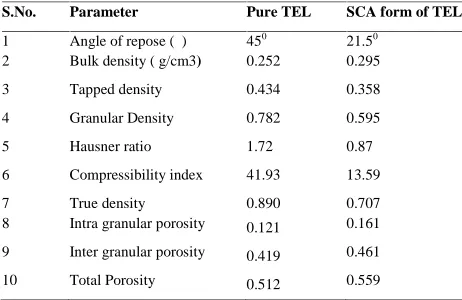
Different parameters of flow property and compressibility were observed. Different parameters like angle of repose, bulk density, tapped density, Carr index, Hausner ratio and porosity were evaluated for pure telmisartan and it is given in table1.
Table 1: Comparative data for flow property of pure TEL and SCA form of TEL
FTIR Study
Physical mixture of drug and excipients in equal amount was taken. It was mixed properlywith potassium bromide at a ratio of 1:100, and the pellets were prepared by applying 10 metric ton of pressure using a hydraulic press. The FTIR spectra were recorded for the samples over a range of 4000–
400 cm−1using the FTIR instrument and results are shown in figure 2.
Formulation of spherical crystals of telmisartan by crystallo co- agglomeration Method
Spherical crystals of telmisartan was prepared by dissolving 1gm of telmisartan in 20 ml of chloroform. After adding, it was heated at 200C to obtain a complete solution. After obtaining the complete solution, it was poured quickly into 100 ml of water containing HPBC and talcum as diluents. The complete system was maintained at prerequisite temperature by constant stirring to ensure and obtain a homogenous mass under continuous stirring with paddle device. When fine crystals of telmisartan began to form, 7ml of chloroform was added drop wise under constant stirring condition. Stirred was continued for 30 mins at 600 rpm. After 30 mins of continuous stirring, the spherical agglomerates were obtained .The agglomerate of spherical shape were separated by using filtration techniqueand whatman filter paper of number one. It was collected after complete drying for 24 hrs at room temperature. After complete drying it was taken further for characterization17,
18
.
Evaluation of SCA Saturation Solubility
Accurately weighed amount of SCA equivalent to 20 mg of telmisartan was transferred to a 50 ml of beaker. Further this procedure was carried out in the same way as described in the preformulation study section of this research work.
Particle Size, Flow Property, and Compressibility
Comparative evalution parameters like particle size of pure telmisartan and SCA of telmisartan was determined using a microscope at ×10 magnification. The determination of angle of repose, bulk and tapped density, Carr index, and Hausner ratio of the SCA was done as per the procedure described in the preformulation study. Comparative data are given in table 1.
Packability Study
10 gm of powdered sample was poured slowly and gently in to 50 mL measuring cylinder and tapped for 100,200,300,400 and 500 times. Packability was assessed by analysis of the tapping process with the Kawakita (I) and Kuno (II and III) equations using the parameter a, b,1/b, k in the equation:
N/C = 1/ (ab) + N/a...I C = (Vo-Vn)/Vo, a = (Vo-V∞) /Vo
ρf -ρn= (ρf -ρo) . exp. (-kn)………II ln (ρf-ρn) =-Kn+ln (ρf -ρo)---III Where,
N =Number of tapping.
S.No. Parameter Pure TEL SCA form of TEL
1 Angle of repose (θ) 450
21.50 2 Bulk density ( g/cm3) 0.252 0.295
3 Tapped density 0.434 0.358
4 Granular Density 0.782 0.595
5 Hausner ratio 1.72 0.87
6 Compressibility index 41.93 13.59
7 True density 0.890 0.707
8 Intra granular porosity 0.121 0.161
9 Inter granular porosity 0.419 0.461
C =Difference in volume (degree of volume reduction.) a and b = constant for packability and Flowability. Vo= Initial volume.
Vn= Final volume after nth tapping.
V∞= Powder bed volume at equilibrium.
ρf, ρn, ρo = Apparent densities at equilibrium, nth tapped
and initial state respectively
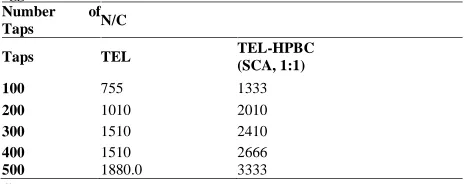
Constant a describe the degree of volume reduction at the time of tapping and called as compactability.1/b is considered to be a constant related to cohesion and is called cohesiveness. The compact ability a and cohesiveness 1/b are obtained from the slop 1/a and the intercept 1/ab of the plot of modified Kawakitas equation. The smaller value of parameter a and higher value of parameter b indicate improvement in packability and flowability of the powder sample. The large value of parameter (k) in kunos equation for the agglomerates indicated that the rate of their packing was much higher than that of primary crystals. Process of packing the agglomerated crystals in a measuring cylinder by tapping was described by Kawakitas and Kunos equation. Agglomerates were easily packed by tapping, the process of which was evaluated based on percent compressibility and parameters of the Kawakita equation as shown in table 3 represents the obtained data of N/C with the increasing number of tapping from 100-500 tapes for Telmisartan and their optimized recrystallized agglomerates.
Table 2: Determination of N/C at N taps in Kawakitas equation for packability study of telmisartan and their optimized recrystallized agglomerates
Number of Taps N/C
Taps TEL TEL-HPBC (SCA, 1:1) 100 755 1333
200 1010 2010
300 1510 2410
400 1510 2666
500 1880.0 3333
Shape and Morphology
The morphology i.e. shape and surface of the spherical crystal agglomerates were studied using optical microscopy and scanning electron microscope (SEM) respectively. The agglomerates were observed microscopically under a olympus microscope, CX 21, Olympus, to study their shape. To study the surface morphology of the prepared SCA of telmisartan scanning electron microscope (SEM) LV-5600, JOEL, USA. Samples of SEM was prepared by lightly sprinkling SCA powder of telmisartan on a double-sided adhesive tape. It was stuck on an aluminum stub and it was coated with gold using a sputter coater. It was viewed and photographs was taken by using an accelerating voltage at the magnification of ×1500. The comparative photomicrographs of telmisartan and SCA of telmisartan are shown in figure 3.
Differential Scanning Calorimetry Study
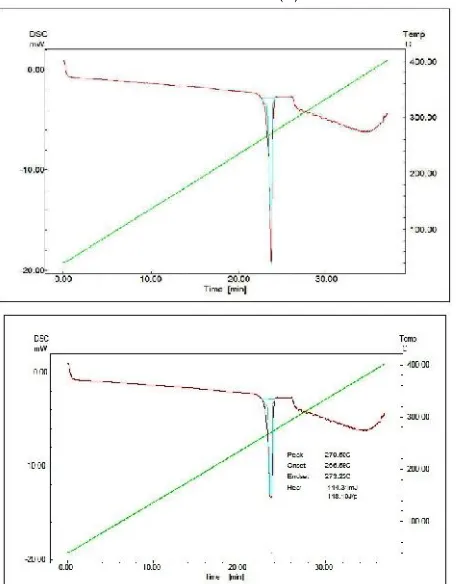
The differential scanning calorimetry (DSC) thermograms were obtained by using a DSC DuPont 9900 with thermal analyzer. Firstly, the instrument was calibrated by using high purity of indium metal and taken as a standard. Accurately weighed 5 milligrams of samples were taken in an aluminium crucible and calorimetric measurements were made with empty cell (high purity alumina discs) as the reference. To maintain an inert atmosphere, the complete system was purged with nitrogen gas at a flow rate of 100 ml/min. Heating was done at the rate of 100C/min. The differential scanning calorimetry (DSC) thermogramsof pure telmisartan and prepared SCA form of telmisartan wererecordedand shown in figure 4.
Characterization by FT-IR
Accurately weighed physical mixture of SCA equivalent to 20 mg of telmisartan and excipients were mixed with potassium bromide at a ratio of 1:100. Further procedure was done as described in the preformulation study and results are shown in the figure 5.
Powder X-ray Diffraction Study
X-ray diffraction (XRD) study was performed in this study to evaluate changes, if any, in the crystalline nature of the drug. Powder XRD analysis was performed for obtained SCA of telmisartan and pure drug using an X-ray diffractometer of Miniflex II, Riguka. X-Ray powder diffraction patterns were recorded using X-ray Diffractometer with Ni filtered radiation of wavelength 1.5406 Å (Cu Target). Samples were scanned in the 2θ range
of 0-50o. The scanning speed used for the recording was 30/min. The results of powder X-ray diffraction study are shown in figure 6.
Preparation of Fast dissolving tablet of SCA form of telmisartan
The fast dissolving tablets of telmisartan were prepared by using direct compression method. Spherical crystal agglomerates equivalent to 20 mg of telmisartan were weighed accurately and5 mg of cross-carmellose sodium was added as super disintegrants. It was mixed properly. 5 mg of camphor as a sublimating agent, 20 mg starch, 2 mg talc, and 1 mg magnesium stearate were taken and it was mixed properly. After the complete and uniform mixing of these physical mixture blends of lactose and MCC in the ratio 1:4 were added to it. The mixture was taken in a polythene bag and mixed properly for 20 mins to ensure proper mixing. The above mixture was compressed into tablets using a single-punch tablet machine with flat punches
19
.
Evaluation parameters of SCA form of tablets20 Weight Variation
Hardness
Hardness or tablet crushing strength (the force required to break a tablet in a diametric compression was measured using Monsanto tablet hardness tester. It is expressed in kg/cm2.
Tablet Thickness
Ten tablets from each formulation were taken randomly and their thickness was measured with Vernier Calipers. The mean SD values were calculated.
Tablet Diameter
Diameter of tablet was measured by using Vernier Calipers. Three tablets were selected at random from each batch. It is expressed in mm.
Friability test
Friability of the tablets was determined was determined using Roche Friabilator. In this, 20 tablets were subjected to the combined effect of abrasions and shock in a plastic chamber revolving at 25 rpm and dropping the tablets at a height of 6 inches in each revolution. Pre weighed sample of tablets was placed in the friabilator and subjected to 100 revolutions. Tablets were de-dusted using a soft muslin cloth and reweighed. The friability is given by the formula. % Friability = (Wi–Wf/ Wi) X 100
Where,
Wi = initial weight of tablets Wf = final weight of tablets
Water Absorption Ratio
A piece of tissue paper folded twice was placed in asmall petridish containing 6 ml of distilled water. A tabletwas put on the paper and the time required for completewetting of the tablet was measured.
The wetting tablet was then weighed. Water absorption ratio
“R” was determined using the equation as follows:
R= (Wa/Wb) x 100 Where,
Wb is weight of tablet before water absorption Wa is weight of tablet after water absorption.
Tablettability/Compressibility study: Tablettability is the
capacity of a powder material to be transformed into a tablet of specified strength under the effect of compression pressure. Compressibility is the ability of material to be reduced in volume as result of applied pressure. The more important role in tablettability is played by densification which takes place during the initial stage of compression and which depends on the particle slippage and rearrangement. The greater extent of particle-particle interactions on the subsequent stage of compression could explain the lower elastic recovery and greater tablettability and compressibility observed during the compression study. The process of direct compression is a process of applying pressure (via an upper and lower punch) to material held in die cavity.
In the pharmaceutical industry, the measurement of porosity change as a function of compression pressure is widely used in describing the powder compression process.
The compressibility of a powder bed could be obtained from the relationship between porosity and the applied pressure. The Heckel equation is widely used for relating the relative density (D) of a powder bed during compression to the applied pressure (P).It is assumed that the densification of the powder columns follows a first order kinetics. Thus the degree of material densification is correlated to its porosity. The equation is written as
Ln [1/1-D] = K P+ A --- (IV) Where
D = Relative density of compact at pressure P. K = Slop of the straight line portion of heckel plot.
A = Intercept of the straight line obtained by linear regression from the Heckel plot
Py = Mean yield pressure which is the reciprocal of K. The slop of Heckel plot Was intended to give a measure of plasticity of a compressed material. Greater slops indicated a greater degree of plasticity of material. The slop was also related to the yield strength (Y) of the material by the equation:
K = 1/3 Y --- (V)
The reciprocal of K to be the mean yield pressure (Py) in order to study whether the fragmentation of particles was the predominant compaction mechanism of compaction process.
A constant A is a sum of two densification terms: A = Ln [1/1-D0] + B--- (VI)
Where
Ln [1/1-D0] = Related to the initial die filling
B = The densification due to the slippage and rearrangement of both primary and fragmented particles, before deformation and bonding of the discrete particles The constant A and B can be expressed as relative densities using
DA= 1- e -A
--- (VII) D0= 1- e
–A0
--- (VIII) DB= DA- D0--- (IX)
Where
A = Intercept at given pressure A0= Intercept of line at P = 0
DB = The difference between the DA and D0
represented the extent of particle rearrangement which represent fragmentation property of the powder.
DA= Die filling and particle rearrangement which represent
the total degree of packing at zero and low pressure. D0 = Particle rearrangement during die filling which is
related to the typical particle shape. Therefore it is the relative density of the powder bed at the point when the applied pressure equals zero. It is used to describe the initial rearrangement phase of the densification as a result of die filling.
Note:
Consider Die is cylinder (V = π r2h)
Assay
Drug contents of the tablet containing spherical crystal agglomerates of telmisartan was determined by the method given in Indian Pharmacopeia. Five tablets were taken and it was crushed. An accurately weighed powder of SCA equivalent to 20 mg of telmisartan was completely dissolved in 100 ml methanol. The resulting solution was filtered and after the absorbance was recorded in UV-visible spectroscopy. Drug contents per tablet was calculated by comparing the absorbance with that of the standard telmisartan solution of known concentration.
In-vitro Dissolution Study
Experiments were carried out in a USP paddle apparatus type II. 900 ml of phosphate buffer saline pH 6.8 buffer was used a dissolution medium. In-vitro dissolution studies were performed for the following samples: plain telmisartan, fast dissolving tablets of SCA telmisartan and telmisartan prepared by using various polymers.
The samples were placed in separate baskets of the dissolution apparatus. The dissolution apparatus was run at 75 rpm, and 5 ml samples were withdrawn at predetermined time intervals and replaced with equal volume of the fresh dissolution medium. The samples were filtered, and after suitable dilution, the absorbance was measured using a 296 nm shimadzu UV-visible spectrophotometer. Sink conditions were maintained throughout the experiment. The study was carried out in triplicate and mean values were calculated. The amount of the drug dissolved was calculated by comparing the absorbance of the samples with that of standard solution of telmisartan of known concentration21.
Ex- vivo Bioavailability Studies
Male Wistar albino rats were procured from the IIIM (Indian Institute of Integrative Medicine), Jammu, India. The animals were appropriately quarantined and housed in Central Animal House Facility (CPCSEA Registration no. 1753/PO/E/S/14/CPCSEA) for acclimatization for seven days prior to experimentation. Animals were housed in polypropylene cages with rice husk as a bedding material and maintained under standard laboratory conditions. The research protocol of this study was approved by Institutional Animal Ethics Committee (IAEC) of Khalsa College of Pharmacy, Amritsar. Punjab vide approval no. IAEC/KCP/2015/018.
The experimentation and care of the experimental animal was done in accordance with outlines of the Committee for the Purpose of Control and Supervision of Experiments on Animals (CPCSEA), Animal Welfare Division, Ministry of Environment and Forests, Government of India.
The bioavailability of SA of TEL in FDT was determined in comparisons with Marketed formulation of TEL in healthy male Wistar rats of average weight 200- 250 gm were used for study. The rats were divided into 3 groups. The order of administration was randomly selected. The rats were fasted overnight before the start of the study. One group received
suspension of Marketed formulation whereas the other group received FDT containing SCA of TEL with HPBC of same dose. Dose equivalent to 10 mg/mL (One tenth of LD50) of
pure drug and selected formulation in suspension made from 0.2% CMC was administered orally with help of syringe. Nearly 1mL of blood sample was collected from one animal of a group at one time (under mild ether anesthesia) from the retro orbital vein plexus into heparinized tubes and hence a different animal from the same group was used for blood sampling at each time interval. Blood samples were collected at time intervals of 0, 0.25, 0.5, 1, 1.5, 2, 3, 4, 5, hours after administration of the drug. After the blood withdrawal procedure, all the animals were sent to rehabilitation section of the institutional animal house as terminal sacrifice of experimental animals was neither required nor approved in the Institutional Animal Ethics Committee Protocol for the present study. The blood was immediately centrifuged at 5000 rpm for 25 minutes to separate the plasma and stored at -200C until analysis22. The statistical analysis for the determination of difference in drug and SAs was done by unpaired t-test and P ˂ 0.0001 was
taken as significant.
Sample Processing: The plasma (0.5 mL) was transferred
into test tube and 10 µl of internal standard (Irbesartan) working solution (100ng/µl) was spiked. Solutions were vortexed and added 3 mL of extraction solvent diethyl ether: dichloromethane (60:40 v/v) was added. The sample was vortexed for 5 min using Vortexer and centrifuged for 10 min at 2000 rpm. The organic layer was transferred to vials and evaporated at 700C to remain residue. The sample was reconstituted using mobile phase at the time of analysis.
HPLC Analysis: The drug concentration in plasma was
analyzed by a high performance liquid chromatography (HPLC) method using Rheodyne type manual injector. The HPLC system (Thermo 1100 Series, Canada) consisted of column (Agilent, 5µ m, 4.6mmx, 250mm,Singapore) and Ultraviolet variable wavelength Diode Array detector. The detection wavelength was 296 nm.
Data analysis: Data were generated assuming first-order
absorption and 1 compartment model with first-order elimination. The maximum plasma concentration (Cmax) and
time of its occurrence (Tmax) were directly computed from
the plasma concentration Vs time plot. The area under curve (AUC) and mean residence time (MRT) was determined.
Stability Studies
3. RESULTS AND DISCUSSION
Preformulation Studies
Saturation Solubility Measurement
The preformulation studies of saturation solubility study results clearly indicated that indicated that telmisartan is
having saturation solubility of only 0.067 μg/ml in water,
where as in DMF showed the highest solubility of
24.6μg/ml.comparative solubility study are shown in figure 1.
Flow Property and Compressibility
The flow property and compressibility indexes of powders are summarised in tabulated form. Results showed that there is an incresement in the flow and compressibility study of SCA form of telmisartan as compared to the results of pure form of telmisaratan. Comaparative data are summarised in table1.
FTIR Study
The FTIR spectra of the physical mixture of telmisartan with the excipients are shown in the figure 2.The spectrum was scanned over a frequency range 4000–400 cm-1. The characteristic peaks for TEL can be observed at wave numbers 3673 cm-1(due to free O-H stretching vibrations), 1695cm-1(C=O stretching vibrations), 1350-1000cm-1 [C-N stretching vibrations] and 1455 and 1381(CH3bending vibrations). These peaks are retained inthe
physical mixture of drug with excipients.
Selection and Optimization of Formulation and Process Parameters
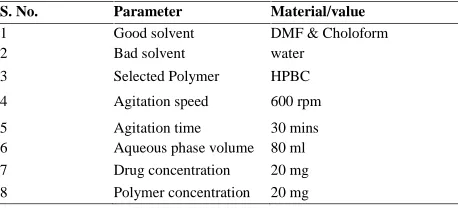
The formulation parameters were optimized by applying the 32Factorial design of experiments (data not shown). 32Factorial Design method was used to prepare different formulations. Concentration of superdisintegrant and concentration of sublimating agent was taken as dependable variables. Factorial designs allow the simultaneous study of the effects that several factors like concentration of superdisintegrants and diluent concentration may have on the physical characteristics of the tablets. The independent variables selected are % porosity and % drug release. The optimized parameters for the preparation of SCA form oftelmisartan areshown in Table 2. The optimized SCA of telmisartan could be easily compressed into tablets having a very smooth surface.
Table 3: Optimized parameters for the preparation of SCA of telmisartan
S. No. Parameter Material/value
1 Good solvent DMF & Choloform
2 Bad solvent water
3 Selected Polymer HPBC
4 Agitation speed 600 rpm
5 Agitation time 30 mins
6 Aqueous phase volume 80 ml 7 Drug concentration 20 mg 8 Polymer concentration 20 mg
Packability Study:
The packing ability was assessed by comparing the constants a, b and k in equation (I, II, III). The reciprocals of b and k represent the packing velocity. The values of constant a, b, 1/b and k for telmisartan and their recrystallized agglomerates are given in table: 35.The constant a for the agglomerated crystals was smaller than the raw crystals of TEL. This indicated that the agglomerated crystals were easily packed, even without tapping. The larger b and k values of the agglomerated crystals proved that the packing velocity of the agglomerated crystals by tapping was higher than that of the crystals which are not agglomerated. The above findings conclude that the agglomerated crystals had excellent flowability and packability in terms of handling properties in tablet preparation such as feeding into die and their direct tabletting behavior. These findings proved that the flowability and packability of agglomerated crystals were preferably improved for direct tabletting. These findings also suggest that agglomerates flow and pack smoothly from the hopper into the dies and that the tablets formed from agglomerates attain uniformity in weight and content. The large 1/b-value of agglomerates indicated that the apparent packing velocity obtained by tapping for the agglomerates was slower or the cohesiveness of the agglomerates was larger than that for the untreated drug particles, since the agglomerates were packed more closely, even without any tapping, as a consequence of their better flowability and compressibility. The increasing packability of agglomerated crystals may be due to lower surface and wider particle size distribution of spherical crystals. During tapping process smaller particle might have infiltrated into the voids between the larger particles and resulted in improved packability.
Particle Size Analysis, Shape, and Morphology
The particle size of the pure powder of telmisartan was found to be 5-14 μm, whereas that of the optimized SCA
prepared by using polymer of HPBC was found to be 100
μm. The optical microscopic images of pure telmisartan and
SCA are shown in figure3a and b respectively. Crystals of pure sample of telmisartanis of the smallest size with irregular shape. Agglomerates obtained by using HPBC were spherical in shape.
XRD Study
X ray powder diffraction patterns of pure telmisartan and HPBC complex prepared with SCA method are showed in figures 4 (a) and (b). X-Ray diffractograms of powder telmisartan showed sharp diffraction peaks indicating the presence of crystalline form. Reduction of intensity of crystalline peaks was observed from the complex.
DSC Study
modification. The temperature range of the endothermic peak of all the telmisartan pure sample lies in the range of 2640C to 2670C. Melting points show slight variation when agglomerates are prepared as the nature of the crystals might have been affected by the solvent. The melting endotherm for agglomerated telmisartan agglomerates with polymer was 2660C with decreased enthalpy of (148.19 J/g) indicating decreased crystallinity.
The selected telmisartan agglomerates with HPBC as polymer prepared by SCA method showed decreased crystallinity & Heat of fusion than telmisartan agglomerates without polymer. The decreased crystallinity and heat of fusion may be one of the reasons for enhanced solubility. This may also be due to conversion of crystalline form into amorphous form.
Evaluation of Tablets
As discussed in the rational section of this research work that the main objective of this study is to reduce the disintegration and dissolution profile of an orally mouth dissolving tablets prepared by direct compression method so that it disintegrates or disperses in the saliva within a matter of seconds. The results outcome are shown in table 4.
Table 4: Optimized parameters for the preparation of SCA of Telmisartan (incomplete)
S. No.
Thickness (mm)
Friability (%)
Hardness
(Kg/cm2) DT(mins)Wettingtime (Mins)
Water absorption (%)
Porosity (%)
Drug release (%)
1 3.32 0.66 3.1 30 37 91.01 32.33 96.95
Compressibility Study: The compressibility describes the
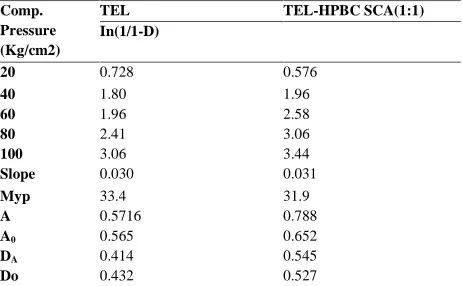
reduction of volume in the die at applied punch pressure. The compressibility was studied using the heckel equation. Table36 and figure: represent the Heckel plot data (k.myp, DA, D0, DB) of telmisartan and their optimized
recrystallized agglomerates. The extent of particle rearrangement (DB) calculated from heckel analysis
depends on the particle surface; size and shape which decide the particle arrangement at early compression stages. DB results from compression force action to
overcome particle interactions (friction and cohesion) before particle slippage and or arrangement. The lower DB value shown by the telmisartan particles was due to
physical properties of the particles such as smaller irregular particles having no agglomerated structure.
Thus the raw crystals did not undergo extensive particle rearrangement. The further arrangement may be due to the fragmentation of individual particles followed by slight plastic deformation. DBfor the recrystallized agglomerates
is higher than the original drug indicating that agglomerates are highly fractured during compression. The optimized agglomerated crystal showed higher DB
value. This implies that the agglomerates give more extensive particle rearrangement compared with the raw crystals of Telmisartan. At lower compression pressure the large agglomerates were fractured into small ones, which facilitate the further rearrangement. At low
compression pressure the rearrangement and crushing of agglomerated crystals proceeds simultaneously and at high pressure crystal particles are cohered and bounded with one another while undergoing plastic deformation. When the compression pressure was increased, the agglomerate showed plastic deformation. The initial portions of heckel plot curves are general indications of the tendency for particle fracturing.
The compacts formed by telmisartan showed capping and lamination even at lower compression force. This result confirms the weak dependence of the telmisartan on particle slippage at an early stage of compression however at higher compression pressure capping and lamination occur.D0 values represent the degree of initial
packing in the die as a result of die filling. The prepared agglomerates had the higher D0value because of higher
degree of packing in the die.
DAvalues represent the total degree of packing at zero and
low pressure, the value is on higher side for recrystallized agglomerates. Higher values of D0represent the better initial
packability in a die while the higher value of DA
represent densest packing rearranged and fractured particles into a die.
The slope of the heckel plot (k) is indicative of plastic behavior of the powder material. A larger slop is related to a greater amount of plasticity in the material. The mean yield pressure is related inversely to the ability of a material to deform plastically under pressure.
The Py (Average yield pressure) calculated from the slop of heckel plots was greater for the recrystallized agglomerates than the Telmisartan. The improved compatibility of the agglomerates could be attributed to their structural characteristics. The agglomerates were comprised of small adherent crystals and this particular structure was responsible for the large relative volume change, which occurred during the early stage of the compression process, as a consequence of fragmentation. Enhanced fragmentation during compression results in an increased contact point area which produces a strong bond between particles leading to formation of strong tablets as shown in table 5.
Table 5: Heckel plot data of telmisartan and their recrystallized agglomerates.
Comp. Pressure (Kg/cm2)
TEL TEL-HPBC SCA(1:1) In(1/1-D)
20 0.728 0.576
40 1.80 1.96
60 1.96 2.58
80 2.41 3.06
100 3.06 3.44
Slope 0.030 0.031
Myp 33.4 31.9
A 0.5716 0.788
A0 0.565 0.652
DA 0.414 0.545
DB 0.018 0.016
In-vitro dissolution study
The results of the in-vitro drug released studies are shown in figure 6. The results of in-vitro drug released study clearly indicates that only 9 % of drug was released in 10 mins when pure form of telmisartan, where as 53.65 % was released in 10 mins when SCA form of telmisartan was used. The percentage released was found to be more than 90 % in 60 mins of SCA form of telmisartan, where as that of pure telmisartan was very low i.e. 35%. The result clearly indicates that there a significant increase in the drug released profile of SCA form of telmisartan as compared to pure telmisartan. Results of in-vitro drug released study are shown in figure 6.
Ex- vivo Bioavailability Studies
Ex- vivo studies was carried out to determine the absorption behaviour of available marketed formulation and SCA form of telmisartan, which were administered orally to rats. A plasma drug concentration as a function of time after oral administration of these preparations is shown in figure 7. Results remarkably showed that there an increasement in 300 fold in solubility and dissolution rate of poorly water soluble drug i.e. telmisartan. It has been observed by formulating it as spherical agglomerate by SCA technique using HPBC as polymer. Moreover, result of the in vivo study in rats also showed 12 fold increases in C maxvalue in less than 30 min of administration which support the findings of the solubility as well as in-vitro release study. Due to quicker dissolution rate, in- vivo results also showedrapid absorption and improved bioavailability compared with pure TEL. Thus, formulation of SAC form of telmisartan technique with HPBC could be a promising approach to improve its solubility, dissolution, and bioavailability to a greater extent.
Fig 1: Solubility study of a telmisartan in different solvents
Fig 2: FTIR spectrums of a) Pure form of telmisartan b) IR spectra of telmisartan with other excipients
Fig 3: a) Optical microscopic images of telmisartan b) Scanning electron microscopic images of telmisartan
Fig 5: DSC curves of different crystals of telmisartan a) spherical crystals of TEL without polymer and b) spherical crystals of SCA form of TEL using HPBC polymer
Fig 6: Comparative in-vitro drug released study of pure telmisartan and SCA telmisartan
Fig 7: Comparative bio- availability of FDT of optimized spherical agglomerates and marketed formulation
4. CONCLUSION
The spherically recrystallized agglomerates of telmisartan with different hydrophilic polymers were successfully prepared for direct tabletting by Spherical crystal agglomeration . It is a simple technique with low cost. By using spherical crystal agglomerization, we can enhance the dissolution and solubility profile of drug with slide changes in polymers. Results of in-vitro dissolution study and ex-vivo bioavailability study support and confirms the solubility dependent bioavailability of telmisartan. Henceforward, our study can be considered as a new report that focuses on the problem of very low solubility profile of telmisartan which also affects dissolution and bioavailability profile. This study gives solution to the problem of very low solubility of the drug.
5. REFERENCES
1. Aungst BJ, Rogers NJ, Shefter E, Comparison of nasal, rectal, buccal, sublingual and intramuscular insulin efficacy and the effects of a bile salt absorption promoter. The J Pharmacol Exp Ther.1988;244:23-27. 2. Leuner C, Dressman J, Improving drug solubility for
oral delivery using solid dispersion. Eur J Pharm and Biopharm. 2000;50:47-60.
3. Jivraj M, Martini LG, Thomson CM. An overview of the different excipients useful for the direct compression of tablets. Pharm Sci Technol Today. 2000;3:58–63. 4. Al-Talla ZA, Akrawi SH, Tolley LT, Sioud SH, Zaater
MF, Emwas AHM. Bioequivalence assessment of two formulations of ibuprofen. Drug Des Devel Ther. 2011;5:427-433.
5. Guan QG, Chen W, Hu XM. Development of lovastatin-loaded poly(lactic acid) microspheres for sustained oral delivery: in vitro and ex vivo evaluation. Drug Des Devel Ther. 2015;9:791-798.
6. Nehal AK, Whitehouse M, Ramachandran C, Bermejo M, Hussain A, Junginger H. Molecularproperties of WHO essential drugs and provisional biopharmaceutical classification. Mol. Pharm. 2004;1:85-96.
7. Vanden MG, Weuts I, Ridder TD, Balton N. Evaluation of Inutec SP1 as a new carrier in the formulation of solid dispersions for poorly soluble drugs. Int J Pharm. 2006;316:1-6.
8. Savjani KT, Gajjar AK, Savjani JK. Drug solubility: importance and enhancement techniques. ISRN Pharm. 2012;2012:195727.
9. Karamyan VT, Speth RC. Distribution of the non-AT1, non-AT2 angiotensin-binding site in the rat brain: preliminary characterization. Neuroendocrinology. 2008;88:256–265.
10. Kothawade SN, Kadam NR, Aragade PD, Baheti DG. Formulation and characterization of telmisartan solid dispersions. Int J PharmTech Res. 2010;2:341-347. 11. Mukhopadhyay S, Kadam K, Sawant L, Nachane D,
substances of telmisartan and hydrochlorothiazide in tablet dosage form by using reversed phase high performance liquid chromatographic method. J Pharm Bioallied Sci. 2011;3:375-83.
12. Jbilou M, Ettabia A, Guyot-Hermann AM, Guyot JC. Ibuprofen agglomerates preparation by phase separation. Drug Dev Ind Pharm. 1999;25:297–305.
13. Usha AN, Mutalik S, Reddy MS, Ranjith AK, Kushtagi P, Udupa N. Preparation, and in vitro, preclinical and clinical studies of aceclofenac spherical agglomerates. Eur J Pharm Biopharm. 2008;70:674–83.
14. Kumar S, Chawla G, Bansal AK. Spherical crystallization of mebendazole to improve processability. Pharm Dev Technol. 2008;13:559–68. 15. Varshosaz J, Talari R, Mostafavi SA, Nokhodchi A.
Dissolution enhancement of gliclazide using in situ micronization by solvent change method. Powder Technol. 2008;187:222–30.
16. Viswanathan CL, Kulkarni SK, Kolwankar DR. Spherical agglomeration of mefenamic acid and nabumetone to improve micromeritics and solubility: a technical note. AAPS Pharm Sci Technol. 2006;7, E48. 17. Chourasia MK, Jain SK, Jain S, Jain, NK. Preparation
and characterization of agglomerates of Flurbiprofen by spherical crystallization technique. Ind J Pharm Sci. 2003: 287-291.
18. Pawar AP, Paradkar AR, Kadam SS, Mahadik KR. Crystallo-coagglomeration: a novel technique to obtain ibuprofenparacetamol agglomerates. AAPS Pharm Sci Technol. 2004;5: e44.
19. Lachman L, Lieberman H, Kanig J. The theory and practice of industrial pharmacy. 3 ed. Varghese publishing House. 1987.
20. Indian pharmacopoeia. Vol 1. The Indian Pharmacopoeial commission, Government of India, Ghaziabad, 2007: 177.
21. Liu C, Liu C, Desai KG. Enhancement of dissolution rate of valdecoxib using solid dispersions with polyethylene glycol 4000. Drug Dev Ind Pharm. 2005;31:1–10.
22. Kurade VP, Pai MG, Gude R. RP-HPLC Estimation of Ramipril and Telmisartan in Tablets. Indian J Pharm Sci. 2009; 71:148-51.
23. ICH_Guideline. Stability testing of active pharmaceutical ingredients and finished pharmaceutical products, ICH, 2009.
Conflict of Interest: None