Mixing-attack-proof Randomized Embedding
Audio Watermarking System
Yuhong Guo
a, QingSheng Yuan
b, Xuemin Zhao
a, Jian Liu
a, Yonghong Yan
a a Key Laboratory of Speech Acoustics and Content Understanding,Institute of Acoustics, Chinese Academy of Sciences, Beijing 100190, China Email:{guoyuhong, zhaoxuemin, liujian, yyan}@hccl.ioa.ac.cn
b National Computer network Emergency Response technical Team Coordination Center,
Beijing 100029, China Email: [email protected]
Abstract— Audio mixing greatly degrades the watermarking security. Consequently, it is of importance to introduce mixing-attack-proof audio watermarking algorithms. This article investigates audio mixing attack. A randomized embedding spread spectrum audio watermarking algorithm is accordingly proposed to improve the watermark immunity to mixing attacks. First, balanced modulation is introduced to get rid of the host signal interference and improve the cor-relation score stability. With more stable corcor-relation scores, a randomized pseudo-noise embedding strategy is proposed to decrease the interference among different mixed components and bit error rate. To further improve the synchronization performances, a multiple synchronization strategy which simultaneously synchronizes different mixed components is also proposed. The experimental results indicate that the proposed algorithm shows a strong level immunity to mixing attacks and it can resist the mixing attack with up to 5 mixed components.
Index Terms— Digital Audio Watermarking, Spread-Spectrum Watermarking, Mixing Attack
I. INTRODUCTION
The rapid development of Internet improves people’s life greatly. People can easily share digital audio files with others. Unauthorized copy of digital audio has incurred the concern of copyright violation. Several algorithms, like audio authentication, proof of ownership, etc., have been proposed to solve the problems of copyright viola-tion. Digital watermarking, an information hiding tech-nique, is one solution to the problem [1].
To guarantee the survival of the hidden information, watermark should not be erased after some audio op-erations or some attacks, which is the main concern of watermarking security. Many secure watermarking algorithms have been proposed [1]–[6] and an evaluation project of audio watermark attacks named “Stirmark” has also been developed [7]. Typical audio watermarking algorithms make use of the feature of human auditory system to embed information to guarantee the perceptible transparency, such as echo hiding [8], phase quantization [9], mute period adjustment [10]. These algorithms are attack-prone ones, because the information is embedded into the perceptually least significant components of the audio. Adversaries can easily remove the information
without degrading the audio quality. Therefore, it is believed that the watermark must be placed explicitly in the perceptually most significant components of the data [1]. By this means, the watermark survives with the audio. Otherwise, the quality of audio must be highly degraded. Quantization and spread spectrum are the dominant algorithms that embed watermark into the perceptually most significant components. However, the main concerns of the two types of algorithms are different. Quantization algorithms, such as Quantization index modulation (QIM) [11], [12] and Rational Dither Modulation (RMD) [13], [14], focus on improving the payload of watermark. Therefore, quantization algorithms often embed more bits per second but much more fragile. Even the amplitude scaling can be a security concern for quantization algo-rithms [15]. In contrast, spread spectrum algoalgo-rithms [1] focus more on the watermarking security. Each watermark bit is embedded by spreading the energy to the spectrum through the pseudo-noise (PN) sequences which improves the security of watermark. Swanson [16] proposed a spread spectrum system with high perceptual transparency using psycho-acoustic model and the security perfor-mance was evaluated by colored noise, MPEG coding, cropping, filtering and temporal resampling. Kirovski [2] made significant improvement to audio spread spectrum watermarking security. His algorithm can further resist the desynchronization attack and estimation attack. More recently, host-interference-rejecting spread spectrum algo-rithms which highly decrease the decoding error proba-bility have been proposed by Cox [17] and Malvar [18] to reduce the interference from the host signal.
mixing attack. Malicious mixing attack is to mix several copies of the same audio with different watermarks as if there were only one copy. The non-malicious mixing attack which often appears in audio manipulation, e.g., mixing two different audio segments to make a special effect. It is reported that the malicious attack was suc-cessfully applied to the watermarking systems designed for the Secure Digital Music Initiative [19]. To design the collusion-secure algorithm, collusion-secure codes which can identify at least one of the mixing components were proposed [20], [21].
Among these studies, most were conducted to deal with the collusion attack, because the purpose is more direct to remove the watermark. However, it is also important to study the non-malicious attack in order to improve the security in more common cases. In this paper, both the malicious and non-malicious mixing attacks are studied. A spread spectrum audio watermarking system with randomized-PN-sequence embedding is introduced to improve the watermark immunity to both malicious and non-malicious mixing attacks. First, host-interference-rejecting balanced modulation is introduced to improve the stability of correlation scores. Benefiting from the stable correlation scores, randomized-PN-sequence em-bedding is proposed to decrease the bit error rate and thus more mixed components can be tolerated. With randomness introduced by the randomized embedding, the proposed algorithm can treat malicious and non-malicious mixing attacks the same, which solved the problem of both types of attacks. Moreover, a multiple synchro-nization strategy which makes multiple synchrosynchro-nizations among different mixed components simultaneously is finally proposed to improve the synchronization rate. The experimental results show that the system can still achieve low bit error rate and high synchronization rate when 5 components were mixed and it has strong immunity to two mixing attacks.
The rest of this article is organized as follows. Section II presents the basic concept of spread spectrum water-marking. The proposed system is described in Section III. Experimental results and analysis are presented in Section IV. Finally, conclusions are given in Section V.
II. BACKGROUND
A. Embedding and detecting procedures of spread spec-trum watermarking
The host signal x is first transformed into the water-marking domain X¯ ∈ RN and the watermark signal is added by the embedding equation
¯
Y =X¯+bkα·w, (1)
wherebk ∈ {±1}, k = 1,2, . . . , L denotes embedded bit at the kth frame, α > 0 is the psychoacoustic factor to guarantee the perceptual transparency andw∈ {±1}N is the PN sequence. The host signal is processed frame by frame using Hanning window with half frame overlap.
The detecting procedure is based on the linear corre-lation between the PN sequence and the received signal
¯
Yk. The correlation scoreCk is
Ck( ¯Yk,w) =
1 N
∑
n
w(n)·[bkαkw(n) + ¯Xk(n)] (2)
= 1
Nbkαk
∑
n
w2(n)+ 1 N
∑
n
w(n)·X¯k(n)
According to [2], the correlation score can also be ex-pressed as
Ck( ¯Yk,w) =αkbk+N(µX¯,w, σ2X¯/N) (3)
whereN(µX¯,w, σ2X¯/N)is the Gaussian distribution. The PN sequence w is not correlated with X, so¯ αkbk >>
µX¯,w. Therefore, the expectation of the correlation score
E[Ck]≈αkbk and one watermark bit can be detected by the following condition
b=
1 Ck≥τ
−1 Ck≤ −τ
no watermark |Ck|< τ,
(4)
whereτ is the correlation threshold to determine whether one bit is embedded.
B. Traditional frame structure
A watermark block Synchronization bits
(sync-head)
Message bits (watermark)
±1
...
±1 ±1 ±1 ±1...
±1 ±1 ±1±1 ±1
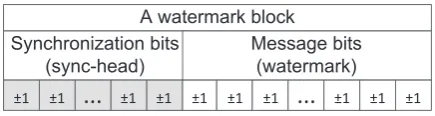
Figure 1. Frame structure for traditional spread spectrum watermarking systems
As shown in Figure 1, traditional spread spectrum watermark has two parts in each block [22]. The first part contains synchronization guard bits (sync-head) which is a fixed bit stream without watermark information used only for synchronization. The second part contains the watermark. These two parts are embedded by different PN sequences to make a distinction between guard bits and watermark bits. When the sync-head is detected, the detector gets synchronized and directly extracts the second part which contains the message bits (watermark). With the help of the sync-head, the watermark can be detected at any start point of the audio.
III. PROPOSEDWATERMARKINGSYSTEM
A. The Amplitude-Scaling-Proof Domain
with a factor A > 0 to get y′ = Ay. Y¯′ is the log spectrum representation, thus the correlation score is
Ck( ¯Yk′,w)
= 1
N
∑
n
w(n)·log10|AYk(n)|
= 1
N
∑
n
w(n) log10|Yk(n)|+
log10|A| N
∑
n
w(n)
= Ck( ¯Yk,w) +
log10|A|
N
∑
n
w(n) (5)
In the proposed algorithm, the Balance Gold Sequence [23] is used as the PN sequence. The Balance Gold Sequence has the property that the number of −1 is only one more than the number of 1 for an N-length (N = 2n −1) sequence, so the second term of (5) approximates to 0 and Ck( ¯Yk′,w) ≈ Ck( ¯Yk,w). That is to say the correlation score after amplitude scaling changes little. Therefore, the log spectrum domain is an amplitude-scaling-proof domain.
B. Balanced Modulation
1 1 1 -1 -1 -1 -1
Embedded bit = 1
KFrames KFrames
1
0 1 2 3 4 5 6 7 8
-2 -1 0 1 2
D
e
c
o
d
in
g
S
c
o
re
Time
-1 -1 1 1 1 1
Embedded bit = -1
KFrames KFrames
-1 -1
0 1 2 3 4 5 6 7 8
-2 -1 0 1 2
D
e
c
o
d
in
g
S
c
o
re
Time
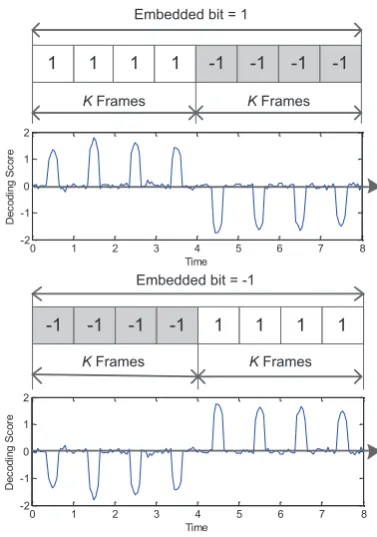
Figure 2. Balance modulation for embedded bits
As showed by the second term of (3), the correlation score is interfered by the host signal. The correlation threshold must therefore be set higher to be tolerant of the host signal interference. To decrease the host interference and increase the robustness, some watermark systems embed one bit using repeated modulation which repeatedly embeds one bit in continuous frames. However, though the variance of the interference is reduced, the expectation termµX¯,wremains unchanged. To minimize the host interference, balanced modulation is proposed.
In balanced modulation, one watermark bit is em-bedded in continuous 2K frames of baseband signal –
K frames with baseband signal 1 and K frames with baseband signal −1. Different bits are represented by different baseband signal orders, showed in Figure 2. The embedding equation is changed to Y¯ = X¯+Skα·w, where Sk denotes the baseband signal of the kth frame. Meanwhile, the correlation score of one bit is
Cb = 21K (
K ∑
k=1
Ck−
2K ∑
k=K+1
Ck)
= 2αK (
K ∑
k=1
Sk− 2K ∑
k=K+1
Sk) +N(0, σX2¯/2KN).
The expectation of the host-interference term changes from µX¯,w to 0 and the variance also decreases to
σ2 ¯
X/2KN. Finally, E[Cb] = bα. The balanced
mod-ulation decreases the host signal interference and the correlation threshold can therefore be set lower. Lower host signal interference can improve the tolerance of more mixing components, which will be discussed in Section IV.
C. Randomized-PN-Sequence Embedding
The purpose of mixing attack is to force the detector to make a wrong decision, such as wrong watermarks or no-watermark decision. To get an insight of how the attack works in spread spectrum systems, the mixing attack of two audio segments with half the amplitude and equal α
is considered. The correlation score of mixing audio is
Ck(Z¯2,w1)
= 1
N
∑
n
log10|1
2Y1(n) + 1
2Y2(n)|w1(n)
= 1
N
∑
n
log10|10αS1w1(n)+ 10αS2w2(n)|w1(n) +c
where c = 1 N
∑
nlog10|12X1(n)|w1(n). c is the host-interference term and it will be eliminated after the bal-anced modulation. Three situations need to be considered:
1) w1=w2 andS1=S2:
10αS1w1(n)= 10αS2w2(n), the score is the same as
no mixing attack case. 2) w1=w2 andS1=−S2:
log10|10αS1w1(n)+ 10αS2w2(n)| = log10(10α+ 10−α)
is a constant, so the linear correlation approximates to 0 due to the property of the Balance Gold Sequence. Therefore, if the two mixing frames have opposite baseband signals, the correlation score is very low as if there were no watermark.
3) w1̸=w2:
not affect the analysis. The correlation score is
n∑=N
n=1
[log10(10w1(n)S1α+ 10w2(n)S2α)·w1(n)]
= ∑
n∈P
w1(n) log10(2·10S1αw1(n))
+∑
n∈Q
w1(n) log10(10α+ 10−α) (6)
where {
P ={n|S1w1(n) =S2w2(n)}
Q={n|S1w1(n) =−S2w2(n)}.
In the case ofN-length (N = 2n−1) Balance Gold sequence, this correlation score can be simplified to
Ck(Z¯2,w1) =
[2n−1−1−log 10(2)]
2n−1 αS1. (7)
The correlation score approximates to half the cor-relation score of no attack situation.
One Watermarking Block
Sync-Head Watermark
Random Blank Former
Block
Following Block
Sync-Head (5 Random PN Sequences)
Symbol Bits 1
Watermarking PN Key
Symbol Bits 2
Figure 3. Structure of the proposed watermark block
Algorithm 1. Watermark embedding
1. Create 2 PN-sequence poolsP1, P2, ||P1|| = l1, ||P2|| = l2 2. while not end of file
3. Generate 3 random numbers r1 [1, l1], r2 [1, l2], r3>0 4. Pick out PN sequences P1, P2 5. Embed sync-head using
6. Embed watermark using
7. Skip length of r3 for no watermark embedding 8. end while
Figure 4. The embedding algorithm of the proposed watermarking system
The traditional spread spectrum systems use only two PN sequences for sync-head and watermark separately, which leads to the frequent occurrence of Situation 2). As analyzed above, Situation 2) highly degrades the correlation score. That is why the mixing attack is an effective attack to the traditional spread spectrum algo-rithm. When Situation 3) occurs, the correlation score performs much better than Situation 2). According to this fact, a randomized-PN-sequence embedding technique is proposed to avoid the occurrence of Situation 2).
To make Situation 3) occur the most frequently, the proposed system uses PN sequences as many as possible in two PN-sequence pools. The first one is used for the sync-head and the second one is used for the water-mark. The frame structure of the proposed watermarking
system contains three parts instead of traditional two parts, illustrated in Figure 3. The second part contains the watermark, but to use as many PN sequences as possible, this part is embedded with PN sequences ran-domly chosen from the second PN-sequence pool in-stead of one fixed PN sequence in traditional system. In our system, 128 PN sequences are used. However, the computational cost would be too large if all the 128 PN sequences are used to calculate the correlation score. Therefore, the PN key information of watermark is put into the extended sync-head. The new sync-head contains two subparts. One part contains the guard bits, which is the same as the traditional system. The other part contains the PN key information. The sync-head is also embedded by randomly-chosen PN sequences from the first PN-sequence pool. However, considering the tradeoff between computational cost and the randomization, 10 synchronization PN sequences is used. As a result, in each frame only 10 correlation tests have to be calculated for synchronization check. The last part is a random-length blank area where no watermark is embedded. The blank makes the position of each watermark block as random as possible, which avoids periodic error pattern in mixing attack. The embedding procedure is showed in Algorithm 1 (see Figure 4).
D. Multiple Synchronization Detecting
In traditional spread spectrum systems, once the de-tector gets synchronized, it extracts the watermark part without any other synchronization. This type of single-synchronization strategy causes very low single-synchronization rate under mixing attack, because another sync-head could be mixed into the watermark part. To avoid the loss of synchronization in the watermark part, a multiple-synchronization strategy is given in Algorithm 2 (see Figure 5). The detector also maintains two PN-sequence pools corresponding to the embedding procedure. While detecting, a synchronized list is used to keep the in-formation of synchronized components, including the watermark PN sequence, the starting position and the watermark result. Each frame is given several correlation tests by all the PN sequences from the first pool for synchronization check and all the PN sequences in the synchronized list for watermark extracting. If one PN sequence in the first pool gets synchronized, the cor-responding information including the starting time and the watermark PN key, is added to the synchronized list. Otherwise, if one element in the synchronized list finishes extracting the watermark, this element will be removed from the list. This proposed detector can check synchronization and extract the watermark at the same time, so it can get multiple synchronizations.
IV. EXPERIMENTAL RESULTS AND ANALYSIS
Algorithm 2. Watermark detecting
1. Create 2 PN-sequence poolsP1, P2, ||P1|| = l1, ||P2|| = l2,
a 2-dim synchronizing score array A and a list L=
2. while not end of file
3. for each wi P1
4. Calculate the correlation score & record it in A
5. if getting synchronized with wi
6. Pick ws out from P2 according to sync-head
7. Add ws to L & Clean the score of wi in A
8. end if 9. end for
10. for each wi L
11. Calculate the correlation score and record it 12. if finishing watermark extraction
13. Pop out the watermark & remove wi from L
14. end if 15. end for 16. end while
Figure 5. The detecting algorithm of the proposed watermarking system
contains 40-bit watermark information. We evaluate the performance of one watermarking system by the synchro-nization rate (SR) and bit error rate (BER), which are defined as
SR= ∑NMsync
i=1Wi
(8)
and
BER=∑MBerror
i=1Wi·Bb
, (9)
where Nsync is the total synchronization times, Wi is number of watermark blocks embedded in mixing com-ponent i, Berror is the error bit number and Bb is the total bit number each watermark block contains (here
Bb= 40).
A. Amplitude Scaling Experiment
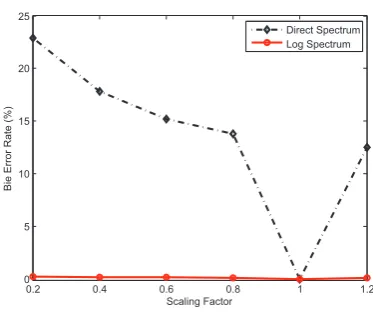
The amplitude scaling experiment is designed to check the amplitude-scaling-proof domain. The amplitude is scaled with a factor from 0.2 to 1.2. Afterwards, these scaled copies are detected with the same correlation threshold. The log spectrum domain is compared to the direct spectrum domain. As illustrated in Figure 6, the BER of the log spectrum domain changes little with different scaling factors. However, the performance of the direct spectrum domain degrades very much when the scaling factors are far away from 1. It proves that the log spectrum domain is an amplitude-scaling-proof domain. Meanwhile, the correlation threshold in this domain is not sensitive to amplitude scaling, either.
B. Balanced modulation
Experiments are conducted to evaluate the performance of the correlation score using different modulation meth-ods. The repeated modulation which embeds duplicated bits in continuous frames is compared with the balanced modulation in different frame length. The results are shown in Table I, including the maximum (MAX), the
0.2 0.4 0.6 0.8 1 1.2
0 5 10 15 20 25
Scaling Factor
Bie Error Rate (%)
Direct Spectrum Log Spectrum
Figure 6. BER results under amplitude scaling attack
minimum (MIN), the mean (MEAN) and the standard deviation (STD) of all the correlation scores. For repeated modulation, though MAXs, MINs and STDs are getting much closer to 0 while the frame length is increasing. Yet the MEANs still retain a high level without changing, which means that the host signal interference is severe as the same. In contrast, the balanced modulation out-performs the repeated modulation. All the 4 parameters are much closer to 0, especially the performance of the MEANs of the correlation score. With the balanced modulation, the host signal interference is much less, so the correlation threshold can also be set even lower.
C. Mixing components simulation
More complicated situation of mixing attack is consid-ered in this experiment. When there are M >2 mixing components, the correlation score can be expressed as
CM( ¯ZM,wj)
= 1
N
N ∑
n=1
[wj(n) log10( M ∑
i=1
10αSiwi(n))]. (10)
For convenience of analysis, the numerical results of (10) are simulated by setting α = 1 and using different PN sequences. The results are illustrated in Figure 7 (N = 511). As discussed above, the correlation score is more stable with the balanced modulation and the correlation threshold can be lower to 0.1. Meanwhile, lower threshold makes the proposed system tolerant to more mixing com-ponents. In Figure 7, it also indicates that the correlation score is high enough for watermark detection if the mixed components do not exceed 5. Finally, we can conclude that the randomized-PN-sequence embedding technique helps the proposed system to resist the mixing attack with up 5 mixed components.
D. Performance under Mixing Attack
TABLE I.
COMPARISON OF CORRELATION SCORE OF DIFFERENT MODULATION METHOD
Frame Num MAX MIN MEAN STD
Rep. Bal. Rep. Bal. Rep. Bal. Rep. Bal.
1 0.0888 – -0.0309 – 0.0202 – 0.0115 –
2 0.0881 0.0166 -0.0270 -0.0166 0.0202 3.79E-06 0.0110 0.0032
4 0.0818 0.0214 -0.0242 -0.0188 0.0202 -8.80E-06 0.0104 0.0036
6 0.0807 0.0239 -0.0234 -0.0200 0.0202 -6.35E-06 0.0101 0.0036
8 0.0786 0.0205 -0.0226 -0.0216 0.0202 -6.24E-06 0.0098 0.0036
10 0.0772 0.0210 -0.0213 -0.0180 0.0202 -5.77E-06 0.0963 0.0035
1 2 3 4 5 6
0 0.1 0.2 0.3 0.4 0.5 0.6 0.7 0.8 0.9 1
Mixing Components
C
o
rr
e
la
ti
o
n
S
c
o
re
f
a
c
to
r
Simulation Correlation Score Decoding Threshold
(
¢
Sj
)
Figure 7. The correlation result with different mixture components for one frame
the balanced modulation and the single-synchronization strategy with the traditional frame structure showed in Figure 1. The non-malicious attack is simulated by mixing several different-style copies of watermarked audio. The malicious attack is mixing the same audio file with different watermarks as if there were only one copy. We compare the results of the randomize-PN-sequence embedding with and without multiple synchronization strategy.
1) Synchronization rate performance: Table II shows the SR result. For the traditional system, the SR under non-malicious attack is lower than the malicious attack, because the sync-heads of mixing components are not per-fectly aligned like the malicious attack and the different baseband signals decrease the correlation score for syn-chronization. On the contrary, the malicious attack aligns the sync-heads and the SR is slightly higher. However, only one of the M components can get synchronized, so the SR approximates to1/M. In contrast, the position of the sync-head is randomly decided due to the randomized-length blanks, which makes the watermarking system im-mune to periodic errors. Therefore, the randomized-PN-sequence embedding system with single-synchronization strategy performs slightly better than the traditional one. However, the detector can only get synchronized one after another due to the same synchronization strategy, so the improvement in the SR is not obvious. The proposed sys-tem with multiple synchronization strategy outperforms the other two systems. The SR result is improved by at least 2 times. This multiple synchronization strategy effectively solves the synchronization problem of mixing
attack.
2) Bit Error Rate Performance: As shown in Table III, the randomized-PN-sequence embedding systems with and without the multiple synchronization strategy get both higher BER than the traditional one, which also indicates that the multiple synchronization strategy has no side effect on BERs. For the traditional system, although the BER under malicious attack appears better than the non-malicious case, the result is misleading, because the SR is slightly higher but the detected watermark is like the voting result of all components. Moreover, the detected watermarks are almost the same due to the periodic error pattern. This error mode misleads the user to another watermark. Meanwhile, the result in non-malicious is chaotic. The user could be aware of the attack and give up the result. On the contrary, the proposed system always gets reliably lower BER. Therefore, the randomized-PN-sequence embedding solves the high BER problem of mixing attack.
With the proposed randomized-PN-sequence embed-ding and multiple synchronization strategy, the PN se-quences and the watermark position are randomly de-cided. The proposed system thus can treat both the mali-cious and non-malimali-cious mixing attack as the same. The improved SR and BER performances are nearly the same under both types of mixing attacks. Therefore, the exper-imental results show that the proposed system improves the watermark immunity to mixing attack significantly.
E. Transparency Test
The Objective Difference Grade (ODG) is measured to test the transparency of the proposed algorithm. This evaluation value is from the ITU-R BS.1387 [24], which is also called perceived audio quality (PEAQ). In the PEAQ standard, ODG = 0 means imperceptible, ODG = −1
means perceptible, but not annoying, and ODG = −4
means very annoying. The ODG result is showed in Table IV.
TABLE II.
SYNCHRONIZATION RATE RESULTS UNDER MIXING ATTACK
Comp. Traditional(%) MaliciousSingle (%) Multiple (%) Traditional(%)non-maliciousSingle(%) Multiple(%)
2 50.00 47.25 97.03 49.65 47.96 95.16
3 33.33 35.07 92.77 33.15 35.46 88.39
4 24.76 29.13 86.58 17.57 27.24 74.40
5 19.86 22.99 67.14 7.01 21.14 53.51
TABLE III.
BIT ERROR RATE RESULTS UNDER MIXING ATTACK
Comp. Traditional(%) MaliciousSingle (%) Multiple (%) Traditional(%)non-maliciousSingle(%) Multiple(%)
2 14.68 0.18 0.32 17.20 0.06 0.12
3 16.17 0.20 0.33 16.17 0.52 0.51
4 15.32 0.39 0.44 17.14 1.12 1.09
5 13.81 0.75 0.70 22.35 2.32 2.09
TABLE IV.
THE TRANSPARENCY TEST OF THE PROPOSED ALGORITHM
Test File Simulation Result
classic -0.576
opera -1.407
percussion -0.932
pop with vocal -0.448
chinese classic -0.780
voice -1.204
pop without vocal -0.436
average -0.826
TABLE V.
THE COMPARISON OFODGS AMONG DIFFERENT ALGORITHMS
Algorithm ODG Mixing-attack-proof
[25] −1.66to−1.88 ×
[26] −0.18to−0.78 ×
Proposed −0.44to−1.41 √
According to this experiment, the proposed algorithm has good transparency property and is applicable in practical use.
V. CONCLUSION
This papers studies the mixing attack to audio water-marking algorithms. Accordingly, a mixing-attack-proof watermarking system is proposed. The balanced mod-ulation is proposed to reduce the host signal interfer-ence and improve the correlation score stability. Based on the balanced modulation, a randomized-PN-sequence embedding is proposed to solve the problem of high bit error rate of mixing attack. Moreover, a multiple synchronization strategy is proposed to solve the problem of low synchronization rate. The experimental results show that the system has the strong immunity to the mixing attack and it can resist 5-mixed-component mixing attack.
ACKNOWLEDGMENT
This work is partially supported by the National Natural Science Foundation of China (Nos. 10925419, 90920302, 61072124, 11074275, 11161140319, 91120001, 61271426), the Strategic Priority Research
Program of the Chinese Academy of Sciences (Grant Nos. XDA06030100, XDA06030500), the National 863 Program (No. 2012AA012503) and the CAS Priority Deployment Project (No. KGZD-EW-103-2).
REFERENCES
[1] I. J. Cox, J. Kilian, F. T. Leighton, and T. Shamoom, “Secure spread spectrum watermarking for multimedia,”
IEEE Transaction On Image processing, vol. 6, pp. 1673–
1687, December 1997.
[2] D. Kirovski and H. S. Malvar, “Spread-spectrum
water-marking of audio signals,” IEEE Transaction On Signal
Processing, vol. 51, pp. 1020–1033, April 2003.
[3] C. Wang, S. Liu, F. Jiang, and Y. Liu, “A robust scalable spatial spread-spectrum video watermarking scheme based
on a fast downsampling method,” Journal of Computers,
vol. 7, no. 9, pp. 2256–2261, 2012.
[4] M. Deng, Q. Zeng, and X. Zhou, “A robust watermarking against shearing based on improved s-radon
transforma-tion,”Journal of Computers, vol. 7, no. 10, pp. 2549–2556,
2012.
[5] X. Wang, D. Huang, and Z. Zhang, “A robust zero-watermarking algorithm for vector digital maps based
on statistical characteristics,”Journal of Software, vol. 7,
no. 10, pp. 2349–2356, 2012.
[6] Y. Hu, Z. Wang, H. Liu, and G. Guo, “A geometric distortion resilient image watermark algorithm based on
dwt-dft,”Journal of Software, vol. 6, no. 9, pp. 1805–1812,
2011.
[7] M. Steinebach, F. A. Petitcolas, F. Raynal, J. Dittmann, C. Fontaine, S. Seibel, N. Fates, and L. C. Ferri, “Stirmark
benchmark: audio watermarking attacks,” in Information
Technology: Coding and Computing, 2001. Proceedings.
International Conference on. IEEE, 2001, pp. 49–54.
[8] H. J. Kim and Y. H. Choi, “A novel echo-hiding scheme
with backward and forward kernels,” IEEE Transactions
on Circuits and Systems for Video Technology, vol. 13, pp.
885 – 889, August 2003.
[9] X.-M. Chen, G. Doerr, M. Arnold, and P. G. Baum, “Effi-cient coherent phase quantization for audio watermarking,” International Conference on Acoustic, Speech, and Signal
Processing (ICASSP), pp. 1844–1847, May 2011.
[10] T.-S. Wu, H.-Y. Lin, W.-C. Hu, and Y.-S. Chen, “Audio watermarking scheme with dynamic adjustment in mute
period,” Expert Systems with Applications, vol. 38, pp.
[11] B. Chen and G. W. Wornell”, “Quantization index modu-lation: A class of provably good method for digital
water-marking and information embedding,” IEEE Transaction
On Infomation Theory, vol. 47, pp. 1423–1443, May 2001.
[12] B. Chen and G. W. Wornell, “Quantization index modu-lation methods for digital watermarking and information
embedding of multimedia,” The Journal of VLSI Signal
Processing, vol. 27, pp. 7–33, 2001.
[13] F. Bartolini, M. Barni, and A. Piva, “Performance analysis of st-dm watermarking in presence of nonadditive attacks,”
IEEE Transaction on Signal Processing, vol. 52, pp. 2965
– 2974, October 2004.
[14] F. Perez-Gonzalez, C. M. M. Barni, and A. Abrardo, “Ra-tional dither modulation: a high-rate data-hiding method
invariant to gain attacks,” IEEE Transaction on Signal
Processing, vol. 53, pp. 3960 – 3975, October 2005.
[15] M. A. Akhaee, A. Amini, G. Ghorbani, and F. Marvasti, “A solution to gain attack on watermarking systems:
Logarith-mic homogeneous rational dither modulation,” Int. Conf.
On Acoustics Speech and Signal Processing, vol. 66, pp.
1746 – 1749, March 2010.
[16] M. D. Swanson, B. Zhu, A. Tewfik, and L. Boney, “Robust
audio watermarking using perceptual masking,” Signal
Processing, vol. 66, pp. 337–355, May 1998.
[17] I. Cox, M. Miller, J. Bloom, J. Fridrich, and T. KalKer,
Digital Watermarking and Steganography, 2nd ed., 2007.
[18] H. Malvar and D. Florencio, “Improved spread spectrum: a
new modulation technique for robust watermarking,”IEEE
Transactions on Signal Processing, vol. 51, pp. 898 – 905,
April 2003.
[19] J. Boeuf and J. Stern, “An analysis of one of the sdmi
candidates,” inInformation Hiding. Springer, 2001, pp.
395–410.
[20] D. Boneh and J. Shaw, “Collusion-secure fingerprinting for
digital data,” Information Theory, IEEE Transactions on,
vol. 44, no. 5, pp. 1897–1905, 1998.
[21] H. Muratani, “A collusion-secure fingerprinting code duced by chinese remaindering and its random-error
re-silience,” inInformation Hiding. Springer, 2001, pp. 303–
315.
[22] X. Zhao, Y. Guo, J. Liu, and Y. Yan, “A spread spectrum audio watermarking system with high perceptual quality,”
in Communications and Mobile Computing (CMC), 2011
Third International Conference on. IEEE, 2011, pp. 266–
269.
[23] R. Gold, “Optimal binary sequences for spread spectrum
multiplexing (corresp.),”Information Theory, IEEE
Trans-actions on, vol. 13, no. 4, pp. 619–621, 1967.
[24] “Method for objective measurements of perceived audio quality (peaq),” Geneva, Switzerland, ITU-R. BS. 1387, 1998.
[25] J. H. Shijun Xianga, Hyoung Joong Kimb, “Audio water-marking robust against time-scale modification and mp3
compression,” Signal Processing, vol. 88, p. 2372C2387,
October 2008.
[26] M. Fallahpour and D. Megias, “Robust high-capacity audio
watermarking based on fft amplitude modification,”IEICE
TRANSACTIONS on Information and Systems, vol. E93-D,
no. 1, pp. 87 – 93, 2010.
Yuhong Guo received the B.S. degree from the Nanjing Uni-versity, Nanjing, China. Now he is a M.S. & Ph.D. candidate in Key Laboratory of Speech Acoustics and Content Understand-ing at Institute of Acoustics, Chinese Academy of Sciences. His research interests include audio watermarking and speech recognition.
Qingsheng Yuanis now the engineer of National Computer network Emergency Response technical Team Coordination Center of China. His research interests include information security and network security.
Xuemin Zhao received the B.E. degree from the Nankai University, Tianjin, China. He received the Ph.D. degree in Key Laboratory of Speech Acoustics and Content Understanding at Institute of Acoustics, Chinese Academy of Sciences. Now he is a assistant professor of the lab. His research interests include audio watermarking and natural language processing.
Jian Liu received the B.E. degree at the Electronic Engi-neering Department of University of Science and Technology of China(USTC), in 1993, and the M.S. & Ph.D. degree in 1996 & 1999 from Institute of Acoustics, Chinese Academy of Sciences. From 1999 to 2002, he worked as a Senior Researcher in Intel China Research Center(ICRC), Beijing, China. After 2002 he returned to Institute of Acoustics, Chinese Academy of Sciences. Now he is a professor of Key Laboratory of Speech Acoustics and Content Understanding, Chinese Academy of Sciences. His research interests include speech recognition, audio watermark and audio signal processing. He has published more than 20 papers and holds 10+ patents.