Review Article
Prediabetes: Pathogenesis and Adverse Outcomes
Sudhanshu Kacker
1, Neha Saboo
2*, Jitender
31Professor & Head, 2*Assistant Professor, Department of Physiology,
RUHS College of Medical Sciences, Jaipur, Rajasthan, India.
3M.Sc. Student, RUHS College of Medical Sciences, Jaipur, Rajasthan, India.
ABSTRACT
Prediabetes is a condition defined as having blood glucose levels above normal but below the defined threshold of diabetes. It is considered to be a risk state, with high chances of developing diabetes. While, prediabetes is commonly an asymptomatic condition, there is always presence of prediabetes before the onset of diabetes. This paper reviews the role of life style modification techniques for pre-diabetes and its relation to risk factors, adverse outcomes & treatment options. Observational evidence suggests an association between prediabetes and complications of diabetes such as nephropathy, small fiber neuropathy, early retinopathy and risk of macrovascular disease. Reason for the rate of increase of complications may be lack of observation is regular follow-up programmes and unawareness about the conditions of disease.
Key words: Impaired Fasting Glucose, Impaired Glucose Tolerance, Diabetes, Lifestyle Intervention, Prediabetes.
*Correspondence to:
Dr. Neha Saboo, Assistant Professor, Department of Physiology,
RUHS College of Medical Sciences, Jaipur, Rajasthan, India. Article History:
Received: 29-12-2017, Revised: 27-01-2018, Accepted: 13-02-2018
Access this article online Website:
www.ijmrp.com
Quick Response code
DOI:
10.21276/ijmrp.2018.4.2.001
INTRODUCTION
Prediabetes is a condition defined as having blood glucose levels above normal but below the defined threshold of diabetes. It is considered to be an at risk state, with high chances of developing diabetes.
Observational evidence suggests an association between prediabetes and complications of diabetes such as nephropathy, small fiber neuropathy, early retinopathy and risk of macrovascular disease.1 Reason for the rate of increase of complications may be lack of observation is regular follow-up programmes and unawareness about the conditions of disease. Although, the disease manifestations start in the early stages of disease but before it gets established as a full blown condition is the pre-stage called prediabetes.2
WHAT IS PRE-DIABETES?
Pre-diabetes is defined as either impaired fasting glucose or impaired glucose tolerance The impaired glucose tolerance is detected by oral glucose tolerance testing.Both Impaired fasting glucose and Impaired glucose tolerance are risk factors for type 2 diabetes, and risk is even greater when impaired fasting glucose and impaired glucose tolerance occur together.
ROLE OF STRESS IN PREDIABETES
Stress appears to be an important consideration for prediabetes risk, evidenced by a prospective cohort study indicating that
perceived permanent stress resulted in a 45% increase in risk for prediabetes (relative to those who reported no stress), even after adjusting for typical risk factors including socio-economic status.3Also, a review of psychosocial predictors for prediabetes identified depression, general emotional stress, anxiety, sleeping problems and hostility as key risk factors.4
Stressful conditions stimulate the hypothalamic-pituitary-adrenal (HPA) axis to produce cortisol (the primary hormone responsible for the physiologic stress response), which induces hepatic insulin resistance and decreased insulin secretion.5 Chronic overstress may also function to negatively impact HPA axis regulation. HPA axis dysregulation is problematic in that it is strongly implicated in the development of prediabetes, likely through resultant increased visceral adiposity.5 Furthermore, stress may also increase prediabetes risk by altering food intake behaviors, especially by increasing cravings and consumption of foods higher in fat and sugar, subsequently increasing postprandial insulin response and obesity risk.6
GENETIC PREDISPOSITION OF PREDIABETES
respiratory factor - 1 and the peroxisome proliferator - activated receptor gamma co-activator 1. These data suggest a potential role for both genetic and environmental factors to modify the risk of diabetes by modifying the expression or activity of these transcriptional regulators.7
DIAGNOSIS OF PREDIABETES
The World Health Organization (WHO) has defined prediabetes as a state of intermediate hyperglycemia which is diagnosed with the help of two specific parameters
1. Impaired Fasting Glucose also defined as fasting plasma glucose of 6.1-6.9 mmol/L (110 to 125 mg/dL) 2. Impaired glucose tolerancedefined as 2 h plasma
glucose of 7.8-11.0 mmol/L (140-200 mg/dL) after ingestion of 75 g of oral glucose load.8
The American Diabetes Association (ADA), on the other hand has the same cut-off value for impaired glucose tolerance (140-200 mg/dL) but has a lower cut-off value for impaired fasting glucose (100-125 mg/dL) and has an additional Criterion of Hemoglobin A1c (HbA1c) with level of 5.7% to 6.4% for the Diagnosis of prediabetes.9
PREVALENCE OF PREDIABETES
There have been reports of increased mean fasting plasma glucose and prevalence of diabetes in developed as well as developing countries.10The International Diabetes Federation (IDF) estimates the total number of diabetic subjects to be around 40.9 million in India and this is further set to rise to 69.9 million by the year 2025.12
According to the National Urban Diabetes Survey Prevalence of diabetes was 12.33% and of pre-diabetes was 11.57% in India in 2013, Prevalence was more among the females compared to males. Increasing age, over weight and obesity, sedentary life style, tobacco consumption, diet habits showed statistically significant association with prevalence of diabetes and pre-diabetes.11
PROGRESSION OF PREDIABETES
Around 10%–15% of people with prediabetes become diabetic annually although conversion rate varies by population characteristics and the definition of prediabetes.12
The incidence rates of diabetes, prediabetes, and “any
dysglycemia” were 22.2, 29.5, and 51.7 per 1,000 person-years, respectively. Among those with normal glucose tolerance, 19.4% converted to diabetes and 25.7% to prediabetes, giving an overall conversion rate to dysglycemia of 45.1%. Among those with prediabetes, 58.9% converted to diabetes. Predictors of progression to dysglycemia were advancing age, family history of diabetes, 2-h plasma glucose, glycated hemoglobin (HbA1c), low HDL cholesterol, and physical inactivity.13
PATHOGENESIS OF GLUCOSE TOLERANCE
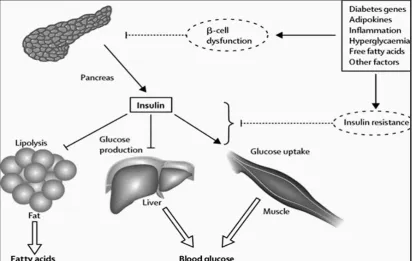
Prediabetes precedes development of Type II Diabetes. Prediabetes, is associated with increased plasma insulin concentration (hyperinsulinemia). This occurs as a compensatory response by the pancreatic beta cells for diminished sensitivity of target tissues to the metabolic effects of insulin, a condition referred to as insulinresistance in prediabetes. This is due to derangement of the glucostatic function of the liver is the major cause of hyperglycemia, liver contains glucose 6-phosphatase which controls the entry of glucose into the circulation. Insulin facilitates glycogen synthesis and inhibits hepatic glucose output. When the plasma glucose is high, insulin secretion is normally increased and hepatic glucogenesis is decreased. Glucagon can contribute to hyperglycemia as it stimulates gluconeogenesis. The decrease in insulin sensitivity impairs carbohydrate utilization and storage, raising blood glucose and stimulating a compensatory increase in insulin secretion. Development of insulin resistance and impaired glucose metabolism is usually a gradual process, beginning with excess weight gain and obesity. Most of the insulin resistance appears to be caused by abnormalities of the insulin signalling pathways that link receptor activation with multiple cellular effects. 14,15
DEVELOPMENT OF PREDIABETES DURING PROLONGED INSULIN RESISTANCE
Prolonged insulin resistance, even the increased levels of insulin is not sufficient to maintain normal glucose regulation. As a result, moderate hyperglycemia occurs after ingestion of carbohydrates in the early stages of the disease. In later stages of prediabetes,
the pancreatic beta cells become “exhausted” and are unable to
produce enough insulin to prevent hyperglycemia, especially after the person ingests a carbohydrate-rich meal. In many instances, prediabetes can be effectively treated, at least in the early stages, with exercise, caloric restriction, and weight reduction, and no exogenous insulin administration is required. 15
Figure 2: Adverse outcome of prediabetes (Line diagram)
ADVERSE OUTCOME OF PREDIABETES Neuropathy
Prediabetes is found to be associated with hyperglycemia, microangiopathy, dyslipidemia and the metabolic syndrome have been implicated as pathogenic mechanisms of Prediabetes neuropathy dysfunction of cardiac autonomic activity, reflected by reduced heart rate variability, decreased parasympathetic modulation of the heart and increased prevalence of male erectile dysfunction in individuals with prediabetes.16 There is also increasing evidence to demonstrate a higher frequency of idiopathic polyneuropathy, painful sensory neuropathy and small fiber neuropathy among prediabetic individuals with impaired glucose tolerance. These findings suggest an involvement of the small unmyelinated nerve fibers that carry pain, temperature, and regulate autonomic function during prediabetes, prior to development of diabetes.17 Upper extremity symptoms/signs can appear as part of the proximal progression of deficits, typically presents as a slowly progressive primarily sensory deficit in a length-dependent fashion, with symptoms starting in the feet, and
spreading upwards, evoking the classic “stocking-glove
distribution.17
Studies in prediabetes and sensorimotor neuropathy suggest that impaired glucose tolerance and early diabetic neuropathy may involve small demyelinated fibres . Distal intraepidermal nerve fibre density, quantitative sudomotor testing, total sweat volume and arm-to-foot sweat responses, deep tendon reflexes, and temperature sensation are sensitive markers of sensorimotor neuropathy.18 Finally, evidence is accumulating on increased prevalence of idiopathic polyneuropathy (eg, idiopathic sensory / painful neuropathy and sensory / small fibre only neuropathy) among prediabetic individuals with impaired glucose tolerance being more strongly related to painful than non-painful neuropathy.19
Nephropathy
Prediabetic nephropathy is typically defined by macroalbuminuria
—that is, a urinary albumin excretion of more than 300 mg in a 24-hour collection—or macroalbuminuria and abnormal renal function as represented by an abnormality in serum creatinine, calculated creatinine clearance, or glomerular filtration rate (GFR). Clinically, Prediabetic nephropathy is characterized by a progressive increase in proteinuria and decline in GFR, hypertension, and a high risk of cardiovascular morbidity and mortality.20
Cerebrovascular disease
Retinopathy
Cardiovascular disease
Nephropathy
Sensory Neuropathy
Macrovascular complications
Pathophysiology
Long-standing hyperglycemia is known to be a significant risk factor for the development of nephropathy. Hyperglycemia may directly result in mesangial expansion and injury by an increase in the mesangial cell glucose concentration. The glomerular mesangium expands initially by cell proliferation and then by cell hypertrophy. Increased mesangial stretch and pressure can stimulate this expansion, as can high glucose levels. Transforming
growth factor β (TGF-β) is particularly important in the mediation
of expansion and later fibrosis via the stimulation of collagen and fibronectin. Glucose can also bind reversibly and eventually irreversibly to proteins in the kidneys and circulation to form advanced glycosylation end products (AGEs). AGEs can form complex cross-links and can contribute to renal damage by stimulation of growth and fibrotic factors via receptors for AGEs. In addition, mediators of proliferation and expansion, including platelet-derived growth factor, TGF-β, and vascular endothelial
growth factor (VEGF) that are elevated in diabetic nephropathy can contribute to further renal and microvascular complications.21
Importance of Proteinuria
Proteinuria, a marker and potential contributor to renal injury, accompanies nephropathy. Increased glomerular permeability will allow plasma proteins to escape into the glomerular filtrate. Some of these proteins are taken up by the proximal tubular cells, which initiate an inflammatory response that contributes to interstitial scarring eventually leading to fibrosis. Hyperglycemia, angiotensin II, TGF-β, and likely proteinuria itself all play role in stimulating the
fibrosis. There is an epithelial-mesenchymal transition that takes place in the tubules, with proximal tubular cell conversion to fibroblast-like cells. These cells then migrate into the interstitium and produce collagen and fibronectin.In nephropathy, the activation of the local renin- angiotensin system occurs in the proximal tubular epithelial cells, mesangial cells, and podocytes. Studies shows that 20% percentage of prediabetes suffer for nephropathy.22
There is evidence to link prediabetes to increased risk of early forms of nephropathy and chronic kidney disease (CKD), defined based on methods such as urinary albumin excretion rate (AER) and estimated glomerular filtration rate (eGFR). Studies reported that increased albuminuria and glomerular filtration rates, an early marker of a kidney involvement in hyperglycaemia, also support the concept that some nephropathic changes may be present already in the prediabetic stage before the onset of diabetes. 31-34
Retinopathy
Nearly 8 percent of participants with prediabetes in the DPP study were found to have evidence of diabetic retinopathy. Measures of retinal vascular changes, such as lower arteriole-to-venule ratio, increased retinal arteriole or venular calibre, have also been shown to be related to prediabetes or increased risk of diabetes, but the evidence is not entirely consistent.23
Macrovascular Disease
Prediabetes has been associated with increased risk of developing macrovascular disease. Cross sectional studies have shown an increased prevalence of coronary heart disease in individuals with prediabetes24 but this relationship may be confounded by the common risk factors present between cardiovascular diseases and prediabetes.
Insulin resistance is part of a cascade of disorders that is often
called the “metabolic syndrome’’ features of the metabolic
syndrome include: (1) obesity (2) insulin resistance; (3) fasting hyperglycemia; (4) lipid abnormalities (5) hypertension. The major adverse consequence of the metabolic syndrome is cardiovascular disease, including atherosclerosis.
Cardiovascular Risks Associated With Prediabetes-
Insulin resistance associated with prediabetes is known to be an important risk factor for cardiovascular disease. 24
Details of Large epidemiological studies have shown that subjects with nondiabetic hyperglycemia such as impaired fasting glucose and impaired glucose tolerance are at high risk for developing prediabetes and cardiovascular disease (CVD) which results in mortality.25 Grundy et al26 reported that Pre-diabetes represents an elevation of plasma glucose above the normal range but below that of clinical diabetes. Pre-diabetes commonly associated with the metabolic syndrome. Both in turn are closely associated with obesity. Insulin resistance is a common factor; systemic inflammation engendered by obesity may be another. Impaired fasting glucose and impaired glucose tolerance are associated with modest increases in the risk for cardiovascular disease. Prediabetes carries some predictive power for macrovascular disease, but most of this association appears to be mediated through the metabolic syndrome. The preferred clinical approach to cardiovascular prevention is to treat all the metabolic risk factors. For both pre-diabetes and metabolic syndrome, the desirable approach is lifestyle intervention, especially weight reduction and physical activity.
Huang et al27 reported that Prediabetes, defined as impaired glucose tolerance, impaired fasting glucose, or raised HbA1c, was associated with an increased risk of cardiovascular disease. The health risk might be increased in people with a fasting glucose concentration as low as 5.6 mmol/L or HbA1c of 39 mmol/mol. Steven et al28 reported that prediabetic individuals are hyperinsulinemic, and since hyperinsulinemia may be a cardiovascular risk factor, hypothesized that prediabetic individuals might have an atherogenic pattern of risk factors even before the onset of clinical diabetes, indicate that prediabetic subjects have an atherogenic pattern of risk factors (possibly caused by obesity, hyperglycemia, and especially hyperinsulinemia), which may be present for many years and may contribute to the risk of macrovascular disease as much as the duration of clinical diabetes itself. Ford et al29and colleagues included 18 studies with 175 152 participants in their analysis and found that impaired fasting glucose (defined with either ADA or WHO criteria) and impaired glucose tolerance was associated with a modest increased risk of cardiovascular disease.
PREDIABETES AND OXIDATIVE STRESS
Prediabetes is associated with dysglycemia, central obesity, inflammation and endothelial dysfunction, oxidative stress contributing towards the pathogenesis of cardiovascular diseases. Antioxidant markers like thiol/disulfide homeostasis, which have a critical role in many cellular activities such as antioxidant protection, detoxification, cell growth and apoptosis, may be associated with triglyceride levels in early preclinical atherosclerosis especially when fasting plasma glucose is raised.30
interleukin-6 (IL-6), myeloperoxidase (MPO) and urine microalbumin (MA and their correlation with fasting plasma glucose reported that Prediabetes group had significantly increased IL-6, MPO and MA as compared to healthy controls . A cross-sectional study by Al-Aubaidy et al31 reported that Serum 8-hydroxy-2-deoxy-guanosine (8-OHdG) was significantly greater in the impaired fasting glucose group compared with the control group. The increase in 8-OHdG was associated with a mildly non-significant elevation in low-density lipoprotein level and a poor level of high-density lipoprotein in the impaired fasting glucose group. However, a significant increase in triglycerides in the impaired fasting glucose group was observed.
A study by Ates et al32 have shown that thiol oxidation increases in prediabetic patients and there is a positive correlation between the oxidative stress marker like disulfide and blood glucose and HbA1c levels.
LIFE STYLE INTERVENTION FOR PREDIABETES
The reasons for treating prediabetes include prevention of progression to diabetes, mitigation of some of the potential consequences of progression to diabetes as well as prevention of the potential consequences of prediabetes itself.
The encompassing theme of lifestyle intervention programs is to change the modifiable risk factors of prediabetes and diabetes by targeting obesity with increase in physical activity and dietary changes.
In view of people embracing sedentary life style, and the cost effectiveness of treatment becoming less, the role of regular
exercise especially ‘yoga’ seems to be a beneficial and
economical adjuvant in the management of the prediabetes. It seems to be the earliest and the most effective method for providing peace and tranquillity. It is known that yoga induces physiological and biochemical changes in volunteers.33
A recent review by bansal et al1 suggested that yoga may reduce the stress, improve metabolic profile, regulate autonomic nervous system and alter hypothalamopituitory adrenal axis which act as neural mediators of hyperglycemia.34 However, there are few reports as regards to the influence of yoga on adverse outcome of prediabetes. Hence, this review was undertaken to assess the beneficial effects of life style interventions in prediabetes volunteers.
In Knowler et al35 hypothesized that lifestyle intervention would prevent or delay the development of prediabetes. The researchers randomly assigned patients with prediabetes to receive a placebo or a lifestyle modification program with the goals of at least a 7% weight loss and at least 150 minutes of physical activity per week. The average follow-up was 2.8 years. The lifestyle intervention reduced the incidence by 58% compared with placebo. Participants assigned to the lifestyle intervention had more weight loss and greater increase in physical activity than did participants in the placebo group.
The Finnish Diabetes Prevention Study36 published in 2003 evaluated the effects of a lifestyle intervention in diet and exercise behavior, and the effect of the intervention on glucose and lipid metabolism. In the study, 522 middle-aged, overweight subjects with impaired glucose tolerance were randomly assigned to receive either usual care or an intensive lifestyle intervention. The subjects in the intervention group received training sessions and advised to increase overall physical activity. The authors found
that intensive lifestyle intervention produced long-term beneficial changes in diet, physical activity, and clinical and biochemical parameters and reduced diabetes risk. The incidence of converting from prediabetes to diabetes was approximately 2% for subjects who lost at least 5% of their body weight vs about 8% for subjects who gained more than 2.5% of their body weight (p < 0.002).
In Perreault et al37 reported that patients with prediabetes that did not progress to diabetes after they completed an intensive lifestyle intervention were still at high risk for the development of diabetes. They also discovered that reversion to normal glucose levels, even transiently, was associated with a 56% reduced risk of future diabetes.37
In Schellenberg et al38 compared the effectiveness of lifestyle interventions to standard care on minimizing progression of prediabetes to diabetes or reducing all-cause mortality in diabetes. This meta-analysis study identified 9 randomized controlled trials with prediabetic patients who were at risk of diabetes and 11 randomized, controlled trials with patients who had diabetes. Seven of the 9 studies looking at patients who were at risk of diabetes reported that lifestyle interventions decreased the risk of diabetes up to 10 years after a lifestyle intervention.38
In Shreelaxmi V. et al39 reported that Yoga intervention may be helpful in control of oxidative stress in prediabetes subjects. Yoga can also be beneficial in reduction in BMI, waist circumference, systolic blood pressure and fasting glucose. Effect of yoga on antioxidant parameters was not evident in this study. The findings of this study need to be confirmed in larger trials involving active control groups.39 In Jyotsna et al40 reported that yoga holds promise as an approach to reducing cardiometabolic risk factors and increasing exercise self-efficacy for this group, Indians with elevated fasting blood glucose, that participation in an 8-week yoga intervention was feasible and resulted in greater weight loss and reduction in waist circumference when compared to a walking control. Yoga offers a promising lifestyle intervention for decreasing weight-related prediabetes and type 2 diabetes risk factors and potentially increasing psychological well-being. In the 20-year follow-up of the Da Qing Diabetes Prevention Study, those receiving a lifestyle intervention had a 51% lower incidence of diabetes. Group-based lifestyle interventions over 6 years can prevent or delay progression of prediabetes to diabetes for up to
14 years after the active intervention.41
REFERENCES
1. Nidhi Bansal. Prediabetes diagnosis and treatment: A review World J Diabetes 2015 March 15; 6(2): 296-303.
2. Sudhanshu Kacker, Neha Saboo, Sonali Sharma. Prediabetes, Cardiovascular Risk & Life Style Intervention, Indian Journal of Basic and Applied Medical Research;September2016:5(4):656-65. 3. Novak M, Björck L, Giang KW, Heden-Ståhl C, Wilhelmsen L, Rosengren A. Perceived stress and incidence of Type 2 diabetes: a 35-year follow-up study of middle-aged Swedish men. Diabet Med. 2013;30(1):8–16.
7. Gonzalez-Franquesa A, Patti ME, Insulin Resistance and Mitochondrial Dysfunction. Adv Exp Med Biol. 2017;982:465-520. 8. World Health Organization, World Health Organization. Definition and diagnosis of diabetes mellitus and intermediate hyperglycemia: report of a WHO/IDF consultation. Geneva: World Health Organization, 2006: 1-50
9. American Diabetes Association. Diagnosis and classification of diabetes mellitus. Diabetes Care 2014; 37 Suppl 1: S81-S90 10. Danaei G, Finucane MM, Lu Y et al Global Burden of Metabolic Risk Factors of Chronic Diseases Collaborating Group (Blood Glucose). Lancet 2011; 378: 31-40.
11. Dasappa, Hemavathi et al. Prevalence of Diabetes and Pre-Diabetes and Assessments of Their Risk Factors in Urban Slums of Bangalore. J Fam Med Prim Car 4.3 (2015): 399–404.
12. Forouhi NG, Luan J, Hennings S, Wareham NJ. Incidence of Type 2 diabetes in England and its association with baseline impaired fasting glucose: the Ely study 1990-2000. Diabet Med 2007;24:200-07 13. Anjana et al. Incidence of Diabetes and Prediabetes and Predictors of Progression Among Asian Indians: 10-Year Follow-up of the Chennai Urban Rural Epidemiology Study (CURES). 2015; 38(8): 1441-8.
14. Ganong review of medical physiology,23 rd edition 15. Guyton Text book of physiology 11th edition
16. Wu JS, Yang YC, Lin TS, Huang YH, Chen JJ, Lu FH et al Epidemiological evidence of altered cardiac autonomic function in subjects with impaired glucose tolerance but not isolated impaired fasting glucose. J Clin Endocrinol Metab. 2007;92:3885–3889. 17. Hoffman-Snyder C, Smith BE, Ross MA, Hernandez J, Bosch EP. Value of the oral glucose tolerance test in the evaluation of chronic idiopathic axonal polyneuropathy. Arch Neurol. 2006;63:1075–1079. 18. Tracy JA, Dyck PJB. The Spectrum of Diabetic Neuropathies. Physical medicine and rehabilitation clinics of North America. 2008;19(1):1-v.
19. Smith AG, Singleton JR. The diagnostic yield of a standardized approach to idiopathic sensory-predominant neuropathy. Arch Intern Med. 2004;164:1021–5.
20. Nebuchennykh M, Loseth S, Jorde R, et al. Idiopathic polyneuropathy and impaired glucose metabolism in a Norwegian patient series. Eur J Neurol. 2008;15:810–6.
21. Saud butt,phillip hall et al .Diabetic Nephropathy,Cleveland clinic journal of medicine, August 2010,54;107-11
22. Plantinga LC, Crews DC, Coresh J, et al. Prevalence of chronic kidney disease in US adults with undiagnosed diabetes or prediabetes. Clin J Am SocNephrol. 2010;5:673–82.
23. Xu M, Li XY, Wang JG, et al. Retinol-binding protein 4 is associated with impaired glucose regulation and microalbuminuria in a Chinese population. Diabetologia. 2009;52:1511–9.
24. Fox CS, Larson MG, Leip EP, et al. Glycemic status and development of kidney disease: the Framingham Heart Study. Diabetes Care. 2005;28:2436–40.
25. Thomas G, Sehgal AR, Kashyap SR, et al. Metabolic syndrome and kidney disease: a systematic review and meta-analysis. Clin J Am SocNephrol. 2011;6:2364–73.
26. Grundy SM. Pre-diabetes, metabolic syndrome, and cardiovascular risk.J Am Coll Cardiol. 2012 Feb 14;59(7):635-43. 27. Huang Yuli, Cai Xiaoyan et al. Association between prediabetes and risk of cardiovascular disease and all cause mortality: systematic review and meta-analysis BMJ 2016; 355 :i5953
28. Steven M. Haffner, MD, MPH; Michael P. Stern, MD; et al, Cardiovascular Risk Factors in Confirmed Prediabetic Individuals Does the Clock for Coronary Heart Disease Start Ticking Before the Onset of Clinical Diabetes? JAMA. 1990;263(21):2893-2898.
29. Ford ES, Zhao G, Li C. Pre-diabetes and the risk for cardiovascular disease: a systematic review of the evidence. J Am Coll Cardio 2010;55:1310-7.
30. Agarwal A, Hegde A, Yadav C, Ahmad A. Assessment of oxidative stress and inflammation in prediabetes-A hospital based cross-sectional study. Diabetes MetabSyndr. 2016 Apr-Jun;10(2 Suppl 1):S123-6.
31. Al-Aubaidy HA, Jelinek HF. Oxidative stress and triglycerides as predictors of subclinical atherosclerosis in prediabetes.,Redox Rep.2014 Mar;19(2):87-91. 663
32. Ates I, Kaplan M, Inan B, AlisikM. How does thiol/disulfide homeostasis change in prediabetic patients? Diabetes Res ClinPract. 2015 Nov;110(2):166-71.
33. Cripps TR, Malik M, Farrell FG, Camm AJ. Prognostic values of reduced heart rate variability after myocardial infarction: clinica evaluation of a new analysis method. Br Heart J 1991;65:14–9. 34. Rugmini PS, Sinha RN. Effect of yoga therapy in Diabetes Mellitus. New Delhi: Seminar on yoga. Man and Science;1976.175-89 35. Knowler WC, Barrett-Connor et al. Diabetes Prevention program Research Group. Reduction in the incidence of type 2 diabetes with lifestyle intervention or metformin. N Engl J Med 2002; 346: 393-403 36. Lindström J, Louheranta A, Mannelin M, et al. Finnish Diabetes Prevention Study Group The Finnish Diabetes Prevention Study (DPS): lifestyle intervention and 3-year results on diet and physical activity.Diabetes Care. 2003 Dec;26(12):3230
37. Perreault L, Pan Q, Mather KJ, Watson KE, Hamman RF, Kahn SE, Diabetes Prevention Program Research Group Effect of regression from prediabetes to normal glucose regulation on long-term reduction in diabetes risk: results from the Diabetes Prevention Program Outcomes Study. Lancet. 2012 Jun 16;379(9833):2243–51. 38. Schellenberg ES, Dryden DM, Vandermeer B, Ha C, Korownyk C. Lifestyle interventions for patients with and at risk for type 2 diabetes: a systematic review and meta-analysis. Ann Intern Med. 2013 Oct 15;159(8):543–51.]
39. Shreelaxmi V. Hegde, Prabha Adhikari, Sowmya Shetty et al Effect of community-based yoga intervention on oxidative stress and glycemic parameters in prediabetes: a randomized controlled trial. 2013 Dec;21(6):571-6.
40. Jyotsna VP. Prediabetes and type 2 diabetes mellitus: Evidence for effect of yoga. Indian Journal of Endocrinology and Metabolism. 2014;18(6):745-749.
41. Gong Q, Gregg EW, Wang J, et al. Long-term effects of a randomised trial of a 6-year lifestyle intervention in impaired glucose tolerance on diabetes-related microvascular complications: the China Da Qing Diabetes Prevention Outcome Study. Diabetologia. 2011 Feb;54(2):300–7.
42.http://www.thelancet.com/cms/attachment/2000978256/200358279 5/gr3.jpg
Source of Support: Nil. Conflict of Interest: None Declared.
Copyright: © the author(s) and publisher. IJMRP is an official publication ofIbn Sina Academy of Medieval Medicine & Sciences, registered in 2001 under Indian Trusts Act, 1882. This is an open access article distributed under the terms of the Creative Commons Attribution Non-commercial License, which permits unrestricted non-commercial use, distribution, and reproduction in any medium, provided the original work is properly cited.