A review paper on the Analysis of Hydrogen
Fueled Engine
Akhileshpati tiwari
#1, Manoj kumar yadav
*2, Surender kumar
#3,Ramnaresh yadav
# 4#
M.tech Student & Mechanical Department& Maharishi Dayanand University
Address H.no.193 Hanuman nagar H-Block Street no.08 kheri road sec.89 Faridabad,Haryana,India
Abstract —in recent years the earth facing from various kind of problems but the major problem is fossil fuel which are decreases day by day so our motive is to replace these fuel by hydrogen gas engine which is highly combustible gas and generate sufficient amount of energy when ignited. So in this project reports we prepare an engine where hydrogen fuel are used through which various problem are overcome like pollutantse.g. HC, NOx, and CO. In this engine the main problem arises due to the backfiring which short out by using the proper fuel supplying mechanism.
Keywords —Hydrogen, Spark ignition engine, compressionignition engine, performance, Emission.
I. INTRODUCTION
Hydrogen is an environmentally friendly alternative to fossil fuels, and they can be used to power just about any machine needing energy. The fuel cell, which is the energy conversion device that can capture and use the power of hydrogen effectively, is the key to making this happen. Compared to diesel or gas, hydrogen is much more fuel efficient as it can produce more energy per pound of fuel. This means that if a car is fueled by hydrogen, it can go farther than a vehicle loaded with the same amount of fuel but using a more traditional source of energy. Hydrogen-powered fuel cells have two or three times the efficiency of traditional combustion technologies. For example, a conventional combustion-based power plant usually generates electricity between 33 to 35 percent efficiency. Hydrogen fuel cells are capable of generating electricity of up to 65 percent efficiency. Hydrogen can be produced again and again, unlike other non-renewable sources of energy. This means that with hydrogen, you get a fuel source that is limited. Basically, hydrogen energy can be produced on demand. Also, it is widely available – all that is needed is to break the water molecules so it gets separated from oxygen. Since it is a very powerful source of fuel, hydrogen can be very flammable. In fact, it is on the news frequently for its many number of risks. Hydrogen gas burns in air at very wide concentrations – between 4 and 75 percent. Hydrogen is a basic earth element. The atom is made up of a single proton and single electron. It’s also very abundant but it can’t exist as a separate form of matter. Rather, it’s combined with other elements. In
a Spark ignition engine a perfectly mixed air fuel mixture enters the engine during suction stroke. The charge is compressed well and at the end of end of compression stroke, the charge is ignited by means of spark from spark plug. The air fuel mixture is delivered to engine by means of carburetor. The quantity and quality of charge entering the engine is controlled according to the engine speed and load conditions.
GASOLINE ENGINE EMISSIONS
The emissions form gasoline powered automobiles are mainly
1. Unburned Hydro Carbons 2. Carbon monoxide 3. Oxides of nitrogen 4. Oxides of sulphur and 5. Particulates including smoke
Pollutant formation in Gasoline engine: 1. Hydrocarbons:
Hydrocarbon exhaust emission may arise from three sources as
a. Wall quenching
b. Incomplete combustion of charge c. Exhaust scavenging in 2-stroke engines In an automotive type 4-stroke cycle engine, wall quenching is the predominant source of exhaust hydrocarbon under most operating conditions.
II. .HYDROGENININDIA
Many of the top universities and public research laboratories in India.
1776 Hydrogen was first identified as a distinct element by British scientist Henry Cavendish after he evolved hydrogen gas by reacting zinc metal with hydrochloric acid. In a demonstration to the Royal Society of London, Cavendish applied a spark to hydrogen gas yielding water. This discovery led to his later finding that water (H2O) is made of hydrogen and oxygen.
1800 English scientists William Nicholson and Sir Anthony Carlisle discovered that applying electric current to water produced hydrogen and oxygen gases. This process was later termed ―electrolysis.‖
1838 The fuel cell effect, combining hydrogen and oxygen gases to produce water and an electric current, was discovered by Swiss chemist Christian Friedrich Schoenbein.
1845 Sir William Grove, an English scientist and judge, demonstrated Schoenbein’s discovery on a practical scale by creating a ―gas battery.‖ He earned the title ―Father of the Fuel Cell‖ for his achievement
1874 Jules Verne, an English author, prophetically examined the potential use of hydrogen as a fuel in his popular work of fiction entitled The Mysterious Island.
1889 Ludwig Mond and Charles Langer attempted to build the first fuel cell device using air and industrial coal gas. They named the device a fuel cell.
1920s German engineer, Rudolf Erren, converted the internal combustion engines of trucks, buses, and submarines to use hydrogen or hydrogen mixtures. British scientist and Marxist writer, J.B.S. Haldane, introduced the concept of renewable hydrogen in his paper Science and the Future by proposing that ―there will be great power stations where during windy weather the surplus power will be used for the electrolytic decomposition of water into oxygen and hydrogen.‖
1937 After ten successful trans-Atlantic flights from Germany to the United States, the Hindenburg, a dirigible inflated with hydrogen gas, crashed upon landing in Lakewood, New Jersey. The mystery of the crash was solved in 1997. A study concluded that the explosion was not due to the hydrogen gas, but rather to a weather-related static electric discharge which ignited the airship’s silver-colored, canvas exterior covering which had been treated with the key ingredients of solid rocket fuel.
1958 The United States formed the National Aeronautics and Space Administration (NASA). NASA’s space program currently uses the most liquid hydrogen worldwide, primarily for rocket propulsion and as a fuel for fuel cells.
1959 Francis T. Bacon of Cambridge University in England built the first practical hydrogen-air fuel cell. The 5-kilowatt (kW) system powered a welding machine. He named his fuel cell design the ―Bacon
Cell.‖ Later that year, Harry Karl Ihrig, an engineer for the Allis—Chalmers Manufacturing Company demonstrated the first fuel cell vehicle: a 20– horsepower tractor. Hydrogen fuel cells, based upon Francis T. Bacon’s design, have been used to generate on-board electricity, heat, and water for astronauts aboard the famous Apollo spacecraft and all subsequent space shuttle missions.
1970 Electrochemist John O’M. Bockris coined the term ―hydrogen economy‖ during a discussion at the General Motors (GM) Technical Center in Warren, Michigan. He later published Energy: the Solar-Hydrogen Alternative, describing his envisioned hydrogen economy where cities in the United States could be supplied with energy derived from the sun.
1972 The 1972 Gremlin, modified by the University of California at Los Angeles, entered the 1972 Urban Vehicle Design Competition and won first prize for the lowest tailpipe emissions. Students converted the Gremlin’s internal combustion engine to run on hydrogen supplied from an onboard tank.
1973 The OPEC oil embargo and the resulting supply shock suggested that the era of cheap petroleum had ended and that the world needed alternative fuels. The development of hydrogen fuel cells for conventional commercial applications began.
1974 National Science Foundation transfers the Federal Hydrogen R&D Program to the U.S. Department of Energy. Professor T. Nejat Veziroglu of the University of Miami, FL, organized The Hydrogen Economy Miami Energy Conference (THEME), the first international conference held to discuss hydrogen energy. Following the conference, the scientists and engineers who attended the THEME conference formed the International Association for Hydrogen Energy (IAHE).
1974 International Energy Agency (IEA) was established in response to global oil market disruptions. IEA activities included the research and development of hydrogen energy technologies.
1988 The Soviet Union Tupolev Design Bureau successfully converted a 164-passenger TU-154 commercial jet to operate one of the jet’s three engines on liquid hydrogen. The maiden flight lasted 21 minutes.
Standardization’s Technical Committee for Hydrogen Technologies was also created.
1990 The world’s first solar-powered hydrogen production plant at Solar-Wasserstoff-Bayern, a research and testing facility in southern Germany, became operational. The U.S. Congress passed the Spark M. Matsunaga Hydrogen, Research, Development and Demonstration Act (PL 101-566), which prescribed the formulation of a 5-year management and implementation plan for hydrogen research and development in the United States.
The Hydrogen Technical Advisory Panel (HTAP) was mandated by the Matsunaga Act to ensure consultation on and coordination of hydrogen research. Work on a methanol-fuelled 10-kilowatt (kW) Proton Exchange Membrane (PEM) fuel cell began through a partnership including GM, Los Alamos National Laboratory, the Dow Chemical Company, and Canadian fuel cell developer, Ballard Power Systems.
1994 Daimler Benz demonstrated its first NECAR I (New Electric CAR) fuel cell vehicle at a press conference in Ulm, Germany.
1997 Retired NASA engineer, Addison Bain, challenged the belief that hydrogen caused the Hindenburg accident. The hydrogen, Bain demonstrated, did not cause the catastrophic fire but rather the combination of static electricity and highly flammable material on the skin of the airship. German car manufacturer Daimler-Benz and Ballard Power Systems announced$300-million research collaboration on hydrogen fuel cells for transportation.
1998 Iceland unveiled a plan to create the first hydrogen economy by 2030 with Daimler-Benz and Ballard Power Systems.
1999 The Royal Dutch/Shell Company committed to a hydrogen future by forming a hydrogen division. Europe’s first hydrogen fuelling stations were opened in the German cities of Hamburg and Munich.
A consortium of Icelandic institutions, headed by the financial group New Business Venture Fund, partnered with Royal Dutch/Shell Group, DaimlerChrysler (a merger of Daimer Benz and Chrysler), and Norsk Hydro to form the Icelandic Hydrogen and Fuel Cell Company, Ltd. to further the hydrogen economy in Iceland.
2000 Ballard Power Systems presented the world’s first production-ready PEM fuel cell for automotive applications at the Detroit Auto Show.
2003 President George W. Bush announced in his 2003 State of the Union Address a $1.2 billion hydrogen fuel initiative to develop the technology for commercially viable hydrogen-powered fuel cells, such that ―the first car driven by a child born today could be powered by fuel cells.‖
2004 U.S. Energy Secretary Spencer Abraham announced over $350-million devoted to hydrogen research and vehicle demonstration projects. This appropriation represented nearly one-third of President Bush’s $1.2 billion commitment to research in hydrogen and fuel cell technologies. The funding encompasses over 30 lead organizations and more than 100 partners selected through a competitive review process.
2004 The world’s first fuel cell-powered submarine undergoes deep-water trials (Germany navy).
2005 Twenty-three states in the U.S. have hydrogen initiatives in place.
The Ministry of Non-Conventional Energy is started to work towards the development of national hydrogen energy road map with the help of National Hydrogen Energy Board (NHEB). NHEB has also proposed to launch 1000 hydrogen vehicles by 2009 including 500 small three wheelers, 300 heavy vehicles and 200 buses [11].
III.. CHARACTERISTICSOFHYDROGEN
The significant characteristics of hydrogen fuel with respect to fuel and combustion properties are summarized and compare with a gasoline fuel in table 1.
TABLE 1
COMPARISON OF PROPERTIES OF
HYDROGEN WITHGASOLINE.
Properties H2
Gasolin e
Quenching gap in NTP air, cm 0.064 0.3
Auto ignition Temp, K 849
501-764 Flame Temperature in air, K 2318 2370 Stoichiometric composition in air, vol % 29.53 1.76 Limits of Flammability in air, vol % 4-65 1.0 -7.6 Burning Velocity in NTP air, cm/s 325 34-63 Normalized Flame Emissivity 1.0 1.7 Equivalence ratio flammability limit in 0.1- 0.7-3.8
NTP air 7.1
Hydrogen has a wide flammability range in comparison with all other fuels. As a result, hydrogen can be combusted in an internal combustion engine over a wide range of fuel-air mixture and can run on a lean mixture. It can burn in air at a very wide range of concentrations between 4% and 75% by volume.
Fuel economy is greater and the combustion reaction is more complete when a vehicle is run on a lean mixture. Additionally, the final combustion temperature is generally lower, reducing the amount of pollutants, such as nitrogen oxides, emitted in the exhaust.
Hydrogen has very low ignition energy. The amount of energy needed to ignite hydrogen is about one order of magnitude less than that required for gasoline.
Hydrogen has a relative high auto ignition temperature. The hydrogen as an auto ignition temperature of spontaneous ignition in air is 500 °C (932 °F). This has important implication when a hydrogen-air mixture is compressed.
High peak flame temperature due to higher enthalpy of combustion, 286 kJ/mol energy
IV. SAFETY DEVICES AND
NECESSARY
INSTRUMENTATION
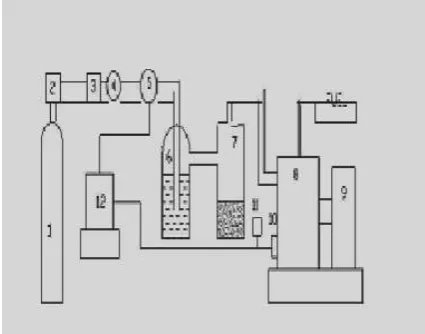
Figure 1 show the necessary instrumentation and safety arrangements required to use hydrogen in spark ignition
Engine or compression ignition engine.
Figure 1 Experimental setup with necessary instrumentation
1.Hydrogen cylinder 7.Flame arrester 2.Pressure regulator 8.Test engine
3.Hydrogen surge tank 9.Dynamometer 4. Filter 10. Pressure transducer 5.Digital mass flow meter 11.IR sensor
6. Flame trap 12. CRO with PC
Flame arrestor was used to suppress explosion inside the hydrogen cylinder. The flame beyond the wire mesh. The flame also gets quenched while reaching the water surface in case of any backfire.
A non-return line was provided to prevent the reverse flow of hydrogen into the system. Such a possibility of reverse flow can occur sometimes in hydrogen – injected engine, particularly in the later part of injection duration.
Flow indicator was used to visualize the flow of hydrogen during engine operations. As the hydrogen was allowed to pass through a glass tube containing water, bubbles were formed during hydrogen flow, which clearly showed the flow of hydrogen.
A special, effective hydrogen sensor was used to monitor the hydrogen gas in the operating environment and also used to sense any leak of hydrogen through the pipeline during the operation of the engine. The sensor works on the principle of electrochemical reaction. Hydrogen has the highest diffusivity characteristics, of about 3-8 times faster in air. Any hydrogen leakage will result in quicker dispersion in air compared to that of hydrocarbon dispersion. Hence it will not form any cloud of hydrogen vapour in the working space [12]. Blowers were also made available to disperse the hydrogen gas if present in the environment and proper ventilation was provided during engine operation. The hydrogen cylinders were also stored away from the working environment.
Crank case ventilation is even more important for hydrogen engines than gasoline engines. As with gasoline engines; un-burnt fuel can seep by the piston rings and enter the crankcase. Since hydrogen has a lower energy ignition limit than gasoline, any un-burnt hydrogen entering the crankcase has a greater chance of igniting. Hydrogen should be prevented from accumulating through ventilation. Ignition within the crankcase can be just a startling noise or result in engine fire. When hydrogen ignites within the crankcase, a sudden pressure rise occurs. To relive this pressure, a pressure relief valve must be installed. Exhaust gases can also seep by the piston rings into the crank case. Since hydrogen exhaust is water vapour, water can condense in crankcase when proper ventilation is not provided. The mixing of water in to the crankcase oil reduces its lubrication ability resulting in a higher degree of engine wear [13].
V. PERFORMANCE AND EMISSION
CHARACTERISTICS
A.Brake Thermal Efficiency
is based on the fuel’s resistance to knock. A lean hydrogen mixture is less susceptible to knock than conventional gasoline and therefore can tolerate higher compression ratios. The less complex the molecular structure, the higher the specific-heat ratio. Hydrogen (γ=1.4) has a much simpler molecular structure than gasoline and therefore its specific-heat ratio is higher than that of conventional gasoline (γ=1.2-1.3).
The variation of brake thermal efficiency with load for DI diesel engine with manifold injection. The thermal efficiency increases as the percentage of hydrogen blending increases for constant speed and load. This due to the improvement of combustion process caused by the presence of hydrogen since the presence of hydrogen improves mixing process of fuel mixture with air. The thermal efficiency reaches its maximum valve at about 80% load for all hydrogen blending ratios. At higher loads the efficiency drops due to incomplete combustion of richer mixture.
Hydrogen Engine:
Pressure Relief Valve:
As a result, the energy content of this mixture will be
less than it would be if the fuel were gasoline (since gasoline is a liquid, it only occupies a very small volume of the combustion chamber, and thus allows more air to enter).
Since both the carburetted and port injection methods mix the fuel and air prior to it entering the combustion chamber, these system limit the maximum theoretical power obtainable to approximately 85% of that of gasoline engines. For direct injection system, which mix the fuel with the air after the intake valve has closed (and thus the combustion chamber has 100% air), the maximum output of the engine can be approximately 15% higher than that of gasoline engines.
Therefore, depending on how the fuel is metered, the maximum output for a hydrogen engine can be either 15% higher or lesser than that of gasoline if a stoichiometric air/fuel ratio is used. However, at a stoichiometric fuel ratio, the combustion temperature is very high and as a result it will form a large amount of nitrogen oxides (NOx), which is the criteria pollutant. Since one of the reasons for using hydrogen is low exhaust emission, hydrogen engines are not normally designed to run at a stoichiometric air/fuel ratio. Typically hydrogen engines are designed to use about twice as much air as theoretically required for complete combustion. At this air/fuel ratio, the formation of NOx is reduced to near zero. Unfortunately, this also reduces the power output to about half of a similarly sized gasoline engine. To make up for the power loss, hydrogen engines are usually larger than gasoline engines, and/or are equipped with turbochargers or superchargers.
B. Air Fuel Ratio
M.M. Rahman et al studied the effect of air fuel ratio on direct injection engine [16]. Figure 4 shows the variation of the brake thermal efficiency with the air fuel ratio for various speeds. It can be observed that the brake thermal efficiency is increases nearby the richest condition (AFR
≅35) and then decreases with increases of AFR and speed. The operation within a range of AFR from 38.144 to 42.91250 (φ = 0.9 to 0.8) gives the maximum values for all speeds. It is clear that the hydrogen stoichiometric air fuel ratio is within the band. Hence it is capable of producing higher power output invariably for all the speeds and loads.
C. Oxides of Nitrogen
The combustion of hydrogen with oxygen produces water at its only product:
2 H2O2 2H2O
The combustion of hydrogen with air however can also produce oxides of nitrogen (NOx):
H 2 O2 N 2 H 2 O N 2 NOx
the air. The amount of NOx depends on Air/fuel ratio
Engine compression ratio Engine speed
Ignition timing
In addition to oxides of nitrogen, traces of carbon monoxide and carbon dioxide can be present in the exhaust gas, due to seeped oil burning in the combustion chamber. Depending on the condition of the engine (burning of oil) and the separating strategy used (a rich versus lean air/fuel ratio), a hydrogen engine can produce almost zero emission (as low as a few ppm) to high NOx and significant carbon – monoxide emissions. Saravanan et al conducted the experiment on a single cylinder with manifold and port injection with EGR. Figure 5 shows the variation of Oxides of nitrogen with load for manifold injection, port injection with EGR. The trend shows that manifold injection of hydrogen gives lesser NOx than port injection and engine operated with conventional diesel fuel alone. J. B. Green et al conducted the Experimental study on a S.I engine operation supplemented with hydrogen Rich Gas [17] .Figure 6 shows the NOx emissions as a function of the Coefficient of variation (COV) of IMEP. The plots illustrate the reduction of NOx emissions within acceptable levels of cycle-to-cycle combustion variations (3 to 5% COV of IMEP). The NOx concentration decreases with increase of COV of IMEP. At a COV of 5%, NOx is reduced by a factor of about a hundred by the addition of plasma boosted reformer generated hydrogen at 1500 rpm engine operation.
VI. CONCLUSION
It is evident from the study, it is advantageous to use hydrogen enriched air as a fuel in internal combustion engines. Addition of hydrogen with air in SI engine or C.I engine provides significant impact on engine brake thermal efficiency and brake power.
Thermal efficiency
The theoretical thermodynamic efficiency of an Otto cycle engine is based on the compression ratio of the engine and the specific-heat ratio of the fuel as shown in the equation:
where:
V1/V2 = the compression ratio
γ = ratio of specific heats
ηth= theoretical thermodynamic efficiency
The higher the compression ratio and/or the specific-heat ratio, the higher the indicated thermodynamic efficiency of the engine. The compression ratio limit of an engine is based on the fuel’s resistance to knock. A lean hydrogen mixture is less susceptible to knock than conventional gasoline and therefore can tolerate higher compression ratios.
The specific-heat ratio is related to the fuel’s molecular structure. The less complex the molecular structure, the higher the specific -heat ratio. Hydrogen (γ = 1.4) has a much simpler molecular structure than gasoline and therefore its specific-heat ratio is higher than that of conventional gasoline (γ = 1.1).
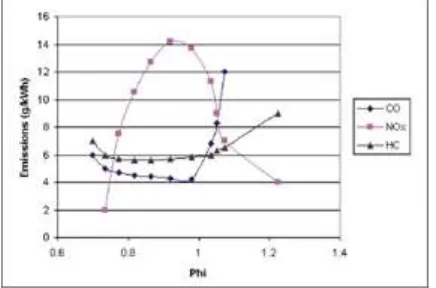
the NOx for a gasoline engine is re-duced as phi decreases (similar to a hydrogen engine). How-ever, in a gasoline engine the reduction in NOx is compromised by an increase in carbon monoxide and hydro-carbons. The theoretical maximum power output from a hydrogen engine depends on the air/fuel ratio and fuel injection method used.
The stoichiometric air/fuel ratio for hydrogen is 34:1. At this air/fuel ratio, hydrogen will dis-place 29% of the combustion chamber leaving only 71% for the air. As a result, the energy content of this mixture will be less than it would be if the fuel were gasoline (since gasoline is a liquid, it only occupies a very small volume of the combustion chamber, and thus allows more air to enter).
gasoline engines. For direct injection systems, which mix the fuel with the air after the intake valve has closed (and thus the combustion chamber has 100% air), the maximum output of the engine can be approximately 15% higher than that for gasoline engines.
Therefore, depending on how the fuel is metered, the maxi-mum output for a hydrogen engine can be either 15% higher or 15% less than that of gasoline if a stoichiometric air/fuel ratio is used. Since one of the reasons for using hydrogen is low exhaust emissions, hydrogen engines are not normally designed to run at a stoichiometric air/fuel ratio.
Typically hydrogen engines are designed to use about twice as much air as theoretically required for complete combustion. At this air/fuel ratio, the formation of NOx is reduced to near zero. Unfortunately, this also reduces the power out-put to about half that of a similarly sized gasoline engine. To make up for the power loss, hydrogen engines are usually larger than gasoline engines, and/or are equipped with turbochargers or superchargers.
NOx emission in both S.I engine and C.I engine also reduces to the maximum considerable amount. This makes it possible to run the engine leaner, resulting in lower emissions of CO2, CO and HC. Finally it is concluded that hydrogen for both S.I engine and C.I engine provides the significant advantageous and play a major role to provide cleaner environment.
NOMENCLATURE
S.I - Spark ignition C.I - Compression ignition
HC - Hydrocarbon
CO - Carbon monoxide
CO2 - Carbon-di-oxide NOx - Oxides of nitrogen SOx - Oxides of sulphur EGR - Exhaust gas recirculation AFR - Air fuel ratio
COV - Coefficient of variation
IMEP - Indicated mean effective pressure
REFERENCE
[1 ] Eiji Tomita, Nobuyuki Kawahara, Zhenyu Piao and Shogo FujitaHydrogen Combustion and Exhaust Emissions Ignited with Diesel Oil in a Dual Fuel Engine, SAE Paper 2001-01-3503:pp. 97-102,2001.
[2] Naber.J.D. And Siebers.D.L, Hydrogen combustion under Diesel Engine conditions, International Journal of Hydrogen energy, Vol 23, No.5, pp. 363 –371, 1998.
[3 ] Das.L.M, Fuel induction techniques for a hydrogen operated engine, Hydrogen fuel for surface transportation, published by Society of Automotive Engineers, Inc U.S.A: pp. 27-36, 1996. [4] N.Saravanan and G.Nagarajan, Experimental investigation inoptimizing the hydrogen fuel on a hydrogen diesel dual-fuel engine, International Journal of Energy and Fuels, Volume 23, pp. 2646-2657, 2009.
[5] James W.Heffel, Michael N. Mcclanahan, Joseph M. Norbeck, Electronic fuel injection for Hydrogen fueled Internal Combustion Engines‖, University of California, Riverside, CE-CER 1998; SAE 981924, pp. 421-432, 1998.
[6] N.Saravanan and G.Nagarajan, Combustion analysis on a DI diesel engine with hydrogen in dual fuel mode, International Journal of Fuel, Volume 87, pp. 3591-3599, 2008.
[7] James W. Heffel, NOX emission and performance data for a hydrogen fuelled internal combustion engine at 1500 rpm using exhaust gas recirculation, Internal Journal of Hydrogen Energy,Vol.28:pp. 901-908, 2003.
[8 ] Ladommatos N., Abdelhalim S.M., Zhao H. and Hu Z, Effects of EGR on heat release in diesel combustion, SAE Transactions 980184:pp. 1-15, 1998.
[9 ] N.Saravanan and G.Nagarajan, An insight on hydrogen fuel injection techniques with SCR system for NOX reduction in a hydrogen–diesel dual fuel engine, International Journal of Hydrogen Energy, Volume 34, pp. 9019-9032, 2009.