R E V I E W
Progression of the role of CRYAB in signaling
pathways and cancers
This article was published in the following Dove Press journal: OncoTargets and Therapy
JunFei Zhang
Jia Liu
JiaLi Wu
WenFeng Li
ZhongWei Chen
LiShan Yang
Department of Emergency Medical, General Hospital of Ningxia Medical University, Yinchuan, Ningxia 750000, People’s Republic of China
Abstract:
CRYAB is a member of the small heat shock protein family,
fi
rst discovered in
the lens of the eye, and involved in various diseases, such as eye and heart diseases and even
cancers, for example, breast cancer, lung cancer, prostate cancer, and ovarian cancer. In
addition, CRYAB proteins are involved in a variety of signaling pathways including
apop-tosis, in
fl
ammation, and oxidative stress. This review summarizes the recent progress
con-cerning the role of CRYAB in signaling pathways and diseases. Therefore, the role of
CRYAB in signaling pathways and cancers is urgently needed. This article reviews the
regulation of CRYAB in the apoptotic in
fl
ammatory signaling pathway and its role in cancers
progression and as a key role in anti-cancer therapy targeting CRYAB in an effort to improve
outcomes for patients with metastatic disease.
Keywords:
CRYAB, signaling pathways, cancers
Introduction
Small heat shock proteins (sHsps or HspBs) form a large and evolutionary ancient family,
whose members have been found in viruses, archaea, bacteria, plants, and animals.
1The
human genome contains 10 genes encoding sHsps.
2Some sHsps (HspB1, HspB5,
HspB6, and HspB8) are expressed ubiquitously, while others (HspB2, HspB3, HspB4,
HspB7, HspB9, and HspB10) have been found only in certain tissues.
3sHsps are
characterized by their complex oligomeric structures, allowing them to interact with
each other to form homo- and hetero-oligomeric structures of dynamic size (up to 700
kDa).
4For instance, the heterooligomeric complex formed by HspB4 and HspB5 plays
an important role in keeping the lens transparency.
5In heterooligomeric complexes,
HspB6 and HspB1 mutually affect the structure of each other and the formation of
heterooligomeric complexes might in
fl
uence diverse processes depending on sHsps.
6HspB5, also known as CRYAB or
α
B-Crystallin, has an N-terminal domain,
a central domain, and a C-terminal domain.
7Its structural and functional
character-istics are shown in
Figure 1:
81) low molecular weight of 22 kDa; 2) N-terminal
domain of about 60 residues, a conserved
α
-crystallin structure of about 90 residues
involved in the dimerization domain, and the 25-residue C-terminal domain
con-taining the IXI motif; 3) the ability to form large oligomers; 4) dynamic quaternary
structure; and 5) induction by stress conditions.
CRYAB was
fi
rst discovered proteins in the lens of the eye
9and is also expressed in
other parts of the body, such as the heart, skeletal muscle, ovaries, etc.
10–12However,
CRYAB protein mutations associate with the different diseases. For instance, domain
mutations (D109H, R120G, Q151X, G154S, P155Rfs9X, and R157H) are associated
Correspondence: ZhongWei Chen; LiShan Yang
Department of Emergency Medical, General Hospital of Ningxia Medical University, Yinchuan, Ningxia 750000, People’s Republic of China
Tel +861 399 539 0007; +861 399 521 6188
Email [email protected]; [email protected]
OncoTargets and Therapy
Dove
press
open access to scientific and medical research
Open Access Full Text Article
OncoTargets and Therapy downloaded from https://www.dovepress.com/ by 118.70.13.36 on 25-Aug-2020
with myopathy.
13The dominant D109A mutation of CRYAB
is pathogenic and associated with myo
fi
brils myopathy.
14,15In
addition to myopathy, mutations D109H, R120G, and
X176Wfs19X are only associated with cardiomyopathy and
cataract or discrete lens opacity.
16Other dominant mutations
(R11H, P20R, P20S, R69C, D140N, K150Nfs34X, A171T)
and recessive mutations (eg, R11C, R12C, R56W) are also
described as associated with congenital cataracts, uniformly
dispersed throughout the coding sequence.
17The autosomal
dominant multisystem phenotype in the residual (D109H)
mutation is not only associated with myopathy, but also with
cardiomyopathy and lens cataract.
18Even point mutations or
short deletions in CRYAB can lead to the development of
different hereditary diseases.
CRYAB acts primarily as a chaperone, blocking the
aggregation of denatured proteins and keeping
aggregation-prone proteins in reservoirs of non-native, foldable
inter-mediates within large, soluble, multimeric structures.
19The
ectopic expression of CRYAB in diverse cell types has been
demonstrated to confer protection against a broad range of
apoptotic stimuli,
20oxidative stress,
21and exposure to
antic-ancer drugs.
22Simultaneously, silencing its expression by
RNA interference sensitizes cells to apoptosis.
23Similarly,
a growing number of researchers have described the high
expression of CRYAB in human cancers and the signi
fi
cant
relationship between CRYAB and unfavorable survival of
cancer patients.
24–26So, what is the role of CRYAB in participating in the
apoptotic and in
fl
ammatory pathways and what role does it
play in the diseases? Here, we review recent advances
impli-cating the importance of CRYAB in signaling pathways, its
role in cancer progression, and as target molecules in
antic-ancer therapy.
The role of CRYAB in the signaling
pathway
CRYAB has multiple functions in cells, but how does it
work? Based on the report, the apparent pleiotropic activity
of CRYAB may be due to its binding to chaperones and
regulation of the activity and half-life involved in many
protein targets involved in apoptotic cell death
tumorigen-esis and metastasis.
27–29And CRYAB contains several
ser-ine sites that can be phosphorylated by speci
fi
c stress or
mitogen-activated protein kinases.
30Phosphorylation and
oligomeric organization of these proteins are dynamic and
are deeply modi
fi
ed due to changes in the cellular
environment.
31In fact, these structural modi
fi
cations are
reversible and may be sensors in the cellular environment.
Changes in the sHsps structure can lead to at least 300
different stoichiometries to allow them to interact with
putative proteins.
32Participation in apoptosis
Apoptosis is a programmed cell death that is negatively
regulated by sHsps.
33–35In environmental damage such as
heat shock, contrary to the increased expression of sHsps,
the expression of these proteins is not up-regulated in
apoptosis. In some cells, the expressed sHsps can
counter-act the apoptotic process mediated by the immune system
or therapeutic drugs. CRYAB is now thought to interact
with speci
fi
c proteins and regulate their activity during the
initiation and execution phases of apoptosis.
36,37CRYAB is a recognized anti-apoptotic protein,
38whose
main property is to negative regulation of the proapoptotic
members of the Bcl-2 family, Bax, and caspase-3.
39CRYAB
interacts directly with caspase-3, Bax, and Bcl-xS.
39,40In
addition to interacting with these proteins, CRYAB inhibits
their transfer from the cytoplasm to the mitochondria,
thereby preventing stress-induced apoptosis.
40Similarly,
CRYAB interacts with p53 to sequester its translocation to
the mitochondria, thus indirectly inhibiting its pro-apoptotic
effect against the apoptotic Bcl-2 molecule.
41CRYAB
pro-tects cells from apoptosis by inhibiting caspase-3 and PARP
(poly(ADP-ribose) polymerase) activation.
42CRYAB was
also found to inhibit p53-dependent apoptosis mediated by
the calcium-activated Raf/MEK/ERK signaling pathway by
H2N
1 67
α-Crystallin domain
Phosphorylation sites
WDPF motf
N-terminal domain
Flexible C-terminal domain
149 175 COOH
S19 S45/59
Figure 1Schematic representation of the structure of the CRYAB protein (including the N-terminal domain, theflexible C-terminal domain, the WDPF domain, and theα -Crystallin protein domain, and the serine (S) phosphorylation site).
OncoTargets and Therapy downloaded from https://www.dovepress.com/ by 118.70.13.36 on 25-Aug-2020
inhibiting Ras activation.
43CRYAB can also block UVA cell
apoptosis by participating in the regulation of PKC
α
1pha
and Raf/MEK/ERK signaling pathway proteins.
44In
addi-tion, CRYAB binds directly to the most potent endogenous
inhibitor of apoptosis, X-linked inhibitor of apoptosis, to
inhibit caspase.
45CRYAB is involved in the regulation of
intracellular apoptosis signaling, which inhibits apoptosis by
activating the Akt signaling pathway and enhancing PI3K
activity.
46The above data indicates the anti-apoptotic effect
of the CRYAB protein (
Figure 2
). Recently, results showed
CRYAB protects cardiomyocytes against heat stress, likely
by reducing Factin aggregation (thus stabilizing the
cytoske-leton), regulating the cell cycle, and preventing
caspase-mediated apoptosis.
47Involved in in
fl
ammation and redox
Intracellular CRYAB has been shown as one of the potent
factors in controlling neuroin
fl
ammation in several
occa-sions, for instance, multiple sclerosis (MS), an autoimmune
demyelinating disease of the central nervous system (CNS).
A surprising
fi
nding about CRYAB is that patients with MS
have at least 70 different proin
fl
ammatory mediators (acute
phase proteins, complement cascade members, and clotting
factors). The interaction with CRYAB reduces the
concentra-tion of these peptides, leading to a decrease in in
fl
ammatory
response.
48In the CNS, microglia and astrocytes are the two
main cellular components that participate in the in
fl
amma-tory process. Recent research reports indicated the molecular
and cellular basis of extracellular CRYAB-mediated
suppres-sion of neuroin
fl
ammation. In EAE mice, the expression of
CRYAB was signi
fi
cantly increased in astrocytes. CRYAB
was preferentially expressed in astrocytes and can be secreted
through exosomes. Expression levels of exosomal CRYAB
secreted from astrocytes were markedly increased under
stress. Furthermore, incubation of immortalized astrocytes
or microglia cell lines with CRYAB remarkably inhibited
astrocytes and microgliamediated in
fl
ammatory responses
in both autocrine and paracrine manners.
49Another anti-in
fl
ammatory pathway associated with
extracellular CRYAB involves activation of
immunoregu-latory responses in macrophages via
endosomal/phago-some CD14 and Toll-like receptors 1 and 2 (two new
CRYAB interacting proteins).
50These reports clearly
indi-cate that CRYAB has a different effect on in
fl
ammation.
In
fl
ammation is also associated with oxidative stress,
and, in this respect, CRYAB induces a reduced state in
cells.
51,52In fact, CRYAB-expressing cells are
accompa-nied by a decrease in mitochondrial membrane potential
and reduced glutathione, a decrease in intracellular
reac-tive oxygen species and nitric oxide levels, and iron
uptake.
53,54Therefore, it can impair protein oxidation,
lipid peroxidation, DNA damage, and cytoskeletal
struc-ture damage caused by oxidative stress.
55–57CRYAB in diseases
CRYAB is a structural protein of the lens that helps maintain
lens transparency.
9CRYAB is also expressed in non-tissue,
including the heart, brain, skeletal muscle, skin, ovaries, and
kidneys.
10–12Abnormal expression of CRYAB also occurs in
many diseases, such as eye diseases
58,59and heart diseases.
60,61Ras
Raf Akt
PI3K
Mek
ERK p53
Bax cytochrome c
Caspase-3
apoptosis
Nucleus
Mitochondria
XIAP
PARP
CRYAB
CRYAB CRYAB
CRYAB
CRYAB
Figure 2Schematic diagram of CRYAB protein involved in the regulation of apoptosis (inhibition:┤, activation:→).
OncoTargets and Therapy downloaded from https://www.dovepress.com/ by 118.70.13.36 on 25-Aug-2020
There is increasing evidence that CRYAB is an important
regulator of cardiac cytoprotection and is resistant to various
forms of cellular stress. Over-expression of CRYAB in
cul-tured cardiomyocytes and transgenic mouse hearts protects
against ischemia or reperfusion injury
52and reduces cardiac
hypertrophy caused by overload
53CRYAB-20 protein levels
are reduced during ischemia, and reperfusion causes clinical
damage to cardiac function. Administration of CRYAB-20
peptide reduced the infarct size of the mouse model of
myo-cardial infarction and showed cardioprotective effects of
CRYAB.
64Most interesting is the recent discovery that
abnor-mal expression of these chaperones often occurs in tumors.
65– 67There is increasing evidence that CRYAB is diversi
fi
ed and
signi
fi
cantly associated with cancer.
68,69Emerging strategies
to therapeutically target CRYAB and/or interacting proteins to
selectively activate apoptosis and/or derail the metastatic
cas-cade in an effort to improve outcomes for patients with
meta-static disease.
24CRYAB in breast cancer
Breast cancer (BC) is one of the most common cancers for
females and the leading cause of cancer-related death in
females globally, with a high incidence rate and
mortality.
70BC may have evolved from a process of
con-tinuous progression of hyperplasia of mammary gland
(HMG).
71,72According to reports, the expression of
CRYAB was signi
fi
cantly up-regulated in HMG,
73while
it was also highly expressive in BC, such as basal-like,
triple-negative breast cancer (TNBC), and mammary
metaplastic carcinoma.
74–76Although Her2 has long been
reported to be involved in the pathogenesis of brain
metas-tases, it has recently been reported that CRYAB expression
is associated with distant recurrence in TNBC patients and
as
the
fi
rst
distal
site
compared
to
early
brain
recurrence.
77–80Consistent with this pathogenic effect,
CRYAB is closely associated with advanced tumor
pro-gression, lymphocytic in
fi
ltration, and death, and could be
a novel oncoprotein biomarker of a poor prognosis in BC,
especially in advanced patients.
81,82Paradoxically, the
upregulation of CRYAB was not involved in the molecular
chaperone in the progression of the disease,
83and did not
seem to have an independent impact on patient survival or
to interfere with taxane-based therapy in two randomized
clinical trials.
84So how is the CRYAB protein regulated in BC?
Upregulation of CRYAB may be associated with
transcrip-tional activation. In fact, the CRYAB gene promoter
con-tains the proto-oncogene Ets1, a member of the ETS
transcription factor family that bind to DNA at
palindro-mic ETS-binding sites (EBS), which are activated by the
oncogenic transcription factor Ets1. Ets1-mediated events
appear to be associated with poor survival.
85In addition,
Bcl-2 is reported to be a positive prognostic marker
for BC, and CRYAB is a marker of poor prognosis. In
the correlation analysis, the two proteins demonstrated
a weak negative correlation.
86Simultaneously, CRYAB
enhances
tumorigenesis
by
regulating
the
vascular
endothelial growth factor (VEGF) and confers
anti-VEGF resistance to BC.
87,88It induces EGF and
ancho-rage-independent growth of human mammary gland-like
tumors through constitutive activation of the MEK/ERK
pathway.
89CRYAB can also be used as an oncoprotein
because it transforms immortalized human mammary
epithelial cells in invasive BC in nude mice, which have
the same characteristics as mammary gland-like tumors.
75CRYAB in lung cancer
Lung cancer (LC) is the most common malignancy
world-wide, and also the leading cause of cancer-related mortality
in the majority of developed countries.
90The two major
types of LC are small cell (SC) and non-small cell lung
cancer (NSCLC), and the latter accounts for approximately
85% of all cases.
91Many studies are devoted to NSCLC,
but there is still a lack of speci
fi
c and valuable molecular
markers to accurately indicate the prognostic status of
NSCLC patients. Early studies have shown that CRYAB is
up-regulated in NSCLC by analyzing gene expression
pro-fi
les of Anip973R and its parental line.
92Is CRYAB an
independent marker for prognosis in NSCLC? A study
reported that CRYAB did not predict outcomes in patients
treated for NSCLC. The reason is that larger studies are
required to validate this
fi
nding.
66Another study was the
fi
rst to report on the differential expression of CRYAB with
NSCLC, in both mRNA and protein level simultaneously.
In addition, high CRYAB protein expression was correlated
with certain clinic pathological attributes, including TNM
stage and overall survival.
93CRYAB, whose nuclear
stain-ing is an independent factor of poor survival, plays an
essential role in NSCLC biology.
94What
’
s more,
ERK-regulated CRYAB induction by matrix detachment inhibits
anoikis and promotes lung metastasis in vivo.
95Some
stu-dies have proved that CRYAB over-expression in idiopathic
pulmonary
fi
brosis
(IPF)
disrupts
Smad4
mono-ubiquitination by interacting with its E3-ubiquitin ligase,
TIF1
γ
, limiting its nuclear export, thus activing
TGF-β
1-Smad4
pro-
fi
brotic
activity,
demonstrating
that
OncoTargets and Therapy downloaded from https://www.dovepress.com/ by 118.70.13.36 on 25-Aug-2020
CRYAB may also be a key target for the development of
speci
fi
c drugs in the treatment of IPF or other
fi
brotic
diseases.
96CRYAB may be distinguished as a novel
prog-nostic biomarker in NSCLC patients, and targeting CRYAB
may provide a promising strategy for NSCLC treatment.
93CRYAB in hepatocellular carcinoma
Primary liver cancer is a cancer which occurs in liver and
is the third most common cause of cancer-related deaths
worldwide. Hepatocellular carcinoma (HCC) is the most
prevalent subtype of primary liver cancer.
97Much hope is
focused on obtaining a better understanding of the
mechanism relevant to this disease in order to develop
new preventive, diagnostic, and therapeutic options. First,
CRYAB promoted HCC progression in vivo and in
-vitro. Second, functional and genetic screens demonstrated
that CRYAB overexpression fostered HCC progression by
inducing EMT. Remarkably, CRYAB complexes with and
elevates 14
–
3-3
ζ
protein, leading to up-regulation of
ERK1/2 activity. Clinically, CRYAB expression correlated
with BCLC staging, patients
‘
overall survival, and disease
recurrence. Simultaneously, CRYAB overexpression
acti-vated the ERK1/2/Fra-1/slug signal to induce HCC cell
EMT. The above results support the notion that CRYAB is
a positive regulator of HCC growth and aggressiveness.
65Moreover, upregulation of CRYAB is regulated by its
upstream heat shock factor 1 (HSF1), the predominant
regulator of heat shock response and whose
phosphoryla-tion is induced by glucose in HCC cell lines.
98Therefore,
expression of the CRYAB gene, which is related with the
transferability and invasive capacity of hepatocellular
car-cinoma cells, can be used as a prognostic indicator in
human hepatocellular carcinomas. It may also be involved
in the malignant transformation of hepatocytes.
99CRYAB in OS
Osteosarcoma (OS) is the most common primary
malig-nant tumor in children and adolescents.
100Early studies
via detection of two-dimensional difference gel
electro-phoresis, the genomic analysis, and further studies in OS
have indicated the amount of CRYAB was signi
fi
cantly
increased, especially in advanced stages of the disease.
101CRYAB expression is high in OS tissues and is positively
correlated with cell invasiveness and activity of ERK1/2
secreted by MMP-9 (Matrix Metalloprotein-9). Clinically,
the high expression of CRYAB is associated with
shor-tened survival and tumor recurrence in postoperative OS
patients, and is a new adverse outcomes marker for OS
patients.
102A study showed krüppel-like factor 4 (KLF4),
a zinc-
fi
nger transcription factor, and an essential regulator
in many cellular processes, speci
fi
cally bound the
promo-ter of CRYAB and upregulated CRYAB expression in
human osteosarcoma cells.
103Another study revealed
microRNAs-491 plays a role in osteosarcoma by directly
targeting CRYAB.
104Whether CRYAB protein is actively
regulated or passively regulated, it is closely related to OS
disease, and may be a new therapeutic target of OS.
CRYAB in colorectal cancer
Colorectal cancer (CRC) is the third most common cancer
in both males, and the fourth leading cause of
cancer-related deaths worldwide.
105Research on early diagnosis
of colorectal carcinogenesis biomarkers is still ongoing,
and the selection of
“
personalized
”
treatment strategies
provides a prognostic marker for colorectal cancer to
improve the prognosis of the disease.
106The study was
the
fi
rst to report the expression of CRYAB and splicing
changes may mark the risk of cancer by CRC biopsy
analysis.
79,107Its high expression, lymph node metastasis,
distant metastasis, and tumor TNM stage were all signi
fi
-cantly associated with the overall survival CRC patients.
CRC patients with high CRYAB expression and positive
distant metastasis encountered a signi
fi
cantly poorer
over-all survival.
79Clinical data indicated that CRYAB
expres-sion upregulation had a positive association with TNM
stage CRC patients.
108CRYAB high expression could prompt tumor cell
pro-liferation, invasion, and metastasis of CRC through
EMT.
108,109Its expression level in CRC patients was
clo-sely correlated with MMP7 and E-cadherin, two core EMT
gene products. In addition, three signi
fi
cant signaling
path-ways (PI3K, p38, and ERK) were involved in
CRYAB-induced EMT.
108,110,111However, in certain cell types, the
ERK, but not PI3K and p38 signaling pathways, may be
crucially involved in the invasion, proliferation, and EMT
induced by CRYAB over-expression. In summary, CRYAB
may trigger the EMT in CRC by activating the ERK
signaling pathway and is a potential tumor biomarker for
CRC diagnosis and prognosis.
108Also, CG/GG at CRYAB
C-802G is correlated with CRC susceptibility, and this
polymorphism may be a useful marker for the clinical
outcome of CRC.
112CRYAB in head and neck cancer
Head and neck cancers comprise a heterogeneous group of
tumors that arise in the paranasal sinus, oral and nasal
OncoTargets and Therapy downloaded from https://www.dovepress.com/ by 118.70.13.36 on 25-Aug-2020
cavities, pharynx and larynx, and salivary glands. 90% of
these tumors are squamous cell carcinomas and are newly
diagnosed in 600,000 patients annually.
105Only 40
–
50%
will survive 5 years, making this the
fi
fth-most frequent
malignant cancer worldwide.
113Regarding brain cancer,
high expression levels of CRYAB are evident in invasive
gliomas.
114,115The higher expression of CRYAB may lead
to prolonged survival of head and neck squamous cell
carcinoma cells under hypoxic conditions, more likely by
ROS formation.
116In laryngeal squamous cell carcinoma
(LSCC), CRYAB is signi
fi
cantly overexpressed and
corre-lated with malignant phenotypes. CRYAB had a poor
prognosis in cancer patients
25and may serve as a novel
prognostic factor for LSCC.
67,117In oral squamous cell
carcinoma, CRYAB is highly expressed and has a poor
prognosis for cancer patients.
118It was
fi
rst found that the
single nucleotide polymorphisms at the promoter region of
CRYAB, C-802G, is associated with patient oral cancer
susceptibility, recurrence, and 5-year disease-free survival,
but not metastasis.
119However, CRYAB staining with cutaneous squamous
cell carcinoma of the head and neck (CSCCHN) with
clinical Perineural invasion (PNI), a clinical indicator of
poor prognosis, showed a decrease compared to non-PNI
CSCCHN. Surprisingly, CRYAB is a key component in the
machinery leading to degradation of cyclin D1, which is
key to understanding how loss of CRYAB can lead to
deregulated cellular growth in CSCCHN with PNI. It is
possible that under-expression of CRYAB in tumors that
exhibit neurotropism contributes to their more aggressive
nature.
120Moreover, in nasopharyngeal carcinoma (NPC), CRYAB
is down-regulated.
121Activation of CRYAB suppressed NPC
tumor formation in nude mice. Overexpression of CRYAB
affected NPC progression-associated phenotypes such as loss
of cell adhesion, invasion, interaction with the tumor
microenvironment, invasive protrusion formation in three
dimensional Matrigel culture, as well as expression of
epithe-lial-mesenchymal transition-associated markers. CRYAB
functions to suppress NPC progression by associating with
the cadherin/catenin adherens junction and modulating the
β
-catenin function.
122CRYAB expression is down-regulated in highly
dediffer-entiated malignant anaplastic thyroid carcinoma because of
a tumor-speci
fi
c transcription factor pattern.
121CRYAB gene
silencing is present in rapidly growing dedifferentiated
ana-plastic thyroid carcinomas. The main underlying mechanism
seems to be a tumor-speci
fi
c transcription factor expression
pattern, which is most prominently characterized by
down-regulation of the transcription factor, TFCP2L1.
123CRYAB in other cancers
CRYAB was highly expressed in gastric cancer tissues,
contributed to gastric cancer cells migration and invasion
via EMT, mediated via the NF-
κ
B signaling pathway,
predicting a poor prognosis in patients with gastric cancer
and, thus, possibly providing a novel therapeutic target for
gastric cancer.
124CRYAB was reported to be expressed in
retinoblasto-mas, but it may not prevent apoptosis of neoplastic
cells;
125while in the same laboratory in the same year
CRYAB was reported to be highly expressed in
retinoblas-toma after chemotherapy and may protect tumor cells from
apoptotic signals produced by anticancer drugs.
126Integrative analysis of transcriptomics and clinical data
uncovered in the prostate a novel direct transcriptional
reg-ulation of CRYAB by Microphthalmia-associated
transcrip-tion factor (MITF), a basic helix-loop-helix leucine zipper
transcription factor that regulates the expression of lineage
commitment programs that are essential for propagation of
the melanocyte lineage.
127Although there is no direct or
mechanistic evidence of the MITF-CRYAB transcriptional
axis in other cancer types, in melanoma both MITF and
CRYAB expression are upregulated by
BRAF/MEK-inhibitor treatments.
128,129In addition, the correlation
between MITF and CRYAB is also present in colorectal
cancer, but not in breast nor lung cancer.
130These suggested
that the MITF-CRYAB axis controls beyond prostate biology
and CRYAB as a novel direct target of the transcription factor
that is, at least in part, responsible for its tumor-suppressive
activity in the prostate and could be considered as potentially
protective against prostate cancer.
127,131CRYAB, a proposed negative regulator of tumor necrosis
factor-related apoptosis inducing ligand (TRAIL)- and
cis-platin-induced mediated apoptosis, displayed low expression
level signi
fi
cantly associated with adverse patient survival
and acts as a molecular marker for the outcome of patients
with ovarian cancer. The data showed molecular
mechan-isms underlying ovarian cancer cell apoptosis and resistance
to TRAIL as an obstacle for its therapeutic ef
fi
cacy.
132,133Conclusions and prospects
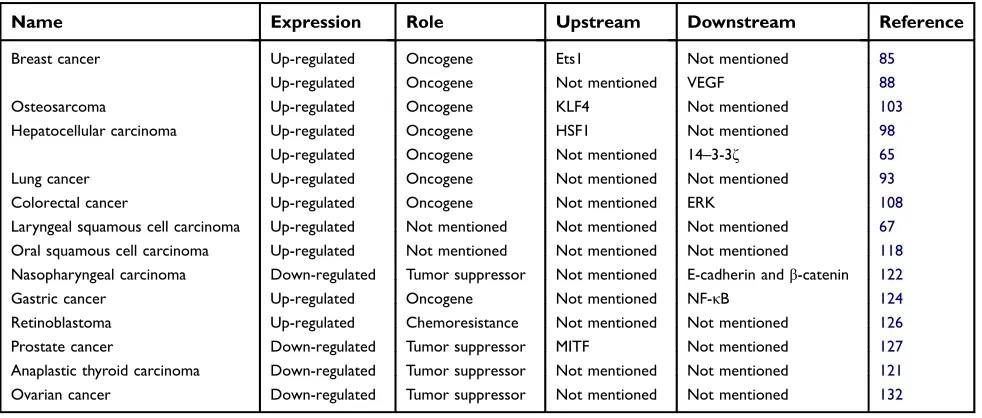
As noted above, the expression and functional roles of
CRYAB in cancers (
Table 1
), and further research needs to
be done to reveal its underlying role in the progression and
metastasis of diseases. Although the CRYAB protein has
OncoTargets and Therapy downloaded from https://www.dovepress.com/ by 118.70.13.36 on 25-Aug-2020
multiple functions, the most important function is to act as
an anti-apoptotic polypeptide in various stress-induced
apoptosis
69,134and as a molecular chaperone to block
aggre-gation
of
denatured
proteins
by
exposure
to
heat
stress.
134,136Moreover, although the pre-clinical results of
CRYAB-based anti-cancer drugs in vivo and in vitro are
promising, there is still a long way to go from the laboratory
to clinical trials. Another important issue is the off-target
effect. Is the drug targeting CRYAB suf
fi
cient to control the
ultimate anti-cancer effects when other HSPs are present? If
the answer is yes, what is the underlying mechanism? Only
if these events are fully explored can the treatment of
CRYAB be used for clinical applications.
Therefore, according these data, we speculate that
the plausible reasons for the ambiguous expression and
function of CRYAB in cancers are listed as follows: i)
CRYAB expression is developmentally related in some
tissues; ii) CRYAB may be speci
fi
c in certain tissues or
populations;
iii)
cytoprotective
and
anti-apoptotic
activities play a leading role in determining the role
of CRYAB in promoting or inhibiting the development
of certain types of cancer; and iv) the
fi
nal functional
role of CRYAB is affected by the synergistic or
inhi-bitory effects of other HSPs regulatory molecules.
Disclosure
The authors report no con
fl
icts of interest in this work.
References
1. Haslbeck M, Vierling E. Afirst line of stress defense: small heat shock proteins and their function in protein homeostasis. Cell Stress Chaperones.2015;427(7):1537–1548.
2. Kappe G, Franck E, Verschuure P, Boelens WC, Leunissen JA, de Jong WW. The human genome encodes 10 alpha-crystalline-related small heat shock proteins: hspB1-10.Cell Stress Chaperones.2003;8 (1):53–61.
3. Vos MJ, Kanon B, Kampinga HH. HSPB7 is a SC35 speckle resident small heat shock protein. Biochim Biophys Acta. 2009;1793 (8):1343–1353. doi:10.1016/j.bbamcr.2009.05.005
4. Simon S, Dimitrova V, Gibert B, et al. Analysis of the dominant effects mediated by wild type or R120G mutant of alphaB-crystallin (HspB5) towards Hsp27 (HspB1). PLoS One. 2013;8(8):e70545. doi:10.1371/journal.pone.0070545
5. Srinivas PN, Reddy PY, Reddy GB. Significance of alpha-crystallin heteropolymer with a 3:1 alphaA/alphaB ratio: chaperone- like activ-ity, structure and hydrophobicity.Biochem J. 2008;414(3):453–460. doi:10.1042/BJ20080544
6. Bukach OV, Glukhova AE, Seit-Nebi AS, Gusev NB. Heterooligomeric complexes formed by human small heat shock pro-teins HspB1 (Hsp27) and HspB6 (Hsp20).Biochim Biophys Acta.
2009;1794(3):486–495. doi:10.1016/j.bbapap.2008.11.010
7. Rajagopal P, Tse E, Borst AJ, et al. A conserved histidine mod-ulates HSPB5 structure to trigger chaperone activity in response to stress-related acidosis. Elife. 2015;4:e07304. doi:10.7554/ eLife.06416
8. Acunzo J, Katsogiannou M, Rocchi P. Small heat shock proteins HSP27 (HspB1),αB-crystallin (HspB5) and HSP22 (HspB8) as reg-ulators of cell death.Int J Biochem Cell Biol.2012;44(10):1622–1631. doi:10.1016/j.biocel.2012.04.002
9. Carver JA, Ecroyd H, Truscott RJW, Thorn DC, Holt C. Proteostasis and the regulation of intra- and extracellular protein aggregation by ATP-independent molecular chaperones: lensα-Crystallins and milk caseins. Acc Chem Res. 2018;51(3):745–752. doi:10.1021/acs. accounts.7b00250
Table 1
Expression and functional characterization of CRYAB in cancer
Name
Expression
Role
Upstream
Downstream
Reference
Breast cancer Up-regulated Oncogene Ets1 Not mentioned 85
Up-regulated Oncogene Not mentioned VEGF 88
Osteosarcoma Up-regulated Oncogene KLF4 Not mentioned 103
Hepatocellular carcinoma Up-regulated Oncogene HSF1 Not mentioned 98
Up-regulated Oncogene Not mentioned 14–3-3ζ 65
Lung cancer Up-regulated Oncogene Not mentioned Not mentioned 93
Colorectal cancer Up-regulated Oncogene Not mentioned ERK 108
Laryngeal squamous cell carcinoma Up-regulated Not mentioned Not mentioned Not mentioned 67
Oral squamous cell carcinoma Up-regulated Not mentioned Not mentioned Not mentioned 118
Nasopharyngeal carcinoma Down-regulated Tumor suppressor Not mentioned E-cadherin andβ-catenin 122
Gastric cancer Up-regulated Oncogene Not mentioned NF-κB 124
Retinoblastoma Up-regulated Chemoresistance Not mentioned Not mentioned 126
Prostate cancer Down-regulated Tumor suppressor MITF Not mentioned 127
Anaplastic thyroid carcinoma Down-regulated Tumor suppressor Not mentioned Not mentioned 121
Ovarian cancer Down-regulated Tumor suppressor Not mentioned Not mentioned 132
OncoTargets and Therapy downloaded from https://www.dovepress.com/ by 118.70.13.36 on 25-Aug-2020
10. Harakalova M, Kummeling G, Sammani A, et al. A systematic analysis of genetic dilated cardiomyopathy reveals numerous ubiquitously expressed and muscle-specific genes.Eur J Heart Fail.2015;17(5):484–493. doi:10.1002/ejhf.255
11. Hao D, Li J, Jia S, et al. Integrated analysis reveals tubal-and ovarian-originated serous ovarian cancer and predicts differential therapeutic responses.Clin Cancer Res.2017;23(23):7400–7411. doi:10.1158/1078-0432.CCR-17-0638
12. Mullins CR, Zerby HN, Fitzpatrick LA, Parker AJ. Bosindicus cattle possess greater basal concentrations of HSP27, alpha B-crystallin, and HSP70 in skeletal muscle in vivo compared with cattle. J Anim Sci. 2016;94(1):424–429. doi:10.2527/ jas.2016-0811
13. Jiao X, Khan SY, Irum B, et al. Missense mutations in CRYAB are liable for recessive congenital cataracts.PLoS One.2015;10 (9):e0137973. doi:10.1371/journal.pone.0137973
14. Fichna JP, Potulska-Chromik A, Miszta P, et al. A novel dominant D109A CRYAB mutation in a family with myofibrillar myopathy affects αB-crystallin structure. BBA Clin. 2016;7:1–7. doi:10.1016/j.bbacli.2016.11.004
15. Kley RA, Olivé M, Schröder R. New aspects of myofibrillar myopathies.Curr Opin Neurol.2016;29(5):628–634. doi:10.1097/ WCO.0000000000000357
16. Lim EF, Musa A, Frederick A, Ousman SS. AlphaB-crystallin expression correlates with aging deficits in the peripheral nervous system. Neurobiol Aging. 2017;53:138–149. doi:10.1016/j. neurobiolaging.2017.01.006
17. Patel R, Zenith RK, Chandra A, Novel AA. Mutations in the crystallin gene in age-related cataract patients from a North Indian population. Mol Syndromol. 2017;8(4):179–186. doi:10.1159/000471992
18. Sacconi S, Féasson L, Antoine JC, et al. A novel CRYAB muta-tion resulting in multisystemic disease. Neuromuscul Disord.
2012;22(1):66–72. doi:10.1016/j.nmd.2011.07.004
19. Parcellier A, Schmitt E, Brunet M, Hammann A, Solary E, Garrido C. Small heat shock proteins HSP27 and alphaB-crystallin: cytoprotec-tive and oncogenic functions.Antioxid Redox Signal. 2005;7(3– -4):404–413. doi:10.1089/ars.2005.7.404
20. Mehlen P, Kretz-Remy C, Preville X, Arrigo AP. Human hsp27, Drosophila hsp27 and human alphaB-crystallin expression-mediated increase in glutathione is essential for the protective activity of these proteins against TNF alpha-induced cell death. Embo J. 1996;15(11):2695–2706. doi:10.1002/j.1460-2075.1996.tb00630.x
21. Launay N, Goudeau B, Kato K, Vicart P, Lilienbaum A. Cell signaling pathways to alphaB-crystallin following stresses of the cytoskeleton. Exp Cell Res. 2006;312(18):3570–3584. doi:10.1016/j.yexcr.2006.07.025
22. Muchowski PJ, Valdez MM, Clark JI. AlphaB-crystallin selec-tively targets intermediatefilament proteins during thermal stress. Invest Ophthalmol Vis Sci.1999;40(5):951–958.
23. Gangalum RK, Schibler MJ, Bhat SP. Small heat shock protein alphaB-crystallin is part of cell cycle-dependent golgi reorganiza-tion.J Biol Chem.2004;279(42):43374–43377. doi:10.1074/jbc. C400371200
24. Malin D, Petrovic V, Strekalova E, Sharma B, Cryns VL.
αB-crystallin: portrait of a malignant chaperone as a cancer ther-apeutic target. Pharmacol Ther. 2016;160:1–10. doi:10.1016/j. pharmthera.2016.01.012
25. Mao Y, Zhang DW, Lin H, et al. Alpha B-crystallin is a new prognostic marker for laryngeal squamous cell carcinoma.J Exp Clin Cancer Res.2012;31(1):101. doi:10.1186/1756-9966-31-95 26. Gruvberger-Saal SK, Parsons R. Is the small heat shock protein
alphaB-crystallin an oncogene?J Clin Invest.2006;116(1):30–32. doi:10.1172/JCI27462
27. Raju I, Abraham EC. Mutants of human αB-crystallin cause enhanced protein aggregation and apoptosis in mammalian cells: influence of co-expression of HspB1. Biochem Biophys Res Commun.2013;430(1):107–112. doi:10.1016/j.bbrc.2012.10.142 28. Arrigo AP, Gibert B. Protein interactomes of three stress inducible
small heat shock proteins: HSPB1, HspB5 and HspB8. Int J Hyperthermia. 2013;29(5):409–422. doi:10.3109/026567 36.2013.796529
29. Arrigo AP. Human small heat shock proteins: protein inter-actomes of homo- and hetero-oligomeric complexes: an update. FEBS Lett. 2013;587(13):1959–1969. doi:10.1016/j. febslet.2013.05.011
30. Zhu Z, Li R, Stricker R, Reiser G. Extracellular α-crystallin protects astrocytes from cell death through activation of MAPK, PI3K/Akt signaling pathway and blockade of ROS release from mitochondria. Brain Res. 2015;1620:17–28. doi:10.1016/j. brainres.2015.05.011
31. Arrigo AP. Analysis of HspB1 (Hsp27) oligomerization and phosphorylation patterns and its interaction with specific client polypeptides. Methods Mol Biol. 2018;1709:163–178. doi:10.1007/978-1-4939-7477-1_11
32. Hochberg GK, Benesch JL. Dynamical structure ofαB-crystallin. Prog Biophys Mol Biol. 2014;115(1):11–20. doi:10.1016/j. pbiomolbio.2014.03.003
33. Lee SW, Rho JH, Lee SY, et al. Alpha B-crystallin protects rat articular chondrocytes against casein kinase II inhibition-induced apoptosis.PLoS One.2016;11(1):e0166450. doi:10.1371/journal. pone.0166450
34. Cesa LC, Shao H, Srinivasan SR, et al. X-linked inhibitor of apoptosis protein (XIAP) is a client of heat shock protein 70 (Hsp70) and a biomarker of its inhibition. J Bio Chem.
2018;293(7):2370–2380. doi:10.1074/jbc.RA117.000634 35. Ganguly S, Mitra A, Sarkar S. Role ofα-crystallin B in
reg-ulation of stress induced cardiomyocyte apoptosis.Cardiovasc Hematol Agents Med Chem. 2014;12(2):60–65. doi:10.2174/ 1871525713666150123151731
36. Ciocca DR, Arrigo AP, Calderwood SK. Heat shock proteins and heat shock factor 1 in carcinogenesis and tumor development: an update.Arch Toxicol.2013;87(1):19–48.
37. Arrigo AP. Editorial: heat shock proteins in cancer. Curr Mol Med.2012;12:1099–1101. doi:10.2174/156652412803306738 38. Xu F, Yu H, Liu J, Cheng L. αB-crystallin regulates oxidative
stress-induced apoptosis in cardiac H9c2 cells via the PI3K/AKT pathway. Mol Biol Rep. 2013;40(9):2517–2526. doi:10.1007/ s11033-012-2332-2
39. Hu WF, Gong L, Cao Z, et al.αA- andαB-crystallins interact with caspase-3 and Bax to guard mouse lens development. Curr Mol Med. 2012;12(2):177–187. doi:10.2174/1566524127 98889036
40. Mao YW, Liu JP, Xiang H, Li DW. Human alphaA- and alphaB-crystallins bind to Bax and Bcl-X(S) to sequester their translocation during staurosporine-induced apoptosis.Cell Death Differ.2004;11(5):512–526. doi:10.1038/sj.cdd.4401384 41. Liu S, Yan B, Lai W, et al. As a novel p53 direct target,
bidirec-tional gene HspB2/αB-crystallin regulates the ROS level and Warburg effect. Biochim Biophys Acta. 2014;1839:592–603. doi:10.1016/j.bbagrm.2014.05.017
42. Sreekumar PG, Kannan R, Kitamura M, et al.αB crystallin is apically secreted within exosomes by polarized human retinal pigment epithelium and provides neuroprotection to adjacent cells. PLoS One. 2010;5(10):e12578. doi:10.1371/journal. pone.0012578
43. E S L, Raimann A, B T C, et al. c-Raf promotes angiogenesis during normal growth plate maturation.Development.2016;143 (2):348–355. doi:10.1242/dev.127142
OncoTargets and Therapy downloaded from https://www.dovepress.com/ by 118.70.13.36 on 25-Aug-2020
44. Abdelwahid E, Stulpinas A, Kalvelyte A. Effective agents target-ing the mitochondria and apoptosis to protect the heart. Curr Pharm Des. 2017;23(8):1153–1166. doi:10.2174/138161282 2666161229150120
45. Lee JS, Kim HY, Jeong NY, et al. Expression of alphaB-crystallin overrides the anti-apoptotic activity of XIAP. Neuro Oncol.
2012;14(11):1332–1345. doi:10.1093/neuonc/nos069
46. Pasupuleti N, Matsuyama S, Voss O, et al. The anti-apoptotic func-tion of human αA-crystallin is directly related to its chaperone activity.Cell Death Dis.2011;1(3):e31. doi:10.1038/cddis.2010.3 47. Yin B, Tang S, Xu J, et al. CRYAB protects cardiomyocytes
against heat stress by preventing caspase-mediated apoptosis and reducing F-actin aggregation. Cell Stress Chaperones.
2018;24(1)1–10.
48. Rothbard JB, Kurnellas MP, Brownell S, et al. Therapeutic effects of systemic administration of chaperone alphaB-crystallin asso-ciated with binding proinflammatory plasma proteins. J Biol Chem.2012;287:9708–9721. doi:10.1074/jbc.M111.337691 49. Guo YS, Liang PZ, Lu SZ, Chen R, Yin YQ, Zhou JW.
ExtracellularαB-crystallin modulates the inflammatory responses. Biochem Biophys Res Commun. 2019;508(1):282–288. doi:10.1016/j.bbrc.2018.10.159
50. van Noort JM, Bsibsi M, Nacken PJ, et al. Activation of an immune-regulatory macrophage response and inhibition of lung inflammation in a mouse model of COPD using heat-shock protein alpha B-crystallin-loaded PLGA microparticles. Biomaterials.
2013;34(3):831–840. doi:10.1016/j.biomaterials.2012.10.028 51. Park H, Park H, Hwang HJ, et al. Alpha B-crystallin prevents
ventricular arrhythmia by attenuating inflammation and oxidative stress in rat with autoimmune myocarditis. Int J Cardiol.
2015;182:399–402. doi:10.1016/j.ijcard.2014.12.152
52. Grazioli E, Dimauro I, Mercatelli N, et al. SFRR-E young inves-tigator Awardeeαb-crystallin modulation after acute exercise in skeletal muscle: the role of oxidative stress andfiber composition. Free Radic Biol Med. 2014;75:S13–14. doi:10.1016/j. freeradbiomed.2014.10.819
53. Prabhu S, Srinivas V, Ramakrishna T, Raman B, Rao C. Inhibition of Cu2+-mediated generation of reactive oxygen species by the small heat shock proteinαB-crystallin: the relative contributions of the N-and C-terminal domains.Free Radic Biol Med.2011;51(3):755–762. doi:10.1016/j.freeradbiomed.2011.04.011
54. Christopher KL, Pedler MG, Shieh B, et al. Alpha-crystallin-mediated protection of lens cells against heat and oxidative stress-induced cell death. Biochim Biophys Acta. 2014;1843 (2):309–315. doi:10.1016/j.bbamcr.2013.11.025
55. Adhikari AS, Singh BN, Rao KS, Rao C.αB-crystallin, a small heat shock protein, modulates NF-κB activity in a phosphorylation-dependent manner and protects muscle myo-blasts from TNF-αinduced cytotoxicity.Biochim Biophys Acta.
2011;1813(8):1532–1542. doi:10.1016/j.bbamcr.2011.04.009 56. Dieterich LC, Huang H, Massena S, Golenhofen N, Phillipson M,
Dimberg A.αB-crystallin/HspB5 regulates endothelial-leukocyte interactions by enhancing NF-κB-induced up-regulation of adhe-sion molecules ICAM-1, VCAM-1 and E-selectin.Angiogenesis.
2013;16(4):975–983. doi:10.1007/s10456-013-9367-4
57. Christians ES, Ishiwata T, Benjamin IJ. Small heat shock proteins in redox metabolism: implications for cardiovascular diseases. Int J Biochem Cell Biol.2012;44(10):1632–1645. doi:10.1016/j. biocel.2012.06.006
58. Ruebsam A, Dulle JE, Myers AM, et al. A specific phosphoryla-tion regulates the protective role ofαA-crystallin in diabetes.JCI Insight.2018;3(4):97919. doi:10.1172/jci.insight.97941 59. Moreno-Gonzalo O, Fernandez-Delgado I, Sanchez-Madrid F.
Post-translational add-ons mark the path in exosomal protein sorting. Cell Mol Life Sci. 2018;75(1):1–19. doi:10.1007/ s00018-017-2690-y
60. Jabłońska J, Dubińska-Magiera M, Jagla T, et al. Drosophila Hsp67Bc hot-spot variants alter muscle structure and function. Cell Mol Life Sci.2018;75(23):4341–4356. doi:10.1007/s00018-018-2875-z
61. Dimauro I, Antonioni A, Mercatelli N, Caporossi D. The role of
αB-crystallin in skeletal and cardiac muscle tissues.Cell Stress Chaperones.2018;23(4):1–15. doi:10.1007/s12192-017-0866-x 62. Li J, Horak KM, Su H, et al. Enhancement of proteasomal
func-tion protects against cardiac proteinopathy and ischemia/reperfu-sion injury in mice. J Clin Invest. 2011;121(9):3689–3700. doi:10.1172/JCI57873
63. Kumarapeli AR, Su H, Huang W, et al. Alpha B-crystallin sup-presses pressure overload cardiac hypertrophy.Circ Res.2008;103 (12):1473–1482. doi:10.1161/CIRCRESAHA.108.180117 64. Cubedo J, Vilahur G, Casaní L, et al. Targeting the molecular
mechanisms of ischemic damage: protective effects of alpha-crystallin-B.Int J Cardiol.2016;215:406–416. doi:10.1016/j. ijcard.2016.04.072
65. Huang XY, Ke AW, Shi GM, et al.αB-crystallin complexes with 14-3-3ζ to induce epithelial-mesenchymal transition and resis-tance to sorafenib in hepatocellular carcinoma. Hepatology.
2013;57(6):2235–2247. doi:10.1002/hep.26255
66. Campbell-Lloyd AJ, Mundy J, Deva R, et al. Is alpha-B crystallin an independent marker for prognosis in lung cancer?Heart Lung Circ.2013;22(9):759–766. doi:10.1016/j.hlc.2013.01.014 67. Yilmaz M, Karatas OF, Yuceturk B, Dag H, Yener M, Ozen M.
Alpha-B-crystallin expression in human laryngeal squamous cell carcinoma tissues. Head Neck. 2015;37(9):1344–1348. doi:10.1002/hed.v37.9
68. Dimberg A, Rylova S, Dieterich LC, et al. alphaB-crystallin promotes tumor angiogenesis by increasing vascular survival during tube morphogenesis. Blood. 2008;111(4):2015–2023. doi:10.1182/blood-2007-04-087841
69. Arrigo AP, Gibert B. HspB1, HspB5 and HspB4 in human cancers: potent oncogenic role of some of their client proteins.Cancers (Basel).2014;6(1):333–365. doi:10.3390/cancers6010333 70. Siegel R, Ma J, Zou Z, Jemal A. Cancer statistics, 2014.CA
Cancer J Clin.2014;64(1):9–29. doi:10.3322/caac.21208 71. Coopey SB, Mazzola E, Buckley JM, et al. The role of
chemo-prevention in modifying the risk of breast cancer in women with atypical breast lesions. Breast Cancer Res Treat. 2012;136 (3):627–633. doi:10.1007/s10549-012-2318-8
72. Hayes MM, Konstantinova AM, Kacerovska D, et al. Bilateral gigantomastia, multiple synchronous nodular pseudoangiomatous stromal hyperplasia involving breast and bilateral axillary acces-sory breast tissue, and perianal mammary-type hamartoma of anogenital mammary-like glands: a case report. Am J Dermatopathol. 2016;38(5):374–383. doi:10.1097/ DAD.0000000000000498
73. Wang ZC, E D, Batu DL, Saixi YL, Zhang B, Ren LQ. 2D-DIGE proteomic analysis of changes in estrogen/progesterone-induced rat breast hyperplasia upon treatment with the Mongolian remedy RuXian-Ⅰ. Molecules. 2011;16(4):3048–3065. doi:10.3390/ molecules16043048
74. Guo J, Gong G, Zhang B. Screening and identification of poten-tial biomarkers in triple-negative breast cancer by integrated analysis. Oncol Rep. 2017;38(4):2219–2228. doi:10.3892/ or.2017.5851
75. Chen Z, Ruan Q, Han S, et al. Discovery of structure-based small molecular inhibitor of αB-crystallin against basal-like/triple-negative breast cancer development in vitro and in vivo.Breast Cancer Res Treat.2014;145(1):45–59. doi:10.1007/s10549-014-2940-8
76. Chan SK, Lui PC, Tan PH, et al. Increased alpha-B-crystallin expression in mammary metaplastic carcinomas.Histopathology.
2011;59(2):247–255. doi:10.1111/j.1365-2559.2011.03882.x
OncoTargets and Therapy downloaded from https://www.dovepress.com/ by 118.70.13.36 on 25-Aug-2020
77. Malin D, Strekalova E, Petrovic V, et al. αB-crystallin: a novel regulator of breast cancer metastasis to the brain. Clin Cancer Res. 2014;20(1):56–67. doi:10.1158/1078-0432. CCR-13-3045
78. van de Schootbrugge C, van Asten F, Nagtegaal ID, et al.
αB-crystallin expression is correlated with phospho-ERK1/2 expression in human breast cancer.Int J Biol Markers.2013;28 (4):e365–370. doi:10.5301/JBM.5000032
79. Tsang JY, Lai MW, Wong KH, et al.αB-crystallin is a useful marker for triple negative and basal breast cancers. Histopathology. 2012;61(3):378–386. doi:10.1111/j.1365-2559.2012.04254.x
80. Pedrosa RM, Mustafa DA, Soffietti R, et al. Breast cancer brain metastasis: molecular mechanisms and directions for treatment. Neuro oncol.2018;20(11):1439–1449.
81. Kim HS, Lee Y, Lim YA, Kang HJ, Kim LS.αB-Crystallin is a novel oncoprotein associated with poor prognosis in breast cancer. J Breast Cancer. 2011;14(1):14–19. doi:10.4048/ jbc.2011.14.1.14
82. Kim MS, Lee HW, Jun SY, Lee EH. Expression of alpha B crystallin and BCL2 in patients with infiltrating ductal carcinoma.Int J Clin Exp Pathol.2015;8(8):8842–8856. 83. Kabbage M, Trimeche M, Ben Nasr H, et al. Expression of the
molecular chaperone αB-crystallin in infiltrating ductal breast carcinomas and the significance thereof: an immunohistochemical and proteomics-based strategy. Tumour Biol. 2012;33 (6):2279–2288. doi:10.1007/s13277-012-0490-4
84. Koletsa T, Stavridi F, Bobos M, et al. alphaB-crystallin is a marker of aggressive breast cancer behavior but does not inde-pendently predict for patient outcome: a combined analysis of two randomized studies. BMC Clin Pathol. 2014;14(1):28. doi:10.1186/1472-6890-14-28
85. Bosman JD, Yehiely F, Evans JR, Cryns VL. Regulation of alphaB-crystallin gene expression by the transcription factor Ets1 in breast cancer. Breast Cancer Res Treat. 2010;119 (1):63–70. doi:10.1007/s10549-009-0330-4
86. Voduc KD, Nielsen TO, Perou CM, et al.αB-crystallin expression in breast cancer is associated with brain metastasis.NPJ Breast Cancer.2015;1:15014. doi:10.1038/npjbcancer.2015.14 87. Chen W, Lu Q, Lu L, Guan H. Increased levels of
alphaB-crystallin in vitreousfluid of patients with proliferative diabetic retinopathy and correlation with vascular endothelial growth factor. Clin Exp Ophthalmol. 2017;45(4):379–384. doi:10.1111/ceo.12891
88. Ruan Q, Han S, Jiang WG, et al. alphaB-crystallin, an effector of unfolded protein response, confers anti-VEGF resistance to breast cancer via maintenance of intracrine VEGF in endothelial cells. Mol Cancer Res.2011;9(12):1632–1643. doi:10.1158/1541-7786. MCR-11-0168
89. Shi C, He Z, Hou N, Ni Y, Xiong L, Chen P. Alpha B-crystallin correlates with poor survival in colorectal cancer.Int J Clin Exp Pathol.2014;7(9):6056–6063.
90. Fu M, Fan W, Pu X, et al. Elevated expression of SHIP2 corre-lates with poor prognosis in non-small cell lung cancer.Int J Clin Exp Pathol.2013;6(10):2185–2191.
91. Esposito L, Conti D, Ailavajhala R, et al. Lung cancer: are we up to the challenge? Curr Genomics. 2010;11(7):513–518. doi:10.2174/138920210793175903
92. Xu QY, Gao Y, Liu Y, Yang WZ, Xu XY. Identification of differential gene expression profiles of radioresistant lung cancer cell line established by fractionated ionizing radiation in vitro. Chin Med J (Engl). 2008;121(18):1830–1837. doi:10.1097/ 00029330-200809020-00014
93. Qin H, Ni Y, Tong J, et al. Elevated expression of CRYAB predicts unfavorable prognosis in non-small cell lung cancer. Med Oncol.2014;31(8):142. doi:10.1007/s12032-014-0374-0
94. Cherneva R, Petrov D, Georgiev O, et al. Expression profile of the small heat-shock protein alpha-B-crystallin in operated-on non-small-cell lung cancer patients: clinical implication.Eur J Cardiothorac Surg.2010;37(1):44–50. doi:10.1016/j.ejcts.2009.06.038
95. Malin D, Strekalova E, Petrovic V, et al. ERK-regulated
αB-crystallin induction by matrix detachment inhibits anoikis and promotes lung metastasis in vivo. Oncogene. 2015;34 (45):5626–5634. doi:10.1038/onc.2014.462
96. Bellaye PS, Wettstein G, Burgy O, et al. The small heat-shock proteinαB-crystallin is essential for the nuclear localization of Smad4: impact on pulmonary fibrosis. J Pathol. 2014;232 (4):458–472. doi:10.1002/path.4314
97. Chen W, Zheng R, Baade PD, et al. Cancer statistics in China, 2015.CA Cancer J Clin.2016;66(2):115–132.
98. Ma W, Zhang Y, Mu H, et al. Glucose regulates heat shock factor 1 transcription activity via mTOR pathway in HCC cell lines.Cell Biol Int.2015;39(11):1217–1224. doi:10.1002/cbin.10493 99. Tang Q, Liu YF, Zhu XJ, et al. Expression and prognostic
sig-nificance of theαB-crystallin gene in human hepatocellular car-cinoma. Hum Pathol. 2009;40(3):300–305. doi:10.1016/j. humpath.2009.01.003
100. Messerschmitt PJ, Garcia RM, Abdul-Karim FW, Greenfield EM, Getty PJ. Osteosarcoma. J Am Acad Orthop Surg. 2009;17 (8):515–527. doi:10.5435/00124635-200908000-00005
101. Folio C, Mora MI, Zalacain M, et al. Proteomic analysis of chemonaive pediatric osteosarcomas and corresponding normal bone reveals multiple altered molecular targets.J Proteome Res.
2009;8(8):3882–3888. doi:10.1021/pr900113w
102. Shi QM, Luo J, Wu K, Yin M, Gu YR, Cheng XG. High level of
αB-crystallin contributes to the progression of osteosarcoma. Oncotarget.2016;7(8):9007–9016.
103. Zhang L, Zhang L, Xia X, He S, He H, Zhao W. Krüppel-like factor 4 promotes human osteosarcoma growth and metastasis via regulat-ing CRYAB expression.Oncotarget.2016;7(21):30990–31000. 104. Wang SN, Luo S, Liu C, et al. miR-491 inhibits osteosarcoma lung
metastasis and chemoresistance by targeting αB-crystallin. Mol Ther.2017;25(9):2140–2149. doi:10.1016/j.ymthe.2016.10.004 105. Ferlay J, Soerjomataram I, Dikshit R, et al. Cancer incidence and
mortality worldwide: sources, methods and major patterns in GLOBOCAN 2012. Int J Cancer. 2015;136(5):E359–386. doi:10.1002/ijc.29210
106. Yiu AJ, Yiu CY. Biomarkers in colorectal cancer.Anticancer Res.
2016;36(3):1093–1102.
107. Pesson M, Volant A, Uguen A, et al. A gene expression and pre-mRNA splicing signature that marks the adenoma-adenocarcinoma progression in colorectal cancer.PLoS One.2014;9:e87761. doi:10.1371/journal.pone.0087761 108. Li Q, Wang Y, Lai Y, Xu P, Yang Z. HspB5 correlates with poor
prognosis in colorectal cancer and prompts epithelial-mesenchymal transition through ERK signaling.PLoS One.2017;12(8):e0182588. doi:10.1371/journal.pone.0182588 109. Shi C, Yang X, Bu X, Hou N, Chen P. Alpha B-crystallin
promotes the invasion and metastasis of colorectal cancer via epithelial-mesenchymal transition. Biochem Biophys Res Commun.2017;489(4):369–374. doi:10.1016/j.bbrc.2017.05.070 110. Giordano G, Febbraro A, Tomaselli E, et al. Cancer-related
CD15/FUT4 overexpression decreases benefit to agents targeting EGFR or VEGF acting as a novel RAF-MEK-ERK kinase down-stream regulator in metastatic colorectal cancer. J Exp Clin Cancer Res.2015;34:108. doi:10.1186/s13046-015-0225-7 111. Worthley DL, Leggett BA. Colorectal cancer: molecular features
and clinical opportunities.Clin Biochem Rev.2010;31(2):31–38. 112. Wu X, Zheng YZ, Han B, Wang K. Alpha B-crystallin C-802G
polymorphism and colorectal cancer susceptibility and clinical outcome in Chinese population. Sci Rep. 2018;8(1):11731. doi:10.1038/s41598-018-29589-y
OncoTargets and Therapy downloaded from https://www.dovepress.com/ by 118.70.13.36 on 25-Aug-2020
113. Morris LGT, Chandramohan R, West L, et al. The molecular landscape of recurrent and metastatic head and neck cancers: insights from a precision oncology sequencing platform. JAMA Oncol. 2017;3:244–255. doi:10.1001/jamaoncol.20 16.1790
114. Avliyakulov NK, Rajavel KS, Le KMT, et al. C-terminally trun-cated form of αB-crystallin is associated with IDH1 R132H mutation in anaplastic astrocytoma. J neuro oncol. 2014;117 (1):53–65. doi:10.1007/s11060-014-1371-z
115. Kore RA, Abraham EC. Phosphorylation negatively regulates exosome mediated secretion of cryAB in glioma cells.Biochim Biophys Acta. 2016;1863(2):368–377. doi:10.1016/j.bbamcr.20 15.11.027
116. van de Schootbrugge C, Schults EM, Bussink J, et al. Effect of hypoxia on the expression of αB-crystallin in head and neck squamous cell carcinoma.BMC Cancer.2014;14:252.
117. Peyvandi H, Peyvandi AA, Safaei A, et al. Introducing potential key proteins and pathways in human laryngeal cancer: a system biology approach.Iran J Pharm Res.2018;17(1):415–425. 118. Annertz K, Enoksson J, Williams R, Jacobsson H, Coman WB,
Wennerberg J. Alpha B-crystallin-a validated prognostic factor for poor prognosis in squamous cell carcinoma of the oral cavity. Acta Otolaryngol. 2014;134(5):543–550. doi:10.3109/ 00016489.2013.872293
119. Bau DT, Tsai CW, Lin CC, et al. Association of alpha B-crystallin genotypes with oral cancer susceptibility, survival, and recurrence in Taiwan. PLoS One. 2011;6(9):e16374. doi:10.1371/journal. pone.0016374
120. Solares CA, Boyle GM, Brown I, Parsons PG, Panizza B. Reduced alphaB-crystallin staining in perineural invasion of head and neck cutaneous squamous cell carcinoma.Otolaryngol Head Neck Surg.2010;142(3 suppl 1):S15–19.
121. Dai W, Zheng H, Cheung AKL, et al. Genetic and epigenetic landscape of nasopharyngeal carcinoma.Chin Clin Oncol.2016;5 (2):16. doi:10.21037/cco.2016.03.06
122. Huang Z, Cheng Y, Chiu PM, et al. Tumor suppressor Alpha B-crystallin (CRYAB) associates with the cadherin/catenin adhe-rens junction and impairs NPC progression-associated properties. Oncogene.2012;31(32):3709–3720. doi:10.1038/onc.2011.627 123. Mineva I, Gartner W, Hauser P, et al. Differential expression of
alphaB-crystallin and Hsp27-1 in anaplastic thyroid carcinomas because of tumor-specific alphaB-crystallin gene (CRYAB) silencing. Cell Stress Chaperones. 2005;10(3):171–184. doi:10.1379/CSC-107R.1
124. Chen D, Cao G, Qiao C, et al. Alpha B-crystallin promotes the invasion and metastasis of gastric cancer via NF-κB-induced epithelial-mesenchymal transition. J Cell Mol Med. 2018;22 (6):3215–3222. doi:10.1111/jcmm.13602
125. Kase S, Parikh JG, Rao NA. Expression of alpha-crystallin in retinoblastoma. Arch Ophthalmol. 2009;127(2):187–192. doi:10.1001/archophthalmol.2008.580
126. Kase S, Parikh JG, Rao NA. Expression of heat shock protein 27 and alpha-crystallins in human retinoblastoma after chemoreduction. Br J Ophthalmol. 2009;93(4):541–544. doi:10.1136/bjo.2008.153007
127. Valcarcel-Jimenez L, Macchia A, Martín-Martín N, et al. Integrative analysis of transcriptomics and clinical data uncovers the tumor-suppressive activity of MITF in prostate cancer. Cell Death Dis.2018;9(10):1041. doi:10.1038/s41419-018-1111-y 128. Hu R, Aplin AE. alphaB-crystallin is mutant B-RAF regulated
and contributes to cyclin D1 turnover in melanocytic cells. Pigment Cell Melanoma Res.2010;23(2):201–209. doi:10.1111/ j.1755-148X.2010.00668.x
129. Smith MP, Brunton H, Rowling EJ, et al. Inhibiting drivers of non-mutational drug tolerance is a salvage strategy for targeted melanoma therapy. Cancer Cell. 2016;29(3):270–284. doi:10.1016/j.ccell.2016.02.003
130. Cortazar AR, Torrano V, Martín-Martín N, et al. CANCERTOOL: a visualization and representation interface to exploit cancer datasets. Cancer Res. 2018;78(21):6320–6328. doi:10.1158/ 0008-5472.CAN-18-1669
131. Altintas DM, Allioli N, Decaussin M, et al. Differentially expressed androgen-regulated genes in androgen-sensitive tissues reveal potential biomarkers of early prostate cancer.PLoS One.
2013;8(6):e66278. doi:10.1371/journal.pone.0066278
132. Volkmann J, Reuning U, Rudelius M, et al. High expression of crystallinαB represents an independent molecular marker for unfa-vourable ovarian cancer patient outcome and impairs TRAIL- and cisplatin-induced apoptosis in human ovarian cancer cells. Int J Cancer.2013;132(12):2820–2832. doi:10.1002/ijc.27975 133. Stronach EA, Sellar GC, Blenkiron C, et al. Identification of
clinically relevant genes on chromosome 11 in a functional model of ovarian cancer tumor suppression. Cancer Res.
2003;63(24):8648–8655.
134. Andley UP, Song Z, Wawrousek EF, Fleming TP, Bassnett S. Differential protective activity of alpha A- and alphaB-crystallin in lens epithelial cells.J Biol Chem.2000;275(47):36823–26831. doi:10.1074/jbc.M004233200
135. Bang HS, Choi MH, Kim CS, Choi SJ. Gene expression profiling in undifferentiated thyroid carcinoma induced by high-dose radiation. J Radiat Res.2016;57(3):238–249. doi:10.1093/jrr/rrw002 136. Den Engelsman J, van de Schootbrugge C, Yong J, Pruijn GJ,
Boelens WC. Pseudoph-osphorylated alphaB-crystallin is a nuclear chaperone imported into the nucleus with help of the SMN complex. PLoS One.2013;8(9):e73489. doi:10.1371/jour-nal.pone.0073489
OncoTargets and Therapy
Dove
press
Publish your work in this journal
OncoTargets and Therapy is an international, peer-reviewed, open access journal focusing on the pathological basis of all cancers, potential targets for therapy and treatment protocols employed to improve the management of cancer patients. The journal also focuses on the impact of management programs and new therapeutic
agents and protocols on patient perspectives such as quality of life, adherence and satisfaction. The manuscript management system is completely online and includes a very quick and fair peer-review system, which is all easy to use. Visit http://www.dovepress.com/ testimonials.php to read real quotes from published authors.
Submit your manuscript here:https://www.dovepress.com/oncotargets-and-therapy-journal
OncoTargets and Therapy downloaded from https://www.dovepress.com/ by 118.70.13.36 on 25-Aug-2020