SECTION 1: EVIDENCE-BASED QUALITY IMPROVEMENT,
PRINCIPLES, AND PERSPECTIVES
State Health Agencies and Quality Improvement in Perinatal Care
Kay A. Johnson, MPH, EdM, and George A. Little, MD
ABSTRACT. The origin of the federal-state partnership in Maternal and Child Health (MCH) can be traced from the Children’s Bureau grants of 1912, through the Shep-pard-Towner Act, to the creation of Title V and other programs of today that mandate planning, accountabil-ity, and systems development. In the past decade with the transformation of the health care system and the emergence of managed care, there has been a resurgence of interest in public, professional, and governmental in-terest in quality measurement and accountability. Re-gional perinatal systems have been implemented in all states with varying levels of involvement by state health agencies and the public sector. This historical framework discusses two primary themes: the decades of evolution in the federal-state partnership, and the emergence in the last three decades of perinatal regional system policy, and suggests that the structure of the federal-state part-nership has encouraged state variation.
A survey of state MCH programs was undertaken to clarify their operational and perceived role in promoting quality improvement in perinatal care. Data and infor-mation from the survey, along with five illustrative state case studies, demonstrate great variation in how individ-ual state agencies function. State efforts in qindivid-uality im-provement, a process to make things better, have four arenas of activity: policy development and implementa-tion, definition and measurement of quality, data collec-tion and analysis, and communicacollec-tion to affect change. Few state health agencies (through their MCH programs and perinatal staff) are taking action in all four arenas. This analysis concludes that there are improvements MCH programs could implement without significant ex-pansion in their authority or resources and points out that there is an opportunity for states to be more proac-tive as they have the legal authority and responsibility for assuring MCH outcomes.Pediatrics1999;103:233–247; quality, perinatal, quality improvement, state health, MCH.
ABBREVIATIONS. MCH, Maternal and Child Health; FIMR, Fetal-Infant Mortality Review; MIC, Maternity and Infant Care; OBRA, Omnibus Budget Reconciliation Act;TIOP, Toward Improv-ing the Outcome of Pregnancy;HEDIS, Health Plan Employer Data and Information Set; HIV, human immunodeficiency virus; PRAMS, Pregnancy Risk Assessment and Monitoring System; CDC, Centers for Disease Control and Prevention; APT, Arizona
Perinatal Trust; APRS, Arizona Perinatal Regional System; AHC-CCS, Arizona Health Care Cost Containment System; ADHS, Ar-izona Department of Health Services; DPA, Department of Public Aid; PHSR, Perinatal Health Status Report; QUIPP, Quality Im-provement in Perinatal Care Programs; RPCs, regional perinatal centers; RPCCs, Regional Perinatal Coordinating Councils; DMAS, Department of Medical Assistance Services.
S
tate health agencies can have a proactive role in quality improvement, especially in Maternal and Child Health (MCH) services. There is no doubt that opportunity exists within their complex political, fiscal, and policy environment to be inno-vative and progressive and some are. State health agencies—including public health, Medicaid, and in-surance departments— command considerable fiscal, regulatory, and advocacy influence over the quality of health care delivered.The Institute of Medicine defines quality of care as “the degree to which health services for individuals and populations increase the likelihood of desired health outcomes and are consistent with current pro-fessional knowledge.”1 Quality may be measured through a variety of performance and outcome indi-cators, and a quality improvement process may be aimed at changing the organization of services, the system of care, or clinical practice.2– 4
Many state health agencies have activities under-way in one or more of these areas,5 particularly in MCH programs that have responsibility under fed-eral law for activities related to quality improvement. This article will: 1) review the historical development of the federal-state partnership in MCH policy and quality improvement related to perinatal care; 2) present new information on current state health agency and MCH program efforts in quality im-provement; and 3) offer illustrative case studies of five states’ perinatal care systems and quality im-provement initiatives.
HISTORICAL FRAMEWORK
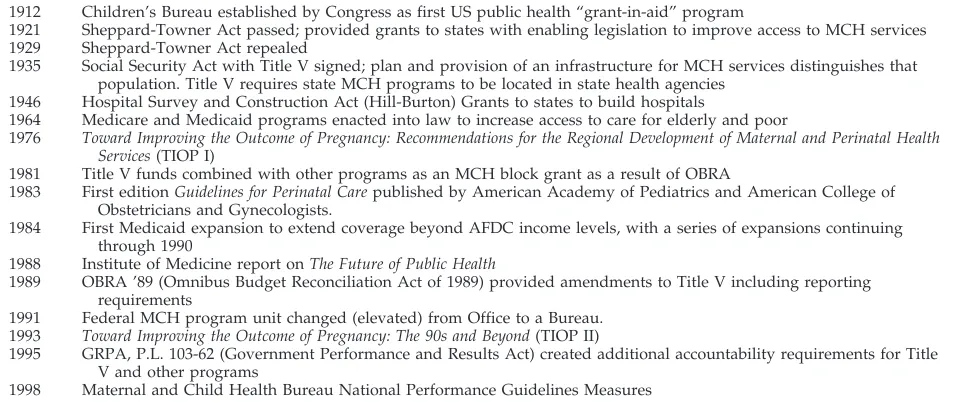
From the Children’s Bureau to today’s federal-state partnership in MCH programs, quality im-provement has been used as a tool aimed at improv-ing health outcomes (Table 1). The history of efforts to reduce mortality and morbidity illustrate the long tradition of quality improvement efforts in perinatal care. Maternal mortality is one such example.
In 1913 the first study conducted by the Children’s Bureau reported on prenatal care and birth outcomes in Johnstown, Pennsylvania, and included a model
From the Department of Pediatrics, Dartmouth-Hitchcock Medical Center, Lebanon, New Hampshire.
Received for publication Sep 9, 1998; accepted Sep 9, 1998.
Address correspondence to George A. Little, MD, Department of Pediatrics, Dartmouth-Hitchcock Medical Center, One Medical Center Dr, Lebanon, NH 03756.
that has been used many times to gather information about gaps in service, access barriers, and impact of interventions.6The bureau sought to improve obstet-ric service quality and reduce maternal mortality caused by complications of childbirth such as septi-cemia and eclampsia. When writing for the Chil-dren’s Bureau in 1916, Grace Miegs reported that maternal mortality had
“. . . two chief causes; first, general ignorance of the dangers connected with childbirth and the need of skilled care and proper hygiene to prevent them; second, such difficulties related to the provision of proper obstetrical care as are characteristic in this country.”7
Maternal mortality has served as a sentinel indica-tor in perinatal care and has been a focus for quality improvement efforts that led to dramatic changes in service delivery and outcomes. In the United States, structured maternal mortality review with support and involvement of public, private and professional organizations was active earlier in this century. More recently, the historic principles of maternal mortality review have been applied and expanded by a Fetal-Infant Mortality Review (FIMR) initiative that has federal, state, local and private involvement and sup-port.8(See FIMR discussion below).
Policy Developments Related to Quality Improvement The modern policy history of MCH began with the federal Maternity and Infant or “Sheppard-Towner” Act, which was passed in 1921 and repealed in 1929. The Act grew from a concern about the health and well-being of women and children and then was repealed after the attack by many, including orga-nized medicine, who said it was a form of govern-ment or socialized medicine. Implegovern-mentation of the Act was the first time the federal government pro-vided money to the states for health services.7 The primary objective of the Sheppard-Towner Act was establishment of demonstration MCH projects to im-prove access and the quality of care through profes-sional training and education. Profesprofes-sional training and education continues to be a quality
improve-ment activity conducted by state health agencies (see below).
Title V of the Social Security Act of 1935 effectively revived some of the strategies used under the Shep-pard-Towner Act.7Early Title V funds were used by the states to improve the quality of inpatient obstet-ric and neonatal services through construction of hospital facilities in underserved areas and financing hospital care, in addition to prenatal and pediatric primary care and services for “crippled’ children.9 The Title V federal-state partnership is now in its sixth decade.
The decades of the 1940s and 1950s could be said to have been preparation for change in American health policy. Every year between 1935 and 1949 saw comprehensive health insurance bills introduced in Congress; all died in committee.10When World War II taxed the capacity of existing base hospital ser-vices, the Emergency Maternity and Infant Care pro-gram provided care for 1.5 million women and in-fants of service men with low pay rates, but when the crisis was over, the program ended.9Federal involve-ment in biomedical research expanded and grants were given to states to build hospitals through the Hill-Burton or Hospital Survey and Construction Act of 1946.
The 1960s brought the enactment of Medicare and Medicaid, as well as a dramatic expansion of the scope and complexity of the federal-state interaction. States’ responsibilities (under broad federal guide-lines) in the Medicaid program included setting in-come and categorical eligibility levels, provider pay-ment levels, and benefits including extent of coverage. Although not primarily directed at MCH and perinatal services, these changes had a profound influence on these and all other aspects of the Amer-ican health establishment. However, new mecha-nisms to provide health coverage to vulnerable citi-zens were not accompanied by efforts to assure quality.
In MCH, a new approach was adopted in 1963 when the federal government was given authority to
TABLE 1. Chronology of the Evolution of MCH and Perinatal Care Policy and Guidelines
1912 Children’s Bureau established by Congress as first US public health “grant-in-aid” program
1921 Sheppard-Towner Act passed; provided grants to states with enabling legislation to improve access to MCH services 1929 Sheppard-Towner Act repealed
1935 Social Security Act with Title V signed; plan and provision of an infrastructure for MCH services distinguishes that population. Title V requires state MCH programs to be located in state health agencies
1946 Hospital Survey and Construction Act (Hill-Burton) Grants to states to build hospitals
1964 Medicare and Medicaid programs enacted into law to increase access to care for elderly and poor
1976 Toward Improving the Outcome of Pregnancy: Recommendations for the Regional Development of Maternal and Perinatal Health Services(TIOP I)
1981 Title V funds combined with other programs as an MCH block grant as a result of OBRA
1983 First editionGuidelines for Perinatal Carepublished by American Academy of Pediatrics and American College of Obstetricians and Gynecologists.
1984 First Medicaid expansion to extend coverage beyond AFDC income levels, with a series of expansions continuing through 1990
1988 Institute of Medicine report onThe Future of Public Health
1989 OBRA ’89 (Omnibus Budget Reconciliation Act of 1989) provided amendments to Title V including reporting requirements
1991 Federal MCH program unit changed (elevated) from Office to a Bureau. 1993 Toward Improving the Outcome of Pregnancy: The 90s and Beyond(TIOP II)
1995 GRPA, P.L. 103-62 (Government Performance and Results Act) created additional accountability requirements for Title V and other programs
make project grants to states. One set of project grants was focused on Maternity and Infant Care (MIC). In the first 5 years, 53 MIC projects were created in cities and rural areas with high need and high infant mortality. This was the first major step into provision of medical care—not just preventive services. In 1967, another amendment to Title V au-thorized “intensive infant care” projects (intended to promote the development of neonatal intensive care). Here again, these efforts were primarily fo-cused on improving access although some states monitored the quality of these efforts. Moreover, those few accountability efforts undertaken by states were focused on the publicly-funded patients rather than on the total population, and state planning and system development efforts were generally weak.11
The 1970s brought greater emphasis on health planning. In Title V, the “Improved Pregnancy Out-come” projects emphasized the need to plan, coordi-nate existing services, develop systems, provide pro-fessional education, and, only if necessary, provide services. Reflecting the tone of the time, the Select Panel for the Promotion of Child Health called for more emphasis on training, revision of reporting requirements, revitalization of state MCH plans, de-velopment of outcome and performance standards, and data systems for accountability.11
As a result of the creation of the MCH Services Block Grant in 1981, federal involvement with the Title V program was dramatically reduced over a decade. Under the Omnibus Budget Reconciliation Act (OBRA), Congress folded together a group of MCH programs and projects and distributed the pro-gram funds to states in the form of a lump-sum grant. This step in federalism reduced the oversight of program quality— by virtually eliminating the federal MCH agency role in standard setting and compliance review activities—and gave states flexi-bility in spending federal-state MCH funds.12Many states in turn passed along their MCH dollars in the form of block grants to counties (eg, California). In terms of quality improvement at both the state and federal levels, this devolution generally resulted in reduced accountability and less effort devoted to developing guidelines, monitoring quality, collecting data, and reporting on performance.9,13 The block grant limited the ability of the federal MCH Bureau to provide effective leadership and guidance to the states. With reduced funding and less accountability, state Title V programs were recognized as being deficient in consistency of structure, roles, and ser-vices.14
From 1986 to 1990, a series of Medicaid expansions for maternity and pediatric coverage were enacted by Congress and the states.15,16These changes led to coverage of millions of children and pregnant women in low-income families who would other-wise have been uninsured. However, these expan-sions in coverage were not accompanied by quality improvement or accountability mechanisms.17States were concerned with the cost of care and consumer advocates were concerned with the numbers of women and children who had access to services; quality was not yet on the Medicaid horizon.
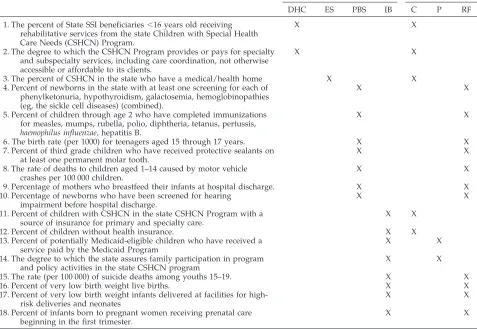
Further changes to the Title V Maternal and Child Health Services Block Grant under the OBRA of 1989 (OBRA 89, P.L. 101–329) placed renewed emphasis on planning, accountability, and systems develop-ment at both the state and federal level. More re-cently, at the beginning of the Clinton Administra-tion, the Government Performance and Results Act (P.L. 103– 62) created additional accountability re-quirements. In response the federal MCH Bureau has issued national and state performance measures to serve as basis for setting targets for performance and reporting on results. Three of the national perfor-mance measures, as well as five outcome measures, are directly related to perinatal care (see Table 2).18
Directions From Professional and Private Organizations Professional and private organizations have acted independently and in concert with federal and state governments to advance perinatal care and systems development. As Table 1 illustrates there have been two versions ofToward Improving the Outcome of Preg-nancy (TIOP),19,20each published by ad hoc perinatal committees under the primary leadership of the American Academy of Pediatrics, the American Col-lege of Obstetricians and Gynecologists,21 and the March of Dimes. The first report (TIOP I)19was pub-lished in 1976 and was directed primarily at the systematic organization of hospital-based perinatal services and is widely recognized as being the writ-ten foundation for the application to perinatal med-icine of the concepts of needs assessment, resource allocation, and levels designation in a regionalized or systematic fashion. The second monograph (TIOP II),20 while urging evolution of the hospital-based system of care, emphasized a broadened scope of clinical responsibility from preconception through pregnancy to infant follow-up and placed great em-phasis on data, evaluation, and accountability. How-ever, neither report fully anticipated the current era of managed care and emphasis on quality improve-ment.
Other monographs—including reports of the Se-lect Panel for the Promotion of Child Health,22the US Public Health Service Panel on the Content of Prena-tal Care,23 the National Commission on Children,24
Bright Futures,25and several panels of the Institute of Medicine addressing issues of low birth weight and prenatal care26,27—provided a wealth of recommen-dations for strategies to improve access to care but rarely dealt with issues of quality. Public health agencies followed this trend in professional thinking and focused on reducing barriers to access, both financial and nonfinancial. As access barriers were reduced, public health agencies began to consider alternative roles in assuring optimal health out-comes.
The 1988 Institute of Medicine report onThe Future of Public Healthidentified three “core” public health functions: policy development, assurance of services, and assessment.28Quality improvement activities are clearly linked to all three functions. Among the rec-ommendations of this panel were:
avail-able information on the health of the community, includ-ing statistics on health status, community health needs, and epidemiologic and other studies of health problems. . .
that the public health duties of states should include. . .
assessment of needs in the state based on data collection; assurance of an adequate statutory base for health activi-ties; . . .establishment of statewide health objectives; . . .
assurance of appropriate organized statewide effort to de-velop and maintain essential. . .health services. . .“28
During the past decade, with the transformation of the health care system into managed care ap-proaches, there has been a resurgence in public, pro-fessional, and government interest in quality mea-surement and accountability.4 Professional efforts stretching from the highly structured approaches promoted by Eddy29 for designing practice policies on evidence to the voluntary performance measures of the Health Plan Employer Data and Information Set (HEDIS)30to performance monitoring to improve community health31 all seek to use information to assess the quality of health services and their rela-tionship to health outcomes. Government interest in
oversight of the new health system also has been renewed.32
This historical background section discussed two primary themes: the decades of evolution in the fed-eral-state partnership, and the emergence in the last three decades of perinatal regional system policy (see Table 1). This historical review, with a focus on qual-ity improvement and its interaction with public health and MCH policy, suggests that the structure of the federal-state partnership has encouraged state variation. In terms of quality improvement efforts, there was wide variation in state MCH programs as far back as the Sheppard-Towner Act (which re-quired states to develop state plans for improving maternal and child health).33 State-by-state differ-ences increased under the program and project struc-ture used during the 1960s and 1970s. More recently, the 1981 enactment of the MCH Block Grant gave states even broader flexibility. Consequently, the ef-fectiveness and scope of perinatal care initiatives varies widely across the 50-state spectrum.
TABLE 2. National Performance Measures from MCH Block Grant Guidance
Performance Measure Pyramid Level of Service Type of Service
DHC ES PBS IB C P RF
1. The percent of State SSI beneficiaries,16 years old receiving rehabilitative services from the state Children with Special Health Care Needs (CSHCN) Program.
X X
2. The degree to which the CSHCN Program provides or pays for specialty and subspecialty services, including care coordination, not otherwise accessible or affordable to its clients.
X X
3. The percent of CSHCN in the state who have a medical/health home X X 4. Percent of newborns in the state with at least one screening for each of
phenylketonuria, hypothyroidism, galactosemia, hemoglobinopathies (eg, the sickle cell diseases) (combined).
X X
5. Percent of children through age 2 who have completed immunizations for measles, mumps, rubella, polio, diphtheria, tetanus, pertussis, haemophilus influenzae,hepatitis B.
X X
6. The birth rate (per 1000) for teenagers aged 15 through 17 years. X X 7. Percent of third grade children who have received protective sealants on
at least one permanent molar tooth.
X X
8. The rate of deaths to children aged 1–14 caused by motor vehicle crashes per 100 000 children.
X X
9. Percentage of mothers who breastfeed their infants at hospital discharge. X X 10. Percentage of newborns who have been screened for hearing
impairment before hospital discharge.
X X
11. Percent of children with CSHCN in the state CSHCN Program with a source of insurance for primary and specialty care.
X X
12. Percent of children without health insurance. X X
13. Percent of potentially Medicaid-eligible children who have received a service paid by the Medicaid Program
X X
14. The degree to which the state assures family participation in program and policy activities in the state CSHCN program
X X
15. The rate (per 100 000) of suicide deaths among youths 15–19. X X
16. Percent of very low birth weight live births. X X
17. Percent of very low birth weight infants delivered at facilities for high-risk deliveries and neonates
X X
18. Percent of infants born to pregnant women receiving prenatal care beginning in the first trimester.
X X
Abbreviations: DHC, direct health care; ES, enabling services; PBS, population-based services; IB, infrastructure building; C, capacity; P, process; RF, risk factor.
“Title V Block Grant Measurement Performance System, presents a schematic approach that begins with the identification of priorities and culminates in improved outcomes for the Title V population. After choosing a set of priority needs from the five year Statewide needs assessment, resource allocation is assigned and programs are designed and implemented to specifically address these priorities. These program activities are described and categorized by the four levels of the pyramid: direct health care, enabling, population-based, and infrastructure building services. Imbedded within the levels of service are performance measures a set of National “core” performance measures and up to ten State “negotiated” performance measures that are categorized into three types; capacity, process, or risk factor.”18Maternal and Child Health Bureau, Guidance and Forms for the Title V
However, based on OBRA ’89 changes, the federal Title V statute creates a mandate for states to im-prove the health of all mothers and children and links the mission of Title V-funded programs to achievement of the year 2000 health objectives for maternal and child health. Comprehensive needs as-sessment and planning also are statutorily required activities.34 In essence, this program has a mandate and accountability for improving maternal and child health outcomes. Moreover, under the latest federal guidance and the Title V Block Grant Measurement Performance System, states participating in the Title V program submit a plan and annual reports that include performance according to national core mea-sures and state selected meamea-sures. States will be held accountable based on: 1) budget allocations and ex-penditures, 2) progress toward performance mea-sures, and 3) progress toward outcome measures.18 States’ responses to these trends are reflected in our survey results below.
SURVEY OF STATE MCH PROGRAMS REGARDING QUALITY IMPROVEMENT IN PERINATAL HEALTH Purpose and Methodology
A 50-state telephone survey of MCH programs was undertaken to clarify their operational and per-ceived role in promoting quality improvement in perinatal care. All 50 states were contacted in May and June of 1998. Steps of the actual survey were:
1. A survey tool designed to be administered in 20 minutes by personal telephone conversation (after distribution by fax) was developed by the authors. There were three sections:
A. Structure of perinatal services—with questions related to the internal health agency structure and the organization of perinatal services in the state (eg, Does the state have a perinatal plan? What roles describe the state perinatal unit or MCH agency?)
B. Quality improvement initiatives—with ques-tions regarding special quality initiatives, perinatal performance measures, public and professional re-porting mechanisms, the roles and responsibilities of the public health agency versus Medicaid, and na-tional data resources used (eg, What role does your state health agency play in reporting about the qual-ity of or outcomes of perinatal care? What mecha-nisms does your state health agency use in reporting to the public about the quality of or outcomes of perinatal care?)
C. Perceptions—with questions about their views on what the role of the state health agency should be in quality improvement and on the value of quality improvement activities (eg, In your view, what should the role of the state health agency be in as-suring quality in perinatal care? In your view, what is the present or future role of managed care organi-zations in the perinatal quality improvement activi-ties of your state health agency?)
The instrument included a total of 23 questions (with primarily formatted for “yes/no” or multiple choice answers). To assess values and perceptions, an agreement scale with a series of attitude
state-ments also was included. Narrative answers were required for several questions.
2. Trial administration of the questionnaire was performed with two former state MCH agency lead-ers who have experience in clinical delivery of peri-natal services. In addition, the instrument was re-viewed by appropriate staff at the federal MCH Bureau and the Association of Maternal and Child Health Programs (which provided up-to-date contact lists for state MCH staff).
3. A personal letter was sent to each state MCH director that explained the purpose of the survey and requested a 20-minute interview with the MCH di-rector or the lead perinatal staff person. A copy of the survey was included with the letter.
4. A research assistant scheduled telephone ap-pointments with individual state MCH directors or their perinatal staff. The level of cooperation was quite good with little resistance. Several calls were required to secure appointments in some states. In four instances, states’ responses were provided by fax only. A total of 47 states participated (Georgia, Kentucky, and New Hampshire did not complete the survey; the District of Columbia was not included in this sample).
5. The survey was administered by one person (K.A.J.). Answers were not electronically recorded, but in-depth interview notes were written. Some states submitted additional supporting materials by fax or by mail.
SELECTED SURVEY RESULTS AND OBSERVATIONS
The following results for 47 states reflect responses on key questions related to state health agencies and quality improvement in perinatal care. A further publication, which will include more information regarding the structure and relationship of perinatal services to quality, will be published elsewhere.
States’ quality improvement and quality assurance efforts vary widely in focus and degree of involve-ment with the public and private sectors. Based on states’ responses, we identified four main categories of activity states can and do undertake in creating quality improvement effort. These include: 1) in-volvement in establishing and implementing a policy framework for the system of care (through law, reg-ulations, and guidance); 2) involvement in the defi-nition of quality, including the selection of indica-tors, benchmarks, and outcome measures; 3) participation in data collection and analysis; and 4) sharing information with providers, payers, and con-sumers to affect change.
Establishing and Implementing a Policy Framework for Quality Improvement
State health agencies are major players in the de-velopment of the policy framework for health servic-es—including public health, insurance, and
Medic-aid agencies.32 These agencies have primary
there must be a policy framework that gives them the authority and funding for such activities.
We found that state health agencies are involved in drafting, issuing and implementing regulations or guidelines that define quality parameters for perina-tal systems, facilities, or providers. Examples of ac-tivities in this area include: definitions for levels of perinatal service or neonatal intensive care units, qualifications for providers’ and facilities’ licensure, and definitions of quality perinatal services to be used in Medicaid-managed care contracts. However, few MCH programs have been given the authority to carry out these activities independently.
Most states that provide MCH dollars for perinatal clinical care (in local health department clinics or hospitals) have established performance criteria or guidelines for publicly-funded services. However, only a small number of states (eg, California, Illinois, Ohio, Oregon, Missouri, Vermont) have adopted and implemented formal policies that include quality in-dicators, performance standards, or outcome mea-sures that are being used for quality improvement of the overall system of perinatal care.
Defining Quality: Perinatal System Performance Measures for Accountability
The latest federal MCH Block Grant guidance re-quires that states use the National “Core” Perfor-mance Measures to set 5-year perforPerfor-mance targets
and make annual reports. In addition, each state must develop 7 to 10 additional performance mea-sures relevant to their MCH activities. The initial reports and list of state measures were scheduled to be submitted to the federal MCH Bureau in the sum-mer of 1998, and most states were finalizing selection of state measures during the time of this survey.
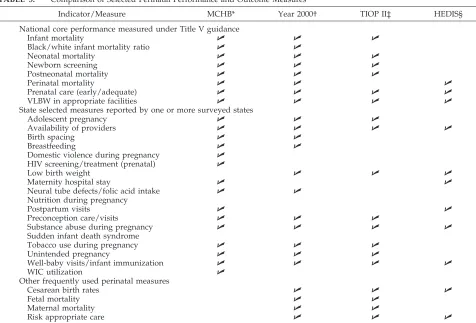
Based on state agency decisions as of June 1, 1998, this study found that a majority of states have in-cluded one or more perinatal measures among their state performance measures. The examples below and Table 3 show the topics mentioned for discre-tionary measures related to perinatal care.
Notably, states have elected to use slightly differ-ent indicators as performance measures on key top-ics. For example, in relation to preventable neural tube birth defects, some states are counting the num-ber (or percentage) of infants born with neural tube defects, while others are measuring the percentage of women who took folic acid supplements before con-ception to reduce the risk of neural tube defects. This reflects state-by-state differences in available data and the lack of uniform national definitions for some problems and conditions.
The examples of perinatal measures mentioned by states (in order of frequency mentioned) include those related to: low birth weight, unintended preg-nancy, prenatal nutrition or weight gain, tobacco use during pregnancy, adolescent pregnancy, domestic
TABLE 3. Comparison of Selected Perinatal Performance and Outcome Measures
Indicator/Measure MCHB* Year 2000† TIOP II‡ HEDIS§
National core performance measured under Title V guidance
Infant mortality U U U
Black/white infant mortality ratio U U
Neonatal mortality U U U
Newborn screening U U U
Postneonatal mortality U U U
Perinatal mortality U U U
Prenatal care (early/adequate) U U U U
VLBW in appropriate facilities U U U U
State selected measures reported by one or more surveyed states
Adolescent pregnancy U U U
Availability of providers U U U U
Birth spacing U U
Breastfeeding U U
Domestic violence during pregnancy U HIV screening/treatment (prenatal) U
Low birth weight U U U
Maternity hospital stay U U
Neural tube defects/folic acid intake U U Nutrition during pregnancy
Postpartum visits U U
Preconception care/visits U U U
Substance abuse during pregnancy U U U U
Sudden infant death syndrome
Tobacco use during pregnancy U U U
Unintended pregnancy U U U
Well-baby visits/infant immunization U U U U
WIC utilization U
Other frequently used perinatal measures
Cesarean birth rates U U U
Fetal mortality U U
Maternal mortality U U
Risk appropriate care U U U
*Maternal and Child Health Services Title V Block Grant Program: Guidance and forms for the Title V Application/Annual Report. †Healthy People 2000.
violence or abuse during pregnancy, use of the Women, Infants and Children Supplemental Nutri-tion Program during pregnancy and infancy, alco-hol/substance abuse during pregnancy, newborn screening, neural tube defects (or folic acid intake), inadequate birth spacing preconception care/visits, human immunodeficiency virus (HIV) screening and treatment during pregnancy,, length of maternity hospital stay, births to unmarried women, postpar-tum visits, breastfeeding, well-baby visits, availabil-ity of obstetric and perinatal providers, and sudden infant death syndrome (see Table 3).
Notably, one-quarter of MCH programs did not report additional measures related to perinatal care in their state performance measure lists. In virtually all cases, this decision was based on the judgment that the national core performance measures are suf-ficient to address perinatal issues. In general, state agency staff also reported that the process for estab-lishing state measures generated competition among MCH priorities.
Table 3 also compares the national core perfor-mance indicators for MCH agencies to various other indicators used in other public and private efforts. TheHealthy People 2000objectives are reflected in the national MCH measures. In terms of perinatal mea-sures, there also is a high degree of consistency with the list of indicators defined in TIOP II. However, there is less concordance with HEDIS,30particularly the HEDIS indicator set defined for Medicaid bene-ficiaries shown here, despite the fact that an increas-ing number of pregnant women of all incomes re-ceive care from managed care organizations that use HEDIS as a basic set of performance measures re-lated to accreditation.
In response to reporting requirements for the na-tional core performance measures, virtually all states are analyzing vital statistics and other data as avail-able. Only five states reported that new data systems were being developed for this purpose. This finding is consistent with the intent of the national measures, that is, to define common core measures of signifi-cance for which state data would be readily avail-able.
Applying Tools for Collection and Analysis Data for Quality Improvement
Vital Statistics
Although all states have vital statistics systems that include perinatal outcome information and most states have additional data systems that provide in-formation in one or more areas related to perinatal care, such information is valuable to a quality im-provement process only if appropriate analysis and reporting is performed.35States vary substantially in the degree to which they use perinatal data for qual-ity improvement purposes. California is one state with a long history of projects to analyze vital statis-tics for quality improvement.33,36
All states reported publication of vital statistics reports and progress toward targets such as the
Healthy People 2000 objectives.37 Less than one-third of states have set independent benchmarks in the
area of perinatal care; however, more can be ex-pected to do so based on our findings about selection of state performance measures (see above).
Three-quarters of states (34 out of 45) do not con-duct analyses that compare outcomes by provider (eg, “report card” or ranking type reports). Most of those who do not prepare comparisons commented that providers would be resistant or antagonistic to such analysis. Two states reported that provider comparisons are “against state regulations.” Among those few states that publish comparisons of provid-ers by outcomes, most have done so only for partic-ular indicators such as cesarean section birth rates (eg, Rhode Island, Utah, Virginia, West Virginia).
Virtually all states publish comparative analyses by county, by town or township, or by region of the state; however, only a few of these publish informa-tion comparing facilities with perinatal services. Of these, virtually all share comparative data with facil-ity identifiers. In other words, most provide an over-all rate and an individual rate to each hospital. This information is provided to hospitals to encourage quality improvement efforts; however, only three states reported active follow-up to assist with or monitor the use of such data reports.
The Pregnancy Risk Assessment and Monitoring System (PRAMS)
PRAMS is a population-based surveillance system of maternal behaviors and experiences that was de-veloped by the Centers for Disease Control and Pre-vention (CDC) to assist states in collecting informa-tion that could supplement birth certificate data and to be used in state level planning. PRAMS activities are important to quality improvement efforts in peri-natal care because they provide information about maternal behaviors during the preconception, prena-tal, and postnatal phases. Health influences and risks such as smoking, alcohol use, breastfeeding, preg-nancy interval, domestic violence, and unintended pregnancy can be studied using PRAMS data. For states seeking to improve the quality and content of preconception and prenatal care, these data are ex-tremely valuable and not generally otherwise avail-able. In 1998, 18 states—representing 35% of all US births—participated in PRAMS with CDC support.38 In our survey, an additional 6 states reported doing the PRAMS surveys with only state dollars.
In a few states (eg, Alabama, Alaska, Maine, Okla-homa, South Carolina, West Virginia), particularly those with most experience in implementing, PRAMS, it is being used as a source of information for quality improvement activities. For example, Oklahoma uses PRAMS data for needs assessment and program planning, monitoring health status, and reporting to the public and professionals. Okla-homa staff reported that PRAMS “is the cornerstone of everything we do and is completely integrated into the way we work.”39Alabama uses PRAMS data to distribute regional perinatal funds.
reported plans or intentions to use PRAMS data for quality improvement or assurance purposes.
Fetal-Infant Mortality Review (FIMR)
FIMR is a process that helps communities and states to examine the medical and social factors that influence infant mortality and to develop interven-tions to modify those factors.8 Thus, the FIMR pro-cess (as defined by most projects) uses a quality improvement approach through which data are col-lected, analyzed and reviewed, and used to make changes in clinical or administrative policies.
During the early 1990s these programs proliferated as a result of increased federal, state, and private funding. The national FIMR program operated be-tween 1991 and 1993 with the purpose of funding demonstration sites to test and refine the FIMR method in different settings.37 The program objec-tives were: 1) to initiate community-based, interdis-ciplinary review of fetal and infant death in an on-going process that includes information from medical and social service records and maternal in-terview; 2) to describe the factors that contribute to mortality; and 3) to design and participate in imple-menting community-based interventions based on the review findings. These demonstration projects were able to empower communities to create local solutions, increase communication and cooperation, improve the quality of service provided by individ-ual professionals, facilities, and agencies, and facili-tate the grieving process for the family. In addition the FIMR process was used by each of the federally funded Healthy Start Infant Mortality Prevention projects, by the Florida Healthy Start program, and a variety of other local efforts. Currently, the MCH Bureau is supporting additional FIMR activity.
A small number (8 of 47) of surveyed states re-ported using FIMR as a tool for quality improvement in perinatal care. Generally, this is done by a state level advisory or review board that compiles data from local FIMR projects to make recommendations for changes in policy or practice. In some cases, the quality improvement process goes on at the local level only.
Other states (8 of 47) reported use of the infant component of a child death review process for sim-ilar purposes. However, in half of these states, peri-natal staff said that child death review projects had a limited and sometimes insufficient amount of de-tailed data on perinatal care.
Sharing Information With Providers, Payers, and Consumers to Affect Change
Public Reporting as a Component of Quality Improvement Implicit in the concept of quality improvement is use of data to inform the providers and consumers in the system. States reported few mechanisms for dis-seminating information on perinatal quality or out-comes. Although virtually all states publish standard vital statistics reports that include information about perinatal outcomes and prepare news releases to encourage media coverage of key vital statistics data, less than half reported publication of documents
spe-cifically tailored to nonprofessional audiences. Among the documents intended for public audiences half are special reports on topics of concern, such as adolescent pregnancy (Mississippi), early discharge (Massachusetts), HIV (Nebraska), or cesarean section births (Utah). Several produce managed care report cards (eg, Maryland, New Jersey, Oregon), and still others are using “Kids Count” reports (eg, Rhode Island, West Virginia).
Nine states (Arkansas, California, Indiana, Massa-chusetts, New Mexico, New York, South Dakota, Tennessee, Utah) reported using the Internet to dis-tribute information to the public and two others have concepts under development. This new medium is being used to publish vital statistics and special re-ports on outcomes and trends in childbearing, as well as to post new guidelines and invite public comment.
All states have MCH hotlines for referral to pro-viders (as required under the Title V federal statute) and public education information regarding the value of services such as prenatal. However, no state reported that information regarding the quality of services is available through such a hotline.
Sharing Quality Information With Providers
States use several mechanisms to share informa-tion with providers. The standard mechanisms are news releases, published reports, mailings, and in-formation lines. Special mailings to providers are being used in about one-third of states as a way to circulate information for quality improvement ef-forts.39 The information most often shared through provider mailings is new practice standards and guidelines. States reported distribution of guidelines related to group B streptococcus, HIV counseling, screening and testing, and infant sleeping position (national “Back-to-Sleep” campaign). Such efforts are aimed at quality improvement.
Information regarding outcomes is less frequently shared in mailings to professionals. However, sev-eral states mailed to providers (and/or provider or-ganizations) the results of special studies of the rates of cesarean section births, outcomes of adolescent pregnancy, or utilization of specialty care for high-risk newborns. Other states (California, Idaho, Illi-nois, Indiana, Maine, New York, Ohio, Vermont) reported sharing—through mail or site visits—infor-mation on hospital performance related to perinatal quality and outcomes to facilities, including overall rates (without identifying information) for compara-tive purposes, as well as rates for the individual facility. Such reports may include rates on indicators such as neonatal mortality, cesarean section births, and other complications of labor and delivery.
Use of Databases and National Resources
who work to increase the effectiveness and efficiency of neonatal intensive care by integrating clinical re-search into daily practice)40 with most of these only aware that some hospitals in their state participate. Although more than half of states were familiar with the National Perinatal Information Center (a private organization focused on improving perinatal ser-vices, including a data network), few use its infor-mation resources, and several respondents said that such information could increasingly be found through the Internet.
In response to a question regarding use of the Co-chrane Collaboration and the database or written re-sources in the report Effective Care in Pregnancy and Childbearing41(a compilation of data from randomized, clinical trials and other studies on the effects of care, with information available in textbook and in electronic format). Despite promotion efforts by the collaborators, as well as foundations and national organizations con-cerned with perinatal health,42no states reported using this information in their quality improvement efforts, and only three states (Minnesota, New Jersey, Massa-chusetts) were familiar with the resource.
When asked their views on the present or future role of these types of information networks, many said that they felt such resources were valuable for comparative analyses and that they would like to know more about how to apply the data to their work. Others mentioned use of various resources such as reports from the March of Dimes Birth De-fects Foundation, Children’s Defense Fund, or the federal MCH Bureau.
Perceptions on Quality Improvement in Perinatal Care State MCH program staff were asked to give their views on what the role of the state health agency should be and what the agency should be doing to promote quality improvement in perinatal care. With 40 states responding, the most common response was “leadership” (16) followed by setting standards (15) and monitoring (12). Between 5 and 10 states used the following terms: assurance, foster collabo-ration, consultation with other agencies, data sys-tems accountability, provider education, regulation, development of systems, and evaluation of state funded services. A few states (less than 5) said their role should be to focus on evidence-based practice/ best practices, population-based outcomes, perfor-mance measurement, resource development, public awareness, oversight, and technical assistance on quality improvement.
Those interviewed also were asked about their attitudes regarding the value of and relative role of their state health agency regarding perinatal quality improvement. The results (among 38 states respond-ing) were as follows:
• All affirmed (97% strongly agreed with) the state-ment that “Quality improvestate-ment is a valuable ac-tivity.”
• All disagreed (68% strongly disagreeing) with the statement “Quality improvement is not the role of public health agencies.”
• A large majority disagreed (74%) with the state-ment “For quality improvestate-ment, providers should not evaluate or assess their own services.” Only 8 respondents felt this was true. Many commented that providers have a role to play in combination with state agencies.
• In response to the statement “In terms of perinatal quality improvement, my state is better than most other states,” most were undecided (60%). This, they said, reflected both a lack of comparative knowledge about other states and/or their unwill-ingness to rank their own state.
• Most agreed (65%, with 10 strongly agreeing) that “My state health department gives high priority to quality improvement activities.” Among the 7 negative and 6 undecided respondents, some com-mented that their state’s resource allocations did not reflect such a priority.
ILLUSTRATIVE STATE CASE STUDIES These were prepared to add depth and realism to our survey results.43Five states were selected to pro-vide more detailed information about individual state approaches to state structure of perinatal care, relationship with Medicaid, perinatal provisions un-der Medicaid managed care contracts, use of data, and quality improvement efforts. Collectively, these illustrations reinforce the degree of variation among states. Data and information was gathered from sev-eral national data sets, including Medicaid-managed care contract data published by the George Washing-ton University44and state-by-state summaries on the oversight of integrated health systems published by the Milbank Memorial Fund (HCFA unpublished data from the Internet), as well as the survey dis-cussed above and personal knowledge and experi-ence of the authors (K. A. Johnson, G. A. Little. Focus groups with state MCH directors. Unpublished data, March of Dimes Birth Defects Foundation, 1995).
Arizona
The Arizona Perinatal Trust (APT) is a unique 501 (c)(3) organization founded in 1980 on completion of a Robert Wood Johnson Foundation regional perina-tal program demonstration project that began in 1975. (Federal and state governmental support was instrumental in initiation of a newborn intensive care and transport program in 1967.) The Arizona Perina-tal Regional System (APRS) is the performing corpo-ration of the APT.
Structure of the Arizona Perinatal Care System
qualifications for perinatal centers that wish to de-velop advanced clinical practice modalities. There also are transport, marketing, and site visit review task groups and an education committee.
Medicaid and Managed Care
Managed care was integrated into the state Med-icaid program in 1982 when the Arizona Health Care Cost Containment System (AHCCCS), the state agency responsible for Medicaid, was formed. This is the oldest statewide capitated program in the coun-try. The state has one of the highest health mainte-nance organization (HMO) penetrations involving about 40% of the population. Approximately 20% of the population remains uninsured. AHCCCS rules require that medical services be provided in accor-dance with its medical policy manual. An indepen-dent but cooperative relationship between AHCCCS and the APT includes recognition by AHCCCS of hospitals that complete voluntary certification. For AHCCCS maternity patients, the state sets standards on continuity of enrollment, provider credentials, and standards of care. For example, the state requires that “The Contractor shall insure that a maternity care provider is designated for each enrolled preg-nant woman for the duration of her pregnancy and postpartum care.”44
Use of Data
The Arizona Department of Health Services (ADHS), Bureau of Vital Records, and APT have collected and analyzed data for years. The ADHS provides a consultant to analyze birth certificate data for review of certified centers and regional system analysis. APT and ADHS are in an active process of integrating data efforts including matched maternal mortality and infant birth/death certificates and an-nual data required from certified perinatal care cen-ters. In addition the two parties are working collabo-ratively through the perinatal system on data collection and analysis of anesthesia and neonatal follow-up with study of transport system utilization data and certification of perinatal transport carriers planned for the future. Linked ADHS/APT perinatal data systems with electronic submission of APT data for certified perinatal centers is planned.
Quality Improvement Initiatives
The APT board of trustees and the ARPS board of directors continue a long-term, primary interest in perinatal outcomes. An example of their commit-ment is inclusion of a quality assurance activity com-ponent in the voluntary hospital certification pro-gram. Ongoing certification is linked to site visits and data collection. APT supports perinatal, anesthe-sia, and transport (maternal and neonatal) data col-lection and analysis. The AHCCCS is the sole agency responsible for oversight and regulation of Medicaid and works with the APT for development, manage-ment, and oversight of perinatal program efforts. Oversight of the private market by the Department of Insurance includes review of quality procedures during licensure for commercial HMOs but not on-going quality oversight.
Illinois
State governmental involvement in organization of perinatal services began in the mid-1970s and is pres-ently centered in the Division of Community Health of the Office of Family Health of the Illinois Depart-ment of Human Services.
Structure of the Illinois Perinatal Care System
A perinatal system that includes 10 perinatal net-works and a perinatal advisory committee receives state support. Hospitals in the state are categorized by the Department of Health and a 3-level system is in place that includes level II intermediate and ex-tended subcategories. Designated perinatal centers have affiliated hospitals that have been site visited and have perinatal advisory committee approval. Perinatal networks associated with perinatal centers may overlap geographically.
In 1998, the system leaders prepared final recom-mendations for updating longstanding perinatal rules and regulations that are being placed into the public rule making process. The state perinatal office (which includes full-time administrative staff) has regulatory responsibility, collaborates with other regulatory agencies and programs including Medic-aid, issues guidelines, and collects and analyzes peri-natal statistics. Subcontracts and grants are made to regional perinatal centers for professional outreach education and technical assistance.
Medicaid and Managed Care
There are more than 40 HMOs in the state with a Medicaid HMO initiative under the Department of Public Aid (DPA) that includes voluntary managed care for residents of Cook County. The state has been actively expanding its Medicaid HMO enrollment. The Department of Insurance has responsibility for per capita and prepaid plans and enforces minimum standards for contracts. The DPA oversees quality for Medicaid through peer review and has an 800 number for member reporting. Medicaid contracts address case management for prenatal care. For ex-ample, the state requires that contractors use the professional standards of the American College of Obstetricians and Gynecologists and that the plans collaborate with “the Family Case Management Pro-gram for the purpose of providing to Medicaid-enrolled pregnant women and infants aged 0 to 12 months adequate access to primary care and preven-tive services through client tracking and intensive case management services” through activities such as information-sharing, establishing protocols for cli-ent managemcli-ent, and conducting periodic meetings with case management providers.44
The legislature has been active in HMO and Med-icaid issues. Overall Illinois has made considerable effort to coordinate oversight among various health agencies.
Use of Data
character-istics of the childbearing population, behavioral and medical risks, network characteristics, and infant outcomes. In a recent Perinatal Health Status Report (PHSR), 11 tables and reports generated in earlier reports and defined as “essential” by the Illinois Consortium of Perinatal Network Administrators were highlighted. PHSR reports with standard tables based on these areas are planned for each year. The need for timeliness will be addressed through use of “provisional data” with intent to complete neonatal matched birth-death files by April of the subsequent year. Linkages include an interagency data manage-ment agreemanage-ment that includes monitoring to assure confidentiality.
Quality Improvement Initiatives
Illinois has embarked on a statewide systems ap-proach to perinatal care with the objective to assure access and improve quality of care in a managed care environment. The Quality Improvement in Perinatal Care Programs (QUIPP) initiative includes four com-ponents: outcome surveillance, introduction of con-tinuous quality improvement, use of regulatory and other outcome measures for surveillance in facility compliance, and use of rules/regulations to assure an effective interface and synergistic relationship be-tween regionalized systems and managed care enti-ties.
The Illinois perinatal system office reports that it uses vital statistics and the services of the National Center for Health Statistics. Some hospitals are mem-bers of the Vermont-Oxford Network and there is interest in statewide participation. Reporting to pro-fessionals has included regional perinatal council re-ports with comparisons. Public reporting has in-cluded a consumer guide on cesarean section and a report on the health status of select populations.
Massachusetts
This state has a long and well-defined involvement in perinatal care system designation, implementa-tion, and quality improvement. A perinatal office with full-time staff is located in the Division of Ma-ternal, Child and Family Services in the Bureau of Family and Community Health.
Structure of the Massachusetts Perinatal Care System The Massachusetts perinatal system is formally regionalized through regulation and hospital licens-ing. Hospitals are categorized into three levels through formal criteria that are said to be among the strongest in the country. These regulations, as re-vised in 1991, do not allow long-term ventilation in level II hospitals. There is a perinatal advisory com-mittee.
Medicaid and Managed Care
Managed care in Massachusetts is considered to be one of the most developed markets in the country, with the Division of Insurance as the sole licensing agency. The Division of Medical Assistance manages the Medicaid program. The Department of Public Health has formal oversight duties for managed care and integrated delivery systems including certificate
of need and approval of transfer of hospital owner-ship.
The Medicaid program is active in quality assur-ance, including contract provisions with managed care organizations that establish practice standards and provide criteria for prenatal care. For example, the state defines “proactive prenatal care” in the contract with responsibilities including educational outreach, risk assessment, development of a care plan, delivery of health care (prevention) counseling, case management, and coordination of support ser-vices.44
Use of Data
In addition to active analysis of vital statistics, Massachusetts is involved with a National Coopera-tive Agreement on Data with the CDC and is at-tempting to develop a system to use birth certificate for a HEDIS pilot study. The state office is aware of the Vermont-Oxford Network, the National Perinatal Information Center, and the Cochrane Collaborative.
Quality Improvement Initiatives
State MCH staff speak of a strong, proactive role in quality improvement and report a broad spectrum of ongoing efforts including analysis of vital statistics and other data by town and population of special interest. A Massachusetts Infant Mortality Task Force was convened by then Governor Dukakis in 1984 when infant mortality was 10.1/1000 live births and the state ranked 24th; 13 years later after efforts to implement recommendations that included im-proved access and availability of health care, finan-cial coverage, care coordination, and community-based initiatives, the rate was 5.2 and the state ranked first. Public reporting includes major news releases and a World Wide Web site. The perinatal office believes that managed care plans can and should maintain both independent and cooperative role in quality improvement.
New York
This state is known for using regulatory ap-proaches in health care policy and for maintaining strong governmental involvement in shaping and reviewing perinatal services. Recently an ad hoc Work Group on Perinatal Regionalization released a report on the status of perinatal regionalization in an increasingly managed care environment.
Structure of the New York Perinatal Care System
The state office responsible for perinatal care has a full-time staff and is located in the Bureau of Wom-en’s Health. After the recent report of the regional-ization work group an effort is said to be underway to revise regulations to evolve a system that will be locally responsive, broaden the focus of perinatal quality assurance beyond focus on hospitals and neonatal intensive care, and add insurers, local health departments, and other interests in a frame-work of seven newly defined regional perinatal fo-rums. A major planned objective is linkage of the quality assurance role of the new RPC with a state-wide perinatal data system.
Medicaid and Managed Care
Counties have been able to enroll Medicaid pa-tients in HMOs since 1991, and the state is phasing in mandatory HMO participation. Rapid growth in HMO enrollment overall has occurred with more than 25% of the total population enrolled by 1996, and 15% of the population remaining uninsured. The state’s Medicaid managed care program has adopted some aspects of the enhanced prenatal care model that was set up in the 1980s. This includes a defined role for a maternal and infant care coordinator and expanded benefits (eg, smoking cessation, nutrition counseling from a registered dietitian, homemaker services for those under bed rest orders).
There has been legislative support of oversight and intervention in the managed care sector. The Department of Health oversees quality of care hav-ing assumed responsibility for the Medicaid pro-gram from the Department of Social Services in a reorganization in 1996 and shares responsibility for licensing and oversight with the Department of In-surance. Solvency and quality oversight of the pri-vate market have received attention.
Use of Data
Perinatal data use in New York includes both vital statistics and hospital discharge data. By 1987, the state had a newborn diagnosis-related grouping sys-tem of its own and had provided case mix indices for hospitals. Grants have been given in the past to RPCs for demonstration perinatal data sets. The Statewide Perinatal Data System is a major part of the new perinatal system currently being implemented. Efforts are underway to electronically integrate the birth certificate process with the RPC oversight activity.
Quality Improvement Initiatives
New York is considered one of the most active states in terms of state government involvement in quality monitoring. The state health agency is in-volved in establishing guidelines for practice as well as monitoring quality of care, performance of pro-viders and facilities, patient outcome, and access. Quality concerns were a prime motivating factor in the present effort to restructure the perinatal system. Medicaid and perinatal data files are linked. Infant mortality review efforts (using some national FIMR tools) are in place in approximately 12 communities. Reporting to professionals includes birth certificate
data through the perinatal system and special mail-ings.
Virginia
This state, like many states, has a history of state government effort in perinatal health policy and care interacting with the academic and private provider sectors. There has been considerable focus on neona-tal care and data.
Structure of the Virginia Perinatal Care System
The Virginia Department of Health, Division of Womens’ and Infants’ Health, has responsibility for perinatal services and has a full-time staff committed to this work. Rules and regulations for the Licensure of Hospitals in Virginia (as adopted in 1982 and modified several times subsequently) includes a sec-tion of obstetric and newborn services. Regulasec-tions for nursery designation were mandated by the gen-eral assembly in 1992 and after numerous revisions and public hearings, were promulgated in 1995. The defined levels of nurseries are: general, intermediate, specialty, and subspecialty. Subspecialty nurseries, in general, have the capabilities noted in the appen-dix of TIOP II,20 with specialty nurseries able to ventilate babies for extended periods among other services. There are seven Regional Perinatal Coordi-nating Councils (RPCCs).
Medicaid and Managed Care
HMO penetration in Virginia is moderate and the state government appears to be progressing deliber-ately. There are three managed care programs under Medicaid, which is run by the Virginia Department of Medical Assistance Services (DMAS). The Medic-aid program considers physician standards to be those within the scope of a professional license and contracts for enhanced prenatal care.
Use of Data
Vital statistics data are utilized extensively. Data compiled from the neonatal designation process along with its accompanying reports are used in quality efforts such as identifying whether babies are born in the “correct hospital.”
Quality Improvement Initiatives
Systematic quality assurance and improvement are identified by the state health service infrastruc-ture as important. The 1995 regulation on nursery levels designation included a statement saying that: “quality assurance of this highly technical resource-intensive service that has been developed rapidly in recent years. . . ” is not available. A report of neonatal outcome data for 1996 including definitions of new-born service level has been released that presents outcomes by hospitals in five Virginia Health Service Areas.
DMAS has a quality review process for its man-aged care programs. Apparently, private sector pro-viders are responsive at this time mainly to profes-sional standards and marketplace.
community and consumer oriented than past efforts. The RPCC structure has been involved in quality efforts in the past (including a statewide FIMR project) and consideration is being given to including a revised RPCC presence in the new perinatal initia-tive.
DISCUSSION
For purposes of this article “quality improvement” is defined as a process using data and information to assess and improve the effectiveness of care, and in turn, to improve outcomes. Quality improvement is, therefore, by definition a process to make things better, not just monitoring. This process requires knowledge of what quality is and what an improve-ment would be. Quality may be defined as optimal outcomes (however those outcomes are bench-marked).
Given the definition above, what should states be doing to make things better? We identified four main arenas through which state MCH programs cur-rently take action. We believe, based on state agency staff perceptions, that these four areas are critical to states’ efforts. First, as part of their assurance func-tion, they should be actively involved in the devel-opment of a policy framework that assures quality. Second, state agencies should participate in efforts to define quality, including selection of indicators, benchmarks, and outcome measures. Third, assess-ment and surveillance are mandated roles that are best fulfilled through collection and analysis of data regarding quality and outcomes in perinatal care. Fourth, state health agency staff should interact with and inform the various constituencies in health care; they should play an active role in informing provid-ers, health plans, systems of care, payprovid-ers, and con-sumers.
The dilemma, as shown by the results of our sur-vey, is that all states are not taking action in each of these four arenas.
1. The majority of states wish to have a leadership role in quality improvement; however, they often report that they do not have the authority to write regulations, issue guidance, or otherwise take the lead in policy development. Policy development is more likely to take the form of consultation or col-laboration with a Medicaid agency.
2. States are actively involved in development of performance and outcome measures to define qual-ity (particularly in light of the new federal Title V guidelines). However, these measures may not be used by private sector providers or those who man-age systems of care.
3. Most states are using data and information to monitor access, but few are using it for quality im-provement. The focus of assurance activities is typi-cally on access, without regard to quality.
4. Interactive efforts to monitor quality were fre-quently limited only to the public clinics or to pub-licly funded patients (sometimes including Medic-aid). Most MCH programs and their perinatal staff have relationships with providers and facilities, but few are actively informing providers about the
qual-ity and outcomes of perinatal care. Still fewer pro-vide quality information to consumers.
5. The debate over public disclosure and medical records confidentiality, combined with the tradition of having no encounter level data reported for pri-vately-funded patients in private-office practices, re-sults in a dearth of efforts to report provider- or facility level quality information. This is true at a time when Congress and many state legislatures are debating legislation regarding public disclosure of managed care information and quality.
Obviously, state MCH programs may fail to en-gage in quality improvement because of limited re-sources. However, some specific shortfalls identified in the survey might be addressed without expanded authority and with no major increase in resources. For example, we note the following. Benchmarks for quality are often set in isolation from other agencies and providers. Data are collected that could be, but are not, applied to perinatal quality improvement efforts (eg, vital statistics not analyzed by region or facility, PRAMS data not communicated outside the agency). Despite national data resources and organi-zations, staff did not feel they had a sufficient basis for comparing their state’s efforts to others—perhaps indicating a lack of interstate communication about these issues. Providers are not given feedback on their performance (mainly because of reported con-cerns on the part of the state agency that such action would disrupt provider-state relationships). Com-munication and information-sharing regarding qual-ity, especially with the public, is lacking, perhaps because of a concern about the risks.
The case studies illustrate the high degree of vari-ation— even among proactive states—in states’ ap-proaches to perinatal care. Some use a more regula-tory approach to systems and policy development; others seek voluntary cooperation. Linkages to Med-icaid managed care are prominent in some states (including quality-related state contract language), while some MCH agencies are not yet acting in this arena. One may apply a comprehensive strategy, while another focuses on areas in sequence. Based on tradition, one state may exercise strong central au-thority and another may empower regional/local entities.
The five states also show that there are some en-ergetic quality improvement initiatives underway. Of particular note is the Illinois QUIPP initiative which, although not fully implemented, includes all four categories of activity described above. This ef-fort illustrates the type of proactive quality improve-ment initiatives that have been undertaken in a few other states (eg, Nebraska, Oregon, Vermont, Wash-ington [R. A. Ehrenkranz, K. A. Johnson, G. A. Little. 50-state survey of state MCH programs on the struc-ture of perinatal services. Unpublished data, March of Dimes Birth Defects Foundation, 1994]). However, even these efforts vary considerably, with states es-tablishing different benchmarks and processes.