A thesis submitted in the fulfillment of the requirements of the degree of MASTER OF COMMERCE Department of Management RHODES UNIVERSITY By STACEY MULLER G08M0116
Research Supervisors: Principal supervisor: Johan Hefer Co- supervisor - Trevor Amos
Research Thesis 27th February 2015
ABSTRACT
Market efficiency, based on people acting rationally, has been the dominating finance theory for most of the 20th and 21st Century’s. This classical finance theory is based on assumptions that people are rational, they absorb all available information and maximise utility. This view is outdated; it has been shown that people are in fact irrational and that this could be the cause of anomalies in the market. Behavioural finance takes into account people, and their natural biases. Behavioural finance has integrated classical financial theories and psychological theories to illustrate the way in which irrational people can impact market efficiency.
This research looks at the way collective investment scheme manager decision-making can impact market efficiency. Specifically the behavioural biases: overconfidence, over optimism, loss aversion and frame dependence and whether or not collective investment scheme performance is affected by these. This research was carried out using a questionnaire distributed directly to CIS managers and risk-adjusted returns were used in order to allow for comparative results.
The results from the questionnaire show evidence that actively managing South African CIS managers do indeed suffer from overconfidence and loss aversion and they do not appear to suffer from frame dependence or over optimism in this research context. There was also evidence showing that managers who suffer from these biases also demonstrated lower investment returns.
“The investor’s chief problem, and even his worst enemy, is likely to be himself.”
ACKNOWLEDGEMENTS
Firstly I would like to thank my supervisor, Mr Johan Hefer for being an accommodating and guiding supervisor. I would also like to thank Trevor Amos and Tinashe Ndoro for their support and contributions.
I would also like to thank all the respondents for agreeing to and participating in my research, without your help this research would not have been possible.
Finally I would like to thank Mike, Meryl, Rick and Tom. Without your support, advice and encouragement I would not have been able to accomplish this thesis.
TABLE OF CONTENTS ABSTRACT ... ii ACKNOWLEDGEMENTS ... iii TABLE OF CONTENTS ... iv LIST OF FIGURES ... ix LIST OF TABLES ... x CHAPTER 1 ... 1 INTRODUCTION ... 1
1.1 INTRODUCTION AND RESEARCH PROBLEM ... 1
1.2 BACKGROUND ... 1
1.3 CONTEXT OF RESEARCH ... 2
1.3.1 Behavioural Finance ... 2
1.3.2 Corporate Behavioural Finance ... 3
1.3.3 Behavioural Biases... 3
1.3.4 Collective Investment Schemes ... 5
1.4 RESEARCH AIM ... 6 1.5 RESEARCH OBJECTIVES ... 7 1.6 DELIMITATION ... 7 1.7 DEFINITIONS ... 7 1.8 OUTLINE ... 8 CHAPTER 2 ... 9 LITERATURE REVIEW ... 9 2.1 INTRODUCTION ... 9
2.2 CLASSICAL FINANCE THEORY ... 10
2.2.2 Support and criticism ... 11
2.2.3 Classical Corporate Finance Theory ... 12
2.3 BEHAVIOURAL FINANCE ... 13
2.3.1 Introduction ... 13
2.3.2 Behavioural Finance Background and Progression ... 14
2.3.3 Proponents of Behavioural Finance Theories ... 18
2.3.4 Behavioural Finance Studies... 20
2.3.5 Criticism of Behavioural Finance ... 24
2.3.6 The Future of Behavioural Finance ... 24
2.3.7 Behavioural Corporate Finance ... 25
2.4 BEHAVIOURAL BIASES ... 26
2.4.1 Errors of Judgement - Cognitive limitations ... 27
2.4.2 Errors of Preference - Emotional forces ... 27
2.4.3 Biases relevant in this study ... 28
2.5 COLLECTIVE INVESTMENT SCHEMES ... 35
2.5.1 Collective Investment Schemes background ... 35
2.5.2 Collective Investment Scheme Managers ... 36
2.5.3 Collective Investment Scheme Investment Returns ... 38
2.5.4 Previous CIS Studies and Findings ... 41
2.7 RELEVANCE OF THIS STUDY ... 46
2.8 SUMMARY ... 47
CHAPTER 3 ... 48
RESEARCH METHODOLOGY... 48
3.1 INTRODUCTION ... 48
3.2 THE IMPORTANCE OF THIS RESEARCH ... 48
3.4 RESEARCH PARADIGM ... 51
3.4.1 Positivistic Paradigm ... 52
3.5 RESEARCH POPULATION AND SAMPLE ... 53
3.5.1 Population ... 54
3.6 DATA COLLECTION ... 56
3.6.1 Primary data ... 57
3.7 DATA CAPTURING... 60
3.8 STATISTICAL ANALYSIS ... 60
3.9 RELIABILITY and VALIDITY ... 65
3.9.1 Reliability ... 65
3.9.2 Validity ... 66
3.10 ETHICAL CONSIDERATIONS ... 68
3.11 SUMMARY ... 68
CHAPTER 4 ... 70
RESULTS and FINDINGS ... 70
4.1 INTRODUCTION ... 70
4.2 RESPONSE RATE ... 70
4.3 DEMOGRAPHIC AND WORK ENVIRONMENT INFORMATION ... 71
4.4 BEHAVIOURAL BIAS RESULTS ... 76
4.5 DESCRIPTIVE STATISTICS OF FUND CATEGORIES AND BEHAVIOURAL BIASES ... 79
4.6 INVESTMENT RETURNS OF COLLECTIVE INVESTMENT SCHEMES ... 82
4.7 THE IMPACT OF BEHAVIOURAL BIASES ON THE PERFORMANCE OF FUNDS ... 84
4.8 RELIABILITY OF THE MEASURING INSTRUMENTS ... 88
4.8.1 Split-half reliability ... 88
4.9.1 Face Validity ... 89
4.9.2 External Validity ... 89
4.10 SUMMARY ... 90
CHAPTER 5 ... 91
DISCUSSION OF RESULTS ... 91
5.1 BRIEF SYNOPSIS OF THE RESEARCH ... 91
5.2 DISCUSSION OF THE RESULTS ... 92
5.2.1 Objective: Behavioural biases of South African CIS managers ... 92
5.2.2 Objective: Performance of the South African collective investment scheme’s ... 95
5.2.3 Objective: The relationship between behavioural biases and the performance of CIS’s ... 97
5.3 CONCLUSION ... 99
CHAPTER 6 ... 100
CONCLUSIONS AND RECOMMENDATIONS ... 100
6.1 INTRODUCTION ... 100
6.2 FINDINGS ... 100
6.3 RECOMMENDATIONS ... 102
6.3.1 Recommendations for asset managers ... 102
6.3.2 Recommendations for future research ... 103
6.4 LIMITATIONS ... 104
LIST OF REFERENCES ... 106
APPENDIX A – MANNED EMAIL LETTER ... 118
APPENDIX B – COVERING LETTER... 119
APPENDIX C – QUESTIONNAIRE ... 120
APPENDIX D – DESCRIPTIVE STATISITCS OF DEMOGRAPHIC, WORK ENVIRONMENT AND SELF-PERCEPTION RESULTS. ... 129
APPENDIX F – BIASES PER FUND CATEGORY ... 138 APPENDIX G – SPLIT-HALF RELIABILITY TEST ... 146
LIST OF FIGURES PAGE
Figure 2.1: A hypothetical value function 19
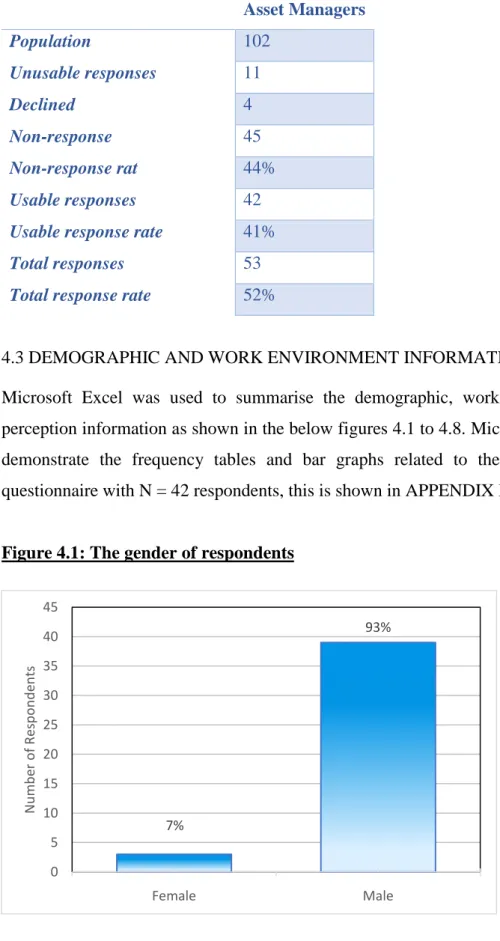
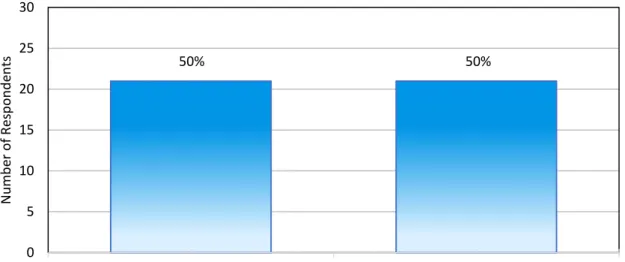
Figure 4.1: The number of male and female respondents 71
Figure 4.2: The age of respondents 72
Figure 4.3: The highest level of education achieved by respondents 72
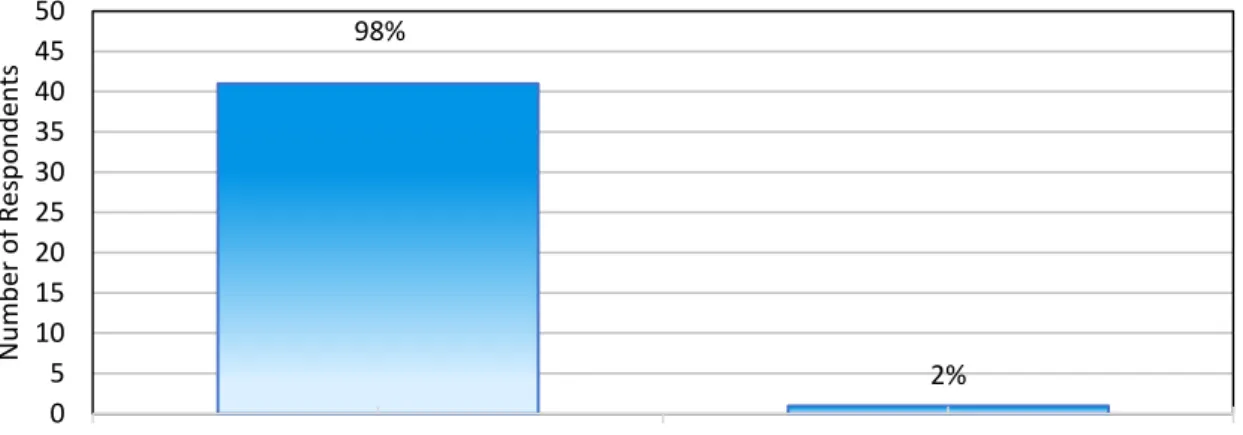
Figure 4.4: The nationality of respondents 73
Figure 4.5: The number of funds respondents are responsible for 74
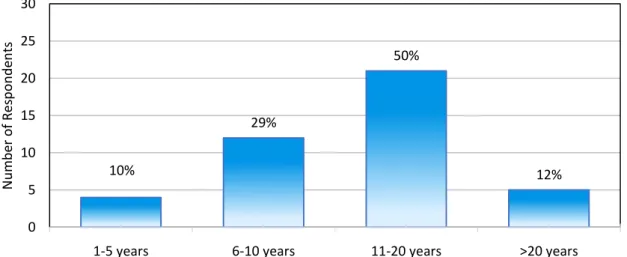
Figure 4.6: The number of years of experience of respondents as fund managers 74
Figure 4.7: The respondents’ self-perception of risk 75
Figure 4.8: The respondents’ self-perception of confidence 75
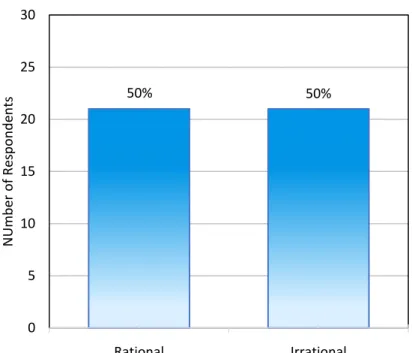
Figure 4.9: Rationality baseline test 76
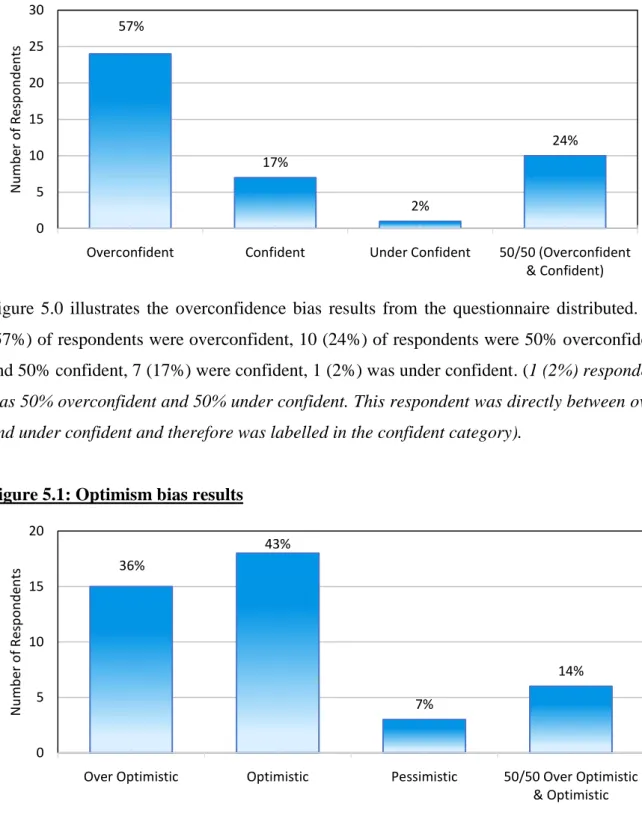
Figure 5.0: Overconfidence bias results 77
Figure 5.1: Optimism bias results 77
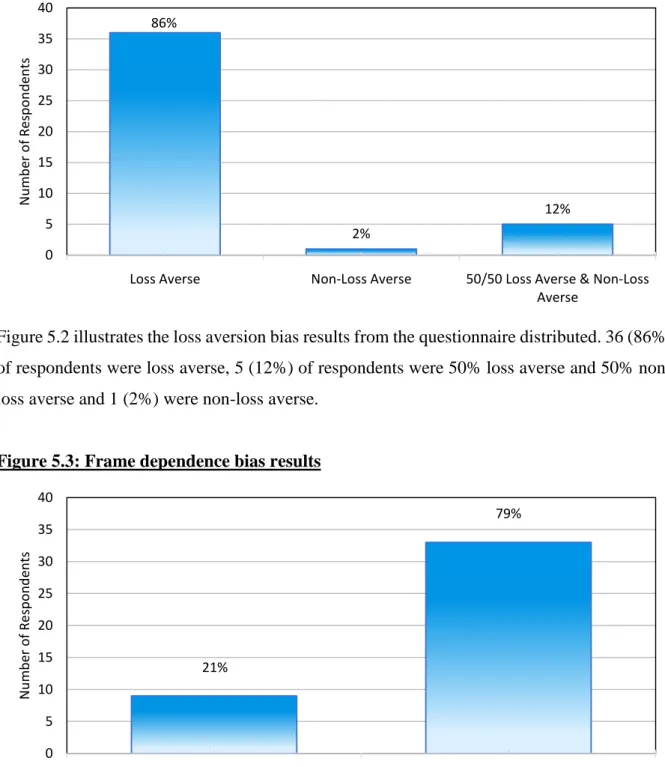
Figure 5.2: Loss aversion bias results 78
Figure 5.3: Frame dependence bias results 78
Figure 5.4: Overconfidence results per fund category 79
Figure 5.5: Optimism results per fund category 80
Figure 5.6: Loss aversion results per fund category 81
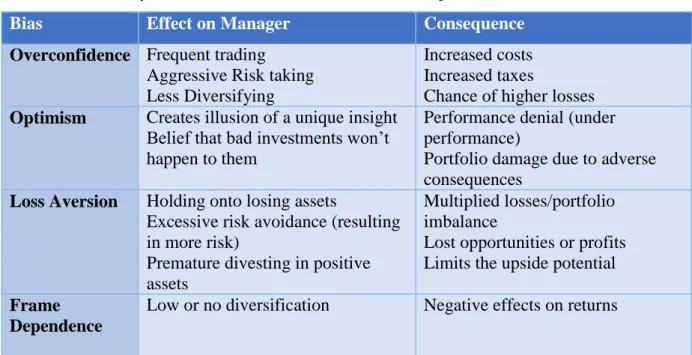
LIST OF TABLES PAGE Table 2.1: Summary of behavioural bias’s effects and consequences 35
Table 4.1 Response rate 71
Table 4.2 Fund categorisation 79
Table 4.3: Compound average rate of return per period 82
Table 4.4: Average rate of return per confidence bias category 83
Table 4.5: Average rate of return per optimism bias category 83
Table 4.6: Average rate of return per loss aversion bias category 84
Table 4.7: Average rate of return per frame dependence bias category 84
Table 4.8: Impact of overconfidence on investment returns of funds 85
Table 4.9 Impact of over optimism on investment returns of funds 85
Table 5.0: Impact of loss aversion on investment returns of funds 86
Table 5.1: Impact of frame dependence on investment returns of funds 86
Table 5.2: Mean Sharpe ratio per over confidence bias category 87
Table 5.3: Mean Sharpe ratio per over optimism bias category 87
Table 5.4: Mean Sharpe ratio per loss aversion bias category 87
Table 5.5: Mean Sharpe ratio per frame dependent bias category 87
Table 5.6: Split-half coefficient and Spearman-Brown correction score for questionnaire 88
CHAPTER 1 INTRODUCTION 1.1 INTRODUCTION AND RESEARCH PROBLEM
According to Shefrin (2002:4): “People are imperfect processors of information and are frequently subject to bias, error, and perceptual illusions” this provides the basis for the research. The way in which people process information could assist to explain market imperfections that can no longer be adequately explained through classical finance theory.
Over the last century there have been various economic downturns or recessions around the world. This kind of intermittent economic disturbance raises an important question: Is classical finance theory relevant when such crisis are occurring? If the belief that people and therefore markets act rationally where true, would the world have experienced the different economic situations that unfolded?
Behavioural finance has been shown to account for the anomalies that cannot be explained by classical finance theory, for example Kahneman and Tversky’s prospect theory (1979). The scope of this research is to determine whether behavioural finance has a role to play in the decision-making of collective investment scheme managers, through investigating what behavioural biases are manager specific and determining whether collective investment scheme managers exhibit these biases in a decision-making context.
1.2 BACKGROUND
The South African unit trust or collective investment scheme industry has grown phenomenally over the last 40 years with unit trusts beginning with a single equity fund by Sage in 1965 to around 950 funds by 2011, with over two million South Africans holding investments in unit trusts (Oldert, 2012:30). People are gaining confidence in the industry and the type of investments offered, they are noticing the benefits of diversification and regulation and being able to invest without having the skills or knowledge required to do it themselves.
In South Africa there is little research about the effect that the fund manager, or more specifically their individual behavioural biases, has on the performance of these funds. That’s what this research aims to rectify, by attaining direct information from specific managers this
information can be used to assess the relationship, granting a clearer understanding.
Over the decades this research has mainly taken place in the United States of America (USA), where collective investment schemes, or more commonly known as mutual funds, are in abundance with more of a focus on private investors and their effect on the market rather than managers who invest on behalf of private investors. Initially Herbert Simon (1959) studied how psychology impacts financial decisions. Further research by Daniel Kahneman and Amos Tversky resulted in key beliefs in behavioural finance theory: that there is no assumption of rationality or perfect markets (De Bondt, Shefrin, Muradoglu and Staikouras, 2008:8).
The globally accepted classical finance theory assumes that investors and managers are rational, therefore judgement will be rational, and therefore markets act rationally. Kahneman and Tversky’s (1979) prospect theory challenged the assumptions of classical theory and by doing so revealed that behaviour is subject to unique interpretations and that people are a big influencer of the market. Therefore prospect theory found a way to answer questions that the limitations of classical finance theory could not.
Through the understanding of the prospect theories subsequent findings of emotional or cognitive limitations that affect managers in decision-making capacities, classical theories and finance models may be able to find improvements to the way in which decisions are made.
1.3 CONTEXT OF RESEARCH 1.3.1 Behavioural Finance
Behavioural finance emerged as a field in the 1980’s after research regarding the disproportion between fundamental values and actual stock prices indicated anomalies unaccounted for by classical finance theory. Behavioural finance directly conflicts with the classical finance notion that the rationality in decision makers is realistic and proposed an alternative account of choice under risk (Tversky and Kahneman, 1986:1).Behavioural finance studies the nature and quality of financial judgements and choices made by investors, and examines what the consequences are for financial markets and the organisations involved (De Bondt et al. 2008:7).
Many studies have been done on the influence of behavioural biases on individuals, this dates back to the work done by Simon in 1959 on bounded rationality and was then expanded on through the pioneering heuristic’s and biases research conducted by Tversky and Kahneman
from the late 1960’s. This resulted in a Nobel Prize for their prospect theory about irrational investors. This research was then furthered by Hersh Shefrin to merge behavioural finance and corporate finance: corporate behavioural finance, for an internal understanding of managers and corporate finance, this is explored further below.
1.3.2 Corporate Behavioural Finance
Hersh Shefrin (2001) furthered behavioural finance applications to corporate finance. This field’s focus is on the manager and organisation’s internal behavioural obstacles to organisational value creation (Shefrin, 2001:114). These behavioural biases are what could possibly interfere with classical finance theory. There are two types of behavioural obstructions to the value maximisation sought by the organisation: external and internal. The external are those errors made by analysts or investors which explains the difference between market prices and fundamental values (Shefrin, 2001:114). The focus of this study will be the internal decision-making of the individual asset manager and how this is affected by biases, more specifically cognitive imperfections and emotional forces.
Through the heuristics and biases findings, the examination of the psychological mechanisms which describe how the human mind functions and therefore why financial judgement is imperfect was researched (Laibson and Zeckhauser, 1998:9). These behavioural biases will be explored further in the next section.
1.3.3 Behavioural Biases
Simon (1959) challenged classical economic thinking, he believed that individuals are restricted by the human mind through cognitive and emotional limits, where acceptable is more appropriate than optimal. There are a number of terms which have been used to describe certain behaviours seen within decision-making which can result in errors.
These errors occur when making decisions in specific contexts or scenarios. When these errors are made by the decision-maker not all of the available information regarding the problem is processed in a rational manner. The individuals that undertake collective investment scheme decision-making will more than likely make human errors which can lead to negative outcomes and therefore imperfect performance and markets. If these errors are identified and acknowledged fund managers may maximise their potential performance (The Economist, 2009:1).
Cognitive errors take place when a belief is formed through the decision-maker systematically overestimating or underestimating the true probability of events leading to severe and systematic errors (Laibson and Zeckhauser, 1998:9). These types of decisions take place within situations with high complexity and high uncertainty; this is amplified further when the decision maker has little or no experience with the specific problem. According to De Bondt et al. (2008:12) and Bailey, Kumar and Ng (2010:3-4) the typical biases related to cognitive errors are:
Representativeness: when a project is categorised into being representative of a well-known class or typical;
Overconfidence: the overvaluing of an individual’s abilities or knowledge leading to misguided risk or probability of success;
Anchoring: the reliance on one piece if initial information;
Availability bias: the easily recalled and accessible information influencing decisions; and Optimism: the belief that positive future outcomes will occur to them above the average. Emotional forces refer to the errors that are made by people when assigning values to future outcomes or from improper combinations of values and probabilities. Kahneman and Tversky (1979), the proponents of the prospect theory, directly challenge the assumption of rational decision-making entailing accurate and unbiased information. These theorists indicate that behaviour is subject to unique interpretation that is situational dependent (Weick, 1970; Wiseman and Gomez-Mejia, 1998:143). Each individual has a preference which influences decision-making. According to De Bondt et al. (2008:12-13) and Shefrin (2001:117) the most important preferences are:
Loss aversion: the process of weighing a loss twice as much as gains of a similar amount; Mental accounting: how financial outcomes are categorised and evaluated;
Regret aversion: finding a bad outcome after a decision had been made;
Self-control: the degree to which impulses can be controlled – holding on to losing investments; and
Frame dependence: not being able to see a package of dependent decisions problems but separate entities.
The combination of cognitive errors and emotional forces and the complexity of the industry can yield unsatisfactory performance. The focus of this study is to establish whether there is a relationship between the collective investment scheme manager’s biases and the fund’s performance. This study will focus on over optimism, overconfidence, loss aversion and framing dependence.
1.3.4 Collective Investment Schemes
Collective investment schemes (CIS) are actively managed funds that combine investments from various investors. These investment funds are regulated and available to the general public with their performance publicly available.
Collective investment schemes have the advantage to the public such as increased diversification, active professional investment management as well as government regulation. Collective investment schemes have gained in popularity for private investors due to their convenience and the fact that investors are apprehensive to invest directly in the markets due to their lack of knowledge of financial markets. Private investors would therefore rather compensate a professional to invest their money (Pettit, 2007:495).
Collective investment scheme studies have been conducted regarding the performance of collective investment schemes and the impact that the fund managers have on this performance. These studies covered various influences on mutual funds’ performance. Modigliani and Pogue (1975), Starks (1987) and Grinblatt and Titman (1989) considered the effect of incentive performance contracts between a mutual fund company (and manager) and mutual fund investors. Smith and Goudzwaard (1970) studied the relevance of education on graduates in their jobs as fund managers while Chevalier and Ellison (1999) analysed the relationship
between age and education on fund performance. Fama (1980) studied career concerns effect on fund performance and Golec (1996) studied the influence of MBA status, tenure and age on the performance of a fund. Prather and Middleton (2002) found that mutual funds persistent and differential performance could be accredited to the influence of managerial decision-making.
These studies did not necessarily test the unique capabilities or traits of the individual fund manager but rather approached their studies through outside, freely available information. The approach of this study will be to assess the behavioural biases of individual CIS managers and then link these biases to the performance CIS’s.
This study is similar to those conducted by Masood and Sergi (2009) and Drachter, Kempf and Wagner (2007) which explored unique capabilities of mutual fund managers. Masood and Sergi (2009) collected original survey data from Turkish fund managers and correlated this to specific performance criteria, through three ordered choice models: number of clients, number of funds and portfolio size. All three measures of performance were found to systematically vary with fund manager characteristics; indicating that some managers are better than others.
Drachter, Kempf and Wagner (2007) conducted a telephone survey on German fund managers to shed light on their investment decision-making processes and link this data with information regarding mutual funds and fund management companies. The main finding in this study was that managers’ behaviour does depend on characteristics of the fund and of the fund company.
The above literature highlights the relevance of other non-behavioural aspects that may influence the performance of funds and that should be kept in mind when conducting research of this nature.
1.4 RESEARCH AIM
The primary aim of this research is to study the influence of internal behavioural biases of South African collective investment scheme managers in a decision-making context and how these biases affect collective investment schemes.
1.5 RESEARCH OBJECTIVES
The primary question that this research aims to answer is: “Do internal behavioural biases have a role to play in the performance in collective investment schemes?”
To achieve the aim of the research, the objectives are to:
Determine the behavioural biases of South African collective investment scheme managers in a decision-making context;
Determine the performance of the corresponding South African collective investment scheme; and
Investigate the relationship between behavioural biases and the performance of collective investment schemes.
1.6 DELIMITATION
This research is limited to registered domestic collective investment funds as at 09 February 2012 in South Africa with active individual CIS managers. No index, multi-managed or global funds were used in this study.
1.7 DEFINITIONS
Behavioural Finance A merging of classical economic theory with psychology to explain the anomalies that classical finance cannot (Shiller, 2003:83).
Collective Investment Scheme A pooling of a group of investors’ money in order to get a spread of professionally managed investments, the risks and the profits are then shared (Oldert, 2012: 42). Common collective investment schemes mentioned in this study are mutual funds or unit trust funds (portfolio of collective investment schemes).
1.8 OUTLINE
The structure of this thesis is as follows:
Chapter 2 Consists of the principal theories underlying the research and the central concepts of behavioural finance and collective investment schemes applicable to this thesis. This also consists of previous studies in the area and most recent concepts in the area.
Chapter 3 Presents the general approach and research methodology used in this thesis. It describes the working process and data sources, as well as criticisms of
the chosen sources.
Chapter 4 Describes the empirical research conducted, including the results obtained and a subsequent analysis of these results with statistical based findings.
Chapter 5 A summary consisting of conclusions and recommendations.
CHAPTER 2 LITERATURE REVIEW 2.1 INTRODUCTION
This study has certain similarities to previous research conducted by behavioural finance pioneers but has two very distinct differences: the focus here is on managers’ decision-making instead of individual investors and the data has been directly collected from the population. This study has used data collected directly from 42 CIS managers in order to assess the performance of the CIS.
According to Shefrin (2002:4) “People are imperfect processors of information and are frequently subject to bias, error, and perceptual illusions.” This formed the basis for this research, it aims to ascertain whether or not behavioural biases are present in South African CIS managers and that there is indeed a relationship between the managers’ decision-making and their funds’ performance.
The most commonly accepted theory of financial markets in the 20th century is that of the efficient market hypothesis (EMH). This theory went beyond utility maximisation to assume that the average population’s rational expectations are correct. This theory relied on the assumptions that all investors are rational and that all available information is incorporated into asset prices resulting in efficient markets (Fama, 1965:76). Therefore, the average person would revise their expectations when new information presented itself.
However, towards the end of the 20th century this theory began to be challenged in various ways. People began to tire of the theory not providing all the answers they needed. Research began to show that research results differed from the expected results of classical theory (Shefrin, 2009:5). From these conclusions behavioural finance grew throughout the last two decades because researchers desired a way in which to explain empirical patterns or events which did not follow EMH theory.
Behavioural finance is a relatively new field where there is still disagreement between the discipline of classical finance and the newer behavioural finance. This should rather be viewed as an opportunity to collaborate and advance the research with regard to decision-making and market inefficiency.
2.2 CLASSICAL FINANCE THEORY 2.2.1 Efficient Market Hypothesis
As mentioned above EMH was, and to a certain degree still is, the most commonly believed theory of financial markets since the 1950’s. Eugene Fama (1965:76) defines an efficient market as one where a large number of profit-maximising, rational individuals actively compete and try to predict future market values of individual securities. Important current information is also freely available to all the participants and the competition, on the average, will result in the instantaneous reflection of this information into the intrinsic values of the securities and therefore their actual prices. Furthermore it is expected that the investors’ reactions would be random and follow a normal distribution, making arbitrage impossible (Malkiel, 2003:64).
This theory has three forms or levels of market efficiency which are: weak efficiency, semi-strong efficiency and semi-strong efficiency. Weak efficiency is when prices fully reflect any information from past price data, semi-strong efficiency is when prices fully reflect all readily-available public information; past price data, earnings data, and economic news. Strong efficiency is when prices fully reflect all public and privileged information; economic news, earnings data, past price data etc. and commissioned internal research, market maker information and insider information (Fama, 1970:383).
The majority of testing performed on this theory concentrated on the latter two of the forms because weak efficiency overlaps with the random walk hypothesis (Holton, 1992:4). Random walk hypothesis is the theory that short-run changes in stock process cannot be predicted on the basis of past action (Malkiel, 1999:24). Through the testing of these theories a few researchers found violations in either the semi-strong or strong market efficiency. These violations were used as opportunities by people or organisations which had the knowledge and experience to profit from it. This did not mean that EMH theory is invalid (Holton, 1992:42). However, this did show that markets are not always efficient.
Eugene Fama even came to acknowledge that strong market efficiency was not entirely realistic because some non-public information presented an arbitrage opportunity for those in the know (Holton, 1992:4). Yes, the theory has provided great value to the industry but is it perhaps time to bring reality into the picture?
With this said, the evidence against classical theory is mounting. Classical financial theorists, especially the pioneering contributors: Eugene Fama and Paul Samuelson believe that their theory is a simplification of the finance world that does not always hold true but is efficient for most individual investment purposes (Desai, 2011:1).
2.2.2 Support and criticism
In the 1990’s EMH theory began to be questioned more widely due to the mainstreaming of the fringe element, behavioural finance. The anomalies found in the analysis of the markets brought forward the concept of human intervention playing a role in efficiency. Some critics believe that events such as the various stock market bubbles and crashes worldwide over the last few decades and the current global financial crisis can be accredited in some ways to classical finance. The former USA Federal Reserve chairman, Paul Volcker is among the critics; he said that it was “clear that among the causes of the recent financial crisis was an unjustified faith in rational expectations and market efficiencies” (Volcker, 2011:1).
There are others who agree with this view, some who criticise EMH in its entirety and then others who believe that it simply does not account for human nature, but it is not irrelevant. There was evidence in Fama’s 1970’s paper on efficient capital markets, where certain anomalies were picked up yet declared insignificant in the realm of the theory. These findings that contradicted the theory were played down and therefore ignored (Shiller, 2003:84). Yet Eugene Fama accepted that uninformed investors could theoretically lead the market astray and therefore prices may be somewhat irrational as an outcome (Hilsenrath, 2004:1).
The behavioural finance pioneers may be the most outspoken of all critics due to their belief that human nature has a role to play in the efficiency of markets. Kahneman, Tversky, De Bondt, Thaler are all names that are now associated with behavioural finance. The combinations of psychology and economics lead to the findings. The theory and papers by these authors are discussed throughout this research.
While evidence against EMH is mounting, behavioural theorists are offering an explanation: it is believed that the imperfections in the market can be attributed to a combination of human errors in information processing and reasoning (Ricciardi and Simon, 2000:27). There are various anomalies that classical finance simply cannot account for, this leaves a gap for theories
that can provide an explanation. Investors, professional or average, are searching for answers to explain the market scenarios which keep unfolding.
2.2.3 Classical Corporate Finance Theory
Traditional corporate finance theory teaches managers about rational decision-making with regard to capital budgeting and capital structure under the premise that investors and analysts also behave in a rational manner (Shefrin, 2008:10). This deals with the everyday, small, medium and large decision-making that managers have to undertake in order for a company to operate.
From the discussion above regarding classical finance theory the assumption of people acting rationally has been found to not be completely accurate. Furthermore Shefrin (2008:10) has also found that in a situational context there is strong evidence that managers, investors and analysts are not always rational. Therefore, if managers are not rational, the ability of managers, analysts and investors to make capital budgeting and structure decisions without being affected by human nature is not possible. This then affects the process in which managers can make decisions as well as how managers make decisions. Being aware of behavioural biases and what can influence decision-making is the first step to finding a way to overcome them.
Classical corporate finance theory has its basics set in the capital asset pricing model (CAPM) (Sharpe, 1964). The premise of the EMH theory relies on the idea that prices are efficient. This misconceived efficiency is where mispricing can occur. This in turn can cause conflict for corporate finance efficiency. Therefore, with EMH’s assumptions being contested within the last few decades this brings about queries into the CAPM model too.
Research has been undertaken looking into the ways in which managers can overcome these errors. The first is if managers are rational but investors or analysts are not and this has recreated a mispricing of the stock price. According to Shefrin (2008:14) when analysts and investors are excessively optimistic about the future prospects of a specific firm, the prices of the firm’s stock are bid up and the stock price is overvalued.
This resultant mispricing leads to the firm’s future expected returns to be abnormally low. This leads to managers needing to consider a new equity issue or new project funding in order to revalue the price for shareholders even at the expense of the firm’s long term value (Shefrin,
2008:14). However, if investors are irrational for any other reason and decide to hold onto the stock then the manager would not take on a new opportunity in order to preserve long term value. This reaction is the probably the most typical (Shefrin, 2008:14).
Behavioural finance puts forward prescriptive guidelines for value-maximising managers in the event of mispriced stocks, these guidelines provide circumstances in which the discount rate can or should be adjusted and other circumstances where they should not. Therefore it can be said that capital budgeting policy can be more complex when mispricing inefficiencies have occurred (Shefrin, 2008:14-15).
The guidelines are as follows:
When project selection decisions do not indirectly affect capital structure and long-term value-maximisation is sought, then the CAPM based discount rate should be used. This rate should only be adjusted to reflect project risk.
When project selection decisions do have an indirect effect on capital structure the discount rate will need to be adjusted in order to continue value-maximisation of the firm. This adjustment will reflect the degree to which the firm’s equity is mispriced in the market.
(Shefrin, 2008:14-15).
This demonstrates that managers in any industry making various decisions which are susceptible to market mispricing (due to individual and analyst irrationality and therefore stock mispricing) are susceptible themselves to irrational decision-making. Therefore, CIS managers can also be susceptible to irrational decision-making. However, when managers are aware of this error then they can start to implement methods to overcome this.
2.3 BEHAVIOURAL FINANCE
The alternative, behavioural financial theories and their impact on the research, will now be considered.
2.3.1 Introduction
investing. Behavioural finance’s foundations began in the 1960s and 1970s, with research done by various theorists combining key principles in investment and finance with specific psychology principles.
According to Ricciardi and Simon (2000:27) behavioural finance attempts to explain the what, why, and how of finance and investing, from a human nature perspective. According to Sewell (2007:1) “Behavioural finance is the study of the influence of psychology on the behaviour of financial practitioners and the subsequent effect on markets” This field of research is certainly more in-depth than this statement, however this is the foundation of the theory as a whole. Behavioural finance attempts to improve understanding of investors reasoning, emotional processes and how these influence decision-making processes or investors’ judgement processes.
Shefrin (2002:29) defines the cognitive limits or emotional forces that people face as the way people organise their information and the way people feel as they register information. Behavioural finance was therefore a field in which theories could be tested. This field wanted to use research and experiments to understand the markets and investors. This approach clashed with classical finance theory that has always been problematical to test.
Various research has shown that people are in fact irrational, this irrationality is what can result in unpredictable decision-making (Simon, 1959:253). These unpredictable actions are what cause the market anomalies which have not been explained by classical finance. Behavioural finance aims at explaining the irrationality aspects of people and why this has caused the unexplained events in the markets. This theory also goes further into how to account for these human errors which will be explained later on in this chapter.
2.3.2 Behavioural Finance Background and Progression
Cognitive psychology began to gain more ground in the 1960s, this allowed for the concept of the brain as an information processor. This in turn allowed psychologists such as Daniel Kahneman and Amos Tversky to compare their models of decision-making to the economic theories of the time. This being the utility maximisation theory or EMH.
In 1959 Nobel Prize winner Herbert Simon forged the path of classical economic thinking doubt. Simon pioneered bounded rationality theory where the belief is that people are restricted by the human mind through cognitive limits (Simon, 1959:253). This illustrated that people are
susceptible to situational and personal limitations, often where acceptable is more appropriate than optimal (Simon, 1959:253).
Between the 1960s and the 1980s EMH was still the one common belief which had not been widely questioned yet. People believed that markets were efficient and any deviations from this were labelled anomalies. This was when an event that was difficult to rationalise or if unlikely assumptions were necessary to explain it occurred (De Bondt and Thaler, 1989:189).
An example of this is when Fama and French (1996:55) found that average common stock returns are related to certain firm characteristics such as size, long-term past returns, past sales growth, earnings, price etc. CAPM cannot explain these patterns in average returns and therefore these patterns are labelled anomalies. They then found these anomalies disappear in their three-factor model but they also consider irrational pricing and data problems as explanations (Fama and French, 1996:55).
These anomalies directly conflict with the assumptions of classical finance in that they assume rational and logical behaviour in market participants. Classical theory does not account for all situations that happen in the real world, with behavioural finance there could be a possibility of including the real world into economic theory.
These anomalies in the market gave rise to behavioural finance and its answers to the questions that could not be answered by classical finance. The field comes from a collaboration between finance, economics and psychology. This originated with the works of Daniel Kahneman and Amos Tversky. Richard Thaler was also an important component of this field; he brought the economic side which gave way to the discovery of new biases which aided in cementing behavioural finance as a field. This culminated in Kahneman receiving the Nobel Memorial Prize in Economic Sciences in 2002 for his contributions to the study of rationality in economics. These three have contributed major theoretical and empirical findings.
Anomalies began to be discovered in the 1980s, but this was at a time where if found, they were down played and ignored (Shiller, 2003:84). They were labelled as small departures from the classical theory and there was nothing that could be done. The anomaly which gained ground in this area was the excessive volatility that could not be explained by EMH. This called into question the assumptions of the theory (Shiller, 2003:84).
Kahneman and Tversky have psychology backgrounds and published over 200 works, most of which had a focus on psychology concepts with implications for behavioural finance. This mostly consisted of biases and heuristics work which related to human cognition. These were approaches to problem solving or decision-making which caused people to engage in irrational behaviour. Kahneman and Tversky were able to describe and classify the ‘short cuts’ people use to simplify their lives when it comes to making a decision or solving a problem. These became known as judgemental heuristics or rules of thumb (Belsky and Gilovich, 2009:13).
Kahneman and Tversky’s most notable work was that of prospect theory (1979) which directly conflicted with classical finance’s assumptions. This paper used cognitive psychology to explain anomalies in the market through divergent decision-making. This will be elaborated upon later.
There are many more researchers who added greatly to the field and their research is discussed throughout the paper. The main contributor were: Robert Shiller, Hersh Shefrin, Maier Statman, Werner De Bondt, Richard Thaler, Daniel Kahneman and Amos Tversky.
Behavioural finance emerged as a notable field in the 1980’s. Behavioural Finance is a theory which relaxes the traditional classical theory assumptions by incorporating observable, systematic and obvious human deviations from rationality into standard models of financial markets (Barber and Odean, 2001:288). The field studies the nature and quality of financial judgments and choices made by individuals, and examines what the consequences are for financial markets and institutions. The key beliefs in this theory are that there is no assumption of rational people or perfect markets (De Bondt et al. 2008:8).
The human deviations were explored and labelled throughout the research conducted. This was the identification of certain behaviours that are present when people make decisions, these are commonly referred to as behavioural biases. There are a number of these that have been given different terms and are of notable consequence.
These have become known as predictable mistakes or errors in judgement or cognition that people make. Research carried out examined the psychological mechanism’s which explain how the human mind functions. This lead to answers to the question: why is financial judgement imperfect? These mechanisms do however also depend on context and there are
other mitigating circumstances which also need to be considered, but these are not the focus of this study. This imperfect judgement directly relates to how decision processes shape decision outcomes, depending on the inputs (Brockner and Wiesenfeld, 1996:189).
In real life people tend to do things which don’t fit the rationality mould, they don’t always act in their own self-interest by giving to charity or taking someone out for a meal. People also don’t think about the petrol used in a trip to a discount store 20 minutes away (Belsky and Gilovich, 2009:7). In the study by Belsky and Gilovich (2009) they explored the tipping phenomenon and how this relates to social heuristics, indicating people do what is the norm or rule of thumb in most situations. This behaviour is inconsistent with rationality assumptions, in the goal of self-interest why do people tip when there is bad service? This can be applied to the way in which people invest their money in the stock exchange, why some stocks are dumped or bought up without any rationality behind it, simply because it’s what others investors are doing (Belsky and Gilovich, 2009:8).
Belsky and Gilovich (2009:1) believe that people can enhance their life’s enjoyment by understanding and modifying the way they deal with money. This means that when investors or people dealing with household money are aware of their biases they can overcome them. They are of the opinion that this would probably take some time but would be worth it.
One of the other main findings of behavioural finance research was that of errors made by average investors which resulted in creating an opportunity for experts who recognised the error. This causes a pricing error in the market of either an overvalued or undervalued stock which can cause price bubbles, large or small. This is commonly referred to as arbitrage (De Bondt et al. 2008:9).
Therefore there are two building blocks of behavioural finance: that arbitrage is in fact possible and the psychological categorisation of the deviation taken from rationality or behavioural biases (Barberis and Thaler, 2003). Barberis and Thaler (2003) believe that since the 1980s there has been substantial progress in the behavioural finance field and that EMH has various holes in its theory (Barberis and Thaler, 2003:1112). There are, however various facts still in dispute between the assumptions of both theories. However, EMH has had too many gaps in its theory and behavioural finance has essentially filled in those gaps. Without the constant battle between who is right and who is wrong, which is irrational in its own right, the
researchers should be focusing on the possibilities of human error and how these can be overcome in order for positive outcomes to occur.
2.3.3 Proponents of Behavioural Finance Theories
Some of the proponents’ research which contributed to the progression of the field will now be explored.
2.3.3.1 Prospect Theory – Tversky and Kahneman (1979)
The prospect theory directly challenged the assumptions of classical finance theory; namely the rational decision-making which also assumes that all relevant information is accurate, unbiased, and freely available as well as consumed before a decision is made (Kahneman and Tversky, 1979:263). Behavioural finance theorists believe that behaviour is subject to unique and individual interpretation that is context dependent (Wiseman and Gomez-Mejia, 1998:143).
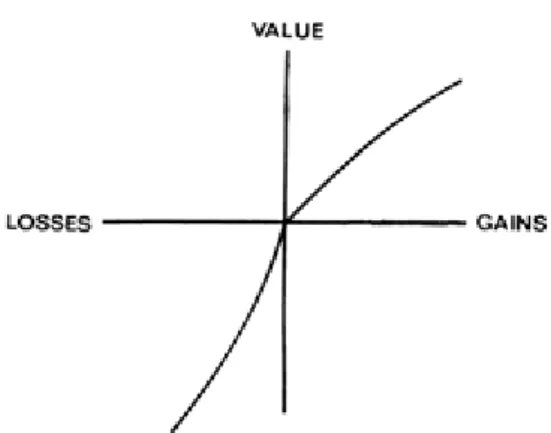
Prospect theory found that people do not process information as laid out in the utility maximisation theory. This utility theory assumed that people combined gains and losses to a net effect when a choice is involved. The conflicting idea is that people value gains and losses differently and therefore make decisions on perceived gains rather than perceived losses. The prospect theory therefore proposed a value function which is defined on gains and losses and generally convex for losses and concave for gains and steeper for losses than for gains (Tversky and Kahneman, 1986:258).
Through a series of studies conducted by Kahneman and Tversky subjects had to answer questions which involved making judgements between two monetary decisions that involved prospective losses and gains. This lead to the conclusion that people weigh loses as much as twice as heavily as an equal gain. This lead to the below asymmetric value function:
Figure 2.1: A hypothetical value function
(Kahneman and Tversky, 1979:279)
The function (figure 2.1) is representative of what a gain or a loss is perceived as, or the difference in utility that is attained as a product of a certain amount of loss or gain (Kahneman and Tversky, 1979:281). It demonstrates the idea that a loss is perceived as worse. This is in line with Prospect theory which demonstrates that people are more concerned with changes in wealth rather than degree of wealth. People also tend to undervalue changes in middle range probabilities or overvalue changes in small probabilities, therefore weighing probabilities in a non-linear manner (Wu and Gonzalez, 1999:76). Therefore people are inclined to weigh up outcomes in terms of gains and losses in relation to a specific reference point instead of overall wealth.
2.3.3.2 Heuristics – Tversky & Kahneman (1974)
The Heuristics theory was developed by Tversky and Kahneman (1974) and involved the study of how people make decisions regarding uncertain outcomes based on beliefs. The belief of these outcomes can be represented as odds or numerical probabilities. Tversky and Kahneman aim to show that these decisions usually entail complex tasks which are in fact simple judgemental operations which are referred to as heuristic principles (Tversky and Kahneman, 1974:1124).
Heuristics are the manner in which cognitive biases influence decision-making; these biases develop from judgemental heuristics. These judgemental errors guide the way in which outcomes are predicted and therefore the decisions which are made regarding the content (Tversky and Kahneman, 1974:1124). These Heuristics are simple in nature, however when
they are ignored they can lead to serious and repeated errors in the decision-making process. People tend to rely on decisions made previously and not reassess the available information and new information. These heuristics are commonly referred to a rules of thumb which people use to make decisions in situations of uncertainty (Brabazon, 2000:2). They frame the decisions on similar events or outcomes which leads to errors occurring, revealing this as an irrational approach (Tversky and Kahneman, 1974:1124).
However, according to Hersh Shefrin (2002:i) in traditional finance theories these heuristics are not taken into account when decision-making occurs, yet the classical theory still assumes that all decisions are rational. Whereas the heuristics studies are based on the premise that decision-making is in fact not rational and that people tend to take ‘short cuts’ for various reasons (Brabazon, 2000:2).
Shefrin (2002) examined the behavioural finance literature at the time and found that the theory of heuristics was a key element in influencing the decision-making process. People are usually unaware that the bias is affecting their decision-making unless they used statistical analysis to see what outcomes in the past were in fact correct (Tversky and Kahneman, 1974:1124). The particular scenarios are usually regarding future events; whether this be the future value of the Rand or the outcome of an election (Tversky and Kahneman, 1974:1124).
2.3.4 Behavioural Finance Studies
A study conducted by Richard Thaler and Werner du Bondt (1985) explored the relationship between people’s tendency to overreact to news and whether this affected stock prices. Experimental Psychology at the time had found that people are not as rational as the Bayes’ rule had indicated. This lead to De Bondt and Thaler exploring the idea of how this could impact market efficiency.
They found that investors tended to attach disproportionate amounts of importance on short-run economic developments (De Bondt and Thaler, 1985:794). The study also accounted for some investors acting rationally with the majority not taking all the available information into account before making decisions, therefore acting irrationally (De Bondt and Thaler, 1985:795). They then used this study to gather whether overreaction was predictable and whether the anomaly can be explained more accurately than the current financial theories (De Bondt and Thaler, 1985:795).
The overreaction findings for the study realised different periods of overreacting, as well as when a shorter period is chosen the performance difference between extreme portfolios was minimal or non-existent and when the period was extended it showed much more pronounced anomalies and periods of overreaction (De Bondt and Thaler, 1985:800).
This research allowed for the idea of psychological behaviour having an impact on stock prices and therefore the markets. This irrationality of investors showed that the market may not be as efficient as thought and that people may have other behaviours which could perhaps influence the stock market. This allowed for a rise in behavioural finance in conjunction with Daniel Kahneman and Amos Tversky.
A study conducted by Ackert and Deaves (2010: 265) came to the following two reasons as to why behavioural biases are relevant;
Due to people’s cognitive limitations or emotional forces financial market participants sometimes act in a less than fully rational fashion: overconfidence is a good indicator of this.
The errors or valuation mistakes made by the irrational investor can be taken advantage of by the rational managers. This is dependent on assumptions that:
- Due to arbitrage being limited irrational investors impact prices; and
- Managers are able to detect when valuations are incorrect and this is when they act on these mispricing errors.
Due to information irregularity, shown above, between investors and managers; managers have insider information as well as fewer limitations.
According to Ackert and Deaves (2010:265) managers tend to maximise price rather than value. Therefore, there is a constant battle between what interests are most important and what should be pursued when considering a decision; such as looking out for themselves, the interests of their shareholders as well as between satisfying irrational investors and maximising intrinsic value. The price can be maximised by catering to investor desires or perceptions.
Shiller’s research pointed out that in this era classical economic theory is no longer proven beyond doubt and that behavioural finance is now one of the most important research initiatives. This field of behavioural finance is a vastly different field in comparison to many of classical finance’s assumptions (Shiller, 2003:83). Shiller examined the progression of the field and found that various anomalies were found by the supporters of classical finance theories (Shiller, 2003:84). These were however labelled as insignificant and did not need to raise concern regarding EMH theory (Shiller, 2003:84).
He also explored research done by as far back as 1840’s where human behaviour in a market context was being examined. This was labelled feedback theory. Charles MacKay (1841) explored the 1630’s ‘tulipmania’ in Holland; the idea is that word spreads of a commodity which is increasing in price. This then creates more and more price mania inevitably ending in a speculative bubble.
What happened was that many people began to prosper beyond what their normal wealth was. Word of mouth was the largest reason for this spread of a ‘good investment opportunity’ however once everyone had found this, everyone was growing tulips to sell and when the price got sky high the crash came and the prices never recovered again.
Shefrin’s research (2008:1) describes Behavioural finance as “the study of how psychological phenomena impact financial behaviour”. Shefrin used this knowledge and applied it to what was already known about asset pricing in order to incorporate behavioural assumptions into asset pricing theories.
Shefrin examined the behavioural biases from research done by others in the fields and drew the conclusion that investors do have natural biases and these in turn influence their decision-making (Shefrin, 2008:59-93). Shefrin then found that errors in judgement, or what Shefrin refers to as sentiment, afflict investors and are one of the main contributors to asset pricing behaviour (Shefrin, 2008:553).
He explored the idea of sentiment being a factor in the analysis of assets prices. He used analysts’ forecasts variance from the actual price as a theoretical base for the sentiment risk premium (Shefrin, 2008:515).
This behaviour then leads to pricing errors in the market and therefore opportunities for experienced, knowledgeable and rational investors to take advantage of this arbitrage opportunity (Antia, 2006:1). However this does not account for if these opportunities are random, because if they are, then it would be hard to find these. Therefore rendering these opportunities impossible (Antia, 2006:1).
Lovallo and Kahneman (2003) explored the delusions of success that people or companies face with the prospect of a new venture in business. They found that people tend to overestimate the success of the project and therefore end up with excessive expenses and time frames becoming extended (Lovallo and Kahneman, 2003:57-58).
An example of this is that 70% of new manufacturing plants in North America close within the first decade of operating. These failures are explained as rational risks being taken in uncertain situations, according the classical finance theories (Lovallo and Kahneman, 2003:58).
Lovallo and Kahneman then took various examples of these failures and examined them from a psychological perspective and a finance scholar’s perspective. They came to very different conclusions to that of the classical finance theorists. They believe that in the majority of these cases it comes down to the planning or the initial decision-making process before the project is even taken on (Lovallo and Kahneman, 2003:58).
In most cases managers fall prey to making decisions based on irrationally optimistic outcomes rather than on rationally based weighting of losses or gains probabilities (Lovallo and Kahneman, 2003:58). Managers tend to underestimate the costs involved and overestimate the possible gains. They tend to focus on the possible benefits and downplay the negatives.
Lovallo and Kahneman believe these failures in decision-making are directly related to the over optimism bias. This is a cognitive bias which impacts the way in which the mind processes information (Lovallo and Kahneman, 2003:58). These concepts, as well as how to overcome them, are explored in more details later in this chapter.
From the findings of this paper managers can become aware of the biases which influence their decision-making and overcome the problems associated with the flawed decisions.
2.3.5 Criticism of Behavioural Finance
The theorists who believe strongly in the EMH usually contend that BF is a collection of anomalies rather than a true finance theory and that they can be explained out. However, what they believe is related to the ‘group’ factor, where it can be accounted for through market movements and not the individual responses.
The critics believe that not all market misevaluations can be accredited to psychological biases; there are many other explanations for such an error. The most notable critic who believes this is Eugene Fama, the founder of market efficiency theory. He believes that this theory is one of the founding theories of finance theory to this day and that it cannot be discounted due to some anomalies in the theory. He believes that market efficiency should not be abandoned for behavioural finance. He also believes that the anomalies that have been recorded are short- term chance events that would correct themselves over the long-term.
According to Fama (1998) behavioural finance itself appears to be a collection of anomalies that can be explained by market efficiency. He believes that numerous findings in behavioural finance contradict each other.
One of the doubts about behavioural finance is that if only a few individuals act irrationally the majority of the rational individual’s will combat the effects of assets moving too far from their correct value (Schindler, 2007:17). However, research has proven that irrespective of the number of the number of irrational individuals their behaviour can have a significant impact on prices and therefore the market, this refers to the arbitrage component of behavioural finance (Schindler, 2007:17).
The second component of behavioural finance is the already mentioned behavioural or psychological aspects of people. These have been criticised due to the experimental nature of the research that has been conducted. People rely on their beliefs and preferences, these are what influence their decision-making (Schindler, 2007:18).
2.3.6 The Future of Behavioural Finance
As an economics field of study some of the proponents and researchers believe it has the potential to replace neoclassical finance as the dominant paradigm of the discipline (De Bondt
biases in decision-making and the progress for the future would be that of learning ways in which to overcome these biases and behave optimally.
The development of improvement strategies would be a step beyond description. Errors induced by biases in judgement settings could lead to decision makers to make rash and non-optimal decisions. In business settings this can lead to costly errors. There are a number of theorists who have developed ways in which to overcome certain biases and heuristics. However, there are still very many which have not been explored. According to Hersh Shefrin (2008:1) the long-term objective of this field is to ‘behaviouralise’ finance. This is to incorporate the findings of human nature in a finance context in order to more definitively understand markets and investments as a whole.
To this day financial analysts and economists are in a constant debate regarding classical finance and behavioural finance. This shift from old thinking to new thinking is still being deliberated every day. Therefore, people need to consider the facts available now and digest and implement what they think is correct for their purposes and the current market situations (Shefrin, 2008:1).
2.3.7 Behavioural Corporate Finance
Corporate behavioural finance concerns the practice of value-based management which is comprised of three main concepts; the first being rational behaviour of participants, the second being the capital asset pricing model (CAPM) and the third concerns efficient markets (Shefrin, 2001:114). The focus on corporate finance is the internal workings of an organisation. The psychological biases are what interfere with these traditional theories; there are two essential behavioural obstructions to the value maximisation sought by the organisation.
These behavioural obstructions can be categorised into external and internal; internal is associated with the errors made by managers due to cognitive imperfections or emotional forces which are referred to as behavioural costs. External are those errors made by analysts or investors which create a gap between market prices and fundamental values. These external obstructions then influence managers in their decision-making through causing an uncertainty of how to factor the investor and analyst errors into the decision-making (Shefrin, 2001:114).
between the interest of the manager and the interests of the owners or stockholders or investors in this case. The mechanism found to rectify this was to align the interests of these two parties with the use of incentives; however these do not account for all behavioural costs due to their wide range. Therefore, incentives have limits as to what they can achieve, it is not always possible to have people that have the optimal view of maximisation or what can achieve value maximisation. Therefore the incentive compatibility will not be sufficient for the optimal value maximisation.
The external obstacles concern the price of risk, according to Shefrin (2008:2) the proponents of behavioural finance believe that the CAPM and market prices deviate from fundamental values. These issues have been documented by value-based management in the past and can be connected to decision-making in the corporate environment.
The assumption is that market value and fundamental values match, however when these values are different the actions of managers decision-making on this knowledge may lower the market value of the firm, even if just for a short period.
What usually occurs from this scenario is the adjusting of the discount rate using the CAPM model. However, the adjusting is also reliant on the assumptions and therefore can cause more trouble with regard to trying to rectify the mispricing from the errors of investors and analysts (Shefrin, 2001:116).
2.4 BEHAVIOURAL BIASES
According to Ton and Dao (2014:125) investors have gained more interest in considering the impact of psychology on markets and investments. Behavioural biases are the origin of this development. These are the cognitive and emotional errors that occur when making decisions in specific contexts or scenarios. These behavioural bias concepts were better researched in finance theories that were discussed earlier in this chapter; Tversky and Kahneman’s (1974) Heuristics research and Kahneman and Tversky’s (1979) Prospect theory.
When making a decision not all of the available information regarding the problem is processed in a rational manner which leads to these errors. Individuals that undertake fund related decision-making will most likely make these human errors; this can then lead to negative
outcomes and therefore affect performance and market efficiency.
Kahneman and Tversky (1979) and Tversky and Kahneman (1974, 1981 and 1986) were able to identify certain biases in decision-making through the use of cleverly constructed questions which were given to various participants. These studies had a focus on the individual investors and their effect on the market. Richard Thaler (1999) then developed more financial and experienced investor related biases, this was expanded by Shefrin (2001) to give a more accurate picture of what biases affect people within an organisational or corporate finance setting.
A key finding from these studies is that there are external and internal biases. External biases are those which affect investors and analysts (Shefrin, 2001:114). This creates a gap for experienced investors to take advantage of, leaving room for arbitrage opportunities. Internal biases are those associated with managers’ decision-making; this involves decision-makers in a management position who are effected by behavioural biases (Shefrin, 2001:114). In the context of this research, the focus is on the internal biases which effect the CIS managers or experienced investors.
External and internal behavioural biases can be further broken down into ‘errors of preference’ and ‘errors of judgement’. These are a development of the research done by Tversky and Kahneman and will be discussed in more detail below.
2.4.1 Errors of Judgement - Cognitive limitations
Errors of judgement were developed by Tversky and Kahneman (1974) in their Heuristics research. The concept behind this theory is that people develop their own set of rules for situations of high complexity and uncertainty. This ‘set of rules’ allows for systematically underestimating or overestimating the true probability of chance events (Tversky and Kahneman, 1974:1125). This can affect markets by causing market prices to deviate from their fundamental values resulting in market inefficiency (Shefrin, 2001:114).
2.4.2 Errors of Preference - Emotional forces
Errors of preference are the biases which are present when people are assigning values to future outcomes or from improper combinations of values and probabilities. Once a certain outcome
has been found this becomes a preference. The preference then remains and influences future decision-making (Tversky and Kahneman, 1986:253).
The four main biases that will be of consequence in this study are optimism, overconfidence, loss aversion and frame dependence or mental accounting. These were chosen due to research indicating that these biases are the most common ones that managers are afflicted by (Shefrin, 2001). This is in comparison to behavioural biases that inexperienced investors are more afflicted by.
2.4.3 Biases relevant in this study
2.4.3.1 Optimism
Studies conducted by Weinstein (1980) and Kunda (1987) found that people believe good things will happen to them more often than to their contemporaries. This supports the research finding that optimism is an error of judgement: it is the unrealistic view of the future. This is the belief that one is more likely than average to experience positive future life events and less likely than average to experience negative events (Baker, Ruback and Wurgler, 2007:169). In an investment perspective this relates to managers taking risks when they believe that positive outcomes will occur (Baker et al. 2007:169).
An example of this is a study conducted in the 1970’s by the College Board where they surveyed one million students. When the students were asked questions about their talents they tended to exaggerate. When asked about their athletic abilities 60% saw themselves above average, when asked about their leadership abilities 70% saw themselves as above average (Lovallo and Kahneman, 2003:58). This demonstrates that people tend to overestimate their abilities and this is usually due to the tendency to misperceive the causes of certain events, which then leads to future beliefs this will occur again no matter the context. The typical response after the outcome has occurred is that the negative outcome is usually attributed to external factors which cannot be controlled but positive outcomes are taken credit for (Lovallo and Kahneman, 2003:59).
According to Gervais (2009) optimism frequently gets confused with overconfidence; however these two are actually very different in structure. The majority of studies have focused on optimism and overconfidence in corporate finance. Subjects tested by Weinstein (1980)