THE WINTER
Reflecting on Clinical Training During a Pandemic The Evolution of Self-Care: From Explicit Techniques to Implicit Awareness ISSN: 2565-5698WINTER EDITION
volution of Care: From Techniques to Implicit Awareness An Exploration of Body-Centred Countertransference in Irish Therapists Exploring the Relationship between Childhood Trauma and Psychosis: A Review ofthe Literature
December 2020 | Volume 4 | Issue 2
DITION
Exploring the Relationship between Childhood Trauma and Psychosis: A Review of the Literature The Experience of Grief in Special Education: Support for Staff on Deterioration and Death of Students December 2020 | Volume 4 | Issue 2
DEC 2020 1
TABLE OF CONTENTS
TABLE OF CONTENTS TABLE OF CONTENTS TABLE OF CONTENTS TABLE OF CONTENTS ... 1 FOREWORD ... 3REFLECTING ON CLINICAL TRAINING DURING A PANDEMIC ... 4
MARCH 12TH 2020 ... 4
REDEPLOYMENT ... 5
THE HERO EXPERIENCE... 7
THE LEARNING EXPERIENCE ... 8
AUTHOR ... 9
THE EVOLUTION OF SELF-CARE: FROM EXPLICIT TECHNIQUES TO IMPLICIT AWARENESS... 10
ABSTRACT ... 10 INTRODUCTION ... 11 METHOD ... 13 RESULTS ... 14 DISCUSSION ... 18 CONCLUSION ... 21 REFERENCES ... 22 AUTHOR ... 25
AN EXPLORATION OF BODY-CENTRED COUNTERTRANSFERENCE IN IRISH THERAPISTS ... 26
ABSTRACT ... 26 INTRODUCTION ... 26 METHOD ... 31 RESULTS ... 33 DISCUSSION ... 35 REFERENCES ... 36 AUTHORS ... 38
THE RELATIONSHIP BETWEEN CHILDHOOD TRAUMA AND PSYCHOSIS: A REVIEW OF THE LITERATURE ... 39
ABSTRACT ... 39
DEC 2020 2
TRAUMA ... 40
PSYCHOSIS ... 41
EXPLORING THE ASSOCIATION BETWEEN CHILDHOOD TRAUMA AND PSYCHOSIS ... 42
BIOLOGICAL MODELS LINKING CHILDHOOD TRAUMA AND PSYCHOSIS ... 45
PSYCHOSIS TREATMENT OUTCOMES IN PATIENTS WITH A HISTORY OF CHILDHOOD TRAUMA ... 48
MEDIATION ENVIRONMENTAL FACTORS ... 48
CLINICAL IMPLICATIONS ... 50
CONCLUSION ... 51
REFERENCES ... 52
AUTHORS ... 58
THE EXPERIENCE OF GRIEF IN SPECIAL EDUCATION: SUPPORT FOR STAFF ON DETERIORATION AND DEATH OF STUDENTS ... 59
ABSTRACT ... 59
INTRODUCTION ... 60
DETERIORATION OF STUDENTS AND ANTICIPATORY GRIEF ... 61
DEATH OF STUDENTS AND GRIEF ... 63
SURVIVING STUDENTS IN GRIEF ... 65
RECOMMENDATIONS ... 65
FUTURE RESEARCH INQUIRY ... 72
REFERENCES ... 72
AUTHORS ... 76
Clinical Psychology Today: Noticeboard ... 76
WHO IS CLINICAL PSYCHOLOGY TODAY? ... 77
CLINICAL PSYCHOLOGY TODAY DIVERSITY STATEMENT ... 77
INTERESTED IN WRITING FOR CLINICAL PSYCHOLOGY TODAY? ... 78
VIEWS/ LETTERS ... 78
DEC 2020
FOREWORD
Happy Holidays & Welcome to the Seventh Edition of Clinical Psychology Today!
It has been a tough year for our community, both in our personal and professional lives. The challenging and unpredictable nature of our worlds has provided little respite for reflection. In this regard, we are pleased to present a number of thought
of timely and valuable topics.
The first three articles of this edition highlight the importance of checking in with our emotional and physical reactions as clinicians. The edition begins with an engaging and honest reflective piece on the personal experience of training as a psychologist during the current pandemic. A qualitative research study subsequently examines the experience of self-care within psychologists in Ireland, identifying the different forms of self
importance of clinician awareness. An interesting research study with a large sample of therapists explores the topic of body
types of therapist reactions and arguing for the need to interpret these re the therapeutic process.
The final two articles of this edition provide a discussion of two distinct and important topics. A literature review explores the link between childhood trauma and psychosis, highlighting the complex interacti
edition concludes with a discussion of grief in special education and identifies the supports needed for staff to manage this difficult process.
Do also check out the accompanying podcast (video or audio version here https://soundcloud.com/user
coyne/s-8JRCcl2OWkK) with Dr. Malie Coyne, Clinical Psychologist. In this engaging podcast, Malie gives her experience of working in the media as a psychologist and discus
motivation for writing her new book,
Finally, a sincere thanks to all the individuals that made this edition possible; the authors, the reviewers, the journal’s working group. We would like to give special thanks to
O’Neill for her wonderful editing work and Chloe Costello for helping with the online edition.
Wishing you and your family a wonderful Christmas! Edition Co-Editors: Patrick McHugh, Charlotte Wilson
Happy Holidays & Welcome to the Seventh Edition of Clinical Psychology Today!
It has been a tough year for our community, both in our personal and professional lives. The challenging and unpredictable nature of our worlds has provided little respite for reflection. In this regard, we are pleased to present a number of thought-provoking articles on a range of timely and valuable topics.
The first three articles of this edition highlight the importance of checking in with our emotional and physical reactions as clinicians. The edition begins with an engaging and ce on the personal experience of training as a psychologist during the current pandemic. A qualitative research study subsequently examines the experience of
care within psychologists in Ireland, identifying the different forms of self
mportance of clinician awareness. An interesting research study with a large sample of therapists explores the topic of body-centred countertransference, identifying the different types of therapist reactions and arguing for the need to interpret these re
The final two articles of this edition provide a discussion of two distinct and important topics. A literature review explores the link between childhood trauma and psychosis, highlighting the complex interaction between environmental and biological factors. The edition concludes with a discussion of grief in special education and identifies the supports needed for staff to manage this difficult process.
Do also check out the accompanying podcast (video here https://youtu.be/NRbOSBuF8AA https://soundcloud.com/user-204176533/cpt-interviews
) with Dr. Malie Coyne, Clinical Psychologist. In this engaging podcast, Malie gives her experience of working in the media as a psychologist and discus
motivation for writing her new book, Love In, Love Out.
Finally, a sincere thanks to all the individuals that made this edition possible; the authors, the reviewers, the journal’s working group. We would like to give special thanks to
Neill for her wonderful editing work and Chloe Costello for helping with the online
Wishing you and your family a wonderful Christmas! Editors: Patrick McHugh, Charlotte Wilson
3 Happy Holidays & Welcome to the Seventh Edition of Clinical Psychology Today!
It has been a tough year for our community, both in our personal and professional lives. The challenging and unpredictable nature of our worlds has provided little respite for reflection.
king articles on a range
The first three articles of this edition highlight the importance of checking in with our emotional and physical reactions as clinicians. The edition begins with an engaging and ce on the personal experience of training as a psychologist during the current pandemic. A qualitative research study subsequently examines the experience of care within psychologists in Ireland, identifying the different forms of self-care and the mportance of clinician awareness. An interesting research study with a large sample of centred countertransference, identifying the different types of therapist reactions and arguing for the need to interpret these reactions as part of
The final two articles of this edition provide a discussion of two distinct and important topics. A literature review explores the link between childhood trauma and psychosis, on between environmental and biological factors. The edition concludes with a discussion of grief in special education and identifies the supports
https://youtu.be/NRbOSBuF8AA interviews-dr-malie-) with Dr. Malie Coyne, Clinical Psychologist. In this engaging podcast, Malie gives her experience of working in the media as a psychologist and discusses her
Finally, a sincere thanks to all the individuals that made this edition possible; the authors, the reviewers, the journal’s working group. We would like to give special thanks to Siobhán Neill for her wonderful editing work and Chloe Costello for helping with the online
DEC 2020
REFLECTING ON CLINICAL TRAINING DURING A
“The strangest of times” “Stay safe”
“We are living through history”
Things we have all heard so often that they may be starting to sound cliché. I personally recoil now when I hear stay safe, but I have always been averse to a cliché. However, my own personal views on the matter aside – this has been a strange time. It has been a really scary time. We are very much so living through
REFLECTING ON CLINICAL TRAINING DURING A
PANDEMIC
CLODAGH CREMEN
“We are living through history”
Things we have all heard so often that they may be starting to sound cliché. I personally recoil now when I hear stay safe, but I have always been averse to a cliché. However, my own personal views this has been a been a really scary time. We are very much so living through
history. As a trainee clinical psychologist this comes with its own specific set of concerns; namely: placement competencies, placement days, placement locations, the placement “counting”, etc.
MARCH 12
TH2020
Where were you the day the schools colleges closed? March 12
flashbulb memory for many. I was in class being taught about Positive Behaviour Support by a wonderfully interesting and witty lecturer. Our course director came in to give us a much needed and comprehensive update on the situation. He mentioned redeployments, health care assisting, contact tracing, the colleges closing by the end of the week and our teaching being moved online. There have only been a few times in my
have lost my hearing because of shock and this was one of them. Time stopped, my vision tunnelled, and the room started
4
REFLECTING ON CLINICAL TRAINING DURING A
history. As a trainee clinical psychologist this comes with its own specific set of concerns; namely: placement competencies, placement days, placement locations, the placement “counting”, etc.
Where were you the day the schools and colleges closed? March 12th. A new flashbulb memory for many. I was in class being taught about Positive Behaviour Support by a wonderfully interesting and witty lecturer. Our course director came in to give us a much needed and comprehensive update on the situation. He mentioned redeployments, health care assisting, contact tracing, the colleges closing by the end of the week and our teaching being moved online. There have only been a few times in my life where I have lost my hearing because of shock and this was one of them. Time stopped, my vision tunnelled, and the room started
DEC 2020 5 to spin. I recall people asking questions,
but I cannot remember what they were. I remember getting up and leaving the room abruptly, moving to the bathroom to go and cry. I met three other people from my class crying there too. Within (what felt like) minutes, we had received the Redeployment Policy from our employers. We anxiously questioned where we would be redeployed to – most of us anticipating contact tracing. By the end of the day the Taoiseach had announced the closure of schools and colleges. Our new reality had begun.
REDEPLOYMENT
We spent two weeks being sent reading materials online, as the universities also tried to rapidly adapt to what was happening. One by one we started to receive phone calls from the placement coordinators: contact tracing, health care assisting, back to old placements, swabbing, etc. etc. etc. I personally was sent Health Care Assisting. What an interesting experience it was. I kept a reflective diary throughout and let us just say I was not exactly the noble hero
running into battle the media may have been portraying at the time.
And so, on March 30th, I started the strangest placement of my life; one which was not part of the plan, which was filled with uncertainty, and which I initially resented. I had originally been expecting to do an Intellectual Disability placement, where I would be working in a residential home for people with Intellectual Disabilities. In normal times I would be doing group work, interacting with day services, supporting individuals, their families, and dealing with a wide range of professionals from different disciplines. Instead, I found myself doing a mixture of Health Care Assisting and Psychology work. This involved supporting people with their intimate care needs, whilst also supporting their emotional and physical wellbeing too.
I was angry. I was very angry. I was angry that I had not been listened to. I was angry that this was my placement. I was angry that I (initially) did not have PPE. I was angry that I had to move across the country. I was angry that I had to move
DEC 2020 6 away from my family. I was angry that
people were clapping. I was angry that we were lighting candles. I was angry that I was on my own. I was angry that I still had to find cases and clients to work with – that I had to somehow turn this experience into a placement that would meet my training requirements. I was angry that I got moved onto shift work. I was angry that I still had to apply for ethics for my research project. I was angry that I had to somehow find a case study still. I was angry that I had to still complete a placement contract and a logbook.
It is fair to say that my anger and emotional response was not grounded in reasonable or rational thought. I was angry that my life had to continue as normal. Things that I would normally do on any placement, such as logbooks and placement contracts, suddenly seemed to be huge requests. Things that are standard practice, like ethics applications, suddenly appeared as mountainous tasks that I was unable for. Everything had spun out of control and yet, I somehow had to keep going with all the normal things in
life too. I wanted to freeze (and in many ways I was frozen), but at the same time I wasn’t allowed to be, and I reacted with a lot of anger.
It took me a month before I could even begin to think about my placement requirements. This left me in a position where I had to somehow squeeze a 3-month placement into roughly 8 weeks. I found clinical work where I could; I completed dementia screening assessments, behaviour support plans, and updated care plans. I completed individual interventions with some of the residents that focused on building relationships. A fellow trainee and I developed support materials for the staff in relation to minding their wellbeing during the pandemic. I was so lucky to have met some amazing nurses and health care assistants on the way who were incredibly patient and supportive of me, which I am so thankful for. We received weekly check-ins from our employers throughout, which afforded us the opportunity to express our concerns. I was also beyond fortunate to have had an incredible supervisor who was honest and
DEC 2020 7 genuine with me about what was going on
– something I needed tremendously throughout.
This is not something anyone signed up to, and it was certainly not something I signed up to either.
THE HERO EXPERIENCE
This brings me to the “hero” narrative. It was an interesting experience to say the least. As a trainee clinical psychologist, I very rarely have found myself being considered as a “hero”. What even is a hero: noble, brave, patient, selfless, caring, honest? At that time, I certainly did not feel patient, noble, or brave. I felt selfless in some ways, but only because I was forced into it. I was certainly honest with anyone who would listen to me complain. I absolutely did not identify with the heroes being depicted in the news or on social media. I felt really scared, really angry, and I cried a lot.
I only share this experience because it is important. We have all made huge sacrifices and suffered tremendously both
collectively and individually. Clapping for our healthcare workers was important. It helped people; I have no doubt. What helped me was having an incredible flatmate with whom I shared the experience, who allowed me to be angry. Equally, my family did the same (albeit via Zoom). This experience was not fair. Nobody signed up to it, including our health care staff. The people around me did not try to correct or change my narrative but listened patiently instead and validated what I was saying.
If being a hero means being noble and brave, that can also mean being stoic. We need to be so careful collectively about this narrative, not because what we are seeing is not heroic, but because humans need to be allowed to express how they feel. Anger is important. This experience has not been fair to anyone. Fear is important. There is so much uncertainty around us all the time now. Sadness is important. We have lost our world.
We need to be allowed to share these experiences, which can be challenging when you are also being cast into the role
DEC 2020 8 of the brave, noble, and stoic hero society
needs you to be. We are all just humans.
THE LEARNING EXPERIENCE
In terms of my clinical competencies I learned a huge amount about the importance of boundaries, something I had not previously valued in a meaningful way before. I learned to say no to people and to compromise where I had to. I learned to express my anger in a way that was assertive, to communicate it in a healthy way. It is difficult being told you have to do something and that you have no choice in the matter, I think most humans tend to react to this with anger. I learned that this anger can burn you, over and over again in an insidious way. It can be exceptionally painful to hold over long periods of time and it is important to learn how to let go of it, I am thankful that I did. I am thankful that I learned to focus on what I have control over, which was largely around meeting my placement competencies to the best of my ability and respectfully communicating my thoughts to those in charge. Learning to be both flexible and assertive at the same time with those around me was a challenge
and one that I am now grateful for; these are skills I will carry forward with me.
Working as a Health Care Assistant whilst also carrying out psychological assessments/interventions was complicated and stressful. I came to realise how important self-care is and had to develop my own resilience throughout the placement. This is something we often ask of our clients and whilst I thought I had an appreciation of how challenging this is, I now know that I did not. Learning to use worry time to contain my ruminations was difficult, as was building mindful moments into my day. It was a frustrating process, reflecting in action at times where stress is high is hugely difficult. It is easy to reflect when things are calm, as they often are when you are a psychologist sitting across from a client. It was really frustrating having to hold myself to account in this way and take responsibility for my thoughts, to accept them as opinions (not facts) and to work towards letting them go. I think as I move forward in my career. I will need to remember these lessons, to appreciate and understand how incredibly
DEC 2020 9 demanding the requests we make are. I
believe I will move slower, afford more patience, and be more empathic to those I am working with. This stuff is really hard. I have much more appreciation for being allowed to vent, without the narrative being corrected or reframed; being seen and validated was the most priceless intervention I could have asked for at that time.
These learning experiences were hugely beneficial and ultimately what has helped consolidate them for me has been the process of reflecting on them independently, in my own space, and in my own time. Validating my own anger and asserting it helped me to process what had happened and allowed me to move on from the experience in a beneficial way.
Whilst obviously still anxious, I am also hopeful that my experiences will ‘count’ towards my training still and that I will be on track to qualify on time. I am hopeful that my career will not be affected and that others will value my experiences in the future.
The rest (as they say) is history.
I have never been very good at endings.
AUTHOR
Clodagh Cremen.
Psychologist in Clinical Training, HSE Midwest
DEC 2020
THE EVOLUTION OF SELF
EXPLICIT TECHNIQUES TO IMPLICIT
AARON FARRELLY AND LOUISE HOPPER
ABSTRACT
Background: Research focusing on self care has typically examined the effectiveness of specific interventions within unique samples. This has culminated in a dearth of exploratory research surrounding the area of stress and self-care. Coupled with this, a lack of investigation within an Irish clinical population was apparent. The current study aimed to address the exploratory gap via investigation of the experience of stress from the clinician’s perspective,
THE EVOLUTION OF SELF-CARE: FROM
EXPLICIT TECHNIQUES TO IMPLICIT
AWARENESS
AARON FARRELLY AND LOUISE HOPPER
Research focusing on self-care has typically examined the effectiveness of specific interventions within unique samples. This has culminated in a dearth of exploratory research surrounding the area of stress care. Coupled with this, a lack of estigation within an Irish clinical population was apparent. The current study aimed to address the exploratory gap via investigation of the experience of stress from the clinician’s perspective,
focusing also on self sample.
Method: Semi-structured interviews were conducted with seven Clinical Psychologists (3 males and 4 females) currently practicing in Ireland. Data was analysed via Inductive Thematic Analysis.
Results: A superordinate theme of Clinician Awareness emerged. This describes awareness necessary on the clinician’s part to initiate healthy behaviour conducive to safe long-term practice. Analysis also identified three sub-themes; Physicality, Relationships and Work/Life Balance.
Conclusion: Findings of this research point towards the evolving nature of self within the sample of clinical psychologists. More than just techniques, clinician awareness adds a novel layer to self research and provides new scope for future research in this area.
10
CARE: FROM
EXPLICIT TECHNIQUES TO IMPLICIT
focusing also on self-care within this
structured interviews were conducted with seven Clinical Psychologists (3 males and 4 females) currently practicing in Ireland. Data was analysed via Inductive Thematic Analysis.
A superordinate theme of Clinician Awareness emerged. This describes the awareness necessary on the clinician’s part to initiate healthy behaviour conducive to term practice. Analysis also themes; Physicality, Relationships and Work/Life Balance.
Findings of this research point owards the evolving nature of self-care within the sample of clinical psychologists. More than just techniques, clinician awareness adds a novel layer to self-care research and provides new scope for future research in this area.
DEC 2020 11
INTRODUCTION
There is a dearth of research investigating the meaning of self-care to practitioners. To date, the focus has been on the specific effects of stress mitigation interventions.1, 2
Research lacks an in-depth understanding of the impact of stress and the need for self-care from the perspective of the caring professional.
Compassion fatigue has been conceptualised as a general ‘cost to caring’.3 Much research has considered how to ameliorate this cost to caring and emphasised self-care. This is the process of a practitioner caring for their own physical and mental health via different techniques in their own time.2 Research on the meaning of self-care to clinical psychologists is necessary to guide future interventions.
‘Cost to caring’ broadly examines the effects of stress for practitioners and various concepts have emerged demonstrating the nuanced manifestations this cost can take. Secondary Traumatic
Stress is a condition that mimics Post-Traumatic-Stress-Disorder (PTSD) and develops through the indirect transmission of traumatic material in a clinical encounter.4 Conversely, compassion fatigue is a non-clinical term describing the cost of caring for traumatised individuals.3 Vicarious traumatisation details the transformation of therapists’ cognitive schemas related to identity, spirituality and worldview resulting from chronic exposure to clients’ trauma.5 Finally, ‘burnout’ is conceptualised as a state of physical, emotional and mental exhaustion caused by long-term involvement in emotionally demanding situations, rather than exposure to the trauma and suffering of a specific client.6
Experiencing the ‘costs of caring’ can result in increased depression and anxiety7, decreased job satisfaction8, reduced self-esteem9, disrupted personal relationships10 and loneliness.11 ‘Costs of caring’ also affects professional effectiveness, but more specifically this is due to effects on attention, concentration and the therapeutic relationship.12 These outcomes may demonstrate the damaging influence
DEC 2020 12 of unchecked compassion fatigue on the
clinician.
It was determined that there was a dearth of research evaluating approaches to stress reduction in clinical psychologists.13 Although this realisation has been a catalyst for research on self-care interventions,14 the associated studies have focused exclusively on the effectiveness of self-care interventions and approaches, to the detriment of gaining a contextual understanding of stressors and self-care techniques. As a result, existing research illustrates the multiple manifestations of the impact of stress, but our understanding of self-care is left wanting in comparison.
Research has presented a four-factor model of self-care that includes intrapersonal, interpersonal, professional and physical domains.15 This model was further built upon by including a category dedicated to maintaining balance in the clinician’s life; a key sentiment throughout the literature in this field.16 Proceeding from this need for balance, researchers concluded that more holistic approaches
to the mitigation of stress via self-care were necessary, and that these should incorporate a seven-day awareness to caring for self.17,18 With this emerging factor of awareness held as a key aspect of self-care, further research has proposed that this awareness is essentially knowledge of the self.19 Others suggest that awareness is knowledge of one’s thoughts, emotions and behaviours. Therefore, it can be considered a state.20
Similar to this awareness, mindfulness has been consistently defined as maintaining awareness of oneself and one’s environment.21 Although research has identified subtle differences between mindfulness and self-awareness, these factors have also been found to be significantly positively correlated.23 This awareness also ties into spiritual self-care; an outlook of self-care incorporating the importance of balance and awareness in a clinician’s life.23 However, these various conceptions of self-care are limited due to a lack of exploration. The literature lacks the ability to contextualise reported stress and self-care approaches within professionals’ overall lived experience.24 As
DEC 2020 13 a result, there is a need for more research
investigating the context in which self-care exists.
Such research represents an important step in bridging the exploratory gap between understanding why clinicians need to self-care, and what this act looks like from the clinician’s point of view. As proposed by Maslach & Leiter,25 the power of this research and its approach rests on the fact that it will essentially function as an organisational check-up, which is needed considering the nature of the job and the risks professionals are vulnerable to simply as a result of carrying out their role. Consider for example, 73% of qualified clinical psychologists in the USA reported clinically significant levels of stress. Similar levels of stress have been found among clinical psychologists in the UK.26 A lack of support for self-care in mental health workers has been proposed.27 It was concluded that a primary challenge for psychology was to build a more robust knowledge base regarding stress and burnout.28
The current study explores the meaning of self-care in a previously unexplored sample of Irish Clinical Psychologists. This research will examine daily stressors experienced and provide an exploration of self-care from the perspective of clinicians. Findings will inform future research on stress and self-care in this population.
METHOD
Design
A qualitative approach took place by means of semi-structured one-to-one interviews. This methodology was chosen as it has been demonstrated as most appropriate for research concerned with the meaning of phenomena as experienced by individuals.29 Semi-structured interviews were conducted using prompts to structure the interview and to reduce investigator influence.30 The resulting data was analysed using Inductive Thematic Analysis (ITA).31 Ethical approval was obtained from the Research Ethics Committee (REC) in Dublin City University prior to initiating data collection.
Participants
Purposive sampling was used to recruit seven clinical psychologists. The minimum
DEC 2020 14 qualification held by each participant was
at Doctorate level. The average age of the sample was 42 years (SD =13.60). Hours spent practicing per-week (M = 37; SD =10.55) and average caseload per-week (M = 17; SD = 7.00) varied between participants. All participants were Irish clinical psychologists currently operating within multidisciplinary teams.
Data Collection
Upon demonstration of interest, potential participants were informed about the study. All participants then provided informed consent. Subsequently, a face-to-face interview was arranged in the clinician’s place of work. A total of seven interviews were conducted in different clinical settings around Ireland. The interviews lasted from 30 to 48 minutes (M = 31mins, SD = 17mins). All interviews followed the semi-structured interview schedule. Interviews were audio-record and transcribed verbatim by the researcher. This transcription including non-verbal sounds such as laughter, which added to the depth of information obtained.32 Post transcription, participants were emailed a copy of their transcript to review. Once conformation was obtained
that each transcript was an accurate reflection of the participant’s experience, data analysis began.
Data Data Data
Data AnalysisAnalysisAnalysisAnalysis
An inductive thematic key was created to organise ITA31 which incorporated various phases.33 The initial phase included familiarisation with the data via transcribing all interviews verbatim. Phase 2 was focused on the generation of initial codes from interview transcripts. In phase 3, initial codes were reduced into more manageable code extracts via the grouping of similar codes. In phase 4 new codes were collated with interview data and subsequent analyses of emerging themes was also conducted. The final phase hinged on defining and naming each theme - capturing the aspect of the data corpus that it represented. These themes and associated sub-themes represented the results of the thematic analysis.
RESULTS
Thematic analysis of interview data revealed three themes; Physicality, Relationships and Work/Life Balance. These aforementioned themes formed the super-ordinate theme of ‘Clinician
DEC 2020 15 Awareness’. Clinician awareness aids
clinicians by alerting them to stressors and the need to care for their own physical and mental health.
Clinician Awareness Clinician Awareness Clinician Awareness
Clinician Awareness –––– The preThe preThe preThe pre----condition for condition for condition for condition for optimum self
optimum self optimum self optimum self----carecarecarecare
More than any specific technique, self-care emerged as an overarching awareness of specific needs that were central to the maintenance of physical and mental health. “Clinician awareness” encapsulates this emergent principle of self-care. It can be described as maintaining awareness of one’s emotional and physical needs while conducting oneself as a clinical psychologist. Participants felt that this awareness could be utilised to foster positive self-care habits.
Physicality Physicality Physicality
Physicality –––– The importance of body The importance of body The importance of body The importance of body awareness in clinicians
awareness in clinicians awareness in clinicians awareness in clinicians
Clinicians consistently reported self-care in terms of physical techniques and these were seen to have a consistently cathartic effect.
“spending time doing things physically, because I find so much of our work is sedentary, that it’s, it’s like a total contrast
to even be like, mowing the lawn, going to the gym”. [P1]
“Meditation, mindfulness, yoga, daily swimming in the sea, cooling off in cold water, exercise. [P2]
Physical actions were mentioned by all participants as well as “grounding techniques” and hobbies such as reading. An awareness of the sedentary nature of a clinician’s job meant it must be balanced with adequate physicality. However, some clinicians may lose this awareness of the importance due to the demands of their post.
“when I was in college I used to sing, and I stopped it, bad decision, because singing was great self-care for me and helped with stress”. [P4]
This dropping off of a physical outlet due to work demands is one example of how a lack of awareness can impede self-care. Clinical awareness arose from the understanding of how everything the clinician did affected them in some way. “I noticed that if I drop some of those things, that’s when I notice”. [P6]
DEC 2020 16 Balance & Boundaries
Balance & Boundaries Balance & Boundaries
Balance & Boundaries –––– Awareness as a Awareness as a Awareness as a Awareness as a bulwark to stressful potentialities
bulwark to stressful potentialities bulwark to stressful potentialities bulwark to stressful potentialities
An awareness of the work/life divide was very important to all participants.
“it’s just really important to make sure other aspects of your life aren’t put on hold” [P5]
“scheduling in that balance, that balance with self, balance in lots of areas” [P7] Clinician awareness did not just have ramifications for work-life balance; participants suggested that it radiated into many aspects of their job. A lack of awareness meant increased potential for the accumulation of stressors.
“If we’re not checking in with that (stress), and we don’t have that self-awareness, we’re in big trouble. Because we don’t know what’s going well for us and we don’t know how to make sure that stays, and then we don’t know what isn’t going well for us, and how we can reduce that”. [P1] Awareness was considered a pre-requisite for superior performance as a clinician. It was not considered an in-the-moment fix, but a tool to guide clinicians on the right overarching trajectory of self-care.
“It’s about checking in, seeing what stresses you, and staying checked in with that, and how that changes over time”. [P1]
Being self-aware enabled one participant to pursue work in an area suited to their personality, thus reducing stress.
“well it’s good that you learn either way, you either learn you hate it, or you learn that that’s where you want to go, trying to find a job that has the least emotional stress associated with it”. [P4]
Participants described self-care as active awareness; the ability to pragmatically analyse their situation and to not only mitigate stress in the moment, but to change their ongoing actions in order to function better. Finding their voice and creating healthy boundaries was key to this.
“I was quite newly qualified still, and wasn’t as able as I am now to manage boundaries with what I was expected to do, whereas I’ve learned to have realistic expectations and to be able to say no to managers”. [P5]
DEC 2020 17 Relationships
Relationships Relationships
Relationships ––– How awareness sculpts a – How awareness sculpts a How awareness sculpts a How awareness sculpts a safety network
safety network safety network safety network
Hopes Situated within the personal and work life of the clinician, relationships emerged as a potent avenue for self-care. “A lot of it is about spending time with my family, spending time with friends”. [P1] “it would be very hard, to be, doing this kind of work if you didn’t have friends and family”. [P2]
These statements show the importance of keeping up relationships and socialising when it comes to sustaining practice for clinicians. An important aspect of this self-care mechanism is the escapism provided by the contrasting nature of relationships. “none of my friends or family are in psychology, so actually its lovely, like going out, brunch, dinner, you know, its brilliant, because it’s never about psychology”. [P3] Many participants spoke of the restoring and redemptive side to nurturing relationships.
“taking some time in the evening to do something that restores you, that’s socialising for me”. [P4]
“nurturing the important relationships in your life, and, the important emphasis on how they’re a two-way street, you’ve got
to put into those people you care about in order to get it back, making sure you have time for them”. [P7]
Relationships were described as providing a safety network for the clinician, allowing their stress load to be either shared with colleagues, or forgotten with friends. Awareness allows the clinician to realise this importance of relationships and the role they play in not just escaping for a while, but actively benefitting practice via colleague alliances.
“I used to organise a monthly lunch with colleagues in the building…to keep connected in life”. [P7]
This simple act had sustaining and redeeming effects resulting from this particular clinician understanding the positive effects of work relationships. Awareness of the benefits of relationships was imperative to clinician health for all participants, not just for personal and work life. Awareness of the nurturing qualities of relationships also emerged from the importance of personal therapy for the clinician. Personal therapy was described as “vital” for practicing clinicians and it was seen as both a vehicle to achieve increased clinician awareness, and also as a
DEC 2020 18 relationship that takes an initial level of
awareness to form.
“the idea that was the greatest help was individual therapy, I knew what it was like to be a patient, I think that was the most helpful, it gave me insight, insight into my own blind-spots, my own limitations”. [P2] This insight was intrinsic to awareness and provided the clinician with a more wholesome view of themselves. One of the most experienced participants suggested when speaking of trainee’s that:
“they should all do a certain amount of personal therapy - of a psychodynamic nature, they need to understand their own defences, their own blind-spots, their own weaknesses”. [P2]
A number of this participant’s students had not carried out their own personal therapy. One participant felt it was an extreme oversight, or in other words a lack of awareness to not foster the important relationship of personal therapy.
“I think people should practice what they preach, you see there are a lot of people doing this kind of work who really still have a lot of unresolved baggage”. [P2]
This participant felt that unresolved conflicts caused clients to remind clinicians
of their own shortcomings, thus causing anxiety. The exploration as a result of initial awareness on behalf of the clinician to seek out personal therapy ultimately allows the clinician to develop greater awareness of themselves.
DISCUSSION
This research investigated qualitatively the stressors faced and techniques used for their mitigation in a sample of clinical psychologists working in Ireland. The findings support the view that there is a significant amount of stress involved with carrying out the role of clinical psychologist. The primary finding in this instance was understanding the emergent principle of clinician awareness. It was found that clinician awareness provides a foundation for subsequent actions aimed at stress mitigation.
Self-awareness involves obtaining knowledge relating to markers of the self, such as emotions and triggers, via reflection. This reflection then allows a person to act more in accordance with their inherent values at a future
time-DEC 2020 19 point.19 In line with findings presented
here and in previous research, there must be an attempt made to achieve a ‘seven-day awareness’ in clinicians.17 From the data, it was demonstrated that actions involving physicality, relationships and work-life balance could be described as stemming from an awareness on the clinician’s part that appeared as the pre-cursor to subsequent positive action.
Physicality Physicality Physicality Physicality
Participants spoke about the broad importance of physicality and its role in self-care. More specifically, exercise was a form of physical self-care. Previous research has demonstrated the psychological impact of exercise in other populations. Aerobic exercise has been associated with positive clinical outcomes for those with anxiety disorders.34 Six 20-minute aerobic exercise sessions over two weeks has been shown to alleviate symptoms in those with PTSD, Generalised Anxiety Disorder and Depression.34
One study has suggested that the anxiolytic effects of exercise are a result of the distraction from stressors while the
exercise is being carried out.35 This may help to explain why participants cited exercise and physicality as important to self-care. These findings support the argument that exercise is an excellent self-care tool due to its efficacy and ease of implementation.34
Some participants ceased their physical outlets due to work demands, thus losing their beneficial effects. This cessation resulted in increased stress for the clinician. Self-awareness has been significantly associated with recognising the importance of self-care;22 if exercise had to be stopped due to a busy schedule, a clinician with higher self-awareness may have attempted to find a less time-consuming substitute to exercise, rather than just completely lose out on self-care. Relationships
Relationships Relationships Relationships
Relationships in the workplace have been directly linked to occupational stress and burnout.36 Evidence from this study supports the important function of relationships and how they can act as a safety net for each individual clinician. There is evidence that supervisors are important in helping to decrease stress37, this finding lending credence to the
DEC 2020 20 importance of relationships. With
relationships being so important to clinicians, it could be demonstrated that awareness of this, and active work on behalf of clinicians to form alliances inside and outside of work is an active form of self-care. Work related sources of social support can take the form of supervisors or co-workers, whereas non work-related sources can take the form of family and friends.38 The onus is on the clinician to have the awareness to know of the important role of relationships in practice and then use this to actively sculpt a safety network. With the current pandemic actively limiting a clinician’s physical network and thus safety net, research should aim to investigate how clinicians dealt with this extraordinary change in events.
Relationships may also become stressed if not managed correctly. Low social support at work has been linked with helping professionals’ intentions to leave their profession,39 and sometimes relationships at work can cause stress due to the existence of power hierarchies within organisations.40 Overall, relationships can
have a positive outcome on health and well-being, ultimately helping workers deal with occupational stress.41 Findings point to the importance of being aware of how relationships mediate stress; another potential avenue for future research on self-care.
Work Work Work
Work----Life BalanceLife BalanceLife BalanceLife Balance
Another critical component of self-care was the development of a sustainable work-life balance23 which emerged as imperative to participants in this study. While clinicians may perceive their professional and personal lives as separate, self-awareness is needed to ensure healthy boundaries exist between these two aspects of life.42 This conclusion is key in the realisation of the significance of clinician awareness and the role it plays in practitioner well-being.
Greater awareness from the clinician can aid in the promotion of a healthier work-life balance. This plays into previously mentioned activities. Essentially, with more awareness a clinician can build a work-life balance that allows the
DEC 2020 21 actualization of both personal and
professional aspirations. Focus on this work-life balance is another novel route for future research.
Strengths & Limitations Strengths & Limitations Strengths & Limitations Strengths & Limitations
Findings should be interpreted in light of specific strengths and limitations of this research. Research concerning the experiences of clinical psychologists in Ireland in relation to stress and self-care is limited. This research has therefore provided an initial investigation of their experiences using qualitative methodology.
This study has a number of limitations. Semi-structured interviews were used to provide a framework for the discussion. This structure was mostly beneficial, but some participants limited their answers strictly to the questions rather than elaborate on their broader experience. Therefore, investigator influence30 may have played a part via the construction of prompt questions used with all participants. Future research should establish a less structured approach to the
interview. It would also be helpful to include an additional step in which the interview schedule could be piloted, which was not possible in this instance due to time constraints. The transferability of the findings to other applied psychology roles is limited due to the homogeneity of the sample in this instance. It would be beneficial for future research to focus on other applied disciplines within psychology to begin elucidating consistent factors relating to self-care across populations.
CONCLUSION
The current research provided an initial understanding of the stressors and self-care techniques employed by Irish Clinical Psychologists. The elucidation and construction of the role clinical awareness plays in Irish clinical psychology is an important step towards enhancing self-care within the profession.14 Clinicians are aware that they are at risk due to the stressors inherent in their job (costs), and of the need for self-care, but self-care does not appear to be embedded in their role to the extent it should in light of ethical considerations. Self-care should not just be
DEC 2020 22 a ‘tick the box’ exercise. There is still much
progress to be made before a holistic approach to caring for the self can be achieved.24
However, the literature23 and research presented here provides some initial steps towards a new understanding of self-care embedded in an awareness that acts as the pre-cursor to relevant and positive action. The findings of this research imply that the evolution of self-care from explicit techniques to implicit awareness is not to the detriment of any techniques. Rather, the awareness seems to complement the usage of techniques. Future research can investigate this process in more detail, such as whether clinical training influences a clinician’s outlook on self-care or whether it is an inherent attribute of some people to seek out healing activities more than others. There is a need to question clinician supports and education surrounding self-care so that we can consistently supply clinicians with the tools and knowledge to keep themselves both physically and mentally well.
REFERENCES
1. Shapiro SL, Carlson LE, Astin JA, Freedman B. Mechanisms of mindfulness. Journal of clinical psychology. 2006; 62(3):373-86. 2. Zahniser E, Rupert PA, Dorociak KE.
Self-care in clinical psychology graduate training. Training and Education in Professional Psychology. 2017; 11(4):283.
3. Figley CR. Compassion fatigue: Psychotherapists' chronic lack of self-care. Journal of clinical psychology. 2002; 58(11):1433-41.
4. Miller B, Sprang G. A components-based practice and supervision model for reducing compassion fatigue by affecting clinician experience. Traumatology. 2017; 23(2):153.
5. Pearlman LA, Saakvitne KW. Trauma
and the therapist:
Countertransference and vicarious traumatization in psychotherapy with incest survivors. New York: WW Norton & Co; 1995.
6. Pines A, Aronson E. Career burnout: Causes and cures. New York: Free Press; 1988.
7. Delgadillo J, de Jong K, Lucock M, Lutz W, Rubel J, Gilbody S, Ali S, Aguirre E, Appleton M, Nevin J, O'Hayon H. Feedback-informed treatment versus usual psychological treatment for depression and anxiety: a multisite, open-label, cluster randomised controlled trial. The Lancet Psychiatry. 2018; 5(7):564-72.
8. Lee MK, Jung DY. A study of nursing tasks, nurses' job stress and job satisfaction in hospitals with no
DEC 2020 23 guardians. Journal of Korean
Academy of Nursing Administration. 2015; 21(3):287-96.
9. Butler SK, Constantine MG. Collective self-esteem and burnout in professional school counselors. Professional School Counseling. 2005; 9(1):55-62.
10. Myers MF. Doctors’ Marriages: A Look at the Problems and Their Solutions. 2nd ed. New York: Plenum Publishing;1998.
11. Lushington K, Luscri G. Are counseling students stressed? A cross-cultural comparison of burnout in Australian, Singaporean and Hong Kong counseling students. Asian journal of counseling. 2001; 8(2):209-32.
12. Enochs WK, Etzbach CA. Impaired student counselors: Ethical and legal considerations for the family. The Family Journal. 2004; 12(4):396-400. 13. Hannigan B, Edwards D, Burnard P.
Stress and stress management in clinical psychology: Findings from a systematic review. Journal of Mental Health. 2004; 13(3):235-45.
14. Christopher JC, Maris JA. Integrating mindfulness as self-care into counselling and psychotherapy training. Counselling and Psychotherapy Research. 2010; 10(2):114-25.
15. Carroll L, Gilroy PJ, Murra J. The moral imperative: Self-care for women psychotherapists. Women & Therapy. 1999: 22(2):133-43.
16. Derthick AO, Ivanovic M, Swift JK. Therapist Self-Care. In: Cautin R, Linieneld S, editors. The Encyclopedia of Clinical Psychology. Hoboken NJ: Wiley-Blackweel; 2014; p. 1-6.
17. Woodhead EL, Cronkite RC, Moos
RH, Timko C. Coping strategies predictive of adverse outcomes among community adults. Journal of clinical psychology. 2014; 70(12):1183-95.
18. Woodhead EL, Northrop L, Edelstein B. Stress, social support, and burnout among long-term care nursing staff. Journal of applied gerontology. 2016; 35(1):84-105.
19. Brown KW, Ryan RM. The benefits of being present: Mindfulness and its role in psychological well-being. Journal of personality and social psychology. 2003; 84(4):822.
20. Fenigstein A, Scheier MF, Buss AH. Public and private self-consciousness: Assessment and theory. Journal of consulting and clinical psychology. 1975; 43(4):522. 21. Shapiro SL, Carlson LE. The art and
science of mindfulness: Integrating mindfulness into psychology and the helping professions. Washington, DC: American Psychological Association; 2009.
22. Richards K, Campenni C, Muse-Burke J. Self-care and well-being in mental health professionals: The mediating effects of self-awareness and mindfulness. Journal of Mental Health Counseling. 2010; 32(3):247-64.
23. Gaston DM. Preparation, Protection, Connection and Embodiment: A Phenomenological Exploration of the Value of Spiritual Self-Care for Conflict Professionals [Dissertation]. [Florida]: Nova Southeastern University; 2018.
24. Jones RS, Thompson DE. Stress and well-being in trainee clinical psychologists: A qualitative analysis. Medical Research Archives. 2017:
DEC 2020 24 15;5(8).
25. Maslach C, Leiter MP. Early predictors of job burnout and engagement. Journal of applied psychology. 2008; 93(3):498.
26. Hannigan B, Edwards D, Burnard P. Stress and stress management in clinical psychology: Findings from a systematic review. Journal of Mental Health. 2004; 13(3):235-45.
27. Walsh R. Lifestyle and mental health. American Psychologist. 2011; 66(7):579.
28. Paris M, Hoge MA. Burnout in the mental health workforce: A review. The journal of behavioral health services & research. 2010; 37(4):519-28.
29. Malterud K. Qualitative research: standards, challenges, and guidelines. The lancet. 2001; 358(9280):483-8.
30. Qu SQ, Dumay J. The qualitative research interview. Qualitative research in accounting & management. 2011; 8(3):38-264. 31. Braun V, Clarke V. Using thematic
analysis in psychology. Qualitative research in psychology. 2006; 3(2):77-101.
32. Halcomb EJ, Davidson PM. Is verbatim transcription of interview data always necessary? Applied nursing research. 2006; 19(1):38-42. 33. Holstein J, Gubrium JF. Inside
interviewing: New lenses, new concerns. London: Sage Publications; 2003.
34. Asmundson GJ, Fetzner MG, DeBoer LB, Powers MB, Otto MW, Smits JA. Let's get physical: A contemporary review of the anxiolytic effects of exercise for anxiety and its disorders. Depression and anxiety. 2013;
30(4):362-73.
35. Ströhle A. Physical activity, exercise, depression and anxiety disorders. Journal of neural transmission. 2009; 116(6):777-784.
36. Kinman G, Wray S, Strange C. Emotional labour, burnout and job satisfaction in UK teachers: The role of workplace social support. Educational Psychology. 2011; 31(7):843-56.
37. Liang YW, Hsieh Y, Lin YH, Chen WY. The impact of job stressors on health-related quality of life of nursing assistants in long-term care settings. Geriatric Nursing. 2014; 35(2):114-9.
38. Van Daalen G, Sanders K, Willemsen TM. Sources of social support as predictors of health, psychological well-being and life satisfaction among Dutch male and female dual-earners. Women & health. 2005; 41(2):43-62.
39. Zeytinoglu IU, Denton M, Davies S, Baumann A, Blythe J, Boos L. Deteriorated external work environment, heavy workload and nurses' job satisfaction and turnover intention. Canadian Public Policy. 2007; 33(Supplement 1):S31-47. 40. Van Thanh L. Relationship at work as
a cause of occupational stress: the case of academic women in Vietnam. International journal of mental health systems. 2016; 10:1-15.
41. Stevens, LF, Perrin, PB, Gulin, S., Rogers, HL, Cabrera, TV, Jiménez-Maldonado, M., Arango-Lasprilla, JC. Examining the influence of three types of social support on the mental health of Mexican caregivers of individuals with traumatic brain injury. American Journal of Physical Medicine & Rehabilitation. 2013; 92(11):959-967.
DEC 2020 25 42. Wise EH, Barnett JE. Self-care for
psychologists. APA handbook of clinical psychology: Education and profession, Vol 5. Washington, DC, US: American Psychological Association; 2016; 209-22.
AUTHOR
Aaron Farrelly, Researcher,
School of Psychology, Dublin City University Email: [email protected] Dr Louise Hopper,
Assistant Professor, School of Psychology, Dublin City University
DEC 2020 26
AN EXPLORATION OF BODY-CENTRED
COUNTERTRANSFERENCE IN IRISH THERAPISTS
LOUISE HAMILTON, BARBARA HANNIGAN, JONATHAN EGAN, TIM TRIMBLE, CASEY
DONAGHEY AND KRISTIN OSBORN
ABSTRACT
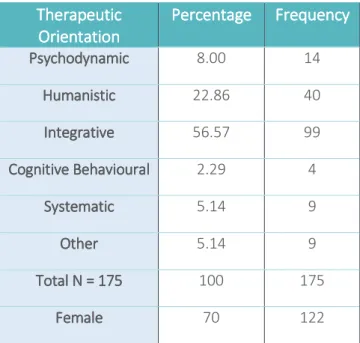
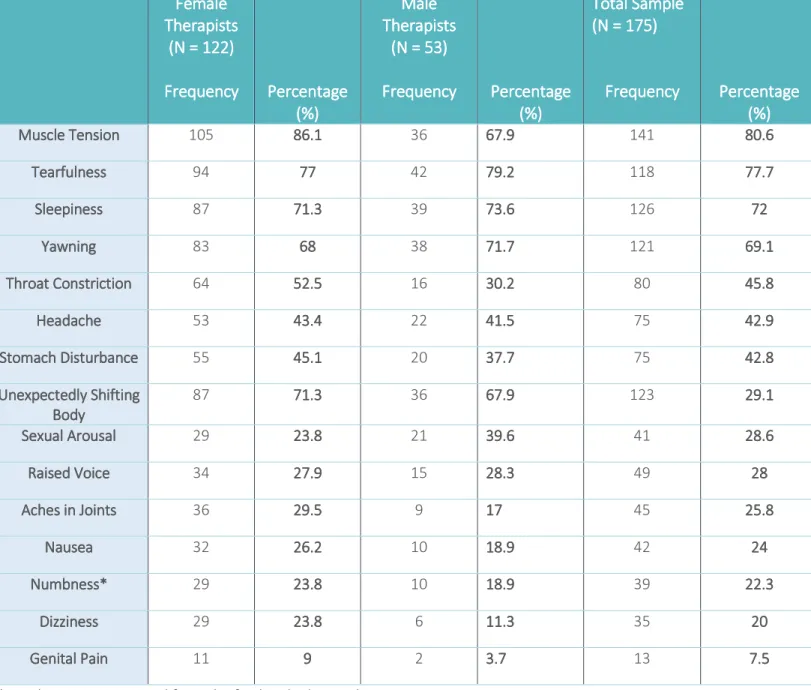
This paper aims to assess the frequency of Body Centred Countertransference (BCT) in a large sample of therapists (N=175; 122 Females) using the Egan and Carr Body Centred Countertransference Scale. BCTs are bodily responses of the therapist towards the client’s story. Understanding how the body reacts and if gender or therapeutic approach has an impact on the presence of BCTs will help in the management of these symptoms. The most commonly reported BCTs in the current study included: muscle tension (80.6%), tearfulness (77.7%), sleepiness (72%), yawning (69.1%) and throat
constriction (45.8%). Descriptive statistics showed a higher occurrence of muscle tension and aches in female therapists while a higher occurrence of sexual arousal was seen in male therapists. The sample size did not allow for comparison across therapeutic orientation. These theoretical understandings of countertransference will aid in the awareness of BCTs, internal supervision of what this means in session, and its management within the supervisory relationship.
INTRODUCTION
Body-centred Countertransference
The original term Body-centred Countertransference (BCT) comes from a description given by Pearlman and Saakvitne.1 They stated that: “We hold our affects physically and we will respond unconsciously through our bodies to the material and the presence of our clients. It
DEC 2020 27 is not unusual for a therapist to experience
somatic symptoms that parallel her client’s body experience”. 1(p.91) Much of the research on BCTs has used different terms that equate to BCT. Some of the terms used within the literature include embodied CT2,3 somatic CT4, somatic resonance5 and embodied empathy6.
Shaw7 reported that understanding this bodily phenomenon aided relational engagement with clients when the therapists used their BCT reaction in an attuned way. If the timing was right and if the therapist was acting in the interests of the client, rather than out of a personal CT reaction, then their understanding and use of their BCT aided engagement with clients. Blackburn and Price’s8 description of ‘presence in therapy’ supports the notion that a therapist being both present and having a mindful dual awareness related to the relationship helps the therapeutic outcome. Being fully present to the client, bringing one’s whole self (knowing what is mine and what is thine from moment to moment) into the relationship.
These reactions can have negative consequences to the therapist’s health, for example, aches in joints,9 so the awareness of the factors attributing to the presence of BCTs is essential for the management of the therapist’s health. Hayes, Gelso, Goldberg, and Kivlighan10 completed three meta-analyses in their review of countertransference (CT) and its management in psychotherapy. They found small to medium effect sizes in relation to the relationship between CT reactions, management of the CT and therapeutic outcome, with management factors diminishing CT reactions and resulting in better therapy outcomes. This is important in relation to supervision considerations and practice. They called for further focused research in relation to the effects of different types of CT on therapeutic outcomes, as well as how latent variables such as gender, ethnicity and therapists’ qualities also impacts these outcomes.
An Irish study of body-centred or somatic CT in 78 clinical psychologists11 found that the majority of the psychologists reported high levels of BCT when in session with
DEC 2020 28 their clients in the previous six months (as
measured on the Egan and Carr Body-Centred Countertransference Scale9). This level of somatic CT was very similar to that found by Egan and Carr12 in a sample of 35 female trauma therapists working with adult survivors of childhood abuse and neglect. Higher levels of BCT were found to be related to higher levels of sick leave in female trauma therapists, but this relationship was not found in Booth and colleagues’ sample of psychologists who were not primarily working with trauma survivors11. The six most common symptoms reported in more than half of the samples were sleepiness; yawning; muscle tension; unexpectedly shift or movement of part of the therapist’s body (hypnic jerk), tearfulness and headaches. These symptoms all occurred in the previous 6 months during a clinical session with a client.
From an Affect Phobia perspective13 the inability of a therapist to effectively engage with their own affective state, or the client activating previously unmet needs in the therapist, might result in the manifestation of defensive care-giving.14 This can
develop into a self-sacrificing style of caregiving in the long-term. Either process may activate the threat or inhibition system (fight/flight/freeze/flag/faint) where muscle tension is likely to occur, without access to a real physical or emotional escape. A therapist’s
unconscious defences when
(automatically) deployed, might include reactions such as; defensive tiredness (switching to immobilization when anger cannot be asserted), somatization (commonly headaches or GI upset15) and dissociation (hypnic jerks such as unintended bodily shifts or mind drifting into a trance like state).
In a study by Hayes, Nelson and Fauth, 18 therapists were investigated about their experiences of CT reactions and how this impacted therapeutic outcomes.16 Half of the therapists reported their CT reactions to be ‘successful’ in the therapeutic outcome. The other half judged their reactions to be ‘not successful’. Hayes and colleagues did not find reports of somatic reactions in the therapists studied. However, the interview schedule that they used did not specifically ask the therapists
DEC 2020 29 about reactions in their bodies. Their
research found that therapists who reported successful outcomes tended to be better at managing their CT reactions.
Egan and Carr recommended taking a moderate stance in relation to therapists’ somatic or BCT responses to their clients,12 assessing any occurrence in the last 6 months as well as investigating when there was a high occurrence of BCTs in the past 6 months. They found that the therapists reported dissociative responses to clients such as a loss of voice and throat constriction in approximately a third of therapists. McGrath and Egan17 in a randomised control design of 50 therapists, found that somatic countertransference occurred at the same time as both cognitive and emotional countertransference in response to a video clip of a narcissistic client compared to a neutral control video. These self-report measures showed evidence for somatic responses but did not correlate with the galvanic skin response and heart rate of therapists measured.
A further exploratory study looked at the frequency of occurrence of BCT in clinical psychologists from a variety of therapeutic approaches11 using the same measure. Clinical psychologists (N= 87) were sampled to assess whether there was a relationship between BCT and a range of variables including: primary client group and therapeutic orientation; clinical supervision; client session hours per week, age, marital status, sick leave, number of children and number of years post-qualification. Results showed that there was no significant relationship between BCT and these key variables. Booth and colleagues 11 suggested that future research needs to replicate their study’s findings, thereby providing further support for their results and additionally exploring whether there is a gender effect across frequency and type of BCT occurrence.
Several studies have suggested that there are gender differences in CT. Studies have shown that male therapists are more likely to withdraw from clients when their CT is evoked.18,19,20 Female therapists, on the other hand, are more likely to become over-involved with their clients when their
DEC 2020 30 CT is aroused.13 The two previously
mentioned Irish studies in relation to BCT in female trauma therapists and clinical psychologists did not assess gender effects.19,20
Analytic Case Studies
There are a number of published analytic case studies which explore the topic of BCT.21,22,23,24,25,26,26 Of particular interest is the work of Dosamantes-Beaudry23 who explains the importance for therapists to attend not only to their clients’ nonverbal somatic communications, but also their own. She argues that this knowledge then enables therapists to understand an evolving intersubjective relationship between themselves and their clients more fully and accurately. According to her, the therapist’s somatic CT is an additional source of information for the therapist which, to be employed most usefully, needs to be integrated with cognitive and emotional CT as well.
According to modern attachment theory the ability of the therapist to assuage the unmet needs of insecurely attached clients is achieved by the attunement of the therapist to the clients’ elicited help
seeking behaviour, which is often non-verbal and is expressed in micro glances and other verbal and non-verbal signs displayed to a care-giver.14 Affect Phobia Theory13 adds to Heard and colleagues stance by stating that adaptive affect and closeness needs which have been un-responded to, or inconsistently un-responded to, or in some cases verbally or physically punished, may result in an unconsciously phobic resistance to approaching adaptive affect and sharing distress with potential care-givers. In O’Laoide, Osborne and Egan,27 in a large sample of young Irish adults (N= 761), insecure attachment was assessed in relation to depression, anxiety and stress. This relationship appeared to be mediated by levels of current depersonalisation. Those who experienced emotional maltreatment and neglect had significantly higher levels of depersonalization than those who reported experiencing childhood physical or sexual abuse.
Stone5 suggested that there are three conditions that are most likely to lead to embodied CT. He proposed that if the client has a borderline or psychotic