Lake County Broadband Plan
Frank Ohrtman
December 31, 2013
Executive Summary
This report provides an assessment of the broadband environment for Lake County, Colorado. The methodology for this assessment involved 3 elements: a) speed mapping b) resource mapping and c) demand mapping.
Speed Mapping
Speed mapping refers to a process of gathering a) advertised speeds (internet speeds reported by service providers to state and federal authorities) and then comparing them to b) actual speeds or what the subscriber actually receives from the service provider. This assessment found a wide disparity between advertised and actual internet speeds. Of note, broadband, as defined by the Federal
Communications Commission as 4 Megabits per second downstream, 1 megabit per second upstream, is available only in downtown Leadville (population 2,600 of a countywide total of 7,800) only.
Resource Mapping
Assessing the resources that comprise potential broadband infrastructure provides an explanation for a) deficiencies in the broadband network and b) resources that might improve the broadband environment. This assessment found few middle mile resources, which could contribute to an improved middle mile market. In short, the middle mile market is not “redundant, abundant nor affordable”.
Demand Mapping
Any business case would take potential sales (demand) into account in synch with any potential investment in infrastructure. Surveys of both residential as well as enterprise (community anchors and businesses) indicate that demand exceeds what is available from service providers.
Analysis
Lake County is in dire need of significant investment in its broadband environment including:
1. Redundant, abundant, affordable middle mile
2. Ubiquitous broadband last mile infrastructure serving as many residences, businesses and community anchor institutions in Lake County as possible
Recommendations
It is recommended that this report be made to the public (demand) and service providers (supply). In conjunction with publishing this report, Lake County Governments should issue a Request for Information inviting service providers to provide information on how they would improve the broadband environment in
Table of Contents INTRODUCTION... 2 SPEED MAPPING ... 3 ADVERTISED SPEEDS...3 ACTUAL SPEEDS...5
IDENTIFY AND CATALOG MOST CHALLENGED COMMUNITIES...8
OUTAGES...8
RESOURCE MAPPING ...11
FIBER OPTIC CABLE ROUTES... 11
Aerial Routes...11
Sangre de Cristo Electric Association...12
Xcel Energy ...12
Terrestrial Fiber Routes - CenturyLink ...14
Colorado Department of Transportation (CDOT) and Comcast ...15
CDOT-‐ITS Fiber Sharing Policies and Primary Agreements ...15
EAGLE-‐Net...17
MICROWAVE... 18
American Tower...19
Consolidated Communications Network of Colorado (CCNC)...19
LAKE COUNTY WIRELESS TOWERS... 21
SUMMARY OF MIDDLE MILE RESOURCES... 21
INVENTORY OF LAST MILE PROVIDERS BY COMMUNITY... 22
INVENTORY OF SWITCHING FACILITIES... 23
DEMAND MAPPING: AN ASSESSMENT OF NEEDS ...25
RECOMMENDATIONS: NEXT STEPS ...32
APPENDIX A: REQUEST FOR INFORMATION (RFI)-WHAT CAN SERVICE PROVIDERS OFFER COMMUNITY ANCHORS OF LAKE COUNTY?...33
APPENDIX B: COMMENTS FROM SURVEY RESPONDENTS-RESIDENTIAL ...35
APPENDIX C: RESPONSES TO BROADBAND REQUEST FOR PROPOSAL...36
Figure 1 Advertised speeds for Lake County indicate Leadville has access of up to 50 Mbps internet speeds on wireline (telephone company infrastructure or cable modem)... 4 Figure 2 Map of advertised mobile (cellular) speeds for Lake County indicate speeds
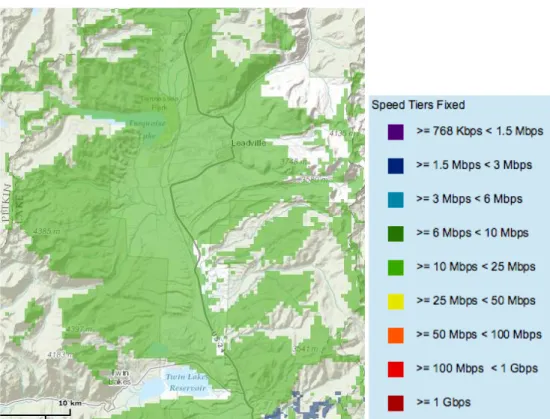
of up to 6 Mbps on mobile devices... 4 Figure 3 Map of advertised fixed wireless speeds indicates speeds of up to 25 mbps
are available throughout Lake County. No actual tests collected support this... 5 Figure 4 Speed tests gathered by Colorado Broadband Data and Development
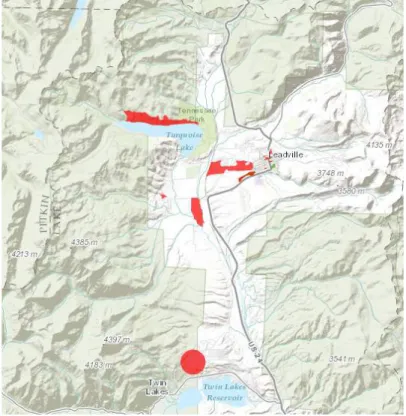
Program. A green dot represents a speed test where the subscriber got 3 Mbps downstream and 1 Mbps upstream. A red dot indicates a test that did not
achieve those speeds... 6 Figure 5 Actual speeds for Lake County as gathered by LakeConnect. Each point
represents a speed test that met FCC definition of broadband (4 Mbps down, 1 Mbps up). Of almost 100 tests, less than 10% met the broadband criteria. Median download speed is 5.425 Mbps, median upload speed is 1.755 Mbps .... 7 Table 6 Worksheet for determining cost of network outages for Steamboat Springs9 Figure 7 One-third of respondents reported their internet service is not
reliable... 9 Figure 7 Sample of Forest Service filings by CenturyLink for aerial fiber work near
Granite, CO...12 Figure 8 CenturyLink fiber optic cable route in Lake County...14 Figure 9 CDOT operates a 144-‐strand fiber route Golden to Vail of which 2 strands
are leased to Comcast. ...15 Figure 10 EAGLE-‐Net's December 2013 map of facilities for Lake County (or lack
thereof). It is unlikely EAGLE-‐Net will build to Lake County...17 Figure 11 Thorodin Mountain microwave sites "see" Denver and the Front range
providing one-‐hop middle mile services... Figure 12 Squaw Mountain microwave sites "see" Denver and the Front Range
offering one-‐hop microwave middle mile services... Figure 13 American Tower, a leading cell tower operator, has a tower in Leadville
that can support microwave operations. ...19 Figure 14 Map of CCNC site in Lake County. If not available for commercial use, near
by towers can be used for commercial purposes ...20 Figure 15 Lake County Government owns towers at Quail Mountain and Lake
County Courthouse ...21 Figure 17 How Lake County accesses the Internet...22 Figure 16 Actual broadband speeds that meet the FCC’s definition of broadband
occur only in close proximity (less than 1 mile) from the CenturyLink central office. Comcast buys its middle mile services from CenturyLink’s central office.
...24 Figure 17 Inventory of community anchors in Leadville that subscribe to relatively
Figure 21 Over half of respondents are not satisfied with their internet service...27 Figure 22 Two-‐thirds of respondents would switch to a new service provider if it
offered faster speeds at about the same price ...27 Figure 23 One-‐third of respondents said they would pay up to 15% more for faster
internet service...28 Figure 24 About half of respondents are subscribed to the fastest speeds possible for their market ...28 Figure 25 About half of respondents report they have a choice in service providers
...29 Figure 26 Half of respondents consider faster internet service to be mission critical
for their business...29 Figure 28 About one-‐quarter of respondents would be very likely to expand their
business if they had access to faster internet services...30 Figure 29 Given CenturyLink fiber assets in Lake County, a fiber-‐to-‐the-‐home
(FTTH) deployment along its fiber route is possible ...31
Table 1 Why downtime matters: "five nines" or 99.999% up time is the standard for the industry. For comparison, a household in Denver can expect 99.999% uptime where Gilpin and Clear Creek county homes and businesses may suffer as low as 99.9% uptime-‐a significant difference in telecom standards...10 Table 4 Last mile providers might have access to up to 10 middle mile resources...21 Table 5 Inventory of last mile providers by town...23 Table 6 Location of CenturyLink central office for Lake County. Almost all speed
tests that met FCC definition of broadband occurred within 1 mile of the central office. Comcast’s cable plant is limited to Leadville city limits and buys middle mile services from CenturyLink. ...23
Introduction
A three-‐part mantra drives rural broadband development in Colorado:
(1)No one size fits all
(2)The best solutions are local
(3)It does NOT cost millions of dollars to bring broadband to any rural Colorado community
Further more, a methodology known as “the 5 A’s” provides a robust means for community planners in improving their broadband environment. Those “5 A’s” are:
(1)Aggregate Experience
(2)Assess Broadband Environment (3)Assess and Aggregate Demand
(4)Adopt Existing Resources and Solutions (5)Adapt for Sustainability
This Assessment is comprised of three mapping processes
1) Speed Mapping 2) Resource Mapping 3) Demand Mapping
The data gathered, summarized and reported is designed to help community leaders and service providers alike understand the current broadband environment and guide them in making decisions to improve the broadband environment.
Speed Mapping
Broadband is defined by the Federal Communications Commission as being a
downstream speed of 4 megabits per second (Mbps) and upstream speed of 1 Mbps. Until that condition is met, a subscriber does not have broadband. Monitoring of internet speeds is the first step in assessing one’s broadband environment.
Internet speeds are classified in two categories by the FCC and national
Telecommunications and Information Administration (NTIA): a) advertised speeds or that which the service provider advertises as being the speed available in a given market b) actual speeds based on internet speed tests. The following figures
provide contrasts in advertised speeds for Lake County as gathered by Colorado Broadband Data and Development for the Colorado and National Broadband Maps versus speed test data gathered in a survey by Lake County, Internet3 and Mobile Pulse.
Advertised Speeds
Figure 1 Advertised speeds for Lake County indicate Leadville has access of up to 50 Mbps internet speeds on wireline (telephone company infrastructure or cable modem)
Source: Colorado Broadband Data and Development Program http://www.colorado.gov/oit/broadband
Figure 2 Map of advertised mobile (cellular) speeds for Lake County indicate speeds of up to 6 Mbps on mobile devices.
http://www.colorado.gov/oit/broadband
Figure 3 Map of advertised fixed wireless speeds indicates speeds of up to 25 mbps are available throughout Lake County. No actual tests collected support this.
Source: Colorado Broadband Data and Development Program http://www.colorado.gov/oit/broadband
Actual Speeds
LakeConnect, the Local Technology Planning Team for Lake County, gathered speed test data in late 2012/early 2013. Almost 100 tests were analyzed to determine where broadband, as defined by the Federal Communications Commission (FCC) as 4 megabits per second (Mbps) downstream and 1 Mbps upstream, might be
available. In contrast to the “advertised” speed data gathered for inclusion in the National and Colorado Broadband Maps, the map that follows is based on the data gathered.
Figure 4 Speed tests gathered by Colorado Broadband Data and Development Program. A green dot represents a speed test where the subscriber got 3 Mbps downstream and 1 Mbps upstream. A red dot indicates a test that did not achieve those speeds.
Source: Colorado Broadband Data and Development Program http://www.colorado.gov/oit/broadband
Figure 5 Actual speeds for Lake County as gathered by LakeConnect. Each point represents a speed test that met FCC definition of broadband (4 Mbps down, 1 Mbps up). Of almost 100 tests, less than 10% met the broadband criteria. Median download speed is 5.425 Mbps, median upload speed is 1.755 Mbps
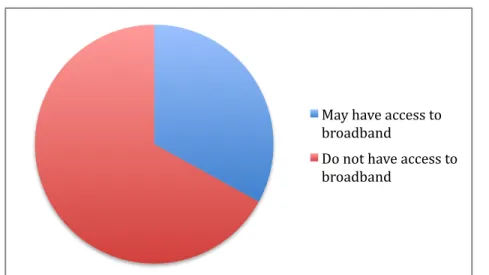
Figure 6 At least two-thirds of the population of Lake County have no access to broadband
May have access to broadband
Do not have access to broadband
Identify and catalog most challenged communities
Based on actual speed testing, all communities of Lake County are challenged in terms of internet speeds and reliability of the infrastructure.
Outages
Many respondents to the LakeConnect survey reported frequent network outages.
Of note, Chaffee County’s Mountain Mail reported the following outage of June 2012:
Cut cable kills internet, phone
Posted: Thursday, June 7, 2012 8:52 amJoe Stone, Mail News Editor | 0 comments
Internet and phone service went down in Chaffee County Wednesday afternoon when a fiber-optic cable was inadvertently cut Wednesday afternoon along U.S. 285 in southern Chaffee County.
Mark Bittle, CenturyLink spokesperson, said a nearby work crew responded almost immediately, restoring service in less than 2 hours.
Verizon Wireless spokesperson Bob Kelley said the damaged cable caused service outages at four Verizon cellular towers between Salida and Leadville.
Bittle said this and other recent service interruptions underscore the need for redundancy in the regional fiber-optic network, an issue the Chaffee County Economic Development Corp. has identified as a top priority.
Bittle said CenturyLink has listened to concerns expressed by the CCEDC and has diverted funds to build a redundant fiber-optic path that will prevent service outages when completed.
Bittle estimated that the new cable will be complete “within a year for sure.”
While it might be an interesting exercise to determine the cost of a CenturyLink network outage in dollars per hour in a) lost sales by retailers, b) lost productivity in the public sector (schools, city and county governments) and c) the private sector
($/hour/employee), suffice it to say that the outage of October 31, 2011 cost Steamboat Springs retailers at least $100,000/hour for 8 hours or $800,000 in lost sales. From a community perspective, the expenses (capital and operating) of the CNL pale in comparison to the cost of just one more CenturyLink middle mile outage.
COST OF NETWORK OUTAGE IN LOST SALES OCT 31, 2011 ($100,000/HOUR X 8 HOURS) COST OF NETWORK OUTAGE IN LOST PRODUCTIVITY (# WORKERS X $30/HOUR X 8 HOURS) TOTAL COST OF OUTAGE 31 OCT 2011 ONE TIME COST OF CNL SAVINGS TO COMMUNITY OVER ONE NETWORK OUTAGE $800,000 1,000x$30x8=$240,000 $1,040,000 $70,000 $940,000 Table 7 Worksheet for determining cost of network outages for Steamboat Springs
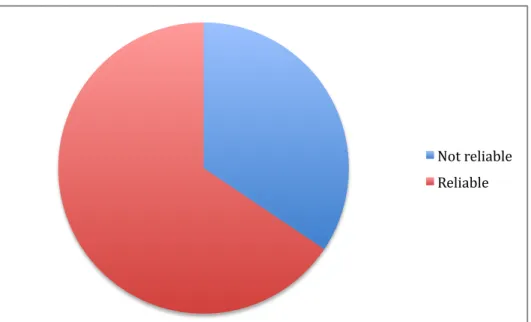
Figure 8 One-third of respondents reported their internet service is not reliable
Not reliable Reliable
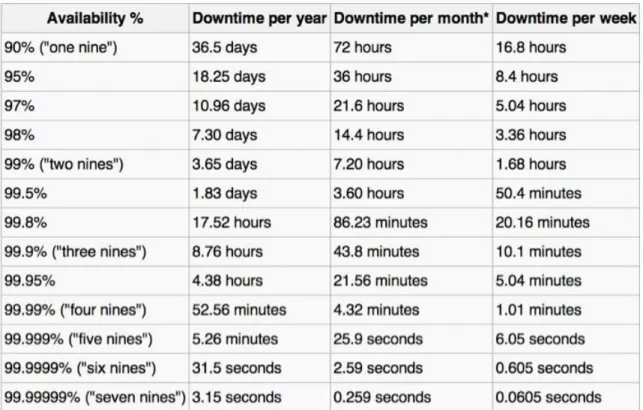
Table 1 Why downtime matters: "five nines" or 99.999% up time is the standard for the
industry. For comparison, a household in Denver can expect 99.999% uptime where Gilpin and Clear Creek county homes and businesses may suffer as low as 99.9% uptime-a significant difference in telecom standards.
Resource Mapping
Why does a community’s internet “stink”? Most likely it is due to inadequate infrastructure and other resources. The next step in solving the problem is to list and map telecom infrastructure resources. The most critical of which are middle mile resources, i.e., the connection to the outside world.
Inventory of Middle Mile Assets
Middle mile, the “pipe” that connects communities to the outside world, comes in two technology types: fiber optic cable and microwave (wireless).
Fiber Optic Cable Routes
Fiber optic cable is generally deployed in two “flavors”: aerial (strung along power transmission or distribution lines) and terrestrial (trenched in conduits usually along highway rights of way.
Aerial Routes
Electric utilities’ infrastructure can be used for broadband services. Fiber optic cables can be attached to electric utility poles to deliver both middle and last mile services.
Sangre de Cristo Electric Association
South Lake County is served by Sangre de Cristo Electric Association, a not-‐for-‐profit electric cooperative.Sangre de Cristo Electric Association has no aerial fiber
deployed on their assets in Lake County. Sangre de Cristo management is enthusiastic to work with Lake county to improve the broadband environment.
A search of US Forest Service filings indicate CenturyLink uses (or used) aerial fiber at a one-‐mile stretch of their middle mile serving lake County.
Figure 9 Sample of Forest Service filings by CenturyLink for aerial fiber work near Granite, CO Source: http://www.fs.fed.us/sopa/components/reports/sopa-‐110212-‐2013-‐ 04.html
Xcel Energy
Xcel Energy is the electric provider for Leadville and north Lake County. Per the Telecommunications Act of 1996, for-‐profit electric utilities such as Xcel, must make their poles and other facilities available to telecom service providers. Additional rulings from the FCC have set pricing for use of utility poles at about $5/year.
As a result, any Xcel Energy pole could be used for middle mile services. For example, fiber optic cabling attached to Xcel poles could bring competitive gigabit
per second speeds to Leadville, Twin Lakes and any other cluster of businesses and residences.
Utility poles can also support last mile broadband where aerial fiber optic cables attached to utility poles delivering fiber-‐to-‐the-‐home broadband services. Of note, San Luis Valley Rural Electric Cooperative is currently planning such a network.
Terrestrial Fiber Routes -‐ CenturyLink
There is only 1 commercially operated middle mile fiber optic service provider in Lake County: CenturyLink. As the route map below indicates, this route should provide north-‐south route diversity such that in the event of a cut in the line, traffic should be rerouted in the direction opposite the cut. Recent CenturyLink fiber optic cable cuts (NW CO October 31, 2011, Chaffee County June 06, 2012) do not support that claim.
Figure 10 CenturyLink fiber optic cable route in Lake County
Colorado Department of Transportation (CDOT) and Comcast
One possible solution toward ensuring middle mile services to Lake County are “redundant, abundant and affordable” is to connect to fiber optic route(s) on Interstate 70.
Figure 11 CDOT operates a 144-strand fiber route Golden to Vail of which 2 strands are leased to Comcast. Leadville could connect to that route via Xcel energy utility poles along Hwy 91
CDOT-ITS Fiber Sharing Policies and Primary Agreements
Colorado Department of Transportation has a fiber optic route stretching from Golden to Vail along I-‐70. That route has 144 strands of fiber. Comcast has use (lease) of 2 fibers for 20 years. Comcast provides all maintenance, including locates, on the line and Comcast pays CDOT ITS $300,000/year cash ($6M total) + consulting services over the term for a total contribution of approximately $15M.
CDOT maintains control of our existing fiber asset to use, lease, etc. “The department shall not enter into any exclusive arrangement, lease, or other agreement for use of
the public rights-‐of-‐way by a telecommunications provider that in any way discriminates or prevents a similar arrangement being made with any other telecommunications provider.”
Any public or private entity may approach CDOT or any party to discuss availability and terms for use of that entities asset. Public sector requests to CDOT may be considered based on in-‐kind services and/or matters of public safety. In short, all ITS fiber optic strands are open for public or private use, provided that there are fiber strands available for use, and if a partner is able to provide in-‐kind benefit to CDOT, as noted in the statutes referenced above.
EAGLE-Net
The most recent map from EAGLE-‐Net ($100.6 million federal grant to build fiber optic routes to Colorado’s 178 school districts) shows a planned terrestrial fiber optic cable route from Interstate 70 to Leadville. Earlier versions of the same map indicated that route would be completed by August 30, 2013 (the end date of federal funding). The planned route was to have been constructed along CO 91 connecting to a yet-‐to-‐be-‐constructed (or leased) route along Interstate 70.
Figure 12 EAGLE-Net's December 2013 map of facilities for Lake County (or lack thereof). It is unlikely EAGLE-Net will build to Lake County.
Microwave
Microwave radios can transmit multiple gigabits per second at ranges of over 50 miles at costs of less than $5,000/mile (compare to trenched fiber which starts at $25,000/mile and aerial fiber at $15,000/mile). Microwave is a relatively low cost middle mile solution for many rural and remote communities.
American Tower
Figure 13 American Tower, a leading cell tower operator, has a tower in Leadville that can support microwave operations.
Consolidated Communications Network of Colorado (CCNC)
Colorado is home to the nation’s largest public safety two-‐way radio network, the CCNC with 216 tower sites and over 60,000 public safety subscribers. The figure below illustrates CCNC microwave sites in Lake County and Denver. The microwave towers illustrated are often located on “antenna farms” where commercial space can be had by commercial service providers who could contribute to improved middle miles services in Lake County.
Figure 14 Map of CCNC site in Lake County. If not available for commercial use, near by towers can be used for commercial purposes
Lake County Wireless Towers
Lake County Government owns and operates 2 radio towers: Quail Mountain and Lake County Courthouse.
Figure 15 Lake County Government owns towers at Quail Mountain and Lake County Courthouse
Summary of Middle Mile Resources
Middle Mile Technology Route/Location Vendor/Operator
Fiber optic cable Hwy 24 and 91 CenturyLink Table 2 Last mile providers in Lake County have access to 1 middle mile resource
Inventory of Last Mile Providers by Community
Last mile providers connect subscribers to the Internet. A survey conducted by Lake Connect in February, 2013, gathered responses from 23 respondents.
Figure 16 How Lake County accesses the Internet
Almost half of respondents reported subscribing to cable modem service. This is probably due to a) small footprint for coaxial cable infrastructure (Leadville only) b) aging coaxial cable infrastructure c) the cable modem provider (now Charter
Communications) probably buys middle mile services from CenturyLink. It is not clear why Charter does not offer Denver-‐area speeds (50 mbps and 100 Mbps packages) in the communities it serves in Lake County.
Century-‐Link DSL Charter cable modem WildBlue satellite HughesNet satellite Other
Town Providers Leadville CenturyLink Charter AT&T Verizon Amigo net Twin Lakes CenturyLink
AT&T Verizon
Table 3 Inventory of last mile providers by town
Inventory of Switching Facilities
Traditionally, telecommunications services have been routed through the telephone company’s central office. Leadville’s broadband environment is no exception.
Town Street Address
Leadville 411 Poplar St. Leadville, CO
Table 4 Location of CenturyLink central office for Lake County. Almost all speed tests that met FCC definition of broadband occurred within 1 mile of the central office. Comcast’s cable plant is limited to Leadville city limits and buys middle mile services from CenturyLink.
Figure 17 Actual broadband speeds that meet the FCC’s definition of broadband occur only in close proximity (less than 1 mile) from the CenturyLink central office. Comcast buys its middle mile services from CenturyLink’s central office.
Demand Mapping: An Assessment of Needs
Figure 18 Inventory of community anchors in Leadville that subscribe to relatively large quantities of bandwidth representing relatively high levels of demand for last mile services
Figure 19 Demand Map for community anchors of south Lake county
Figure 20 Demand Map for north Lake County community anchors
Figure 21 Over half of respondents are not satisfied with their internet service.
Figure 22 Two-thirds of respondents would switch to a new service provider if it offered faster speeds at about the same price
No Yes
Would switch Would not switch
Figure 23 One-third of respondents said they would pay up to 15% more for faster internet service
Figure 24 About half of respondents are subscribed to the fastest speeds possible for their market
Would pay 15% more for faster internet service Would not pay 15% more for faster internet services
Not sure Yes No
Figure 25 About half of respondents report they have a choice in service providers
Figure 26 Half of respondents consider faster internet service to be mission critical for their business
Most businesses and community anchor institutions pay (relative to Denver prices) extremely high prices for (relative to Denver) for very slow internet speeds and unreliable service (frequent outages).
Yes No Not sure
Important but not essential
Mission critical
Figure 27 About one-quarter of respondents would be very likely to expand their business if they had access to faster internet services
Communication between suppliers and potential subscribers detailing a) availability of services b) speeds of services c) pricing of services and d) reliability of services might remedy the differences between expectations and what’s available in this market. Not sure Maybe Not likely Very likely
Figure 28 Given CenturyLink fiber assets in Lake County, a fiber-to-the-home (FTTH)
deployment along its fiber route is possible. In addition, FTTH services could be deployed via aerial fiber via the power grid (Xcel and Sangre de Cristo)
Recommendations: Next Steps
1. Once approved by Lake County government, this report and especially the results of the surveys should be made available to the public (downloadable from county government websites). Issuance of a press release to local and state media will lay the foundation for Recommendation #2 below.
2. A Request for Information (RFI) should be issued by Lake County to local and national service provider communities inviting proposals to better serve the communities of Lake County. This serves as an online auction of demand in exchange for service.
Appendix A: Request for Information (RFI)-‐What Can Service
Providers Offer Community Anchors of Lake County?
Question/Factor Your Response
1. What technology type(s) do
you propose?
2. How will your middle mile solution be redundant (north-‐ south, east-‐west) and offer
99.999% availability in support of your last mile services?
3. Does your solution enable a commercial or institutional end user to subscribe to speeds of up to 1 Gbps services?
4. What price range would an enterprise customer expect to pay in $/Mbps/month per location for your services if buying: a. 10 Mbps? b. 50 Mbps? c. 100 Mbps? d. 500 Mbps? e. 1 Gbps?
5. How do you propose to service the community anchor
institutions of Lake County (see attached Broadband Assessment for names and addresses)?
6. What public sector concessions would assist you in service
delivery? How would you use those assets to bring better internet services to these communities? Please explain.
a. Access to light poles? b. Access to rights of way? c. Roof rights on public sector
buildings?
towers?
e. Access to a publicly-‐owned space for a carrier neutral location (CNL) as alternative to central office? If so, please describe.
f. Local government assistance in obtaining pole rights from electric service provider(s)?
g. Access to existing indoor Distributed Antenna System (DAS) in public buildings?
7. Does your solution include publicly accessible Wi-‐Fi solution? If so, please describe.
8. Does your solution include or support a Distributed Antenna System (DAS, Wi-‐Fi/cellular or Wi-‐Fi only)?
9. Does your solution include or support 4G cellular services? 10. Can you deliver service to
community anchor institutions and leading businesses in Lake County by September 01, 2014?
11. In addition to servicing the enterprise customers of Lake County, how does your solution bring improved last mile internet and mobile (cellular) services to the residential and small business markets of these counties?
12. Can your last mile service provide low cost internet access for students enrolled in the Lake County school district? If so, what is your suggested subscription price for families with students on free and reduced lunch?
13. Please provide a proposed service level agreement for enterprise customers of Lake County.
Appendix B: Comments from Survey Respondents-‐Residential
The most valuable data collected from surveys comes in the “Comments” section.
Appendix C: Responses to Broadband Request for Proposal
March 07, 2014
Government Contractor Attn: Frank Ohrtman, [email protected]
Mr. Ohrtman,
Re: REQUEST FOR PROPOSAL: INTERNET SERVICES FOR LAKE COUNTY
Colorado Central telecom has reviewed the Lake County Broadband Request for Proposal (RFP), performed a preliminary feasibility study, and has reached the conclusion that we can provide a solution that specifically addresses some of the primary goals defined in the RFP.
Question regarding this proposal should be directed to:
Attn:
Ralph Abrams, CEO
Colorado Central Telecom Sincerely,
Proposed Technology: Microwave Route to Support/Fixed Wireless/VoIP
Central Colorado Telecom proposes to build an alternative middle mile into Lake County to ensure the Lake County broadband environment is “redundant, abundant and
affordable”. Central Colorado Telecom will make its gigabit per second capable middle mile available to emerging last mile providers in Lake County who will in turn sell fixed wireless and voice over Internet Protocol (VoIP) services to residents, small businesses and community anchor institutions in Lake County.
Proposal Summary
COLORADO CENTRAL TELECOM is providing a proposal for a technical solution based on an FCC licensed Fixed Wireless Microwave redundant middle mile and point to point fixed wireless to service enterprise and public sector customers. The three primary goals are addressed as follows:
1. Redundant broadband service to the region – COLORADO CENTRAL TELECOM proposes a FCC licensed high-capacity microwave loop originating in Salida, Colorado, traversing Chaffee county to Lake county. These core sites could be used to directly feed anchor institutions where feasible.
2. Expanded broadband capacity – COLORADO CENTRAL TELECOM’s offering of competitive middle mile pricing will enable last mile providers to offer much greater bandwidth to end users than what is currently available via DSL or cable modem offerings with no data caps.
3. Broadband services at a reasonable price – COLORADO CENTRAL TELECOM’s offering of competitive middle mile pricing will enable last mile providers to offer internet services at a lower cost per megabit per second per month ($/Mbps/month) COLORADO CENTRAL TELECOM proposes a 90 day pre-sales period during which it will solicit pre-sale contractual commitments from area businesses and anchor institutions with the understanding that upon meeting our pre-sales goal COLORADO CENTRAL TELECOM will begin the network construction and deliver service to pre-sale customers within the timeframe specified in a Pre-Sales Service Order Agreement (”SOA”).
The committed revenue required to justify the investment in network expansion is $5,000 per month in new recurring commercial revenue for a term of 36 months. This
commitment can be met by any combination of public sector, last mile service provider, and large business customers.
COLORADO CENTRAL TELECOM proposes the following project timelines: 1. Pre-sales period – 3 months commencing on April 1st, 2014 and concluding on June 30th, 2014.
2. Engineering period – concurrent with pre-sales period
3. FCC license acquisition – 45 days commencing on June 1st, 2014
4. Network build out, core and pre-sold anchor institutions - 3 months commencing on July 1st, 2014 and concluding by September 30th, 2014.
5. Coordination with last mile service providers for residential demand mapping – commencing on July 1st, 2014 and ongoing. If pre-sales activity results in commitments for the specified minimum recurring revenue of $5,000 per month prior to May 31st, 2014 COLORADO CENTRAL TELECOM will accelerate remaining timeframes by an equivalent number of days. If pre-sales activity fails to result in commitments for the
1. Withdraw the proposal, terminate open service orders with no cancellation or termination fees, and notify interest parties in writing, or:
2. Upon approval by all interested parties, extend the pre-sales period and postpone timeframes by a corresponding number of days, or:
3. Modify the committed revenue requirement to a level equal to the pre-sales orders executed by the conclusion of the pre-sales period and move forward according to the timeline.
Terms and Conditions
This proposal is not a contract. Neither party is obligated to perform in any way beyond the terms and conditions of an independently executed Service Order Agreement (“SOA”) by and between COLORADO CENTRAL TELECOM
and its direct customers.The sole purpose of this proposal is to demonstrate that under the condition of committed aggregate commercial demand COLORADO CENTRAL
TELECOM is capable of and willing to execute a commercial business expansion plan for the mutual benefit of future customers in and around Lake County.
Question/Factor Your Response
1. What technology type(s) do
you propose? Microwave Middle Mile
2. How will your middle mile solution be redundant (east-‐west, north-‐south) and offer 99.999% availability in support of your last mile services?
Redundancy is built into the microwave path via redundant radios. Primary radio fails over to secondary radio in event of failure of primary radio.
3. Does your solution enable an end user to subscribe to speeds of up to 1 Gbps services?
Yes. With appropriate provisioning.
4. What price range would an enterprise customer expect to pay in $/Mbps/month per location for your services if buying:
Colorado Central Telecom is proposing a middle mile service to last mile providers and,
potentially buyers of large quantities of bandwidth on a case-‐by-‐case basis
a. 10 Mbps? N/A
b. 50 Mbps? N/A
c. 100 Mbps? $29
d. 500 Mbps? $25
e. 1 Gbps? $17
5. How do you propose to service the community anchor
institutions of Lake County
Our highly competitive middle mile service drives down the wholesale cost of bandwidth which last mile providers can pass on to community anchor last mile subscribers. Custom solutions can be made available for community anchors buying bandwidth at levels
in excess of 100 Mbps. 6. What public sector concessions
would assist you in service delivery? If yes, how would you use those assets to bring better internet services to these communities? Please explain.
a. Access to light poles? Yes b. Access to rights of way? Yes c. Roof rights on public sector
buildings? Yes
d. Access to public safety wireless towers?
Yes e. Access to a publicly-‐owned
space for a carrier neutral location (CNL) as alternative to central office? If so, please describe.
Yes
f. Local government assistance in obtaining pole rights from electric service provider?
Yes
g. Access to existing indoor Distributed Antenna System (DAS) in public buildings?
No, however, we would be very interested in providing middle mile services in support of any DAS in Leadville
7. Does your solution include publicly accessible Wi-‐Fi solution? If so, please describe.
No
8. Does your solution include or support a Distributed Antenna System (DAS, Wi-‐Fi/cellular or Wi-‐Fi only)?
Yes.
10. Can you deliver service to community anchor institutions and leading businesses in Lake County by September 01, 2014?
Depending on funding of project, yes.
11. In addition to servicing the enterprise customers of Lake County, how does your solution bring improved last mile internet and mobile (cellular) services to the residential and small business markets of these counties?
Our highly competitive middle mile service drives down the wholesale cost of bandwidth which last mile providers can pass on to community anchor last mile subscribers. Custom solutions can be made available for community anchors buying bandwidth at levels in excess of 100 Mbps.
for students enrolled in the Gilpin and Clear Creek school districts? If so, what is your suggested subscription price for families with students on free and reduced lunch?
which last mile providers can pass on to community anchor last mile subscribers. Custom solutions can be made available for community anchors buying bandwidth at levels in excess of 100 Mbps.
Conceivably, the school district could make its bandwidth available after hours via Wi-‐Fi in Leadville.
13. Please provide a proposed service level agreement for enterprise/community anchor institution customers of Lake County.
N/A Given our proposal is for middle mile services we do not have a “standard” service level agreement for last mile end users..
HIGH COUNTRY INTERNET, INC.
PO BOX 1180 500 McWETHY DRIVE
LEADVILLE, CO 80461
RFP COVER SHEET
March 7, 2014
Lake County Board of Commissioners c/o Internet 3, LLC
Attn: Frank Ohrtman [email protected]
Submitted and Prepared by: Bill Jones: [email protected] (512) 567-3185
Jack Saunders: [email protected] (719) 486-3800
Thank you for the opportunity to respond to your request for broadband services for Leadville and Lake County. We are prepared to launch a reliable service deploying new equipment in coordination with existing resources to meet both current and future needs of the local community. Our plan is to grow capacity in advance of demand and in step with developing technologies while partnering with local and regional entities.
High Country Internet, Inc. is a new start up firm formed by Bill Jones and Jack Saunders. Attached please find a brief narrative of both Bill’s and Jack’s experience and qualifications. We are located at 500 McWethy Drive in Leadville. Sometimes lost in the discussion is the primary motivation for broadband expansion. It is our intention to promote both community and economic development through enhanced broadband infrastructure. For our community to thrive our schools, hospital, businesses, emergency services, governments, airport, residents and guests all need fast, reliable and dependable internet. As evident in the RFP, our plan is to collaborate with all the anchor institutions, the tourism panel and Chamber to facilitate their needs and the needs of their customers and guests. We want to work with the schools in facilitating their goal of every student being internet connected. Our efforts will help the LCEDC attract location neutral businesses. We hope to partner with the hospital in providing their “second tier” needs as well as redundancy. We see an opportunity to assist communications for special events and in remote emergency situations.
Our focus is a business model that employs locals and builds a strong, thriving, smart and connected community. Thank you for the opportunity to share this proposal.
Sincerely,
Bill Jones President
EXPERIENCE and QUALIFICATIONS
Bill Jones
Bill has 30 years of experience in computer hardware and software development. He was Motorola's technical liaison with Microsoft, IBM, Apple Computers, and numerous third party developers on a joint effort to bring the Microsoft Windows operating systems to PowerPC based workstations. Other relevant projects include CDMA cell phone handset and protocol development as well as network protocol development back when the internet was an obscure defense department project.
Bill has worked with Lake County Connect to bring enhanced broadband services to the area. He formed High Country Internet, Inc. in order to provide Lake County with a first class internet service provider.
Bill graduated with a Bachelors of Science in Computer Science from Texas State University San Marcos in 1984.
Jack Saunders
For 35 years Jack has been a successful Lake County home builder, community leader and most recently insurance agency owner. In operating businesses since 1979 (three years later, Climax closed), Jack knows the challenges of the local economy, the need to create more private sector jobs, the demands of meeting payroll and the necessity to participate in and promote our community.
Jack was instrumental in working with Chaffee County Connect to establish a similar entity in Lake County to promote enhanced broadband connectivity. Lake County Connect was formed with the blessing of the Board of Commissioners and now has become a standing committee of the Lake County Economic Development Corporation.
Jack has a BA from SUNY Albany. He and Cindy were married at Turquoise Lake in 1980 and were blessed with three daughters all of whom graduated from Lake County Schools and Colorado colleges.
High Country Internet, Inc.
Jack and Bill are using their combined skills to make High Country Internet the premiere provider of Internet services in Central Colorado.
Question/Factor Your Response
1. What technology type(s) do you propose? Internet service for Lake County will require a combination of technologies depending on customer location and requirements. Among the available choices we propose to use
Wireless 802.11 TDMA PTMP unlicensed microwave.
Wireless unlicensed TV whitespace.
Wireless licensed LTE based PTMP.
Licensed and unlicensed microwave for high bandwidth dedicated internet service.
802.11ac based hotspot service. Both fixed location and portable. 1
Fixed and mobile VOIP services.
2. How will your middle mile solution be redundant (east-west) and offer 99.999% availability in support of your last mile services?
Our solution will include both fiber and licensed microwave backhaul.
Existing lit fiber transport from CenturyLink in Lake County currently provides the redundant network paths that are needed for network reliability. Fiber connections to the numerous Denver based carrier hotels are available via routes through both Chaffee and Eagle counties. This network provides the technical components of redundancy but it lacks the necessary element of price competition. Licensed microwave backhaul links between Eagle, Park, and Chaffee counties will provide price competition in the county as well as additional level of technical redundancy.
Interconnections with future Lake County carriers will provide additional opportunities for redundancy.
3. Does your solution enable an end user to subscribe to speeds of up to 1 Gbps services?
Yes. Dedicated internet access via licensed microwave.
4. What price range would an enterprise customer expect to pay in $/Mbps/month per location for your services if buying: 2
Broadband | Dedicated 3 a. 10 Mbps? $7 | b. 50 Mbps? $4 | c. 100 Mbps? | d. 500 Mbps? | e. 1 Gbps? | 5. How do you propose to service the
community anchor institutions of Lake County (see attached Broadband Assessment for names and addresses)?
Using fixed wireless broadband service.
6. What public sector concessions would assist you in service delivery? If yes, how would you use those assets to bring better internet services to these communities? Please explain.
Expedited permitting.
Financial assistance for elements of the Leadville tourist network. Commitment for anchor subscribers.
a. Access to light poles? Yes
Access to poles tops and/or light standards for neighborhood access points and light backhaul.
Access to unmetered power.
b. Access to rights of way? Yes.
For placing lite utility poles or towers as antenna supports. For utility pole communications space to run above ground cable. For conduit access to run buried cable.
2 Excluding taxes and fees.
For trenching rights to run buried cable. For outdoor equipment cabinets.
c. Roof rights on public sector buildings? Yes
Wireless equipment co-location Access to unmetered power. Access to indoor equipment space.
d. Access to public safety wireless towers? Yes
Wireless equipment co-location Access to unmetered power.
e. Access to a publicly-owned space for a carrier neutral location (CNL) as alternative to central office? If so, please describe.
Yes
We would use this if it was available at a reasonable cost and at a location that is suitable for licensed and unlicensed wireless backhaul.
f. Local government assistance in obtaining pole rights from electric service provider?
Yes
Pole top and communication space for wireless equipment co-location.
Communication space for fiber communications cable. Access to unmetered power.
g. Access to existing indoor Distributed Antenna System (DAS) in public buildings?
Yes, if needed or practical. 7. Does your solution include publicly
accessible Wi-Fi solution? If so, please describe.
Yes.
8. Does your solution include or support a Distributed Antenna System (DAS, Wi-Fi/cellular or Wi-Fi only)?
Yes for VOIP based Telephone service over WIFI to mobile devices such as smart phones.
9. Does your solution include or support 4G cellular services?
No.
10. Can you deliver service to community anchor institutions and leading businesses in Lake County by September 01, 2014?
Yes. Via licensed and unlicensed microwave service.
11. In addition to servicing the enterprise customers of Lake County, how does your solution bring improved last mile internet and mobile (cellular) services to the residential and small business markets of these counties?
Our product offerings include
Fixed wireless subscriber broadband service providing up to 30Mbps of throughput.
Subscriber VOIP telephone service.
WIFI based mobile VOIP telephone service. This solution does not address commercial cellular service.
12. Can your last mile service provide low cost internet access for students enrolled in Lake County school district? If so, what is your suggested subscription price for families with students on free and reduced lunch?
Yes.
Low income subscribers are eligible to receive a $10 per month subsidy from the FCC's universal access fund. 75% of students in the Lake County schools participate in the free or reduced price lunch program and would automatically qualify for this subsidy. We welcome opportunities to partner with Lake County schools on programs to make internet access more available to their families.
13. Please provide a proposed service level agreement for enterprise/community anchor institution customers of Lake County.
The parameters of an SLA agreement will depend on the specific needs of the customer.
Items To Consider
Telephone Service
The current Public Switched Telephone Network (PSTN) is now more than 100 years old. The FCC is considering the modernization of the PSTN and a key component of this upgrade is to move from TDM based legacy telephone networks to modern IP networks. In FCC Report and Order 14-5 the commission has moved beyond considering if IP networks will be the foundation of the modern telephone system to considering how the transition will be made.
While telephone service is currently available using Voice over IP (VOIP) service, the commission is steering the
foundation of our telephone infrastructure away from using TDM networks to using modern IP networks. This transition away from TDM networks will increase the bandwidth demands and the need for reliability for future IP networks. In the future most telephone calls will travel over broadband networks.
Subscription Television
In the past the entertainment industry has been able to prevent their content from being delivered over the Internet. This has served to prevent internet based virtual cable operators from competing with franchised cable systems. This wall is starting to fall. The CEO's of Disney and Viacom have expressed their view that their content will soon be distributed over the internet. Companies such as Microsoft, Apple, and Intel have mature technology efforts in place to deliver this content via internet connected set top boxes. This Increased competition for subscription television services will drive the need for increased bandwidth.
Combining phone, subscription television, and internet access on a single network will place new demands for throughput and reliability on broadband networks. There will be no single technology choice that will fulfill all of Lake County's needs in the future. We are committed to using a range of technology choices to keep pace with growing demand.
Middle Mile
One important goal of this proposal is to increase bandwidth price competition in Lake County. This can be achieved in a number of ways. The fastest path to this goal is transporting bandwidth from another market into ours using a microwave
link. Our view is that a microwave link to the I70 corridor in Eagle County will provide more sources of bandwidth and better prices because of it's many transcontinental fiber trunk lines. In the longer term we will need to bring new fiber capacity into the county. Some options for this are attracting another Tier 1 carrier to the County or leasing dark fiber. In addition it is important to enhance broadband service in Lake County as soon as possible. Our initial focus will be to use fixed wireless network technology to quickly bring service to all parts of the county. As part of this effort we hesitate to recommend as an initial need the construction of new towers. There are alternatives in place that meet most of our needs such as building rooftops and utility poles.
Towers
Winter access to extreme mountain top sites can introduce new expenses and reliability problems. Added expenses include the difficulty of building, the need for solar and generator power, and the unwarranted expense of even a single winter repair trip. These costs will ultimately be passed on to customers. In addition, reliability becomes a concern if the equipment is inaccessible even by snowcat due to extreme weather.
Commercial towers from providers such as AT&T and American Tower are expensive and require extra engineering effort for both installation and maintenance. Professionally produced radio frequency engineering studies to evaluate inter-modulation interference with existing users are required. Typically rental prices for commercial tower space are based on the size of each antenna. An intermediate relay point requires at least 2 microwave dishes. On the positive side these towers are frequently placed in accessible locations with good visibility and have reliable power available.
Network Discussion
A microwave link to the North connecting with one of several sources of bandwidth around the I70 corridor is the first priority. The I70 corridor has many more sources of bandwidth available. Increased price competition there will allow savings to be passed through to customers. The route to I70 also includes a pool of potential new under served
customers along the way. This route does include one site that is only accessible via an easy snowmobile or snowcat trail during the winter.
A redundant microwave link to the East with Fairplay once a suitable source of bandwidth is identified is desirable is the second priority. Park County Connect is currently going through their own broadband planning effort. Advantages for this link include few intermediate sites, maintained access to those sites, and the potential of new customers in the Fairplay area.
A redundant microwave link to the South with one of several sources in Chaffee County is another option. This link will be difficult because of the terrain along Highway 24 between Lake and Chaffee counties. In addition, the roadless and wilderness areas on either side preclude many potential site locations.
A properly located site could assist with but is not required for broadband internet access in the Twin Lakes area. Primary backhaul for the Twin Lakes and PanArk areas will come from access sites to the north that are already required for other purposes.
Options to cross the county line include the expensive commercial towers at the Granite radio site, difficult to access sites on Quail mountain, and one or two very narrow routes using private land.
The sites on private land are accessible in the winter but the potential locations are very narrow and may be difficult to obtain.