Coverage-based cooperative radio resource allocation in mobile
communication systems
Wu, Jiay
For additional information about this publication click this link. http://qmro.qmul.ac.uk/jspui/handle/123456789/3164
Information about this research object was correct at the time of download; we occasionally make corrections to records, please therefore check the published record when citing. For more information contact [email protected]
1
Coverage-based Cooperative Radio Resource
Allocation in Mobile Communication Systems
Jiayi Wu
Supervisor: John Bigham
A thesis for the University of London degree of PhD
School of Electronic Engineering and Computer Science
Queen Mary, University of London
2
To My Dear Parents and in loving memory of my grandfather
3
Abstract
This thesis focuses on applying adaptive system level cooperative coverage to wireless communication networks and proposes an Adaptive Coverage System (ACS) for flexible and resilient radio coverage to handle time-varying geographic traffic distribution, providing better than conventional radio resource allocation results. The ACS utilises antenna arrays called Semi-Smart Antennas to shape cell coverage to alleviate cell overloading and balance loads as equally as possible among cells.
Previously work in this field used a Bubble Oscillation Algorithm (BOA) to solve the load balancing problem in the ACS. Modification is made to the core algorithm to enhance its performance for its applications in WCDMA networks, to handle the impact of complex radio propagation environment.
The work presented in this thesis then extends into tackling the problem from an optimisation problem point of view. It firstly examines the dynamics of user assignment in a network level and based on these findings, the possibility and approaches towards finding optimal coverage shapes for a mobile network are then presented, including problem formulation, algorithm design, and simulation results.
This thesis investigates a system wide cooperative coverage approach to explore the potentials of adaptive coverage systems, has achieved sub-optimal radio resource allocation results, and provides an insight into general network-level radio resource allocation problems and their solutions.
4
Acknowledgments
I would like to express my sincere thanks to the following people for their help and support throughout my study:
- My special thanks go to my supervisor, Dr. John Bigham, for his invaluable guidance and supervision, constant encouragement, great patience and kindness during these years.
- My co-supervisor, Dr. Eliane L Bodanese, for all the time she spent sharing ideas and her useful advice and suggestions for the research.
- Prof. Laurie Cuthbert, for his useful advice and kind help and support on the research.
- Dr. Lin Du, for his unreserved help on providing valuable information regarding modeling and simulations. Part of this thesis is based on research work carried out during his PhD studies.
- Dr. Peng Jiang, for his fine suggestions and encouragement which has fruited a friendship that would last for the rest of my life.
- Ms. Emma Rabin, for her extreme patience with my thesis submission.
- I would also like to thank other friends and staff at QMUL, with whom I have spent many unforgettable years.
- I also want to acknowledge the School of Electronic Engineering & Computer Science and Queen Mary, UOL for my research funding. The Office of
communication has also provided me with financial support through research project commissioned by them.
- Finally, I would like to express my gratitude to my parents for their continuous encouragement and unreserved love. I have been suffering from depression these recent years and they have always been convincing me that my world is and will be colourful.
5
List of publications
The author of this thesis has published the following papers related to research works presented in this thesis.
Papers published as first author:
Jiayi, Wu., et al. Tilting and Beam-shaping for Traffic Load Balancing in WCDMA Network. in Wireless Technology, 2006. The 9th European Conference on. 2006.
Jiayi, Wu., et al. Intelligent Control Of Cellular Network Coverage Using Semi-Smart Antennas For Load Balancing. in Signal Processing, Communications and Networking, 2008. ICSCN '08. International Conference on. 2008.
Jiayi, Wu., J. Peng, and J. Bigham. Adaptive Cellular Coverage for Radio Resource Management in Mobile Communications. in Wireless Communications, Networking and Mobile Computing, 2008. WiCOM '08. 4th International Conference on. 2008.
Wu, J., Dubrovka, R., Bigham, J., Jiang, P. “Shaping Coverage Using Antenna Arrays For Load-Balancing In Cellular Networks”, 7th International Conference on Antenna Theory and Techniques, L’viv, Ukraine, 6-9 October, 2009, pp. 219-221
As second author:
John Bigham, Jiayi Wu, “Real time shaping of wireless coverage patterns when both terminal and base units move”, in Proceedings of 2005 IEEE Military Communications Conference; MILCOM 2005, Atlantic City, New Jersey.
6
Contents
Abstract ... 3 Acknowledgments ... 4 List of publications ... 5 List of figures ... 10 List of tables ... 12List of acronyms and abbreviations ... 13
Chapter 1. Introduction to this Thesis... 17
Chapter 2. Literature Review and Research Work to be Done ... 20
2.1. Introduction ... 20
2.2. Radio Resources in Wireless Communications ... 21
2.2.1. Quantitative Measures of Radio Resources ... 21
2.2.2. Efficiency of Radio Resources ... 25
2.3. Conventional Radio Resource Allocation ... 31
2.3.1. Radio Resource Allocation Procedures ... 31
2.3.2. Generalisation of Radio Resource Allocation ... 32
2.3.3. The Greedy Rule ... 34
2.3.4. Radio Resource Allocation for Data Services ... 36
2.4. Advanced Radio Resource Allocation ... 39
2.4.1. Existing Proposals on Non-conventional Radio Resource Allocation 39 2.5. Problem Identification and Research Proposal ... 46
2.5.1. Altering Instances of Assignment Problems ... 47
2.5.2. Research Directions ... 50
2.6. Conclusion ... 51
Chapter 3. Antenna Tilting and Radio Coverage Shaping ... 53
7
3.2. Coverage Adjustment with Antenna Downtilt ... 53
3.3. Adaptive Antenna Tilting ... 54
3.3.1. Existing Tilting Studies ... 55
3.3.2. Adaptive Tilting Proposal for WCDMA Downlink ... 56
3.3.3. System Level Simulation for Adaptive Downtilt ... 57
3.4. Cooperative Coverage Shaping with the Bubble Oscillation Algorithm and Antenna Radiation Pattern Synthesis ... 63
3.5. Multi-antenna Arrays and Controllable Pattern ... 64
3.5.1. Smart and Semi-Smart Antennas ... 64
3.5.2. Linear Antenna Arrays for Coverage Shaping ... 65
3.5.3. The Bubble Oscillation Algorithm ... 66
3.5.4. Sector Size Adjustment and Radiation Pattern Synthesis ... 70
3.5.5. Performance Evaluation through Simulation ... 72
3.6. Antenna Models and Coverage Quality ... 73
3.6.1. Optimal Synthesizer and Linear Array ... 74
3.6.2. Antenna Element Models ... 74
3.6.3. Simulation configurations ... 76
3.7. Knowledge of Mobile Locations and Cooperative Coverage ... 80
3.7.1. Location and Direction-Finding Techniques ... 80
3.7.2. Impact of TDOA Multilateration on System Performance ... 82
3.7.3. Discussion ... 84
3.8. Conclusion ... 84
Chapter 4. Radio Resource Cost-based Coverage Shaping ... 86
4.1. Introduction ... 86
4.2. Algorithm Design ... 86
4.2.1. Transmission Power-based QC and Perceived Distance ... 87
4.2.2. QC Mapping and Weight Calculation ... 90
4.2.3. Description of the Cost-based BOA ... 91
8
4.3.1. The Modelling of Propagation Effects ... 92
4.3.2. System Level Simulation Models ... 93
4.3.3. Performance of the Power Cost-based BOA ... 96
4.4. Acquisition of Resource Requirement of Mobiles ... 99
4.5. Conclusion ... 101
Chapter 5. Radio Resource Allocation with Cooperatively Shaped Coverage: Problem Formulation ... 102
5.1. Introduction ... 102
5.2. Examples of Radio Resource Allocation Problems ... 102
5.3. Understanding and Formulation of the Radio Resource Allocation Problems ... 106
5.3.1. The Measurement of Radio Resource Costs ... 106
5.3.2. Radio Resource Allocations and the Knapsack Problems ... 109
5.3.3. Classification of BS Assignment Problems ... 112
5.3.4. The Multidimensional Coverage Problem ... 116
5.3.5. Potential Solutions to the Multiple Cell Multidimensional Coverage Problem ... 129
5.4. Conclusion ... 130
Chapter 6. Solving the MCMCP with an Iterative Algorithm ... 132
6.1. Introduction ... 132
6.2. Item Weight and Resource Constraints Computation ... 132
6.3. Problem Inputs and Space Reductions ... 134
6.3.1. Problem Inputs Identification ... 134
6.3.2. Problem Space Reduction ... 136
6.4. MCKP-based Iterative Algorithm ... 139
6.4.1. Superimposed MCKP Solutions and Greedy Assignment ... 140
6.4.2. Principle of the Iterative Algorithm ... 141
6.5. Simulations in LTE Systems ... 152
9
6.5.2. Spatial Channel Models ... 157
6.5.3. Simulation Models for LTE Downlink ... 160
6.5.4. System Level Simulation and Results ... 164
6.6. Conclusion ... 170
Chapter 7. Conclusions and Future Work ... 172
7.1. Contributions ... 172
7.2. Possible Future Directions ... 174
10
List of figures
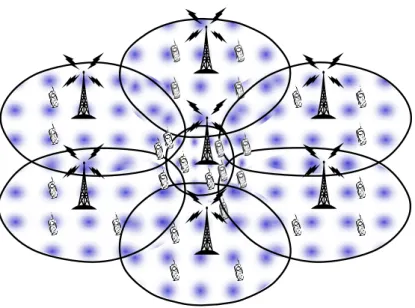
Fig. 1-1 Conceptual illustration of cooperative coverage ... 19
Fig. 2-1 Power and code usage in a WCDMA system ... 24
Fig. 2-2 Shannon capacity bandwidth efficiency and comparison to M-ary PSK signals ... 25
Fig. 3-1 Antenna down tilt, with tilt angle θ ... 53
Fig. 3-2 Antenna downtilt model with paired sectors ... 56
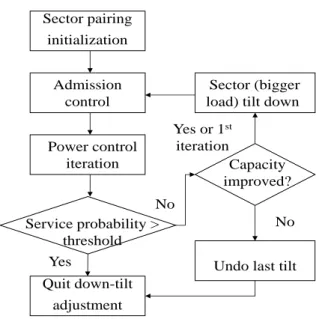
Fig. 3-3 Adaptive downtilt procedure ... 57
Fig. 3-4 Antenna radiation power pattern ... 60
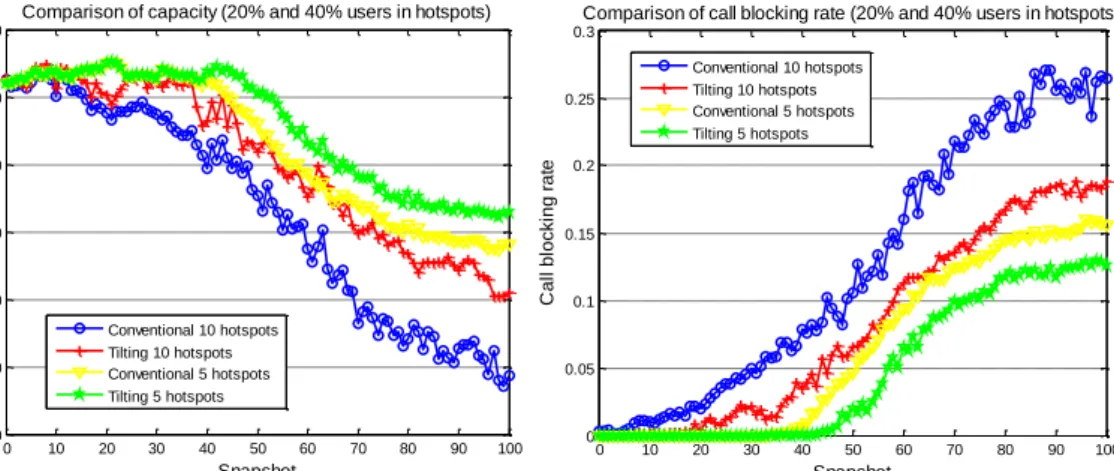
Fig. 3-5 Capacity and call blocking rate performance of two settings ... 62
Fig. 3-6 Shaped coverage applied by semi-smart antennas cooperatively ... 63
Fig. 3-7 Linear antenna array ... 65
Fig. 3-8 Cell model with Quantisation Cells ... 67
Fig. 3-9 The derivation of azimuth and elevation due to antenna tilting angle. .. 71
Fig. 3-10 Call blocking rates comparison between five networks ... 72
Fig. 3-11 Real-time shaping in a WCDMA network with traffic hotspots ... 73
Fig. 3-12 Azimuth radiation pattern of Kathrein and 3GPP antennas ... 76
Fig. 3-13 Network performance under different antennas ... 77
Fig. 3-14 Comparison between Kathrein and Powerwave antennas ... 78
Fig. 3-15 MSE of synthesized shapes ... 79
Fig. 3-16 Contrast between desired and synthesized pattern ... 79
Fig. 3-17 Exponential distribution CDF fitted to the UTDOA accuracy data ... 83
Fig. 3-18 Simulations with location accuracy taken into account. ... 84
Fig. 4-1 Path gain models. ... 88
Fig. 4-2 Path loss range and distance step ... 89
Fig. 4-3 Multiple perceived location of mobiles ... 89
11
Fig. 4-5 Overlook of Jersey in the planner view of Asset.3g ... 94 Fig. 4-6 Signal strength prediction indicated by different colours ... 95 Fig. 4-7 Service status in the 44-cell network with uniform traffic distribution . 96 Fig. 4-8 The boundaries of 44 cells in terms of CPICH strength at -80dBm ... 97 Fig. 4-9 CBR results from simulation for shaped coverage and circular coverage ... 99 Fig. 5-1 A two-cell wireless communication scenario ... 103 Fig. 5-2 Modification of the assignment problem through redefined cell coverage ... 105 Fig. 5-3 Radio resource blocks in data cellular communication systems ... 107 Fig. 5-4 Transmission antenna gains and weights of mobiles ... 117 Fig. 5-5 The approximation of antenna gain for users with similar radial directions
to a BS ... 123 Fig. 5-6 The creation of virtual items using aggregated items... 125 Fig. 6-1 The classification of mobiles into three sets by coverage options ... 138 Fig. 6-2 Multipath fading of signal envelopes, generated for mobiles at 1km from
BS. ... 156 Fig. 6-3 Geometric modelling of the scattering effect ... 159 Fig. 6-4 System performance under uniform VoIP user distribution, using
proportional fair scheduling. ... 167 Fig. 6-5 System performance under unbalanced traffic distribution ... 169
12
List of tables
Table. 2-1 Examples of Radio resource units in different Wireless Networks .... 23
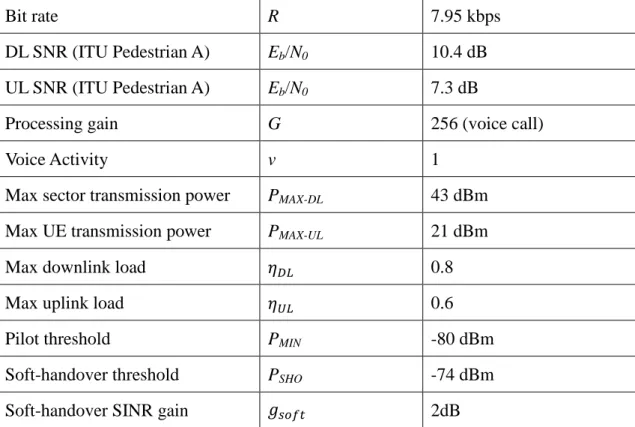
Table. 3-1: Simulation parameters for the simulated WCDMA network ... 59
Table. 3-2 Key performance parameters of two Kathrein BS antennas used in study ... 75
Table. 5-1 Weight, profit, and resource constraints parameters of the problem 103 Table. 5-2 Parameters of two instances of the assignment problem ... 105
Table. 6-1 Weight, profit and constraint functions of cellular systems ... 133
Table. 6-2. MCMCP instance generation & reduction procedure ... 137
Table. 6-3 Algorithm – Iterative MCKP selection and solving. ... 143
Table. 6-4 The stop conditions of the sector contraction procedure ... 150
Table. 6-5 Algorithm – Iterative MCKP selection and solving with cell contraction. ... 151
Table. 6-6 CQI indexes of the LTE system, corresponding to data rates per RB ... 154
Table. 6-7 System level simulation parameters ... 161
Table. 6-8 Time and convergence performance of the iterative algorithm ... 169
13
List of acronyms and abbreviations
16QAM/64QAM 16/64-state quadrature amplitude modulation 3GPP Third generation partnership project
ADPS Angle-delay power spectrum
AMC Adaptive modulation and coding
AP Access point
APX Approximable
AS Angle spread
AWGN Additive white Gaussian noise
BER Bit error rate
BLER Block error rate
BS Base station
BOA Bubble oscillation algorithm
CAC Call admission control
CBR Call blocking rate
CCPCH Common control physical channel CDF Cumulative distribution function CDMA Code division multiple access
ChIR Channel impulse response
CIR Carrier to interference ratio
CP Cyclic padding
CPICH Common pilot channel
CQI Channel quality indicator
DCA Dynamic channel allocation
DOA Direction of arrival
14
DPCCH Dedicated physical control channel DPCH Dedicated physical channel
DPDCH Dedicated physical data channel
DS Delay spread
EDT Electrical downtilt
EESM Effective exponential SNR mapping
ESPRIT Estimation of Signal Parameters via Rotational Invariance Techniques
E-OTD Enhanced-observed time difference
FACH Forward access channel
FDD Frequency division multiplex FDMA Frequency division multiple access
FPTAS Fully polynomial time approximation scheme GAP Generalised assignment problem
GBU General bad urban
GBR Guaranteed bit rate
GPS Global positioning system
GSM Global System for Mobile Communications
GTU General typical urban
HAPS High altitude platform station
HARQ Hybrid automatic retransmission request HSDPA High speed downlink packet access HS-DSCH High speed downlink shared channel
HSPA High speed packet access
HSUPA High speed uplink packet access ISI Inter symbol interference
KP Knapsack problem
LTE Long Term Evolution
15
MAI Multiple access interference MCKP Multiple choice knapsack problem
MCMCP Multiple cell multidimensional coverage problem
MDT Mechanical downtilt
MIMO Multiple input multiple output
MKP Multiple knapsack problem
MMSE Minimum mean square error
MPC Multipath component
MRC Maximal ratio combining
MS Mobile station
MSE Mean square error
MUD Multi-user detection
MUSIC Multiple signal classification
OFDM Orthogonal frequency division multiplexing OFDMA Orthogonal frequency division multiple access OTDOA Observed time difference of arrival
PBCH Physical broadcast channel
PC Power control
PCFICH Physical control format indicator channel PDSCH Physical downlink shared channel
PF Proportional fair
PHICH Physical hybrid ARQ indicator channel PTAS Polynomial time approximation scheme PUCCH Physical uplink control channel
QC Quantization cell
QoS Quality of service
QPSK Quadrature phase shift keying
RAN Radio access network
16
RNC Radio network controller
RR Round robin
RRM Radio resource management
RSCP Received signal code power RSRP Reference signal receiving power RSRQ Reference signal receiving quality RSSI Received signal strength indicator SDMA Spatial division multiple access
SF Spreading factor
SINR Signal to interference and noise ratio
SNR Signal to noise ratio
TDOA Time difference of arrival TTI Transmission time interval
TPC Transmit power control
UE User equipment
UMTS Universal mobile telecommunication system UTDOA Uplink time difference of arrival
UTRAN Universal terrestrial radio access network WCDMA Wideband code division multiple access
17
Chapter 1.
Introduction to this Thesis
We are experiencing a time when personal communication is developing at an explosive rate. Wireless base station towers are ubiquitous in most countries and are enabling seamless human-to-human and human-to-machine interactions, almost anywhere and anytime. There is no lack of evidence: a single application device, the Apple iPhone, and the App Store supporting it, have reshaped the wireless industry. Other smart phones are seeing similar success.
In tandem there has been significant technological developments to support the increased requiremets for video, internet and data. The recent restructuring of wireless spectrum has increased the available frequency resource pool [1, 2], in preparation for the launch of Long Term Evolution (LTE) (and in the near future the 4G LTE-Advanced) networks in major industrialised countries. Comparatively speaking, the 4G technology aims to upgrade wireless data rate from its 3G predecessors by nearly a hundred times. 1Gbps is the ‘pass line’ for a technology to be qualified as 4G [3], for a low speed mobile user in a very favourable reception location, and for high speed conditions this demarcation line is set to 100Mbps. The technologies make feasible this rate by a combination of multiple-input multiple-output (MIMO), higher-order modulation schemes, advanced retransmission scheme, turbo coding, the wider frequency bands made available to it, and many others.
Abstractly speaking, wireless data ‘lanes’ have been made a lot wider during the transition. Still, this upgrade alone might not handle the ever-increasing information flows well enough. The growth of traffic itself means this widening of data channels will only partially meet the growing demands from mobile users, and to the interest of this thesis, the mobility of mobile users remains a challenge to fixed wireless infrastructures. To explain this, we can look at how wireless infrastructures are
18
commonly designed. Mobile network operators plan the sites for their base stations according to measured and predicted traffic distributions: in a densely populated area more base stations are allocated and vice versa. Here we then come across a simple fact: if you want to improve profitability (or more implicitly cover more areas), you will try to serve the demands from each geographic area while not investing tan unnecessary amount on assets.
The problem with this ‘minimum investment’ approach is that some users are inevitably dropped by when there is a surge of traffic due to unpredictable changes to geographic user/demand distributions. In order to improve service probability (the percentage of users served) to meet such problems operators only have the option of deploying additional base stations on selected sites or using sectorisation. This again requires careful network planning, and may not be so efficient in terms of money investment. Out of the above reason, conventional network planning and the conventional cellular structure are not very flexible and this thesis explores ways of increasing this flexibility.
The cooperative coverage concept examined in this thesis, could be one of the solutions to increase flexibility of wireless networks.. The cooperative coverage concept is about applying coordinated cellular coverage realised by dynamic use of adaptive antenna arrays to provide network coverage according to given geographic traffic distributions. In the event of high demand concentrations (e.g. a traffic hotspot), coordinated coverage allocates radio resources to the more populated cell from nearby cells by having the helpers directing their coverage to the hotspots, and hence increasing the service probability cooperatively (Fig. 1-1). For those helping base stations more distant neighbours will do the same to further help the helpers and compensate for their coverage loss. The overall cellular network could be adaptive to varying traffic patterns, mitigating the need to invest for more capacity in every part of a network.
19
Radio coverage can be dynamically changed by updating antenna radiation power patterns in real time. Techniques for antenna radiation pattern realisation are sometimes called antenna synthesis [4], which is a process of designing an antenna array’s displacement scheme and excitation parameters. This is not the core matter of this thesis, but is an important tool enabling the cooperative coverage concept.
Fig. 1-1 Conceptual illustration of cooperative coverage
A big question is then how to find a coverage scheme that could better distribute available radio resources to satisfy the dynamic traffic demands. The coverage problem is formulated in a manner to support the design and testing of dedicated algorithms.
This thesis is then organised in the following order: review of radio resource allocation techniques are provided in Chapter 2; In Chapter 3 previous works on cooperative coverage scheme is studied and compared with an antenna tilting scheme proposed by the author. The impact of various factors on cooperative coverage is also studied, including the performance of antennas; Chapter 4 examines the limitation of an existing cooperative coverage algorithm and improves the algorithm by introducing a resource-cost based approach. Based on research work described in aforementioned Chapters, a formal formulation of the coverage problem is given in Chapter 5. Finally, the problem formulated in Chapter 5 is studied and solved in Chapter 6 with dedicated algorithm. Conclusions and future work are provided in Chapter 7.
20
Chapter 2.
Literature
Review
and
Research Work to be Done
2.1.
Introduction
In this chapter, existing studies on radio resource management are reviewed.
It is reasonable to say that Radio Resource Management (RRM) [5-8] is about efficiently managing and converting radio resources into values that customers and radio network operators care about.. RRM techniques include not only channel utilisation and multiple access schemes, but also antenna placement and mobile phone receiver designs. Together, the integration of these many aspects characterises any specific wireless communication networks, defining their capacity, service capability, and efficiency.
The authors in [6] have laid out their definitions for RRM techniques and strategies. In these studies, RRM is solely concerned about multiuser wireless systems. This view is based on the observation that a one-to-one radio system, has rather fixed throughput decided by relatively static frequency and transmission arrangements. There is no room or little interests for flexible management of any radio resources in such a simple point-to-point system. For multiple-access cellular or wireless networks, RRM should be utilised to increase the capacity by overcoming interference and improving efficiencies of multiuser resource-sharing schemes. It is argued [5, 6] that RRM could be interpreted as proper parameterisation of network resources to achieve a good performance, and RRM techniques are classified as either static RRM which focuses on network parameterisation before operations, or dynamic RRM which parameterises the network after building completion to adjust to dynamic situations.
21
The fine utilisation and discovery of positive factors and suppress of negative factors (such as multiuser interference) in wireless communications through RRM parameterisation, is therefore, quite interesting. The theoretical throughput of wireless links are defined by available bandwidth, modulation schemes, and coding methods, but the realistic performance ratio of a complete wireless network always depends on how the radio resources are allocated in for time-variant traffic demands. To better understand the relationships between radio resources and choices of RRM parameters, the following sections of this chapter examine different aspects of radio resource including their definition, generalisation, and methods for allocating them to mobile users. At the end of the chapter, a fairly new type of RRM technique is briefly analysed and based on the concept of this technique, the core problem to be addressed by this thesis is raised.
2.2.
Radio Resources in Wireless Communications
Reviewing various RRM examples in this section, we study the previously established definitions of radio resources in wireless communications. The goal is to study the relationship between radio resources and returns harnessed from their fine management and allocations.
2.2.1. Quantitative Measures of Radio Resources
When setting up a mobile communication network, an operator decides how much hardware assets it wants to deploy. This is called static radio resources management [5], which involves:
Frequency band planning is the phase where authorities decide frequency allocations for different wireless communication systems. Chunks of frequency bands are typically auctioned to bidders [9, 10]. The bandwidth allocated to a particular wireless technology should be sufficient to satisfy anticipated demands from potential
22
customers, and stimulate industrial confidence and competition [11]. Frequency bands are the basic quantitative units of radio resources.
Network planning tailors wireless infrastructure to specific service areas. Radio resources are allocated according to traffic dimensioning results [12-17] applied on peak-hour traffic patterns. To meet high demands with limited bandwidth, identical frequencies are allocated to Base station (BS) clusters of variable densities, in order to withstand peak-hour surge in populated areas. The capacity of a wireless network is measured using either the number of users supported or reasonably achievable data rates [18-20], and frequently attained by simulations [21]. Traffic scheduling mechanisms have also been considered [22]. Conclusively, network planning is a process that decides the geographic distribution of hardware and frequency resources across a network.
Microscopically, there are lower level representation of radio resources that network planning manages on top of, which can be explained with the concept of multiple access schemes of wireless technologies. The most famous multiple access techniques in wireless communications, are frequency division (FDMA), time division (TDMA), code division (CDMA) [23, 24] and spatial division (SDMA) multiple access schemes [25, 26]. These have been well studied and they basically partition available radio resources into smaller logical and physical blocks for sharing among individual users, allowing simultaneous access of wireless networks.
In FDMA systems, available frequency bands can be viewed as radio resource blocks. Time slots are the resource units in TDMA systems. Spatial channels and orthogonal spreading codes are representations in SDMA and CDMA-based systems, respectively. Mixed multiple access schemes can be used in a single system. For example, individual users are allocated specific radio carriers and time slots in a shared frame so the division of radio resource is multidimensional across more than one metrics. Other
23
types of multiple access schemes exist, such as Multi-Carrier CDMA (MC-CDMA) [27-29], Orthogonal-FDMA (OFDMA) [30-32], Single-Carrier FDMA (SC-FDMA) [33-35], and SDMA based on multiuser MIMO (MU-MIMO) [36-38]. Available radio resource blocks in the forms of radio channels (Table. 2-1), have to be divided and shared among users.
Table. 2-1 Examples of Radio resource units in different Wireless Networks
Systems Access Schemes Resource unit Use Case Example
GSM TDMA & FDMA Time slot on a specific carrier frequency
Traffic carried on TDMA frames of 4.62ms (eight time slots) on a frequency band of 20kHz [39]. WCDMA
FDD
CDMA Spreading code Downlink DPCH, with Spreading
Factor (SF) Options 4,16,32,128 [40]. HSPDA
FDD
CDMA & Time multiplexing
Transport frame
corresponding to a spreading code
HS-DPSCH transport channels with 15 SF=16 codes. Frame length: 2ms or 10ms. At most 5 codes simultaneously used by 1 to 3 users in a cell [41, 42]. LTE FDD OFDMA & TDMA A time slot on a
subcarrier comprising a Resource Block (RB)
Hundreds of RBs on PDSCH shared transport channels allocated to a number of users [43].
In addition to different representation of resources corresponding to various multiple access and multiplexing schemes, another very important type of resource is transmission power. In mobile communications, the transmission power of a base station is restricted to a certain level. The power limits are chosen to generally match the service capacity of available number of radio channels. Health and safety concerns also play a part, although no well-established results have so far proved any negative impact of radio frequency (RF) energies on human bodies [44]. Energy saving system is also a popular trend [45, 46] meaning high transmission power is also becoming less desired, such effort is already being considered by standardising bodies [47].
24
It is common to encounter many types of radio resources within one type of wireless system. In such case analysis should be done to evaluate the significance of various types of radio resource. Due to frequency reuse, in CDMA systems the capacity is largely limited by transmission power. This relationship is illustrated in Fig. 2-1 for a Wideband CDMA (WCDMA) system, where the theoretical capacity limits of CDMA systems have been reached for the transmission schemes and increasing transmission power can no longer support more users. It is also shown that the transmission power saturates sooner than the depletion of the code pool. Indeed, in most literature about CDMA capacity [48-50] power-based dimensioning is used. The number of available spreading codes can be also theoretically increased by deploying a secondary scrambling code.
Fig. 2-1 Power and code usage in a WCDMA system. Node-B transmission power available to Dedicated Physical Channels (DPCH): 50%(40dBm) [51]; Path loss given by COST-231 Walfisch-Ikegami [52] model at 100 and 1000 metres; 12.2kbps and 64kbps services using
BPSK, coding rate 1/3, =5.1dB, orthogonality factor=0.5, no other-cell interference.
It can be seen from the above figure that transmission power tends to be consumed at a faster rate than spreading code as the number of admitted users increases. Hence, it
0 20 40 60 80 100 120 140 -50 -40 -30 -20 -10 0 10 20
Number of admitted users
T o ta l d o w n lin k tr a n sm issi o n p o w e r a t N o d e -B
Power vs spreading code consumption 100m 12.2kbps 1000m 12.2kbps 100m 64kbps 1000m 64kbps 64kbps code limit 12.2kbps limit Available codes to 64kbps Available codes to 12.2kbps
25
is reasonable to regard the maximum transmission power of a base station its dominant resource type in some cases. This analysis serves as an example on deciding the radio resource models of a wireless system and respective analysis is necessary for any wireless systems.
2.2.2. Efficiency of Radio Resources
Communication theories have the concept of bandwidth efficiencies measured in bit/Hz/second [53], i.e., theoretical data rate that can be achieved with a given bandwidth (in this case per Hertz).
Fig. 2-2 Shannon capacity bandwidth efficiency and comparison to M-ary PSK signals, the diagram is a reference to Fig.9-11 of [53].
The channel frequency efficiency (data rate/bandwidth) shown in Fig. 2-2 is produced using Claude Shannon’s famous results on information capacity. Re-arranging Shannon’s formula as , the maximum frequency efficiency achievable at different bit energy to noise ratio is numerically calculated and plotted. The curve and areas underneath it represent how much information can be transmitted and received without error per unit frequency band
0 5 10 15 20 25 30 35 -1.6 2 4 6 8 10 12 14 16 18 20 0
Bit enegry to noise density ratio (dB)
B a n d w id th e ff ici e n cy
Shannon capacity boundary and M-PSK bandwidth efficiency
Capacity boundary
M=2
M=4 M=8
M=16 M=32 M=64
26
(hertz) per second, given a white Guassian noise (AWGN) channel.
The statistical result of frequency efficiency by Shannon is also compared with that of M-aryPhase Shift Keyingdigital modulation schemes under the AWGN channel in Fig. 2-2, acquired when assuming a bit error probability (BER). Note Shannon’s result assures errorless transmission, with the assumption of infinite source code dimension and infinite channel code block length. The results of these M-ary modulation schemes have not been applied with any coding gains. We can clearly see from these results that higher power and can be traded for enhanced frequency efficiency, or the frequency efficiency can be compromised to suit a more realisable
.
The concept of bandwidth efficiency can be interpreted as one type of measurement for radio resource efficiency. It is simply indicative of what data rate can be achieved with per unit bandwidth. Other types of measurements of radio resource efficiency are also common in wireless communication systems. In the following a range of radio resource management techniques are reviewed and their relationship with radio resource efficiency is also studied.
Link Adaptation centres on the concept of Adaptive Modulation and Coding (AMC) [54]. In AMC the transmission power of a BS and mobile terminals are usually fixed, dynamic power control is not present and the received signal Signal to Interference and Noise Ratio (SINR) varies with respect to channel conditions, no matter what modulation and coding schemes are used. With a given symbol energy to noise density ratio , the transmitter and receivers can adjust to for example a suitable modulation schemes that can achieve the highest possible data rate with a usually pre-determined BER target. It is common that few modulation schemes are available and different modulation schemes are combined with Forward Error Correction (FEC) codes at different coding rates to provide finer granularity with far more AMC
27
positions.
Link adaptation is widely used in data wireless networks such as High-Speed Packet Access (HSPA) [42, 55], and LTE [56].
The resource efficiency measured in terms of transmission power used by a transmitter in an AMC system can be written as the ratio between throughput at K
possible AMC configuration positions and the transmission power that:
The throughput achieved is a function of modulation scheme, coding, and other dynamics such as retransmission mechanisms [57, 58].
Similarly, the bandwidth efficiency achieved with AMC can be also found through analysing the modulation, retransmissions and coding schemes used. This is not further examined here to avoid loss of focus.
Power Control is a technique deployed for mitigating power inefficiencies. It is also frequently cited as an effective counter to the so called near-far problem [59] mostly met in CDMA systems, that is, transmitters at different distances transmit at same signal levels but received signal levels/SINRs at the BS receiver are different. The near-far problem is less an issue in frequency multiple access schemes.
Two types of power control (PC) mechanisms are most common, known as Open-Loop and Closed-Loop Power Controls. The closed loop version uses continuous receiver feedback to adjust to channel conditions and make sure the power resource used is updated as quickly as possible [60]. The open-loop type [40] is more often used only at the start of a call connection in conjunctions with the closed-loop control, although in
28
some specific systems such as successive interference cancellations it could be more useful [61]. Varied hybrids or variants of these schemes also exist [62-65], extending the area of research by enhancing PC efficiency and reducing power control errors. It is notable from these studies that the transmission power required is not only decided by path loss and level at a receiver’s end, but also the probability of power estimation and adjustment errors. Under extreme fast fading conditions, even the fast power control mechanisms (1500 times/second) [66] seen in WCDMA systems [67, 68] do not act fast enough to compensate and introduces noise rise. Arrival of outdated PC commands due to fast variation of radio channels would cause an increased average transmission power [69, 70]. The possibility of incorrectly decoded power control commands could also create extra problem.
It can be then concluded that the transmission power to be paid is decided by both path loss and power control mechanisms. The power resource efficiency ratio can be expressed using a modified notation:
where is the exact price that should be paid. This is the ideal PC assumption used in many studies focusing on areas other than PC. The extra term corresponds to what is observed as an average increase on top of necessary power levels. The rise of power is due to imperfect PC subject to the effects of delays, errors, variable channel conditions and mobile movement.
Call Admission Control is the decision rule about whether a request for serving a mobile should be served. ‘Admission Control’ is also frequently used, with non-adherence to any specific service types (i.e. voice calls). The terms CAC and ‘call’ are used throughout this thesis to refer to general wireless connections, covering inclusively both voice call and packet data services, unless otherwise specified.
29
calls can be admitted freely and CAC is merely a procedure of updating resource tables after handing/claiming resources out/back. The impact of the admission control mechanism truly matters to network performance when resource usage approaches saturation/limit level. There are three non-overlapping interests in the design of CAC algorithms:
The CAC procedure should admit as many calls as possible, keeping service probability at a high level [71].
Whether admitting a new call or not should not influence already admitted calls. The probability of service interruption due to new admissions should be kept as low as possible. The focus is whether a request would be served completely and successfully, otherwise it should be rejected. Examples of related studies include the estimation of outage rate of incoming calls through analysing distributed traffic loads [72, 73], prediction [74].
The CAC algorithms are to meet Quality of Service (QoS) requirements of varied classes of services [75, 76]. Voice calls and packet data services should be treated differently as their QoS requirement differ. It is experimentally suggested in [77] that for delay-sensitive services in packet systems, dynamic resource thresholds should be employed, with QoS parameters such as maximum delays constantly monitored to avoid overloading. An effective CAC algorithm should always be provided with up-to-date load information and QoS parameters as frequently as possible to make sound decisions
Resource efficiency can be realised in the CAC context like this: A CAC procedure can be either greedy or more conservative on setting the cap level of the resource pool. A relatively conservative CAC routine reduces bandwidth efficiency because it is less willing to serve new calls, but if an increased level of QoS of admitted users is appreciated, then the utility/satisfaction of users can be taken into account when measuring the resource efficiency U/Resource. The efficiency factor might range from simple to more complicated expressions depending on the utility function.
30 Scheduling manages the sharing of radio resources by different users in data wireless networks. Packet data sessions do not take up a fixed portion of resources between transmission intervals and a scheduling process justifies its presence by governing the fair usages of radio resources by all mobile users. In an ideal scenario, if traffic from or to one user demands a significant portion of transmission blocks then a scheduler should only allocate resources to that user if minimum levels of QoS of other users can be guaranteed. Having satisfied that condition, a scheduler might allocate as much resource as possible to any users. Users with better channel conditions are particularly [78] favoured for higher channel efficiency and this is known as multiuser diversity [79]. Typically, time slots and frequency carriers or MIMO antennas are used to divide radio resources into small units (transmission blocks) for scheduled sharing by multiple users. Cyclic scheduling process takes place with equal intervals, such as in the concept of Transmission Time Interval (TTI) in HSPA [41, 80], and LTE [81].
Design of schedulers in the wireless context centres on deciding the priority value of individual users. It is suggested in [82, 83] by Kelly that the concept of utility function can be used to formalise the expression of priority function for various schedulers. Various types of schedulers exist, including the round robin (RR) scheme that selects users with packets to transmit/receive by equal chance. It is most fair but the total utility is not maximised. The Maximum throughput (Max-C/I) scheduler prioritises a user with best channel conditions, and maximises throughput. The Max-C/I approach favours user with best channel conditions but causes starvation to other users. A proportional fair (PF) scheduler [84, 85] makes a trade-off between fairness and throughput. The PF scheduler favours high resource efficiency but is also weighted by the reciprocal of past observation of data rate of a user, therefore removing the possibility of starvation at the cost of some throughput reduction.
31
completely fairness-oriented. PF is widely suggested to be a good trade-off between the two extremes, and there are other QoS-oriented schedulers such as delay-limited [86, 87] and minimum data rate [83] schedulers.
Scheduling reflects the importance and ubiquity of resource efficiency in wireless communications, and also exemplifies the dynamics and complexities in applying the concept of efficiency in wireless designs.
2.3.
Conventional Radio Resource Allocation
In this section the existing methods of radio resource allocation in wireless communications are reviewed.
2.3.1. Radio Resource Allocation Procedures
In wireless networks, it can be generalised that there are two functions dealing with the allocation of radio resources. The assignment function makes decision about the assignment of a mobile station to its serving BSs. Resource efficiency is always an integral part of the designs of these routines, this is reflected by power-based BS selection criteria in cell selection and handover procedures [40, 88].
After an assignment function admits user to a serving BS, a resource block sized is then allocated (a similar process applicable to both directions of communication) to the user for use within a certain period. Consuming that resource block, a call made by the user returns a profit , measurable in data rate or other metrics. This call hence has a resource efficiency of . The resource consumed by a user is time-variant because of many factors (e.g. channel conditions), so resource allocation functions have to be executed frequently to make sure the correct amount of resources are allocated to users. Basically, a series of profit targets have to be
32
met while the total cost minimised.
2.3.2. Generalisation of Radio Resource Allocation
Having explained how radio resources are allocated to mobile users, we generalize in this section the allocation procedures.
A. BS Assignment
An imaginary assignment/selection function outputs the BS selection result for N mobiles, given the cost and profit matrices corresponding to cost and profit vectors of calls in M different cells, with and .
The profit vector is assumed to contain equivalent element as the requirement of a call does not vary no matter which cell it is assigned to.
Conventionally a cellular network assigns users in the following fashion. At time t the assignment function assigns the mobile to BS which requires least resource to serve the user. The decision is a based on the following rule that
(2.1)
Here stands for the total resource available to the cell and the current load of the cell. These parameters have to be carefully monitored by the BS or RNCs to be up to date. Studies for determining reliable include modelling and measurement-based approaches [89, 90]. Similar resource thresholds [91] and strategies are also suggested for packet data services.
The assignment functions determine each call’s affiliation with an individual BS. This can be expressed by the affiliation vector where
33 (2.2)
If all elements in are equal this means . . The contribution by cells in the middle case could take different forms, such as in the case of cooperative communication [92]. In the case of a soft handover [40] call the has to be modelled after the combining mechanism used.
For a dynamic mobile communication environments, any assignment decisions are only optimal over the time period , which is no longer than the shortest coherence time of channels.
Avoiding making risky assignment decisions, confidence-based method can be deployed by measuring the probability of resource sufficiency under a new call..
Choices of permission probability (e.g. 95%) and are required.
For any time period it would require roughly executions of the assignment function in equal intervals for best results.
B. Cost and Profit Estimation
Affiliation and assignment decisions are made using cost and profit inputs provided by estimation functions. The cost of serving a mobile station is affected by many factors, including mobile and BS locations, speed, receiver structure, antenna configuration, channel gains, etc. With ideal simplification, the impact of these factors can be written using common link budget functions taking the form:
34
which is the aggregated path gain in decibel.
For profit estimation, it is reasonable to use achievable data rate of a mobile station to represent the profit, or using the data rate to help further derive a profit value dependant on multiple factors.
2.3.3. The Greedy Rule
It is most common to encounter allocation functions and algorithms designed with greedy principles in wireless communications: each mobile is assigned to the BS which could serve the mobile most cost-efficiently. This is ubiquitous in the designs of all handover and assignment algorithm and a few examples are studied and discussed in this section.
2.3.3.1. Greedy Assignment in Single Cell Case
Assuming that the cost of serving each user is not influenced by the combination of users assigned, it can be then formulated that the ideal resource allocation solution for a system with calls of fixed profit but variable cost is given by the following greedy algorithm:
Procedure Greedy Assignment and Allocation, single cell case For each , End %Request requirement
%Profit for serving a user,
35 sortByDescendingOrder( ) For each If( ) Assign( ) Else break
%Sort users by resource efficiencies %Load indicator
End
It is clear that the greedy algorithm is optimal for requests with equal profit in a single cell. The proof is simple and not given here. It can be also proved that for users that consume fixed and identical amount of resource, the greedy allocation is also optimal. For simplicity the proof is not provided here.
The greedy allocation is not optimal for calls with different costs and profits. It is also not applicable to multi-cell situations. Examples can be easily given.
2.3.3.2. Greedy Assignment for CDMA Systems in Multi-cell Case
In the multi-cell case (N BSs and M mobiles) the assignment vector defines the BS to which the user is assigned. Subsequently using path gains between BS and mobiles the uplink transmission power can be then written as:
(2.3)
where signifies transmission power of user i. is the white noise present at the
BS receiver of user i. is the required minimum Carrier to Interference Ratio (CIR) for i satisfying data rate and the effect of spreading gain is concatenated. If
36
interference does not exist (2.3) is simply written as
.
For N users M BSs there are possible combinations including the case of non-assignment. Finding a combination that enables all users to be served under resource constraints is easily out of the reach of a greedy allocation. The problem was compared to known NP-hard problem in existing studies [93] and recently formulated in [94] as a combinatorial maximisation problem.
It is clear from (2.3) that all elements in increases monotonically with the increase of each and due to interference, and are definable by N linear equations taking the form of (2.3). This introduces a big problem as the power vector is variable to different assignment arrangements. No existing work has been found to have tackled this difficulty caused by interference while proposing an optimal solution for the multi-cell assignment problem.
2.3.4. Radio Resource Allocation for Data Services
Unlike circuit-switched (CS) voice call, to handle the on-off and variable rate traffic models [95] of packet data services, resource allocation in existing packet wireless networks are scheduling-based or contention-based (e.g. 802.11x series). Generally, prior to each TTI resource blocks are allocated to users with advantageous channel conditions. To understand how packet-based data services are processed in current wireless networks, the radio resource allocation procedures for data services are analysed below.
2.3.4.1. Dimensioning of Resource Usage of Data Services
37
(known as a Resource Block, LTE systems) for scheduling, depending on wireless technologies being studied. A resource unit is usually matched with a fixed transmission power. For example, in HSPA networks transmission power for transmission frames are not frequently adjusted [96]. For OFDMA systems like LTE, available powers are also equally distributed across multiple sub-carriers at different frequencies [43]. Therefore, radio resource allocation problem in data wireless networks can be frequently simplified into having only resource constraint.
Because resource blocks are allocated to users depending on their varying channel conditions, the average throughput that can be achieved by a user is heavily affected by the resource scheduling policy used [78]. A scheduling policy could be rather opportunistic in favouring users with good channel conditions, and compared to a fair scheduling policy, opportunistic multi-user scheduling is reported to be able to bring 10%-20% throughput increase [96] for HSDPA systems.
The prediction and modelling of exact throughput of scheduled data calls [79] is difficult in practice due to variability of traffic profiles and measuring the real-time resource consumption of existing data sessions are more practical. If a reference user consumes percentages of available resource units (subcarriers, RB, etc) and achieves an average data rate during the measurement period, then the resource consumed by this user using the maximum transmission power becomes
and the resource efficiency is known. The consumption of power by all
users helps measure the sufficiency of the resource pool at the BS and subsequently facilitates the operation of CAC functions.
Some data services such as file download and adaptive-rate streaming can flexibly increase their data rate to enhance utility when available resource units are ample. For accurate dimensioning purposes the minimum data rate required by each service class is identified as the Guaranteed Bit Rate (GBR) [96, 97] for this class in HSPA and LTE
38
networks. The GBR can be sent to an RNC via the Iub interface using Node-B Application Part (NBAP) protocols [98] or can be attained through QoS mapping [98] from core network parameters at the RNC. GBR serves as an important call admission/scheduling parameters and allows the computation of minimum required power resource of all data sessions in a cell [99].
2.3.4.2. Resource Allocation for Data Services
In the short-term scale, every TTI is a snapshot of a multi-cell resource allocation problem. Ideally, each resource allocation problems can be instantly solved, if an efficient algorithm for multi-cell resource allocation problem is available. However, if every snapshot is only solved for throughput maximisation at the particular TTI, the problem of starvation could occur for users with poor channel conditions.
Considering the allocation problem in the long-term scale, it is very hard to determine the cost of serving a user for a period of time because the exact amount of resource units that will be consumed by the user is very hard to predict, due to multiuser opportunistic scheduling. An inaccurate but effective method to solve this problem could be adding multiuser diversity gain to model and estimate the amount of resource saved [79] by opportunistic scheduling. By doing so, the inherent dynamics of scheduling could be transparent to an assignment and resource allocation problem where costs and profits of users are determined based on performance observation of sufficiently large number of past TTIs.
One important difference between voice calls and data services is that data users have varied profit values. Henceforth, a greedy assignment and allocation method does not ensure finding an optimal solution even in the single cell case (Suppose the problem is to maximise total profits).
39
2.4.
Advanced Radio Resource Allocation
Conventional assignment and resource allocation functions are building blocks of greedy natures for local optimality (e.g. cell selection procedure is independently carried out for each call, not planned collectively). It is logical to think that an optimisation function that puts wider areas into simultaneous considerations gives better solutions.
Based on previous review and elaboration of radio resource allocation methods, many recent proposals of advanced radio resource allocation schemes are reviewed in this section. Problem identification is then used to lead to the research focuses of this thesis.
2.4.1. Existing Proposals on Non-conventional Radio Resource Allocation
Two stages in the process of radio resource allocation have been identified: a) deciding who the allocator is for a mobile via the selection of BS; b) the selected BS to allocate suitable amount of resource to the mobile. Any allocation methods do not depart from this simple process model and in this section, a range of notable proposals with enhanced performance and complexities than conventional schemes are reviewed, useful of providing insights to the research work presented in this thesis.
2.4.1.1. Power Control under Fixed Cell Selection for CDMA Systems
Suppose the BS assignments for all users are given randomly, it is not known that whether all assigned users are actually serviceable with limited resource. To find out the feasibility of a given assignment a CDMA system, one can compute the power required by each user with a given assignment [100], in the form of a power vector.If the power vector is not feasible, then such assignment with given SINR targets is not
40
possible. Either reassignment should be applied or some users should be dropped. In this way, the power resource to be allocated to each user is decided.
A centralised PC approach is ideal if all path loss and CIR target information are available in a timely manner at a control node. This is very hard to achieve. In practice repeated PC commands are issued to individual users for CIR adaptation and such mechanisms in CDMA systems are well studied in [68], which explains the dynamic range of power and worse-than optimal performance due to PC imperfections. Numerous studies also suggest improving conventional power adaptation by using consecutive power ratios [101] and better SINR estimation method [102].
To attain the optimal PC solution through other more applicable means a power balancing method is firstly proposed in [103] by Aien for satellite communications and subsequently extended to the field of cellular systems in [104] by Nettleton. The CIR balancing mechanisms were then further studied in [105, 106] by Zander with considerations on convergence and distributed application. In general, the power balancing ideas intend to achieve optimal results of the centralised approach through treating the foregoing interference-limited wireless power problem as an iterative system, with promises that the iteratively updated powers converge to the ideal. Zander’s approach requires only the SINR and power information in the same cell, with some requirement on start power for guaranteed convergence. Later a general framework [107] for the uplink iterative power control problem is formulated by Yates which defines the conditions for feasible asynchronous iterative power controls and the existence of unique fixed point. It is then explained by Yates and Huang [108] that an iterative procedure can be used to decide transmission power, and this procedure satisfies convergence requirement for a given BS assignment scheme. The convergence framework is later extended by Leung, et al in [109] with more generalisations.
41
2.4.1.1. Throughput Optimisation under Fixed Cell Selection for Data Wireless Networks
The complex power controls introduced by interference in CDMA systems are avoidable when designing resource allocation algorithm for data wireless networks, if the number of concurrent network users are minimised, this is explained by the following analysis:
Transmission power is most efficient when the interference it has to overcome is minimised. It is ideal if power resource is allocated to mobile devices operating on different frequencies. This is especially important for cellular systems with short frequency reuse distance.
Time-sharing by TTIs allows the dedicated usage of channel resources on users with best channel conditions (equivalent to resource efficiency). Link adaptation can be widely used in place of (but does not necessarily eliminate) frequent power controls in data services. This has been discussed in opportunistic transmission scheduling mechanisms [78] and multiuser multiplexing [110] throughput improvement.
Applying power control over multi-carrier systems could achieve what is called ‘max rate throughput’ in the literature [111]. This is potentially useful for OFDMA systems like LTE but in [112] it has been found that primary gains in frequency selective channels are achieved by multiuser diversity and the gains from variable power allocation is comparatively small.
From the above analysis, an abstract throughput objective function can be written as
42
where is the maximum rate achievable by the user on the channel resource block (RB) and the binary indicator if the user is scheduled for the block or not. In HSPA systems resource blocks are quantified by available codes [113, 114]. Channel conditions are the same across each code on the shared wide carrier so data rate achievable on all RBs are equal. If users have enough data to send (2.4) is then reduced into selecting a user with the highest (b is dropped). If more than one user is to be scheduled for the same TTI, this problem can be effectively solved by selecting users by power efficiencies. In practice, HSUPA uses Spreading Factor (SF) 2 and 4 and HSDPA uses SF 16 for transport channels [115]. Each TTI could use a 2ms or 10ms frame structure. Parallel codes can be used for the same user but multiuser multiplexing within the same TTI is also allowed by the standard [113].
If more than one user is scheduled to transmit within one TTI then available codes are shared by multiple users. In HSDPA, one can assume fixed power on each SF16 code and use number of codes to measure allocated power per user. The resource efficiency can be then estimated for each user using reports of Channel Quality Indicator (CQI) [116], which indicates at what data rate the user is able to transmit/receive. One can then easily adopt a greedy approach and select users until all 15 SF16 codes [96] for transport channels are depleted. The same principle is also applicable to HSUPA and is optimal for the single cell case.
In OFDMA systems like LTE the RB is defined as 12 adjacent subcarriers with an inter-subcarrier spacing of 15kHz. Each RB has a duration of 0.5ms and the minimum Scheduling Block (SB) consist of at least two consecutive RBs, which constitutes a minimum 1ms transmission frame [97]. Within each TTI a number of SBs can be scheduled and each SB is entirely allocated to just one user. The increased abundance of SBs in comparison to a single-user-occupied TTI in HSPA and frequency selectivity of multi-carriers have introduced the need to multiplex the SBs efficiently. It has been reported in the studies [117-119] that LTE SB scheduling should consider channel
43
conditions in each subcarriers by measuring supported modulation and coding scheme (MCS) in each SB for each user based on CQIs. It should be noted that subcarriers within the same SB should use the same MCS [97].
A simple scheduling criterion is that SBs are allocated to users who have the highest data rate on the associated subcarriers. Suppose the data rate performance of user i on the SB b with MCS l can be estimated as , the scheduling of Q SBs at a single LTE BS for N users can be then formulated as a linear programming problem [120]:
where and are binary assignment indicators and is the highest-rate MCS supported by the user. Note that if for each MCS l is known, a greedy approach that allocates each SB to the user indexed by
might also give a good solution. It should be noted that the effective data rate of a user is affected by retransmission mechanism such as Hybrid Automatic Repeat Request (HARQ) [58].
2.4.1.2. Joint Data Rate and Power Allocation under Fixed Cell Selection
In this section we examine data rate optimisation with joint power management in the multi-cell case, under fixed cell selection. The works cited represent the best results in this research area and could help us better understand wireless optimisation problems.
Maximisation of throughput with available transmission power in data wireless network is proposed in [121] by Chawla and Qiu. They suggest that the throughput maximisation problem for all users using M-QAM modulations in an CDMA system
44
can be expressed as maximising the multiplicative SINR of all users. This is possible because the data rate of users using M-QAM modulation can be related to the SINR from an approximation. It is proved by the authors that an iterative system with power updating procedures converges to the maximum throughput. The method of Chawla and Qiu allows the users to have a minimum SINR target.
A multi-objective optimisation based on work presented in [121] is examined in [122] and a maximum throughput minimum power (MTMP) method is proposed. The MTMP routine constructs an objective function by using weighting factors [123] on both objective terms (one term for maximum throughput and one for minimum power consumption). The optimisation function can be derived into representations of transmission powers, solvable by iterative approaches [108] previously discussed. An identical example problem given in [121] is solved by the multi-objective optimisation to produce a result with slightly lower SINR sum but requires 98% less total power. This marked difference suggests that slightly compromising an individual user’s SINR requirement might introduce tempting results at little cost.
Other throughput maximisation proposals for cellular systems exist. In [119] authors suggest employing a so-called binary power controls on two interfering links are optimal in terms of throughput maximisation. The results suggest that only one radio transmitter should be transmitting at full power at a time whilst another at minimum, or both should be transmitting at full power. A similar study [56] in LTE networks based on the finding also arrives at the same conclusion. Although the binary power control is not proved to be optimal for multi-cell case in [119], it shows improvement of total throughput than cases without binary power control.
2.4.1.3. Integrated Cell Selection and Power Controls under Interference

![Fig. 2-1 Power and code usage in a WCDMA system. Node-B transmission power available to Dedicated Physical Channels (DPCH): 50%(40dBm) [51]; Path loss given by COST-231 Walfisch-Ikegami [52] model at 100 and 1000 metres; 12.2kbps and 64kbps services usin](https://thumb-us.123doks.com/thumbv2/123dok_us/10129714.2913798/25.892.291.647.559.812/transmission-available-dedicated-physical-channels-walfisch-ikegami-services.webp)
![Fig. 2-2 Shannon capacity bandwidth efficiency and comparison to M-ary PSK signals, the diagram is a reference to Fig.9-11 of [53]](https://thumb-us.123doks.com/thumbv2/123dok_us/10129714.2913798/26.892.278.636.500.786/shannon-capacity-bandwidth-efficiency-comparison-signals-diagram-reference.webp)