Advancing Equity through Culturally Responsive Undergraduate Science Education: A Grounded Theory and Postcolonial Perspective of Culturally Responsive Science
Teaching
A DISSERTATION SUBMITTED TO THE FACULTY OF THE GRADUATE SCHOOL OF THE UNIVERSITY OF MINNESOTA BY
Hillary A. Barron
IN PARTIAL FULFILLMENT OF THE REQUIREMENTS FOR THE DEGREE OF DOCTOR OF PHILOSOPHY
Dr. Julie C. Brown May, 2019
Acknowledgements
I want to first thank my teaching assistant participants: Chad, Mitch, Katie, and Greg. I wish I could tell you what an honor it has been to work with you and how much you inspire me and give me hope for the future of undergraduate science education. Chad, you are one of the brightest people I have had the pleasure of working with. You provide your students with optimism and confidence. Mitch, if only I could describe to you how impressive of teacher you are. You embody what it means to be culturally responsive in your teaching. Katie, you command respect when you enter the room and are one of the most approachable and knowledgeable educators I have known. I have no doubt that your future students will become brilliant scientists. Greg, you are incredibly passionate about your students’ success. I watched many of your students light up when you made science relate to their lives. The four of you are exemplar science educators and I am forever grateful for your willingness to be part of my work.
Secondly, thank you to my advisor Dr. Julie Brown. I can say with quite a degree of certainty that I would not be crossing the finish line if it wasn’t for your guidance, mentorship, encouragement, and wisdom. You have taught me invaluable lessons about scholarship and life in academia. But more importantly, I am grateful to look to you as a shining example of what it means to be a strong, successful woman in our field. I see you as the example of brilliance and grace I aspire to be. Thank you.
To my committee members, Drs. Bhaskar Upadhyay, Susan Staats, and Sehoya Cotner, thank you for your support. Bhaskar, I want to express my sincere appreciation for everything you’ve done for me these past few years. I have learned so much from you and your work, and am both incredibly grateful and humbled to have had the opportunity to work with you. Sue, thank you so much for your insight and your feedback. I have tremendous respect for your scholarship and the ideas you bring to the table. Sehoya, thank you for teaching me how to learn and grow as an educator of teaching assistants and for your support in the development of my trainings with the TAs.
I want to include a special thank you to three very important people, without whom I would not have survived the final year of this work. Rebecca Krystosek, you have been my chosen sister since we were 15 years old. I love you more than words can say and I thank you for your enduring friendship. Elena Contreras Gullickson, you are the most genuine person I know. I am so proud to call you a dear friend and thankful for your honesty and support. Dr. Lori Patrick, you have been a pillar of strength to me and I can’t tell you how much I value your advice and friendship.
Thank you and love to my family. To my mom and dad, thank you for pushing me to work hard and be proud of what I do. To my brothers, thank you for being my first best friends in life and reminding me who I am. And to my grandma, thank you for our
Saturday-morning phone calls – they mean the world me and have kept me grounded throughout this journey.
Finally, thank you to my husband, Collin. To say this journey has been turbulent would be an understatement, yet you have been the one person I can rely on without fail. Thank you for your love and patience, and thank you for being the light of my life. I love you.
Abstract
Science as an enterprise has been and continues to be exclusionary, perpetuating inequities among whose voice is heard as well as what/whose knowledge is recognized as valid (Johnson, 2011). The National Science Foundation (2018) reports that women, minorities, and persons with disabilities are still vastly outnumbered in science and engineering by their White, male counterparts. These types of imbalances create a gatekeeping culture of inequity and inaccessibility, particularly for traditionally underrepresented students (Cheryan, Master, & Meltzoff, 2015). Science classrooms, especially at the undergraduate level, strive to mimic the broader practices of the
scientific community and therefore have tremendous potential to perpetuate the exclusion of certain groups of people. They also have, however, the potential to be a catalyst for equitable participation in science. Utilizing pedagogies of empowerment (Hayden et al, 2011) such as culturally responsive science teaching (Ladson-Billings, 1994; Gay, 2010) in undergraduate classrooms can mitigate the gatekeeping phenomenon seen in science. Teaching assistants engage in more one-on-one time with students than most faculty in undergraduate biology education, yet minimal pedagogical training is offered to them (Tanner & Allen, 2006). Therefore, training for improved pedagogical knowledge is important for TAs, but training for culturally responsive science teaching is critical as TAs have broad and potentially lasting impact on students.
This study explores the ways in which undergraduate biology teaching assistants enact culturally responsive science teaching as well as the factors they share that
(CRST). Using constructivist grounded theory methods (Charmaz, 2014) and a secondary critique from a postcolonial perspective (Bang, et al., 2012; Carter, 2006; Smith, 1999), this study examined teaching assistants’ reflections, observation field notes,
semi-structured interviews, and focus groups to develop themes surrounding their enactment of culturally responsive science teaching as well as their reasons for enacting CRST.
Findings from this study showed that undergraduate biology TAs enact CRST in ways described by four themes: Funds of Knowledge Connections, Differentiating
Instruction, Intentional Scaffolding, and Reducing Student Anxiety. Additionally, findings supported the following as themes related to what factors influence TAs as they enact CRST: Affordances, Constraints, TA Beliefs, and TA Identity. Lastly, a postcolonial critique of the findings revealed that addressing issues of settled assumptions and bounded knowledge in science could lead to a decolonized approach to undergraduate science education and, specifically, CRST in undergraduate science spaces. These findings provide new insights into the ways undergraduate science education might be reimagined to create equitable science learning opportunities for all students.
Table of Contents
Acknowledgements i
Abstract ii
List of Table viii
List of Figures ix
Chapter 1 : Introduction 1
Statement of the Problem 1
Science as a Gatekeeper 2
Training for Teaching Assistants 2
Theoretical Framework 3
Culturally Responsive Science Teaching 3
Postcolonial Theory 7
Training Teaching Assistants for CRST 9
Research Questions 10
Significance of the Study 10
Chapter 2: Literature Review 12
Culturally Responsive Science Teaching 12
Culturally Responsive Curriculum 12
Multiple Ways to Demonstrate Intelligence and Competency 13
Multiple Ways to Achieve Success 13
Science Experiences are Rigorous 15
Utilizing Funds of Knowledge in Science Classrooms 17
Diverse Knowledge and Perspectives 18
Positive Science Identities 18
Sociopolitical Consciousness 20
Developing a citizenry engaged in decision and action 20 The Role of Teaching Assistants in Undergraduate Science Education 21 TA Training: A Review of Existing Programs 21
Chapter 3: Methodology 24
Purpose 24
Research Questions 24
Research Design 24
Context 26
Instructional context: Training for culturally responsive 26 science teaching
Participant and selection criteria 30
Data Sources 33 TA Reflections 34 Observations 35 Post-Observation Interviews 36 Training Artifacts 37 Focus Groups 38 Data Analysis 39
Analyzing Teaching Assistants’ Enactments of 38 Culturally Responsive Science Teaching (RQ1)
Analyzing Factors that Influenced Teaching 44 Assistants’ Ability to Enact Culturally Responsive
Science Teaching (RQ2)
Theoretical Sampling 46
Postcolonial Analysis and Critique 48
Researcher’s Role & Positionality 50
Trustworthiness 53
Chapter 4: Findings 55
Research Question 1: In what ways do biology teaching assistants 56 enact culturally responsive science teaching?
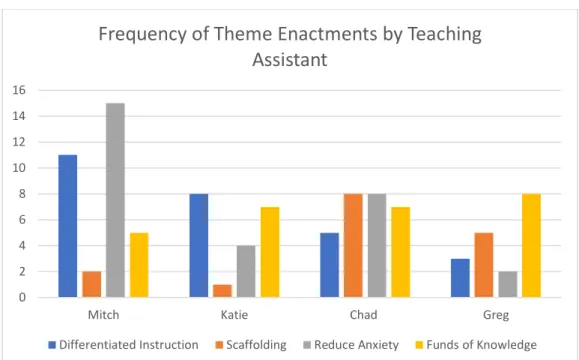
Overview of TA Enactment Frequencies 56
Funds of Knowledge Connections 57
Differentiating Instruction 64
Intentional Scaffolding 73
Reducing Student Anxiety 76
Research Question 2: What factors do biology TAs share that 81 influence their decisions to enact culturally responsive science teaching?
Affordances 82 Constraints 89 TA Beliefs 92 TA Identity 99 Postcolonial Critique 109 Settled Assumptions 109
Bounded Knowledge 113 Chapter 5: Discussion, Implications, and Conclusions 118 Implications for Key Area 1: Developing Culturally Responsive 118 Teaching Assistants’ Funds of Knowledge Potential
Implications for Key Area 2: Supporting TAs in Constructing 120 Positive Science Learning Experiences
Implications for Key Area 3: Limited Autonomy in Lab Course 122 Design Impacts CRST Enactment
Implications for Key Area 4: TA Self-Efficacy Plays an Important 123 Role in Ability to Enact CRST
Implications for Key Area 5: Colonial Legacies in Science and 124 Science Education Constrain the Impact of CRST
Limitations 125
Closing Remarks 126
References 127
APPENDIX A: Expanded Overview of Weekly Training Sessions (Expanded) 142
APPENDIX B: Example of Observation Field Notes 149
APPENDIX C: Weekly Writing and Brainstorming Prompts 155
APPENDIX D: Code Book 158
List of Tables
Table 3.1 Design of Weekly Training Sessions for Culturally 27 Responsive Science Teaching
Table 3.2 Example of Weekly Brainstorming Prompts for Teachings 34 Assistants
Table 3.3. Data Collection Timeline 37
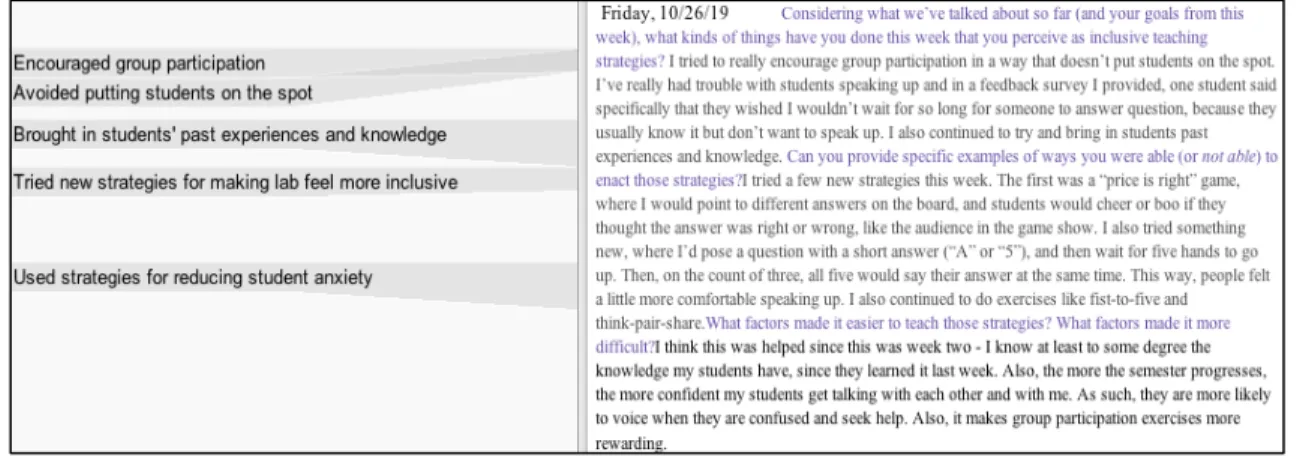
Table 3.4 Example of Open Coding and Analytic Memos for Research 40 Question 1
Table 3.5 Sample Line-by-Line Coding and Potential Category 42 Development for Research Question 1
Table 3.6 Example of Open Coding and Analytic Memos for Research 44 Question 2
Table 3.7 Sample Line-by-Line Coding and Potential Category 45 Development for Research Question 2
Table 3.8 Analytic Framework for Postcolonial Critique 49 Table 4.1 Weeks in Which Time was Discussed as Impeding CRST 89
Table 4.2 Excerpt of Weekly Goalsetting 90
Table 4.3 Identity Profile Completed by Chad 100
Table 4.4 Identity Profile Complete by Mitch 102
Table 4.5 Identity Profile Completed by Katie 105
List of Figures
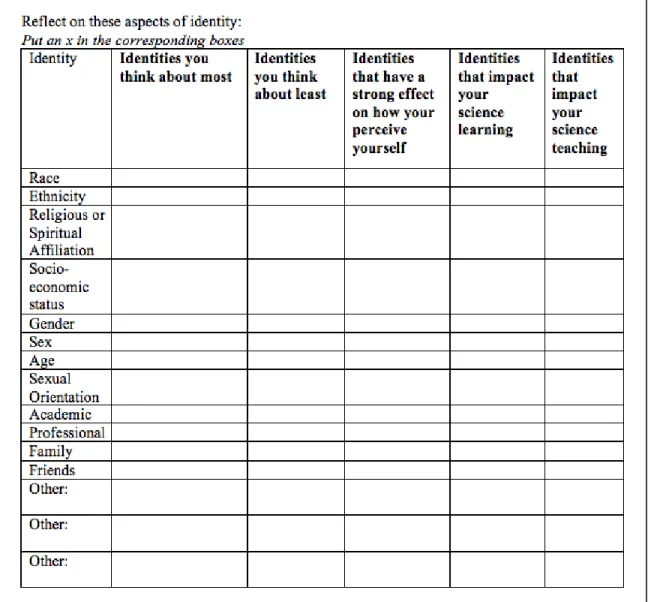
Figure 3.1 Questions Grounded in CRST that Guided Weekly Observations 35 Figure 3.2 Example of Line-by-Line Coding in HyperRESEARCH 41 Figure 3.3 Social Identity Profile Completed by Each Teaching Assistant 48 Figure 4.1 Frequency Distribution of Enactments Related to Each Theme 57 Across All Teaching Assistants
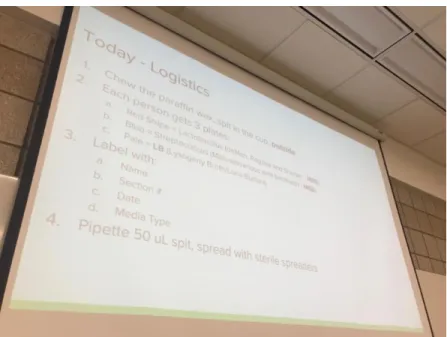
Figure 4.2 Katie’s Additional Logistics Slide 61
Figure 4.3 Katie’s Additional Checklist Slide 61
Figure 4.4 Instruction Slide for PSA in Mitch’s Lab (November 15, 2018) 63 Figure 4.5 Example of How Chad Incorporated Differentiated Instruction 67 in Her Lab
Figure 4.6 Katie’s “PacMan” Diagram. 69
Figure 4.7 Minute Paper Responses to Greg’s Prompt, “How is Mendelian 70 Genetics Relevant to our Lives Outside This Lab?” (Weekly observation,
September 27, 2018)
Figure 4.8 Chad Building Positive Learning Environments by Differentiating 73 Her Instruction
Figure 4.9 Greg’s Original Slide 76
Figure 4.10 Greg’s Additional Slide 76
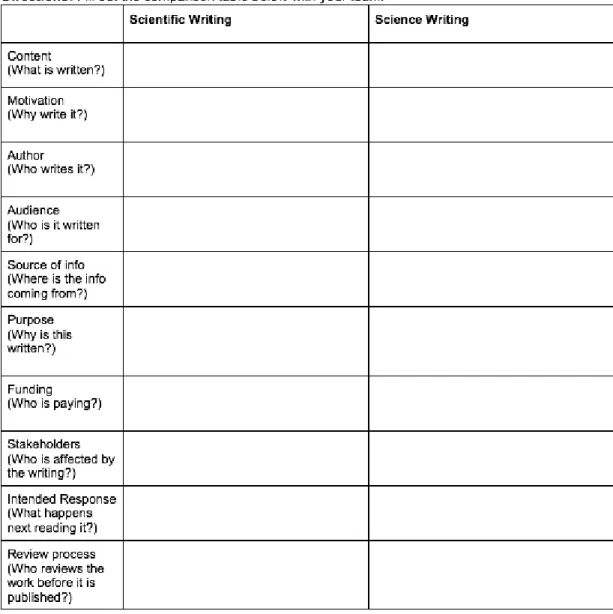
Figure 4.11 Comparison Table that Greg Assigned Students to Identify the 80 Attributes of Scientific Writing and the Attributes of Science Writing
Figure 4.12 Frequency of Themes by Teaching Assistant for Research 82 Question
Chapter 1: Introduction
Even in the 21st century, we continue to see substantial disparities across those who comprise science disciplines. Traditionally unrepresented groups such as women and racial minorities enter and are retained in science fields at lesser degrees (National
Science Foundation [NSF], 2018. Similar statistics are reported in undergraduate science classrooms, where a wealth of factors impact whether or not students are able to succeed in traditionally acceptable ways (Cheryan, Master & Meltzoff, 2015).
Culturally responsive science teaching – asset-based and student-centered pedagogies of empowerment – can lessen the educational debt experienced by students who have been historically underrepresented1 in science disciplines (Ladson-Billings, 2006a, 2006b). The purpose of this study was to understand the processes of enacting culturally responsive teaching in undergraduate biology laboratory instruction and the factors that influenced teaching assistants’ decisions whether or not to implement culturally responsive science teaching.
Statement of the Problem
1 Terminologies such as underrepresented minorities (URMs) are consistently used in academia and in education research, but persistently negative connotations associated with the term minority have started to incite a change in academic terminology
(Mukherji, Neuwirth, & Limonic, 2017). For the purpose of this study and in consonance with its postcolonial grounding, traditionally underrepresented students will replace URMs. Traditionally underrepresented students in this study include populations of women, students of color, first-generation college students, and students with disabilities
Science as a Gatekeeper. Science as an enterprise has been and continues to be exclusionary, perpetuating inequities among whose contributions are acknowledged as well as what/whose knowledge is recognized as valid (Johnson, 2011). The National Science Foundation (2018) reports that women, minorities, and persons with disabilities are still vastly outnumbered in science and engineering by their White, male counterparts. These types of imbalances create a gatekeeping culture of inequity and inaccessibility, particularly for traditionally underrepresented students (Cheryan et al., 2015).
Science classrooms, especially at the postsecondary level, strive to mimic the broader practices of the scientific community and therefore have tremendous potential to perpetuate the exclusion of certain groups of people. They also have, however, the potential to be a catalyst for equitable participation in science. Utilizing pedagogies of empowerment (Hayden, 2011), such as culturally responsive science teaching, in undergraduate classrooms can mitigate the gatekeeping phenomenon seen in science.
Training for Teaching Assistants. Teaching assistants engage in more one-on-one time with students than most faculty in undergraduate biology education, yet minimal pedagogical training is offered to them (Tanner & Allen, 2006). In a study conducted over an academic year, our research team at this Midwestern U.S. university found that experienced teaching assistants – those who have taught for one or more semesters – are more consistently concerned with being student-centered in their instruction, whereas new teaching assistants are focused on their presentation and appearance as teachers. New TAs start to become more student-centered in their teaching toward the end of their first-year of teaching (Barron, Brown, Patrick, & Cotner 2018). In the Biology Education
(BE) department, our research team works with TAs in the three areas of Scientific Teaching (Handelsmen, Miller & Pfund, 2007): active learning, assessment, and
diversity. In this framework, active learning practices are those which actively engage the learner, assessment refers to specific tools utilizes to measure learning progress and/or achievement, and diversity recognizes and values the differences of the classroom (including students, educators, content, and teaching practices). While substantial focus has been placed on active learning in biology education research writ large, addressing inclusivity in undergraduate science spaces is an emerging field of research (Hocking, 2010). These types of trainings have the potential to catalyze equitable access and participation for traditionally underrepresented students in undergraduate science. Therefore, training for improved pedagogical knowledge is important for TAs, but training for culturally responsive science teaching is critical as TAs have broad and potentially lasting impact on students and teach a diverse range of students in terms of ethnicities, races, linguistic backgrounds, socioeconomic classes, etc.
Theoretical Frameworks
Two theoretical frameworks guide this study: culturally responsive science teaching (Gay, 2010; Ladson-Billings, 1994) and postcolonial theory (Carter, 2006; Loomba 2015). I detail both in this section, followed by a brief discussion of literature on training culturally responsive science TAs that conceptually framed the TA training sessions I designed for this study.
Culturally Responsive Science Teaching. For this study, I used the term
“culturally responsive science teaching” to refer to pedagogies stemming from culturally relevant pedagogy (Ladson-Billings, 1994), culturally sustaining pedagogy (Paris &
Alim, 2014), and culturally responsive teaching (Gay, 2010). Nearly 25 years ago, Ladson-Billings proposed the concept of culturally relevant pedagogy (Ladson-Billings, 1994; 1995a) and transformed teaching practices to focus more broadly on successful classroom pedagogies. In doing so, she laid the groundwork for inclusive teaching that prioritized cultural heritage of students of color (Paris & Alim, 2014). Culturally relevant pedagogy is a pedagogy of “opposition” and “empowerment” (Ladson-Billings, 1995b), linking school and culture in ways that aim to improve academic successes, foster critical consciousness— a process of critiquing societal inequities via relevant issues — and support cultural competence in the classroom which give students opportunities to “honor their own cultural beliefs and practices while acquiring access to the wider culture” (Ladson-Billings, 2006, p. 36).
Reflecting on the vast array of research and conceptions built upon her work, Ladson-Billings (2014) cautions against the failure of some academics to fail to evolve with the changing landscape of education. She cites as progressive and appropriate Paris and Alim’s (2014) culturally sustaining pedagogy which takes an even more critical and anti-oppressive stance to eliminate the “White gaze” (p. 86), the assimilative expectations placed on students of color to perform like their White counterparts (e.g., a student is considered successful only if they behave or achieve in ways congruent with White, dominant norms).
Culturally responsive pedagogy has been a pathway through which multiple students’ backgrounds can be validated and even privileged in the classroom. For example, McCarty and Lee (2014) specifically center the conversation on Native American educational disparities, saying that Native American students face a system
that is “interlaced with ongoing legacies of colonization, ethnicide, and linguicide” (p. 103). Furthermore, they remind us that while extant research in Tribal communities has focused on Indigenous peoples, work with Tribal communities is far rarer. Therefore, Native Americans need to reclaim educational realities and address issues of student success in ways that are congruent with cultural norms. Culturally sustaining and revitalizing pedagogy is grounded in efforts to decolonize classrooms such that students and community members exercise sovereignty, self-determination, and cultural and linguistic repossession. Likewise, and specifically pertaining to science teaching,
culturally congruent teaching – privileging the cultural practices and ways of knowing of traditionally underrepresented students (Garroutte, 1999) and cross-cultural pedagogies – bridging cultural chasms by teaching and valuing shared cultural traits (Aikenhead & Elliot, 2010) are approaches to instruction that advance a postcolonial agenda that attempts to looks beyond Western science as the dominant way of knowing and bridge cultures (Jegede & Aikenhead, 1999).
Geneva Gay’s (2010) culturally responsive teaching focuses on improving classroom practices, with specific attention paid to curricular resources, for African, Latino, Asian, and Native American students. In culturally responsive teaching, instructional activities center around engaging practices that are transparent and build toward a classroom sense of community. Gay explains that teaching in this way, whether in the K-12 classroom or in teacher preparation classrooms, have benefits that are
threefold, 1) it alerts students to expect a different kind of classroom than they’ve perhaps experiences before, 2) it clearly establishes expected behavior among classroom
where we assist one another” (p. 219) or in other words, a culture and community of respect. Instructional interactions and curriculum alike should promote students’ positive self-perceptions and their cultural heritages should be validated. Assignments should not be impediments to student achievement, but rather opportunities for students to engage in different levels of learning processes, thereby allowing them multiple ways to
demonstrate success. When preparing teachers, Gay (2010) anchors her culturally
responsive teaching in “diversity and modeling” of culturally relevant pedagogy (p. 221) so that up and coming educators can see, experience, and practice what a culturally responsive classroom might look like when they themselves become the teacher. To that end, teachers who strive to be culturally responsive should engage in authenticity in choosing curricula, meaning it should be created or adapted in ways that reflect the multicultural and diverse dynamics of their classrooms.
While each of these approaches stem from varied epistemological foundations (e.g., postcolonial theory), they share a common theoretical construct: classroom pedagogies must be culturally informed and asset-based. Culturally responsive teachers are acutely aware of their students’ needs in the classroom and strive to make appropriate adaptations if and when necessary (Brown & Crippen, 2017). Of bringing these
knowledges to action in the classroom, Brown (2009) affirms that teachers use
“curriculum materials as tools to convey and reproduce curricular concepts, forms, and practices” (p. 17). Indeed, there is a unique relationship among teachers’ curriculum design processes, their knowledge of pedagogy and content, and their practices (Brown, 2009). Thus, bringing culturally responsive approaches into the curricular fold can be powerful (Gay, 2002; Villegas & Lucas, 2002). This is especially evident in science
classrooms where “border crossings” – the chasms between home and scientific cultures and discourses – can be particularly difficult (Aikenhead, 1996; Lee, 2005). This
proposal outlines specific strategies recognized in culturally responsive science teaching (CRST).2
Postcolonial Theory. Postcolonial approaches in education research seek to deconstruct and disrupt systems that have historically marginalized students (Asher, 2005; Carter, 2004), such as the epistemic violence inflicted on Native American children whose language, culture, and knowledges were effectively exterminated during the Boarding School Era of the 1800s and 1900s (Medin & Bang, 2014). These exclusionary processes are structural and cultural, and can be seen in the obstruction of access to educational opportunities at all levels - from explicit moves to reduce public education funding, for example, to more nuanced gatekeeping forces such as forging a narrow and exclusionary narrative of who should be among the educated (Carter, 2004).
Postcolonialism acknowledges that identities and cultures are not static and that we live at the intersections of race, class, culture, gender, and nation (Asher, 2005). Furthermore, pushing beyond binaries (such as Western science or Indigenous ways of knowing) is a rigorous and self-reflexive practice informed by postcolonial thought (Smith, 1999). Therefore one of the central aspect of postcolonial theory is its focus on representation where by certain cultural meanings, epistemologies, methods, communication, identities, language, etc. are either ignored or reduced into colonizers’ ways of being and doing (Loomba, 2015). Some of the key tenets of postcolonial theory include the growing of
cultural overlap and hybridity (Asher, 2005; Bang et al, 2012), awareness that there is a social, psychological, and cultural inferiority imposed by the colonizer3 (Fanon, 1961), and struggle for ethnic, cultural, and political economy (Loomba, 2015; Said, 1995) and reclamation (Simpson, 2014; Smith, 1999; Tuck & Yang, 2012).
Science classrooms are prime examples of upholding these dichotomies by legitimizing only the Western science representation. Thus, science education research (and, therefore, subsequent pedagogies) still heavily grounded in positivistic
epistemologies (Richardson, 2015) that maintain assumptions “bound to stable and unitary ideas of nation, culture, identity, comparison, and difference” (Carter, 2006, p. 681). Bang et al (2012) premise that we must desettle those assumptions in traditional science education in order to reclaim education spaces for students whose voices have been systematically and perpetually silenced through the exclusionary processes mentioned above. Settled expectations in science confine what is both explored and valued in science classrooms as well as place traditionally marginalized students in “untenable epistemological positions that work against engagement in meaningful science learning” (Bang et al., 2012, p. 302). Much of the same can be said for undergraduate science classrooms, where colonized, patriarchal systems that elevate Western science as superior and relegates culture to social sciences are still visible (Aikenhead & Elliott, 2010; Harding, 2008).
As the educational research community strives to re-envision science education, we must do so with the intent to liberate educational systems from the oppressive forces
3 The term colonizer refers to the entities, processes, and people whose dominance remains as a legacy of imperialism and settler colonialism and is reinforced by the oppression those it/they colonizes (Fanon,
that perpetuate a binary of colonizer/colonized, self/Other, and intellect/affect. This study was an active attempt to desettle science (Bang et al., 2012) and how it is taught at the undergraduate level. An important part of that endeavor was interrogating the teaching practices of teaching assistants and doing so through a postcolonial lens. My research questions were not postcolonial in nature, per se, but the implications upon which I drew were examined through and informed by postcolonial theory.
Training Teaching Assistants for CRST. When Ladson-Billings (2014) revisited the progress and limitations of work done surrounding culturally responsive pedagogies, she proclaimed that “culture is always changing” (p. 75) and asserted that education must change with it. It is time to expand the work of culturally responsive science teaching beyond the K-12 education space and into undergraduate science education.
One of the most popular movements in undergraduate science education right now is scientific teaching (Handelsman, Miller, & Pfund, 2007), which brings together active learning, equitable assessment, and inclusive teaching. While the inclusive teaching component discusses common culturally responsive concepts such as recognizing diversity in the classroom, it is enacted to a lesser extent than the other scientific teaching practices (Tanner, 2013).
Faculty and teaching assistants – who are generally responsible for laboratory components of undergraduate science classes – report similar struggles as K-12 teachers do when discussing culturally responsive instruction: they are insecure in their ability to do so and it’s difficult to enact in many science lessons (Hockings, 2010).
Research Questions
This study was guided by the following research questions:
1. In what ways do biology teaching assistants enact culturally responsive science teaching?
2. What factors do biology teaching assistants share that influence their decisions to enact culturally responsive science teaching?
Significance of the Study
A common limitation to culturally responsive science instruction is the cognitive load — the increased burden or effort needed for knowledge transfer to occur — teachers face when preparing to enact culturally responsive curricula (Belgarde, Mitchel, & Arquero, 2002), particularly if specific trainings aren’t available or accessible.
Furthermore, structures for such preparation in formal teacher preparation settings are sparse (Mensah, 2011). For example, teachers described uncertainty in exploring and drawing upon their students’ funds of knowledge – the household and community-based skills and tools accumulated over time (Rodriguez, 2013) – and often cite feeling an overwhelming responsibility to tend to every students’ funds of knowledge. Likewise, undergraduate faculty and teachings assistants, to whom funds of knowledge is even more abstract than culturally responsive or inclusive teaching, struggle to make those connections when their class sizes are large and their student populations are diverse (Tanner & Allen, 2004). Comparatively, similar limitations exist in undergraduate
science education where the specific conversations of culturally responsive teaching have not quite yet emerged.
Like science teachers, beliefs and values strongly impact the ways in which undergraduate educators choose to incorporate particular practices (Brown, 2009), such as culturally responsive teaching. Accessible and inclusive undergraduate science
education is still in its infancy (Hockings, 2010). In addition to being critical to attracting and maintaining students with diverse backgrounds and cultures in science fields,
utilizing culturally responsive approaches like incorporating funds of knowledge
becomes equally important when traditionally underrepresented students transition from high school to college (Jegede & Aikenhead, 1999).
Overview of the Following Chapters
In Chapter 2, I provides a review of the relevant literature guiding this study, specifically relating to culturally responsive science teaching and the role of teaching assistants in undergraduate science education. Chapter 3 follows with a description of the methodology used in this study, including the data sources, collection, and timeline, the context of the study, grounded theory methods of analysis, and a description of the postcolonial critique of the findings. Chapter 4 presents the findings for Research
Question 1 and 2, which explore how TAs enacted culturally responsive science teaching and what factors they shared that impacted their CRST enactments, as well as presents the postcolonial critique of the findings. Lastly, Chapter 5 discusses the implications of key areas, areas of future research, and conclusions.
Chapter 2: Literature Review
In the following segments, I outline foundational pieces from the literature that grounded my study. First, I discuss three domains through which culturally responsive teaching has been enacted in science classrooms: general connections to culturally responsive science teaching, inclusive teaching, connections to funds of knowledge, and ties to sociopolitical consciousness. Next, I examine the ways in which biology teaching assistants in undergraduate science spaces have or have not been exposed to pedagogical training and, specifically, culturally responsive science instruction.
Culturally Responsive Science Teaching
In the following sections, I examine three domains within which culturally responsive science teaching can manifest in science classrooms: culturally responsive curriculum, utilizing funds of knowledge, and engaging sociopolitical consciousness.
Culturally Responsive Curriculum. Use of culturally responsive curriculum has been shown to be critically influential in empowering students (McCutcheon, 2002; Milner, 2011). For example, a study of African American students’ perceptions of their teachers’ cultural responsiveness revealed that they felt teachers were engaging in culturally responsive teaching when they incorporated “features of the students’ cultural capital” into their curriculum (Howard, 2001, p. 145), but that teachers’ curriculum by and large didn’t reflect their broader ethnic experience. Similarly, and more pertinent to science education, Laubach, Crofford, and Marek (2012) endeavored to better understand Native American students’ perceptions of scientists and found that an “overwhelming majority of students drew a scientist that was male, Caucasian, and working indoors” (p.
1787). They argue that using culturally responsive curriculum in science classrooms could alleviate such mismatches in students’ perceptions of who scientists are.
While a variety of strategies exist to design culturally responsive curricula, I focus particular on those below that I perceive contribute to student empowerment and self-efficacy, two areas which are exceptionally important in repaying the educational debt (Bang & Medin, 2010; Gay, 2010; Ladson-Billings, 2006a; 2006b) owed to traditionally underrepresented students in science education (Mensah, 2011).
Multiple Ways to Demonstrate Intelligence and Competency. Lee and Buxton (2013) assert that the most effective ways to foster scientific literacy and English proficiency among English language learners is for teachers to anticipate varying levels of discourse ability with respect to formal science communication, adjust curricula accordingly, and build scaffolds that allow students to demonstrate competency along multiple time points. They argue that it is particularly important to reduce the language-related cognitive load. We, as scientists and as science educators, engage in a specific kind of scientific language and culture. Creating environments in the science classroom that validate students’ rich and varied ways of knowing can bridge the road between those different discourses (Bang & Medin, 2010). By extension, in creating curricula that reflect these values, teachers should especially consider the type of assessments they utilize (Powell et al., 2012) and adapt them accordingly to promote multiple modes of learning (Villegas & Lucas, 2002). Such mechanisms can prove to be effective vehicles for student empowerment and self-efficacy in science.
Multiple Ways to Achieve Success. Calabrese Barton (2007) asserts that teachers play a critical role in preparing students to be successful in science, finding that
unbalanced power dynamics perpetuate diminished self-efficacy in traditionally underrepresented students. Who is or who can become successful in science is often a product of classroom experiences that result in disproportionate feelings of self-efficacy (Darling-Hammond, 2010). Teachers have the ability to upend that status quo by
providing multiple ways for students to demonstrate and achieve success (Atwater, Freeman, Butler, & Draper-Morris, 2010). Students can achieve success by engaging in collaborations wherein they have many opportunities to demonstrate knowledge and/or skills among their peers (Ladson-Billings, 1994).
Bransford, Brown, and Cocking (1999) unpacked the ways in which experts and novices differ in their abilities to understand information and demonstrate that
knowledge, contending that experts – or expert learners - essentially can process and retrieve information more efficiently because they can associate new content with their existing conceptual frameworks. In science classrooms, collaborative initiatives can allow students to engage in an expert/teacher identity (Brown & Crippen, 2017) which can also help students learn new concepts by drawing on each other’s expertise (Powell et al., 2012).
Finally, success in science can be achieved by providing opportunities for
students to access and/or explain science in their home or dominant discourses (Powell et al., 2012). Gee (2014) describes discourses as falling within two main categories: “big D” Discourses that essentially underscore a person’s “socially situated identity” (p. 47) such as a person’s way of interacting with the world and “little d” discourses that are more commonly understood as a person’s language and language interactions. The singular term discourse encompasses both of those categories for this purpose of this work.
Science has a discourse and a culture (Siry, Ziegler, & Max, 2012), but that requires that students adhere to one true or correct way to engage with that culture (Koomen & Barron, in press).
Science Experiences are Rigorous. Traditionally underrepresented students in science and engineering face a multitude of barriers even before entering the discipline – particularly in undergraduate science classes (Bang, Warren, Roseberry, & Medin, 2012). In a study about Native American students’ experiences in such classes, Moyer et al. (2014) report that one of those barriers is Native students’ perceived and/or lived
experiences that faculty and other students view them as less academically inclined than non-Native students. Traditionally underrepresented students experience diminished expectations from their teachers and, often, tempered or watered-down curricula (McKinley & Gan, 2014). Enacting lessons – both in the classroom or the laboratory – where rigorous science experiences are upheld for all students is a critical component of sustaining self-efficacy in science (Tsurusaki, Calabrese Barton, Tan, Koch, & Contento, 2013). As described in Chapter 1, CRST has emerged as key focus area in advancing equity in science education in K-12 spaces. However, such a focus is missing in postsecondary science education.
Funds of Knowledge. Born out of a desire to shift the commonly held deficit perspective of bilingual Latino/a students’ skills and achievements, funds of knowledge emerged as a theoretical and methodological construct by Luis Moll and Stephen Diaz in the 1980s (David, 2016). In their early studies, Moll and Diaz (1987) demonstrated that bilingual students held significant cultural capital that was often overlooked because of their minority status, and it was demonstrated particularly well when those students were
assessed in bilingual settings. Students showed greater proficiency and gains in English language learning when they were able to incorporate their dominant language and it became clear to the researchers that achievement barriers faced by minority and working-class students were a “consequence of institutional arrangements that constrain students and teachers by not capitalizing on their talents, resources, and skills,” (p. 302). In particular, Moll and Diaz were interested in the intersection of traditionally
underrepresented students’ skillsets and Vygotsky’s Zone of Proximal Development theory, which posits that learners have an inherent ability, stemming from their social and cultural knowledges, to learn a concept or perform a task but cannot quite do so to
completion until a more knowledgeable other aids them in that process (Moll, 2014). Sociocultural learning thereafter informed their research, leading to interventionist approaches in both research and teaching that many scholars have built from, making funds of knowledge a familiar part of education discourse (Combs, 2011).
During roughly the same time period, Vélez-Ibáñez and Greenberg (1992) worked to challenge the static conceptions of culture and introduce their interpretation of funds of knowledge with specific regard to the household practices of Mexican borderland
communities. While their model was geared more toward economic responses and cultural reproduction, their intermingling of Bourdieu’s (1977) notions of habitus – everyday behavioral patterns of households and communities – provided another entry point for education scholars seeking to better understand funds of knowledge and the potential application in classroom (Vélez-Ibáñez, 1989; David, 2016).
The next foundational literature of the funds of knowledge framework came from a paper Moll published in 1992 with a few graduate students (González, Moll, & Amanti,
2006). In it, they provided an ethnographic narrative of two teachers’ methods in capitalizing on their students’ rich and multi-faceted household knowledges and skills, articulating what that looked like in the classroom (Moll, Amanti, Neff, & González, 1992). One of the commonly held descriptions across recent literature refers to funds of knowledge as the skills and practices that are local to an individual’s household or community and have accumulated over time (Clement, Fries, Postma, & Zhang, 2015; Llopart & Esteban-Guitart, 2018; Rodriguez, 2013). A closer look at how science
teachers can access and incorporate their students’ funds of knowledge is now examined. Utilizing Funds of Knowledge in Science Classrooms.Calabrese Barton and Tan (2009) further the conversation, describing how students’ everyday experiences and knowledges are valuable considerations for classroom instruction, especially if educators desire to practice culturally responsive science teaching or anti-oppressive pedagogies. Investigating a teachers’ curriculum design and implementation in a 6th grade science classroom, their work revealed that students draw upon in a variety of funds while learning science: family, community, peer culture, and popular culture. Furthermore, by introducing new ways of engaging with science content that were informed by these funds, students “volunteered information” that “contributed to science talk” (p. 66). Walkinton and Bernacki (2015) contend that funds of knowledge when utilized in science curriculum, like Calabrese Barton and Tan’s study, act as scaffolding mechanisms
(Vygotsky, 1978) to foster better student attainment of science concepts. Likewise, Van Neil (2010) found that tailoring science classrooms to draw on students’ individual and collective funds of knowledge make learning science content more fluid. Scholars further affirm that funds of knowledge pedagogies and curricula in science classrooms contribute
to student empowerment and performance (Bouillion & Gomez, 2001; Carlone, Haun-Frank, & Webb, 2011; Lloyd, 2010; Upadhyay, 2009).
There are many tenets of the funds of knowledge framework within which we can examine science teaching (David, 2016). For example, Moll et al. (1992) explored how
actively accessing students’ household knowledge and practices could be directly incorporated in class, stressing the importance moving beyond simple or illustrative examples. Other scholars have focused on how such funds contribute to a larger,
multicultural approach in teachers’ instruction (Verdin, Godwin, & Capobianco, 2016). I now focus on accessing funds of knowledge to, 1) promote diverse knowledge and perspectives, and, 2) to foster positive science identities because those attributes are devalued and largely non-existent, respectively.
Diverse Knowledge and Perspectives. Many students of color have a sense of belonging uncertainty when it comes to engaging in science and science practices (Walton & Cohen, 2007). These doubts, Smith et al (2014) argue, are barriers that have accumulated through colonizing education structures and exist across populations with knowledges and perspectives that appear different than the Western science model. This can be seen in Native American students who navigate Western science while also ascribing to Indigenous ways of knowing about the world. In order to work against this archetype, curriculum in science teaching should not only be inclusive of diverse knowledges and perspectives, but should validate them in instruction and assessment (Lee, Yen. & Aikenhead, 2012).
Positive Science Identities. Tytler (2014) describes that there are several
in the literature. They include favorable attitudes and perceptions of who scientists are and what they do, enjoying science and science learning experiences, and self-efficacy in science. Yet when we look for these types of attitudes and identities in students of color, and in Native American students in particular, they are far behind those of their White classmates (Lee, 2012). When teachers supported their students in applying their own funds of knowledge to real science issues, Cook (2014) found that those students had a deeper connection to the content and increased perceptions of self-efficacy. Furthermore, students whose teachers engaged in funds of knowledge curricular strategies demonstrate more complex scientific reasoning during inquiry-based problem solving than when they didn’t use their funds of knowledge in those same kinds of activities (Irish, 2013). Likewise, Lloyd (2010) reported that engaging in rural students’ funds of knowledge allowed them to feel like their skills were validated and that their science content knowledge was important and accurate. Broadly speaking, engaging in funds of
knowledge as an active and asset-based teaching practice can lead to higher self-efficacy in science and more positive science identities among students of color (Carlone et al., 2011).
Funds of knowledge connections are both representative of the pedagogies of empowerment underscored in CRST (Gay, 2010; Ladson-Billings, 1994) as well as mechanisms for cultural and epistemic reclamation (Medin & Bang, 2014). Thus, in this review of the relevant literature, FoK connections are described at length because of their potential critical role in advancing equity in science education both through CRST and from a postcolonial approach. An emerging body of scholarship focuses on these areas in
K-12 science education (Bang et al.; Carter, 2006; Upadhyay, 2009), but little has been explored in postsecondary science education.
Sociopolitical Consciousness. Ties to sociopolitical consciousness in CRST are those which foster a critical consciousness (Ladson-Billings, 1995) about broader systems of social inequity through relevant issues (Ladson-Billings, 2006).
Developing a citizenry engaged in decision and action. At the turn of the 20th century when science instruction was largely prescribed and in constant contention with classicist and religious-based education (DeBoer, 1991; Kliebard, 2004), John Dewey called for the need to make science relevant to students (Dewey, 1919). By weaving his assertions about the relationality of nature and the human condition together with his thoughts on inquiry, he proclaimed that science was a “method of thinking, an attitude of mind (Dewey, 1910, p. 1). We see relevant and repeating themes today in such calls to action as the National Research Council’s (2012) strive to make science for all and also in movements that inspire student agency through pedagogy. Powell et al. (2012) assert that science instruction should provide opportunities for students to “contribute, inform, persuade, and have a voice in the classroom, school, and beyond” (p. 12). Creating opportunities for students that inspire social action through informed decision-making is a practice of empowerment (Suriel & Atwater, 2012). Democratic science teaching through critical science agency (Basu et al., 2007) is a key area of study through sociopolitical consciousness connections are examined in K-12 education spaces, yet such work is lacking in postsecondary science education.
The Role of Teaching Assistants in Undergraduate Science Education
Teaching assistants comprise a substantial portion of the education force in undergraduate science classes and labs (DeChenne & Enochs, 2010) and contribute greatly to the impact science instruction has on students (Vereleger & Valasquez, 2007). While there have been decades of research on teaching assistants (TAs), it has centered on TAs and TA training in non-STEM disciplines, such as psychology (Prieto & Meyers, 1999). In the following sections, I review the work that has been done with TAs as well as the areas that are less explored. Then, I discuss the potential impacts that training TAs in culturally responsive science teaching can have on undergraduate science education.
TA Training: A Review of Existing Programs. Teaching assistants spend more one-on-one time with students in undergraduate science spaces than faculty and yet research shows they are vastly underprepared for being a teacher (Golde & Dore, 2001; Luft et al, 2004). A variety of training for TAs has be implemented and studied (Prieto & Scheel, 2008); the following segments describe such work.
TA Cognition. Many models of TA training have centered around the cognitive changes TA experience as they engage in a training program or professional development (Reeves et al., 2016). Patrick, Barron, Brown and Cotner (2018) found, for example, that easy assessment – a popular active learning technique – was the most valued and most frequently used training topic for TAs who participated in a workshop about active learning. Other studies in inquiry-based TA training have shown levels of knowledge and comfort-level vary according to both characteristics of the trainings as well as the TAs themselves (Bowman et al, 2013). Likewise, much research has delved into what
influences TA self-efficacy for various aspects of teaching (DeChenne, Koziol, Needham, & Enochs, 2015).
TA Teaching Practice. Reeves et al. (2016) contend that TA cognition is intrinsically linked to teaching practices which warrants the extant and continued research into their behavior and cognition as they relate to teaching practices. Planning, instruction, and assessment are three areas of such extensive research (Wyse, Long, & Ebert-May, 2014). The role of the laboratory TA in science courses is especially critical, given the importance of lab-based activities to the development of science-process skills in undergraduates. In short, the teaching laboratory is where many undergraduates first learn how to do science. Consequently, calls for reform (e.g., Brewer & Smith, 2011; National Research Council, 2010) highlight the importance of the teaching laboratory as a critical site. Specifically, it has been argued that students engage in authentic scientific practices via two active learning experiences: inquiry-based laboratory activities
(Brickman, Gormally, Armstrong, & Hallar, 2009; Minner, Levy, & Century, 2010) and course-based undergraduate research experiences (or CUREs; Ballen et al., 2017; Auchincloss, et al., 2014). Effective facilitation of these experiences requires
instructors—often TAs—to be familiar with desired outcomes as well as the capacity to engage their students in exploration, experimental design, data collection and
interpretation, and findings communication (Cheung, 2008). Science experiences that are inquiry-based and authentic can also promote inclusion (Espinosa, 2011). Thus, to broaden science participation, TAs should learn some basic techniques for inclusive teaching, such as how to elicit input from all students (Tanner, 2013).
It is not shocking, given how few science faculty employ Scientific Teaching, that novice instructors — such as undergraduate TAs — may be even less aware of these techniques and less likely to use evidence-based teaching techniques. Teaching assistants (TAs) are prime candidates to engage in these kinds of initiatives as they often interact with students more closely than faculty (Romm, Gordon-Messer, & Kosinski-Collins, 2010). Several Scientific Teaching-focused programs report programmatic assessment efforts, either documenting the need for training, TA perceptions of the training, or changes in teaching behaviors associated with training. However, efforts to describe the teaching-related concerns of these novice science educators during their initiation into laboratory teaching have been explored minimally explored.
More critically, efforts to initiate and develop awareness and skills in enacting culturally responsive science teaching have yet to be explored at all in undergraduate science education. Despite the wealth of research that has been and continues to be conducted surrounded biology teaching assistants, there exists a significant gap in the literature in relation to training TAs for culturally responsive science teaching at the undergraduate level. Moreover, while some studies are beginning to emerge that discuss how to make undergraduate science more inclusive (Vergara et al., 2014), a recent review of the literature has revealed that such strategies for equitable science education through culturally responsive science teaching have not yet been extensively modeled for
Chapter 3: Methodology
The following chapter examines the research design of the study. The purpose and research questions are first described, followed by the context of the study including brief biographies of participants and an in-depth overview of the TA program. Data sources, data collection and data analysis follow with the conclusion of the chapter discussing researcher positionality and study trustworthiness.
Purpose
The purpose of this study was to understand the processes of enacting culturally responsive teaching in undergraduate biology lab instruction and the factors that
influenced teaching assistants’ decisions whether or not to implement.
Research Questions
To explore the ways in which biology teaching assistants engaged in utilizing culturally responsive science teaching in their labs, this study was guided by the following research questions:
1. In what ways do biology teaching assistants enact culturally responsive science teaching?
2. What factors do biology teaching assistants share that influence their decisions to enact culturally responsive science teaching?
Research Design
This study applied a grounded theory methodology to address the research questions. Grounded theory is an approach to qualitative analysis that aims to develop an abstract or theoretical understanding of an experience or set of experiences (Charmaz,
2006; Glaser & Strass 1967; Strauss & Corbin, 1998). In her updated edition of Constructing Grounded Theory, Charmaz (2014) outlines the main tenets of grounded theory as a methodology:
“Grounded theory methods consist of systematic, yet flexible guidelines for collecting and analyzing qualitative data to construct theories from the data themselves. Grounded theory begins with inductive data, invokes iterative strategies of going back and forth between data and analysis, uses comparative methods, and keeps you interacting and involved with your data and emerging analysis” (p. 1).
As described above, the views and actions of the teaching assistant participants (Strauss & Corbin, 1998) in this study were the foundation for developing a localized theory that was grounded in the real-life actions taking place in undergraduate science teaching, making it an ideal template for grounded theory.
A core element of grounded theory is theoretical sampling. According to Corbin and Strauss (2015), theoretical sampling is the process of collecting information or additional data based on the properties and dimension of an emerging theme. Detailed examples of how and when theoretical sampling occurred is described in the Data Analysis section of this chapter. The purpose of theoretical sampling is for the
development of an emerging conceptual framework (Glaser & Strauss, 1967) such that the data become saturated or, in other words, when new concepts no longer emerge (Charmaz, 2014). The term theme refers to the product of grounded theory analysis wherein individual codes and categories are intentionally reconstructed and elevated to reflect an abstract conceptualization (Charmaz, 2014). Collectively, these emerging conceptualizations can be used to generate a broader conceptual framework with which to describe the findings. This approach to understanding the processes of and the reasons
for enacting culturally responsive science teaching is methodologically appropriate because no such conceptual framework has been developed extensively for teaching assistants. Charmaz’s (2014) approach to constructivist grounded theory offers some flexibility in that it shifts the methodology slightly away from Glaser and Strauss’ post-positivistic leanings, allowing for poststructural, critical, and/or postcolonial
epistemologies to inform research using grounded theory. Constructivist grounded theory “shreds notions of a neutral observer and value-free expert” (Charmaz, 2014, p. 13) which diverges from the objectivist work of Glaser and Strauss and even the early work of Strauss and Corbin in that it acknowledges that research is a construction that occurs within specific contexts (Bryant & Charmaz, 2007). Specific to this study, constructivist grounded theory analysis allowed me to later interrogate the contexts of my findings from a postcolonial perspective by looking closely at the social constructions of the conditions under which science learning and science teaching occur in undergraduate education. Context
Instructional context: Training for culturally responsive science teaching. Teaching assistants vary in their ability and concern for enacting student-centered teaching practices (Barron et al., 2018). Culturally responsive science teaching can be a powerful pedagogical tool yet it requires adequate and appropriate training in order to reduce the cognitive load – the amount or intensity of mental resources used to process new information – of the instructor (Belgarde, Mitchel, & Arquero, 2002).
In this study, teaching assistants engaged with weekly training modules that outlined strategies for culturally responsive science teaching and challenged them to implement those strategies in their classroom and/or lab. Additionally, the training
sessions aimed to disrupt prevailing ideas of science teaching, challenge and expand TAs’ ideas and beliefs about culturally responsive science teaching, and develop a critical dialogue surrounding issues of equity and access in science learning. Such strategies included but were not limited to: how people learn, science as a way of knowing, and place-based learning and social action. The weekly training sessions were held every Friday morning from September 21, 2018 to December 7, 2018. Each session followed a similar format that was intended to scaffold the TAs learning about culturally responsive science teaching as well as provide a safe space within which they could engage with each other about how they envisioned enacting culturally responsive teaching in their labs. Table 3.1 provides an overview of the focus for each weekly lesson, how it connected to culturally responsive science teaching, and specific resources provided to the TAs. Each session’s activities were grounded in historical and current literature on culturally relevant and responsive pedagogies and formulated dynamically and in conjunction with how TAs could enact the techniques we discussed. Appendix A includes an expanded version of Table 3.1 including weekly brainstorming and goalsetting prompts for TAs.
Table 3.1
Design of Weekly Training Sessions for Culturally Responsive Science Teaching Training Date Overview of the Training Connections to Culturally Responsive Science Teaching Resources Provided September 21, 2018 Introduced adult learning concepts. Outlined key findings on adult learning theory including 1) how students’ Differentiating instruction as a result of understanding students’ pre/misconceptions; creating conceptual
Provided TAs with examples of conceptual
frameworks and ways to elicit students’ preconceptions from
content influence their learning, 2) retrieval of knowledge requires a conceptual framework or “hook” Bransford et al. (2000).
multiple ways for students to demonstrate competency and
intelligence in the lab (Sternberg, 2007)
(Bransford et al., 2000)
September
28, 2018 Continued with Bransford’s key findings on adult learning, specifically how metacognition can aid in learning. Began introduction to funds of knowledge and how to begin centering
personal and student funds of knowledge in instruction.
Equitable science learning spaces provide students with
opportunities to
develop agency in their learning (Carlone et al., 2011) and engaging students in
metacognition is a way for them to do so. Validating students’ funds of knowledge in the lab can make science learning more accessible to students (Moll et al, 1992).
Provided TAs a handout that introduced the historical and current scholarly work
surrounding accessing and drawing up funds of knowledge in science learning spaces. October 5, 2018 Continued discussing funds of knowledge in science learning spaces, focusing specifically on how identifying,
utilizing, and connecting with students’ social and cultural resources “helps a teacher to avoid the pitfalls of an exclusionary” classroom or lab (Upadhyay, 2005, p. 103). Funds of knowledge connections can transition a potentially exclusionary learning environment into an inclusive space.
Provided TAs with examples of what using students’ funds of knowledge looks like, including scenarios and strategies (Bouillion & Gomez, 2001) October 12, 2018 Building on funds of knowledge, I reiterated the focus on equity in science education and began discussing how identity of students as
Creating science learning environments where students have opportunities to build positive science
identities contributes to
Provided TAs with the Carlone, Haun-Frank and Webb (2011) article as well as Tytler (2014) reading.
knowledge producers (Tytler, 2014) is an important aspect of culturally responsive science teaching.
inclusive and equitable teaching (Carlone et al., 2011) October 19, 2018 Introduced TAs to pedagogical content knowledge (PCK) as a specific aspect of instruction they could focus their culturally responsive teaching efforts if they desired. Continued the
conversation about how our identities shape how we teach and how we learn.
Continued focus on building positive science identities.
Provided TAs with an identity profile
assignment to
complete but also that they could adapt to elicit more information about their students’ identities. November 2, 2018 Continued discussing PCK as a way to
examine where the TAs strengths and
confidences were surrounding their content and ability to enact culturally responsive science teaching. General connections to asset-based pedagogies surrounding typically difficult science content.
Provided TAs with specific examples of equitable assessments (Learning Goal Inventory, “Muddiest Point” (Keeley, 2008)). November
9, 2018 Introduction to critical science agency (Basu et al, 2011) and
sociopolitical consciousness in science teaching (Mensah, 2011; Powell et al., 2012; Suriel & Atwater, 2012)
Equitable and empowering science teaching can draw upon critical science agency and sociopolitical consciousness to expand and/or deconstruct traditional outcomes in science education (Basu, Calabrese-Barton & Tan, 2011; Calabrese Barton et al., 2011). Provided students with handouts from chapters of
Democratic Science Teaching (Basu, Calabrese-Barton & Tan, 2011)
November 16, 2018
Pause for TA reflection and opportunity to engage in their own metacognition.
Drawing on being culturally connected (Esign, 2003) in a broad sense to create inclusive science lab spaces.
Provided TAs with an annotated
bibliography of articles from major focal areas of culturally responsive teaching including cultural competence (Ladson-Billings, 1995), critical consciousness (Basu & Calabrese-Barton, 2007), language supports (Luykx & Lee, 2007), social action (Bouillion & Gomez, 2001), and care and respectful relationships (Mensah, 2011) November
30, 2018 Discussion about learning as a sociocultural and situated process; focus on how students negotiate forms of participations and identities within this process.
Connecting inclusivity in science teaching to empowering student voice in the lab and deconstructing the myth that the
teacher/TA is the single knowledge-holder.
Provided students with Bang, Warren, Roseberry and Medin’s (2012) work on desettling expectations in science. December 6, 2018 Closing conversations about culturally responsive science teaching and how TAs view themselves as science educators.
Provided TAs with examples of what culturally responsive science teaching looks like when specifically responsive to a particular group (i.e., Minnesota Native Americans).
Participant and selection criteria. This study was conducted at a large public research institution in the Midwestern United States. As one of the lead instructors of a
TA training program for non-majors biology TAs, I had the opportunity to work with teaching assistants across all levels of biology lab and lecture sections. For this study, experienced, undergraduate teaching assistants (> 1-year previous TA experience) who were teaching an introductory biology lab during the data collection timeline were invited to participate in this additional training specific to culturally responsive science teaching. Introductory non-majors biology courses taught by the TAs included a general biology and ecology survey course, an environmental biology course, and a foundations of biology course. TAs from all courses were offered the opportunity to participate in the study as long as they were classified as experienced. Those teaching assistants (N=4) who committed to participate in this study are described next. The names used for this study were pseudonyms selected by the participants. Because this study aimed to understand the processes and/or actions that TAs shared for being able to enact culturally responsive teaching, the biographies below include self-reported factors that influenced their views on teaching and desires to be TAs. Collectively, the TAs shared that in aiming to enact culturally responsive science teaching in their labs, they were hoping to be responsive and inclusive to students who were non-majors (i.e. majoring in a field of study other than biology) as well as first-generation college students.
Chad. Having taught for four consecutive semesters prior to the start of the study, Chad was considered a seasoned TA by her peers and the faculty who coordinating the course schedule for the lab course she taught, Human Biology. At the time of the study, Chad was a senior preparing to graduate with a double major in Physiology and
Economics and a minor in neuroscience. When asked about her reasons for wanting to be a teaching assistant, Chad said that she was particularly interested in teaching non-majors
biology students because she was also a non-major when she took her first biology course as a student, “For most students, this is the only biology course they are going to get, so I like to teach them things they can get excited about,” (Post-semester interview, December 11, 2018). Chad expressed her interest in continuing in both biology and education and planned to apply to medical school, beyond which she hoped to work in community health education.
Katie. Engaging and energetic, Katie was an experienced teaching assistant at the start of the training, having taught Introduction to Biology, for three semesters prior. Katie came to be a teaching assistant as part of her personal and career aspirations to combine her love of science with her multi-disciplinary studies in literature, social change, and language. A significant part of her role as a TA was defined by her personal beliefs that learning should be an engaging and eternal process. Of being a TA of a non-majors biology lab, Katie said, “It is [my job] to find the gifts and talents that every person brings and use those gifts to engage them – the teacher is not the gift, the students are” (Post-semester interview, December 13, 2018). In addition to being culturally responsive to non-majors and first-generation college students, Katie also noted she hope to be responsive to students whose first or dominant language was not English, citing the potential additional barriers of learning the “language of biology” while also learning English (Post-observation interview, October 2, 2018). At the close of the training, Katie had been accepted into a Master’s of Education program and planned to continue in the field of science education.
Mitch. When I asked Mitch why he had decided to participate in this study, his response was that he was persistently “frustrated when students say ‘I’m not a science
person’ because it’s not that they can’t be, it’s that resources are often prohibitive,” (Post-semester interview, December 6, 2018). While Mitch admitted he is a self-proclaimed “science person” he simultaneously pointed out that his upbringing with parents who went to college as well as his degree focus in biology were instrumental in that identity development. Teaching non-majors in Introduction to Biology, however, Mitch said he became aware of how science course structure or content could sometimes be barriers to developing positive science identities in students, which inspired him to continue
pursuing student-centered teaching practices. Mitch, a senior, planned to apply to graduate school and continue teaching undergraduate science.
Greg. After teaching Perspectives in Biology for two semesters and engaging in some TA training surrounding scientific teaching, Greg approached me to participate in training for culturally responsive science teaching. He was most interested in developing curricular products that were “engaging so that students feel like they are spending their time and money on valuable experiences,” (Post-semester interview, December 11, 2018). Greg focused on improving his teaching because he, like many other science majors, experienced lack luster and/or ineffective teaching typically in the format of lectures. As an interactional and motivational TA, Greg approached his teaching from the perspective of the learner, meaning he made teaching decisions based on how he felt they could positively affect science learning for his students. After graduating, Greg hoped to go on to graduate school after taking a year or so off to work in industry.
Data Sources
Multiple data were collected to address the study’s research questions. To address Research Question 1, the main data sources included TA reflections, observation,