University of Texas at Tyler
Scholar Works at UT Tyler
Nursing Theses and Dissertations School of Nursing
Fall 11-14-2012
Nurse Practitioner Home-Based Care
Nicole Peters KrollFollow this and additional works at:https://scholarworks.uttyler.edu/nursing_grad
Part of theNursing Commons
This Dissertation is brought to you for free and open access by the School of Nursing at Scholar Works at UT Tyler. It has been accepted for inclusion in Nursing Theses and Dissertations by an authorized administrator of Scholar Works at UT Tyler. For more information, please contact
Recommended Citation
Kroll, Nicole Peters, "Nurse Practitioner Home-Based Care" (2012).Nursing Theses and Dissertations.Paper 14. http://hdl.handle.net/10950/95
NURSE PRACTITIONER HOME-BASED CARE
By
NICOLE PETERS KROLL
A dissertation submitted in partial fulfillment of the requirements for the degree of
Doctor of Philosophy Department of Nursing
K. Lynn Wieck, Ph.D., Committee Chair College of Nursing and Health Sciences
The University of Texas at Tyler October 2012
Copyright
© Copyright by Nicole Peters Kroll 2012 All rights reserved
Acknowledgments
I would like to take this opportunity to acknowledge and express gratitude to my husband Arnold and my son Colton for their unwavering love and support. I could never have done this without the two of you. I want to thank my parents, Duane and Bettie Peters for instilling the values and the drive that made me who I am today. I wish to acknowledge the rest of my family and close friends who made this doctoral journey possible, particularly my evening and weekend babysitters Elaine Welch, Lillian Ruth Price and Emily Staples. A special thanks to my devoted dissertation committee and especially my chair Dr. Lynn Wieck for taking on this project with no hesitation. Your experience and positive reinforcement has made my path more enjoyable. I will never be able to thank you enough. This dissertation is dedicated to my aunt Diane Peters may you rest in peace. I know you would have been so proud to see me finish this great feat. I would like to end by giving all the glory to God this document is proof that through Him all things are possible (Mathew 19:26).
i
Table of Contents
List of Tables ...iv
List of Figures ...v
Abstract ...1
Chapter 1. Overview of the Research Study Overall Purpose of the Study ...2
Introduction of Articles ...3
Chapter 2. Advanced Practice Nurses and Home-based Care: State of the Science Abstract ...7
Manuscript ...8
History of Home-based Care ...10
Models of Home-based Care ...11
Outcomes of Home-based Care ...13
Current State of Affairs ...17
Conclusion and Recommendations ...18
References ...21
Chapter 3. Nurse Practitioner Perceptions of Competency and Confidence in Delivering Home-Based Care Abstract ...29
Manuscript ...30
ii
Background and Significance ...32
Conceptual Framework ...35
Design and Methods ...37
Design ...37
Research Questions ...37
Sample...37
Instruments ...38
Data Collection Procedures ...40
Results ...40 Sample...40 Data Analysis ...41 Discussion ...43 Perceived Confidence ...44 Perceived Competence ...45
Support for Dick and Frazier (2006) Domains and Competencies of Home-based Care NP Practice ...45
Limitations ...46
Implications for Research ...46
Conclusion ...47
References ...49
Chapter 4. Summary and conclusion Evaluation of Project...62
iii
Recommendations Based on Findings ...63
Conclusion ...64
References ...66
Appendices Appendix A. Evidence Table ...69
Appendix B. IRB Approval ...76
Appendix C. NP Home-based Care Survey ...77
Appendix D. Permission to use Copyrighted Materials...83
Appendix E. Invitation to Participate...84
iv List of Tables Chapter 3
Table 1. Demographic Information ...55 Table 2. Pearson Correlation of Age, years as a NP, Competence
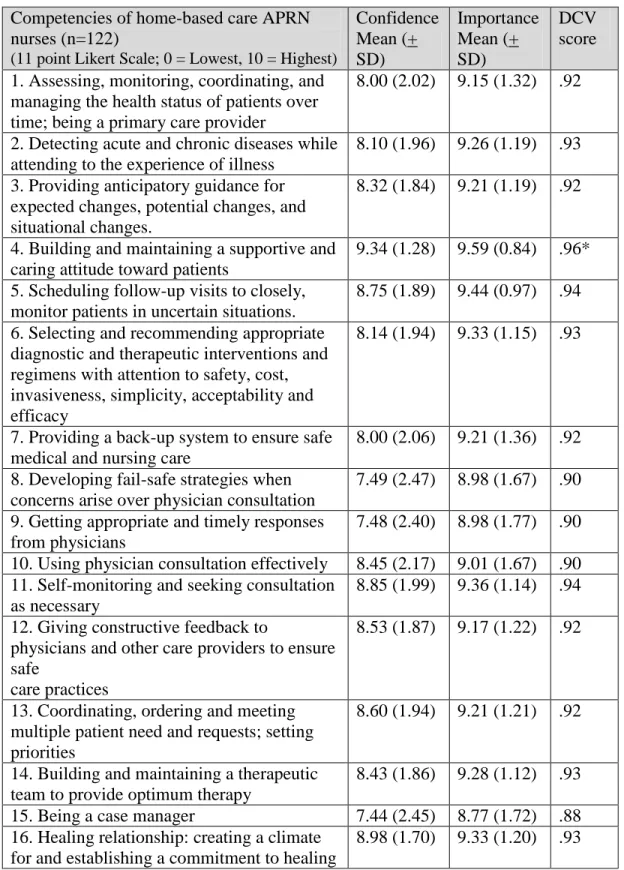
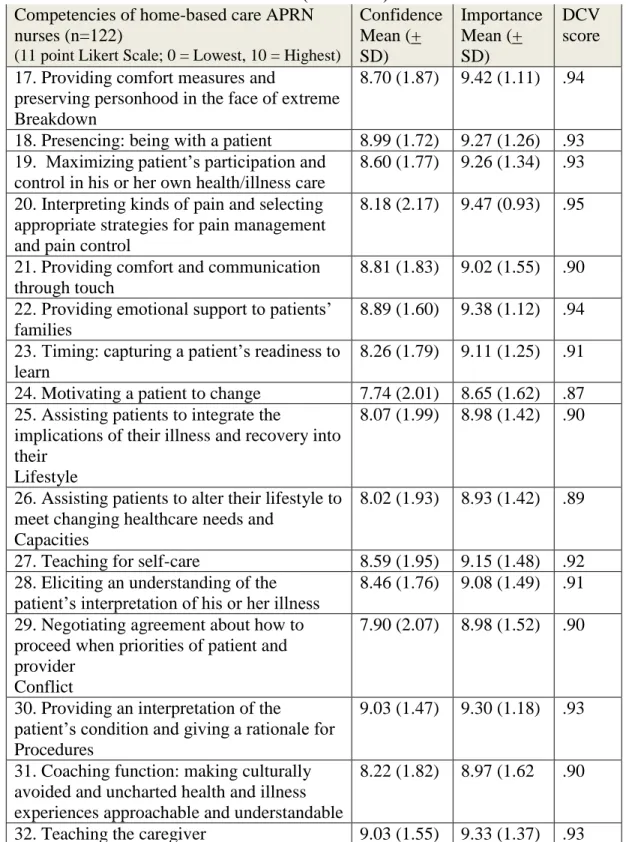
and Confidence ...56 Table 3. Nurse Practitioner Competency Scale: DVC, Confidence
and Importance Totals...57 Table 4. Summary of Hierarchical Regression Analysis for Variables
Predicting Likelihood of NPs Practicing Home-based Care in
the Next 10 Years...60 Table 5. Summary of Hierarchical Regression Analysis for Variables
Predicting Likelihood of NPs Increasing Service Delivery to
v List of Figures Chapter 3
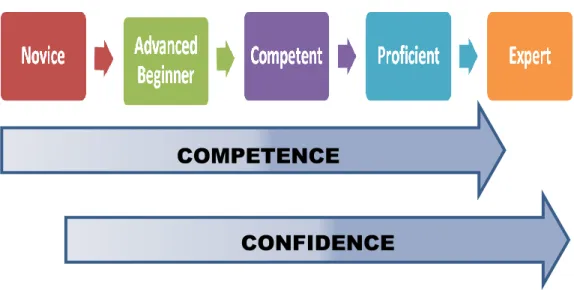
Figure 1. Adapted from Benner’s (2001) Novice to Expert Model ...54 Figure 2. Diagnostic Content Validity ...59
1 Abstract
NURSE PRACTITIONER HOME-BASED CARE Nicole Peters Kroll
Dissertation Chair: K. Lynn Wieck, PhD The University of Texas at Tyler
October 2012
The United States is currently faced with the challenge of how and where to care for its aging population. Nurse practitioner (NP) home-based care is a potential solution to meet this challenge. Current research indicates that care provision by advanced practice nurses reduces cost, decreases length of stay and readmission to hospitals, and improves patient quality of life. The purpose of this research was to examine the state of the science regarding home-based geriatric care by NPs and to determine the current status and potential expansion of NPs in home-based care for elderly patients. Advanced practice nurses are able to fill the provider gap for aged patients. The future of healthcare in the US is linked to the willingness of this workforce to provide appropriate care in the most expedient setting. Finding innovative ways to address the needs of this population is important to relieving some of the burdens associated with fragmented healthcare for older adults and curtailing the growing financial burden of inpatient care for the nation’s elders.
2
Chapter 1: Overview of the Research Study Overall Purpose of the Study
Currently, the health care system is challenged with how and where to care for chronically ill elderly patients (Schram, 2010). Barriers associated with this challenge include a shortage of physicians, inability of nurse practitioners to practice to the fullest extent of their training, and increase in the size of the geriatric population. Specifically, limitations associated with the expansion of the number of chronically ill persons have placed a burden on acute care and skilled care facilities. Disease management often results in repeated hospitalizations (Ricauda et al., 2008), death, and monetary hardship in aged populations (DeVol & Bedroussian, 2007). These factors all signify a need to manage the health care of aged patients in their homes, rather than in skilled care facilities or in-hospital care. (Olsan, Shore & Coleman, 2009; Ricauda et al., 2008; Wendel, Durso, Cayea, Arbaje, & Tanner, 2010).
Home-based care can alleviate some of the burdens associated with the
fragmented health delivery system for older adults. Since the 1880’s, home health care has been performed by registered nurses (RN) or Licensed Vocational Nurses (LVN) and guided by physician orders (Burns-Tisdale & Goff, 1989). Caring for the elderly in their own homes allows them added independence, reduces needless emergency department visits, and decreases hospital admission (CMS, 2012). Home-based care by advanced practice registered nurses (APRN’s) can bring health care to the frail elderly who are unable to travel to out-patient clinics for health problems and care management (Auer &
3
Nierenberg, 2008). Advanced practice nurses engaged in home-based care rely on teaching patients and their families’ primary prevention of possible complications and focus on early detection of problems (Dick and Frazier, 2006).
The purpose of this study was to evaluate and examine the current state of nurse practitioners in home-base care. An original study was conducted to address whether nurse practitioners were willing to provide home-based care to the aged population over the next ten years. In order to address the dilemma this population faces, it was essential to determine if nurse practitioners were ready to undertake the challenge.
Introduction of Articles
Two manuscripts related to advanced practice nurse home-based care of the geriatric patient are included as a report of the research. The first manuscript, Advanced Practice Nurses and Home-based Care: State of the Science, is an overview of current research related to Advanced Practice Nurse home-based care. The homebound geriatric population currently struggles to access sufficient health care. Home-based care allows patients to have affordable easily accessible health care in their own homes. Advanced practice registered nurse home-based care, in collaboration with a physician, offers improved patient outcomes and health-related quality of life as well as decreased hospital admissions and cost (Naylor et al., 2004; Neff, Madigan & Narsavage, 2003). However, very little research had been done to investigate the autonomous practice of APRN’s in the home. The purpose of this paper is to identify the state of the science regarding home-based geriatric care by APRNs. Based on the evidence found, three recommendations were presented: 1.) APRN scope of practice must be clearly defined with as much nation-wide consistency as possible; 2.) replicable APRN health care delivery models that meet
4
patient needs must be developed and tested; and 3.) the current APRN workforce must be assessed to determine how they see their preferred future in relation to care delivery for the expanding geriatric population. This state of the science paper suggests that APRNs may hold the key to the future of healthcare if they so choose.
The second manuscript, Nurse Practitioner Perceptions of Competency and
Confidence in Delivering Home-Based Care, describes a research study investigating the current status and potential expansion of nurse practitioner home-based care for elderly patients over the next decade in the state of Texas. This study examined the current condition and prospective development of nurse practitioner home-based care for elderly patients. Benner’s (2001) Novice to Expert Model was used as a framework to guide this study. A computerized survey was sent out via email to members of the Texas Nurse Practitioner Association. The survey included the NP Home-based Confidence Scale based on Dick and Fraizer’s (2006) 32 NP home-based care competencies. The NP Home-based Confidence Scale measured the study participants’ confidence in their ability to perform each item on the scale. In addition to reported confidence, the importance of each item was ranked by each participant. Consistent with the Novice to Expert Model (Benner, 2001), each nurse practitioner indicated a general score reflecting a perceived level of competence related to home-based care. The second article describes the findings which generally revealed that higher levels of competence and confidence increase the likelihood for NPs to practice home-based care.
Both manuscripts will be submitted to the Journal of the American Academy of
Nurse Practitioners (JAANP). The journalistic mission of JAANP is to publish timely and original articles addressing current issues affecting NPs. It is the official
peer-5
reviewed journal of the American Academy of Nurse Practitioners which is the only full-service organization for NPs of all specialties. The majority of its readership includes actively practicing adult (22%) and family (65%) nurse practitioners (AANP, 2010). JAANP encourages submission of articles addressing evidence-based clinical practice, integrative reviews, research, legislation and advanced practice nurse issues which coincides with the intent of these manuscripts. This original research supports the Institute of Medicine (IOM) recommendations to allow APRNs to practice to the full extent of their educational preparation and allows for insight into a different approach and role for NPs (Neal-Boylan, Madger and Kazera, 2012). The information
disseminated in this manuscript has the potential to inform political and policy debates over the future of APRN practice.
6
Chapter 2: Advanced Practice Nurses and Home-based Care: State of the Science Nicole Peters Kroll
The University of Texas at Tyler
Author Note
Correspondence to: Nicole Peters Kroll PO Box 374
Millican, TX 77866
7 Abstract
Purpose: Identify the state of the science regarding home-based geriatric care by advanced practice nurses.
Data Sources: A thorough search of library databases for research in home-based care of geriatric patients provided by advanced practice nurses was preformed.
Conclusions: Advanced practice nurses have the ability to provide home-based care to the growing elderly population; however, there has been limited research showing their effectiveness to practice autonomously in this setting.
Implications to practice: Additional empirical evidence is needed to verify positive outcomes relating to cost and hospitalization with APRN home care. In addition, it is important to determine the likelihood that APRNs will be willing to provide this care.
Keywords: home-based care, models of care, homebound elderly, advanced practice nurse
8
Advanced Practice Nurses and Home- based Care: State of the Science
According to the Administration on Aging (2011), the geriatric population in the United States in 2030 will exceed 72 million and will include 500,000 centenarians. As the fastest growing segment of the population, seniors consume the largest portion of health care resources (Reschovsky, Hadley, Saiontz-Martinez & Boukus, 2011). Disease management often results in frequent hospitalizations (Ricauda et al., 2008), increased morbidity, and financial burdens in aged populations (DeVol & Bedroussian, 2007). These factors all indicate a need to refocus from disease management to patient
management in the home, rather than in skilled care facilities or in-hospital care. (Olsan, Shore & Coleman, 2009; Ricauda et al., 2008; Wendel, Durso, Cayea, Arbaje, & Tanner, 2010). In 2012 the Centers for Medicare Services implemented a program to increase home-based services to sick and frail elders and reduce untoward outcomes. Advanced practice registered nurses (APRN) can be an asset to the home-based setting if steps are taken to broaden their scope of practice (Neal-Boylan, Mager & Kazer, 2012) allowing them to provide the safe, effective quality care they are known to give (Newhouse et al., 2011).
The management of chronic diseases requires extensive financial resources (Yohannes & Ershler, 2011). With more than 125 million Americans reported to have chronic illness, the time to manage cost is here (Neal-Boylan et al. 2012). Medical costs related to chronic disease are expected to surpass six trillion dollars by the year 2050 (Neal-Boylan et al. 2012). Yet much of these costs could be avoided by decreasing needless emergency room visits and hospitalizations (Naylor et al., 2004). Research clearly supports the assertion that nurse practitioner home-based care reduces emergency
9
room visits and hospitalizations (Beck et al., 2009; Counsell et al., 2007; Naylor et al., 2004; Neff et al., 2003),
Home-based practices provide an easily accessible, affordable patient-centered replacement for the traditional office visit in mobility-impaired older adults with multiple medical conditions (Landers, Gunn & Stange, 2009). DeJong, Taler and Boling (2009) reported that home-based care decreased costs up to 50 % in acute care patients with specific diseases such as heart failure and as much as 65% in patients who need post-hospitalization transitional care. They further assert that home-based medical care can lower total cost by as much as 25% (DeJong et al., 2009). The cost of exacerbation of COPD can be substantially reduced by avoiding hospitalization and managing the elderly population in their home environments (Neff et al., 2003). Hartman and colleagues (2009) also reported home-based care improved diabetes management and contributed to the prevention of diabetes complications, ER visits, and hospitalizations. Home-based care by nurse practitioners in individuals with mental illness improved mental health outcomes and was shown to be cost effective (Storgjell et al., 2008).
Long-term care burdens the health care system and utilizes resources even more than hospitalizations (Henry, 2009). Although early studies in the 1970s suggest that the difference between home-based care and skilled nursing facilities care was cost neutral, the rising cost of long term care facilities, along with the financial burden of
hospitalization, make today’s home-based care savings significant (DeJonge et al., 2009). Most patients prefer home-based care because, in addition to saving money, this model reduces readmissions and shortens in-hospital stays (Berjon-Aparaicio, 2007). In 2008 the Institute of Medicine (IOM) assessed and prioritized healthcare resources and
10
determined the cost of long-term care continues to rise as the population ages. Skilled nursing care currently is experiencing significant financial strain, reducing provider accessibility to patients. These facts trigger a demand for a solution to preserve the health care system and provide care for the aged (Henry, 2009). Advanced practice registered nurse home-based care offers a solution by allowing patients to remain at home, thereby decreasing hospitalizations and reducing costs.
History of Home-based Care
Home-based care includes any diagnostic, therapeutic, or social support service provided in the environment where a patient lives (Levine, Boal & Boling, 2003).
Effective home-based care promotes, maintains, or restores a patient's health and reduces the effects of disease or disability. It also supports early hospital discharge, decreases the frequency of hospitalization, and allows ongoing assessment to prevent or delay health deterioration and changes in functional status (Di Gioacchino et al., 2004; Levine et al., 2003). Home-based care refers to the services of a physician, physician assistant, or APRN in response to acute, chronic, or urgent health needs. This care may be
preventative, diagnostic, therapeutic, palliative, or rehabilitative (Levine et al., 2003). Depending on scope of practice, the APRN may operate autonomously or as an employee of a managed care organization or primary care physician practice (McAiney et al, 2008). Beginning in the late 1880s, nurses provided care for patients in the home (Burns-Tisdale & Goff, 1989). Physicians also made house calls to the elderly, particularly in rural communities, throughout World War II (Meyer & Gibbons, 1997; Restrepo, Davitt & Thompson, 2001). In the 20th century, the U. S. government formed the public health department to address health promotion and disease prevention (Burns-Tisdale & Goff,
11
1989). Congress introduced Medicare in 1965, including a provision allowing
reimbursement to health care providers for services to the elderly in their homes (Burns-Tisdale & Goff, 1989). After the passage of this legislation, the length of in-hospital stay for the elderly decreased significantly. The development of technology in the 1980s shifted the focus to office based care and in-hospital care, causing many to believe that home-based care was outdated (Leff & Burton, 2001). In 1997, the Balanced Budget Amendment established better reimbursement for home visits, thus creating a business model incentive to increase the delivery of home-based health services (Leff & Burton, 2001). In addition, the development of compact, portable medical equipment made it possible to ensure optimal use of technology in health delivery in any environment (Kaufman-Rivi, Collins-Mitchell & Jetley, 2010; Landers et al., 2009).
Models of Home-based
APRN home-based care programs follow several models, including the
Consultative Model (McAiney et al., 2008), House Calls for Seniors Program (Beck et al., 2009), and The Transitional Care Model (Naylor et al., 2004; Neff et al., 2003; Ornstein et al., 2011). In each of these models, the APRN collaborates with a multidisciplinary team to improve home-based care outcomes.
The Consultative Model is the most documented and commonly used model in managed care (McAiney et al., 2008). APRNs collaborate with physicians and caregivers to provide quality primary care to the elderly. The model is built on a premise of mutual respect and trust between the involved parties. APRNs deliver autonomous care with regular discussion and feedback from the consulting physician and ancillary providers,
12
such as therapists, aides, and family members. This model emphasizes patient centered care and is associated with improved patient function.
Beck, et al. (2009) studied the House Calls for Seniors Program, a joint venture between the Indiana University Geriatric Program and an urban tax-supported healthcare system, Wilshard Health Services in Indianapolis, Indiana. This model provides medical care to geriatric homebound patients who have difficulty accessing medical care due to physical or mental disabilities. The program offers multiple resources like phlebotomy, electrocardiograms, mobile x-rays, and vaccinations in the home as well as community resources including in-home psychiatric and podiatric care. Physicians and social workers make initial standardized health assessments; they then follow-up with evaluations every 4-6 weeks. APRNs provide any necessary urgent care visits. Internal medicine residents accompany the physicians in month-long rotations of house call visits. Weekly team meetings review patient care plans. Beck et al. (2009) report enhanced patient satisfaction and quality of care through preventative services and the early detection of geriatric syndromes. In the year following the implementation of this program, emergency room, primary care appointments, and specialty visits decreased.
The Transitional Care Model offers seamless transitions between care settings crucial to caring for the elderly (Ornstein et al., 2011). Transitional care allows APRNs to perform initial case management and support at diagnosis, along with following the patient through the acute phases of the disease (Neff et al., 2003). When moving a patient from the hospital to home, this model provides health care along a continuum from discharge planning to home-based care and outcome management (Naylor et al., 2004).
13
Outcomes of Homecare
The increasing popularity of home-based care creates the need for a medical professional trained to care for patients outside of an office practice, and APRNs are the optimal choice. Education and certifications are required for APRN’s in every state; however, the state regulations differ between boards of nursing potentially limiting access to health care (NCSBN, 2012). The National Council of State Boards of Nursing is currently working on a model for advanced practice nurse consensus in the effort to streamline regulatory requirements in licensure, accreditation, certification, and education between states allowing APRN’s to move and practice seamlessly between states
(NCSBN, 2012). Additionally, physician involvement in APRN practice varies from state to state; however, most APRNs collaborate or consult with physicians (Zand, 2011). The legality of physician supervision versus independent practice also creates barriers for consumers to receive a full range of care (NCSBN, 2012). Removing scope of practice barriers will allow APRNs to provide optimal care within the parameters of their education and certification standards and boundaries.
Stuck et al. (1995) conducted a three year randomized controlled trial using APRNs in collaboration with geriatricians to determine the effect of annual in-home comprehensive assessments. After the initial evaluation, the intervention group received education and recommendations related to their specific health condition while the control group received standard medical care. Statistical testing was done between groups. The study measured disability based on basic activities of daily living (ADL) at base line and at year three. At year three, the intervention group showed 10% fewer patients requiring assistance with ADLs (p = .02). Acute care in-hospital stays and short
14
term skilled care facility admissions did not differ significantly. The study reported that in-home assessments of geriatric patients can delay the need of assistance with basic ADL’s. A cost analysis using the yearly cost of the intervention program compared to the cost of permanent-stay skilled care facilities found home-based care reduced overall medical costs (Stuck et al., 1995).
Hughes et al. (2000) conducted a randomized controlled multi-site study to
determine the effectiveness of home-base primary care with a multidisciplinary team that included NPs but was headed by a physician. Outcome measures included functional status, health related quality of life (HR-QoL), satisfaction with care, and cost of care. The study compared patients who had difficulty with two or more ADLs or who had a terminal illness to patients who accessed Veterans Affairs (VA) services except home-based care. Researchers reported that home-home-based care interventions improved most HR-QoL (p <.05) measures in the terminally ill cohort and improved satisfaction with care in the non-terminally ill group. It also increased satisfaction with care (p <.001) and decreased in-hospital re-admission at 6 months (.07 intervention vs. 0.9 control; p=.03) for the terminally ill as well as reduced the burden (p =.008) for care-givers. However, cost of homecare was more than traditional care ($19,190 vs. $17,971 at 6 months and $31,401 vs. $28,008 at 12 months).
Multiple studies considered satisfaction of care and quality of life (QOL) as important factors in assessing home-based care models. Naylor et al. (2004) reported better overall QOL (week 12: 3.2 vs. 2.7, p<.05) as well as the physical dimensions of QOL (12 weeks intervention M=3.6, SD=1.4 vs. control M=3.1 SD=1.6, p <.05). Further, patient satisfaction improved in the intervention group (at 2 weeks intervention M=83.0,
15
SD=10.3 vs. control M=74.6, SD=10.4 and 6 weeks intervention M=83.1, SD=9.6 vs. control M=77.8, SD=11.2, p<.001). Beck and colleagues (2009) and Ornstein and colleagues (2011) also reported consistent patient satisfaction with home-based care.
Hospital readmission rates, length of stay during hospitalization, and number of acute care visits all declined with home-based care (Neff et al., 2003). Naylor et al. (2004) found that the number of patients who were readmitted or died was 14% lower in
those patients who received APRN-directed home-based care (p=.01). At 52 weeks, the
intervention group had fewer hospital readmissions (Kaplan-Meier log rank χ²=5.0, p=.026). Counsell et al. (2007) reported the cumulative emergency room (ER) visit rate per one thousand was lower in the home treatment group (1445 vs. 1748, p=.03). In a predefined high risk group, the number of ER visits and in-hospital admissions were lower for the home-based group versus participants seen in office-based care in the second year (848 vs. 1314, p=.03 and 396 vs. 705, p=.03, respectively) (Counsell et al., 2007). Beck et al. (2009) reported that one year after beginning home-based care, ER visits (695 vs. 594), primary care visits (1,111 vs. 193), and specialty care visits (1,100 vs. 696) began to decrease as the number of home-based care visits increased (187 vs. 4,073). Wajnberg et al. (2010) reported hospitalization for their home-based care
intervention group decreased 23% (p<.001). It seems clear that home-based care activities has a positive impact on the sick person’s ability to manage symptoms and outcomes as manifested by decreased necessity to utilize of expensive emergency and hospitalization services.
Three studies evaluated the financial aspects of home-based care. Naylor et al. (2004) discovered home-based care cost was 1.6 % lower than the cost for office-based
16
care. Ornstein et al. (2011) also reported a decrease in cost in their intervention group using the case mixed index (CMI) where as the CMI increases over 1.00, the adjusted cost per patient per day is lowered (CMI increased from 1.25 to 1.35 during the
intervention period (p=.005)). However, Beck et al. (2009) reported that the home-based program from their study generated income from billing, health professional shortage area revenue, and in-hospital support to meet only 38% of total costs of the program (cost /person/yr. 2000 = $1589 vs. 2006 = $1480; total income 2000= $135,087 vs. 2006 =$136,550). These figures suggest that the program may not be cost effective when economics alone are considered.
In a qualitative study, Dick and Frazier (2006) identified and classified nurse practitioner (NP) home-based care activities and NP’s perception of outcomes. APRNs were found to provide management of patient co-morbidities, patient education, and case management. These APRNs reported that they improved quality of life and believed that they prevented medication errors, falls, ER visits, hospitalizations and death. Dick and Frazier have published a model of APRN home-based competencies which describe the skills needed by APRNs and the advanced-level activities involved in providing home-based care to patients. This competencies model has not been tested at this point.
APRNs are effective home-based care providers for multiple comorbidities. Home-based APRN care of COPD patients showed this vulnerable group experienced less depressive feelings, a better ADL status, and significantly shorter hospital visits. Benefits from a clinical partnership of APRNs and endocrinologist for homebound diabetic patients have shown improved adherence to their treatment plan, better medication management, and improved knowledge of diabetes and its complications
17
(Hartman et al., 2009). In individuals with serious mental illness, the use of APRN home-based care has shown to be an effective method to enhance plan of care adherence (Storfjell, 2008). Naylor and colleagues reported that APRN home-based care with heart failure patients reduced in-hospital stays, decreased health care costs, and increased length of time between hospital discharge and readmission of death.
Current State of Affairs
Due to population increases and physician shortages, advanced practice nurses more and more perform the role of primary provider. APRNs provide continuity of care, as well as incorporating evidence-based advanced clinical care, leadership, and a “hands-on” approach (Zand, 2011). Research suggests APRN services are generally more cost effective because their salaries are less than physicians, they use fewer medications, and they implement preventative medicine, including healthy lifestyles and self care
(Koskinen et al., 2011; Ornstein et al., 2011; Schram, 2010).
Most U.S. states require APRNs to work in collaboration with a physician (Centers for Medicare, 2011). Medicare invokes strict policies that allow only physicians to order home health care services, and only recently were nurse practitioners allowed to bill for managing and providing oversight for home-based care (Neal-Boylan et al., 2012). These policies and practices make it more difficult to isolate APRN patient
outcomes from those of physicians. Few documented studies exist on homecare outcomes or costs of patients under APRN care. With one exception, studies completed in the last 10 years focus on multidisciplinary home-based care (Appendix A) (Beck et al., 2009; Counsell et al., 2007; Naylor et al., 2004; Ornstein et al., 2011; Wajnberg, Wang, Aniff, & Kunins, 2010).
18
It must be noted that there is a general reluctance on the part of physician groups to allow any expansion of APRN scope of practice or delivery models (Conde, 2011). Physicians are being asked by their associations to speak to legislators in opposition of any nonphysician group that is attempting to pursue legislation to increase their ability to provide care (Conde, 2011). These physician groups cite patient safety when health professionals attempt to practice medicine without going to medical school and completing a residencyas their reason for resistance (Conde, 2011). In spite of the political and policy differences between physician and advanced practice registered nurses, there are national groups who are making the call for cooperation and collaboration for the benefit of patients and the survival of the U.S. health delivery system (Neal-Boylan et al., 2012).
The Institute on Medicine, in partnership with the Robert Wood Johnson
Foundation, is encouraging the use of APRNs to the fullest extent of their training (Neal-Boylan et al., 2012). The expansion of the advanced practice registered nurses scope of practice, for example, by changing legislation to allow nurse practitioners to write home-care orders, is especially important if adequate providers are going to be available to home-care for a growing aged population. Patient needs and economic good sense must guide the future of health delivery in the US. With the number of homebound frail elderly growing rapidly, home-based care has the potential to relieve this health care burden (Neal-Boylan et al., 2012).
Conclusion and Recommendations
The homebound frail older adult currently lacks adequate health care. Advanced practice nurses can fill the gap in services for these patients, but this option needs further
19
investigation. Despite the fact that current home-based programs utilize APRN services, there remains little empirical evidence to show their effectiveness when used
autonomously. This dearth of evidence is possibly due to the lack of APRNs who actually deliver home-based care and difficulty in differentiation of care outcomes according to provider. The cost of APRN home-based care services compared to traditional healthcare also needs better documentation which may be forthcoming after the implementation of electronic health records. Current methods of retrieving financial information is
inadequate to allow true comparisons in most instances. Future well-conducted studies focusing on the availability of an APRN workforce in the next decade have not been done.
Based on the evidence presented, it is clear that three priorities must be addressed quickly. 1) Clarify the scope of APRN practice. The current inter-professional discord between physicians and APRNs needs to be settled so that focus on delivering quality care to vulnerable populations can move forward. Evidence clearly shows that APRN care delivery can be a force in meeting the public’s healthcare needs. Barriers to fully practicing within their educational preparation for APRNs must be eliminated. 2) APRN groups must put forward delivery models which meet patient needs and which can be replicated. The evidence shows that general collaborative models are most frequently used for delivery of APRN services. Models based on competencies and outcomes should be defined and compared for effectiveness. Evidence-based models should be published so that they can be replicated and tested for best practices. 3) The APRN workforce should be studied in light of anticipated needs for care in the future. This workforce analysis must include evolving education patterns including the Doctor of Nursing
20
Practice and APRN specialties. Evidence shows that using APRNs to deliver home-based care has many benefits. The APRN workforce should be examined for their readiness to assume the roles and acquire the skills needed to provide care in alternate environments (such as the home) and to expanded numbers of elderly patients. The future of healthcare in the US is tied to the availability and proficiency of the provider workforce. This state of the science paper demonstrates that advanced practice nurses are a lynchpin of that future workforce.
21 Reference
Administration on Aging (2011). Aging statistics. US department of health & human services. Retrieved from http://www.aoa.gov/aoaroot/aging_statistics/index.aspx. Beck, R. A., Arizmendi, A., Purnell, C., Fultz, B. A. & Callahan, C. M. (2009). House
calls for seniors: Building a sustaining model of care for homebound seniors. Journal of the American Geriatrics Society, 57(6), 1103 - 1109.
doi:10.1111/j.1532-5415.2009.02278.x
Berjon-Aparaicio, S. (2007). Assessing the impact of health policies on COPD. British Journal of Community Nursing, 12(6),253-254, 256-259.
Burns-Tisdale, S. & Goff, W. F. (1989). The geriatric nurse practitioner in home-based care: Challenges, stressors and rewards. Nursing Clinics of North America, 24(3), 809-817.
Centers for Medicare and Medicaid Services (2012). CMS announces first set of independence at home demonstration programs. Retrieved from
https://www.cms.gov
Centers for Medicare and Medicaid Services (2011). Medicare benefits policy manual: Chapter 7. Retrieved from
https://www.cms.gov/manuals/downloads/bp102c07.pdf.
Conde, C. (2011). TMA defends patients’ safety, physician authority. Texas Medicine,
22
Counsell, S. R., Callahan, C. M., Clark, D. O., Tu, W., Buttar, A. B., Stump, T. E., & Ricketts, G. D. (2007). Geriatric care management for low-income seniors: A randomized controlled trial. Journal of the American Medical Association, 298(22), 2623-2633.
DeJonge, K. E., Taler, G. & Boling, P. A. (2009). Independence at home: Community-based care for older adults with severe chronic illness. Clinics of Geriatric Medicine, 25(1),155-169. doi: 10.1016/j.cger.2008.11.004
DeVol, R. & Bedroussian, A. (2007). An unhealthy America: The economic burden of chronic disease charting a new course to save lives and increase productivity and economic growth. Santa Monica, CA: Milken Institute. Retrieved from
http://www.milkeninstitute.org/healthreform/pdf/AnUnhealthyAmericaExecSum m.pdf
Dick, K. & Frazier, S. C. (2006). An exploration of nurse practitioner care to homebound frail elders. Journal of the American Academy of Nurse Practitioners, 18(7), 325-334. doi: 10.1111/j.1745-7599.2006.00140.x
Di Gioacchino, C. F., Ronzoni, S., Mariano, M, Di Massimo, M., Porcino, R., Calvetti, D., Coen, D., Zuccaro, L. M., & Zuccaro, S. M. (2004). Home-based care prevents cognitive and functional decline in frail elderly. Archives of Gerontology and Geriatric Supplemental, 9, 121-125. doi:
23
Hartman A., Litchman ML, Reed P., Burr R.E. (2009). In-Home Chronic Disease Management in Diabetes: A Collaborative Practice Model for the Home Health
Care and Endocrinology Providers. Home Health Care Practice and
Management, 21(4), 246-254. doi: 10.1177/1084822308328323
Henry, R. E. (2009). Prioritizing healthcare resources to keep the baby boomers out of nursing homes. American Health and Drug Benefits, 2(4), 152.
Hughes, S. L., Weaver, F. M, Giobbie-Hurder, A., Manheim, L., Henderson, W., Kubal, J. D., Ulasevich, A. & Cummings, J. (2000). Effectiveness of team-managed home-based primary care. Journal of the American Medical Association, 284(2), 2877-2885.
Institute of Medicine. (2008). Retooling for an aging America: Building the health care workforce. Washington, DC: The National Academies Press. Retrieved from www.nap.edu
Kaufman-Rivi, D. Collins-Mitchell, J. & Jetley, R. (2010). Design considerations for medical devices in the home environment. Biomedical Instrumentation & Technology: Home Healthcare Horizons, (27), 21-26.
Koskinen, L., Mikkonen, I., Graham, I., Norman, L. D., Richardson, J., Savage, E. & Schorn, M. (2011). Advanced practice nursing from enduring health needs management: A global prospective. Nursing Education Today. doi: 10.1016/j.nedt.2011.06.010
Landers, S. H., Gunn, P. W. & Stange, K. C. (2009). An emerging model of primary care
for older adults: The house call-home based practice. Care Management
24
Leff, B. & Burton, J. R. (2001). The future of home-based care and physician house calls in the United States. Journal of Gerontology, 56A (10), M603-M608.
Levine, S. A., Boal, J. & Boling, P. A. (2003). Home-based care. JAMA, 290(9), 1203-1207.
McAiney, C. A., Haughton, D., Jennings, J., Farr, D., Hillier, L., &Morden, P. (2008). A unique practice model for nurse practitioners in long-term care homes. Journal of Advanced Nursing, 62(5), 562-571. doi: 10.1111/j.1365-2648.2008.04628.x Meyer, G. S. & Gibbons, R. V. (1997). House calls to the elderly – a vanishing practice
among physicians. The New England Journal of Medicine, 337(25), 1815-1820.
National Council of State Boards of Nursing (NCSBN) (2012). APRN consensus model. Retrieved from https://www.ncsbn.org/aprn.htm
Naylor, M. D., Brooten, D. A., Campbell, R. L., Maislin, G., McCauley, K. M., & Schwartz, J. S. (2004). Transitional Care of older adults hospitalized with heart failure: A randomized controlled trial. Journal of the American Geriatric Society, 52(5), 675-684.
Neal-Boylan, L., Mager, D. R. & Kazer, M. W. (2012). Nurse practitioners in home health care: An update. Home Health Care Management & Practice. Advanced online publication. doi: 10.1177/1084822312436682
Neff, D. F., Madigan, E., & Narsavage, G. (2003). APN-directed transitional
home-based model achieving positive outcomes for patients with COPD. Home Health
25
Newhouse, R.P., Stanik-Hutt, J., White, K. M., Johantgen, M., Bass, E. B., Zangaro, G., Wilson, R. F., Fountain, L., Steinwachs, D. M., Heindel, L. & Weiner, J. P. (2011). Advanced practice nurse outcomes 1990 – 2008: A systematic review. Nursing Economic$, 29(5), 1-22.
Olsan, T. H., Shore, B. & Coleman, P. D. (2009). A clinical micro system model to evaluate the quality of primary care for homebound older adults. Journal of the American Medical Director Association, 10(5), 304-313. doi:
10.1016/j.jamda.2009.02.003
Ornstein, K., Smith, K. L., Foer, D. H., Lopez-Cantor, M. T. & Soriano, T. (2011). To the hospital and back home again: A nurse practitioner-based transitional care
program for hospitalized homebound people. Journal of the American Geriatrics
Society, 59(3), 544-551. doi: 10.1111/j.1532-5415.2010.03308.x
Reschovsky, J. D., Hadley, J., Saiontz-Martinez, C. B. & Boukus, E. R. (2011). Following the money: Factors associated with the cost of treating high-cost Medicare beneficiaries. Health Services Research, 46(4),997-1021. doi: 10.1111/j.1475-6773.2011.01242.x
Restrepo, A., Davitt, C. & Thompson, S. (2001). House calls: Is there an ANP in the house? Journal of the American Academy of Nurse Practitioners, 13(12), 560-564. doi: 10.1111/j.1745-7599.2001.tb00326.x
26
Ricauda, N. A., Tibaldi, V., Leff, B., Scarafiotti, C., Marinello, R., Zanocchi, M. & Molaschi, M. (2008). Substitutive “Hospital at Home” versus inpatient cares for elderly patients with exacerbations of chronic obstructive pulmonary disease: A prospective randomized, controlled trial. Journal of the American Geriatrics Society, 56(3), 493-500. doi: 10.1111/j.1532-5415.2007.01562.x
Schram, A. P. (2010) Medical home and the nurse practitioner: A policy analysis. The Journal for Nurse Practitioners, 6(2), 132-139. doi: 10.1016/j.nurpa.2009.04.14 Storfjell, J. L., Brigell, E., Christiansen, K. McDevitt, J., Miller, A., Snyder, M. &
Pavick, D. (2008). WOW specialty home-based service fro individuals with serious mental illness. Home Health Care Management & Practice, 21(1),23-32. doi:10.1177//1084822308321611
Stuck, A. E., Aronow, H. U., Steiner, A., Alessi, C. A., Bula, C. J., Gold, M. N., Yuhas, K. E., Nisenbaum, R., Rubenstein, L. Z. & Beck, J. C. (1995). A trial of annual in-home comprehensive geriatric assessments for elderly people living in the
community. The New England Journal of Medicine, 333(18), 1184-1189.
Wajnberg, A., Wang, K. H., Aniff, M. &Kunins, H. V. (2010). Hospitalizations and skilled nursing facility admissions before and after the implementation of a home-based primary care program. Journal of the American Geriatrics Society, 58(6), 1144-1147. doi: 10.1111/j.1532-5415.2010.02859.x
Wendel, V. I., Durso, S. C., Cayea, D., Arbaje, A. I. & Tanner, E. (2010). Implementing staff nurse geriatric education in the acute hospital setting. Medsurg Nursing, 19(5), 274-280.
27
Yohannes, A. M. & Ershler, W. B. (2011). Anemia in COPD: A systematic review of prevalence, quality of life and mortality. Respiratory Care, 56(5),644-652. doi: 10.4187/respcare.01002.
Zand, M. B. (2011). Nursing the primary care shortage back to health: How expanding nurse practitioner autonomy can safely and economically meet the growing demand for basic health care. Journal of Law and Health, 24(261),261-284.
28
Chapter 3: Nurse Practitioner Perceptions of Competency and Confidence in Delivering Home-Based Care
Nicole Peters Kroll The University of Texas at Tyler
Author Note
Correspondence to: Nicole Peters Kroll PO Box 374
29 Abstract
Purpose: To examine the current status and potential expansion of nurse practitioner home-based care for elderly patients. Benner’s (2001) Novice to Expert Model was used to guide this study.
Data sources: A convenience sample of nurse practitioners who are members of the Texas Nurse Practitioners Association (TNP) were contacted by email to respond to a web-based survey measuring perceived competence, confidence, and intent to practice in the geriatric home-based environment.
Conclusion: Nurse practitioners’ competence scores were found to be strongly correlated with age, the number of years of NP experience, and confidence levels. The majority of respondents found Dick and Frazier’s (2006) Domains and Competencies of Home Care NP Practice to be important. Competence and confidence increased the likelihood for NPs to indicate willingness to practice in home-based care.
Implications for research: This workforce is ready to care for the aging population. This article provides context to encourage policy initiatives related to recent IOM recommendations to allow APRNs to practice to the full extent of their educational preparation and allow the elderly population to receive care in the setting of their choice.
KEYWORDS: Nurse practitioner, Geriatric, Home-based care, Benner’s model,
30
Nurse Practitioner Perceptions of Competency and Confidence in Delivering Home-Based Care
Nurse practitioners (NPs) are the largest group of non-physician licensed health
care providers delivering close to 600 million patient visits per year (American College of Physicians [ACP], 2009). Empirical evidence supports the conclusion that nurse practitioners improve patient outcomes and reduce overall health care cost (Newhouse et al., 2011). With continuing indicators that a physician shortage is imminent and the geriatric population rapidly expanding, pressure is escalating to provide quality cost-effective health care to older adults (ACP, 2009; Institute of Medicine [IOM], 2008). A key issue in future health delivery models is the fact that research indicates that people want to age in place in their own homes (Smith & Feng, 2010). However, studies suggest that few nurse practitioners, even those with gerontological training, participate in home-based care of the elderly (Auerhahn, Mezy, Stanley & Wilson, 2012). In the next ten years, nurse practitioners are the most likely resource to provide the advanced level of primary care needed to address the health complexities of the elderly population.
Purpose
This study examined the current status and potential expansion of nurse practitioner home-based care for elderly patients. The Institute of Medicine (IOM) recommends that NPs be used to the fullest extent of their educational preparation based on patient needs (Neal-Boylan, Madger and Kazera, 2012). The Novice to Expert Model developed by Benner (2001) was used to guide this study exploring the relationship of evolving confidence of NPs in their progression along Benner’s continuum of nurse competence from beginning novice nurse to experienced expert health provider.
31
Additionally, this study contributes to the body of literature providing an assessment of the readiness and willingness of the APRN population to move into home-based care with a particular emphasis on managing the health needs of the increasing geriatric population. Finally, this study will provide confirmatory evidence to support or refute the competency domains proposed by Dick and Frazier (2006) in a prior qualitative analysis of skills and activities NPs will need to master in order to provide care and services beyond the hospital or clinic walls in a home-based setting.
It is estimated that the geriatric population will grow to over 72 million by the year 2030 (Administration on Aging, 2011), but the United States health care system is not prepared to care for this rapidly expanding group of aged individuals (Schram, 2010). The current U. S. health care system is fragmented which results in poor patient outcomes for chronically ill elderly patients (Naylor, Aiken, Kurtzman, Olds & Hirschman, 2011). The Institute of Medicine (IOM) has called for health care reform and reorganization toward patient-centered care to achieve better outcomes (Naylor et al., 2011; Schram, 2010). Nurse practitioner home-based care services are a part of patient-centered care and can improve patient outcomes and decrease health care costs (Naylor et al., 2011).
Caring for people in their own homes allows them greater independence,
eliminates needless emergency room visits, and reduces hospital admission (CMS, 2012). Home-based care by nurse practitioners can bring primary care to Medicare’s sick frail elderly who cannot travel to out-patient clinics (Auer & Nierenberg, 2008). Nurse practitioners engaged in home-based care have demonstrated improved patient outcomes by educating patients and their families on prevention of possible complications and focusing on early detection of problems. Naylor and colleagues (2004) demonstrated that
32
NP home-based care in patients with heart failure resulted in decreased hospital readmissions, lower costs, and improved satisfaction and quality of life.
Background and Significance
In 2012, Auerhahn, Mezy, Stanley and Wilson conducted a survey of nurse practitioner faculty identifying what will be needed to ensure the NP workforce is prepared to care for the older adult. They identified the need to establish national competences for adult-gerontology (A-G) NPs, teaching/learning resources required to implement A-G NP programs, and faculty development issues to assure NP graduates are competent in gerontology content. Auerhahn et al. (2012) stated that “larger numbers of NPs prepared to care for older adults are needed to meet these growing healthcare needs. Knowledge of assessment and management specific to the older adult is paramount to optimizing outcomes and avoiding untoward events” (p194).
Home-based care is rapidly becoming the future of health care delivery for the expanding elderly population, but the willingness of the nurse practitioner to work in this practice setting is still unknown. The number of hospital stays with discharge to home-based care grew by 68% from 1997 to 2009 (Wier et al., 2011), signifying the importance of obtaining empirical evidence of nurse practitioner ability and willingness to provide home based care. In a qualitative study by Dick and Frazier (2006), NPs reported
willingness to provide management of patient co-morbidities, patient education, and case management. Nurse practitioners reported that they perceived their interventions as improving quality of life; further, they believed that they prevented medication errors, falls, ER visits, hospitalizations, and deaths.
33
In the few studies of the impact of NPs in home-based care, five outcomes are usually measured: rehospitalization, quality of medical care, quality of life (QOL), cost, and functional status. Neff, Madigan and Narsavage (2003) demonstrated that patients with NP home-based care had fewer hospital readmissions within 60 days of discharge (4 readmissions vs. 11 readmissions, χ²= 4.47, p<.05), and NP-managed patients remained in the home longer than the control group (34 days vs. 20 days, χ²=9.07, p<.05). The decrease in hospital admissions in the NP home-based care group was attributed to education, early assessment, and availability of consultation by phone 24 hours a day.
Hospital readmission is on the forefront of healthcare concerns. The Affordable Care Act (ACA) focused on finding ways to improve the quality of health care while reducing rehospitalization and cost (Berenson, Paulus & Kalman, 2012). Several researchers measured rehospitalization rates as an indicator of the effectiveness of a home-based care model (Counsell et al., 2007; Naylor et al., 2004; Ornstein, Smith, Foer, Lopez-Cantor & Soriano, 2011; Wajnberg, Wang, Aniff & Kunins, 2010). Home-based care performed by nurse practitioners resulted in significantly fewer hospital
readmissions in the majority of studies (Beck et al., 2009; Naylor et al., 2004; Neff et al., 2003; Wajnberg, Wang, Aniff & Kunins, 2010). In the Beck et al. (2009) study, patients were visited in their homes within one to two days post discharge, and a comprehensive evaluation was performed. In addition, the nurse practitioner provided follow up visits every four to six weeks as well as urgent visits in conjunction with multidisciplinary team visits. Naylor et al. (2004) studied the effect of NP visits within 24 hours of hospital admission with a focus on the discharge plan. The NP was involved throughout the transitional period and assured accurate transfer of information from hospital to home.
34
Using advanced assessment skills, the NP was able to evaluate the treatment plan and recognize potential problems early. In the Counsell et al. (2007) study, a nurse
practitioner/social worker team provided the intervention along with collaboration from an interdisciplinary team. Counsell used the Assessing Care of Vulnerable Elders (ACOVE) model as an indicator for the quality of medical care. Intention to treat, a measure of the provision of appropriate education or management after diagnosis, was statistically significant in the intervention group in 4 of 8 Short-form (SF-36) scales: general health (0.2 vs. -2.3, p=.045), vitality (2.6 vs. -2.6, p<.001), social functioning (3.0 vs. -2.3, p=.008) and mental health (3.6 vs. -3.0, p=.001).
Patients who are satisfied with the care they receive have better outcomes (Thiedle, 2007). Equal satisfaction rates between NP and physician care are reported by patients (Newhouse et al., 2011). Edwards, Bobb and Robinson (2009) reported that participants found no difference in nurse practitioner care and physician care, suggesting that nurse practitioners are proficient, autonomous health care providers.
Although NPs are nurses, one study compared their care to registered nurses (RN) or licensed vocational nurses (LVN) who also provided care in the home. Satisfaction with NP care was reported to be statistically significant by Naylor et al. (2004) when compared to routine care provided by home health nurses using the Patient Satisfaction Score in patients who were cared for at home at 2 weeks (83.0 + 10.3 vs. 74.6 + 10.4, p<.001) and 6 weeks (83.1 + 9.6 vs. 77.8 + 11.2, p<.001).
Health-related quality of life and functional status are important in chronic disease management to enable the patient to remain at home. Health-related quality of life
35
directed by advanced practice nurses versus care given by a home health agency nurses and measured with the Minnesota Living with Heart Failure Assessment (3.2 + 1.5 vs. 2.7 + 1.5, p<.05). Nurse Practitioner home-based care has also been reported to improve functional status (Neff et al., 2003).
Limited data are available reflecting home-based care costs (Beck et al., 2009; Naylor et al., 2004; Ornstein et al., 2011). Naylor et al. (2004) did a cost comparison of congestive heart failure patients by an NP or home health nurses and reported a total cost savings of $4,845 per patient using NPs. Ornstein et al. (2011) also found monetary savings for NP directed home-based care patients using the Case Mixed Index.
No empirical evidence was found regarding NP perceived confidence or
competence in providing homecare to the elderly. This study contributes to the body of knowledge by examining nurse practitioner likelihood of practicing in home-based care in the next 10 years as well as the likelihood of increasing service delivery to geriatric patient over the next decade. .
Conceptual Framework
The framework for this study is an adaptation of Benner’s (2001) Novice to Expert Model (Figure 1). Benner (2001) created her model to objectively evaluate the skill of professional nurses. She suggests that as nurses move through the stages from novice to expert, they gain competence; and Dale et al. (2011) proposes that with competence, nurses also gain confidence.
The Novice to Expert Model (Benner, 2001) consists of five levels of professional growth: novice, advanced beginner, competent, proficient, and expert. The first stage, novice, is an inexperienced nurse whose practice is driven by rules. The second stage,
36
advanced beginner, is the stage where the nurse is able to perform at an acceptable level but still lacks knowledge and skills. The competent nurse transfers past experience to current practice and is able to prioritize. The proficient nurse is one who recognizes abnormal patient situations and automatically prioritizes the care needs. In the final stage the expert nurse has acquired an instinctive understanding of a patient’s situation and acts with innate competence and confidence. New nurses begin at the novice stage and
progress through the levels with experience. Although nurse practitioners may be at a high competence level as a registered nurse, it is assumed that they start back at the novice level when beginning their NP practice immediately out of their educational preparation. A number of factors (for example: age, previous experience, quality of education program, opportunities for practice application) may influence their
progression along Benner’s competency continuum as the NP begins advanced practice. Benner’s model is relevant to any health care professional’s role (Dale et al., 2011). In this study, Benner’s portrayal of nursing skills acquisition was tested to
determine if the NPs self-reported point on the model’s proficiency scale (operationalized as the nurse’s perceived level of competence) has a relationship to perceived confidence scores in delivering home-based care or delivering care to geriatric patients. It was hypothesized, the more competent and confident the NPs perceive their skills in the delivery of care to the geriatric homebound, the more nimble this group was in moving into new home-based delivery systems to meet anticipated geriatric care needs in the coming decade.
37
Design and Methods Design
A descriptive, predictive design analyzing data obtained from NPs who belong to a state-wide organization was used. An anonymous survey was collected using
Qualtrics® software. Descriptive statistics were used to report the demographics of the sample as well as the ranked importance of the 35 NP competencies identified by Dick and Frazier (2006). A Pearson correlation was used to determine the relationship between NP competence and NP confidence in their ability to deliver home based care. Multiple regression analysis was used to predict the likelihood of nurse practitioners delivering home-based care and increasing service delivery to geriatric patients over the next ten years.
Research Questions
1. Is there a relationship between NP age, years of experience, perceived competence, and perceived confidence in delivering home-based care?
2. Which of the identified NP home-based care competencies do NP’s report are most important?
3. How much do the following factors contribute to variance in NPs willingness to consider providing home-based care to elderly consumers in their own homes over the next ten years: age, years of experience, NP competence score, and NP confidence scores?
Sample
Power analysis using the G-Power program(Faul, Erdfelder, Buchner, & Lang, 2009) with moderate effect size (.50), a power of .80, and an alpha of .05 showed a
38
necessary sample size of 85 APRNs. The University of Texas at Tyler IRB reviewed and approved the study prior to its start (Appendix B). Completion and submission of the online survey was taken as in indication of consent to participate in this voluntary, anonymous survey. Additionally, 100% of the study participants indicated on the survey that they felt they were informed concerning the purpose of the study and their rights as a participant. The survey was sent to all members of the organization and included
nationally certified, advanced practice nurses currently licensed in the state of Texas as well as nurse practitioner students. Participants who failed to complete primary outcome variables were excluded from the study. There were a total of 180responses, 58 were lost due to incomplete data and the final sample consisted of 122.
Instruments
The instruments consisted of a demographic section and three rating scales. The NP Home-based Care Confidence Scale (Appendix C) was adapted by the researcher based on Dick and Fraizer’s (2006) 32 NP home-based care competencies. The NP Home-based Care Confidence Scale is an 11 point Likert-type scale (0-10) measuring the NP’s confidence in ability to perform each item. The Chronbach’s alpha coefficient demonstrating the reliability of the Confidence Scale was .98 for the 32 items (n = 122). In addition, this scale allowed the respondent to indicate how important each item is to home care delivery on the 11 point Likert-type scale. This contributed to the validity of the instrument and the evolution of NP home-based care. The Chronbach’s alpha
coefficient demonstrating the reliability of the Importance Scale was .97 for the 32 items (n = 122). Although the NP competencies have been published since 2006, no effort had been made to evaluate the competencies until now.
39
The scale indicates the degree of importance of each item to the provision of nurse practitioner care in the home setting was a line on which the respondent could drag a bar to indicate how important the item was with 0 being lowest or no importance and 10 being the highest importance score. The responses were recorded in whole numbers to the side of the bar for the participant to see. The Diagnostic Content Validation (DCV) score model (Fehring, 1987; Wieck, 1996) used to differentiate non-essential, minor, and major characteristics in nursing diagnosis development was used as a model for determining the importance of each competency. A DCV score was calculated by using the mean score for each survey item and dividing by 10. This allows each score to be less than 1.0 for a weighted mean. The established Fehring (1987) method of determining diagnostic efficiency of each item is to a) discard DCV scores below 0.50; b) allow scores between 0.50 and 0.80 to be considered as weak characteristics; and c) consider those with scores above 0.80 as major characteristics. This same scale was used to determine the relative importance of the competencies for home delivery of NP services developed by Dick and Frazier (2006).
The NP Home-based Care Competence Scale (Appendix B) was based on
Benner’s model allowing the NPs to self report their perceived competence. Respondents indicated their perceived level of competence by marking the point on the scale where they perceived their ability fell between novice to expert related to home-based care delivery.
Outcome variables for the regression analyses were responses regarding the likelihood subjects will focus their practice on home-based care in the next decade and likelihood they would focus on Medicare populations if they had adequate reimbursement
40
mechanisms. Each question was a stand-alone assessment using an 11-point Likert scale (0-10) for response.
Data Collection Procedures
Written permission to adapt the competencies into a survey was obtained from Dick and Frazier (2006) (Appendix D). Data were collected using an online survey that was distributed via The Texas Nurse Practitioner Association’s list serve. An invitational email was sent with background information, instructions for completing the study, and a link to the survey (Appendix E). The survey was created in Qualtrics®, a private
research company where web-based surveys are self-administered. All responses were anonymous; however, participants were invited to provide an email address in order to be entered into a drawing for a participation prize which was external to the survey data and was not able to be linked to the data itself. Demographic data were collected prior to being directed to the competence and confidence scale.
Results
Data were analyzed using SPSS, v.17 software. Descriptive statistics of the study cohort included gender, age, ethnicity, nursing degree, certifications, number of years in NP practice and practice setting.
Sample
Details outlining the sample demographics are summarized in Table 1. The sample consisted of a total of 122 nurse practitioners (113) or nurse practitioner students (9) who belonged to the Texas Nurse Practitioner Association. The mean age (+ SD) of the cohort was 49 (+ 10), and the majority of the participants were Caucasian women. The bulk of the respondents was family nurse practitioners (48%) and held master’s
41
degrees (77%). The mean number of years worked as a nurse practitioner was 8.5 (+ 7.1), and the mean number of hours worked per week as a NP was 32 (+ 16). Only 7% of the cohort currently works in the home care setting.
Data Analysis
A Pearson Correlation was used to assess the relationship between NP age, years of experience, and perceived competence and confidence in delivering home-based care (Table 2). Age and number of years of NP experience were positively correlated (r = .52, p <.001). In addition, competence scores were found to be correlated with age, the number of years of NP experience, and confidence (r = .32, p<.001; r = .32, p<.001; r = .49, p<.001, respectively), indicating that being older and spending a longer time in practice was related to increased feeling of competence.
The importance of NP home-based care competencies were ranked according to the NPs’ means to compare with DCV categories (Table 3). All 32 importance survey items fell into the major defining characteristics category based on the DCV
classification, i.e. >.80. To provide some discrimination between the importance items, each survey item was placed into one of the following 4 categories which were
arbitrarily determined following the Fehring example for description purposes: Weak = .70 - .79, Moderate = .80 - .89, Fairly Strong = .90 - .95 and Very Strong = .96 – 1.0 (Figure 2). The strongest defining characteristic or the most important characteristic to nurse practitioners in the Dick and Frazier (2006) competencies was building and maintaining a supportive and caring attitude toward patients (Table 3).The majority (88%) of the survey items fell into the fairly strong category. Three items fell into the moderate category and no items were found to be weak.
42
The regression variable, likelihood of NPs practicing home-based care in the next 10 years, went through exploratory data analysis and was found to be negatively skewed. Transformations of this variable were attempted, but did not improve the regression model. Mild heteroscecedasticity was apparent which limits the generalizability of the findings to like subjects. The assumptions of multi-collinearitywere met with a tolerance greater than .2 and a variable inflation factor (VIF) of more than 1 but less than 10 (Field, 2009).
A hierarchical multiple regression (MR) was used to predict the likelihood of NPs practicing home-based care in the next 10 years based on the age of the NP, number of years of NP experience, confidence providing home-based care, and competence providing home-based care. The best fitting model for predicting the likelihood for practicing home-based care in the next 10 years is a combination of confidence and competence.A significant regression equation was found (F(2, 118) =14.94, p<.001)), with an R² of .20.As competence and confidence increases, the likelihood for NPs to practice in home-based care improves significantly [(B = .79,SE = .23, (t(118) = 3.41, p =.001)) (B =.01,SE = .01, (t(118) = 2.07, p = .041) respectively]. Table 4, model 1 presents the best fitting model showing that competence explains the greatest portion of variance in the likelihood of NPs practicing home-based care in the next 10 years.
The regression variable likelihood of NPs increasing service delivery to geriatric patients over the next 10 years if fairly reimbursed went through exploratory data analysis and was found to be negatively skewed. Attempts were made to transform this variable, but the regression model did not show improvement. Generalizability will be limited to like subjects due to the mild heteroscecedasticity. Multi-collinearity