EGEE 520 Spring 2007 Semester Paper.
Instructor: Dr. Elsworth
Solutions of the Schrödinger equation for the ground
helium by finite element method
by Jiahua Guo
1. Introduction
Multi-body Coulomb problems are traditional challenging problems [1]. The failure of
theory to describe precisely the system stimulated many mathematicians and physicists to devote themselves in using various methods to obtain the energies and other expectation values. Few-electron systems like helium are typical models.
There are two electrons out of the nucleus of the helium atom; and each of them has three freedoms (without considering its spin). So the system is described by a six-dimensional Schrödinger equation (for fixed-nucleus problem). One usual
approach in quantum mechanics is mean-field method [2]. Each electron is considered
independently to be in a central electric field formed by the nucleus and other electrons. The original problem is transferred into a system of nonlinear partial differential equations of low-dimension, then solve it iteratively. The other usual
approach, named variational method [3-4], searches the status function to find the
minimum energy value, which has been proved to be close to the precise value.
A common feature of these calculations is a higher error in the non-Hamiltonian expectation values than in the energy, an indication that the approximate wave functions are less accurate than one might originally assume from the well-converged
energies [5]. This behavior provides the motivation for applying a new method to the
problem.
The finite element method (FEM) is a numerical algorithm that uses local interpolation methods to solve second-order differential equations describing boundary-value problems. A local interpolation scheme should be superior to global variational approaches in yielding an accurate wave function because of the ease by which local improvements to the approximate wave function can be introduced in the FEM. In principle, therefore, it is expected that this algorithm may provide new
insights into the structure of molecules and atoms [5].
The main works of the finite element method applied to atomic and molecular
problems appeared in 1970’s, in one- and two-dimensional cases [6-7], where
three-dimensional case was done by Levin and Shertzer [5]. They calculated the helium in the ground state and the six-dimensional Schrödinger equation was
transferred into three-dimensional systems of equations rigorously [8]. Works about
three-dimensional FEM applied to three-body problems appeared hereafter [9-11]. They
all obtained very precise results.
2. Governing Equations
In Cartesian coordinates, the spin-independent, nonrelativistic Schrödinger equation
for the two electrons in the helium atom is [5]:
E r r r 12 2 1 2 2 2 1 1 2 2 2 1 2 1 12 2 1 2 2 2 1 1 2 2 2 1 2 1 r r r H ,
where H is called Hamiltonian operator, stands for the wave function and
operator 2
calculates the kinetic energy of electron 1 and electron 2 (all the expressions are in the atomic units). Also we have:
) cos , sin sin , cos (sin ) , , ( i i i i i i i i i i x y z r r 2 / 1 12 2 1 2 2 2 1 12 (r r 2rr cos ) r
In spherical coordinates, the Hamiltonian of the system can be written as [1]:
12 2 1 2 2 2 2 2 1 2 1 2 2 2 2 2 2 1 2 1 1 2 1 1 2 2 1 1 2 1 r r r r L r L r r r r r r r r H , Where 2 i
L is the square of the angular momentum operator of the ith electron:
2 2 2 2 2 2 2 i i i i i i i i i i i i iz iy ix i x y y x z x x z y z z y L L L
By the law of chain for the differential calculations:
12 12 2 1 2 1 1 2 1 1 1 1 1 sin r r y x y x i x y y x i L z 2 12 2 12 2 1 2 1 2 2 1 12 12 2 2 1 12 2 1 2 2 1 2 1 2 1 12 2 1 2 1 sin sin cos sin 1 r r y x y x r r y x y x y y x x r r L z Similarly, we have 2 1x L and 2 1y L :
2 12 2 12 2 1 2 1 2 2 1 12 12 2 2 1 12 2 1 2 2 1 2 1 2 1 12 2 1 2 1 sin sin cos sin 1 r r z y z y r r z y z y z z y y r r L x 2 12 2 12 2 1 2 1 2 2 1 12 12 2 2 1 12 2 1 2 2 1 2 1 2 1 12 2 1 2 1 sin sin cos sin 1 r r x z x z r r x z x z x x z z r r L y Since: 2 1 2 1 2 1 12 2 1 2 1 r rr cos x x y y z z r ) , , ( 1 2 2 1 1 2 2 1 1 2 2 1 2 1 r y z y z z x z x x y x y r , r1r2 r1r2sin 12 Thus: 12 12 12 12 2 2 2 2 1 sin sin 1 ) (Lix Liy Liz L
Therefore, the Hamiltonian can be transferred to an operator with three variables:
12 2 1 12 12 12 12 2 2 2 1 2 2 2 2 2 2 1 2 1 1 2 1 1 2 2 sin sin 1 1 1 1 1 2 1 r r r r r r r r r r r r r H
where r12 can be expressed by r1, r2, and 12.
2.1. Boundary conditions
In order to perform FEM, the infinite volume of coordinate space spanned by r1, r2 ,
and 12 was made finite by truncation, i.e., r1 and r2 were each limited to the domain
0,rc
. The wave function was set equal to zero for r 0 and r rc. Similarly, 12
0,
, and 0 when 12 0 and 12 2.2. Formulation
COMSOL Multiphysics describes the coefficient form of eigenvalue PDE as:
u d au u u u c ( )
In order to match the equation form, the Hamiltonian should be formulated as:
12 2 1 2 12 2 2 2 2 1 12 2 2 2 1 12 2 2 2 2 2 2 1 2 1 1 1 2 2 1 1 2 1 1 1 2 2 1 2 1 r r r r r r r ctg r r r r r r H
2 2 2 1 1 1 2 1 5 . 0 5 . 0 r r c 2 2 2 1 12 2 1 1 1 2 1 1 r r ctg r r 12 2 1 2 2 2 1 2 1 2 cos 1 2 2 r r r r r r a
3. Solution
The solution provides a number of the lowest eigenvalues. The ground state energy is solved as: E = -2.7285 hartree = -74.22 eV, close to the experimental value -78.98eV.
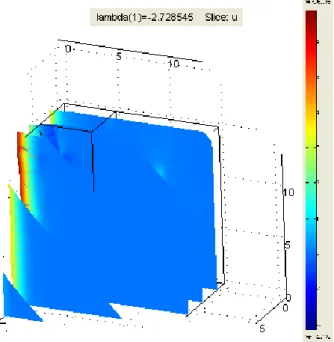
Fig. 1 shows the calculation results, plotting with the value of the wave function u ,
which is interpreted as the probability density. Therefore, the red area should stand for the most possible distribution of electrons when at the ground state energy. According to Fig. 1, when E = -2.7285 hartree, one electron should be very close to the helium nuclei, with another electron far from it.
One thing is left to be puzzled that since exchanging the positions of the two electrons should not change the system, the figure should have been symmetric. (Actually I am not able to well understand this figure, but the eigenvalue is close to the experimental result.)
4. Validation
In chemistry, an atomic orbit is a region in which an electron may be found. One specific region corresponds to one eigenvalue, which is the value of one energy level. Since the atomic orbits and energy levels of hydrogen atom have been well documented than any other atoms, the same model and solution process will be applied to hydrogen atom to validate the correction of our results for helium.
4.1. Energy levels
According to Bohr model, the energy levels of hydrogen atom can be solve as:
.... 3 , 2 , 1 , 1 0 2 E n n En ,
where E0 is the lowest energy level, about -0.5 hartree, viz. -13.6eV. The following
table compares the energy values got from FemLab and the values calculated from Bohr model.
Energy level
Energy value based on Bohr model (hartree)
Energy value calculated by FemLab (hartree)
Error
n=1 -0.5000 -0.5014 0.28%
n=2 -0.1250 -0.1247 0.24%
Moreover, as mentioned above, the energy eigenvalue of helium atom is calculated as -2.7285 hartree, close to the experimental result -2.9037 hartree.
4.2. Atomic orbits
Similar to the energy levels, the atomic orbits of hydrogen atom are also well known. The following figures validate our calculations by comparing the isosurfaces of wave functions plotted by FemLab and the known atomic orbits of hydrogen.
1s 2s
2pz
5. Conclusion
Based on the discussions above, it can be concluded that:
1. Schrödinger equation can be simplified by decreasing some variables, making it
an equation with fewer dimensions.
2. FEMlab is a good tool when trying to find out the eigenvalues of energy of some
three-dimensional systems (e.g. hydrogen and helium atoms). However, it can’t deal with a complicated many-body Schrödinger equation.
References
[1] W. Zheng, L. Ying, P. Ding, Numerical solutions of the Schrödinger equation for the ground lithium by the finite element method, Applied Mathematics and Computation, 153 (2004) 685.
[2] Ch. Froese-Fischer, The Hartree-Fock Method for Atoms, Wiley-Interscience, New York, 1977.
[3] C.A. Coulson, B. O’Leary, R.B. Mallion, Hückel Theory for Organic Chemists, Academic Press, London, 1978.
[4] A. Askar and M. Demiralp, the Journal of Chemical Physics, 60 (1974) 2762. [5] F.S. Levin, J. Shertzer, Finite-element solution of the Schrödinger equation for the helium ground state, Physical Review A, 32 (1985) 3285.
[6] A. Askar, Finite element method for bound state calculations in quantum mechanics, the Journal of Chemical Physics, 62 (1975) 732.
[7] M. Fridman, Y. Rosenfeld, A. Rabinovitch, R. Thieberger, Finite element method for solving the two-dimensional Schrödinger equation, Journal of Computational Physics, 26 (1978) 169.
[8] W. Zheng, Application of the Hylleraas-Breit transformation to the Schrödinger equations of helium like atoms, Chinese Journal of Atomic and Molecular Physics 3 (2002) 19.
[9] M. Braun, W. Schweizer, H. Herold, Finite-element calculations for the S states of helium, Physical Review A, 48 (1993) 1916.
[10] A. Scrinzi, A 3-dimensional finite elements procedure for quantum mechanical applications, Computer Physics Communications, 86 (1995) 67.
[11] J. Ackermann, Finite-element expectation values for correlated two-electron wave functions, Physical Review A, 52 (1995) 1968.
[12] C. Bottcher, Numerical solution of the Peterkop-Rabik Temkin-Hahn model of electron impact ionization, Journal of Physics B, 14 (1981) 349.
[13] J. Eichler, I.V. Hertel, N. Stolterfoht, The Physics of Electronic and Atomic Collisions, Elsevier, New York, 1984
[14] W.K. Ford and F.S. Levin, Channel-coupling theory of molecular structure.
Finite-element method solution for H2+, Physical Review A, 29 (1984) 43.
[15] P.G. Ciarlet, The Finite Element Method for Elliptic Problems, North-Holland, Amsterdam, New York, Oxford, 1978.
[16] K. Bathe, E. Wilson, Numerical Methods in Finite Element Analysis, Prentice-Hall, New Jersey, 1973.
[17] C. Felippa, Introduction of Finite Element Method, University of Colorado, 2002.
[18] Wekipedia, (2005), “Finite Element Method”,
http://en.wikipedia.org/wiki/Finite_element_method
[19] FemLab User’s Guide, Comsol. [20] FemLab Modeling Guide, Comsol.