by
JAKOBUS VAN STADEN
submitted in part fulfillment of the requirements for the degree of
MASTER OF ARTS
In the subject
PSYCHOLOGY
at the
UNIVERSITY OF SOUTH AFRICA Supervisor: MR C H COETZEE
The criterion groups validity of emotional intelligence according to Mayer
&
Salovey (1997), ability model of emotional intelligence was investigated. Specifically, psychology(n=207) and engineering (n=195) students were compared on the Mayer, Salovey and
Caruso Emotional Intelligence Test version 2 (MSCEIT). The primary factor structure of
the MSCEIT was found to be valid with some revisions needed in terms of the reliability
and content of. the MSCEIT.. The second-order factor structure of the MSCEIT was
partially confirmed. In terms of the criterion groups validity of emotional intelligence,
psychology students were found to exhibit higher levels of the ability to manage emotions
in relationships, the ability to understand emotion as well as the ability to facilitate
emotions. Engineering and Psychology students exhibited the
same
level of general emotional management and the ability to accurately identify emotion. Therefore theconstruct validity of emotional intelligence was partially confirmed.
Key Terms
Emotional Intelligence; Emotional Quotient; Criterion groups validity; Factorial validity;
construct validity; non-intellective factors in intelligence; Mayer, Salovey and Caruso
Emotional Intelligence Test; reliability; Ex-post facto two groups design; ability model of emotional intelligence.
I declare that "The difference between Psychology and Engineering students on Emotional Intelligence: a study into the construct validity of Emotional Intelligence" is my own work and that all the sources that I have used or quoted have been indicated and acknowledged by means of complete references.
(Mr J van Staden)
28-03-2002 DATE
CHAPTER 1 ... 1 INTRODUCTION ... 1 1.1 INTRODUCTION ... 1 1.2 PROBLEM STATEMENT ... 2 1.3 RESEARCH AIM ... 6 1.4 MOTIVATION ... 6
1.4. 1 The use of emotional intelligence in the recruitment & selection of candidates .
7
1.4. 2 The use of emotional intelligence in the development of people ... 81.5 CHAPTER EXPOSITION ... 10
CHAPTER 2 ... 11
THEORETICAL FRAMEWORK AND LITERATURE REVIEW ... 11
2.1 THE NON-INTELLECTIVE FACTORS IN GENERAL INTELLIGENCE ... 12
2.2 GARDNER'S THEORY OF MULTIPLE INTELLIGENCE ... 14
2.2.1 The multiple intelligences ... 16
2.2.2 The personal intelligences ... 17
2.2.3 The development of the personal intelligences ... 20
2.2.4 Critique on the theory of multiple intelligences ... 24
2.3 EMOTIONAL INTELLIGENCE ... 26
2. 3. 1 Socio-emotional approaches to emotional intelligence ... 29
2.3.1.1 Salovey and Mayer's (1990) view of emotional intelligence . ...
29
2.3.1.2 Emotional intelligence at work: Daniel Goleman . ...
38
2.3.1.3 Emotional Quotient: Dr. Reuven Bar-On ... 40
2. 3. 2 Emotions and Reasoning: a revised model of emotional intelligence . ... 41
2. 3. 3 A critical evaluation of emotional intelligence ... 43
2.4 LITERATURE REVIEW ... 47
2.4.1 Measuring emotional intelligence ... .47
2.4.2 The discriminant validity of emotional intelligence ... 51
2. 4. 3 The predictive validity of emotional intelligence ... 57
2.4.4 The development of emotional intelligence ... 59
2.5 THE THEORETICAL VIEWPOINT ADOPTED BY THE PRESENT INVESTIGATION ... 60
3.2 THE RESEARCH DESIGN ... 64
3.3 THE MEASUREMENT INSTRUMENTS ... 65
3.3. 1 The Mayer, Salovey, Caruso Emotional Intelligence Test version 2 ... 65
3.3.2 The development of the MSCEIT version 2 . ... 66
3.3.3 Description of the MSCEIT version 2 . ... 67
3.3.4 The standardization of the MSCEIT version 2 ... 68
3. 3. 5 The reliability of the MSCEIT version 2 ... 69
3.3.6 The validity of the MSCEIT version 2 ... 69
3.3.
7
Scoring the MSCEIT version2 ... 71
3.4 DATA-COLLECTION ... 72
3.5 STATISTICAL TECHNIQUES EMPLOYED IN THIS INVESTIGATION ... 73
CHAPTER 4 ... 77
RESULTS ... 77
4.1 THE FACTORIAL VALIDITY AND RELIABILITY OF THE MSCEIT ... 78
4. 1. 1 The factorial validity of the MSCEIT. ... 78
4.1.2 Exploring the factor structure of the total scale of the MSCEIT. ... 79
4.1.3 Examining the Subscales of the MSCEITforfactorial validity ... 80
4. 1. 4 The internal consistency reliability of the original and revised subscales of the MSCEIT ... 94
4. 1.
5
Exploring the factorial structure of the revised total scale of the MSCEIT ... 984. 1. 6 Investigating the second-order factor structure of the revised MSCEIT ... 102
4.2 THE CRITERION GROUPS VALIDITY OF THE MSCEIT ... 106
4.2.1 Results of multiple regression done on Section A (Emotional identification in Faces) ... 109
4. 2. 2 Results of multiple regression done on Section B (Emotional facilitation) ... 110
4.2.3 Results of multiple regression done on Section C (Changes) ... 111
4. 2. 4 Results of multiple regression done on Section D (Emotion management) ... 112
4.2.5 Results of multiple regression done on Section E (Emotional identification in Pictures) ... 113
4. 2. 6 Results of multiple regression done on Section F (Synesthesia) ... 114
4.2. 7 Results of multiple regression done on Section G (Blends) ... 115
4. 2. 8 Results of multiple regression done on Section H (Emotions in relationships) .... ... 116
5.3 FUTURE RESEARCH ... 123
5.4 CONCLUSION ... 124
REFERENCES ... 126
APPENDIX A (BIOGRAPHICAL INFORMATION SHEET) ..•...•... 132
APPENDIX B (SCORING PROGRAM FOR THE MSCEIT) ...•.•.... 133
APPENDIX C (PATTERN MATRIX FOR ORIGINAL MSCEIT TOTAL SCALE) ... 136
APPENDIX D (EXAMPLES OF STIMULUS MATERIAL FOR SECTION A AND SECTION E OF THE MSCEIT) ...•••...•... 139
LIST OF TABLES
Table 4.1: Total Variance Explained for the total scale of the MSCEIT ... 80
Table 4.2: Factor Matrix for Section A (Emotional identification in faces) ... 82
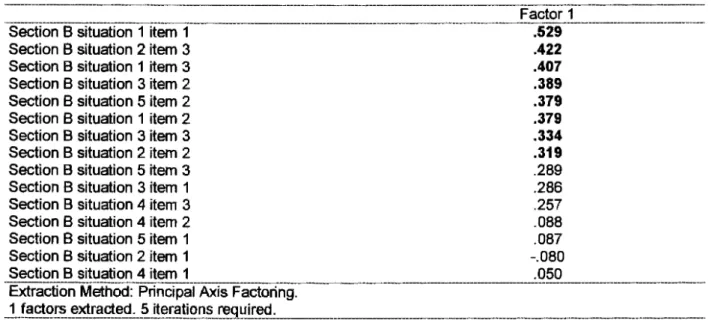
Table 4.3: Factor Matrix for Section B (emotional facilitation) ... 84
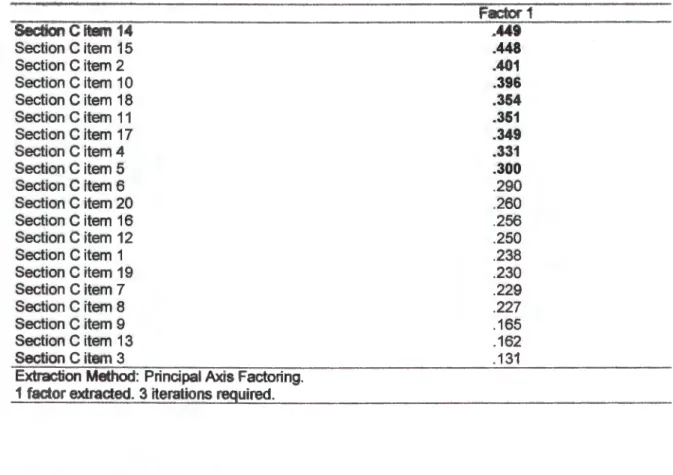
Table 4.4: Factor Matrix for Section C (changes) ... 86
Table 4.5: Factor Matrix for Section D (Emotion Management) ... 87
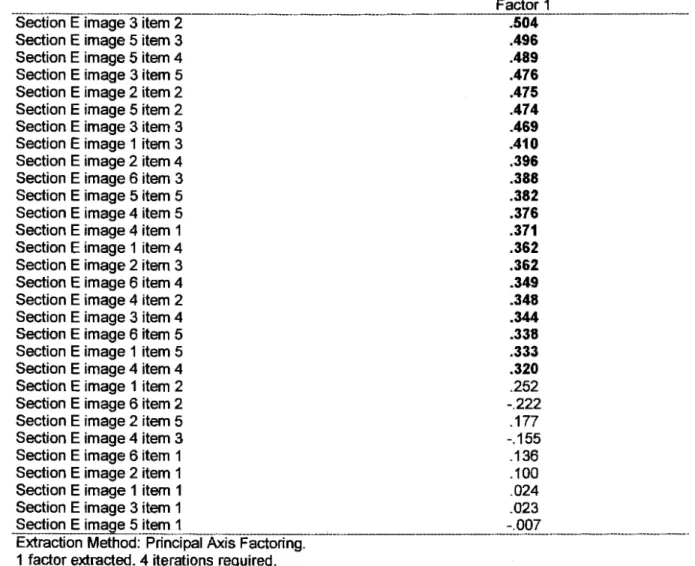
Table 4.6: Factor Matrix for Section E (Emotional identification in Pictures) ... 89
Table 4.7: Factor Matrix for Section F (Synesthesia) ... 90
Table 4.8: Factor Matrix for Section G (Blends) ... 92
Table 4.9: Factor Matrix for Section H (Emotions in Relationships) ... 93
Table 4.10: Comparison between the internal consistency reliability of the original MSCEIT subscales and that of the subscales after the items deleted ... 96
Table 4.11: Pattern Matrix for the revised total scale of the MSCEIT ... 100
Table 4.12: Descriptive Statistics for the eight, task level, composite or factor scores .... 103
Table 4.13: Pattern Matrix of the second-order factors of the revised MSCEIT ... 104
Table 4.14: Conversion table for matric symbols per subject. ... 107
Table 4.15: Sub-sample sizes in this investigation according to criterion group, language and gender ... 108
Table 4.16: Predicting the ability to identify the emotions conveyed by faces (n=327) .... 110
Table 4.17: Predicting emotional facilitation {n=326) ... 111
Table 4.18: Predicting the ability to understand changes in emotion (n=326) ... 112
Table 4.19: Predicting emotion management (n=326) ... 113
Table 4.20: Predicting the ability to identify the emotion conveyed by pictures (n=327) .. 114
Table 4.21: Predicting the ability to facilitate emotion through synthesis (n=325) ... 115
Table 4.22: Predicting the ability to understand blends in emotion (n=325) ... 116
LIST OF FIGURES
Figure 2.1: Theories on Emotional lntelligence ... 28
Figure 2.2: Filtering process through models of emotional intelligence ... .48
Figure 3.1: Levels of feedback from the MSCEIT version 2 ... 70
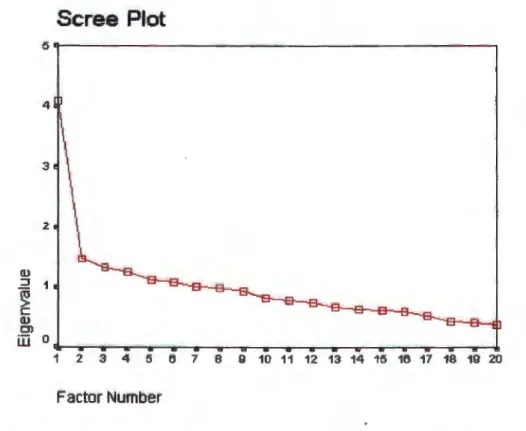
Figure 4.1: Scree plot for Section A (Emotional identification in faces) ... 81
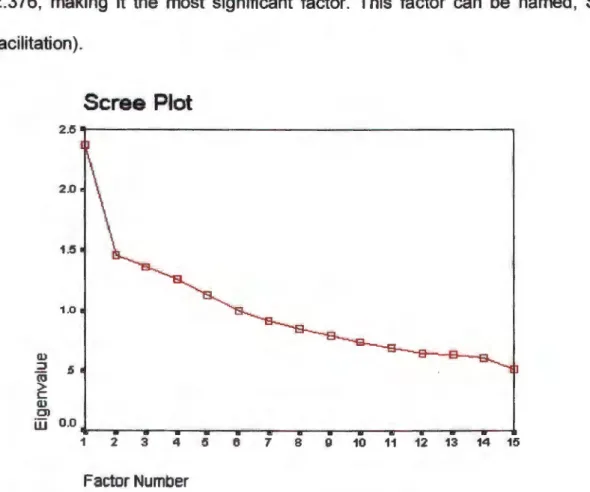
Figure 4.2: Scree plot for Section B (emotional facilitation) ... 83
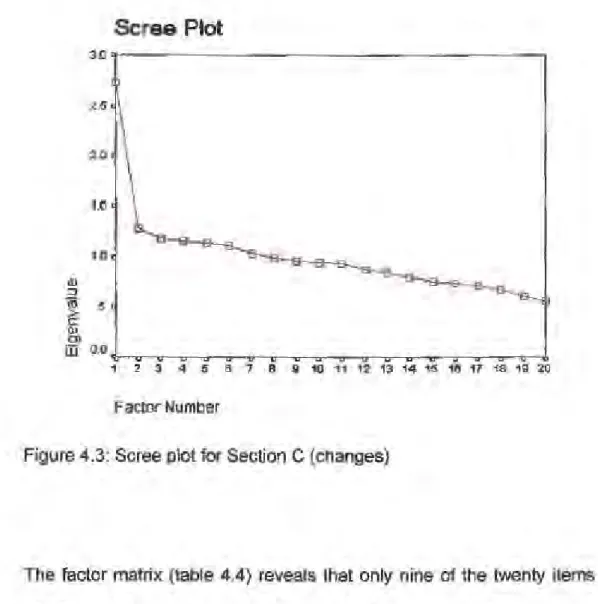
Figure 4.3: Scree plot for Section C (changes) ... 85
Figure 4.4: Scree plot for Section D (emotion management) ... 86
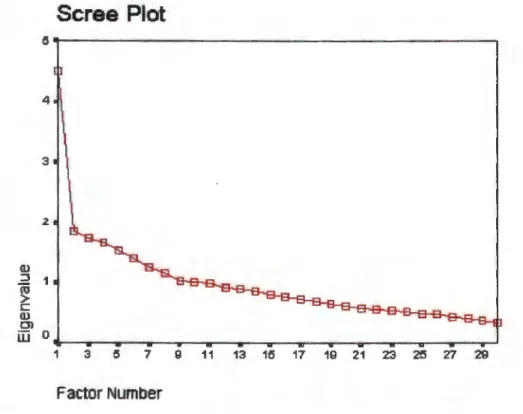
Figure 4.5: Scree plot for Section E (Emotional identification in Pictures) ... 88
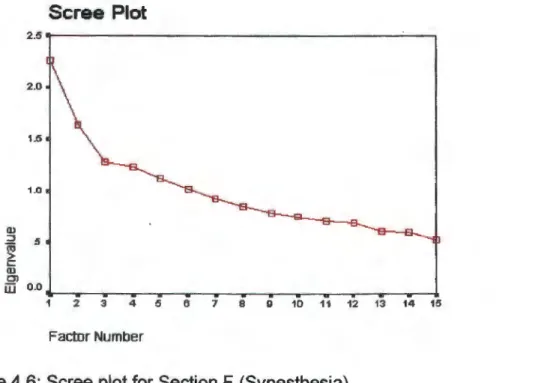
Figure 4.6: Scree plot for Section F (Synesthesia) ... 90
Figure 4.7: Scree plot for Section G (Blends) ... 91
Figure 4.8: Scree plot for Section H (Emotions in relationships) ... 93
Figure 4.9: Scree plot for the revised total scale of the MSCEIT ... 99
Figure 4.10: Scree plot for the second-order factors of the MSCEIT ... 104
1.1 INTRODUCTION
Due to globalization the world has become a very small place in a relatively short time span.
The advent of the personal computer and, consequently, the Internet has changed the face of
business forever. Where it would have been seen as something out of the ordinary for an
international company to go bankrupt twenty years ago, it is now an everyday occurrence. With
this setting the scene for conducting business everyday, companies are under increased
pressure to perform and stay afloat, let alone expand their business.
The common cliche that our people are our companies' most important resource has been at
the core of strategic planning in the past few years. Technology put aside, it is still the individual
employee that designs the product, delivers the service and operates the machinery behind the
constantly changing global economy.
Here the question arises, how do we turn the already stressed individual into someone who
performs better and who really makes a difference to our companies' bottom line. The answer
is very clear, we will have to learn how to make proper use of the most brilliant, but neglected
resource we have, namely human potential (Wolmarans, 1998b). New approaches are needed
to select and develop the right people to deal with the fundamental changes in the workplace (Crofts, 1999).
1.2 PROBLEM STATEMENT
One of the concepts that have been posed to answer this question is emotional intelligence. Emotional intelligence was first defined by Salovey and Mayer ( 1990, p.189) as 'the subset of social intelligence that involves the ability to monitor one's own and others' feelings and emotions, to discriminate among them and to use this information to guide one's thinking and actions.' The concept has it's roots in social intelligence, first defined by E.L. Thorndike (cited in Bar-On, 1997) as the ability to perceive one's own and others' internal states, motives, and behaviours, and to act toward them in a optimal way on the basis of that information (Goleman, 1995; Katz, 1998). Emotional intelligence subsumes Gardner's (1983) inter- and intrapersonal intelligence which forms part of his view of social intelligence, namely personal intelligence (Goleman, 1995; Katz, 1998; Salovey & Mayer, 1990).
Daniel Goleman (1995) popularized emotional intelligence in his book 'Emotional Intelligence: Why it can matter more than IQ.' His view of the importance of emotional intelligence is in agreement with a growing number of psychologists like Gardner (1983) who state that the old concepts of IQ revolved around too narrow a band of linguistic and mathematical skills (Goleman, 1995). These psychologists focus on the so-called non-intellective factors in general intelligence, first addressed by Wechsler (1943). Wechsler stated that as soon as one attempts to appraise intelligence test ratings in terms of global capacity one is confronted with the fact that the best intelligence tests give only an incomplete picture of the individuals capacity for intelligent behaviour (Wechsler, 1940; Wechsler, 1943).
This view stems from the observation that two individuals might have similar IQ test scores but fare differently with,regard to their level of global functioning as judged by practical criteria which makes them successful in life, such as job performance and productivity (Wechsler, 1943). This is a far cry from the traditional view of cognitive intelligence as the alpha and omega of human functioning. Wechsler goes on to state that the non-intellective factors in intelligence have an affective and conative component that can be viewed as intellectual abilities. Here he reiterates findings summarized by Spearman who stated that it is necessary to allow that affective and conative aspects of the mind may function as unitary factors in the same way as his cognitive "g" (Wechsler, 1943). Wechsler (1940) states that the non-intellective factors in intelligence are a possible explanation for the 30% to 50% of the total factorial variance, usually unexplained by the recognizable intellectual factors in intelligence and usually seen as sources of error and individual factors such as test anxiety and fatigue. Wechsler (1943) suggests that global intelligence tests should be developed that will include and measure these factors in a more comprehensive and direct way.
In the field of the non-intellective factors in intelligence the work of E.L. Thorndike (cited in Bar-on, 1997) and other psychologists on social intelligence, Gardner's (1983) theory of multiple intelligences as well as Salovey and Mayer (1990), Goleman (1995) and Bar-On's (1997) work on emotional intelligence has value. Goleman (1995) is of the opinion that the so-called soft or people management skills can explain up to 80% of a individual's success in life, with the residual 20% going to traditional IQ (Anonymous, 1997; Bates, 1999; Koonce, 1996; McCoy, 1997; Nxumalo, 1998; Wolmarans, 1998a).
In a survey conducted on 181 jobs on 121 companies' competency models worldwide, Goleman (1995) found that once he separated purely technical skills from the emotional competencies and compared their relative importance, two out of three of the abilities considered vital for success were emotional competencies. Skills such as trustworthiness, adaptability and a talent for collaboration were found to be important (Fisher, 1998). In a similar survey, Salopek (1998) found that emotional competencies proved to be twice as important as cognitive skills such as big-picture thinking and long term vision. This survey included 188 companies' competency models (Goleman, 1996, Martinez, 1997, O'Neil, 1996, Stein, 1998). Emotional well being has also been correlated with better scores on workplace conduct tests (Anonymous, 1998).
This led to the consideration of the view held by Gardner (1983), Salovey & Mayer (1990) and Wechsler (1943) that intelligence needs to be revisited to include what it takes to lead life successfully. Emotional intelligence is seen as a separate ability from cognitive intelligence that forms part of general intelligence, each adding to a person's qualities (Goleman, 1995).
According to Wolmarans (1998a) a person with an emotional intelligence deficiency is seen as someone who exhibits the following symptoms:
-• Crumbling trust and relationships.
• Jarring uncertainty and low morale.
• Having a chasm between management and workers.
• Lacking initiative, creativity and innovation.
• Vanishing loyalty and commitment.
• Gives their best outside the workplace and exhibits stress symptoms, burnout and yuppie flu, especially when in a senior management position.
• Lacks a sense of meaning and motivation when working at lower levels in the organization. This leads to them working only for the sake of their monthly salary.
• Lacks the ability to work in teams and to give mutual support.
Symptoms such as low self-esteem; playing power games; low energy; unrealistic expectations of oneself and others; a lack of focus and appropriate responsibility; skepticism and suspicion; under performance in most spheres of life; a lack of compassion and extreme individualism, present in the individual with an emotional intelligence deficiency (Wolmarans, 1998a). In contrast, the emotionally intelligent individual knows who they are and where they are heading. They have a clear vision of the future, lives according to a personal set of values and beliefs, has an aura of charisma, personal power and influence, treats people with care and respect, trusts others, has an optimistic outlook on life, et cetera (Wolmarans, 1998b).
Contrary to the above, emotional intelligence is not free of criticism. It is seen as just another fad, and like any fad that highlights one factor in a complex system, is bound to fail (Krohe, 1998). Furthermore it has been said that the concept of emotional intelligence does not have adequate discriminant validity from general intelligence, personality and social intelligence and, consequently, represents nothing new in Psychology (Davies, Roberts
&
Stankov, 1998; Mayer & Salovey, 1993; Stuller, 1997).1.3 RESEARCH AIM
The aim of this investigation is to establish the construct validity of emotional intelligence.
Specifically, the focus will fall on whether emotional intelligence can discriminate between
occupational groups that are expected to exhibit differences in terms of levels of emotional
intelligence.
1.4 MOTIVATION
Although emotional intelligence has been investigated in terms of discriminant, convergent, fl""'~ • .,~ " '
,,,;'JY' '.,.
divergent andrpre. d. ictive ··yalidity, investigations into its ability to discriminate between .I
"'°"'''"'"'·''"'"I'.,<!'
occupational groups·r:e. groups expected to exhibit different levels of emotional intelligence due
to their nature, is still lacking in the literature. This investigation will thus go a long way towards
investigating the construct validity of emotional intelligence.
Bar-On (1997) argues that emotional intelligence can be applied in clinical, medical, research,
preventative, educational and industrial and corporate settings. Professor Rob Sternberg of
Yale University argues that a high IQ is not always enough and that there is too much emphasis
placed on conventional academic excellence. He believes that with fundamental changes in the
The question that arises is how this investigation will benefit society in general, as well as the
company and individual operating within it. The answer is two-fold and centers around the use
of the concept of emotional intelligence in an operational format in the selection and
development of people for and in various positions.
1.4.1 The use of emotional intelligence in the recruitment and selection of candidates
With the rules of work changing daily, employers are constantly looking for individuals who fit
their companies' climate and mission statement. Companies are looking for new approaches to
the selection of the right employee for any given position (Crofts, 1999).
Conducting an emotional intelligence audit during the recruitment and selection of employees
yields a profile for each individual which can be used in finding the right candidate to suit the
companies climate and strategic focus (Handley, 1998; Martinez, 1997). In this investigation
Psychology and Engineering students will be used to investigate the criterion-groups validity of
emotional intelligence. The results can be used to investigate the applicability of emotional
intelligence in the selection of candidates for university courses and positions in companies. In
addition, an emotional intelligence profile will be set up for each of these occupations that can
be used to examine the strengths and weaknesses of each of these occupational groups on
emotional competencies.
With the introduction of the BPsyc-degree in Psychology in South Africa by the year 2004, the
search for appropriate selection tools has become increasingly important. The inclusion of
trainees (Osipow
& Walsh, 1973). Additionally a study done on clinical psychologists (N=32)
using the Emotional Quotient Inventory (EQ-i) indicated that psychologists have higher scores on eighteen of the fifteen subscales of the EQ-i when compared to the normative population (Bar-On, 1997). Thus emotional intelligence's potential in the area of selection has already been investigated with encouraging results.1.4.2 The use of emotional intelligence in the development of people
Goleman (1995) suggests that, unlike IQ, emotional intelligence can be improved through training (Anonymous, 1997; Koonce, 1996; Salopek, 1998). He states that emotional intelligence increases with age and that people tend to have better emotional intelligence skills in their forties and fifties, which means that emotional intelligence can be developed (Cooper, 1997; Martinez, 1997). This conclusion was supported by a study that compared the performance of a group of adults on the Multifactor Emotional Intelligence Scales with that of adolescents (Mayer, Caruso & Salovey, 1999). The adult group performed at higher levels than the adolescents did, thus implying that emotional intelligence develops with age.
As emotional intelligence develops, a person's ability to trust and be trusted, sense of integrity and authenticity, appreciation for constructive thinking, problem-solving ability and intuition and leadership effectiveness increase (Cooper, 1997). The problem, however, lies in the fact that most companies' training programmes don't include the development of emotional competencies (Martinez, 1997).
principles in order to foster greater emotional competency. These include:
-• Assessing individuals before sending them for training in order to facilitate the tailoring of training programs for each person's needs and skill level.
• Delivering assessments and feedback on the results in a sensitive manner, as well as being sensitive to employees' self-image when giving feedback on job performance.
• Motivating individuals, due to the fact that when de-motivated, training becomes ineffective.
• Focussing on setting clear, manageable goals for each individual employee, spelling out and listing detailed steps in how to reach training goals. Arranging support from peers or co-workers going through similar change. This will help trainees to motivate each other.
• Reinforcing change by recognizing successful trainees through praise, incentive schemes or greater responsibility.
As both psychologists and engineers generally hold leadership positions within organizations and communities, emotional intelligence is an important skill to have and develop (Bates, 1999; Salopek, 1998; Wolmarans, 1998b). This investigation will, therefore, be instrumental in the setting up and adaptation of current training practices for psychologists and engineers to include emotional intelligence as a directive. This will help organizations to find and enhance those skills that truly constitute a corporate asset or competitive advantage (Handley, 1998). In an experiment conducted on the usefulness of emotional intelligence training, training in one aspect of emotional intelligence, namely coping skills led to a 10% increase in performance (Martinez, 1997).
In conclusion, the literature reveals that intelligence consists of several factors that together
work to make individuals successful in life. The traditional focus on cognitive intelligence has its
share of problems, specifically the omission of non-intellective factors. This investigation
proposes to bridge this gap, by adding to the growing amount of studies into the usefulness of
emotional, social and personal intelligence.
1.5 CHAPTER EXPOSITION
The framework used in this investigation will be as follows: In Chapter 2 theories and literature
regarding the non-intellective factors in human intelligence will be discussed. Gardner's (1983)
theory of multiple intelligence and the viewpoints of Salovey and Mayer (1990), Goleman (1995)
as well as Bar-On (1997) on emotional intelligence will be discussed. The second part of this
chapter will focus on a review of the literature regarding the validity of emotional intelligence.
Chapter 3 contains information on the research design, the sample, the measuring instruments,
hypotheses, method of data-collection and the statistical methods employed in the testing of the
hypotheses. Chapter 4 gives an overview and discussion of the results of this investigation.
Chapter 5 contains a summary of the study. Conclusions as well as recommendations for future
research are included in this chapter. Furthermore this chapter contains an evaluation of this
CHAPTER2
THEORETICAL FRAMEWORK AND LITERATURE REVIEW
The question of why some individuals are more successful in life than others seems to be on
everybody's mind (Bar-On, 1997). A concept that offers to answer this question is emotional
intelligence or, as it has been labeled, emotional quotient, the emotional equivalent of traditional
intelligence quotient (IQ). Emotional intelligence is said to contribute to as much as 80% of the
variance in global capacity, unexplained by traditional IQ. It has been hailed as the single most
important skill to have as we enter the twenty-first century (Goleman, 1995; Goleman, 1998;
Katz, 1998; Koonce, 1996; O'Neil, 1996).
This chapter will focus on the theoretical development of the concept of emotional intelligence.
In the first section, theories regarding intelligence will be discussed, focussing specifically on
Wechsler's (1943) view of the possibility of including so-called non-intellective factors in a
general intelligence model. Gardner's (1983) theory of multiple intelligences will be discussed in
great detail, as a model that poses to integrate the intellective and non-intellective factors in ·
general intelligence. The concept of emotional intelligence will also be discussed, tracing its
roots back to Gardner's work and the work of E.L. Thorndike (cited in Bar-On, 1997) on social intelligence. Here two general approaches to the study of emotional intelligence will be
discussed. Firstly, the socio-emotional approach which offers a broad model of emotional
intelligence, which includes abilities, as well as a series of personality traits. As part of this
with specific focus on the adaptations done to the concept by Mayer and Salovey in 1997. This
section will conclude with a critical discussion of this concept, offering points of dispute, with
specific focus on arguments by these authors in defense of emotional intelligence.
The second part of this chapter will deal with how emotional intelligence meets the criteria for an
intelligence. Here the focus will fall on offering an overview of the empirical work done in this
area. This chapter will conclude with the theoretical viewpoint of this investigation as a basis for
the choice of a measurement instrument as well as the research question and hypotheses to be
tested in this investigation.
2.1 THE NON-INTELLECTIVE FACTORS IN GENERAL INTELLIGENCE
According to the Oxford English Dictionary, the word intelligence entered our language in about
the twelfth century (Sternberg, 1996). As late as 1927, the vast majority of books on
Psychology did not mention the word intelligence (Bar-On, 1997). The concept of intelligence is
not easy to define and when someone attempts to do so, it's usually met with criticism because
such definitions tend to focus on what's omitted rather than what's contributed. Regardless of
the fact that most theories on intelligence have been less than perfect, a huge amount of
intelligence testing has taken place and still does in everyday practice. It is probably easier to
measure intelligence than to define it (Bar-On, 1997).
With this as background Wechsler (1958), the author of the well known and the much applied
Wechsler Bellevue Scales defined intelligence as the aggregate or global capacity of the
on, 1997). Another definition of intelligence is Spearman's
'g,
which proposes a commonunderlying factor in general intelligence (Sternberg, 1996).
In a study done to define intelligence, twenty-four cognitive psychologists gave their opinion of
what intelligence is. The finding was that intelligence can be,' the capacity to learn from experience, using meta-cognitive processes to enhance learning, and the ability to adapt to the surrounding environment, which may require different adaptations, within different social and cultural contexts' (Sternberg, 1996, p.460). Wechsler (1958) suggested that his definition does include the ability to adapt to new situations and to cope with life situations successfully. Bar-on
(1997) is of the opinion that, within this broad definition of intelligence, it is possible to juxtapose
the notion of non-cognitive intelligence (i.e. emotional, personal and social intelligence) and
cognitive intelligence.
In fact, Wechsler (1943) was of the opinion that when one uses intelligence test ratings in terms
of global capacity (the ability to deal effectively with any and all rather than specific situations), it
becomes strikingly evident that even our best tests of intelligence give only incomplete
measures of the individual's capacity for intelligent behaviour. He suggested that the so-called
non-intellective factors in general intelligence would account for the difference two individuals,
with similar IQ scores, exhibit in terms of performance in life. He also believed that the
non-intellective factors in general intelligence could explain the percentage of variance in global
capacity, unexplained by traditional IQ scores (Wechsler, 1940, Wechsler, 1943). Wechsler
(1943) stated for example that if a child is congenitally impulsive or emotionally unstable it
represents a more or less permanent mode of response which could affect his IQ score or "enter
and could therefore be viewed as such (Wechsler, 1943).
With regards to intelligence tests it is, therefore, important that our tests include some measures of the non-intellective factors. Wechsler (1943) stated that psychologists need to construct global intelligence scales that will include direct and comprehensive measures of the non-intellective factors in general intelligence. In this context, Gardner's (1983) theory of multiple intelligences includes both the intellective (cognitive) and non-intellective (non-cognitive) factors in global capacity or functioning (Bar-On, 1997).
2.2 GARDNER'S THEORY OF MULTIPLE INTELLIGENCES: AN INTEGRATIVE MODEL
Gardner (1983) proposed his view of multiple intelligences as a direct challenge to the unitary view of intelligence as a capacity for logical reasoning of the sort exemplified by mathematicians, scientists and logicians. He takes on a pluralistic view of the mind, recognizing many different and discrete facets of cognition and individual differences in terms of cognitive strengths and styles.
Gardner's theory is based on the view held by Thurstone that the human intellect encompasses several mental abilities (Gardner, Kornhaber & Wake, 1996). This is a direct challenge to Spearman's 'g', that is, an underlying mental energy that is drawn on in various degrees of intellectual activity. Gardner's theory also challenges the contention that it is possible to measure intelligence with tests and correlations. In this he suggests that more naturalistic sources of information on how people around the world develop skills important to their way of life, be seen as sources of information on intelligence (Gardner, 1993).
Gardner (1993, p.15) defines intelligence as ' the ability to solve problems, or to fashion products, that are valued in one or more cultural or community settings'. He makes a strong claim for the existence of approximately seven relatively autonomous intelligences that work in combination within the human intellect (Gardner, 1993; Gardner, Kornhaber & Wake, 1996). He proposes that human cognitive ability can be better described in terms of a series of abilities, talents or mental abilities that can be called intelligences (Gardner, cited in Swart, 1997).
Gardner drew his conclusions from six sources of information. Firstly, he studied what happens to individuals when mental abilities break down, such as when brain damage or trauma occurs (Gardner, 1993). For instance, brain damaged patients may be unable to find their way around the hospital, yet have unimpaired speech (Gardner, Kornhaber & Wake, 1996). Secondly, he studied the intellectual profiles of special populations such as idiots savants, prodigies, autistic children and children who exhibit intellectual difficulties. He found their brain profiles to be unexplainable by a unitary view of intelligence (Gardner, 1993). For instance, savants exhibit low IQ scores, but remarkable skills such as playing the piano by ear (Gardner, Kornhaber & Wake, 1996). Thirdly, he looked at evidence on information processing mechanisms. This led to proposals such as musical intelligence being understood in terms of a core information processing operation, such as pitch discrimination, that is activated through internally and externally presented information. Fourthly, he uses experimental and cognitive Psychology to support his theory. Fifthly, he uses evidence found in psychometric assessment, where he believes patterns of correlations, or the absence of high correlations, indicate the relative autonomy of some intelligences (Gardner, 1993; Gardner, Kornhaber & Wake, 1996). Lastly, he believes that intelligence follows a characteristic development trajectory from basic and universal manifestations to a possible end state. For example, spoken language develops
1996).
2.2.1 The multiple intelligences
Drawing from these diverse sources of evidence, Gardner (1983) proposed the existence of seven intelligences, each with its own end state that exemplifies it. He sees these intelligences as potentially useful scientific constructs, which can be used to organize and describe human capabilities (Gardner, Kornhaber & Wake, 1996). A brief description of these follows:
• Musical intelligence allows people to create and understand meaning made out of sound. It is clearly exhibited in composers, instrumentalists and audio engineers (Gardner, Kornha1ber & Wake, 1996).
• Bodily-kinestic intelligence is exhibited in the ability to solve problems or create products through the use of parts of the body, or the body as a whole. This intelligence is exemplified in ballet dancers (who use their bodies to express emotion), in sports, and in creating a new product (Gardner, 1993).
• Logical-mathematical intelligence including logical, mathematical and scientific abilities (Gardner, 1993).
• Linguistic intelligence referring to verbal ability exemplified in poets and writers. The gift of language is universal and develops constantly throughout cultures, but with formal schooling it is developed to represent a unique talent (Gardner, 1993).
the visual arts in the use of space, to name but a few (Gardner, 1993).
In addition to these five intelligences which represent an expansion and reorganization of the purely cognitive abilities, Gardner (1993) also added two other forms of intelligence called intra-and interpersonal intelligence. Here he uses the concept of personal intelligence, which can be seen as an expansion of Wechsler's non-intellective factors in global capacity (Bar-On, 1997). These will be discussed in greater detail, each time focussing on the evidence drawn on by Gardner in defining these intelligences, as well as offering an overview of these concepts.
2.2.2 The personal intelligences
The personal intelligences include interpersonal and intrapersonal intelligence. It is two general components of emotional intelligence or emotional quotient (Bar-On, 1997) that overlaps with this concept and is seen as one of the building blocks of the emotional intelligence concept (Mayer & Salovey, 1993).
Interpersonal intelligence builds on the core processes that enable the individual to distinguish among others' moods, temperaments, motivations and intentions. In its end state it allows the skilled adult to read the intentions and desires of others, even when they are hidden (Gardner, 1993). In early development, this intelligence is seen in the child's ability to discriminate among individuals in their environment and to discern their moods (Gardner, Kornhaber & Wake, 1996).
The components of interpersonal intelligence can be described as follows:
• Organizing groups: - Seen as an essential leadership skill, this involves the ability to initiate and co-ordinate the efforts of a network of people. This ability is often seen in military
officers, heads of organizations, team leaders and in people in top leadership positions
(Goleman, 1995).
• Negotiating solutions: - The talent of the mediator to prevent and solve negative conflict. This is often seen in third-party negotiators and in arbitrating or mediating disputes
(Goleman, 1995).
• Personal connection: - The talent of empathy and connecting to people through the art of relationship (Goleman, 1995).
• Social analysis: - The ability to detect and have insight into others' feelings, motives and concerns leading to the establishment of rapport. This is often seen in the competent
therapist or counselor (Goleman, 1995).
Interpersonal intelligence builds on other aspects of emotional intelligence (Goleman, 1995) and
evidence thereof comes from neuropsychology. Research indicates that the frontal lobes play a
prominent role in interpersonal knowledge. Damage in this area causes profound personality
changes, while leaving other forms of problem-solving unharmed. In Alzheimer patients, where
the posterior brain zones are attacked and damaged, the patient will remain socially proper,
even apologizing for their blunders. However, the spatial, logical and linguistic intelligences
lntrapersonal intelligence is the ability to recognize one's own internal aspects, namely access to one's own feeling life and range of emotions. It includes the capacity to discriminate among those emotions and to eventually label them to draw from them a means to guide one's own behaviour (Gardner, 1993). In its end state it allows the individual access to deep self-knowledge of the kind drawn on by elders when making a crucial decision or when advising others in the community (Gardner, Kornhaber & Wake, 1996). A person with high intrapersonal intelligence witl be able to draw a viable and effective model of himself or herself (Gardner, 1993) with an accurate picture of his or her strengths and weaknesses.
Evidence for intrapersonal intelligence also comes from neuropsychology. lntrapersonal intelligence functions in the frontal lobes as seen in evidence that when this area is injured, even though the individual's motivation and responses to others is affected, he or she will still be able to perform the same as before on a cognitive intelligence test (Gardner, Kornhaber & Wake, 1996). This phenomenon is also reflected in autistic children's' often-exceptional abilities in the musical, computational, spatial or mechanical realms while not even being able to refer to him or herself (Gardner, 1993).
Both the interpersonal and intrapersonal intelligences involve problem-solving endeavors which can be seen as evidence of them being intelligences (Gardner, 1993).
2.2.3 The development of the personal intelligences
Gardner ( 1983) proposed that the development of the personal intelligences occurs in a number of stages or steps. In each step, it is possible to identify features that contribute to the development of these intelligences. Gardner gathered evidence for the existence of this development trajectory from the Western culture and states that these features may differ in other cultures. Rosnow, Skleder, Jaeger and Rind (1994) studied the implications of this development trajectory in adults and concluded with the formulation of five distinct stages of adult personal intelligence. Here skills build on each other, with the later stages presupposing the existence of previously acquired, more primitive skills (Rosnow, et.al. 1994; Verster, 1998). The stages in Gardner's theory will be discussed briefly with reference to the findings of Rosnow and his colleagues.
+
The infant (0-2 years).This process begins with the establishment of a bond between the infant and his I her primary caregiver. The infant experiences a range of feelings such as states of excitement and of pleasure and pain. However, he I she does not yet posses the interpersonal knowledge to interpret these feelings or why he I she is feeling this way. Here the primary caregiver serves as a tie in that the infant seeks to maintain a feeling of positive well-being through the primary caregiver's provision of clues concerning the relationship between actions and intentions. As the caregiver responds affectionately to the infant, the child learns to associate positive feelings with affection. This is further confirmed by the caregivers affectionate responses to the cries of
+
The child (2-5 years).During this period the child undergoes an intellectual revolution, as he or she becomes able to use various symbols, which refers to him or herself or others. Here words, pictures, gestures and numbers serve as vehicles in coming to know the world symbolically (Gardner, 1993). During this stage the child also learns to discern actual positive or negative intentions and actions from a neutral ones. In this the child learns that the initial break between him or her and the primary caregiver is not a negative but a neutral event (Rosnow, et.al. 1994). Gardner (1983) states that in the examination of other developmental theories, specifically the ones of Erickson and Piaget, an indirect line of evidence for the existence of the personal intelligences can be seen. Piaget views the child of this age as egocentric and locked in his own perception of the world. This is congruent with the development of self-knowledge in interpersonal intelligence. In contrast, Erickson views the child of this age as in a struggle between feelings of autonomy and shame and between the impulses of initiative and guilt. This is seen as indicative of the development of intrapersonal intelligence (Gardner, 1983; Verster, 1998).
+
The school age child.In this stage the child has first-level social knowledge. He I she understands that he or she is a discrete individual with unique needs, desires, projects and goals. The concept of reciprocity enters into interpersonal relationships, marked by a clear decline in egocentrism. The option of
others, with the probability of projecting his own wishes onto every one else, diminishing (Gardner, 1983).
• The middle childhood.
During the middle childhood, the five year period between the start of school and the beginning
of adolescence, a greater sense of social sensitivity, a fuller sense of one's own competencies
and one's lacks, as well as a keener sense of others' motivations develop. The child spends
more time in friendships and thinks more about the interpersonal realm. Because of this
heightened sense of others, this marks the beginning of the acquisition of interpersonal
knowledge (Gardner, 1983).
• Adolescence.
In this stage individuals become more psychologically attuned to other people. Sensitivity to the
underlying motivations, fears and desires of other individuals develops. The youth's
understanding of the social world also becomes more differentiated such as not blindly
accepting societal laws and norms. Knowledge of oneself and of other people reaches
maturation with the merging of these two forms of knowledge into a whole, namely identity. This
marks the formation of the self, which determines the individual's ability to live in the social
+
A mature sense of self.In this stage, which spans adulthood, the individual must reach the end goal, which is a self that
is highly developed and fully differentiated from others. Several theorists, like Erickson, have
differentiated several sub-stages in adulthood where the individual struggles with decisions or
points of tension, such as the crises of intimacy. Moreover, the individual must develop a core
self that is adaptable to different social situations and to differing individuals. In this view, the
individual is always and necessarily a set of selves, who perennially reflect the context they
happen to inhabit at any particular moment. The core self then organizes one's thoughts and
behaviours with the individual being a collection of masks, none taking precedence over others
(Gardner, 1983). The mature person will be able to behave appropriately in different social
situations and will be able to discriminate amongst the positive, negative and neutral actions or
intentions of others (Rosnow, et.al. 1994; Verster, 1998).
According to Gardner (1983) the individual develops through these stages in a natural way, with
direct instruction only necessary in extreme cases. This occurs in symbolic forms, formal
tutoring and through literature. The theory of multiple intelligences has, however, met with stark
2.2.4 Critique on the theory of multiple intelligences
Since Gardner (1983) put forth his theory of multiple intelligences it has been met with criticism
from several sources. In his initial text he also offered critique on his theory, specifically pointing
out some of its limitations. These are:
• The specific details of the seven intelligences still needs to be filled in, specifically as
pertains to their operation (Gardner, 1983).
• The multiple intelligence theory, although extensive, does not cover the whole field of human
Psychology. Fields like social Psychology, the Psychology of affect or feeling and the
development of character are not covered. However, the theory cuts across the field of
human intelligence in two ways. Firstly, it underscores the extent to which forms of
knowledge are present in virtually every field of human existence. Secondly, it establishes
the pervasiveness of intellectual activities in new areas such as social development and
social behaviour, from which it has hitherto been excluded (Gardner, 1983).
• Gardner (1983) states that the seven intelligences he proposed are not a fixed amount and
are more than likely to exclude some more important ones and to include some that violate
major criteria.
The theory does propose a new way of looking at intelligence, which includes, or at least makes
provision for the inclusion of the non-intellective factors in intelligence into a model of
intelligence in terms of global functioning. This represents an expansion of Wechsler's concept
Gardner's theory has been criticized on theoretical and applied grounds. Firstly, in terms of its construction on the premise that Psychology regards intelligence as a unitary ability reflected by IQ scores (Scarr, cited in Gardner, Kornhaber & Wake, 1996). In this regard it is argued that Psychologists generally regard IQ scores as only a sample of intellectual performance. Secondly, the labels Gardner gives to the seven intelligences in multiple intelligence theory is seen as muddying the distinctions between intelligence and other human characteristics such as personality and areas of specialty such as music (Scarr, cited in Gardner, Kornhaber & Wake, 1996). Thirdly, it is claimed that Gardner's various intelligences are motivated more by social than scientific considerations. It is argued that calling diverse talents intelligences does not solve the problem of allocation, that is, that society rewards good skills in some areas more than in others such as music. Gardner (cited in Gardner, Kornhaber & Wake, 1996) counters this argument by stating that traditional IQ testing and western bias regards only language and logic as intelligence, and that he called them intelligences to step away from this trend.
Fourthly, due to the fact that decades of psychometric research revealed that abilities are positively correlated, no traditionally measured intellectual capacity is wholly distinct from others (Messick & Scarr cited in Gardner, Kornhaber & Wake, 1993). To counter this Gardner (1993) firstly argues that positive correlations are not only due to tests detecting aptitude but also due to skill in answering short-answer, paper-and-pencil tests. Secondly, Gardner argues that in order to understand whether an intelligence is autonomous, one would need to devise intelligence-fair measures that would allow a more direct assessment of intelligence. Here performing or composing music would be a good measure of musical intelligence.
Lastly, the autonomy of intelligences has been criticized in terms of them being harnessed together by an executive function that would co-ordinate them in carrying out a specific task (Messick cited in Gardner, Kornhaber & Wake, 1993). It is said that Gardner (1993) defeats his own argument against the unitary notion of intelligence and implies an underlying factor in general intelligence, not unlike Spearman's "g'' (Sternberg, cited in Gardner, Kornhaber & Wake, 1993). Furthermore it is argued that Gardner only expanded on the word intelligence through the addition of talents which he termed intelligences, therefore, not really expanding on "g'' (Hernstein & Murray, cited in Verster, 1998).
Gardner's theory of multiple intelligences has its share of problems. However, it does contribute workable constructs to the concept of intelligence that expand on Wechsler's ( 1943) view of the non-intellective factors in general intelligence. Building on this model, Salovey and Mayer (1990) coined the term emotional intelligence. This construct subsumes Gardner's (1983) personal intelligences as well as Thorndike's (cited in Bar-On, 1997) social intelligence. This construct will be discussed next, with specific focus on the major contributions in this field.
2.3 EMOTIONAL INTELLIGENCE
Emotional intelligence has its roots in Gardner's (1983) personal intelligences as well as the construct of social intelligence, first defined by E.L. Thorndike (cited in Salovey & Mayer, 1990, p.187). Thorndike defined social intelligence as 'the ability to understand men and women, boys and girls - to act wisely in human relations.' He defined social intelligence as the ability to perceive one's and others' internal states, motives and behaviours and to act toward them
intelligence that involves the ability to monitor one's own and others' feelings and emotions, to discriminate among them and to use this information to guide ones thinking and actions.'
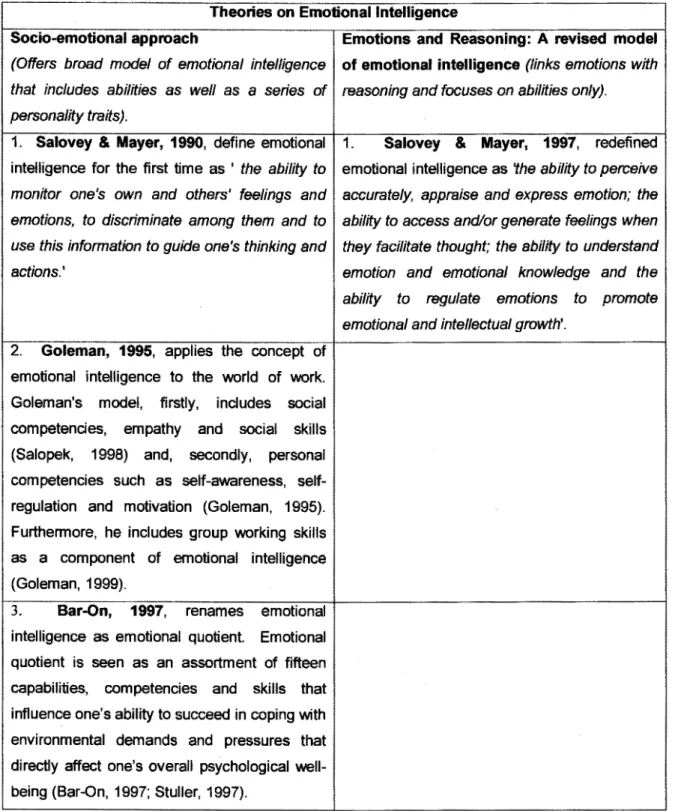
Emotional intelligence overlap with Gardner's (1983) personal intelligences and expands on social intelligence by recognizing emotions as an integral part of human experience and intelligence. Throughout the last decade, work on emotional intelligence has grown. Two general approaches to the study of emotional intelligence are discernible (see figure 2.1 ). Firstly, the socio-emotional approach that offers a broad model of emotional intelligence and includes abilities as well as a series of personality traits. As part of this model, the initial work of Salovey and Mayer (1990), the founders of the concept of emotional intelligence, will be discussed, as well as the work of Goleman (1995) and Bar-On (1997). Secondly, there is the view of emotional intelligence that links emotions with reasoning. This will be discussed with specific focus on the adaptations to the concept made by Mayer and Salovey (1997). This section will conclude with a critical discussion of this concept, offering the points of dispute with specific focus on arguments in defense of the emotional intelligence concept.
Figure 2.1: Theories on Emotional Intelligence.
Theories on Emotional Intelligence
Socio-emotional approach Emotions and Reasoning: A revised model
(Offers broad model of emotional intelligence of emotional intelligence (links emotions with
that includes abilities as well as a series of reasoning and focuses on abilities only). personality traits).
1. Salovey & Mayer, 1990, define emotional 1. Salovey & Mayer, 1997, redefined intelligence for the first time as ' the ability to emotional intelligence as 'the ability to perceive
monitor one's own and others' feelings and accurately, appraise and express emotion; the emotions, to discriminate among them and to ability to access and/or generate feelings when use this information to guide one's thinking and they facilitate thought; the ability to understand
actions.' emotion and emotional knowledge and the
2. Goleman, 1995, applies the concept of emotional intelligence to the world of work. Goleman's model, firstly, includes social competencies, empathy and social skills (Salopek, 1998) and, secondly, personal competencies such as awareness, self-regulation and motivation (Goleman, 1995). Furthermore, he includes group working skills as a component of emotional intelligence (Goleman, 1999).
3. Bar-On, 1997, renames emotional intelligence as emotional quotient. Emotional quotient is seen as an assortment of fifteen capabilities, competencies and skills that influence one's ability to succeed in coping with environmental demands and pressures that directly affect one's overall psychological well-being (Bar-On, 1997; Stuller, 1997).
ability to regulate emotions to promote emotional and intellectual growth'.
2.3.1 Socio-emotional approaches to emotional intelligence
2.3.1.1 Salovey and Mayer's (1990) view of emotional intelligence.
The focus of this section will fall on the contribution made by Peter Salovey, a Yale psychologist, and John.D. Mayer of the . University of New Hampshire, who coined the term emotional intelligence. Specifically, the focus will fall on the subsets of their definition, as well as on the view of emotions as intelligent, linking it to the neuropsychology of emotion.
• Can emotions be intelligent? A neuropsychological perspective.
Two views of emotions exist in the literature. The first views emotions as disorganized interruptions of mental activity, which could be potentially disruptive. In this tradition emotion is defined as an acute affective disturbance within the individual as a whole (Young, 1949). Consequently, this definition implies that emotional disturbances originate from within the psychological situation and involve bodily changes regulated through the autonomic nervous system. In this vein, pure emotion is seen as causing a loss of cerebral control containing no conscious purpose (Young, 1949).
The second view sees emotion as an organizing response, which adaptively focuses cognitive activities and subsequent emotion (Leeper, cited in Salovey & Mayer, 1990). Emotion is, thus, not seen as disorganizing (that is chaotic, haphazard and something to control) but rather as a motivating force which arouses, sustains and directs activity (Leeper, cited in Salovey & Mayer, · 1990). This view fits into Salovey and Mayer's view of the possibility of emotions being intelligent. They view emotions as organized responses which cross the boundaries of many psychological subsystems, including the physiological, cognitive, motivational and experiential systems (Salovey & Mayer, 1990).
However, the problem lies in the occurrence of disorganization in cases of extreme emotion, such as when freezing in the face of extreme danger when fear seems to take over the body. In these cases the emotional process seems to produce disorganization to a significant degree, that is causing ineffective cognition and action (Young, 1949). This has been the main point of critique in the literature against viewing emotions as organized responses.
There, is however, still nothing to gain by ignoring this aspect of human emotions (Young, 1949). In all situations where a highly organized activity is blocked or even when success is achieved, there is an immediate affective upset. Emotional disorganization exists in alt human endeavors alongside the smooth and calm organized activities we do every day (Young, 1949).
Goleman (1995) is of the opinion that these so-called disorganized emotional explosions occur
because of neural hijackings caused by the amygdala (an almond-shaped cluster of
interconnected structures perched above the brainstem, near the bottom of the limbic ring).
There are two amygdalae, one on each side of the brain, nested toward the side of the head.
The amygdalae are the seat of emotional matters in the brain. When severed from the rest of
the brain, they give rise to affective blindness or an inability to gauge the emotional significance
of events. The amygdalae acts as a storehouse of emotional memory and can take control over
what we do, even as the neocortex is coming to a decision (LeDoux, cited in Goleman, 1995).
The workings of the amygdalae and their interplay with the neocortex is seen as the heart of
emotional intelligence (Goleman, 1995), and can finally settle the matter of whether emotions
are truly disorganized or can, in fact, function as an integral part of human intelligence.
As a visual signal enters the thalamus through the senses, it is translated into the language of
the brain by the thalamus. Most of the information goes to the visual cortex for analysis and
assessment, in terms of its meaning a.nd the appropriate response thereto. However, if the
response is emotional, a signal goes to the amygdalae that activates the emotional centers. As
part of this transmission a smaller portion of this information is sent straight from the thalamus to
the amygdalae which serves an important function: it allows for a quicker transmission, which, in
turn, allows for a faster and mostly less precise response. This allows the amygdalae to trigger
an emotional response even before the cortical centers have fully comprehended what was
happening (Goleman, 1995). Thus the amygdalae stands in a privileged position of being able
to hijack the brain as an emotional sentinel (LeDoux, 1989; LeDoux, 1994). This is done
through a small bundle of neurons that lead directly from the thalamus to the amygdalae. This
1995). Consequently, the emotional system can act independently from the neocortex, thus
forming some emotional reactions and memories without conscious, cognitive participation
(LeDoux, cited in Goleman, 1995).
The amygdalae hold emotional impressions and memories that we never knew in full
awareness. Where the hippocampus is traditionally associated with registering and making
sense of perceptual patterns and providing a memory of context, the amygdalae hold the
emotional flavour of an event. For example, the hippocampus will provide the memory of the
face of a person but the amygdalae will tell you whether you liked him or her, or not (Goleman,
1995). In the face of a dangerous stimulus a nerve running from the brain to the adrenal glands
will trigger the secretion of epinephrine and norepinephrine which primes the body for an
emergency. These hormones activate the receptors of the vagus nerve, which in turn carries
messages to the brain to regulate the heart, and to the parts of the brain triggered by these
hormones. Most of these signals are, however, sent to the amygdalae, which signals other
brain regions to strengthen the memory of the event. The stronger the strength of the emotional
arousal, the stronger the memory imprint on the brain (LeDoux, 1989). This is why we
sometimes act out of touch with the context of an event in the case of signs of danger, or even
in the face of anger.
The connections between the amygdalae and the neocortex are the hub of our emotional life.
This explains why emotions are important for effective thought. Emotions are strongly linked to
what neuroscientists call the working memory, that is the capacity for attention that holds
essential facts in mind for the successful completion of a task. The working memory is housed
study done on primary school boys with above-average IQ scores but low grades, impaired prefrontal functioning was recorded. The boys exhibited traits such as academic failure, alcoholism and criminality. Thus, despite their intellectual potential, deficits in their emotional life caused them to be unsuccessful (Goleman, 1995).
Insights into the complex workings of the emotional brain serve two functions. It deals with the debate around viewing emotions as an organized or disorganized response in that it explains how a mostly rational human being sometimes acts completely irrationally. Secondly, it brings to the foreground the debate around the importance of emotional intelligence in successful functioning. As shown previously, IQ is not enough and social intelligence left out one important factor, namely emotions. Goleman (1995, p.29) is of the opinion that any model that leaves out emotion is incomplete. He states that,
'The old paradigm held an ideal of reason freed of the pull of emotion. The new paradigm urges us to harmonize head and heart. To do that well in our lives means we must first understand more exactly what it means to use emotion intelligently.'
• Emotional intelligence: Facets of the definition.
Salovey & Mayer ( 1990) proposed emotional intelligence as a general framework that allows for the identification of specific skills needed in the view of emotions as an adaptive rather than disorganized response. They formally define emotional intelligence as ' the ability to monitor one's own and others' feelings and emotions, to discriminate among them and to use this information to guide one's thinking and actions.' Their definition expands previous schools of
• The accurate appraisal and expression of emotion.
This aspect of emotional intelligence involves the accurate appraisal and expression of emotion in the self and in other people and contains both verbal and non-verbal cues (Salovey, Hsee
&
Mayer, 1993). This skill includes self-awareness, that is the recognition of emotion as it happens, and empathy, that is the ability to comprehend another's feelings and to re-experience them, oneself.In terms of self-awareness and the awareness of emotions in others, Salovey and Mayer (1990) drew upon evidence from studies on children and adults. Firstly, they found evidence in the literature that children from the age of four can accurately identify the emotions suggested by about half the faces they see. From six years of age, children are 75% correct and emotions such as happiness and disgust are correctly identified almost every time by four year old children (Profyt & Whissel, cited in Salovey, Hsee & Mayer, 1993). In terms of putting emotions into words children are able to give as many as 1169 synonyms for seven basic emotions (Whissel & Nicholson, cited in Salovey, Hsee & Mayer, 1993).
However, adults seem to be more oblivious to their own feelings and insensitive to those of others. In a study done using 18 reproductions of faces, colour swatches and abstract designs, 139 adults were asked to rate them in terms of emotional content. When their scores were compared to other aspects of emotional intelligence, namely empathy and related constructs such as alexthymia and neuroticism, the ability to perceive consensual emotional content was found to be associated with empathy (Mayer, DiPaolo & Salovey, 1990). In another study done
their own thoughts and in understanding the feelings of others from what they say. Furthermore individuals who fared better in this skill reported higher SAT scores, which means that they could possibly posses better general intelligence (Mayer & Geher, 1996). Positive evidence has been found to indicate that individuals vary with respect to the amount of attention they pay to and the clarity with which they perceive their moods (Salovey et.al. 1995). Overall, results indicated that the accurate appraisal and expression of emotion in the self and others is an important domain in the framework of emotional and general intelligence.
• Adaptive regulation of emotion in the self and others.
This domain, involves firstly the ability to regulate one's own emotions: that is, the ability to soothe oneself, to shake of rampant anxiety, gloom or irritability. People who excel in this domain bounce back quicker from life's setbacks and upsets, while those who fare poorly in this area are constantly battling feelings of distress (Goleman, 1995; Salovey, Hsee & Mayer, 1993). Secondly, it involves the ability to manage emotions in others. Some people seem to know how to create emotions in others that serve them in adaptive ways. The extreme would be the sociopath who manipulates the feelings of another person for personal gain (Salovey, Hsee & Mayer, 1993).
Evidence of the ability to regulate one's own emotions is derived from strategies by which people do so. Firstly, in a study done on four to six year old children, youngsters were asked to listen to stories in which they might experience happy, sad and angry emotions. Cognitive and behavioural strategies of regulating their own emotions indicated that they were as likely to