Sustaining and Scaling the Impact of
Enterprise Development Programmes
SABMiller’s Approach to Strengthening Business Ecosystems
Written by Beth Jenkins, Richard Gilbert, and Piya Baptista Designed by Alison Beanland
Cover photographs: SABMiller
The authors are deeply grateful for SABMiller’s openness and willingness to share its approach to sustaining and scaling the impact of its enterprise development programmes through business ecosystem strengthening. Special thanks go to Cecilia Zevallos, Bernardo Saiz Martinez, Boipelo Nkadimeng, Hepsy Mkhungo, Bianca Shevlin, and Andy Wales for their generosity with their time.
The authors would also like to thank their CSR Initiative and Business Fights Poverty colleagues Jane Nelson and Zahid Torres-Rahman, who provided invaluable experience, insight, and guidance throughout the research and writing process, and Marli Porth, who provided objective feedback and copy-editing in the report’s final stages.
© 2014 by the CSR Initiative at the Harvard Kennedy School and Business Fights Poverty
The material in this publication is copyrighted. Quoting, copying, and/or reproducing portions or all of this work is permitted provided the following citation is used:
Jenkins, Beth, Richard Gilbert, and Piya Baptista (2013). “Sustaining and Scaling the Impact of Enterprise Development Programmes: SABMiller’s Approach to Strengthening Business Ecosystems.” Cambridge, MA: The CSR Initiative at the Harvard Kennedy School and Business Fights Poverty.
The views expressed in this paper are those of the authors and do not imply endorsement by the John F. Kennedy School of Government, Harvard University, or Business Fights Poverty.
Sustaining and Scaling the Impact of
Enterprise Development Programmes
SABMiller’s Approach to Strengthening Business Ecosystems
C
ompanies have a critical role to play in driving more inclusive and sustainable models of development and, in certain cases, solving specific development challenges. At the same time, there are significant opportunities to discover profitable new business models.Despite a shift in emphasis towards more detailed discussions on how to unlock the full potential of business, there remains a significant deficit of practical examples explaining how companies are leveraging their core capabilities and value chains for development impact. We need to build a much stronger understanding of these models to help others to replicate and scale them.
We are, therefore, pleased to have this opportunity to explore in depth the approach of one company, SABMiller, which is working to support entrepre-neurs in its value chain and broader community by strengthening the wider environment in which they are embedded. A key message that this report highlights is that no one organisation can tackle the challenge of job creation and small business development alone. Companies must engage other companies, financial institutions, governments, and civil society groups to reinforce the ecosystems that affect what they can achieve.
Over several years, the Harvard Kennedy School Corporate Social Responsibility (CSR) Initiative and Business Fights Poverty have worked together to bridge theory and practice, and to connect people in the field of business and international development. This report is the latest in a series of reports on ways that companies can expand economic opportunity and choice.
We thank SABMiller for its openness to sharing its approach.We hope this report will be a useful source of real-time learning for SABMiller, its partners, other companies, donors, government and civil society groups interested in maximising the business contribution to development.
Jane Nelson
Director, CSR Initiative Mossavar-Rahmani Center for Business and Government Harvard Kennedy School
Zahid Torres-Rahman Founder and Director Business Fights Poverty
Foreword
1. Background 6
2. Report Objectives 10
3. A Framework for Sustaining and Scaling the Impact of
Enterprise Development Programmes by Strengthening Business Ecosystems 11
4. The Framework in Action: Oportunidades Bavaria in Colombia 15
5. The Framework in Action: SAB KickStart in South Africa 25
6. Recommendations 38
Sustaining and Scaling the Impact of
Enterprise Development Programmes
1
Background
E
nterprise development is fundamental to poverty alleviation, job creation, economic growth, and human development. It can help the entrepreneur make ends meet, achieve financial security, accumulate wealth, become a leader and set an example for others; create jobs and incomes in his or her community; generate tax revenues for governments; and catalyse a range of multiplier effects, from food security to improved nutrition to better access to health care and education for future generations. In countries with support structures in place, small and medium enterprises (SMEs) can account for significant percentages of both employment and gross domestic product (GDP).1 In high-income countries, SMEs account for more than 60% of both employment and GDP; in low-income countries, they account for nearly 80% of employment but less than 20% of GDP. As a result, whether entrepreneurs start their businesses because they cannot find jobs (“necessity entrepreneurship”) or because they see market opportunities (“opportunity entrepreneurship”), helping them grow is a development imperative.2For large companies, enterprise development is also a business imperative. It strengthens the value chain by increasing quality, quantity, and security while potentially decreasing cost on the supply side and by increasing sales capacity on the distribution side. It expands the market by driving job creation and GDP growth. And it enhances corporate reputation by contributing to local, national, and global priorities. Just as enterprise development is critical to large firms, large firms are critical to enterprise development. They can support entrepreneurs through corporate social investment in start-up capital, basic business skills, mentoring, and networking with peers and potential customers. However, large firms
increasingly realise that when it comes to supporting entrepreneurs, their comparative advantage is not social investment but rather demand for goods and services within their core business operations and value chains – demand that creates the business opportunities entrepreneurs need to grow. To help them take advantage of these opportunities, many large firms adjust their procurement policies and practices and provide small-scale suppliers, distributors, and retailers with information, training, technology, and other capacity-building resources.
SABMiller plc, one of the world’s largest brewers, has identified enterprise development as one of the top three ways that the company can create value for the business and for society.3 SABMiller works with thousands of micro, small and medium enterprises within its value chain and local communities.
Within the company’s value chain, these enterprises serve as suppliers, distributors, and retailers. They might be smallholder farmers growing cassava for local brand Impala in Mozambique, former bottling plant employees who have started their own one-truck distribution services in South Africa, or local corner stores selling beer as well as other groceries and consumer products to their neighbours in Colombia.
In its local communities, the enterprises supported by SABMiller engage in a wide variety of business pursuits, from food processing to construction equipment leasing to hairdressing to tech support. These programmes are designed to strengthen the value chain and build more prosperous societies, both to address local development priorities such as job creation and to expand the market for beer. Enterprise development is fundamental to
poverty alleviation, job creation, economic growth, and human development.
These programmes are designed to strengthen the value chain and build more prosperous societies, both to address local development priorities such as job creation
Founded in South Africa in 1895, SABMiller is now one of the world’s largest brewers, with 70,000 employees and interests and distribution agreements in 75 countries on six continents. It is also one of the world’s largest bottlers of Coca-Cola products. In fiscal year 2013, SABMiller’s revenues exceeded US$34 billion, with some 72% coming from developing markets. Africa and Latin America accounted for 63% of EBITA and are two of the company’s fastest-growing markets, at 5% and 9% respectively.
SABMiller has grown by acquisition and has numerous subsidiaries with strong local roots and independent operating histories and corporate cultures. In addition, beer is a relatively
local product, because it is perishable, bulky to transport, and subject to specific consumer tastes. As a result, SABMiller operates in a decentralised manner, with the managing directors of its local businesses focused on the issues and activities most material to their markets. According to the company, this allows it to take advantage of local knowledge, relationships, cost advantages, and consumer loyalty as well as global efficiencies and best practices.
To protect and grow long-term returns, SABMiller seeks “to drive economic growth and stimulate social development in [the countries where it operates], while using scarce natural resources efficiently.” 4
About SABMiller
SABMiller, its subsidiaries, and their enterprise development partners provide these enterprises and the entrepreneurs who run them with various types of support, depending on local contexts and needs. Generally, support falls into the categories of: • training and mentoring,
• access to finance, and
• access to markets – one important market or potential market being SABMiller itself.
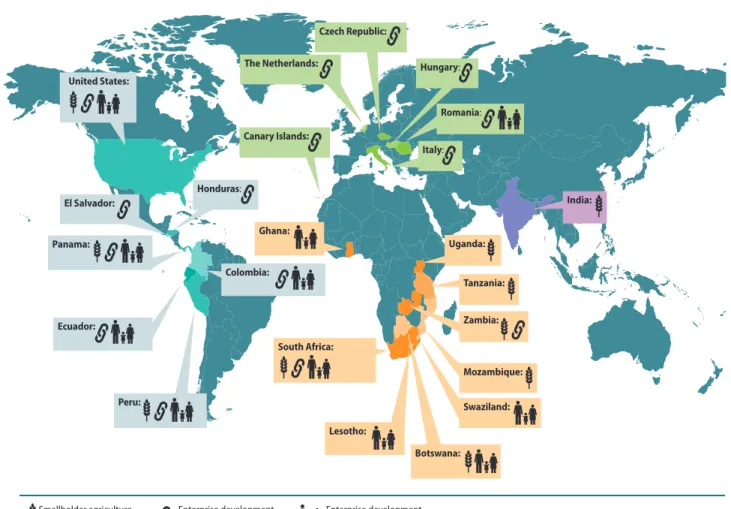
The company currently manages 49 enterprise development programmes in 24 countries, as depicted in Figure 1. BACKGROUND El Salvador: United States: Honduras: Panama: Colombia: Ecuador: Peru: Czech Republic: Hungary: India: Canary Islands: Ghana: Italy: South Africa: Lesotho: Swaziland: Mozambique: Uganda: Tanzania: Botswana: Zambia: Romania: The Netherlands:
Smallholder agriculture Enterprise development
in the value chain Enterprise development in the community Figure 1: SABMiller’s Enterprise Development Programmes
In its experience managing enterprise development programmes around the world, SABMiller has identified three key success factors underpinning their performance and impact. These include:
1
Leveraging core business operations andexpertise
SABMiller procurement creates demand for the goods and services that other enterprises offer, often in relatively large volumes – presenting significant opportunities for growth for those who can develop the capacity to supply at the levels of quantity and quality required. Through sales and marketing, SABMiller offers distributors and retailers the opportunity to earn money reselling popular products to customers and end consumers further down the value chain. The company also leverages its business knowledge and expertise to support entrepreneurs in the value chain and in the community more broadly through training, mentoring, and programme management. In Uganda, for example, SABMiller’s sorghum procurement programme has helped 9,000 farmers improve their quality and productivity and begin to sell to the company, increasing their incomes by a factor of seven.5 SABMiller’s approach
to its entrepreneurship programmes continues to evolve from a community social investment model to enabling stronger linkages with the core business for greater project sustainability and scale.
2
Leveraging scaleSABMiller uses its global scale to gather, consolidate, and share lessons learned and best practices from around the world, to develop regional programmes with efficiencies that single country programmes cannot achieve, and to attract powerful partners looking for ways of reaching thousands of
enterprises effectively and efficiently. For example, the company has recently extracted best practices from several years of experience supporting small-scale retailers in Latin America to develop and launch the 4e, Camino al Progreso programme in six countries. The programme is in partnership with the Inter-American Development Bank (IADB), the largest source of development financing for Latin America, which is owned by 55 member governments in the region and worldwide.
3
Strengthening business ecosystemsSABMiller recognises that while its own capabilities and scale matter, small and growing enterprises will only thrive in large numbers in the long run if they are embedded in strong and supportive “business ecosystems” that include, but go beyond, the company itself.
The term “ecosystem” comes from ecology, where it refers to a community of organisms that depend on one another and a shared natural environment. Strategist James Moore coined the term “business ecosystem” in a McKinsey Award-winning Harvard
Business Review article in 1993, noting that firms,
too, depend on communities of interconnected, interdependent stakeholders, including suppliers, distributors, retailers, customers, companies selling complementary products, competitors, investors, trade associations, regulators and other government agencies, educational institutions, the media, and others. Moore also suggested that, unlike most organisms, firms could strengthen their business ecosystems in ways that supported their long-term growth and competitiveness.6
SABMiller’s approach to its entrepreneurship programmes continues to evolve from a community social investment model to enabling stronger linkages with the core business
for greater project sustainability and scale.
SABMiller recognises that while its own capabilities and scale matter, small and growing enterprises will
only thrive in large numbers in the long run if they are embedded in strong and supportive “business
ecosystems” that include, but go beyond, the company itself.
As a result, SABMiller’s enterprise development programmes work to achieve sustainable impact at scale by strengthening business ecosystems in addition to providing enterprise support services. Strengthening business ecosystems means raising awareness, aligning incentives, and helping to change mindsets and behaviours within the interconnected, interdependent community of stakeholders whose actions affect small enterprises’ prospects for growth and success, both now and into the future. The company does this by using its own business processes and practices, partnering with other organisations capable of leverage and influence, and working through broader platforms for collective action.
Small and growing businesses certainly depend on healthy, supportive business ecosystems. They flourish when suppliers offer the right products and services at affordable prices, with payment and delivery terms that suit their cash flows; when banks offer appropriate payment, investment, and risk management services; when educational institutions equip them and their employees with the knowledge and skills they need to succeed; when government provides an enabling regulatory and tax environment and puts relevant infrastructure and public services in place; and so on.
Small and growing enterprises are typically limited in their ability to strengthen their business ecosystems because they lack resources, connections, and influence. Here, large companies can play a unique and critical role: they have greater resources, but even more importantly, they have market power. Large companies’ supply of and demand for goods, services, and labour gives them a type and sphere of influence that is difficult for governments, donors, and civil society organisations to replicate, though those stakeholders have their own critical roles to play. Large companies are also uniquely incentivised to strengthen business ecosystems because it contributes to their own success as well as the success of the smaller firms in their value chains and communities.
Large companies are also uniquely incentivised to strengthen business ecosystems because it contributes to their own success as well as the success of the smaller
firms in their value chains and communities. Strengthening business ecosystems means raising awareness, aligning incentives, and helping to change
mindsets and behaviours within the interconnected, interdependent community of stakeholders whose actions affect small enterprises’ prospects for growth
and success, both now and into the future.
2
Report Objectives
R
ecognising that strengthening business eco-systems is key to the sustainability and scale of impact of its enterprise development programmes, SABMiller has drawn upon its experience to date to develop a framework intended to help programme managers more systematically strengthen those ecosystems going forward. This report describes that framework and illustrates it with two of the programmes on which it is based:n Oportunidades Bavaria, which supports
small-scale retailers in subsidiary Bavaria’s value chain in Colombia. Oportunidades Bavaria is linked to SABMiller’s core business. Participating retailers are “necessity” entrepreneurs (i.e., they have started their own businesses because they have few other job options).
n SAB KickStart, which supports a wide range of
entrepreneurs in SABMiller subsidiary SAB Ltd’s local communities in South Africa. SAB KickStart is not necessarily linked to SABMiller’s core business, though several participants have come to supply SAB Ltd with goods or services. Participants are “opportunity” entrepreneurs (i.e., they have started their own businesses because they see a market opportunity).
This report aims to document an approach with the potential to help SABMiller and other companies, governments, donors, and civil society organisations strengthen the performance of their enterprise development programmes and create more sustainable impact at scale.
1
3
A Framework for Sustaining and Scaling the Impact of Enterprise
Development Programmes by Strengthening Business Ecosystems
Drawing upon its experience to date, SABMiller has developed a framework intended to help enterprise development programmes improve their performance and impact by strengthening business ecosystems. The framework consists of six steps:
The first step is to set compelling objectives, which are critical to mobilising the internal and external resources, capabilities, and allies needed to run a successful enterprise development programme. SABMiller sets compelling objectives by analysing what is important to the company and what is important to the country where the programme will take place, and locating the intersection between the two. At that intersection will be a target group of entrepreneurs and a set of intended outcomes of supporting them.
To understand what is important to the company, managers review their business plans and sustainable
development priorities. Managers also take stock of the resources and capabilities the company can bring to the table. These may include procurement, sales, and other business processes, staff time, expertise, networks, infrastructure, and funding. Because these resources and capabilities are likely to come from a variety of different departments within the company, managers are encouraged to map the departments that need to be involved, what they have to offer, and what their incentives are – so that enterprise development programme objectives can be framed in ways that resonate across departmental boundaries.
ALIGN COMPANY AND COUNTRY OBJECTIVES
1
Align company and country objectives2
Understand the target entrepreneurs3
Select priority challenges and key stakeholders4
Analyse key stakeholders5
Develop stakeholder engagement strategyAs with commercial projects, SABMiller’s sustainability programmes are underpinned by extensive research into
key stakeholders and the wider environment to build contextual understanding and to help define project
objectives and strategies.
To understand what is important to the country, SABMiller relies on a combination of research and the first-hand experience of local managers. The company’s research, conducted each year, generally includes more than 500 interviews with stakeholders in the government, the company’s value chain, the media and general public. Through
its in-country corporate affairs function, SABMiller maintains on-going dialogue with key stakeholders from government, civil society, communities and the media across a wide range of public policy areas to ensure the company is able to anticipate and respond effectively to key local issues and opportunities.
The next step is to develop an in-depth understanding of the target entrepreneurs’ businesses and the value chains, family structures, and communities in which they are embedded. Managers must get to know how those entrepreneurs work and why, what they aspire to, and what challenges they face. In some cases, SABMiller undertakes detailed research, for example working with specialist research firm MindCode to identify key insights to inform the design of 4e, Camino al Progreso, a new broad-based enterprise development programme targeting 40,000 small shop keepers in SABMiller’s value chain in six Latin American countries. As with commercial projects, SABMiller’s sustainability programmes are underpinned by extensive research into key stakeholders and the wider environment to build contextual understanding and to help define project objectives and strategies.
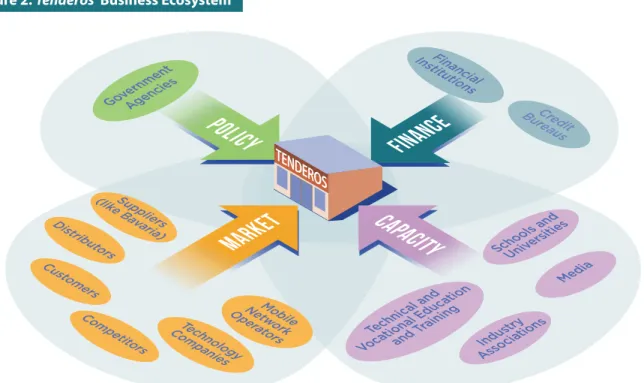
Entrepreneurs’ challenges may have one or more of the following dimensions:
• Capacity: related to knowledge, skills, assets, or resources among target entrepreneurs
• Market: related to market linkages with entrepreneurs’ suppliers, distributors, retailers, or customers
• Finance: related to entrepreneurs’ access to financial services including credit, savings, and insurance
• Policy: related to government regulation, enforcement, or public services.
In Step 3, managers prioritise one or more of the target entrepreneurs’ challenges in accordance with the entrepreneurs’ needs and aspirations and SABMiller’s programme objectives and key performance indicators. Focusing the company’s business ecosystem strengthening efforts around one or more challenges helps to define the scope of what can otherwise be an unwieldy exercise. In this report, we will describe the framework as applied to
one priority challenge. Managers consider the four dimensions of the priority challenge and identify stakeholders that play important roles – whether positive or negative, through action or inaction. They assess who needs to be involved in order to overcome the priority challenge sustainably and at scale. Managers also make note of what each key stakeholder is currently doing and what they would
ideally be doing, if different, to address each challenge.
A FRAMEWORK FOR SUSTAINING AND SCALING THE IMPACT OF ENTERPRISE DEVELOPMENT PROGRAMMES BY STRENGTHENING BUSINESS ECOSYSTEMS
3
SELECT PRIORITY CHALLENGES AND KEY STAKEHOLDERSManagers can begin by identifying categories of stakeholders, since categories (for example, banks) will have much in common. But they will eventually need to move to the level of individual stakeholders in order to craft and implement an engagement strategy. Next, with key stakeholders’ current and potential roles in mind, enterprise development programme managers analyse them along three dimensions: • Incentive: what incentives does this stakeholder
have to address the priority challenge? What disincentives does the stakeholder have?
• Institutional capacity: does this stakeholder have the resources and capabilities needed to address the challenge? What strengths does the stakeholder bring to bear? What are the stakeholder’s limitations or capacity gaps?
• SABMiller’s influence: can SABMiller change this stakeholder’s incentives or institutional capacity, and/or do others need to act? If others need to act, can SABMiller persuade them to do so? Again, managers can begin using categories of stakeholders, since categories will have much in common. But they will need to move to the level of individual stakeholders in order to craft and implement an engagement strategy. For example, it may be possible to say that banks, as a category, are reluctant to lend to the target entrepreneurs because they perceive them to be risky. But why they perceive the target entrepreneurs to be risky, whether or not those particular assumptions are rooted in fact, and whether and how they can be changed will often differ from bank to bank.
A FRAMEWORK FOR SUSTAINING AND SCALING THE IMPACT OF ENTERPRISE DEVELOPMENT PROGRAMMES BY STRENGTHENING BUSINESS ECOSYSTEMS
ANALYSE KEY STAKEHOLDERS
DEVELOP STAKEHOLDER ENGAGEMENT STRATEGY
5
Having identified key stakeholders and analysed |their incentives, institutional capacity, and SABMiller’s ability to influence them, enterprise development programme managers can begin to design an engagement strategy to involve them in business ecosystem strengthening to address the priority challenge sustainably and at scale. This step must be completed at the level of individual stakeholders.
The first question is whether to engage each stakeholder. The analysis in Step 4 can help managers prioritise which stakeholders to engage, and in which order. This will depend on the company’s objectives for the programme, the resources and capabilities the company brings to bear, and the time horizon in which it hopes to see results.
The second question is how to engage each stakeholder. What does each stakeholder need in order to take action to address the priority challenge, and from whom? What structures are necessary – bilateral or multilateral, formal or informal, short-term or long-short-term? Can SABMiller foster the necessary engagement itself, or does the company need to bring in a catalyst like a foundation, donor agency or development bank? There is no simple formula, since the answers are subject to so many local contextual factors – down to the personalities of the individuals representing each stakeholder organisation. As a result, the framework offers a menu of possible tactics that managers, using their own judgment, can choose to implement through SABMiller’s own business policies and practices, through partnership with other stakeholders, and through broader collective action platforms.
Finally, enterprise development programme managers monitor and evaluate their programme’s performance and impact in addressing the priority challenge. Key performance indicators (KPIs) should include outputs, outcomes, and impacts for both the target entrepreneurs and the company itself. Impacts, or goal-level changes, are the most meaningful. But
because impacts are difficult to measure and attribute, and take significant time to materialise, selecting output and outcome indicators that are good proxies for impact can help managers gauge whether they are on track or should make course corrections as needed.
6
MONITOR AND EVALUATE PERFORMANCE AND IMPACTA FRAMEWORK FOR SUSTAINING AND SCALING THE IMPACT OF ENTERPRISE DEVELOPMENT PROGRAMMES BY STRENGTHENING BUSINESS ECOSYSTEMS
4
The Framework in Action:
Oportunidades Bavaria in Colombia
Colombia’s economy has grown substantially over the last decade, but remains dependent on commodity exports like oil, coal, coffee, and fresh cut flowers. The benefits have been uneven. Income inequality is high and unemployment and informality remain prevalent. In 2013, 96.4% of companies operating in Colombia are micro-enterprises, representing 50.3% of the employed population.7 Bringing these
enterprises into the formal economy and helping them grow is a national priority. Against this backdrop, SABMiller’s Colombian subsidiary Bavaria S.A. launched the Oportunidades Bavaria programme in 2009 to improve the business performance and quality of life of tenderos, small-scale shopkeepers who are critical players in the company’s value chain.
Bavaria S.A., founded in Colombia in 1889, is now SABMiller’s largest operation in Latin America. Oportunidades Bavaria is managed by Bavaria S.A.’s foundation, Fundación Bavaria, among a number
of other enterprise and community development programmes. As of September 2013, the programme reached some 10,000 tenderos in 19 out of 32 regions in Colombia. In partnership with financial institutions, Oportunidades Bavaria provides tenderos in Bavaria’s value chain with access to credit as well as to bank accounts and micro-insurance for loan repayments and funeral expenses. The latter two areas are at an early stage of development, roll-out, and uptake. In 2012, Oportunidades Bavaria also piloted business training for tenderos, which contributed to the development of the new 4e, Camino al Progreso
programme launched by SABMiller in August 2013. This is a broad-based
enterprise development programme targeting 40,000 tenderos in SABMiller’s value chain in six Latin American countries in five years – including those who have participated in Oportunidades Bavaria. The Oportunidades Bavaria brand name is now being phased out.
4e, Camino al Progreso (4e) has been designed in collaboration with the Multilateral Investment Fund (MIF) of the Inter-American Development Bank (IADB). It will be implemented in partnership with FUNDES, an organisation that promotes the competitive development of micro, small, and medium-sized enterprises in Latin America. Through access to credit and training, 4e specifically aims to develop the capabilities of tenderos to improve their businesses, enhance the quality of their own and their families’ lives, and build their leadership skills to take on community-level responsibilities. In Colombia, the goal is to have engaged more than 17,000 tenderos by 2018.
From a development perspective, Oportunidades Bavaria aims to improve the business performance and quality of life of tenderos, small-scale shopkeepers who are critical players in the company’s value chain. From a business perspective, the programme helps
tenderos to increase sales of all products, including
Bavaria’s, strengthen retailer loyalty, and reduce costs and risks associated with informality and the use of cash.
The most important assets Bavaria brings to the table in pursuing these objectives are its products, its marketing and sales systems and staff, its in-depth knowledge of the tenderos that buy from the company, and the Fundación Bavaria staff who manage the programme. Fundación Bavaria also contributes additional operating and marketing budget.
ALIGN COMPANY AND COUNTRY OBJECTIVES
From a development perspective, Oportunidades Bavaria aims to improve the business performance
and quality of life of tenderos, small-scale shopkeepers who are
critical players in the company’s value chain.
About Oportunidades Bavaria
In Colombia, there are an estimated 400,000
tenderos, of whom 375,000 sell Bavaria products.
The Oportunidades Bavaria programme targets so-called “Category C” tenderos who sell 3-7 cases of beer per week. Bavaria has approximately 230,000 of these tenderos in its value chain. These tenderos are considered “survival” or “necessity entrepreneurs” as they run stores or other micro-enterprises to generate income to meet their families’ day-to-day needs. Their total revenues range between US$130-US$315 per month.
The Oportunidades Bavaria programme has a larger number of female participants because banks consider women less risky borrowers than men. Women often work with their spouses in their stores, although some women run their own stores.
Tenderos have typically studied up to high school in
Colombia, but many have additional vocational or technical training.
Tenderos run small stores of approximately 40 square
feet stocking a variety of products such as food and beverages, basic household goods, and airtime for mobile phones. The small size of their stores often makes ordering and delivery a major challenge, as they require small quantities of product on a frequent basis – something it is difficult for most suppliers to provide efficiently.
Approximately 71% of tenderos’ stores are adjacent to or in their homes. They are located in low-income communities, so low-income customers can easily make frequent, even daily visits to purchase products as their limited and often irregular cash flows permit. This makes tenderos a critical channel for companies to get their products to low-income customers.
Tenderos account for 60% of Bavaria’s annual sales
volume, and Category C tenderos account for 40%. Serving customers with irregular cash flows and purchasing patterns gives tenderos irregular cash flows as well, along with difficulty predicting demand – which often results in product stock-outs. Dealing exclusively in cash also presents a security risk. Switching to electronic payments would offer
tenderos increased security and operational efficiency.
Tenderos may open their stores without any formal
business registration, but require several permits and licenses to operate, such as certification of compliance with fire safety, health, and tax codes as well as registration with the municipality and local chamber of commerce. Most often tenderos operate with only one or two of the required permits because they do not have a strong understanding of relevant laws, running the risk of store closures. Lack of awareness of laws governing beverage consumption in the street-front areas of their stores, or at certain times of night, can also lead to unwitting violations. Such laws also impact tenderos’ sales revenues. In general, tenderos know their customers, who are usually their neighbours, very well. This personal knowledge enables them to extend crédito facil (“easy credit”) to trusted customers. In this respect, tenderos have a competitive advantage over supermarkets, which find it difficult to assess risk and offer store credit to low-income consumers.
However, most tenderos have little access to credit or other financial services themselves. They need credit to finance their business operations, asset purchases, and store improvements, as well as savings and insurance to protect their financial futures. But while approximately 75% of tenderos have borrowed from microfinance institutions and informal sources such as moneylenders, family, and friends, most tenderos
Bavaria has approximately 230,000 of these tenderos in its value chain.
2
UNDERSTAND THE TARGET ENTREPRENEURShave not borrowed from banks, which offer few appropriate products and services – whether credit, savings, or insurance. Tenderos have low levels of financial literacy, do not understand how formal financial services could help them, and tend to mistrust the banking sector. Part of this mistrust is associated with having to pay fees and taxes, such as the government’s financial transaction tax. Tenderos prefer to use informal financial services to avoid these.
Running their stores is an imperative for day-to-day survival, but many tenderos aspire to grow their businesses to improve their quality of life and secure better educational opportunities for their children. Others aim to own their own homes. At the same time, Bavaria’s research has shown that many tenderos are anxious about growing their businesses, since it
increases their visibility and makes them vulnerable to robberies. They often fear that growth gives the appearance of prosperity, making them a source of envy in the neighbourhood. Some tenderos also believe that business growth may lead to additional legal compliance requirements or taxation.
Limited business skills also stand in the way of growth. Tenderos may not know how to manage their cash flows or perform basic accounting; for example, they often mix personal and business expenses. Without clear understanding of their monthly costs and sales revenues, tenderos are unable to determine how much profit they make, if any, to reinvest in their stores or to use for other purposes. Tenderos also lack inventory management skills, such as knowledge of when to sell products based on the nature of the product and its expiration date. Additional challenges for tenderos include learning how to differentiate their stores from the competition and using product pricing to their advantage in this regard.
THE FRAMEWORK IN ACTION: OPORTUNIDADES BAVARIA IN COLOMBIA
Running their stores is an imperative for day-to-day survival, but many tenderos aspire to grow their businesses to improve their quality of life and secure
better educational opportunities for their children.
Tenderos are often well-respected in their communities.
They seek to differentiate their stores based on features other than price, such as having a convenient shop location or providing a comfortable place to consume food and beverages. Their stores tend to be social hubs, a feature that many tenderos feel could be
more effectively leveraged to make their stores centres for advice and services. Although evidence suggests that many tenderos doubt the importance of their trade, leading to low self-esteem and stress, they still would like to be the voice of their communities and a vehicle for community security and cohesion.
THE FRAMEWORK IN ACTION: OPORTUNIDADES BAVARIA IN COLOMBIA
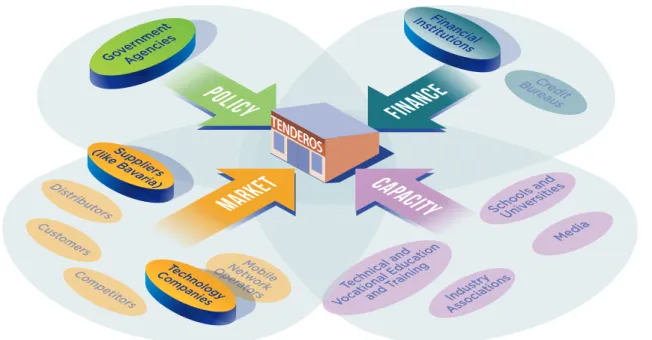
Oportunidades Bavaria has identified a number of business ecosystem stakeholders key to the priority
challenge of financial inclusion for tenderos; these include banks, government regulators, large
fast-moving consumer goods (FMCG) companies, and technology providers.
3
SELECT PRIORITY CHALLENGES AND KEY STAKEHOLDERS At this stage of the programme, Oportunidades Bavaria has prioritised three challenges it considers most important to its business and development objectives: inventory management skills; product ordering, delivery, and payments; and financial inclusion. Of these three challenges, financial inclusion is the most complex and systemic, with market, finance, capacity, and policy dimensions. As a result, it most requires business ecosystem strengthening in order to generate sustainable impact at scale.Oportunidades Bavaria has identified a number of business ecosystem stakeholders key to the priority challenge of financial inclusion for tenderos; these include banks, government regulators, large fast-moving consumer goods (FMCG) companies, and technology providers.
Banks. For the most part, banks do not consider low-income individuals like tenderos to be interesting or viable markets. Tenderos lack formal credit histories and banks generally do not have proven alternative methods of assessing their credit risk. Tenderos also require relatively small loans and small savings accounts and can afford to pay only low fees, so the transaction costs can be prohibitive without significant innovation in products and processes. However, some banks have begun to venture into this market – among them the largest private bank in Colombia, Bancolombia, and government bank Banco Agrario de Colombia. Many microfinance
institutions (MFIs), such as Comultrasan, have been serving low-income clients for many years. Banks have also begun to develop a branchless banking network in Colombia, with over 20,800 agents as of June 2012.8 This is expected to make formal financial services more accessible to low-income populations. With transactions currently consisting mostly of deposits and utility bill payments, there is scope for network expansion as well as offering a wider array of services.9
Government regulators. An enabling regulatory environment is critical for financial inclusion. In 2006, the Government of Colombia created
Banca de las Oportunidades (BDO), a policy
programme to expand access to financial services among low-income populations. The programme promotes regulatory changes, develops projects to bring together financial institutions and low-income clients, and provides incentives for financial institutions. This programme has facilitated some important changes. For example, in 2006, the Financial Superintendence of Colombia (SFC), the country’s regulatory and supervisory agency for
THE FRAMEWORK IN ACTION: OPORTUNIDADES BAVARIA IN COLOMBIA
Figure 3: Key Stakeholders for the Priority Challenge of Financial Inclusion
Tenderos lack formal credit histories and banks generally do not have proven alternative methods of assessing their
credit risk. An enabling regulatory environment is critical for financial inclusion.
the financial sector, created new rules permitting “any type of legal entity to act as an agent of a fully licensed financial institution and to deliver financial services on its own premises.”10 Through BDO, the government also created incentives for banks to establish agents in areas without access to financial services. This was expected to facilitate payments to low-income households through Familias en
Acción, the government’s conditional cash transfer
programme. These incentives drove a significant expansion of Colombia’s branchless banking agent network in rural municipalities and in marginal neighbourhoods in big cities. BDO also advocated for the creation of low-value savings accounts featuring “simplified know-your-customer (KYC) requirements, fee exemptions on a specified number of transactions, and exemptions on directed lending provisions.”11
At present, the government charges a financial transaction tax of 0.4%, known as cuatro por mil, on every debit from a bank account or credit card transaction. This tax has discouraged low-income households from opening and using bank accounts. However, as a result of advocacy by BDO, the SFC has created new rules eliminating this tax on monthly debits of up to US$3,500 from all types of savings accounts. These include electronic and mobile phone-based accounts. Despite this policy change, there has not been significant uptake of bank accounts among tenderos. According to Bavaria, this is partly because tenderos lack awareness of the changes. There have also been procedural challenges: according to CGAP, “(i) banks reportedly do not always apply the exemption, (ii) customers are required to present a written declaration to banks stating that there is only one account benefiting from such exemption, and (iii) accounts held by more than one person cannot be exempted.”12 The SFC has also created new rules to facilitate the development of mobile phone-based savings products. An individual may open a savings account
linked to his or her mobile phone number, which serves as the account number. Approximately US$2,000 per month may be maintained in this account tax-free, and can be used to make various payments, such as utility bills. Mobile phone-based savings accounts came onto the market in 2012 and could be leveraged to advance electronic payments among tenderos and their customers. Again, according to Bavaria, raising more awareness would help to facilitate uptake.
Large FMCG companies. Many large FMCG
companies sell through tenderos to reach consumers in low-income markets. Like Bavaria, several of them are facilitating access to micro-credit for tenderos in their value chains – but there is scope for more companies to do so, and on a larger scale. A number of companies are also beginning to implement electronic ordering and payment systems, which should drive uptake of more formal financial services
like the mobile phone-based savings accounts and other bank accounts.
Technology providers. Various technology providers are in the process of developing electronic ordering and payment solutions that could benefit tenderos. Frogtek, a Mexican company, offers a digital point-of-sale solution for small retailers that enables them to better manage their businesses. Using a software programme called Tiendatek, a tablet, and a barcode scanner, tenderos can register sales transactions; obtain a variety of metrics, including, their best and worst performing products, total profits, and sales credits; and charge credit cards. Among other benefits to tenderos and their suppliers, including FMCG companies, the solution also facilitates real-time reporting on product inventory. However, while the benefits of technology solutions could be substantial, Bavaria has found that in general, affordability is a significant challenge for Category C tenderos.
In examining the priority challenge of financial inclusion for tenderos, Oportunidades Bavaria has worked to understand the incentives and institutional capacity issues facing each of the critical stakeholders.
Banks. Banks have business growth, regulatory compliance, and even mission-related incentives to work with tenderos. In terms of business growth,
tenderos and other low-income individuals are a
nearly untapped market for most big banks, and one with significant need for financial services. The growth opportunity could be significant for banks
capable of the product, service, and business model innovations required to turn this need into demand. Emerging branchless banking networks should help these banks reach low-income customers at lower cost. Bancolombia and Banco Agrario de Colombia have two of the largest branchless banking networks in the country, allowing low-income customers to make utility payments, account withdrawals and deposits, sometimes using their mobile phones.
THE FRAMEWORK IN ACTION: OPORTUNIDADES BAVARIA IN COLOMBIA
Despite this policy change, there has not been significant uptake of bank accounts among tenderos. According to
Bavaria, this is partly because tenderos lack awareness of the changes.
Banks have business growth, regulatory compliance, and even mission-related incentives to work with tenderos.
Various technology providers are in the process of developing electronic ordering and payment solutions
that could benefit tenderos.
THE FRAMEWORK IN ACTION: OPORTUNIDADES BAVARIA IN COLOMBIA
Figure 4: Key Stakeholder Analysis for the Priority Challenge of Financial Inclusion
Banco Agrario de Colombia, for its part, has the largest physical branch network in the country, with 741 offices in 720 cities and branchless banking correspondents at 5,000 locations in 322 cities. In all, Banco Agrario has a presence in 1,042 municipalities, 94.5% of the municipalities in Colombia.
On the regulatory side, in 2012, the SFC created new rules to advance financial inclusion, requiring banks to offer financial literacy training to low-income segments and stipulating when banks should offer products for free. Government banks and microfinance institutions (MFIs) also have mission-related objectives to fulfil.
However, tenderos’ lack of formal credit history, apprehension or mistrust of banks, and low willingness or ability to pay taxes, fees or premiums for insurance products present disincentives. Tenderos and the low-value accounts that they maintain do not present a sufficiently strong business case for some banks. Another limitation is that despite a high rate of mobile phone penetration in Colombia, about 92%, banks are still not taking advantage of the opportunity to deliver financial services more conveniently and at lower cost through mobile phones.
Government regulators. The SFC’s overarching incentive to create a regulatory environment conducive to financial inclusion is economic growth. Bringing more people into the formal financial sector brings in more money that can be reinvested in productive activity. Increasing uptake of electronic payments would reduce security issues that inhibit investment. And integrating more micro and small businesses into the formal economy could generate additional tax revenue. At the same time, the SFC faces challenges to taking particular steps to promote financial inclusion, such as incentivising branchless banking – including the risks associated with agent fraud or managing agent liquidity if banks do not institute proper processes and systems and ensure compliance. It can be complex to regulate innovative new financial products for low-income customers, requiring a delicate balance between financial inclusion and consumer protection goals. Large FMCG companies. Increasing sales is the primary incentive for large FMCG companies to facilitate financial inclusion for tenderos. Credit can enable tenderos to purchase assets such as refrigerators or coolers; help them make store improvements,
which in turn can attract more customers; and help reduce the number of times they experience product stock-outs which may otherwise occur due to irregular cash flows. Companies have deep knowledge of their tendero customers and records of their payment histories, which can be leveraged to help assess credit risk and explore opportunities for new products, such as product finance, which would enable tenderos to purchase inventory on credit. Companies can also help drive uptake of formal financial services by facilitating the switch from cash to electronic payments, which would have the added benefit of reducing costs by preventing theft and the inefficiencies associated with managing cash. Despite these benefits, facilitating financial inclusion for tenderos can be time-consuming and complex, and many FMCG companies do not consider financial inclusion a core competency. Additional challenges include finding the right partners, aligning objectives, covering the cost of training, and agreeing upon a strategy and implementation plan.
Technology providers. The incentive for technology companies to develop affordable solutions for ordering and electronic payments is to tap into new markets and grow their businesses. Disincentives include doubts about the size of those new markets, the challenge of radically low-cost innovation, and the cost of training tenderos in new technology.
THE FRAMEWORK IN ACTION: OPORTUNIDADES BAVARIA IN COLOMBIA
The SFC’s overarching incentive to create a regulatory environment conducive to financial inclusion is
economic growth.
Increasing sales is the primary incentive for large FMCG companies to facilitate financial inclusion for tenderos.
The incentive for technology companies to develop affordable solutions for ordering and electronic payments
THE FRAMEWORK IN ACTION: OPORTUNIDADES BAVARIA IN COLOMBIA
Bavaria has catalysed strategic alliances with three financial institutions to provide tenderos with access to credit
Based on its analysis of key stakeholders’ roles, incentives, and institutional capacities, as well as its own influence, capabilities and resources, Oportunidades Bavaria is engaging a number of organisations to strengthen the business ecosystem to enhance financial inclusion for tenderos.
Bavaria has catalysed strategic alliances with three financial institutions to provide tenderos with access to credit: Bancolombia, Banco Agrario, and Comultrasan. These institutions have been engaged primarily because their large geographic footprints offer scale and efficiency. Bavaria can cover the entire country with only three partners. Bancolombia has the country’s largest branchless banking network. Banco Agrario has the largest physical branch network in Colombia, as it is a public sector bank with a mandate to cover the entire country. It also has a micro-credit programme for women, offering them lower interest rates than are offered to men. Most MFIs do serve tenderos but cover smaller areas, which would make it challenging for Bavaria to reach the 375,000 tenderos in its value chain. Comultrasan is an exception, since it is the largest cooperative bank in Colombia and because it has excellent coverage in Santander, which was the birthplace of the pilot Oportunidades Bavaria programme. Bavaria sales representatives play an important role in enabling these banks to provide tenderos with credit, recommending specific tenderos based on their payment track records. A tendero should have more than a year’s purchase history with Bavaria to qualify for a recommendation; the sales representatives’ personal knowledge of tenderos’ circumstances and credit needs is also important. Bavaria sales representatives act as an initial filter and make introductory visits with bank loan officers, though
Bavaria does not formally pre-approve tenderos for loans. The average loan is approximately $1,300 with a tenor of 18 months. Annual interest rates vary by
tendero but generally range between 25% and 40%.
Since women are considered lower-risk borrowers, the banks provide loans to female tenderos more often than male tenderos. In the absence of long formal credit histories, risk assessment is based on getting to know the individual and her revenue stream. Banks do not require stores to be registered, but the
tendero must have a government-issued identification
card. The banks also provide basic credit literacy training. For example, during Bavaria’s pilot training programme, Bancolombia’s representatives attended training sessions to explain their loan product and conditions, and to answer questions.
Beyond loans, Oportunidades Bavaria’s three partner banks offer tenderos bank accounts. There has been limited uptake due to fees and taxes; of the more than 10,000 tenderos who have received micro-credit via Oportunidades Bavaria, about 3,550 have savings accounts. This is expected to change with the introduction of mobile phone-based savings accounts. Though these accounts will not be taxed, financial institutions will need to find creative ways to incentivise
tenderos and other low-income individuals to try them.
Bancolombia is currently piloting such accounts, and expects to have results by the end of 2013.
The banks are also at a very early stage of developing and rolling out micro-insurance products for health, life, and accidents. Of the 10,000 tenderos who have received microcredit to date, approximately 10% have also purchased insurance for loan repayments in case of death of the debtor or funeral expenses DEVELOP STAKEHOLDER ENGAGEMENT STRATEGY
5
Bavaria sales representatives play an important role in enabling these banks to provide tenderos with credit
components of the programme are meant to build confidence of tenderos to apply for and manage loans, open bank accounts, purchase micro insurance and explore other formal financial services. The business management components will help tenderos to improve their business performance by, for example, tracking expenses and reducing costs or taking on new revenue generation opportunities like qualifying to become branchless banking agents. The Inter-American Development Bank is providing catalytic funding for the 4e programme and the civil society group FUNDES is helping to deliver the training throughout Latin America.
Apart from financial literacy and business management training, Bavaria is exploring the introduction of electronic ordering and payments for tenderos. Such a system could be a key driver for tenderos to open mobile phone-based savings accounts or other types of bank accounts to make electronic payments to Bavaria’s distributors. For those tenderos who do not currently engage with formal financial services, electronic payments could be a stepping stone to utilising a broader set of financial services in the long-term. ($1,500-$3,000) through Bancolombia. As tenderos
get more comfortable with financial services through credit and the new mobile phone-based savings accounts coming onto the market, Oportunidades Bavaria’s partner banks may explore development of new micro-insurance products. Additional targeted financial literacy efforts will be necessary.
Finally, Bavaria and Bancolombia have begun to explore the potential for some tenderos to become branchless banking agents. This would help advance financial inclusion for tenderos and for their customers, giving tenderos an additional service to offer and giving customers convenient and secure means of making deposits, withdrawals, and payments. The requirements are stringent. For example, tenderos will have to sign a contract with the bank to manage the data phones for conducting branchless banking transactions, participate in training on how to use the data phones, and visit bank branches or contract with transporters to deposit excess cash in banks. The new 4e, Camino al Progreso programme will play an additional role in addressing the priority challenge of financial inclusion. The programme is structured in four growth phases from “responsible
tendero” to “sustainable tendero” to “excellent tendero” to “leader tendero.” The financial literacy
THE FRAMEWORK IN ACTION: OPORTUNIDADES BAVARIA IN COLOMBIA
The key performance indicators (KPIs) Fundación Bavaria has used to monitor Oportunidades Bavaria’s performance include:
• The number of tenderos who have received microcredit (more than 10,000 as of fall 2013) • The total value of micro-credits disbursed
(approximately US$ 15.6 million as of May 2013) • The percentage of non-performing loans
(2.71% as of May 2013)
• The number of tenderos with active savings accounts (3,550 as of February 2013)
New indicators related to tenderos’ business performance, quality of life, and community leadership will be added in accordance with Oportunidades Bavaria’s evolution into the broader 4e programme, which aims to reach 17,400 tenderos by 2018. For example, as tenderos’ recordkeeping abilities improve with training, the 4e programme will be in a position to measure increase in total sales revenue, as well as increase in revenue from Bavaria products. FUNDES has already established baseline data on total sales revenue for tenderos participating in the programme. MONITOR AND EVALUATE PERFORMANCE AND IMPACT
6
Apart from financial literacy and business management training, Bavaria is exploring the introduction of
5
The Framework in Action:
SAB
KickStart in South Africa
South Africa has a high rate of unemployment among youth, defined by the government as persons between 15 and 34 years of age. In December 2010, three million youth were unemployed, representing 72% of overall unemployment in the country. South African youth also lag far behind other sub-Saharan African youth in perceiving that entrepreneurial opportunities exist (39% compared to
70%) or that they have the capabilities necessary to capture them (40% compared to 76%).13
Against this backdrop, SABMiller subsidiary South African Breweries (SAB) recognises that encouraging enterprise development and job creation in the communities in which it operates is important to the company’s long-term sustainability. SAB KickStart is one of a number of SAB programmes designed to fulfil these goals. It is also an important avenue for the company to contribute to the objectives of the Broad-Based Black Economic Empowerment (B-BBEE) Act of 2003, which focuses on developing small businesses that are black-owned. Launched in 1995, SAB KickStart has evolved into a competition platform to develop sustainable youth-owned enterprises that will have a high impact on job creation. By creating successful entrepreneur
role models, SAB KickStart also aims to encourage a culture of market-driven entrepreneurship in South Africa. The competition is aimed at 18 to 35-year-olds from previously disadvantaged groups. The top 60 KickStart applicants participate in a two-week intensive business skills training workshop during which they are given assistance to develop business plans. Candidates with the best business plans enter the regional phase of the competition; regional winners receive grant funding for their businesses and move to the national phase, during which comprehensive business development support is offered to assist entrepreneurs in developing and growing their businesses. A thorough assessment of each business is followed by a tailored growth strategy and individual mentorship for the entrepreneur for 12 months. The growth strategy also determines the amount of grant funding a business receives from SAB KickStart. Thereafter, SAB KickStart facilitates market access by linking participants to SAB Ltd. and providing opportunities to attend exhibitions and make international visits. Follow-up consulting and mentoring is also offered through consulting firms, MBA students, and SAB KickStart’s alumni network.
From a development perspective, SAB KickStart aims to create and support successful businesses in high-value sectors in local communities, creating and sustaining jobs and providing role models to inspire others. From a business perspective, SAB KickStart enables the company to deliver on its sustainable development objectives by helping to nurture more prosperous and healthy communities; the programme also lets SAB respond to the South African government’s Broad-Based Black Economic Empowerment (B-BBEE) requirements.
In pursuing these objectives through KickStart, SAB contributes its corporate social investment resources
to provide grant financing, training and mentoring for entrepreneurs; its expertise in managing and delivering a multi-layered, nation-wide enterprise support programme; and access to its value chain and networks.
ALIGN COMPANY AND COUNTRY OBJECTIVES
1
SABMiller subsidiary South African Breweries (SAB) recognises that encouraging enterprise development and job
creation in the communities in which it operates is important to the company’s long-term
sustainability.
SAB contributes its corporate social investment resources to provide grant financing, training and mentoring for entrepreneurs; its expertise in managing and delivering a multi-layered, nation-wide
enterprise support programme; and access to its value chain and networks.
As a competition, SAB KickStart’s application criteria ensure that participating entrepreneurs have a few things in common. SAB KickStarters are assessed to be entrepreneurial in nature, with strong integrity and commitment to their businesses. Their businesses must be in the early post-revenue stage, operating for less than five years, earning less than five million South African rand (R) a year, and employing fewer than 15 people. Their businesses must also have a sustainable competitive advantage as well as the potential to scale and offer wider employment opportunities.
Reaching scale is the overarching challenge faced by SAB KickStarters. Reaching sufficient scale makes it easier for a business to source inputs on more advantageous terms, to become more price competitive, to meet customer demand for greater volumes, and to generate sufficient cash flow to sustain business investment and growth.
Under the umbrella of reaching scale, SAB KickStarters tend to have other specific challenges. One is skills; though SAB KickStarters already have a university degree or diploma and have gained hands-on experience running their own businesses for a few years, they need formal training to develop certain entrepreneurial skills (such as preparing and pitching a business plan), business management skills (such as customer service), and sector-specific technical skills. In particular, they need capacity building programmes that integrate these three
types of skills. Programmes that offer professional or technical certification could be especially helpful, lending credibility to these entrepreneurs and their young businesses. However, training and mentoring programmes can be time consuming, costly, and difficult to access. Even though training costs may be defrayed through business training vouchers offered by the government for eligible small businesses, many SAB KickStarters find the application process and associated documentation requirements to access such funds to be lengthy and daunting. All of these factors can be a disincentive for some of these young entrepreneurs, who may not be able to take time away from running their businesses to research suitable programmes, apply for grant funding when available, raise their own funding contributions, and then to participate in training.
Another challenge for SAB KickStarters is access to financing for business needs such as working capital and leasing or purchasing equipment, other assets, and property. Because these entrepreneurs have early-stage businesses with limited track records, they face far more stringent collateral requirements and higher interest rates. Even with longer track records, however, small businesses often struggle to find appropriate products – for example, a flexible financing facility from a bank at realistic interest rates to manage cash flow fluctuations (e.g., overdraft). There are a number of government agencies and private companies through their enterprise development programmes that also provide financing, but SAB KickStarters aren’t always aware of these programmes or simply find the application process too complex.
UNDERSTAND THE TARGET ENTREPRENEURS
2
Reaching scale is the overarching challenge faced by SAB KickStarters.
Another challenge for SAB KickStarters is access to financing for business needs such as working capital and
leasing or purchasing equipment, other assets, and property.
A third challenge for SAB KickStarters seeking to grow their businesses is finding and accessing markets.
A third challenge for SAB KickStarters seeking to grow their businesses is finding and accessing markets. Larger companies and government entities are promising in this respect, because of their buying power – SAB KickStarters serving large customers could achieve high sales volumes without having to go mass market. Large customers can also lend credibility to a SAB KickStart entrepreneur’s small business and widen his or her network which, in turn, can help with new customer acquisition. However, accessing these markets is difficult for SAB
KickStarters precisely because their businesses are currently small. They need large customers in order to scale – but until they scale, they cannot produce at the levels of quantity or price competitiveness that such customers require. They may lack contacts or other means of finding out about procurement opportunities. They may also lack the specific skills necessary to win and successfully execute large contracts – such as health, safety, and environmental compliance – or be unable to obtain loans at the required levels to expand production capacity.
Figure 5: SAB KickStarters’ Business Ecosystems