Theses: Doctorates and Masters Theses 7-17-2019
Influence of a drama based education program on the
Influence of a drama based education program on the
development of empathy in year 10, Western Australian students
development of empathy in year 10, Western Australian students
Scott CorbettEdith Cowan University
Follow this and additional works at: https://ro.ecu.edu.au/theses Part of the Secondary Education Commons
Recommended Citation Recommended Citation
Corbett, S. (2019). Influence of a drama based education program on the development of empathy in year 10, Western Australian students. https://ro.ecu.edu.au/theses/2223
This Thesis is posted at Research Online. https://ro.ecu.edu.au/theses/2223
Copyright
Warning
You may print or download ONE copy of this document for the purpose
of your own research or study.
The
University does
not
authorize you to
copy, communicate or
otherwise make available electronically to any other person any
copyright material contained on this site.
You are reminded of the following:
Copyright owners are entitled to take legal action against persons
who infringe their copyright.
A reproduction of material that is protected by copyright may be a
copyright infringement. Where the reproduction of such material is
done without attribution of authorship, with false attribution of
authorship or the authorship is treated in a derogatory manner,
this may be a breach of the author’s moral rights contained in Part
IX of the Copyright Act 1968 (Cth).
Courts have the power to impose a wide range of civil and criminal
sanctions for infringement of copyright, infringement of moral
rights and other offences under the Copyright Act 1968 (Cth).
Higher penalties may apply, and higher damages may be awarded,
for offences and infringements involving the conversion of material
into digital or electronic form.
Influence of a drama based education program on the
development of empathy in year ten, Western Australian
students
This thesis is presented in partial fulfilment of the degree of
Master of Education
Scott Paul Corbett
Edith Cowan University
School of Education
Declaration
I certify that this thesis does not, to the best of my knowledge and belief: i. Incorporate without acknowledgment any material previously submitted for a degree or diploma in any institution of higher education;
ii. Contain any material previously published or written by another person except where due reference is made in the text; or,
iii. Contain any defamatory material.
I also grant permission for the library at Edith Cowan University to make duplicate copies of my thesis as required.
Signed
Abstract
The purpose of this study was to understand which elements of the drama processes are most conducive to increasing empathy in adolescents. Empathy can have a significant impact on situational and dispositional pro-social
behaviour in adolescents. It is positively related to moral development, healthy relationships and problem-solving skills; and negatively related to bullying behaviour, aggression, and victimisation. The practice of Creative Drama, in particular the work of Dorothy Heathcote and Bruce Burton, has informed drama programs that foster empathy in participants. This process, combined with the Actor Training system of Constantin Stanislavski, and the Forum Theatre model developed by Augusto Boal, was tested for its efficacy in increasing empathy in adolescents.
This study took the form of a ten-week drama-based program intervention (The Empathy Program) conducted at one secondary school in the Perth
metropolitan area with a group of Year 10 students. A constructivist, mixed-methods approach was utilised to frame the study. Data was collected
through structured self-response surveys for students in both experimental and control groups, as well as semi-structured written reflections completed by students in the experimental group after each week of the intervention.
Findings of this research showed a significant increase in participant empathy, which highlights the potential for drama to improve student empathy. Results also detailed six key elements that were effective in the development of empathy amongst participants, including explicit instruction and the importance of imagination and role-play.
This research reflects the important role that drama can have in the social and emotional development of young people and recommends strategies for inclusion in current drama pedagogical practices.
Acknowledgements
Firstly, I want to sincerely and fully acknowledge the guidance, wisdom and patience that my two incredible supervisors have given in their work on this research project. Dr Mandie Shean and Dr Christina Gray have been a true blessing and consistently provided more than I could have ever expected from a supervising team. For the many emails, coffee meetings, red lines, review comments and phone calls; thank you. It has been a great honour to learn from two incredible academics and have you mentor me through this process – I know I could not have made it without you!
Secondly, to the incredible team at Edith Cowan University that manage the higher degrees students. Thank you for helping me every
semester in fixing my enrolment (I must have set some sort of infamous record) and kept me going; I would have been lost without your generosity and professionalism.
Then to the wonderful teachers who welcomed me into their classrooms and allowed me to work with their students. Your kindness and energetic
support made all of this possible. Thanks for the kind words, coffee and cake after each session, and the generous contributions you made.
To the group of incredible Year 10 students with whom had the privilege of working as my co-researchers, you rock! Thank you for your openness,
honesty, respect and intelligence. You approached the many tasks I gave you with a positivity and eagerness that made this ambitious task possible.
Finally, to my family. My beautiful mother who instilled in me a love of learning, and with whom I have the privilege of sharing my journey in this field. To my ever-supportive father who has been there every step of the way, and of course, my partner, Chris. Thank you for your patience and love over this long journey – you kept me sane and gave me the spirit to keep going.
Contents
Declaration ... ii
Abstract ... iii
Acknowledgements ... iv
List of Figures ... x
Chapter 1 - Introduction ... 1
Why Empathy? ... 2 Drama in Schools ... 3 Empathy as a phenomenon ... 4 Drama Processes ... 5Drama as a Pedagogy for Empathy ... 6
Research Methodologies ... 6
Researcher Profile ... 7
Significance of the Research ... 8
Research Questions ... 8
Thesis Overview ... 9
Chapter 2 - Literature Review ... 11
Empathy ... 11
Cognitive and Affective Empathy. ... 13
Communicative Empathy. ... 14
Measures of Empathy ... 15
Hogan Empathy Scale. ... 15
Questionnaire Measure of Emotional Empathy. ... 15
Interpersonal Reactivity Scale. ... 16
Jefferson Scale of Empathy. ... 16
Basic Empathy Scale. ... 16
Socio-political call for Empathy ... 17
Why Adolescents? ... 18
Empathy and its Benefits for Adolescents ... 19
Developing Empathy with Drama ... 23
Drama in Education ... 25
Actor Training ... 29
Focus, Concentration, and Observation. ... 29
Subtext and Imagination. ... 30
Affective Memory versus Method of Physical Action. ... 30
Creative Drama ... 31
Forum Theatre ... 33
Summary ... 35
Chapter 3 - Method ... 36
Theoretical Framework for Empathy ... 36
Philosophical Approach ... 37 Research Design ... 38 “Design Research” ... 39 Quantitative Phase ... 40 Qualitative Phase ... 41 Intervention Design ... 42 Data Analysis ... 44 Quantitative Phase. ... 44 Qualitative Phase. ... 44 Rigour ... 45 Quantitative Phase. ... 45 Qualitative Phase. ... 45 Participants ... 46 Materials ... 47 Procedure ... 48
Chapter 4 -Results ... 52
Overview ... 52 Quantitative Data ... 52 Intervention Group ... 53Repeated measures t-test. ... 54
Control Group ... 54
Repeated measures t-test. ... 55
Demographic Information ... 55
Age. ... 55
Years Studying Drama. ... 56
Years Attending Autumn College. ... 57
Affective and Cognitive Empathy ... 58
School Connectedness ... 59
Individual Participant Case Studies ... 59
Qualitative Data ... 60
Overview. ... 60
Domain 1: Drama Skills and Processes ... 64
Key Theme 1: Imagination ... 64
Key Theme 2: Role-Play ... 66
Domain 2: Teaching Tools ... 68
Key Theme 3: Check- In ... 69
Key Theme 4: Reflection ... 71
Key Domain 5: Explicit Discussion ... 73
Domain 3: Conceptual Understanding ... 74
Key Theme 6: Empathy vs Sympathy ... 74
Suggestions for Change ... 76
Chapter 5 - Discussion ... 78
Quantitative Discussion ... 79
Program Effectiveness ... 79
Qualitative Discussion ... 80
Theoretical Framework ... 80
Domain 1 - Drama Skills and Processes ... 83
Imagination ... 83
Role-play. ... 85
Embodied Practice ... 87
Domain 2: Pedagogical Practices ... 89
Check-in ... 89
Safe Learning Environments ... 90
Reflection ... 91
Explicit Discussion ... 93
Domain 3: Conceptual Understanding ... 95
Empathy vs Sympathy ... 95
Duration ... 96
Participants ... 101
Chapter 6 – Conclusion and Recommendations ... 104
Introduction ... 104
Summary of Key Findings ... 106
Key Finding 1: Transformative Learning through Drama ... 106
Key Finding 2: Key drama processes conducive to developing empathy ... 109
Implications for Practice ... 112
Recommendations for Future Research ... 115
Longitudinal Data ... 115
Reflection on Useful Program Elements ... 116
Demographic Influencers ... 116
Effective Implementation in Schools ... 117
Nominal Teaching Time ... 117
Experiential and Cognitive Pedagogy ... 117
Reflection in Drama Classrooms ... 118
Limitations ... 118
Absenteeism ... 118
Teaching Time ... 118
Social Desirability ... 119
Significance of this research ... 119
Final Conclusions ... 121
References ... 123
Appendix A - Memorandum of Understanding ... 145
Appendix B – The Empathy Program ... 151
Appendix C – Parent Information Letter ... 169
Appendix D - Consent form for Parents/Guardians ... 171
Appendix E – Participant Information Letter ... 172
Appendix G - Pre-Intervention Self Response Survey ... 175
Appendix H - Weekly Reflection Topics ... 179
Appendix I - Post-Intervention Self Response Survey ... 181
Appendix J - Final Journal Summary Focus Questions ... 186
Appendix K - Research Timeline ... 187
Appendix L - Program Links to Empathy ... 188
Appendix M - Parent Information Letter (Control Group) ... 196
Appendix N - Consent form for Parents/Guardians ... 198
Appendix O - Participant Information Letter ... 199
List of Figures
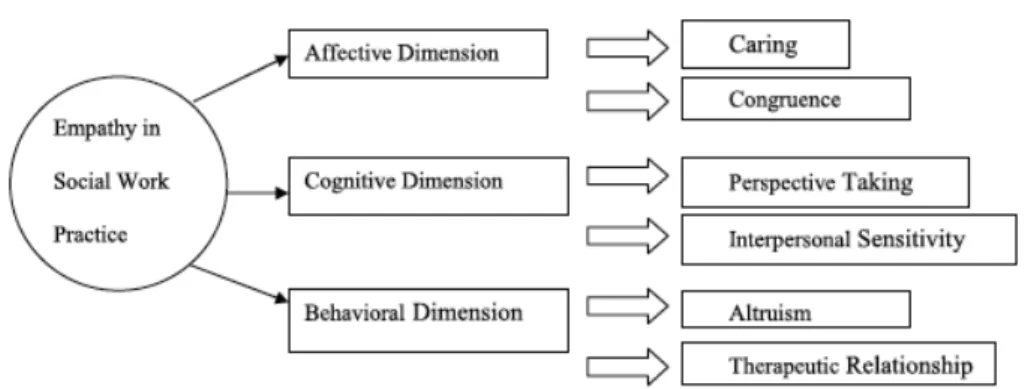
Figure 1 The structure of Empathy (King, 2011)………36
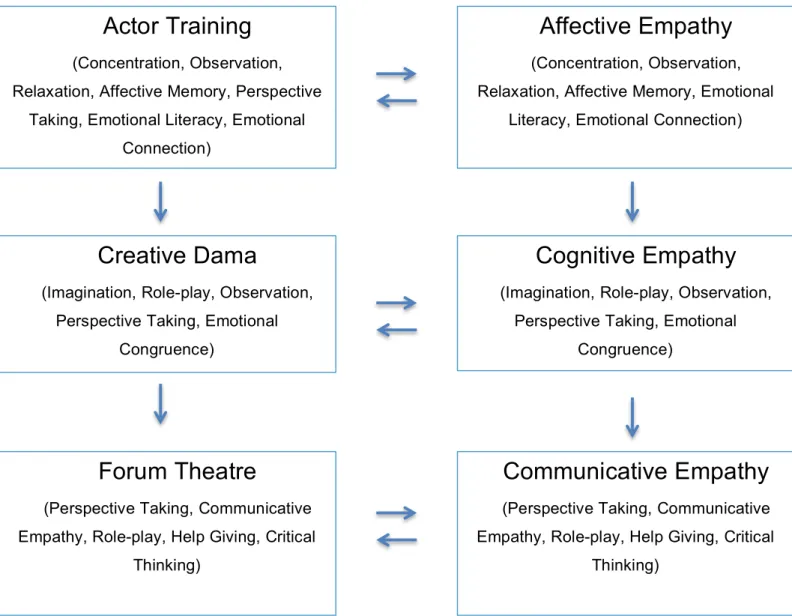
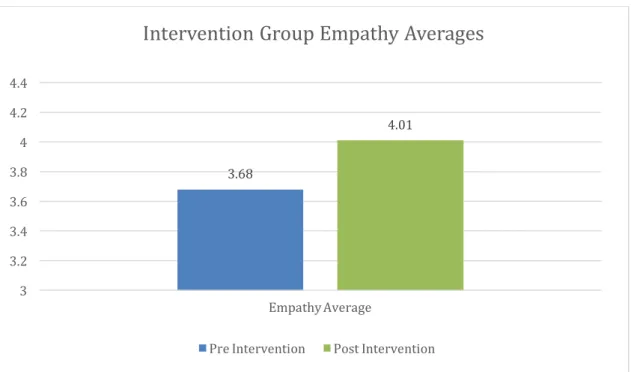
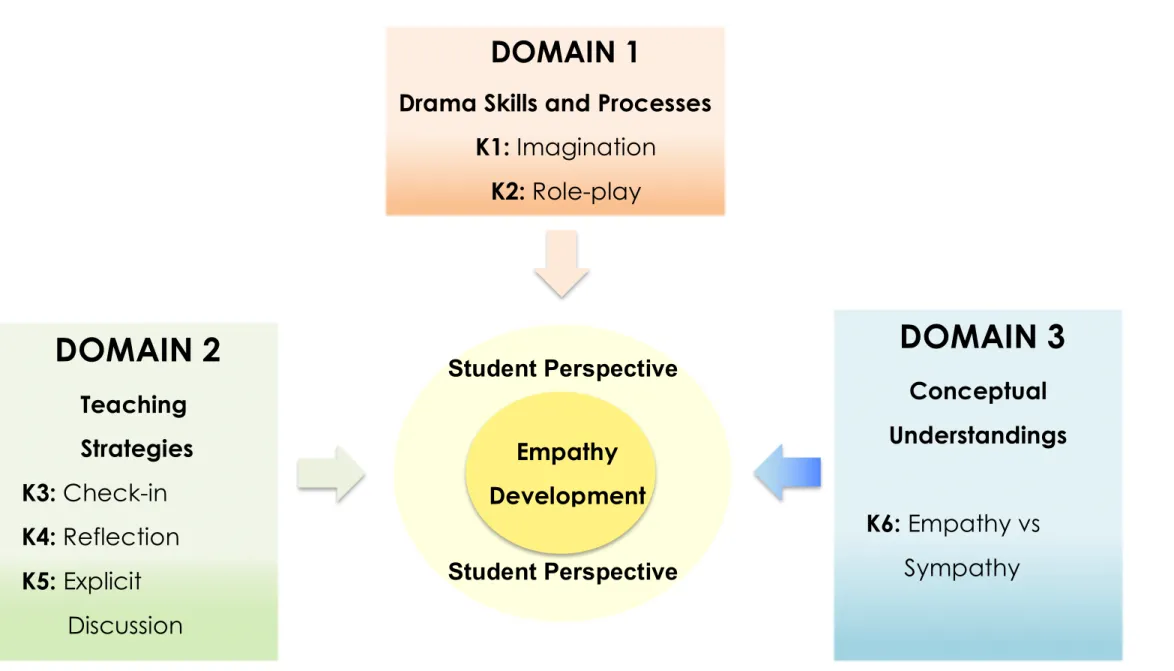
Figure 2 Theoretical Construct for a Drama Based Education Program….43 Figure 3 Intervention Group Empathy Averages.………...………...54
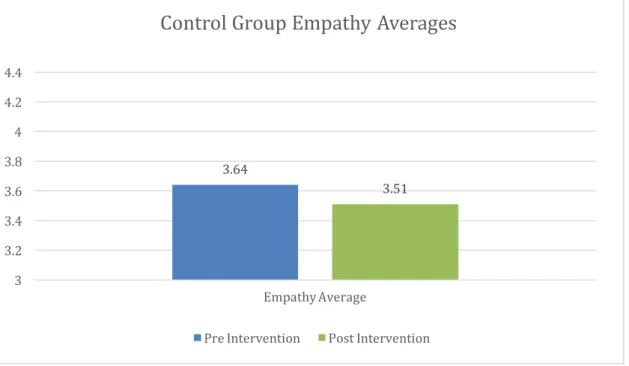
Figure 4 Control Group Empathy Averages………...………...55
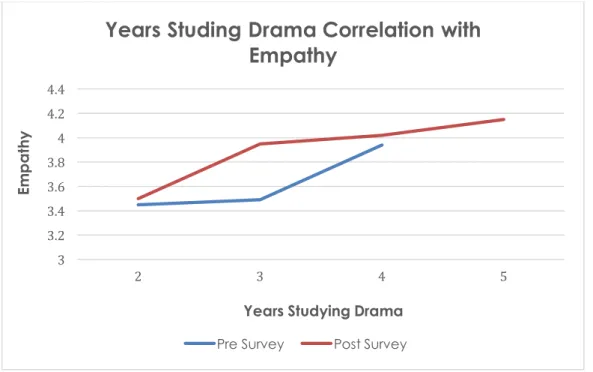
Figure 5 Years Studying Drama………57
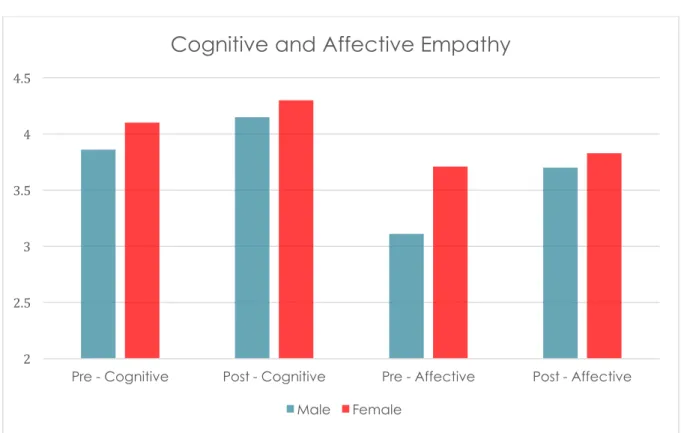
Figure 6 Cognitive and Affective Empathy……….58
Chapter 1 - Introduction
The purpose of this study was to assess the potential for a drama-based program, The Empathy Program, to develop empathy in Year 10 students through the use of Actor Training, Creative Drama and Forum Theatre processes. Literature highlights the potential for drama processes to support adolescents in their development of social and emotional skills, including empathy (Deasey, 2002; Eriksson, Heggstad, Heggstad, & Cziboly, 2014; Fiske, 1999; Goldstein, 1985; Hammer, 2001; Kalliopuska, 1992; Okoronkwo, 2011; Sinclair, 2011; Terret, 2013; Waite & Rees, 2014). Through an analysis of core components of empathy, relational links can be drawn between empathy and drama processes, informing effective pedagogy in developing empathy in adolescents.
Empathy is meaningful as it can have a significant impact on situational and dispositional pro-social behaviour in adolescents (Barrio, Aluja, & Garcia, 2004; Dolby, 2014; Hay, 1994; Kalliopuska & Tiitinen, 1991; Sherman, 1998; Strayer, 1987). It is a social phenomenon that is complex, being made up of distinct parts, classified by literature in many different ways. Empathy is positively related to moral development, being an “essential component of adequate moral development” (Strayer, 1987, p. 220) that “is an intrinsic good, constitutive of the perfection of the species” (Sherman, 1998, p. 90); whereas empathy is negatively related to bullying behaviour, aggression, and
victimisation (Geng, Xia, & Qin, 2012; Jollife & Farrington, 2006; Salmon, 2003; Waal, 2007).
Chapter Overview
In this introductory chapter, a contextual basis for empathy in education is presented. The current field of drama education is introduced and contemporary thought on empathy as a phenomenon is discussed. This is followed with an overview of key links existing between drama process and the phenomenon of empathy, which forms the basis of this research project. Finally, the two research questions that guide the study are presented.
Why Empathy?
In the opening line of the Organisation for Economic Co-operation and Development’s (OECD) The Future of Education Skills: Education 2030, the Director of Education and Skills writes “We are facing unprecedented challenges – social, economic and environmental” (Organisation for
Economic Cooperation and Development, 2018, p. 2). This opening statement reflects a growing sentiment amongst education organisations and
researchers that, in a world of rapid technological growth our educational systems need to prepare students for an ever-changing future. To achieve this, the OECD report proposes “…students will need to develop curiosity,
imagination, resilience and self-regulation; they will need to respect and appreciate the ideas, perspectives and values of others…” (2018, p. 2). Empathy rests as a central tool within these skill sets and emerges as an essential skill for success in the future.
With current Year 1 students graduating in 2030, our education systems must adapt to prepare students for a new and changing world. In reflecting on success, Professor Thomas Hoerr proposes “Our students need to be prepared to succeed in life—and an important piece of that is the ability to work with and appreciate others” (Hoerr, 2018, p. 86), emphasising the
importance of empathy. This sentiment is echoed in an article published by the Centre for Creative Leadership, with their research suggesting that
“…empathic emotion plays an important role in creating this paternalistic climate of support and protection to promote successful job performance in these high power-distance cultures (Gentry, Weber, & Sadri, 2016, p. 4). In their research on empathy in leadership, Genrty, Weber and Sadri found that “empathic emotion as rated from the leader’s subordinates positively predicts job performance ratings from the leader’s boss” (2016, p. 4). Complimentary to this research on job performance and leadership, Kolko suggests that empathy is fundamental in creating efficacious products, proposing that “In the world of design-led product innovation, pursuit of empathy is the key to success (Kolko, 2014, p. 1).
The corporate world is calling out for employees and graduates that are able to connect with others, build positive relationships, use their imagination and understand those that are different to themselves. Within secondary
education, this need is starting to be met. In his review of existing Social Emotional Learning programs for adolescents, Yeager found that
“…adolescents especially need social emotional help” and that “social emotional learning programs can transform adolescents’ lives for the better” (Yeager, 2017, p. 78). In his meta-analysis, Yeager highlights that programs which focus on creating opportunities for building new perspectives and exploring alternative mindsets were the most effective in creating change. The Empathy Program focuses on the potential that exists within drama practice to develop these prosocial skills in the form of empathy.
The importance of empathy in future graduates is well articulated
across a variety of industries. The question of how we best achieve this learning within a Western Australian high school context still remains, and therefore drives the focus of this research.
Drama in Schools
Trends within drama education pedagogy have ebbed and flowed between approaches that favour different elements and outcomes of the subject. Arguments are made for a ‘Product Drama’ approach that focuses on the creation of theatre works (Foreman, 1999) and a ‘Process Drama’ approach that explores the potential of the subject to teach through creative play and imagination-powered processes (Bolton, 2007). Sitting outside of pedagogical assumptions of drama practitioners exists a wider framework of educational goals and epistemological debate on the purpose of education as an industry.
Contemporary education discourse has recently seen a focus on wellbeing and social emotional learning taking a more prolific role within educational structures. This has been reflected in influential publications such as the Melbourne Declaration of Educational Goals for Young Australians (2008), highlighting the goal of “creating confident and creative individuals” (p. 8) as well as “active and informed citizens” (p. 9). The Australian National Curriculum saw the introduction of the General Capabilities which, although not mandated to be taught, places a focus on social emotional education of Australian students alongside their academic development. Additionally, the ‘Through Growth to Achievement Report’ (Department of Education and Training, 2018) (more colloquially known as Gonski 2.0) proposes a greater
implementation of the General Capabilities and the importance of
personalised learning. Indeed, the role education systems and institutions have to play in the development of these foundational skills amongst adolescents is growing.
Empathy is one aspect of social emotional education that may prove to have a positive influence on students’ general capabilities. Current literature explores how empathy can be developed within a variety of contexts,
reflecting the plasticity of the brain and potential for social emotional learning growth on a neurological level (Krznaric, 2015). The majority of current research in empathy development exists within medical and nursing fields, focusing on university students and early childhood students and how skills of empathy can be included in their training. Within this body of knowledge are programs and research interventions that have explored the role that acting and role-play have on the development of empathy within participants. These fields of research supported further investigation into the role that drama education, as a subject for adolescents, could play in the development of their empathy.
Empathy as a phenomenon
Positive benefits of empathy are widely documented within current literature as empathy has seen a recent spike in popularity within the current zeitgeist. The phenomenon itself is based in evolutionary dispositions but has strong contemporary benefits for human adolescents, beyond essential evolutionary traits.
Strayer (1987) suggests that empathy is an essential component of adequate moral development and Kalliopuska (1992) highlights benefits for the self, observing that empathy correlates positively with mental health and positive self-esteem. The skill of empathy is thought to reach its full
development in late adolescence and it is potentially beneficial to be taught early in formative education (Deloney & Graham, 2002; Hoffman, 2001; Marcus, 1999). Empathy helps adolescents establish and maintain friendships (Barrio, Aluja & Garcia, 2004; Hay, 1994), playing an essential role in social functioning and competence (Sallquist, Eisenberg, Spinrad, Eggum, &
Gaertner, 2009; Yoo, Feng, & Day, 2013). This social functioning also supports adolescents’ family relations (Guerney, 1988) and supports young people in their interactions with adults (Geng et al., 2012; Jollife & Farrington, 2004).
The practice of empathising with another has three main domains: affective, cognitive and communicative empathy (Gery, Miljkovitch, Berthoz, & Soussignan, 2009). These domains are activated concurrently to support the practice of empathy (Stueber, 2013). For the purpose of this study, the
researcher worked within a three-factor model of cognitive, affective and behavioural empathy (King, 2011), as it allows a distinction between internal (affective and cognitive) and external (behavioural) components (King, 2011). The three-factor model includes the third domain of the phenomenon, making it a more inclusive and detailed model to inform the processes of The Empathy Program. The breakdown of domains is in line with Singer and Lamm’s model, stating that empathy begins with “…affect sharing, followed by understanding the other person’s feelings, which then motivates other-related concern and finally engagement in helping behaviour” (Singer & Lamm, 2009, p. 84). Each domain of the empathic process can be linked to drama processes of
Creative Drama, Actor Training and Forum Theatre, forming the theoretical base of The Empathy Program developed in this study.
Drama Processes
The Empathy Program employs approaches in Creative Drama from Dorothy Heathcote (Heathcote, Johnson, & O'Neill, 1990) and Cecily O’Neil (O'Neill, 1995). Actor Training practices from Constantine Stanislavski and Michael Chekhov (Carnicke, 2010), as well as Forum Theatre techniques developed by Augusto Boal (Boal, 1979).
The core set of skills and processes explored within The Empathy Program to develop affective empathy are that of Creative Drama, the
process of imaginative play. Creative Drama acknowledges the power of play and the natural instinct within people to explore through play. Creative Drama focuses on functional pedagogy and active role-play (Okoronkwo, 2011) that is inherently student-centred and engages imaginative transformation.
Complimentary to these drama processes, the second element of The Empathy Program rests on teachings of acting theorist Constantine Stanislavski and his research in Actor Training. Concentration, focus, imagination, affective memory and physical action are key skills that Stanislavski’s system develops and relate directly to the skills required to engage in the empathic process (Goodwin & Deady, 2012).
The final element of The Empathy Program that was included in the intervention was that of Forum Theatre, an interactive problem-solving base theatre style developed by August Boal in Brazil. Forum Theatre’s pedagogy is influenced by Paulo Friere's dialogic philosophy of education, where
Rodríguez, Rich, Hasting, and Page (2006) suggest that, Boal's vision is
embodied in dramatic techniques that activate passive spectators to become spect-actors (engaged participants rehearsing strategies for personal and social change).
Whilst a myriad of drama skills and processes exist, many with
correlation to the empathic process, selected topics where chosen for their strong correlation to each individual stage of the empathic process. They were also chosen for their commonality within drama pedagogy, and current trends in curriculum development.
Drama as a Pedagogy for Empathy
Existing literature supports the use of these key practitioners in contemporary drama classroom (Deasey, 2002; Eriksson et al., 2014; Fiske, 1999), highlighting many social and emotional benefits for adolescents.
Benefits of drama skills and processes have also been explored within a variety of research areas, highlighting the role they play in the development of
empathy. Commonalities that exist between medicine and nursing research, along with psychology and early childhood education, in the area of
connections between drama and empathy again highlight the potential for drama to increase student empathy (Chatterjee, Ravikumar, Singh, Chauhan, & Goel, 2017; Decety & Meyer, 2008; Hojat, Vergare, Maxwell, Brainard,
Herrine, Isenberg, Veloski, & Gonnella, 2009; Mood, 2018). These existent connections between the two fields supported the basis for this study and guided the development of The Empathy Program curriculum. (Hojat, et al., 2009).
Research Methodologies
This study adopted a design research, mixed-methods methodology within a social constructivist ontology, by implementing a 10-week drama program intervention with Year 10 students from a local Perth high school, Autumn Hills College (pseudonym). The study collected quantitative data in
the form of pre-test post-test participant self-response surveys, as well as qualitative data in the form of weekly participant journals.
The design research method informed the creation and evaluation of the drama-based intervention, the ‘Empathy Program’, that was the focus of this study. Collecting both qualitative and quantitative data, the study was able to present a detailed empirically based review of curriculum generated and propose how drama can be better used as a tool for the development of empathy amongst adolescent students.
Researcher Profile
The profile of the researcher is relevant for the framing of this study, due to the active role they played in delivering the intervention to participants. The researcher for this project is a high school drama teacher with a background in theatre in education program management and theatre production. The researcher has had the privilege of teaching classes and workshops in a large variety of schools across Western Australia, focusing on social emotional learning. The body of this work was focused on a reactive strategy in response to social issues faced by school communities, such as bullying behaviour, substance abuse, domestic violence and racism. The researcher used theatre as a medium to explore these issues with adolescents, aiming to develop positive strategies to combat them. Through this work, the researcher’s focus on empathy emerged. Through gaining a unique perspective on the types of challenges that young people in the twenty-first century are facing, the researcher was able to identify an empathy deficit. The role that empathy could play in empowering the adolescents to combat these challenges emerged from the work.
The role of the researcher within this study was as the facilitator of the intervention. The participants’ classroom teacher was present during the delivery of the intervention yet the researcher was the instructor in the room. It is important to acknowledge the function of the researcher in this project due to the essential role that student-teacher relationships play in developing safe learning environments. This notion of safety emerged in the results of the intervention and is credited in part to the practices established by the
an intervention of the same content led by the classroom teacher, would most likely have yielded different results.
Significance of the Research
Limited research currently exists that identifies a correlation between the empathic process and drama processes, in particular for adolescents. This study addresses this deficit by focusing on ways drama can best be utilised to improve empathy amongst adolescents. Through this, the study has supported evidence that exists to promote drama as a useful tool in the development of social emotional skills within high school students. The study also highlights key areas of drama and empathy research that could be considered in the future to extend existing knowledge within this field.
This research provides critical and empirically based information that provokes much needed discourse around primary learning objectives of drama as a high school subject. The quantitative data was able to present a robust argument for the potential of the subject, and the process explored directly within the study, to be implemented as tools for the improvement of adolescent empathy. The qualitative data uniquely presents an authentic student voice of reflection on how adolescents participate in drama and the pedagogical structures that supported their learning. The study proposes six elements for consideration as pivotal components of The Empathy Program that should be implemented within future interventions, generating a starting point or framework for best practice in this important field of education.
Research Questions
The study will address the following research questions in order to determine the potential of The Empathy Program, to improve empathy amongst adolescents:
1. Does the application of Actor Training, Creative Drama, and Forum Theatre increase the development of empathy in adolescents?
2. What do adolescent participants identify as the key experiences of The Empathy Program? Which were most beneficial to their development of empathy?
Thesis Overview
Chapter One has provided a rationale for the current study. The rationale highlighted the importance of social emotional learning within a drama context and a correlation that exits between drama pedagogy and the empathic process. The chapter positions the research within contemporary practice in drama education and details where the genesis for the hypothesis emerged. The research questions were presented and the significance of the research was explained. Finally, the identity of the researcher is discussed and the role this has on the research project was explained.
Chapter Two reviews relevant literature pertaining to central ideas of the study. Two main areas of research that guide the study are presented: empathy education and development and contemporary drama pedagogy. Correlations between the two bodies of literature are highlighted and form the basis of the theoretical underpinnings of The Empathy Program research
project.
Chapter Three presents the research design used to shape the research project and answer the research questions. The social constructivist
philosophical framework is discussed as well as the mixed-methods
methodology. The data analysis is also presented, including quantitative self-response pre- and post-survey, as well as qualitative reflection journals. The chapter concludes by detailing the procedure that was undertaken to complete the research project.
Chapter Four outlines data collected from the quantitative and qualitative phases. Quantitative data is discussed first, identifying results relating to the first research question regarding increases in participant empathy. Then qualitative data is presented through the structure of six key themes that emerged from the data, in response to the second research question.
Chapter Five positions the results within the current body of literature. Quantitative data is discussed first, with a focus on the effectiveness of The Empathy Program. This is followed by a discussion of the qualitative data which is again structured according to the six key themes that emerged through coding of the data.
Chapter Six is the final chapter and presents a summary of key findings from The Empathy Program. Implications for future practice are presented, limitations of the study outlined and finally, recommendations for further research are presented.
Chapter 2 - Literature Review
Empathy
Empathy first emerged in Western literature as a translation of the German word ‘einfilhlung’, which suggests the word means “literally to feel one’s way into another” (Sherman, 1998, p. 90), emerging at the turn of the twentieth century within the psychological literature (Sherman, 1998). The term ‘einfilhlung’ was coined by Robert Fischer in reference to experiencing art, later translated into English by Edward Titchener (Verducci, 2000). Since then, the term has been defined by a number of leading experts in diverse fields. Tichener, for example, explores the original Greek root, empatia, whose adjectival form means to be deeply affected by a thing (Verducci, 2000). Carkhuff’s visual description suggests empathy is the act of “crawling inside another person’s skin and seeing the world through his/her eyes” (1969, p. 57), which highlights empathy’s strong relationship to the drama processes
explored in this study which are driven by perspective-taking. This definition led towards a more contemporary understanding suggested by Corradini and Antonietti (2013), stating that empathy is the act of figure[ing] out the propositional attitudes that are at the basis of another’s deciding, planning, and acting.
There are various models of empathy debated in the literature (Corradini & Antonietti, 2013; Feshbach & Lipian, 1987; Gery, Miljkovitch, Berthoz, & Soussignan, 2009; Gilet, Studer, Grühn, & Labouvie-Vief, 2013;
Chapter Overview
This chapter reviews existing literature that relates to areas of research explored in this study, aiming to position The Empathy Program within contemporary practice. Due to limited research that currently exists focusing on the specific area of empathy development using drama processes for adolescent participants, a wider scope of literature was reviewed. This includes disciplines where empathy development amongst participants was set as a goal of the research intervention. As such,
medicine, nursing, psychology and early childhood education research was reviewed, as well as adolescent education studies.
Holmgren, Eisenberg, & Fabes, 1998; Jabbi, Swart, & Keysers, 2007; Jollife & Farrington, 2004). Empathy was previously defined in both affective, the ability to comprehend the emotions of others (Bryant, 1982), and cognitive elements; observation and mental processing (Rogers, 1957). Researchers identified a distinct separation between the phenomena of sympathy and empathy, towards a continual segmentation of key elements of empathy. Patterson (1974) extended on work defined in previous literature highlighting the four components of empathy as the moral component, the cognitive component, the communicative component and the relational domains. Whereas,
Kalliopuska (1990) proposed an alternate set of domains, highlighting a focus on affective, motivational, cognitive, and kinaesthetic domains.
The literature explores two-factor models and three-factor models which have been the basis for understanding the complexities of the construct and tools for measuring a person’s ability to experience, and act with
empathy in this study. Much knowledge has been gained about empathy as a phenomenon through the implementation of these definitions. However,
understanding the complexity of empathy as a phenomenon is imperative to develop effective empathy improvement programs.
For the purpose of this review, the three-factor model of cognitive, affective and behavioural empathy (King, 2011) will be utilised, as it allows a distinction between internal (affective and cognitive) and external
(behavioural) domains (King, 2011). The three-factor model includes the third domain of the phenomenon, making it a more inclusive and detailed model to inform the discussion. The breakdown of domains is in line with the model presented by Singer and Lamm (2009) stating that empathy begins with
“…affect sharing, followed by understanding the other person’s feelings, which then motivates other-related concern and finally engagement in helping behaviour” (Singer & Lamm, 2009, p. 84). Empathy is a distinctively different phenomenon to sympathy, empathic concern and compassion (Jabbi et al., 2007; Kalliopuska 1992; Singer & Lamm, 2009; Stueber, 2007). Sympathy, empathic concern and compassion are actions of the affective domain, whereas empathy also requires actions of the cognitive domain and communicative function.
Cognitive and Affective Empathy.Empathy can no longer be viewed in recent literature as a unitary component, but rather a multifaceted
phenomenon (Decety & Meyer, 2008); an understanding of individual domains is required to better understand the construct. The primary drive of empathy is the affective domain, which allows a person “…the ability to comprehend the emotions of others” (Bryant, 1982, p. 420) and “the ability to feel and read mental states of others” (Overgaauw, Güroğlu, Rieffe, & Crone, 2014, p. 213). Mazza and colleagues suggest an important element of ‘resonance’ of another’s feelings in affective empathy, whilst still recognising distinct
separation between personal emotion and that of others (Mazza et al., 2014). Affective empathy is a central domain of the process of empathy, which is driven by cognitive empathy.
Cognitive function of the phenomena is the ability to understand these emotions and reason about affective states (Overgaauw et al., 2014), which requires complex cognitive functions, including perspective taking and
mentalising (Shamay-Tsoory, 2011; Zaki & Ochsner, 2012). Mezza et al. suggests that cognitive function is “the ability to understand what others are thinking or feeling, without necessarily ‘resonating’ with that feeling state” (Mazza et al., 2014, p. 791), and Blair (2005) proposes that the cognitive function is essential and closely related to the communicative and help-giving functions of the phenomena. These definitions of the cognitive function suggest that the phenomenon of empathy requires all of its three functions to lead towards positive behaviour.
The two key domains of affective and cognitive empathy are distinct from each other and function in different capacities with the practice of empathy. For example, adolescents with Autism-Spectrum Disorder, show a very low level of cognitive empathy but demonstrate a strong level of
affective empathy (levels differed depending on the type of emotion; positive or negative) (Mazza et al., 2014). Adolescents who are perpetrators of bullying behaviour often have high levels of cognitive empathy (their ability to
understand their target’s emotions) but have reduced affective empathy, removing the understanding of consequence of their behaviour (Jabbi et al., 2007). Another example of this split skill set between affective and cognitive empathy is found in prisoners. Wastell, Cairns, and Haywood’s (2009) study in
New South Wales assessed the effectiveness of empathy training with prisoners convicted of child molestation. The prisoners involved in the program recorded an increase in cognitive empathy but still failed to recognise affects such as terror and fear in others, destabilising their empathic process (Wastell et al., 2009). This distinction of an unbalanced level of affective and cognitive empathy, emphasises the need for intervention and measurement tools that are specifically targeted for both domains.
Communicative Empathy.The third domain of the process of empathy is communicative empathy, the practical domain of the process that is
tangible. Communicative empathy is behaviour and action taken in response to the understanding gained about another’s emotional state from the
cognitive and affective processes. This behavioural domain of the empathic process involves functions such as ‘empathic listening’ (Gery et al., 2009; Jollife & Farrington, 2004), empathic responding (Lubusko, 1996), relational empathy (Patterson, 1974) and kinaesthetic empathy (Kalliopuska, 1990). These
processes allow a person to respond in accordance with others’ emotional states. The response generated by these processes is not necessarily positive, whereas Mason (2014) suggests inaction and even targeted cruelty aimed at exacerbating a victim’s distress are also possible reactions. It is when both cognitive and affective domains are involved in the process of informing empathic responses, will the actions have an altruistic quality (Geng, Xia, & Qin, 2012).
King (2011) proposes that this third domain of the empathic process, which is viewed as the expression of empathy to another, is outwardly directed and demonstrates “functional aspects of the concept and its concrete
applications within helping relationships” (p. 690). This communicative empathy is reflective of altruism, which has been defined as a behavioural indicator of empathy (Cialdini, Brown, Lewis, Luce, & Neurberg, 1997), which acts as a behavioural vehicle for the direct expression of empathy (King, 2011).
As is evident through the analysis above, a myriad of definitions exist for the phenomenon of empathy. Whilst some models have been disproven, the literature presents a variety of models that use different language to address the key domains of empathy. Unlike other models, the selected breakdown of empathy into three domains provides a simple scaffold for which the
intervention can be based upon and linked to drama processes. King’s model provides an empirically based, yet simple structure for the adolescent
participants to engage with and develop a practical understanding of the phenomenon. Finally, the model.
Measures of Empathy
The construct of empathy is complex and multifaceted (Corradini & Antonietti, 2013; Stueber, 2011) which makes the task of quantifying a person’s ability to empathise a difficult task. Literature highlights several key measures or scales of empathy that have been created, critiqued and changed over several decades. Psychologist Robert Hogan is credited with developing one of the first empirically supported systems to measure empathy, the Hogan Empathy Scale (Hogan, 1969).
Each scale gives a clear insight into key domains of the construct and behaviours linked to the process. Other notable scales found in the literature is the ‘Questionnaire Measure of Emotional Empathy’ generated by Mehrabian and Epstein (1972), as well as the ‘Interpersonal Reactivity Index’ built by Davis (1980). Also utilised within more current academic studies is the Jefferson Scale of Empathy, which focuses on the health care sector. A more contemporary scale, the Basic Empathy Scale (Jolliffe & Farrington, 2006), was developed out of critique of the aforementioned scales (Andreasson & Dimberg, 2008; Geng et al., 2012; Jolliffe & Farrington, 2006). A critique of previous scales informed rigorous testing of the validity of the Basic Empathy Scale, including a more detailed definition of empathy.
Hogan Empathy Scale. The Hogan Empathy Scale was developed by Robert Hogan in 1969 (Hogan, 1969) and focused on the measurement of what Hogan described as “…the intellectual and imaginative apprehension of another’s state or condition without actually experiencing that person’s
feelings” (Hogan, 1969). The scale has been analysed through a myriad of validity and reliability studies that suggest mixed results. No subscales were considered within the Hogan Empathy Scale and the differentiation between affective and cognitive domains of empathy is therefore not recorded.
Questionnaire Measure of Emotional Empathy. The Questionnaire Measure of Emotional Empathy was developed by Merhabian and Epstein (Mehrabian & Epstein, 1972) which focused on quantifying the phenomenon
of “…a vicarious emotional response to the perceived emotional experiences of others” (Mehrabian & Epstein, 1972). The 33-item questionnaire focuses on responses to situational empathy whereby the target of the empathic
behaviour is present in the situation.
Interpersonal Reactivity Scale. The Interpersonal Reactivity Scale was developed by Davis (Davis, 1980) and aimed to measure both affective and cognitive empathy as a response to the lack of reliability in existing measures. The Interpersonal Reactivity Scale is divided into four subsections; perspective-taking, fantasy, empathic concern and personal distress. The model
developed by Davis considers the notion of sympathy in line with empathy, not identifying the differences that exist within these two phenomena.
Jefferson Scale of Empathy. The Jefferson Scale of Empathy (JSE) is a widely used instrument to measure empathy of participants in health care and medical studies. The Jefferson Scale, similar to the BES, is a twenty-item scale designed to measure empathy in health-care professionals. The scale has been translated into 56 different languages and utilised in a myriad of studies with confirmatory factor analysis having been completed to support the validity of the model (Ferreira-Valente, et al., 2016; Montanari, et al., 2015; Williams, Brown, Boyle, & Dousek, 13).
Basic Empathy Scale.The Basic Empathy Scale presents a measure of empathy that is most current, with their validity supported by confirmatory factor analysis (Andreasson & Dimberg, 2008; Geng et al., 2012; Jolliffe & Farrington, 2006; Vossen, Piotnowski, & Valkenburg, 2015). The Basic Empathy Scale was developed by Joliffe and Farrington (2006), who employed the definition of empathy from Cohen and Strayer (1996) “as the understanding and sharing in another's emotional state or context” (p. 523), which allows for a focus on both affective and cognitive empathy. The Basic Empathy Scale generated items that have clear and unambiguous wording on distinct
emotions felt by the responder, to ensure an overlap with sympathy is avoided. Items used are based on four of the five basic emotions (happiness, fear, anger, sadness) (Jolliffe & Farrington, 2006), which created forty items with participants responding on Likert scale from one to five (Jolliffe & Farrington, 2006).
The scale was, using factor analysis, reduced to a 20-item scale that aimed to measure affective and cognitive empathy. The scale was then tested through confirmatory factor analysis in a study with adolescents (n = 357), which recorded positive relationships between empathy and
intelligence, extraversion along with openness. The study also concurred that students that reported helping victims of bullying, had higher levels of empathy (Jolliffe & Farrington, 2006). The scale’s validity has been tested several times in the literature and recorded high validity and reliability in most cases.
Analysis of the existing definitions of empathy combined with the selection of the most appropriate measures of empathy positions the study’s focus on the specific pro-social behaviours that will be examined. Having identified a position from which the study will view empathic behaviour, the need for these behaviours must be examined.
Socio-political call for Empathy
Empathy as a phenomenon is on the decline; or as former American President Barack Obama labelled it ‘an empathy deficit’ (Obama, 2006). The claim made by the then senator has been supported by a variety of research (Konrath, Chopik, Hsing, & O’Brien, 2014; Schumann, Zaki, & Dweck, 2014; Twenge, Campbell, & Freeman, 2012) identifying a decline in the prevalence of empathic behaviour in contemporary society. Conversely, current literature cites a growth in narcissistic behaviours (Krznaric, 2015). This shift in phenomena can be reflected in events such as the ever-growing wealth gap in Australia (Tapper & Fenna, 2018), rise of nationalism in international politics (Krznaric, 2015), the continuation of domestic and family violence crime (Australian Institute of Health and Welfare, 2018), and highly partisan domestic political landscapes.
In response to these the challenging shifts in public sentiment, educators across the globe are identifying a need to teach skills that breed connectivity and compassion. Grassroots initiatives have emerged in the literature, such as a school principal in Baltimore, US, who developed a “community citizenship course” (Bowie, 2017, p. 1) teaching empathy in response to her students starting a ‘Kool Kids Klub’ intent on ostracising African American students. On the other end of the scale there are well researched and established
Canada, teaching empathy is schools. This focuses on the relationship between a class of primary school students and a new born baby (Santos, Chartier, Whalen, Chateau, & Boyd, 2011).
Within the Australian context, schools are seeking to address these areas of need through implementation of curriculum such as the General Capabilities of the Australian Curriculum. Whilst this provides an official
recognition for the implementation of empathy education within a high school context, the peripheral nature of the capabilities fails to create effective and consistent curriculum. The programs or initiatives focused on the development of empathy within a school context provide evidence of the possibility of change, however limited research exists that is empirically-based and specifically designed for adolescents.
The majority of literature around empathy education comes from nursing and medical research, targeted towards tertiary students. Whilst a university setting provides opportunities for profession-specific empathy
training, high school presents a chance to increase situation and dispositional empathy at a time of significant emotional development for adolescents.
Why Adolescents?
The focus of this research is placed within a high school context,
working with participants that are fifteen to sixteen years of age. Whilst there is a multitude of social emotional learning programs that are targeted towards elementary school students, adolescence is a time a significant change and thus requires targeted learning.
Tan, Sinha, Shin and Wang, in their research on social learning needs amongst high school students, state that “Transitioning into high school involves rich socio-emotional experiences resulting in social-self and identity
development” (Tan, Sinha, Shin, & Wang, 2018, p. 217), which is a crucial time in a person’s development. The changes in learning environment, hormonal shifts due to puberty and ongoing brain development of adolescents
highlights that social emotional learning specific to adolescents is required to prevent what Yeager terms ‘disastrous outcome’ (2017) from their high school career.
The adolescent brain is subject to greater affective consequences of social isolation, ostracism and peer conflict, than that of an adult (Sebastian,
Viding, Williams, & Blakemore, 2010). Coupling this with the significant role that the adolescence period plays in developing our social emotional capabilities as an adult (Blakemore & Mills, 2014), we can see that being an adolescent is both a sensitive and pivotal time. As such, delivering effective and engaging social emotional learning for adolescents can play an essential role in
developing positive and capable adults. The point of targeted programming for adolescents is an essential consideration in the development of social emotional curriculum. Whilst the neurological and physiological changes that occur during adolescence provide a positive opportunity for social learning, they demand unique teaching and engagement strategies to be effective for adolescent participants.
To be considered is the ‘problematisation’ of the adolescent
development period that results from the emerging focus on social emotional interventions. The expanding need for a sense of independence that arises during the adolescent phase, presents a particular challenge for educators when attempting to ‘fix’ or ‘change behaviour’ of adolescent participants. In reviews on effective intervention programs, Yeager noted that programs that work well with children, often have a poor track record with adolescents, whilst effective programs for teenagers focus on mindset and ensure the participants feel respected by adults.
With many challenges to face, and many skills to develop, adolescents arguably have a great need for social emotional learning. One essential skill within this framework that supports adolescents to manage the social
challenges they face, is empathy.
Empathy and its Benefits for Adolescents
Empathy is a term often listed amongst essential positive social traits, as there are strong empirical relations between pro-social behaviour and
empathy (Batson, Fultz, & Schoenrade, 1987). Empathy has strong evolutionary benefits, seen across mammalian evolution, where females who responded to their offspring’s needs out-reproduced those who were cold and distant (Waal, 2007). Mason (2014) infers that the communication of affective and emotional states between individuals is essential to social cohesion, citing a seminal work by Harry Harlow in the 1950s, proving that mammals raised “with diminished social contact became fearful, anxious adults with impaired social
and parenting skills” (Kanari, Kikusui, Takeuchi, & Mori, 2005, p. 47). The
empathic process has strong contemporary benefits for human adolescents, beyond its essential evolutionary traits.
The skill of empathy is thought to reach its full development in late adolescence and it is potentially beneficial to be taught early in formative education (Deloney & Graham, 2002; Hoffman, 2001; Marcus, 1999). Empathy helps adolescents establish and maintain friendships (Barrio, Aluja & Garcia, 2004; Hay, 1994), playing an essential role in social functioning and
competence (Sallquist, Eisenberg, Spinrad, Eggum, & Gaertner, 2009; Yoo, Feng, & Day, 2013). Waite and Rees (2014) highlight a key benefit of the process of empathy, proposing that empathy does increase our awareness of the ‘other’, supporting adolescents to socialise with those who are different. The majority of adolescence is spent in formal education, a system where one in four students are likely to be exposed to bullying behaviours from their peers. Empathy is negatively related to bullying behaviour (Geng et al., 2012; Gini, Albiero, Benelli, & Altoè, 2007; Jollife & Farrington, 2006; Miller & Eisenberg, 1988). Seminal research by Feshbach (1975) into empathy proposes a central model of combating social behaviour, finding that perpetrators of anti-social behaviour who comprehend negative emotional reactions (e.g. fear, distress) are less inclined to continue with these actions.
Research from Salmon (2003) into empathy highlighted that the
empathic process can prevent aggression and teach important interpersonal and work skills. Miller and Eisenberg (1988) suggest that empathy is negatively related to aggression and disruptive behaviour, and is a central process that informs adolescents’ decision-making process when presented with an opportunity to perpetrate anti-social behaviour. Conversely, higher levels of empathy are directly and positively related to active assistance of victims of bullying behaviour (Gini et al., 2007; Jollife & Farrington, 2004). In Geng, Xia, and Qin’s (2012) research, adolescents with a strong command of the affective and cognitive functions of empathy were more likely to intervene and demonstrate positive bystander behaviour. This prosocial, altruistic
behaviour from peers is an effective method of combating bullying behaviour in formal educational settings (Burton, 2010).
Research led by Dranoff and Dobrich (2003) into empathy, suggests that low levels of empathy increase a person’s risk of victimisation. Empathy plays a key role in socialisation, meaning that a failure to employ the process leaves an individual isolated and at a higher risk of becoming a victim of anti-social behaviour (Davis, 1994; Ding & Guo, 2010; Endresen & Olweus, 2001).
Empathy has a strong relationship with social capability meaning that adolescents can manipulate the process of cognitive empathy. Ding and Guo (2010) found in their research on secondary school student empathy, that perpetrators of bullying behaviour continue this behaviour when they feel no affective responses to their antisocial behaviour. The situation is common amongst adults as well, whereby only one of the empathic processes is engaged and an anti-social behaviour results. Joliffe and Farrington (2004) conducted a systematic review and meta-analysis of ‘Empathy and
Offending’ found that the relationship between low empathy and offending was relatively strong for violent offenders. Empathy has its most effective relationships with prosocial behaviour when cognitive, affective and
communicative factors are engaged, making them all essential in empathy development (Jolliffe & Farrington, 2004).
The literature also presents a critique of empathy as a desirable and moralistic phenomenon that should be striven to in all instances. Paul Bloom, proposes that “Empathy has serious limitations, particularly when it comes to moral decision-making in the modern world” (Bloom, 2017, p. 24), arguing for a much more reserved engagement with empathy. Bloom argues an even stronger critique of the phenomenon, suggesting that “…it can also spur cruel and irrational actions, including atrocities and war” (2017, p. 24). Prinz echoes these critiques, postulating an argument that empathy is not needed to make moral decisions. Bloom argues that instead of empathy being used as a tool to guide decision making, “a utilitarian cost–benefit calculus” (2017, p. 25) would be more effective. The critique presented against empathy rests on the
concept that it does not serve as an effective tool to make large moral decisions due to the innumerate and biased nature of the phenomenon. The examples presented to argue the position are built around moral dilemma, highlighting the difficulty in ‘feeling with someone’ when there are more than a few people affected by a choice, or when the victim is invisible. Whilst these
moral dilemmas prove challenging, they required complex decision-making skillsets, beyond that of just empathy. The positive benefits of empathy discussed above, focus on the role the phenomenon can play in individual relationships and connection building tasks. Whilst empathy isn’t the sole antithesis to immoral choices, it does provide an improved capacity to reduce conflict and seek positive relational outcomes within person to person conflict.
Pinker presents the analogy of a small child scared by a “yipping dog” and a man coming over to comfort the child. He suggests that the man can comfort the child through compassion and a desire to help without the need of empathy. However, when considering the domains of empathy, they are clearly at play within the scenario. Cognitive empathy provides the man the ability to read the physical cues of emotion (crying, shaking, calling for help, curling into a ball, backing away etc.) spurring him to provide help. His affective empathy allows those physical cues to be processed into an understanding of what the child is feeling (sadness, fear, isolation). Whilst, he himself is not scared, through the empathic process he is able to make a decision on how best to help the child – communicative empathy. Perhaps semantics becomes the point of argument, with Pinker proposing that compassion is the tool to inform behaviour, it can be argued that without empathy, compassion would not occur.
Whilst the critiques of empathy are arguably hyperbolic in the
connotation that empathy creates war, it does highlight the importance of other social emotional skills in making ‘good’ choices. Arguments could be presented that resilience, compassion, critical thinking or perhaps “utilitarian cost-benefit calculus” would be equally, if not more beneficial for young people becoming positive and productive citizens.
The myriad of pro-social behaviours that exist present a challenge for educators; what do we focus on and for how long do we focus on it?
Arguments could be made by proponents of the many skills required for pro-social behaviour, however this study has chosen to focus on empathy due to three key factors:
1. the overwhelming body of literature that highlights positive correlations between the level of empathy and pro-social behaviour;
2. the new challenges that adolescents face in this stage of development and their links to empathic behaviour; and
3. the strong correlation between drama process and the domains of empathy.
Developing Empathy with Drama
Empathy is a phenomenon that occurs naturally in varying capacities amongst adolescents but which can be improved through training of related skills. Literature on empathy training in the arts is limited, with most studies appearing in the field of medical science, focused on training of health care professionals. Another common focus for empathy development in the
literature is found in prison systems with offenders, aiming to reduce the rate of reoffending. Some literature (Goodwin & Deady, 2012; Hojat, Axelrod,
Spandorfer, & Mangione, 2013; Winkle, Fjortoft, & Hojat, 2012) has explored the role of social emotional learning amongst secondary school students including the importance of empathy. One study explored the role of drama
(specifically Actor Training) in developing empathy for medical students at university (Goodwin & Deady, 2012). Whilst another longitudinal study focused on Creative Drama and its negative relationship to covert bullying (Burton, 2010).
Hojat et al. (2013) conducted a study with a large class of medical students (n=248), exploring how drama processes, such as Actor Training and performance critique, can be utilised to develop empathy. Hojat et al.
engaged participants in two short interventions, utilising the Jefferson Scale of Empathy to collect data that showed statistically significant increases in
empathy amongst participants in both interventions, compared to those in the control group (Hojat et al, 2013). This result suggests that key practices to develop empathy amongst students included “interpersonal skills, exposure to role models, role-playing, shadowing a patient, hospitalization (or pseudo-hospitalization) experiences, studying literature and the arts, improving
narrative skills, watching theatrical performances or movies…” (p. 998). These skills and practices are essential elements of adolescent and secondary school drama programs, which suggest a link between drama practices and the development of empathy.
Role-play has been found to develop empathy in medical students (n=149) in a study conducted by Lim, Moriarty, and Huthwaite (2011). Their study engaged half of the students in ‘how to act in role’ training, with the other half used as a control group. The intervention group developed their empathy in self-reported measures as well as their competence in consultation skills, which were assessed in a practical exam (Lim et al., 2011). In another study, Magee and Hojat (2010) noted an increase in empathy for students who volunteered to build rocking chairs for their patients that were mothers of newborns.
Kleinsmitha et al. (2015) explored the potential of empathy
development for medical students, through the use of virtual patients. Their study also employed the Jefferson Scale of Empathy (Hojat, 2016) and recorded increases in empathy for students who participated in role-play based activities with the virtual patients. Kleinsmitha et al. found that role-play, communication skill building and repeated practice were key activities that supported the development of empathy amongst the medical students.
Similarly, Goodwin and Deady (2012) conducted a study into the role Actor Training can play in developing empathy amongst medical students. They proposed that an understanding of drama techniques and Actor Training practice can develop a medical practitioner’s understanding of the construct of empathy and how it can be used in their work (Goodwin & Deady, 2012). The study focused on the work of influential actor trainer Constantine
Stanislavski; breaking his system into two distinct parts, “work on the self and the work on the role” (2012, p. 128). Research highlights strong links between key elements of Stanislavski’s ‘System’ and the process of empathic
development, with specific interest on relaxation, concentration and affective memory (Goodwin & Deady, 2012). The study also investigated links between Stanislavski’s successors Lee Strasberg (1988) and Michael Chekhov (1953), demonstrating strong links between the process of an actor and the empathic process (Goodwin & Deady, 2012).
Wastell, Cairns and Haywood (2009) investigated developing empathy amongst sex offenders, which focused on group work and hot seating
improvisational techniques (an actor being interviewed as if they were their character). The researchers noted that empathy, along with self-awareness,
has been highlighted in literature as being central to reducing re-offending by sex offenders (Prentky, 1995; Ward, Keenan, & Hudson, 2000) and that
Cognitive Behavioural Therapy was a dominant paradigm in training practices. (Winton, 2005). The results indicated that many prisoners had low levels of affective empathy and struggled to recognise affects in other people (in particular, their victims) (Wastell, Cairns, & Haywood, 2009). The Normalisation, Education, Training and Treatment program at the Junne NSW Correctional Facility was the focus of the study, which employed theoretical bases from a wide array of sources including Prentky (1995) and Clair and Prendergast (1994) as well as the model of psychological change of Prochaska and Di Clemente (1992). This empathy program saw a substantial increase in empathy scores on the Empathy Scale for Adults (Feshbach & Lipian, 1987).
A seminal longitudinal study by Bruce Burton (2010) into covert bullying in Australian secondary schools examined the potential of Creative Drama and peer teaching in combating anti-social behaviour. The program utilised direct teaching about bullying, Forum Theatre practice (examined later in this review) and improvisation to develop pro-social behaviours and combat bullying behaviour. The program was implemented over several years, consistently adapting its practices to support the needs of the participants, and continually recorded strong negative relationships between participants in the program and bullying behaviour. Research by Burton highlights a link between Creative Drama practices and its role in developing pro-social behaviours, including empathy.
Current literature positions empathy as a phenomenon that is positively related to pro-social behaviour, as well as a social skill that can be developed in adolescents. The potential to improve the levels of empathy in adolescents, can be qualitatively and quantitatively measured, thus underscoring the opportunity for empathy-based education in secondary schools. Empathy accommodates strong links to the practice of drama education, that position the research to argue a drama-based education program has the potential to increase empathic practice amongst adolescent students.
Drama in Education
The purpose of Drama as a subject has been debated since its emergence as a subject at the end of the 19th Century (Bolton, 2007). Two
main schools of thought existed in the debate, one arguing that drama should be utilised to train actors and theatre makers by creating theatre works in school (commonly referred to as ‘Product Drama’) (Foreman, 1999). The other view was that drama should be used as a student directed form of learning to develop social and emotional skills, such as empathy through drama
processes (commonly referred to as ‘Process Drama’) (Heathcote, 1985). This disagreement of Drama’s aims as a subject still causes much contest amongst practitioners and policy makers.
Early drama education practitioners such as Winifred Ward (1884-1975), Viola Spolin (1906-1994) and John Dewey (1859-1952) have influenced the development of Drama as a formal subject studied in schools in Europe, American and Australia (Conrad, 2004) exploring its potential to teach a myriad of topics and skills. Amongst literature, some seminal studies and reviews stand out as key texts that reflect the body of knowledge regarding arts education and its benefits to students who participate in them.
One such study by Fiske, a prominent American education writer, compiled a seminal paper, ‘Champions of Change’ (1999) that culminated a selection of key studies proving the positive relationship between arts
education and academic success. The paper by Catterall, Chapleau, and Iwanaga (1999) is of particular interest to the current research, as it focuses on involvement in drama, along with music, and the learning that this can create. Catterall et al. (1999) postulate that, from their analysis of the National
Educational Longitudinal Survey sample of adolescents (n = 25,000), sustained involvement in drama can provide gains in reading proficiency, self-concept, motivation, and higher levels of empathy.
Richard Deasey developed a compendium, ‘Critical Links’ (2002), of 62 key studies in arts education and is a critical insight into the commonalities between disciplines, highlighting strong academic and social benefits for ‘arts-rich’ students. The 20 papers included in the drama section of the
compendium, present arguments for the myriad of benefits for adolescents participating in drama based programs; from academic and literacy skills to cognitive development and emotional fluency. Many of the studies and analyses reviewed in Deasey’s compendium focuses on academic benefits of drama participation, in particular literacy skills (oral, written and
comprehension). The large majority of studies focused on pre-adolescence, with early years education being the common focus. There is a notable lack of focus on the social, emotional and psychological learning that can be
generated by participation in drama.
Fink (1976) established an early study into the role of imaginative play in cognitive development, which prompted education academics to analyse potential learning gains from drama-based activities. The study focused on the cognitive functions of ‘conservation’ (attributes may remain constant, even when change occurs) and ‘perspectivism’ (sustained understanding of kinship in social situations), amongst kindergarten students (Fink, 1976). The results of Fink’s study suggest that coached imaginative play contributes to important social development in children (Deasey, 2002), and that increased skills in imagination can be taught through teacher directed imaginative play.
The ‘Reviewing Education and the Arts Project’ by Hetland and Winner (2001) is an extensive synthesis of 188 quantitative studies from the second half of the twentieth century, that look into academic benefits of the arts. The analysis of 80 texts related to drama-based education supported the position that a causal link was found between classroom drama (enacting texts) and a variety of verbal areas (oral understanding, verbal recall, oral language,
reading readiness, writing). Hetland and Winner (2001) suggest that arts-based programs are not guaranteed to improve academic ability, but highlight its potential to increase the required skills for academic achievement. Hetland and Winner (2001) proposed that researchers should continue to look for,