Technology (IJRASET)
Trembling Based First Aid Device for Heart attack
Karthik Raja.K1 Prabhakaran.K2 Suresh. D3Rajendiran.M 4 kalpanadevi.S 5 1,2,3
BE/ Third year, Department of EEE, Knowledge Institute of Technology, Salem, Tamil Nadu, India. 3
Asiststant Professor, Department of EEE, Knowledge Institute of Technology, Salem, Tamil Nadu, India. 5
Associate Professor, Department of EEE, Knowledge Institute of Technology, Salem, Tamil Nadu, India
Abstract: According to the world health organization census 92% of heart attack death occurs during the time of bringing the heart victims to the hospital. So far there is no other handheld first aid device existing for heart attack. This paper introduces a novel Electronic Aider which provides First Aid when a person is suffering from heart pain. Heart attack occurs when clots and fats blocks the blood flow in the narrowed artery. The device aims to create 150Hz controllable vibration which collapse the block temporarily in the blood vessels. Since, the tightly bonded block becomes loose, blood can flow through gaps and so pain decreases. Additionally, it has a compact defibrillator which can be used to provide electric shock safely when a person die unfortunately because of severe cardiac arrest. External defibrillators are medical devices that diagnose life-threatening abnormal heart rhythms, or cardiac arrhythmia, and treat them by delivering electrical pulses to the heart which will restore its normal rhythm. They are used in emergency situations to patients who have affected due to sudden cardiac arrest. When this device is used it first disrupts the block and saves life of people. The proposed E-Aider can be placed in every first aid boxes that has substantial advantages like low cost, compact size and easy to use. The results obtained through the experiments prove that vibrations are capable of disturbing the block. In this paper, the conducted experiments results are analyzed and the description of electronic device is briefly reported.
Keywords: Electronic Aider; Sudden Cardiac Arrest (SCA); Arrhythmia; Defibrillator.
I. INTRODUCTION
Heart disease is the leading cause of death for both men and women. In 2010, heart disease caused almost 25% of deaths. The heart attack usually occurs when there is blockage in its arteries. This is can cause even death and it requires quick action. Most of the heart patients die before admitting in the hospital. In India, 60% of people are suffering from cardiac diseases. Even though excellent treatments are available for heart attacks most death occurs during the time of bringing the heart victims to the hospital. The heart attack happens when the flow of oxygen-rich blood to a section of heart muscle suddenly becomes blocked. If blood flow isn’t restored quickly, the section of heart muscle begins to die. A simple technique to disturb the block is by giving vibrations. The first aid is that the little vibrations on the narrowed artery may cause the removal of blockage temporarily and allows sudden blood circulation. E Aider makes it possible for more people to respond to a medical emergency where defibrillation is required. Because this E-aider Defibrillator is portable, they can be used by nonmedical people. They can be made part of emergency response programs. The both devices are vital to improving survival from cardiac arrest.
II. LITERATURE SURVEY
Automatic External Defibrillators for Public Access Defibrillation by Richard E. Kerber, Lance B. Becker. This is a consensus document, reflecting the views of the members of the American Heart Association Task Force on Automatic External Defibrillation, its Subcommittee on AED Safety and Efficacy, and the AED Manufacturers’ Panel.
Schuder JC, Gold JH, Stoeckle H, McDaniel WC, Cheung KN. Transthoracic ventricular defibrillation in the 100 kg calf with symmetrical one-cycle bidirectional rectangular wave stimuli. IEEE Trans Biomed Eng. This document is intended to supplement existing documents concerning AEDs, such as ANSI/Association for the Advancement of Medical Instrumentation (AAMI) DF39,3the AHA Guidelines for Cardiopulmonary Resuscitation and Emergency Cardiac Care.
Technology (IJRASET)
relatively rare, there is still the potential that SCA may occur when a person undertakes physical activity. Consequently, health/fitness centres are increasingly recognised as higher risk sites that may benefit from placement of AEDs. There are no laws in Australia requiring health/fitness centres to install AEDs. However, several international and professional organizations have “strongly encouraged” larger centers to install AEDs.
III. PROPOSED TECHNIQUE
As there are two operating modes in E-Aider such as vibration mode and Defibrillator mode each one is discussed separately.
A. Vibration Mode
E-Aider is proposed to induce the blood flow in the coronary blood vessel by passing nominal frequency vibrations. Poststenotic dilation is accompanied by alteration of the elastic properties of the arterial wall in the region where a murmur occurs. The low frequency vibrations when focused through a clot it cause the changes observed. Isolated human external iliac arteries at terminus of the aorta were distended with 100 mm Hg pressure and vibrated with specific frequencies from 30 to 400 Hz. When dilation occurred, the radius increased at a rate of 7.1 ± 3.4 SD (Standard Deviation) % per day. However, for each artery, dilation tends to occur with one frequency in preference to other. The amplitude, as long as sufficient to produce vibration of the wall, was not important in determining this tendency. The Higher frequency is necessary to produce dilation in artery. Young vessels, under 45 years, responded best to frequencies <100 Hz, vessels 45 to 60 years old responded to frequencies 100-200 Hz and older vessels >60 years dilated with frequencies >200 Hz. Dilation showed that major change to be in the elastin component of the arterial wall rather than the collagen. These findings correspond to those seen in a vessel displaying poststenotic dilation [1].
Many people think that the heart attack is sudden and intense. The truth is that many heart attacks start as a mild discomfort in the center of the chest. This discomfort can feel like uncomfortable pressure and squeezing or fullness. Symptoms can include discomfort in one or both arms or in the back, neck, jaw or stomach. If the heart patient feels those discomforts, they can just place the device near to the chest and if turned on it will start to vibrate. This vibration may enough to disintegrate the blocked coronary vessel and boost up the blood flow. During this operation the blood pressure becomes normal.
Figure 1 Block in coronary artery Figure 2 Effect of vibrations in coronary artery
The ultimate aim is to motivate the blood flow by applying vibration on the narrowed artery. It does not remove the block completely and it is not at all a complete treatment. It is just a first aid for the heart victims before admitting in hospital.
Technology (IJRASET)
Vibrations of frequency below 100 Hz are danger to heart. But the proposed device is above that level. The optimal vibration frequency in the vibrator is 150-200 Hz. The limited vibrations do not affect the heart. The proposed E-aider dimension is 8x8x4 cm3. To produce vibration DC motors are connected with unbalanced weight on the shafts. It is also integrated with an electronic circuit to produce electric shock, if required. It is not harmful to human heart but it can be used only in emergency situation unless the mechanical vibration effective. It can be used at all the first aid boxes in public places, public vehicles like train, bus etc,
The range of vibration can be changed by variable switches and it does not produce audible noise. The mode like either vibration or electric shock can be chosen. If someone meets heart attack, anybody can give the first aid by this device. It has 9V DC motor which is powered by 9V battery.
B. Defibrillator Mode
The second part of the E-Aider is Compact Defibrillator. It is a lightweight, portable device that delivers an electric shock through the chest to the heart. The shock can stop an irregular rhythm and allow a normal rhythm when sudden cardiac arrest. This is an abrupt loss of heart function. If it’s not treated within minutes, it quickly leads to death. Most sudden cardiac arrests result from ventricular fibrillation. This is a rapid and unsynchronized heart rhythm starting in the heart’s lower pumping chambers (the ventricles). The heart must be “defibrillated” quickly, because a victim’s chance of surviving drops by 7 to 10 percent for every minute a normal heartbeat isn’t restored. Each year, nearly 300,000 Americans collapse from sudden cardiac arrest. In sudden cardiac arrest, the heart unexpectedly stops pumping blood to the body. When normal heart rhythms are not restored quickly, sudden cardiac arrest can cause death.
Sudden cardiac arrest usually happens without warning, and the majority of people have no previously recognized symptoms of heart disease. Patient survival depends on a rapid sequence of rescue events that may include the successful delivery of a high-energy shock from an external defibrillator. All that is required to use this for who has collapsed may have Sudden Cardiac Arrest and to attach the two adhesive pads (electrodes) that are used to connect it to the patient’s bare chest. Through these pads that can deliver a shock when it is needed. The aim of installing AEDs in the workplace is to protect the workforce and also protect members of the public. Concentrating on the workforce, the incidence of cardiac arrest in the workplace in the USA (population 312 million), 400 deaths from Sudden Cardiac Arrest are reported to the Occupational Safety and Health Administration each year.
IV. FEASIBILITY OF IDEAS
A. The specifications of Vibration motor
The 310-101 is a 10mm shaft less vibrator motor with a brushed commutation mechanism. A brushless 10mm motor, 310-109 is also in application. The brushed commutator offers a standard run-time (30%change in performance) of 100k cycles (one second on / one second off), whereas the brushless version is rated at 700k cycles. The 310-101 motor has a height of 3.4mm and weight of 1.2 grams.
The nominal voltage rating is 3V, and there is a 2.3 V start voltage that one must observe to ensure that the motor will start in every orientation. When running at 3V, the motor produces a vibration frequency of 183 Hz and amplitude of 1.2g (11.72m/s2) of vibration, Current drawn by motor is typically around 65mA and the motor efficiency is rated at 6.3 g/w, audible noise is typically less than 40 dB and the motors have an operating temperature of -20to 65 degree Celsius.
V. EXPERIMENTAL ANALYSIS
Physical characteristics of human and animal tissue are not entirely new. For example, Gerstein [9] demonstrated that ultrasound, with a frequency of 1 MHz, decreased the elastic modulus of collagen in a strip of tendon. Arterial segments have been subjected to random low frequency vibrations with the production of changes in the elastic diagram similar to those found in a dilated artery [3]. The intension is to determine whether specific low frequency vibrations could be responsible for the altered arterial elastic properties to a stenosis. Previous work had been done on invitro preparations of human external iliac arteries [10], these vessels were chosen for the study.
Technology (IJRASET)
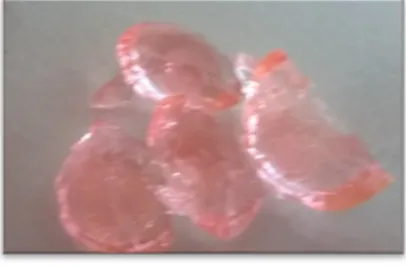
[image:5.612.202.405.104.237.2]di oxide is taken as fat deposit because the SiO2 has the similar properties like elasticity, thickness as fats in the artery.
Fig.5 Silica di oxide (silica gel)
Instead of bone, an iron plates which density is somewhat greater than that of the bone is taken. For muscles, leathers belts are taken for neglecting the distortion of vibration frequency due to mussels and skin.
Table.1 Content Replacement
(taken for Experiment) Blood Goat Blood
Blood clot Goat blood clot (artificial) Fat deposit (plaque)
Density=900kg/m3
Silica di oxide Density=850kg/m3 Blood pressure Fixable pressure cylinder Bone
Density=1600kg/m3
Iron plate
Density=1750 kg/m3 Blood vessel Thin rubber tube Muscle
Density =1200kg/m3
Leather
Density=1300kg/m3
Fig. 6 Materials resembling equal densities of muscle and bones
Technology (IJRASET)
view is shown.
Fig.7 Experimental setup of E-Aider Fig.8 Blood clots and fats in artery
Because of clots and fat deposits on the artery, the blood flow becomes very low. The narrowed artery allows blood marginally. When the E-Aider is switched on the vibrations starts to penetrate the muscles and bone. The little vibration makes a huge change in blood circulation particularly at clots.
A. Experimental Results
The experiment proves that the vibrations on the narrowed artery causes some internal collapes that can surely disturb the block. There are two forces acting at the same junction. The velocity or pressure of blood is acting at the block in X axis where huge pressure difference at the block (0,0) and the applied force (vibration) acting at the same block through Y axis. The resulting force is in the direction of X’ axis. since the force by Y axis helps to collaps the block, the blood can flow from X axis to X’axis. the results also shows that the vibrations can penetratre the bone and muscles. Beacause of tremors the tightly bonded block becomes loose. The blood can flow through the gaps. The results obtained from the experioments are very encouraging and prooves that the vibration is capable of making a change at the block.
VI. CONCLUSION
An incredible death rate has been registered in the countries like India, America, etc. only due to heart diseases. The Proposed E-Aider is not a complete treatment but a good first aid for heart attack. The Intention is to save the life of Heart victims during the emergency situations. External defibrillators can be used in hospitals, public places, and homes worldwide to save the lives of patients in sudden cardiac arrest. External defibrillators have contributed to significant improvements in patient care. So far first aid box never has any first aid tool to treat the heart attack. It is recommended to use this proposed E-Aider at all first aid boxes in public places. There should be established systems for maintaining and assuring that the devices are ready to use
REFERENCES
[1] Goetzel, R. et al. (1998). The Association Between Ten Modifiable Risk Factors and Health Care Expenditures. Journal of Occupational and Environmental Medicine. 40, 10, 1-12.
[2] Wasserman, J. et al. (2000). The Gender Specific Effects of Modifiable Risk Factors on Coronary Heart Disease and Related Health Care Expenditures. Journal of Occupational and Environmental Medicine. 42, 11, 973-985.
[3] Anderson, D. et al. (2000). The Relationship Between Modifiable Health Risks and Group-Level Health Care Expenditures. American Journal of Health Promotion, 15, 1, 45-52.
[4] Leutzinger, J. et al. (2000). Projecting Future Medical Care Costs Using Four Scenarios of Lifestyle Risk Rates. American Journal of Health Promotion, 15, 1, 35-44.
[5] O’Hara, R. et al. (2000). The Effect of a Walking Program on Blood Pressure Responses in African-American Women. ACSM’s Health & Fitness Journal, 4, 5, 20-24.
Technology (IJRASET)
[7] Rubin, R. et al. (1994) Health care expenditures for people with diabetes mellitus. Journal of Clinical Endocrinology and Metabolism. 78:809a-809f.
[8] Han, T. et al. (1997), The Prevalence of Low Back Pain and Associations with Body Fatness, Fat Distribution, and Height. International Journal of Obesity and Related Metabolic Disorders. 21, 7, 600-607.
[9] CEHSTEN", J.W.: Relation of ultrasound effects to the orientation of tendon in the ultrasound field. Arch Phys Med Rehabil 37:200-209, 1956. [10] ROACH, M.R., AND HARVEY, K.: Experimental investigation of poststenotic dilatation in isolated arteries. Can J Physiol Pharmacol 42:53-63. 1964. [11] Kannel, W., and Larson, M. (1993). Long-term epidemiological predictions of coronary disease. Cardiology, 82, 137-152
[12] Schuder JC, Gold JH, Stoeckle H, McDaniel WC, Cheung KN. Transthoracic ventricular defibrillation in the 100 kg calf with symmetrical one-cycle bidirectional rectangular wave stimuli. IEEETrans Biomed Eng. 1983;30:415-422.
BIOGRAPHY
Karthik Raja.K is pursuing Bachelor of Engineering in the discipline of Electrical and Electronics Engineering at Knowledge Institute of Technology, Salem, under Anna University, Chennai, India. He has presented number of research papers in international journals. He got best student award from district collector in 2010, state level best junior award in Red Cross from TNPSC head. He was awarded cash prize of Rs.10000 for the district first in essay competition and Rs.5000 for the district first in painting competition. He is the acting student member of various cells and forums like Robotics Intelligent Club, Green club, I-can Club and Science club. He won prizes for project contest. His performance towards academic is excellent and he was awarded as the academic topper of the class for the past three semesters in the department. His idea on cardiology has selected as one of top five ideas among India by GE. He got young scientist award from Aero ship Creators for his invention of Tele transformer. Presently he is doing minor research works on various fields like space science, embedded systems Biomedical Instrumentation and Robotics etc. He is highly appreciated by the Head of the Department.
Prabhakaran.K is pursuing, Bachelor of Engineering in the discipline of Electrical and Electronics Engineering at Knowledge Institute of Technology, Salem, Anna University, Chennai, India. He has presented number of technical papers in symposium. He is doing minor research works on various fields like Biomedical, Power Electronics and Robotics. He is highly appreciated by the Head of the Department.
Suresh.D is pursuing, Bachelor of Engineering in the discipline of Electrical and Electronics Engineering at Knowledge Institute of Technology, Salem, Anna University, Chennai, India. He has presented number of technical papers in symposium a. He is doing minor research works on various fields like Microcontroller Power Electronics and Robotics. He is highly appreciated by the Head of the Department.
M.Rajendiran is currently working as Assistant Professor of the EEE Department at Knowledge Institute of Technology, Salem. He received the B.E. – Electrical and Electronics Engineering and M.E.- Contol and Instrumentation Engineering from Kongu Engineering College, Perundurai affiliated to Anna University. He also published number of journals. His areas of interest includes control engineering, instrumentation, etc.