Munich Personal RePEc Archive
The global economic and financial crisis:
Which way forward?
Singh, Ajit and Zammit, Ann
University of Cambridge
22 May 2010
Online at https://mpra.ub.uni-muenchen.de/53093/
THE GLOBAL ECONOMIC AND FINANCIAL CRISIS:
WHICH WAY FORWARD?
Ajit Singh, University of Cambridge, and
Ann Zammit, International Consultant, Geneva.
I. Introduction
This chapter provides a review and commentary on the current financial and
economic crisis. It considers important analytical and policy issues from a
global and North-South perspective. The analytical issues include the reasons
for the better than expected performance of the world economy following the
early period of acute crisis, the role of global financial imbalances, and whether
or not economic theory has been helpful in explaining the causes of the crisis. It
is argued that close international cooperation and policy coordination are
essential to continued recovery and improvement in the distribution of the fruits
of growth. Cooperation and financial regulation are particularly necessary in
It is generally accepted that the acute phase of the current global financial and
economic crisis began in September 2008, with the demise of Lehman Brothers
-- a leading US investment bank. Eighteen months later, and in the context of
the continuing global economic and financial crisis, the following issues require
careful analysis:
Why the world economy has performed so much better than most
analysts had expected when the crisis began.
Which economic theories, if any, have been helpful in explaining the
course of the crisis to date.
To what extent, if any, were regulatory deficits in the field of finance and
global financial imbalances responsible for the crisis?
How should the world’s financial system be organized so as to secure
maximum sustainable and equitable growth for the real world economy?
The question of government debt and of the danger of inflation.
Other salient policy issues that have come to the fore, including that of
the drawing down of sovereign debt.
While the economic significance of the above issues is self-evident, not all can
be treated satisfactorily in a single paper, hence only a relatively few issues will
II. Economic and Financial Crisis and the Global Economy
The causes (both short- and longer-term) of the current global economic and
financial crisis have been discussed in a number of contributions, including
Aiginger (2009), Eichengreen and O’Rourke (October 2008), IMF (2008a,
2009b), IMF (2009a, 2009b, 2009c), IMF (2010a, 2010b), Krugman (2008,
2009a, 2009b, 2010), Ormerod (2010), Solow (2009), UNCTAD (2008, 2009,
2010), UNDESA (2008, 2009, 2010), the US Council of Economic Advisers
(2010).
It is generally agreed that difficulties associated with the housing segment of the
US house property market were the immediate cause of the crisis (See, for
example, IMF, 2008a). Complex financial instruments that incorporated
sub-prime house mortgages lost their value as the housing bubble burst following
ten years of continuous price rises based on expectations of a continuation of
such increases. This housing bubble occurred despite the fact that during the
previous two decades the supply of housing had increased appreciably (Solow,
2009). In brief, house prices had risen because interest rates were low and credit
was easily available, and prices were expected to continue to increase, much as
in the case of the classic tulip mania and bubble in the early 17th century when,
at its peak, the price of a tulip bulb in Holland was equivalent to that of a
Housing bubbles have occurred many times before in American economic
history without leading to an acute economic and financial crisis, let alone in the
rest of the world. This episode was different in that it was accompanied by a
bubble in US share and other asset prices. Moreover, the bursting of the US
housing bubble led to a fall in share prices not only in the U.S. but also around
the world. This was due to the much closer integration of world stock markets
resulting from the financial globalization that had occurred in the previous two
decades. It is interesting to note that bank losses due to the failure in the
sub-prime mortgages market are estimated to have been around US$ 250 billion.
The consequent financial crisis led to a sharp fall in aggregate world stock
market capitalization of the order of US$ 26 trillion in one year – nearly one
hundred times larger than the losses associated with sub-prime mortgages.1
Robert Solow (2009) notes that the combined result of the housing and the stock
market shocks was a fall in US household wealth from US$ 64.4 trillion in mid
2007 (before the crisis) to US$ 51.5 trillion at the end of 2008. Thus 13 trillion
dollars of household wealth disappeared in the space of about one year. As
Solow (2009: add page number) rightly observes:
Nothing concrete had changed. “Buildings still stood; factories
work or their skills or their knowledge of technology. But a
population that thought in 2007 that they had 64.4 trillion dollars
with which to plan their lives discovered in 2008 that they have
lost 20 per cent of that.”
Many economists date the acute phase of the present crisis to the bankruptcy of
Lehman Brothers USA in September 2008. Whether or not the collapse of this
important financial institution was the root cause of the crisis, it certainly
provided the trigger. In a comparison of the crisis of the 1930s and that
beginning in 2008, Christina Romer, currently Chair of the US Council of
Economic Advisers, observes “In 2008, the U.S. financial system had similarly
survived the initial declines in house and stock prices…but the outright failure
of Lehman Brothers proved too much for the system. As has been described by
many others, the breakdown in funding relationships in the weeks following
Lehman’s collapse was almost unfathomable. The financial system truly
froze…’’ (Romer, 2010: 3).
III. Short- and Long-Term Causes of the Crisis
In addition to the literature on the failure of the sub-prime mortgage market,
there is by now a relatively large literature on the other short-term as well as
1
long-term ‘causes’ of the current economic and financial crisis, referred to
above. It is too near the events to expect a consensus to emerge on the causes of
the crisis except perhaps on the observation that it had multiple causes. The
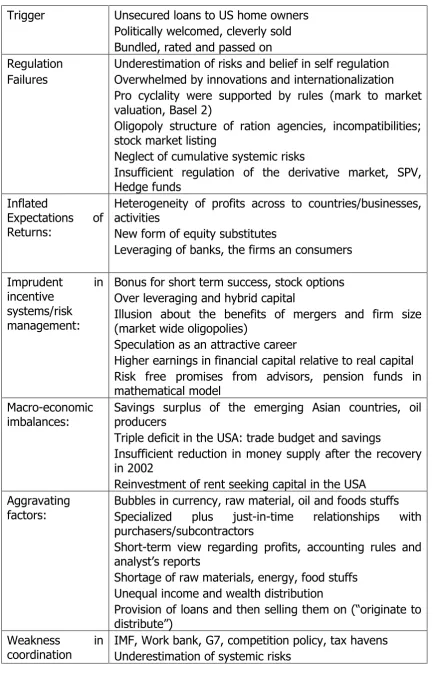
diverse contributions on this topic have been succinctly and most helpfully
summarized by Aiginger (2009, Table 1). For reasons of space only some of the
causes listed in Table 1 are discussed in the following sections.
III.1. Deficits in Regulation
It is widely agreed that a major long-term factor in the making of the crisis was
the lack of government regulation, both national and international, of financial
institutions in the US and worldwide. In turn, this regulatory deficit appears to
have arisen from an ideological faith in the virtues of the free market. It was
believed not only that the market was always efficient but that it was also
self-correcting (See further Ormerod, 2010).
Alan Greenspan, the former Chairman of the US Federal Reserve (Head of the
Central Banking System and the Chief regulator of U.S. monetary policy) in a
speech given in April 2005 outlined how innovation had brought about a
multitude of new products, speaking approvingly of how such “improvements
have led to a rapid growth in sub-prime mortgage lending.” (Greenspan, 2005.)
The New York Times, reporting on Greenspan’s evidence before a 2008 US
Congressional Committee, wrote “ … Mr. Greenspan conceded error on
regulation, stating that he had “put too much faith in the self-correcting powers
of free markets ….refused to accept blame for the crisis but acknowledged that
his belief in deregulation had been shaken.” (Andrews, 2008).
In testifying before the 2010 U.S. Congress Financial Crisis Inquiry Committee
(established to investigate the sub-prime mortgage crisis) Greenspan defended
himself against the dual charge that he was responsible for the housing bubble
due to his low interest rate policy and for not puncturing the bubble before it
reached a level that would cause serious systemic difficulties. Greenspan
suggested that his critics had short memories as many of them had earlier
applauded sub-prime mortgages as being of tremendous benefit to low-income
Americans. Furthermore, he suggested that at the time many people would have
questioned whether there was indeed a housing bubble and asked how, in any
case, the Federal Reserve would know the answer to this question better than
the market. He also told the committee that regulators were helpless to stop the
The net result of this mindset was the evolution of a largely unregulated parallel
banking system performing the functions of banks but without being subject to
banking regulations (Krugman, 2008).
DELETE the following unfinished sentence:
However, a more recent testimony before the US Congress, Alan Greenspan (Greenspan 2010) has
Robust responses to Greenspan’s arguments have been made by James
Galbraith (2010), Paul Krugman (2010) and Robert Solow (2009),
among
others. They suggest that the securitization of sub-prime mortgages through
their marketing as a combined financial product was little understood by the
market. This, together with complex credit default swaps, as well as several
other financial innovations, should be regarded as fraudulent practice that
should have been tightly regulated. Krugman (2010) suggests that, had the
wide-ranging reforms currently under discussion in the US Congress been in
place earlier, “a handful of lavishly-paid leaders of the financial industry would
not have been able to mislead and exploit consumers and investors.”
III.2 World Financial Imbalances
Apart from the above question of regulatory deficits with respect to the
functioning of financial markets, many economists believe that the huge global
fragility and crisis. The latter arises because deficits that cannot be financed
could result in disorderly and unwanted currency depreciations. Fear of such
events may lead to widespread turbulence in financial markets and national
economies.
In 2004, the US current account deficit amounted to US$ 666 billion dollars,
comprising 69 per cent of the total deficit of countries running negative current
account balances that year (Table 2). This compares with a current account
deficit of US$ 413.5 in 2000, which accounted for 62.2 per cent of total deficits.
In the last quarter of 2005 (using a figure not in Table 2) the US deficit was
estimated to be around US$700 billion dollars, or 7 per cent of US GDP. Thus
before the crisis, an already high US deficit was getting bigger, which, on the
face of it, was not a healthy development. Nevertheless, an essential point is
that the markets seemed then to have accepted the situation as indicated by the
relative stability of exchange rates of the main currencies (See Cooper, 2005
and Summers, 2006).2 (See below for further discussion on exchange rate
stability.)
An RIS (Research and Information System for Developing Countries) 2008
national financial situation, as follows. In the period 1970-91, the cumulative
current account deficit of the US was US$ 881.5 billion, increasing to US$
1,569.3 billion during 1992-2000 and in the period 2001-2006 it reached US$
3,572.5 billion, with a deficit of US$ 811.5 billion in 2006 alone. In recent
years, China’s foreign exchange surpluses have financed the growing US
current account deficits at low interest rates.3
It is important to note, however, that China is not the main, let alone the only,
economy to run a large current account surplus. In 2004, before the global
financial and economic crisis, China’s current account surplus of US$ 70 billion
accounted for less than 8 per cent of the total surpluses of countries with a
positive current account balance (Table 2). Table 2 also suggests that in 2004
China’s surplus was considerably smaller than that of either Germany or Japan,
particularly the latter.
2
Another related manifestation of global imbalances before the crisis was the huge and growing foreign currency reserves of the Chinese Central Bank. In the second quarter of 2010 the total value of these reserves was estimated to be around 2.4 trillion US dollars (Chin, 2010).
3
There is a “blame-game” with respect to who bears responsibility for the current large imbalances -- the
profligate US consumer causing the country’s current account deficit, or the Asian peoples’ high propensity to
save, resulting in current account surpluses. Such a construction of events can be interpreted negatively as
Other RIS data also indicates that the US has been living “beyond its means”
both at the household and government levels, stretching their respective budget
constraints. Household savings that had been about 10 per cent of GDP in 1980
and 7 per cent in 1990 were only 0.4 per cent in 2007. The Federal budget,
which had a surplus of US$ 236.2 billion in 2000, recorded a deficit of US$ 400
billion in the 2008 financial year. Mortgage debt ballooned from US$ 3.8
trillion in 1980 to US$ 14.4 trillion in the third quarter of 2007 and consumer
credit increased from US$ 0.35 trillion in 1980 to US$ 2.5 trillion in 2007. By
financing the recurring current account deficits through borrowing from abroad,
the US became a net debtor to the outside world, with the net investment
position showing a negative balance of US$ 2.5 trillion in 2006.
The US has been both living beyond its means yet growing faster than other
advanced industrial countries such as Germany and Japan who are living within
their means. Paradoxically, therefore, the international financial system appears
to favour profligacy rather than thrift. Further, capital has been flowing from
developing to developed countries (from China to the US, for example), that is,
in a direction contrary to that which might be deemed appropriate from a
Even those who do not regard global imbalances (particularly those of China
and the US) to be the root cause of the crisis acknowledge that re-balancing is
required, principally involving the elimination of high long-term deficits (as in
the US) and persistent high surpluses (as in China). In policy terms this means
achieving a zero current account deficit at the rate of growth of GDP that
would achieve full employment.
In the case of the US, over the four-year period 2007-2010, the current account
deficit declined from 5.2 per cent of GDP in 2007 to 2.2 per cent in 2010 (IMF,
2009a and 2009b). This reduction was the result of the compression of
economic activity during the recession and the deficit may well grow again as
economic growth resumes.
China’s surplus, on the other hand, has remained more or less constant over the
four-year period 2007-2010, amounting to 11 per cent of GDP in 2007 and an
average of 8 per cent over the next three years (UNDESA, 2010). Its optimal
surplus would be that which corresponded to the full employment level of the
economy and desired growth of real wages. In both the case of the US and
China, this rebalancing may require considerable change in economic structure:
in the former a greater emphasis on exports and a lower level of
domestic consumption of both imports and domestic goods. Such
rebalancing is likely to affect all countries, whether or not they have contributed
significantly to the global imbalances.
In order to achieve wider rebalancing of the world economy it is also
necessary to consider the cases of Japan and Germany as these are also
long-term surplus countries (Akyuz, 2010).
Apart from the trade and current account imbalances, there is another major
imbalance in the global economy that requires urgent resolution. This concerns
the distribution of both personal and functional income and their implications
for aggregate consumption and aggregate demand. Under globalization, the
power of workers in most advanced countries has been sharply reduced while
that of capital has increased due largely to the free movement of capital. As a
consequence, real wage growth has been lower than productivity growth. This
process threatens to result in global under-consumption which, other things
being equal, will reduce both growth and employment.
To conclude, there is a need to redress imbalances between consumption and
investment in major economies. However, it must be noted that, despite a
in the sense of a disorderly devaluation of the dollar. This leads some to
reject the notion of financial imbalances as being a major cause of the crisis,
pointing to the fact that there was no run on the dollar. Opponents of this view
suggest that the crisis that emerged in 2008 was due to uncontrolled US deficits.
They further allege that the US took advantage of the US dollar being the
world’s only reserve currency such that its current account deficits went
unchecked.
IV. Why Has The World Economy Performed Better Than Expected?
Christina Romer (Romer 2009) argues that the shocks that hit the US economy
in the autumn of 2008 were at least as large as those experienced in 1929. A
salient shock in both crises was the fall in household wealth: this fell by 17 per
cent between December 2007 and December 2008 in the US. This was more
than five times the decrease in 1929.
An important negative feature of the current crisis compared with that of the
1930s is the role and nature of banks and the collapse of inter-bank relations and
that of trade credit for big and small businesses. Banks have refused to lend to
other banks or to non-bank financial institutions. Similarly asset price volatility
in the US has been greater in the current crisis than in the past, and there is
indicates that such volatility has an adverse effect on the level of investment.
Notwithstanding these negative factors, the actual outcomes during the current
crisis have fortunately been more benign so far.
During the Great Depression, starting in the late 1920s, the peak-to-trough
decline in GDP in the major economies averaged nearly 12 per cent, ranging
from 30 per cent in the US and Canada to somewhat under 10 per cent in Japan,
Italy and Britain. The depressed state of the economy continued until the
beginning of the Second World War (Llewellyn, 2008).
In the current downturn, falls in GDP in the US, Europe and the world economy
have been of a much lower order. Although the numbers of unemployed,
underemployed and discouraged workers have increased during the current
crisis, the rise has been far less than during the 1930s depression. Further, there
are signs that it is unlikely to amount to more than 10 per cent of the labour
force, and there is evidence that it is decreasing.4
In 2009, for the first time in 50 years, world GDP shrank, but only by two per
cent, and was expected to return to positive growth in 2010 (UNDESA, 2009).
Whether or not this growth is sustained and leads to resumption of the previous
4
growth path is as yet an open question. The answer will depend on a number
of factors including the debt and solvency crises in Greece, Spain, and Ireland.
Although the decline in GDP for individual advanced countries has been
greater than that for the world as a whole, none of these have reached the
proportions of the 1930s depression. The maximum reduction in GDP growth in
2009 in individual advanced countries has ranged between two per cent and six
per cent. Furthermore, IMF data and projections indicate that most countries
will have positive growth in 2010 (IMF, 2009c.).
What explains the seeming ability of the world economy to avert a depression
as serious as that in the 1930s? Evidence and analysis suggest three main
reasons. The first is the outstanding record of India, China and other emerging
countries both before and during the crisis. As Wolf (2008) suggests: “emerging
economies had been an engine of growth for the past five years. China
accounted for a quarter, Brazil Russia and India for another quarter, and all
emerging and developing countries together for about two thirds. World growth
is measured here in PPP exchange rates.” Despite the crisis these countries,
particularly India and China, have been able to continue on their fast long-term
growth path. They may therefore be expected to remain a long-term positive
factor in the evolution of the world economy: fast growth in these countries
The second major factor explaining the relatively good performance of the
world economy during the present downturn has been the unexpected and
welcome degree of cooperation between countries, symbolized by their
adoption of coordinated global measures through the creation of the G20. This
grouping includes all leading advanced countries and a number of emerging
nations that together constitute about 85 per cent of world production and
about two thirds of world population. In 2009 the G20 agreed to a huge
international stimulus even when many of them already had fiscal deficits. It
was also agreed to cut interest rates and to strengthen the IMF and World Bank
in order to help developing countries. This high degree of cooperation stands in
striking contrast to the lack of cooperation and beggar-thy-neighbour policies
that characterized nation states’ behaviour in the 1930s.5
As mentioned above, a significant feature of the response to the current crisis
has been an aggregate coordinated fiscal stimulus amounting in 2008-2009 to an
enormous 2.6 billion US dollars, equivalent to 3.4 per cent of world GDP6. (See
Table 3). As a proportion of their GDP, developing countries in general have
had a greater stimulus than developed countries.
5
However, it can be argued that the G20 is far from an ideal vehicle for international cooperation as it excludes more than 150 countries. Nevertheless, some argue that a group bigger than the G20 may not be a practical device for agreeing and implementing decisive measures to cope with the crisis.
6
There is evidence that the stimulus has been successful in the sense that, in
general, the greater the stimulus received, the greater was countries’ economic growth (US Council of Economic Advisers, 2010). Nevertheless, alongside this
positive effect of the stimulus, the stimulus created fiscal difficulties for
governments, leading to calls for the stimulus to be withdrawn or diminished in
size. This would, however, be a serious mistake as a premature withdrawal of
the stimulus when the world economy has not yet achieved reasonable
economic growth (let alone reverted to its long-term growth rate) may push
economies further into recession or even into full-scale depression if there are
negative effects on expectations. It is therefore all the more important that the
cooperation achieved so far in the G20 arrangement should continue and
improve so that there is a coordinated and well organized withdrawal of the
fiscal stimulus at the appropriate time. The US experience between 1937 and
1940 (Romer, 2009) and that of Japan more recently should be a warning to
present-day policymakers in this respect.
The third positive factor that has also helped improve the performance of world
economy in relation to the present crisis can be described as an issue of
governance. It so happened that economic leadership in the US in this period of
crisis was held by an intellectually and politically close group of economists.
These were conventional US Keynesian economists (in contrast to Cambridge
being that of a shortage of aggregate demand. Unlike the Chicago economists,
they believed that government induced stimuli could correct the demand deficits
and thereby help the real economy.7 The cohesive economic outlook of this
team of economic advisors helped ensure clarity and purpose in the stimulus
programme and its implementation.
Not only were these economists well-versed in economic theory, but also, if not
more importantly, some of them, including Ben Bernanke (Chairman of the
Federal Reserve) and Christina Romer (Chair, US Council of Economic
Advisers), were serious students of the history of the Great Depression and were
determined not to repeat the serious policy mistakes made during that period.
To sum up, three factors -- namely continuing fast growth in India, China and
other developing countries, unprecedented cooperation between countries
symbolized by the G20 (see further, below) and the creation and governance by
like-minded people of a corrective economic policy programme -- have been
positive factors in the recent evolution of the world economy. Hopefully, these
7Most “American Keynesian” economists, following Paul Samuelson, believe in “the Grand Synthesis”, that is, that suitable monetary and fiscal policy can restore and maintain full employment and that, in a fully employed
economy, neoclassical economics comes into its own. In contrast, “Cambridge Keynesian” economists reject
neoclassical economics altogether, but rather believe that monetary and fiscal policy alone will not bring about
full employment. In their view, only a “planned” economy in the sense that the government takes a major role in influencing investment decisions (that is indicative planning) can lead to continuous full employment. On the
factors will continue to operate in this direction, even if certain other
developments present obstacles to widespread resumption of reasonable growth
rates. As will become clear in the following sections, currency volatility, fiscal
deficits and the premature drawing-down of sovereign debt can have a negative
impact on the rate of growth.
V. Financial Globalization and the Real Economy
The financial system and the conduct of monetary policy prior to the eruption of
the financial crisis and onset of economic recession in 2008 have received
thoroughly deserved criticism for allowing the development of the sub-prime
mortgage bubble, the stock-market bubble and asset prices bubbles and not
puncturing these in time or minimizing the damage. There were, however, some
evident benefits, albeit unintended, of this regime for the real economy and
which have not been adequately recognized (see below). Without a more
balanced picture of the merits and demerits of the pre-crisis financial system
and policies, future policy decisions may not be the most appropriate.
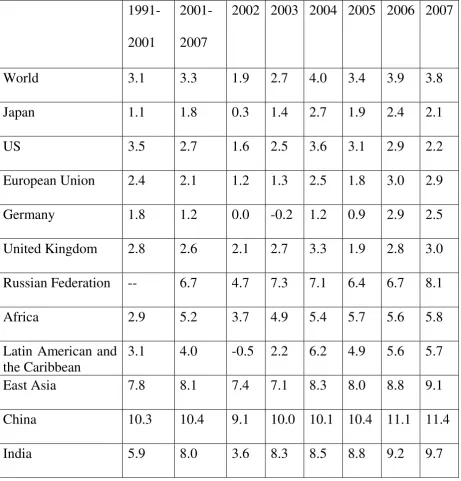
Table 4 provides broad-brush data for selected countries and for the real
economy during the last two decades. What is clear is that the world economy
performed exceptionally well in real terms during the present decade, achieving
arguably its highest ever growth rate. Further, between 2000-2007, developing
marginally reduce the disparity between the rich and poor countries. Among
developing countries India and China -- the two most populous countries where
the bulk of the population hitherto lived in absolute poverty -- had stellar
performances, experiencing historically unprecedented growth that has resulted
in substantial poverty reduction.8
Among the developed countries, the United States has been the leader in terms
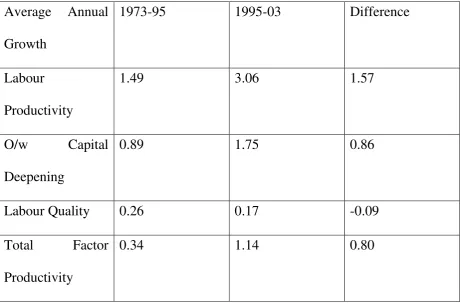
of real economic growth. Evidence suggests that in the period 1995-2005 it
achieved a one percentage point increase in its long-term trend rate of growth of
productivity (Jorgenson and Vu, 2005). This is an impressive achievement
bearing in mind that this is not a “catch-up” economy but one operating at the frontiers of knowledge. Such a productivity increase implies a high degree of
technical progress as well as concomitant organizational changes. This
achievement would be considered even greater if the benefits of national
productivity growth had been spread more widely.
Evidence suggests that the US, India, China and a clutch of other countries --
the pre-crisis top performers in terms of growth rates -- were overall
beneficiaries of international economic integration and financial globalization.
In the case of India and China, this was partly due to the fact that they managed
their integration into the global economy so as to avoid the harmful effects of
unfettered capital flows in particular. They also pursued a policy of “strategic
integration” in relation to trade and long-term investment (Singh, forthcoming).
Financial globalization enabled China to purchase US treasury bills, thereby
helping the US to finance its current account deficit and keep US interest rates
low. In addition, globalization has helped the US to keep domestic inflation in
check, not least through imports of cheap consumer and intermediate products
from China. (For a fuller discussion of the economic interactions between the
US and the Chinese economy, see Singh, 2007.)
Most students of financial systems would agree that the central purpose is to
allocate society’s savings and investment resources to those households,
corporations and jurisdictions that can use them most effectively. It could be
argued that the pre-crisis financial system and monetary policies were
performing that function, as is evidenced by very fast growth across the world
economy during the period 2000-2007. However, the implosion resulting from
dubious policies and unregulated practices highlight inherent flaws in this
system. These rendered it unsustainable. The best that can be said about the
pre-crisis financial regime is that it demonstrated that the world economy had a
The purpose of any reform of the financial system should be to allow the world
economy to grow at its full potential in a sustainable manner. It would be a
travesty of justice from the perspective of the world’s poor if any reformed
financial system fell short of the sustainable growth objective.
To sum up, it could be argued that the developing world under the recent global
regime has taken a giant step forward. A reformed international financial system
must underpin and further promote this economic progress.
VI. Economic Theory and the Current Crisis
Economists’ analyses and conclusions relating to one particular crisis are not
necessarily relevant to another. The analytical lessons derived from the Latin
American debt crisis of the 1980s do not explain the following crisis that
erupted in Asia in the 1990s. Similarly, the lessons of the Asian crisis of the
1990s do not seem to be applicable to the current financial crisis.
The 1980s debt crisis had a devastating impact on Latin America. It is widely
agreed that for the continent as a whole it was a “lost decade” characterized by
little or no growth and a fall in per capita income of more than 15 per cent over
the decade. In contrast, per capita income in East Asian countries grew by more
and heterodox economists regarding the reasons for the enormous differences in
the performance of these two regions. Orthodox economists argue that the Latin
America debt crisis was caused by domestic factors, namely micro-economic
inefficiencies, macro-economic policy errors, and unwise borrowing and
spending. In contrast heterodox economists believe that the Latin American
debt crisis was due to external factors over which these countries had no
control. In particular, they emphasize the changes in US monetary policy in the
late 1970s that resulted in an increase in the real world interest rate from 0.5 per
cent in the mid 1970s to 7 per cent in the early 1980s -- a fourteen-fold increase
-- (the so-called “Volcker shock”). The impact on the highly-indebted Latin
American economies was devastating.
Heterodox economists argue that the restrictive changes in US monetary policy
had a greater impact on Latin America than Asia. This was partly due to Latin
Americas’s higher initial level of debt and its structure. In addition, Latin
America was more affected by adverse changes in the terms-of-trade than was
Asia.9 Further, as Fishlow (1991) points out, Latin America countries, unlike
Asian countries, were subject to capital supply shocks due to contagion. Taken
together, as they should be, these shocks were far greater for Latin America
than for Asia. Hence Latin America countries became more heavily
9
payments constrained and for a much longer period than did the Asian
countries. This explains their relatively poor economic performance in the “lost
decade” (Singh, 1993). Thus it is argued that the budget and current account
deficits in Latin America were both the cause and consequence of their debt
crisis.
The 1997-2000 Asian crisis was of a rather different kind than that in Latin
America. By and large, governments in Asia have had a record of managing
their macro-economic policies well. It was the private sector’s excessive
borrowing in foreign currency and the consequent mismatch between expected
inflows and outflows that led to the Asian crisis. It could be said to have been a
case of government virtue and private sector profligacy. However, leading US
officials, including Alan Greenspan, Larry Summers, and the IMF itself, later
put forward a more ideological explanation for the Asian crisis. They argued
that, although some micro- or macro -economic disequilibria (such as the
Bangkok property boom) may have been the trigger for the crisis, the root cause
was nothing less than the entire “Asian way of doing business”. This was
characterized by close relationships between government, business and finance
in the day-to-day micro-economic behaviour of economic agents, what these
critics termed “crony capitalism”. This is alleged to have resulted in serious
distortions in the economy and in economic management, leading ultimately to
This version of events is highly disputed by heterodox economists. They argue
that the root cause of the crisis was the introduction of financial liberalization
before prudential regulation had been instituted. They point out that other
countries, including China and India, which did not fully liberalize their
financial sectors escaped the crisis, whereas countries that did (Indonesia,
Korea, Thailand) were badly affected. In sum, it is suggested here that the Asian
crisis was due to financial liberalization and the absence of prudential
regulation; rather than “too much government” it was a case of too little
government.
The essential point, however, is to emphasize that each economic and financial
crisis is of a rather different nature. One hallmark of the present crisis has been
the credit crunch, whereby banks stopped lending to other banks and businesses,
thereby disrupting the system of credit that oils the workings of a modern
economy. In response, governments resorted to bailing out banks and other
financial institutions that were deemed too big to be allowed to fail, in the sense
that their failure would have enormous external diseconomies for other firms
and institutions.
Thus, analyses of major financial crises during the past four decades are not
directly applicable to the current crisis. Each crisis has been different from the
one before. Every major crisis therefore needs to be examined in its own right
with a fresh eye, before any firm analytical and policy conclusions can be drawn
from that experience.
In addition to analyzing crisis episodes it is essential to examine the role of
macroeconomic theory as currently taught in universities and used by
policy-makers in central banks in explaining and tackling the present crisis. Neither
academic macro-economists nor the best central bank practitioners foresaw the
eruption of the 2008 financial crisis. The two main rival schools of thought (the
US Keynesian and the Chicago classical) in the currently dominant
macroeconomic theory have recently found common ground on key aspects of
macro-economic theory. Both sides have accepted the “rational expectations”
basis of the micro-economic theory that underlies the macro construction. In
sum, it is assumed that households maximize utility, firms maximize profits and
economic agents make decisions on the basis of rational expectations. These
ideas have led to sophisticated dynamic stochastic general equilibrium models
(DSGE) that are so complex that they cannot be solved analytically. Rather,
they require numerical methods and considerable computer power for their
solution. Nevertheless, such models have been singularly unhelpful in
these models are based on risk calculations but do not take into account
uncertainty. (Risk is predictable in the sense that the probability distribution of
future outcomes can be estimated. This is not so at all for uncertainty.) Ormerod
(2010) observes: “in the brave new world of DSGE, the possibility of a systemic
collapse, of a cascade of defaults across the system, was never considered.”
Nevertheless, when it came to devising the policy response to the crisis, key
policy-makers gained greater wisdom from basic Keynesian economic theory
and from economic history rather than from modern macroeconomics. US and
European economic advisors and policy-makers drew on the former and defined
the essential problem of the crisis in terms of a shortage of world aggregate
demand, and referred to the economic history of the Great Depression to avoid
the policy mistakes of that period. It is commonly believed that the failure of
several thousand banks in the US in the 1930s contributed to the prolongation of
the Great Depression. This explains the priority given to saving the financial
system through unprecedented bail-outs.10 Similarly, the success of the giant
economic stimulus programmes associated with the New Deal suggested that
similar measures should be used once again to a avert a worsening recession.
10
VII. Conclusion: The Way Forward
The ongoing policy collaboration between countries provides one of the chief
grounds for optimism. Nevertheless, there are well-founded criticisms regarding
the legitimacy of the exclusive G20 group. Many G20 members are
disappointed with the process because the G7 have yet to agree on meaningful
reform of the IMF Articles of Agreement, including the weighting of voting
power (Chin (2010) and Helleiner and Kirshner (2009). Nevertheless, the G20
process remains a promising start to more meaningful international cooperation.
It has been argued that agreement among the G20 has been entirely due to the
recent adverse circumstances and that, once the world economy recovers,
collective action will cease. However, on a priori grounds, an equally if not
more plausible scenario is that the evident success of collective action will
encourage nation states to take further coordinated action. Indeed, it can be
argued that an international cooperation is imperative if global imbalances are
to be corrected.
Although the world economy’s growth path for the period 2000-2007 was
ultimately unsustainable, due in part to the rising US current account deficit and
in part to the weaknesses of the financial system, such growth certainly took the
now is which factors will determine the outcome for the real world economy in
the next decade or two after the crisis? Will there be a new growth path and will
it be more or less satisfactory than the previous one, from an economic, social
and environmental point of view? What is required is a growth path that allows
the world economy to operate at its full sustainable potential, while reducing the
risks of renewed global financial fragility and crisis.
The central message of this contribution is that, for this to be possible,
increasing global co-operation is essential in trade and investment and in the
related fields of food, environment and energy. Equally importantly, a more
equal distribution of income, wealth, and social protection, as well as returns to
capital and labour, are needed, not only for their own sake but also to resolve
the incipient world under-consumption problem before this becomes a serious
obstacle to fast economic growth, and for the sake of world peace.
It is, however, appropriate to ask whether the above is likely to happen? The
most optimistic outcome is one in which the worst of the crisis is over: the
global financial system has been thoroughly reformed and ensures stability and
contributes to more equitable global development. At the time of writing, the
most affected economies are recovering quite satisfactorily. Blanchard, chief
better than expected and global growth is expected to reach a rate of 4.2
per cent in 2010 (an upwards revision) and to reach 4.3 per cent in 2011
(Blanchard, 2010). Global trade and capital flows have been recovering much
faster. Even unemployment, which is normally a lagging indicator, has at long
last begun to decline albeit slowly, at least in the US (Chandra, 2010). These
recent short-term improvements can be interpreted as suggesting that the
evolution of the world economy is pointing in a positive direction. However,
Blanchard warns that these “good numbers hide a more complex reality, namely
a tepid recovery in many advanced economies, and a much stronger one in most
emerging and developing economies.” While maybe somewhat disappointing
for advanced economics this scenario suggests some progress greater balance in
the world economy.
One of the biggest global worries concerns the current European sovereign debt
situation that has major implications for the world economy. One cannot
dismiss the possibility of a cascading financial crisis due initially to contagion
in the Euro area (starting with a default in Greece and potentially in Portugal,
Spain and Italy, and even elsewhere in Europe) and resulting in a speculative
attack on the Euro currency. The likelihood of such a turn of events may have a
small probability, but in view of our limited capacity to predict the future it
would be unwise to rule out a major crisis, particularly bearing in mind very
coordinated consultation and action by nations and European and global
institutions are required to tame the financial markets.
In any conflict of interest between states and the financial markets, clearly the
interests of the former should and can prevail. In view of the dimensions of the
European sovereign debt problem, and to avert a run on the currency, a rescue
package of Euros 750 billion has already been put in place. If in the worst-case
scenario this should prove inadequate, and European nations consider the
European Union and the common currency to be vital for European peace and
development, they could in principle act in concert and challenge the markets
by introducing a financial package several times larger, thereby stopping
speculators in their tracks.11 In this context it should be noted that the Euros 750
billion bailout is worth 6 per cent of the GDP of the European Union. Putting
this in a historical context, it may be recalled that just over 60 years ago the US
administration, faced with what they perceived as a communist threat to
Western Europe, intervened with the Marshall Plan. The value of this plan over
a three-year period amounted to 4 per cent of US GDP (Glyn et al. 1991).12
11
The effectiveness of this measure was demonstrated by the Hong-Kong Central Bank’s punitive action against speculators during the 1997-1999 Asian crisis.
12
To sum up, the current challenge to policymakers around the world is first and
foremost to avoid long-term stagnation resulting from injudicious policies. This
would suggest, inter alia, resisting a premature drawing down of government
debt in rich countries. The associated reduction in state expenditure and
increases in taxation are likely to prolong recession and unemployment, with
consequent ripple effects that result in continued long-term stagnation
throughout the global economy.
In addition, concerted action is required to introduce national and international
supervision and regulation of financial markets, while measures are also needed
to achieve a rebalancing of the global economy such that it reaches its full
potential, while also achieving an improvement in inter-country distribution of
growth and development. In short, markets should serve the people rather than
determining their socio-economic destiny.13
13
It will be argued by some that reduced long-term economic growth may be positive by effecting a reduction in global warming and conserving natural resources. However, important issues such climate change and
Table 1. Summary Table of the Causes of the Economic and Financial Crisis
Trigger Unsecured loans to US home owners
Politically welcomed, cleverly sold Bundled, rated and passed on Regulation
Failures
Underestimation of risks and belief in self regulation Overwhelmed by innovations and internationalization Pro cyclality were supported by rules (mark to market valuation, Basel 2)
Oligopoly structure of ration agencies, incompatibilities; stock market listing
Neglect of cumulative systemic risks
Insufficient regulation of the derivative market, SPV, Hedge funds
Inflated
Expectations of Returns:
Heterogeneity of profits across to countries/businesses, activities
New form of equity substitutes
Leveraging of banks, the firms an consumers
Imprudent in
incentive systems/risk management:
Bonus for short term success, stock options Over leveraging and hybrid capital
Illusion about the benefits of mergers and firm size (market wide oligopolies)
Speculation as an attractive career
Higher earnings in financial capital relative to real capital Risk free promises from advisors, pension funds in mathematical model
Macro-economic imbalances:
Savings surplus of the emerging Asian countries, oil producers
Triple deficit in the USA: trade budget and savings
Insufficient reduction in money supply after the recovery in 2002
Reinvestment of rent seeking capital in the USA Aggravating
factors:
Bubbles in currency, raw material, oil and foods stuffs Specialized plus just-in-time relationships with purchasers/subcontractors
Short-term view regarding profits, accounting rules and analyst’s reports
Shortage of raw materials, energy, food stuffs Unequal income and wealth distribution
Provision of loans and then selling them on (“originate to distribute”)
Table 2. Current Account Balances (Selected Economies) 2000-2004
Source: Singh, 2007. Adapted from IMF, World Economic Outlook, April 2005
Year 2000 2002 2004 2000 2002 2004
Economies ($ Billion) (As a percentage of total
surplus or deficit)
Surplus
economies
Japan 119.6 112.6 171.8 23.8 21.1 19.3
Germany -25.7 43.1 96.4 3.9 8.4 10.0
China 20.5 35.4 70.0 4.1 6.9 7.9
Russian
Federation
44.6 30.9 59.6 8.9 6.0 6.7
Saudi Arabia 14.3 11.9 49.3 2.9 2.3 5.5
Deficit
Economies
United States -413.5 -473.9 -665.9 62.2 72.5 69.0
Spain -19.4 -15.9 -49.2 2.9 2.4 5.1
United
Kingdom
-36.5 -26.4 -47.0 5.5 4.0 4.9
Australia -15.3 -16.6 -39.4 2.3 2.5 4.1
Sources: UNCTAD, (various years); UNDESA, (May, 2008). Table 4
1991-2001
2001-2007
2002 2003 2004 2005 2006 2007
World 3.1 3.3 1.9 2.7 4.0 3.4 3.9 3.8
Japan 1.1 1.8 0.3 1.4 2.7 1.9 2.4 2.1
US 3.5 2.7 1.6 2.5 3.6 3.1 2.9 2.2
European Union 2.4 2.1 1.2 1.3 2.5 1.8 3.0 2.9
Germany 1.8 1.2 0.0 -0.2 1.2 0.9 2.9 2.5
United Kingdom 2.8 2.6 2.1 2.7 3.3 1.9 2.8 3.0
Russian Federation -- 6.7 4.7 7.3 7.1 6.4 6.7 8.1
Africa 2.9 5.2 3.7 4.9 5.4 5.7 5.6 5.8
Latin American and the Caribbean
3.1 4.0 -0.5 2.2 6.2 4.9 5.6 5.7
East Asia 7.8 8.1 7.4 7.1 8.3 8.0 8.8 9.1
China 10.3 10.4 9.1 10.0 10.1 10.4 11.1 11.4
India 5.9 8.0 3.6 8.3 8.5 8.8 9.2 9.7
Growth of World Output and that of Selected Countries
Table 5. Explaining the Productivity Surge in the US
Average Annual
Growth
1973-95 1995-03 Difference
Labour
Productivity
1.49 3.06 1.57
O/w Capital
Deepening
0.89 1.75 0.86
Labour Quality 0.26 0.17 -0.09
Total Factor
Productivity
0.34 1.14 0.80
Bibliography
Aiginger, K. 2009. “The Current Economic Crisis: Causes, Cures and
Consequences”, WIFO Working Papers No. 431, August, Osterreichisches Institut für Wirtshaftschung. (Put special character for first letter in title).
Akyuz, Y. 2010. “Global Economic Prospects: The Recession May Be Over But
Where Next?” Research Papers 26, South Centre, Geneva.
Andrews, Edmund L. 2008. “Greenspan Concedes Error on Regulation”,
NewYork Times, October 23.
Blanchard, Oliver. 2010. “World Faces Serious New Economic Challenges.”
IMF Blog, posted on April 21, 2010 by IMF direct.
http://blog-imfdirect.imf.org/ referenced 17 May 2010.
Chandra, Shobhana. 2010. “Productivity in U.S. Rises More Than Forecast, Labor Costs Drop.” Bloomberg.com, May 13.
http://.bloomberg.com/apps/news?pid=email_en&sid=an2SOt
Chin, Gregory T. 2010. “Remaking the architecture: the emerging powers, self
-insuring and regional insulation.” International Affairs, vol. 86, No. 3:693-715.
Cooper, R. 2005. Living with Global Imbalances: A Contrarian View. Policy Brief, Institute for International Economics, November, Washington D.C.
Economist, Economic and Financial Indicators, May 1, 2010
Eichengreen, B. and K. H. O’Rourke. 2008. A Tale of Two Depressions, http//www.voxeu.org/, April 6
Galbraith, James. 2010. “In Defense of Deficits”. The Nation, March 4 2010
Glyn, Andrew, Alan Hughes, Alain Lipietz and Ajit Singh. 1991. “The Rise and Fall of the Golden Age” In Stephen A. Marglin and Juliet B. Shaw, The Golden Age of Capitalism, Clarendon Press, Oxford.
Glen J. and Ajit Singh. 2005. “Corporate Governance and Finance> Re-thinking
Lessons from the Asian Crisis”, First published as Cambridge University Business School Working Paper 288, June. 2004. Subsequently published in the Eastern Economic Journal, Vol. 31, No. 2, Spring, pp.219-242.
Greenspan, Alan. 2005. “Consumer Finance.” Speech given at the Federal Reserve System’s Fourth Annual Community Affairs Research Conference, April 8, Federal Reserve Board, Washington, D.C.
Greenspan, Alan. 2010. Evidence given to the U.S. Congress Financial Crisis Inquiry Committee (established to investigate the sub-prime mortgage crisis), U.S. Government, Washington D.C.
Helleiner, Eric and Jonathan Kirshner (eds.). 2009. The Future of the Dollar. Cornell University Press, Ithaca, NY.
IMF (International Monetary Fund). 2008a. World Economic Outlook. Housing and the Business Cycle. February. IMF, Washington D.C.
--- IMF 2008b. World Economic Outlook - Financial Stress, Downturns and Recovery. October 2008. IMF Washington D.C.
---. IMF. 2009a. World Economic Outlook Update. Contractionary Forces Receding But Weak Recovery Ahead. July 8. IMF, Washington D.C.
---. IMF. 2009b. World Economic Outlook – Crisis and Recovery, April. IMF, Washington D.C.
---. 2010a. World Economic Outlook. A policy-Driven, Multispeed Recovery. January 26. IMF, Washington D.C.
---. 2010b. World Economic Outlook, Rebalancing Growth. April 21. IMF, Washington D.C.
Jorgenson, Dale and K. Vu. 2005. “Information technology and the world
growth resurgence.” German Economic Review, No. 8 (2), pp.122-145.
Jorgenson Dale W. S. Mun and Kevin J. Ho. 2007. "A retrospective look at the U.S. productivity growth resurgence," Staff Reports 277, Federal Reserve,
http//www:ideas.repec.org/e/pst41.html
Krugman, P. (2008) “The Big Meltdown”, New York Times, March 2
Krugman, P. 2009a. “How did Economists Get it so Wrong?” New York Times, Sept 2.
Krugman, P. 2009b. “Revitalizing Economics after the Crash”, New York Times, Sept 11.
Krugman, P. 2010. “Goldman Sachs, salaried looters”, The Indian Express, Chandigarh, April 24.
Llewellyn, John. 2008. “The Shock of the New”, Prospect, November. London.
Planning Commission, Government of India. 2009. The Tendulkar Commission Report on Poverty Estimates. Planning Commission, New Delhi.
Romer, Christina. 2009. Back from the Brink. Address given on September 24 at the Federal Reserve Bank of Chicago, Chicago, Illinois.
Singh, Ajit. 1993. “Asian Economic Success and Latin American Failure in the 1980s: New Analyses and Future Policy Implications”, International Review of Applied Economics, Vol. 7, No. 3, 1993: 267-289.
Singh, Ajit. 2007. “Globalisation, Industrial Revolutions in India and China and Labour Markets in Advanced Countries: Implications for National and
International Economic Policy”, Working Paper 81, Policy Integration Department, International Labour Office, Geneva.
Singh, Ajit. (forthcoming) “Globalization, Openness and Economic
Nationalism”. Cambridge University Centre for Business Research, Working Paper series. CBR, Cambridge.
Solow, R. 2009. “How to Understand the Disaster”, The New York Review of Books, May 14.
Summers, Lawrence H. 2006. “Reflections on Global Account Imbalances and
Emerging Markets Reserve Accumulation.” L. K. Jha Memorial Lecture, Reserve Bank of India, Mumbai, India.
UNCTAD (United Nations Conference on Trade and Development). 2008. Trade and Development Report, United Nations, Geneva.
--- .2009. Trade and Development Report, United Nations, Geneva.
--- . 2010. Trade and Development Report, United Nations, Geneva.
UNCTAD. (Various Years) Handbook of Statistics, United Nations Geneva.
UNDESA (United Nations Department of Economic and Social Affairs). 2008. Global Economic Outlook, May. United Nations, New York.
--- . 2010. Global Economic Outlook, May. United Nations, New York.
US Council of Economic Advisers. 2010. Annual Report of the Council of Economic Advisers. US Government Printing Office, Washington D.C.