Introduction
Lupus nephritis (LN) is a major cause of morbidity and mortality in patients with systemic lupus erythematosus (SLE). Th e general consensus is that 60% of lupus patients will develop clinically relevant nephritis at some time in the course of their illness [1]. Prompt recognition and treatment of renal disease is important, as early response to therapy is correlated with better outcome [2]. Th e present review summarizes our current understanding of SLE pathogenesis, summarizes how the disease is diagnosed and treated, and expands on new emerging therapies.
Epidemiology of lupus nephritis
Most SLE patients develop nephritis early in the course of their disease. Th e vast majority of patients who develop nephritis are younger than 55 years, and children are more likely to develop severe nephritis than are elderly patients [3]. In a recent retrospective study, male sex, young age (<33 years), and non-European ancestry were found to be determinants of earlier renal disease in patients with SLE. Asian, African Caribbean, and African American ethnicities may present with more severe nephritis than other ethnic groups [4].
Diagnosis of lupus nephritis
Clinical features of lupus nephritis
Proteinuria is the characteristic feature of renal disease in lupus. In a comprehensive review of LN, proteinuria was reported in 100% of patients, with nephrotic syndrome being reported in 45 to 65% [5]. Microscopic hematuria was found to occur in about 80% of patients during the disease course, invariably associated with proteinuria. Macroscopic hematuria is rare in LN. Hypertension is not common but is present more frequently in patients with severe nephritis. About one-half of all patients with LN will have a reduced glomerular fi ltration rate, and occasionally patients present with acute kidney injury. Renal tubular function is often disturbed, resulting in urinary excretion of Tamm-Horsefall proteins, light chains and β2-microglobulin [5].
Clinical diagnosis of lupus nephritis
Ideally, urinary protein excretion is gauged using a 24-hour urine collection. Although universally practiced, variable results may occur over a short period of time, probably due to changes in physical activity or collection errors. Th e latter problem can be remedied by quanti-fying total creatinine in the same 24-hour urine collec-tion. Th e total creatinine measurement should approxi-mate values obtained in 24-hour urine collections from the same patient and should be comparable with average values obtained in population studies of men (20 mg/kg/ day) and women (15 mg/kg/day). Alternatively, the urinary protein excretion rate can be estimated by assaying the protein/creatinine ratio in a random daytime urinary sample. Th is ratio approximates the total number of grams per day of proteinuria, but it would be optimal to confi rm the validity of this method in individual patients, as described [5].
Th e urinary sediment is also useful for characterizing renal disease activity, since the presence of hematuria, leukocyturia or casts are typical only during periods of disease activity. Interestingly, in one large series of 520 cases of SLE, red cell casts were only present in 39 cases (7.5% of patients). In descending order, the most common abnormal urinary sediment fi ndings in LN are leuko-cyturia, hematuria, granular casts and hyaline casts [6].
A rising anti-DNA antibody titer and
hypo-comple-ment emia, especially with low complement C3, are
Abstract
Lupus nephritis is a major cause of morbidity and mortality in patients with systemic lupus erythematosus. The general consensus is that 60% of lupus patients will develop clinically relevant nephritis at some time in the course of their illness. Prompt recognition and treatment of renal disease is important, as early response to therapy is correlated with better outcome. The present review summarizes our current understanding of the pathogenic mechanisms underlying lupus nephritis and how the disease is currently diagnosed and treated.
© 2010 BioMed Central Ltd
Lupus nephritis: current update
Ramesh Saxena*, Tina Mahajan and Chandra Mohan*
R E V I E W
*Correspondence: [email protected]; [email protected]
Department of Internal Medicine, UT Southwestern Medical Center, 5323 Harry Hines Boulevard, Dallas, TX 75390, USA
strong indicators of active lupus renal disease, although serology cannot be used in isolation to diagnose or monitor renal disease. Hypo-albuminemia accompanied by signifi cant proteinuria is a component of the nephrotic syndrome that may accompany active lupus renal disease. Hypercholesterolemia is another marker and also a clinical complication of the nephrotic syndrome that can accompany active LN [5].
Th ere is increasing recognition of the importance of tubulo interstitial injury in LN. In the majority of patients, the severity of interstitial infl ammation parallels the degree of involvement of the glomerulus. Tubular damage, fi brosis and atrophy can be associated with hyper-uricemia and renal tubular acidosis [5].
Histologic diagnosis of lupus nephritis
Kidney biopsy is the mainstay for the diagnosis of LN. Material obtained by renal biopsy is evaluated by light microscopy, immunofl uorescence and electron micro s-copy. In many cases, renal biopsy is instrumental in establishing the diagnosis of SLE because nephritis can be the fi rst clinical manifestation of SLE in up to 15 to 20% of patients [5]. In the majority of cases, however, the diagnosis of SLE is already established. In such situations, renal biopsy helps to establish a precise diagnosis of LN, the extent of histopathological chronicity and activity, disease prog nosis, and also serves as a guide for therapy. Th e appearance of any new markers of kidney disease such as proteinuria, hematuria, active urinary sediment or rise in serum creatinine in a SLE patient should also prompt a renal biopsy. Moreover, one should consider a follow-up biopsy in a stable patient with established LN if the aforesaid markers reappear or worsen.
Histologic classifi cation of lupus nephritis
Because of the extremely diverse histopathology of LN, several classifi cations have been proposed over the past four decades – the earliest schemes being proposed by the World Health Organization (WHO) in 1974, further refi ned by Austin and colleagues [7,8]. In order to further standardize defi nitions and to facilitate uniformity in reporting, as well as to eliminate ambiguities and incon-sistencies in the WHO classifi cation, the International Society of Nephrology/Renal Pathology Society (ISN/ RPS) classifi cation was formulated in 2003, as detailed in Table 1 [9]. Th is classifi cation defi nes more precisely all glomerulo nephritis (GN) classes and clearly delineates activity and chronicity.
Two recent studies demonstrate the superior repro-duci bility of the ISN/RPS classifi cation compared with the WHO classifi cation of LN [10,11]. In a large study involving 20 centers in the UK, renal pathologists classi-fi ed cases of LN using the WHO system and then re-classifi ed the same cases using the ISN/RPS 2003
classi fi cation scheme one year later. A signifi cantly higher inter observer reproducibility was observed using the ISN/RPS (2003) classifi cation than using the modifi ed WHO (1982) classifi cation [10].
Pathogenesis of lupus nephritis
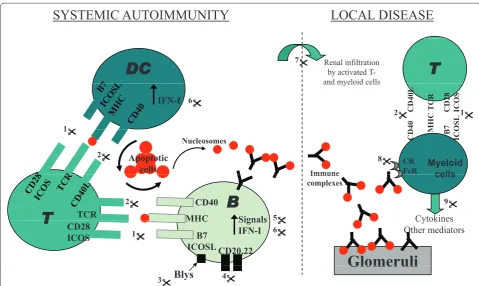
Multiple mechanisms lead to LN, as reviewed elsewhere [12-14]. Th e pathogenic events leading to LN can be parsed into two phases: systemic events in the immune system, and local events in the end organs (see Figure 1). Th e present review focuses on the cellular and molecular mechanisms that drive LN pathogenesis within the kidneys. Systemic events that orchestrate autoimmunity in SLE have been discussed in previous reviews [12-14], and will not be examined here.
Role of lymphocytes in lupus nephritis
[image:2.612.315.528.111.310.2]T cells rank among the most conspicuous infl ammatory cells within the infl amed kidney in both SLE patients and mouse models of LN [15,16]. T cells cloned from the renal interstitium of MRL/lpr lupus mice have been shown to be autoreactive to renal antigens, to induce tubular epithelial and mesangial cell proliferation, and to produce cytokines such as IFNγ. Th e pathogenic role of T cells within the kidneys has been demonstrated through the use of renal transplantation in MHC II-defi cient or CD4–/– lupus-prone mice and treatment with anti-CD4 antibody [17-20]. Radeke and colleagues have demon-strated that CD4+ T cells alone were suffi cient as initiators and eff ectors in nephritis, by recognizing specifi c anti-gens expressed within the glomeruli in an experimental mouse model of GN [21]. Although the antigen specifi city of intrarenal T cells in LN remains elusive, their eff ector Table 1. International Society of Nephrology/Renal Pathology Society classifi cation of lupus nephritis Class I Minimal mesangial lupus nephritis
Class II Mesangial proliferative lupus nephritis
Class III Focal lupus nephritis (<50% glomeruli)
III(A) Active lesions
III(A/C) Active and chronic lesions
III(C) Chronic lesions
Class IV Diff use lupus nephritis (>50% glomeruli)
Diff use segmental (IV-S) or global (IV-G)
IV(A) Active lesions
IV(A/C) Active and chronic lesions
IV(C) Chronic lesions
Class V Membranous lupus nephritis
Class VI Advanced sclerosing lupus nephritis
(≥90% globally sclerosed glomeruli without residual activity)
function has been shown to be mediated through a couple of key cell-surface molecules and released cytokines.
Substantial evidence has been garnered for the patho-genic role of CD40 ligand (CD40L), a member of the TNF family [21-26]. Th e interaction of T-cell CD40L and CD40 ex pressed on B cells plays a central role in humoral immune responses, having the capacity to induce clonal expan sion, immunoglobulin class switch and diff eren-tiation of B cells into plasma cells. In addition, CD40 is expressed on various eff ectors cells, such as macrophages, neutro phils, dendritic cells (DCs), as well as resident renal cells, suggesting that CD40–CD40L interactions may be important in driving eff ector functions of other
CD40-expressing cells within the kidneys [27-31]. CD40 expression is markedly upregulated in proliferative lupus nephritis (PLN), in parallel with the increased presence of CD40L-bearing T cells in kidneys [29]. Activated T cells co-cultured with renal tubular epithelial cell elaborate high levels of monocyte chemotactic protein-1, RANTES, IL-8 and interferon-inducible protein-10 from tubular epithelial cells, mediated in part through CD40– CD40L interactions [30,31].
[image:3.612.65.545.87.373.2]Among the cytokines released by T cells, a pre-dominance of T-helper type 1 response has been docu-mented by several studies in human LN [32-36], further supported by blocking (or gene ablation) studies in
Figure 1. Molecular pathogenesis of lupus nephritis and potential therapeutic targets. Multiple steps lead to the pathogenesis of systemic lupus erythematosus (SLE). Captioned are two key sets of events underlying lupus nephritis (LN): one that engenders systemic autoimmunity, and another that drives end-organ infl ammation and damage, as discussed in the text. Many of the cells and molecules in these pathogenic cascades also serve as attractive therapeutic targets, as detailed below. (1), (2) Dendritic cell (DC):T-cell and T-cell:B-cell interactions involve multiple co-stimulatory molecules, including CD28/B7, ICOS/ICOSL, and CD40/CD40L; blockade of these co-co-stimulatory pathways is being tested as potential therapeutic strategies in lupus. (3) Blys/BAFF elaborated by myeloid cells binds to receptors on B cells, and drives autoantibody production in SLE. Blocking this axis is emerging as a promising therapeutic avenue, based on recent clinical trials. (4) CD20, CD22, and CD19 are receptors on B cells. Several trials are aimed at depleting B cells in SLE, using antibodies to these B-cell molecules. (5) The activation of autoreactive B cells (and other leukocytes) in SLE is mediated by several signaling axes; some of these have been therapeutically targeted with success in preclinical models of the disease, and in limited clinical trials. (6) Type 1 interferon-elicited gene signatures have emerged as a distinctive feature of SLE. Based on these exciting leads, therapeutics targeting this axis are currently in active trials. (7) Activated lymphocytes and myeloid cells utilize a variety of cell adhesion molecules in order to gain access to the target organs. Therapeutics targeting these adhesion molecules and/or vascular addressins have shown promise in preclinical models of lupus. (8) Clearance of immune complexes is mediated by complement (receptor) and Fc/FcR-mediated mechanisms; targeting these nodes has also shown promise in murine lupus. (9) Activated leukocytes (as well as resident renal cells) elaborate a large spectrum of disease mediators, including various cytokines and chemokines. Blockade of these mediators also hold promise in ameliorating LN, although we are in the infancy of these studies. CD40L, CD40 ligand; ICOS, inducible T-cell costimulator; ICOSL, inducible T-cell costimulator ligand; TCR, T-cell receptor.
SYSTEMIC AUTOIMMUNITY
LOCAL DISEASE
D
DC
Renal infiltrationT
by activated T-and myeloid cells
7
IFN-I
CD40L TCR CD28 ICOS
D
40 MHC 7 OSL 1
1 2
6
and myeloid cells
Apoptotic cells
C
D M B
IC
O
1
2
Immune Nucleosomes
Myeloid cells
CR FcR 8
B
T
TCR MHCCD40 Signals2
5 Cytokines
9 Immune
complexes cells
T
B7 ICOSL CD28
ICOS
MHC Signals IFN-I CD20,22
Glomeruli
1 6
5 Cytokines
Other mediators
Blys
Glomeruli
murine LN [37-40]. However, there is also some evidence that T-helper type 2 cytokines can also have a potential impact on LN. In several lupus-prone mouse models, engineering the upregulation of IL-4 worsens LN, where-as IL-4 blockade or gene ablation ameliorates disewhere-ase [41-44]. Given that IL-4 has also been implicated in fi broblast proliferation, collagen gene expression, collagen synthesis and transforming growth factor beta (TGFβ) production, IL-4 may directly act upon renal cells to perpetuate glomerulosclerosis and chronic renal fi brosis, partly through its eff ect on extracellular matrix generation [44].
Role of myeloid cells in lupus nephritis
Besides lymphocytes, myeloid cells also play critical roles in LN. Within normal human kidneys, at least two
myeloid DC subtypes characterized by BDCA-1+
DC-SIGN+ and BDCA-1+DC-SIGN– and one plasmacytoid
DC subtype defi ned as BDCA-2+DC-SIGN– are
abun-dantly located in the tubulointerstitium, but are rarely observed within the glomeruli [45-47]. In LN patients, strong renal infi ltrates of BDCA1+, BDCA3+ and BDCA4+ DCs have been reported. Notably, DCs infi ltrated both the tubulointerstitium and the glomeruli, with the extent of infi ltration correlating well with the severity of renal damage, notably class III/IV LN [48,49]. As in normal kidneys, DC infi ltrates in diseased human kidneys were
mostly immature, marked by the absence of DC-LAMP+
cells [45,48]. In contrast to the renal DCs, a signifi cant decrease of myeloid DCs and/or plasmacytoid DCs has been observed in the peripheral blood of lupus patients [48-51]. It has been suggested that the decreased number of DCs in peripheral blood may be a consequence of their enhanced migration into the end organs [49,52]. Studies in murine models have also reported increased infi l-tration of DCs into the renal glomeruli and tubulo-interstitium [53-56]. Relatively little is known about how renal infi ltrating DCs contribute to the pathogenesis of LN, although a couple of scenarios have been suggested. First, DCs may elaborate proinfl ammatory and pro-fi brotic factors, including TNFα, IL-6, IL-1, IL-18, IFNα and TGFβ [57]. Second, DCs can migrate to local lymph nodes and potentially present renal autoantigens to T lymphocytes [58]. Th ird, since renal DCs express various co-stimulatory molecules such as CD40L, MHC
II and chemokine receptors such as CCR1 and CCR5,
they could directly interact with and activate intrinsic renal cells and other infi ltrating infl ammatory cells, hence perpetuating disease [58-60].
Macrophages represent a second myeloid cell type that is recruited to the kidneys in LN [54,61-63]. Recruited macrophages are located in both the glomerular tuft and tubulointerstitium, and constitute the major cell type in glomerular crescents [61-64]. Renal infi ltrating macro-phages exhibit elevated expression of CD11b, OX40L,
CD80 and CD86, being markers of disease onset in LN. Once recruited, activated macrophages could play a wide variety of roles in meditating renal injury, largely by secreting various proinfl ammatory mediators (including TNF and IL-1), reactive oxygen species and proteolytic enzymes. Although the obligatory role for macrophages has been demonstrated in experimental GN models [65-68], whether they are equally essential for LN remains unknown.
Role of resident renal cells in lupus nephritis
Th e major resident cells in the kidney include mesangial cells, endothelial cells and epithelial cells. Th ese intrinsic renal cells represent both the cause and the victim of various insults leading to GN [69,70]. Perhaps the most compelling evidence that intrinsic renal cells play an important role in immune-meditated GN has come from bone-marrow transfer or kidney-transplant studies in mice subjected to anti-glomerular basement membrane nephritis. Studies of this nature have helped outline the disease role of MHC II, TNF and Fn14 on intrinsic renal cells [71-73].
Beside these isolated examples, we know very little about whether other molecules need to be intrinsically expressed within resident renal cells in order for immune-mediated GN to ensue. Some studies have suggested that resident renal cells from lupus-prone mice are intrinsically aberrant; for example, it has been reported that mesangial cells from lupus mice have a decreased threshold for the production of infl ammatory mediators, and do indeed elaborate more monocyte
chemo tactic protein-1 and osteopontin [74-76]. We
currently have no insights into whether intrinsic renal
cells may be fundamentally diff er ent in human LN
compared with what we know about the role of infi ltrating leukocytes in LN. Th erefore, our understand-ing of how intrinsic renal cells contribute to disease is rudimentary.
the hypothesis that type I interferons may play a key role in lupus pathogenesis [79-81]. Although IFN-I is known to impact systemic immunity in a variety of ways, recent evidence indicates that IFN-I produced by resident renal cells may be also contribute to renal infl ammation [82].
TGFβ is a potent multifunctional cytokine that exerts an anti-infl ammatory and immunosuppressive role systemi-cally, but a profi brotic role locally within diseased kidneys. Th e action of persistent, dysregulated TGFβ production on the extracellular matrix drives progressive renal disease in LN [83]. Elevated TGFβ expression has been found in SLE renal tissue, correlating well with histological activity [84-86]. Also, disease remission in LN is related to decreased renal TGFβ expression [85]. Th e collective data in the fi eld strongly indicate that reduced TGFβ in immune cells predisposes mice to immune dysregulation and auto-antibody production, where as enhanced TGFβ expression within the kidneys leads to dysregulated tissue repair, progressive fi bro genesis and eventual end-organ damage [87]. Hence, TGFβ is a double-edged sword – subduing systemic immunity, but aggravating chronic nephritis.
As discussed above, macrophages play a central role in mediating LN. Hence, not surprisingly, colony-stimulat-ing factor-1 (CSF-1, the principal macrophage growth factor) and macrophage migration inhibitory factor – key
proinfl ammatory cytokines regulating macrophage
recruitment – have also been documented as central players in LN. Renal resident cells, most notably tubular epithelial cells, are the primary source of CSF-1 during renal disease [88,89]. Increased renal expression of CSF-1 has been noted before overt renal pathology and becomes more abundant with advancing LN [90]. Mechanistic studies in murine models have garnered direct experi-mental support for a pathogenic role of CSF-1 and migra-tion inhibitory factor in LN [91-98]. Other cytokines that have been shown to be important for antibody-mediated renal disease and/or LN include IL-1, IL-6, IL-10 and TNFα, as reviewed elsewhere [99]. Besides cytokines, a pathogenic role has also been assigned to two chemo-kines – monocyte chemotactic protein-1 and CXCL12. Both chemokines are elevated within diseased kidneys in mice and patients with LN, while mechanistic studies in mice support their role in disease pathogenesis [100-113].
Since most of the above cytokines and chemokines can be elaborated systemically as well as locally within the kidneys, it remains to be established whether renal expression of any of these molecules is necessary for LN. Th e complex pathogenic cascades leading to SLE lend themselves to therapeutic intervention at multiple nodes, some systemic and some intrarenal, some of which are discussed in Figure 1. Several of the indicated therapeutic strategies have only been tried in preclinical models of LN, whereas others are currently in active clinical trials, as discussed below. As we gain better insights into these
molecular cascades and their druggability, the goal is to eventually identify the optimal combinatorial regimes that could potentially silence all critical pathways leading to disease.
Treatment of lupus nephritis
Before the advent of immunosuppressive regimens, a 2-year survival rate <10% was observed in patients with diff use PLN treated with low-dose steroids [114]. Since then, the survival of patients with PLN has improved considerably due to earlier recognition of renal disease, aggressive immunosuppression and improved supportive care [115]. Numerous prognostic factors have been identi-fi ed in LN. Among others, nonwhite race (for exam ple, black, Afro-Caribbean, Hispanic), poor socio economic status, uncontrolled hypertension, a high activity and chronicity index on kidney biopsy, renal impairment at baseline, poor initial response to therapy and nephritic relapses have been associated with poor outcome. Lack of adherence to therapy is an underestimated cause of treatment failure [116,117]. Th e therapeutic goals for a patient with newly diagnosed LN are to achieve prompt renal remission using induction therapy, to avoid renal fl ares and chronic renal impairment using maintenance therapy, and to minimize treatment-associated toxicity. Th ese goals are discussed further below.
Induction therapy with intravenous cyclophosphamide In 1986, Austin and colleagues from the National Insti-tutes of Health (NIH) published the results of a large randomized trial demon strating the role of intravenous (i.v.) cyclophosphamide (CYC) as an induction therapy, as listed in Table 2 [118]. In a later NIH trial, combination therapy of i.v. methyl prednisolone and i.v. CYC was shown to achieve a higher rate of renal remission than i.v. methylprednisolone alone [119]. After a median follow-up of 11 years, none of the 20 patients who received combination therapy experi enced end-stage renal disease (ESRD). Despite excellent effi cacy, i.v. CYC treatment is associated with a high rate of premature ovarian failure (ranging from 38 to 52% of women at risk), increased risk of severe infections, a signifi cant percentage of treatment failures and a high rate of renal relapse [120].
renal disease (mean creatinine 1 to 1.3 mg/dl; mean proteinuria 2.5 to 3.5 g/day for both groups), with almost 85% of the patients being Caucasian. Nevertheless, low-dose i.v. CYC is an option – particularly for low-risk Caucasians with less severe PLN.
Noncyclophosphamide induction regimens: mycophenolate mofetil
Recently, mycophenolate mofetil (MMF) has emerged as a promising alternative therapy for both induction and maintenance treatment of LN. Mycophenolic acid, the active metabolite of MMF, is an inhibitor of the rate-limiting enzyme (inosine monophosphate dehydro ge nase) involved in de novo purine synthesis [122]. As lymphocytes do not possess a salvage pathway for the generation of
these nucleotides, MMF results in selective blockade of B-cell and T-B-cell proliferation. Unlike CYC, mycophenolic acid has little impact on other tissues with high proliferative activity (for example, neutrophils, skin, intestine, bone marrow, gonads), which do possess a salvage pathway for nucleotide synthesis. Th is accounts for the metabolite’s more favorable toxicity profi le com pared with CYC, and this renders MMF particularly attractive.
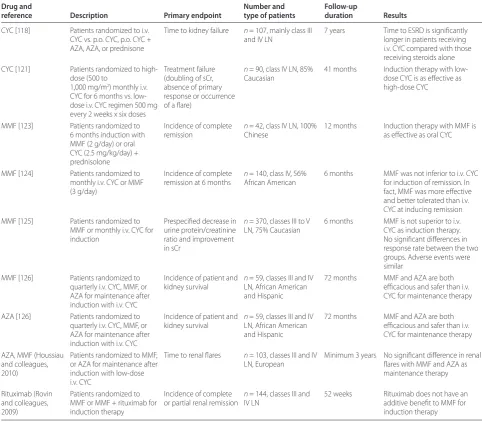
[image:6.612.64.547.101.523.2]As listed in Table 2, Chan and colleagues randomized 42 patients with PLN to 6 months of induction with MMF (2 g/day) or oral CYC (2.5 mg/kg/day), both with concurrent oral prednisolone [123]. During the mainte-nance phase, those patients in the MMF arm continued the drug at a reduced dose (1 g/day) and those in the CYC arm switched to azathioprine (AZA) (1.5 mg/kg/ Table 2. Randomized controlled studies in lupus nephritis
Drug and Number and Follow-up
reference Description Primary endpoint type of patients duration Results
CYC [118] Patients randomized to i.v. CYC vs. p.o. CYC, p.o. CYC + AZA, AZA, or prednisone
Time to kidney failure n = 107, mainly class III and IV LN
7 years Time to ESRD is signifi cantly longer in patients receiving i.v. CYC compared with those receiving steroids alone CYC [121] Patients randomized to
high-dose (500 to
1,000 mg/m2) monthly i.v.
CYC for 6 months vs. low-dose i.v. CYC regimen 500 mg every 2 weeks x six doses
Treatment failure (doubling of sCr, absence of primary response or occurrence of a fl are)
n = 90, class IV LN, 85% Caucasian
41 months Induction therapy with low-dose CYC is as eff ective as high-dose CYC
MMF [123] Patients randomized to 6 months induction with MMF (2 g/day) or oral CYC (2.5 mg/kg/day) + prednisolone
Incidence of complete remission
n = 42, class IV LN, 100% Chinese
12 months Induction therapy with MMF is as eff ective as oral CYC
MMF [124] Patients randomized to monthly i.v. CYC or MMF (3 g/day)
Incidence of complete remission at 6 months
n = 140, class IV, 56% African American
6 months MMF was not inferior to i.v. CYC for induction of remission. In fact, MMF was more eff ective and better tolerated than i.v. CYC at inducing remission MMF [125] Patients randomized to
MMF or monthly i.v. CYC for induction
Prespecifi ed decrease in urine protein/creatinine ratio and improvement in sCr
n = 370, classes III to V LN, 75% Caucasian
6 months MMF is not superior to i.v. CYC as induction therapy. No signifi cant diff erences in response rate between the two groups. Adverse events were similar
MMF [126] Patients randomized to quarterly i.v. CYC, MMF, or AZA for maintenance after induction with i.v. CYC
Incidence of patient and kidney survival
n = 59, classes III and IV LN, African American and Hispanic
72 months MMF and AZA are both effi cacious and safer than i.v. CYC for maintenance therapy
AZA [126] Patients randomized to quarterly i.v. CYC, MMF, or AZA for maintenance after induction with i.v. CYC
Incidence of patient and kidney survival
n = 59, classes III and IV LN, African American and Hispanic
72 months MMF and AZA are both effi cacious and safer than i.v. CYC for maintenance therapy
AZA, MMF (Houssiau and colleagues, 2010)
Patients randomized to MMF, or AZA for maintenance after induction with low-dose i.v. CYC
Time to renal fl ares n = 103, classes III and IV LN, European
Minimum 3 years No signifi cant diff erence in renal fl ares with MMF and AZA as maintenance therapy
Rituximab (Rovin and colleagues, 2009)
Patients randomized to MMF or MMF + rituximab for induction therapy
Incidence of complete or partial renal remission
n = 144, classes III and IV LN
52 weeks Rituximab does not have an additive benefi t to MMF for induction therapy
day) for 6 months. Th is study suggested that induction treatment with MMF was as eff ective as oral CYC, but with fewer side eff ects. Although this study included only Chinese patients and excluded patients with poor prog-nostic indicators, a more recent study has demonstrated the increased effi cacy of MMF induction in a high-risk, multiracial, American population in which 56% of the patients were African American [124] (Table 2). Limita-tions of the latter study included its short follow-up duration, the crossover design and the fact that patients with rapidly progressive renal failure were excluded.
Later on, another US study, the Aspreva Lupus Management Study, comprising high risk population with proliferative LN demonstrated similar effi cacies of MMF and intravenous CYC as induction therapies [125] (Table 2). Furthermore, it was observed that, race, ethnicity and geographical region may aff ect treatment response; more Black and Hispanic patients responded to MMF than i.v. CYC. As the study was not designed for this sub-group analysis, it is diffi cult to draw fi rm conclusions about their importance.
Maintenance therapies
Once a patient has attained remission, immunosup pres-sion is given to help maintain remispres-sion, to prevent relapse, and to decrease the risk of developing ESRD. In the NIH trials, i.v. CYC at 3-month intervals for 18 to 24 months was used as maintenance therapy [118]. In the past decade, sequential regimens of short-term CYC induction therapy, followed either by MMF or AZA maintenance, have proven to be effi cacious and safe, with reduced hazards, compared with long-term exposure to CYC. Using a similar regime, Contreras and colleagues have reported similar fi ndings in a randomized controlled study that included a large number of high-risk non-Caucasian patients, predominantly African Americans and Hispanics [126] (Table 2). In a recently concluded Euro-Lupus Nephritis Trial multi-center trial (MAINTAIN Nephritis Trial) comprising 105 patient with proliferative LN, no signifi cant diff erence in renal fl ares was observed between AZA and MMF as maintenance therapy over 3 years of follow up [127].
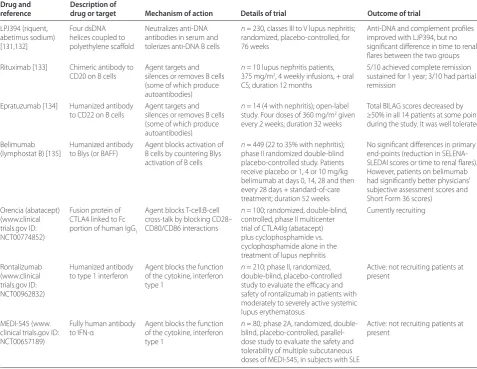
Another trial comparing MMF against AZA as remission-maintaining treatment for PLN following induction with a short course of intravenous CYC, the main tenance phase of the Aspreva Lupus Management Study [125], has recently been concluded and the results were presented at the American Society of Nephrology Meeting in 2010. It did not show any diff erence in renal fl ares between the two maintenance therapies (Table 3).
Adjunctive therapy
As co-morbidities can signifi cantly worsen outcome, these have to be actively managed in LN. Accelerated
athero genesis and coronary vascular disease are now recognized complications of SLE [128]. Recognized risk factors include hypertension, hyperlipidemia, nephrotic syn drome, prolonged corticosteroid use, anti phos-pholipid antibody syndrome and, in some cases, the vascular risks asso ciated with chronic kidney disease.
Th is underscores the importance of aggressively
managing these modifi able risk factors [129]. Although few data are available specifi cally for patients with LN, it appears prudent to apply the knowledge gleaned from studying the general population with chronic kidney disease. Tight blood pressure control, the use of angiotensin-converting en zyme inhibi tors and/or angio-tensin receptor blockers, and correction of dyslipid emia are thus strongly recom mended. More over, patients with chronic kidney disease should be screened and treated for complications such as anemia and bone and mineral disease (secondary hyper para thyroidism, hyperphospha-temia, vitamin D defi ci ency). In addition, measures should be taken to prevent glucocorticoid-induced osteo-porosis, including the use of calcium, vitamin D supple-ments, and bisphosphonates when necessary [130].
Novel approaches in the treatment for PLN
Despite recent strides in the treatment of LN, about 20% of patients do not respond but progress to ESRD. Moreover, toxicity of the current immunosuppressive regimens remains unacceptably high. With a better under standing of the molecular mechanisms underlying LN, as discussed above (Figure 1), several newer and targeted therapeutic approaches are currently being tested, aimed at improved effi cacy and reduced toxicity. Th ese include LPJ394, rituximab, epratuzumab, belimu-mab, and abatacept, as summarized in Table 3. Th is targeted therapy constitutes another area of research that is rapidly burgeoning with ongoing contributions from academia and from industry. As ongoing eff orts in trans-criptomics and proteomics further elucidate the molecular basis of lupus pathogenesis, the drugs that dominate the therapeutic landscape are likely to evolve rapidly.
Treatment of resistant lupus nephritis
albeit being more toxic; hence, this treatment regime should be limited to 6 months and should only be given to patients with multiple poor prognostic factors [138].
Intravenous immunoglobulin
Intravenous immunoglobulin is another modality that has been tested. Th e effi cacy of intravenous immuno-globulin in controlling disease activity and ameliorating classical disease manifestations ranges from 33 to 100% in diff erent case series surveyed in a recent meta-analysis [139]. Other analyses have documented similar positive results, with particular improvements in the clinical and histological readouts of nephritis [140]. Despite en-courag ing reports describing the effi cacy of intravenous immunoglobulin therapy in SLE, most of the data are based on case reports and small series. Furthermore, the long-term effi cacy, optimal dosage and duration of therapy of intravenous immunoglobulin in LN remain to be established. Nevertheless, intravenous immuno globulin
can be considered in patients with LN either as salvage immunotherapy in severe cases that are nonresponsive or nontolerant to conventional treatment or in patients who experience severe infectious complications.
Calcineurin inhibitors
Open-labeled uncontrolled studies have reported effi cacy and tolerability of cyclosporin A in the treatment of PLN [141]. No published comparative trials between CYC and cyclosporin A in adult SLE patients are currently avail-able. In an open study of 11 patients with LN, eight of whom were resistant or intolerant to CYC or AZA, signifi cant improvement in proteinuria and anti-dsDNA titers was reported after treatment with cyclosporin A for 12 months [142].
Immunoablative therapy
[image:8.612.65.543.103.472.2]Immunoablative therapy (that is, daily high doses of CYC followed by granulocyte colony-stimulating factor) Table 3. Novel therapeutic regimes in lupus nephritis targeting specifi c pathogenic molecules
Drug and Description of
reference drug or target Mechanism of action Details of trial Outcome of trial
LPJ394 (riquent, abetimus sodium) [131,132]
Four dsDNA helices coupled to polyethylene scaff old
Neutralizes anti-DNA antibodies in serum and tolerizes anti-DNA B cells
n = 230, classes III to V lupus nephritis; randomized, placebo-controlled, for 76 weeks
Anti-DNA and complement profi les improved with LJP394, but no signifi cant diff erence in time to renal fl ares between the two groups Rituximab [133] Chimeric antibody to
CD20 on B cells
Agent targets and silences or removes B cells (some of which produce autoantibodies)
n = 10 lupus nephritis patients, 375 mg/m2, 4 weekly infusions, + oral
CS; duration 12 months
5/10 achieved complete remission sustained for 1 year; 3/10 had partial remission
Epratuzumab [134] Humanized antibody to CD22 on B cells
Agent targets and silences or removes B cells (some of which produce autoantibodies)
n = 14 (4 with nephritis); open-label study. Four doses of 360 mg/m2 given
every 2 weeks; duration 32 weeks
Total BILAG scores decreased by ≥50% in all 14 patients at some point during the study. It was well tolerated
Belimumab (lymphostat B) [135]
Humanized antibody to Blys (or BAFF)
Agent blocks activation of B cells by countering Blys activation of B cells
n = 449 (22 to 35% with nephritis); phase II randomized double-blind placebo-controlled study. Patients receive placebo or 1, 4 or 10 mg/kg belimumab at days 0, 14, 28 and then every 28 days + standard-of-care treatment; duration 52 weeks
No signifi cant diff erences in primary end-points (reduction in SELENA-SLEDAI scores or time to renal fl ares). However, patients on belimumab had signifi cantly better physicians’ subjective assessment scores and Short Form 36 scores)
Orencia (abatacept) (www.clinical trials.gov ID: NCT00774852)
Fusion protein of CTLA4 linked to Fc portion of human IgG1
Agent blocks T-cell:B-cell cross-talk by blocking CD28– CD80/CD86 interactions
n = 100; randomized, double-blind, controlled, phase II multicenter trial of CTLA4Ig (abatacept) plus cyclophosphamide vs. cyclophosphamide alone in the treatment of lupus nephritis
Currently recruiting
Rontalizumab (www.clinical trials.gov ID: NCT00962832)
Humanized antibody to type 1 interferon
Agent blocks the function of the cytokine, interferon type 1
n = 210; phase II, randomized, double-blind, placebo-controlled study to evaluate the effi cacy and safety of rontalizumab in patients with moderately to severely active systemic lupus erythematosus
Active: not recruiting patients at present
MEDI-545 (www. clinical trials.gov ID: NCT00657189)
Fully human antibody to IFN-α
Agent blocks the function of the cytokine, interferon type 1
n = 80; phase 2A, randomized, double-blind, placebo-controlled, parallel-dose study to evaluate the safety and tolerability of multiple subcutaneous doses of MEDI-545, in subjects with SLE
Active: not recruiting patients at present
followed by autologous hematopoietic stem cell trans-plan tation is another option that can be entertained in severe refractory LN. Clinical remissions have been observed in about 65% of cases [143]. However, the relatively high incidence of toxicities and mortality remains a concern.
Conclusion
LN remains a major manifestation of SLE, as 60% of SLE patients may develop this end-organ involvement. Th e epidemiology and clinical manifestations of LN have been well studied over the past few decades. Th e 2003 addition to the ISN/RPS classifi cation of the modifi ed WHO schema of histo logical classifi cation of LN has signifi cantly improved how the disease is classifi ed, managed and prognos ticated. In terms of the underlying pathogenic mecha nisms, we have gained signifi cant insights regarding the cells and molecules that orches-trate the systemic as well as the target organ phases of the disease. How we manage LN has also evolved signifi cantly over the past decade, thanks to multiple clinical trials. Currently, the optimal induction therapy appears to be i.v. CYC or oral myco phenolate, while maintenance is best achieved using oral mycophenolate, AZA or i.v. CYC. Newer targeted therapeutics built upon recent molecular insights are likely to revolutionize how LN is managed in the clinic in the coming years.
Abbreviations
AZA, azathioprine; BAFF, B-cell activating factor;CD40L, CD40 ligand; CSF-1, colony-stimulating factor-1; CYC, cyclophosphamide; DC, dendritic cell; dsDNA, double-stranded DNA; ESRD, end-stage renal disease; GN, glomerulonephritis; IFN, interferon; IL, interleukin; ISN/RPS, International Society of Nephrology/Renal Pathology Society; i.v., intravenous; LN, lupus nephritis; MMF, mycophenolate mofetil; NIH, National Institutes of Health; PLN, proliferative lupus nephritis; RANTES, regulated upon activation, normal T-cell expressed and secreted; SLE, systemic lupus erythematosus; TGFβ, transforming growth factor beta; TNF, tumor necrosis factor; WHO, World Health Organization.
Competing interests
The authors declare that they have no competing interests.
Published: 28 September 2011
References
1. Appel GB, Radhakrishnan J, D’Agati V: Secondary glomerular disease.
In The Kidney. Edited by Brenner BM. 8th edition. Philadelphia, PA: Saunders; 2007:1067-1148.
2. Bertsias G, Gordon C, Boumpas DT: Clinical trials in SLE: lessons learned from the past as we proceed to the future – the EULAR recommendations for the management of SLE and the use of end-points in clinical trials.
Lupus 2008, 17:437-442.
3. Mak A, Mok CC, Chu WP, To CH, Wong SN, Au TC: Renal damage in systemic lupus erythematosus: a comparative analysis of diff erent age groups.
Lupus 2007, 16:28-34.
4. Seligman VA, Lum RF, Olson JL, Li H, Criswell LA: Demographic diff erences in the outcome of SLE nephritis: a retrospective analysis. Am J Med 2002,
112:726-729.
5. Cameron JS: Lupus nephritis.J Am Soc Nephrol 1999, 10:413-424. 6. Austin HA: Clinical evaluation and monitoring of systemic lupus
erythematosis.Lupus 1998, 7:618-621.
7. McCluskey RT: Lupus nephritis. In Kidney Pathology Decennial 1966–1975. Edited by Sommers SC. East Norwalk, CT: Appleton-Century Crofts; 1975:435-450.
8. Austin HA, 3rd, Muenz LR, Joyce KM, Antonovych TT, Balow JE: Diff use proliferative lupus nephritis: identifi cation of specifi c pathologic features aff ecting renal outcome.Kidney Int 1984, 25:689-695.
9. Weening JJ, D’Agati VD, Schwartz MM: The classifi cation of
glomerulonephritis in systemic lupus erythematosis revisited.J Am Soc Nephrol 2004, 15:241-250.
10. Furness PN, Taub N: Interobserver reproducibility and application of the INS/RPS classifi cation of lupus nephritis – a UK-wide study.Am J Surg Pathol 2006, 30:1030-1035.
11. Yokoyama H, Wada T, Hara A, Yamahana J, Nakaya I, Kobayashi M, Kitagawa, Kokubo KS, Iwata Y, Yoshimoto K, Shimizu K, Sakai N, Furuichi KT: The outcome and a new ISN/RPS 2003 classifi cation of lupus nephritis in Japanese. Kidney Int 2004, 66:2382-2388.
12. Davidson A, Aranow C: Pathogenesis and treatment of systemic lupus erythematosus nephritis.Curr Opin Rheumatol 2006, 18:468-475. 13. Kanta H, Mohan C: Murine lupus genes target 3 checkpoints in disease
development – central tolerance in the adaptive immune system, peripheral amplifi cation by innate immunity, and end-organ infl ammation.Genes Immun2009, 10:390-396.
14. Hahn BH: Antibodies to DNA.N Engl J Med 1998, 338:1359-1368. 15. D’Agati VD, Appel GB, Estes D, Knowles DM, 2nd, Pirani CL: Monoclonal
antibody identifi cation of infi ltrating mononuclear leukocytes in lupus nephritis.Kidney Int 1986, 30:573-581.
16. Díaz Gallo C, Jevnikar AM, Brennan DC, Florquin S, Pacheco-Silva A, Kelley VR:
Autoreactive kidney-infi ltrating T-cell clones in murine lupus nephritis.
Kidney Int 1992, 42:851-859.
17. Mukherjee R, Zhang Z, Zhong R, Yin ZQ, Roopenian DC, Jevnikar AM: Lupus nephritis in the absence of renal major histocompatibility complex class I and class II molecules. J Am Soc Nephrol 1996, 7:2445-2452.
18. Koh DR, Ho A, Rahemtulla A, Fung-Leung WP, Griesser H, Mak TW: Murine lupus in MRL/lpr mice lacking CD4 or CD8 T cells.Eur J Immunol 1995,
25:2558-2562.
19. Jabs DA, Burek CL, Hu Q, Kuppers RC, Lee B, Prendergast RA: Anti-CD4 monoclonal antibody therapy suppresses autoimmune disease in MRL/ Mp-lpr/lpr mice.Cell Immunol 1992, 141:496-507.
20. Jabs DA, Kuppers RC, Saboori AM, Burek CL, Enger C, Lee B, Prendergast RA:
Eff ects of early and late treatment with anti-CD4 monoclonal antibody on autoimmune disease in MRL/MP-lpr/lpr mice. Cell Immunol 1994, 154:66-76. 21. Radeke HH, Tschernig T, Karulin A, Schumm G, Emancipator SN, Resch K,
Tary-Lehmann M: CD4+ T cells recognizing specifi c antigen deposited in
glomeruli cause glomerulonephritis-like kidney injury. Clin Immunol 2002,
104:161-173.
22. Desai-Mehta A, Lu L, Ramsey-Goldman R, Datta SK: Hyperexpression of CD40 ligand by B and T cells in human lupus and its role in pathogenic autoantibody production. J Clin Invest 1996, 97:2063-2073.
23. Koshy M, Berge D, Crow MK: Increased expression of CD40 ligand on systemic lupus erythematosus lymphocytes.J Clin Invest 1996, 98:826-837. 24. Devi BS, Van Noordin S, Krausz T, Davies KA: Peripheral blood lymphocytes in SLE – hyperexpression of CD154 on T and B lymphocytes and increased number of double negative T cells. J Autoimmun 1998, 11:471-475. 25. Kalled SL, Cutler AH, Datta SK, Thomas DW: Anti-CD40 ligand antibody
treatment of SNF1 mice with established nephritis: preservation of kidney function. J Immunol 1998, 160:2158-2165.
26. Wang X, Huang W, Schiff er LE, Mihara M, Akkerman A, Hiromatsu K, Davidson A: Eff ects of anti-CD154 treatment on B cells in murine systemic lupus erythematosus.Arthritis Rheum 2003, 48:495-506.
27. Alderson MR, Armitage RJ, Tough TW, Strockbine L, Fanslow WC, Spriggs MK:
CD40 expression by human monocytes: regulation by cytokines and activation of monocytes by the ligand for CD40.J Exp Med 1993,
178:669-674.
28. Caux C, Massacrier C, Vanbervliet B, Dubois B, van Kooten C, Durand I, Banchereau J: Activation of human dendritic cells through CD40 cross-linking. J Exp Med 1994, 180:1263-1272.
29. Yellin MJ, D’Agati V, Parkinson G, Han AS, Szema A, Baum D, Estes D, Szabolcs M, Chess L: Immunohistologic analysis of renal CD40 and CD40L expression in lupus nephritis and other glomerulonephritides.Arthritis Rheum 1997, 40:124-134.
renal tubular epithelial cell interactions defi ne diff erential chemokine production: implications for tubulointerstitial injury in chronic glomerulonephritides. J Immunol 2000, 164:3323-3329.
31. van Kooten C, Gerritsma JS, Paape ME, van Es LA, Banchereau J, Daha MR:
Possible role for CD40–CD40L in the regulation of interstitial infi ltration in the kidney. Kidney Int 1997, 51:711-721.
32. Uhm WS, Na K, Song GW, Jung SS, Lee T, Park MH, Yoo DH: Cytokine balance in kidney tissue from lupus nephritis patients. Rheumatology (Oxford) 2003,
42:935-938.
33. Calvani N, Richards HB, Tucci M, Pannarale G, Silvestris F: Up-regulation of IL-18 and predominance of a Th1 immune response is a hallmark of lupus nephritis. Clin Exp Immunol 2004, 138:171-178.
34. Masutani K, Akahoshi M, Tsuruya K, Tokumoto M, Ninomiya T, Kohsaka T, Fukuda K, Kanai H, Nakashima H, Otsuka T, Hirakata H: Predominance of Th1 immune response in diff use proliferative lupus nephritis. Arthritis Rheum
2001, 44:2097-2106.
35. Tucci M, Lombardi L, Richards HB, Dammacco F, Silvestris F: Overexpression of interleukin-12 and T helper 1 predominance in lupus nephritis.Clin Exp Immunol 2008, 154:247-254.
36. Chan RW, Tam LS, Li EK, Lai FM, Chow KM, Lai KB, Li PK, Szeto CC:
Infl ammatory cytokine gene expression in the urinary sediment of patients with lupus nephritis.Arthritis Rheum 2003, 48:1326-1331. 37. Jacob CO, van der Meide PH, McDevitt HO: In vivo treatment of (NZB x
NZW) F1 lupus-like nephritis with monoclonal antibody to gamma interferon.JExp Med 1987, 166:798-803.
38. Peng SL, Moslehi J, Craft J: Roles of interferon-gamma and interleukin-4 in murine lupus. J Clin Invest 1997, 99:1936-1946.
39. Balomenos D, Rumold R, Theoilopoulos AN: Interferon-γ is required for lupus-like disease and lymphoaccumulation in MRL-lpr mice. J Clin Invest
1998, 101:364-371.
40. Bossù P, Neumann D, Del Giudice E, Ciaramella A, Gloaguen I, Fantuzzi G, Dinarello CA, Di Carlo E, Musiani P, Meroni PL, Caselli G, Ruggiero P, Boraschi D: IL-18 cDNA vaccination protects mice from spontaneous lupus-like autoimmune disease.Proc Natl Acad Sci U S A 2003, 100:14181-14816. 41. Nakajima A, Hirose S, Yagita H, Okumura K: Roles of IL-4 and IL-12 in the
development of lupus in NZB/W F1 mice.J Immunol 1997, 158:1466-1472. 42. Rüger BM, Erb KJ, He Y, Lane JM, Davis PF, Hasan Q: Interleukin-4 transgenic
mice develop glomerulosclerosis independent of immunoglobulin deposition.Eur J Immunol 2000, 30:2698-2703.
43. Singh RR, Saxena V, Zang S, Li L, Finkelman FD, Witte DP, Jacob CO:
Diff erential contribution of IL-4 and STAT6 vs. STAT4 to the development of lupus nephritis.J Immunol 2003, 170:4818-4825.
44. Singh RR: IL-4 and many roads to lupuslike autoimmunity. Clin Immunol
2003, 108:73-79.
45. Woltman AM, de Fijter JW, Zuidwijk K, Vlug AG, Bajema IM, van der Kooij SW, van Ham V, van Kooten C: Quantifi cation of dendritic cell subsets in human renal tissue under normal and pathological conditions.Kidney Int 2007,
71:1001-1008.
46. Krüger T, Benke D, Eitner F, Lang A, Wirtz M, Hamilton-Williams EE, Engel D, Giese B, Müller-Newen G, Floege J, Kurts C: Identifi cation and functional characterization of dendritic cells in the healthy murine kidney and in experimental glomerulonephritis.J Am Soc Nephrol 2004, 15:613-621. 47. Soos TJ, Sims TN, Barisoni L, Lin K, Littman DR, Dustin ML, Nelson PJ: CX(3)
CR1(+) interstitial dendritic cells form a contiguous network throughout the entire kidney. Kidney Int 2006, 70:591-596.
48. Fiore N, Castellano G, Blasi A, Capobianco C, Loverre A, Montinaro V, Netti S, Torres D, Manno C, Grandaliano G, Ranieri E, Schena FP, Gesualdo L:
Immature myeloid and plasmacytoid dendritic cells infi ltrate renal tubulointerstitium in patients with lupus nephritis.Mol Immunol 2008,
45:259-265.
49. Tucci M, Quatraro C, Lombardi L, Pellegrino C, Dammacco F, Silvestris F:
Glomerular accumulation of plasmacytoid dendritic cells in active lupus nephritis: role of interleukin-18.Arthritis Rheum 2008, 58:251-262. 50. Cederblad B, Blomberg S, Vallin H, Perers A, Alm GV, Rönnblom L: Patients
with systemic lupus erythematosus have reduced numbers of circulating natural interferon-alpha-producing cells.J Autoimmun 1998, 11:465-470. 51. Gill MA, Blanco P, Arce E, Pascual V, Banchereau J, Palucka AK: Blood dendritic
cells and DC-poietins in systemic lupus erythematosus. Hum Immunol
2002, 63:1172-1180.
52. Farkas L, Beiske K, Lund-Johansen F, Brandtzaeg P, Jahnsen FL: Plasmacytoid dendritic cells (natural interferon-alpha/beta-producing cells) accumulate
in cutaneous lupus erythematosus lesions. Am J Pathol2001, 159:237-243. 53. Bagavant H, Deshmukh US, Wang H, Ly T, Fu SM: Role for nephritogenic
T cells in lupus glomerulonephritis: progression to renal failure is accompanied by T cell activation and expansion in regional lymph nodes.
J Immunol 2006, 177:8258-8265.
54. Schiff er L, Bethunaickan R, Ramanujam M, Huang W, Schiff er M, Tao H, Madaio MP, Bottinger EP, Davidson A: Activated renal macrophages are markers of disease onset and disease remission in lupus nephritis.
J Immunol 2008, 180:1938-1947.
55. Fujinaka H, Nameta M, Kovalenko P, Matsuki A, Kato N, Nishimoto G, Yoshida Y, Yaoita E, Naito M, Kihara I, Tomizawa S, Yamamoto T: Periglomerular accumulation of dendritic cells in rat crescentic glomerulonephritis.
J Nephrol2007, 20:357-363.
56. Scholz J, Lukacs-Kornek V, Engel DR, Specht S, Kiss E, Eitner F, Floege J, Groene HJ, Kurts C: Renal dendritic cells stimulate IL-10 production and attenuate nephrotoxic nephritis. J Am Soc Nephrol 2008,19:527-537.
57. Monrad S, Kaplan MJ: Dendritic cells and the immunopathogenesis of systemic lupus erythematosus. Immunol Res2007, 37:135-145. 58. Coates PT, Colvin BL, Ranganathan A, Duncan FJ, Lan YY, Shufesky WJ,
Zahorchak AF, Morelli AE, Thomson AW: CCR and CC chemokine expression in relation to Flt3 ligand-induced renal dendritic cell mobilization. Kidney Int2004, 66:1907-1917.
59. Castellino F, Huang AY, Altan-Bonnet G, Stoll S, Scheinecker C, Germain RN:
Chemokines enhance immunity by guiding naive CD8+ T cells to sites of
CD4+ T cell–dendritic cell interaction. Nature2006, 440:890-895. 60. Tucci M, Calvani N, Richards HB, Quatraro C, Silvestris F: The interplay of
chemokines and dendritic cells in the pathogenesis of lupus nephritis.
Ann NY Acad Sci2005, 1051:421-432.
61. Hooke DH, Gee DC, Atkins RC: Leukocyte analysis using monoclonal antibodies in human glomerulonephritis. Kidney Int 1987, 31:964-972. 62. Alexopoulos E, Seron D, Hartley RB, Cameron JS: Lupus nephritis: correlation
of interstitial cells with glomerular function. Kidney Int1990, 37:100-109. 63. Kootstra CJ, Sutmuller M, Baelde HJ, de Heer E, Bruijn JA: Association
between leukocyte infi ltration and development of glomerulosclerosis in experimental lupus nephritis. J Pathol1998, 184:219-225.
64. Lan HY, Nikolic-Paterson DJ, Mu W, Atkins RC: Local macrophage proliferation in the pathogenesis of glomerular crescent formation in rat
anti-glomerular basement membrane (GBM) glomerulonephritis. Clin Exp
Immunol 1997, 110:233-240.
65. Holdsworth SR, Neale TJ, Wilson CB: Abrogation of macrophage-dependent injury in experimental glomerulonephritis in the rabbit. Use of an antimacrophage serum. J Clin Invest1981, 68:686-698.
66. Duffi eld JS, Tipping PG, Kipari T, Cailhier JF, Clay S, Lang R, Bonventre JV, Hughes J: Conditional ablation of macrophages halts progression of crescentic glomerulonephritis. Am J Pathol2005, 167:1207-1219. 67. Ikezumi Y, Hurst LA, Masaki T, Atkins RC, Nikolic-Paterson DJ: Adoptive
transfer studies demonstrate that macrophages can induce proteinuria and mesangial cell proliferation. Kidney Int 2003, 63:83-95.
68. Holdsworth SR, Neale TJ: Macrophage-induced glomerular injury. Cell transfer studies in passive autologous antiglomerular basement membrane antibody-initiated experimental glomerulonephritis. Lab Invest
1984, 51:172-180.
69. Tipping PG, Timoshanko J: Contributions of intrinsic renal cells to crescentic glomerulonephritis. Nephron Exp Nephrol 2005, 101:e173-e178.
70. Timoshanko JR, Tipping PG: Resident kidney cells and their involvement in glomerulonephritis. Curr Drug Targets Infl amm Allergy2005, 4:353-362. 71. Li S, Kurts C, Kontgen F, Holdsworth SR, Tipping PG: Major histocompatibility
complex class II expression by intrinsic renal cells is required for crescentic glomerulonephritis. J Exp Med1998, 188:597-602.
72. Molano A, Lakhani P, Aran A, Burkly LC, Michaelson JS, Putterman C: TWEAK stimulation of kidney resident cells in the pathogenesis of graft versus host induced lupus nephritis. Immunol Lett2009, 125:119-128.
73. Timoshanko JR, Sedgwick JD, Holdsworth SR, Tipping PG: Intrinsic renal cells are the major source of tumor necrosis factor contributing to renal injury in murine crescentic glomerulonephritis. J Am Soc Nephrol2003,
14:1785-1793.
74. Ka SM, Cheng CW, Shui HA, Wu WM, Chang DM, Lin YC, Chen A: Mesangial cells of lupus-prone mice are sensitive to chemokine production. Arthritis Res Ther2007, 9:R67.
proliferator activation receptor-gamma agonists. J Immunol2000,
164:1498-1504.
76. Reilly CM, Oates JC, Sudian J, Crosby MB, Halushka PV, Gilkeson GS:
Prostaglandin J(2) inhibition of mesangial cell iNOS expression. Clin Immunol 2001, 98:337-345.
77. Crispín JC, Oukka M, Bayliss G, Cohen RA, Van Beek CA, Stillman IE, Kyttaris VC, Juang YT, Tsokos GC: Expanded double negative T cells in patients with systemic lupus erythematosus produce IL-17 and infi ltrate the kidneys.
J Immunol2008, 181:8761-8766.
78. Kang HK, Liu M, Datta SK: Low-dose peptide tolerance therapy of lupus generates plasmacytoid dendritic cells that cause expansion of autoantigen-specifi c regulatory T cells and contraction of infl ammatory Th17 cells. J Immunol2007, 178:7849-7858.
79. Bennett L, Palucka AK, Arce E, Cantrell V, Borvak J, Banchereau J, Pascual V:
Interferon and granulopoiesis signatures in systemic lupus erythematosus blood. J Exp Med2003, 197:711-723.
80. Baechler EC, Batliwalla FM, Karypis G, Gaff ney PM, Ortmann WA, Espe KJ, Shark KB, Grande WJ, Hughes KM, Kapur V, Gregersen PK, Behrens TW:
Interferon-inducible gene expression signature in peripheral blood cells of patients with severe lupus. Proc Natl Acad Sci U S A2003, 100:2610-2615. 81. Kirou KA, Lee C, George S, Louca K, Papagiannis IG, Peterson MG, Ly N,
Woodward RN, Fry KE, Lau AY, Prentice JG, Wohlgemuth JG, Crow MK:
Coordinate overexpression of interferon-alpha induced genes in systemic lupus erythematosus. Arthritis Rheum2004, 50:3958-3967.
82. Fairhurst AM, Xie C, Fu YY, Wang A, Boudreaux CD, Zhou XJ, Cibotti R, Coyle A, Connolly JE, Wakeland EK, Mohan C: Type I interferons produced by resident renal cells may promote end-organ disease in autoantibody-mediated glomerulonephritis. J Immunol 2009, 183:6831-6838. 83. Border WA, Ruoslahti E: Transforming growth factor beta in disease: the
dark side of tissue repair. J Clin Invest 1992, 90:1-7.
84. Nakamura T, Ebihara I, Shirato I, Tomino Y, Koide H: Increased steady-state levels of mRNA coding for extracellular matrix components in kidneys of NZB/W F1 mice. Am J Pathol1991, 139:437-450.
85. Nakamura T, Ebihara I, Nagaoka I, Osada S, Tomino Y, Koide H: Eff ect of methylprednisolone on transforming growth factor-beta, insulin-like growth factor-I, and basic fi broblast growth factor gene expression in the kidneys of NZB/W F1 mice. Ren PhysiolBiochem1993, 16:105-116. 86. Taniguchi Y, Yorioka N, Masaki T, Yamashita K, Ito T, Ueda H, Yamakido M: Role
of transforming growth factor-beta 1 in glomerulonephritis. J Int Med Res
1997, 25:71-80.
87. Saxena V, Lienesch DW, Zhou M, Bommireddy R, Azhar M, Doetschman T, Singh RR: Dual roles of immunoregulatory cytokine TGF-β in the
pathogenesis of autoimmunity-mediated organ damage. J Immunol2008,
180:1903-1912.
88. Bloom RD, Florquin S, Singer GG, Brennan DC, Kelley VR: Colony stimulating factor-1 in the induction of lupus nephritis. Kidney Int1993, 143:1000-1009. 89. Isbel NM, Hill PA, Foti R, Mu W, Hurst LA, Stambe C, Lan HY, Atkins RC,
Nikolic-Paterson DJ: Tubules are the major site of M-CSF production in experimental kidney disease: correlation with local macrophage proliferation. KidneyInt 2001, 60:614-625.
90. Yui MA, Brissette WH, Brennan DC, Wuthrich RP, Rubin-Kelley VE: Increased macrophage colony-stimulating factor in neonatal and adult autoimmune MRL-lpr mice. Am J Pathol1991, 139:255-261.
91. Naito T, Yokoyama H, Moore KJ, Dranoff G, Mulligan RC, Kelley VR:
Macrophage growth factors introduced into the kidney initiate renal injury. Mol Med1996, 2:297-312.
92. Lan HY, Yang N, Nikolic-Paterson DJ, Yu XQ, Mu W, Isbel NM, Metz CN, Bucala R, Atkins RC: Expression of macrophage migration inhibitory factor in human glomerulonephritis. Kidney Int2000, 57:499-509.
93. Lan HY, Mu W, Yang N, Meinhardt A, Nikolic-Paterson DJ, Ng YY, Bacher M, Atkins RC, Bucala R: De novo renal expression of macrophage migration inhibitory factor during the development of rat crescentic
glomerulonephritis. Am J Pathol1996, 149:1119-1127.
94. Otukesh H, Chalian M, Hoseini R, Chalian H, Hooman N, Bedayat A, Yazdi RS, Sabaghi S, Mahdavi S: Urine macrophage migration inhibitory factor in pediatric systemic lupus erythematosus. Clin Rheumatol2007,
26:2105-2107.
95. Hoi AY, Hickey MJ, Hall P, Yamana J, O’Sullivan KM, Santos LL, James WG, Kitching AR, Morand EF: Macrophage migration inhibitory factor defi ciency attenuates macrophage recruitment, glomerulonephritis, and lethality in MRL/lpr mice. J Immunol 2006, 177:5687-5696.
96. Sasaki S, Nishihira J, Ishibashi T, Yamasaki Y, Obikane K, Echigoya M, Sado Y, Ninomiya Y, Kobayashi K: Transgene of MIF induces podocyte injury and progressive mesangial sclerosis in the mouse kidney. Kidney Int2004,
65:469-481.
97. Yang N, Nikolic-Patersonm DJ, Ng YY, Mu W, Metz C, Bacher M, Meinhardt A, Bucala R, Atkins RC, Lan HY: Reversal of established rat crescentic glomerulonephritis by blockade of macrophage migration inhibitory factor (MIF): potential role of MIF in regulating glucocorticoid production.
Mol Med1998, 4:413-424.
98. Lan HY, Bacher M, Yang N, Mu W, Nikolic-Paterson DJ, Metz C, Meinhardt A, Bucala R, Atkins RC: The pathogenic role of macrophage migration inhibitory factor in immunologically induced kidney disease in the rat.
J ExpMed1997, 185:1455-1465.
99. Fu Y, Du Y, Mohan C: Experimental anti-GBM disease as a tool for studying spontaneous lupus nephritis. Clin Immunol2007, 124:109-118.
100. Zoja C, Liu XH, Donadelli R, Abbate M, Testa D, Corna D, Taraboletti G, Vecchi A, Dong QG, Rollins BJ, Bertani T, Remuzzi G: Renal expression of monocyte chemoattractant protein-1 in lupus autoimmune mice. J Am SocNephrol
1997, 8:720-729.
101. Pérez de Lema G, Maier H, Nieto E, Vielhauer V, Luckow B, Mampaso F, Schlöndorff D: Chemokine expression precedes infl ammatory cell infi ltration and chemokine receptor and cytokine expression during the initiation of murine lupus nephritis. J Am SocNephrol 2001, 12:1369-1382. 102. Marks SD, Williams SJ, Tullus K, Sebire NJ: Glomerular expression of
monocyte chemoattractant protein-1 is predictive of poor renal prognosis in pediatric lupus nephritis. Nephrol Dial Transplant2008, 23:3521-3526. 103. Chan RW, Lai FM, Li EK, Tam LS, Chow KM, Lai KB, Li PK, Szeto CC: Intrarenal
cytokine gene expression in lupus nephritis. Ann RheumDis 2007,
66:886-892.
104. Noris M, Bernasconi S, Casiraghi F, Sozzani S, Gotti E, Remuzzi G, Mantovani A:
Monocyte chemoattractant protein-1 is excreted in excessive amounts in the urine of patients with lupus nephritis. Lab Invest1995, 73:804-809. 105. Wada T, Yokoyama H, Su SB, Mukaida N, Iwano M, Dohi K, Takahashi Y, Sasaki T,
Furuichi K, Segawa C, Hisada Y, Ohta S, Takasawa K, Kobayashi K, Matsushima K: Monitoring urinary levels of monocyte chemotactic and activating factor refl ects disease activity of lupus nephritis. Kidney Int 1996,
49:761-767.
106. Lu B, Rutledge BJ, Gu L, Fiorillo J, Lukacs NW, Kunkel SL, North R, Gerard C, Rollins BJ: Abnormalities in monocyte recruitment and cytokine expression in monocyte chemoattractant protein 1-defi cient mice. J Exp Med1998, 187:601-608.
107. Hasegawa H, Kohno M, Sasaki M, Inoue A, Ito MR, Terada M, Hieshima K, Maruyama H, Miyazaki J, Yoshie O, Nose M, Fujita S: Antagonist of monocyte chemoattractant protein 1 ameliorates the initiation and progression of lupus nephritis and renal vasculitis in MRL/lpr mice. Arthritis Rheum2003,
48:2555-2566.
108. Shimizu S, Nakashima H, Masutani K, Inoue Y, Miyake K, Akahoshi M, Tanaka Y, Egashira K, Hirakata H, Otsuka T, Harada M: Anti-monocyte chemoattractant protein-1 gene therapy attenuates nephritis in MRL/lpr mice.
Rheumatology (Oxford) 2004, 43:1121-1128.
109. Shimizu S, Nakashima H, Karube K, Ohshima K, Egashira K: Monocyte chemoattractant protein-1 activates a regional Th1 immunoresponse in nephritis of MRL/lpr mice. Clin Exp Rheumatol2005, 23:239-242. 110. Anders HJ, Belemezova E, Eis V, Segerer S, Vielhauer V, Perez de Lema G,
Kretzler M, Cohen CD, Frink M, Horuk R, Hudkins KL, Alpers CE, Mampaso F, Schlöndorff D: Late onset of treatment with a chemokine receptor CCR1 antagonist prevents progression of lupus nephritis in MRL-Fas(lpr) mice. J Am Soc Nephrol 2004, 15:1504-1513.
111. Chong BF, Mohan C: Targeting the CXCR4/CXCL12 axis in systemic lupus erythematosus. Expert Opin Ther Targets2009, 13:1147-1153.
112. Wang A, Fairhurst AM, Tus K, Subramanian S, Liu Y, Lin F, Igarashi P, Zhou XJ, Batteux F, Wong D, Wakeland EK, Mohan C: CXCR4/CXCL12 hyperexpression plays a pivotal role in the pathogenesis of lupus. J Immunol2009,
182:4448-4458.
113. Balabanian K, Couderc J, Bouchet-Delbos L, Amara A, Berrebi D, Foussat A, Baleux F, Portier A, Durand-Gasselin I, Coff man RL, Galanaud P, Peuchmaur M, Emilie D: Role of the chemokine stromal cell-derived factor 1 in autoantibody production and nephritis in murine lupus. J Immunol2003,
170:3392-3400.
63:537-550.
115. Fiehn C, Hajjar Y, Mueller K. Improved clinical outcome of lupus nephritis during the past decade: importance of early diagnosis and treatment. Ann Rheum Dis2003, 62:435-439.
116. Austin HA, 3rd, Boumpas DT, Vaughan EM, Balow JE. Highrisk features of lupus nephritis: importance of race and clinical and histological factors in 166 patients. Nephrol Dial Transplant1995, 10:1620-1628.
117. Lupus nephritis: prognostic factors and probability of maintaining life-supporting renal function 10 years after the diagnosis. Gruppo Italiano per lo Studio della Nefrite Lupica (GISNEL). Am J Kidney Dis1992,
19:473-479.
118. Austin HA, 3rd, Kilppel JH, Balow JE. Therapy of lupus nephritis. Controlled trail of prednisone and cytotoxic drugs. N Engl J Med1986, 10:614-619. 119. Gourley MF, Austin HA, 3rd, Scott D, Yarboro CH, Vaughan EM, Muir J,
Boumpas DT, Klippel JH, Balow JE, Steinberg AD. Methylprednisolone and cyclophosphamide, alone or in combination, in patients with lupus nephritis. A randomized controlled trial. Ann Int Med1996, 125:549-557. 120. Bono L, Cameron JS, Hicks JA: The very long-term prognosis and
complications of lupus nephritis and its treatment. QJM1999, 92:211-218. 121. Houssiau FA, Vasconcelos C, D’Cruz D, Sebastiani GD, de Ramon Garrido E,
Danieli MG, Abramovicz D, Blockmans D, Mathieu A, Direskeneli H, Galeazzi M, Gul A, Levy Y, Petera P, Popovic R, Petrovic R, Sinico RA, Cattaneo R, Font J, Depresseux G, Cosyns JP, Cervera R: Immunosuppressive therapy in lupus nephritis: the Euro-Lupus Nephritis Trial, a randomized trial of low-dose versus high-dose intravenous cyclophosphamide. Arthritis Rheum2002,
46:2121-2131.
122. Allison AC, Eugui EM: Mycophenolate mofetil and its mechanisms of action. Immunopharmacology2000, 47:85-118.
123. Chan TM, Li FK, Tang CSO, Wong RWS, Fang GX, Ji, YL, Lau CS, Wong AKM, Tong MKL, Chan KW, Lai KN: Effi cacy of mycophenolate mofetil in patients with diff use proliferative lupus nephritis. N Engl J Med2000, 343:1156-1162. 124. Ginzler EM, Dooley MA, Aranow C: Mycophenolate mofetil or IV
cyclophosphamide for lupus nephritis.N Engl J Med 2005, 353:2219-2228. 125. Appel GB, Contreras G, Dooley MA: Mycophenolate mofetil versus
cyclophosphamide for induction treatment of lupus nephritis. J Am Soc Nephrol2009, 20:1103-1116.
126. Contreras H, Sosnov J: Role of mycophenolate mofetil in the treatment of lupus nephritis. Clin J Am Soc Nephrol 2007, 2:879-890.
127. Houssiau FA, D’ Cruz D, Sangle S, Remy P, Vasconcelos C, Petrovic R, Fiehn C, Garrido ER, Gilboe I-M, Tektonidou M, Blockmans D, Ravelingien I, Guern V, Depresseux G, Guillevin L, Ricard Cervera R, the MAINTAIN Nephritis Trial Group: Azathioprine versus mycophenolate mofetil for long-term immunosuppression in lupus nephritis: results from the MAINTAIN Nephritis Trial.Ann Rheum Dis 2010, 69:2083-2089.
128. Roman MJ, Shanker BA, Davis A: Prevalence and correlates of accelerated atherosclerosis in systemic lupus erythematosis. N Engl J Med 2003,
349:2399-2406.
129. Bruce IN, Urowitz MB, Gladman DD: Risk factors for coronary heart disease in women with systemic lupus erythematosis: the Toronto Risk Factor Study. Arthritis Rheum 2003, 48:3159-3167.
130. Houssiau FA, Lefevre C, Depresseaux G, Lambert M, Devogelaer JP, Nagant de Deuxchaisnes: Trabecular and cortical bone loss in systemic lupus erythematosis. Br J Rheum1996, 35:244-247.
131. Jones DS, Barstad PA, Field MJ, Hachmann JP, Hayag MS, Hill KW, Iverson GM, Livingston DA, Palanki MS: Immunospecifi c reduction of
antioligonucleotide antibody-forming cells with a tetrakisoligonucleotide conjugate (LJP 394), a therapeutic candidate for the treatment of lupus nephritis. J Med Chem1995, 38:2138-2144.
132. Alarcon-Segovia D, Tumlin JA, Furie RA: LJP 394 for the prevention of renal fl are in patients with systemic lupus erythematosis: results from a randomized, double-blind, placebo-controlled study. Arthritis Rheum2003,
48:442-454.
133 Sfi kakis PP, Boletis JN, Lionaki S: Remission of proliferative lupus nephritis following B call depletion therapy is preceded by down-regulation of the T cell costimulatory molecule CD40 ligand: an open-label trial.Arthritis Rheum 2005, 52:501-513.
134. Dörner T, Kaufmann J, Wegener WA, Teoh N, Goldenberg DM, Burmester GR:
Initial clinical trial of epratuzumab (humanized anti-CD22antibody) for immunotherapy of systemic lupus erythematosus. Arthritis Res Ther2006,
8:R74. doi:10.1186/ar1942.
135. Wallace DJ, Stohl W, Furie RA, Lisse JR, Mckay JD, Merrill JT, Petri MA, Ginzler EM, Chatham WW, Mccune WJ, Fernandez V, Chevrier MR, Zhong ZJ, Freimuth WW: A phase II, randomized, double-blind, placebo-controlled, dose-ranging study of belimumab in patients with active systemic lupus erythematosus. Arthritis Rheum2009, 61:1168-1178
136. Austin HA III, Boumpas DT, Vaughan EM: Predicting renal outcomes in severe lupus nephritis: contributions of clinical and histologic data. Kidney Int1994, 45:544-550.
137. Barr RG, Seliger S, Appel GB: Prognosis in proliferative status and race/ ethnicity. Nephrol Dial Transplant2003, 18:2039-2046.
138. Mok CC, Ying KY, Ng WL, Lee KW, To CH, Lau CS, Wong RWS, Au TK: Long-term outcome of diff use proliferative lupus glomerulonephritis treated with cyclophosphamide. Am J Med 2006, 119:355e25-355e33. 139. Zandman-Goddard G, Levy Y, Shoenfeld Y: Intravenous immunoglobulin
therapy and systemic lupus erythematosis. Clin Rev Allergy Immunol2005,
29:219-228.
140. Boletis JN, Loannidis JP, Boki KA, Moutsopoulos HM: Intravenous immunoglobulin compared with clyclophosphamide for proliferative lupus nephritis. Lancet1999, 354:569-570.
141. Tam LS, Li EK, Leung CB, Wong KC, Lai FM, Wang A, Szeto CC, Lui SF: Long-term treatment of lupus nephritis with cyclosporin A. QJM1998,
91:573-580.
142. Dostal C, Tesar V, Rychlik I, Zabka J, Vencovsky J, Bartunkova J, Stejskalova A, Tegzova D: Eff ect of 1 year of cyclosporine A treatment on the activity and renal involvement of systemic lupus erythematosis: a pilot study. Lupus
1998, 7:29-36.
143. Jayne D, Passweg J, Marmont A: Autologous stem cell transplantation for systemic lupus erythematosis. Lupus 2004, 13:168-176.
doi:10.1186/ar3378