THE INFLUENCE OF CONSUMER
MISBEHAVIOUR ON THE PERCEIVED BRAND
IMAGE OF JORDANIAN HIGHER EDUCATION
INSTITUTIONS
KHALED QASSEM HAILAT
THE INFLUENCE OF CONSUMER MISBEHAVIOUR ON THE
PERCEIVED BRAND IMAGE OF JORDANIAN HIGHER
EDUCATION INSTITUTIONS
KHALED QASSEM HAILAT
Salford Business School
College of Business and Law
University of Salford
i
Table of Contents
LIST OF TABLES ... vi
LIST OF FIGURES ... vii
ACKNOWLEDGMENTS ... viii
LIST OF ABBREVIATIONS ... ix
DECLARATION ... x
ABSTRACT ... xi
CHAPTER ONE: RESEARCH INTRODUCTION ... 1
1.0 Chapter Introduction ... 1
1.1 Higher Education in Jordan ... 1
1.2 Higher Education & Student Consumers ... 3
1.3 The Rationale of the Research ... 7
1.4 Research Aim, Questions and Objectives ... 8
1.4.1 Research Aim ... 8
1.4.2 Research Objectives ... 8
1.4.3 Research Questions ... 8
1.5 Thesis Contribution to Knowledge ... 9
1.6 Overview of the Thesis ... 11
1.7 Summary... 12
CHAPTER TWO: THE JORDANIAN HIGHER EDUCATION CONTEXT AND THE ROLE OF BRAND IMAGE ... 13
2.0 Chapter Introduction ... 13
2.1 The Development of Education in Jordan ... 13
2.2 Brand Image in Higher education ... 17
2.2.1 Understanding Brand Image ... 17
2.2.2 Image Constructs ... 20
2.2.3 Brand Image as an Influencer of Consumer Behaviour ... 21
2.2.4 Brand image Association and Variables ... 24
2.3 Brand Image in Higher Education ... 26
2.3.1Decision making and Role of Image ... 29
2.4 Summary... 39
CHAPTER THREE: CONSUMER MISBEHAVIOUR IN HIGHER EDUCATION ... 40
3.0 Chapter Introduction ... 40
ii
3.1.1 Consumer Knowledge of Consumer Misbehaviours ... 41
3.1.2 Significance of Consumer Misbehaviour ... 42
3.1.3 Drivers and Types of Consumer Misbehaviour... 42
3.1.4 What Drives Customers to Misbehave? ... 43
3.1.4.1 Anticipating Behaviour in Exchange Settings ... 43
3.1.4.2 Expectations Network ... 44
3.1.4.3 Impact of Consumer Misbehaviour ... 44
3.2 Understanding Higher Education Customers: A Synthesis ... 46
3.2.1 Higher Education Marketing in the Literature ... 51
3.2.2 Challenges Faced by Higher Education ... 52
3.3 Consumer Misbehaviours ... 53
3.3.1 Common Names for Consumer Misbehaviours ... 53
3.3.1.1 Deviant Behaviour (Disaffection) ... 55
3.3.1.2 Aberrant customer behaviour ... 56
3.3.1.3 Problem Customers ... 57
3.3.1.4 Consumer Misbehaviour ... 58
3.3.1.5 Dysfunctional Customer Behaviour ... 61
3.3.1.6 Inappropriate Consumer Behaviour (Opportunistic behaviour) ... 63
3.3.1.7 Direct and Indirect Customer Revenge ... 63
3.4. Consumer Misbehaviours and Campus Violence... 64
3.4.1 Consumer Misbehaviours in an Educational Context ... 64
3.5 Diversity and the Cultural Grouping of Jordanian Society ... 73
3.5.1 Family as a Social Institution Influencer ... 75
3.5.2 Tribalism vs. Jordanian Nationalism ... 76
3.6 Consumer Misbehaviours and Higher Education Brand Image Perception ... 78
3.7 Summary... 79
CHAPTER FOUR: RESEARCH METHODOLOGY ... 82
4.0 Introduction ... 82
4.1Research Philosophy and other Theoretical Underpinnings ... 82
4.1.1 Definition of Research Philosophy ... 82
4.1.2 Ontology and Epistemology (Philosophical Position of the Research)... 83
4.1.3 Positivism and Interpretivism ... 85
iii
4.2 Research Design ... 91
4.3 Research Approach ... 92
4.3.1 Qualitative Vs. Quantitative Research ... 94
4.4 Ethical Considerations ... 97
4.5 Data Collection Method ... 97
4.5.1 Semi-Structured Interviews ... 97
4.5.2 Research Sample ... 102
4.5.3 The semi-structured Interview Guide ... 106
4.5.3.1 Participant Selection ... 106
4.5.3.2 Establishing Contact ... 106
4.5.3.3 Pilot Study ... 107
4.6 Data Analysis... 109
4.6.1 Validity and Reliability ... 113
4.7 Summary... 116
CHAPTER FIVE: FINDINGS, ANAYLSIS AND DISCUSSION ... 117
5.0 Introduction to the Chapter ... 117
5.1 Consumer Behaviour and Misbehaviour ... 117
5.1.1 Theme One: Common Occurrences of Consumer Misbehaviour ... 117
5.1.2 Theme Two: Consumer Misbehaviours Activities (Types) ... 121
5.1.2.1 Verbal and Psychological Abuse ... 122
5.1.2.2 Physical Assaults ... 124
5.1.2.3 Sexual Harassment ... 126
5.1.2.4 Property Damage ... 127
5.1.2.5 Social and Tribal Conflicts ... 128
5.1.3 Theme Three: Drivers of Consumer Misbehaviours in the Jordanian Higher Education ... 131
5.1.3.1. Personal and Family/Clans ... 132
5.1.3.2 Cultural/ Social Issues ... 133
5.1.3.3 University Operational Activities ... 137
5.1.3.4 Political and Economic ... 139
5.1.4 Theme Four: Challenges in Controlling Customers’ Misbehaviour at JHEIs ... 141
5.1.4.1 Personal and Family/Clan... 141
5.1.4.2 Lack of Rules and Regulations ... 143
iv
5.1.4.4 Economical ... 145
5.2 Consumer Misbehaviour and Brand Image ... 147
5.2.1 Theme Five: Consumers’ Misbehaviour Influence on the Brand Image of JHE ... 147
5.2.1.1 Personal Damage ... 148
5.2.1.2 Academic ... 149
5.2.1.3 Economic and Political ... 151
5.2.1.4 Social ... 154
5.2.1.5 National Image ... 155
5.2.2 Theme Six: Perceived Brand Image of Jordanian Universities ... 156
5.2.2.1 Negative Brand Image of JU ... 157
5.2.2.2 Participants’ University Brand Image ... 159
5.3.1 Theme Seven: Proactive Strategies to Combat Consumer Misbehaviours ... 162
5.3.1.1 Political and Economic ... 162
5.3.1.2 Cultural and Social ... 165
5.3.1.3 Legal Factors ... 167
5.3.1.4 Environmental (Academic) Factors ... 168
5.3.1.5 Technological Factors ... 171
5.4 Summary of Findings and Discussion ... 171
CHAPTER SIX: CONCLUSION AND RECOMMENDATIONS ... 173
6.0 Chapter Introduction ... 173
6.1 Summary of major Findings as it aligns with Aim and Objectives of the study ... 173
6.1.1 Summary of the Key Conclusions of the study as it aligns with the research objectives. ... 180
6.2 Contributions ... 183
6.2.1 Academic Contributions ... 183
6.2.2 Recommendations for University Managers and Policy Makers (Vocational Contributions) ... 185
6.2.2.1 Policies and Enforcement ... 186
6.2.2.2 Engagement and Collaboration ... 187
6.2.2.3 Encouraging Good Conduct ... 187
6.2.2.4 Collaborating with all HE stakeholders (Governments, Communities, Families, and Groups etc.)... 189
6.3 Limitations of the Research ... 189
v
6.5 Summary... 191
REFRENCES ... 192
Appendix 1: Distribution of universities in the twelve Governorates in Jordan ... 235
Appendix 2: Academic Staff in the Jordanian Public & Private Universities 2013/ 2012236 Appendix 3: International students enrolled in Jordanian Public & Private universities 237 Appendix 4: Total Jordanian Students in Public & Private Universities 2013/2012 ... 238
Appendix 5: Ministry of education 2014 general information ... 239
Appendix 6: which consist of 6A; 6B; 6C; 6D and 6E. ... 240
Appendix 6A: The map of Jordan showing the various provincial Headquarter towns . 240 Appendix 6B: People and Society of Jordan ... 241
Appendix 6C: Information about Jordan and Jordanian government ... 242
Appendix 6D: Land Area by Region and Governorate ... 243
Appendix 6E: Name and population of the twelve Governorates in Jordan ... 244
Appendix 6F General information about Jordan ... 245
Appendix 7: Top thirteen nationalities of students studying in Jordan ... 252
Appendix 8: Ethical Approval ... 253
Appendix 9: Interview Protocol ... 254
Appendix 10: Informed Consent Forms ... 256
Appendix 11: Transcript Interviews ... 257
vi
LIST OF TABLES
Table 1.1: The Influences upon the Number of International Students in JHEIs ... 2
Table 2. 1: Provides the Literature on the Concept of Brand Image ... 17
Table 2. 2: Summarised Literatures on Brand Image with Emphasis on the Service Industry ... 36
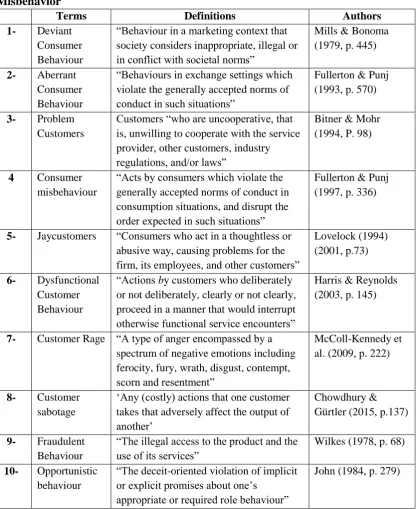
Table 3. 1: Common Names and Terms and Definitions Related to Consumer Misbehavior ... 54
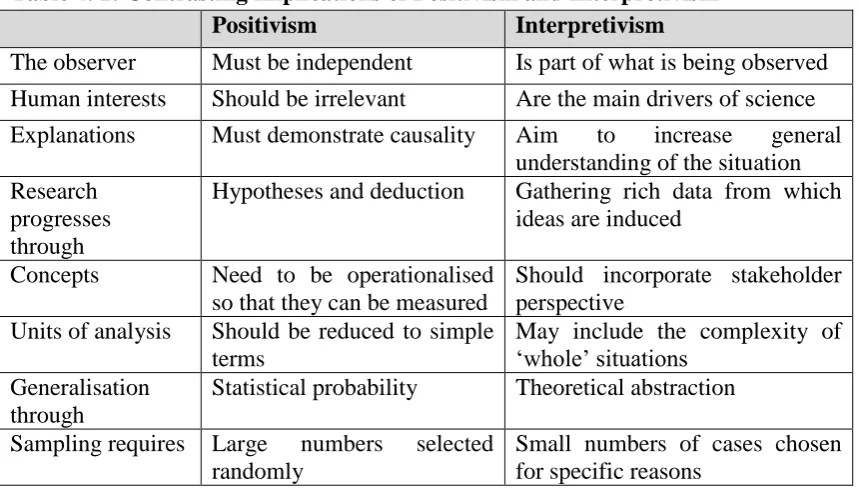
Table 4. 1: Contrasting Implications of Positivism and Interpretivism ... 86
Table 4. 2: Three Dimensional Frameworks for Categorising Four Scientific Paradigms 90 Table 4.3: The Major Differences between Deductive and Inductive Approaches ... 93
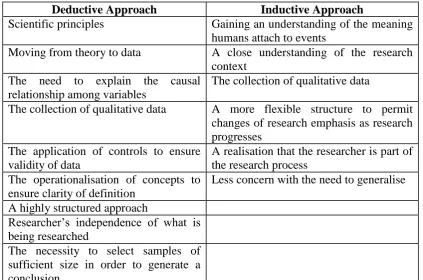
Table 4.4: Advantages of Semi-Structured Interviews ... 100
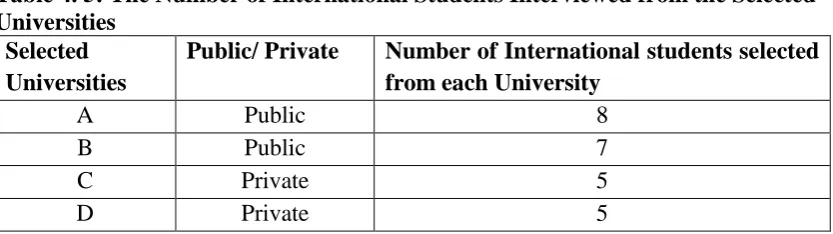
Table 4. 5: The Number of International Students Interviewed from the Selected Universities ... 104
Table 4. 6: Respondent Groups from Four Universities; Two Public and Two Private . 105 Table 4. 7: Showing Analytical Procedures ... 110
Table 4. 8: A Tabular Representation of the Procedures Used in Transcribing the Data 113 Table 4.9: Interview Tactics for Validating Testing ... 114
Table 5. 1: Consumer Misbehavior as a Common Phenomenon ... 117
Table 5. 2: Consumer Misbehaviour Activities (Types) ... 121
Table 5. 3: Drivers behind Consumer Misbehaviours ... 131
Table 5. 4: Challenges in Controlling Customers’ Misbehavior at JHEIs ... 141
Table 5. 5: Consequences of Consumers’ Misbehaviour on the Brand Image of JHE ... 147
Table 5. 6: Perceived Brand Image of Jordanian Universities ... 156
vii
LIST OF FIGURES
viii
ACKNOWLEDGMENTS
All Praise to Allah the Almighty.
I owe the greatest debt of gratitude to my supervisor, Dr Peter Reeves, for his guidance, patience, insightful feedback and comments at every stage of this thesis as well as for offering his time so generously. Without his constant support and encouragement at critical junctures, this thesis would not have become a reality. I would also like to thank Dr Morven McEachern for her help, guidance and valuable advice and suggestions in the final stages of writing this thesis. Furthermore, big thanks go to Dr Deirdre O’Loughlin and Dr Yvonne Moogan, my external and internal examiners for their feedback to make my work much better.
On a more personal level, I would also like to express my gratitude to my brothers, Prof Mohammad Hailat and Prof Nabel Hailat, for their on-going support as role models from whom I learn so much. I would like to express my gratitude to my beautiful wife, Reem Tubaishat, who has been supportive for the past five years - taking care of our children and working so hard while I have been away from Jordan. I love you so much. I would also like to say special thank you to my daughters, Sarah; Farah; Noor; and Lamar, who always put a smile on my face when I needed it most and who have not seen their busy dad for quite a while. I love you all.
I would like to express my gratitude to Yarmouk University for granting me a scholarship to pursue my doctoral degree, especially the Dean of Economics and Administrative Sciences, Prof. Ryad Momani and the Chairman of the Marketing Department, Dr Mahmud Alkailani. My special thanks also go to Trevor Uyi, Sheku Kakay, Nosiba Khaled, Suleyman Tek, Ismail Alblushi, Stephen Makoji, Mona Nassar, Ali Al-quran, Ahmed Ibrahim and all the PhD students and staff at Salford University for their valuable support, and true friendship.
ix
LIST OF ABBREVIATIONS
List of AbbreviationsConsumer Misbehaviours Economic Consultative Council Higher Education
Higher Education Institutions
Jordanian Higher Education Institutions Jordanian Universities
Gulf Cooperation Council Gross Domestic Product Higher Education Commission Jordan Vision
Ministry of Higher Education and Scientific Research United Arab Emirates
United States Aids
World Health Organisation
CM ECC
HE HEIs JHEIs
JU GCC
GDP HEC JV MHESR
x
DECLARATION
xi
ABSTRACT
1
CHAPTER ONE: RESEARCH INTRODUCTION
1.0 Chapter Introduction
The purpose of this introductory chapter is to provide the reader with an overview of the research that is presented in the body of the thesis. This chapter introduces a background to the study, the rationale behind it and the impact it creates on the perceived brand image of Jordanian Higher Education Institutions (JHEIs). Next, this chapter identifies the research aim, research questions, and objectives followed by further discussion on the contribution to knowledge, and finally, the chapter is concluded with an overview of the structure of the thesis.
1.1 Higher Education in Jordan
The Jordanian government was the sole supplier of higher education until the end of the 1980s when the government realised that it could not satisfy this increasing demand alone. The government took steps to issue policies allowing the private sector to participate in providing higher education services, thus giving the private Jordanian higher education system a kick-start. Following this decision, from 1993 to 1997 two public universities and four private ones were opened; later on another public and another private university were established between 1998 and 2002 (Kanaan et al., 2009; Alrai, 2010). This theme continued and from 2003 until 2010, two public universities were established followed by another two private ones. The current figures show the private sector to have almost double the number compared to government run institutions, resting at ten public and nineteen private universities (MoHESR, 2015). Appendix.1 shows the distribution of universities in the twelve Governorates in Jordan.
2
[image:16.595.108.532.156.562.2]in 1989 (Alrai, 2010). The demographic origin and distribution of international students responsible for the increased consumer misbehaviour is depicted in table 1.1:
Table 1.1: The Influences upon the Number of International Students in JHEIs
From influences
1968-present The unrest in the West Bank
1990-1991 The political and economic turbulence resulting from the Gulf war in 1990/1991, and the mass Jordanian returnees from Kuwait and other Gulf countries
2001 The difficulties created for some Arab and Muslim students in western countries is due to the September 11th 2001 attacks in the US which subsequently made it more difficult for students particularly from the Arab Gulf States to obtain a visa for the US and EU countries (Istaiteyeh, 2012).
2002 Jordanian Vision of 2020 and the 2002 Vision of the Forum for better educational future and the national development initiative geared towards increasing the number of international students to 100,000 by the year 2020
2003 The war in Iraq in 2003 prompted the influx of Iraqi migrants to Jordan.
2011 The Arab Spring, Civil War in Syria, and increasing turmoil in Egypt and the Middle East
2013 Volatility in the oil market, the disruption of gas supplies and the energy imported from Egypt are some of the underpinning factors. Moreover, it is also influenced by the rise of unemployment; dependency on remittances from Gulf economies and the increasing pressure on natural resources. Finally, it is also influenced by the escalating spill-over from the Iraqi and Syrian civil war (Moore, 2013).
3
One main characteristic of Jordanian universities uncommon to most Arabic countries is that the number of international students attending Jordanian universities is increasing day by day due to the positive image of Jordan. In the year 2000, a Jordanian public-private initiative was launched: the Jordan Vision 2020, (henceforth JV1 2020). At the beginning of 2004, JV started aiming at enhancing higher educational services exports. This was to be achieved with the collaboration of both the public and private sector from one side, along with various Jordanian representative universities in order to increase the demand of higher education services to 100,000 international students by the year 2020. This increase could contribute around JD 929 (approx. £833 million) to the Jordanian economy (Farinha et al., 2015). It is of great interest to the society in general, and stakeholders in Jordanian higher education in particular, that most of the teaching staff members are graduates of
western countries with advanced degrees in different specialisations. The main objectives of the universities include teaching, conducting research and providing community services. Appendix 2 shows the number of academic staff at Jordanian universities, both public and private in 2012/2013.
1.2 Higher Education & Student Consumers
JHEIs are recognised as major service providers in various academic settings, with greater emphasis on international students as customers (Meek & Wood, 1998; Wilkins & Huisman, 2014). Students are described as consumers who are concerned with acquiring tangible benefits, i.e. having a valuable qualification (Brochado, 2009; Woodall et al., 2014). In agreement, Manthorpe et al. (2010) noted that students should not just be seen as customers but also as consumers. With this in mind, a growing number of (HEIs) in Jordan have recently changed their way of perceiving students; they are now considered as clients or consumers, especially when dealing with international students. Particular significance is given to international students because they pay more for their education than local Jordanian students (Cardoso et al., 2011). Therefore, to promote the growth and international competitiveness of
1 JV 2020 led by Jordanian Business Association, with support from Ministry of Planning, Ministry of Higher Education & Scientific Research Ministry of Industry, Ministry of Tourism and other
4
JHEIs, educational marketers need to pay attention to consumer behaviour decisions. This will ensure that the institutions re-direct their focus on the needs of present students, future students, and other important stakeholders (Hénard et al., 2012; Khanna et al., 2014; Mbachu, 2014).
The decision-making process made by many consumers when determining which higher education institution to opt for has become very complex, challenging and complicated as consumers are becoming increasingly critical and selective in the choices they make (Woodall et al., 2014). Crossan et al. (2013) and Moogan et al. (1999) buttressed this argument by emphasising that consumers now go beyond merely evaluating the facilities and prices of higher education institutions in order to make the final decision and instead adopt a much broader evaluative perspective. These arguments were further reinforced by a number of theorists (Abdul, 2014; Azoury et al., 2014; Hazelkorn, 2015), noting that the overwhelming nature of misbehaviour displayed by consumers in HEIs have raised doubts about the credibility of Jordan institutes.
5
Jordanian universities have become an increasingly troubling “phenomenon” in the past four years, leading to the expulsion of some students who were involved (Yaseen & Ajlouni, 2013). 2013 was reported by the Jordan Times (2013) as the bloodiest year in JHEIs in terms of campus violence as five people were reported dead in that year alone (four from Al-Hussein University and one from the University of Muta). A recent report by the Jordanian Times (2015) suggested that the number of fights and “violent acts” during the past four years has increased by more than 210%, causing a negative effect on the international image of JHEIs. Due to such activities JHEIs ranking dropped four positions, to 86th in the 2013-2014 evaluation (Badran, 2014). Commenting on the drivers of campus violence in Jordanian universities, Maraga & Oehring (2013) assert that in most cases, consumer misbehaviour occurs due to unresolved tensions at university level as well as at social and political levels. The fundamental factors behind consumer misbehaviour in Jordanian universities are deepening with varying implications (Maraga & Oehring, 2013). The overwhelming number of violent incidents has led to the King of Jordan (Abdullah the Second) condemning the phenomenon since it has a negative effect on both the brand image of JHE and on Jordan as a country. He describes the situation in the following terms:
“…Violence and breaking the law at universities and the community has grown at an alarming rate to the point that there needs to be immediate action by the three authorities2 to put an end to this phenomenon, which is affecting the daily life of every citizen in the Kingdom” Statement made by King Abdullah II, King of Jordan (Jordan Times, 2013, P.1).
Due to the overwhelming number of consumer misbehaviours in Higher Education campuses in Jordan, JHEIs are working assiduously to rebrand their image in order to uplift their reputation, both internally and externally (Alvesson, 2013). In general terms, brand image is defined as “attributes and functional consequences and the symbolic meanings consumers associate with a specific service” (see Padgett & Allen,
1997 cited in O'Loughlin & Szmigin, 2005, p. 10), brand image in the context of JHEIs could be viewed as the result of any influencing factor that either enhances or deters service providers in meeting their target objectives due to the perceived views of consumers.
6
Shammot (2011) revealed that Jordanian universities are attempting to build their brand names by recruiting and retaining qualified and competent staff in order to retain existing students and attract new ones. Similarly, Hoyt & Hollister (2014) posit that JHEIs are resiliently working to improve their brand image by effectively and frequently communicating with students to identify their needs, problems and concerns in order to provide better higher education services than their competitors.
7
1.3 The Rationale of the Research
In spite of the numerous studies conducted on student misbehaviour in HEI campuses, this field of study still presents complexities as no one study has been able to concretely assess its impact, particularly with reference to the JHEIs (Mahasneh, 2012). This thesis aims to examine how the misconduct of students has an active role in determining the perceived brand image of JHEIs. Since the drop in the ranking, the Government of Jordan has taken an avid interest in taking corrective action; the international competition has become extremely intense and the negative image associated with Jordan makes it difficult to stay in the running. Not surprisingly, the JHEIs are now looking to devise strategies to address the service delivery quality and related aspects (in this case the perceived brand image) as a means of gaining an edge over competition in this ever increasingly challenging marketplace (Brown & Mazzarol, 2009). Nevertheless, it appears that little formal research has been undertaken that addresses the significance of customer satisfaction drivers and the perception the brand image (Zhang, 2015). In addition to this, comparatively little research exists on whether a negative brand image of education in a certain area has an increased likelihood of generating a tangible loss in terms of consumer loyalty and consumer satisfaction; this issue is particularly poignant regarding the institutes that are dedicating substantial resources to this end (Brown & Mazzarol, 2009).
Numerous studies have established that consumer misbehaviours in JHEIs are gradually downgrading the quality of education and making it difficult for service providers to deliver the right kinds of service consistently (Rundshagen, 2014; Greer, 2015; Lucas, 2015). However, consumer misbehaviours effect on the quality of education in JHEIs is yet to be explored, as no study has been able to present empirical evidence on the causes of consumer misbehaviours using a Jordanian perspective.
8
quality of delivery (Mourad et al., 2011). Hence, there is a need for universities as a whole to understand the standpoint of students and their social needs before carving out appropriate strategies that suit these needs (Lamboy, 2011). The relevance of this study is extremely significant as higher education is currently part of a very competitive environment. This is enhanced by the pertinence of branding, which has also increased to promote the reputation of institutes and inevitably to generate additional revenues for the JHEIs by means of selling a positive brand image, attracting more students from overseas and local regions.
1.4 Research Aim, Questions and Objectives
1.4.1 Research Aim
The aim of this study is to investigate the influence of consumer misbehaviours on the perceived brand image of JHEIs, and more specifically on international students who are both existing and potential customers.
1.4.2 Research Objectives
In order to achieve the above research questions, the following four research objectives are formulated:
1) To critically explore the types of consumer misbehaviour in Jordanian Higher Education Institutions, with analysis of the causes of consumer misbehaviours in JHEIs.
2) To understand the challenges confronted by the Jordanian higher education sector due to consumer misbehaviours.
3) To critically analyse the implications of consumer misbehaviours on the brand image of Jordanian Higher Education Institutions.
4) To investigate potential solutions to help mitigate consumer misbehaviours in JHEIs.
1.4.3 Research Questions
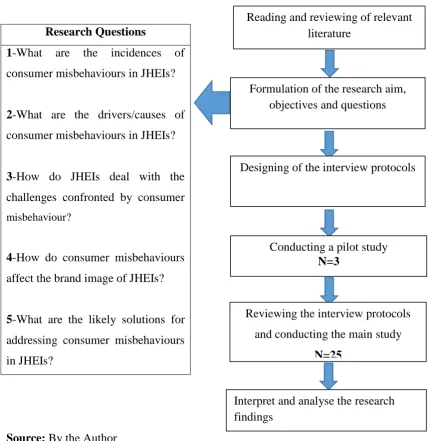
The specific questions of the research include the following: 1) What are the types of consumer misbehaviours in JHEIs?
2) What are the drivers/causes of consumer misbehaviours in JHEIs?
9
4) How do consumer misbehaviours affect the brand image of JHEIs?
5) What are the likely solutions for addressing consumer misbehaviours in JHEIs?
1.5 Thesis Contribution to Knowledge
The research objectives and questions lend themselves to a qualitative methodology. Qualitative empirical semi-structured interviews with various international students were conducted in four Jordanian universities in order to gain in-depth understanding of the phenomena and its influence on the brand image of JHEIs. On fulfilling the above research objectives, this thesis aims to contribute to the existing body of knowledge on consumer misbehaviours and its influence on the perceived brand image particularly in the context of the JHE sector. Given the lack of literature regarding consumer misbehaviours in the higher education sector from a marketing perspective, it is imperative that studies are carried out in this area (Veres & Jackel, 2010; Jäckel, 2011; Jäckel & Lehoczky, 2013; Chahal & Dalrymple, 2015; Douglas et al., 2015). In addition, this is the first study that looks at campus violence from a marketing perspective. Moreover, many studies have tackled campus violence but used quantitative survey methods with Jordanian students only and did not use international students (Bani Arshead, 2009; Okour & Hijazi, 2009; Al-Louzi & Farhan, 2010; Alsubaihi & Rawajfeh, 2010; Al-Adwan, 2012; Ghoneem, 2012; Buckner, 2013; Momani et al., 2013; Yaseen & Ajlouni, 2013). Moreover, this is the first study that uses qualitative data collected from international students in Jordan regarding their perceptions of consumer misbehaviours. This is because the researcher aims to provide a more exploratory and in-depth critical understanding of the phenomenon of consumer misbehaviours at JHEIs, their drivers and the challenges that JHEIs are facing resulting from these issues.
10
host country, has been identified as one of the factors that determine the patronage of international students (Jiewanto et al., 2012; Chen, 2013; Alwi & Kitchen, 2014; Momen et al., 2014). It becomes imperative that JHEIs develop a positive brand image to be able to enhance their international students’ patronage. Therefore, in the light of the importance of protecting international students and creating a safe educational marketplace, this research will enhance the theory that is predominantly rooted in Western countries. This is achieved by studying consumer misbehaviours in the Jordanian context, which has a significantly different cultural and economic environment. Brand image can act as a powerful source of competitive advantage (Melewar & Akel 2005). The findings of this research are of practical value to higher education institutions (HEIs). The implementation of strategies by HEIs to increase their brand image and strengthen institutional identification among potential students might have a positive effect on student enrolment, thus empowering institutions to magnify and achieve both growth and financial goals.
11
1.6 Overview of the Thesis
This overview briefly describes the content of each chapter in the thesis, highlighting the key elements that will be discussed in each of these chapters, which are presented below.
Chapter Two: The Jordanian Context
Chapter two provides information on the context in which this research is conducted, the higher education sector in the Hashemite Kingdom of Jordan. The focus deepens to consider higher education in Jordan, and specifically consumer misbehaviours within a Jordanian context. It also presents an overview of the concepts of understanding brand image in general and within the higher education sector in particular. It then addresses brand image as an influence on consumer behaviour. The chapter concludes by highlighting the importance of brand image in higher education.
Chapter Three: Literature Review
A rigorous and critical literature review relevant to the subject under investigation is presented in this chapter. The first major section of the literature review provides an understanding of customers in higher education, particularly stressing on the stakeholders i.e. the potential and existing potential students of the service. This section also discusses how best students are described. Furthermore, the definition of consumer misbehaviour is also included in this section, drawing the attention of the reader toward the determinants of such a construct. Emphasis is laid on the types of misbehaviours exhibited by students and the impact it creates on the overall Higher Education Sector.
Chapter Four: Research Methodology
12
Chapter Five: Research Findings and Discussion
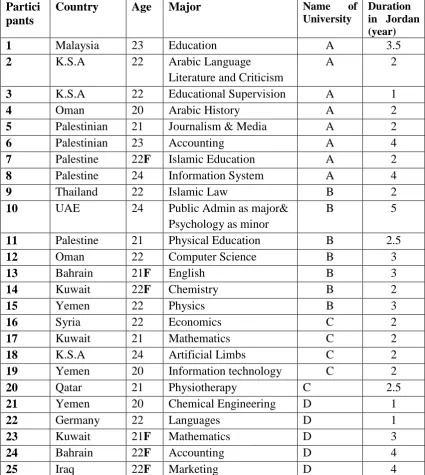
This chapter presents a qualitative empirical analysis of the data collected using semi-structured interviews from twenty-five international students in four Jordanian universities. Respondents’ perceptions and attitudes were examined, organised, categorised, synthesised and interpreted according to the research objectives and questions before being discussed in light of the reviewed literature and thematic analysis of the data collected.
Chapter Six: Conclusions, Practical Contributions, and Recommendations
The aim of this chapter is to summarise the outcomes for each objective emergent from chapter five. This chapter also outlines the major theoretical and practical recommendations for academics and practitioners. In addition, suggestions for further work are provided and reflections and limitations are then presented.
1.7 Summary
13
CHAPTER TWO: THE JORDANIAN HIGHER EDUCATION
CONTEXT AND THE ROLE OF BRAND IMAGE
2.0 Chapter Introduction
Chapter two provides information on the context in which this research is conducted, the higher education sector in the Hashemite Kingdom of Jordan. More importantly, the focus then is on higher education in Jordan, and specifically on consumer misbehaviour within a Jordanian context. It also presents an overview of the concepts of understanding brand image in general and within the higher education sector in particular. It then addresses brand image as an influencer of consumer behaviour. The chapter concludes by highlighting the brand image in higher education. See Appendix 6F for general information about Jordan.
2.1 The Development of Education in Jordan
14
Since 1951, the Jordanian higher education sector has experienced significant changes starting with a one-year post-secondary training class for teachers (Istaiteyeh, 2012). The first university majorly started operation in 1962, when the University of Jordan was established (Aladwan et al., 2014). Between the establishments of the first public university and in between 1987, three public universities were created (Benner, 2013). Between the years, 1988 and 1992 one public university and nine new private universities were established. The reasons for this surge were the increasing demand for Jordanian higher education services by the return of Jordanian migrants from Kuwait and other Gulf countries during and after the gulf war in 1990/1991, as well as the continuing population growth rate in Jordan from 3.7% in the mid-1980s to 3.6% in 1990 and 3.8% 2014 (Nugent, 2014). Finally, the tertiary education gross enrolment rates increased from 13.1% in 1985 to 63% in 1991 and to 95% (UNESCO, 2006; Ivy, 2008). Based on JHESR data, Jordanian universities experienced extraordinary growth in the number of students enrolled in all undergraduate and graduate study programmes, growing by 12% since 1993 (Luck, 2013). The total number enrolled in graduate studies at public universities in High Diploma 14%, MA\M.Sc. 71%, and Ph.D. 14%. Here we can see that master program of graduate studies is attracting the highest number due to the demand of the expanded private sector particularly MBAs in business, marketing, banking, etc. (Badran, 2014). Students’ enrolment in private universities in Jordan 2012/2013 totalled 66,655 students, in 18 universities. Growth of private universities was 18% per year from 36642 students in 2000 to 66,655 students in 2013. Appendix 4 shows the total number of Jordanian Students in Public and Private Universities, which was 310,606 students in 2012-13 (Badran, 2014).
15
industrialised country (Kamar et al., 2011). In 2003, the budget dedicated to education was 6.4% of total government expenditure, whereby in the same year, education expenditure as a percentage of GDP was 13.5% while in 2014 the annual expenditure on higher education was 4.5% of GDP (Badran, 2014). The heavy spending on education gave Jordan the third lowest illiteracy rate among all Arab countries. For example, in 1994 the primary gross enrolment ratio was 71% while in 2006 the ratio went up to 98.2%. Along with these high enrolment and transition rates, Jordan has achieved 90% in literacy and 98% in primary and secondary enrolment (United Nations, 2009; McKeown, 2015). The Ministry of Education in Jordan has made it compulsory for students to be computer literate, especially on scientific and mathematical courses so they are able enhance their regular studies result by using computers. The education system in Jordan is recognised as a world-class system and is of international standard. Appendix 5 shows general information regarding the number of schools and teachers in the public and private schools, a report by the ministry of education in 2014 as reported by Al'rai Newspaper.
16
It was reported in the nature journal (2006) that, Jordanian higher education has more researchers per million people among all Arab and Islamic countries who are members of the Organisation of Islamic Cooperation (Butler, 2006). Through this, it can be made evident that education, and more specifically higher education, plays a fundamental role in building a knowledge-based economy, as many economies around the world are connected to the development of the higher education system (Jackel & Veres, 2010). In 2006, the World Bank reported Jordan as a leader among all Arab countries in higher education and in the Middle East (Kanaan et al., 2010).
Naidoo (2015), proposed in his research study of higher education brand image that higher education institutions have to make positive images of their products in order to be more competitive and more attractive to consumers. They have to be more creative and develop a distinctive image and identity to create competitive advantage in crucial competitive markets (de Haan et al., 2015). This is because; education plays a distinctive role in its development, and should not be ignored. This image influences students’ selection of a university and students' motivations to consider an institution, so it is extremely significant in building these positive images in the eyes of the higher education stakeholders (Ivy, 2001; Douglas et al., 2015; McKeown, 2015).
17
increased. On March 18th 2012, the King met the Presidents of all the student unions of the universities to discuss the phenomenon of violence on Jordanian campuses. The King urged the Presidents of all Jordanian Universities to address the issue of violence at their universities, describing it as the “redline”. He recommended that students engage in the development and the reform process and relinquish violence; a phenomenon which he said “does not represent the Jordanian values and threatens our educational process” (Jordan Times, 2013). Moreover, this kind of violence does
not only have a negative effect on Jordan as a country but also on the brand image of Jordanian higher education (Jordan Times, 2013).
2.2 Brand Image in Higher education
2.2.1 Understanding Brand Image
[image:31.595.114.525.477.767.2]Brand Image as a phenomenon, has been reviewed by several authors over the years; these reviews have several descriptors, qualifiers and meanings. In the context of this study, efforts will be geared towards addressing brand image within the service sector, linking it with the HE sector and more precisely with the JHE sector. This study will review several literatures within these perspectives as shown in Table 2.1.
Table 2. 1: Provides the Literature on the Concept of Brand Image
Authors and years
Definition of Brand Image
Schmitt (2012) A collection of ideas, feelings and attitudes that consumers have about brands
Keller (2008) Brand image is consumer’s perception about the brand, as reflected by brand association held in the consumer memory.
Aaker (1996) How customers and others perceive the brand.
Kapferer (2008) The image refers to the manner in which [a brand's] public decodes all the signals emitted by the brand through its products, services and communication programme.
Biel (1993) That cluster of attributes and associations that consumers connect to the brand name.
Dobni &Zinkhan (1990)
Brand image is a perceptual phenomenon formed through consumer interpretation and is largely a subjective.
Lee (1990) A symbolic meaning commonly shared by the majority of consumers Park et al. (1986) Brand image is the understanding consumers derive from the total set
of brand-related activities engaged in by the firm. Newman (1985)
Herzog (1963)
Perception of consumers about the total attributes of a product. General impression and perception of consumers about a brand Noth (1988)
Levy (1973) Sommers (1964)
The symbolic meaning engraved in the service or product. Product or service purchases’ symbolic implication
18
characteristics of a product
Sirgy (1985) Brand image resembles the personality of human beings Levy (1973)
Gardner & Levy (1955)
Overall product or brand impression that the consumer holds including feeling, recognition and attitude towards brand.
Consumers’ attitudes, emotions and opinions toward a brand form the brand image, which illustrate the brands’ psychological or cognitive components.
Source: Adapted from Zhang, (2015, p.60).
Image is defined as an abstract entity representing something concrete (Ditcher, 1985).
Akin to the above definitions, the shorter Oxford English dictionary defined image as “an artificial depiction or imitation of the external form of any type of object” (Boorstin, 1961; p. 201). The entire notion is believed to be a replacement or replication of reality. Later, studies suggested that images are defined as ‘archetypes’ and are a representation of a concrete article or unconscious demonstration of original ideals which have emerged over the course of societies and history (Jung, 1969). O’Loughlin & Szmigin, (2005) cited Padgett & Allen, (1997) stated that brand image is also referred to as the characteristics and functional ramifications of, as well as the symbolic implications associated with, a particular service.
Holistic approaches to creating brand image borrow from Gestalt psychology. Gestalt psychologists consider perception as an active process; when people are given partial information about things, they “fill in the gaps” (Fournier et al., 2008; Cho & Fiore, 2015). This suggests that consumers absorb information from a variety of sources and, as a result, create their own overall picture. Dowling (1988) points out that humans rely less on specific facts than on total impressions, thus a brand image “describes not individual traits or qualities but the total impression an entity makes on the mind of
others” (Dichter, 1985, p. 77). It has powerful influences on the way people perceive
things and it should be a crucial concept in shaping our marketing, advertising, and communications efforts. Therefore, more attention must be paid to the overall impression, the "harmony," (i.e. the functional or emotional appeal) of an advertising or marketing campaign, rather than to its specific claims.
19
intrinsic benefits of the consumption of products or services and typically tally with the attributes related to product (Sondoh et al., 2007). For instance, experiential benefits are described as what the use of a product or service feels like and generally corresponds to the attributes relevant to the product. On the other hand, symbolic advantages were found in synchronicity with the primary needs to gain society’s consent or personal expression, outer-centred self-esteem and are essentially matched with non-product related characteristics.
Functional and emotional approaches of brand image can be divided into two groups: rational and symbolic (Bhat & Reddy, 1998). Rational approaches portray consumers as trying to obtain the greatest utility in choosing or consuming goods and services (Schiffman & Kanuk, 1997). In doing this, customers may go through a variety of rational process-gathering information, judging the importance of each available attribute, identifying the optimal brand, and so forth (Fournier et al., 2008; Khanna et al., 2014). It is plausible that rational approaches are appropriate only, if at all, for goods and services that consumers value for their utilitarian benefits, and that they have little place for goods and services that satisfy emotional needs (Bhat & Reddy, 1998; Michel & Rieunier 2012).
20
and symbolic components (de Chernatony & Cottam, 2006; Brečić et al., 2013; Li et al., 2014).
2.2.2 Image Constructs
This part of the review is focused on examining the image elements and the factors, which are involved in an individual’s formation of images, especially perspectives on the formation of several image constructs. There are various methods to this area, hence it is commonly agreed that there are many elements that have an influence on the formation of image.
As explained in the previous definitions, image is a multi-dimensional paradigm. Several researchers agree that, as a whole, the image construct is created through the cognitive (perceptual) and emotional (affective) evaluation of every individual in conjunction with further variables such as psychological features, prior experience, socio-demographic factors and sources of information (Parameswaran & Glowacka, 1995; Landrum et al., 1999; Lozano et al., 2013; Alwi et al., 2014). Hence, it can be argued that the image has an essential role in understanding the developing educational marketing strategies and educational behaviour. Additionally, the image is projected as a two-dimensional construct which consists of both holistic impressions and attribute-based as the two core components. Within those mechanisms, measuring psychological and functional features should be determined. Furthermore, when measuring image in this context, traits that are both common (psychological and functional) and unique (distinctive, events, beliefs, characteristics, or sensations) should be considered (Dowling, 1988; Arpan et al., 2003).
A number of studies have revealed that a brand with a positive image is likely to boost the consumers’ purchase intention and improve upon the brand loyalty and recognition (Chang et al., 2012). Therefore, the brand image acts like a representation of the product’s complete information. Even though the image of a brand relates to the personal perceptions of the consumers rather than the brand itself, loyalty is indeed a major benefit of being a high-quality brand; this ensures that the brand stands out in a crowded and competitive market while creating their own kingdom (Keller, 2003).
21
in addition to winning the customer’s loyalty (Kotler, 2002; Chang et al., 2012). Furthermore, it has the added advantage of improving any undesirable images. Alternately speaking, the influence of brand image on consumers is great, and to promote the brand and its image, effective marketing strategies are highly relevant.
Extensive study has been associated with brand image since the 20th century because of its significance in building brand, brand loyalty, association and equity (Zhang, 2015). Organisations now require an in-depth insight into consumer behaviour in the ever-increasing competitive world and educate consumers of the concept of the brand to establish productive marketing strategies (Zhang, 2015).
Doubtlessly, the images taken as an object’s projection are illuminated by the individuals obtaining it. It is apparent that individual perception shapes these images, in addition to being composed by the collaboration of beliefs, ideas and impressions of such projection. This is also termed as an abstract perception, which is held responsible for compromising numerous perceptual influences (Diamantopoulos et al., 2011; Aghekyan-Simonian et al., 2012). Due to the theoretical nature of the image, these are considered a complicated discourse and are not typically understood easily with any generally viewed standpoint; it is a terminology that is blurry, prone to changes and has been differently associated with advertisement and consumerism, cognitive maps, expectations, memories and attitudes (Pearce, 2005). As the images are not the same to all individuals with respect to the collaboration of perceptions, memories, attitudes and beliefs, it is hence crucially necessary for an image to be perceived favourably. This could be easily determined by a favourable image, which will likely influence the decision of the student towards applying for higher education studies abroad or to make a transaction (Alves & Raposo, 2010; Williams & Omar, 2014).
2.2.3 Brand Image as an Influencer of Consumer Behaviour
22
Zhang, 2015). The advancements of the 21st century have led to a proliferation of brands on the market whereby the purchase decisions of consumers are largely dependent on the image of the brand instead of the product itself (Jamal & Goode, 2001). As a result, consumers prefer the brand when they find their self-concept to be consistent with the brand image. This calls for the definition of self-concept theory according to which an individual’s self-concept implies a collection of perceptions he/she has regarding himself/herself, including the components for instance personality, appearance, capabilities and shortcomings (McConnell & Strain, 2007; Leary & Tangney, 2012). From the marketer’s perspective, investigating the consistency between the consumer’s self-concept and the image of the brand is extremely important in order to understand that consumers may exhibit different self-concepts in various social contexts (Shavelson & Bolus, 1982; Leary & Tangney, 2012). However, irrespective of the context, consumers will have positive thoughts about the brand if the brand image is consistent with their self-concept.
23
image, organisations need to infer the prospective impact of brand image on the satisfaction of consumers by determining the perceptual difference regarding a particular brand between the non-users and consumers of the brand (Kapferer, 2008).
24
2.2.4 Brand image Association and Variables
Aaker (1991, p.111) defined brand association as “anything linked in memory to a brand.” This includes feelings, products, characters, symbols and life-styles as well as
certain objects and activities. Aaker (1991) also explains that associations generate value to both customers and firms in helping to process and access information but they are costly for the company to initiate. Associations help to separate one brand from another by differentiating the product/service and positioning of it and “a differentiating association can be a key competitive advantage” (Aaker, 2009, p. 135).
Associations represent bases for buying decisions and for devotion to the brand (Aaker, 1991). In support of Aaker, Arnold (1992, p. 12) claims that:
“The need met by a product is vital for understanding the critical success factors facing a company, but brand differentiation is more usually driven by positioning to meet consumer wants. In particular, the intangible or emotional wants of consumers are the source of loyalty to a brand”.
Arnold concludes that customer loyalty and their admiration is the key to success. Brand associations also provide a reason for a customer to buy; some engage in the product attributes or benefits, which give a consumer a specific reason to use that brand. Arnold (1992) argues that brand associations can also relate to the credibility of and confidence in that brand. They can create and link positive feelings and attitudes to a brand (Arnold, 1992). Brand image is a combination of perceived attributes of the brand and brand associations (Keller, 2003).
25
Strength
The strength of brand image is identified by the scale and intensity of the brand signal. The strength is determined by the ability of the signal to reach students and stakeholders in HE. The level at which students can process the brand signal defines its strength (Keller, 2003).
Uniqueness
This is a very important association of brand image; the message of the brand has to be different and unique to separate it from the clutter and competition among different institutions. A unique image develops longer associations with students and stakeholders and makes them able to differentiate brands from other brands, universities, and even countries (Keller, 2003). It is also important that unique images should be marketed effectively using all the relevant marketing communication channels (Duncan & Caywood, 1996).
Expectations
Expectations of a brand determine the depth of image (Keller, 2003). This is the extent to which students and stakeholders expect the brand or university to deliver a product or service, the greater the expectation, the greater the brand image. Students and stakeholders’ expectations are based on standard attributes such as quality of education, qualifications and experience of faculty, different courses offered and innovative and up-to-date programmes (Smith, 2003; Landers et al., 2015).
Perceptions and associations
26
Experience
Actual experience of using a product or service creates a high level of brand association and a favourable image. Personal experiences of students, alumni of the university and stakeholders’ involvement, shape experiences of the brand (Nilson, 1998; Keller, 2003).
Evaluation
Evaluation involves rough processing of the brand image by the consumer (Keller, 2003). Students are exposed to brand activities through various marketing channels and brands within the education sector. Evaluation of these brands is based on the combined effect of the brand’s perception, past experience with the brand and expectations of the brand (Hoyer & Brown, 1990).
Maurya & Mishra (2012) cite that the reactions exhibited by people are not towards reality; they are more a reaction to perceived reality. Brand image is described as the image in the minds of the customers concerning the brands’ psychological and functional characteristics (Isaac, 2000). Some other standpoints on brand meanings refer to brand image as everything that people associate with a brand (Wood, 2000). The consumers’ idea of the product is another reference to brand image. This concept of brand being linked to the customers’ perception is adhered by a number of authors (Isaac, 2000; Kapferer, 2008; Maurya & Mishra, 2012).
2.3 Brand Image in Higher Education
27
influence the brand image of a university; for example, dissatisfaction. According to Zeithaml et al. (1996), problems of dissatisfaction and negative perception cause students to have a negative perception of the image of the institution. Such a negative impact might lead to students taking undesirable actions such as spreading word-of-mouth criticism; complaining to agencies, both external and internal; switching patronage to another organisation and reducing purchases from the organisation. Thus, it can be seen that the benefits of brand image cannot be over emphasised.
Customer product judgement can influence the brand image negatively or positively (Abosag & Farah, 2014). Image formation can be significantly influenced by the primary and secondary bases of gathered information about a given University, made accessible to international students. This information can influence an international student’s judgement of JHEIs negatively or positively. This, in addition to any accumulated experience and socio-demographic characteristics. Image impacts consumers' purchase intentions indirectly by decreasing risk perceptions associated with the brand (Aghekyan-Simonian et al., 2012). The image of the JHEIs already established by international students will determine how they perceive the risk of selecting Jordan as a study destination. Brand image represents a reliable pointer to the content of information retrieved from memory, which could be due to an experience (Grohs & Reisinger, 2014). Cognitive, sensory and affective elements are important dimensions of brand image (Cho & Fiore, 2015). Thus, it is important that information available to international students, through word of mouth communication or their own individual experiences portray the brand image of the University positively. This would mean less chance of international students choosing other study destinations as opposed to Jordan, based on their evaluation of the available information. Especially as brand image reduces perceived risk and improves the evaluation of the service (Dall’Olmo Riley et al., 2014).
28
influence on international student consumers when selecting HE institutions, with their principles of service. Building on the findings of cultivating service brand equity (see Stahl et al., 2012), establishing a strong name for JHEIs could be done in a number of ways. Creating a distinctive service is necessary and can be achieved by adjusting the themes of the brand (de Chernatony & Dall'Olmo, 1998; Ghodeswar, 2008). These themes include: legal instruments, logo, company, identity system, image in students’ minds, personality, relationship, adding value and evolving entity. Long-term brand image is affected by short-term investment in marketing activity efforts (Gray, 2006; Durkin et al., 2012). JHEIs will need to adopt marketing strategies that will help communicate the brand effectively and help in developing a relationship with current and prospective international students. Acquiring a brand with a better image would improve the existing image of its brand and this has an effect on brand loyalty (Lee, 1990).
When an image is created in a person’s mind, it is always a result of a complex thinking process, which is affected by the person’s earlier observations and experiences. Simply put, it implies everything that has been seen, heard or sensed before. In general, a human being is a creative and complex thinker who creates individual images in his mind (Stern et al, 2001). One of the major challenges in communications is to succeed in influencing a persons’ thinking at a deeper level and in the right way. Thinking is also related largely to culture. This means that different values, norms and attitudes of a society affect people’s behaviour (Stocchi et al. 2015). An individual human character also largely affects a person’s behaviour and buying behaviour. Further investigation of the role of the individual’s personal characteristics can be carried out by evaluating the role of socio-demographic characteristics in contrast to the perceived image. Results show that cognitive and affective assessments made by individuals are influenced by socio-demographic characteristics (Yuille & Catchpole, 1977; MacInnis & Price, 1987).
29
point out that, throughout their university career, the students with a positive satisfaction level exhibited a willingness to create a positive buzz for the university once they graduated (Azad et al., 2013; Ko & Chung, 2014). Subsequently, the Jordanian educational system can take lessons from the observed conjecture that problems which affect the consumer attitudes and corporate image negatively create an unfavourable impact on organisations (Chen, 2010; Chen et al, 2012; Hanzaee & Asadollahi, 2012; Schnittka et al, 2013). As brand equity is driven by brand image, the attitudes of consumers are influenced by their perceptions; these could be either negative or positive. An example would be an organisation going through crisis that negatively affects its image; such situations will influence the consumers’ attitude in a negative way. This shows that brand image can cause severe damage to the organisation when it is viewed negatively whilst it can also bring about goodwill to the organisation when the image of the organisation is positively perceived. Cash flows, purchase intentions, growth, market share and profits, as well as other elements of the organisation, are also influenced by the brand image (Yoo et al, 2011; Chen et al., 2012). Furthermore, brand image plays a crucial role in determining the attitude of the general public towards the institution (Yeh, 2015). The Jordanian education system pays significant attention to the fact that undesirable coverage and perception has could potentially damage the university image (Hemsley-Brown & Goonawardana, 2007; Quintal et al, 2012). As a result, the next section will be addressing the role of image in a student’s decision-making process.
2.3.1Decision making and Role of Image
In the decision making process the key component is found to be ‘image’; this particularly applicable to the student selection process. The key component is the students’ perceived images of particular institutions as these influence their preference in choosing one institution over the other or one country over the other.
The main contributors in the developing intentions for continuing higher education are highlighted with the concept of push and pull factors (Rembielak-Vitchev et al, 2009; Wilkins et al, 2013). The factors of push are the internal causes and
30
attractions, rather than the internal necessity of the students (Rembielak-Vitchev et al, 2009). The attention of numerous researchers is drawn towards the issue of factors that influence a student’s choice of university, particularly in the case of the Jordanian Higher Education System, which can reap large benefits from this research. Some of the factors include institution status, age, facilities, location, and family income (Hassan et al, 2008). The reasons listed as the most significant by the students include: value, cost of education, significance of education, relatives, peers and associates, degree and majors, resources and facilities, material aspects; and information about institutions (Wagner & Fard, 2009). A crucial part is played by these factors to determine the selection of a Higher Education Institution. Kumaravel & Kandasamy (2012) state that the institute’s image and academic repute, cost to attend the university and the accessibility to the preferred major were the most noteworthy components. The most significant ones were found to be friends, family involvement and supervision centre materials (Ecclestone, 2001). Six pull aspects were determined, which influence the students in choosing a host country: personal recommendations or referrals given by the parents, gatekeepers, relatives and friends to the study destination; the awareness level and knowledge of the repute of the destination with reference to the quality and recognition of the institute; the cost issue encompassing the fees, social costs, living and travel expenses, for instance safety, crime, racial biases; an environment which is pertinent to perceptions regarding the study climate in the country of choice; social connections, whether the friends and family have been there or any contact lives in the country of choice; geographic proximity of the prospective countries to the parent company of the student (Mazzarol & Soutar, 2002). The emphasis of this study will however be focused on image though there are several other determinant factors of the selection process.
31
The literature lays stress that a significant role is played by the institutes themselves to create their corporate identities, in addition to the corporate images as per the view of stakeholders (for instance Abimbola et al., 2012; Wilkins & Huisman, 2013). Abimbola et al. (2012) propose that institutes can employ marketing and institute communication to have a positive impact on the stakeholders’ held images. Globally, universities are undergoing enhanced competition and diminished public funding levels. The Jordanian education system, akin to other foreign countries, have found that to adopt market orientation they need to pay higher attention to the image of their universities. This has moved JHEIs towards focusing their ideals and preferred identities more clearly, and enhancing the communication quality and volume with their stakeholders. Sojkin et al. (2012) posits that information quality and quantity, regarding an institute, is one of the influencers of the student decisions while Moogan et al. (2001) state that the University giving easy, accessible and understandable information has higher chances of recruiting students. It was determined by a number of researchers that the favourable medium of students looking for information about universities is online media (Cox et al., 2014). Smaller gaps are expected to be visible between the preferred identities and conceived identities among successful institutes. Nevertheless, the scope of this study does not include corporate identities and researching ideals.
Although institutes deliver and plan communication, the impromptu communications that are not controllable by universities, for instance word-of-mouth and media coverage, also influence the formation of corporate image. Sweeney et al. (2014) propose that most of the image is not just determined by the institute but by the environmental aspects as well (for instance audience member’s demographic factors) and personal aspects (for instance the magnitude of personal impact experienced) pertinent to the stakeholder.
32
to education quality, sports programmes, academic programmes or environmental aspects. Overall, institutional image–the sub images pertinent to institutional aspects – was greatly influenced by the images of campus landscaping, campus size and academic programmes. Ross & Allen (2012) and Arpan et al., (2003) proposed that in a survey of existing institute students, the magnitude of news coverage, athletic aspects, and the academic aspects of the university were determined as the key predictors of the university image.
A single image conceptualisation is not easy for a university because every department, every collection of professors and every college develop their personal images. Arpan et al. (2003) stated that various and multiple images could be held simultaneously by the stakeholders as all stakeholders’ employ various criteria when an institution is being evaluated. Coelho et al. (2014) elucidate that the institute images are measurable and interpreted in numerous various ways. Meanwhile corporate image encompasses emotional and functional elements as compared to the single image concept (Kennedy, 1977; Jalilvand & Samiei, 2012; Chen, 2014). The functional element is associated to tangible features, which are easily measurable (for instance product characteristics), whereas the emotional element is focused with psychological features, for instance the feelings and attitudes of an individual towards the institute. These are an outcome of personal experiences, in addition to the processing of different information sources. Nguyen & LeBlanc (2001) stated that the image of the corporation is the outcome of a cumulative procedure, through which an individual compares the different characteristics of an institution.
33
Slater et al. (2013) indicated that construction of corporate image is influenced by institutional, social and personal aspects. At any certain time, different images of an institute are held by stakeholders, groups and individuals as they will all have various experiences, they will concentrate on various characteristics of the institutes and will refer to various information sources. Added to that, multiple images can be held by an individual simultaneously and various images over a period of times as the information gained is updated and processed. Sung & Yang (2008) posits that the attractiveness to any University is greatly determined by the perception of the University’s image at a particular time. At any certain times period, institutions can be held in different images by stakeholders, groups, and individuals as different experiences are enjoyed by each of them; they focus on various characteristics of institutes and will refer to various information sources. Pampaloni (2010) added that corporate image construction is also affected by institutional, social and personal factors.
A study conducted by Sung & Yang (2008) found that the image of university attractiveness could be measured by three variables:
External prestige: high opinions of acquaintances, coverage by media is positive, society looks upon as a prestigious one.
University’s personality: stable, warm, practical and friendly
University’s reputation: to have student care, well-managed, financially sound, and being socially responsible as top priority.
These are important elements, which have been studied as dimensions to these variables by the two researchers and are very valuable considering brand image in Higher Education.