Centre for Digital Business
The Use of Online Shopping Acceptance Model
(OSAM): influence of social media in Saudi
Arabia
A Thesis Submitted in Fulfillment of the Requirements for the Degree
of
Doctor of Philosophy in The University of Salford
Supervisor:
Dr. Aleksej Heinze
Co-supervisor:
Dr. Agata Maccarrone-Eaglen
Abstract
E-commerce in general, and online shopping in particular, are becoming popular ways of utilizing the Internet throughout the world. Social media is also becoming a widespread tool, not only for interaction with others but also for marketing. Despite this trend, there is a dearth of knowledge about the acceptance of online shopping and the use of social media in developing countries such as Saudi Arabia. Technology adoption levels in Saudi Arabia are growing rapidly but have yet to reach their full potential. One of the leading theories explaining online shopping behaviour – the online shopping acceptance model (OSAM) – has not been employed in previous studies of social media use or in developing countries such as Saudi Arabia to understand online shopping.
To address this research problem, the researcher implemented a study using a positivist approach. Quantitative data was gathered using an online survey. This survey was conducted with Saudi residents who engage with online shopping. A data set of 423 completed survey responses is used in this thesis for statistical analysis. The data was collected using a random sample and was collected from January to September 2015. The structural equation modelling tested the hypothesised relationships between the constructs as postulated in the model. Nineteen of the hypothesised links were supported and ten were rejected. Eventually, the model that has statistical and explanatory power was confirmed.
The findings indicate a positive relationship between online shopping intention and other factors of online shopping acceptance in Saudi Arabia. A positive relationship is also seen between online shopping orientation and online shopping experience. The case examines the relationship between online shopping orientation and online shopping motivation. The same applies for the relationship between online shopping and social media through the mediation of online shopping intention.
DEDICATION
To all my family
Mom, Dad, Raed, Doaa, Dalia, Braa, Anas,
Rasha, Rami, Maha, Sedra and Sadin
Thank you all for helping and supporting me & I
Table of Contents
ABSTRACT 2
DEFINITIONS 14
CHAPTER ONE. INTRODUCTION 15
1.1CHAPTER OVERVIEW 15
1.2INTRODUCTION 15
1.3DEFINITION OF THE PROBLEM 18
1.4RESEARCH GAP 21
1.5RESEARCH AIM AND OBJECTIVES 21
1.5.1AIM 21
1.5.2RESEARCH OBJECTIVES 22
1.5.3RESEARCH SIGNIFICANCE 22
1.5.4RESEARCH QUESTIONS 22
1.5.5HYPOTHESES 23
1.6THESIS STRUCTURE 24
CHAPTER TWO. THE CONTEXT OF SAUDI ARABIA 26
2.1CHAPTER OVERVIEW 26
2.2BACKGROUND 26
2.3SAUDI ECONOMY 27
2.4INFORMATION AND COMMUNICATION TECHNOLOGY IN KINGDOM OF SAUDI ARABIA 28
2.5RETAIL BUSINESS IN SAUDI ARABIA 30
2.6E-COMMERCE 31
2.7E-MALLS IN SAUDI ARABIA 32
2.8SOCIAL MEDIA IN SAUDI ARABIA 33
2.9WHY STUDY ONLINE SHOPPING IN THE KINGDOM OF SAUDI ARABIA? 35
CHAPTER THREE.LITERATURE REVIEW 36
3.1CHAPTER OVERVIEW 36
3.2DEVELOPMENT OF THE ONLINE SHOPPING ACCEPTANCE MODEL 36
3.2.1.THEORY OF REASONED ACTION (TRA) 36
3.2.2THEORY OF PLANNED BEHAVIOUR (TPB) 38
3.2.3TECHNOLOGY ACCEPTANCE MODEL 40
3.2.4UNIFIED THEORY OF ACCEPTANCE AND USE OF TECHNOLOGY 44
3.3ONLINE SHOPPING ACCEPTANCE MODEL 48
3.3.1CONSUMER DEMOGRAPHICS 52
3.3.2SHOPPING MOTIVATION 61
3.3.3SHOPPING ORIENTATIONS 62
3.3.4ONLINE SHOPPING INTENTION 64
3.3.5ONLINE SHOPPING EXPERIENCE 66
3.3.6ONLINE EXPERIENCE 67
3.3.7NORMATIVE BELIEFS 68
3.3.8INNOVATIVENESS 69
3.3.9PERCEIVED OUTCOME 69
3.3.10SATISFACTION 70
3.3.11ATTITUDE TOWARDS 71
3.4SOCIAL MEDIA 72
3.5WHY IS OSAM THE MOST RELEVANT FOR THIS RESEARCH? 75
3.6LIMITATIONS OF THE ONLINE SHOPPING ACCEPTANCE MODEL 79
3.7SUMMARY OF HYPOTHESES 80
3.8SUMMARY 83
CHAPTER FOUR. METHODOLOGY AND RESEARCH PLAN 84
4.1CHAPTER OVERVIEW 84
4.2DEFINITION OF RESEARCH 84
4.3RESEARCH PHILOSOPHY 85
4.4.2INTERPRETIVISM PARADIGM 87
4.4.3CRITICAL-SOCIAL SCIENCE PARADIGM 88
4.4.4THE CURRENT RESEARCH 89
4.5PURPOSE OF THE CURRENT RESEARCH STUDY 91
4.6RESEARCH APPROACH 93
4.6.1QUALITATIVE APPROACH 93
4.6.2QUANTITATIVE APPROACH 94
4.7INDUCTIVE AND DEDUCTIVE APPROACHES 96
4.8THE QUESTIONNAIRE 98
QUESTIONNAIRE ADMINISTRATION 98
4.8.1QUESTIONNAIRE DESIGN 100
4.8.2LIKERT SCALE 104
4.9THE RESEARCH MODEL 107
4.10RELIABILITY AND VALIDITY 107
4.10.1RELIABILITY 107
4.10.2VALIDITY 109
4.10.3MODEL VALIDITY AND RELIABILITY 112
4.11THE RESEARCH MODEL CONSTRUCTS 118
4.11.1ONLINE SHOPPING (OS) 119
4.11.2ONLINE SHOPPING EXPERIENCE (OE) 120
4.11.3CONSUMER DEMOGRAPHIC (CD) 120
4.11.4SOCIAL MEDIA (SM) 122
4.11.5SHOPPING MOTIVATION (M) 124
4.11.6ONLINE SHOPPING INTENTION (OSI) 126
4.11.7SHOPPING ORIENTATIONS (SO) 127
4.12SAMPLING 130
4.12.1SAMPLE DESIGN 131
4.12.2SAMPLE SIZE 131
4.12.3SAMPLING AND GENERALIZATION 136
4.13DATA TYPES 136
4.15DATA ERROR 138
4.16DATA ANALYSIS 139
4.16.1DESCRIPTIVE STATISTICS 139
4.16.2RELIABILITY ANALYSIS 141
4.16.3FACTOR ANALYSIS 142
4.16.4EXPLORATORY FACTOR ANALYSIS 143
4.16.5CONFIRMATORY FACTOR ANALYSIS 145
4.16.6EXPLORING RELATIONSHIPS 146
4.16.7CHI-SQUARE TEST FOR INDEPENDENCE 147
4.16.8PEARSON CORRELATION 147
4.16.9SPEARMAN’S RANK ORDER CORRELATION 148
4.16.10MULTIPLE REGRESSION 148
4.16.11CANONICAL CORRELATION ANALYSIS 149
4.16.12STRUCTURAL EQUATION MODELLING (SEM) 149
4.17SUMMARY 151
CHAPTER FIVE. ANALYSIS AND DISSCUTION (DESCRIPITIVE ANLAYSIS) 153
5.1CHAPTER OVERVIEW 153
5.2DESCRIPTIVE ANALYSIS 154
5.3DEMOGRAPHIC PROFILE 154
5.4INTERNET EXPERIENCE AND ONLINE SHOPPING 157
5.4.1INTERNET USAGE 157
5.4.2INTERNET ONLINE EXPERIENCE 158
5.4.3PRODUCT CATEGORIES 159
5.5SOCIAL MEDIA 161
5.5.1SOCIAL MEDIA USE 161
5.5.2SOCIAL MEDIA USAGE 162
5.5.3ACCOUNT OF SOCIAL MEDIA USED FOR PURCHASE ONLINE 164
5.6DESCRIPTIVE ANALYSIS OF MEASUREMENT SCALES 164
5.6.1RESULT OF ONLINE SHOPPING (OS) 164
5.6.4RESULT OF ONLINE SHOPPING INTENTION (OSI) 166
5.6.5RESULT OF SHOPPING ORIENTATION (SO) 167
5.6.6RESULT OF ONLINE SHOPPING MOTIVATION (M) 168
5.7SUMMARY 170
CHAPTER SIX. DATA ANALYSIS II 171
6.1CHAPTER OVERVIEW 171
6.2INTRODUCTION 171
6.3THE MEASUREMENT MODEL 174
6.3.1DATA SCREENING 175
6.3.2.EXPLORATORY FACTOR ANALYSIS 176
6.3.3.CONFIRMATORY FACTOR ANALYSIS 181
6.3.4INDICATORS OF ASSESSING GOODNESS-OF-FIT 182
6.3.5VALIDITY AND RELIABILITY 184
6.3.6FIT INDICES RESULTS 187
6.4THE MEASUREMENT MODEL WITH SECOND-ORDER WITH MOTIVATION 189
6.4.1CFA FOR MOTIVATION 189
6.4.2CONVERGENT AND DISCRIMINANT VALIDITY 195
6.5 STRUCTURAL MODEL 196
6.5.1TEST THE MODEL AND THE HYPOTHESES 196
6.5.2HYPOTHESES TESTING RESULTS OF PROPOSED MODEL 198
6.5.3TESTING THE ASSOCIATION OF PERSONAL INFORMATION ON THE MODEL 201
6.6SUMMARY 206
CHAPTER SEVEN.DISCUSSIONS 208
7.1CHAPTER OVERVIEWS 208
7.2INTRODUCTION 208
7.3DISCUSSION OF RESEARCH QUESTIONS 209
7.3.1ONLINE SHOPPING ORIENTATION 210
7.3.2ONLINE SHOPPING EXPERIENCE 212
7.4SUMMARY 220
CHAPTER EIGHT. CONCLUSION, CONTRIBUTIONS, LIMITATIONS AND FUTURE WORK 223
8.1CHAPTER OVERVIEWS 223
8.2THE MODEL 223
8.2.1THE FACTORS EFFECT ON ONLINE SHOPPING 224
8.2.2SOCIAL MEDIA HELPS ONLINE SHOPPING ACCEPTANCE MODEL 226
8.3RESEARCH CONTRIBUTION 228
8.3.1THEORETICAL CONTRIBUTIONS 228
8.3.2PRACTICAL CONTRIBUTIONS 229
8.4RESEARCH LIMITATIONS AND FUTURE RESEARCH 231
8.5SUMMARY 232
REFRENCES 241
APPENDIX 266
APPENDIX 1:PHDFLOW MAP 266
APPENDIX 2:ETHICAL APPROVAL 267
APPENDIX 3:QUESTIONNAIRE 268
List of Figures
Figure 3-1. TRA, Ajzen & Fishbein, 1975 ____________________________________________________ 38 Figure 3-2. TPB, Source: Ajzen, 1991 _______________________________________________________ 40
Figure 3-3. TAM, Source: Davis, F. (1989) ___________________________________________________ 44 Figure 3-4. UTAUT, Source: Venkatesh et al., 2003 ___________________________________________ 47
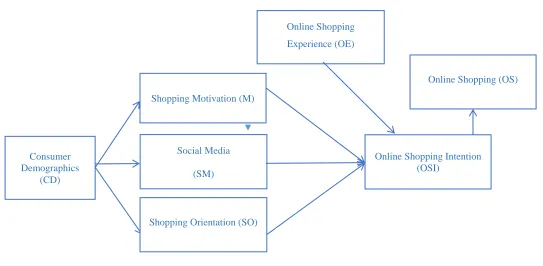
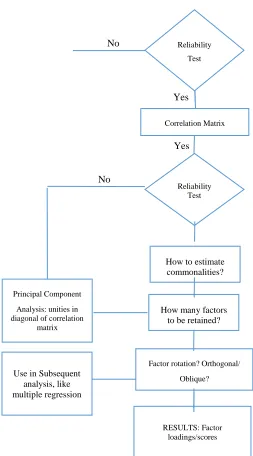
Figure 4-1. The Research Model _________________________________________________________ 119 Figure 4-2. Steps of factor analysis adopted from Rietveld & Van Hout, 1993. _____________________ 143
Figure 5-1 Categories purchase online in the last 12 months __________________________________ 160 Figure 5-2 Do you have any social network accounts? ________________________________________ 161
Figure 5-3 Which social networking website do you most often use? ____________________________ 162 Figure 5-4 how much time do you spend using social networking websites? ______________________ 163
Figure 5-5 How often do you log into social media networks? _________________________________ 163 Figure 5-6 Which social media websites have you used to shop or make decisions on regarding online
shopping? ___________________________________________________________________________ 164 Figure 6-1 Measurement model _________________________________________________________ 182
Figure 6-2 Measurement model _________________________________________________________ 189 Figure 6-3 first -Order for motivation _____________________________________________________ 191 Figure 6-4 Second -Order for motivation___________________________________________________ 192
Figure 6-5 Measurement model with second-order with motivation ____________________________ 194 Figure 6-6 Paths diagram of hypnotised model standardized estimates __________________________ 197
List of Tables
Table 3-1. Summary of history of OSAM ____________________________________________________ 48 Table 3-2. Summary of the factors affecting online shopping intention ___________________________ 49
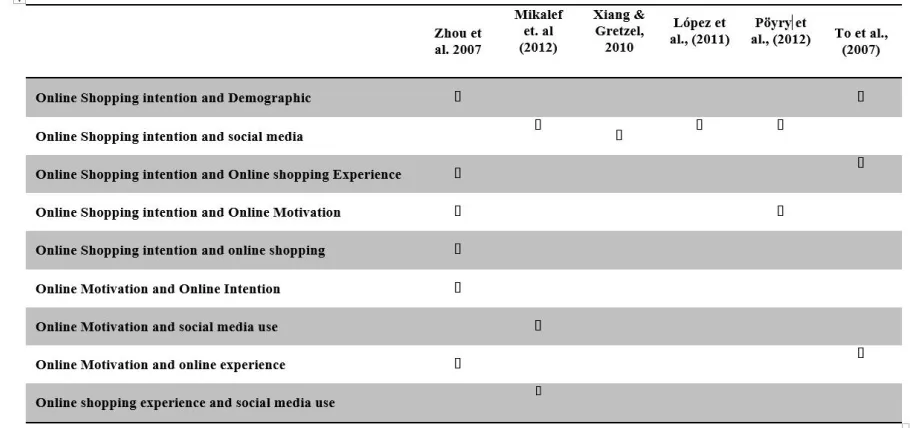
Table 3-3. The Research Hypotheses retrieved from Mikalef et al., 2012; Zhou et al., 2007. __________ 81 Table 4-1. Paradigm approach adapted from Bryman, 2012, Kidd & Kral, 2005 ____________________ 90
Table 4-2. Quantitative versus Qualitative __________________________________________________ 96 Table 4-3. Advantages and disadvantages of online surveys ___________________________________ 100
Table 4-4. Interval scale ________________________________________________________________ 105 Table 4-5. Editing survey _______________________________________________________________ 114
Table 4-6. Variables used in the study _____________________________________________________ 118 Table 4-7. Construct measurement adopted from Mikalef et al., 2012; Zhou et al., 2007; Vijayasarthy,
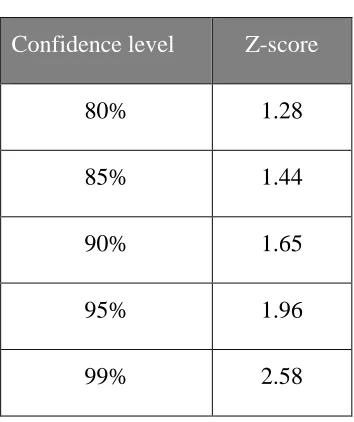
2002. _______________________________________________________________________________ 129 Table 4-8. Z-score _____________________________________________________________________ 133
Table 4-9. Sample size for different population sizes adapted from Saunders et al., 2009____________ 133 Table 4-10. Sampling. Source: Central Department Statistic and Information, Saudi Arabia, 2014,
Communications and Information Technology Commission of Saudi Arabia 2014 __________________ 135
Table 4-11. Data error adapted from Saunders et al., 2009____________________________________ 138 Table 4-12. Reliability Test adapted from Fellows & Liu, 2008 _________________________________ 142
Table 4-13. Key statistics associated with exploratory factor analysis adapted from Loarie et al., 2009 144 Table 4-14. Key Statistics associated with CFA adapted from Hair et al. (2010) ____________________ 146
Table 5-1 Demographic Characteristics ___________________________________________________ 156 Table 5-2 For how long have you been using the Internet? ____________________________________ 157
Table 5-3 In a typical day, roughly how much time do you spend using the Internet? _______________ 158 Table 5-4 How many approximately items have you purchased through Internet shopping for the last 12
months _____________________________________________________________________________ 159 Table 5-5 how much have you spent on personal online purchases for the last 12 months ___________ 159
Table 5-6 Measures of Online Shopping % _________________________________________________ 165 Table 5-7 Measures of Online Experience % ________________________________________________ 165
Table 5-8 Measures of Social Media % ____________________________________________________ 166 Table 5-9 Measures of Online Shopping Intention % _________________________________________ 167
Table 6-1 The Construct measurement Mikalef et al., 2012; Zhou et al. (2007); Vijayasarthy and Jones (2000) ______________________________________________________________________________ 173
Table 6-3 Pattern Matrix _______________________________________________________________ 177 Table 6-4 Factor Correlation Matrix ______________________________________________________ 177
Table 6-5 Pattern Matrix _______________________________________________________________ 179 Table 6-6 Factor Correlation Matrix ______________________________________________________ 181
Table 6-7 Convergent and discriminant validity _____________________________________________ 186 Table 6-8 Fit indices of measurement model _______________________________________________ 188 Table 6-9 Model fit indices______________________________________________________________ 193
Table 6-10 Model fit indices ____________________________________________________________ 195 Table 6-11 Convergent and discriminant validity ____________________________________________ 196
Table 6-12 Results of regression estimates for H1, H2, H3 and H9 ______________________________ 199
Table 6-13 Result of regression estimate H4 _______________________________________________ 199 Table 6-14 Result of regression estimate for H9 _____________________________________________ 200 Table 6-15 Results of regression estimates for H10 __________________________________________ 201
Table 6-16 Result of age association ______________________________________________________ 202 Table 6-17 Result of gender association ___________________________________________________ 203
Table 6-18 Result of education association _________________________________________________ 204 Table 6-19 Result of income association ___________________________________________________ 206
Definitions of Terms
E-commerce
According to Florian et al. (2016) e-commerce (electronic commerce), transfer data or fund over the network. Zhang et al. (2014) define e-commerce as an electronic tool used for business or activities for selling products and services electronically.
Online Marketing
Online marketing is a form of digital advertising and salesmanship that refer to marketing strategy used to market the products or services online include: website, social media, email marketing etc. (Dann, 2010).
Online Shopping
According to Davidow (2010) and Ward (2016), online shopping is the act of buying goods and/or services via online tools such as websites, social media, etc.…, without the customer viewing or visiting an actual physical store of the retailer.
Online Shopping Acceptance
The acceptance of online shopping is a continual process that seeks to obtain potential consumers, together with retailer confidence and acquiescence, through the formulation of an Online Shopping Acceptance Model (Flick, 2009).
Online Shopping Acceptance Model
The OSAM is a reference tool used to describe consumer behaviour in terms of acceptance of online shopping (Flick, 2009).
Social Media
Chapter One.
INTRODUCTION
1.1 Chapter Overview
This chapter justifies the need for this study and provides an overview of its structure. First, the context of online shopping in Saudi Arabia as a developing country is defined. Second, the research problem is clarified by focusing on the Online Shopping Acceptance Model (OSAM) and the use of social media as a specific factor. Third, the research aims, objectives, research questions, and hypotheses are outlined. Lastly, a list of anticipated contributions is presented. The chapter ends with an overview of subsequent chapters.
1.2 Introduction
The use of the Internet has spread widely. It has become integral to many sectors of life, and shopping is no exception. Shopping online has become an essential element in commerce in many countries with high Internet penetration (Santos, 2003).
In 2012, the Internet was utilised by an estimated 42% of the world’s population (AGG, 2012); however, in the space of four years it reached a historic high of more than 50% (Internet World Statas, 2016). From its first commercial use in the 1990s, it has passed through various stages of intensive development (Howe, 2012; Internet Society, 2016). As the Internet continues to develop across the globe and make its way into homes and businesses (Bughin et al., 2011), not to mention personal mobile devices (Zaki, 2013), it is providing a plethora of opportunities for retailers (Neilson, 2016). With the development of online shopping, a platform was developed whereby customers can buy whatever they want from wherever they wish and whenever they desire (Zaki, 2013). This flexibility is one of the major advantages of shopping online, but value for money is one of the top reasons found in the Nielsen survey (2016).
However, online shopping has its disadvantages as well, as consumers must also come to terms with the risks associated with the products and services as well as the online buying process (Ko et al., 2004; Zaki, 2013; Queensland Government, 2016).
The perceived risks of purchasing online are not a new phenomenon, though, as it has been noted that they occur whenever a customer considers the probability of the item getting lost in the mail or some other negative consequence of using or purchasing a product or service (Kim, 2012). These risks existed when customers considered using distance buying, as in mail order shopping (Simpson & Lakner, 1993). These risks include buying from anonymous retailers, the inability to examine the product physically before buying, the loss of time and/or money, the vulnerability of sharing personal and financial information online, and the perceptions of such purchases in relation to the prevailing culture of the consumer’s society, including the views of friends and family (Laroche et al., 2005). Such disadvantages can lead customers to lose trust in online shopping. Hence, efforts have been made to maintain a high level of customer trust, which is the pillar of shopping online and, in fact, any type of shopping. “Customer trust” is an essential concept upon which online shopping is based. It involves the customer’s trust in the retailers as well as the methods of purchasing the products or services. Therefore, when a customer is making a purchase from an internationally based retailer that is located in a different geographical location and that has a different culture, the perceived risks of shopping online increase (Al-Maghrabi & Dennis, 2011). The lack of perceived risks by a potential customer increases the level of trust in the final purchase decision (Khalil, 2014). The less the risks are, the more trust the customer has.
while also eliminating doubt and perceived risks (Al-Maghrabi & Dennis, 2011; Wang et al., 2016).
Examining customers’ perception and acceptance of online shopping is essential because gaining customer trust is a principal factor in the success of any business. Decision makers and business people have sought ways to measure customer’s trust and opinions about shopping online in order to improve the service and fill any gaps (Fang et al., 2016). Thus, retailers and academics alike are becoming increasingly interested in customers’ perceptions regarding online trust, and when and if consumers will purchase a product or service online (Wang et al., 2012). One way to increase trust amongst potential consumers is to invest in social media communication (Laroche et al., 2016).
Social media enables firms and corporations to interactively converse with customers about their products and services while providing reassurance about their offering (Godes & Mayzlin, 2004; Agarwal et al., 2008). The increasing use of smartphones with Internet data services (Wortham, 2010) has made augmented reality (AR) available in many fields of social media application (Pense, 2011). The concept of showrooming is turning conventional face-to-face shopping into competition with online stores, because if individuals can find the same product online for a better price(Horky & Collier, 2016), why should they spend more money in a physical store? When it comes to developing countries, mobile commerce enables e-commerce where it would not have previously been possible. As illustrated by the findings of the Neilson 2016 survey, poor infrastructure is blamed for the unstable Internet connection:
“In some developing markets, this figure approaches or exceeds 50%, including
in Saudi Arabia (55%), India (52%), Nigeria (49%), South Africa (48%), Mexico
and the Philippines (47% each). In these markets, mobile devices have been
critical to e-commerce growth, bringing many new and underserved customers
online—and their importance will continue to grow.”
customers’ role in the process of offering products more essential (Schivinski & Dabrowski, 2016).
Meanwhile, even though a number of studies have investigated online shopping in developed countries, there is still a shortage of research using these in developing economies (Butt et al., 2016). Studies about information technology (IT) in developing countries are few, and IT has failed to transfer effectively (Ahmed & Bahaziq, 2013; Leonardi et al., 2016). Moreover, the literature documenting online shopping acceptance and growth in developing countries is also deficient and often simply anecdotal (Agwu & Murray, 2015). There is a great need to understand the topic of customers’ perceptions and views in research in order to fill the gaps in both knowledge and practice. This research can help in better understanding the special needs of developing countries such as Saudi Arabia and its ability to improve the acceptance of online shopping.
1.3 Definition of the Problem
report of the results obtained from this survey was presented in May/June 2013 which demonstrated that 40% of the businesses and 24% of the government organisations in the country make online purchases; however, only 17% of businesses market their products electronically. Consequently, there are lower trends of online shopping in Saudi Arabia than the rest of the world (Khalil, 2014).
According to the latest survey, Internet usage in Saudi Arabia is reaching 65-67%, which is good indicator of growth, with only 40% of Saudi people shopping online in 2012 (STATISTA, 2016) and 46.5% in 2016:
“Revenue in the ‘e-Commerce’ market amounted to US$4.872B in 2016.
Revenue is expected to show an annual growth rate (CAGR 2016-2021) of 12.1% resulting in a market volume of US$8.642B in 2021.
The market's largest segment is the electronics and media segment with a market volume of US$1.513B in 2016.
User penetration was at 46.5% in 2016 and is expected to hit 70.7% in 2021.
The average revenue per user (ARPU) currently amounts to US$465.44.”
However, if the global statistics are examined, it is found that Hong Kong, Norway, Israel and the US have the highest ratios in the world for online shopping. By contrast, Saudi Arabia ranks 17th in online shopping, with the average person spending $607 per year in on online shopping in 2016 (Chang et al., 2017). There is a large gap between developed and developing countries not only in Internet usage but also in understanding how consumers perceive online shopping. There is also growing interest in examining what factors impact consumers’ decisions to shop or not shop online (Shih, 2004; Lim et al., 2016), and particularly in developing countries such as Saudi Arabia (Brashear et al., 2009).
fastest growth of communication technology marketplaces, but online shopping activities are not developing at the same pace (World Economic Forum, 2016).
Of the total number of commercial organisations in Saudi Arabia, 35% are involved in e-commerce. The majority are medium and large enterprises from the manufacturing sector (Kearney, 2016). The primary factors hindering the development of online shopping in Saudi Arabia include ICT infrastructure, trust, privacy issues, cultural hindrances, and the absence of sound legislation, regulations, rules and procedures regarding the protection of the rights of all parties involved (Alfuraih, 2008; Neilson, 2016).
Al-Solbi and Al-Harbi (2008) espoused that the challenges to online shopping have increased due to a lack of proper e-commerce regulations, legislation and rules to ensure proper monitoring and regulation of the process. Saudi Arabia has tried to contribute to e-commerce efforts championed by UNCITRAL; however, the government of Saudi Arabia needs to incorporate more developments within the e-commerce avenues by developing more regulations, legislation and rules geared towards protecting the rights of all parties interested in online shopping transactions in the country (Al-Maghrabi & Dennis, 2011; Neilson, 2016).
There are just a few countries that have experienced financial and social transformations as dramatic as Saudi Arabia. What was, amid the 1960s, an overwhelmingly migrant culture, is currently 95% settled down, with 80% of the populace living in urban areas (GMI, 2016).
In this developed Saudi Arabia, social networking has become a major force. Now, Saudi Arabia has the highest penetration of Twitter users, and per-capita utilization of YouTube is the highest in the world (GMI, 2016).
1.4 Research Gap
There are a number of theories around information systems, as will be discussed in the literature review. One in particular is the Technology Acceptance Model (TAM), where the element of diffusion focuses on the acceptance and use of the Internet (Al-Maghrabi et al., 2012). This model aims to depict the ways in which individuals come to use new technology and the factors that influence their decisions. The primary influencing factor of this model is usefulness to the user and ease of operation (Al-Gahtani, 2014). This means that individuals accept a technology more thoroughly if they are aware of its usefulness and can use it easily.
However, one of the problems with TAM is that it is not specific to a particular area of technology but applies to various areas of the technology sector (Savitskie et al., 2007). According to Annamalah (2008) and Aladwan and Smedley (2013), the TAM was used successfully by many researchers to study the adoption and acceptance of Internet technologies. Theorists who have used the TAM have been capable of extending the model to more specific areas, such as online shopping, which has led to the development of other models such as the Online Shopping Acceptance Model (Zhou et al., 2007). Many studies have applied the TAM in the Middle East, but none have applied OSAM; therefore, theoretical and practical research is needed to fill the gaps in the online shopping literature (Hidayat et al., 2016). The theoretical model used to analyse the data in the current study will be based on the OSAM as developed by Zhou et al. (2007). This model of acceptance examines customers’ views and opinions about products and services in order to improve or replace them.
1.5 Research Aim and Objectives
1.5.1 Aim
an emerging nation like Saudi Arabia is the opportunity (Al-Ghamdi, 2011) to expand and develop its economy through online shopping and other social media. Therefore, this study aims to explain the acceptance of online shopping in Saudi Arabia using OSAM and the additional variable of social media.
1.5.2 Research Objectives
This study has two primary objectives:
To learn about the growth of online shopping in Saudi Arabia and how the concept has become more popular through OSAM; and
To understand how social media has played a role in the growth of online shopping in Saudi Arabia.
1.5.3 Research Significance
The research will bring about better understanding of the potential of the Saudi online shopping marketplace, what factors influence customers to shop online over conventional malls, and whether the infrastructure to support such functions is in place. Such information can be useful to those who want to invest in the sector as well as consumers who may be encouraged to shop online more.
1.5.4 Research Questions
What factors affect online shopping acceptance in Saudi Arabia?
1.5.5 Hypotheses
These OSAM hypotheses are modified from the original work by Zhou et al. (2007) and Mikalef et al. (2012) by introducing the Saudi Arabian context and social media:
H1: Shopping orientation (SO) is positively associated with online shopping intention
(OSI).
H2: Motivation (M) is positively associated with online shopping intention (OSI).
H3: Online shopping intention (OSI) is positively associated online shopping (OS).
H4: Online shopping experience (OE) is positively associated with online shopping
intention (OSI).
H5: Age is negatively associated with online shopping intention (OSI) through shopping
orientation (SO).
H6: Education is positively associated with online shopping intention (OSI) through shopping orientation (SO).
H7: Income is positively associated with online shopping intention (OSI) through shopping orientation (SO).
H8: Gender is positively associated with online shopping intention (OSI)
through shopping orientation (SO).
H9: Age is negatively associated with online shopping intention (OSI) through shopping
motivation (M).
H10: Education is positively associated with online shopping intention (OSI)
through shopping motivation (M).
H11: Income is positively associated with online shopping intention (OSI)
through shopping motivation (M).
H12: Gender is positively associated with online shopping intention (OSI)
OSAM and Social Media
H13: Social media (SM) is positively associated with online shopping intention (OSI).
H14: Age is negatively associated with online shopping intention (OSI) through social
media (SM).
H15: Education is positively associated with online shopping intention (OSI) through
social media (SM).
H16: Income is positively associated with online shopping intention (OSI) through social
media (SM).
H17: Gender is positively associated with online shopping intention (OSI) through social
media (SM).
H18: Social media is positively associated with online shopping (OS) through online
shopping intention (OSI).
H19: Shopping motivation (M) is positively associated with online shopping intention
(OSI) through social media (SM).
1.6 Thesis Structure
This thesis is organised into seven chapters – Introduction, The Saudi Arabian Context, Literature Review, Methodology, Descriptive Analysis, Hypotheses Test, and Discussion and Conclusions.
In Chapter 1, the topic of online shopping is introduced and the background and motivation of the study established. Additionally, this chapter outlines the online shopping experience by providing definitions pertaining to the study that introduces the subject.
Chapter 2 provides a contextual overview of online shopping in Saudi Arabia and its development. This chapter discusses the context of Saudi Arabia to understand the nature of e-commerce, the e-mall, social media and retail commerce in Saudi Arabia.
analysis of the aspects that enhance further understanding of the online shopping process, and the extent of the impact of social media on online shopping.
The methodology, Chapter 4, identifies the research method used. It further justifies the research strategy decisions made for data collection in line with the research aims and settings. This chapter incorporates the exploratory phase of the quantitative method, which enhances the research process, rendering it more effective and efficient through the inclusion of readily measureable elements.
Analysis of the findings is divided between Chapters 5 and 6. Chapter 5 features an analysis
of the results derived from the data collected from the online survey. Also, it provides statistical data analysis on the data discussed through tables, graphs and charts. The data analysis process selected provides statistical evidence that facilitates the development of the OSAM.
Chapter 6 provides a detailed description of the procedures and steps undertaken in applying the Structural Equation Model (SEM) for testing the research hypotheses and the research model. This chapter also describes the procedure undertaken to evaluate the validity and reliability of each construct as well as the model’s fit through the indices produced from SEM results.
The discussion, Chapter 7, provides an analysis of the results found from primary data
collection and those identified in the literature review. Discussion of the research findings
in this chapter identifies the strategy of the social media used in online shopping in Saudi
Arabia.
Chapter Two.
THE CONTEXT OF
SAUDI ARABIA
2.1 Chapter Overview
This chapter presents the context of Saudi Arabia and explains the role and importance of online shopping in Saudi Arabia. First, a background of the country is provided. Internet marketing, its importance and present developments are addressed. Subsequently, this chapter reviews the use of information and communication technology, retail commerce, electronic commerce, e-malls, and online customer behaviour and intention in Saudi Arabia. This is followed by an overview of social media in Saudi Arabia and previous research on online shopping in the country.
2.2 Background
From 1932 to 1950, Saudi Arabia was considered a poor and struggling country whose economy was greatly reliant on agricultural production and annual Islamic pilgrimages. Once oil trading started in the 1940s, the country opted to improve its physical infrastructure (Al-Rasheed, 2010). Utilizing its oil fields during the world oil crisis in 1973, the country earned significant revenue. It became a member of the World Trade Organization in December 2005.
Saudi Arabia is the homeland to the religion of Islam and includes two of the most sacred Islamic cities – Makkah and Madinah. Islam provides the fundamental system of state governance, and dominates people’s individual and social lives (Saudi Ministry of Foreign Affairs, 2016). The country had a population of 31 million in 2016, 6 million of whom were immigrants living in an area of 2,149,690 square kilometres. The country’s annual per-capita income was approximately $20,487 in 2015. Twenty-one million of the Saudi population use the Internet.
the largest and emerging IT industries in the world, Saudi Arabia lags far behind the latest developments in the field of e-commerce (Al-Ghamdi et al., 2012). Accordingly, there is an urgent need to conduct research to discover the factors that influence customers’ approval and interest in online shopping and to determine the underlying impediments towards it, particularly in Saudi society and culture (Xu et al., 2016).
2.3 Saudi Economy
A major part of Saudi Arabia’s economy is reliant upon oil revenue, which is completely controlled by the central government. The country owns about 16% of the world's reserves of petroleum, is the biggest exporter of petroleum, and is a significant member of OPEC. In 2016, the petroleum sector of the country comprised:
80% of all financial plan revenues;
45% of GSP; and
90% of all export earnings.
To further expand its economy and provide employment opportunities to its citizens, Saudi Arabia is working to develop the private sector in terms of:
Power-generated telecommunication;
Natural gas exploration; and
Petrochemical sector.
Approximately 9.6 million immigrants in 2015 worked in industry, employed mostly in the oil and service sectors and education. Due to this large number, the authorities are working in Riyadh to decrease the unemployment rate among Saudi nationals. The focus of the government is on the youth of Saudi Arabia because they lack adequate levels of education and technical skills, which are required for employment in the private sector. In 2014, Saudi Arabia faced its first budget deficit since 2009.
services that are available online. Moreover, Saudi Arabia offers a range of online marketing opportunities for both customers and retailers. According to the most recent report by the Ministry of Commerce and Investment in 2016, around 5 million Internet users in Saudi Arabia purchased online goods and services worth approximately $9 billion in 2016. The most widely purchased goods were electronic products and software, while the most extensively used services were airline tickets and hotel reservations.
Hence, Saudi Arabia can be considered as one of the larger e-commerce markets in the Middle East. Although the Saudi e-commerce market is quite developed, it is expected to grow further in the next few years due to the increased use of online shopping, which is worth around $13.5 billion (Ministry of Commerce and Investment Report, 2015).
2.4 Information and Communication Technology in Kingdom of Saudi
Arabia
The economy of a country relies greatly upon information and communication technology (ICT). The first decade of the 21st century in Saudi Arabia marked the development of a subsistent ICT infrastructure (Brdesee et al., 2012). In the last few years, the Saudi government has effectively addressed these considerations and become the main and most rapidly developing oil market in the Arabian state (Sullivan, 2016).
In 2011, 83 billion Saudi Riyals were spent on the ICT sector (CITC, 2016). IT spending is expected to increase to a yearly growth level of about 11.4% in 2015, which requires to maintain growth rates over the coming years. This fast growth rate has been stimulated by the high rates of expenditure in hardware and ICT services (CITC, 2016). Currently, the Saudi government opted to further develop the ICT infrastructure by privatizing the telecommunication sector (International Monetary Fund, 2016). The Saudi government in 2001 established the Communication and Information Technology Commission (CITC), which aimed at regulating the ICT sector by following up on a particular set of rules. The commission had the following goals:
Making effective use of the available frequencies;
Conveying telecommunications technology to keep track of the pertinent
development and ensuring comprehensibility and directness in the underlying
processes;
Effectively following up on the principles of impartiality and fairness; and
Safeguarding the interest of the public as well as that of users and stakeholders.”
The Saudi government in 2003 formulated an autonomous ministry called the Ministry of Communications and Information Technology (MCIT). This ministry aimed to regulate the ICT sector, while ensuring its effective functioning and expansion of its services to bring development in the socio-economic structure of the country, which would result in progress of the country and its people (MCIT, 2016).
Broadband memberships in Saudi Arabia increased to nearly 26.6 million for altered broadband lines accessible to around 42.9% of family units, and about 20 million for portable broadband for 49.6% of the public in mid 2016 (MCIT 2016). Settled broadband administrations incorporate DSL, fibre optic and other altered lines.
The CITC have declared that Internet users now comprise a key portion of Saudi society. Nearly 96% of local Internet users view the Internet as an essential wellspring of data and diversion. Undergraduates are urged to use the Internet as their schools tend to utilize a greater amount of Internet time than others (CITC, 2016).
2.5 Retail Business in Saudi Arabia
The yearly population growth rate has increased by 3.2% in the past decade. This increase is one of the factors responsible for developing the Saudi Arabian market and marking its place in the Middle East (Trading Economic, 2016). According to the World Economic Forum (2016), Saudi Arabia is the 7th largest and most rapidly developed trade market in the world. In 2016, its retail trade capacity surpassed SAR 90B (SAR 3.75= US$1), which amounted to 70B. In 2015, the Saudi retail market capacity reached SAR 370B, comprised of small and medium-sized companies, which represented 85% of the total market share (Aljazira Capital, 2016). It is expected that by 2020, Saudi retail sales will reach SAR 445 billion (Aljazira Capital, 2016).
times. Nonetheless, international retailers are considered an important part of the development of the market (Kearney, 2016).
Each company has different business hours, but many businesses operate either from 5 pm to 9 pm or 8 am to 3 pm. During Ramadan, which is the month of Islamic fasting, these times are altered to 9 am to 3 pm and 8 pm to 3 am. The weekend is Friday and Saturday, and working days are from Sunday to Thursday.
2.6 E-Commerce
According to the Hub of the Ministry of Commerce and Investment in the KSA (2016), the first e-business committee was founded in 1999. This is one of the government’s strategies to accept and utilize the e-commerce structure. Like the online trading amount, various dilemmas have promoted the involvement of the government in the Internet.
According to the Ministry of Commerce and Investment (2016), the e-business committee in Saudi Arabia was chosen to calculate fundamental infrastructural requirements related to security, communication, technical, and legal dilemmas. Many other ministries and departments were included in this committee; however, due to the government bureaucratic system, new legislation and the process of adaption are highly time-consuming.
With the increase of almost 3.9% each year, the rate and speed of development in the business sector increased in the past years (SAAB, 2016). According to AMEinfo (2008) the appearance of e-commerce is the main reason behind this expansion and growth. According to CITC (2016), many companies utilize the Internet in their business. The outcomes mentioned below were obtained in the literature regarding the utilization of e-business within the private segment in KSA, as stated in CITC (2016).
1) The size of the company is related to who owns the website, and approximately four out of every ten firms own a website and have an Internet connection.
2) Information related to the company is sometimes displayed on the website along with news and information about their services, goods and events.
4) Both foreign and local domain names are generally utilized, and there is no distinct preference for website hosting. Nonetheless, in order to allow companies to communicate better with consumers, companies favour the use of local domains. The scarcity of e-commerce in the commercial sector was highlighted in many studies, and only one of out every ten companies use e-commerce. According to CITC (2016), the reduced uptake of online shopping differs greatly from the number of companies that have a website, which is 65%.
The reasons are recognized as follows:
- There is a possibility that companies have insufficient funds to build interactive websites that enable buying and sales transactions. The company might utilize websites like eBay and choose to collaborate with an e-broker or e-mall. According to Alshehriet al. (2012), there are some problems and dilemmas that are faced by the Saudi government. There is a scarcity of experienced people even though the government has the financial resources to fund the project.
2.7 E-Malls in Saudi Arabia
According to Timmers (1998), digital platforms that facilitate interaction between customers and retailers are called ‘electronic markets’ (e-malls). As stated by Asfoura et al. (2009), they serve as an electronic interface to facilitate businesses that offer various important services via the Internet. These facilities include organizing procurement, provision, and delivery systems. Moreover, as Zimmermann (1997) stated, a local marketplace of international goods for one place or many adjacent areas can be defined as an e-mall. According to Laudon and Traver (2007), the provision of a vast range of informational kinds of exchange and interaction by using electronic means includes the most significant advantages of e-malls for companies.
presentation of commercial goods of many vendors while facilitating the effortless comparison of costs and characteristics, these e-malls play the role of huge networks (Bahaddad et al., 2015).
According to Informix (2000), the products and services that an e-mall offers should be listed clearly. Amazon.com (2010) states on the first page of the website the main subcategories, such as sports, garden supplies, household products, video games, software, clothing and hardware. According to Ward (2016), various marketing techniques like Facebook, Twitter, YouTube and Instagram should be provided by e-malls so that connections with the customers can be augmented. Furthermore, the intention to continuously augment the number of consumers who are willing to buy and trust these websites is augmented through conferencing.
On the basis of research that was conducted involving the customers of a Saudi Arabian Internet services unit, 56% utilize and trust foreign market websites but only 8% of the population uses Arabic sites. However, a few e-malls have become popular in Saudi Arabia. The most popular are the Saudi Post e-mall (emall.com.sa), Haraj.com and Souq.com.
Moreover, there is a dearth of studies on Saudi Arabia, and most are on the subject of the creation of e-commerce, such as Bahaddad et al. (2015), who studied the factors attracting online consumers to choose e-malls. According to Al-Ghamdi et al. (2011), however, the amount of research that specifically focuses on the sub-prototypes of e-business such as B2B and B2C is quite low. In addition, companies make agreements with e-malls as an alternative to developing an e-commerce site of their own.
2.8 Social Media in Saudi Arabia
youth in Saudi Arabia (GMI, 2016). According to SimilarWeb (2016), YouTube, Twitter and Facebook were the top social networks in 2016, and there has been an increase in active accounts from 6 million in 2012 to around 11 million in 2016. The top four social media applications in 2016 were WhatsApp, Facebook, Skype and Snapchat (GMI, 2016).
Global Media Insight (2016) reported that Facebook in 2016 had more than 7.9 million clients from Saudi Arabia, up from 6 million in 2012. Additionally, the quantity of Twitter clients is expected to approach 6 million dynamic clients in Saudi Arabia (GMI, 2016). This study inferred that Twitter had three million dynamic clients in 2012. Regardless of the ubiquity of Facebook and Twitter in Saudi Arabia, the utilization of social media is still new to many organizations.
Many researchers believe that businesses in Saudi Arabia still do not realize the power of social media as a marketing tool (Saleh, 2016). For this reason, researchers argue that businesses need to change their way of communicating with the public and start using social media to keep up with the interests of the public (Saleh, 2016). Moreover, they argue that social media can create an advantage for businesses by shifting the nature of communication with the public from the traditional way to a more developed and direct approach.
matter of start-up expenses. Making a SMBB is less costly than making and maintaining an expert online site (Wix.com, 2013 and Shopify.com, 2013) or brick-and-mortar store.
2.9 Why Study Online Shopping in the Kingdom of Saudi Arabia?
Since the beginning of the Internet, the Internet has continually developed, through online data, business, stimulation, and long-range interpersonal communication. In 1991, the Internet had less than three million clients globally and no e-trade applications. By 1999, around 250 million clients were on the Web, and 63 million of them were occupied with online exchanges, which created an aggregate estimation of USD$110B (Coppel, 2000). In this manner, the Internet stands out amongst as being among the most powerful advances that have built up the e-trade.
2.10 Summary
This chapter presented an overview of the online shopping context in Saudi Arabia. The principle topics that emerged are the importance of studying Saudi Arabia. This was approached by describing the Saudi economy and statistics on Internet penetration and the use of social media as well as top websites in 2016.
Despite being one of the fastest-growing technology industries, there was little growth in online shopping in Saudi Arabia. The role of social media, and the needs, wants, and preferences of Internet users in Saudi Arabia have yet to be examined in academia. There has not been a study on online shopping acceptance through the use of social media from the new technology acceptance approach (Al-Maghrabi et al., 2012).
Chapter Three.
LITERATURE REVIEW
3.1 Chapter Overview
The previous chapter introduced the research setting and challenges faced by online shoppers in Saudi Arabia. This study was built on the online shopping acceptance model (OSAM), which is described and justified in this chapter. The first section addresses the historical background of OSAM and its developmental theories. The next section describes the OSAM factors, such as online motivation and consumer demographics. The last section focuses on the model derived from the new factor of social media examined in this study.
3.2 Development of the Online Shopping Acceptance Model
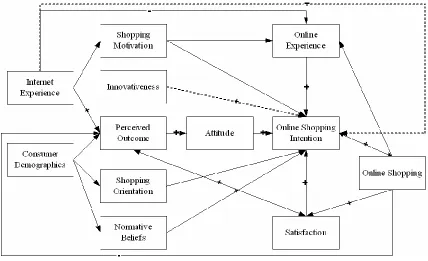
OSAM was developed out of contributions by a number of theorists as an extension of the Technology Acceptance Model (TAM), Theory of Reasoned Action (TRA), and Theory of Planned Behaviour (TPB) (Flick, 2009). The development of OSAM resulted from various consumer features, which were essential in defining the conglomeration of factors that shaped consumers’ acceptance of using TAM (Flick, 2009). These factors included online experience, demographic factors, shopping orientation, Internet experience, personal traits, shopping motivation, normative beliefs, and online shopping experience (Flick, 2009; Zhou et al., 2007). In accordance with other studies on the subject, there was some consistency regarding the impact of these factors. This has led to the classification of some of these factors into categories that then determined online shopping acceptance models (Zhou et al., 2007).
3.2.1. Theory of Reasoned Action (TRA)
developed as a consequence of the expectancy value models. Ajzen and Fishbein pioneered the development of the theory during their efforts to enhance understanding related to the inconsistency between outlook and behaviour. The TRA posited that attitudes toward a behaviour and subjective norms (i.e., the influence that other people have on a person's attitudes and behaviour) are major predictors of behavioural intention (Kim, 2012).
In general, individual behavioural intentions aim to provide positive results of actual behaviour. Moreover, attitudes pertaining to an individual’s behaviour comprise one’s evaluation of the realized behaviour (Kim, 2012; Fakultas, 2014). This attitude is influenced by an individual’s beliefs about the benefits and costs of incorporating the behaviour. For example, a customer may shop online to save money such as fuel costs and time by staying home instead of driving to a shopping mall. The person realizes that their time has value and spending it on shopping in person may incur an opportunity cost they would rather avoid by purchasing goods or services virtually. This was argued by Kim (2012) and Fakultas (2014). In this case, the consumers’ beliefs influence their attitudes as well as their behaviour. Moreover, according to Kim (2012), a positive attitude toward online shopping is shaped by several factors: 1) an individual’s perception of the product, 2) one’s shopping experience, 3) customer service, and 4) consumer risk. These beliefs stem from an individual’s evaluation of various opinions pertaining to online shopping from their spouse, parents, siblings and/or friends.
attitude toward e-shopping based on past experiences and perceives online shopping as more convenient and costing less, that person will likely purchase products or services online (Agag & El-Masry 2016; Ajzen & Fishbein, 1975; Ha, 2012).
Figure 3.1 illustrates the TRA, showing that individual behaviour is influenced by attitudes and subjective norms, which create behavioural intentions that shape behaviour. Subjective norms are explained by Furnham (2005) when he refers to "the perceived pressure from
significant others to perform or not perform the behaviour" (p. 34).
In the case of online shopping, subjective norms are the pressure placed by others on the customer to buy or not to buy the product or service. Attitudes are also influential in determining behaviours, as Figure 3.1 shows. An individual’s subjective norms and attitudes influence and guide the individual’s behaviour. For example, people with negative attitudes towards shopping online are predicted not to shop online.
3.2.2 Theory of Planned Behaviour (TPB)
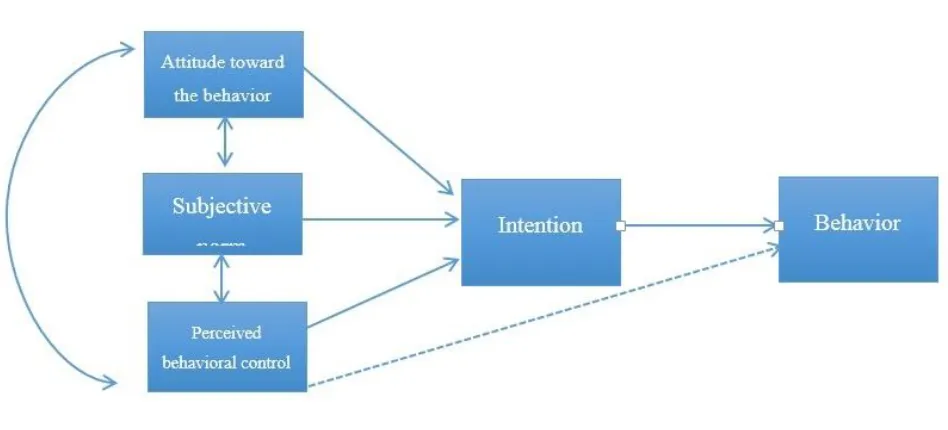
The main difference between the TPB and TRA is that the TRA was seen to have too many limitations and thus a third element was introduced – namely, the concept of perceived behavioural control. This led to the creation of the Theory of Planned Behaviour (Ajzen, 1991). The TRA proposes that a person's behaviour is directly influenced by his/her
intention to perform the behaviour and that this intention is, in turn, influenced by his/her attitude toward the behaviour and his/her subjective norm. In other words, the TRA demonstrates that when a behaviour is positively assessed by a person and when others are expecting them to behave in such a manner, it will lead to their higher intention and motivation to do so. Theoretically, the components of TRA are attitude, subjective norms, behavioural intentions, and subsequent behaviour.
It was discovered that behavioural control does not always sway actual behaviour. As an attempt to resolve this limitation, Ajzen (1992) introduced TPB by coming up with another constituent component referred to as an ‘apparent social regulator’. TBP and TRA thus share many similarities, but TBP is more of an improvement of TRA.
In real-life situations, an individual may have the required positive attitude, subjective norm, and the behavioural intention to purchase online, but he/she may be limited by the lack of network, network skills, or knowledge of how to use the various payment gateways found online. These factors may prevent an individual from engaging in online shopping, even if they have the behavioural intent.
Psychologists such a Ruotsalo et al. (2015) conducted studies on interactive control and its impact on behavioural intent and real behaviour. Behavioural control refers to a person’s perception about the difficulty of performing a certain act (Ajzen, 1991). TPB postulates that one’s behavioural presentation is reliant on, and may be foretold by, one’s interactive intention and perceived interactive control. Ruotsalo et al. (2015)’s TRA espouses that one’s conduct is influenced by interactive intention where behavioural aims identify a task of one's attitude toward the behaviour and the personal customs surrounding the presentation of that behaviour (Ajzen,1991).
this theory, they overlooked the influence of personal customs. Moreover, Shim et al. (2001) in a study of online prepurchase intention models conducted in the US, worked under the assumption that perceived behavioural control indirectly affected consumers who wanted to shop online with the aim of using the Internet while searching for information. Figure 3.2 illustrates the relationship between consumer attitudes, intention, and behaviour. In fact, a cyclical relationship is cultivated, whereby each factor plays off the others to drive consumer outcomes.
[image:40.612.94.568.338.553.2]It can be noticed by comparing Figures 3.1 and 3.2 that a new element was introduced in Figure 3.2 – perceived behaviour control. This refers to the supposed likelihood to do what one is used to, and depends on the perceived beliefs and biases that may or may not support a behaviour (Steg et al., 2012).
Figure 3-2. TPB, Source: Ajzen, 1991
3.2.3 Technology Acceptance Model
behavioural purposes (Teo, 2011). The TAM is one of the most widely used theories that has been tested and critiqued in various research (Wu & Ke, 2016). Past studies on the acquisition of technology and diffusion of innovation focused on the acceptance and usefulness of the Internet (Mortenson & Vidgen, 2016). Davis et al. (1992) introduced this theory to forecast the acquisition and application of information technologies. The theory has come to apply in the present day to the development of applications on various operating systems. The TAM is an economical and influential model used to predict the acceptance of users of these technologies. Since the current e-commerce environment is run by technology, researchers employ this model to predict the acceptance and application of online channels (Ashraf, 2014; Pavlou, 2003).
Results of research studies related to TAM offer a synopsis of the causes of the acquisition and use of e-commerce. The TAM has been widely used by researchers to explain why consumers adopt online shopping, given that the model has a reliable aptitude to elucidate an important quota of variances that exist between social intent and real behaviour. This resulted mainly from investigation into technology product acquisition (Bobbit & Dabholkar, 2001; Goldsmith, 2002; Grabner-Kräuter & Kaluscha, 2003; King & He, 2006; Park, 2009; Wu & Ke, 2016).
In a Saudi Arabian study, notions of trust, risk, and experience were all found to contribute to shape the intent and behaviour of online shoppers (Abed et al., 2015). Unlike most consumers, shoppers in Saudi Arabia liked the idea and practice due to its convenience and speed, but were cautious about integrity and receiving the goods they ordered. This was mainly because they were used to brick-and-mortar supermarkets where they can physically check the goods for defects (Al-Mowalad et al., 2012). This trend echoes what the TAM asserts. The attitude of users towards adopting technology is highly dependent upon their perception of the usefulness and simplicity of technology. As a result, this affects their intentions based on behaviour, and eventually determines acceptance and use (Meuter et al., 2005; Ashraf, 2014).
consumers trust that the system’s use will be struggle-free is known as ‘perceived ease of use’ (PEOU). In this situation, PU refers to experiential outcomes while PEOU refers to the developments regarding outcomes (Perea et al., 2004). In other words, there is an increased use of the Internet by consumers if they perceive the experience as easy and useful (Teo et al., 1999; Ha, 2012). Venkatesh and Davis (2000) argue that if the system is easier to use, then its usefulness is higher; therefore, PEOU affects PU in a positive manner. These two beliefs thus mediate the effects of other external variables on behavioural intention (Davis et al., 1989; Ashraf, 2014).
During the improvement of TAM, Davis et al. (1989) established that approaches shape aims. In other words, personal norms have little impact on behavioural purposes. Other studies also support the idea that subjective norms do explain the behavioural intentions for using information technologies (Keen & Taylor, 2004; Ha, 2012). Other studies such as Karahanna et al. (1999) showed the contrary – that subjective norms considerably alter intentions. This issue was investigated in detail by Karahanna et al. (1999), who found that the effect of personal customs on behavioural purpose is more intense for probable adopters than for users. Prejudiced norm theory can apply in this case as a portion of Saudis have historically opposed any form of modern progress due to what they see as an imposition of Western culture (Pickett, 2008).
Self-determination and motivation theories suggested extending the TAM to highlight the more hedonic aspects by measuring apparent enjoyment. These theories suggest that shoppers are motivated by intrinsic and extrinsic factors (Olsson, 2008). The desires to behave in a certain manner and to achieve specific goals are related to extrinsic inspirations. The view that satisfaction and contentment are achieved by performing the behaviour itself stem from more intrinsic motivations (Vallerand et al., 2008). Childers et al. (2001) support both extrinsic and intrinsic motivations. As an extrinsic motivation, the consumer may see online shopping as not only more convenient but also more fashionable and a symbol of technological advancement.
al., 2001). By contrast, PEOU refers to the procedure leading to the result and can be seen as an inherent influence; however, several authors dispute this idea (Perea et al., 2004), and argue that PEOU does not fully apprehend intrinsic drives. For instance, most consumers are happy with just how conveniently and easily the system works.
The TAM was verified in the operational setting through studies such as Kim (2012), Giovanis (2012), Bach, Čeljo and Zoroja (2016) and Al-Ghamdi (2012). These studies argued that the main factors in e-commerce adoption and acceptance are PEOU, PU, user’s beliefs, and enjoyment. Chong (2012), for instance, stated that consumers’ attitudes towards online shopping are positively affected by each of the predictors aforementioned. Using retail experiences in e-commerce and online shopping, these studies also examined the comparative effects of PEOU, PU, and user’s beliefs. It was discovered that useful aspects (i.e., PEOU, PU) of online spending and hedonic aspects (e.g., enjoyment) play an equal role as predictors of online shopping behaviours. The final model showed that 67% of the attitude variance towards online shopping is determined by utilitarian motivation, whereas 64% of the attitude variance towards online shopping is determined by hedonic motivation (Asraar, 2015).
Tentative summary can therefore be drawn from the analysis of the TAM literature. First, from an online perspective, TAM identifies a significant portion of the discrepancy in online shopping approaches, including intent and behaviour. This builds on the impression that views of innovation largely determine acceptance and usage. Perceived risk and beliefs have an initial influence on new online spenders (Kim et al., 2012; Giovanis, 2012; Chong, 2012; Al-Ghamdi, 2012). These factors, however, cease to be important as consumers become more familiar with the Internet and online shopping, as the overall usage becomes more frequent.
Figure 3-3. TAM, Source: Davis, F. (1989)
3.2.4 Unified Theory of Acceptance and Use of Technology
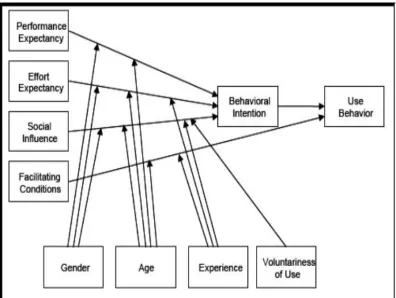
The Unified Theory of Acceptance and Use of Technology (UTAUT) is a unified model that was developed by Vankatesh et al. (2003), based on social cognitive theory with a combination of eight prominent IT acceptance research models.These theories include the TAM, TRA, Motivational Model (MM), combined Theory of Planned/Technology Acceptance Model (TPB-TAM), Social Cognitive Theory (SCT), Innovative Diffusion Theory (IDT), and the Model of PC Utilization. According to Vankatesh et al. (2003), the unified model was more effective than the other theories because it explained 70 percent of variation in usage and acceptance of technology. The UTAUT model uses four essential constructs that determine technology use and acceptance – effort expectance, performance expectancy, facilitating conditions, and social influence. These constructs were moderated by variables such as experience, gender, age, and voluntariness of use.
selected empirical studies. The authors showed that effort expectation and performance expectancy are essential predictors of behaviour intention.
UTAUT was tested in different organizational and cultural contexts, including cross-cultural validation. Šumak et al. (2010) noted that communal effect is a powerful predictor of students’ behaviour on the intent to use the Internet. The study identified students’ behavior about their intention to use the Internet as an essential predictor of an e-learning system. In their research, Cheng et al. (2008) established that communal effect and presentation expectation provided the strongest indications of behavioral intention of use among Internet banking users in China. The researchers conducted another study establishing that social influence and performance expectancy are essential predictors of behavioural intention of users of Internet banking services. Fang et al. (2016) established that effort expectation, performance expectation, and communal impact are critical predictors of intention of use by managers when sharing knowledge about the Web 2.0.
Maldonado et al. (2009) conducted a study in Peru with 240 participants from secondary school to investigate the acceptance of e-learning technology. They found that social influence plays a role in predicting behavioural intention, and that behavioural intention affects the behaviour to predict use. Bhatti (2015) also conducted research exploring the acceptance of mobile banking and found that exertion expectation, presentation expectancy, and communal effect are essential predictors of behavioural intention.
Figure 3-4. UTAUT, Source: Venkatesh et al., 2003
Table 3-1. Summary of history of OSAM
Study Subject
Fishbein (1975) Theory of Reasoned Action (TRA)
Ajzen (1985) Theory of Planned Behaviour (TPB)
Davis (1989) Technology Acceptance Model (TAM)
Venkatesh et al. (2003) Unified Theory of Acceptance and Use of Technology (UTAUT)
Zhou et al. (2007) Online Shopping Acceptance Model