2619
THE MEDIATING EFFECT OF INFORMATION SYSTEM
ARTEFACT (ISA) BETWEEN EMPLOYEE BEHAVIOUR AND
ORGANIZATIONAL RESILIENCE
1SHUBASHINI RATHINA VELU, 2DR SHARMINI GOPINATHAN, 3PROF MURALI RAMAN
Lecturer, Multimedia University, Faculty of Management, Malaysia 3Director, Multimedia University, Business School, Malaysia
ABSTRACT
The purpose of this paper is to analyse the relationship between the employee behaviour with Information System Artefact (ISA). However, this relationship does not arise directly. The authors argue that the employee behaviour in organization has a positive effect on the use of Information System Artefact (ISA) tools and processes due to employees are facing a lot of challenges in handling complexity of job and this subsequently increase human errors. Increase of human errors in organization contributes to disasters thus impact the organizational resilience. Information System Artefact (ISA) and the usage are tools to simplify employees work practises and processes to achieve better organizational resilience. This study aims to determine whether Information System Artefact (ISA) mediate in the relationship between employee behaviour in organization and organization resilience on companies listed under Malaysian Digital Economic Corporation Sdn. Bhd. (MDEC) during the period of 2000 to 2018.The main finding is that the role of employees behaviour positively affects the use of Information System Artefact (ISA) thus enhances organization resilience. The study is a new contribution for academics and practitioners, since the Information System Artefact (ISA) and behaviours is tested in education practises for adult learners and students instead over employees on disaster management practices and organizational resilience. In addition, the effect of artefact has been studied in organization routines and security context instead of in disaster management. The study has two practical implications for companies to continue working for sustainability. The first practical implication is the need to work the processes that are aimed at the exchange of information that are simplified both internally and externally to the organization. The second practical implication, that has been determined several enhancement initiatives for resilient organizations that may contribute towards the strategic goals of Sendai’s framework (2015–2020). These enhancement initiatives help to cultivate a new dimension of behavioural capacities among employees. Moreover, it raises awareness of risk with relevant lead and follows indicators to recognise trend, emerging risks, and opportunities. Thus, risk attitude for each main type of operational risk must be identified for guidance using symbols or artefacts that can position the risk.
Keywords Mediation, Employee behaviour, Information System Artefact (ISA), organizational resilience, Human error
1. INTRODUCTION
Disaster management (DM) requires suitable interaction, communication of precise information, and application of relevant facts that could be transformed into actionable knowledge. As a result of the speed of changes, survival is regarded as an important aspect of business as it is important to be resilient for survival. However, there are limited studies on physiological resilience and the implementation of tools from the perspective of employee behavioral. Resilience is a multidimensional and sociotechnical phenomenon
2620 necessary to identify and apply success factors and ISA in DM.
Globalisation has led to pressure and complexity of work practices that have indirectly impeded organizational resilience and led to inefficiency and high incidence of human errors [9, 10]. Therefore, employees are subjected to increased pressure in fulfilling their responsibilities at work, which causes the rise of resilience in human behavioural or cognitive perspective [11, 12]. The recent research highlighted three areas of concern regarding organizational resilience: (i) vulnerability of people towards hazards and resilience; (ii) pressure and work intensification; and (iii) attitude and employee negligence [8, 9, 13]. There is the need to examine the behavioural awareness of employees towards organizational resilience because the societies have transformed and progressed due to the advancement in Information Communication and Technology (ICT) [14]. Several scholars claimed that disaster management and business continuity were imperative to establish enhanced organizational resilience [14, 15]. However, there is still the lack of information on psychological effects on business continuity and organizational resilience from the behavioural and cognitive perspectives.
The vulnerability in organisations would increase despite the benefits of digitisation and automation of tasks [14]. Past studies found the proof of an association between behavioural streams and organizational resilience [9, 11, 16]. Additionally, that stress could moderate behavioural streams within organizational resilience model [9]. Other issues such as difficulty in shaping cognitive abilities, the lack of innovation, and reduced work efficiency might have some possible relationships in using tools to achieve an enhanced organizational resilience [17, 18]. A broad range of factors was identified regarding the link between behavioural streams with ISA and organizational resilience [18]. Hence this study presents this model so that future research can integrate important aspects of both crisis and resilience in explaining the mechanisms in responding to difficulties.
2. PROBLEM STATEMENT
Compared with neighbouring countries, Malaysia has limited experience in managing issues related to disasters [19, 20]. Unfamiliarity with policies outlined by the Malaysian National
Security Council (MNSC) Directive 20 has spread a negative attitude among Malaysians towards implementing disaster planning pressure [21]. Extreme catastrophes due to employee negligence and error, such as the cyber-attacks in Germany in 2014, the Deepwater Horizon oil spill in 2010, the Chernobyl nuclear accident in 1986 and Bhopal gas tragedy in 1984, have increased the need for IS Artefact to simplify work processes to reduce human error.
Extreme catastrophes due to lack of focus on human factor resilience in organization had broadened the focus on the aim and the key goal of Sendai Framework Direction, to strengthen people and increase employee involvement [15]. Therefore, participatory process of employees and self-initiative among employees in handling disaster is one of Sendai Framework’s aim to achieve the numerous outcomes over the next 15 years.
In line with Sendai framework direction, introduction of IS Artefact could provide accessibility, visibility and simplified processes to self-initiative support among employees’ in an organisation [22, 23]. Hence, organisational human errors, organisational security and manmade disaster issues are increasing, thereby intensifying the call for a rethinking of the key artefacts involved [24]. All activities in the organisation should be supported by a baseline for normal behaviour that defines what is allowed, not allowed and what is considered suspicious, with automatic notification and prevention of deviations from the baseline. Employees operate in increasingly complex, dynamic and even disruptive environments, with risk and uncertainty as the major challenges. In this situational data, information and work processes are increasingly instrumental in enabling and sustaining organisational performance that translates into resilience within a short time frame. Therefore, this research aims to explore the role of employees’ behaviours on IS Artefact towards the OR context.
2621 corrective actions [4, 28]. Numerous theoretical frameworks have been utilised to identify acute stress and employee behavioural capabilities [8, 9, 16, 29]. Nevertheless, limited studies have investigated the effects of the seven behavioural streams on ISA towards achieving Organizational Resilience (OR). Furthermore, although the seven behavioural streams have been analysed in relation to Organizational Resilience (OR), they are mostly conceptual and focus on developing static knowledge [11, 30]. Therefore, empirical studies on the behavioural stream are lacking. IS Artefact has been studied in the past but rarely analysed from the perspective of OR [24, 31–34].
Researchers have placed strong emphasis on IT infrastructure and technical requirement rather than psychological resilience perspectives [5, 27, 35, 36]. Managing disaster demands employees working behaviour, which serves as the link between working conditions. They are the community role acting as a collective mind during crucial situations, competence among employees to ensure operational continuity during a crisis, connection among employees to ensure tight internal and external network link, commitment as a team, communication on disseminating relevant information, coordination among different groups and actors and consideration for self-correction and internal benchmarking in the workplace [9, 37–40]. These demands are uncertain as
catastrophic disasters are unique, complex and dynamic by nature [41–43].
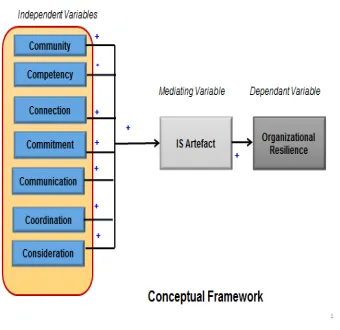
This research attempts to solve the puzzle of achieving resilient organisation with the support of employees by using IS Artefact, which ensures that work practices and tasks could reduce cognitive load and simplify work that supports unique and complex situations. Given that a clear knowledge gap exists, this present study aims to demonstrate the effectiveness of the relationship between the seven behavioural streams and IS Artefact, which is posited as contributing indirectly towards improving OR. To this end, theoretical perspectives from research by Horne and Orr and Activity Theory (AT) (1978) are utilised [16].
3. ORGANIZATION RESILIENCE
Resilience is considered a complex concept. Most authors defined organizational resilience as the capability to handle internal and external issues [16, 44–48]. Some researchers defined organizational resilience as the competency to
overcome the problems [49, 50]. It is believed that both definitions have similarity as both emphasized on Organization survival or dealing with issues.
However, there is no agreement regarding the following issues: (1) whether the risks are only related to threats or opportunities; (2) how does employee behavioural streams play a role in
attaining organizational resilience; and (3) if there
are risks how simplified processes could mediate the relationship between behavioural streams and organizational resilience. Several authors used different elements of resilience in their theory definitions. For example, resilience is defined as an employee’s cognitive ability in being productive without participating in an extended period of deteriorating behaviour [16]. Furthermore, the cognitive process and individuals or organizations must be prepared for unforeseen events known as collective mindfulness instead of waiting for surprises [51–53]. Resilient organizations should be able to swiftly react in coping with any surprising events [54]. Therefore, employees should be equipped with the right skills, motivation, and empowerment strategies to provide suitable responses.
The findings from a research were extensively used and tested in the context of information system [9, 16]. For example, the incorporation of resilient factors in organizational resilience model was derived from system theory [9, 16]. This model outline that organizational resilience is built on the foundation of resilient members in an organization and the capability of employees in reacting swiftly and effectively. Moreover, the robust response system was mobilised through collective actions of individuals in an organization. The richness of external or internal connection for emotional, physical, and resource support in the learning alternative, which was an adaptive behaviour to improve organizational resilience was directly replicated. Nevertheless, this model was theoretically accepted albeit lacking individual attention with limited systematic empirical work.
2622 competencies, but also by the association and collaboration between the organizations and their stakeholders such as employees, suppliers, and policy makers [56]. In order to address these gaps, this study adopted the integration of ISA that could positively influence employees’ seven streams of behaviour namely community, competence, connection, commitment, communication, coordination, and consideration towards enhanced resilience.
4. OVERVIEW OF HUMAN ERROR AND
THE IMPACTS ON ORGANIZATION
Data Health Check report (2016) revealed that human errors were the main factors for data loss in organizations. Organizational disasters were the results of weaknesses, not as ‘act of god’ nor an ’act of science’ O’ [57]. The actions of human beings had a direct or indirect link on disaster [58]. Disasters are defined as the creation of social events by human behaviors which are reliant on the relationship between humans and their use of the physical and social world [59]. Human behaviors were one of the contributing factors that could affect the capability of an organization to achieve organizational resilience [60].
According to the Insider Threat Report (2015), organization disasters such as data loss and operation disruptions were due to human’s weaknesses in handling tasks. Weakness is defined as a deficiency or failure in a person's character that may either cause accident, negligence or incompetence. Employees’ behaviors could contribute to the performance of tasks to one’s actions and responses to the individual’s experience and situational stimulus in certain periods. The main cause of human errors and weaknesses are the absence of clear guidelines or assessment tool or framework; the lack of organization awareness on guidelines and established computerized systems are too rigid [61]. These issues are considered as serious weaknesses that affect the existing organization in achieving resilience. The errors might happen due to the failures of employers or other people’s behavior as a result of increased pressure to meet targets, work on many projects at the same time (multitasking), and work long hours without any break. The customers will not compromise with the interruption of delivery of products and services. They will change to another web store if the current web page is slow [62, 63]. Hence, the top management, risk manager, and operators of IT
infrastructures should notice any human errors and overcome as well as prevent any inevitable errors. Disaster is defined in the human-made disasters model as both physical impacts and disruptions of existing cultural beliefs and norms about hazards. Therefore, this study intended to explore the employees’ behaviour in creating options using coping skills via the use of ISA in enhancing organizational resilience (OR).
5. LITERATURE RIVIEW
Numerous empirical studies that examined resilience factors, IS Artefact (ISA), and organisational resilience are explored. Using systematic literature review technique, all available studies relevant to a particular research question or context were evaluated and interpreted. Past literature was reviewed to demonstrate the history of the underlying theories that produced previous findings. Online research databases were searched to retrieve journal articles related to management decision and organisational behaviour. Specifically, research papers written in English and on topics of manmade ICT disasters and behavioural streams or beliefs were included. For this study, disasters are defined as manmade incidents or human errors in the organisational aspect, i.e. not relating to natural disasters. On the other hand, papers discussing supply chain resilience, epidemics, hospital based system, psychosocial care for family caregivers, and child and family resilience were excluded. However, definitions of resilience relating to individual, organisation, and community were incorporated.
A good quality empirical-based research on resilience factors must be conducted to properly recognise the potential in developing resilient characteristics within organisations. Moreover, their study stressed that future research on resilience has immense possibilities [64]. Thus, the current research investigates the significant advancement in resilience and behaviour within an organisation, which contributes towards organisational resilience.
2623 Artefact model by analysing collaborative task and mobile learning, and accentuating the technical perspective [65](Uden, 2007). Furthermore, numerous scholars have researched on antecedents of organisational resilience such as physical and mental strength, social competency and motivation and behaviour [5, 9, 53, 66, 67]. Therefore, this study intends to determine roles of IS Artefact, which indirectly contributes towards achieving organisational resilience. Various studies on IS Artefact in the context of knowledge management, information system design, human computer interface and constructive learning have been conducted [68–71]. Nevertheless, since limited studies on role of IS Artefact towards resilience factors have been carried out, activity Theory is used to link organisational resilience.
Previous research stated that to foster organizational resilience towards sustainability, behaviors of leaders and shared culture among members of the organization is essential for instance practices that are able to induce good environment and provide social and organizational benefits, namely, long-term plans, regular meetings, benchmarking, communication between areas and distinct hierarchies [72]. Therefore, with this implementation human errors are still high and avenue for resilience is needed to be improved in organization. Hence this research is to bring together two streams of the literature, namely, employee behavior and IS artefact in the context of organizational resilience. Drawing on this approach, this study provides a new conceptual model with empirical evidence of key aspects of organizational resilience.
There are seven identified behavioural streams that contribute towards organisational resilience, namely, community, competence, connection, commitment, communication, coordination, and consideration [16]. On the other hand, concept of resilience is focus on being solution-oriented, creative, and proactive but has not received adequate attention and accurate observation while simultaneously lacking systematic empirical work [53, 73]. Thus, such a model will serve as a point of departure for empirical research to test the validity of the model in the real world.
Organisations, systems, groups and individuals react to important changes that disrupt an anticipated pattern of events productively without engaging in an extended period of regressive behaviour [16]. In general, employees are
competent in their individual daily tasks, however, they become inefficient when forced to apply resilience theory. Besides that, being able to receive new responsibilities in times of crisis is a major challenge for employees, especially when responding to a key threat becomes more bureaucratic and decreasing teamwork causes members of the organisation to adopt a less resilient behaviour.
Weakness is defined as the state or quality of being weak and in the human behaviour context; it represents deficiency in a person’s character [74]. Meanwhile, behaviour contributes towards an individual’s performance of tasks and responds to that person’s experience and situational stimulus in certain periods [75]. As such, it could be inferred that human weakness in terms of behaviour could influence an individual’s performance in coping with disasters.Hence, human error is an important factor that needs more attention from the management, as humans create, use, manage, and maintain the technology and process, which allows delivery of services as detailed in the objectives, vision, and mission of an organisation [76]. Nonetheless, the method utilised to address disruptions is more technology-oriented and revolves around recovery process [77]. Resilient individuals have a tough time devising appropriate coping techniques that permits them to effectively and easily navigate around or through calamities. In other words, individuals demonstrating resilience are those with optimistic attitudes and positive emotionality; in practice they can successfully counter negative emotions with positive ones [78–80]. Therefore, in this study, behavioural streams are investigated because it has received little academic consideration whereby only a few empirical studies have examined behavioural streams, focusing on fostering resilience among employees [8].
2624 the most influential variables in the developed model [8]. Nevertheless, tools were established to support that behavioural strength encourages resilience. As such, these behavioural constructs could contribute towards utilisation of IS Artefact by employees. Not only that, sound and well defined behavioural streams may reduce employees’ pressure to perform their tasks in a simplified and more organised method, thus, improving organisational resilience.
6. THEORETICAL FRAMEWORK
In the twenty-first century, organizations have to face insecurity and challenges which require the employees to have the capability to overcome these issues. Some organizations can overcome unpredicted events; however, some organizations struggle in coping with these issues and fail to respond to the challenges [81]. It is assumed that some organizations focus on technology resilience and supply chain resilience. They should also focus on physiological resilience such as work management by employees. Behavioural resilience and psychology can provide insights to understand factors and adaptive processes in promoting individual and organization level resilience. Recent research focus on factors surrounding the behavioural perspectives in achieving organizational resilience [8, 47, 82]. The research on artefact for organizational excellence and resilience focus on organizational routine and processes rather than the role of ISA towards employee behaviors. This study could not identify a theory that combined both behavioural perspectives and integrated ISA constructs for the theoretical framework.
Our research focuses on employee behavioural characteristics and cognitive abilities to achieve organization resilience based on the usage of IS Artefact that lead to simplified work processes thru infographic charts , symbols and so forth .We thus, include the theoretical framework of system theory and the activity theory [9, 24, 83–85]. We must consider two fundamental aspects of the theory of resources and capabilities: first, the fact that behavior are whole system response when faced with difficulty among firms; and, second, the connectivity of these behaviors over time. Employees possess a set of behaviors and capabilities that have more or less value and that permit them to obtain sustainable organizational resilience. Although this theory has valuable explanatory power, various studies have criticized
its static vision, arguing the need to complement it with the perspective of dynamic capabilities. This perspective argues that organizations are conscious that the conditions surrounding them are inherent in changing and turbulent environments in which competition is very strong. Therefore to achieve and effective employee behavior attributes that contributes must prove as a part of the system in organization that present as a whole which promotes learning, self-organization and diversity [86].Therefore as a whole the system approach be open to innovation potentially far reaching change [87, 88]. Therefore we integrate activity theory and system theory that able to intertwine to form the whole-system response and examine employees’ behavior with the integration of artefact and how to better interact with day-to-day organizational practice and so on. This can be achieved through conceptualizing the interactions as a form of a relationship, comprised of a series of causally connected interactions among employees towards enhancing organization resilience.
Activity theory focuses on the understanding of work practices and human actions by examining the entire activity. Activity theory integrated the concepts of history, intentionality, mediation, collaboration and development [89]. As a mediator, ISA can separate thinking process, problem-solving and other mental actions between the users and tool [90]. The current study emphasises on employee activities and behavioural streams within an organization, which are responsible for organizational resilience. Hence, this study implemented activity theory and culturally defined tools that facilitated all activities. In addition, employees that utilise a tool might affect the quality of the artefact. The concept of artefact includes viewing and construing of human experience and values in the context of technology. Artefacts can be a part of a vital means to perform an action [3].
2625 the effectiveness of employee behaviours on ISA towards organizational resilience.
Figure 1. Conceptual Framework
7. CAN INFORMATION SYSTEM
ARTEFACT (ISA) BECOME A
MEDIATOR BETWEEN EMPLOYEE BEHAVIOUR AND ORGANIZATIONAL RESILIENCE?
Many people have the wrong assumption that the level of resilience in an organization is based on the capacity of IT resource and infrastructure. Even though IT resource and infrastructure is crucial in the digital economy era, it has limited short-term effects on organizational resilience [5]. Nowadays, the employees’ behaviours and actions in challenging conditions have progressed rapidly and reliance is scrutinised across the range of settings. Artefacts were the fundamental component of activity theory and tools were the most commonly used mediator [91]. Tools can mediate activities that link an individual to other objects, elements and people. In conventional behavioural psychology, mental representation is highlighted without recognising artefacts or mediating element which results in activities that lack comprehension [4]. Artefacts can assist employees’ behaviour in achieving stability and coherence with flexibility under the conditions of significant turmoil, risk, and ambiguity.
Past studies revealed a potential positive relationship between the resilience factors, increased employees’ capacity and engagement, and organizational resilience, but they did not examine the mechanism of influence on organizational resilience [92, 93]. Scholars emphasised on the significance of innovation, specifically from the social-ecological aspects
towards the accomplishment of sustainable enterprise excellence. There were a few studies done on organizational and behavioural dynamics that focused on ISA’s roles in attaining organizational resilience.
Artefacts function as an instrument that can either fortify or upset the existing action patterns [94]. Besides that, it functions as a mediator for factors related to standardised processes like checklists, rules, and procedures. Hence, artefacts push the consideration of artefactual representations and materiality at the centre of routines. Therefore in this study investigated whether ISA could mediate the relationship between resilience factors and organizational resilience.
All antecedents in the proposed framework are mediated by ISA. These artefacts have an indirect relationship with organizational resilience. Furthermore, the mediators offer insights on the background and setting of resilience activity. On the other hand, artefacts are based on their functions (activities), goals, and adaptation (evolution) [95]. An artefact possesses all the accepted dimensions of a system and ISA can be considered as a process. In this study, ISA consists of procedures, laws, signs, and instruments deposited in the organization’s information system.
ISA is a phenomenon involving rational thought, habits, and cognition such as disaster awareness by employees, effective IT audition, and affective responses that can only be understood from the perspective of human activity [96–98]. For instance, the ISA in ICT sector can be utilised by employees to carry out their tasks. When the task is completed and saved, the artefact functions as documentation of historical progress. Besides that, ISA can be used as a learning tool or training aid. Hence, the integration of ISA can motivate employees to participate in organizational resilience activities [25]. Entrepreneurs might repeat their mistakes due to cognitive bias and they might not learn from failures [99]. This study aimed to analyse the roles of employee behaviours on ISA in which it could be cultivated to less regressive behaviour that led to better organizational resilience.
2626 analyse organizational resilience. The findings might not be suitable for Malaysia due to socio-cultural variances. Artefacts are a fundamental component of Activity Theory and tools are the most commonly used mediator [91]. Tools mediate activities that link an individual to other objects, elements and people. In conventional behavioural psychology, mental representation is highlighted without acknowledging artefacts or mediating element and hence, results in activities that lack comprehension [4]. Therefore, artefacts help employees’ behaviour to achieve stability and coherence with flexibility under conditions of significant turmoil, risk, and ambiguity. To a certain degree, past studies have exposed a potential positive relationship between resilience factors, increased employee capacity and engagement and organizational resilience,
however, mechanism of influence on organizational resilience has not been examined [92, 93]. Scholars have emphasised on significance of innovation, particularly from the social-ecological aspect towards accomplishing sustainable enterprise excellence. Additionally, very few studies have been done from the context of organizational and behavioural dynamics that concentrated on Information System Artefact (ISA) role in attaining organizational resilience.
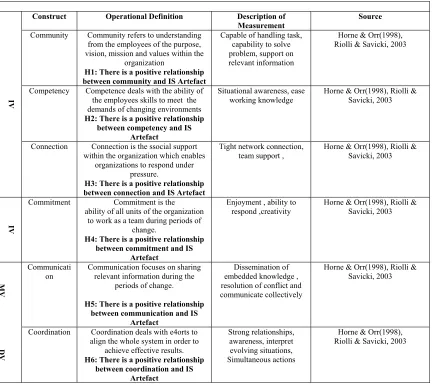
[image:8.612.91.524.343.732.2]Therefore this research is aimed to analyse the proposed model that incorporated Information System Artefact (ISA) as the mediator. The underlying theory, constructs, and measurements have been outlined in Table 1.
Table 1: Constructs and Description of Measurement
IV
Construct Operational Definition Description of Measurement
Source
Community Community refers to understanding
from the employees of the purpose, vision, mission and values within the
organization
H1: There is a positive relationship between community and IS Artefact
Capable of handling task, capability to solve problem, support on relevant information
Horne & Orr(1998), Riolli & Savicki, 2003
Competency Competence deals with the ability of
the employees skills to meet the demands of changing environments
H2: There is a positive relationship between competency and IS
Artefact
Situational awareness, ease working knowledge
Horne & Orr(1998), Riolli & Savicki, 2003
Connection Connection is the ssocial support
within the organization which enables organizations to respond under
pressure.
H3: There is a positive relationship between connection and IS Artefact
Tight network connection, team support ,
Horne & Orr(1998), Riolli & Savicki, 2003
IV
Commitment Commitment is the
ability of all units of the organization to work as a team during periods of
change.
H4: There is a positive relationship between commitment and IS
Artefact
Enjoyment , ability to respond ,creativity
Horne & Orr(1998), Riolli & Savicki, 2003
M
V
D
V
Communicati on
Communication focuses on sharing relevant information during the
periods of change.
H5: There is a positive relationship between communication and IS
Artefact
Dissemination of embedded knowledge , resolution of conflict and communicate collectively
Horne & Orr(1998), Riolli & Savicki, 2003
Coordination Coordination deals with e4orts to
align the whole system in order to achieve effective results.
H6: There is a positive relationship between coordination and IS
Artefact
Strong relationships, awareness, interpret evolving situations, Simultaneous actions
2627
Consideratio n
Consideration is about the accommodation of the human factor in daily organizational life.
H7: There is a positive relationship between consideration and IS
Artefact
Response time ,stress mgmt., Flexibility, Problem solving to support during
diversity
Horne & Orr(1998), Riolli & Savicki, 2003
IS Artefact Information about a set of topics to
support employees’ activities that creates insights which functions as a
tool to simplify task
H8:IS Artefact leads to increased organizational resilience
Perceived usefulness, Cognitive absorption, Ease of navigation
Chin & Lee,2000; Rai et al.,2002
Organisation al Resilience
(OR)
Capability of employees to rebound and stimulate successful coping skills.
Self-organisation, Capability skills, Coping skills
Näswall, K., Kuntz, J., and Malinen, S.2015)
IV – INDEPENDENT VARIABLES MV-MEDIATING VARIABLES DV- DEPENDENT VARIABLES
8. METHODOLOGY
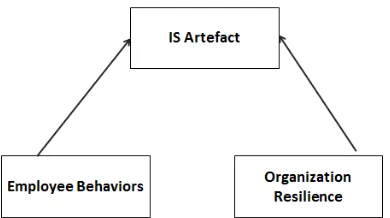
The proposed model examined the mediator effect of ISA on the relationship between employee behaviour and organizational resilience for the organizations registered under MDEC. The mediation models had an independent variable, a mediator, and an outcome variable. The effect of employee behaviour (X) on organizational resilience (Y) is a indirect effect. The practise of testing direct effect violates the basic principle of parsimony and prompts researchers to examine models that are not aligned with theory [100]. There was no test needed for the direct effect in quantifying the magnitude of the mediation effect or accommodating the models with inconsistent mediation [101]. It is believed that the Baron and Kenny’s approach might produce misleading results, refute potentially significant theoretical relationships, and damage the future theory building (see Figure 1) [102]. In order to test H1 until H7, this study adopted the methodology by Miller and Triana as follows:
Step 1: Employee behaviour should be the signification to explain ISA.
Step 2: Information System Artefact must influence organizational resilience while controlling employee behaviour in an organization.
[image:9.612.320.515.325.434.2] Step 3: The previous relationship between employee behaviour and organizational resilience must be reduced in the presence of Information System Artefact (ISA).
Figure 2: The Mediation Process of the Relationship between Employee Behaviour and Organizational Resilience
8.1 Sample
2628 established in Central Corridor, Cyberjaya. Hence, most of the data collection focused on companies situated in Cyberjaya and Kuala Lumpur.
In order to test the proposed model, survey done in organizations led by the Malaysian Digital Economic Corporation Sdn. Bhd. (MDEC). These firms were selected because the Economic Transformation Programme (ETP) intended to transform Malaysia into a high-income nation by 2020. The business continuity data space is expected to increase from 0.5 million square feet to five million square feet by 2020 (Economic Transformation Programme Business Service, 2017). Despite the decline of the economy, organizations registered under MDEC employed 1.07 million employees that contributed 7.6% of the total employment. Malaysia Department of Statistics (2018) stated that the contribution of e-Commerce to GDP is 6.1% with the value of RM74.6 billion. The ICT contributed 18.2% (RM224.0 billion) to the national economy in 2016. Information and Communication Technology Gross Domestic Product (ICTGDP) accounted for 13.4% while registered non ICT industries made up 4.8%.
8.2 Data collection
This study used the scale by Connor Davidson for the simplified work process and the support towards organization by effective employee behaviour via Information System Artefact (ISA) [108]. This measure is widely used in the health sector and health management field that target the stress coping ability among employees. ISA variables were measured by technology acceptance model (TAM) framework that predicted users adoption and behaviours in addressing the benefits of artefacts [109].
8.3 Data Analysis –PRE TEST
The data were analysed using Quantitative Approach for Delphi Round 1 and 2. The Delphi techniques were communication structures that discussed and assessed issues presented in the questionnaire [110]. The questionnaire comprises the following sections:
i. Employee Demographic Information – It encompasses general aspects of the employees’ age, marital status, qualification, work experience, and many more.
ii. Indicators – It shows the desired behaviours of employees in handling uncertainties and difficulties in workplace using Information System Artefact (ISA) to simplify jobs and spread information. It also shows how the employees’ responded to uncertainties.
iii. Items – They are the assessment criteria to obtain evidence by applying behavioural and resilience knowledge in actual practice.
The data analysis provided the principle agreement on the projection of employee behaviours using ISA that encouraged simplified processes in achieving organizational resilience. This study used purposive sample to select respondents who were experts to answer the questions [111]. The following are the characteristics of the experts: i) they have knowledge and experience with the issues in this investigation; ii) they were capable and willing to participate in this study; and iii) they have sufficient time to participate in Delphi [112]. This study was participated by five (5) experts: two from Shell Refinery Team Lead in Disaster and Recovery Department, one from IT and Development Unit from GE, one professor in PLS and methodology, and one from an IT outsource company in Cyberjaya. The data were analysed using the following Central Tendency Measurement: medium and IQR.
8.3.1 Analysis of Delphi Round 1
The Delphi method performed several rounds to achieve an agreement as different activities would occur at each successive round. This method is concerned with the wording of questions because the respondents would not be able to provide the best answers or become frustrated if they could not understand the questions [110]. Therefore in this research the purpose of the first round Delphi is to brainstorm [113]. The experts had provided their help in rephrasing the questionnaire for the betterment of this study. Then, the results for round one were analysed according to Delphi’s research paradigm. The results were summarised into medians plus upper and lower quartiles.
8.3.2 Analysis of Delphi Round 2
2629 analysed using Central of Tendency Measurement: medium and IQR. The latter was used to find the level of agreement among the experts. The items which were not in agreement were identified and removed from the questionnaire.
9. INITIAL RESULTS
The data were analyzed using SmartPLS 3.0 and SPSS (Statistical Package for Social Science). SmartPLS was developed and one of the leading software applications for Partial Least Squares Structural Equation Modelling (PLS-SEM) [114]. This software was widely used since 2005 by social science researchers.
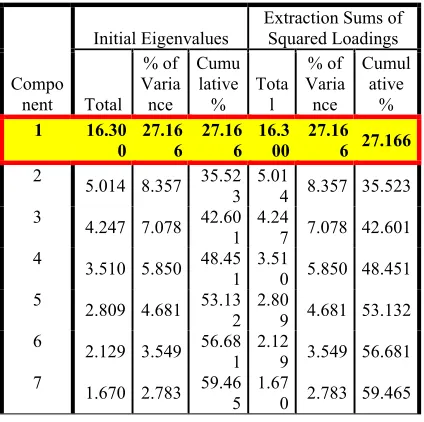
[image:11.612.88.300.468.679.2]Data cleaning detects and corrects errors related to data entry and any irregularities in the data. The data were obtained from a single source and they were checked for common method bias using Harman’s Single Factor Analysis as shown in Table 2. The discrepancy was due to the measurement method rather than the constructs represented by the measures or also known as common method variance (CMV). The total variance extracted shows that the extraction sums of loadings for the first factor is 27.166% which is less than 50%. Hence, the data had no common method bias [115].
Table 2: Harman’s Single Factor Analysis Total Variance Explained
9.1 Assessment of Mediation Analysis
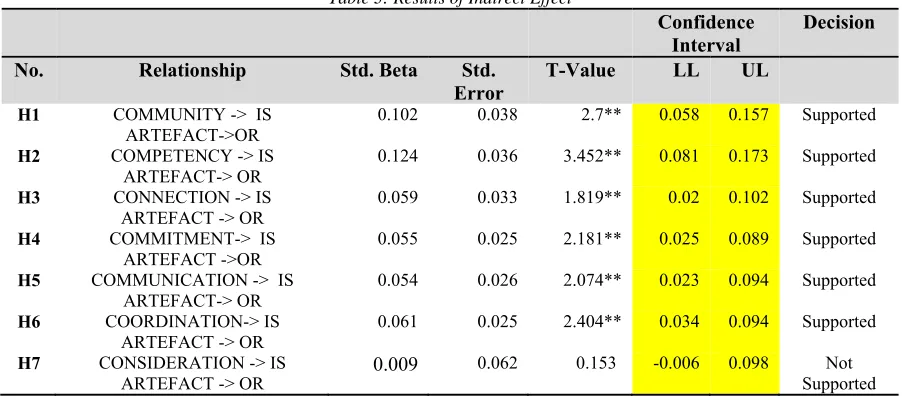
Mediation is also known as an indirect effect that depends on strong theoretical support in discovering meaningful mediation effects [105, 116]. This study assumed that the effects of employee behaviours on organizational resilience could be mediated by ISA. A research criticized the causal procedure by Baron and Kenny [117]. A single inferential test of the indirect effect was needed. Therefore, the mediation analysis was an indirect effect [118]. The mediation method is defined as bootstrapping the indirect effect [117]. Several types of bootstrapping can be used for mediation test namely percentile bootstrapping, standardized bootstrap, bias-corrected and accelerated (BCa) bootstrap, Davidson and Hinkley’s double bootstrap, and Shi’s double bootstrap [119]. The bias-corrected bootstrap confidence interval is affirmed as the best approach in detecting the mediating effect with the presence of mediation [120, 121]. This study used 5,000 bootstrap samples with 95% bias-corrected confidence interval. The hypothesis is connected to each specific mediation effect is supported when the lower and upper limits of the confidence intervals have no zero [122, 123]. The results in Table 3 show the Lower Limit (LL) and Upper Limit (UL) that does not contain zero value. The specific indirect effects were considered statistically significant. Table 3 shows that six mediations were significant because the t-values were more than 1.96 and p-values were less than 0.05. The relationship between consideration and organizational resilience (H7) is not supported. Thus the results revealed that only six mediations were evident in ISA and organizational resilience. Therefore it can be concluded that there is no relationship between consideration and IS artefact which revealed consideration is not the actual capacity that influences the organization resilience.
Compo nent
Initial Eigenvalues Extraction Sums of Squared Loadings
Total % of Varia nce
Cumu lative %
Tota l
% of Varia nce
Cumul ative %
1 16.30
0 27.166 27.166 16.300 27.166 27.166
2 5.014 8.357 35.52 3
5.01
4 8.357 35.523 3 4.247 7.078 42.60
1 4.24
7 7.078 42.601 4 3.510 5.850 48.45
1 3.51
0 5.850 48.451 5 2.809 4.681 53.13
2 2.80
9 4.681 53.132 6 2.129 3.549 56.68
1 2.12
9 3.549 56.681 7 1.670 2.783 59.46
5 1.67
2630
Table 3: Results of Indirect Effect
Confidence
Interval Decision
No. Relationship Std. Beta Std.
Error T-Value LL UL
H1 COMMUNITY -> IS ARTEFACT->OR
0.102 0.038 2.7** 0.058 0.157 Supported
H2 COMPETENCY -> IS ARTEFACT-> OR
0.124 0.036 3.452** 0.081 0.173 Supported
H3 CONNECTION -> IS ARTEFACT -> OR
0.059 0.033 1.819** 0.02 0.102 Supported
H4 COMMITMENT-> IS ARTEFACT ->OR
0.055 0.025 2.181** 0.025 0.089 Supported
H5 COMMUNICATION -> IS ARTEFACT-> OR
0.054 0.026 2.074** 0.023 0.094 Supported
H6 COORDINATION-> IS ARTEFACT -> OR
0.061 0.025 2.404** 0.034 0.094 Supported
H7 CONSIDERATION -> IS
ARTEFACT -> OR 0.009
0.062 0.153 -0.006 0.098 Not Supported
10. DISCUSSION AND IMPLICATIONS
This study confirmed that ISA practices mediate the relationship for the effectiveness of employee behaviours in enhancing organizational resilience. Activity theory supports employees by examining the entire activity. In activity theory, the mediated action can clarify the process for the progress of human awareness through the interaction with artefacts. The task interaction among employees in this study was not passive. The employees learnt and modified the activities and created the artefacts. The mediated artefact can change over time to suit the environment and needs of organizations that contribute to a new social formation and human consciousness [124]. The positive significant results were because the ISA practices were more valued by employees due to the complexity of their tasks as a result of technology advancement. Therefore, simplified process and procedures can reduce errors. The innovative practices with the implementation of ISA will have a high impact on employee behaviour because they tend to handle tasks in a shorter time frame with less human errors. This practice may lead to better management tasks and higher resilience in the organization. The resilience model required further development and validation [9]. Sonne confirmed the positive impacts of employee behaviour in enhancing organizational resilience with the use of tools, and the wrong use
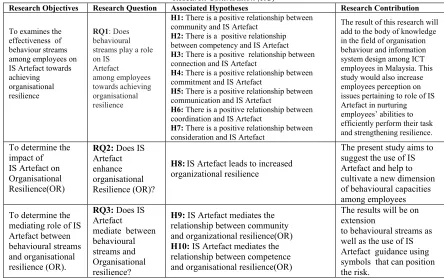
of tools would impact the organization in the long term [8]. This concern is based on traditional organization theory because resilience could be desirable or undesirable depending on the environment. The integration of activity theory in Information System Artefact (ISA) practice opposes the organization theory. Table 3 below shows the relationship between research objectives, research questions, research hypotheses and research contribution. The first hypothesis was to evaluate the effect of the community perception prevails on organizational resilience. The finding supports the claim that community perception has a positive and significant effect on orgaization resilience. The finding is in line with the earlier studies that gauged the effect of the community perception on enterprise resilience [125]. The second hypotheses evaluate the effect of the competency perception exists in the organization on organizational resilience. The finding supports the claim that community perception has a positive and significant effect on organization resilience. The finding is in line with the earlier studies that gauged the effect of the community perception on enterprise resilience [126].The third hypotheses evaluate the effect of the connection perception subsists in the organization on organizational resilience. The finding supports the claim that community perception has a positive and significant effect on organization resilience. The
finding is line with the earlier studies that evaluated the effect of the connection perception on enterprise resilience [125]. The forth hypothesis was to evaluate the effect of the commitment
2631 communication view prevails on organization resilience. The result for the effect was positive and significant suggesting that the communication has a positive effect on the organizational resilience. This leads us to posit that the communication is the actual capacity that influences the organization resilience. The sixth hypotheses evaluate the effect of the coordination perception takes place in the on organizational resilience.
The finding is line with the earlier studies that gauged the effect of the coordination perception on organizational resilience [127]. The seventh
[image:13.612.82.526.283.562.2] [image:13.612.85.527.593.739.2]hypothesis was to check the effect of the consideration view prevails in the organization on organizational resilience. The result for the effect was negative and insignificant suggesting that the organization level consideration is not contributing to the organization resilience. However for consideration behavioural stream there β =0.009 and t-value = 0.153, which is less than 1.645 and p value > 0.05 therefore it can be concluded that there is no relationship between consideration and IS artefact. This leads us to posit that the consideration is not the actual capacity that influences the organization resilience
Table 3: The Relationship between Research Objective (RO), Research Question (RQ), Research Hypotheses (RH) and Research Contribution (RC)
Research Objectives Research Question Associated Hypotheses Research Contribution
To examines the effectiveness of behaviour streams among employees on IS Artefact towards achieving organisational resilience
RQ1: Does behavioural streams play a role on IS
Artefact among employees towards achieving organisational resilience
H1: There is a positive relationship between
community and IS Artefact
H2: There is a positive relationship between competency and IS Artefact
H3: There is a positive relationship between
connection and IS Artefact
H4: There is a positive relationship between
commitment and IS Artefact
H5: There is a positive relationship between
communication and IS Artefact
H6: There is a positive relationship between
coordination and IS Artefact
H7: There is a positive relationship between
consideration and IS Artefact
The result of this research will add to the body of knowledge in the field of organisation behaviour and information system design among ICT employees in Malaysia. This study would also increase employees perception on issues pertaining to role of IS Artefact in nurturing employees’ abilities to efficiently perform their task and strengthening resilience.
To determine the impact of IS Artefact on Organisational Resilience(OR)
RQ2: Does IS
Artefact enhance organisational Resilience (OR)?
H8:IS Artefact leads to increased organizational resilience
The present study aims to suggest the use of IS Artefact and help to cultivate a new dimension of behavioural capacities among employees To determine the
mediating role of IS Artefact between behavioural streams and organisational resilience (OR).
RQ3: Does IS
Artefact mediate between behavioural streams and Organisational resilience?
H9: IS Artefact mediates the relationship between community and organizational resilience(OR)
H10: IS Artefact mediates the relationship between competence and organisational resilience(OR)
The results will be on extension
to behavioural streams as well as the use of IS Artefact guidance using symbols that can position the risk.
Table 3: The Relationship between Research Objective (RO), Research Question (RQ), Research Hypotheses (RH) and Research Contribution (RC) (cont.)
To determine the mediating role of IS Artefact Artefact between behavioural streams and organisational resilience (OR).
RQ3: Does IS
Artefact mediate relationship between behavioural streams and Organisational resilience?
H11: IS Artefact mediates the relationship
between connection and Organisational Resilience(OR)
Thus this study will add to the body of knowledge in the field of organisation resilience.
H12: IS Artefact mediates the relationship
between commitment and Organisational Resilience(OR)
H13: IS Artefact mediates the relationship
between communication and Organisational Resilience(OR)
H14: IS Artefact mediates the relationship
between coordination and Organisational resilience(OR)
H15: IS Artefact mediates the relationship
2632
11. LIMITATATIONS AND FUTURE
RESEARCH DIRECTIONS
Although this research yielded valuable contributions, it is not entirely free of limitations. First, the cross-sectional nature of the study limits the ability to establish cause and effect relationship among the studied variables. Future researchers are encouraged to pursue a longitudinal examination with multi-source data to establish the causality of the relationships in the current model. Further, causality may be established by pursuing quasi-experimental strategy which could enrich the findings. Second, the sample of current study is representative of a single industry from Multimedia Super Corridor (MSC) registered organizations. For generalizability purposes, similar studies in other parts of the world and multiple industrial sectors are suggested. Third, in the present research model, we tested only mediating variable between employee behaviors and organizational resilience. Future researchers may extend the current knowledge by considering other possible moderating variables in the model. Furthermore, as this study attempted to measure the organizational resilience based on the employees perception of the organization and the perception of a social system that exists inside. We could not accommodate all the other dimensions of the resilient origination such role clarity, response mechanism or other structural factors. The future research could extend the model by incorporating these factors to enhance the model contribution to have a greater explanation of organizational resilience. However, the role of consideration was negative in the organizational resilience for this study. Future research must explore in detail to understand how to make a positive impact on the consideration on organizational resilience. It is recommended that the future research explore the role of time on the organizational resilience that how resilience as capacity grows or falls with the organization in a given time period. It provides the opportunity for management to start looking at resilience as a resource at the need to enhance over time.
12. CONCLUSION
This study is the mind full effort to enhance our understanding of the call of [49] to build and test new models of the organization resilience. By taking organizational resilience as the capacity stance of [46], we connect the organizational collective perception of the employees behaviors to
the organizational resilience. The findings of the study confirm substantially that the collection perception of the organizational employee towards the organizational community, competency, connection, commitment, communication and coordination have a significant effect on the perception of organizational resilience. This study confirms that the people perception as resource positively enhances organizational resilience. This study contributes to the theory to offer a collective perception framework combined by the divergent understandings of the organizational resilience to support by our findings that how the collective helps to contribute to the organizational resilience if taken in full.
REFERENCES
[1] Chewning, L. V, “Organizational Resilience and Using Information and Communication Technologies to Rebuild Communication Structures and Using Information.”, Management Communication Quarterly, Vol. 27, No. 2, November 29, 2012. [2] Iivari, J, “The IS Core - VII Towards
Information Systems as a Science of Meta-Artifacts.”, Communications of the Association for Information Systems, Vol. 12, No. 37, November, 2003, pp. 568–581. [3] Mariano, S., & Awazu, Y, “Artifacts in
knowledge management research: a systematic literature review and future research directions.”, Journal of Knowledge
Management, Vol. 20, No. 6, 2016, pp.
1333–1352.
[4] Pennathur, P. R., “Information transformation and artifact use in cognitive work systems: Implications for technology transition and design.”, ProQuest Dissertations and Theses, No. 3423509, 2010, pp. 444.
[5] Abdullah, N. A. S., Noor, N. L. M., & Ibrahim, E. N. M., “Resilient organization: Modelling the capacity for resilience.”, International Conference on Research and Innovation in Information Systems, ICRIIS, No. 14046071, November 27–28, 2013, pp. 319–324.
[6] Cousins, T. J., “When engineering systems fail - the disconnection between continuity plans and organisational behaviour.”, 2006 IEEE International Symposium on Technology and Society, No. 9705263, June 8–10, 2006, pp. 1–13.
2633 Self-Efficacy and the Ongoing Threat of Disasters.”, ProQuest Dissertations and Theses, No. 3635102, 2014.
[8] Sonnet, M. T., “Employee behaviors, beliefs, and collective resilience: An exploratory study in organizational resilience capacity.”, ProQuest Dissertations and Theses, No. 10063554, 2016.
[9] Riolli, L., & Savicki, V., “Information system organizational resilience.”, Omega, Vol. 31, No. 3, June, 2003, pp. 227–233. [10] Symantec Corporation, “2016 Internet
Security Threat Report.”, Ind Rep 2016, Vol. 6, March, 2019, pp. 15.
[11] Peng, A. C., Riolli, L. T., Schaubroeck, J., & Spain, E. S. P., “A moderated mediation test of personality, coping, and health among
deployed soldiers.”, Journal of
Organizational Behavior, Vol. 33, No. 4,
March 15, 2012, pp. 512–530.
[12] Wood, R., & Bandura, A., “Social Cognitive Theory of Organizational Management.”, Academy of Management Review, Vol. 13, No. 3, July 1, 1989.
[13] Kulatunga, U., “Impact of culture towards disaster risk reduction.”, International Journal of Strategic Property Management, Vol. 14, No. 4, 2010, pp. 304–313.
[14] Guest, D., “Human Resource Management, Corporate Performance and Employee Wellbeing: Building the Worker into HRM”, The Journal of Industrial Relations, Vol. 44, No. 3, September, 2002, pp. 335–358. [15] Herrera, A., & Janczewski, L., “Issues in the
Study of Organisational Resilience in Cloud Computing Environments.”, Procedia Technology, Vol. 16, 2014, pp. 32–41. [16] Home III, J. F., & Orr, J. E., “Assessing
behaviors that create resilient organizations.”, Employment Relations Today, Vol. 24, No. 4, January 1, 2011, pp. 29–39.
[17] Olsson L, Jerneck A, Thoren H, Persson J, O’Byrne D., “Why resilience is unappealing to social science: Theoretical and empirical investigations of the scientific use of resilience.” Sci Adv, Vol. 1, No. 4, May 1, 2015.
[18] Kantur, D. & Say, A., “Measuring Organizational Resilience: A Scale Development.”, Journal of Business, Economics and Finance, 2015, pp. 456–472. [19] Hussin, M. F., Khairilmizal, S., Siti Hawa, B., Yassin, A. I. M., Ainul Husna, K.,
Salleh, M. K. M., … Saadun, J., “The Role of Human Factors in Emergency Management: A Malaysian Company Perspective.” International Journal of Engineering & Technology, 2018.
[20] Khairilmizal, S., Hussin, M. F., Yassin, A. I. M., Ainul Husna, K., Salleh, M. K. M., Jusoh, M. H., … Mohd Haikal, K., “Understanding Effective Disaster Management During Response and Recovery Phase in Formal Training and Education.”, 2017.
[21] Khairilmizal, S., Hussin, M. F., Yassin, A. I. M., Husna, K. A., Sulaiman, A. A., Jusoh, M. H., & Kasri, M. H., Evolution of disaster and disaster management policy in Malaysia.” Advanced Science Letters, Vol. 22, No. 12, December, 2016, pp. 4209– 4212(4).
[22] Ucbasaran, D., Westhead, P., & Wright, M., “Opportunity identification and pursuit: Does an entrepreneur’s human capital matter?”, Small Business Economics, Vol.30, No. 2, February, 2008, pp. 153–173. [23] Yang, L.-Q., Chang, C.-H. (Daisy), & Lim, V. K. G., “Applied Psychology: An International Review Special Issue.”, Applied Psychology, Vol. 63, No. 3, June 4, 2014, pp. 564–566.
[24] Lowry, P. B., Dinev, T., & Willison, R., “Why security and privacy research lies at the centre of the information systems (IS) artefact: Proposing a bold research agenda.”, European Journal of Information Systems, Vol. 26, No. 6, 2017, pp. 546–563.
[25] Paul, H., Bamel, U. K., & Garg, P., “Employee Resilience and OCB: Mediating Effects of Organizational Commitment.” Vikalpa, Vol. 41, No. 4, 2016, pp. 308–324. [26] Mafabi, S., Munene, J., & Ntayi, J.,
“Knowledge management and
organisational resilience: Organisational innovation as a mediator in Uganda parastatals.”, Journal of Strategy and Management, Vol. 5, No. 1, 2012, pp. 57– 80.
[27] Carvalho, A. O. de, Ribeiro, I., Cirani, C. B. S., & Cintra, R. F. (2016). “Organizational resilience: a comparative study between innovative and non-innovative companies based on the financial performance analysis.”, International Journal of Innovation.
https://doi.org/10.5585/iji.v4i1.73
2634 knowledge management research: a systematic literature review and future research directions.”, Journal of Knowledge
Management, Vol. 20, No. 6, 2016a, pp.
1333–1352.
[29] Sterling, S., Linnenluecke, M. K., Bhamra, S., & Burnard, K., “Encouraging resilience within SMEs: The Cabinet Office’s proposed approach.”, Journal of Business Continuity & Emergency Planning, Vol. 5, No. 2, 2011, pp. 128–139(12).
[30] MacKinnon, D. P., & Luecken, L. J. (2011). “Statistical analysis for identifying mediating variables in public health dentistry interventions. Journal of Public Health Dentistry, Vol. 71, No. S1, March 18, 2011, pp. S37–S46.
[31] Alter, S.. “The concept of ‘IT artifact’ has outlived its usefulness and should be retired now.”, Information Systems Journal, Vol. 25, No. 1, January, 2015, pp. 47–60. [32] Carayannis, E. G., Grigoroudis, E., Del
Giudice, M., Della Peruta, M. R., & Sindakis, S., “An exploration of contemporary organizational artifacts and routines in a sustainable excellence
context.”, Journal of Knowledge
Management, Vol. 21, No. 1, 2017, pp. 35– 56.
[33] Xiao, Y., “Artifacts and collaborative work in healthcare: Methodological, theoretical, and technological implications of the tangible.”, Journal of Biomedical
Informatics, Vol. 38, No. 1, 2005, pp. 26–
33.
[34] Yoon, S. J., Lin, H. K., Chen, G., Yi, S., Choi, J., & Rui, Z., “Effect of occupational health and safety management system on work-related accident rate and differences of occupational health and safety management system awareness between managers in South Korea’s construction industry.”,
Safety and Health at Work, Vol. 4, No. 4,
203, pp. 201–209.
[35] Fletcher, D., & Sarkar, M., “Psychological resilience: A review and critique of definitions, concepts, and theory.”, European Psychologist, Vol. 18, No. 1, 2013, pp. 12–23.
[36] Aisyah, N., Abdullah, S., Noor, N. L., Nuraihan, E., & Ibrahim, M., “Contributing Factor To Business Continuity Management ( Bcm ) Failure – a Case of Malaysia Public
Sector”, Proceedings of the 5th
International Conference on Computing and
Informatics, ICOCI 2015, August 11–12, 2015, pp. 530–538.
[37] Bergeron, C. D. & Cooren, F., “The Collective Framing of Crisis Management: A Ventriloqual Analysis of Emergency
Operations Centres.”, Jounal of
Contingencies Crisis Management, Vol 20, No. 3, September, 2012, pp. 120–137.. [38] Berkes, F. & Ross, H., “Community
Resilience: Toward an Integrated Approach.” Society and Natural Resources, Vol. 26, No.1, 2013, pp. 5–20.
[39] Hoegl, M. & Muethel, M., “Enabling Shared Leadership in Virtual Project Teams: A Practitioners’ Guide.”, Project Management Journal, Vol. 47, No. 1, 2016.
[40] Weigand, K,. Flanagan, T., Dye, K., & Jones, P., “Collaborative foresight: Complementing long-horizon strategic planning.”, Technological Forecasting and Social Change. Vo. 85, June, 2014, pp. 134– 152.
[41] Folke, C., “Resilience (Republished).”, Ecology and Society. Vol. 21, No. 4, 2016. [42] Liu, J. J. W., Reed, M., & Girard, T. A.,
“Advancing resilience: An integrative, multi-system model of resilience.”, Personality and Individual Differences, Vol. 111, June 1, 2017, pp. 111–118.
[43] Rutter, M., “Resilience as a dynamic
concept.”, Development and
Psychopathology, Vol. 24, No. 2, May, 2012 , pp. 335–344.
[44] Chand, A. M., & Loosemore, M., “Hospital learning from extreme weather events: using causal loop diagrams.”, Building Research and Information, Vol. 44, No. 8, 2016, pp. 875–888.
[45] Mafabi, S., Munene, J. C., & Ahiauzu, A., “Creative climate and organisational resilience: the mediating role of innovation.”, International Journal of Organizational Analysis, Vol. 23, No. 4, 2015, pp. 564–587.
[46] Mallak, L., “Putting organizational resilience to work.” Industrial Management (Norcross, Georgia), 1998.
[47] Mallak, L. A., & Yildiz, M., “Developing a workplace resilience instrument.”, Work, Vol. 54, No. 2, 2016a, pp. 241–253, pp. 241–253.