2017 2nd International Conference on Computer Engineering, Information Science and Internet Technology (CII 2017) ISBN: 978-1-60595-504-9
Design of APP Server Side Based
on Android Platform
SONGTAI LI, JING CHANG and JIAHUI LIANG
ABSTRACT
In recent years, Android platform has attracted a large number of users and developers with its stability and openness, and has become the fastest developing and most mobile intelligent operating system. Because of the rapid development of the mobile APP development platform, in order to realize the mobile phone end and the server end better interactivity, this paper is based on the early adopters of APP project development, expounds how to design reasonable mobile phone application server.
KEYWORDS
Android, server, MYSQL database, Java programming language.
INTRODUCTION
“Early adopters” of APP can make users conveniently to experience some of the manufacturers launched a new product trial. Before the APP can be officially available in new products, allow users to try the product, from which to collect user feedback and opinions; at the same time according to the feedback information to estimate the interest in a product, market demand forecast products. In addition, it also uses the concept, according to the division of consumer information provided by the user, reduce or even avoid blindly promotion and consumer positioning errors, the new product market positioning failure for manufacturers to bring the loss. As an interactive function of the application server and the database, it is essential for performance. Considering the response to the mobile phone terminal and server terminal, the author decided to use Apache's Tomcat as the application server, using Java language based on eclipse and IDE to develop, and through the MYSQL database design data table.
The server needs analysis
“Early adopters” of APP is a sample for machine software, the user through the scan code to a commercial trial. According to the characteristics of the function of the server to achieve the following functions:
To achieve client and data exchange
The realization of functions and database connection Get to the client's request, the corresponding code
________________________________________
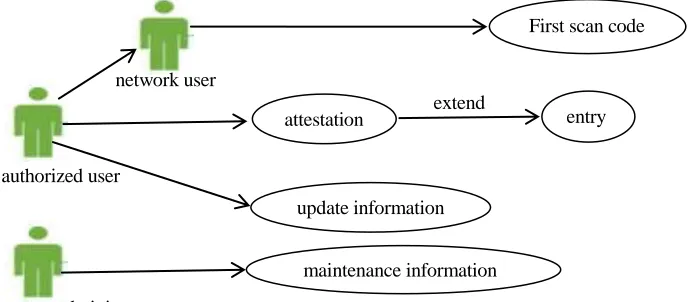
Remove some of the functional requirements to use the lower frequency, the “early Adopters” of APP client use case diagram, as shown in Figure 1.
Server interaction principle
In the local server through tomcat, written request processing java files in the SRC folder on the server, when a client request sent by the Struts2 framework, analyzes the request, and jump to the Java code file corresponding to the request and, if related to the operation of the database is connected to the corresponding database for data access through the corresponding the MySQL connection code, java code file in the final processing results back to the client.
Struts2 is a Web application framework based on the MVC design pattern, which is essentially equivalent to a servlet. In the MVC design pattern, Struts2 acts as a controller (Controller) to build model and view data interaction.
<action name="getGoods" class="JSON. Return. JsonServlet" method= "getGoods" ></action>
In the code above, request getGoods to the client access the main interface of the commodity information, the framework of Struts2 analysis will jump to processing code, get to the client with string information identification using HttpServletRequest code, then according to the information in the database query. The query operation is completed and results will be. The information returned to the client by HttpServletResponse[1].
THE DATABASE DESIGN "EARLY ADOPTERS" OF APP
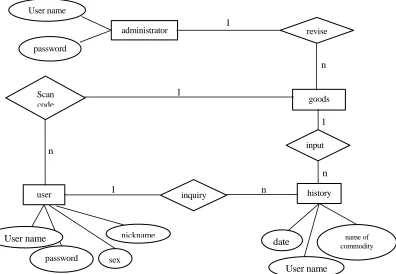
[image:2.612.133.479.488.639.2]Because of the innovation project of early adopters of APP needs to be able to realize data exchange and local terminal server function, so it is necessary to carefully design a reasonable database. To the user's data requirements clear, accurate description, the author of the APP module design, the project entity relationship diagram, as shown in Figure 2[2].
Figure 1. Client use case diagram.
First scan code
attestation entry
update information
maintenance information authorized user
network user
system administrator
Figure 2. “Early adopters” of database design and entity relationship diagram.
Figure 3. “Early adopters” of database design and data flow diagram. user
productId
scan code
scan code system trial history table
view history
user
collection products
administrator maintenance information
personal collection
maintenance result
commodity/ customer information
provide commodity identification
feedback collect
look over feedback
t h e r e s u l t s o f t he s c a n c o d e s c a n c o d e r e q ue s t
User name
password
administrator revise
Scan
code goods
user inquiry history
User name
password
nickname
sex
name of commodity date
input
1
1
1 n
n
n
n 1
TABLE 1. TABLE OF COMMODITY INFORMATION.
Column name Data Type Length IS NULL Remarks
GoodsName Char 20 NOT name of commodity
GoodsIntroduce Char 200 NOT Products
GoodsPrice Double 5 NOT commodity price
GetNumber Double 5 NOT Number of recipients
TABLE 2. TABLE OF USERS RECEIVE THE RECORD.
Column Name Data Type Length IS NULL Remarks
UserId Int 5 NOT User ID
GoodsId Int 5 NOT Commodity ID
In order to describe the data process requirements of APP clearly and accurately, the author draws the data flow diagram of the software as follows:
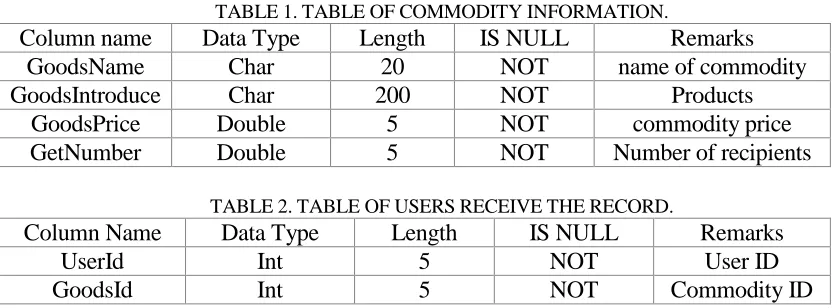
“Early adopters” of APP to realize the data storage requirements are: to store the user registration information, product data storage, data collection record store user data storage and the corresponding user comments. According to this demand, the database designed mainly contains four tables, and the four tables contain user information table, trial commodity information table, user review table and user receive record list. The user information table records mainly contains the user's personal information, product information table is mainly recorded information corresponding to the commodity, user reviews table records mainly comment information of various users of the product, users receive the record is mainly recorded by users receive the trial product information. Because of the limited space, this paper only lists two tables. The specific design of commodity information table as shown in Table 1, users receive the record table as shown in Table 2 [3].
SYSTEM IMPLEMENTATION
When users open the software, the background will automatically obtain commodity data from the server, the APP display interface. The key code of the server to achieve the following [4]:
//Set a List to load data obtained from the database Connection connect = DatabaseConnect.getConnection() Statement statement = connect.createStatement(); String sql = "select * from goods";
ResultSet result = statement.executeQuery(sql);
//Get the data one by one and add it to the List you started with while (result.next()) {
String title = result.getString("title"); String price = result.getString("price"); String number result.getString("number"); String url = result.getString("url");
int id = result.getInt("id");
Goods good = new Goods(title,number,price,url,id); goods.add(good);
CONCLUSION
With the development of the information society continues to deepen, the application of Android platform based on the development of application, which has interactive function will become the most popular APP. user groups so that an application program has interactive function only to build a suitable server and establishment of database, logic in order to make the application better. "Early adopters" is an interactive APP, either real-time data or historical data, it has fast capture and processing of data, I believe that with the advent of the era of smart, will have interactive function of APP to become the mainstream.
ACKNOWLEDGEMENTS
Jing Chang, Institute of Information Science and Technology South China Business College Guangdong University of Foreign Studies, Guangdong, Guangzhou 510545, China.
Guangdong college students innovation and entrepreneurship training program in 2016 (201612620032)
REFERENCES
1. Liu Wangshu. Android advanced light [M].2017.06 2. Liu Zengjie. MySQL5.7 from entry to mastery [M].2016