1
The London School of Economics and Political Science
The Causes and Consequences of IMF Interventions in the
Southern Cone
Javier Díaz-Cassou
2
Declaration
I certify that the thesis I have presented for examination for the MPhil/PhD degree of the London School of Economics and Political Science is solely my own work other than where I have clearly indicated that it is the work of others (in which case the extent of any work carried out jointly by me and any other person is clearly identified in it). The Copyright of the thesis rests with the author. Quotation from it is permitted, provided that full acknowledgement is made. The thesis may not be reproduced without prior written consent of the author.
I warrant that this authorization does not, to the best of my knowledge, infringe the rights of any third party.
Javier Díaz Cassou
3
Abstract
The International Monetary Fund has often been accused of adopting a one-size-fits-all approach to the resolution of financial crises. However, its programs present substantial differences in terms of their relative size and conditionality among other characteristics. This dissertation examines the causes and consequences of this variation through the lenses of two cases in which the contrast between the Fund´s interventions was particularly marked: Argentina and Uruguay during the period that surrounds the financial crash of 2001-02.
4
Acknowledgement and Gratitude
This project could not have been completed without the support and guidance of my supervisors, Dr. Ken Shadlen and Dr. Lauren Phillips. Both have been a great source of inspiration as well as challenging teachers. Their encouragement, dedication, candid criticism and openness gave me the confidence to turn my thoughts and findings into this thesis.
A special word goes to all the wonderful friends that I left in London. I will not forget the camaraderie, intellectual dynamism and, above all, the sense of humor of Chris, Giulia, Borge, Dominik, Laureen, Sheila, Ignacio, Gianlu and Arik among others. I really miss you all.
I am thankful to the LSE Research Studentship, Fundación Cajamadrid, the Santander travel fund and Universidad Torcuato di Tella for their generous funding and research support.
My gratitude also goes to all the interviewees that participated in this research project. In particular, I would like to thank Paulina Beato, Enrique Iglesias, Jorge Batlle and Miguel de las Casas, who opened many doors in Buenos Aires, Montevideo and Washington DC.
Last but not least, I am deeply indebted to my parents, Raymonde Cassou and Jose-Luis Díaz Fernández. Their support and inspiration have made me what I am.
This dissertation is dedicated to Monica Gozzi, my fiancée, for having helped me cope with the ups and downs of a PhD at the London School of Economics. I love you so much!
5
6
Table of Contents
Chapter 1: 12
Introduction
1.1 Research topics and questions 12
1.2 On the causes of IMF interventions 15
1.3 On the consequences of IMF interventions 19
1.4 Chapter plan 21
Chapter 2 22
Towards a two-level interpretation of IMF programs
2.1 The international level of analysis 23
2.1.1 The Neo-liberal and public choice approaches 23
2.1.2 The constructivist approach 28
2.1.3 The realist approach 31
2.2 The domestic level of analysis 33
2.2.1 The politics of domestic adjustment 33
2.2.2 Domestic politics and IMF programs 37
2.3 Bridging the gap: the two-level game analytical framework 42
2.3.1 Putnam´s two-level games 42
2.3.2 Some preliminary considerations 45
2.3.3 A stylized representation 48
7
Chapter 3 56
Approximating the Contours of IMF Negotiators’ Win-sets: Institutional Design and Rules in Multilateral Crisis Lending
3.1 Chief-negotiators, constituents and power at the IMF 57
3.2 Official finance 66
3.3 Private sector involvement 73
3.4 Conditionality 80
3.5 Conclusion 84
Chapter 4 88
Argentina and the IMF
4.1 A decade of financial programs 90
4.1.1 Crisis prevention 92
4.1.2 Crisis management 94
4.1.3 Restoring debt sustainability 99
4.2 Crisis prevention 102
4.3 Crisis management 109
4.4 Restoring debt sustainability 119
4.5 Conclusion 128
Chapter 5 133
Uruguay and the IMF
5.1 A decade of financial programs 135
5.1.1 Crisis prevention 137
5.1.2 Crisis management 140
5.1.3 Restoring debt sustainability 142
5.2 Crisis prevention 146
5.3 Crisis management 152
8
Chapter 6 172
Cross-sectional Variation: the Argentine and the Uruguayan Case Studies in Comparative Perspective
6.1 Cross-sectional variation 175
6.2 The international level of analysis 178
6.3 The domestic level of analysis 184
6.4 Conclusion 192
Chapter 7 195
The Consequences of IMF Interventions in Argentina and Uruguay
7.1 Review of the literature and empirical strategy 196
7.2 Economic performance 203
7.3 Politics and Institutions 217
7.4 Conclusion 228
Chapter 8 232
Conclusion
8.1 Recapitulating the research design 232
8.2 Main empirical findings 236
8.3 Extensions 232
References 247
Appendix A 266
List of interviews
Appendix B 270
9
Appendix C 279
The Argentine Financial Crisis: Key Decisions
Appendix D 296
10
List of Figures and Tables
Table 2.1: Macroeconomic Determinants of Participation in IMF programs 39
Figure 2.1: The cooperative outcome 51
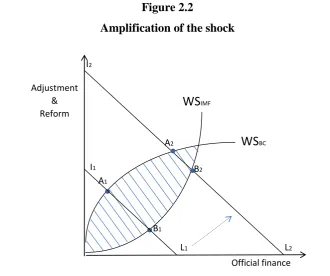
Figure 2.2: Amplification of the shock 52
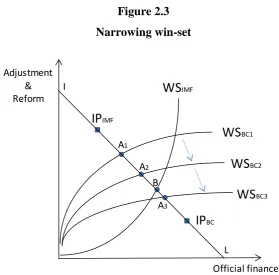
Figure 2.3: Narrowing sin-set 53
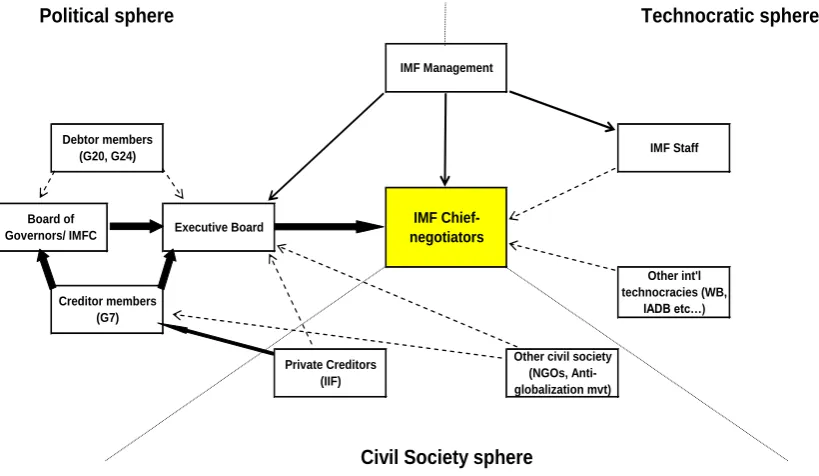
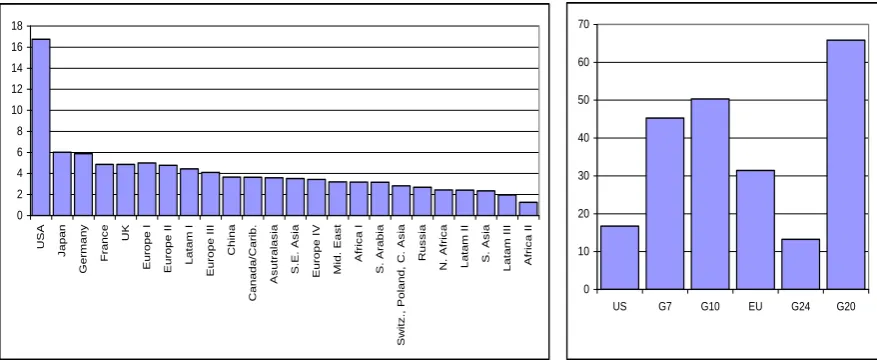
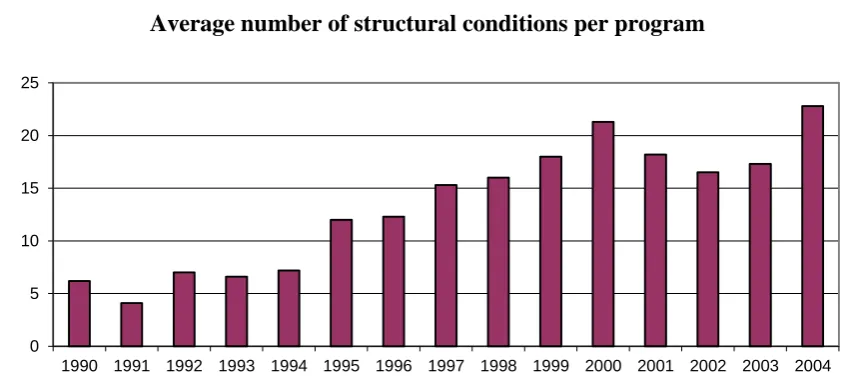
Figure 2.4: Political instrumentation of IMF programs 54 Figure 3.1: Actors and relationships in the IMF´s decision-making process 58 Figure 3.2: Voting power of constituencies and of selected coalitions at the EB 62 Figure 3.3: Average number of structural conditions per program 82
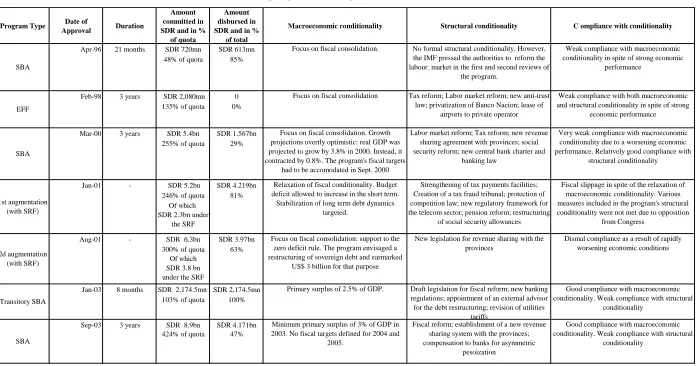
Table 4.1: IMF programs in Argentina (1996-2005) 91
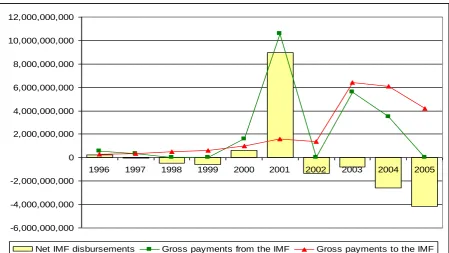
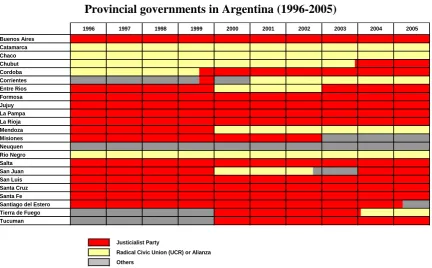
Figure 4.1: Financial transactions between Argentina and the IMF 92 Figure 4.2: Provincial governments in Argentina (1996-2005) 108
Table 5.1: IMF programs in Uruguay (1996-2005) 136
Figure 5.1: Financial transactions between Uruguay and the IMF 137
Figure 6.1: Veto Players 185
Table 7.1: Macroeconomic effects of IMF programs 199
Figure 7.1: Real economy indicators 204
Figure 7.2: Terms of Trade 207
Figure 7.3: The Current Account 209
Figure 7.4: Gross financing via international capital markets 211
Figure 7.5: External Debt 211
Figure 7.6: Foreign Direct Investment 212
Figure 7.7: Macroeconomic management 214
Figure 7.8: Foreign exchange reserves 215
Figure 7.9: Credit to the private sector 216
11
Figure 7.10: Economic freedom index 222
Figure 7.11: WBI composite governance indicators 225
Figure 7.12: Change in the WBI governance indicators 226
Figure 7.13: ICRG composite governance indicators 227
12
CHAPTER 1
Introduction
1.1 Research topic and questions
After three years of recession and several months of negotiations, the International Monetary Fund (IMF) suspended its financial support to Argentina in late November 2001. A few weeks later the country had descended into chaos, triggering an almost immediate contagion effect on neighbouring Uruguay. But the international community responded very differently to that crisis, approving a financial rescue package which until recently was the largest IMF program in history if measured against the size of the recipient economy. This dissertation looks at these contrasting experiences in order to shed some light on the causes and consequences of the multilateral response to financial crises. More specifically, the main research questions that will be addressed are the following: what accounts for the longitudinal and cross-sectional variation in the Fund’s interventions in Argentina and Uruguay? How and why did the multilateral response to the 2001-02 crisis impact the Argentine and Uruguayan economic, political and institutional trajectories in the medium-term?
13 the international community decides on the terms of a program, on occasions it is also adopting an implicit or explicit stance about the losses that the borrowing country’s private creditors will have to absorb in order to maintain or restore debt sustainability.1 In fact, depending on the context, PSI could be the most relevant ingredient for the success of an IMF program.
The subject of this dissertation is relevant for various reasons. First of all, the 2001-02 financial crisis is one of the most traumatic events in the modern economic histories of Argentina and Uruguay and, therefore, these two case studies deserve attention in their own right. The Argentine crisis and, to a lesser extent, the case of Uruguay, have received a considerable amount of journalistic and scholarly attention. However, most existing contributions have tended to provide historical narratives without delving deep into the chain of causation that led to the crucial multilateral decisions that were taken in 2001 and 2002 (Mussa, 2001; IEO, 2004; Paolillo, 2004; Blustein, 2005). Furthermore, a comparative perspective has rarely been adopted to study the Argentine and Uruguayan experiences with the IMF. Therefore, cross-sectional variation in these two case studies has seldom been exploited to analyse the causes and consequences of the Fund’s interventions and, hence, the risks and opportunities associated with the IMF-centred multilateral financial safety net.
Moreover, multilateral crisis lending has become more pertinent in the context of the global financial turbulences of the last few years. Prior to that crisis, the Fund’s relevance as the linchpin of the international monetary system seemed to be on the decline. However, in successive G-20 summits the international community has restored the Fund’s leading role in the management of the world economy. Studying the causes and consequences of past multilateral interventions can only help to gain a better understanding of the multiple financial programs in which the IMF is currently involved in Europe and elsewhere. In fact, it has been common to draw analogies between the cases covered in this dissertation and the Greek, Spanish, Portuguese or Italian crises, and some scholars have presented the Argentine and the Uruguayan debt restructuring models as alternative strategies to cope with sovereign debt problems in the Eurozone
1 Ceteris paribus, the higher the volume of the financial package and/or the higher the level of domestic
14 (Levy-Yeyati et al. 2011). The lessons yielded by these two case studies could therefore be of more immediate policy relevance than was foreseen when this research effort began in September 2008.
In addition, the Argentine and the Uruguayan experiences present various analytical puzzles. First of all, the contrast between the multilateral response to the two crises constitutes a puzzle for those who place powerful states’ material interests at the centre of the study of international cooperation. Whereas by the turn of the century Argentina had attracted large volumes of capital inflows and, as suggested by its status as a founding member of the G-20, was perceived to have become a systemically important emerging economy, Uruguay was practically irrelevant on a global scale. Therefore, the G-7 and other creditor nations had reasons to be much more concerned about the potential spill-over effects of a full-blown financial crisis in Argentina than about the collapse of the Uruguayan banking system. Furthermore, while the Argentine embrace of the neo-liberal doctrine during the 1990s had been widely praised by international financial institutions and by the architects of the Washington Consensus, Uruguay’s more modest market reform process had gone largely unnoticed. How to explain, then, that the international community eventually decided to suspend its support to Argentina while such extraordinary measures were taken to rescue the Uruguayan economy?
The comparison between the Argentine and the Uruguayan economic trajectories is also puzzling for those that believe that a strong multilateral safety net is crucial to help emerging markets cope with the risks associated with financial globalization. If such a collective insurance scheme was an effective tool to mitigate these risks, the Uruguayan rescue package should be expected to have significantly reduced the impact of the crisis in that country and to have facilitated the subsequent recovery. But the economic contractions experienced in Argentina and Uruguay during the worst years of the crisis were almost identical and Argentina exhibited a somewhat higher cumulative GDP growth in the aftermath of the 2001-02 events. If the rescue package did not enable the Uruguayan economy to perform better than that of Argentina, what was the impact of the contrasting multilateral response to the two crises?
15 (Przeworski and Teune, 1970). Indeed, these countries have close social and cultural identities and share other characteristics such as their level of economic development, their economic structures as traditionally important exporters of meat, soy and other primary products and their exposure to comparable types of external shocks. Furthermore, at the onset of the crisis Argentina and Uruguay were at a similar historical juncture having recently completed a political transition from an authoritarian regime to a democratic system and an economic transition from an import substitution industrialization model with extensive state intervention to a more open and market-based political economy. The two episodes of financial instability themselves were also relatively similar, combining elements of a currency, banking and sovereign debt crisis. Moreover, the Argentine and the Uruguayan crises took place almost simultaneously implying that the rules and state of the art that guided the Fund’s interventions were essentially the same in the two episodes. This case study selection, therefore, maximizes cross-sectional variation in the outcome of interest (the Uruguayan rescue package vs. the suspension of the Argentine program) while minimizing the number of potential explanatory dimensions, which is aimed at mitigating the problem of over-determination that inevitably characterizes small-N empirical exercises.
1.2 On the causes of IMF interventions
16 The two-level game metaphor rests on the idea that the outcome of international negotiations is largely determined by the constraints facing negotiators as a result of the need to secure the domestic ratification of whatever they agree with their foreign peers. This idea is operationalized through the concept of win-sets, which refer to all the international agreements that are domestically ratifiable by each of the negotiators. The overall constraint of the two-level game is given by the intersection between all the individual negotiators’ win-sets, generating the following two hypotheses: (i) international cooperation depends on the existence of a win-set overlap and will be easier to sustain when individual win-sets are large (i.e. when domestic ratification constraints are loose); (ii) a narrow win-set (i.e. tight domestic ratification constraints) on one side of the negotiations can be turned into a bargaining advantage at the international table.
The empirical analysis conducted in this dissertation is partly aimed at testing the validity of these hypotheses in the specific context of the Argentine and the Uruguayan negotiations with the IMF. However, win-sets are inherently unobservable and the two-level game analytical framework is for the most part agnostic about what might determine the intensity of domestic ratification constraints. As a result, these hypotheses cannot be examined unless a causal relationship is established between other observable variables pertaining to the ratification process and the design and implementation of IMF-supported programs. Subsequent chapters will cover the cases of Argentina and Uruguay in an attempt to unearth such causal relationships and, therefore, should be understood as a hypothesis generating exercise rather than as a hypothesis testing task. In order to identify the most relevant explanatory dimensions to be explored, the point of departure will be a review of the rich literature on the IMF and on the politics of macroeconomic adjustment and reform, which has already emphasized a number of factors that may have played a significant role in these two cases. Particular attention will be placed on the interests of powerful creditors, on bureaucratic politics, on the role of veto players and on the determinants of political actors’ ability to cooperate in times of crisis.
17 process-tracing and comparative methods in order to exploit the longitudinal and cross-sectional variation observed in the Argentine and the Uruguayan case studies. A process-tracing approach will be applied to the longitudinal analysis of the Argentine and the Uruguayan negotiations with the IMF, which will initially be treated as independent cases in an attempt to identify the cause-effect relation between the dependent variable, i.e. the Fund’s interventions, and a number of potential explanatory variables. Given that this first part of the analysis on the determinants of IMF interventions will focus on longitudinal variation, the emphasis will be placed on those factors that exhibited variation over time, such as the outcome of electoral processes, the evolving strength and cohesiveness of governing coalitions or changing rules in the issue area of international crisis lending.
In turn, the comparative method will be used to analyse cross-sectional variation. This empirical strategy relies on the idea that, as mentioned above, these two case studies fit the logic of a most similar system design reasonably well. Therefore, causation will be inferred from the co-variation between the outcome of interest and the explanatory dimensions that have not been controlled for as a result of the similarities between the Argentine and the Uruguayan cases. Given that this second part of the analysis will concentrate on cross-sectional variation, the emphasis will be placed on more static explanatory variables differentiating the Argentine and Uruguayan case studies, such as the size of the two economies, the location of veto-players within their political systems, or other structural institutional features.
18 Given the above, much of the focus will be placed on the determinants of domestic ratification constraints. In this sense, the longitudinal analysis of the Argentine and the Uruguayan case studies will explore the relationship that exists between the outcome of electoral processes and the ratification constraints facing debtor nations´ negotiators, which played an important role at various junctures of the two processes. However, other more subtle causal relationships will also be emphasized in the comparative analysis. More specifically, a crucial factor to explain the contrast between the Argentine and the Uruguayan negotiations with the IMF is the different propensity to cooperate exhibited by political actors in these two cases. In turn, I will argue that this propensity to cooperate was influenced by certain structural features of their polities, such as the different strength of their systems of checks and balances, which encouraged the Uruguayan government’s stakeholders to engage in intertemporal bargaining processes to a much greater extent than in Argentina.
Another factor that contributed to shape the negotiations with the IMF through the constraints facing the Argentine and the Uruguayan negotiators was the location of veto players within these two countries’ political systems. It will be argued that these actors tend to focus primarily on those conditions that are likely to affect their interests and not on the whole policy package negotiated with the Fund. As a result, the conditionality associated with IMF loans will tend to be weaker and more difficult to implement in the areas that are of direct concern to the veto actors empowered by specific configurations of political institutions. This is why in the decentralized Argentine state the veto-power of the provinces contributes to explain the failure of the fiscal adjustment programs negotiated with the Fund, while Uruguayan unions’ prerogative to launch referenda weakened the structural conditionality associated with IMF loans. Mapping out the location of veto actors and anticipating how conditionality is likely to impact them, therefore, might be instrumental to anticipate where IMF interventions will tend to be more problematic.
19 more likely to interfere in the negotiations. By contrast, if the cost of no agreement is perceived to be low, technical considerations and bureaucratic politics at the level of the IMF will tend to dominate the process. In this context, it is hardly surprising that at various points the very different size of the Argentine and the Uruguayan economies contributed to shape the negotiations. However, on the basis of the evidence provided by these two case studies I will argue that borrowers’ economic might as such is not a consistent predictor of the multilateral response to financial crises because mobilizing the resources that are needed to bail-out small countries is easier and might pursue other equally relevant strategic objectives.
The role of rules will also be explored in subsequent chapters. Although multilaterally agreed rules are found to have imposed a generally soft constraint on the negotiations of the Argentine and the Uruguayan programs, the position of powerful constituents vis-à-vis these two interventions was influenced by a desire to influence the reform of the international financial architecture according to their policy preferences. This became particularly relevant during the discussions on the Sovereign Debt Restructuring Mechanism (SDRM), which contributed to shape the preferences of the US and other G7 countries on the Argentine and the Uruguayan programs through channels that will be examined in detail. As a result of this issue-linkage, it will be argued that the causal association between rules and the design of the IMF programs under analysis was more complex and bi-directional than might be expected at first.
1.3 On the Consequences of IMF interventions
20 present in most of the case study contributions that have tried to assess the impact of specific IMF interventions: the failure to establish a valid yardstick against which to compare observed outcomes.
As already mentioned, the contrasting response to the Argentine and the Uruguayan crises had a modest impact on real economic variables such as GDP growth or unemployment. However, the medium-term evolution of capital flows towards these economies was heavily influenced by the multilateral decisions adopted in 2001 and 2002. Whereas Uruguay recovered access to international financial markets relatively fast, Argentina has received a negligible volume of foreign investment since the suspension of the IMF program forced it to default in late 2001. Together with the fact that from that point onwards the Fund lost its ability to influence the design of Argentina´s economic policies, Uruguay´s greater integration into international financial markets might contribute to explain why this country has maintained a much more orthodox and anti-inflationary monetary stance after the crisis. By contrast, few differences have been found in the orientation of the fiscal policies implemented by the Argentine and the Uruguayan governments, suggesting that variation in the Fund´s interventions had a reduced impact on this policy-making dimension.
21
1.4 Chapter plan
22
CHAPTER 2
Towards a two-level interpretation of IMF programs
This chapter provides an overview of the literature on the determinants of IMF interventions in financial crises and presents an analytical framework that will be applied to the analysis of the Argentine and Uruguayan case studies. Scholars in the field of international relations distinguish between three levels of analysis: the individual level, which focuses on the explanatory power of statesmen’ personal characteristics; the domestic level, which concentrates on the impact of national political processes on international outcomes; the international level, which focuses on the position of states in the international system. The literature on the IMF and, more generally, on international organizations is no exception and most contributions fall either in the domestic or the international levels of analysis. The review of scholarship presented in this chapter is structured around that distinction, beginning in section 2.1 with international explanations of IMF interventions and continuing in section 2.2 with the contributions that have focused on the domestic level of analysis.
23
2.1 The international level of analysis
This section reviews some of the most salient international-level theoretical and empirical contributions that have analysed the role of the IMF among other multilateral organizations. The various approaches presented here emphasize different explanatory variables as the key driver of multilateral interventions. Neo-liberal and public choice scholars share a focus on the role of material interests. However, whereas the former concentrate on states and their reasons to cooperate through international organizations, the latter are more interested in these institutions’ bureaucracies and the ways in which they pursue their own self-interested objectives. Constructivists, instead, interpret multilateral organizations as social constructs that need to be explained in terms of knowledge, ideas, beliefs or identities. In turn, neo-realist scholars, where they are interested in international cooperation, focus on the distribution of power capabilities among states as the key determinant of the actions of multilateral institutions.
2.1.1 The neo-liberal and public choice approaches
Since the late 1970s neo-liberal scholars have been particularly interested in explaining the factors that sustain international economic cooperation. This research agenda was originally motivated by the observation that important shifts in the international distribution of economic power were not resulting in the debilitation of institutions such as the IMF, the World Bank or the General Agreement on Tariffs and Trade (Dunne et al., 2007). Why, against the prediction of Hegemonic Stability Theory, was this international economic infrastructure maintained in spite of the perceived decline of the United States (Kindleberger, 1973)? In order to address this puzzle, international regime theories provided a framework to explain the mutual adjustment of states’ behavior or policies and their acceptance of certain obligations in the absence of a supra-national authority with the ability to hierarchically enforce the rules of the game.2
2 International regimes are broadly defined as “implicit or explicit principles, norms, rules and
24 Neo-liberal theories of international cooperation are rooted in an individualist and rationalist ontology and often apply economic methodologies to analyze problems of collective action. Robert Keohane’s contractualism, for instance, interpreted international regimes as mechanisms enabling participating states to overcome the type of prisoner dilemma situations that arise in international relations (Keohane, 1984). In the absence of a regime, these collective action problems can prevent groups of states from achieving pareto-efficient cooperative outcomes resulting from their common interest in specific issue-areas. Individual states’ rational choices can be compatible with Pareto-inferior solutions because of the presence of immediate incentives to defect in the first place and because these incentives to cheat may lead states not to trust others’ willingness to stick to cooperation in the second place. International regimes provide a framework for negotiation that reduces transaction costs, creates iteration in the game and lowers uncertainty about the actions of others, thereby altering incentives and catalyzing co-operation. As a result, the pareto-superior outcomes are more likely to be realized, which forms the backbone of Keohane’s functionalist theory: because countries anticipate the potential welfare improvement generated by co-operation they create international regimes.3
Various scholars have analyzed the role of the IMF through the lenses of this international regime approach. Cohen (1982) described the Fund’s provision of finance as an international regime “governing access to external credit for balance of payment purposes”. The basic foundation of this regime was the premise that an appropriate balance between domestic adjustment and external financing should be sought in order for countries to correct their balance of payments disequilibria. Under the Bretton Woods system the IMF managed a pool of national reserve currencies and gold, providing external financing on a limited scale. This tranched financial support was conditioned on the implementation of a number of policies, which ensured that recipient countries would not overtly postpone domestic adjustment as would otherwise be their tendency. The central question addressed by Cohen was whether the rise of private lending as the most important source of funding to cover external imbalances during the 1970s had effectively marked the end of this regime. Indeed, as opposed to the IMF,
3 Various contributions have refined or extended this argument. Robert Axelrod (1984), for instance,
25 private creditors were unable (or unwilling) to impose policy conditions and the question arose as to whether the system had mechanisms in place to continue promoting an appropriate balance between domestic adjustment and external financing. However, because private banks did gradually come to the realization that countries need to adjust in order to remain creditworthy, they increasingly required the presence of an IMF program in order to continue lending. As a result, Cohen argued that the rise of private markets did not fundamentally challenge the IMF’s role as an “arbiter for access to financing”. In other words, although the regime had changed, he contended that this was a change in degree rather than a change in kind.4
According to Biersteker (1993), developing countries’ loss of access to international financial markets during the 1980s proved that Cohen was right: “(…) the petrodollar recycling by the commercial banks during the 1970s was more of an interruption in the post-war balance of payments regime than an indication of its profound transformation”. In his view, the management of the 1980s debt crisis can be best interpreted as an international regime broadly re-establishing the principles, norms, rules and decision-making procedures described earlier by Cohen. The 1980s debt regime, therefore, was another stage in the evolution of the regime established at Bretton Woods. The most substantial addition to that regime was the gradual consolidation of the principle that in exchange for debt relief countries would pursue market oriented reforms (Brady plan).
Gould’s theory of supplementary financiers is also related with Cohen’s idea of the IMF as an arbiter for access to financing (Gould, 2003). Her main insight was that the IMF has historically complemented its programs with resources provided by states, private creditors and other international organizations such as the World Bank. Without supplementary financing, its programs would have failed to cover countries’ balance of payment needs and the IMF would have lost leverage over its members. However, Gould showed empirically that supplementary financiers have gradually acquired the power to demand the inclusion of certain conditions in IMF programs. In her view, this
4 Using the terminology developed by Ruggie (1983), the rise of private lending is seen by Cohen as a
26 mechanism explains why the scope of conditionality has expanded so markedly in spite of the Fund’s staff and Executive Directors’ repeated attempts at reversing this trend.
Mainstream neo-liberal scholars tend to be state-centric and view international organizations as structure rather than agents. However, some contributions have treated these institutions as semi-autonomous actors exerting their own influence over international outcomes. This is the case of the theories of delegation rooted in the principal-agent model. According to this approach, delegation to a multilateral institution is a specific variant of international cooperation. States may opt to delegate for different reasons: to exploit gains from specialization, especially for repetitive or technical tasks; to overcome collective action problems and capture policy externalities; to pursue legitimacy and not to bear the full blame for the potential consequences of specific courses of action; to enhance the credibility of their policy commitments and reduce the incidence of time inconsistency problems; to facilitate collective decision-making or dispute resolution in specific issue-areas (Hawkins et al., 2006). Along with these potential benefits, the act of delegating authority to an international institution generates agency problems because the preferences of principals (states) and agents (international organizations) are never exactly aligned. Furthermore, contracts delegating authority are imperfect and monitoring and control mechanisms costly meaning that, in the presence of information asymmetries, there is always room for the agent to act opportunistically. In other words, once authority has been delegated, international organizations can shift policy away from states’ preferred outcomes, giving rise to agency “slack”.
27 be the case during a crisis; states’ preferences diverge; the design of a successful program requires high quality information and the recipients of such programs are concerned with the leakage of confidential data. Similarly, Copelovitch (2008) treated the five largest IMF shareholders (the G5) as a collective principal and the Fund’s staff as its agent. Consistent with Martin, his empirical analysis found that the size and conditionality of IMF programs tend to be closer to the Fund’s preferred outcome when there is a higher degree of heterogeneity in the preferences of the G5.
Although agency models provide a powerful instrument to study the interactions between states and international organizations, they usually fail to explain why the preferences of both actors may come to diverge. Instead, public choice scholars focus on international bureaucrats’ incentive structures as an explanation for this divergence and, more generally, for public policy failures. Roland Vaubel departed from the premise that “bureaucracies are interested in power, prestige and amenities” to explain certain patterns in the evolution of IMF lending and conditionality, the scale and scope of which are instrumental for bureaucrats to maximize their budget and autonomy (Vaubel, 1986, 1991, 1996). In a similar vein, Dreher (2004) argued that the Fund’s Executive Board is used by countries to resist the staff’s drive for more conditionality and, therefore, more power. In this context, countries’ bargaining capacity at the Board should be negatively correlated with the scope of the conditions imposed on them. However, because until recently the largest IMF shareholders were no longer considered potential borrowers, the Board has gradually given in to the staff lobbying for more intrusive conditionality. Other scholars focusing on the bargaining process between the various stakeholders of multilateral organization have adopted more nuanced views on the motivations of international officials. Bruno Frey (1997) for instance, claimed that “international bureaucrats pursue those policies that give them more prestige and influence within the reference groups with which they are connected”. Willett (2002), in turn, contends that international officials’ main objective is to progress in their professional careers, which incentivizes them to adopt their managers’ preferences.
28 simultaneously, as was the case in Argentina and Uruguay. Nevertheless, the contributions reviewed above identify some potential sources of variation. For Gould (2003) it is important to look at the interests of supplementary financiers, which may have been different in the cases of Argentina and Uruguay. Following the logic of principal-agent models, the multilateral response to these two crises could also have differed because the international community was keener to delegate authority to the IMF in one case or another, maybe as a result of more or less convergent creditors’ preferences (Martin, 2006; Copelovitch, 2008). Public choice scholars, in turn, would emphasize the role of bureaucrats’ incentives during the management of the Argentine and the Uruguayan crises, which may have varied as a result of these two countries’ different systemic importance.
2.1.2 The constructivist approach
Constructivist scholars argue that international cooperation is a social construction rather than the product of purely rational calculations on the part of egoist states with static preferences and ideas. In other words, they view international relations as a “world of our making” in which agents and structure are mutually constituted and interact on the basis of widely shared intersubjective beliefs (Onuf, 1989; Finnemore and Sikkink, 2001). As a specific form of international cooperation, constructivist scholars view multilateral organizations themselves as social facts that cannot be studied in isolation from the environment, culture and ideas in which they are embedded. Furthermore, once they are created international organizations also originate a distinctive social knowledge that influences the beliefs of their creators. In this way these institutions gradually become autonomous and purposive actors in world politics.
29 organization around the world (like markets and democracy)”. However, international organizations are prone to misusing this power because their distinctive cultural features tend to breed dysfunctional or even “pathological” behavior. Drawing from sociological institutionalism, Barnett and Finnemore identify five bureaucratic mechanisms that yield such undesirable outcomes: the “irrationality of rationalization” that occurs when norms become ends in themselves; the inattention to local contexts and concerns arising from international organizations’ tendency to develop universal rules and categories; 5
the “normalization of deviance” that comes with the gradual acceptance of exceptions as rules; the insulation from other competing worldviews affecting bureaucrats belonging to specific organizations; the contestation between various sub-cultures within a multilateral institution.
Babb (2003) also adopted a sociological approach to study the process through which international organizations come to gradually diverge from the objectives and goals of their creators. In her view, this “organizational slippage” is partly the result of ambiguous charters arising from the complexities of the multilateral negotiations establishing these institutions. In the case of the IMF, the ambiguity of the Articles of Agreement materialized in conflicting interpretations and disagreements about the role of conditionality in financial programs. Eventually, however, the Fund has played a relatively stable role in international financial affairs shaped by three sources of structure: external pressure from the US Treasury; “mimetic isophormism” understood as the replication of pre-IMF arrangements to cover countries’ balance of payment needs;6 shifting dominant paradigms among economists, the dominant professional category at the IMF. According to Babb, these three factors combine to explain the IMF’s gradual departure from its original Keynesian mandate to embrace the objective of promoting free markets and macroeconomic austerity as its main raison d’être.
In a similar vein, Jeffrey Chwieroth (2010) explored the dynamics that gradually modified the Fund’s staff position on capital controls in spite of the absence of formal
5 The example offered by Barnett and Finnemore to illustrate this “universalism” is the imposition of
conditions of fiscal austerity in IMF programs to address the Asian financial crisis. The IMF exported a Latin American mode of action to an Asian context in spite of the fact that fiscal profligacy was not a cause of the Thai, Korean and Indonesian crises.
6 The loans agreed between central banks during the Gold Standard, which also imposed policy
30 rules about the institution’s role in the promotion of financial liberalization.7
Based on surveys, archival research and extensive interviews he tracked the formation of beliefs and the internal debates that led to this normative change, emphasizing the following dynamics. Professionalization refers to the process through which by the 1970s economists had gradually reconstructed their discipline’s mainstream understandings about the desirability of capital mobility. As a result of the generational renovation of IMF economists that took place in the 1980s and 1990s, these new beliefs were inserted in the Fund’s decision-making process. The emerging market crises of the 1990s triggered a process of adaptation that fed an internal debate about how to proceed (the sequencing vs. big bang approach) but failed to question the long-term objective of fostering capital freedom.8 Chwieroth also emphasized the ways in which norm entrepreneurs within some of the Fund’s subcultures strategically exploited agency slack to construct technical interpretations of events that called for policy initiatives compatible with their principles and beliefs.
As was the case with some of the mainstream neo-liberal contributions described in section 2.1.1, constructivist scholars have tended to concentrate on the forces behind the emergence and evolution of the IMF as an institution rather than on the determinants of specific multilateral interventions. In fact, given that the Argentine and the Uruguayan crises took place almost simultaneously and were relatively similar in nature, it would be difficult to argue that ideational variables were a significant determinant of the variation observed in the Fund’s interventions in these two countries. Furthermore, because the same IMF department handled the negotiations (the Western Hemisphere Department) and because of the cultural proximity between Argentina and Uruguay there is no a priori reason to emphasize the explanatory potential of diverging inter-subjective beliefs.9 The constructivist view of the world, therefore, appears ill-equipped to study the causes of the contrasting multilateral response to the Argentine and the Uruguayan crises.
7 During the 1990s there was an attempt to amend the Fund’s Articles of Agreement in order to formalize
the objective of liberalizing the capital account. However, this attempt was dropped after the Asian financial crisis.
8
As opposed to adaptation, a learning process would have entailed a change in beliefs about the desirability of capital mobility as a policy objective.
9 On the other hand, as will be argued in Chapter VII, the contrasting response to the Argentine and
31
2.1.3 The realist approach
As opposed to constructivists, realist scholars tend to consider that international organizations are epiphenomenal to states interests and, therefore, have a limited explanatory role of their own. In fact, realists consider that power is central to explain most international outcomes, yielding a rather pessimistic view about the resilience of cooperative arrangements between states. This skepticism is grounded in three presumptions about the nature of the international system: states care about relative rather than absolute gains (Grieco, 1988); international anarchy poses too binding a constraint on cooperation (Waltz, 1979); states always fear others cheating on their commitments (Grieco, 1993). This is not to say that international regimes and multilateral organizations cannot exist. However, it means that realists view such arrangements as “little more than ciphers for state power” (Koremenos et al., 2001). In other words, international organizations may constrain behavior, but only that of weaker states.
32 particular point will be realized in the Pareto frontier; to alter other states’ incentives (the ‘payoff matrix’), for instance through threats or promises.
Several empirical contributions have tested realist hypotheses about IOs and, more specifically, about the IMF. In an influential paper Thacker (1999) tested econometrically whether political proximity to the US or the political realignment towards US positions at the United Nations General Assembly increase countries’ probability of entering into an IMF program. He found robust evidence to support the political realignment hypothesis: “the US has been more concerned with attracting new allies and punishing defectors than rewarding loyal friends”. Barro and Lee (2005) extended this analysis to show that political proximity to other major IMF shareholders also increases the probability of receiving a loan. Economic proximity with such countries (proxied by bilateral trade) is also found to be a significant determinant of IMF lending in their study. Similarly, Oatley and Yackee (2004) found that IMF lending tends to be directed towards countries to which American banks are more exposed. In turn, Reynaud and Vauday (2009) illustrated the importance of geopolitical factors in IMF lending decisions. Finally, Stone (2008) found that countries that are important recipient of US aid are more likely to have an IMF program approved and are subject to a less intrusive conditionality. However, the US is willing to exert its leverage on the design of IMF programs only for important allies, and borrowing governments only request the US support when they are in a highly vulnerable situation. According to Stone, in other circumstances IMF economists have much more leeway in the program negotiations with borrowing countries.
33 a limited potential to explain that outcome. A close examination is therefore needed on the scholarly contributions that have concentrated on the domestic level of analysis.
2.2 The domestic level of analysis
The IMF lends only to countries that request participating in a program. Furthermore, once an agreement has been reached between the Fund and a borrowing government, the policies and measures on which disbursements are conditioned have to go through domestic political and bureaucratic institutions in order to be ratified and implemented. Therefore, domestic variables are likely to play a significant role in the allocation of IMF credit and in the design and implementation of its programs. This section presents the contributions that have focused on the domestic level of analysis.10 Because the countries that sign an IMF program are usually going through a financial, fiscal and/or balance of payment crisis, it begins with a selective overview of the literature on the politics of economic adjustment and reform. Then, it will continue with the contributions that have concentrated more specifically on the role of domestic political variables in the negotiation and implementation of IMF arrangements.
2.2.1 The politics of domestic adjustment
The domestic political processes that shape states’ response to an economic crisis have received much scholarly attention. This literature was kick-started by the 1980s debt crisis and by the realization that countries facing relatively similar shocks ended up taking different macroeconomic adjustment and structural reform paths.11 More specifically, variation was identified in the timing of the measures adopted to address the debt crisis, the content of these measures and the extent to which countries persevered with adjustment and structural reform. Early contributions tended to emphasize the collective action problems stemming from the distributional consequences of macroeconomic adjustment. In the words of Alesina and Drazen (1991), such distributional effects tend to feed a “war of attrition” between the various groups affected by these measures, resulting in substantial delays in the
10 In this section the domestic level of analysis focuses on debtor rather than creditor nations.
11 Good summaries of this early literature are provided in the volumes edited by Nelson in 1990 and by
34 making process which carry a cost for society as a whole. Furthermore, potential winners are not only more dispersed but also more uncertain about the potential benefits of the reforms than the groups that lose, which weakens the incentives of the former to mobilize against the status quo (Fernández and Rodrik, 1991). Supporting the contention that democratic governments are likely to be more exposed to such interest group pressures, various case study analyses argued that authoritarian regimes were more successful at initiating reforms (Kaufman, 1985; Kahler, 1986). However, the broader comparisons and statistical studies that looked at this issue failed to provide consistent evidence that democracy systematically impairs governments’ economic adjustment efforts (Haggard and Webb, 1993)
Going beyond the democracy vs. authoritarianism debate, politicians and technocrats’ autonomy from the pull of distributive politics has long been emphasized as a crucial requirement for the initiation of the reform process (Kaufman and Haggard, 1992). However, various contributions have also argued that once such processes of change are launched their consolidation will depend on whether the state elites that are behind the reforms are able to construct supportive and relatively stable coalitions of beneficiaries. In an attempt to reconcile these two apparently contradictory necessities, Peter Evans (1992, 1995) developed the notion of “embedded autonomy”. This referred to the beneficial effects of bureaucracies that are insulated from the pressures of particularistic interests but sufficiently integrated in a network of social and institutional ties with non-governmental actors, enabling the state to fine-tune its policies and to generate the trust and support that is needed to sustain reform processes.12 According to this argument, those governments that reach an appropriate balance between autonomy and embeddedness will be better placed both to foster economic development and to adequately respond to economic shocks.
More recently, some scholars have built upon Tsebelis’ veto-player theory to identify the factors that determine governments’ capacity to adapt when policy changes become necessary (Tsebelis, 1995, 2002). Part of the reason why this approach has received so much attention is that it provides a general framework applicable to all types of political systems, making it possible to go beyond the pairwise comparisons that had previously
12 Evans argued that this embedded autonomy is behind the success of developmental states such as South
35 dominated the literature and opening the way to broader statistical analyses. Indeed, this analytical framework uses only two dimensions to characterize polities: the number of veto-players and their policy preferences. Veto-players are defined as “individual or collective actors whose agreement is required for a change of the status quo” (Tsebelis, 1995). Such actors can have different forms. Institutional veto players are individual or collective decision-making bodies such as presidents or the chambers of parliament, which derive their power from the constitution. In turn, partisan veto players are parties or factions within parties endogenously empowered by the political game. Other potential veto-players are the judiciary, the army, particularistic interest groups or actors with the prerogative of launching a referendum. Tsebelis’ model predicts that departing from the status quo will be more difficult when the number of veto-players is high and when their preferences (their “ideal points”) diverge. The internal cohesiveness of collective veto players will also tend to impair polities’ responsiveness to economic shocks.
36 distribution of veto authority.13 Angkinand and Willett’s econometric analysis brought support to this hypothesis: out of a sample of 45 episodes in 27 emerging economies they found that banking crises were costlier in those countries with an absence of veto-players or with too many such actors (Angkinand and Willett, 2008).
However, building upon the theory of repeated games, some contributions have challenged the view that policy stability and policy adaptability are necessarily conflictive objectives. A recent example is Scartascini et al. (2010) who emphasize the inter-temporal nature of the policy-making process to argue that under certain conditions and depending on the needs of the moment, cooperation between political actors can produce both outcomes at different points in time. According to this line of thought, polities’ responsiveness to an economic crisis does not depend on the number of veto-players but on their ability to engage in an inter-temporal bargaining process. In their set-up, adding veto-players to the game does not undermine the ability of governments to adjust their policies, but rather the opposite. The reason is that if veto players fear that they may lose that condition while knowing that the preferences of those that will succeed them differ from theirs, they will not only concentrate their political activity on the content of public policies but also on the adoption of decision-making technologies that constrain future choices.14 The uncertainty that they face is more marked when checks and balances are weak, providing veto players an incentive to “write policy in stone today” in order to insure against the risk of opportunistic one-sided behaviour tomorrow. Instead, the presence of strong checks and balances increases the likelihood that current veto players will retain their sit at the table, weakening their incentives to introduce additional rigidities. Hence, a larger number of veto players may be associated with more flexible decision making procedures and, therefore, with greater policy adaptability.
The critical question for these authors is what conditions make cooperation among political actors more likely, yielding both policy stability and policy adaptability. In their repeated game model it is easier to sustain a cooperative equilibrium when there
13
Instead, Indonesia and Malaysia had the most centralized veto authority, which generated problems of policy volatility, whereas Thailand had the most decentralized veto authority, yielding policy rigidity. 14 For instance, policies can be constitutionalized, international agreements with high exit costs can be
37 are more veto players but a lower number of political actors affected by policies’ distributional impact, when players are more patient and when they have an element of common interest (Scartascini et al., 2010). Stein and Tommasi (2008) looked at this issue from an empirical perspective, adopting a case study approach to identify the institutional features that foster cooperation in the policy-making processes of eight Latin American countries. Their study found substantial longitudinal and cross-sectional variation in the dependent variable, with countries like Chile and Brazil much more capable of sustaining cooperation than others like Argentina and Ecuador. Among the various factors that influence that outcome, they emphasized the presence of policymaking institutions that provide an arena where political actors interact repeatedly during sufficiently long periods of time.15 The degree of institutionalization of these policymaking arenas and the availability of enforcement technologies such as professional and politically neutral bureaucracies or independent judiciaries was also found to weaken actors’ tendency to defect from cooperative arrangements. Finally, cooperation will be easier to sustain in policy areas in which the short-term payoff of deviating from inter-temporal agreements is low.
In sum, the literature reviewed in this section identifies various factors that may significantly influence the implementation of the macroeconomic adjustment and structural reforms associated with IMF conditionality. In particular, the number and preferences of veto players together with political actors’ ability to cooperate may have constituted potentially important sources of variation in the Argentine and the Uruguayan case studies. But this literature is not concerned with the specific context of IMF programs and, therefore, leaves some important questions unanswered about the causal link between domestic politics and multilateral crisis lending. As described in the following section, however, this issue has received increasing scholarly attention in recent years.
2.2.2 Domestic politics and IMF programs
The contributions that have looked at the relationship between domestic political variables and the Fund’s program engagement in emerging economies have
15 This point is substantiated by the finding that more cooperation is found in countries where legislators
38 concentrated primarily on the following three questions. The first one is related with the decision to participate in an IMF program. Why do countries request the Fund’s financial support? Are IMF programs merely a response to an economic necessity or do political calculations come into play? The second is related with the design of these programs. To what extent do domestic political constraints influence the negotiation of the policy conditions attached to an IMF program? The third question is related with the implementation phase. What are the domestic political and institutional variables that determine countries’ capacity to comply with conditionality and to successfully implement an IMF program?
39
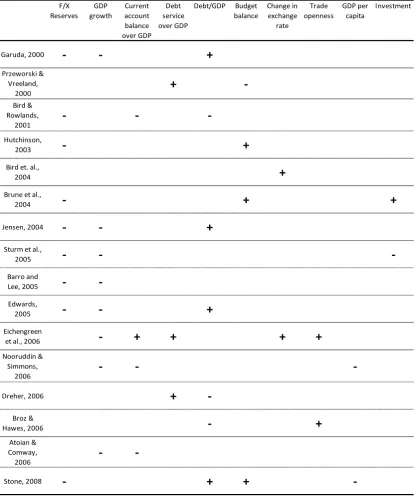
Table 2.1
Macroeconomic determinants of participation in IMF programs16
However, some scholars have also argued that governments may request an IMF program not only because they need to but also because, under certain circumstances, they may have a political incentive to do so. Although this public choice argument was originally put forward by Roland Vaubel, it has been developed primarily by Allan Drazen and James Vreeland (Vaubel, 1986; Drazen, 2002; Vreeland, 2003a, 2003b,
16 The table reports the signs of the statistically significant correlations between countries’ propensity to
enter an IMF program and macroeconomic variables found in the relevant literature.
F/X Reserves GDP growth Current account balance over GDP Debt service over GDP Debt/GDP Budget balance Change in exchange rate Trade openness GDP per capita Investment
Garuda, 2000 - - +
Przeworski & Vreeland,
2000 +
-Bird & Rowlands,
2001 - -
-Hutchinson,
2003 - +
Bird et. al.,
2004 +
Brune et al.,
2004 - + +
Jensen, 2004 - - +
Sturm et al.,
2005 - -
-Barro and
Lee, 2005 - -Edwards,
2005 - - +
Eichengreen
et al., 2006 - + + + +
Nooruddin & Simmons,
2006 - -
-Dreher, 2006 +
-Broz &
Hawes, 2006 - +
Atoian & Comway,
2006 -
-Stone, 2008 - + +
40 2007).17 Drazen developed a theoretical model in which he showed that even when the IMF and its borrowers agree on the policies to be attached to a program, conditionality can play an important role by reinforcing the government’s bargaining position vis-à-vis the interest groups opposed to adjustment and reform. In turn, according to Vreeland there are three main reasons why governments can have a desire for IMF conditionality.18 First, national policy-makers may use the IMF as a scapegoat to lessen the political cost associated with the adoption of unpopular adjustment measures or structural reforms. Second, some governments may want to become subject to conditionality in order to send a positive signal to private investors about the quality of their economic policies. Third, along the lines of Drazen’s model, national politicians may desire conditionality in order to gain leverage in the domestic political process, tipping the balance in favour of the ratification of certain policies that, in the absence of an IMF program, would have been blocked by veto players opposed to a departure from the status quo. Vreeland emphasized this third mechanism, which creates an additional cost for veto-players to oppose the policies covered by the Fund’s conditionality if the possibility of a disruptive program suspension is credible enough.19
Most of the studies that have tried to identify the determinants of conditionality have focused on international factors such as the interests of powerful countries and supplementary financiers or the bureaucratic incentives of IMF negotiators. However, the impact of domestic political constraints on the bargaining process between borrowing countries and the IMF has also been explored recently. Randall Stone (2008) interpreted conditionality as the result of a negotiation in which the IMF is given space to bargain autonomously when US strategic interests are not at stake. His econometric analysis found that domestic political conditions matter.20 More specifically, the IMF appears to impose less policy conditions to democracies, presidential regimes and
17 This is not to say that these scholars disregard the political cost of signing an IMF program. However,
they argue that the political benefits of conditionality may sometimes surpass this cost, especially in countries that are “used” to being in an IMF program. According to Vreeland, this is why even after economic factors are controlled for, having been under an IMF program in the past (recidivism) is a significant predictor of participation in IMF programs (Vreeland, 2007).
18 Drazen uses this model to illustrate why the ideas of program conditionality and country ownership are
not necessarily contradictory. 19
This is why Vreeland argues that domestic political calculations will matter less in countries that count on the support of the US or other large IMF shareholders, where the threat of a program suspension is not credible (Vreeland, 2004).
20 This econometric analysis is conducted using the Fund’s MONA (Monitoring of Fund Arrangements)
41 coalition governments. According to Stone, the reason is that under these circumstances governments face stronger political constraints domestically, which they use as a bargaining tool in their negotiations with the IMF. Therefore, Stone interprets this result as evidence of a causality that runs in the opposite direction of Vreeland’s contention that governments facing strong veto players domestically tend to exploit the Fund’s conditionality as an instrument to gain leverage in the domestic political process.
Focusing next on the third question, various studies have identified some domestic political and institutional variables that compromise borrowing governments’ capacity to successfully implement an IMF program. Ivanova et al. constructed three measures of program performance: a binary variable that captures whether programs are temporarily or permanently interrupted, a quantitative indicator that reflects the extent to which borrowing countries comply with conditionality and the ratio of the resources committed by a program that are actually disbursed (Ivanova et al., 2003).21 Their econometric analysis found that the presence of strong interest groups in parliament, political instability, ethnic fragmentation, a lack of political cohesion and poor quality bureaucracies significantly undermine the implementation of IMF programs. Furthermore, once they control for these political and institutional variables, economic conditions in borrowing countries have a statistically non-significant impact on the success prospects of IMF programs. Using a similar specification, Arpac et al. (2006) also emphasized the important role of political variables in the implementation of IMF programs. More specifically, they found that the presence of veto players is a particularly significant predictor of program interruptions. In line with Ivanova et al., borrowing countries’ macroeconomic conditions are not found to affect the likelihood that a program will be successfully implemented.22 Another contribution that builds upon Ivanova et al. is Nsouli et al. (2004), who found that government corruption is negatively associated with the likelihood of success in program implementation.
Summing up the literature on the domestic politics of IMF programs, there is some evidence to argue that borrowing governments do not only request the Fund’s financial assistance because they need to but also because under certain conditions they may have
21 They find that 44 percent of the programs they analysed were irreversibly interrupted while 70 percent
experienced at least one minor or major disruption. 22