R E S E A R C H A R T I C L E
Open Access
Efficacy of a prevention program for eating
disorders in schools: a cluster-randomized
controlled trial
Antje Gumz
1,3, Angelika Weigel
1*, Anne Daubmann
2, Karl Wegscheider
2, Georg Romer
4and Bernd Löwe
1Abstract
Background:Previous prevention programs in the school context have not addressed both genders, have been
time-consuming, or have had deficits in the evaluation method. The aim of the present study was to evaluate the impact of a universal prevention program for female and male adolescents on eating disorder pathology and related risk factors.
Methods:Between February 2012 and July 2014, 2515 students in 23 schools from 8th or 11th grade were
assessed for eligibility in this longitudinal cluster-randomized controlled trial with a six months follow-up. Of those students, 2342 were cluster-randomized to the intervention condition which received a six school hours universal prevention program or to the no treatment control condition.
Results:The complete case population comprised 724 students in the intervention (54.3% female,M= 14.3 years,
SD= 1.61) and 728 in the control condition (57.0% female,M= 14.7 years,SD= 1.63). Random-effects analysis of
covariance on the primary outcome showed no significant differences between the intervention and control groups in their eating disorder pathology change scores six months after the intervention. Regarding secondary outcomes, participants in the intervention group showed a greater increase in knowledge about eating disorders
both after the intervention (p< .001,ES= 1.06) and six months later (p= .01,ES= 0.40). Greater reductions in
anxiety severity were observed in the intervention group post-intervention (p= .02,ES= 0.22) which was not
maintained at the six months follow-up. Results differed between participants from grade 8 and 11.
Conclusion:The present universal prevention program can be particularly recommended for adolescents from
grade 11.
Trial Registration:ISRCTN 97989348
Keywords:Eating disorders, Prevention, Adolescents, Randomized controlled trial, Risk factors
Background
Adolescence is a vulnerable period regarding the devel-opment of an eating disorder [1]. The prevalence rates for this age are 2% for anorexia nervosa, 1% for bulimia nervosa and 2% for binge eating disorder [1]. Substan-tially more adolescents are affected by eating disorder symptomatology, i.e., dieting, weight loss behaviors [2, 3] or restrained eating and weight concerns [4]. Once
full-blown eating disorders emerge, the initiation of a recom-mended treatment is often delated [5] and particularly anorexia nervosa exhibits a high risk of chronicity [6]. Against this background, an implementation of eating disorder prevention programs during adolescence is par-ticularly important [7].
Different considerations plead for an implementation of eating disorder prevention programs in the classroom setting during adolescence. From a theoretical point of view, female and male adolescents make up an import-ant part of the social environment for each other [8]. In-cluding complete classes as the most relevant peer group provides the opportunity to increase awareness of * Correspondence:[email protected]
1Department of Psychosomatic Medicine and Psychotherapy, University
Medical Center Hamburg-Eppendorf & Schön Clinic Hamburg Eilbek, Germany, Martinistraße 52, 20246 Hamburg, Germany
Full list of author information is available at the end of the article
the adverse effect of peer pressure on eating disorder de-velopment [9]. Peers influence the extent of pressure to suit Western beauty ideals, individual appearance related attitudes and body dissatisfaction which are all risk fac-tors for eating disorders [10, 11]. Additionally, an over-lap of further eating disorder risk factors such as a low self-esteem and negative affects like depression and anx-iety has to be expected in female and male adolescents [10, 11]. From a practical point of view, it is easier for schools to deliver prevention programs to whole classes as most schools are co-educational.
Prevention programs delivered to whole classes follow a universal prevention approach as female and male ado-lescents participate without prior screening and regard-less of risk status. In the field of eating disorders, the efficacy of universal prevention programs in terms of ef-fect sizes is typically lower than in selective approaches [12] which has been attributed to different baseline scores in unselected samples [13]. Bailey and colleagues summarized the results of 46 trials of universal preven-tion programs for eating disorders as well as six meta-analytic reviews [14]. Satisfactory effect sizes were observed for outcomes related to eating disorder know-ledge while risk factor related outcomes were barely im-proved. The authors concluded that research opportunities for universal eating disorder prevention could be found in following a cognitive dissonance ra-ther than a psychoeducational approach and by offering interactive interventions in a multi-session format. An-other narrative review on effective eating disorder pre-vention programs underlined the need for universal prevention programs that address both genders [15].
A most recent randomized controlled trial compared three eight lesson universal prevention programs that addressed females and males with an average age of 13 years and aimed at reducing both eating disorder and obesity risk factors [16]. In one condition most encour-aging findings were observed with regard to risk factor reduction in female and male participants (i.e. Media Smart). However, there was evidence of iatrogenic effects of the other two conditions (i.e. Life Smart, HELPP). In these conditions, the authors observed a significant in-crease of eating concerns and perceived pressure to be thin at the six months follow-up in female participants relative to the control condition (i.e. HELPP) and wors-ened scores on four eating disorder risk factor variables in female participants as well as worsened scores on three eating disorder risk factor variables in male partici-pants (i.e. Life Smart).
Despite the promising evidence of some universal pre-vention programs most of these programs do not man-age to be transferred from research into classroom practice on the long run [17]. Current universal preven-tion programs for eating disorders suffer from several
shortcomings. A duration of six to nine weekly lessons is too long to suit the demands of school curricula for each school year. In other cases, scientific evaluations of the programs do not satisfy methodological standards re-garding sample size [18, 19], randomization [20] and follow-up assessments [21, 22]. Furthermore, in most in-stances to date, and with some notable expectations (e.g. [23]) stakeholders including professional organizations that are in regular contact with schools are not yet suffi-ciently involved in the program development, implemen-tation and dissemination to improve sustainability [24]. Thus, methodologically rigorous efficacy trials of short universal prevention programs which address female and male adolescents and fit the school curricular are ur-gently needed [13].
Against this background, this cluster-randomized con-trolled trial was designed to evaluate the impact of a brief universal prevention program on eating disorder pathology and related risk factors for female and male adolescents. We hypothesized that students who partici-pated in the program would exhibit a significantly greater decrease in eating disorder pathology six months after participation than students who did not participate (primary outcome). We further expected this group dif-ference to emerge directly after participation. Addition-ally, we hypothesized that students who participated in the intervention would more extensively increase their knowledge of eating disorders, show greater improve-ments in their self-concept, exhibit less internalization of Western beauty ideals, and report reduced levels of depression and anxiety compared with the outcomes for the control group both immediately after and six months after the intervention. Finally, we performed mediation analyses and subgroup analyses to describe the interven-tion’s effect in subgroups based on age and sex.
Methods
Study design and participants
The efficacy of the present eating disorder pathology reduc-tion program was evaluated using a cluster-randomized controlled trial design.
The study was approved by the Ethics Committee of the Psychotherapist Chamber of Hamburg, Germany (July 26, 2011), as well as the Hamburg supervisory school author-ity. The study protocol has been published (see [25] or Additional file 1 available online), and the study was registered with the ISRCTN registry (ISRCTN 97989348).
Randomization
Participating schools were randomized into the study conditions (intervention vs. control) according to the order of application. Randomization was conducted by an external institution (Department of Medical Biometry and Epidemiology, University Medical Center Hamburg-Eppendorf ). Random allocation was performed in a 1:1 ratio stratified by school type (district vs. secondary school) and the socio-economic status of the school en-vironment without blocking. During recruitment, several individual schools were combined with each other due to changes in the Hamburgian school system. As a con-sequence, the standardized socio-economic indicators of the individual schools were no longer applicable. Thus, random allocation had to be revised, and the result was an imbalance of schools in the study conditions. Once assigned, each school stayed in the same study condition for the entire study duration.
Before providing written informed consent, students and their parents or legal guardians obtained a letter of consent with a detailed description of the allocated study condition. Thus, participants could not be blinded to their study condition.
Participants in the two conditions received neither in-centives nor feedback about individual test results. How-ever, participants received a flyer with counselling and assistance services and were given the opportunity to contact a psychotherapist from the research team in case of any mental health issues.
Outcome measures
There were three times of assessment: 1) one month prior to the intervention (baseline), 2) directly after the intervention (post), and 3) six months after the interven-tion (follow-up). Parallel time points were used for as-sessments in the control group. At all times of assessment, outcomes were assessed using a question-naire set with self-report items. At baseline, demo-graphic characteristics and body mass index (BMI) were assessed.
The primary outcome was changes in eating disorder pathology from baseline to the six months follow-up. Following the suggestions by Wilksch [17] the global mean score of the children’s version of the Eating Dis-order Examination Questionnaire (Ch-EDE-Q; [26]) was used to assess the primary outcome. The Ch-EDE-Q total score is calculated from the mean score of 22 items
which refer to eating disorder symptomatology occur-rence in the past 28 days (range 0–6, with greater scores indicating more frequent experience of symptoms). The criterion validity of this questionnaire has been demon-strated in multiple studies and languages and there is empirical support from community-based samples for the temporal stability of the EDE-Q subscale scores over five to fourteen months [27]. The inner consistency of the Ch-EDE-Q global mean score in the present sample was Cronbach’sα= .955.
The secondary outcome scales included a question-naire to measure knowledge about eating disorders (20 questions covering different aspects of eating disorder risk factors and symptoms, with response options in-cluding “right”, “wrong”and “don’t know”; range 0–20). The Sociocultural Attitudes Towards Appearance Ques-tionnaire (SATAQ-G; [28]) was used to measure three aspects of the internalization of Western beauty ideals. The psychometric properties of this gender-adapted questionnaire have been established in adolescent sam-ples of studies in different countries [29, 30]. The inner consistencies of the SATAQ-G subscales ranged between Cronbach’sα= .822 (awareness subscale) to .900 (intern-alization subscale). The Multidimensional Self-Concept Scale (MSCS; [31, 32]) was used to measure self-concept. In the present sample Cronbach’s α was .921. The well-validated Patient Health Questionnaire-9 (PHQ-9; [33, 34]) and Generalized Anxiety Disorder Scale(GAD-7; [35, 36]) were used to measure the sever-ity of depression and anxiety symptoms. Inner consisten-cies of these instruments were Cronbach’s α = .819 (PHQ-9) andα= .860 (GAD-7) in the present sample.
Intervention
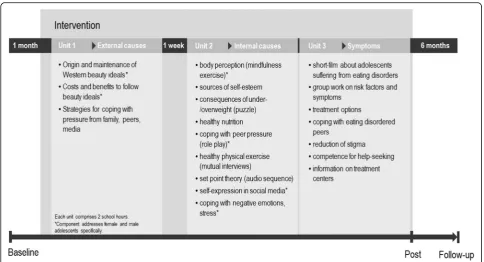
The inclusion of female and male adolescents at all levels of eating disorder risk without prior screening, the effort to in-clude as many schools as possible, the focus on the reduc-tion of risk for eating disorders and the promoreduc-tion of protective factors as well as the inclusion of input from community stakeholders (Center of the Prevention of Ad-diction, CPA) were features which formed the universal ap-proach of the present program [37]. The program comprised three lessons which were delivered over two con-secutive weeks (270 min dose in total). Females and males engaged together in the present program. Figure 1 provides an overview of the content and course of the intervention.
interactive intervention to help adolescents to cope with pressure from peers and family. One week later, female and male students past the second 90-min-lesson which comprised an interactive nine station parcour which ad-dressed risk factors for eating disorders, protective factors and healthy nutrition (see Fig. 1). At each station, partici-pants were provided with gender-adapted materials, e.g. different instructions for female and male participants. Adolescents passed each station in couples to allow for fo-cused and open discussions. The third lesson directly followed the second lesson and was used to increase stu-dents’awareness towards local and online help-seeking in case of mental health issues as well as to develop coping strategies for the whole class if a class mate suffers from an eating disorder. A detailed description of the preven-tion materials and the dissonance-based approach of the prevention program is provided in the study protocol [25]. The prevention materials were piloted in one school in January 2012. As a result, instructions for some interven-tions were revised. A prevention manual was then created to standardize the oral and written information during im-plementation. The intervention was conducted between February 2012 and January 2014.
Statistical methods
The sample size was calculated for the prespecified con-trast in the primary outcome, i.e., the adjusted mean
difference in the ChEDE-Q change scores between the intervention and control groups from baseline to follow-up [38]. Change scores were applied to handle baseline differences between intervention and control group.
For a two-sided test with a type I error rate of 5%, power of 80% and an effect size (ES) ofCohen’s d= 0.30 [12], two samples with 176 participants each (N = 352) are needed to reach statistical significance. With an ex-pected intracluster correlation of .05 and an average cluster size of 65 participants, the design effect is 4.6, which increased the required sample size to 739 partici-pants per group (N= 1478). With an additional 25% loss to follow-up, a total of 1848 participants needed to be recruited.
We assessed baseline descriptive statistics for all ran-domly assigned participants by treatment allocation. The primary outcome hypothesis was tested using a random-effects analysis of covariance (ANCOVA; [39]) with school as a random factor; with group (intervention vs. control), sex (male vs. female) and grade (8th vs. 11th) as fixed factors; and with baseline eating disorder risk as a continuous covariate using the complete case popula-tion at follow-up (although parental educapopula-tional level ap-peared in the study protocol, it was not included as a fixed factor because 31% of the participants did not know their parents’ educational level). The intracluster correlation coefficient, a measure of the heterogeneity of
[image:4.595.56.541.86.348.2]the average responses between schools, was calculated and tested based on the random terms of the model.
In a secondary analysis, we conducted an analogous random-effects repeated-measures ANCOVA at the post-intervention and follow-up points for each prespe-cified secondary outcome while allowing for heterosce-dasticity and autocorrelation. In each case, the time of assessment (post, follow-up) was included as a repeated measure, and the significance of the time*group inter-action was examined. These secondary analyses were ad-justed for the influence of baseline levels from the respective secondary outcome. Preliminary analyses re-vealed significant differences between students who did not complete follow-up assessments and students who were “completers”. In addition to the control variables documented in the study protocol, BMI and baseline eating disorder risk were included as continuous control variables in all analyses.
As post hoc subgroup analyses of the primary end-point, a dummy variable including time (post, follow-up) and grade (8th vs. 11th) was coded, and the group*(-time/grade) and sex*(group*(-time/grade) interactions were analyzed.
An additional secondary analysis aimed to improve the understanding of the interdependencies between the pri-mary and secondary outcomes. Therefore, when a
significant effect in the secondary outcomes was ob-served, the SPSS markro PROCESS [40] was used to analyze a potential mediating effect on the primary end-point. These secondary analyses were first conducted in the complete case sample and then repeated in the subsamples of participants from grade 8 and 11, re-spectively. All other analyses were first performed on completers with subsequent sensitivity analyses in the intention-to-treat (ITT) population (participants with a baseline ChEDE-Q score). The multiple-imputation algorithm provided by SPSS was used to address missing values [41].
Two-tailed p-values <.05 were considered significant. Adjusted means with 95% confidence intervals (CIs) are represented in figures and tables. The data were ana-lyzed using IBM SPSS Statistics version 21.0. and SAS Version 9.4 (SAS Institute Inc., Cary, NC, USA) was used for randomization.
Results
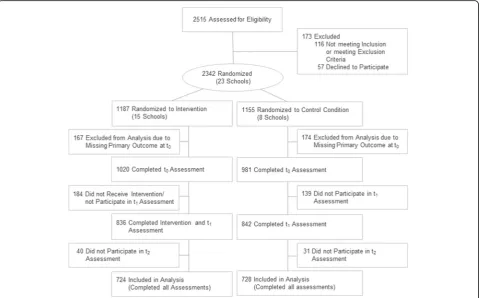
A total of 23 schools agreed to participate in the study. Of those, 15 schools (n= 1187 students) were randomly assigned to the intervention condition and eight schools (n= 1155 students) to the control condition (N= 2342; Fig. 2). The participation rates for the intervention group were 88% at post-intervention and 86% at follow-up as
[image:5.595.59.540.416.714.2]well as 85% and 89% for the control group. In grade 11, frequencies of male and female students who did not complete follow-up assessments (“non-completers”) did not significantly differ (30.3% vs.26.7%; X2 = 1.245, p = .26). However, in grade 8, significantly more male students were“non-completers”compared to female stu-dents (30.4% vs. 23.8%;X2= 6.829,p= .01).
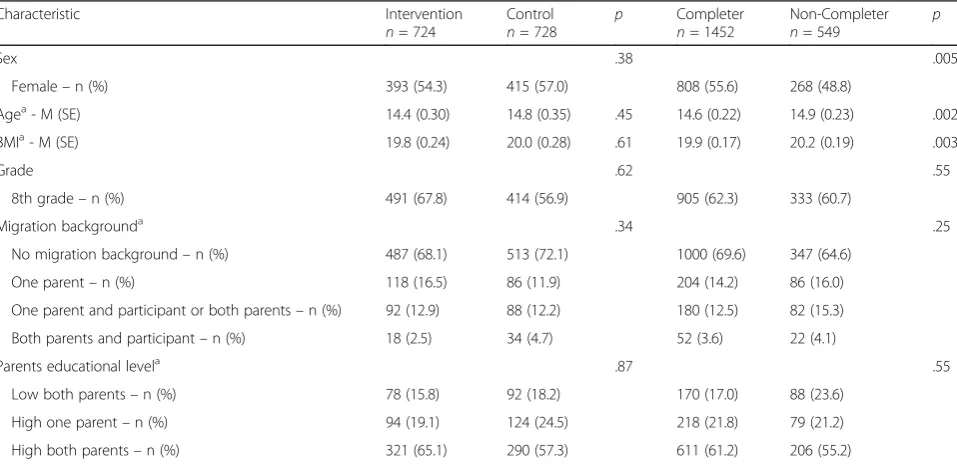
[image:6.595.59.538.482.714.2]Intervention and control group participants were well balanced with respect to all sociodemographic variables (Table 1).
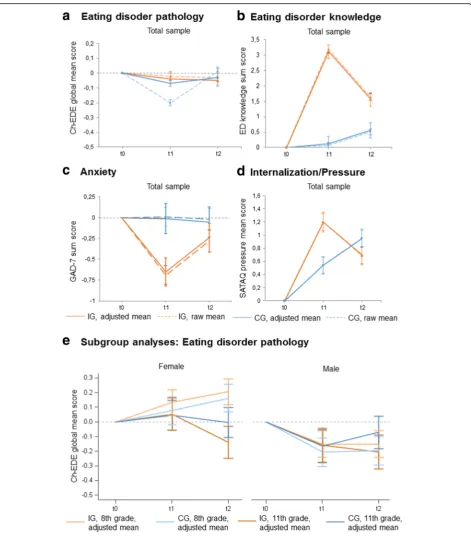
In contrast to our primary hypothesis, we did not ob-serve a significantly greater decrease in eating disorder pathology in the intervention group compared to the control group at follow-up (Table 2). However, in line with our secondary hypotheses, the intervention group displayed a significantly greater increase in eating dis-order related knowledge than the control group after the intervention and at follow-up. Moreover, compared with the control group, the intervention group showed sig-nificantly greater improvements in anxiety symptoms and a greater increase in experienced pressure due to the internalization of Western beauty ideals directly after the intervention but not at follow-up. The intervention group did not exhibit superior change scores regarding self-concept and depression symptoms at either time of assessment (Table 2).
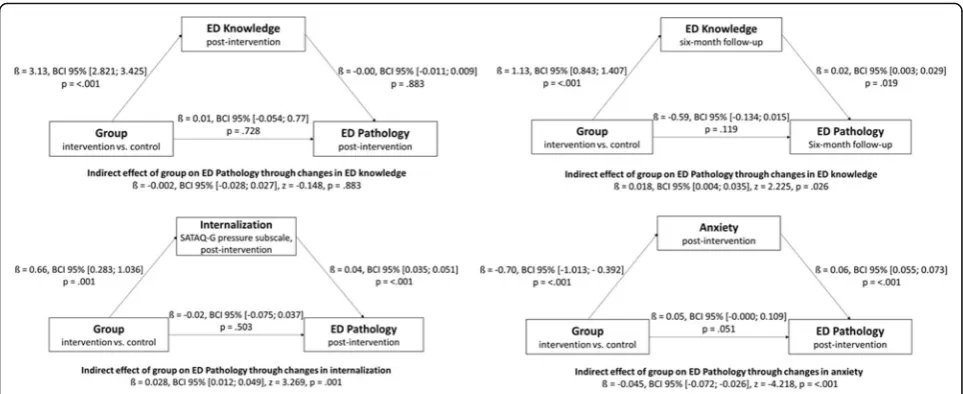
Taking into account the secondary outcomes and times of assessment in which a significant effect was ob-served, mediation models in the complete case sample revealed that changes in eating disorder knowledge at
follow-up but not at post-intervention as well as changes in anxiety and pressure to suit Western beauty ideals at post-intervention partially mediated the relation between group allocation and changes in eating disorder path-ology (Fig. 3). However, different indirect effects were observed in grades 8 and 11. In grade 8, changes in pres-sure to suit Western beauty ideals at post-intervention (ß= 0.033, BCI 95% [0.013; 0.061], z = 3.070,p = .002) and changes in eating disorder knowledge (ß = 0.024, BCI 95% [0.007; 0.049], z = 2.240, p = .025) mediated the relation between group allocation and changes in eating disorder pathology. In grade 11, changes in anx-iety at post-intervention (ß = −0.061, BCI 95% [−0.129; −0.026],z=−3.826,p= <.001) mediated the relation be-tween group allocation and changes in eating disorder pathology.
Accordingly, we observed a significant interaction be-tween participants’group allocation, time of assessment and grade in the post hoc analyses (complete case sam-ple p = .01, ITT sample p= .049). As Fig. 4 illustrates, 11th grade female and male participants in the interven-tion group exhibited a lower eating disorder pathology than the participants in the control group at follow-up which was partially in line with our hypotheses, while 8th grade participants showed the opposite trends (inter-actionp= .012).
A second significant interaction between participants’ sex, time of assessment and grade (complete case sample p= <.001, ITT samplep= <.001) indicated that in both groups and at both time points, 8th grade females
Table 1Baseline characteristics of the complete case sample separated by group (intervention and control;N= 1452) and comparison of completers vs. non-completers (N= 2001)
Characteristic Intervention
n= 724
Control
n= 728 p
Completer n= 1452
Non-Completer
n= 549 p
Sex .38 .005
Female–n (%) 393 (54.3) 415 (57.0) 808 (55.6) 268 (48.8)
Agea- M (SE) 14.4 (0.30) 14.8 (0.35) .45 14.6 (0.22) 14.9 (0.23) .002
BMIa- M (SE) 19.8 (0.24) 20.0 (0.28) .61 19.9 (0.17) 20.2 (0.19) .003
Grade .62 .55
8th grade–n (%) 491 (67.8) 414 (56.9) 905 (62.3) 333 (60.7)
Migration backgrounda .34 .25
No migration background–n (%) 487 (68.1) 513 (72.1) 1000 (69.6) 347 (64.6)
One parent–n (%) 118 (16.5) 86 (11.9) 204 (14.2) 86 (16.0)
One parent and participant or both parents–n (%) 92 (12.9) 88 (12.2) 180 (12.5) 82 (15.3)
Both parents and participant–n (%) 18 (2.5) 34 (4.7) 52 (3.6) 22 (4.1)
Parents educational levela .87 .55
Low both parents–n (%) 78 (15.8) 92 (18.2) 170 (17.0) 88 (23.6)
High one parent–n (%) 94 (19.1) 124 (24.5) 218 (21.8) 79 (21.2)
High both parents–n (%) 321 (65.1) 290 (57.3) 611 (61.2) 206 (55.2)
Note:a
Table 2 Baseline and follow-up assessment ou tcomes based on least-squares mean estimates of a mixed-model analysis within the complete case sample ( n = 724 intervention; n = 728 control participants) Interve ntion gro up ( n = 724) Contr ol group ( n = 728) Group aTime Inter-action p Betwee n-group differ ences Raw me an (SD) Change to baseline Raw me an (SD) Change to bas eline Adjusted me an differ ence (95%C I) Outcom e variables Adjusted mean (95% CI) p Adjuste d mean (95% CI) pp ES Primary out come a ChE
DE Baseline
0.82 (1.08 ) 0.84 (1.01 ) 6 month s follow-up 0.79 (1.07 ) − 0.06 (− 0.17; 0.04) .22 0.79 (1.07 ) − 0.05 (− 0.16; 0. 07) 0.38 − 0.01 (− 0.17; 0.14) .8 5 Second ary outcom es b ChE
DE Baseline
exhibited an increased eating disorder pathology, whereas in 8th grade males, the risk decreased directly after the intervention and subsequently remained stable (interactionp =< .001).
ITT analyses confirmed the complete case results (see Additional file 2: Table S1 available online).
Discussion
This cluster-randomized controlled trial was designed to evaluate the impact of a three lesson prevention pro-gram on eating disorder pathology for female and male adolescents. Regarding the primary endpoint, we did not find the expected difference in the change in eating dis-order pathology between the intervention and control groups at six months follow-up. Regarding the secondary endpoints, adolescents who participated in the interven-tion as expected exhibited a persistent and larger in-crease in knowledge at both times of assessment compared to the control group which is in line with a previous meta-analytic review that observed higher ef-fect sizes for outcomes related to eating disorder know-ledge [12, 42]. Additionally, adolescents who participated in the intervention displayed a greater decrease in anx-iety post-intervention compared with the control group. In contrast to our expectations, levels of depression and self-esteem were not positively influenced by the inter-vention. Moreover, the intervention group showed a greater increase in experienced pressure due to the in-ternalization of Western beauty ideals directly after the intervention. This increase might be attributed to the in-creased awareness towards the presence of and pressure from Western beauty ideals and interpreted as a conse-quence of cognitive dissonance. Taken together, the
present universal prevention program for eating disor-ders resulted in some positive effects but did not de-crease eating disorder pathology. One might argue that this lack of an effect on the primary endpoint might be attributed to the low dosage of the present prevention program. It was the aim of the present project to de-velop a prevention program with a high likelihood of a long-term implementation in schools. Also, the effects observed in the present study were comparable to those observed in universal prevention programs with a higher dosage (for an overview see [14]). Thus, the efficacy of universal prevention programs for eating disorders can not only be attributed to their quantity.
Eating disorder pathology scores of male and female adolescents developed differently in the intervention and control groups as well as in grades 8 and 11. In grade 8 females, an increase in Ch-EDE scores from baseline to post-intervention and six months later was observable in both the intervention and control group (Fig. 4). No such increase in eating disorder pathology could be ob-served in grade 8 male adolescents from both groups. In contrast to grade 8 adolescents, the decrease in Ch-EDE-Q scores in 11th grade adolescents indicated that this subgroup seem to have benefited from the preven-tion program with regard to their eating disorder path-ology. One explanation for the varying effects of the present program might be that the mechanisms of effi-cacy are influenced by the age of delivery. In this con-text, the results of the mediation analyses revealed that in grade 8 changes in eating disorder knowledge signifi-cantly mediated the relation between group allocation and changes in eating disorder psychopathology at follow-up. A positive regression coefficient indicated that
[image:9.595.57.539.87.284.2]a knowledge increase was associated with an increase in eating disorder psychopathology. However, a confidence interval very close to zero pointed in the direction that this effect might not be clinically relevant. A similar pic-ture occurred with regard to perceived pressure to suit Western beauty ideals where a significantly mediating ef-fect was observed in grade 8 but not in grade 11. In this age group no such significant mediating effects of eating disorder knowledge or perceived pressure to suit Western beauty ideals could be observed. When one compares the content of the present eating disorder pre-vention program with those developed by Wilksch and colleagues [16] it is noteworthy that the prevention pro-gram with the most favorable outcome (Media Smart) focused heavily on media internalization, media trans-ported stereotypes and pressure from media whereas the programs with iatrogenic effects focused either on a healthy lifestyle (Life Smart) or included interventions addressing appearance related issues (HELLP). The present program comprised interventions comparable to all three programs. Thus, with regard to participants from grade 8 it seems reasonable for future prevention programs to conduct dismantling investigations to a) examine whether addressing media internalization is truly the most promising approach for universal preven-tion programs and b) whether it is favorable to focus on a small number of adressed risk factors to ensure that the content is elaborately learned rather than targeting multiple risk factors. On a meta-level our results might provide further evidence that eating disorder knowledge increase should not be an intervention goal and part of primary or secondary endpoints in universal prevention programs that address young adolescents.
The specific effect of the intervention on 11th grade participants may be regarded as significant because an increase in eating disorder pathology has to be expected particularly in late adolescent females [3] and late ado-lescence is the peak age of onset for bulimia nervosa and binge eating disorder [10]. Participants from grade 11 differed from grade 8 participants in that in grade 11 anxiety mediated the relation between group allocation and changes in eating disorder psychopathology at post-intervention. This result is in line with previous evidence that identified anxiety as a risk factor for eating disorder symptomatology in female adolescents [43]. Further-more, in this age group a knowledge increase did not re-sult in an iatrogenic effect and might contribute to greater symptom awareness during later adolescence and facilitated help-seeking behavior in affected individuals and their peers [44].
Previous studies have shown that prevention programs for adolescents in the eating disorder field tend to be more effective when delivered to females or when solely addressed to either females or males who already show
an elevated risk [12, 45]. In our view, the applicability of universal prevention programs to entire classes involving both females and males through gender-adapted mate-rials appears to be important. Such an approach can help to increase awareness of eating disorder risk factors, such as peer pressure, thereby decreasing the stigmatization of mental illnesses and improving pro-social behavior in classes for the most relevant peer group during adolescence [9]. Furthermore, a long term implementation might be facilitated if schools do not need to provide alternative activities for males.
The strengths of our study include a sound study de-sign with cluster randomization and follow-up assess-ment as well as the high number of participating schools and adolescents. The high practicability of the gender-adapted materials, the brevity of the intervention, and the close cooperation with an established stakeholder of school-based prevention are further strengths of this research.
system occurred. Many schools which might have been otherwise motivated to participate in the present study were occupied with restructuring activities. Of the par-ticipating schools, only one had gone through restricting activities prior to participation. On a more general level, the low response rate of schools highlights the great need to increase the motivation of schools to implement prevention programs. Fourth, the self-report measures were answered during classes; hence, social desirability bias may have affected the comple-tion of these measures. We attempted to limit this potential bias through the attendance of research as-sistants who ensured that the questionnaires were completed discreetly and quietly.
Conclusions
In summary, the present prevention program can be rec-ommended to older adolescents where it resulted in in-creased knowledge on eating disorders and a decrease in eating disorder pathology. We do believe that knowledge of mental illnesses should be an integral part of educa-tion and that preveneduca-tion programs might also contribute to destigmatization and early detection of mental dis-eases. Future studies should focus on the evaluation of the present program in grade 11 adolescents and exam-ine the possibility of a teacher- or peer-based delivery of the intervention.
Additional files
Additional file 1:Study protocol. (PDF 402 kb)
Additional file 2: Table S1.Baseline and follow-up assessment outcomes based on least-squares mean estimates of a mixed-model analysis within the intention-to-treat sample (n= 1020 intervention participants;n= 981 control participants). (DOCX 21 kb)
Abbreviations
BMI:Body-Mass-Index; ChEDE-Q: Eating Disorder Examination Questionnaire –children’s version; CPA: Centre for the Prevention of Addiction; GAD-7: Generalized Anxiety Disorder Scale; MSCS: Multidimensional Self-concept Scale; PHQ-9: Patient Health Questionnaire–Depression Module; SATAQ: Social Attitudes Towards Appearance Questionnaire
Acknowledgements
The study was part of a health service research project in the Hamburg Metropolitan Area (psychenet; ISRCTN44979231; subproject Anorexia and Bulimia Nervosa; Principal Investigator: Bernd Löwe]. The projectpsychenet aims to improve the prevention, diagnosis and treatment of people with mental illnesses.
We would like to thank all members of the Center for Prevention of Addiction from the State of Hamburg Institute for Teacher Training and School Development for their extensive cooperation. We are grateful to all teachers and students who supported the study with their participation as well as all research assistants who supported the study during recruitment. We would also like to thank Dipl.-Psych. Denise Kästner from the Department of Psychosomatic Medicine and Psychotherapy, University Medical Center Hamburg-Eppendorf & Schön Klinik Hamburg Eilbek, for her assistance in data management and data cleaning.
Funding
The study was part of a health service research project in the Hamburg Metropolitan Area (psychenet), funded by the German Federal Ministry of Education and Research [Grant number: O1KQ1002B; Principal Investigator: Bernd Löwe]. The funders had no role in study design, data collection and analysis, decision to publish, or preparation of the manuscript.
Availability of data and materials
The datasets used and analyzed during the current study are available from the corresponding author on reasonable request.
Authors’contributions
AW and AD had full access to all data in the study, and they take responsibility for the integrity of the data and the accuracy of the data analysis. BL had the idea for the study. BL, GR, AG and KW conceived the study. AW participated in implementing the study. AW and AD performed the statistical analysis, and KW supervised the statistical analysis of the study. All authors substantially contributed to the acquisition, analysis, or interpretation of data for this work. AG and AW drafted the manuscript. All authors revised it critically for important intellectual content. All authors gave their final approval of the version to be published.
Ethics approval and consent to participate
Before providing written informed consent, students and their parents or legal guardians obtained a letter of consent with a detailed description of the allocated study condition and were, therefore, not blinded to their study condition. Eligible students were asked to provide written informed consent. Additional written informed consent from a parent or legal guardian was required for participants under 16 years of age. The study was approved by the Ethics Committee of the Psychotherapist Chamber of Hamburg, Germany (July 26, 2011), as well as the Hamburg supervisory school authority.
Consent for publication
Not applicable.
Competing interests
The authors declare that they have no competing interests.
Publisher’s Note
Springer Nature remains neutral with regard to jurisdictional claims in published maps and institutional affiliations.
Author details 1
Department of Psychosomatic Medicine and Psychotherapy, University Medical Center Hamburg-Eppendorf & Schön Clinic Hamburg Eilbek, Germany, Martinistraße 52, 20246 Hamburg, Germany.2Department of Medical Biometry and Epidemiology, University Medical Center
Hamburg-Eppendorf, Germany, Martinistraße 52, 20246 Hamburg, Germany.
3Berlin University of Psychology, Am Köllnischen Park 2, 10179 Berlin,
Germany.4Department of Children and Adolescent Psychiatry, Psychosomatics and Psychotherapy, University Medical Center Münster, Germany, Schmeddingstr. 50, 48149 Münster, Germany.
Received: 2 March 2017 Accepted: 3 August 2017
References
1. Smink FR, van Hoeken D, Oldehinkel AJ, Hoek HW. Prevalence and severity of DSM-5 eating disorders in a community cohort of adolescents. Int J Eat Disord. 2014;47(6):610–9.
2. Berger U, Schilke C. Strauss B: [Weight concerns and dieting among 8 to 12-year-old children]. Psychother Psychosom Med Psychol. 2005;55(7):331–8. 3. Hölling H, Schlack R. Eating disorders in children and adolescents. First
results of the German Health Interview and Examination Survey for Children and Adolescents (KiGGS). Bundesgesundheitsblatt Gesundheitsforschung Gesundheitsschutz. 2007;50(5–6):794–9.
5. Weigel A, Rossi M, Wendt H, Neubauer K, von Rad K, Daubmann A, Romer G, Löwe B, Gumz A. Duration of untreated illness and predictors of late treatment initiation in anorexia nervosa. J Public Health. 2014;22(6):519–27. 6. Steinhausen HC. The outcome of anorexia nervosa in the 20th century. Am
J Psychiatry. 2002;159(8):1284–93.
7. Rohde P, Stice E, Marti CN. Development and predictive effects of eating disorder risk factors during adolescence: Implications for prevention efforts. Int J Eat Disord. 2015;48(2):187–98.
8. Dustan CJ, Paxton SJ, McLean SA. An evaluation of a body image intervention in adolescent girls delivered in single-sex vs. co-educational classroom settings. Eat Behav. 2017;25:23–31.
9. Sharpe H, Schober I, Treasure J, Schmidt U. The role of high-quality friendships in female adolescents' eating pathology and body dissatisfaction. Eat Weight Disord. 2014;19(2):159–68.
10. Hilbert A, Pike KM, Goldschmidt AB, Wilfley DE, Fairburn CG, Dohm FA, Walsh BT, Striegel Weissman R. Risk factors across the eating disorders. Psychiatry Res. 2014;220(1–2):500–6.
11. Jacobi C, Hayward C, de Zwaan M, Kraemer HC, Agras WS. Coming to terms with risk factors for eating disorders: application of risk terminology and suggestions for a general taxonomy. Psychol Bull. 2004;130(1):19–65. 12. Stice E, Shaw H, Marti CN. A meta-analytic review of eating disorder prevention
programs: encouraging findings. Annu Rev Clin Psychol. 2007;3:207–31. 13. Wilksch SM. Where did universal eating disorder prevention go? Eat Disord.
2014;22(2):184–92.
14. Bailey AP, Parker AG, Colautti LA, Hart LM, Liu P, Hetrick SE. Mapping the evidence for the prevention and treatment of eating disorders in young people. J Eat Disord. 2014;2:5.
15. Ciao AC, Loth K, Neumark-Sztainer D. Preventing eating disorder pathology: common and unique features of successful eating disorders prevention programs. Curr Psychiatry Rep. 2014;16(7):453.
16. Wilksch SM, Paxton SJ, Byrne SM, Austin SB, McLean SA, Thompson KM, Dorairaj K, Wade TD. Prevention Across the Spectrum: a randomized controlled trial of three programs to reduce risk factors for both eating disorders and obesity. Psychol Med. 2015;45(9):1811–23.
17. Wilksch SM. How can we improve dissemination of universal eating disorder risk reduction programs? Eat Behav. 2017;25:58–61. 18. Pokrajac-Bulian A, Zivcic-Becirevic I, Calugi S, Dalle Grave R. School
prevention program for eating disorders in Croatia: a controlled study with six months of follow-up. Eat Weight Disord. 2006;11(4):171–8.
19. Wilksch SM, Tiggemann M, Wade TD. Impact of interactive school-based media literacy lessons for reducing internalization of media ideals in young adolescent girls and boys. Int J Eat Disord. 2006;39(5):385–93.
20. Ghaderi A, Martensson M. Schwan H: "Everybody's Different": a primary prevention program among fifth grade school children. Eat Disord. 2005; 13(3):245–59.
21. Berger U, Schaefer JM, Wick K, Brix C, Bormann B, Sowa M, Schwartze D, Strauss B. Effectiveness of reducing the risk of eating-related problems using the German school-based intervention program, "Torera", for preadolescent boys and girls. Prev Sci. 2014;15(4):557–69.
22. Russell-Mayhew S, Arthur N, Ewashen C. Targeting students, teachers and parents in a wellness-based prevention program in schools. Eat Disord. 2007;15(2):159–81.
23. McVey G, Tweed S, Blackmore E. Healthy Schools-Healthy Kids: a controlled evaluation of a comprehensive universal eating disorder prevention program. Body Image. 2007;4(2):115–36.
24. Franks A, Kelder SH, Dino GA, Horn KA, Gortmaker SL, Wiecha JL, Simoes EJ. School-based programs: lessons learned from CATCH, Planet Health, and Not-On-Tobacco. Prev Chronic Dis. 2007;4(2):A33.
25. Weigel A, Gumz A, Uhlenbusch N, Wegscheider K, Romer G, Löwe B. Preventing eating disorders with an interactive gender-adapted intervention program in schools: Study protocol of a randomized controlled trial. BMC Psychiatry. 2015;15
26. Hilbert A, Buerger A, Hartmann AS, Spenner K, Czaja J, Warschburger P. Psychometric evaluation of the eating disorder examination adapted for children. Eur Eat Disord Rev. 2013;21(4):330–9.
27. Berg KC, Peterson CB, Frazier P, Crow SJ. Psychometric evaluation of the eating disorder examination and eating disorder examination-questionnaire: a systematic review of the literature. Int J Eat Disord. 2012;45(3):428–38. 28. Knauss C, Paxton SJ, Alsaker FD. Validation of the German version of the
Sociocultural Attitudes Towards Appearance Questionnaire (SATAQ-G). Body Image. 2009;6(2):113–20.
29. Argyrides M, Kkeli N, Kendeou P. Validation of the factor structure of the Greek adaptation of the Sociocultural Attitudes Towards Appearance Questionnaire (SATAQ-3). Body Image. 2014;11(3):201–5.
30. Llorente E, Warren CS, de Eulate LP, Gleaves DH. A Spanish version of the Sociocultural Attitudes Towards Appearance Questionnaire-3 (SATAQ-3): translation and psychometric evaluation. J Clin Psychol. 2013;69(3):240–51. 31. Rotatori AF. Multidimensional Self Concept Scale. Meas Eval Couns Dev.
1994;26(4):265–8.
32. Schütz A, Sellin I. Multidimensionale Selbstwertskala: MSWS. Göttingen: Hogrefe; 2006.
33. Kroenke K, Spitzer RL, Williams JB. The PHQ-9. J Gen Intern Med. 2001;16(9): 606–13.
34. Löwe B, Kroenke K, Herzog W, Gräfe K. Measuring depression outcome with a brief self-report instrument: sensitivity to change of the Patient Health Questionnaire (PHQ-9). J Affect Disord. 2004;81(1):61–6.
35. Löwe B, Decker O, Müller S, Brähler E, Schellberg D, Herzog W, Herzberg PY. Validation and standardization of the Generalized Anxiety Disorder Screener (GAD-7) in the general population. Med Care. 2008;46(3):266–74.
36. Spitzer RL, Kroenke K, Williams JB, Löwe B. A brief measure for assessing generalized anxiety disorder: the GAD-7. Arch Intern Med. 2006;166(10): 1092–7.
37. Levine MP. Universal prevention of eating disorders: A concept analysis. Eat Behav. 2017;25:4–8.
38. Cohen J. A power primer. Psychol Bull. 1992;112(1):155–9.
39. Senn S, Stevens L, Chaturvedi N. Repeated measures in clinical trials: simple strategies for analysis using summary measures. Stat Med. 2000;19(6):861– 77.
40. Hayes AF. Mediation, Moderation, and Conditional Process Analysis. In: Introduction to Mediation, Moderation, and Conditional Process Analysis: A Regression-Based Approach edn. New York: Guilford Publications; 2013. p. 1–20. 41. Schafer JL, Graham JW. Missing data: our view of the state of the art.
Psychol Methods. 2002;7(2):147–77.
42. Yager Z, Diedrichs PC, Ricciardelli LA, Halliwell E. What works in secondary schools? A systematic review of classroom-based body image programs. Body Image. 2013;10(3):271–81.
43. Penas-Lledo E, Bulik CM, Lichtenstein P, Larsson H, Baker JH. Risk for self-reported anorexia or bulimia nervosa based on drive for thinness and negative affect clusters/dimensions during adolescence: A three-year prospective study of the TChAD cohort. Int J Eat Disord. 2015;48(6):692–9. 44. Babitsch B, Gohl D, von Lengerke T. Re-revisiting Andersen's Behavioral
Model of Health Services Use: a systematic review of studies from 1998-2011. Psychosoc Med. 2012;9:Doc11.
45. Watson HJ, Joyce T, French E, Willan V, Kane RT, Tanner-Smith EE, McCormack J, Dawkins H, Hoiles KJ, Egan SJ. Prevention of eating disorders: A systematic review of randomized, controlled trials. Int J Eat Disord. 2016; 49(9):833–62.
46. Campbell M, Fitzpatrick R, Haines A, Kinmonth AL, Sandercock P, Spiegelhalter D, Tyrer P. Framework for design and evaluation of complex interventions to improve health. BMJ. 2000;321(7262):694–6.
• We accept pre-submission inquiries
• Our selector tool helps you to find the most relevant journal
• We provide round the clock customer support
• Convenient online submission
• Thorough peer review
• Inclusion in PubMed and all major indexing services
• Maximum visibility for your research
Submit your manuscript at www.biomedcentral.com/submit