© 2016, IRJET ISO 9001:2008 Certified Journal Page 424
A system for event detection by continuously monitoring of an object
using block based differencing method
Amol Doshi
1, Gaurav Pratap
2, Denish Patel
3, Sonali Raut
41234
BE IT, Department of Information Technology, RMD Sinhgad School of Engineering, Pune, Maharashtra,
Prof. Sanjeevkumar Angadi
55
Assistant Professor, Department of Information Technology, RMD Sinhgad School of Engineering, Pune,
Maharashtra, India.
---***---
Abstract -
Video event detection plays a significant role
to identify human object recognition for real world surveillance. Closed circuit television (CCTV) camera is being installed in various organizations to provide the security and also for detecting, analyzing, and tracking object motion. In the proposed system we have mentioned the smart use of CCTV technology which judge the situations and notifies the administrator immediately, i.e. the system is generally being used for monitoring the object which requires close observation (surveillance). In this approach, we are using an open CV library function that will capture the camera image and the intrusion is being detected in an image by using block based differencing method. The real time processing of the video and to work with all processing of images, open CV library function can be used. Block based differencing will calculate the difference between two images, i.e. the one in regular buffer and the one in second buffer, i.e. it uses the subtraction between the current frame image and background image.
Key Words: Event detection, Open CV, Block based
differencing, CCTV, Object recognition.
1. INTRODUCTION
Nowadays, security has become a major issue in any organization or institution. Security related to any object has become a major issue and requires a much more development and attention so as to protect the objects form unwanted interference. One of the major factor is to detect human in video streams, which generally consists of variations in the shape of the body, illumination and cluttering in the background [1]. The current technology of CCTV camera is being installed in various organizations to
provide security to the particular area. CCTV collects video which is of very large size, but the humans have to review most of the data and to extract the exact information from it is a challenging task [2]. To recognize an object, methods which are based on feature descriptors around local interest points are being widely used. These approaches have better tolerances to posture, occlusion and background cluttering as compared to global appearance descriptions. For the analysis of multimedia information in a video, content analysis acts as a fundamental and essential step. The content analysis multimedia video is to recognize events that are informative from the user perspective [3]. As we can see that the existing event detection methods in today's scenario is relying on video features and domain knowledge. However, the gap between the low level features and high level events in a different kinds of videos make the video analysis very complicated. To solve this gaps, techniques rely on video content and supervised learning is being used today [4].
2. RELATED WORK DONE
In this paper, [1] the author had developed a detector, which will detect humans in videos which is owing to the motion of the object, variation in pose, cluttering in the background, appearance etc. The author had mainly focused on detecting of people who are partially or fully visible. To increase the performance, they had used linear support vector machine as a baseline classifier.
© 2016, IRJET ISO 9001:2008 Certified Journal Page 425 temporal interest points. Two most important computations
are done which are as follows- i) Optical flow computation ii) SIFT point detection.
Optical flow computation-It is used to detect the movement of a region by calculating the region movement in the image space. It will also capture the magnitude and direction of the motion.
SIFT is designed for the detection of distinctive points which are of interest in still image. If we consider an image in cluttered background, it can have many interest points which are irrelevant to human-object interaction. Therefore, SIFT plays an important role to consider only those interest points which are necessary for action recognition.
In this paper [3] the author had focused on extracting the features which are effective as well as informative from video sequence, for detecting the event. The author had described an event in two major aspects that are-
1. What are the objects or things that are involved in the event.
2. Motion of the object and how the interaction is being done between the different objects or people.
They had used an algorithm i.e. Expanded relative motion histogram of bag of visual words, that will employ relativity of motion and visual relatedness for event detection. They had constructed a relative motion histogram between visual words to find the object activities.
In this paper, [4] the author has focused for detecting generic i.e. relating to a class or group of things events, which can thus be applied to various domains of video such as sports, news, surveillance etc. They had proposed generic event detection algorithm which is based on semi-supervised learning. They had used an approach i.e. Graph based semi-supervised multiple instance learning(GSSMIL), that will find small scale expert labelled videos as well as large scale unlabeled videos for the detection of an event. Actually, there are three aspects which is to be considered in this paper i.e. i) Collection of video
ii) GSSMIL
iii) Detecting the event.
i) Collecting the video includes- 1. Collection of data.
2. The relevant data which are necessary for an event.
3. Removal of noise.
ii) GSSMIL- For this, the author had combined the expert labeled data as well as unlabeled data for detecting the event.
iii) Based on learned event model, the recognition of event as well as localization are done.
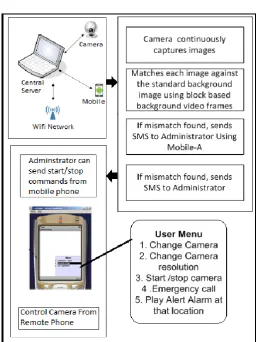
[image:2.595.308.565.235.578.2]3. SYSTEM ARCHITECTURE
Fig 1. System Architecture
3.1 PROCESS DESCRIPTION
The whole work is being described in 3 steps
1. First of all the input image is blocked and the preprocessing of image is done by block zoning.
© 2016, IRJET ISO 9001:2008 Certified Journal Page 426 3. If any mismatch is being detected in the image then it will
[image:3.595.43.283.150.382.2]report to the admin and the background image is being updated.
Fig 2. Flowchart to detect motion of an object
The input image which is taken initially is a TV input method which is being proposed in the NTSC standard i.e. YIQ method. The image which is being taken is been converted to grey scale by using the formula described below-
F = Frame image
r, g, b = red, green, blue values respectively, to the pixel corresponding to the position of x and y.
Now the segmentation of the images into the square block is being done and the absolute difference image of the block is calculated by using formula
n=no of blocks
W=block corresponding to background image D=Value of absolute difference between W and B. tT=threshold value which is being set initially.
For the background image update, we will consider the formula-
∆t= arbitrary threshold value.
To store each difference image a 1-D array is declared by using block R(n). A variable C is declared to calculate degree of change for the entire block with a change. The block difference image (Dn) is being used to store the number of pixels that have 1 as a value. The sum of pixels at this time represents the change in luminance within the block and if it is greater than or equal to ∆t, it is considered to have change in the moment in block and value of R(n) increase by 1, and if the sum of pixels is less than ∆t, there is no change and the value of R(n) is reduced by 1. In the above formula, if the value of R(n) is less than ‘-1’, then the background image of the block is updated.
4. RESULTS
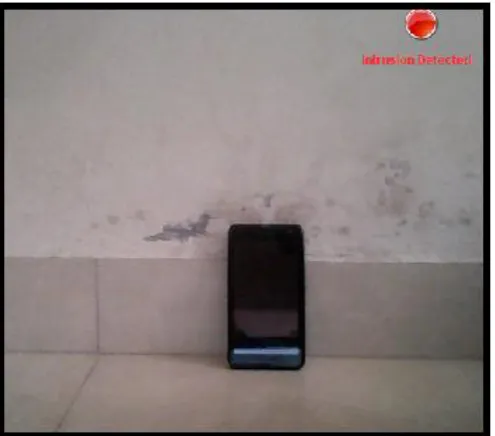
[image:3.595.312.560.448.666.2]© 2016, IRJET ISO 9001:2008 Certified Journal Page 427 Fig. 4 Image showing intrusion
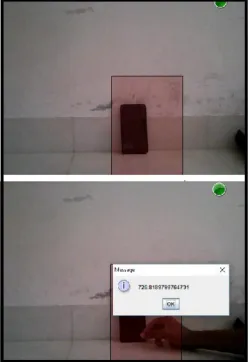
As we can notice here is that, there is an object (i.e. a mobile phone) and we have covered the whole aspect of the object in a predefined area. The camera is continuously monitoring the object and if any foreign body interacts with the objects, i.e. if any intrusion is being detected it will display the message on the screen that the intrusion has been detected and thus it will notify to the administrator.
5. CONCLUSION
This paper describes an efficient way to provide the security to any object in a predefined area. The algorithm works efficiently by detecting an intrusion (if found) and thus it will report to its administrator through short messaging service(SMS).It will not only capture the objects which are being isolated to each other but also the intrusion between them is also done in an effective manner. The handling of the situation by the administrator such as play an alarm, emergency contact number, changing the camera resolution
is being detected provides flexibility to a great extent. However, the server should be on all the time so as to works the system (i.e. to detect the intrusion) so the future work should be further development in this area so as to reduce the power consumption and will promote the research in video event detection.
6. ACKNOWLEDGEMENT
We take this chance to impart our project guide , Prof Sanjeevkumar Angadi and Head of the Department, Prof Sweta Kale for her valuable steering and for providing all the required facilities, that were indispensable within the completion of this project report.
We are grateful to all the faculty members of BE-IT department of RMD Sinhgad school of Engineering, Warje for their valuable time, support, suggestions and persuasion. We would conjointly prefer to impart the institute for providing the desired facilities, web access and vital books.
7. REFERENCES
[1] N. Dalal, B. Triggs, and C. Schmid, “Human detection using oriented histograms of flow and appearance,” in Proc. Eur. Conf. Computer Vision, 2006.
[2] M. Chen and A. Hauptmann, “Mosift: Recognizing human actions in surveillance videos,” in CMU-CS-09-161, 2009.
[3] F.Wang, Y. Jiang, and C.W. Ngo, “Video event detection using visual relatedness and motion relativity,” in Proc. ACM Multimedia Conf., 2008.
© 2016, IRJET ISO 9001:2008 Certified Journal Page 428 [5] Y. Yang and J. O. Pedersen, “A comparative study on
feature selection in text categorization,” in Proc. Int. Conf. Machine Learning, 1997.
[6] G. Zhu, M. Yang, K. Yu,W. Xu, and Y. Gong, “Detecting video events based on action recognition in complex scenes using spatio-temporal descriptor,” in Proc. ACM Multimedia Conf., 2009.
[7] H. Bay, T. Tuytelaars, and L. V. Gool, “SURF: Speeded up robust features,” in Proc. Eur. Conf. Computer Vision, 2006.
[8] O. Boiman and M. Irani, “Detecting irregularities in images and in video,” in Proc. Int. Conf. Computer Vision, 2005.
[9] L. Cao, S. F. Chang, andN.Codella et al., “IBMresearch and Columbia University TRECVID 2012 multimedia event detection (MED), multimedia event recounting (MER), and semantic indexing (SIN) systems,” n Proc. NIST TRECVID Workshop, 2012.