Search
&
discovery
peering
into the
past
Office of the Vice President for Research
Winter 2007
STEPHEN R. FORREST
VICE PRESIDENT FOR RESEARCH
WRITERS CHRIS BECKER STEVEN CECCIO LEE KATTERMAN MARVIN PARNES SARAH WALKLING SUZANNE TAINTER
© 2007, REGENTS OF THE UNIVERSITY OF MICHIGAN JULIE DONOVAN DARLOW, ANN ARBOR LAURENCE B. DEITCH, BINGHAM FARMS OLIVIA P. MAYNARD, GOODRICH REBECCA MCGOWAN, ANN ARBOR ANDREA FISCHER NEWMAN, ANN ARBOR ANDREW C. RICHNER, GROSSE POINTE PARK S. MARTIN TAYLOR, GROSSE POINTE FARMS KATHERINE E. WHITE, ANN ARBOR MARY SUE COLEMAN (EX OFFICIO)
NONDISCRIMINATION POLICY STATEMENT THE UNIVERSITY OF MICHIGAN, AS AN EQUAL OPPORTUNITY/AFFIRMATIVE ACTION EMPLOYER, COMPLIES WITH ALL APPLICABLE FEDERAL AND STATE LAWS REGARDING NONDISCRIMINATION AND AFFIRMATIVE ACTION, INCLUDING TITLE IX OF THE EDUCATION AMENDMENTS OF 1972 AND SECTION 504 OF THE REHABILITATION ACT OF 1973. THE UNIVERSITY OF MICHIGAN IS COMMITTED TO A POLICY OF NONDISCRIMINATION AND EQUAL OPPORTUNITY FOR ALL PERSONS REGARDLESS OF RACE, SEX*, COLOR, RELIGION, CREED, NATIONAL ORIGIN OR ANCESTRY, AGE, MARITAL STATUS, SEXUAL ORIENTATION, DISABILITY, OR VIETNAM-ERA VETVIETNAM-ERAN STATUS IN EMPLOYMENT, EDUCA-TIONAL PROGRAMS AND ACTIVITIES, AND ADMISSIONS. INQUIRIES OR COMPLAINTS MAY BE ADDRESSED TO THE SENIOR DIRECTOR FOR INSTITUTIONAL EQUITY AND TITLE IX/SECTION 504 COORDINATOR, OFFICE FOR INSTITUTIONAL EQUITY, 2072 ADMINISTRATIVE SERVICES BUILDING, ANN ARBOR, MICHIGAN 48109-1432, 734-763-0235, TTY 734-647-1388. FOR OTHER UNIVERSITY OF MICHIGAN INFORMATION CALL 734-764-1817.
*INCLUDES DISCRIMINATION BASED ON GENDER IDENTITY AND GENDER EXPRESSION.
On the Cover
The papyrus fragment on the cover is part of the University of Michigan collection, the largest papyrus collection in the Western Hemisphere and fifth largest in the world. The particular fragment (P. Mich. inv. 3789) contains descriptions in Greek of formulations for medicinal preparations from Egypt in the third century AD. This item was purchased in 1925 to be included in the U-M collection.
contents
3 Research Perspectives
4 Over the Shoulders
of the Ancients
7 University Library
Special Collections
9 Hi-Tech Imaging
10 Gene Research on Aging and Cancer
11 Stem Cell Research Efforts Broaden
12 Self-Assembly of Nanoparticles
13 Q&A with Gary Was
15 Symposium on Energy Science, Technology, and Policy
16 Analysis of Research Funding
18 Zattoo: TV To Go
19 Tech Transfer Update
20 The View from Washington
21 Research Notes
• Ford Nuclear Reactor
• Bolcom Wins National Medal of Honor
• UMTRI Helps Drivers Avoid Crashes
• UM-China Research Collaborations
• Faculty Elected to Institute of Medicine
O
ne of the most outstanding aspects of the University of Michigan research community is its breadth. There is literally no topic of research or scholarly activity that is not touched upon, in some way, by our large and distinguished community of faculty and student scholars.The cover story for this issue is a case in point. The University of Michigan has a major collection of ancient texts and papyri, and our story reports on a group of faculty who are working across barriers of time and culture by using new
tech-nologies to read and decipher those texts. One can only imagine what secrets will be unlocked as they image texts that cannot be opened because they are too fragile or degraded by their millennia of existence in adverse environments.
I was particularly impressed with the work of Professor Janko and co-workers at the University of Kentucky by their use of x-ray imaging to view unopened papyri, and also with the effort to digitize and share many of these writings through the Advanced Papyrological Information System (APIS). Bringing technology and the humanities together in such effective ways can lead to unexpected discoveries and advances that are beyond our imagination. In fact, we might con-sider the APIS to be a fitting precursor to Michigan’s current project with Google to digitize the entire U-M library collec-tion. So once again the thought that, “If not at U-M, then where else?” takes on renewed meaning.
Much of my first few months at the Uni-versity of Michigan were spent in helping to establish the Michigan Memorial Phoenix Energy Institute (you will find an interview with its director, Professor Gary Was, on page 13). Coming from a physical sciences background, I naturally appreciate the science and technology dimensions to the energy challenges that now face humankind.
However, I was not in Ann Arbor very long when I discovered that the social science, public policy, economic, and other human impacts of our energy choices were every bit as essential to our solving these monumental problems as were the science and technology “fixes” that we apply. It is again the breadth and depth of our research community that gives the University of Michigan its particular strength, and its potential influence on the future course to be taken by our
research
perspectives
country and the planet once we bring all of these diverse disciplines together with a focus on energy.
Those are but two examples of how OVPR is demonstrating its commitment to the social sciences and humanities, and in particular, with their relationship to other research activities on our campuses. To further enhance our effectiveness in support of these disciplines, OVPR is instituting the position of associate vice president for the social sciences and the humanities to augment the efforts of an OVPR standing committee, the Arts Funding Group. We hope that the addi-tion of this new AVP will provide our office with a better view into our research activities in the social sciences and human-ities, and will help to forge long-term and effective linkages between disciplines by working closely with our other AVPs in the physical sciences and engineering (Steve Ceccio) and the health and life sciences (Jim Shayman).
In a final note, I would like to point out that this issue commemorates the decommissioning of the Ford Nuclear Reactor — a major facility that has played a distinguished role for some 50 years in research investigating the peaceful uses of nuclear energy here at U-M. It is only fitting that now the Phoenix Memorial Project, of which the reactor was the keystone, should enter a new era for exploring an even broader range of energy alternatives to fossil fuels that may ultimately lead to our exploitation of clean energy, while freeing us from our over-dependence of our vital energy needs from off-shore sources.
— Stephen R. Forrest
3
W
inter 2007
let
ter fr
om the vp for resear
“With the recovery of further documents and artifacts,” says Verhoogt, “it’s necessary to re-assess the past studies,” which were based only on the original set.
The documents already examined at length indicated that House C/B167 belonged to Tiberianus, a veteran of the Roman army. “The archive of Tiberianus is one of the most important sources for the life of active soldiers and veterans of the Roman army in Egypt,” explains Verhoogt. The letters are from the son, Terentianus, a solder stationed in the vicinity of Alexandria, to his father, Tiberianus.
The family was well-to-do, Verhoogt continues, a conclusion based on analyzing both the texts and the artifacts from the house. Interestingly, some letters were in Latin and others in Greek, and differences in handwriting among the letters indicate that the sender was able to hire a scribe who recorded what was dictated.
“We know that the father lived in the country-side and the son in Alexandria,” says Verhoogt. The letters also indicated that the father had asked his son to send some fine glassware that was available in Alexandria, while the son requested that his father send him a new
pick-over the shoulders
of the ancients
Finding Clues About the Past in Papyri
i
t’s like looking over the shoulder of peo-ple who lived two thousand years ago,” says Arthur Verhoogt, associate professor of papyrology and Greek, as he characterized one of his current projects. Verhoogt is eaves-dropping on the life of a Roman soldier and the soldier’s father, an army veteran, who lived in Egypt in the second century AD. He is able to reach back in time like this by examining the small collection of letters from the soldier to his father. The letters were found in the late 1920s inside a step in a house during a Uni-versity of Michigan archaeological excavation in Karanis, Egypt.A book about, among many others, the two
Romans, Soldier and Society in Roman Egypt: A Social Historyby Richard Alston of the University of London, was originally published in 1985, and scholars have used this work and the trans-lated letters to learn about life in Karanis and elsewhere in Egypt. However, a few years ago Verhoogt and then-University of Michigan undergraduate student, Robert Stephan, learned that the records for documents found in “House C/B167” were incomplete. Stephan and Verhoogt found in storage at Michigan another dozen unexamined texts from the same cache in the excavated house that had been overlooked dur-ing the catalogdur-ing of the site.
“
PROFESSOR ARTHUR VERHOOGT. PHOTO BY SCOTT R. GALVIN.
axe, to replace the one his superior officer had taken from him. Good quality glass was indeed found during excavation of the house, as was a papyrus fragment of a book about the Pelopon-nesian War by Thucydides. Both provided further evidence of the elevated status of the occupants of the house, since these kinds of objects were rare finds in the Karanis excavation.
Karanis offers scholars a special opportunity, adds Verhoogt. “It’s unusual to have both the texts and artifacts from the same site. We have this context and we should use it to better understand the past.”
Verhoogt’s current tasks are clear — analyze the archaeological data (which he is doing in collab-oration with Robert Stephan, now a graduate student at Stanford University), edit the new papyri, and re-assess those papyri that were previously published. “Only by evaluating the text, artifacts, and architecture in tandem will we be able to fully reconstruct the life, work, and documents of Tiberianus and Terentianus.” Verhoogt and Stephan plan to publish their new interpretation of this material in 2008.
“Once we finish with this house, we can con-tinue, house by house, to look at the archaeo-logical objects and papyri to get a broader sense of Karanis,” explains Verhoogt. “What makes this investigation all the more remarkable is that nearly all of the material we need to look at is here on campus.”
Thanks to the Karanis expeditions and a con-sortium of universities that purchased papyrus documents, the University of Michigan today holds the largest collection of papyri in the
Western Hemisphere, and fifth largest in the world. Most of these materials are stored on the eighth floor of the Harlan Hatcher Graduate Library on campus. The collection contains more than 12,000 papyrus frag-ments —with over 1200 mounted between glass plates—while even more have been digitally imaged and are accessible to users around the world via the web.
The oldest document in the U-M collection is a papyrus fragment from Egypt known to scholars as a funerary text, or “Book of the Dead.” Funerary texts, explains Traianos Gagos, associate professor of papyrology and Greek and archivist of the papyrology collec-tion, were buried with the deceased and contained spells and drawings intended to guide him or her
through the various trials that would be encountered before being allowed into the afterlife. The particular funerary text fragment in the U-M collection dates to nearly 1000 BC.
Other papyri in the collection were found as part of the wrapping around mummies — in essence, the “scrap paper” used to encase those who were mummified. Many of these papyrus fragments contain illuminating records of daily life in ancient Egypt.
“We have literary texts, too,” says Gagos, such as substantial fragments of the Homeric epics, and “long lost works by Greek dramatic writers Aristophanes, Euripides, and especially Menander. “These inform us of literary traditions that were often forgotten by the medieval period.” The collection also includes works by Aristotle, the mathematician Euclid, and the earliest known copy of the Epistles of Saint Paul.
PROFESSOR TRAIANOS GAGOS (CENTER) AND TWO STUDENTS PREPARE TO EXAMINE PAPYRUS FROM THE UNIVERSITY OF MICHIGAN. PHOTO BY PAUL JARONSKI.
THIS PAPYRUS FRAGMENT FROM THE U-M COLLECTION IS A LITERARY WORK IN GREEK BY ARISTOPHANES FROM THE 4th CENTURY.
5
W
6
S
ear
ch & Disco
ve
ry
U-M’s first papyri were acquired in 1920 through purchases coordinated with the British Museum and several U.S. univer-sities, such as Columbia, Yale, and others. Purchases continued through about 1940. Add to these the papyri and other archae-ological artifacts with writing on them found during U-M-led excavations of Karanis between 1924 to 1935, and the Michigan collection became extraordinary.
For several decades, scholars would travel to Ann Arbor to view items from the col-lection, many of which are very fragile, as they attempted to understand public and domestic life from the third century BC to the seventh century AD, encom-passing the Hellenistic, Roman, and Byzantine periods. The process of deter-mining the content of the papyrus texts is not a simple matter, says Verhoogt. For instance, reading the Greek letters from Karanis begins by trying to figure out where the words start and end because the text is a continuous collection of letters.
“I look for words, sentences, names,” he says. Verhoogt also looks at existing dictionaries and other translations for similar constructions. “It’s not a straight-forward translation, as we constantly come across unknown words or names. For papyrologists, Greek is not a dead
ABOVE PHOTOGRAPH FROM THE UNIVERSITY OF MICHIGAN EXCAVATION AT KARANIS, EGYPT, IN THE 1920s SHOWING PAPYRUS ROLLS FOUND IN A HOLLOW THRESHOLD OF A DOOR BETWEEN ROOMS D AND E OF HOUSE 5026. KELSEY MUSEUM ARCHIVES 5.1801.
LEFT THESE PAPYRUS FRAGMENTS FROM THE U-M COLLECTION WERE RECOVERED FROM THE COVERING ALONG THE SOLES OF THE FEET OF A MUMMY EXCAVATED IN EGYPT.
RIGHT THIS PAPYRUS FRAGMENT FROM THE U-M COLLECTION IS AN EXCERPT OF THE TEN FIRST DEFINITIONS OF THE ELEMENTS OF EUCLID, POS-SIBLY PART OF A MEMORANDUM WRITTEN BY A TEACHER TO HIS CLASS.
language. It’s very much alive as we keep-ing addkeep-ing to the vocabulary and even revise known words and their usage.”
7
W
inter 2007
In 1994, the U-M also joined with five other universities — Duke, Berkeley, Columbia, Princeton, and Yale — to establish a national consortium for the construction of the Advanced Papyrological Infor-mation System (APIS). Today, some 20 institutions are active contribu-tors of papyrus scans with another eight soon to join the consortium.
Items catalogued in the APIS data-base now number 35,000, with more than 20,000 individual images of papyri contributed by the member institutions. The consortium has also developed standards for scanning, so that digital images provide the quality needed to support successful scholarship.
A
fter exploring the Papyrology Collection, Search & Discoverybecame curious about the other specialized libraries and collections found on campus. Here is a quick tour of what we learned.
The Map Libraryis the principal collec-tion for cartographic materials at the University of Michigan, with an emphasis on both historic and modern mapping, including digital resources. It supports teaching and research activities of faculty, staff, and students in many disciplines. It is also a campus resource for spatial data, through Numeric and Spatial Data Services, which provides assistance with geographical information systems, statis-tical software, and relevant data in a lab-oratory in the Map Library. In addition, the Clements Library has extensive his-toric maps and atlases, and the Bentley Historical Library also holds works with a focus on Michigan history.
The Special Collections Library
holds internationally recognized collections of books, serials, ancient and modern manuscripts, posters, playbills, photo-graphs, pamphlets, artwork, and other materials. Tracing their roots back to one of the earliest rare book rooms in the United States, these collections are the primary basis of research for many scholars, both from the University of Michigan and from around the world. One of the prominent subsets in this library is the Labadie Collection, established in 1911 when Joseph Labadie, a prominent Detroit anarchist, donated his library to the University. Although the Collection was originally concerned mainly with anarchist materials (the field in which it remains strongest), its scope was later widened considerably to include a great
variety of social protest literature with political views from both the extreme left and the extreme right. Other special groupings administered by this library include Literary and Dramatic Collections, Science and Technology Collections, the Transportation History Collection, and the Power Collection for the Study of Scholarly Communication and Infor-mation Transfer.
The Documents Centeris a central reference and referral point for govern-ment information, whether local, state, federal, foreign, or international. Its web pages are a reference and instructional tool for government, political science, statistical data, and news. Last fall, you could find materials such as the Iraq Study Group (Baker-Hamilton Commission) Report; a link to all electronic versions of U.S. Census publications at the University of Michigan Library; a reference, called “Legistorm,” to the salaries paid to all congressional staff members; and the myriad official reports and documents that are published daily.
The Area Programs Librariesconsist of the Near East Division, the Slavic and East European Division, the South Asia Division, and the Southeast Asia Division. These libraries exist within the Graduate Library, with each division an independent unit which selects and acquires library materials, solicits and accepts purchase recommendations, catalogues the collection, provides assistance to library users in the use of the unit’s collection, and offers formal instruction in the bibliographic resources in the unit’s area of expertise.
A complete list of the libraries and collections on campus can be found at www.lib.umich.edu/libinfo/alphalist.html.
s&d
Funding for scanning and cataloging papyri at the U-M and the other part-ners has been provided by the National Endowment for the Humanities. In 2005, APIS became a nonprofit entity and the members are building an endow-ment to make sure the project will sur-vive indefinitely, says Gagos.
Papyri exist today because conditions were right in some parts of the ancient world to allow the reed-based paper to survive over centuries. “There are two basic ways for papyri to survive — by being kept dry, as occurs in places like Egypt, or by being burned incom-pletely, as happened in Herculaneum,” says Richard Janko, professor and chair of Classical Studies.
Herculaneum was an Italian city that was buried under some 30 meters of lava, mud, and ash following the eruption of Mt. Vesuvius in 79 AD. The texts found dur-ing the excavation of this site had been “carbonized,” which preserved them, but in an extremely hard-to-read condition compared to papyri from places like Karanis. For the most part, texts from Herculaneum are black. However, notes Janko, “Over the last 20 years, new
tech-nologies have been brought into use to help scholars who examine pieces of papyri. The development of multi-spectral imaging and even Photoshop (software for image processing commonly used by graphic artists and photographers) have made it possible to read many of these documents.”
There is a further barrier to study in the case of some preserved materials. For example, the Herculaneum texts that Janko is studying include hundreds of charred papyrus rolls that are too fragile to unroll for examination or even to move from the glass cases where they are current stored in the National Library in Naples, Italy.
Then, about a year ago, Janko had a dis-cussion with Professor Brent Seales of the Department of Computer Science at the University of Kentucky. Seales has devel-oped specialized software for the interpre-tation of CT scans in order to view the images on pages of ancient texts that are either stuck together or rolled up and can-not be separated without destroying the objects. “[Seales] had successfully tested it on model papyri that he had made and inscribed with ink,” says Janko. But to apply this technology to the Herculaneum scrolls in Naples would require a portable scanner that doesn’t yet exist.
Before taking that step, Janko suggested that Seale test his system on actual papyri. “I suggested that we should look in the collection of the University of Michigan to see what pieces were sufficiently sturdy to travel to the existing equipment, which is at the Center for Non-Destructive Analysis at Iowa State University in Ames, Iowa.”
PROFESSOR RICHARD JANKO. PHOTO BY SCOTT R. GALVIN.
ENLARGEMENT OF THE SPINE FROM A 15th CENTURY LEATHER-BOUND BOOK THAT WAS EXAMINED USING PROFESSOR BRENT SEALES’ SPECIALIZED CT SCANNING TO SEE THE WRITING ON INNER LAYERS OF PARCHMENT THAT WERE USED TO REINFORCE THE SPINE. THE SECTION SHOWN IS A PASSAGE FROM THE HEBREW BIBLE. COURTESY OF U-M CLASSICAL STUDIES.
HANDLING PAPYRUS, WHICH IS USUALLY FRAGILE,
TAKES GREAT CARE AND PATIENCE. PHOTO BY PAUL JARONSKI.
8
S
ear
ch & Disco
ve
ry
“For papyrologists, Greek
is not a dead language.
It’s very much alive as we
keeping adding to the
vocabulary and even
revise known words and
Two pieces were selected for the experiment—a fragment of a papyrus roll and the spine of a parchment codex (book) from the 15th century, which consisted of several layers of parchment glued tightly together. “As always happens with medieval codices,” says Janko,” the spine of the book was made up of unwanted written matter, and it would be useful to know what writing was on the interior layers.”
Seales has scanned the U-M items and sent several images to Janko for examination. The first image, an underlying layer from the book spine, contains a short section from the book of Ecclesiastes in the Hebrew Bible. Professor Yaron Eliav from the U-M Department of Near Eastern Studies provided the analy-sis and further concluded that the fragment came from a scroll and not another codex.
“This may seem like a small begin-ning, but it can lead to great things,” says Janko. “One problem with unrolling even sturdy scrolls is that cracks and breaks can be mistaken for certain characters. One advan-tage of digital unrolling, beyond gaining access to extremely fragile materials, is that we won’t have to decipher what is a crack and what is a letter.”
Janko hopes to continue the collab-oration with Seales and, with some luck, travel to Italy with him and a portable scanner so that they can begin to look at the many, many texts that have never been opened. Janko suggests that this project may prove to be “extraordinary in the history of classical scholarship.”
s&d
9
W
inter 2007
i
maging technology has spread to many uses in science, medicine, and even the humanities, as evidenced by the development of CT scanning to “read” the inside layers of a papyrus scroll. There are so many different methods being used or studied, that a quick Google of campus activity turned up many more examples that we can cite here. The Department of Electrical Engineering and Computer Science (EECS) in the College of Engineering (COE) is home to the Image Computing Laboratory. This lab is involved in several types of medical imaging — positron emission tomography (PET) and magnetic reso-nance imaging (MRI), to name just two —plus the development of ways to com-bine several imaging techniques to improve their ability to tease out details from the tissues that might be examined.Another COE lab where faculty “like to make pictures” is the Biomedical Ultra-sonics Laboratory in the Department of Biomedical Engineering. Many of the research projects there combine ultrasound with other technologies to produce images. The union of ultrafast optics with high-frequency ultrasound imaging is being used to make images of molecules or for use in therapeutic applications. “Elasticity microscopy” is another area of work, which is based on interactions between microwave energy and high-frequency ultrasound for imaging fatty molecules.
Remote sensing is an area of research in several departments. In COE’s Depart-ment of Atmospheric, Oceanic and Space Sciences, a number of projects involve the design, development, fabrication, and testing of advanced microwave remote sensing instruments for earth and space science applications. The Radiation
Laboratory in EECS has faculty involved in many aspects of applied electro-magnetics, including the development of technology for active and passive microwave remote sensing and the inter-pretation of the images obtained from ground-, air- or space-based detectors.
Electron microscopy is another impor-tant research tool, and you can find a number on campus. In particular, the Electron Microbeam Analysis Lab-oratory (EMAL) is a University-wide user facility for the microstructural and micro-chemical characterization of materials through the production of images for study. Being a user facility with electron microscopes (as well as other instruments) on both North Campus and Central Campus, EMAL is open to anyone in the University research community.
The U-M Health System has many imag-ing technologies both in use and under study. For example, the Comprehensive Cancer Center has a Molecular Imaging Program in which modern tools of cell and molecular biology are combined with state-of-the-art, non-invasive imag-ing technologies to monitor biological processes in living organisms. Current clinical studies include investigating the use of diffusion weighted MRI as an early predictor of tumor response to the timing and dosing of therapy.
The U-M Cardiovascular Center has now upgraded its facilities to include “64-slice CT scanners,” one of the most advanced heart-imaging technologies available. Such CT machines allow physicians and researchers to capture a detailed image of the heart and coronary arteries in just a few seconds.
s&d
Under optimal circumstances, stem cells are able to copy themselves and differentiate into other cells, thus replenishing their numbers and acting as a repair system for the body. The Ink4a gene appears to be widely active in loca-tions where stem cells regenerate new tissues.
Morrison’s team has shown that eliminating Ink4a partially restores the renewal of neural stem cells in some parts of the brain. “This is the first time that anyone has demonstrated it is possible to delete a single gene and rescue declines in either neurogenesis or stem cell function with age,” Morrison says.
Though mice with deleted Ink4a had more regenerative capacity in tissues like the brain and the pancreas as they aged, they started dying of a wide variety of cancers at one year of age. So it can’t really be said that losing the gene helped them live longer.
“If you had a drug that could inhibit Ink4a function, you’d potentially have a therapy against degenerative diseases,” notes Morrison. “But you’d have to watch patients carefully for cancers. By the same token, drugs that mimic Ink4a function could be used to fight cancer.”
Ink4a was known to be a tumor-suppressor gene that becomes more highly expressed with age, eventually triggering the cell to shut down replication. An important natural regulator of Ink4a is a gene called Bmi-1 that promotes stem cell maintenance and cell regeneration, but can also spur cancerous growth. Stem cells balance their levels of Bmi-1 and Ink4a to maintain themselves throughout adult life.
gene research
Identifies Important Association Between
aging & Cancer
10
S
ear
ch & Disco
ve
ry
t
he natural consequences of growing old include slower wound-healing and a brain that makes fewer new neurons because old tissues have less regenerative cap-acity. What has not been clear is why. A trio of papers published in September 2006 in the journal Natureshows that old stem cells don’t simply wear out, they actively shut themselves down, probably as a defense against becoming cancerous from genetic defects that accumulate with age.“The good news is that we can get older before we get cancer,” says Sean Morrison, director of the Center for Stem Cell Biology at the University of Michigan, and lead author on one of the three papers. “The bad news is that our tissues can’t repair themselves as well.”
Though science has long known about the reduced regenerative capacity in aging tissues, the actual mechanisms are only now coming to light. What Morrison and his colleagues at Harvard University and the University of North Carolina have found is that a gene called Ink4a actively interferes with the ability of stem cells to divide in several different types of tissue, including the brain, the pancreas, and the blood-forming system of the bone marrow.
Morrison says these are both pieces of a finely calibrated system that allows needed cell replication to occur, but can shut it down when things get out of control. His team would like to find out more about the multiple factors that change Ink4a expression with age. He notes also that Ink4a doesn’t affect all of the cells of the nervous system in mice, just a subset of them.
Morrison’s work was supported by the National Institute on Aging and the National Institute of Neurological Disorders and Stroke, both parts of the National Institutes of Health and the Howard Hughes Medical Institute. Morrison’s research team included graduate students Anna Molofsky and Nancy Joseph, and research fellow Guy Slutsky.
s&d
t
he University of Michigan has raised a start-up fund from private sources to support a project on human embryonic stem cell research currently not eligible for federal funding. The project will be part of the U-M Center for Stem Cell Biology, which was launched last year with $12M in funding from U-M and which is based in U-M’s Life Science Institute.“On the day President Bush vetoed the legislation in late July, I asked a group of the Institute’s stakeholders to help us stay leaders in the field by funding this critical area of research until the federal restrictions are eased. The response was positive and immediate,” says Alan Saltiel, director of the Life Sciences Institute.
Stem Cell
research
efforts
broaden
In less than three months, the Institute raised $283,000 with a goal to raise an additional $1M to fund the project for four years. The donors include current and former U-M regents and many local and national leaders who believe this research is vital to find cures to the most devastating diseases.
“Our funders are representative of the majority of the public who are in favor of embryonic stem cell research; it offers the best hope to speed the pace of discovery for treatments and cures for diseases like diabetes, Parkinson’s, and cancer,” Saltiel says.
“We are already at a disadvantage in Michigan because of our state law restrictions. That makes this support even more critical for our Center,” says Sean Morrison, director of the U-M Center for Stem Biology. “In the areas where Michigan can conduct stem cell research, we have been recognized as among the best institutions interna-tionally. It is important to remember that these restrictions under Michigan law do not protect a single embryo from destruction; they only delay med-ical research.”
s&d
11
W
12
S
ear
ch & Disco
ve
ry
o
ne of the intriguing objectives for researchers interested in nano-technology is the development of methods to direct and control the self-assembly of these ultra-small particles into still-small and complex structures.University of Michigan researchers have discovered a way to make nanocrystals in a fluid assemble into free-floating sheets the same way that some protein struc-tures form in living organisms.
“This establishes an important con-nection between two basic building blocks in biology and nanotechnology, proteins and nanoparticles, and this is very exciting for assembling materials from the bottom up for a whole slew of applications ranging from drug delivery to energy,” says Sharon Glotzer, professor of chemical engineering and materials science and engineering.
Glotzer and Nicholas Kotov, associate professor of chemical engineering, and their postdoctoral researchers have co-authored a paper that appeared in the October 13, 2006 issue of the journal
Science.
“The importance of this work is in mak-ing a key connection between the world of proteins and the world of nanotech-nology” Kotov says. “Once we know how to manipulate the forces between the nano-particles and their ability to self-organize, it will help us in a variety of practical applications from light-harvesting nanoparticle devices to new drugs which can act like proteins, but are actually nanoparticles.”
The sheets, which can appear bright green to dark red depending on the nanoparticle size when illuminated with UV light, are made from cadmium telluride crystals, a material used in solar cells. The sheets are about two microns in width, about one-fifth the thickness of a human hair.
Scientists have long known how to coax nanoparticles into forming sheets, Glotzer says. But those sheets have only been achieved when the particles were on a sur-face or at an intersur-face between two fluids, never while suspended in a single fluid.
The work started in Kotov’s lab three years ago when he and his team observed the sheets in experiments. Though they created them, they weren’t sure how.
“We were aware of certain proteins in living organisms that self-assemble into layers, called S-layers,” Kotov says. S-layer proteins comprise the outermost cell envelope of a wide variety of bacteria and other single-celled, prokaryotic organisms called archaea, and they are able to form two-dimensional sheets with square, hexagonal, and other packings at surfaces and interfaces, as well as suspended in fluid. The group sought to make the connection between the forces governing
S-layer protein assembly and the forces governing the nanoparticle assembly. That’s when Glotzer’s group, whose expertise is in computer modeling and simulation, became involved.
“We suspected that the forces between S-layer proteins were similar to that of the nanoparticles,” Glotzer says. “Computer simulations allowed us to further develop and test this hypothesis.”
Post doctoral researcher Zhenli Zhang of Glotzer’s group tried various combina-tions of forces based on information gleaned from experiments performed by post doctoral Zhiyong Tang of Kotov’s group. The team discovered that the unique shape of the cadmium telluride nanocrystals gave rise to a combination of forces that led to the unusual two-dimensional packing. Subsequent experi-ments by Kotov’s group showed that if any of the forces were missing, the sheets would not form, confirming the simula-tion predicsimula-tions.
“Self-assembly is nature’s basic building principle for producing organized arrays of biomolecules with controlled geo-metrical and physicochemical surface properties,” Glotzer says. “In the fabri-cation of functional nanoscale materials and devices, self-assembly offers sub-stantial advantages over traditional manufacturing approaches if we can design the building blocks appropriately. This is what we’re trying to do.”
The work was partially supported by seed funds provided by the U-M College of Engineering’s Nanotechnology Initiative and by the Department of Energy, the Air Force Office of Scientific Research, and the National Science Foundation.
s&d
MICROSCOPE IMAGE OF THE SELF-ASSEMBLED SHEETS OF NANOPARTICLES (TOP) AND GRAPHICAL
REPRESENTATION OF THE INTERNAL STRUCTURE OF THE FILM FROM SIMULATION PREDICTIONS (BOTTOM).
COURTESY OF U-M NEWS SERVICE.
self assembly
initiatives, and support the development of the regional and state economies and their energy needs.
S&D: What are your plans for the next few months? For the next year?
Was:We have a lot of activities underway and planned for the next year. An Energy Workshop is planned for January 18, 2007, to be held in the Michigan League. The purpose of this workshop is to pro-vide faculty an opportunity to showcase their research to other faculty, to identify potential collaborators, to discuss new ideas, to assess our strengths, and to look for new opportunities.
On February 13 and 14, the U-M is hosting a symposium on energy science, technology, and public policy at the Rackham Amphitheatre. This sympo-sium brings together many influential people from government, industry, and academia to present their views on science, technology, and policy in the energy field. Invitees include Samuel Bodman, the U.S. secretary of energy; Larry Burns, vice president for research at GM; Gerhart Schmidt, vice president for research at Ford; John Dearborn, vice president for energy at Dow Chemical; James Rogers, president and CEO of Duke Energy; Professor Ernist Moniz of MIT; Professor Nathan Lewis from CalTech; Margo Oge from the U.S. EPA; William McDonough of McDonough & Partners; and others. (Symposium details are online at www.mmpei.umich.edu/ symposium.html).
We are also seeking to build our expertise in several areas, and we have commitments for the establishment of chaired faculty positions in energy-related disciplines from the College of Literature, Science, and Arts and the College of Engineering, with matching resources from the Office of the Vice President for Research to fill these positions.
S&D: What strengths does the Univer-sity of Michigan have in energy research?
Was:If we take stock of our strengths, they fall into two categories. Those areas where we are recognized as leaders include automotive engineering, nuclear engineer-ing (the top-ranked graduate department in the country), low power/solid state electronics, and hydrogen. These are fields of strength that will form the backbone of our efforts and programs.
S&D: What research areas does the University need to strengthen or create?
Was:Areas where I believe that the U-M can achieve an identifiable presence and rise to a position of national leadership include solar power (or photovoltaics), lighting, energy storage, and public policy. While other areas may rise into this cate-gory, these are the areas that today are in a position where we believe we can excel, especially with the addition of resources
and key faculty hires.
13
W
inter 2007
i
n September 2006, the University established the Michigan Memorial Phoenix Energy Institute (MMPEI) and named Gary Was as the Institute’s first director (above in photo by Lin Jones). Was is a professor of nuclear engineering and radiological sciences and of materials science and engineering, and former associate dean for research in the College of Engineering. Although the Institute has only been in place a few months,Search & Discoverywanted to find out what the director has in mind for this new entity.S&D: Why has the Institute been created? What special role will it play?
Was: The creation of MMPEI was, in a sense, a natural evolution of the original Michigan Memorial Phoenix Project. That project, established in the 1940s, was dedicated to the peaceful uses of nuclear energy. With the increasing realization of the importance of energy in the prosperity and health of the globe, expanding the scope to include all of the energy realm was a logical transition for the Project.
The mission of the MMPEI is to develop, coordinate and promote energy research and education at the University of Michi-gan. We will do this by providing a unified voice on campus in energy research, policy, and education, serving as a platform to expand energy research, facilitate multi-disciplinary research, help faculty to com-pete for major block and interdisciplinary grants, partner with other academic insti-tutions and industry, link to other U-M
meet gary was
S&D: How will decisions be made about what areas of research to pursue or support? Is new faculty hiring part of the Initiative or MMPEI activities?
Was:MMPEI was established to be an inclusive activity. The Institute is really an enabling organization. As such, we would like to encourage students and faculty from all facets of the energy realm to par-ticipate in MMPEI. No one is excluded, and MMPEI will help to foster collabora-tions and enable faculty to be successful in any energy area. That said, with limited resources we must be selective in those areas where we think we can make a major impact. We don’t want to spread our resources so thinly across too great of a landscape that we end up being sub-critical in all areas. This is the reason for targeting areas where we believe we have the foundation to make a major impact.
Faculty hiring is indeed a large part of the initiative, and it is in these areas tar-geted for growth where faculty hires will make the largest impact. Faculty and departments are encouraged to identify leaders in these targeted fields and bring forth their suggestions for discussion. Faculty know best who are the leaders in their fields and who can make an impact in the areas targeted for development.
S&D: What are the payoffs for establishing the MMPEI and the U-M Energy Initiative?
Was:The payoffs will come from coordi-nating our energy activities on campus by providing a more unified face to the outside world, which will be important in engaging industry and the federal gov-ernment and in identifying opportunities. And by encouraging multidisciplinary activities and collaboration between units, we will open up opportunities that cannot be effectively addressed by a single disci-pline. Seeding projects and renovating the Phoenix Memorial Laboratory will
14
S
ear
ch & Disco
ve
ry
facing
the
challenge
provide resources for faculty to carry their research to a new level in order to be more competitive and successful. Partnering with other institutions will expose us to additional opportunities, and teaming with industry will bring practical outlets to our fundamental research and will provide additional resources.
S&D: What would you like to see taking place at the University in the broad area of energy research in five years? In ten years?
Was:While the mission of MMPEI is directed largely toward the development of University resources and capabilities, the ultimate goal is for the U-M to help chart the path to a clean, affordable, and sustainable energy future. It is my hope and expectation that ten years from now, the nation’s energy policy, research direc-tions, and commercialization activities will have been, at least in part, shaped by the activities of the faculty and stu-dents of the University of Michigan, and that the MMPEI will be recognized for playing a key role in making these contributions possible.
s&d
a university of
michigan symposium
organized by the
Office of the
vice president
for research
and the michigan
memorial phoenix
energy institute
Sponsored by DTE Energy
February 13–14, 2007
Rackham Amphitheatre
915 E. Washington
Symposium attendance
is free and open to all
Symposium schedule, speaker bios, and other information is available at http://www.mmpei.umich.edu/ symposium.html
Energy Science,
t
here are few contem-porary challenges fac-ing humankind more threatening than the unsustain-able nature of our current energy infrastructure. Every aspect of present-day society is dependent upon the continuing availability of clean, affordable, and flexible energy resources. Yet our current energy infra-structure, heavily dependent upon fossil fuels, is unsustain-able. Global oil production is expected to peak within the next several decades, with nat-ural gas production peaking soon afterwards. While there are substantial reserves of coal and tar sands, the mining, pro-cessing, and burning of these fossil fuels poses increasingly unacceptable biological and environmental risks, particu-larly within the context of global climate change. Further-more, the security of our nation is threatened by our reliance on foreign energy imports from unstable regions of the world.The likely collapse of the traditional fossil fuel energy economy at some point in the
not-too-distant future poses a particular challenge for the state of Michigan. As a state that remains heavily dependent upon the design and manufac-ture of the automobile, energy availability and cost for both this industry and transportation in general have a special impact. Furthermore, the Great Lakes states are both the largest pro-ducer and consumer of electri-cal power, which still depends primarily upon coal-fired plants. Hence the implications of the unsustainable nature of fossil fuels are very serious for the future of our state. Given this urgency, we believe the Univer-sity of Michigan has capacity to build a world-class capability in energy research, with a par-ticular focus on advanced energy sources, more efficient energy utilization, energy pol-icy, and global sustainability.
In response to these challenges, the University of Michigan has set forth an Initiative on Energy Science, Technology, and Policy. Researchers across the University are already engaged in a wide variety of
energy related research and education. Our initiative is meant to strengthen these existing activities while devel-oping leadership in emerging areas of energy research. An important part of our initiative will be the establishment of the Phoenix Memorial Energy Institute, a University-wide organization that will aid in the development and growth of our energy-related research and teaching enterprise. This institute will build on the tra-dition of the Michigan Memo-rial Phoenix Project, which was founded at the end of the Second World War as a memo-rial to those from the Univer-sity who lost their lives during the war, and is dedicated to the peaceful use of nuclear energy.
As part of our establishment of the Phoenix Memorial Energy Institute, the Univer-sity is organizing this two-day symposium to bring together many influential people from government, industry, and aca-demia to present their views on science, technology, and policy topics in the energy field.
keynote address
•Samuel W. Bodman
U.S. Secretary of Energy
speakers include:
• Dennis N. Assanis
University of Michigan
Advanced powertrains
• Rosina M. Bierbaum
University of Michigan
Climate change science and policy
• J. Christopher Brown
DTE Energy
Addressing consumer needs
• Lawrence D. Burns
General Motors
Transportation options
• John R. Dearborn
Dow Chemical
Challenges for the chemical industry
• James J. Duderstadt
University of Michigan
Energy policy
• Stephen R. Forrest
University of Michigan
Indoor lighting
• Kenneth Keegstra
Michigan State University
Biofuels
• Gregory A. Keoleian
University of Michigan
Energy sustainability metrics
• Nathan S. Lewis
California Institute of Technology
Sustainable energy technology
• Thomas P. Lyon
University of Michigan
Carbon constraints and energy investment
• William McDonough
William McDonough + Partners
Design for sustainability
• Ernest J. Moniz
Massachusetts Institute of Technology
Nuclear options
• Margo T. Oge
Environmental Protection Agency
Energy and pollution
• James E. Rogers
Duke Energy
Fuel diversity for utilities
• Gerhart Schmidt
Ford Motor Company
Environment and energy security
• Daniel Sperling
University of California-Davis
New fuels and vehicles
• Levi T. Thompson
University of Michigan
Hydrogen technologies
• Gary S. Was
University of Michigan
Energy research at U-M
ng
lenge
15
W
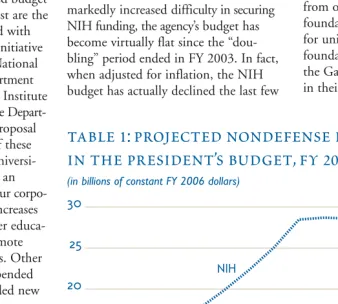
table 1: projected nondefense r&d
in the president’s budget, fY 2006–2011
(in billions of constant FY 2006 dollars)
Source: American Association for the Advancement of Science (AAAS), April 2006 report
C
hallenging times are ahead for researchers seeking funding for their ideas, according to an exam-ination of national and U-M trends in research support. The recent Congressional decision to freeze nearly all domestic spending (see View from Washington, page 20) puts the squeeze on research-dollar hungry universities. However, even if the FY 2007 budget had been enacted as originally envisioned, research univer-sities would still end up competing for a research pie that isn’t growing as much as their collective appetite.The one program in the proposed budget that will probably be missed most are the likely budget increases associated with the American Competitiveness Initiative (ACI) for agencies such as the National Science Foundation (NSF), Department of Energy (DOE), and National Institute of Standards and Technology in the Depart-ment of Commerce. The ACI proposal calls for doubling the budgets of these agencies over ten years. Many universi-ties, including U-M, are waging an aggressive campaign along with our corpo-rate partners to reinstate these increases in FY 2007 to enable U.S. higher educa-tion to fulfill its promise to promote global economic competitiveness. Other planned growth in the now-suspended FY 2007 budget proposal included new funds for Department of Defense weapons development and NASA space vehicle development.
The recently approved National Insti-tutes of Health (NIH) “reauthorization” bill, will, among other things, require NIH to provide more detailed reports on its research plans and progress in study-ing specific diseases. It also calls for a cap on NIH budget increases at 6 per-cent in FY 2007 and 8 perper-cent in FY 2008. Furthermore, Congress did not support a request to assign a portion of any NIH funding increases for interdis-ciplinary research as outlined in the “Roadmap for Medical Research” initiated by 2003 by the NIH director. As most biomedical researchers know from the markedly increased difficulty in securing NIH funding, the agency’s budget has become virtually flat since the “dou-bling” period ended in FY 2003. In fact, when adjusted for inflation, the NIH budget has actually declined the last few
years, just as U-M and many other cam-puses have enlarged their life sciences and biomedical research facilities and increased the number of investigators.
Looking at the long-term trend, as indi-cated in Table 1 showing the impact of the proposed non-defense President’s R&D Budget, FY 2006-2011, there is no question that, despite the potential budget increases in DOE, NSF, and NIST, we are faced with a relatively flat or declining federal source for research funding. While many universities are looking for ways to optimize funding from other sources such as industry and foundations, trends in industry funding for universities also appear flat; while foundation funding, such as that from the Gates Foundation, are very specific in their targets for growth.
analysis of research funding
forecasts new Challenges
30
25
20
15
10
5
0
95 96 97 98 99 00 01 02 03 04 05 06 07 08 09 10 11
NIH
NASA
projected
DOE Science, NIST, NSF
All Other Nondefense R&D
16
S
ear
ch & Disco
ve
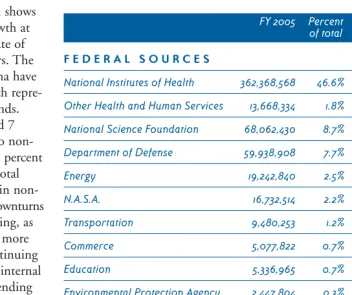
[image:16.792.234.573.417.721.2]table 2: research expenditures by source of funds
Reviewing research U-M expenditures for FY 2006 (Table 2), Michigan shows a very modest rate of overall growth at 2.4 percent, which is the same rate of growth as for our federal sponsors. The strongest gains in the federal arena have been in HHS expenditures, which repre-sent 50 percent of our federal funds. HHS research spending increased 7 percent in FY 2006 in contrast to non-federal funds, which declined 6.5 percent while comprising 11 percent of total U-M expenditures. This decline in non-federal expenditures stems from downturns in industry and foundation funding, as these arenas continue to become more competitive. The University, continuing a long tradition, provides strong internal support for research; research spending from U-M sources increased 10.5 per-cent and represents 15.2 perper-cent of our total expenditures.
Overall U-M continues to be a strong research force on the national level. As long as the schools, colleges, and OVPR continue to look for new ways to support faculty efforts in securing traditional federal support, as well as in reaching out to industry and foun-dations, Michigan should remain com-petitive. Clearly, the challenges will grow, and some predict that the contin-uing pressure to foster economic growth through the research engine of U.S. academe will require new sources of federal funds. However, pressures on the Congressional budget from domestic non-discretionary “entitlements,” the ever-increasing costs related to the U.S. presence in the Middle East, and the concern with terrorism at home and abroad may limit the potential for a large infusion of new federal funds. As always, the key to success will be the entrepreneurial efforts of our world-class faculty supported by an effective research infrastructure.
s&d
—Marvin G. Parnes, Associate V.P. for Research; and Executive Director, Research Administration
FY 2005 Percent FY 2006 Percent Percent of total of total change
F E D E R A L S O U R C E S
National Institutes of Health 362,368,568 46.6% 388,341,125 48.7% 7.2% Other Health and Human Services 13,668,334 1.8% 13,917,666 1.7% 1.8% National Science Foundation 68,062,430 8.7% 63,663,033 8.0% -6.5% Department of Defense 59,938,908 7.7% 52,241,692 6.6% -12.8% Energy 19,242,840 2.5% 17,569,419 2.2% -8.7% N.A.S.A. 16,732,514 2.2% 16,635,867 2.1% -0.6% Transportation 9,480,253 1.2% 6,917,453 0.9% -27.0% Commerce 5,077,822 0.7% 6,289,628 0.8% 23.9% Education 5,336,965 0.7% 5,411,580 0.7% 1.4% Environmental Protection Agency 2,447,804 0.3% 2,933,752 0.4% 19.9% Social Security Administration 2,018,663 0.3% 2,404,122 0.3% 19.1% Justice 1,664,471 0.2% 1,494,572 0.2% -10.2% Other Federal 5,468,762 0.7% 7,411,546 0.9% 35.5%
Total Federal Government $571,508,335 73.5% $585,231,455 73.4% 2.4%
N O N - F E D E R A L S P O N S O R S
Industry 34,702,641 4.5% 33,585,188 4.2% -3.2% Foundations 19,902,948 2.6% 18,124,274 2.3% -8.9% Universities & Gifts 7,774,819 1.0% 7,582,775 1.0% -2.5% Public Charities 10,745,800 1.4% 10,549,039 1.3% -1.8% State of Michigan 12,136,369 1.6% 9,790,688 1.2% -19.3% Endowment 4,849,532 0.6% 4,837,267 0.6% -0.3% Trade and Professional Associations 6,810,927 0.9% 5,597,769 0.7% -17.8% Other 224,416 0.0% 733,982 0.1% 227.1%
Total Non-Federal Sponsors 97,147,452 12.5% 90,800,982 11.4% -6.5%
U N I V E R S I T Y O F M I C H I G A N F U N D S
109,405,940 14.1% 120,932,949 15.2% 10.5%
T O T A L S P O N S O R E D R E S E A R C H
$668,655,787 85.9% $676,032,437 84.8% 1.1%
T O T A L R E S E A R C H E X P E N D I T U R E S
$778,061,728 100.0% $796,965,386 100.0% 2.4% Source: U-M Division of Research Development and Administration
17
W
[image:17.792.211.563.70.365.2]C
ouch potatoes are freed from their couches now that Zattoo, a start-up company based on University of Michigan technology, is providing broadcast television on a computer. The service is currently available only in Switzer-land, but when Zattoo expands it offerings around the globe, anyone will be able watch TV anywhere you can connect to the internet — in a fast food outlet, at the airport, in your office.Zattoo is “peer-to-peer” internet protocol television — or “P2P IPTV” in the short-hand of computerdom. It is a live video streaming protocol but without the halt-ing and skipphalt-ing and other quality issues that plague much video on the internet. Unlike the brief clips that make up most web video, Zattoo offers television while it is being broadcast, just as if you were tuning in on a TV set.
Zattoo was created by Sugih Jamin, U-M associate professor of computer science; research assistant Wenjie Wang; and sev-eral U-M undergraduate students. “The Zattoo technology actually began seven or eight years ago as a research project,” Jamin explains. “Initially, it was used to broadcast university conferences.” Now it could be used to watch TV on your laptop in your dorm room without dis-turbing your roommate, he says.
In March of 2005, Jamin and his long-time friend, Beat Knecht, decided to bring the technology to market. The start-up company obtained an exclusive license from the University for the source code. The Office of Technology Transfer aided the company by introducing the Zattoo team to venture capitalists and other start-ups in the Ann Arbor area. Student interns from the U-M Ross School of Business also worked with the fledgling company.
Knecht, who has an MBA and experience with several companies, provided a solu-tion to a problem that bedevils many start-ups — finding the business expertise needed to run the company.
Jamin took a year-long leave to get the company off the ground, but has returned to the faculty and now juggles his University responsibilities with his position as chief technology officer of Zattoo. “I oversee the general direction of the technology development, but leave the day-to-day work to the programmers,” he explains.
Zattoo kicked off it’s broadcasting with the kick-off of the soccer World Cup tourna-ment in June 2006. Now the company is adding channels and expanding its service to countries throughout Europe.
Unlike existing broadcasts where every few minutes the user must click to con-tinue to choose content, Zattoo shows the live broadcast continuously just as a regular TV broadcast. It is possible to change channels just by clicking a new “button” on screen, and the delay to start the new video is a mere few seconds.
Content owners license their programs to Zattoo, which uses its peer-to-peer technology to deliver it to computer users. Peer-to-peer means that each user connected into the service rebroadcasts a bit of the stream to other users. That can greatly reduce network and server costs to provide the programming.
For broadcasters, the cost of adding new viewers will remain consistently low no matter how many viewers join a stream. With traditional web broadcasting, if you have 100,000 users, you need to send 100,000 copies. With Zattoo, you reduce that by a factor of ten, says Jamin. To serve 100,000 users, you need only 10,000 copies.
In its “teething” stage, says Jamin, Zattoo is currently free of charge. Eventually Zattoo may provide a basic package of free content, with premium packages for a fee and perhaps some pay-per-view events.
Zattoo is based in Ann Arbor, with corporate offices in San Francisco and Zurich, Switzerland. The Zattoo website is at www.zattoo.com.
s&d
On your laptop,
anytime,anywhere
18
S
ear
ch & Disco
ve
t
he University of Michigan’s technology transfer program continues to grow at a healthy rate. The data for fiscal year 2006 tallied 288 new invention disclosures, nine business startups, and 97 license agree-ments. U.S. Patent applications for U-M inventions rose slightly over last year to 136, and 79 patents were issued.The royalties and sale of equity in FY 2006 generated $20.4 million in revenues for the University, up 22 per-cent from $16.7 million the previous year. These funds were shared by the inventors, their departments, schools and colleges, and central administration.
More than 600 U-M inventors partici-pated in technology transfer activities during the year.
“The quality and diversity of research at the University of Michigan provides great strength to our institution and to our region,” said Stephen R. Forrest, U-M vice-president for research.
The nine new companies bring the total number of U-M startups launched over the last five years to 43, more than half of which are businesses headquartered in Michigan, primarily in the greater Ann Arbor area.
“We’re very proud of this performance as it indicates the quality of our research discoveries and the capabilities of our inventors, industry partners, and tech transfer staff,” said Ken Nisbet, executive director of U-M Tech Transfer. “The creativity, talent, and resources of the University of Michigan are playing a significant role in the transformation of our Michigan economy and enhancing our quality of life.”
s&d
Start-Ups Launched
in FY 2006
• MedSpoke
Organ transplant information system
• Cielo MedSolutions
Software and IT services to primary care health providers
• SensiGen
Diagnostic to detect early kidney disease
• Compendia Bioscience
Molecular oncology tools, data, and analysis software
• Zattoo
Global virtual cable network bringing live TV to the Internet
• NanoMag
Grain refinement technology for magnesium and other metals
• CastAnalsyts
Fly casting training aid using MEMS gyros and software
• Pipex
Developing treatments for neurologic, fibrotic, and inflammatory diseases
• Cyclos Semiconductor
Ultra-low power semiconductor chips
U-M Technology Transfer
Five-Year Cumulative Data
1,354 Disclosures
393 License/Option Agreements 656 U.S. Patent Applications 353 U.S. Patents Issued 43 Start-Ups Launched $63.6 M Revenues
(royalties and equity sales)
Source: U-M Office of Technology Transfer
0 5 10 15 20 25
02
License Revenue
(in millions of dollars)
(from royalties and equity sales)
5.3 03 7.4
04 11.7
05 16.7
06 20.4 0
20 40 60 80 100 120
02
License Agreements
61
03 76
04 73
05 86
06 97 0
50 100 150 200 250 300
02
Invention Disclosures
237
03 257
04 285
05 287
06 288
tech transfer
progress Continues
19
W
t
he Democratic Party won control of the U.S. Senate and House of Representatives last fall for the first time in 12 years. This change ushers in new priorities in 2007 — priorities that are likely to affect the research goals and concerns of the University of Michigan community.As the 110th Congress convenes in January, the new committee rosters are expected to impact research university interests. For example, Michigan’s own Senator Carl Levin and Representative John Dingell will return to the chair-manships of powerful committees that they held before the Republican Party gained majority control of Congress in 1994. Senator Levin will lead the Senate Armed Services Committee, which plays a significant role in defense research policy and in efforts to strengthen the Department of Defense’s science, math,
and languages graduate fellowship pro-gram. Representative Dingell will chair the House Energy and Commerce Committee. This influential House committee oversees legislation on topics ranging from health policy to climate change and U.S. energy policy.
2006 elections bring new
Opportunities and Challenges
to the federal research agenda
As chair of the Energy and Commerce Committee, Congressman Dingell will oversee the stem cell research debates expected early in 2007 in the House of Representatives. The election has created a more supportive environment in Washington for advocates of stem cell research. Newly-designated Senate Majority Leader Harry Reid (D-NV) has made funding this research one of his top priorities for 2007—guaranteeing a high profile for this issue. However, the change brought on by the election may move the debate forward only so far. Support within Congress is still insufficient to overcome a presidential veto of any legislation to expand federal funds for human stem cell research.
Climate change and energy policy also will be examined in a different light by the new Congress. Members of both the House and the Senate leaderships are planning to spotlight these issues with hearings starting in January, along with legislation to curb greenhouse gas emissions and to encourage development of alternative energy sources. Within these bills, provisions on emissions technology and energy research and development — especially in the area of biofuels — can be expected in the coming months.
In some areas vital to university-based research, little change may be seen. Recipients of funding from the National Institutes of Health (NIH) are likely to continue to witness little growth in the agency’s budget. The NIH Reauthoriza-tion Act, passed the last hours of the 109th Congress, authorizes increases of up to 6 percent for FY07 and 8 percent for FY08. However, the actual dollar amount that the NIH will receive will prob-ably be smaller than these percentages.
Furthermore, to address the unfinished FY07 appropriations bills left behind by the previous Congress, the newly appointed chairmen of the House and Senate appropriations committees have announced that they plan to freeze all funding for domestic federal programs at the FY06 levels for a year. The NIH and other agencies such as the National Science Foundation, NASA, NOAA, and the Department of Energy’s Office of Science fall under the category of agen-cies that may see their budgets frozen. This freeze, if agreed to by the other members of Congress and the White House, will postpone plans for any new programs and changes to currently existing ones until the end of 2007.
White House Office of Management and Budget Director Rob Portman has stated in response to the plan that “while it is not our preference to have a year-long continuing resolution, we will cer-tainly work with the agencies and the Congress to ensure there are no major disruptions to essential government services. Should there be a long-term continuing resolution, the Administra-tion would want to assure we maintain fiscal discipline and avoid gimmicks and unwarranted emergency spending.”
The plan also eliminates all FY07 money for earmarks and would place a morato-rium on all earmarks until reforms are in place. In a press release, the two chairmen explain that this decision was made “to restore an accountable, above-board, transparent process for funding decisions and put an end to the abuses that have harmed the credibility of Congress.” Debate of this plan and the future of earmarks is likely to be one of the first fights at the start of the new Congress and could set the tone for the next two years.
s&d
—Sarah Walkling, Director of Federal Relations for Research and Assistant Director of the U-M Washington D.C. Office
NATIONAL INSTITUTE OF HEALTH
vie
w fr
om w
ashingt
on
20
S
ear
ch & Disco
ve
Reactor Decommissioning
Proceeding, But Doesn’t
End Energy Research
T
he blue glow from the nuclear reactor pool will be no more. The radioactive fuel is gone, as is the pool’s water. After a service life of nearly 50 years and more than 200,000 hours of operation, the removal of the Ford Nuclear Reactor (FNR) is proceeding on pace to be com-plete by summer.The University of Michigan became one of the first universities to house a nuclear reactor with the construction of
the Ford Nuclear Reactor in 1955, as a companion to the Michigan Memorial Phoenix Project. The Phoenix Project was dedicated to the peaceful use of nuclear energy, and served as a living memorial to U-M faculty, staff, and stu-dents who lost their lives during World War II. The reactor, constructed with a generous gift by the Ford Motor Com-pany, has been used for research and education, supporting a range of exper-iments that require materials to be irra-diated. Over the years, the FNR facility has been used to advance nuclear science and engineering and has contributed to the advancement of knowledge in fields such as medicine, anthropology, and geology.
In 2000, the U-M leadership studied the costs and benefits associated with the continued operation of FNR, and they concluded that the time had come to decommission the reactor. But even while this planning was taking place, another group on campus soon began laying the groundwork for a new energy initiative, which resulted in reviving the Phoenix Project as the Michigan
Memorial Phoenix Energy Institute. Last fall, the Institute was formally estab-lished and its first director named. You can read a Q&A with Director Gary Was in this issue of Search & Discovery.
One of the big milestones in the decom-missioning was removing the radioactive fuel from the reactor. That was accom-plished in July 2003, thus ending the FNR operations. (Since first “going criti-cal” in 1957, the FNR operated for a total of 218,995 hours.)
A committee of campus and external experts created the decommissioning plan, which detailed the engineering and regulatory steps that would be needed to complete the safe disassembly and dis-posal of the reactor, as required by federal regulation and law. In July of 2006 the U.S. Nuclear Regulatory Commission
approved Michigan’s decommissioning plan allowing the process to commence.
With the assistance of several outside contractors, the materials made radioac-tive by the operation of the reactor were disassembled. Many of these items had to be cut into pieces to fit into one of the two shielded containers that were then shipped to the licensed disposal facility in Barnwell, South Carolina. Another contractor has been employed to remove the 30-feet long, 10-feet wide, and 28-feet deep reactor pool.
This process employs diamond wire saws to cut the cement pool into about 90 fif-teen-ton blocks, which will be removed and shipped for burial at the licensed disposal facility in Clive, Utah. As of December 2006, more than 99 percent of all the radioactive materials at the reactor site has been removed. By sum-mer 2007, the remaining one percent will be removed. Then a detailed assess-ment of the site will be performed to confirm that the cleanup is complete. Finally, the U.S. Nuclear Regulatory Commission will review the decommis-sioning activities as well as conduct its own surveys to confirm the absence of any contamination. This last step may take two to three years so that in 2010, the University expects to receive approval to begin using the site of the FNR for another use.
s&d
21
W
inter 2007
resear
ch