2018 International Conference on Applied Mechanics, Mathematics, Modeling and Simulation (AMMMS 2018) ISBN: 978-1-60595-589-6
The Contribution of Large-scale Interconnection to Carbon Emission
Reduction Between Europe and North Africa
Xiao-ling JIN
1,*, Xu-bin WANG
1and Luis MUNUERA
21
State Grid Energy Research Institute, Beijing, China 2
International Energy Agency, Paris, France
*Corresponding author
Keywords: Cross-regional interconnection, Carbon emission, Benefit of interconnection.
Abstract. This paper investigates regional interconnection potential and benefits of cross-border interconnection between Europe and North Africa. The current physical infrastructure of cross-border interconnection and power trade between Europe and North Africa is analyzed, as well as the opportunities and challenges of strengthening interconnection in the medium and long term. The scale of cross-border interconnection between Europe and North Africa is analyzed, which can optimize the power structure, promote the development of renewable energy and reduce CO2 emissions.
Introduction
While continental scale interconnected and frequency harmonised systems have existed for decades, large-scale long distance power flows have been limited, and interconnections primarily served system security purposes. Such electricity networks are not well suited to serve a low carbon energy system. The requirements of clean energy development for power grid are as follows.
The uneven distribution of clean energy resources and demands. Most of these clean energy-rich areas are remote, sparsely populated, and hundreds and thousands kilometers far away from centers of human lives and production activities, therefore, allocation over large areas is needed to develop these clean energy.
Power grid interconnection is one of the important flexibility resource for improving the flexibility of power system. Generation structure, load characteristic, and peaking capability should be used comprehensively so as to share the ability to regulate power supply and peak load flexibly in a larger scale.
Electricity consumption is heavily concentrated in major cities, most of whom will not be able to rely solely on local renewable resources due to the density of their energy demand. While technological progress in wind and solar PV is opening new deployment possibilities in less favourable resource areas, transmission expansion is often the only possible way to utilise most attractive resources.
The Challenges and Opportunities of Interconnection Between Europe and North Africa
Background
The synchronous grid of Continental Europe encompasses the 24 countries of the Continental Europe Regional Group of the European Network of Transmission System Operators (ENTSO-E) and neighbouring countries (Albania, Ukraine, Morocco, Algeria and Tunisia), synchronously connected but not involved in the ENTSO-E. The Continental Europe Regional Group of ENTSO-E addresses technical and operational aspects specific to the UCTE grid’s system operations.
VRE installed capacity has ramped up in recent years, and the mobilisation of flexible resources to balance the power systems has become more relevant to integrate higher levels of VRE penetration. Transmission and interconnector capacity are a valuable resource for cost-effective system operation, particularly at high shares of VRE.
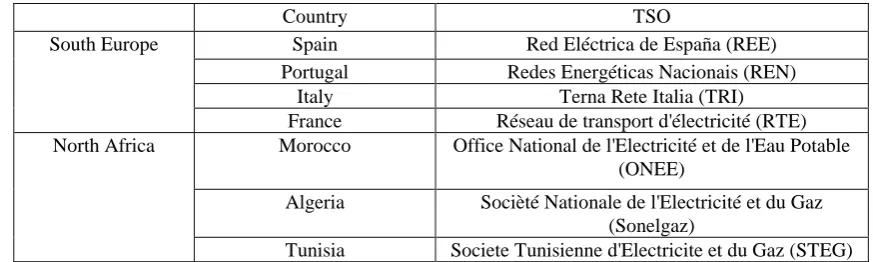
[image:2.595.77.514.339.470.2]The European Commission emphasises the importance of sufficient interconnection capacity for boosting Europe’s integrated electricity market, security of electricity supply and ability to integrate more renewable energy. The Commission has set a target of 10% electricity interconnection by 2020. In 2014, in its European Energy Security Strategy, the Commission suggested extending its 10% electricity interconnection target by 2020 to 15% by 2030.
Table 1. Transmission System Operators (TSOs) in the ‘southern border’ case study countries.
Country TSO
South Europe Spain Red Eléctrica de España (REE)
Portugal Redes Energéticas Nacionais (REN)
Italy Terna Rete Italia (TRI)
France Réseau de transport d'électricité (RTE) North Africa Morocco Office National de l'Electricité et de l'Eau Potable
(ONEE)
Algeria Socièté Nationale de l'Electricité et du Gaz (Sonelgaz)
Tunisia Societe Tunisienne d'Electricite et du Gaz (STEG)
The Maghreb Electricity Committee was entrusted with the responsibility of co-ordinating the integration of the Maghreb electricity grid, following the signing of the Marrakesh Treaty by the Heads of State of the Arab Maghreb Union. The Treaty of Athens (2003) signed with the European Commission further underscores the political will to integrate the Maghreb’s electricity markets. Even if electricity trade among countries of the Maghreb is low, the construction of physical interconnections and the creation of political institutions demonstrate that a real Maghreb grid could emerge.
Different organisations have been established to promote the co-operation of the European and African power systems, including RES4MED, MedGrid, Med-TSO and others.
Current Physical Infrastructure
The Iberian Peninsula is weakly interconnected with the rest of Europe. Interconnection capacity between Spain and France was expanded from 1.4 GW to 2.8 GW in February 2016 when a new interconnector came online. Iberian and French TSOs have advanced in the assessment of relevant projects in order to raise the capacity of electricity exchanges between Spain and France to 8 GW in the medium-term.
Morocco amended its energy legislation to be able to purchase electricity from Spain on the liberalised market. A 400 kV line then continues from Morocco to Algeria and Tunisia.
Electricity Trade
North African countries are experiencing a growing electricity demand, in particular Tunisia and Morocco. Almost all the Morocco’s imported electricity comes from Spain.
On the Iberian Peninsula, VRE generation accounted for 21% of total generation in 2015 (18% from wind and 3% from solar PV). This number is estimated to increase by 1% over the next five years. In Morocco, wind generation accounted for 8% of total generation in 2015. It is expected that the share of VRE generation will reach 15% by the end of 2021.
Mid-term Opportunities for Interconnection
Interconnections are a viable option to ease the burden of North Africa’s increasing demand: compared to investment in additional generation and operational costs, grid infrastructure is a low-cost solution. The structural overcapacity in Europe can help meet the North Africa’s increasing need for energy.
Also the high share of VRE in Spain and Morocco calls for investments to increase the flexibility in both European and North-African countries. Improved grid connections could play an important role in this regard. Looking further into the future, stronger interconnections could help net out different seasonal demand profiles (peak demand for electricity in Europe is in winter, while in North Africa it is in summer) (Daly, 2015).
The connection between Spain and Morocco remains the only link between Europe and Northern Africa. There are currently plans to interconnect Tunisia and Italy. The planned line consists of a submarine 400 kV DC line, more than 200 km long, with a rated capacity of 600 MW. The line will connect the substation of Partanna (in Sicily) and Haouaria (Daly, 2015).
In June 2016, the Moroccan Minister of Energy and the Portuguese Minister of Economy signed an agreement to conduct a feasibility study for the electric interconnection project between Morocco and Portugal, with a capacity of 1 GW (MEM, 2016). Other projects for new transmission lines between Europe and Africa are at earlier, different stages.
Challenges and Opportunities for Increasing Interconnection with Europe
Higher interconnection and transmission capacity in Europe and North Africa could enable the optimal use of VRE generation; alleviate the issue of daily and seasonal demand peaks; and reduce the need for new generation capacity to meet growing energy demand in Maghreb.
Clear regulations, agreements and grid codes are necessary to enable different power systems to operate together efficiently, catching all the potential that a shared power system may introduce.
Different organisations have been established to promote clean energy solution for North Africa countries and the co-operation of the European and African power systems, including RES4MED, MedGrid, Med-TSO and others. These knowledge networks may offer viable solutions to conform regulations and grid codes.
The Benefit of Interconnection between Europe and North Africa
For a more detailed analysis of the operational aspects of the electricity sector, the long-term IEA scenario models have been supplemented with linear dispatch model able to model transmission network expansion. This model uses the outputs of the ETP-TIMES supply models to generate the electricity generation and transmission capacity for a specific case study’s regions and years, taking transmission expansion as both net and gross transfer capacity expansion flows. This allows for detailed analysis of entire years with one-hour time resolution using datasets for wind production, solar PV production and hourly electricity demand calibrated at the country and regional level.
technologies (such as gas turbines). Demand response from electricity use in the transport and buildings sectors is a further flexibility option included in the model analysis.
The Beyond 2-degree Scenario (B2DS)[1] is consistent with the midpoint of the temperature range implicit in the Paris agreement (1.75 degree Celsius increase above pre-industrial average temperatures). In this scenario, net carbon neutrality is reached by 2060, and carbon emissions are limited to a cumulative 750 Gt of CO2. Electrification plays a major role in reducing emissions in the buildings and transport sectors, with the power sector absorbing this increased demand in parallel with a much faster decarbonisation compared with the 2DS pathway. Renewable energy plays the predominant role in the additional emissions reductions from power in the B2DS, comprising around two-thirds of these reductions, followed by CCS (including biomass with carbon capture and storage, or BECCS), which contributes around one-quarter.
Interconnection Potential
[image:4.595.223.372.411.531.2]Long-term modelling results consistent with the IEA well-below 2-degree scenario (B2DS) highlight a significant potential for interconnection in the region. Overall, the growth in variable renewables to 2050 signifies a stronger need for flexibility. Storage increases from 44 GW today to almost 250 GW in 2050, supplemented by 200 GW of demand response. Even with the strong deployment of storage and DR, an expansion of interconnection capacity would be necessary to reach ambitious decarbonisation goals in Europe and North Africa. Central Europe expands interconnection to almost 15 GW by 2050 with the UK and Ireland, and 21 GW with the Nordic region. Significant expansion of interconnection would also be present in the Baltic region, reaching by 2050 3 GW and 3.1 GW between Central Europe and the Nordic region, respectively. Crucially, the interconnection target for Europe of 15% of electricity flows could be reached by 2025, with cross-border trade reaching 35% on gross terms by 2050.
Figure. 1. Cross border interconnection scale between Europe and North Africa.
Generation Mix and CO2 Emissions
In North Africa, interconnection could bring about a dramatic shift in power generation mix. Increased levels of transmission capacity within North African countries, and a nearly 7-fold increase in interconnection capacity between North Africa and Europe through Southern Spain and Italy, would bring about in this scenario an increase in solar PV generation reaching nearly 10% of the power mix in only 25 years.
Figure 2. Impact on generation mix and CO2 emissions in the Central American region studied.
[image:4.595.163.426.658.744.2]flexibility to the low carbon fleet in both Northern Africa and Southern Europe. Higher added value is also brought about by exchange with variable renewables from Southern Europe benefitting from time differences and demand profiles.
Figure 3. North African power mix in the B2DS incorporating 9 GW of interconnection capacity.
Summary
Investments in interconnection are an enabler for the deep CO2 emission reductions in such advanced decarbonisation scenarios, together with other measures of flexibility from storage, demand response etc. The annual reductions achieved in this region equates to just under half of current annual emissions.
Unlocking investment in interconnection and flexibility requires the necessary market, regulatory and institutional framework. These start with a transparent cost-benefit framework to assess the relative benefits of interconnection plans relative to other alternatives, the creation of international platforms for dialogue with buy-in from a broad range of stakeholders including regulators, manufactures, utilities and the financial community, and a regulatory roadmap to address potential short-comings in enabling investment and trade in cross-border transmission capacity.
Acknowledgement
This paper is sponsored by the project 521104180012 “Research on Key Technologies of Global Energy Interconnection International Standards Organization Mechanism and Resource Library” of State Grid Cooperation of China. Thanks a lot for the support of data and models by International Energy Agency.
References
[1]OECD/IEA. World Energy Outlook [R], Paris: 2017
[2][2] OECD/IEA and SGCC and GEDCIO. Large- scale electricity interconnection [R]. Paris:2017
[3]OECD/IEA. Medium term Renewable Energy Market Report 2016, [R]. Paris:2016
[4]IPCC. IPCC special report on renewable energy resources and climate change mitigation [R]. 2011.
[5]Xie Guohui, Li Qionghui. Key areas and technologies of global energy internet technology innovation [J]. China Electricity, 2016, 49(3): 18-23.
[6]Liu Zhenya. Research and prospect of transnational intercontinental internet in global energy internet [J]. Journal of China Electrical Engineering, 2016, 36 (19): 5103-5110.
[7]OECD/IEA. Electricity Security Across Borders: Case Studies on Cross-Border Electricity Security in Europe[R], OECD/IEA, Paris: 2017.