International Journal of Emerging Technology and Advanced Engineering
Website: www.ijetae.com (ISSN 2250-2459, Volume 2, Issue 11, November 2012)45
The Ecological Study on the 3 Plus 1 Foreign Language
Interactive Teaching Model in Police Academy
WEI Li
Department of Elementary Courses, Liaoning Police Academy, Dalian, 116036, China
Abstract—The innovation of computer and the application of Internet, multimedia and other information technology contribute to the introduction of 3 Plus 1 Foreign Language Teaching Model which integrates theory, practice and network technology into foreign language course. This integration implements the principles of Constructivism theory, educational ecology, and the balanced ecosystem of foreign language teaching. The 3 Plus 1 Foreign Language Interactive Teaching Model is composed of three parts: preview warm-up, classroom teaching, and review reflection. It constructs tridimensional interactive environment including man-to-machine, teacher-to-student, and student-to-student interactions overcoming the time and space limitation, and realizing tridimensional language input and output. All of the educational elements in this model can maintain ecologically dynamic balance by means of active interaction, timely adjustment, and close coordination. In order to achieve the final success of foreign language teaching reform, the foreign language teachers have to enhance their qualities in such areas as information teaching, resources selecting, and virtual learning environment designing.
Keywords — 3 Plus 1 Foreign Language Interactive Teaching Model, Constructivism, educational ecology, language input, language output
I. INTRODUCTION
The information era inspires the significant
transformation of the talents training concept from instructor-guiding and stages of learning to self-study and lifelong learning. Just as Stansky points out that the speed of information developing is incredible and we cannot go on accumulating the course contents, for it is the summit that human being can’t reach. [1] Chinese college English is experiencing its third reform which focuses on the adequate use of computer and information technology. When information technology represented by computer network is integrated into foreign language course, the composition of foreign language course will change from 2 plus 1 model (theory, practice and course or teaching material) to 3 plus 1 model (theory, practice, technology and course or teaching material). That is to say, teaching theories, teaching strategies and information technology have been reflected in the course.
Meanwhile, the reform of teaching model from theory to practice requires a rather enduring period of adjustment and adaptation. The ecological perspective is to aid different teaching elements to determine their ecological positions in 3 Plus 1 Foreign Language Interactive Teaching Model, which makes teaching structures stable and keeps teaching system balanced.
II. THEORETICAL UNDERPINNING OF 3PLUS 1FOREIGN LANGUAGE INTERACTIVE TEACHING MODEL
A. The Constructivism theory and its influence on foreign language network teaching
International Journal of Emerging Technology and Advanced Engineering
Website: www.ijetae.com (ISSN 2250-2459, Volume 2, Issue 11, November 2012)46 The application of this teaching pattern will compensate for the deficiency of traditional foreign language class which focuses on teachers’ intensive explanation for grammar and vocabulary leading to “dumb English”. Consequently, more and more English teachers and researchers applause and accept this teaching pattern, putting it to practice in their classrooms.
B. The educational ecology and ecological network teaching system
The educational ecology is an application of some principles of ecology into educational research. The term of Educational Ecology was primitively introduced by Lawrence Gremin, an American scholar, who put forward this term in Public Education in 1976. [6] At the beginning of this century, two distinguished academicians, Tudor and Leather introduced the concept of ecology into the atmosphere research of foreign language teaching, which attracted the attention from Chinese scholars. In fact, educational ecology, or educational information ecology mainly centers on optimization of teaching environment.
With the era of information and network setting in, the virtual network teaching environment moves into the line of sight, and the ecological issue grows to the focus. The multimedia network class is a dynamic ecological system which is composed of biological and environmental elements. The biological elements refer to the learners and instructors. The Chinese scholars define learning ecological system as a self-contained entity composed by learning community, physical and virtual learning environment. [7] Learning environment indicates information resources, technological devices and community (the learners and instructors).
According to the previous research into ecological education, we found that the idea of ecological teaching stressed the human being’s comprehensive development in the teaching process, the connection between the balance of the individual improvement and other individuals, internal environment and external environment, which reflects the ideology of Harmonious Society and Sustainable Development. Under the network practice of foreign language teaching, the virtual teaching environment can be improved and optimized in the dynamic balance which is a dynamic process from balance to imbalance, and from imbalance to balance. It complements the traditional class teaching, contributing to the learners’ overall progress in English learning proficiency.
From the perspective of ecology, foreign language teaching system is an ecological system.
The elements in foreign language teaching, such as plans, requirements, objectives, materials, methods, media, teachers, and students, are ecological factors constructing ecological chain in teaching level. All of these elements are indispensable, possessing their ecological stable position and maintaining the systematic balance. Therefore, the premise of maintaining this balance is to make every factor compatible.
C. The background and the creation of 3 Plus 1 Foreign Language Interactive Teaching Model
The Chinese foreign language teaching is characteristic of teacher-centered atmosphere represented by the major media of the teaching materials, the blackboard and the chalk. The objective is to help students obtain and accumulate the knowledge of foreign language (including vocabulary, grammar, and so on). This teaching model is based on the grammatical translation method promoted by the Constructivism which features intensive reading of the core texts to input some linguistic forms of one period. The learners can form correct linguistic habits and behaviors through teachers’ elaborate explanation and individual repetition. In a word, the traditional teaching model is deficient in interaction time and interaction space, and its information approaches are unitary.
International Journal of Emerging Technology and Advanced Engineering
Website: www.ijetae.com (ISSN 2250-2459, Volume 2, Issue 11, November 2012)47 These interaction types can be carried out independently, or alternately. Under this interaction pattern, the interaction elements, the channels of information transmission, the interaction time and space have been transformed dramatically. The interaction elements involve not only students and teachers, but also network and various information technologies. The information transmission is not a unitary and linear process, but a multiple and tri-dimensional process. The students choose their preferred interaction forms (face-to-face classroom interaction; network interaction: QQ group, Blog, and Forum) to realize online and offline interaction, exchanging information and cooperating with each other. In so doing can a multiple and three-dimensional foreign language teaching pattern be created. And hence, the objective of virtual, individual, cooperative and independent teaching pattern will come into being.
III. ANALYSIS AND EXHIBITION OF 3PLUS 1FOREIGN LANGUAGE INTERACTIVE TEACHING MODEL
A. Optimization of language learning process in 3 plus 1 interactive model
The language learning process is composed of input and output process. Input is the prerequisite of language learning, and output is the sufficient condition of it. Input cannot trigger output automatically and form language acquisition. Interaction can be rated as binder which promotes learners to connect external variable of context with the learned language whose cooperative effects will internalize the new knowledge. [9] For this reason, language learning should be the input-interaction-output process. After the integration of computer network into foreign language course the knowledge sources are no longer unitary medium like paper text books; multimedia have become updated and abundant sources of language knowledge. Figure 1 displays various language-input sources from all kinds of media.
The teaching resources stored and displayed by multimedia and multimodalities demand a tridimensional interactive pattern to realize the maximization of resource usage. The learners obtain the first-class input of the correct target language under the support of resources from the super network information base. This tridimensional pattern and multiple interactions can awake the students’ higher attention to the differences between output language and target language, making the feature of the errors to correct, and finally, it can not only increase the accuracy of language use, but contribute to its fluent and logical use.
Figure 1: Various language-input sources in E-age.
B. Exhibition of 3 Plus 1 Foreign Language Interactive Teaching Model
[image:3.612.352.543.126.319.2]
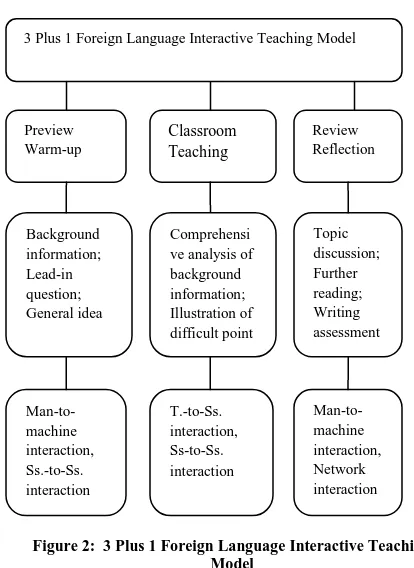
Figure 2: 3 Plus 1 Foreign Language Interactive Teaching Model
Compared with the interactive pattern in traditional teaching, 3 plus 1 tridimensional pattern demonstrates huge improvements in terms of interactive elements, information channels, interaction time, space and approaches.
3 Plus 1 Foreign Language Interactive Teaching Model
Preview Warm-up
Classroom Teaching
T.-to-Ss. interaction, Ss-to-Ss. interaction
Man-to-machine interaction, Ss.-to-Ss. interaction
Man-to-machine interaction, Network interaction Topic discussion; Further reading; Writing assessment Background
information; Lead-in question; General idea
Review Reflection
Comprehensi ve analysis of background information; Illustration of difficult point Textbooks
& Library
Education websites
Network Platform Software VCD & DVD
Data Base Langu
[image:3.612.339.546.366.650.2]International Journal of Emerging Technology and Advanced Engineering
Website: www.ijetae.com (ISSN 2250-2459, Volume 2, Issue 11, November 2012)48 The author will take her teaching process as an example to illustrate this new teaching model and its productive effects. Figure 2 describes the whole process of this teaching model, which embodies the main concept of multiple interactions in the teaching and self-learning process, displaying its features and advantages over the traditional model. It surpasses the unitary pattern, forming the healthy circulation of interactive input, and input interaction, interactive output and output interaction. Interaction is universal in any process of teaching and learning.
Tridimensional interactive pattern: the man-to-machine interaction is conducted in the process of preview and after-class reflection. For example, the students whose major are criminal investigation make use of VPIE (Virtual Policing in English) Network Training Platform to read the background information displayed in the form of VCD and
DVD, E-books, news reports, Police
websites:http://www.fbi.gov/aboutus/investigate;http://en.w ikipedia.org/wiki/Federal_Bureau_of_Investigation. Due to the limitation of the platform and its latency, the instructor uploads many concrete teaching requirements and guidance to the QQ group (Growing-up QQ group), such as, the latest definition of the police terms, the new writing requirements for the police documents, and some other information relevant to the development trend of this unit. In the process of preview, the student is the leading role exploring various information and materials to know about the main content besides the textbook, while the teacher is the assisting role providing directions towards goal and provoking desires for knowledge. The teacher-to-student and student-to-student interaction are also conducted in the process of preview and reflection. After self-study on the platform and internet, the students have obtained plenty of language input, but this kind of input cannot be converted into language absorption. At this moment, the teacher can guide the students to have teacher-to-student or student-to-student interaction on the basis of man-to-machine interaction. They can hold regular discussion by means of QQ group, Class Blog, Forum, to finish the task of information extension and integration. Face-to-face interaction between teacher and student or student and student is mainly conducted in class teaching process. Teacher and student can utilize multimedia to integrate their previous information, for example, they can answer lead-in questions from different perspectives put forward by study groups who made PPT before the class teaching. Teacher can also organize the topic discussion according to the network hot issues.
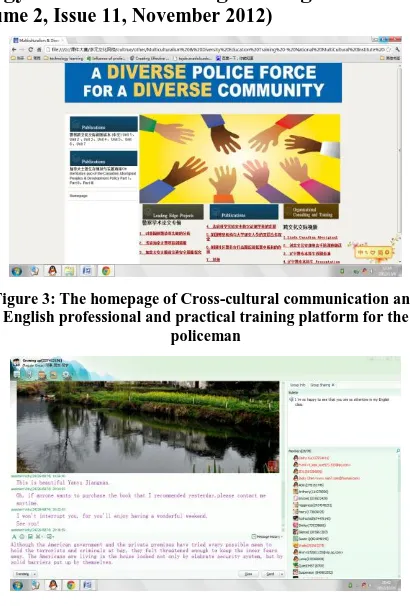
Figure 3: The homepage of Cross-cultural communication and English professional and practical training platform for the
[image:4.612.341.546.117.420.2]policeman
Figure 4: Teacher-to-student and student-to-student interaction in Growing-up QQ group on Oct. 26, 2012.
Figure 3 and 4 reflect the sound operation of network self-study and active interaction between teacher and student in Liaoning Police Academy under the support of network platform and QQ software. Growing-up QQ group [10] has been operated nearly 7 months, with 78 members (7 learning assistants and 71 students) interacting with each other after English classroom teaching. The learning assistants upload many learning materials including academic papers in cultural awareness or policing management, English news or stories, scientific reports, CET guidance materials. They also hold regular English Forum or Online English Corner to have direct written or oral communication through this QQ group.
[image:4.612.342.546.127.272.2]International Journal of Emerging Technology and Advanced Engineering
Website: www.ijetae.com (ISSN 2250-2459, Volume 2, Issue 11, November 2012)49 Finally, these new knowledge can be absorbed and reinforced through repeated interaction. As a result, the students’ concentration is aroused; language input easily turns to language absorption; the routine knowledge can be internalized by the students with the aid of network interaction.
Tridimensional language output: the process of language output also gives expression to tridimensional character. For instance, the students’ information report in the process of classroom teaching isn’t a unitary product of input-to-output, but an internalized result after several times of language input interaction. For another instance, when the teacher requires the students to fulfill their writing assignment, the students should upload their first draft to the platform for machine correction, and then to the QQ group to conduct mutual assessment. When the teacher read this composition, it has been an output fruit after discussion and correction.
In view of the analysis of this tridimensional interaction, we can find that students and teacher have played their roles very clearly with clarified ecological positions. The students are active in taking part in the language input and output; the teacher can realize the role change from the leading role to an assisting guide. Their relations are friendly and harmonious, depending on, and also checking and constraining each other. The information technology is integrated into the foreign language teaching system to a massive degree. This integration can employ various interaction forms in a flexible manner, making language input and output process multiple and tridimensional. The classroom teaching and after-class self-study have been unified, which accommodates the fundamental principle of integration, relationship and balance proposed by Educational Ecology. This teaching system possesses the nature of ecological operation.
IV. CONCLUSIONS AND REFLECTIONS
The realization of various man-to-machine interactive patterns assisted by computer and network technology is the guarantee of the realization of 3 plus 1 Foreign Language Interactive Teaching Model. The establishment of this improved model overcomes the weaknesses of traditional teaching pattern in terms of limited interaction time, resources and space, and unitary channel of information transmission.
Under the new tridimensional interactive pattern, the modern information technology is integrated into every link of language learning process in many kinds of approaches, and hence, the new teaching elements can be added in compatible way; the teacher and students can find and coordinate their ecological position in the new system; the teaching structure can keep stable and the teaching ecosystem can be operated effectively. Although the fresh model has been confirmed and applied by most of researchers and teachers, we shouldn’t neglect two problems existed in its practice. The first one is how to determine the classroom teaching’s proper status? When the classroom teaching isn’t the place to explain the main language points or to do the language exercises, how to adjust its functions in language teaching and how to maintain the dynamic balance of teaching ecosystem? The second one is how to improve the instructor’s information technology and traits? The interactive teaching model is applied mostly by computer and network assistance, so the instructors have to possess the following capabilities: information-teaching, resources-selecting, and virtual learning environment-designing. With the Chinese foreign language teaching reform adjusting and deepening, to improve the foreign language teachers’ information skills and personal qualities are the key to the ultimate success of the reform.
Acknowledgment
The author wishes to thank the experts and judges of the Education Department of Liaoning Province for their support of The Twelfth Five-year Plan for Educational Science project of Liaoning Province (2012) No. JG12EB082J: Construction of Seamless Foreign Language Learning and Interactive Cyberspace via Tencent Software.
REFERENCES
[1] Wang Jin, Cao Jun and Xun Bin (translate) Teaching Methods: Apply the Cognitive Science and Promote Students’ Learning. [M]. Shanghai: East China University Press, 2003:132.
[2] Jonassen, D. Constructivism and Computer-Mediated Communication in Distance Education [J]. The American Journal of Distance Education, 1995,9 (2).
[3] He Kekang. Constructivism: the Theoretical Basis of Reforming Traditional Teaching (first part). [J] E-education Research, 1997 (3):4.
International Journal of Emerging Technology and Advanced Engineering
Website: www.ijetae.com (ISSN 2250-2459, Volume 2, Issue 11, November 2012)50
[5] He Kekang. Constructivism: the Theoretical Basis of Reforming Traditional Teaching (first part). [J] E-education Research, 1997 (3):5.
[6] Gremin, L. Public Education [M]. New York: Basic Books, 1976. [7] Chen Qi, Zhang Jianwei. Integrative Learning Model in Information
Era: the Ecological Definition of Information Technology Integration into Teaching Process. [J] Peking University Education Review, 2003 (3):92-94.
[8] Chen Jianlin. Integration of Computer Network into Foreign Language Course. [M]. Shanghai Foreign Language Education Press, 2010:223.
[9] Wang Chuming. Interactive Cooperation and Foreign Language Teaching [J] Foreign Language Teaching and Research, 2010 (4):297.
[10] WEI Li. Theory and Practice of Online Learning Community’s Creation and Application by Means of QQ Group Software. [J] International Journal of Emerging Technology and Advanced Engineering. Vol. 2, Issue. 10, October 2012, 42-46.
WEI Li : Born in Feb. 1972 in Liaoyang,
China. BA of English, Liaoning Normal University, 1993, Master of English, Liaoning Normal University, 2007. She is an associate professor in Liaoning Police Academy; the author of one EI indexed paper and seven international papers. She has published more than 40 papers in Chinese academic journals including World Ethno-national Studies, Shandong Social Sciences, Social Sciences in Xinjiang, Academy. Her concentration centers on the Multicultural education, the Canadian Studies and Foreign Language Teaching with computer and network assistance.