
International Journal of Emerging Technology and Advanced Engineering
Website: www.ijetae.com (ISSN 2250-2459, Volume 2, Issue 10, October 2012)525
Evaluation of Primary Slurry Used in Ceramic Shell Investment
Casting Process
Balwinder Singh
1, Pradeep Kumar
2, B.K.Mishra
31
Associate Professor Department of Mechanical Engineering, Punjab Technical University GZS Campus Punjab 151001, India
2,3 Professor Department of Mechanical and Industrial Engineering, Indian Institute of Technology Roorkee, Roorkee- 247667, India
Abstract — Ceramic shell investment casting process is used to produce high quality metal products with relatively close dimensional tolerances. The refractory primary slurry that is applied to the surface of the pattern assembly, to pick up its surface details plays a very important role in ceramic shell investment casting process (CSICP). It produces a smooth, acceptable surface finish of the ceramic shell mould, which in turn is transmitted to the casting. Zircon flour, though costly, is being used as a primary slurry material in the ceramic shell investment casting process. To reduce the cost of primary slurry material, some refractory filler materials were added with the zircon flour. The Scanning Electronic Microscopy (SEM) technique has been used to study the surface morphology of ceramic shell prepared from primary slurry. Parameters like viscosity and plate weights of the slurries have been measured. The results reveal that the fused silica with colloidal silica binder when used as a filler material in zircon flour primary slurry gives the best results with respect to above properties.
Keywords —Primary slurry, filler materials Plate weight, viscosity, Scanning Electronic Microscopy (SEM)
I. INTRODUCTION
The higher demand for investment casting lies in its ability to produce complex shapes, with high dimensional accuracy, good surface finish and good castability on large variety of alloys. Due to technological advances, ceramic shell investment casting process has become the most versatile modern metal casting technique. In this process, the application of slurry and stucco (refractory particles) on wax pattern assembly is repeated, with drying between each successive coat, until a shell mould of sufficient thickness is achieved. The first layer is normally fine primary slurry so that a good surface finish on the casting will be obtained. Subsequent layers are made up of ceramic slurry and refractory granules. The shell will normally be made up of between five and eight layers depending on the cooling rate required and the subsequent metallurgical properties [1]. Following completion of shell build, the expendable pattern material is removed usually by the action of heat and/or steam.
The dewaxed ceramic shell mould is fired at a temperature of the order of 1,000°C, to develop the maximum ceramic bond and molten metal is poured immediately upon removal from the firing furnace [1]. The quality of ceramic shells is dependent on the slurry and shell materials as well as the process by which the shells are built [2]. A good slurry composition will not be guaranteed to produce smooth and defect free shell if the slurry is prepared in an inadequate manner. Control procedures for slurries vary considerably among foundries, reflecting in part the wide range of specifications that different shops work to, depending on their product line [3]. Therefore, slurry control is one of the most important operations of the investment casting process as reported by Michael J Hendricks [4]. Viscosity, density, binder, filler/sol ratio, wetting agent and antifoaming agents are the important parameters of the slurry to be controlled. An appropriate slurry viscosity should be maintained to avoid shell problems such as cracking. The primary coat must withstand pressure from expanding wax as it is heated during the wax removal stage as well as survive the rigors of handling during the shell building process [4]. The fundamental relationship between variations in the raw materials, the slurry and the mould is still being developed and progress in this area will only continue with commitment of the industry to regular raw material testing and the full use of resulting data in the analysis of casting results. In present investigations the properties of the zircon flour/fused silica slurry were characterized and the main factors controlling the viscosity, plate weight were identified.
II. FUNCTION OF PRIMARY SLURRY
International Journal of Emerging Technology and Advanced Engineering
Website: www.ijetae.com (ISSN 2250-2459, Volume 2, Issue 10, October 2012)526
Surface finish will be an important characteristic of the casting; great attention must be given to the nature of the ceramic filler. The main factors determining the surface quality of the ceramic shell mould for investment casting of metal alloys include the density of the ceramic powder compact and viscosity of the primary slurry [5]. The objective of any slurry composition is to produce stable slurry. Slurry mixing has a remarkable effect on the surface quality and strength of the shell. There are many factors like silica type and level, refractory type, flour particle size distribution, solids loading, viscosity, plate weight, etc that play a role on the final ceramic shell properties. Selection of any refractory filler material for shell making is dependent on a wide variety of factors which can affect the properties of investment slurry, shell and casting and also the economy of the process [4]. In general zircon flour is used as a primary slurry material in the ceramic shell investment casting process but it is very costly. Roberts [6] showed that by using slurry of seven millimicron sol. containing fused-silica grains of three different particle sizes the resultant structure was stronger in both the green and fired states. Fused silica and alumina silica have become the two most widely used refractories for ceramic shell investment casting as a result of their relatively optimum characteristics of performance and material costs.
III. EXPERIMENTAL DETAILS
Primary Slurry preparation.
The raw materials (refractory, binder, wetting agent, and antifoam) used to make slurry play a major role in determining the overall final ceramic shell characteristics. Suitable choice of the ceramic materials can lead to smooth surface finish, high accuracy of the metal castings. In the present work Taguchi’s parameter design approach is used to study the effect of process parameters on the slurry viscosity and primary coatings in ceramic shell investment casting process. The Taguchi design method is a simple and robust technique for optimizing the process parameters [8-9]. In this method, main parameters which are assumed to haveinfluence onprocess results are located at different rows in a designed orthogonal array. With such an arrangement completely randomized experiments can be conducted.
In general, signal to noise (S/N) ratio (h, dB) represents quality characteristics for the observed data in the Taguchi design of experiments. Depending on the experimental objective, there are several quality characteristics. In the case of slurry viscosity and plate weight, higher values of them are desirable. These S/N ratios in the Taguchi method are called as the higher-the-better characteristics and are defined as follows.
From the S/N ratio, the effective parameters having influence on process results can be seen and the optimal sets of process parameters can be determined. Design of experiment (DOE) has been a very useful tool to design and analyze complicated industrial design problems.The non-liner behavior, if exists, among the process parameters can only be studied if more than two levels of the parameters are used. Therefore, each parameter was analyzed at three levels. The selected number of process parameters and their levels are given in Table1.
Table-1
Trial levels factors in the Taguchi’s L9 OA experiment
Process Parameter designation
Process Parameters
Level 1 Level 2 Level 3
A Zircon flour
(gm)
120 180 240
B Fused silica
(gm)
60 120 180
C Filler/sol ratio
(gm/ml)
2.5 3.0 3.5
D Catalyst (ml) 2 3 4
International Journal of Emerging Technology and Advanced Engineering
Website: www.ijetae.com (ISSN 2250-2459, Volume 2, Issue 10, October 2012)527
Table-2
The L9 (34) OA (parameters assigned) with response
For the sake of simplification, the second order interactions among the parameters were not considered. Each three level parameter has 2 degree of freedom (DOF) (Number of levels - 1), the total DOF required for four parameters each at three levels is 8 [= 4 x (3-1)]. As per Taguchi’s method the total DOF of selected OA must be greater than or equal to the total DOF required for the experiment. So an L9 OA (astandard 3-level OA) having 8 (=9-1) degree of freedom was selected for the present analysis (Table 2). In the present investigations, primary slurries have been formulated using a mixture of zircon flour and fused silica powder as filler and colloidal silica as binder.
Mixture of triton (wetting agent) and n-Octyl alcohol (antifoaming) used as Catalyst. Details of slurry composition and their levels are given in table 1. In order to achieve consistency of slurry characteristics correct preparation and maintenance must be ensured.
Mixture of zircon flour, fused silica powder as filler, colloidal silica as binder along with wetting and antifoaming agents (Catalyst) were used for investigating the slurry parameters
Details of slurry composition and their levels are given in table 1. An electronic balance (Metler, LC 0.1 mg) was used for the measurement of refractory powders. Density of the slurry was determined with the use of conventional method by measuring mass and volume. Viscosity was measured using the Brookfield Digital viscometer Model DV-II+ (Accuracy: ±1.0% of range, speed: 0.01 to 200 RPM, reproducibility: ±0.2%). The viscometer is of rotational variety type. It measures the torque required to rotate an immersed element (spindle) in a fluid. The spindle is driven by a synchronous motor through a calibrated spring; the deflection of the spring is indicated by a pointer and dial (digital display). All the values of viscosity were measured at a constant speed. The slurry has to be kept under continuous stirring throughout its use in the coating process. This is necessary in order to prevent the settling/separation of the heavy filler materials used in the slurry and to maintain the homogeneity of the slurry throughout its use. In the shell building process, after the cluster is dipped in the slurry, they are stuccoed with zircon sand. Three shells are produced from each slurry using calcined fused silica as back up stucco (mesh sizes-16 +30 and -30 +80). The scanning electronic microscopy (SEM) analysis of filler particles and ceramic shell surface (primary coating) was done using the apparatus JEOL-T20 with 1000 magnifications. The samples were ultrasound deaglomerated in etalon for 10 minutes, and then gold spattered. The optical profilometer was used to measure Surface Roughness values of the ceramic shell surface after dewaxing. Several Ra values were taken at different locations on the shell surface.
IV. EVALUATION OF SLURRY PROPERTIES
The effect of slurry parameters on the plate weight primary slurry thickness was evaluated and optimum slurry composition/ conditions for minimizing the surface roughness of primary coating were determined. Four controllable factors of the slurry preparation process were studied at three levels each. The resultant slurries were characterized by measurements of viscosity and plate retention rate. The influence of solids loading and particle shape on the viscosity and plate retention rate was also investigated. Plate weight is a measurement used to determine slurry pickup on a metal plate. It is useful in controlling slurries not only for slurry coverage and adhesion, but also for rheology or flow characteristics. Sr No Run Order Parameters Trial Conditions
Viscosity ( Raw data) S/N
Ratio (db)
A B C D R1 R2 R3
1 2 3 4
1 2 3 4 5 6 7 8 9 3 7 5 1 4 6 9 2 8 1 1 1 2 2 2 3 3 3 1 2 3 1 2 3 1 2 3 1 2 3 2 3 1 3 1 2 1 2 3 3 1 2 2 3 1 1506 1540 1604 1680 1780 1825 1920 1962 2074 1510 1550 1606 1683 1778 1830 1932 1960 2075 1508 1545 1600 1686 1792 1812 1935 1948 2070 63.57 63.78 64.10 64.52 65.02 65.21 65.70 65.83 66.33
T
= overall mean of Viscosity = 1767.07 cp R1, R2, R3 represent responses value for three repetitions of eachtrial. The 1’s, 2’s, and 3’s represent levels 1, 2,3 and 4 of the parameters, which appear at the top of the column. Yij are the
International Journal of Emerging Technology and Advanced Engineering
Website: www.ijetae.com (ISSN 2250-2459, Volume 2, Issue 10, October 2012)528
It is mainly used on primary slurries but can also be used on backup slurries. The plate weight can influence the porosity or permeability of the primary slurry and primary slurry thickness, which can cause stucco penetration. Plate weight is one method used to indirectly measure thixotropy and film thickness.
The Scanning Electronic Microscopy (SEM) technique has been used to study the surface morphology of powder particles as well as primary slurry. Optical profilometer has been used to measure the surface roughness of the shells (primary slurry). Variation in primary slurry thickness with plate weight (Ceramic Retention Test) was calculated for each slurry. All formulas are based on weight rather than volume and all components are weighed by electronic balance. The following properties have been studied in the present work
Viscosity: Viscosity was calculated using the Brookfield DV-II+Viscometer (accuracy: ±1.0% of range, reproducibility: ±0.2%, speed: 0.01 to 200 rpm). Viscosity was found to be lower when shear force was working and higher when shear force was in operation [2]. All the values were measured at constant speed.
Plate weight: The ceramic retention rate R was calculated using the equation
R= (Wd- Wp)/S . . . (1)
Where Wp is the undipped plate weight, Wd the dipped weight of the plate, and S the surface area of the plate [7]. The thickness of the primary slurry layer H can be derived from the equation
H= (Wd -Wp)/DS=R /D . . . (2) Where D is the density of the slurry.
Scanning Electronic Microscopy (SEM): Scanning electronic microscopy, SEM analysis was done using the JEOL-T20 with 500 and1000 magnifications. The samples were ultrasound deaglomerated in etalon for 10 minutes, and then gold spattered
V. CONFIRMATION EXPERIMENTS
Three confirmation experiments were conducted at the optimum composition of the slurry parameters. The zircon flour was set at the third level (A3), fused silica powder at the third level (B3), filler/sol ratio at third level (C3) and catalyst was kept at the first level (D1). The average viscosity of the slurry 2080 cp which was within the confidence interval of the predicated optimal of viscosity. Refractories have the greatest influence on the system behavior because it is usually the largest component of the system.
Refractory properties, i.e. density, morphology (particle shape), particle size and distribution all influence slurry rheology. Fused silica prime slurries drain and level slowly compared to all zircon slurry.
VI. CONCLUSIONS
Primary slurry composition and its processing can be considered as one of the major component for making ceramic investment shell moulds of precision components. Within the range of test conditions employed, the following conclusions have been drawn:
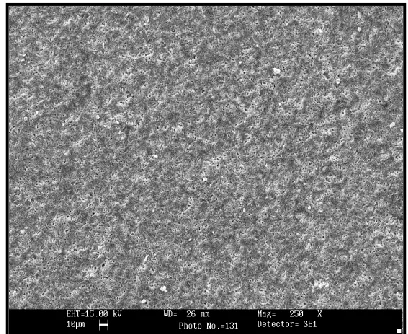
[image:4.612.348.552.358.525.2]The optimal levels of Zircon flour, fused silica, filler/sol ratio and the catalyst for maximum plate weight corresponds to the highest S/N ratio and Zircon flour, filler/sol ratio and the catalyst significantly affects the slurry plate weight. The surface condition of primary coat i.e. shell surface can be improved by increasing the filler/sol ratio in the slurry to 3.5.
Figure 2: SEM micrograph showing the surface morphology of the shell.
The result reveals that the surface condition of shell can be improved by increasing the Viscosity and hence plate weight, corresponding to higher filler loading in the slurry. Confirmation experiments were conducted at an optimal condition showed that the surface quality of the ceramic investment shell moulds were improved significantly.
International Journal of Emerging Technology and Advanced Engineering
Website: www.ijetae.com (ISSN 2250-2459, Volume 2, Issue 10, October 2012)529
1
3
5
2
4
6
7
8
9
10
11
12
13
14
15
16
17
REFERENCES
[1] P. R. Beeley and R. F. Smart, Investment Casting, 1st Edition, The University Press,Cambridge, UK, 1995. .
[2] Singh, Balwinder, Kumar, Pradeep, Mishra, B .K. (2006) ―Parametric Optimization of Slurry Composition used in Ceramic Shell Investment Casting Process through Taguchi Method‖ Indian Foundry Journal, Vol. 52, No.10, pp. 25-33.
[3] Investment Casting ASM Hand Book Vol.15, p 253-257.
[4] Michael J Hendricks Processing and firing influences on ceramic shell materials. Foundry Trade Journal –June 1991
[5] Cui, Y.Y.; Yang, R. ―Influence of powder-size matching on the surface quality of ceramic mould shell for investment casting of
titanium alloys‖ International Journal of Materials and Product Technology, VOL.2, 2001, p 793-798.
[6] W.O.Roberts, ―Factors affecting Shell Strength‖ 25th ICI Conference 1977, Denver, Colorado; U.S.A.
[7] Singh, Balwinder, Kumar, Pradeep, Mishra, B .K. (2008), ―Effect of Slurry Composition on Plate Weight in Ceramic Shell Investment Casting‖ Journal of Materials Engineering & Performance JMEP-06-12-0401, Vol 17,No.4/August 2008 pp 489-498
[8] Ross P. J., 1988, ―Taguchi techniques for quality engineering‖, McGraw-Hill Book Company, New York.
[image:5.612.142.499.293.605.2][9] Roy R. K., 1990, ―A primer on Taguchi method‖, Van Nostrand Reinhold, New York.
Figure. 1: Slurry Mixer [2, 7]. (1) Impeller Eye (2) Slurry (3) Steel Tank (4) Impeller Rod (5) Cover Plate (6) Fixture (7) Speed Controller (8) Electric Motor (9) Timer (10) Coupling Plate (11) Horizontal Barrel (12) Lever (13) Vertical Barrel (14) Extension rod (15) Lock Nut (16) Stand and (17) Base
![Figure. 1: Slurry Mixer [2, 7]. (1) Impeller Eye (2) Slurry (3) Steel Tank (4) Impeller Rod (5) Cover Plate (6) Fixture (7) Speed Controller (8) Electric Motor (9) Timer (10) Coupling Plate (11) Horizontal Barrel (12) Lever (13) Vertical Barrel (14) Ext](https://thumb-us.123doks.com/thumbv2/123dok_us/8744268.890381/5.612.142.499.293.605/impeller-impeller-fixture-controller-electric-coupling-horizontal-vertical.webp)
