I n t elli g e n t s y s t e m s i n
m a n u f a c t u r i n g : c u r r e n t
d e v elo p m e n t s a n d f u t u r e
p r o s p e c t s
M e zi a n e , F, Vad e r a , S, Ko b b a cy, KAH a n d P r o u d l ov e , N
h t t p :// dx. d oi.o r g / 1 0 . 1 1 0 8 / 0 9 5 7 6 0 6 0 0 1 0 3 2 6 2 2 1
T i t l e
I n t elli g e n t s y s t e m s in m a n u f a c t u r i n g : c u r r e n t
d e v elo p m e n t s a n d f u t u r e p r o s p e c t s
A u t h o r s
M e zi a n e , F, Vad e r a , S, Ko b b a cy, KAH a n d P r o u d lov e , N
Typ e
Ar ticl e
U RL
T hi s v e r si o n is a v ail a bl e a t :
h t t p :// u sir. s alfo r d . a c . u k /i d/ e p ri n t/ 1 6 7 3 /
P u b l i s h e d D a t e
2 0 0 0
U S IR is a d i gi t al c oll e c ti o n of t h e r e s e a r c h o u t p u t of t h e U n iv e r si ty of S alfo r d .
W h e r e c o p y ri g h t p e r m i t s , f ull t e x t m a t e r i al h el d i n t h e r e p o si t o r y is m a d e
f r e ely a v ail a bl e o nli n e a n d c a n b e r e a d , d o w nl o a d e d a n d c o pi e d fo r n o
n-c o m m e r n-ci al p r iv a t e s t u d y o r r e s e a r n-c h p u r p o s e s . Pl e a s e n-c h e n-c k t h e m a n u s n-c ri p t
fo r a n y f u r t h e r c o p y ri g h t r e s t r i c ti o n s .
Intelligent Systems in Manufacturing: Current Developments and
Future Prospects
Farid Meziane, Sunil Vadera, Khiary Kobbacy and Nathan Proudlove
Abstract: Global competition and rapidly changing customer requirements are demanding increasing changes in manufacturing environments. Enterprises are required to constantly redesign their products and continuously reconfigure their manufacturing systems. Traditional approaches to manufacturing systems do not fully satisfy this new situation. Many authors have proposed that artificial intelligence will bring the flexibility and efficiency needed by manufacturing systems. This paper is a review of artificial intelligence techniques used in manufacturing systems. The paper first defines the components of a simplified intelligent manufacturing systems (IMS), the different Artificial Intelligence (AI) techniques to be considered and then shows how these AI techniques are used for the components of IMS.
Keywords: Intelligent Manufacturing Systems, Artificial Intelligence, Neural Networks, Genetic Algorithms, Knowledge-based Systems, Case-based Reasoning.
I TRODUCTIO
The growing complexity of industrial manufacturing and the need for higher efficiency, greater flexibility, better product quality and lower cost have changed the face of manufacturing practice (Rao et al., 1993). Since the early 50s when classical control theory was being established, engineers have devised several procedures which analyse or design systems. These procedures can be summarised as (Jamshidi, 1997):
(1) Modelling procedures which consist of differential equations, input-output transfer functions and state-space formulations
(2) Behavioural procedures of systems such as controllability, observability and stability tests.
(3) Control procedures such as series compensation, pole placement, optimal control, robust control etc.
In today's complex systems, the application of these procedures alone may not be sufficient to maximise the performance of a manufacturing organisation. Rodd (1992) also stated that when examining the nature of the different manufacturing process, one is faced with many issues which no single unifying mathematically-provable theory can cope with. Rodd stated the following problems: (1) Inherent instability of the process; (2) Mixture of continuous and batch operations; (3) Incomplete and/or excessive data; (4) Unidentified processes; (5) changed processes and (6) Temporal problems.
be manufactured quickly, e.g. JIT manufacturing. We need also to look at all aspects of the process before manufacturing a product. We have to make sure that we can do it right, efficiently and cost effectively if we want to make any profit. Therefore our control on the manufacturing process should not be only on machines but should also include human aspects. Another shift of modern manufacturing is from a localised level to total plant-wide control. We need also to predict how our system will perform under certain circumstances. In short, we need to be in a position to model our production and control processes as accurately as possible (Rodd, 1992).
This paper is a review of the use of AI techniques in manufacturing. Indeed, many authors have supported the view that AI can make a significant contribution to improving control and manufacturing systems. The remainder of the paper is organised as follows: in the next section, we present a case for supporting the view that AI can lead to improving manufacturing systems. In section three we outline the AI techniques that are considered in this paper together with the components of a simplified intelligent manufacturing system. Section 4 will look at the different AI techniques used for the different components of an intelligent manufacturing system. The paper concludes with a section on the future trends in using AI for manufacturing systems.
A CASE FOR ARTIFICIAL I TELLIGE CE
Since its emergence in the 50s, AI has provided several techniques with applications in manufacturing. In the early years, knowledge based systems attracted many attention. Recently neural networks, case-based reasoning, genetic algorithms and fuzzy logic have attracted more attention and have been successfully employed in manufacturing. Karwowski and Evans (1986) identified three key reasons why fuzzy logic is relevant to production management, this can be generalised to all AI techniques:
(1) Imprecision and vagueness are inherent to the decision maker's mental model
(2) In the production management environment, the information required to formulate a model's objective, decision variables, constraints and parameters may be vague or not precisely measurable.
(3) Imprecision and vagueness as a result of personal bias and subjective opinion may further dampen the quality and quantity of available information.
Fuzzy set theory applications in production management research. (Karwowski and Evans,1986 and Guiffrida and Nagi, 1998)
Application of Fuzzy set Theory (Maiers and Sherif, 1985).
Use of genetic algorithms in integrated planning and scheduling (Morad and Zalzala, 1999). Use of expert systems in quality control (Kuo and Mital, 1993).
Expert systems in computer aided process planning (Alting and Zhang, 1989 and Kiritsis, 1995). Applications of neural networks in chemical process control (Azlan, 1999).
Use of genetic algorithms for the facility layout problem (Mauridou and Pardalos, 1997) Intelligent management systems in operations (Prodlove et al., 1997).
Application of Neural Networks in Manufacturing (Zhang and Huang, 1995)
Reviews on manufacturing include:
Intelligent Manufacturing (Kopacek, 1999).
Design and Planning problems in flexible manufacturing systems (Kouvelis, 1992)
Intelligent real-time flexible manufacturing systems (FMS) control (Shukla and Chen, 1996).
Table1: umber of published papers on the use of AI in manufacturing in selected journals (1995-1999)
Journal 1995 1996 1997 1998 1999 Total
International Journal of Production Research 17 12 16 21 22 88
Computers in Industry 3 12 15 12 5 47
Artificial Intelligence in Engineering * 12 13 8 25 58
The Internat. Journal of Advanced Manufacturing Technology 9 15 * 15 13 52
Journal of Intelligent Manufacturing 9 16 13 19 10 67
Engineering Applications of Artificial Intelligence 26 27 22 35 27 137
IEEE Transactions on Systems, Man and Cybernetics 16 24 23 27 24 114
Total 80 118 102 137 126 563
AI TECH IQUES A D COMPO E TS OF A I TELLIGE T MA UFACTURI G
SYSTEMS
This section contains a very brief and much simplified outline of the main AI techniques and the components of a simplified model of an intelligent manufacturing system.
AI Techniques
Knowledge based systems
aspects of best practice. The human knowledge is represented using the IF-THEN production systems or more structured formats such as frames and semantic nets (Vadera, 1989).
eural networks
Neural networks (Gurney, 1997 and Mehrotra et al. 1997) are based on ideas about how the brain may work. Input stimuli (e.g. the parameter values encountered in a problem situation) are connected through a network of nodes to output nodes (e.g. the solution). This technique has been widely used in many classification and optimisation situations. History data are used to ‘train’ the network, automatically determining the most appropriate configuration of the hidden network.
Fuzzy logic
Fuzzy logic allows the representation and processing of uncertain or vague information such as linguistic statements, for example the customer desires a car which is ”fairly luxurious”. Judging the degree of membership of classes (e.g. ”luxury” and ”economy”) way of quantifying information that otherwise could not be used in mathematical modelling or target setting: The reader is refereed to Klir and Yuan (1995) for a good tutorial.
Genetic algorithms
Genetic Algorithms (Goldberg, 1989 and Nissen and Biethahn, 1995) use ideas from population genetics for solving complex global optimisation problems. A pool of potential candidate solutions evolve through reproduction and mutation of the fittest and elimination of the least promising solutions of each generation are made ‘extinct’.
Case-based reasoning
In Case-Based Reasoning (CBR), the intelligent component of the system contains a history of past problems and the (successful) solutions applied. Future problems can then be considered through analogy with these past cases to rapidly home in on the most promising type of solutions. A further step is incorporating machine learning through the updating of the ‘case-base’ with those for which the solutions suggested proved successful (Watson and Marir, 1994, Kolodner, 1993).
Components of an intelligent manufacturing system
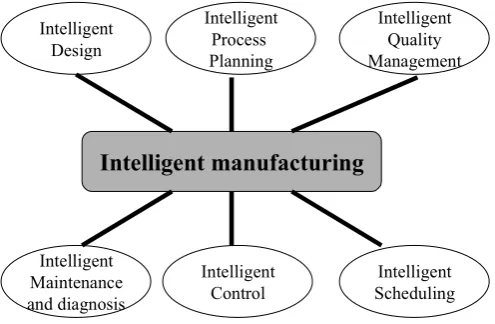
Figure 1: Components of an intelligent manufacturing systems (adapted from (Rao, 1993))
Intelligent design
The importance of product design is undeniable. A firm's products or services are typically the primary source and focus of contact with its customers, and the development of new designs plays a key role in establishing and maintaining a competitive position for most firms. There are many problems in design manufacturing systems. A review of the problems encountered in manufacturing systems can be found in (Kouvelis, 1992). In this paper, process design is also included in intelligent design.
Intelligent process planning
Intelligent process planning is a dynamic and complex activity. Process planning provides a detailed description of manufacturing capabilities and requirements for transforming a stock of raw material into a completed product (Requicha and Vandenbrande, 1988). Intelligent process planning include Computer-Aided Process Planning (CAPP) and facility and location layout. Process planning is the interface between Computer-Aided Design (CAD) and Computer-Aided Manufacturing (CAM). CAPP is vital to achieving the ultimate goal of complete integrated factories of the future. A CAPP system contains a large amount of knowledge that includes rules about arranging machine operations and facts about the machine shop. Inventory management is also considered under this section because successful inventory management is essential for successful manufacturing and requires sophisticated methods to cope with the continuously changing environment. Literature is rich with papers about theoretical independent demand inventory modelling but practice lags behind these developments. AI can play an important role in aiding practitioners to implement such models and also to overcome the problems associated with managing large-scale inventories
Intelligent quality management
Quality management has evolved from a focus on inspection through quality control techniques such as statistical process control (SPC) and through quality assurance to current total quality management (TQM) (Proudlove et al., 1997). More organisations are involving customers in the early stages of design to assure quality and a market for
Intelligent manufacturing
Intelligent Design
Intelligent Maintenance and diagnosis
Intelligent Process Planning
Intelligent Quality Management
Intelligent Scheduling Intelligent
their products. Zhang and Huang (1995) stated that there are two approaches to quality assurance: reactive quality assurance and proactive quality assurance. Reactive tools include sampling plans, lot acceptance determination, scrap or rework analysis etc. Proactive strategy requires an emphasis on physical cause-effect knowledge, risk analysis, experience and judgement.
Intelligent maintenance and diagnosis
The goal of fault diagnosis is to detect the faults and their causes early enough, so that failure of the overall system can be avoided. From the fault-detection point, faults are divided into three categories, actuator faults, component faults, and sensor faults. The basic task of fault diagnosis is to detect the faults that occur, and to provide information about their size and source (Frank and Koppen-Seliger, 1997). Three steps need to be taken in fault diagnosis: signal generation, fault classification and evaluation, and fault analysis. See (Frank and Koppen-Seliger, 1997) for a survey on the use of AI techniques in fault diagnosis.
Maintenance management and planning is a fundamental component of successful manufacturing operations. Scheduling preventive maintenance activities is an important aspect of maintenance management and it is particularly challenging for large and complex systems with many thousands of components. There are some useful commercial software packages for optimising maintenance activities available in the market (Dekker, 1996). However, most of these software packages have restrictive applicability since they are usually developed for very specific tasks. Dhaliwal (1986) and Kobaccy (1992) suggested the development of an approach for maintenance decision support that combines optimisation models and artificial intelligence techniques. Since then several attempts have been made to develop such systems.
Intelligent scheduling
Scheduling is a resource allocation problem subject to allocation and sequencing constraints. It is an optimisation problem. The objective in optimisation is to allocate a limited amount of resources to a set of tasks such that cost functions are optimised.
Intelligent control
The basic objective of control is to provide the appropriate input signal to a given physical process to yield the desired response. It is a complex process that continues to require human intelligence to ensure proper operation.
I TELLIGE T DESIG
This section reviews the use of AI techniques in intelligent design.
Knowledge based systems
number of KBS were used in the electronic engineering field. A survey of the applications developed before 1993 can be found in (Rowland and Jain, 1993). In the same period, KBS were also used for the design of circulating fluidised bed boiler’s (Mitra et al., 1993) and for designing computer network topologies (Pierre, 1993).
Basu et al. (1995) used an expert system for the design of manufacturing cells. The starting point for the expert system is the initial solution generated by traditional mathematical techniques. Based on a flexible set of user-driven quantitative and qualitative factors, the expert system evaluates these preliminary solutions for feasibility and quality. If the solutions are not satisfactory, the system suggests modifications. The trend of using KBS for manufacturing design has continued throughout the 90’s. Recently, KBS were used for concurrent engineering in metallurgy component design, materials selection, powder packing and compaction (Smith and Midha, 1999).
eural networks
The product design process can be modelled as a mapping from a function space to a structure space to a physical space (Kumara and Kamarthi, 1991). An experienced human designer is usually aware of the structures that satisfy a particular set of functions. In his/her memory the designer may have stored the representations of a number of design solutions. By association, the designer can selectively retrieve those designs. Neural networks are very well suited for modelling the human associative memory (Zhang and Huang, 1995) and this has attracted a lot of research on the application of NNs for product design.
Gunasekera et al. (1998) used a neural network model for the flat rolling process. The neural network was based on the backpropagation paradigm. A nonlinear mathematical model based on the slab method was developed to guide and supervise the learning procedures. Neural Networks have been used in the design of cellular manufacturing systems. Rao and Gu, (1995) used a multilayered neural network to configure and alternate cell designs by considering multiple constraints and objectives. Kusiak and Lee (1996) constructed a three layer NN for designing a cellular manufacturing system that integrates several manufacturing functions.
Genetic algorithms
Bos (1998) used a procedure based on the combination of a genetic and a gradient-guided optimization algorithm for the design of a second-generation supersonic transport aircraft. Karafyllidis (1999) has developed a method for designing a dedicated processor, which executes a cellular automaton algorithm that simulates the photolithography process. Starting from a cellular automaton with a continuous state space which simulates the photolithography process, the genetic algorithm is used to find a cellular automaton with discrete state space, having the smallest possible lattice size and the smallest possible number of discrete states, the results of which are as close as possible to the results of the cellular automaton with continuous state space. The dedicated processor that executes the discrete cellular automaton algorithm was designed to the level of a silicon compiler output.
Fuzzy logic
Optimising the efficiency in cutting a sculptured surface using numerically controlled machining techniques needs to carefully consider the relationship between cutting edges and surface geometry. A fuzzy basis material removal optimisation approach is suggested by Ip (1998) to compensate the variation of cutting speed due to the change of gradient on the sculptured surface in machining process. Fuzzy modeling is used for the Penicillin-G conversion process (Babuska et al., 1999). A linguistic fuzzy model, which represents the kinetic term of the conversion, is developed from experimental data by means of fuzzy clustering
Case based reasoning
The frequent use of past experience by human engineers when solving new problems has led to an interest in the use of case based reasoning (CBR) to help automate engineering design. Purvis and Pu (1998) developed a constraint based methodology for case combination. The methodology is implemented in a case based reasoning system called COMPOSER and has been tested in two design domains: assembly sequence design and configuration design. Gao
et al. (1998) used CBR for mechanical plan systems design. Design plans are stored as the actual cases in the CBR system. CBR is used for the design of bar linkages (Bose et al., 1997), Fixture design (Sun and Chen, 1995).
A product may have different ways of disassembly and experience is important during disassembly if we want to satisfy goals such as part reuse, recycle or discard. Zeid et al. (1997) have proposed a CBR approach to solve design for disassembly (DFD) problem.
Hybrid systems
Chen et al. (1998) have developed an integrated expert system that consists of a knowledge base, a database, pattern-recognition, ANN, and GA modules for complicated chemical reaction systems used to prepare industrial materials. The system has been used in many applications including the production of alloy steel, synthetic rubber, ceramic materials production and materials design of composite materials, high temperature (Tc) superconductors, and ceramic semiconductors.
Lee et al. (1999) have developed a fuzzy non linear programming model to optimise machining operations. It uses fuzzy logic together with traditional mathematical programming to make a more flexible, reliable and acceptable model. In addition, the model can consider the qualitative viewpoint of the decision maker. The model also uses a NN model which can be used to assess the machinability of the machining operations. The output from the fuzzy non-linear programming model provides the input for the NN model.
A material design system has been developed, utilising mathematical modelling and knowledge-based approaches by Shivathaya and Fang (1999). The Knowledge-Based System (KBS) generates about 15-30 different target compositions for steelmaking for each customer order. Fuzzy logic is applied in the system for the design of steel plates, to rank the alternative target compositions for steelmaking according to the degree to which they will satisfy customer's requirements.
I TELLIGE T PROCESS PLA I G
Knowledge based systems
By 1993, a large number of expert system had been developed to assist process planning. An early survey on the use of expert systems in process planning was carried out by Alting and Zhang (1989) while a more recent survey was carried out by Kiritsis (1995). The maturity of the use of expert system in process planning has pushed some researchers to look at the development of tools to build expert system for process planning (Eskicioğlu, 1992). Wong and Siu (1995) used an expert system for automatic process selection and sequencing. This process selection and sequencing algorithm comprises three sub-algorithms, the transformation algorithm, the refinement algorithm and the linearization algorithm. The module is a part of a prototype expert process planning system for the machining of prismatic parts. Pande and Desai (1995) used an expert system (EXTURN) for the process planning of rotationally symmetric components manufactured on single spindle automats. The ES comprises an interactive graphical feature modeller and process planning modules for operation extraction, sequencing, tool selection, and process plan generation.
eural networks
The learning ability of NNs provides a promising approach for automated knowledge acquisition and can be advantageously used in the building of automated process planning systems.
The application of perceptron-type neural networks to tool-state classification during a metal-turning operation is reported by Dimla (1999). The inputs to the networks consist of descriptive, independent and different source process parameters of the cutting process. The cutting conditions were fused with the process parameters, and a single network output defined the tool state.
Genetic algorithms
Mauridou and Pardolos (1997), have carried out a comprehensive survey on the use of genetic algorithms for facility layout. GAs have been successfully used in layout design (Suresh et al., 1995, Gupta et al., 1996 and Rao et al., 1999), and have been shown to outperform human and KBS designs (Hamamoto, 1999). Parallel GAs were also used to solve the layout problem with geometric constraints (Tam and Chan, 1998). Hamamoto (1999) integrates GAs with an embedded simulation model to tackle the facility layout problem for pharmaceutical factories. The proposed method allows the user to specify objectives for each particular case and generate layouts that achieve those objectives. The experimental results show that the proposed model outperforms all existing computer layout algorithms such as CRAFT, LORELAP and LOCPPLAN.
Bhaskara et al. (1999) demonstrates the application of GAs as a global search technique for a quick identification of optimal or near optimal operation sequences in a dynamic planning environment. The approach uses a precedence graph based on various manufacturing constraints, generates a precedence cost matrix using production rules and applied GAs to arrive at optimal or near optimal sequences.
Fuzzy logic
and are often determined in the form of a closeness rating. Subjective weights are often used with closeness measures when determining criterion based scores to determine the layout of departments or machines. Fuzzy set theory effectively models facility layout and location by incorporating subjectivity in the parameters used by the models (Guiffrida, 1998). Fuzzy set theory has also been applied in inventory production and process plan selection. Inventory management requires demand forecasts as well as parameters for inventory-related costs such as carrying, replenishement, shortages and backorders (Guiffrida and Nagi, 1998). Precise estimations of these parameters are difficult.
Dweiri and Meier(1996), defined a fuzzy decision-making system (FDMS) consisting of four principle components: (1) fuzzification of input and output variables; (2) the experts' knowledge base; (3) fuzzy decision making and (4) defuzzification of fuzzy output into crisp values. The analytical hierarchy process is used to weight factors affecting closeness ratings between departments.
Case based reasoning
BenArieh and Chopra (1997) describe a process planning system that utilises case-based reasoning. The system, CBPlan, uses a feature-based part representation as a key to the case library. Champati et al. (1996) also used a CBR approach for the automated sequencing in intelligent process planning.
Hybrid systems
Malakooti et al. (1995) developed a monitoring and supervising system for machining operations using in-process regression for monitoring and adaptive feedforward artificial neural networks for supervising. The monitoring system predicts tool life by using different sensors for gathering information based on a regression model that allows for the variations between tools and different machine setups. The regression model makes its prediction by using the history of other tools and combining it with the information obtained about the tool under consideration. The supervision system identifies the best parameters for the machine setup problem within the framework of multiple criteria decision making. Ming (1999) has combined expert systems and NNs to develop a CAPP system.
Kobbacy and Liang (1999) presented a serious attempt at developing intelligent inventory management system. The system has an appropriate knowledge scope and focuses on the interrogation of the historical data rather than on asking the user to describe the system under analysis. The system first identifies a demand pattern based on the analysis of history data then it uses its model selection rule base to select an appropriate model from the model base. Other attempts have been made to use AI in managing dependent demand inventories. Notably several applications have been published in the area of Just in Time (JIT) including the work of Fielder et al (1993 ), Rixen et al(1995) and Ettl and Schwehm (1995). A wider discussion can be found in the review of Proudlove et al (1998)
I TELLIGE T QUALITY MA AGEME T
This section reviews the use of AI techniques in manufacturing quality management.
Statistical quality control (SQC) is one of the most effective tools for ensuring quality products and services by means of control charts. The interpretation of chart patterns, trends and associated diagnosis require expert knowledge. Quality control expert systems are used to help solve these problems and also to provide non specialised staff involved in quality with expert knowledge. A good review of expert systems used in quality control up to 1992 can be found in (Kuo and Mital, 1993). Deslandres and Pierreval (1995) developed SYSMIQ, a knowledge-based advisory system for quality control to assist decision-makers in selecting the best quality tools and techniques and correctly apply them on the shop floor.
eural networks
Reactive quality assurance is strongly related to monitoring and diagnosis. Therefore NNs can play an important role, especially where high processing and classification capabilities are required (Zhang et al., 1996). NN techniques can also be used in proactive quality assurance.
NNs have been used for fault diagnosis in hydraulic forging presses (Lin et al., 1995b). The technical descriptions of the presses and the 47 major possible faults are presented. For diagnosing these faults, a back propagation NN was utilised and provided 99% accuracy in identifying causes of the failures of hydraulic forging presses. Chinnan and Kolarik (1997) proposed the use of NNs for optimising the controllable variables of a process to achieve real-time quality control.
Genetic algorithms
There is little work reported on the use of fuzzy logic for quality. Gill and Bector (1997) used a fuzzy linguistic approach to quantify part feature information for the part family formation problem.
Fuzzy logic
In early research, Fuzzy Logic (FL) was mainly used in acceptance sampling and statistical process control (Chakraborty, 1992&1994, Kanagawa and Ohta, 1990 and Kanagawa et al., 1994, Wang and Chen, 1995). In more recent research, fuzzy logic is used in quality topics such as quality improvement and quality function deployment (QFD) (Gutierez and Carmona, 1995, Khoo and Ho, 1996, Yongting, 1996, Wang, 1999 and Chan et al., 1999).
in the mind of the customers are examples of parameters that support the use of fuzzy logic to model quality. QFD consists of many phases and the first one translates customer needs for a product into technical measures. Chan et al.,
(1999) proposed a fuzzy and entropy method to obtain the final importance rating of the customer needs. The ratings form the basis for the company to make the product more attractive to customers and thus more competitive. The fuzzy method is used to convert the customers' importance assessments of the needs to fuzzy members and the relative importance ratings of the customer needs are then obtained using fuzzy arithmetic. The paper concludes that the proposed approach shows clearly the consistency of QFD with multiple criteria decision making (MCDM) in determining the relative importance ratings of customer needs. Fuzzy logic is also used by Fung et al. (1999) to analyse customer requirements.
Wang (1999) considers QFD planning as a multi-criteria decision problem and proposes a fuzzy outranking decision model to prioritise design requirements recognised in QFD. The inputs of QFD are represented with the linguistic terms of fuzzy sets, which are appropriate for characterising imprecise and uncertain product information. Fuzzy outranking relations based on the possibility theory is used to model the imprecise preference relations found in design requirements. The purpose of the model is to achieve customer satisfaction and a balanced design of the product.
Case based reasoning
Malek et al. (1998) developed an operator support system to help and guide the operator in decision making during the control of the plastic injection moulding process. The main objective was to increase the quality during
production. The approach used a CBR and learning system.
I TELLIGE T MAI TE A CE A D DIAG OSIS
The use of Ai techniques in maintenance and diagnosis is reviewed in this section.
Knowledge based systems
For maintenance, several systems have been developed to tackle specific industrial applications. For example Clark et al (1992) developed a knowledge-based system to optimise the building management maintenance and Batanove et al (1993) developed EXPERT-MM: a KBS for maintenance management for a large manufacturing company. A more general approach based on knowledge-based reasoning was adopted by Kobaccy et al (1995) and Zhang and Jardine(1997). Kobbacy et al (1995) developed IMOS, a prototype intelligent maintenance optimisation system aimed at developing and enhancement of preventive maintenance routines for large and complex industrial systems. IMOS has a rule base for selecting an appropriate model for application based on identification of maintenance data pattern. Zhang and Jardine(1997) proposed a similar smart system for data-analysis models and optimising replacementage.
eural networks
The fault identification process is essentially a pattern recognition procedure in which the analysed signals are used to make a decision. NNs, which have learning and self-organising abilities, can be advantageously used in pattern recognition. NNs have been widely used in monitoring and diagnosing (Zhang and Huang, 1995).
Lately, NNs have been suggested as alternatives to state process charts, and shown to exhibit superior performance in detecting non-random patterns (Chang and Ho, 1999). Researchers are working to combine monitoring of process means with monitoring of process variance (e.g. Chang and Ho, 1999, Ho and Chang, 1999, Dedeakayogullari and Buma, 1999). The ability of NNs to detect several patterns occurring simultaneously is also being investigated (Guh and Tannock, 1999).
NNs have been used for matching stereoscopic pictures and correcting 3D measurement error (Tien and Chang, 1999) extending earlier work by Su et al. (1995) and identifying product defects (e.g. Kim and Kumara, 1997; Wang and Huang, 1997). A feed forward NN has been used for manufacturing diagnosis by Ransing and Lewis (1997).
Fuzzy logic
Fault identification can be seen as a classification problem. The task is to match each pattern of the symptom vector with one of the preassigned classes of faults. The principle of fault evaluation using fuzzy logic consists of a three-step process. First the symptoms have to be fuzzified, then they have to be evaluated by an inference mechanism using fuzzy IF-THEN rules, and finally they have to be defuzzified (Frank, 1997). The fuzzification of the signals is a mapping of the representation using crisp values into a representation by fuzzy sets. With the aid of a fuzzy relation, the set of the fuzzified signals is transformed into a set of fuzzy statements (faults). Finally, the fuzzy information on the faults has to be converted into crisp sets such as yes-no statements. Khoo et al. (1999) propose the use of fuzzy logic techniques rather than NNs, which require long training times and large amounts of data, or KBS, which are domain dependent and have difficulty dealing with novel situations.
Case based reasoning
Hybrid Systems
Analysis of a typical large data file in IMOS (Kobbacy et al 1995) shows that about two thirds of components cannot be modelled. Mostly because of an insufficient number of history records needed for model selection. Some of the cases which could not be modelled may have parameters with values close to those of a model’s acceptance level which have been based on arbitrary expert judgement.
Jeon (2000) developed a hybrid intelligent maintenance optimisation system (HIMOS) for decision support which aims at overcoming the problems of IMOS. The key to this analysis is the application of intelligent judgement in selecting the most suitable model from a model-base utilising a hybrid knowledge/case based system (KBS/CBR). Thus initially a rule base is applied to select a model. If no model is matched, the system reverts to its historical case-base to match the current case with a similar case that has been previously modelled. This double reasoning adds to the system’s true learning capabilities (intelligence) and increases the rate of success of model selection significantly. Labib et al (1997) used fuzzy logic combined with a rule base to develop an ‘Intelligent Maintenance Model’ which is applied to a manufacturing company to identify the most critical machines and determine appropriate maintenance action.
I TELLIGE T CO TROL
This section summarises the use of AI techniques in control.
eural networks
Neural networks have several unique characteristics that allow them to perform some of the complex process control tasks that are traditionally reserved to humans (Zhang and Huang, 1995). Neural networks can (Hall and Lu, 1992): (1) be used to accurately represent response surface models of complex processes,
(2) emulate the abilities of humans to incorporate new knowledge into existing models, providing the capability for self improvement and adaptation,
(3) emulate human abilities to reason from a general model to a specialised case, making human-like assumptions when faced with incomplete data,
(4) emulate human knowledge fusion capabilities by forming a single, coherent process model from a variety of partial knowledge sources.
Hao et al. (1995) used a neural network approach in real-time control of flexible manufacturing systems. A hierarchical manufacturing controller, consisting of two NN structures, was used. The first NN participates in the feasibility analysis, and the other, at the lower level, in the process of dispatching and control.
Genetic algorithms
Lenon (1999) discusses a variety of genetic adaptive control methods, and gives an extensive comparative analysis of their performance relative to conventional adaptive control techniques. Ong and Khoo (1999) used a GA for optimising the sequence of component placements onto a printed circuit board and the arrangement of component types onto feeders simultaneously.
Fuzzy logic
Caprihan et al. (1997) used a fuzzy system for the control of flexible machines operating under information delays The system comprises a flexible machine capable of processing two different part types and operating under an on-line control system.
Hybrid systems
Suresh et al. (1999) proposed a pattern recognition approach based on a fuzzy ART neural network for rapid scanning of families of parts having a similar sequence of operations. First a representation schema for operation sequencing was developed and the fuzzy ART NN was modified to suit this application.
Filipic et al. (1999) combined machine learning and evolutionary optimisation in learning to control a physical device. The knowledge is first made explicit by means of machine learning, and then a genetic algorithm is used to improve the control performance with respect to chosen criteria. This hybrid control-synthesis scheme was tested in swing control on a model of a container crane. It has proved successful in reducing thenumber of trials needed for optimisation, which is especially important when dealing with physical devices. Vishnupade (1996) used NNs and fuzzy logic for the control of manufacturing systems. The underlying nonlinear process is modelled by artificial NNs and process control is performed by fuzzy logic. Fuzzy rules are automatically generated from the trained NN.
Ortega et al. (1998) propose the use of a fuzzy logic and GAs to develop a control system for provision of spacecraft servicing to a space station which comprises the tasks of assembly, resupply, repair and maintenance of manufactured space parts in-orbit. The geno-fuzzy controller is a knowledge-based controller that performs the closed-loop operations autonomously. It produces smooth control actions in the proximity of the target and during the docking, to avoid disturbance torques in the final assembly orbit. A GA is used to optimise the controller so as to reduce docking time and fuel consumption.
I TELLIGE T SCHEDULI G
eural networks
rich class of optimisation problems (Zhang and Huang, 1995). NNs have been successfully applied to the solution of constrained optimisation problems. The scheduling problem can be solved using NNs to reduce the computational complexity. It is argued by Grabot (1998) that providing a feasible schedule is not sufficient anymore. Human expertise becomes necessary in order to improve the provided solution. This improvement requires the definition of synthetic performance indicators allowing the assessment of a schedule before choosing improvement actions. A hierarchical structure of performance indicators is suggested to aggregate the degree of satisfaction of elementary objectives, thus allowing the definition of a compromise between these elementary objectives. NNs have been tested in order to emulate the expertise involved in the definition of such compromise.
Genetic algorithms
Candido (1998) used a GA to solve job scheduling problems with many constraints such as jobs with several sub-assembly levels, alternative processing plans for parts and alternative resources for operations, requirements of multiple resources to process an operation, resource calendar, batch overlap and sequence dependent setups. The system uses modified schedule generation algorithms to obtain a set of initial solutions. Each initial solution is enhanced by a local improvement procedure. Then a hybrid genetic algorithm which incorporates a local hill climbing procedure is applied to the set of local optimum schedules. Webster (1998) used a GA for scheduling jobs about an unrestricted common due date on a single machine. The objective is to minimise total earliness and tardiness cost where early and tardy penalty rates are allowed to be arbitrary for each job.
Lam et al. (1999) used GAs for a scheduling problem encountered in a semi-conductor manufacturing company where the time for designing products needs to be minimised. The paper supports the view that GAs can provide near optimal solutions to problem instances that are too large to model otherwise but are nevertheless present in a wide variety of industrial scenarios. Min and Cheng (1999) have used GAs for the identical parallel machine scheduling problem for minimising the makespan.
Fuzzy logic
Fuzzy techniques have been suggested to adapt the preference levels of the multiple objectives present in many scheduling problems, in response to dynamic changes in the environment such as unexpected rush orders and unavailable resources (Yu et al., 1999).
Case based reasoning
Using CBR in scheduling involves the definition of a scheduling problem, then search and retrieval of a case similar to it and finally building a new schedule. Cunningham and Smyth (1997) explored the components of a scheduling system using CBR. The authors started first by providing a solution to the travelling salesman problem and then to a single machine scheduling problem with sequence dependent setup times. Coello and DosSantos (1999) used CBR and heuristic search for a real-time scheduling system. The problem addressed involves scheduling sets of tasks with precedence, ready time and deadline constraints.
Hybrid systems
Szelke and Markus (1997) combined machine learning techniques and CBR to solve the shop floor scheduling problems. Kim et al. (1998) used an integrated approach of inductive learning and competitive NNs for developing multi-objective FMS schedulers. The FMS scheduler can assist the operator to make a decision in real time, while satisfying multiple objectives desired by the operator. Lee et al. (1998) combined GAs and machine learning to develop a job shop scheduling system. The idea was to generate empirical results using machine learning for releasing jobs into the shop floor and a genetic algorithm to dispatch jobs at each machine.
F
F
U
U
T
T
U
U
R
R
E
E
[image:18.595.65.545.690.764.2]Table 2 summarises the published papers referred to in this paper classified by manufacturing processes and AI techniques used. This table shows that there are some areas that are well researched such as the use of fuzzy logic in maintenance, neural networks in diagnosis and genetic algorithms in process planning. However, there are many areas where more research is needed. There is little work reported on the use of neural networks in process planning, fuzzy logic in process planning, maintenance and diagnosis, control and scheduling. There is also little work on the use of genetic algorithms in design and quality. There is nearly no attempt in using CBR in quality, maintenance and control. These are the areas we believe artificial intelligence should concentrate in the future to further improve manufacturing. Other technologies that can also improve manufacturing are intelligent agents, the World Wide Web and Virtual Reality. The impact of these new technologies is addressed in the next two subsections. In the application area side, to give a realistic view of current manufacturing systems, future systems should consider environment, health and safety issues.
Table 2: Summary of the papers referred to in this paper classified by manufacturing processes and AI technique used
Design Process Planning
Quality Maintenance & Diagnosis
Control Scheduling
Knowledge-based Systems
Basu et all.
(95), Chon et al. (93), Mitra
et all. (93),
Eskicioğlu (92), Pande & Desai (95), Wong
Desl&res & Pierreval (95)
Arslan et all.
(93), Batanov et all. (93), Clark et all. (92),
Rowland & Jain (93), Smith & Midha, (99),
& Siu (95) Fujikawa & Ishii (95), Kobbacy (92), Pandelidis & Kao (90), Rowland & Jain (93) Neural Networks Christodoulou & Gaganis (98),
Gunasekera et all. (98), Gunes et all.
(99), Kusiak & Lee (96), Rao & Gu (95),
Dimla (99) Chinnan & Kolarik, (97), Guh & Tannock (99), Zhang
et all. (96)
Chang & Ho (99),
Dedeakayogullari & Buma (99), Ho & Chang (99), Kim & Kumara (97), Lin et all. (95b), Ransing & Lewis (97), Su et all. (95), Tien & Chang (99), Wang & Huang (97), Wei (99)
Acosta et all.
(99), Hall & Lu (1992), Hao et all. (95), Sung & Choung, (99)
Chen & Muraki (97), Grabot (98), Rovithakis
et all. (99)
Fuzzy Logic
Babuska et all. (99), Ip, (98), Masnata & Settinesi (97),
Dweiri & Meier (96)
Chan et al. (99), Chan &. Lau (99), Fung etal. (99), Glushkovsky, & Florescu, (96), Gutierrez & Carmona (95), Khoo & Ho. (96), Wang & Chen, (95), Wang (99), Yongting (96)
Khoo et all. (99) Caprihan et all.
(97)
Shipley et all. (96), Yu
et all. (99)
Genetic Algorithms
Bos (98), Scott et all. (99),
Bhaskara Reddy et all.
(99), Dutta & Yip-Hoi (96), Gupta
et all. (96), Hamamoto et all. (99), Morad & Zalzala (99), Rajasekharan
et all. (97), Rao et all. (99), Suresh
et all. (95), Tam & Chan (98)
Gill & Bector (97), Vancza & Markus (91)
Fushuan & Chang (98), Garrell et all.
(99), Rojas-Guzman & Kramer (94)
Lennon & Passino (99), Ong & Khoo (99)
Candido et all. (98), Jawahar et all. (98), Lam et al. (99), Min & Cheng (99), Uckun et all. (93), Webster et all. (98)
Case-based Reasoning
Bose (97), Gao et all.
(98), Hua et all. (96), Manfaat (97), Purvis & Pu
Ben-Arieh & Chopra (97), Champati et all. (96)
Malek et al.(98)
(98), Sun & Chen (95), Zeid et all. (97), Shii, (97)
MacCarthy & Jou (96)
Hybrid Systems
Chen et all.(98), Lee
etal. (99), Shivathaya & Fang (99), Ettl & Schwehm (95), Kobbacy & Liang (99), Malakooti et all. (95), Ming et all. (99), Rixen
et all. (95)
Leger et all. (98), Wen and Chang (99), Kobbacy (92), Kobbacy et all. (95), Zhang & Jardine(97), Labib et al. (98)
Filipic et all.
(99), Ortega & Giron-Sierra (98), Santa et al. (99), Suresh
et all. (99), Vishnupad, (96)
Kim et all. (98), Lee, et all. (98), Szelke & Markus (97)
Integration and Intelligent Agents
Much of the work on intelligent systems is at a research and prototype stage, and so is naturally on a relatively small scale. A danger of isolated small-scale efforts is a tendency to compartmentalise the operations area and as a result design systems which aim for local solutions to sub-problems. Rodd (1992) and Kopacek (1999) state that integration will be the main task facing manufacturing systems in the future. Some attempts are made to integrate some components of the manufacturing system. There is some work on the integration of computer-integrated process planning and scheduling (Aldakhilallah and Ramesh (1999), Morad and Zalzala (1999). Morad and Zalzala have integrated process planning and scheduling using genetic algorithms. The scheduling problem is extended to include process planning. The scope of consideration of the alternative machines includes different capabilities and cost to operate, as well as different capabilities and cost to operate and different processing times. The scheduling problem is formulated as a multi-objective problem with the objectives of minimising makespan, minimising total number of rejects and minimising total processing cost.
Intelligent agents are seen as the solution for integration (Kopacek, 1999). Intelligent agents are used in distributed AI. They allow the co-ordination of local AI systems distributed throughout the manufacturing process (i.e. production, scheduling, inventory and maintenance etc.) and through the business as a whole (e.g. marketing, product design, operations, finance and personnel etc.). Negotiation between the separate AI systems, each with their own set of local optima or preferences, enables the selection of policies more closely aligned to the objectives of the manufacturing function and /or business as a whole (example, Lee and Lau, 1999). AARIA project (Baker et al., 1999) explores how agent technology can combine distribution with the Internet's global communications infrastructure to make virtual manufacturing more cost-effective than existing, centrally managed operations. Mutarana et al. (1999), proposed MetaMorph, an adaptive agent based architecture for intelligent manufacturing.
Advance in technology
as the future window shopping for businesses. This new approach to business is commonly known as E-Commerce. The WWW is also promising for distributed manufacturing.
Virtual manufacturing is another new approach to manufacturing. It requires a robust information infrastructure that comprises rich information models for products, processes and production systems. The decreasing costs of hardware have made virtual environments increasingly popular and are used in many fields. Virtual reality (VR) can be applied for most components of the manufacturing process. In design VR will support detailed and accurate design activities and will provide sophisticated means of manipulating shape and form represented by the virtual models. Nakayasu et al. (1999) have used VR for design and production of metal sheet. Virtual manufacturing (VM) is expected to support assessing the manufacturability of a candidate design and to provide accurate estimates for processing times, cycle times and costs as well as product quality. This is because VM will be able to model both the processes employed for the product's manufacture and the production process (Lin, 1995). VM may play a significant role in distributed manufacturing and is expected to support distributed design. VM can provide details and information about, process, production, and shop floor control to be shared over networks.
From the hardware side, computer performances keep improving and this will result in more powerful applications and automations in manufacturing. Robots will be needed and the research in robotics will be dominated by two directions (Kopacek, 1999). Additional features such as combined force and position control, external sensors based on microsystems, flexible and lightweight structures need to be added to robots used in classical applications. Another type of robot that need to be developed for the next generation are service robots. Service robots are characterised by the following facilities: mobility, portability, operating case, sensing, learning, judging function and adaptability (Kopacek, 1999). In an invited paper, Burdea(1999), reviewed how robotics and VR can be integrated . VR-enhanced CAD design, robot programming, and plant layout simulation were considered.
Environment, Health and Safety
Back in 1989, clean manufacturing was one of the six cases defined by the Intelligent manufacturing initiative (Kopacek, 1999). Recently, concern for the environment has led many manufacturing industries to take a proactive role in clean manufacturing. Sustainable development, where the waste from one process becomes the raw material for another, is used to achieve clean manufacturing (Young et al., 1997). Tools to help manufacturing engineers and environmental reviewers to assess the consequences of their manufacturing decisions are also developed, example Eco_Sys ( Kleban et al., 1996). Work on process planning for environmentally conscious machining can be found in (Srinivasan and Sheng, 1999a and b).
To conclude, this review shows that the use of AI in design, planning, quality management, maintenance, control, and scheduling can result in significant gains in these particular component areas of manufacturing. The continuing demands of the manufacturing industry will necessitate the development of AI to facilitate more integrated, and holistic manufacturing systems.
REFERE CES
Acosta, L., Marichal, G.N., Moreno, L., Rodrigo, J.J, Hamilton, A., Mendez, J.A (1999), “A robotic system based on neural network controllers”, Artificial Intelligence in Engineering, 13(4), pp. 393-398
Aldakhilallah, K.A. and Ramesh, R. (1999), “Computer-integrated process planning and scheduling (CIPPS): intelligent support for product design, process planning and control”, International Journal of Production Research, 37(3), pp. 481-500.
Alting, L. and Zhang, H.C. (1989), “Computer aided process planning: the state of the art survey”, International Journal of Production Research, vol.27, pp. 553-585.
Arslan, T.S., Bottaci, L. and Taylor, G.E. (1993), “A fault dictionary based expert system for failure diagnosis in a multiple-PCB environment”, Engineering Applications of Artificial Intelligence, 6(5), pp. 447-456.
Azlan, H.M. (1999), “Review of the applications of neural networks in chemical process control - simulation and online implementation”, Artificial Intelligence in Engineering , 13(1), pp. 55-68
Babuska, R., Verbruggen H.B. and Van Can, H.J.L.(1999), “Fuzzy modeling of enzymatic penicillin-G conversion”,
Engineering Applications of Artificial Intelligence,12(1), pp. 79-92.
Baker, A.D., Parunak, H.V. and Erol, K. (1999), “Agents and the Internet: Infrastructure for mass customization”,
IEEE Internet Computing, 3(5), pp.62-69
Batanov, D.B., Nagarur, N. and Nitikhunkasem, P. (1993), “EXPERT-MM: A knowledge-based system for maintenance management”, Artificial Intelligence in Engineering, Vol. 8, pp.283-291.
Batanov D.N. (1998), “Industrial applications of knowledge-based/expert systems”, Computers in Industry 37(2), pp.83-85
Basu, A., Hyer, N. and Shtub, A. (1995), “An expert-system based approach to manufacturing cell design”,
International Journal of Production Research, 33(10), pp.2739-2755
Ben-Arieh, D. and Chopra, M. (1997),
“
A case-based NC code generating system for prismatic parts”, International Journal of Production Research, 35(7), pp. 1925-1944Bhaskara Reddy, S.V., Shunmugam, M.S. and Narendran, T.T. (1999), “Operational sequencing in CAPP using genetic algorithms”, International Journal of Production Research, 37(5), pp. 1063-1074.
Borchelt, R.D. and Thorson, J. (1997), “Toward reusable hierarchical cell control software”, International Journal of Production Research, 35(2), pp. 577-594.
Bos, A.H.W (1998), “Aircraft conceptual design by genetic/gradient-guided optimization”, Engineering Applications of Artificial Intelligence, 11(3), pp. 377-382.
Bose, A., Gini, M. and Riley, D. (1997), “A case-based approach to planar linkage design”, Artificial Intelligence in Engineering, 11(2), pp. 107-119
Candido, M.A.B., Khator, S.K, and Barcia, R.M. (1998), “A genetic algorithm based procedure for more realistic job shop scheduling problems”, International Journal of Production Research, 36(12), pp. 3437-3457
Caprihan, R., Kumar, S. and Wadhwa, S. (1997), “Fuzzy systems for control of flexible machines operating under information delays”, International Journal of Production Research, 35(5), pp. 1331-1348.
Chakraborty, T.K. (1992), “A class of single sampling plans based on fuzzy optimisation”, Operations Research, 25(4), pp. 11-20
Chakraborty, T.K. (1994), “A class of single sampling inspection plans based on possibilistic programming problem”, Fuzzy Sets and Systems, 63(1), pp. 35-43.
Champati, S., Lu, W.F., and Lin, A.C. (1996), “Automated operation sequencing in intelligent process planning: a CBR Approach”, The International Journal of Advanced Manufacturing Technology, 12(1), pp. 21-36
Chan, L.K., Kao, H.P., Ng, A. and Wu, M.L. (1999), “Importance of customer needs in quality function deployment by fuzzy and entropy methods”, International Journal of Production Research, 37(11), pp. 2499-2518.
Chan, C.W. and Lau, P. (1999), “Representing user preference in engineering design domains using an enhanced weighted fuzzy reasoning algorithm”, Artificial Intelligence in Engineering, 13(1), pp.1-10
Chen, W. and Muraki, M. (1997), “An action strategy generation framework for an on-line scheduling and control system in batch processes with neural networks”, International Journal of Production Research, 35(12), pp. 3483-3507
Coello, J.M.A. and DosSantos, R.C. (1999), “Integrating CBR and heuristic search for learning and reusing solutions in real-time task scheduling”, Lecture otes In Artificial Intelligence, Vol.1650, pp.89-103
Cunningham, P. and Smyth, B. (1997), “Case-based reasoning in scheduling: reusing solution components”, International Journal of Production Research, 35(11), pp. 2947-2962
Hang, S.I., Tsujimura, Y. Gen, M. and Tozawa, T. (1995), “An efficient approach for large scale project planning based on fuzzy Delphi method”, Fuzzy Sets and Systems, 76(2), pp. 277-288.
Chang, S.I. and Ho, E.S. (1999), “A two-stage neural network approach for process variance change detection and classification”, International Journal of Production Research, 37(7), pp. 1581-1599.
Chen, N., Li, C. and Qin, P. (1998), “KDPAG expert system applied to materials design and manufacture”,
Engineering Applications of Artificial Intelligence, 11(5), pp. 669-674.
Chinnan, R.B. and Kolarik, W.J. (1997), “Neural network-based quality controllers for manufacturing systems”,
International Journal of Production Research, 35(9), pp. 2601-2620.
Christodoulou, M. and Gaganis, V. (1998), “Neural networks in manufacturing cell design”, Computers in Industry
36(1-2), pp. 133-138
.
Chon, Y., Kim, K.I. and Kim, K. (1993), “A knowledge-based system for centrifugal fan blade design”, Engineering Applications of Artificial Intelligence, 6(5), pp. 425-435.
Clark, G., Mehta, P. and Thomson, T. (1992), “Application of knowledge-based systems to optimised building management maintenance”, Lecture otes in Artificial Intelligence, Vol. 604, pp.69-78.
Dean, B.R., Hand, S. and Kaye, M. (1997), “A cost based strategy for assessing improvements in manufacturing processes”, International Journal of Production Research, 35(4), pp. 955-968
Dekker, R. (1996), “Applications of maintenance optimization models: a review and analysis”, Reliability Engineering and System Safety, Vol. 51, pp.229-240.
Deslandres, V. and Pierreval, H. (1995), “SYSMIQ - A Knowledge-based system for assisting quality-control”,
International Journal of Production Research, 33(5), Pp.1201-1212
Dhaliwal, D.S. (1986), “The use of AI in maintaining and operating complex engineering systems, in :Mamdani, A. and Pstachion, J.E. (eds.), Expert Systems and Optimisation in Process Control, Gower technical Press: Aldershot, UK
,
pp28-33.Dimla, S. (1999), “Application of perceptron neural networks to tool-state classification in a metal-turning operation”, Engineering Applications of Artificial Intelligence, 12(4), pp. 471-477
Dutta, D. and Yip-Hoi, D. (1996), “A genetic algorithm application for sequencing operations in process planning for parallel machines”, IIE Transactions, 28, pp. 55-68.
Dweiri, F. and Meier, F.A. (1996), “Application of fuzzy decision making in facilities layout planning”,
International Journal of Production Research, 34(11), pp. 3207-3225.
Ebrahimi, M., and Whalley, R. (1998), “Machine tool syntheses in virtual machining”, International Journal of Materials & Product Technology, 13(3-6), pp.301-312
Eskicioğlu, H. (1992), “The use of expert systems building tools in process planning”, Engineering Applications of Artificial Intelligence, 5(1), pp. 33-42
Ettl, M. and Schwehm, M. (1995), “Determining the optimal partition and kanban allocation in JIT production lines”, In: Biethahan, J. and Nissen, V. (eds.). Evolutionary Algorithms in Management Applications, Springer: Berlin, pp. 139-152.
Fielder, K. Galletly, J.E. and Bicheno, J. (1993), “Expert advice for JIT implementation”, International Opns & Production Management, 13 (6), pp. 23-30.
Filipic, B., Urbancic, T. and Krizman, V. (1999), “A combined machine learning and genetic algorithm approach to controller design”, Engineering Applications of Artificial Intelligence, 12(4), pp. 401-409
Frank, P.M. and Koppen-Seliger, B. (1997), “New developments of AI in fault diagnosis”, Engineering Applications of Artificial Intelligence, 10(1), pp. 3-14.
Fujikawa, S. and Ishii, K. (1995), “Diagnostic expert systems for defect in forged parts”, Journal of Intelligent Manufacturing, 6(3), pp. 163-1733.
Fung, R.Y.K., Popplewell, K. and Xie, J. (1997), “An intelligent hybrid system for customer requirements analysis and product attribute targets determination”, International Journal of Production Research, 36(1), pp. 13-34 Fung, R.Y.K. and Popplewell, K. (1997), “An intelligent fuzzy inference model for customer requirements management”, in Kobbacy K.A.H., Vadera S. and Proudlove N.C (Eds.), Proceeding of the First European Conference on Intelligent Manufacturing Systems in Operation, Operational Research Society: Birmingham, pp. 145-153.
Fung, R.Y.K., Law, D.S.T. and Ip, W.H. (1999), “Design targets determination for inter-dependent product attributes in QFD using fuzzy inference”, The International Journal of Manufacturing Technology Management, 10(6), pp. 376-383.
Fushuan, W. and Chang, C.S. (1998), “A new approach to fault diagnosis in electrical distribution networks using a genetic algorithm”, Artificial Intelligence in Engineering , 12(1-2), pp. 69-80
Garrell, J.M., Guiu, I., Golobardes, E., Ribe, I., Bernardo, E., Mansilla, I., Llora, X. and Fabrega, I. (1999), “Automatic diagnosis with genetic algorithms and case-based reasoning”, Artificial Intelligence in Engineering,
Gao, Y.S., Zeid, I. and Bardasz, T. (1998), “Characteristics of an effective design plan system to support reuse in case-based mechanical design”, Knowledge-Based Systems, 10(6), pp.337-350
Gazen, C. and Ersoy, C. (1999), “Genetic algorithms for designing multihop lightwave network topologies”,
Artificial Intelligence in Engineering , 13(3), pp. 211-221.
Gill, A. and Bector, C.R. (1997), “A fuzzy linguistic approach to data quantification and construction of distance measures for the part family formulation problem”, International Journal of Production Research, 35(9), pp. 2565-2578.
Glushkovsky, E.A. and Florescu, R.A. (1996), “Fuzzy sets approach to quality improvement”, Quality and Reliability, 12(1), pp. 27-37.
Goldberg, D. (1989), Genetic Algorithms in Search, Optimization, and Machine Learning, Addison-Wesley: Reading, MA
Grabot, B. (1998), “Objective satisfaction assessment using neural nets for balancing multiple objectives”,
International Journal of Production Research, 36(9), pp. 2377-2395
Guh, R.S. and Tannock, J.D.T. (1999), “Recognition of control chart concurrent patterns using a neural network approach”, International Journal of Production Research, 37(8), pp. 1745-1765.
Guh, R.S., Zorriassatine, F., Tannock, J.D.T and O'Brien, C. (1999), “On-line control chart pattern detection and discrimination - a neural network approach”, Artificial Intelligence in Engineering, 13(4), pp.413 - 425
Guiffrida, A.L. and Nagi, R. (1998), “Fuzzy set theory applications in production management research: a literature survey”, Journal of Intelligent Manufacturing, 9(1), pp. 39-59.
Gunasekera, J.S., Jia, Z., Malas, J.C. and Rabelo, L. (1998), “Development of a neural network model for a cold rolling process”, Engineering Applications of Artificial Intelligence, 11(5), pp. 597-603.
Gunes, F., Torpi, H., Cetiner, B.A. (1999), “Neural network modeling of active devices for use in MMIC design”,
Artificial Intelligence in Engineering, 13(4), pp.385-392
Gupta, Y., Gupta, M., Kumar, A. and Sundaram, C. (1996), “A genetic algorithm-based approach to cell composition and layout design problems”, International Journal of Production Research, 34(2), pp.447-482 Gutierrez, I. and Carmona, S. (1995), “Ambiguity in multicriteria quality decisions”, International Journal of Production Economics, 38(2/3), pp. 2215-224.
Gurney, K. (1997), An introduction to neural networks, UCL Press.
Hall, J.W. and Lu, S.C.Y. (1992), “Emulating human process control functions with neural networks”, Annual Report, Knowledge-based engineering research laboratory, University of Illinois, pp41-48.
Hamamoto, S. Yih, Y. and Salvendy, G. (1999), “Development and validation of genetic algorithm based facility layout - a case study in the pharmaceutical industry”, International Journal of Production Research, 37(4), pp. 749-768.
Hao, G., Shang, J.S. and Vargas, L.G. (1995), “A neural-network model for online control of flexible manufacturing systems”, International Journal of Production Research, 33(10), pp.2835-2854
Ho, E.S. and Chang, S.I. (1999), “An integrated neural network approach for simultaneous monitoring of process mean and variance shift - a comparative study”, International Journal of Production Research, 37(8), pp. 1881-1901.
Hosseini, J., Baharaeen, S. and Zhenf, X.T. (1988), “Design of knowledge based system for inventory control”,