Journal of Chemical and Pharmaceutical Research, 2014, 6(10):410-414
Research Article
CODEN(USA) : JCPRC5ISSN : 0975-7384Using blast furnace gas to remove NO of sinter band flue gas over the
copper-based catalyst
Xinghui Li, Cunyi Song and Zhensong Tong
Department of Environmental Engineering, University of Science and Technology Beijing, No.30, Xueyuan Road, Haidian District, Beijing, China
_____________________________________________________________________________________________
ABSTRACT
This paper investigated the catalytic reduction reaction of NO by CO over Cu Catalyst with Chemical simulation software Chemkin. And it determined the major step of reduction reaction through the analysis of the surface coverage and reaction sensitivity over the catalyst surface. Then we carried on the experimental study of using blast furnace gas to remove NO of sintering flue gas through laboratory Simulation prepared gas. And we investigated the relationship between temperature and Denitration efficiency. The simulation results show that NO participated the reduction reaction as NO* and (NO)2* which are absorbed by the copper-based catalyst. CO covered almost the
whole surface of the catalyst in the form of pioneer chemical adsorption when the reaction temperature is lower than 200℃ and almost no reduction reaction exist at the low-temperature. As the temperature getting higher, the coverage rate of CO* reduced, and the coverage rate of NO* and N* increased gradually and the conversion rate of reduction reaction increased gradually. The simulation results are consistent with the experimental results when the reaction temperature is between 200~450℃.
Key words: Sinter Band Flue Gas; Denitrification; Carbon Monoxide; Nitrogen oxides
_____________________________________________________________________________________________
INTRODUCTION
As one of the major air pollutants, Nitrogen oxides (NOX) emissions from the sinter band flue gas arouses earthling
attention, it not only pollutes the ecological environment but also endangers the human health. The proportion of
NO is more than 90% among the total amount of nitrogen oxides (NOX) of sinter band flue gas emissions. Thus, the
denitrification project of sinter band flue gas is considered to be another important environmental protection project follows the desulfurization of sinter band flue gas. To develop novel technology of denitrification of sinter band flue gas is very important at present.
Currently, Selective Catalytic Reduction (SCR) process and Selective Non-Catalytic Reduction (SNCR) process are the most important denitrification processes. The two processes are the hot topic in the field of denitrification which
attracted much attention of researchers all over the world in this area. NH3, H2, CO and hydrocarbons are generally
used as reductive agents [1]. CO is one of these active reducing agents, and it is also a common associated gas of
industrial process, such as blast furnace gas (BFG), coke oven gas (COG) etc. Blast furnace gas is one of the
byproducts of steelmaking, and the volume percentage of CO is more than 30%. NO will be reduced to N2 at a
suitable temperature with the catalysis of catalyst [2]. Some researchers have focused on the reduction reaction of NO and CO of automobile exhaust [3],[4]. YANG [5], Lambert [6], Costa [7] had researched the reaction conditions
and the initial reaction mechanism between H2 and NO or CO and NO system of automobile exhaust on
In this paper, the reaction mechanism of CO and NO on the copper-based catalyst was analyzed in detail by chemical simulation and verified through experiment.
INTRODUCTION OF SIMULATION AND EXPERIMENTAL METHODS 1.Chemical Simulation Methods
Chemical Kinetics Simulator is used as the chemical simulation software [8] and the method of stochastic simulation is used to describe the main reaction process in this paper. Elementary reaction activation energy (Ea) is calculated through the unity bond index-quadratic exponential potential approach (UBI-QEP) [9]. Pre-exponential factor A can be calculated according to the transition state theory and the statistical thermodynamics methods [10]. Then the pre-exponential factor A of the reverse elementary reaction and positive elementary reaction can be calculated. Since the concentration of main reactant is low, the heat of reaction can be ignored and it is considered that the system temperature is constant along the catalyst bed temperature gradient. The activation energy and the pre-exponential factor A of elementary reactions do not change in the reaction process.
2.Experimental Methods and Experimental Process
Using Al2O3 as catalyst carrier and the diameter of Al2O3 particle is about 280~600µm. The equal volume of uniform
dip pretreatment method is used as the main method for the preparation of catalyst. Using CuSO4 solution as the
impregnation solution and the loading amount is about 0.5%. The Al2O3 particle after dipping pretreatment was
dried for more than 2h at 120℃ in the thermostatic oven. The catalyst particle after baking in the thermostatic oven
was dried for about 6h at 600℃ in the Muffle furnace. Then the finished catalyst was manufactured finally.
4 1
5 5
6
8 5
3 2
T
7
F
9
F
1 0
E m issions 5
4
Fig.1 Experimental flow diagram
1,2,3,4 Gas cylinder,5 Mass flow meter,6 Electrical heater,7 Temperature controller,8 Reactor,9 CO2 Infrared detector,10 NO Detector
As is shown in fig 1, the raw material gas and dilution gas were accurately measured by mass flow meter then were heated by a gas heater. The heated mixed gas completed the reduction reaction in the quartz glass tube reactor which
is filled with catalyst layer. The main components of clean gas after denitrification were measured respectively
through the measuring instrument. Then the flue gas after denitrification was discharged through vent pipe.
Experimenter used a quartz tube as fixed bed reactor to check the performance of catalyst. The inside diameter of quartz tube reactor is 20mm and the filling amount of catalyst is about 5g.
The sinter band flue gas was simulated by cylinders gas. The volume percentage of O2 is about 15%, the volume
percentage of H2O is about 10%, the volume concentration of NO is 800mg/Nm³, and the rest gas is N2. The
experimenter ignored the effect of SO2 of the flue gas in order to study the reduction reaction mechanism of CO and
NO. The flue gas analyzer KM9106E was used to test the concentration of NO, NO2 and O2 continuously. The
analyzer accuracy of NO and NO2 is up to 1×10⁻⁶, and the accuracy of O2 is up to 0.1%. The concentration of CO2
ANALYSIS OF SIMULATION AND EXPERIMENT RESULTS 1.The Simulation of Reaction Mechanism
Fig.2 Reduction reaction network
The results of the simulation shows that the active adsorption species of NO* and (NO)2* is the main form of NO
which participate the reduction reaction, and the adsorption reaction of NO is the control step of the reduction reaction. The main adsorption route of reaction has the reaction 2,5,15. The reaction 2 and 15 are the main
adsorption form of NO when the reaction temperature is under the 200℃. The reaction 5 and 15 are the main
adsorption form of NO when the reaction temperature is between 200℃ and 300℃. The reaction 5 will be the main
adsorption form of NO when the reaction temperature is over 300℃.
The reaction formulas 11, 16, 20, 23 are the main reaction step which the reaction product is N2O. The reaction 16 is
the most important step when the reaction temperature is lower than 200℃ because this reaction has lower
activation energy. The reaction 20 will be the main step to generate N2O with the reaction temperature rising to
300℃ since the coverage of NO* and N* is higher than other spices. The reaction 16 and 23 will be reacted
preferentially with the reaction temperature rising continually and the reaction 16 will be the dominant step.
The reaction formulas 12, 19, 21, 22 and 24 are the main reaction step which the reaction product is N2. The
chemical simulation shows that the oxidation reaction of CO was the dominant reaction when the reaction
temperature is lower than 200℃. In this condition, a small part of the NO is reduced to N2O and no N2 is generated.
The main product of reduction reaction is N2 when the temperature is between 200~320. The reaction 21, 22, 24 will
be occurred preferentially and the reaction 21 is the dominant reaction. But the reaction 12 and 19 will be
predominated as the temperature is raised continually. So the reaction selectivity of N2 is improved greatly for the
reaction 19.
The reaction 13, 18 are the main reaction step which the reaction product is NO2 and these reactions are occurred
only at lower temperature. These two reactions are tended to be inhibited when the temperature exceeds 200℃. In
addition to these reactions, there is no other reaction which the reaction product is NO2 occurred.
2.The analysis of main species surface coverage on the surface of the catalyst
100 150 200 250 300 350 400 450 500
0.0 0.1 0.2 0.3 0.4 0.5 0.6 0.7 0.8 0.9 1.0 0.0 0.1 0.2 0.3 0.4 0.5 0.6 0.7 0.8 0.9 1.0 N O ( s ) C o v e r a g e r a t e C O ( s ) C o v e r a g e r a t e Temperature(℃) CO(s)Coverage rate NO(s)Coverage rate
100 150 200 250 300 350 400 450 500
0.01 0.02 0.03 0.04 0.05 0.06 0.07 0.08 0.09 0.10 0.01 0.02 0.03 0.04 0.05 0.06 0.07 0.08 0.09 0.10 O ( s ) C o v e r a g e r a t e N ( s ) C o v e r a g e r a t e Temperature(℃) N(s)Coverage rate O(s)Coverage rate
The results of the simulation shows that the active adsorption species of NO* and (NO)2* is the main form of NO
which participate the reduction reaction, and the adsorption reaction of NO is the control step of the reduction reaction. The main adsorption route of reaction has the reaction 2,5,15. The reaction 2 and 15 are the main
adsorption form of NO when the reaction temperature is under the 200℃. The reaction 5 and 15 are the main
adsorption form of NO when the reaction temperature is between 200℃ and 300℃. The reaction 5 will be the main
adsorption form of NO when the reaction temperature is over 300℃.
Figure 3 shows the surface coverage rate of major species on the copper-based catalyst with the change of reaction temperature. The surface coverage of CO(s) is nearly 1, which means CO(s) occupied most of the catalyst surface
when the temperature is lower than 200℃. And CO(s) was adsorbed on the copper-based catalyst as chemical
adsorption pioneer state. So the oxidation reaction of CO was the dominant reaction when the reaction temperature
is lower than 200℃. There is competitive adsorption between the reactive species N(s) and CO(s) in the course of
the reaction with the change of temperature. The coverage of CO(s) is reduced quickly with increasing temperature
and the coverage of NO(s) and N(s) are increased gradually. The coverage of NO(s) reached maximum at 250℃
and then decreased quickly. That is consistent with the change of the concentration of N2O. The change of the
coverage of NO(s) and N(s) indicates that the reaction 20 and 23 are dominated step. The coverage of NO(s) is
reduced to zero quickly when the temperature is raised from 250℃ to 380℃. And the coverage of N(s) is increased
continually with the reaction temperature raised gradually. The reaction 20 is exacerbated and the main reduction
product is N2. The coverage of each species shows that the overall simulation results and experimental results are
consistent with each other.
3.The Experimental results contrast with the simulation results
150 200 250 300 350 400 450 500
0 10 20 30 40 50 60 70 80 90 100
(5) (4)
(3) (2)
(1)
C
o
n
v
e
r
s
i
o
n
/
S
e
l
e
c
t
i
v
i
t
y
(
%
)
Temperture(℃)
[image:4.595.195.427.346.521.2]NO Conversion rate(E) NO Conversion rate(S) N2 Conversion rate(E) N2 Conversion rate(S) N2O Conversion rate(E) N2O Conversion rate(S) NO2 Conversion rate(E) NO2 Conversion rate(S) CO Conversion rate(E) CO Conversion rate(S)
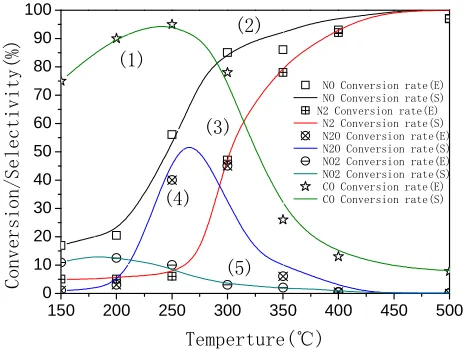
Fig.4 The relationship between temperature and simulation & experimental results
(1)Conversion of CO (2) Conversion of NO (3) Conversion of N2 (4) Conversion of N2O (5) Conversion of NO2
The figure 4 shows the relationship between temperature and simulation & experimental results. From the simulation and experimental results we can see that the reduction reaction has obvious selectivity with the change of temperature.
The oxidation reaction of CO was the dominant reaction when the reaction temperature is lower than 200℃ and a
few of NO was oxidized to NO2 with the catalytic action of catalyst. The oxidization conversion rate of CO is over
80% and the reduction conversion rate of NO is about 10%. The oxidation reaction of CO continues to occur when
the reaction temperature exceeds 200℃ and the maximum oxidization conversion rate of CO is about 90% when
the reaction temperature is about 200℃. Then the oxidization conversion rate of CO decreased rapidly and CO
involved in the reduction reaction as the mainly reducing agent.
CONCLUSION
SNCR process. That means this process has a good prospect to be widely used.
In this paper, the process of NO reduction by CO over Cu/Al2O3 is investigated. It indicates that NO can be reduced
by CO under low concentration conditions of sinter band flue gas at appropriate temperature, and the resultants are
N2O and N2. With the increase concentration of CO or O2, the NO conversion is inhibited gradually. The increase of
CO concentration prompts the reaction activity.
In this paper, the apparent activation energy of elementary reactions is estimated by UBI-QEP method. The PSR model of CHEMKIN is used to simulate the reduction reaction dynamics mechanism of sinter band flue gas with the
11random method. The reduction reaction of NO of sinter band flue gas by CO was studied through analyzing the
experimental data and simulation data. And this paper gives the reaction network diagram according to the distribution of the reaction products.
The adsorption reaction of NO on the surface of catalyst is the control step of the reduction reaction which the NO
was adsorbed as NO* or (NO)2*. There is no reduction reaction occurs when the reaction temperature is lower than
200℃ and the oxidation reaction of CO is the dominant reaction. NO is reduced to N2O and N2 when the reaction
temperature is between 200~320℃. The proportion of N2O is more than 50% when the temperature is about 200~
280℃ and the rest reduction product is N2. NO is reduced to N2 when the reaction temperature is over 320℃. And
the conversion rate of NO is more than 90%. The reducing agent CO is oxidized to CO2.
REFERENCES
[1] Parvulescu V I,Grange P,Delmon B. Catal Today, 46 (4), 233, 1998. [2] Zhao Zi bin,Li Wen,Qiu Jieshan. Fuel, 85( 5), 601, 2006.
[3] K. Yokota,M. Fukui,T. Tanaka, Applied Surface. Science. 121/122, 273, 1997. [4] R. Burch, M.D. Coleman. Appllied Catalysis B: Environmental, 23,2-3,115, 1999.
[5] Gongshin Qi,Ralph T.YANG,Levi T.Thompson. Applied Catalysis A: General, 259(2), 261-267, 2004. [6] N. Macleod, R.M. Lambert. Catalysis Communications, 3(2), 61, 2003.
[7] N. Costa, V.N. Stathopoulos, V.C. Belessi, A.M. Efstathiou. Journal of Catalysis, 197,350, 2001.
[8] Hinsberg W, Houle F, Allen F, Yoon E. “Chemical Kinetics Simulator”, International Business Machines, Almaden,1996.
[9] Shustorovich E, Sellers H. Surface Science Reports, 31(1- 3) :1,1998.