© 2017, IRJET | Impact Factor value: 5.181 | ISO 9001:2008 Certified Journal | Page 126
Optimization in Piston Design for High-speed Engine
K Sanjay
1, P Poorna Mohan
2, K Subba Rao
31
M.Tech. CAD/CAM, Godavari Institute of Engineering and Technology, Rajahmundry
2Senior Assistant Professor, Godavari Institute of Engineering and Technology, Rajahmundry
3
Head of Department,
Godavari
Institute of Engineering and Technology, Rajahmundry
---***---Abstract -
The population of the world, the change intechnologies and the urban jungles are increasing drastically day-by-day which made the rise of demands of humans in many ways. Due to this many complexities are being faced by the industries, consumer services, local people, etc., in the way of transportations by investing more time in transportation only. In the near future, by 2050 the population of the world estimated to increase from 7 billion to 12 billion. In that case, the present day’s automobiles will not be sufficient since they travel at very low speeds. As a result, the world will be investing more time in the way of transporting or delivering the goods, local transportation, etc., then investing time any other if there isn’t any growth in the way of transportation. This made the emergency in the development of the high-speed engines. This paper aims at developing an optimized piston design which can be used in some high-speed internal combustion engines which can withstand high temperatures and pressures. The piston and its components are designed using the advanced material, Ti-6Al-4V. The modeling of the high-speed diesel engine and its components is done Autodesk Fusion 360. The designs are analyzed in Autodesk Fusion 360.
Key Words: Autodesk Fusion 360, Piston, Connecting Rod,
Ti-6Al-4V
1.INTRODUCTION
Pistons play a major role in internal and external combustion engines from the early ages in transferring and converting the energy of the fuel formed due to combustion to the reciprocation motion in reciprocating engines and rotary motion in rotary engines.
In both compression ignition automobile engines and spark ignition automobile engines, the piston located in the combustion chamber experiences a large exposure to high pressure and high temperatures. The connecting rod which connects the piston to the crankshaft of the engine and the pins and rings that connect the connecting rod to the piston and connecting the rod to crankshaft will also experience the effects of combustion of fuel in the combustion chamber.
The present paper aims at developing an optimized piston design which can be used in some high-speed internal combustion engines which can withstand high temperatures and pressures. The piston and its components are designed using the advanced material, Ti-6Al-4V. The designs are
tested at high temperatures and pressures which are the assumed optimal working conditions in a high-speed engine and reflected the same environment.
In Autodesk Fusion 360 the design process of the speed piston and its components are designed. The high-speed piston and its components are assembled in Autodesk Fusion 360 Assembly. The modeled high-speed piston and its components are analyzed in Autodesk Fusion 360 Simulation
The design process of the high-speed piston and its components and the analysis process of the high-speed piston and its components using the advanced material, Ti-6Al-4V are detailed. Results such as Von Mises stress, Factor of Safety (FOS), Strain and Displacements, etc., are also discussed.
2. GOVERNING THEORY
The strategy utilized as a part of the geometric simulations of design in Solidworks Simulation is the Finite Element Analysis (FEA). Finite Element Analysis utilized as a part of simulation software or solvers, for the most part, includes three stages. They are as per the following:
A. Pre-processing: In this progression, the finite element mesh for the designed model is produced and boundary conditions, material properties, and loads are applied to the composed model.
B. Solution: In this progression, the solutions for the problems for the given loads and boundary conditions. The outcomes, for example, Von Mises stress, displacements, strain, thermal impacts, and so on., are acquired in this progression.
C. Post-processing: In this progression, the results are pictured as contours, deformed shapes, and plots. This progression helps in the investigating, confirmation and approval of results.
3. MATERIAL PROPERTIES
© 2017, IRJET | Impact Factor value: 5.181 | ISO 9001:2008 Certified Journal | Page 127
Table -1:Properties Alloy 1.2367
Density 4.43E-06 kg / mm3
Young's Modulus 113763 MPa Poisson's Ratio 0.35
Yield Strength 882.5 MPa Ultimate Tensile
Strength 1034 MPa
Thermal Conductivity 0.0067 W / (mm C) Thermal Expansion
Coefficient 8.6E-06 / C Specific Heat 526.3 J / (kg C)
4. METHODOLOGY
In Autodesk Fusion 360 the design process of the speed piston and its components are designed. The high-speed piston and its components are assembled in Autodesk Fusion 360 Assembly. The modeled high-speed piston and its components are analyzed in Autodesk Fusion 360 Simulation.
4.1
Piston and Its Components
The high-speed piston and its components are designed in Autodesk Fusion 360 Design. Figure 1 shows the isometric view of the high-speed piston and its components.
Fig -1: Piston and Its Components Isometric View
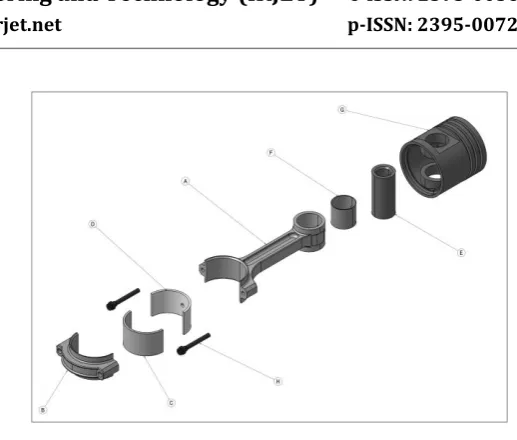
The high-speed piston and its components are shown in exploded view in Figure 2.
Fig -2: Piston and Its Components Exploded View
4.2
Models Meshing Details
Table 2 shows the general mesh settings and adaptive mesh refinement techniques used in the simulation of the high- speed piston and its components.
Table -2:
Average Element
Size Solids 2
Element Order Parabolic Max. Turn Angle on
Curves (Deg.) 60
Max. Adjacent Mesh
Size Ratio 1.5
Max. Aspect Ratio 10
Minimum Element Size (% of average
size)
20
Results Convergence
Tolerance (%) 20
Portion of Elements
to Refine (%) 10
Results for Baseline
Accuracy Von Mises Stress
Mesh Type Solid
Nodes 248273
Elements 149853
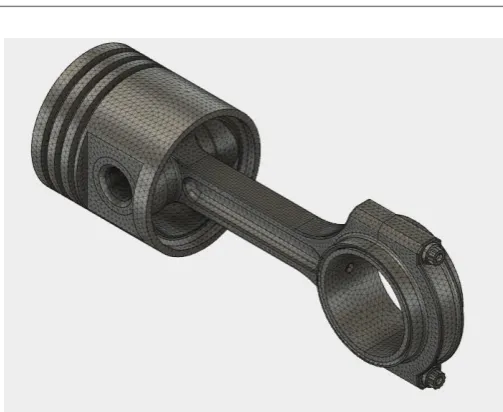
[image:2.595.299.558.59.279.2] [image:2.595.42.284.441.611.2]© 2017, IRJET | Impact Factor value: 5.181 | ISO 9001:2008 Certified Journal | Page 128
Fig -3: Piston and Its Components Mesh Isometric View5. RESULTS AND DISCUSSIONS
The simulation studies conducted on the high- speed piston and its components using the advanced material, Ti-6Al-4V for its sustainability against high temperatures and pressures gives the results such as Von Mises stress, Factor of Safety (FOS), Strain and Displacements. The test conditions and the results are as follows:
5.1
Test Conditions
In this study conducted on the high- speed piston and its components using the advanced material, Ti-6Al-4V, the applied load value, and connector constraints in the load cases are shown in Table 3.
Table -3:
Constraints Pins
Loads
Type Gravity
Magnitude 9.807 m / s2
X Value 9.807 m / s2
Y Value -1.389E-16 m / s2 Z Value 1.007E-15 m / s2 Temperature
Type Applied Temperature
Value 600 C
Pressure
Type Pressure
Magnitude 10 MPa
5.2
Results
The results obtained after the simulation of high- speed piston and its components using the advanced material, Ti-6Al-4V in Autodesk Fusion 360 Simulation are shown in Table 4.
Table -4:
Name
Minimum
Maximum
Safety Factor
Per Body 0.4608 15
Stress
Von Mises 0.2143 MPa 1915 MPa 1st Principal -591.9 MPa 1814 MPa 3rd Principal -2097 MPa 1111 MPa
Normal XX -1251 MPa 1297 MPa
Normal YY -1278 MPa 1489 MPa
Normal ZZ -1373 MPa 1437 MPa
Shear XY -685.1 MPa 660.1 MPa Shear YZ -745.3 MPa 744.2 MPa Shear ZX -934.2 MPa 751.7 MPa Displacement
Total 0 mm 0.7873 mm
X -0.763 mm 0.1313 mm
Y -0.2374 mm 0.241 mm
Z -0.2427 mm 0.215 mm
Reaction Force
Total 0 N 2777 N
X -1544 N 1503 N
Y -1483 N 1408 N
Z -2111 N 2208 N
Strain
Equivalent 0.001411 0.02713
1st Principal -1.168E-04 0.02558 3rd Principal -0.02345 0.005054
Normal XX -0.009492 0.0155
Normal YY -0.01013 0.01447
Normal ZZ -0.005186 0.01061
Shear XY -0.01626 0.01567
Shear YZ -0.01769 0.01766
Shear ZX -0.02217 0.01784
Contact Pressure
Total 0 MPa 955.2 MPa
X -922.5 MPa 920.1 MPa
Y -639.8 MPa 610 MPa
Z -661.7 MPa 943.3 MPa
Temperature
Temperature 599.9 C 600 C
Heat Flux
Total 3.365E-11 W /
[image:3.595.34.286.80.286.2]© 2017, IRJET | Impact Factor value: 5.181 | ISO 9001:2008 Certified Journal | Page 129
X -8.163E-05 W /mm2 1.059E-04 W / mm2 Y -3.554E-05 W /
mm2 1.013E-04 W / mm2 Z -1.013E-04 W /
mm2 4.088E-05 W / mm2
Reaction Forces
Constr aint Name
Reaction Force Reaction Moment Magnitu
de Component (X,Y,Z) Magnitude Component (X,Y,Z) Pin1 214921
N 214921 N 108273 N mm -95781 N mm
376.5 N 3546 N
mm
-390 N -50364
N mm Pin2 272966
N -272965 N 70302 N mm -30568 N mm
-378.2 N 9094 N
mm
390 N 62652
N mm
5.3
Surface Plots
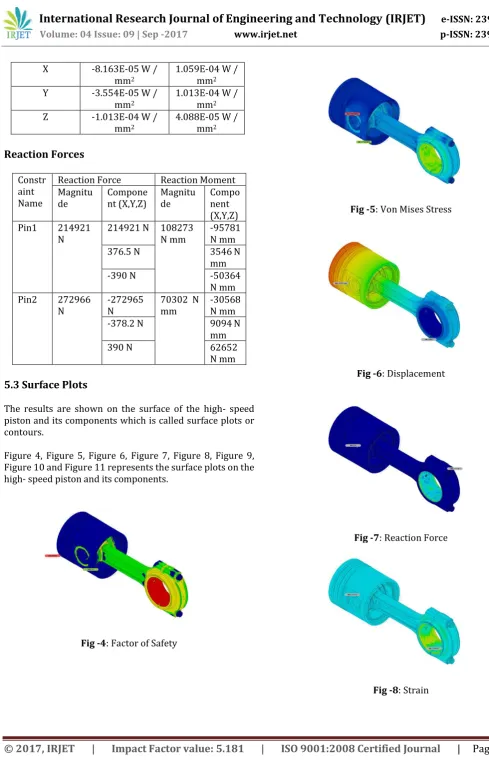
The results are shown on the surface of the high- speed piston and its components which is called surface plots or contours.
Figure 4, Figure 5, Figure 6, Figure 7, Figure 8, Figure 9, Figure 10 and Figure 11 represents the surface plots on the high- speed piston and its components.
Fig -4: Factor of Safety
Fig -5: Von Mises Stress
Fig -6: Displacement
Fig -7: Reaction Force
[image:4.595.32.522.37.811.2]© 2017, IRJET | Impact Factor value: 5.181 | ISO 9001:2008 Certified Journal | Page 130
Fig -9: Contact PressureFig -10: Temperature
Fig -11: Heat Flux
5.5
Interpretation of Results
From the results of the simulations studies conducted on the high- speed piston and its components, it can be observed the design is considered to be successful.
6. CONCLUSIONS
The high- speed piston and its components modeled are successful since the values factor of safety are higher than 3 in all components. From this study, we conclude that the optimization in piston design for high-speed engines is done by designing high- speed piston and its components using the advanced material, Ti-6Al-4V.
Suggestions: The skirt used on piston has a value of 0.4 which means it will wear after some period of operations but not more frequently. This skirt should be replaced when it wears.
REFERENCES
[1] Glinsner, Karl, Olejniczak, Martin, “Piston,” European
Patent, Patent No.: EP 1 348 859 B1.
[2] Hong, Kyung Pyo Ansan-si, Park, Sang Jo Bucheon-si,
Nam, Hyun Woo Siheung-si, Shim, Woo Seok Gunpo-si, Lee, Jae Seung Ansan-si, “Piston,” European Patent, Patent No.: EP 1 790 881 B1.
[3] Glinsner, Karl, Olejniczak, Martin, “Piston,” European
Patent, Patent No.: EP 1 348 8 59 B2.
[4] Kumai, Toyota-shi, Aichi-ken, Michio Nagano, “Piston
equipped with piston ring,” European Patent, Patent No.: EP 0 937 923 B1.
[5] Ishida, MasaoSuwa-shi, Nagano-ken, “Combination of a
piston and a piston ring,” European Patent, Patent No.: EP 2 017 506 B1.
[6] Jianju LIU, Shengkun WANG, Jinyu JI, Weibin ZHA,