ScholarWorks @ Georgia State University
ScholarWorks @ Georgia State University
Geosciences Theses Department of Geosciences
Spring 5-2012
A Comparative Analysis of Participatory Governance: The City of
A Comparative Analysis of Participatory Governance: The City of
Atlanta and Neighboring Cobb County, Georgia
Atlanta and Neighboring Cobb County, Georgia
Carol J. Brown
Georgia State University
Follow this and additional works at: https://scholarworks.gsu.edu/geosciences_theses
Recommended Citation Recommended Citation
Brown, Carol J., "A Comparative Analysis of Participatory Governance: The City of Atlanta and Neighboring Cobb County, Georgia." Thesis, Georgia State University, 2012.
https://scholarworks.gsu.edu/geosciences_theses/44
A COMPARATIVE ANALYSIS OF PARTICIPATORY GOVERNANCE: THE CITY OF ATLANTA
AND NEIGHBORING COBB COUNTY, GEORGIA
by
CAROL J. BROWN
Under the direction of Dr. Katherine Hankins
ABSTRACT
This thesis compares the experiences of citizens who regularly participate in the planning and
zoning processes of their respective local governments. Atlanta has had a highly structured system of
neighborhood government in place for over 35 years, called Neighborhood Planning Units. Enacted by
Atlanta’s first African-American Mayor, NPUs were meant to facilitate the civic engagement of all
neighborhoods, regardless of socioeconomic status. The role and boundaries of NPUs are codified in
the City Charter. Unincorporated Cobb County, Georgia is a large, urbanizing-but-still-suburban county
north of the city. Cobb does not officially recognize community boundaries nor is there a codified
neighborhood government structure in place. By comparing the two systems of governance, this thesis
will examine which best facilitates participation and whether respondents feel efficacious as they
engage with their local government. The findings matter because citizen participation is generally
deemed a desirable and even necessary element of modern, representative democracy.
A COMPARATIVE ANALYSIS OF PARTICIPATORY GOVERNANCE: THE CITY OF ATLANTA
AND NEIGHBORING COBB COUNTY, GEORGIA
by
CAROL J. BROWN
A Thesis Submitted in Partial Fulfillment of the Requirements for the Degree of
Master of Arts
in the College of Arts and Sciences
Georgia State University
Copyright by Carol Jean Brown
A COMPARATIVE ANALYSIS OF PARTICIPATORY GOVERNANCE: THE CITY OF ATLANTA
AND NEIGHBORING COBB COUNTY, GEORGIA
by
CAROL J. BROWN
Committee Chair: Dr Katherine B. Hankins
Committee: Dr. Dajun Dai
Dr. John W. Matthews
Electronic Version Approved:
Office of Graduate Studies
College of Arts and Sciences
Georgia State University
iv
DEDICATION
To those in the community who believed in me and in our combined ability to make a difference.
Sincere thanks to friends who supported me through some very dark days, especially Beverly
McMurray, Ken Dixon, Gabrielle Callahan, Linda Lane and Wendell Wood. I could not have gone the
distance without their help.
And to the memory of colleagues
Hilda Ward Towery
ACKNOWLEDGEMENTS
This paper is a culmination of two endeavors, one academic and the other community activism. I
would like to thank Dr. Katherine Hankins for her guidance and thought provoking discussions on
urban theory and urban geography. I also want to thank Dr. Parama Roy who encouraged me to pursue
this research project, and had particular interest in the community mapping exercise. Dr. John
Matthews has been a wonderful resource for questions about urban planning and Atlanta history.
I want to thank Dr. Dajun Dai for joining the committee so late in the game and thanks to Dr. Kate
Derickson for her editorial suggestions.
Thanks also to my District 3 Commissioner in Cobb County, JoAnn Birrell, for understanding the
value of participation and for working with this activist to benefit our community.
I wish to thank the City and County staff who took the time for an extended and enjoyable
interview, and to thank the respondents in the City and County for their participation in this research
project.
I am fortunate to have had the opportunity to engage in community activism concurrent with a
graduate program in urban geography. Our region would benefit greatly if many more had that chance.
TABLE OF CONTENTS
ACKNOWLEDGEMENTS v
LIST OF TABLES viii
LIST OF FIGURES ix
CHAPTER
1. INTRODUCTION 1
2. CITIZEN PARTICIPATION 5
Historical and Theoretical Underpinnings of Citizen Participation 5
Participation as a Check and Balance on Urban Regimes and Growth Machines 11
Legal Underpinning of Citizen Participation 13
A Brief History of the Neighborhood Participation Movement 14
Defining Community through Scale and Boundaries 15
Critiques of Citizen Participation in Urban Governance 18
3. AN OVERVIEW OF ATLANTA AND COBB COUNTY 24
4 METHODOLOGY 28
Research Question 28
Methods and Data 28
5. FINDINGS 31
A Profile of the Citizen-Activists of Atlanta and Cobb County 31
Comparison of Neighborhood Group Organization and Processes 35
Defining Community through Scale and Boundaries: Comparing Maps 40
Comparison of Neighborhood Group Concerns, Sense of Efficacy and Suggestions for Changes to Process
48
Individual Achievements and Sense of Efficacy 53
6. DISCUSSION AND CONCLUSION 54
WORKS CITED 60
APPENDIX A: PARTIAL LISTING OF NEIGHBORHOOD STRUCTURES IN US 63
APPENDIX B: PARTICIPANT RESPONSES TO SURVEY AND INTERVIEW 65
LIST OF TABLES
Table 1 Activist Burnout 32
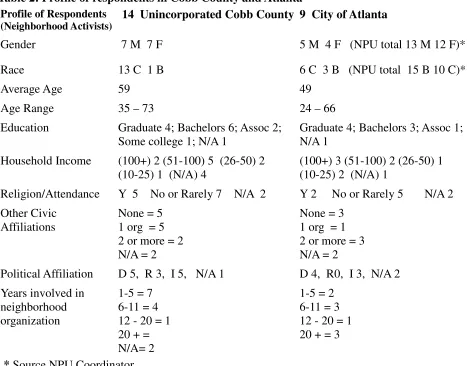
Table 2 Profile of respondents in Cobb County and Atlanta 33
Table 3 Survey responses about group functions and processes 37
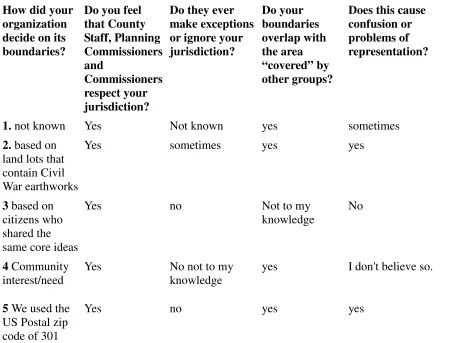
Table4 Cobb respondents on boundaries 40
Table 5 Do you know of any areas not represented by a neighborhood group? 42
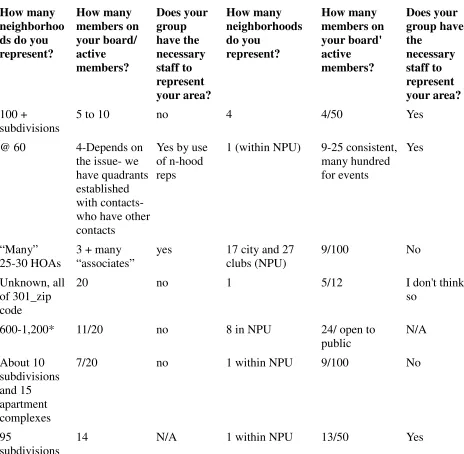
Table 6 How many neighborhoods do you represent? 43
Table 7 Survey responses on satisfaction with local government 48
Table 8 Have you ever heard of Atlanta's NPU system? 51
Table A-1. Do you think the majority of people in your area care about planning and zoning issues?
65
Table A-2 Survey responses about group functions and processes complete set 66
Table A-3 Group recruitment and retention 72
Table A-4 Set of questions on group concerns, efficacy, changes needed in process 73
LIST OF FIGURES
Figure 1 Cobb group adopts-a-highway 35
Figure 2 Neighborhood Planning Unit meeting 35
Figure 3 Cobb group meets with developer to discuss zoning 35
Figure 4 Neighborhood Planning Units of Atlanta 45
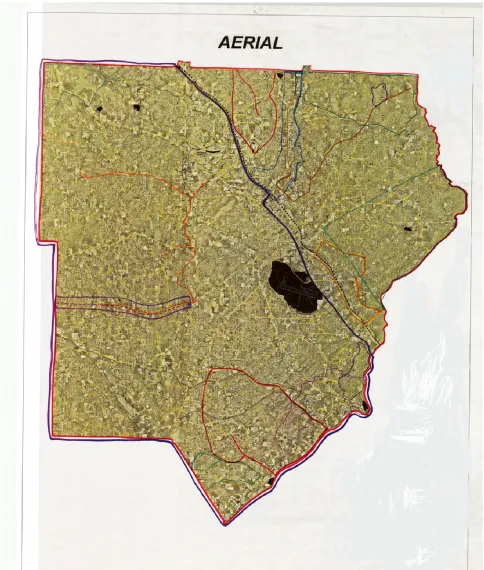
Figure 5 Cobb Research Map 46
Figure 6 Neighborhood activism 2009 54
CHAPTER 1 - INTRODUCTION
The importance of citizen participation in the civic and political life of the democratic state was
debated by Aristotle, Rousseau, by Thomas Jefferson and Madison and is still subject to debate in the
present era. In Athens, considered the birthplace of democracy, participation by those considered
citizens was seen as a duty and civic virtue (Aristotle, 350 B.C.E.). Jefferson, among the most radical
of America’s founders (Hart 2002), pressed for a sharing of powers among the national, state, county
and local levels at the end of his presidency. Jefferson’s later view of federal government embraced the
idea of widespread participation: “And the whole is cemented by giving to every citizen, personally, a
part in the administration of the public affairs" (Jefferson, 1816 ME 15:38). Self-government at the
local level would take place in a “ward republic” (Barber 1984; Hart 2002). Today, the global value of
civic engagement is recognized by the United Nations in a policy statement, part of the Agenda for
Development: “Participation is an essential component of successful and lasting development. It
contributes to equity by involving people living in poverty and other groups in planning and
implementation.”1 Secretary of State Hillary Rodham Clinton, addressing the Community of
Democracies in Krakow, Poland in 2010, focused on the role of civil society in strengthening
democracy. “These three essential elements of a free nation -- representative government, a
well-functioning market, and civil society -- work like three legs of a stool… Societies move forward when
the citizens that make up these (civil society) groups are empowered to transform common interests
into common actions that serve the common good.”2
Participation by the public in civic life and political processes has been uneven over the course of
American history. Contemporary social science author Robert D. Putnam addressed national concern at
1
United Nations Agenda for Development, II Policy Framework, H 176 Participatory Approach to Development www.un.org/Docs/SG/approach.htm
2
the decline of social capital and involvement by citizens in American civil society, following the 1970’s
(Putnam 2001). But during the period of social unrest of the late 1960s, a federal policy that mandated
“widespread citizen participation” for poor, inner city residents in urban renewal planning, laid the
framework for fundamental change in the power relations of citizens to their local government (Parlow
2008). The “maximum feasible participation” mandate sparked debate over the merits and challenges
of increased participation. The validity of the policy was questioned by Daniel P. Moynihan who
authored Maximum Feasible Misunderstanding: Community Action in the War on Poverty, in 1969.
Moynihan cited several reasons for his opposition to participation and community action: he felt that it
was an idea imposed by bureaucrats who were not following the intent of Congress. He also felt that by
raising expectations that could not be met, civil unrest and riots would be ignited. Perhaps his most
controversial reason for opposing participation by low-income stakeholders is that he felt they lacked
the capacity to participate in governance (Berry, et al 1985). The discourse on inclusive versus limited
participation continued a thread reaching back to America’s founding, and to the ancient Greek
city-states.
Since the early 1970s local governments have expanded opportunities for participation in large
American cities and in other western industrialized countries (Schmid, H, 2001). One example of this is
creation of government sub-structures known as neighborhood or community councils. Allowing
residents to engage at the neighborhood level, this form of citizen participation has gradually become
accepted as one of the components of urban governance (for a partial listing of neighborhood
government structures in the U.S. see Appendix A page 60). The American Planning Association has
recognized the importance of citizen participation, stating: “Planning is a collective activity and it
involves issues in which citizens have a large emotional stake” (Levy 2000). If citizen participation in
public affairs is deemed important, it is important to examine the processes that local governments have
government is closest to the people. If citizen participation is not welcomed or if the local government
is unresponsive, then democracy at the local level is failing the people it is meant to represent. A study
by Docherty, Goodlad and Paddison suggested: “Citizen Participation can be fostered as much by the
creation of opportunity structures that build confidence in the efficacy of participation as by the
intrinsic levels of civic culture” (Docherty et al, 2001 p 2246). They conclude that such efforts are not
wasted. However, there is debate among academics as to the level of efficacy achieved by citizens
trying to engage in the process. Arguing from the Left, some scholars have been critical of the
procedural structures and questioned their utility in producing substantive and just outcomes for
communities. Harvard professor and planner Susan Fainstein notes the differences between
deliberative theorists Iris Marion Young (Inclusion and Democracy 2000) and Jurgen Habermas (Three
Normative Models of Democracy 1994) who equate an open, deliberative and inclusive process with
democracy, versus the just city theorists Edward Soja (Seeking Spatial Justice 2010) and Susan
Fainstein (The Just City 2010) for whom an equitable outcome is the only valid result in urban
planning (Fainstein 2010).
In the 1993 book The Rebirth of Urban Democracy, Berry, Portney and Thomson report on their
comprehensive study of five American cities with participatory structures in place. They conducted
thousands of interviews in five core cities and ten comparison cities. It remains the largest research
project to have closely examined the efficacy of neighborhood government structures in the U.S. In
1999, the voters of Los Angeles adopted a Neighborhood Council form of government along with the
new City Charter and researchers at the University of Southern California Urban Initiative, led by Juliet
Musso, PhD, are examining the composition and functionality of the councils.3 Drawing from an
interdisciplinary body of knowledge, the literature review examines the philosophical and legal
underpinnings of citizen participation; outlines the history of the neighborhood movement and explores
3
the critique of neighborhood government and participation some forty years after the federal mandate
for “widespread citizen participation”. Against this framework the qualitative research project uses
semi-structured interviews, a survey and archival data to compare two contiguous but very different
local governments and their approach to governance. The thesis compares Atlanta’s Neighborhood
Planning Unit system to the informal governance arrangements in Unincorporated Cobb County. My
personal interest is that of an activist and academic, having spent eight years in community activism in
Cobb County. That background facilitated interviews with others who engage in neighborhood issues. I
have chosen to present the comments of the respondents in tabular form, allowing them to respond to
questions in their own voice. While they are heard often by their respective local governments, their
voices are largely silent in the academic literature on participation. Their responses can be found in text
and in tabular form in Appendix B, page 62.
This thesis explores the degree to which neighborhood government structures are useful for the
citizens who engage in community planning and zoning issues on a regular basis. I also examine
whether the absence of a formal structure raises barriers to participation and whether the two groups of
respondents feel efficacious in their civic engagement. The important questions of equity and just
distribution are addressed only briefly and in a peripheral way in this thesis. More closely examined is
the value and quality of process. This paper argues that for the relatively small group of citizens who
make the time to get involved in neighborhood issues and engage on a regular basis, procedure and
defined boundaries are important. While there is valid criticism about the extent of public participation
in neighborhood councils, the tendency of some academics to dismiss them as NIMBYs or because
many are middle class (Fainstein 2010 p 32), is shortsighted. Clarence Stone’s landmark study of
Atlanta (Stone 1989) provided evidence that the needs of working classand poorneighborhoods were
overlooked by the urban regime of elites and the local government. While neighborhood participation
sometimes lead to beneficial outcomes for the entire community. Participant responses to this research
as well as archival data document positive community impacts that have resulted from
neighborhood-level participation.
CHAPTER 2 - CITIZEN PARTICIPATION
Historical and Theoretical Underpinnings of Citizen Participation
We will ever strive for the ideals and sacred things of the city, both alone and with many; We will unceasingly seek to quicken the sense of public duty; We will revere and obey the city’s laws; We will
transmit this city not only not less, but greater,
better and more beautiful than it was transmitted to us. - City of Athens Oath of Citizenship
Quod omnes tangit, ab omnibus tractari et approbari debet- Justinian’s Codex of 531
“Government of the people, by the people, for the people”4, revered language in American history,
appears to be more symbolic than substantive. In America today, the government seems captured by
rent-seeking interest groups (Parlow 2008) and the rites of citizenship are exercised by voting, often by
only a minority of the population. The focus of our republic has become centered on individual rights
and economic freedom (Dagger 1997, Sandel 1996, Barber 1984, Parlow 2008). In our representative
form of government and in liberal democracy that is deemed to be enough (Habermas 1994, Carey
1989, Manin 1997) but some political theorists and philosophers believe that civic life and strong
democracy requires more from its citizens. Thomas Jefferson, author of the Declaration of
Independence and primary advocate for the Bill of Rights, believed along with Aristotle that
individuals were not complete without participation in the civic life of the state (Hart G. 2002).
Differing iterations on the centrality of participation in a democracy continue to be heard from modern
theorists including Benjamin Barber, Iris Marion Young, and Jurgen Habermas. What is the proper role
of citizens in relation to their government? What are the duties and limits of citizenship in a
democracy?
4
The concept of participation is central to democracy, “demos” and “kratein” meaning rule by the
people, or the people should rule. Democracy was born in the ancient Greek city-state of Athens and
was a direct democracy; rule-making and voting were done by those citizens who were assembled at
the Ekklesia. Citizenship, and therefore participation, was limited to males and also excluded children
and slaves. In Principles of Representation, Bernard Manin points out that the Assembly was
considered to be democratic because any citizen who wanted to attend or speak could do so, not
because all citizens were present (Manin 1997). Leadership was achieved in an egalitarian way through
use of the lot rather than elections to select citizens to serve as Magistrates. These posts were limited to
one term of service (Manin 1997). Reflecting on the democracy around him, Aristotle felt that life
within a city-state had a civilizing effect on individuals and that communities were established for the
common good. He stated “Hence it is evident that the state is a creation of nature and that man is by
nature a political animal” (1253a2-7). Aristotle defined citizenship: “He who has the power to take part
in the deliberative or judicial administration of any state is said by us to be a citizen of that state; and
speaking generally a state is a body of citizens sufficing for the purposes of life” (Politics, Book III 350
B.C.E). Participation by many citizens seemed wise to Aristotle, “For each individual among the many
has a share of virtue and prudence, and when they meet together, they become in a manner, one man”
(ibid). Those who did participate fully in government were expected to balance the rights of citizenship
with its duties and were expected to know how to rule and how to obey. These citizens were said to
possess civic virtue.
Athens had a constitution. From part VII of Politics Book 3:
The words constitution and government have the same meaning, and the government,
which is the supreme authority in states, must be in the hands of one, or of a few or of
the many. The true forms of government, therefore, govern with a view to the
perversions. For the members of the state, if they are truly citizens ought to participate
in its advantages.
For Aristotle however, government by citizens was ideally by a stable and educated middle class, rather
than by many poor people. He felt that a polity, rather than democracy was the ideal form of
government. Athenian democracy came to an end in 322 BC and while there were some small-scale
instances of self-government in republics, the concept of democracy would not be debated until after
the American Revolution nearly 2,000 years later (Manin 1997).
Like citizen participation, ‘consent of the governed’ is another concept that is central to democracy.
It also has an ancient lineage, dating back to the Roman republic. “Quod omnes tangit, ab omnibus
tractari et approbari debet”, which translates as “What touches all should be considered and approved
by all” (Manin, p.87, 1997 citing Justinian’s Codex of 531). Manin traces the historical use of this
concept from the early English Parliament to its currently understood role as the legitimating source of
power, via the elections process.
Nearly 2,000 years after the fall of Athens, the founders of the new American republic began the
process of building a legal and political framework for the new nation. It would take them into
uncharted territory. The founders and framers of the constitution had different political and
philosophical views but it was accepted by those supporting a national government that trying to
govern under the Articles of Confederation was having limited success. The principal framers of the
new Constitution, James Madison, Alexander Hamilton and John Jay, published a series of 85 white
papers summarizing their collective rationale for the document they had written. The essays, published
between October 1787 and May 1788 were known as the Federalist Papers, and the author was
“Publius”, mostly the writing of Madison (Carey 1989). These are widely regarded as key to
Those supporting a strong national government, the Federalists, included Alexander Hamilton and
James Madison. While they feared creation of a new monarchy, the Federalists had an equal fear of
direct democracy and mob rule; particularly as it related to factions. In Federalist 9, Publius made
negative reference to the “petty republic of Greece” and its unstable democratic rule (Carey 1989).
Both Manin and Carey have referenced the negative effect that Shays Rebellion in Massachusetts, 1786
had on the framers as they contemplated democracy. The armed protest by farmers, angry at punitive
fiscal policies, shut down the courts for several months to stop tax hearings (Manin 1997, Carey 1989).
This reinforced the framer’s fears about the potential for mob rule that could occur in a direct
democracy. Neither Madison nor Hamilton considered the new nation to be a democracy; it was called
a republic by the founding citizens. The Representatives were to be elected by the people and decisions
about governing would be made by this wise and virtuous group of men who were part of a “natural
aristocracy” (Manin 1997). At the time the Constitution was being drafted, Thomas Jefferson, author
of the Declaration of Independence and primary advocate for the Bill of Rights, was stationed in France
as a Minister of the new government. His exposition of republicanism or democracy at the local level
would come some quarter century after the Constitution was ratified; too late to be included as part of
the federal structure (Hart, G 2002). The new Constitution was adopted September 17, 1787, after
Jefferson and several states insisted on the inclusion of a Bill of Rights to protect state and individual
liberties. The Constitution incorporated the new concept of representation, an extended republic, a
strong national government, but with popular sovereignty residing with the people. A horizontal system
of checks and balances included the separation of the powers of the executive, legislative and judicial
branch, and the vertical allocation of power, known as federalism, that included sharing of power
between the state and national government (Carey 1989). Madison had taken the historical definition
of republicanism, which meant popular rule or democracy of the type found in small republics; and
representatives expressed the will of the people. Jefferson did not fully develop his ward republic
concept until he had completed his Presidency, when he was in his 70s (Hart 2002). His vision of
participation at the local or ward level also included elected representation at higher levels of
government. He felt that individual rights were best guaranteed by the duty of citizenship and
participation. The townships of New England were a close match for his vision (Hart 2002). Jefferson
in his own words: "There are two subjects, indeed, which I shall claim a right to further as long as I
breathe: the public education, and the sub-division of counties into wards. I consider the continuance of
republican government as absolutely hanging on these two hooks" (Thomas Jefferson to Joseph C.
Cabell, 1814. ME 14:84). In other correspondence he elaborated further:
"Divide the counties into wards of such size as that every citizen can attend, when called on,
and act in person. Ascribe to them the government of their wards in all things relating to
themselves exclusively. A justice chosen by themselves, in each a constable, a military
company, a patrol, a school, the care of their own poor, their own portion of the public roads,
the choice of one or more jurors to serve in some court, and the delivery within their own wards
of their own votes for all elective officers of higher sphere, will relieve the county
administration of nearly all its business, will have it better done, and by making every citizen an
acting member of the government, and in the offices nearest and most interesting to him, will
attach him by his strongest feelings to the independence of his country and its republican
Constitution." --Thomas Jefferson to Samuel Kercheval, 1816. ME 15:37
While the rebirth of democracy had waited for nearly 2,000 years, the new constitution drafted by
Madison and Hamilton ensured that it would wait another 150 years before its renewal in “Maximum
government by the people. This was partly the vision of Alexander Hamilton (Hart 2002; Carey 1989).
The hybrid form of government with its Constitution, checks and balances and judicial system was
meant to preserve liberty, while the concept of popular sovereignty was a nod to republican democracy.
This duality has enabled a dialectical process of social and political change over the years,
accompanied by swings between a focus on the common good and individual liberties.
Many threads of discourse can be seen in the fabric of American democracy as it exists today.
Communitarians find that the narrow focus on individual rights and economic interests, characteristic
of liberal democracy, has undermined citizenship and the commonweal (Sandel 1996). This thread is
relatively modern, a response to the shortcomings of our representative democracy and increasing
apathy of the public. Charles Tiebout (1956) saw citizens as consumers in a marketplace, seeking
communities that would satisfy their individual needs. If citizens did not engage it reflected
contentment with the status quo rather than apathy (Parlow 2008). Dagger and Parlow argue that the
market-based view of citizens-as-consumers undermines citizenship in democracy by removing the
need for citizens to engage in the civil or political sphere (Dagger 1997; Parlow 2008). While
democracy has proven malleable enough over time to include women and other previously
disenfranchised populations, our political system still seems to privilege the wealthy and well-educated
(Manin 1997 p 133, 140, 144).
Inclusion is one proposal to remedy the democratic deficits of our aggregative election process
(Young 2000). The aggregative model, synonymous with American politics, determines which policies
and political figures appeal to the greatest number of people, and then through marketing and political
campaigns, opposing political parties engage in competition to win elections and enact policy. The
winner is deemed to have satisfied the largest percentage of the population (Young, pp 19-20, 2000).
Iris Marion Young advances the model of deliberative democracy as the most feasible way to improve
democracy: wider inclusion, political equality, reasonableness and publicity (Young 2000). Young
uses the historical precedent of Q.O.T. (Quod omnes tangit, ab omnibus tractari et approbari debet) to
underscore the value of inclusion in decision-making processes: if a democracy fails to solicit the
opinion of those affected by a given policy it lacks legitimacy (5, 6). Political equality ensures that all
populations have equal opportunity to be included in decision making processes if they so desire and to
be equally valued (Young 2000).
Increasing opportunities for participation by citizens is proposed by Benjamin Barber as a way to
bolster our thin democracy (Barber 1984). Barber argues that “from the perspective of strong
democracy, participation and community are aspects of one single mode of social being: citizenship”
(Barber 1984 p 155). The moral and redemptive nature of participation is implied in the term civic
virtue; a state of personal enrichment resulting from the exercise of duty, responsibility and
consideration of community (Dagger 1997). Participation is seen as transformative for citizens; in
group deliberations the individual moves beyond purely personal objectives to understand the needs of
others (Hart D. 1972; Dagger 1997; Young 2000). A recurring question is whether broad participation
is realistic or desirable (Sandel 1996, Fainstein 2010). Even if more opportunities are made available
for participation, not everyone will choose to get involved (Taylor 2000). Those advocating for and
against greater participation acknowledge that not all citizens will want to spend leisure time attending
civic or political meetings (Young 2000; Fainstein 2010; Hart D. 1972). Participation is also viewed as
a way to improve our representative form of democracy by reshaping the power relations between
average citizens, elites and the government (Parlow 2008; Hart, D. 1972).
Participation as a Check and Balance on Urban Regimes and Growth Machines
Clarence Stone and Harvey Molotch address regime theory and governing coalitions in Urban
Politics: Governing Atlanta 1946-1988 (Stone 1989) and City as a Growth Machine (Molotch 1976).
(Molotch 1976 p 309). These elites constantly seek to increase the value of their properties by working
with local government and local institutions (media and universities) to promote growth. Elites develop
land to increase its exchange value, which can cause conflict with those who occupy land and
appreciate it for its use value (Molotch 1976). The power relations between land-based elites and the
local government are such that the profits from development are privatized, but the costs to attract and
support development are socialized. Molotch saw a counter-coalition in the anti-growth sentiment that
began to emerge in the 1970s, but he felt its best chance for success would occur “with a leisured and
sophisticated middle class with a tradition of broad-based activism” (Molotch 1976 p 327). Those
citizens tended to value their community for its quality of life and not as “an exploitable resource”.
Without the countervailing balance of citizen coalitions, the dynamic of power relations between
land-based elites and government leads to the kind of investor prerogative and spatial injustice Stone
describes (Stone 1989). A pattern of negotiated settlements and reciprocity was established prior and
subsequent to WWII between middle and upper class blacks, Atlanta City Hall and the business elite.
The losers in Atlanta’s urban regime were Atlanta’s poor and the white working class. As Stone
describes it, the black elite ignored the process of urban renewal as it displaced low income residents
while the business elite was able to pursue their goal of downtown redevelopment. Atlanta’s privileging
of “Investor Prerogative” or unbridled capitalism, resulted in neglect of historic preservation,
displacement of viable low-income neighborhoods and a jobs-housing mismatch for the region’s inner
city poor (Stone 1989 p 204).
Stone also outlines the creation of Atlanta’s Neighborhood Planning Units during the Jackson
administration. He critiques the NPU efficacy in a contestation with the Department of Transportation
over two major roads and other development issues and concluded that they were not effective. At the
time the book was published, neighborhood-based coalitions had been unsuccessful in stopping the
Freeway became Freedom Parkway, an at-grade roadway with bike lanes and multi-use trails. The
parkway leads to the Carter Center and leaves historic neighborhoods intact which would not have been
the case if the freeways had been built as planned. Jackson’s effort to empower citizens at the
neighborhood level appeared to require time for the system to mature. Today they are an accepted part
of Atlanta’s urban governance (Interview with City planners).
Legal Underpinning for Citizen Participation
The historical precedent, Quod omnes tangit, ab omnibus tractari et approbari debet or “That
which touches all must be considered and approved by all”, can be seen in the practice and procedures
of planners and the state to solicit community input on issues that will affect them, their property or
their “quiet enjoyment” of the same. The influence of the QOT concept can be seen in the participation
requirements in Model Cities, described below.
The legal underpinning for citizen participation in planning initiatives began during the Lyndon
Johnson administration and was linked to the Model Cities program. The federal mandate addressed
more completely in the following section, was designed to create opportunities for residents of low
income neighborhoods to participate in discussion of plans that would impact their community (Berry
et al 1993). Even though Model Cities ended in 1974, the Department of Housing and Urban
Development still requires local and municipal governments who receive federal funds through HUD,
to file a Citizen Participation Plan.
The Georgia Planning Act of 1989 established the requirement for municipalities to engage in
periodic development of a Comprehensive Plan. In Georgia, the mandate for citizen participation in
planning is enumerated in the Georgia Department of Community Affairs Rules/ Chapter 110-12-1,
Standards and Procedures for Local Comprehensive Planning. Chapter 110-12-1-04; Community
local comprehensive plan reflects the full range of community values and desires by involving a
diverse spectrum of stakeholders in development of the Community Agenda.”
Further basis for citizen participation is implied in the Official Code of Georgia Annotated, 36-66-
4, Zoning Procedures; Hearings on proposed zoning decisions and notice of hearing. These procedures
guarantee the public the right to give input on a decision that may affect their property or the
community. Local Planning Commissions and elected officials will have Zoning and Land Use
Hearing Procedures that address rules for public participation at Board Meetings. These standards can
be minimal, but if they are violated, it deprives the public of due process, a constitutional right.
Atlanta’s Neighborhood Planning Units, codified in the City Charter, goes well beyond the minimal
guarantees listed above, and the purely voluntary opportunities for participation available in most other
Georgia counties and municipalities. Atlanta’s NPU system is discussed in Chapter 3.
A Brief History of the Neighborhood Participation Movement
The discourse on citizen participation was renewed in the era of social change in the 1960’s.
Protest movements called on government to extend opportunity to women and minorities, to respect
diversity and to expand democracy. The impetus for “maximum feasible” or “widespread citizen
participation” originated in Lyndon Johnson’s Model Cities Program (1966-1974) and the Community
Action Program, components of the administration’s Great Society legislation (Leighninger, 2008,
Parlow 2008, Cunningham, 1972, Berry et al 1993). Urban Renewal had been underway in the nation’s
cities for years, enabled by the Housing Act of 1949 and Title 1 Funds. America’s large cities were
steadily losing their middle class citizens to new suburban development; it was hoped that urban
renewal would make the city competitive and a more attractive place to live. The residents of poor,
inner city neighborhoods were displaced and traumatized by the government program created to
revitalize cities and improve the quality of low income housing. In many cases, urban renewal was so
structures that replaced shabby but thriving poor neighborhoods were modernist designs inspired by
European architect “Le Corbusier”. They lacked the appeal of the old neighborhoods and many of the
previous residents never returned to occupy the new housing. Urban renewal proceeded quickly, due to
the approach of New York’s Robert Moses, Director of the Committee on Slum
Clearance. Residents in the path of redevelopment were given eviction notices with only 90 days to
move (Flint, A. 2009). Accordingly, the new directive of the Model Cities Program was to give
residents of these communities the opportunity to give input on the pending developments (Kloman,
1972, Boone 1972). While the dialog of participation was meant to include a range of issues, at core it
was tied to planning and redevelopment. Ultimately, the participation plan was deemed less than
successful in low income areas (Aleshire 1972, Berry et al 1993, Parlow 2008). The hoped for levels of
participation by the poor did not materialize; but recognition by the state of the importance of
“neighborhood” to residents, and the desirability of engaging them as stakeholders in decisions that
would directly affect them, would lay the foundation for neighborhood governance.
Four decades later, opportunities for citizens to engage in the planning and decision making
processes of their local government have expanded into varied and complex governance structures
across the United States (Berry et al, 1993, Parlow 2008, Box & Musso 1994, Leighninger 2008).
Various types of formalized governance structures are also present in Canada, Great Britain, New
Zealand, Japan, Italy, Holland, Sweden, Norway and Israel. (Schmid, H., 2001)5
Defining Community through Scale and Boundaries
"As Cato, then concluded every speech with the words, 'Cathago delenda est,' so do I every opinion with the injunction, 'divide the counties into wards.'" --Thomas Jefferson to Joseph C. Cabell, 1816 ME 14:423
Since the inception of federal mandates for “maximum feasible participation” American cities have
created a framework for citizen participation with a system of neighborhood councils. Decentralization
5
has been a necessary step in the process of enabling greater citizen input. A criticism made of city
planners in the era of urban renewal was that their claimed neutrality and technical competence,
permitting them to make unbiased decisions about distribution of facilities and infrastructure was not
accurate. In fact, they usually worked on behalf of elites (Fainstein & Fainstein 1976). In large cities
like New York, moving planners and other administrators from the central city to the neighborhoods
was intended to make the bureaucracy more effective, responsive and accountable. The delegation of
authority to local agencies enabled them to receive input from citizens on issues affecting the
community, this was believed to create a more just and participatory process (Hart D 1972; Fainstein &
Fainstein 1976). Delegation of power to a substructure of government is also consistent with American
Federalism (Parlow 2008).
The optimum scale of civic and political jurisdictions is a related discourse dating back to the
ancients. A theme common to proponents of participation is that smaller communities tend to be more
effective in fostering civic engagement; research by Putnam and others supports this claim (Putnam
2001).
Thomas Jefferson envisioned a division of government that would permit full participation by all
citizens:
"We should thus marshal our government into, 1. the general federal republic, for all concerns
foreign and federal; 2. that of the State, for what relates to our own citizens exclusively; 3. the
county republics, for the duties and concerns of the county; and 4. the ward republics, for the
small and yet numerous and interesting concerns of the neighborhood; and in government, as
well as in every other business of life, it is by division and subdivision of duties alone, that all
matters, great and small, can be managed to perfection. And the whole is cemented by giving to
every citizen, personally, a part in the administration of the public affairs." --Thomas Jefferson
"These wards, called townships in New England, are the vital principle of their governments
and have proved themselves the wisest invention ever devised by the wit of man for the perfect
exercise of self-government and for its preservation." --Thomas Jefferson to Samuel Kercheval,
1816 ME 15:38
Contemporary discourse on the scale best suited to foster civic engagement makes the following
observations: Groups of people who form neighborhoods are likely to share a history, similar values
and concerns and these communal bonds will increase the chances that these citizens will care about
local policies (Parlow 2008). The size of a metropolitan area tends to increase anonymity and pursuit
of purely personal, rather than community interests (Dagger 1997). The problematic of regional
government versus local municipalities is summarized briefly: Regional governments can more
effectively address the overarching concerns of transportation, air quality, water and distribution of
facilities. However, citizens feel “lost” and irrelevant in a government of this size; and feel that their
participation would be pointless (Fainstein & Fainstein 1976). Dagger (1997) cites research suggesting
that the optimal size of a polity is 25,000 people or less. This size could be replicated in a metropolis
through adoption of neighborhood and community scale substructures, designed to foster citizen
participation.
A feature common to most of the neighborhood governance structures is that boundaries are defined,
often by the neighborhoods with assistance from planners, and they are recognized by the state.
Geographers, planners and other public administrators recognize the importance of maps and districts
for many applications. In the modern administrative state, use of districts includes voting precincts,
police precincts, watershed districts, and school districts, to name the most important. Efficient delivery
well. Critical Cartography has explored the power relations implicit in maps (Crampton 2001). If a
local government recognizes the “area” of one neighborhood organization at the expense of another or
if claimed boundaries overlap, the result is likely to be confusing and disempowering for the
marginalized neighborhoods.
Critiques of Citizen Participation in Urban Governance
Urban Geographers including Roy, Martin, Elwood and Swyngedouw have examined civil society
and participation within the context of neoliberal urban governance. The devolution of power to third
sector agencies and public-private partnerships has often been characterized in a negative light,
specifically regarding the shift of responsibility for service provision from the state to non-profit
organizations. The focus of this thesis is on the participation of citizens in community/neighborhood
based associations, acting in the public sphere. Therefore, literature examining other facets of civil
society will not be reviewed in this thesis.
Critical assessments have been made of participatory processes by geographers arguing from the
Left. In his account of the New Century visioning collaborative in Lexington Kentucky, McCann
concluded that the process was little more than a pro forma exercise designed by elites to achieve a
desired outcome and get buy-in from an unsuspecting public (McCann 2001). Swyngedouw (2004)
argues that new forms of governance-beyond-the-state, billed as inclusive and empowering, actually
add up to a democratic deficit, due to the eroding forces of the market, which is the controlling factor.
Part of the problematic with studies like these is that they focus on an isolated event and are not
examining the functionality or strength of community associations over a period of months or years.
In her research on community associations in the UK, Marilyn Taylor found that “the consensus
the margins of power in most partnership programmes” (Taylor 2000 p 1022). She noted that
“widespread involvement is needed to put issues on the agenda” “to generate the ideas that can achieve
change”, “But the core work of partnership is likely to be confined to the few” (1028). Even with the
challenges posed by facilitating community involvement, Taylor notes that those “excluded
communities” who often rely on public service provision should have opportunities to engage. “Their
only route to influence is to have a say” (1029). Taylor cites another important reason for the local
government to bring communities into the planning process: “Local people know most about local
conditions” (1029). A study by Docherty and Goodlad et al, notes: “citizen participation can be fostered
as much by the creation of opportunity structures that build confidence in the efficacy of participation
as by the intrinsic levels of civic culture” (2246). They conclude that such efforts are not wasted
(Docherty et al, 2001).
Harvard University planning professor Susan Fainstein's openness to decentralization and
participation has shifted dramatically since an article written with Norman Fainstein in 1976; Local
Control as Social Reform: Planning for Big Cities in the Seventies (Fainstein; Fainstein 2010, JAPA
42:3, 275).In her recent book The Just City (2010), her focus is on justice as equity and on
implementing outcomes, rather than focusing on procedure. The utility of deliberation as a means to
equitable outcomes is discounted, and Fainstein is quite negative about the usefulness of citizen
participation structures. Her characterization is that participation is rarely transformative, is limited to
small-scale improvement programs, offers recognition but not redistribution, and is primarily a vehicle
for middle-class interests Fainstein’s remedy for equity and justice in the city appears to return to
Davidoff’s concept of Advocacy Planning and state intervention in the deliberative process when
needed. Her wish is to change the discourse of planners from economic development to social equity.
through recognition and inclusion but unlike deliberative or participatory political theorists, does not
place a premium on their utility in creating a just city.
A more positive account of citizen engagement is related by Martin (2004). The article examines a
land use controversy in Athens-Clark County, Georgia and tracks the progress of negotiations between
a neighborhood organization (CHN), the local government and the Athens Regional Medical Center
(ARMC) authority, a quasi-public entity. The author frames the dispute as a typical use value
(neighborhoods) versus exchange value (corporate entity) conflict. By waging a skillful media
campaign, the neighborhood group was able to force a compromise with the hospital authority, mitigate
the impact of the planned expansion on the neighborhood and secure seats on a new advisory
committee created by the ARMC. It should be noted that this successful outcome was coordinated by a
group of middle-income professionals.
The failure of a public process for low income residents was documented by Larry Keating in his
account of the demolition of the Techwood/Clark Howell Housing projects, prior to the 1996 Olympics
in Atlanta (Keating, JAPA, 66:4). Three planning processes by the Atlanta Housing Authority (AHA)
under Hope VI eventually resulted in the desired outcome, demolition of public housing and
construction of Centennial Place. Public participation was adequate in the first process, but the plan
was denied by HUD. In the second process, fewer residents participated because they had already
begun to relocate and by completion of the third planning process all of the original residents had been
displaced. Data suggests that the AHA had been encouraging the relocation. The relative lack of
success with participation programs for low income constituencies is a recurring theme in literature
dating back to Model Cities. One of Keating’s recommendations was that the requirement for public
participation be strengthened (Keating, JAPA, 66:4; Keating, Atlanta: Race Class and Urban
Expansion, 2001).
participation, Roy's (2010) account of the Walnut Way Conservation Group in Milwaukee, focuses on
empowerment as a result of ongoing engagement by a civic organization. Her critique of the current
discourse is that it regards empowerment as resulting from a specific outcome or event. She argues that
empowerment should be studied “as a process of relation-building and assessment along the past-
present-future continuum” (Roy 2010 p 11).
Clarence Stone's Regime Politics cited previously and in Chapter 3, documents the early years of
Atlanta's Neighborhood Movement and concluded prematurely that the movement was ineffective.
Writing his book in the late 80s during the neoliberal Reagan Administration, Stone characterized the
Neighborhood Movement as ineffective, citing a string of defeats. He argued that unlike the elites of
the governing coalition, neighborhoods were unable to solve the collective action problem and had no
way to leverage their strength citywide, although they “enjoyed autonomy in their segmented world”
(133). They also did not have the resources of business to offer local government. As such, Stone
implies that the NPUs were not a real partner in Atlanta’s governance and lacked the cohesion of the
business elites (Stone 1989). His assessment was premature, as outlined in Chapter 3 of this thesis.
The longitudinal study by Berry, Portney and Thomson in 1985, roughly the same time as Stone's
research, (Rebirth of Urban Democracy, Brookings1993) examined the participatory structures in five
American cities, San Antonio, Birmingham, Portland Oregon, Dayton and St. Paul. Neighborhood
structures were in effect in four of the cities and open to all citizens (Berry et al 1993). San Antonio
was not completely organized and the local advocacy group was not part of city government. Ten
comparison cities were also selected and a combination of surveys and interviews were used. The
findings of the study, still the largest effort to examine neighborhood government structures in the US,
suggest that the neighborhood structures did have “substantial authority” over local issues that affect
their community (Berry et al 1993). While these structures do not increase the overall level of
Even though these associations are open to all residents, low-income residents are still less likely to get
involved. The authors suggest that the “daily burdens of low income people are powerful forces” that
are likely to inhibit participation (285). The findings are that the participation generated by citywide
structures “channeled into neighborhood-based activity, changes the balance of power in the city”
(286). The study also focused on responsiveness by the cities and found that when the cities “solved the
collective action problem” and had institutionalized the neighborhood structures, “Businessmen have
little choice but to negotiate in good faith with the neighborhoods” (287). This also changes the balance
of power. A related finding was that neighborhood associations have influence at the very local, rather
than citywide level (287). In summary, the authors found that recognizing the neighborhood structures
did empower citizens and thereby does help to strengthen democracy in the city. They conclude “Cities
ought not to take a laissez-faire attitude towards the development of communities within their borders”
(299).
The most recent large study of Neighborhood Councils is being tracked in Los Angeles by the
University of Southern California’s School of Policy, Planning, and Development, and the USC Urban
Initiative, led by Juliet Musso PhD. A policy brief published in 2004 collected data from 45 elected
LA Neighborhood Councils. These councils were approved by Los Angeles voters in 1999 as part of
the new city charter. The findings of the study are as follows: that while the councils have brought
together diverse stakeholders, they are not fully representative of the diversity of the area. Participants
tend to be homeowners, white, educated, long term residents, and Councils under-represent low income
residents. However, minority representation is higher in areas that have a higher concentration of
minority residents. The brief notes that over 50% of Los Angeles residents have lived in their
community for less than five years. Over 73% of Council board members have lived in their respective
communities for over ten years. The city charter requires inclusive representation and the findings of
and expand participatory opportunities such as creation of ad hoc committees for specific projects
(Juliet Musso, Christopher Weare, Kyu-Nahm Jun, Alicia Kitsuse, 2004).
Summary
Citizen participation in the affairs of the state dates back to the ancient Greek city-states. The
concept of participation is as old as democracy which derives its meaning from the Greek, demos and
kratein, rule by the people. The concept of voluntary consent dates back to the Roman Empire. Citizen
participation was not born in the neoliberal era following the Reagan administration. It was not
formally implemented in the new American republic although Jefferson argued for the concept in 1816.
The concept in modern times was first mandated in the mid 1960s in the Lyndon Johnson
administration as a way to engage and empower low income communities affected by urban renewal.
Neighborhood government as a substructure of our federal system of sharing power has only been
implemented for some forty years, a brief span in the long discourse on democracy. The success of
these local structures is still being debated although academics who critique them from the Left feel
that they are not adequate to ensure spatial justice to disadvantaged communities. It begs the question
as to whether it is fair to charge an unfunded volunteer group with a task of this magnitude. This
characterization is also dismissive of process, as though citizens cannot know what is in their best
interests or effect change within the current system. Overlooked is the fact that the US is a procedural
republic (Sandel 1996). It is worth remembering that the mandate for participation grew out of the
negative effects of the Keynesian welfare state, and that urban renewal era housing projects were
rejected by the displaced people they were intended to house.
The City of Atlanta implemented NPUs in the mid 1970s and they are still functioning. This thesis
neighbor, unincorporated Cobb County. I document the participants’ assessments of the strengths and
weaknesses of their local governance structure.
CHAPTER 3 - AN OVERVIEW OF ATLANTA AND COBB COUNTY
Atlanta was one of the American cities in which low and moderate income neighborhoods were
devastated by urban renewal in the 1960’s. “Since the urban renewal and expressway programs did not
require accurate counting, no one really knows how many Atlantans were displaced. Estimates by
knowledgeable local planners are that 68,000 people were forced to move” (Keating 2001 p 93). The
affected neighborhoods included Buttermilk Bottoms, Mechanicsville, Summerhill, Peoplestown, Vine
City and Old Fourth Ward (Keating 2001 p 92). The period of social unrest in the late 60s and early 70s
coincided with Atlanta's transition to a majority black city. Gentrification of inner city neighborhoods,
starting with Inman Park, created an articulate and assertive middle class who had the organizational
skills to contest several DOT-planned roads through their neighborhoods. A young Atlanta lawyer,
Maynard Jackson was an ally of the neighborhood movement and young, black, student activists. He
entered politics and was elected Vice Mayor. In 1973, with the help of neighborhood groups and
Atlanta’s new black electoral majority, he became Atlanta’s first black Mayor. His intention was to
create a new and more inclusive governing coalition and he directed his staff to create a forum for
citizen participation in the new city charter (Stone 1989). Planning Leon Eplan helped to create the
Neighborhood Planning Unit system which at the time, was constituted by 24 segments in the city, each
of which included several neighborhoods. The NPU were meant to empower all citizens by giving them
a voice in the planning and zoning decisions that would affect them in their own communities.
The neighborhood movement exerted considerable influence with the Jackson administration, and
antagonism towards the neighborhoods arose quickly between Central Atlanta Progress and other
he needed to rely on the support and resources that the business community offered. He moved to
include them in a governing coalition (Stone 1989). When Andrew Young became Mayor, he was
elected with neighborhood support but quickly moved to undercut the funding for the NPU system that
Jackson had established. Young reestablished the traditional close ties between city hall and the
downtown business elite (Stone 1989; Keating 2001). As noted in Chapter 2, Stone felt that the NPU
were not true partners in Atlanta's governing coalition since they lacked the ability to organize on a
citywide basis and lacked the financial resources of the business community. As Regime Politics went
to press, Stone expected that the Presidential Parkway (to Stone Mountain) would be built because
CAUTION (Coalition Against Unnecessary Thoroughfares in Older Neighborhoods) had not been
successful in stopping it in the courts and the Department Of Transportation wanted to go ahead (Stone
1989). Ultimately, CAUTION and the neighborhoods did prevail after planner Leon Eplan offered an
at-grade parkway including walking trails and bike paths to the Carter Presidential Library (interview
with Atlanta city planner). This victory led to the preservation of many viable intown communities.
Gentrification has since continued in many of Atlanta’s older neighborhoods in spite of setbacks in the
1980s.
The NPU system is in the Atlanta City Charter and divides the city into 25 units.6 Each NPU
consists of several neighborhoods and a board that creates its own by-laws. The NPU board meets
monthly and meetings are open to the public. The City designates a planner to represent each NPU;
City staff and police also make presentations at the monthly NPU meetings. The NPU engages with the
City in development of the Comprehensive Plan. The NPU board reviews rezoning, business and liquor
license applications. Each NPU also elects a delegate and alternate to the Atlanta Planning Advisory
Board. Atlanta’s NPU system has now had some 35 years to mature and at least four Atlanta City
Council members are former NPU representatives.
6
While Atlanta was codifying its NPU system into the City Charter, white flight to the northern
suburb of Cobb County was in high gear. In the early seventies Cobb was mostly rural and had only
one commissioner. Gradually it moved to eastern and western district commissioners and a chairman.
The population was mostly white. Platted subdivisions were primarily on lots 20,000 sq ft. and larger.
At the time I-75 had not been built and US 41, the Dixie Hwy, was the main road to Chattanooga. The
majority of Cobb residents could safely be described as social conservatives. It was home to
Representative Larry McDonald, a John Birch Society member. It was home to segregationist
Governor Lester Maddox of Pickrick fame.7
Four decades later Cobb is an urbanizing-but-still-suburban county of 688,000 residents (2010
Census). In 2002 Cobb elected its first Jewish Commission Chairman and has steadily grown more
diverse. The local government has also become more inclusive in hiring practices and appointments
after the national headline-grabbing Anti-Gay Resolution that led to the Olympic boycott of Cobb
County in 1996. The demographics of Cobb are changing as well; according to the 2010 census data,
Cobb’s African-American population has risen to 24.4%. In 2000 African Americans represented 14%
of registered voters and in 2010 that number was over 23%. It is in short, a very different world from
the rural county of the early seventies. While it is still conservative the conservatism is less overtly
bigoted, more nuanced and tends to be more focused on fiscal conservatism. Without question that
fiscal conservatism reflects the prevailing neoliberalism and is manifest in Cobb’s philosophy of low
taxes, small government and a highly pro-business outlook. This is practiced by outsourcing and
privatizing functions traditionally performed by government, administration of Community
Development Block Grants and Solid Waste are two examples.
Cobb County experienced rapid growth beginning in the mid 1980s and that trend continued until
2007. That trajectory launched the career of a number of citizen activists who became alarmed by the
7
rapid and apparently senseless destruction of trees; farmland and environmentally-sensitive lands to
make way for endless retail malls, industrial sites and countless new subdivisions. Prior to the collapse
of the real estate market, Cobb was substantially overbuilt on retail space, according to a Cobb County
Community Development market analysis.8
The difficulties experienced by Cobb’s neighborhood activists as they tried to engage in planning
and zoning process during the height of the real estate bubble finally led to discussion by activists
about what could be done to change the system. The business-friendly government streamlined the
process for developers but did little to make the system more accessible to neighborhood activists.
Finally, small steps were taken by the county to make the process more user-friendly for the public by
making zoning information available on the county website in late 2006.
Currently, unincorporated Cobb County has 4 District Commissioners and a Chairman. Each
Commissioner represents approximately172,000 residents. The Chairman is the only full-time position
in this county of 688,000. Each District has a Planning Commissioner, appointed by the elected
Commissioners and the Resident Participation Plan posted on the County website lists the Boards,
Authorities and Committees in Cobb. The individuals on these committees are generally
appointed by their District Commissioner. Typically they will have expertise relevant to the Committee
or they will be elites, known to the Commissioner. In this regard, Cobb County's governance
arrangements are top-down. 9 Unlike Atlanta, there is no codified neighborhood government structure
in place, nor are there any formally recognized boundaries for the various community groups. While
citizens do form neighborhood organizations, recognition of them is at the discretion of the
Commissioner. County staff is available to discuss issues of concern. Currently three Cobb
Commissioners and the Chairman were active in neighborhood and community groups before their
election to office.
8
http://comdev.cobbcountyga.gov/powers-ferry/documents/PFMPFinalMarketAnalysis.pdf
9
CHAPTER 4 – METHODOLOGY
Research Question
This qualitative study will compare the participatory governance of City of Atlanta and Cobb County, Georgia. The purpose of this study is to learn the answer to these two questions:
Which of the two systems of governance best facilitates citizen participation and provides communities a meaningful opportunity to guide neighborhood development and changes?
Do these engaged citizens feel empowered or disempowered as they participate in the community processes of their local government?
Positionality
The experience of citizens who engage in community planning is a personal interest; my own
positionality is that of an activist, engaged for the past eight years in the planning and zoning processes
of unincorporated Cobb County. The efficacy of my colleagues in Cobb and Atlanta matters from a
research and personal point of view. I have shared in the highs, frustration and dialog common to those
with shared passion for healthy, engaged neighborhoods, quality development and responsive local
government. It is clear that some types of governance are more inclusive than others. My research
questions are informed in part by existing literature, field observation and by my own experiences.
Methods and Data
This is a qualitative study that used a combination of interview, survey, mapping exercise and
archival data. The main criteria for participation in this study was that subjects regularly engage in the
planning and zoning processes of their community as part of a neighborhood or civic group.
The subjects came from two populations: nine from City of Atlanta NPU and 15 from Cobb County,
Georgia. Identifiable information included: name, age, gender, race, address, neighborhood/community
based organization and other civic organization memberships. The study included both genders and was
open to ages 18 and older. This research was for adults only and was not appropriate for minors.
Typically minors would not be expected to participate in community planning and zoning issues on a