ScholarWorks @ Georgia State University
ScholarWorks @ Georgia State University
Middle-Secondary Education and Instructional Technology Dissertations
Department of Middle-Secondary Education and Instructional Technology (no new uploads as of Jan. 2015) Spring 5-11-2012
Artistic Frames: An Arts-Based Study of Teachers’ Experiences
Artistic Frames: An Arts-Based Study of Teachers’ Experiences
with Arts-Integrated English Language Arts for Students with Dis/
with Arts-Integrated English Language Arts for Students with Dis/
abilities
abilities
Alisha M. White Georgia State University
Follow this and additional works at: https://scholarworks.gsu.edu/msit_diss
Recommended Citation Recommended Citation
White, Alisha M., "Artistic Frames: An Arts-Based Study of Teachers’ Experiences with Arts-Integrated English Language Arts for Students with Dis/abilities." Dissertation, Georgia State University, 2012. https://scholarworks.gsu.edu/msit_diss/98
This Dissertation is brought to you for free and open access by the Department of Middle-Secondary Education and Instructional Technology (no new uploads as of Jan. 2015) at ScholarWorks @ Georgia State University. It has been accepted for inclusion in Middle-Secondary Education and Instructional Technology Dissertations by an authorized administrator of ScholarWorks @ Georgia State University. For more information, please contact
This dissertation, ARTISTIC FRAMES: AN ARTS-BASED STUDY OF TEACHERS‘ EXPERIENCES WITH ARTS-INTEGRATED ENGLISH LANGUAGE ARTS FOR STUDENTS WITH DIS/ABILITIES, by ALISHA M. WHITE, was prepared under the direction of the candidate‘s Dissertation Advisory Committee. It is accepted by the committee members in partial fulfillment of the requirements for the degree Doctor of Philosophy in the College of Education, Georgia State University.
The Dissertation Advisory Committee and the student‘s Department Chair, as
representatives of the faculty, certify that this dissertation has met all the standards of excellence and scholarship as determined by the faculty. The Dean of the College of Education concurs.
_______________________ ________________________ Michelle Zoss, Ph.D. Peggy Albers, Ph.D.
Committee Chair Committee Member
_______________________ ________________________ Elizabeth T. Burmester, Ph.D. Teri Holbrook, Ph.D.
Committee Member Committee Member
_______________________ Date
_______________________ Dana L. Fox, Ph.D.
Chair, Department of Middle-Secondary Education and Instructional Technology
_______________________ R. W. Kamphaus, Ph.D.
By presenting this dissertation as a partial fulfillment of the requirements for the advanced degree from Georgia State University, I agree that the library of Georgia State University shall make it available for inspection and circulation in accordance with its regulations governing materials of this type. I agree that permission to quote, to copy from, or to publish this dissertation may be granted by the professor under whose direction it was written, by the College of Education's director of graduate studies and research, or by me. Such quoting, copying, or publishing must be solely for scholarly purposes and will not involve potential financial gain. It is understood that any copying from or publication of this dissertation which involves potential financial gain will not be allowed without my written permission.
All dissertations deposited in the Georgia State University library must be used in
accordance with the stipulations prescribed by the author in the preceding statement. The author of this dissertation is:
Alisha M. White 1357 N. Crossing Drive NE
Atlanta, GA30329
The director of this dissertation is:
Dr. Michelle Zoss
Department of Middle-Secondary Education and Instructional Technology College of Education
Alisha M. White
ADDRESS: 1357 N. Crossing Drive NE Atlanta, GA30329
EDUCATION:
Ph.D. 2012 Georgia State University Teaching and Learning M.Ed. 2008 Georgia State University
Reading, Language, and Literacy Education B.A. 2001 Purdue University
English Education
B.A. 1996 University of North Florida Literature
PROFESSIONAL EXPERIENCE:
2008-Present Doctoral Fellow and Graduate Teaching Assistant Georgia State University
2001-2008 High School English Language Arts Teacher The Howard School
1997-1998 Teacher Assistant St. Martin‘s School
PROFESSIONAL SOCIETIES AND ORGANIZATIONS:
2008–Present American Educational Research Association 2008–Present National Council of Teachers of English
PRESENTATIONS AND PUBLICATIONS:
White, A. M. (2011). Butterfly [photograph]. Shout them from the mountaintops II: Georgia Poems and Stories.
White, A. M. (2011). Lizard on Bamboo 1 [photograph]. Shout them from the mountaintops II: Georgia Poems and Stories.
White, A. M. (2011). Lizard on Birdhouse [photograph]. Shout them from the mountaintops II: Georgia Poems and Stories.
Zoss, M., & White, A. M. (2011). Finding ―my kind of teaching‖: How a drama project became a teacher‘s expressive teaching moment. English in Education 45, 161-175. doi: 10.1111/j.1754-8845.2011.01096.x
White, A. M., & Zoss, M. (2011, Apr.). The body critical: Understanding the role of the body in arts integration. Paper presentation at American Education Research Association (AERA) Annual Meeting, New Orleans, Louisiana.
Zoss, M., & White, A. M. (2011, Sep.). An expressive teaching moment: How a semiotic-rich project informed one teacher’s experience. Paper presentation at the triennial
Council of Teachers of English (NCTE) Annual Conference, Orlando, Florida. White, A. M. (2010). [Rationale for Aranzi machine gun.] In J. B. Carter (Ed.), Rationales for
teaching graphic novels [e-book]. Gainesville, FL: Maupin House.
White, A. M. (2010). [Rationale for Courtney Crumrin and the night things]. In J. B. Carter (Ed.), Rationales for teaching graphic novels [e-book]. Gainesville, FL: Maupin House.
White, A. M. (2010). [Rationale for Neverwhere]. In J. B. Carter (Ed.), Rationales for teaching graphic novels [e-book]. Gainesville, FL: Maupin House.
White, A. M. (2010). [Rationale for Persepolis]. In J. B. Carter (Ed.), Rationales for teaching graphic novels [e-book]. Gainesville, FL: Maupin House.
White, A. M. (2010). [Rationale for Zero girl]. In J. B. Carter (Ed.), Rationales for teaching graphic novels [e-book]. Gainesville, FL: Maupin House.
White, A. M. (2010, Nov.) Rationales for graphic novels: Because living literate lives means having the opportunity to do so! Roundtable presentation at National Council of Teachers of English (NCTE) Annual Conference, Orlando, Florida.
White, A. M. (2010, Nov.). The art of Othello. Paper presentation at the annual conference of the South Atlantic Modern Language Association (SAMLA), Atlanta, Georgia. White, A. M., & Zoss, M. (2010, Apr.). Complex uses of color in language arts classrooms.
Paper presentation at American Educational Research Association Annual Meeting, Denver, Colorado.
White, A. M. (2009). Buzz. NCTE Gallery Document # 139387, The National Gallery of Writing. Urbana, IL: National Council of Teachers of English.
White, A. M. (2009, Nov.) Creating a collage of archetypes in literature. Poster presentation at the annual conference of the National Council of Teachers of English (NCTE) Philadelphia, Pennsylvania.
White, A. M. (2009, Apr). Wabi sabi photography and haiku: An essay on how photography inspired haiku. Paper presentation at Georgia State University College of Education Doctoral Fellows Symposium Atlanta, Georgia, 82-85.
ARTISTIC FRAMES: AN ARTS-BASED STUDY OF TEACHERS‘ EXPERIENCES WITH ARTS-INTEGRATED ENGLISH LANGUAGE ARTS
FOR STUDENTS WITH DIS/ABILITIES by
Alisha M. White
This arts-based, qualitative investigation focused on high school English teachers
of students with learning dis/abilities (Baglieri & Knopf, 2004) who used visual arts
integration (Eisner, 2002) to find out how teachers experience using visual arts in English
and what their experiences mean (Zoss & White, 2011) in order to understand why
certain experiences stood out for the teachers as being important. I framed the study
theoretically with complexity theories of teaching and learning (Davis, Sumara, &
Luce-Kapler, 2008), while combining aspects of sociocultural theory (Smagorinsky, 2001;
Vygotsky, 1978; Wertsch, 1991), cognitive pluralism (John-Steiner, 1997) and Dewey‘s
notion of experience (1934/1980). The teacher participants were three high school
English teachers employed at an independent school for students with learning
dis/abilities. A/r/tography (Irwin & Springgay, 2008; Springgay, Irwin, & Kind, 2005,
2008) influenced my methodology in that I created visual art to theorize the data and my
experiences conducting the study. I collected data during spring and summer 2011. Data
sources included participant observation and field notes (Dewalt & Dewalt, 2002),
photography (Coover, 2004; Harper 2000, 2002), teachers‘ visual texts (La Jevic &
Springgay, 2008), artifacts (Prior, 2003), and interviews (Smagorinsky, 2008;
Smagorinsky & Coppock, 1994). I used qualitative methods of coding analysis (Charmaz,
2006; Ezzy, 2002; Saldaña, 2009) and visual analysis (Riessman, 2008; Rose, 2001), as
education by examining English teachers integrating art in classes for students with
dis/abilities. Furthermore, understanding how teachers experience visual arts integration
can inform methods courses for teaching secondary English educators.
INDEX WORDS: Visual arts integration, arts-based learning strategies, secondary
English language arts, teaching students with dis/abilities, teacher
experience, meaning construction, a/r/tography, visual research
FOR STUDENTS WITH DIS/ABILITIES by
Alisha M. White
A Dissertation
Presented in Partial Fulfillment of the Requirements for the Degree of
Doctor of Philosophy in
Teaching and Learning in
the Department of Middle-Secondary Education and Instructional Technology in
the College of Education Georgia State University
Copyright by Alisha M. White
ii
iii
ARTIST‘S STATEMENT
Framing Images
Images played an important role in my dissertation both in terms of expressing the
meaning I made from the theories, literature, and methods I used and in terms of
illustrating concepts for my reader. As someone who enjoyed taking art classes growing
up and who continued to create visual art as an adult, I wanted to explore how to
incorporate images in my doctoral work. I drew visual representations of the literature I
read, depicted class discussions in quick sketches, and drew mind maps to plan my
writing. I wanted to show readers how I value images in my academic writing and how
images were an important aspect of conducting a study of how teachers experienced
integrating visual arts in their English curriculum. I created a cover design after deciding
on the title theme of Artistic Frames. The process of producing a cover design gave me
the opportunity to consider how to use artistic and creative expression to frame my study.
As I drew the cover design, I thought about the different objects, metaphors, and figures
of speech based on frames, such as picture frames, window frames, door frames, building
frames, frames of mind, theoretical frameworks, and framing a shot in photography.
Throughout my dissertation I
used the idea of artistic frames
as a way of highlighting how my
study was bound by my
perspective as a visual thinker
iv
Positioning Dis/ability
In this study, readers should note that I added a slash (/) in the term dis/ability as
―an indicator of an active process of disabling‖ (Baglieri & Knopf, 2004, p. 528). I
intended my use of the slash (/) to visually represent my belief that the lines drawn
between ability and dis/ability form a binary that is a social construction, resulting from
discursive practices (Foucault, 1972/1969), the rules and practices that govern a subject
and determine what is considered normal or ab/normal, rather than innate characteristics
of the people who have been labeled as disabled. Kim Reid and Jan Weatherly Valle
(2004) used Foucault‘s notion of discursive practices to ―question conventional and
naturalized ways of thinking about difference‖ (p. 467) and to look at how ―disability
becomes constructed and reconstructed through the ways we choose to speak about it and
practice it‖ (p. 467). According to Brent Davis, Denis Sumara, and Rebecca Luce-Kapler
(2008), learning dis/ability labels are descriptions or names of symptoms that do not
provide any solutions because, ―naming a problem and dealing with it are two very
different matters‖ (p. 121). In order to change the way people think about naming,
labeling, and categorizing people with dis/abilities, I emphasized the complexities I saw
in learning and teaching.
As a high school teacher of students with learning dis/abilities I spoke openly
about my own experiences with learning dis/abilities and continued to do so as a PhD
student. Simi Linton (1998) argued for stating one‘s subject position, as a person with a
dis/ability, as a way of highlighting ―the absent voice of disabled people in scholarship‖
(p. 538). By stating my position as someone with learning dis/abilities, I hoped to make
v
Teri Holbrook (2010) used the term ability traitor to describe a non-dis/abled person who
works to disrupt notions of dis/ability by stating her positionality as someone without a
dis/ability. In stating my own position as a graduate student with learning dis/abilities, I
hoped to open up opportunities for others with learning dis/abilities to attain graduate
degrees and conduct research on dis/ability from the position of dis/ability.
In addition, I was in a unique position to propose the current study as a PhD
student with artistic talents who taught secondary English to students with learning
dis/abilities by integrating visual arts into my curriculum. I viewed my study from several
positions: as a graduate student with learning dis/abilities, as a researcher with learning
dis/abilities, as a teacher with learning dis/abilities, and a teacher of students with
learning dis/abilities. These positions are also framed from my position as an artist, which
inspired me to name my study with the phrase artistic frames.
A Note on Naming
In addition to my use of the slash (/) in dis/abilities, another area I wanted to draw
readers‘ attention to is my use of first names for in-text citations. In several of my
graduate courses this practice was discussed as a way of recognizing the work of feminist
academics. Similar to Linton‘s (1998) practice of making readers aware of a lack of
scholarly publications by people with dis/abilities, I included first names the first time I
cited a researcher as a way of looking at the representation of women academics in the
vi
TABLE OF CONTENTS
Page
List of Tables…… ... viii
List of Figures… ... ix
Chapter 1 INTRODUCTION ...1
Phenomenon to Be Studied ...2
Overview of the Study ...4
Theoretical Framework ...5
2 LITERATURE REVIEW ...29
Defining Arts Integration in English Classrooms ...30
Defining the Role of Visual Methods and Arts in Research ...46
3 METHODOLOGY ...56
A/r/tography: Understanding Teachers‘ Experiences ...56
Context ...58
Timeline for the Study ...67
Data Collection ...68
Analytic Procedures ...77
Rigor and Ethics ...89
Representing the Study ...94
4 UNDERSTANDINGS THROUGH A/R/TOGRAPHY ...97
The Concept of Access ...99
Access to Art Materials ...100
Art as a Springboard for Writing ...102
Making Visual Art ...105
Visualization ...108
From Blue Swirls to Flowing Lines ...111
5 FINDINGS ...115
Access to Materials ...117
Visualizing through Role Play ...125
Art as a Springboard for Writing ...126
Making Visual Art ...130
6 DISCUSSION ...136
Teaching students with learning dis/abilities through arts integration ...137
Teaching with emotional connections ...139
vii
Moving into A/r/tography ...141
Looking Forward ...154
References…... ...163
viii
LIST OF TABLES
Page
Table 1: Interdisciplinary Continuum ...35
Table 2: Observation schedule ...69
ix
LIST OF FIGURES
Page
Figure 1: Clock representing machine-based metaphor ...6
Figure 2: Sierpinski triangle...7
Figure 3: Triadic of representamen ...10
Figure 4: A spiral of Peirce‘s unlimited semiosis ...10
Figure 5: A visual representation of Wertsch‘s tool kit metaphor ...12
Figure 6: Metaphor of meaning as cloud and rain ...14
Figure 7: Windows framed within windows ...17
Figure 8: Representation of a tetrad graphic ...26
Figure 9: Using focus to frame a window within a window ...29
Figure 10: Visual representation of continuum of curriculum domains ...34
Figure 11: Drawing from field notes of layer cake for root ‗strata‘ ...65
Figure 12: Students in role play as radio announcers ...71
Figure 13: Sarah‘s drawings for arts-based focus group ...84
Figure 14: Rendering of access to art materials ...88
Figure 15: Coding categories in connection with openings ...98
Figure 16: The importance of access to art materials ...101
Figure 17: Spring flower photograph ...102
Figure 18: Students sitting outside for descriptive writing activity ...103
Figure 19: Sketch of characters in How to Succeed in Business ...106
Figure 20: Marlena and two students ...107
x
Figure 22: Blue Swirls ...112
Figure 23: Flowing Lines ...113
Figure 24: Visual art integration from each teacher‘s curricular frame ...116
Figure 25: Marlena‘s digital composition ...119
Figure 26: Marlena‘s representation of using Textorizer ...119
Figure 27: Elise‘s representation of her arts integrated curriculum ...126
Figure 28: Sarah‘s drawing of her student in writing lab ...129
Figure 29: Marlena‘s drawing to represent Poe sketch-to-stretch activity ...135
Figure 30: Sketch of students visualizing ...138
Figure 31: Complexity ...141
Figure 32: Window access. ...142
Figure 33: FormingRaindrops. ...143
Figure 34: Frustration 1 ...143
Figure 35: Frustration 2 ...143
Figure 36: Frustration 3 ...143
Figure 37: Antique hat used for role-play ...146
Figure 38: Winged cat. ...148
Figure 39: Butterfly mask ...150
Figure 40: Steam punk mask...152
Figure 41: Orange wash. ...154
Figure 42: Green wash ...155
Figure 43: Blue angle wash...159
xi
CHAPTER 1
INTRODUCTION
Approaching the front entrance of Marian Academy (a pseudonym), the first thing
one sees is the beautiful mosaic sculpture garden. Inside the main lobby brightly glazed
ceramics catch the eye and student artwork decorates walls and display shelves in
classrooms, hallways, and meeting areas. Many of the curriculum materials posted in
classrooms utilized image and color to communicate the concepts teachers presented to
students. This plethora of visual art was not a coincidence. Marian Academy made a
conscious, purposeful commitment to weaving the arts throughout every subject area.
The teachers were dedicated to providing students with multiple pathways for learning
and expression (Eisner, 2002), often through the arts. Many of the students had been
assessed for learning dis/abilities and given labels that described their thinking and
learning styles as divergent, but Marian Academy‘s philosophy recognized the need for
viewing students as individuals with wide ranging strengths and weaknesses and ways of
seeing the world. Such a philosophy asked teachers to consider the way they viewed,
taught, and interacted with students. As an independent school for students with learning
dis/abilities and diverse learning needs, Marian Academy was a particularly interesting
setting to study teachers‘ experiences integrating visual arts into literacy curriculum. In
my experiences there, I saw an emphasis on both encouraging students to express
themselves creatively and helping students accommodate their learning needs through
visual arts. For this study, I was interested in investigating English language arts
teachers‘ experiences integrating the visual arts in the curriculum to support the literacy
Phenomenon to Be Studied
Visual Arts Integration
Teachers integrate visual arts into literacy curricula in a number of ways. One
method is to provide opportunities for students to make meaning by viewing images and
representing meanings through the creation of images, also called arts-based learning
strategies (Zoss, 2009; Zoss, Siegesmund, & Patisaul, 2010). Teachers can also introduce
paintings by famous or historical artists as prompts for creative writing (Buckelew, 2003;
Ehrenworth, 2003). Likewise, teachers have students create images in conjunction with
writing, such as writing and illustrating comic book scripts (Carter, 2007), body
biographies for personal expressive writing (Underwood, 1987), and collages for creative
story writing (Olshansky, 1995). Teachers also have students create drawings as
responses to literature, including sketch-to-stretch drawings (Whitin, 1996), drawing
personal interpretations of short stories (Bussert-Webb, 2001), and body biographies of
characters in which students create life size drawings of the characters from a novel using
symbols and quotes to represent the character‘s identity and journey (Morawski, 2010;
O'Donnell-Allen & Smagorinsky, 1999; Smagorinsky & O‘Donnell-Allen, 1998).
Drawing options for book projects can include drawing character illustrations, scenes
illustrating an alternative setting, and story maps (Zoss & Jones, 2007). Teachers use
storyboarding to develop both students‘ writing and reading comprehension (Essley,
2008; Wilhelm, 2004).
Many of the studies on arts integration and arts-based learning strategies are either
reported from the standpoint of the students‘ experiences making meaning through image
1998) or as models for others to implement integration (Burnaford, Aprill, & Weiss,
2001; McDonald & Fisher, 2002; Piro, 2002). There has also been recent interest in
methods of analyzing the visual texts students make in arts integrated classrooms (Albers,
2009, 2010; Albers, Frederick, & Cowan, 2009; Moss, 2001; Pahl, 2007; Pahl & Rowsell,
2010; Rowsell & Pahl, 2007). However, only a few studies examined arts integration
from the perspective of the teachers‘ experiences (Berghoff, Bixler Borgmann,
Helmerick, & Thomas, 2010; Bussert-Webb, 2001; Essley, 2008; Zoss et al., 2010; Zoss
& White, 2011).
Visual arts integration with diverse learners
Visual arts integration in literacy curricula has been used to support the learning
of students with dis/abilities and differences. Diane Lapp, James Flood, and Kelly Moore
(2008) described differentiated instruction as changing the rates and complexity of
instruction and encouraging students to use ―different learning modalities by appealing to
differing interests‖ (p. 538). In studies where teachers encouraged the use of multiple
modalities, students with attention issues used drawing to represent personal
interpretations of poetry (Smagorinsky, 2010; Smagorinsky, Cameron, &
O‘Donnell-Allen, 2007). Students with reading and language difficulties represented literary
characters‘ relationships through drawing (Smagorinsky & Coppock, 1994a) and dance
(Smagorinsky & Coppock, 1994b, 1995). Students who struggled with reading learned
about visual elements and narrative voice by analyzing graphic novels (Jacobs, 2007) or
viewed graphic novels and then created their own illustrated stories (Frey & Fisher,
2004). Students with learning dis/abilities were also taught to use visualization, a strategy
symbolic story representation, visual protocols, reading illustrated books, illustrating
books, picture mapping, and collages (Wilhelm, 2004, 2008). In my search for studies
with visual arts integration and students with dis/abilities, I also looked for studies
located in school settings similar to Marian Academy. While I found studies on visual
arts integration into literacy instruction for students with learning dis/abilities in
mainstreamed public school settings (Essley, 2008; Smagorinsky et al., 2007; Walling
2006; Wilhelm, 2004, 2008), I found few studies conducted in alternative or independent
school contexts specifically designed to accommodate the needs of diverse learners
(Smagorinsky & Coppock, 1994a, 1994b, 1995).
Marjorie Siegel (2006) called for studies that ask how teachers are ―making space
for multiple sign systems‖ (p. 74), and Ellen Winner and Monica Cooper (2000) argued
for future research to ―look closely and ethnographically at what happens to schools that
grant the arts a central role in the curriculum‖ (p. 66). My study addressed the gaps in the
areas of teachers‘ experiences of integrating visual arts in language arts and specifically
teachers‘ experiences integrating visual arts in alternative or independent school contexts
specifically designed to accommodate the needs of diverse learners.
Overview of the Study
I studied three high school English teachers of students with learning dis/abilities
to find out how they experienced integrating visual arts in their classes. Guiding this
study was the following question: How did three high school English teachers in an
independent school for students with learning dis/abilities experience visual arts
Participants in this study were three high school English teachers employed at an
independent school for students with learning dis/abilities. Data collection occurred
during the spring and summer of 2011. Data sources included participant observation and
field notes, sketches and photographs taken during observations, artifacts, interviews, and
visual texts created by the teachers. I analyzed the data using qualitative methods of
coding and visual analysis, as well as arts-based research methods. I represented my
findings through both visual media and written language. Exploring the experiences of
the teachers in this study may contribute to the fields of English education and special
education by looking at their experiences within the specific context of an independent
school for students with learning dis/abilities. Understanding how the teacher participants
experienced visual arts integration can also inform methods courses for teaching
secondary English educators. In order to investigate the experiences of teachers in my
study I used theories for understanding complexity, meaning making, experience, and
pluralistic ways of thinking. In addition, I framed my study in a methodology that seeks
creative and artistic methods for research in education. The following section outlines my
theoretical framework.
Theoretical Framework
Complexity theory of teaching and learning
Complexity theorists consider learning to be ―nonlinear, dynamic, and relational‖
(Springgay, Irwin, & Kind, 2008, p. 84). Namely, learning does not follow precise,
predictable, and distinct lines. Complexity theory of learning and teaching (Davis,
Sumara, & Luce-Kapler, 2008) views knowing as relational: ―knower, knowledge, and
does aren‘t distinct issues‖ (p. 8). There are webs of association that connect who a
person is to both the concepts the person explores and the actions the person takes. The
metaphor of webs that connect a person to knowledge and knowing presents a
multifaceted view of knowing and learning. Complexity theory also uses the visual
metaphor of rhizomes (Deleuze & Guattari, 1983) with various individual parts unified as
a system to represent interconnectedness and how separate ideas can be entangled.
Complexity theorists stress a need for knowing differently through a view of knowing as
―embedded, embodied, and situated‖ (Davis et al., 2008, p. 9).
According to Brent Davis, Dennis Sumara, and Rebecca Luce-Kapler (2008),
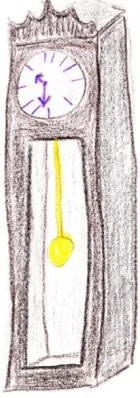
complexity theory rejects the machine-based metaphors originating in the 1600s that
thought the universe was a ―grand clockwork‖ (p. 76) (see Figure 1). From the view of
machine-based metaphors, everything can be understood by breaking it down into its
component parts just as a clock can be taken apart to reveal all of the constituent pieces
from which it was made. However, complexity theorists argued
that while complicated systems such as mechanical objects can be
reduced to individual parts, complex systems cannot be broken
down into component parts because they are always tied to other
complex systems ―in a dance of change‖ (p. 77). Davis and his
colleagues described complex unities as ―spontaneous,
unpredictable, irreducible, contextual, and vibrantly sufficient—in
brief, they are adaptive‖ (p. 77). Complex unities are constantly
evolving and the changes are dependent on the specific
[image:26.612.442.512.444.643.2]circumstances of the individual system. Davis and his
colleagues outlined the development of learning theories in order to understand learning,
knowing, and teaching as complex systems and how the complexities can be teased out
for deeper, richer understandings.
In looking for alternatives to machine-based metaphors for learning and teaching,
complexity theorists viewed learning in terms of cycles of ―recursion, iteration, feedback
loops, folding back, elaboration, and growth‖ (Davis et al., 2008, p. 83). Davis and
colleagues pulled from fractal geometry to explain how learning can be seen as spreading
out in many directions, for example a ―tree-like fractal image, based on branches
branching into branches, is useful for characterizing emergent spaces of possibility‖ (p.
85). Fractal images of learning allow for seeing movement in multiple directions instead
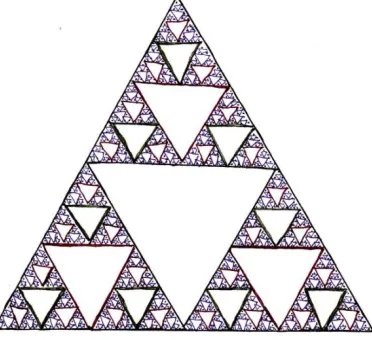
of a linear progression. Figure 2 is a fractal image drawing of a Sierpinski triangle in
which an equilateral triangle is repeated within itself over and over. This repetition
creates movement in various directions, and in learning theory it places learning in a
nested structure in which an individual learner is seen as situated within gradually larger
biological, social, cultural, and environmental situations, like family, classroom, school,
community, state, nation, world. In a nested
view, ―learning systems are embedded in other
learning systems‖ (p. 86), as each branched tree
is connected to other trees through a root system.
An interconnected system, or rhizomatic space
(Deleuze & Guattari, 1983), allows for a number
of ideas, theories, and approaches for
[image:27.612.100.286.490.660.2]complexity theory provided an interconnected framework for bringing together
sociocultural theories of mind, disability studies theories, and a/r/tography theories. I
used these multiple and varied theories throughout the development, execution, and
presentation of this study. I next discuss each theory in turn.
Sociocultural Theories of Mind
Sociocultural theories of mind helped me to understand the experiences and
meanings teachers attributed to their experiences. I begin with defining sociocultural
theory (Vygotsky, 1978; Wertsch; 1991) and explore what goes into meaning and
mediated action (Wertsch, 1991; Zoss, Smagorinsky, & O'Donnell-Allen, 2007). Then I
move into cognitive pluralism theory (John-Steiner, 1995, 1997) and the concepts of
experience (Dewey, 1934/1980) and an expressive teaching moment (Zoss & White,
2011).
Meaning and mediated action. Lev Vygotsky (1978) viewed thinking and
learning as encompassing a person‘s social interactions, cultural context, institutional
setting, environment, biological development, and historical position. Human actions,
filtered through ―a system of social behavior and being directed towards a definite
purpose, are refracted through the prism of the child‘s environment‖ (p. 30). All human
activity is influenced by the social norms and the purpose and context of the activity. He
considered humans as both affecting and affected by their interactions with others, the
groups to which they belong, and their physical environment. Peter Smagorinsky (2001)
defined culture as ―the recurring social practices and their artifacts that give order,
purpose, and continuity to social life‖ (p. 139) viewing people as ―products of culture‖ in
words, culture is the organizing force that defines human society through routines and
products that in turn are constructed by how humans interact with them. James Wertsch
(1991) described sociocultural theory as assuming that ―action is mediated and that it
cannot be separated from the milieu in which it is carried out‖ (p. 18). This means that a
person‘s actions are situated within his or her context and that in mediated action there
are links, in the form of tools and signs, between the person and the action that helps the
person achieve the action. Mediational means, then, are tools and signs to help a person
complete an action and are directly aligned to the social, historical, and cultural
circumstances as well as the people that produced them. In order to contextualize my use
of mediated action and mediational means for my study, I will first explore tools and
signs.
Tools and signs. Wertsch (1991) suggested that one of Vygotsky‘s main claims
was that ―human action, on both the social and individual planes, is mediated by tools
and signs‖ (p. 19). Vygotsky (1978) compared the invention and use of signs and tools:
―the sign acts as an instrument of psychological activity in a manner analogous to the role
of a tool in labor‖ (p. 52). In this analogy signs are instruments for mental activity and
tools are instruments for physical activity. Vygotsky considered that while both signs and
tools are used to solve problems, they situate human behavior in different ways. Signs are
used in solving psychological problems and are ―a means of internal activity aimed at
mastering oneself‖ (p. 55), whereas tools are used in solving external problems and are ―a
means by which human external activity is aimed at mastering, and triumphing, over
nature‖ (p. 55). Smagorinsky (2001) further defined a tool as ―a means by which one acts
Vygotsky‘s use of tool as an external means
of solving problems. Smagorinsky also
pointed out the situatedness of tool use in that
a tool and its purpose are defined differently
at different times, in different places, and by
different groups. How a person uses a tool
depends on the circumstances, specifically the
person‘s culture, how the tool is conceptualized within the person‘s culture, and the
specific situation in which the person is using the tool. Tools and signs function as
mediational means that shape human action, and can be conceived as cultural tools
(Wertsch, 1991). Cultural tools are situated in cultural, historical, and institutional
settings and shape the local settings in which they are used.
In Charles S. Peirce‘s semiotic theory, a sign is something that stands for
something else and is part of a semiotic system that is formed from meaning construction
―when one sign is translated into another‖ (Siegel, 1995, p. 459). It is important to note
that signs are not just substitutions, in that ―sign functioning always involves an
enlargement and expansion of meaning‖
(p. 457). In addition, Peirce‘s theory
recognized sign relations as including more
than linguistic signs (Witte, 1992). For
Peirce (1977), any concept is a sign and all
thought and knowledge happens through
[image:30.612.358.530.74.186.2]Figure 3. Triadic of representamen.
signs and sign systems. Stephen Witte (1992) described Peirce‘s unlimited semiosis as a
spiraling connection between an object, the sign that represents it, and the interpretant of
the sign. A sign determines an interpretant to represent an object (see Figure 3).When the
interpretant is recognized as representing the object, the interpretant also becomes a sign,
which begins a new triadic relation and ―the original interpretant, now a sign, participates
also in a new dynamic relation with an object and another interpretant, which becoming
itself a sign—permits the occurrence of yet another semiotic moment‖ (p. 281) (see
Figure 4).
Smagorinsky (2001), used Witte‘s (1992) notion that signs and the configuration
of signs, what he called a text, can have different meanings to different people or no
meaning at all if ―the configuration has no codified cultural significance, in which case it
is not a sign‖ (p. 135). In other words, in order for a sign to be a sign, it has to have
meaning to a person ―as part of a culturally-learned network of associations‖
(Smagorinsky & Coppock, 1994a, p. 285). In addition, some sign systems are preferred in
particular situations and ―become established as the privileged mediums of
communication‖ (p. 285). Both Smagorinsky (2001) and John-Steiner (1997) agree with
this view of signs as a collection of connections learned through social interactions in
culturally specific settings and that signs have value depending on the context in which
they are used. John-Steiner focused on the diversity of modes of thinking and
communication in developing a conception of languages of the mind as socially
dependent, while Smagorinsky and Coppock focused on how meaning is constructed
will I explore a sociocultural view of meaning construction and how tools and signs
mediate meaning.
Tool kit. Wertsch (1991) argued that Vygotsky‘s analogy comparing ―technical
tools and psychological tools‖ (p. 93) was limited because it failed to take into account
―the diversity of meditational means available to human beings‖ (p. 93). Instead, Wertsch
argued for viewing meditational means, ―not as some kind of single, undifferentiated
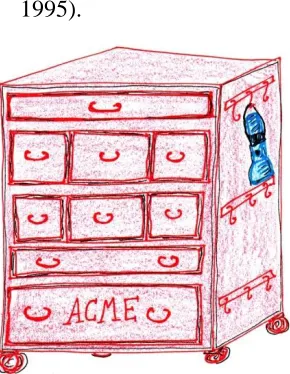
whole but rather, in terms of the diverse items that make up a tool kit‖ (p. 93). Figure 5 is
a visual representation of Wertsch‘s tool kit metaphor. Instead of drawing the kind of tool
kit I have at home, which is small and just has the bare essentials for hanging pictures and
tightening screws, I drew a larger tool box system that has different size drawers for
different kinds of tools. I have known an art teacher, a hair dresser, and an aircraft
mechanic who all used this kind of storage system illustrating that this kind of tool
storage system is versatile and multipurpose. The tool kit metaphor was also expanded to
consider how tools are valued in particular settings (Smagorinsky & Coppock, 1994a,
1995).
Cultural tool kit. Peter Smagorinsky and John
Coppock (1994a) argued that Wertsch‘s tool kit cannot be
carried by students with them to classes when the tools
students possess ―are not valued as cultural tools; rather,
the tools are only useful when used in milieus in which
they are valued as mediums of constructing meaning and
engaging in social transactions‖ (pp. 285-286). In other
[image:32.612.98.243.461.648.2]words, the tool kit metaphor is limited by the value Figure 5. A visual representation
placed on the tools in particular settings and for particular purposes. On the other hand,
Smagorinsky and Coppock argued a variety of cultural tools ―including writing, art,
dance, and other mediums capable of producing ‗texts‘—have potential for enabling
students to construct meaning in classrooms, depending on the extent to which they are
valued in that context‖ (p. 285, emphasis in original), a notion borrowed from Peirce‘s
semiotic theory (1977).
Tool kit drawings. In taking another look at Figure 5, there are a couple of ways
this drawing mediated my meaning construction both for a class I took on sociocultural
theory and in writing my dissertation. In one sense, my drawing represented my memory
of a class discussion on Wertsch‘s tool kit metaphor during which I drew two different
tool boxes on the board. The first drawing was a traditional tool box with only one level
of storage space. The second drawing was a box similar to Figure 4 with different sizes
and shapes of drawers for storing tools of different shapes and sizes and purposes. As I
scanned Figure 4 into the computer I reflected on how the ACME brand label on my tool
box and the Mag brand of flashlight have particular cultural meanings to me that might
be different for another person, or not even recognized by some people as signs. To me
ACME is an allusion to the character Coyote in the Road Runner cartoons, who orders
everything from simple tools to major mechanical contraptions that all arrive with the
ACME logo on the packages. The Mag flashlight has a specific design and is a common
tool for builders and mechanics (I have several from my friend the airplane mechanic).
And lastly, by including my drawings and other artwork in my dissertation, I draw
attention to my reliance on visual thinking (John-Steiner, 1995, 1997) and my negotiation
meaning construction I am able to accomplish through the production of images
(Smagorinsky & Coppock, 1994a, 1994b, 1995).
Meaning. Vygotsky‘s (1978) theory of meaning contains two Russian terms for
sense. Smysl is sense in terms of unarticulated thoughts and ideas and Smagorinsky
(2001) compared to smysl to a rain cloud in the process of forming a storm (see Figure
6). The articulated sense is znachenie, or the representation of sense. In the rain
metaphor, znachenie is the rain dropping from the cloud (see Figure 6). Znachenie is the
meaning that corresponds to ―the notion of a sign, regardless of modality‖ (p. 145). In his
cultural theory of reading, Smagorinsky attributed meaning to ―a reader‘s joint activity
with mediating tools and signs, among them the signs of the text‖ (p. 140). In other
words, meaning is constructed through the interactive use of tools and signs. He also
attributed meaning construction to ―the cultural practices through which both have been
produced and through which the two become engaged‖ (p. 141). Meaning is closely tied
to both a person‘s mediated action and the
sociocultural context of action with tools and signs
used to create and interpret texts. In order to define a
sociocultural theory of meaning, I narrowed down my
definition of tools to include a variety of cultural tools
with the possibility for mediating meaning depending
on their value in specific contexts (Smagorinsky &
Coppock, 1994a). If meaning is closely tied to both a
person‘s mediated action and the sociocultural
[image:34.612.382.521.441.645.2]context of the action, then investigating teachers‘
meanings of their experiences would necessarily require understanding how their use of
tools and signs mediated their actions.
Cognitive Pluralism. Taking a sociocultural approach to mind, Vera John-Steiner
(1997) asserted that ―in constructing meaningful representations of experience, children
and adults appropriate culturally patterned modes of reflection and expression‖ (p. xix).
People make meaning and represent their experiences using ways of thinking and
communicating that are socially and culturally situated. Her theory, cognitive pluralism,
described diversity of thinking in terms of both inner representational modes and
external representational modes. The inner representational modes are ways of thinking
and reflecting internally and include thinking of the body, the language of vision, and the
inner voice. Thinking of the body is the use of movement and dance in ―kinesthetic
imagination‖ (p. 17). The language of vision is the use of visual imagery and visual
metaphors in ―visual primacy‖ (p. 21, emphasis in original). The inner voice is the use of
―verbal representation of reality‖ (p. 30) and creating ―auditory imagery of words and
sentences‖ (p. 33). The external representational modes are ―expressive means by which
thinkers convey their discovery to others‖ (p. xx) and include visual thinking, verbal
thinking, languages of emotion, and scientific thinking. John-Steiner argued that her
investigations into creative thinking supported the use of Wertsch‘s (1991) tool kit
metaphor. While Wertsch used the term psychological tools, John-Steiner used the term
languages of the mind. Her investigations expanded the notion of psychological tools by
exploring pluralistic modes of thinking such as drawing images, choreographing dances,
experience because doing, undergoing, and past experiences can happen using multiple
languages of the mind.
Experience. I used John Dewey‘s (1934/1980) concept of educative experiences
to understand my participants‘ experiences integrating visual arts into their literacy
curricula. Dewey described experiences that result in learning, thus educative experiences
as combining doing, undergoing, past experiences, and emotion. Doing is an active
process, such as picking up a stone from a river bank. Undergoing is a passive process of
going through something, such as feeling the weight and texture of a stone in one‘s hand.
In addition, undergoing is receptive and ―involves reconstruction‖ (p. 41). In order for an
educative experience to stand out from the rest of the milieu of daily life, doing and
undergoing must be incorporated into past experience, such as when an amateur geologist
blends a present doing of holding a river stone in her hand with undergoing the feel of the
stone through weight and texture, while also remembering her past experiences of
collecting stones from other places.
Expressive Teaching Moment. Michelle Zoss and I (2011) used Dewey‘s notion
of experience to analyze how a middle school teacher, who integrated visual arts into her
reading and language arts curriculum, understood one moment of teaching as valuable to
her teaching practices. We framed our findings in Dewey‘s (1934/1980) description of
learning moments as expressive when past experiences and present doing and undergoing
are woven together in a way that alters the learner‘s meaning of the moment. We used the
term expressive teaching moment to theorize how a drama project combined the teacher‘s
memories of past acting experiences, her present doing and undergoing of teaching a
that made one moment special and separated it from her other experiences that year. In
discussing her memories of the project in interviews, she constructed a mental narrative,
or a story reflecting on her teaching practices that served as a mediational tool for
understanding her experiences (Smagorinsky, 2001; Wertsch, 1991). The story she told
about the project helped her compare how her teaching practices during the drama project
differed from her teaching practices during other projects that year. In other words, in
exploring the idea that the project put a ―glow‖ on her year, the teacher articulated how
she defined good teaching and explored the possibilities the dramatic project offered.
I used sociocultural theories of mind to inform my study. Specifically, I define
meaning as containing both the unarticulated ideas and the representation of articulated
ideas (Smagorinsky, 2001). I understand that meaning is mediated by cultural tools such
as signs and sign systems that are valued in particular contexts in particular ways
(Smagorinsky, 2001; Smagorinsky & Coppock, 1994a, 1995; Wertsch, 1991). The notion
of mediated meaning helped me understand how English teachers used cultural tools to
make meaning of their experiences. I used cognitive
pluralism (John-Steiner, 1995, 1997) to understand the
complex ways teachers used and valued multiple means of
constructing and articulating meanings. Lastly, I used the
notion of an expressive teaching moment to understand
moments the teachers described as standing out in their
experiences.
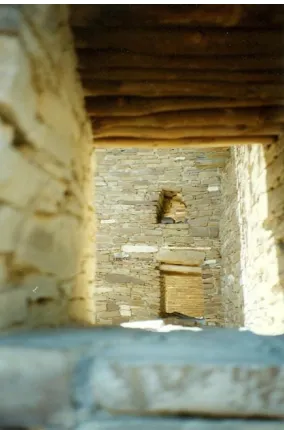
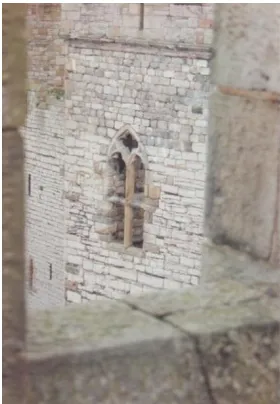
I took the photograph in Figure 7 in the ruins of a
[image:37.612.94.236.467.682.2]building near the border of Colorado and New Mexico. It is Figure 7. Windows framed by
a view through a window looking into the windows of the next room and through those
windows into yet another room. I love images like this one because they show how my
view into the next room was framed by the window where I stood. This kind of
compositional framing of photographs is one meaning in my use of the metaphor artistic
frames. The photograph was composed through an actual window frame that looked out
into other rooms and windows. The large window frame in the foreground is the one
where I am standing and through which I see two other window frames, looking into yet
another room. In my metaphor, each window represented part of my theoretical
framework. I considered the window where I stood as how I organized and made my own
meaning of each part of my study. In the first part of my theoretical framework I
explained the theories I used to understand my participant teachers‘ experiences of visual
arts integration. The theories I chose about experience and meaning functioned as frames
that guided my study. In the next part of my theoretical framework, I describe disabilities
studies theory and then the conceptual underpinnings of a/r/tography and how they fit in
my study. Both of these theories provided additional frames to create a complex view of
the teachers‘ experiences.
Disability Studies
In my research I used the frame of Disability Studies as a way of considering how
the concept of dis/ability is defined through social practices. In this section I explore
Disability Studies and Universal Design as a model for teachers to accommodate the
needs of all students. Disability Studies scholars (Baglieri & Knopf, 2004; Ferri, 2004;
Mooney, 2007; Reid & Valle, 2004) wanted to change the way dis/ability is considered
1969/1972), or how an object is formed through practices and disciplines, and how the
discourse constitutes domains of normativity (p. 61), or how boundaries between what is
acceptable and what is not are established and maintained. They emphasized the
importance of examining how the discourse of dis/ability constructs an individual
through the process of educational assessments, referral for psychological testing, and
labeling the individual as abnormal (Reid & Valle, 2004). Disability Studies is used to
critique the exclusionary practices that reinforce the division between those labeled
normal or abnormal. One such critique was an examination of how the norms used to
categorize what it means to be a good student distribute people along a scale that forms
hierarchies (Foucault, 1975/1995). The practice of using that scale to place students in
categories determined that ―for some to be above average, others must settle for below
average‖ (Brantlinger, 2004, p. 491). Disability Studies scholars argued that instead of
situating students along a hierarchy, educators should view difference as a natural part of
what it means to be human beings and view students as complex individuals.
Disability Studies scholars also argued for using a Universal Design model in
education. With its origins in architecture, Universal Design (UD) began a movement
toward planning spaces to be equitable for everyone instead of retrofitting access after the
fact. Jay Dolmage described the importance of UD for Disability Studies scholars as ―a
way to plan, to foresee, to imagine the future. The universal of UD also suggests that
disability is something that is always a part of our worldview‖ (2008, p. 24). In other
words, if dis/ability becomes an essential part of all educators‘ worldview, they will
design classroom spaces, curricula, and pedagogy with all students in mind. When altered
teachers to plan curricula, teaching strategies, and assessment for all students. When
teachers use a UDI model they ―encourage collaboration and cooperative learning; that
they fluctuate teaching methods and diverse media; that they allow students to share their
knowledge in a variety of ways‖ (Dolmage, 2008, p. 24). In a third alteration, Universal
Design for Learning (UDL) is a model for planning educational experiences for students
to develop as successful learners by providing multiple means of representation, multiple
means of action and expression, and multiple means of engagement (CAST, 2011).
Multiple means of representation includes providing options for how students access
information. Multiple means of action and expression include offering students multiple
ways to demonstrate their learning. Multiple means of engagement include offering
students options for accessing their interests and monitoring their own learning. Universal
Design for Learning can enhance the school experiences of not just students with
dis/abilities or those who struggle to succeed in school, but every student, by offering
learning environments, materials, and instruction in a variety of ways to meet the needs
of all kinds of learners.
Theories and Concepts of A/r/tography
As a doctoral student I learned that part of planning my dissertation research was
matching the questions I was interested in with methods that fit how I make meaning of
the world I live in and the experiences I have. In looking at the innumerable theories,
methodologies, and methods available to researchers, I had to figure out which pieces
would help me in my endeavors based on how I think and learn and communicate best. In
deciding on a methodology I had to figure out what I would need to put the pieces
study was to anticipate how I might contribute to the fields of English education and
special education and push them in new directions. By using a/r/tography to influence
my methodology I hoped to expand the theories and knowledge bases about teachers‘
experiences of integrating visual arts into literacy curricula. In this section I explain
a/r/tography, the theories behind it, and how I see it helping me create an artistic frame to
pull many puzzle pieces into a whole picture.
A/r/tography encourages multiplicity in thinking, questioning, and understanding
(Springgay et al., 2008). One way a/r/tography focuses on multiplicity is in the meaning
of the term a/r/tography. In one sense a/r/tography is a combining of image and writing
in various ways with an emphasis on valuing both image and writing, as well as valuing
the mixture of multiple media and genres. In another sense a/r/tography takes a view of
identity in which the professional and personal roles one plays are interwoven,
specifically for those in the roles of artist, researcher, and teacher. This view of identity
as pluralistic, or identities, encourages one to see personal life and professional life as
intertwined and part of a larger whole and represents the weaving of personal and
professional with a/r/t standing for artist/researcher/teacher. Those who use a/r/tography
are ―artists-and-teachers-and-researchers who examine educational phenomenon through
an artistic understanding and inquiry process‖ (p. 87). In other words, a person
conducting educational research can be an artist and a teacher and a researcher at the
same time and can reach understandings through both artistic and inquiry processes. My
initial interest in a/r/tography was in a search for a methodology that would help me
structure my research around understanding phenomena through both scholarly writing
becoming an artist and teacher while I began my journey of becoming a researcher. In
learning about a/r/tography I began to explore the theories in which it is based.
A/r/tographers use complexity theories to investigate education by looking at how
the phenomena under study are part of multiple complex systems. They consider
educational environments to be ―relational, interconnected, independent living systems,
that adapt themselves to changing circumstances‖ (Springgay et al., 2008, p. 84).
A/r/tographers explore alternative metaphors, rejecting a mechanistic view of education
in order to understand the complexities of knowing, learning, and teaching. The creative
and artistic processes used to come to understandings in a/r/tography are based in six
concepts called renderings (Springgay, Irwin, & Kind, 2005).
Renderings. According to Stephanie Springgay, Rita Irwin, and Sylvia Wilson
Kind (2005), the concepts used in a/r/tography, called renderings, are considered
theoretical spaces that mediate understandings. A rendering is an act of interpretation or a
representation. The renderings outlined by Springgay and colleagues are ways of using
creative and artistic practices to theorize, interpret, and represent research
understandings. Renderings are considered methodological concepts instead of methods
because concepts are ―flexible, dynamic, and intersubjective locations through which
close analysis renders new understandings and meanings‖ (p. 898). In other words,
a/r/tographers are interested in exploring phenomena in multiple, active ways that allow
for movement in different directions, for looking from different perspectives, and for
seeking out new possibilities. What follows is a discussion of each rendering I used in my
Metaphor and metonymy.One rendering in a/r/tography is metaphor and
metonymy. According to George Lakoff and Mark Johnson (1980), the human conceptual
system is metaphorical and is how humans define their realities. Metaphor is
―understanding and experiencing one kind of thing in terms of another‖ (p. 5), such as
comparing the mind to a machine in the phrase ―Boy, the wheels are turning now!‖ (p.
27, emphasis in original). The phrase ―the wheels are turning‖ to describe a person
thinking is a comparison of how a person‘s mind works to how a machine works. This is
an example of a machine-based metaphor like those critiqued by Davis et al. (2008).
Metonymy is the use of ―one entity to refer to another that is related to it‖ (p. 35), such as
using a part to represent the whole, a producer to represent the product, or a place to
represent the institution. For example, the phrase ―he‘s got a Picasso in his den‖ (p. 38)
uses the name of the producer, the artist Picasso, to represent the product, a painting by
Picasso. In metonymy the relationships can be ―word-to-word (or image-to-word, or
image-to-image)‖ (Springgay et al., 2005, p. 904).
Metaphors and metonymy are used in a/r/tography to render a variety of concepts.
One example is using a physical object, such as a gate, to represent the concept of travel
or arrival (Irwin et al., 2009). Pauline Sameshima and Rita Irwin (2008) used the idea of
liminality, being in transition or being on a threshold, to explore in between spaces. They
described their theory of dynamic curriculum in which a liminal learning space is a
―space between or the passageway‖ with a ―multi-layered complex interplay of
dimensions which span breadth, depth, height, and time‖ (p. 2). This in between space is
a place of possibility, a place from which research may expand out in many directions.
to explore how the arts offer ways to understand ―liminal spaces of experience‖ (p. 8),
and how representing motion, edges, and borders visually helped them understand how
―navigation through, in, or on the running passageway of constructed currere
[curriculum] is possible, always honouring difference‖ (p. 10).
Contiguity.Contiguity means adjacent, and in a/r/tography contiguity is a way to
explore multiple meanings of a concept by looking at how the placement of two things
together might add to what they could mean as a whole. Often, a broadening of possible
meanings is represented by a slash (/) ―intended to divide and double a word—to make
the word mean at least two things, but often more‖ (Springgay et al., 2005, p. 904). In the
term a/r/tography, art (image) is placed next to graphy (words) in order to represent a
bridging of image and words. But, more than setting image and words next to each other,
a contiguous rendering uses images and words to represent a doubling that can both
widen and destabilize meanings. Contiguity is meant to value what art and graphy can
mean separately side by side and intertwined, as well as what meaning can be found in
spaces between the two (Springgay et al., 2005). Rendering contiguity can bring out
multiple meanings and combinations of meanings to be viewed simultaneously, as well as
subverting other meanings. In addition to bringing together image and words,
a/r/tography also doubles art and a/r/t as an ―unfolding between process and product, text
and person, presence and absence, art and audience, teacher and student, author and
reader‖ (p. 901, emphasis in original). In other words, using the term ―a/r/t‖ represents
multiple meanings and teasing out those meanings by exploring the layers and
researchers included and left out of texts, the audiences who experienced the text, and the
roles of teacher/student and author/reader.
One example of contiguity is Irwin‘s (2003) concept of in/sights, to ―open up or
unfold implicit aesthetic sensibilities held within seeing‖ (p. 64). She used the slash (/) to
represent the in-between spaces that included multiple meanings of insight, in sight, and
in/sight as ―at once looking within while seeing beyond: a delicate balance between
seeing possibilities and recognizing limitations‖ (p. 65). Irwin used the slash to double
the word ‗insight‘ to include both ‗insight‘ as a realization and being ‗in sight‘ or in view.
She used artistic practices of underpainting and overpainting to represent her metaphor
for curriculum as an ―aesthetic of unfolding in/sights‖ (p. 71).
Openings. The rendering openings, such as gaps or holes, beginnings, or
opportunities, looks for ways to expand understanding by looking for the gaps and
exploring what might be hidden. Openings look for ―attentiveness to what is seen and
known and to what lies beneath the surface‖ (Springgay et al., 2005, p. 905). Openings
are discussions of what is taken for granted as known and what else might be learned by
asking a different question. It is an invitation to explore the ―multiplicity of perceptions
held between and within sensual and textual ways of knowing. Engagement that is
between is open and porous, whereas knowing is situated within the midst and on the
edges‖ (p. 905, emphasis in original). Openings invite a/r/tographers to look in different
ways through multiple senses and textures. Patricia Leavy (2010) used a fragmented
prose or montage style to create ruptures in the dichotomies she found in her academic
experiences and to (re)assemble her a/r/t identities by ―carving poetic doorways on my
In addition, a/r/tographers play with the ambiguity
of meaning in metaphors and metonymy to create openings
and explore tensions (Sameshima, 2006). For example,
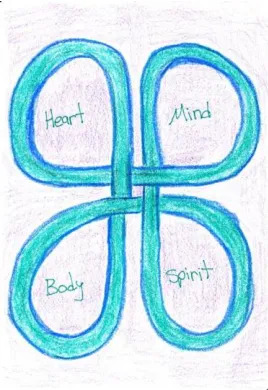
Sameshima (2006) used multiple forms of a tetrad or group
of four. She used a visual tetrad graphic of a ribbon folding
in on itself to make four points in a closed circle (see
Figure 8). The form of her poem was four groups of lines.
The four sections of the poem were about the body, mind,
heart, and spirit as four parts of a whole. She used the
tetrad metaphor to represent how these ideas are
―inter-relational, resonating, and complementary, suggesting that when this foursome dances
holistically as a collective, learning can be enhanced‖ (p. 52). Her metaphor was
represented visually in the graphic, linguistically in the content of the poem, and
structurally in the form of the poem.
The renderings (contiguity, metaphor and metonymy, and openings) that I used
are ways to think about, interpret, and theorize research through artistic and creative
practices. Of the renderings, the two I have found most in the literature were contiguity
(e.g., Irwin, 2003; Leggo, 1998; MacKenzie, 2008), and metaphor (e.g., Irwin et al.,
2009; Leggo et al., 2010; Sameshima, 2006; Sameshima & Irwin, 2008; Springgay, 2005;
Vaughan, 2009). In many of the a/r/tography studies I have read, there was not a clear
distinction made between the renderings, and in fact, I noticed attempts to show the
complexity and interrelatedness of the concepts (e.g., Irwin, 2003; Irwin et al., 2009;
[image:46.612.108.242.71.266.2]In addition, the slash (/) can be used in a combination of renderings, such as
Irwin‘s (2003) concept of in/sights, which both looked at multiple meanings of the sign
insight through contiguity and played on the metaphor of insight as both related to vision
and to understanding. I used my metaphor of artistic frames to frame in/sights (incite)
possible renderings of my research. In Chapter 3 I further describe the renderings I
developed in the study.
A/r/tography provided an important influence to frame for my study for several
reasons. First and foremost, a/r/tography has been widely used to study education and
specifically teachers‘ experiences (e.g. Irwin, 2003; La Jevic, & Springgay, 2008; Leggo
et al., 2010; Sameshima & Irwin, 2008; Springgay, 2005; Vaughan, 2009). Second,
a/r/tography encourages the use of creative products in teacher reflection and considers
using the notion of becoming teachers to frame teachers as always growing and evolving
in their practices and identities (Irwin, 2003). Third, a/r/tography‘s basis in complexity
theories of learning, knowing, and teaching (Davis et al., 2008) provided me with
multifaceted ways of viewing my research. For example, I considered images from fractal
geometry such as the Sierpinski triangle to understand that the teachers‘ experiences were
leveled sets of interactions and ideas rather than hierarchies of better and worse examples
of arts integration. Finally, the emphasis in a/r/tography on knowing through artistic
practices aligns with my theories on experience and meaning, the literature on arts
integration, and my need to conduct a research study that is designed to support and
encourage my own learning, knowing, and teaching.
In subsequent chapters of this dissertation I present the research base on which I
developed as renderings of the analyzed data, findings representing further analysis of the
teachers‘ experiences, and a discussion. In Chapter 2, I provide a comprehensive review
of the literature on arts integration as well as the role of visual methods and the arts in
educational research. Chapter 3 details the methodology of my study in terms of the
context, participants, data collection and analysis, and the rigor and ethics to which I held
myself accountable. In Chapter 4 I present several openings that framed the teachers‘
articulations of their experiences integrating visual art for students with dis/abilities. With
Chapter 5 I present a sociocultural view of the openings that illuminated teachers‘
experiences with integration. Finally, in Chapter 6 I discuss the importance of the
teachers‘ experiences and the implications of this research for future studies in arts