Philosophy Theses Department of Philosophy
Summer 7-10-2012
A Test of Prinz's Air Theory: Is Attention Sufficient for Conscious
A Test of Prinz's Air Theory: Is Attention Sufficient for Conscious
Emotion?
Emotion?
Anais F. Stenson Georgia State University
Follow this and additional works at: https://scholarworks.gsu.edu/philosophy_theses
Recommended Citation Recommended Citation
Stenson, Anais F., "A Test of Prinz's Air Theory: Is Attention Sufficient for Conscious Emotion?." Thesis, Georgia State University, 2012.
https://scholarworks.gsu.edu/philosophy_theses/117
by
ANAÏS FERN STENSON
Under the direction of Dr. Andrea Scarantino
ABSTRACT
Jesse Prinz proposes that attended intermediate‐level representations (AIRs) are
sufficient for conscious awareness. He extends this claim to emotion, arguing that attention
is the mechanism that separates conscious from unconscious emotions. Prior studies call
this entailment into question. However, they do not directly address the intermediate‐level
requirement, and thus cannot decisively refute the AIR theory of consciousness. This thesis
tests that theory by manipulating participants’ attention to different features of
subliminally processed words while recording both behavioral and electroencephalogram
(EEG) data. Both measures suggest that subliminally processed stimuli are attended
according to participants’ conscious intention to complete a task. In addition, the EEG data
demonstrate that intermediate‐level neural activity was modulated by the subliminal
stimuli. Thus, these results suggest that AIRs are not sufficient for conscious emotion. This
finding undermines Prinz’s AIR theory, and its account of the distinction between
conscious and unconscious emotion.
by
ANAÏS FERN STENSON
A Thesis Submitted in Partial Fulfillment of the Requirements for the Degree of
Master of Arts
in the College of Arts and Sciences
Georgia State University
A TEST OF PRINZ'S AIR THEORY: IS ATTENTION SUFFICIENT FOR CONSCIOUS EMOTION?
by
ANAÏS FERN STENSON
Committee chair: Dr. Andrea Scarantino
Committee members: Dr. Eddy Nahmias
Dr. Gwen Frishkoff
Dr. Michael Owren
Electronic Version Approved:
Office of Graduate Studies
College of Arts and Sciences
Georgia State University
ACKNOWLEDGEMENTS
I thank Dr. Andrea Scarantino, Dr. Eddy Nahmias, Dr. Gwen Frishkoff, and Dr.
Michael Owren for their support and advice throughout the course of this study. Dr.
Scarantino, Dr. Nahmias, and Dr. Owren provided extensive feedback on the latter drafts of
this thesis. It is greatly improved, thanks to their suggestions. The theoretical questions,
literature review, study design and implementation (including acquisition, analysis, and
interpretation of EEG and behavioral measures) were carried out under the direction of Dr.
Frishkoff, to whom I am deeply grateful for guiding me through my first foray into
neuroimaging research. The experiment presented in the thesis would not have been
possible without her dedication to the project. I would also like to thank Amanda Clevinger,
Annie Grapek, Justin Taylor, and Sam Sims for their help with data collection and data
management, as well as Theresa Maglio and Annie Grapek for their assistance in preparing
stimulus materials. Finally, I am grateful for the support and encouragement of this work
provided by my friends and family, including Amanda Clevinger, Christina Miller, Ellen
“Ellie” Irons, Dr. Lisa Heimbauer, John Sulzman, Dr. Julie Stenson, Michael “Augi” Augustin,
Noel Martin, Dr. Paul Ruvolo, R. Toby Amoss, Dr. Stephen DiVerdi, Sally Hargate, Sam Sims,
S. Alexis Owen, and Shane Callahan.
TABLE OF CONTENTS
ACKNOWLEDGEMENTS ………..………..… iv
LIST OF TABLES ………..………..……… vii
LIST OF FIGURES ….………...… viii
1 INTRODUCTION .…..………..………...……..… 1
1.1 PRINZ’S THEORY OF EMOTIONS AS EMBODIED APPRAISALS …..……...……….. 4
1.2 MARR’S HIERARCHICAL MODEL OF PERCEPTION ………...…… 7
1.3 THE ROLE OF ATTENTION IN CONSCIOUS EMOTIONS …...……….…...…… 9
2 PRELIMINARY THREATS TO THE AIR THEORY ………..………. 13
2.1 A NOTE ON NOMENCLATURE ………...…… 14
2.2 THE MASKED STIMULUS PROCESSING PARADIGM ……...………...….. 16
3 A TEST OF PRINZ’S AIR THEORY …….……….………... 23
3.1 THE PRESENT STUDY ………. 28
3.1.1 Goals and Hypotheses ……….………..……….. 28
3.1.2 The Participants ……..……….……….………..…... 29
3.1.3 The Paradigm …….……….……….……….………...…... 30
3.1.4 The Task ……...……….……….……….………... 31
3.1.5 The Stimuli ………..……….……….……….…... 32
3.2 RESULTS ………..………..……… 34
3.2.1 Behavioral Data …….……….……… 35
3.2.1.1 Case Task Results ……….………...……… 35
3.2.1.2 Valence Task Results ……….……… 36
3.2.1.3 Comparing Case and Valence Task Performance ………. 36
3.2.2 Evoked‐Response Potentials ………..……… 37
4 IS THE STUDY A VALID TEST OF THE AIR THEORY AND PRINZ’S ACCOUNT OF UNCONSCIOUS EMOTIONS? ………...………….……….……….………... 43
5 PRINZ’S LIKELY CRITICISMS OF THE TEST AND ITS RESULTS ……….…..…….. 45
5.1.1 Objection 1: Selection, Not Attention ………..………….….……… 45
5.1.2 Objection 2: Orienting, Not Attention ………..……….……… 47
5.1.3 Objection 3: Attention Takes Time …………...……….……….… 49
5.1.4 Objection 4: Attention Without Intermediate‐Level Representation 51 5.1.5 Objection 5: An Absence of Behavioral Priming Effects Evidences an Absence of Attention ……….………..…… 53
5.1.6 Summary of Defenses of the AIR Theory ……….………...………… 55
6 CONCLUSION ………..…..………..……… 56
WORKS CITED …………..………..………..……….… 62
APPENDIX: METHODS SECTION ……..………..……….………. 66
LIST OF TABLES
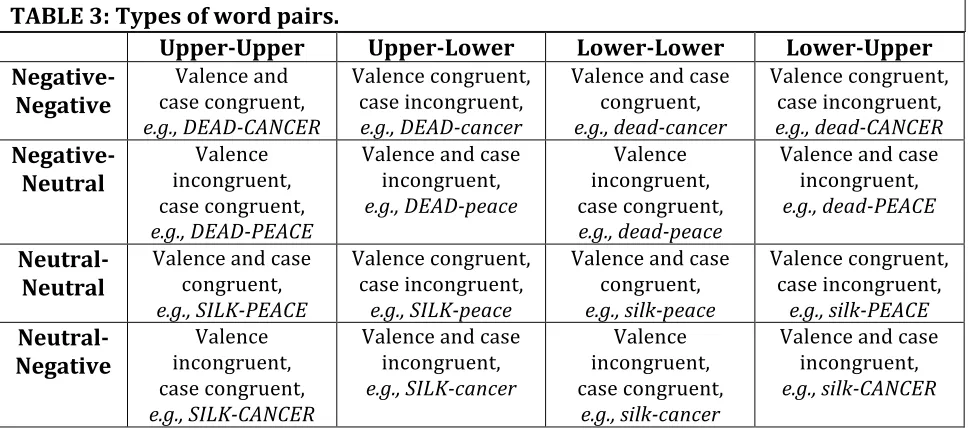
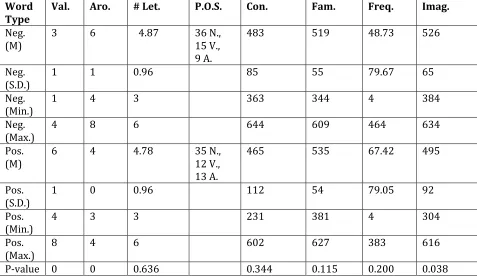
Table 1 33
Table 2 34
Table 3 68
Table 4 69
LIST OF FIGURES
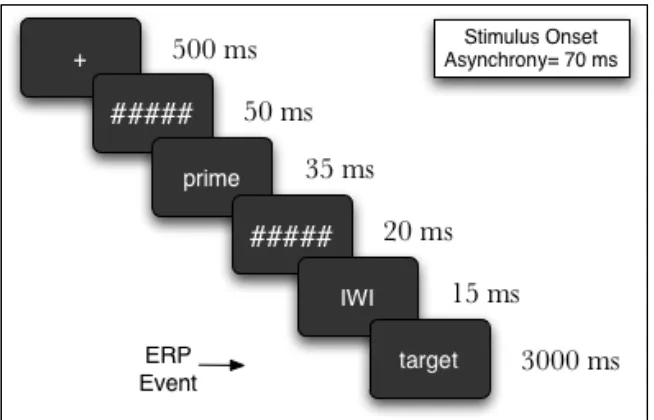
FIGURE 1 31
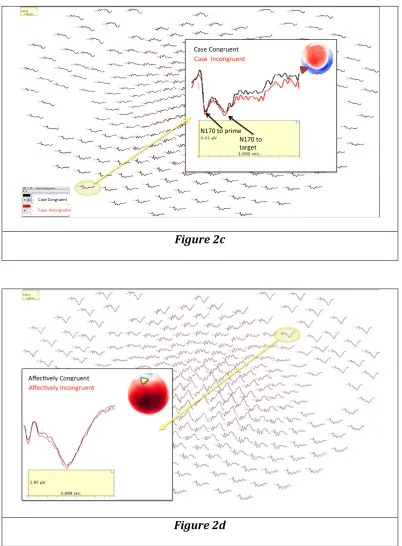
FIGURE 2a and 2b 41
FIGURE 2c and 2d 42
FIGURE 3 70
FIGURE 4a and 4b 75
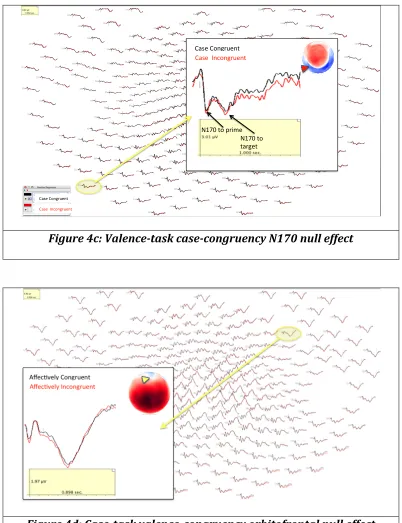
FIGURE 4c and 4d 76
FIGURE 5 77
1 INTRODUCTION
The relationship between attention, awareness, and emotion is a complex topic that
interests both philosophers and psychologists (Clore et al., 2005; Feldman Barrett, 2005;
Berridge & Winkielman, 2003; Lacewing, 2007; Prinz, 2005; Winkielman, 2004;
Winkielman et al., 2005). In this context, the existence of unconscious emotions has been
particularly controversial (Prinz, 2011). Those who view conscious, subjective awareness1
as intrinsic to emotion regard "unconscious emotion" as an oxymoron, whereas those who
adopt a more inclusive view note that affectively charged stimuli can evoke emotional
responses, even in the absence of awareness of either the stimulus, the emotion, or both.
Historically, felt experience was considered a necessary component of emotion.
William James (1884) articulated an influential statement of this view, writing that, “…our
feeling of the same [bodily] changes as they occur IS the emotion” (p. 190). Simply put, the
phenomenology of certain physiological changes constitutes an emotion. On this account,
emotion entails conscious experience. It follows that there are no unconscious emotions.
Many contemporary accounts of emotion descend from this Jamesian view.
Proponents of unconscious emotion reply that consciousness is not necessary for
emotion. For instance, Winkielman and Berridge (2004) propose that, “people can have
subliminally triggered emotional reactions that drive judgment and behavior, even in the
absence of any conscious feeling accompanying these reactions” (p. 121). The behavioral
shift is taken as evidence of the emotion, regardless of whether it was consciously
experienced. This account operationalizes emotion by equating it with behavioral
outcomes that follow from the perception of emotionally charged stimuli.
Each side has established conditions that are purportedly sufficient for emotion, and
both argue that so long as those are fulfilled, a particular state can properly be called an
emotion. As a result, the two parties count emotions differently. One way to advance this
debate is to examine instances of purportedly conscious and unconscious emotion in order
to determine how they differ.
In this thesis, I will accept for the sake of argument that “unconscious emotion” is
not an oxymoron, and examine the specific neurophysiological and mental processes that
may distinguish between conscious and unconscious emotions. In particular, my focus will
be on Jesse Prinz’s (2011) recent proposal that an emotion will become conscious if and
only if a valenced stimulus is attended. Valence is the hedonic quality of a stimulus, which
falls along a spectrum from negative to positive (Prinz, 2011, p. 161). Prinz’s thesis is then
that attention to a stimulus with hedonic quality is both necessary and sufficient to produce
a conscious emotion, where by attention he means the availability of a stimulus to working
memory (n.d, p. 87).
The goal of this thesis is to test part of this claim: the idea that attention to a
valenced stimulus always produces a conscious emotion. I will evaluate how attention to
different dimensions of affectively valenced words (such as murder, peace, or cancer) can
impact responses to that stimulus, even when the representation of that stimulus does not
enter into conscious awareness. For the present experiment, attention is operationalized as
a conscious intention to complete a particular task. I hypothesize that such a task will
impact subliminal word processing. If this outcome obtains, then Prinz’s entailment
To test the relationship between attention, consciousness, and emotion, I examine
the behavioral and brain responses to valenced words during two different experimental
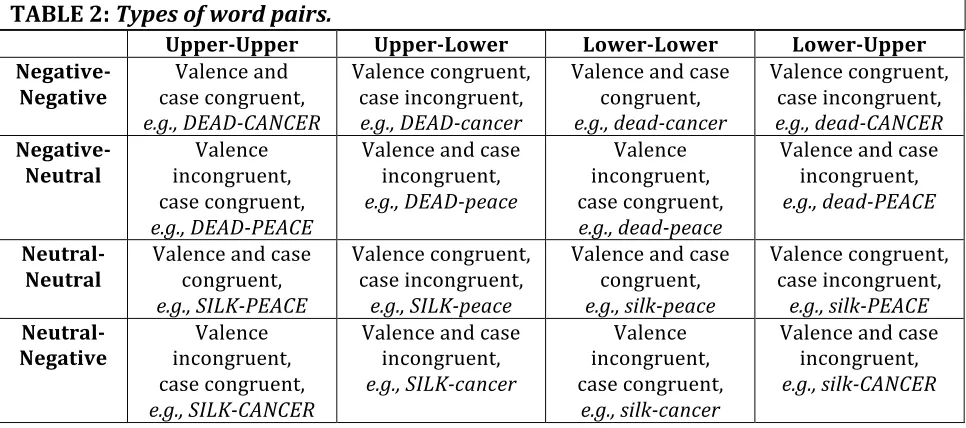
conditions. In the first, participants were instructed to attend to valence. Their task was to
classify words as being strongly negative or neutral. In the second, they attended to the
case of the words. Their task was to classify words as being upper or lower case. In both
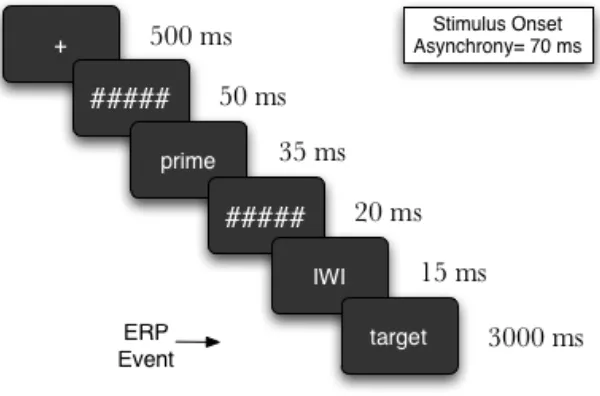
conditions, two words were presented in rapid succession. The first word was presented
for a duration that precludes conscious perception (35 milliseconds (ms)). It was quickly
replaced by the second word (3,000 ms), which is consciously perceived. Participants
classified this word according to the task (either attend valence or attend case).
The results of this experiment demonstrate that when attention is consciously
directed to a particular feature (valence or case) of words, that intention impacts how
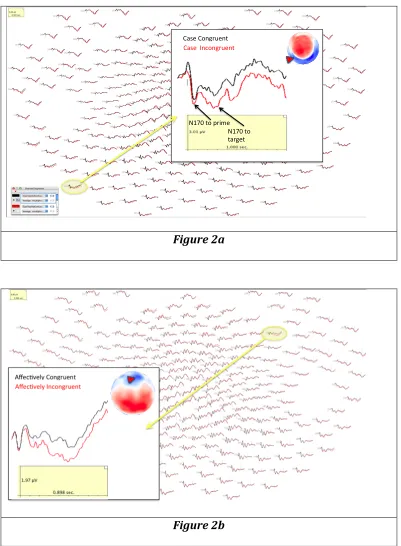
subliminal stimulus processing unfolds. Both behavioral and electrophysiological (EEG)
responses varied according to the task‐congruence of the first and second words. The task‐
specific effect of the subliminally processed first word on processing of the subsequent
target word suggests that participants’ conscious intention to complete a particular task
impacted processing at the subliminal level. That is, when both words were congruent
according to a given task, the first word facilitated processing of the second word.
These results suggest that, if valenced words are sufficient to elicit emotions, then
those emotions can be attended without producing any subsequent conscious experience.
Since Prinz contends that conscious and unconscious emotions are distinguished by
attention, the current results suggest falsification of his account. That is, this study provides
evidence that unconscious emotions can be attended without becoming conscious. In other
unconscious emotions are not separated by attention alone. Before accepting this
conclusion, though, the theory, experiments, and interpretation of the results should be
examined in greater detail.
The thesis is structured as follows. First, I outline Prinz’s theories of emotion and
consciousness. I then introduce empirical findings that offer a preliminary challenge to
Prinz’s understanding of the role of attention in conscious phenomena. Next, I present my
own study, designed expressly to test Prinz’s predictions concerning the role of attention in
emotion perception. After reviewing the results of this study, I argue that they spell trouble
for Prinz’s theory of unconscious emotions. I then consider Prinz’s likely objections and
argue that none succeed in accounting for the present results. In the conclusion, I present
evidence that conscious and unconscious emotion processing unfold differently. I then
argue that these findings necessitate that Prinz refine the AIR theory both by bolstering his
definition of attention and reevaluating his reliance on a hierarchical model of perceptual
processing.
1.1 PRINZ'S THEORY OF EMOTIONS AS EMBODIED APPRAISALS
Prinz (2004b) characterizes emotions as “perceptions of patterned changes
in the body” that arise within the somatosensory system (p. 371). Emotion has two “raw
ingredients:” valence and appraisal (Prinz, 2004b, p. 97). An individual’s appraisal of the
valence, or hedonic quality, of a stimulus produces the bodily changes (Prinz, 2004b, p.
100). For instance, the realization that a snake is dangerous produces a particular
physiological response—typically, that which will produce the emotion of fear. The
Prinz (2004b) distinguishes between registration of an emotion and its
representational content (p. 58). He specifies that emotions register changes in the body,
but that they represent "relations between external states and ourselves," which he calls
“core relational themes” (2004b, p. 60 & 66). Emotions come about (are caused) when the
brain registers patterns of bodily changes, but they do not represent those changes (Prinz,
2004b, p. 66 & 244). Rather, emotions, like fear, represent core relational themes. In the
case of a snake, that theme is danger (Prinz, 2004b, p. 225). Fear does not represent a
racing heart and sweaty palms. Perceiving a snake causes the emotion of fear by producing
a suite of bodily changes, such as the racing heart and sweaty palms. These are the
physiological “symptoms” of danger. The feeling of fear represents the danger posed to the
individual by the snake. Emotions are thus valenced perceptions of bodily changes that
convey information about an individual’s position in the external world and motivate
actions accordingly (Prinz, 2004b, p. 225).
The set of stimuli that can elicit a given emotion are diverse. Prinz proposes that
emotion elicitors are unified by the impact they have on a perceiver. For instance, snakes,
empty bank accounts, and earthquakes all elicit fear. While reasons those stimuli evoke
fear vary, all fear‐inducing stimuli will produce a similar set of patterned bodily changes.
The many different causes of fear are united by their impact on the perceiver into what
Prinz calls a “calibration file” for fear (2004b, p. 100). The contents of calibration files
include all of the representations that cause a particular emotion (Prinz, 2004b, p. 100).
Thus, there are files for sadness, anger, fear, and so on. For each of these emotions, there
are two types of calibration files: one which is “hard wired” in the individual by natural
causal inferences). In short, calibration files contain all of the causes of emotions, which
have various etiologies.
To summarize, calibration files for particular emotions specify what will cause the
patterned bodily changes that are perceived, or registered, and then represented in terms of
core relational themes. Prinz (2004b) summarizes his view as follows: “All emotions are
embodied appraisals under the causal control of calibration files” (p. 102). Thus, the
perception of a snake triggers a set of physiological responses. This pattern of responses is
contained within the calibration file for fear. When particular patterns of physiological
response unfold, they are appraised in relation to a core relational theme, which is, in this
case, danger. This appraisal of danger is then “felt” as fear. In other words, bodily change
serves as a barometer, tuned by both phylogeny and personal experience, that indicates the
prospects for an individual’s well being. Together, the bodily changes and the appraisal of
them constitute the emotion.
Importantly, according to Prinz, neither registration of an emotion nor its
representation of a core relational theme entails conscious awareness. Prinz’s theory
entails that an attended, intermediate‐level representation of a stimulus is sufficient for it
to be consciously perceived. On this account, attention to valenced stimuli that generates an
intermediate‐level representation will produce a conscious emotion.
Prinz (2005a) derives this entailment between attention, intermediate‐level
representation, and conscious experience from his general theory of perception as,
"stimulus detection through a sense organ" (p. 16‐17). Prinz (2005a, n.d.) notes that visual
stimuli can be processed subliminally (e.g. in cases of blindsight) and infers that subliminal
Prinz considers emotions to be a kind of perception (namely, that of bodily changes), he
infers that they are processed similarly to other percepts (n.d., 53). In short, he holds that
there is a common process through which perception unfolds, and that this is conserved
across perceptual modalities (n.d., 65‐66). Thus, if subliminal visual perception is possible,
so is subliminal perception of emotion. To fully appreciate Prinz’s reasoning, we need to
delve into the details of the hierarchical model of perception that inspired Prinz’s theory.
1.2 MARR’S HIERARCHICAL MODEL OF PERCEPTION
Prinz’s theory of conscious versus nonconscious perception is based on a model of
hierarchical processing set forth by David Marr (1982) and endorsed by Ray Jackendoff
(1987). This model distinguishes three stages, or levels, of perception of visual perception.
The lowest level is derived directly from the retinal image (Jackendoff, 1987, p.
170). This level enables detection of basic features of a percept. These include edges, path
of motion, and regions with consistent features that set them apart from the rest of the
visual field (Jackendoff, 1987, p. 170). The lowest level includes the raw primal sketch,
which parses the visual field into primitive forms such as blobs and bars, and the primal
sketch, which recombines these elements recursively to derive more complex forms and
details from the raw material available in the raw primal sketch (Jackendoff, 1987, p. 171‐
173). For instance, clusters of small dots might be re‐constituted as a two‐dimensional
shape. This recursive processing continues at each level of perceptual processing, so that
(n.d.), the lowest level corresponds to processing in primary areas of sensory cortex (e.g.,
V1, striate cortex)2 (p. 43).
Jackendoff specifies that stimulus processing at the low level is fragmentary: distinct
features are processed and represented in parallel. It is only when processing advances to
the intermediate, or 2.5‐D, level that the brain can unify those distinct features into a
coherent representation. Jackendoff (1987) contends that this level of processing is the
source of conscious experience (p. 293). At this point, stereopsis, motion, shading, surface
contours, and texture gradients are unified (Jackendoff, 1987, p. 173). This conjunction of
inputs enables two‐dimensional object perception (Jackendoff, 1987, p. 174). This
processing unfolds in areas of the brain beyond primary sensory cortex. The precise
anatomy of the intermediate level is likely to be complex, but Prinz (n.d.) tentatively
specifies that it involves extrastriate areas (including V2‐V5, as well as V7 and V8) (p. 43).
The third, and highest, level of perception, called the “3D” level, integrates objects
into abstract representations that are situated in three‐dimensional space (Jackendoff,
1987, p. 174; Prinz, 2004b, p. 208; Prinz, 2005a, “Feelings,” p. 21). In addition, at this level
it is possible to visually decompose objects into their component parts and features
(Jackendoff, 1987, p. 174). Prinz (n.d.) proposes that this stage of processing occurs in
inferior temporal cortex and the lateral occipital complex (p. 43).
This model of perceptual processing is hierarchical in the sense that it proceeds in a
step‐wise manner, with representational complexity increasing at each level. Within each
level, more complex forms are generated from recursive processing of simpler features.
Importantly, Jackendoff (1987) specifies that, “in the course of processing, higher‐level
information can pass down into the 2.5‐D sketch and be integrated there, but it is passed
down no further” (p. 188). In other words, representations from the raw primal and primal
sketches can only move up the processing hierarchy. Thus, the lowest levels are immune to
top‐down effects.
1.3 THE ROLE OF ATTENTION IN CONSCIOUS EMOTIONS
Prinz applies this hierarchical framework to his account of emotions as perceptions
of bodily changes. According to Prinz (2005a), the lowest level of affective perception
registers changes in the peripheral nervous system and hypothalamic‐pituitary axis (HPA)
circuit (that is, where heart and respiration rates are monitored and controlled). These
low‐level changes in bodily processes (i.e., processes outside the central nervous system)
are not sufficient to bring about emotion. Rather, intermediate‐level processing is needed
to integrate these low‐level changes into coherent patterns of bodily response that are
represented and perceived as a particular type of emotion (Prinz, 2005a, p. 22; Prinz,
2004b, p. 209; Prinz, 2005b, p. 370‐371).3 Prinz (2004b; n.d.) then makes the crucial
proposal that emotions become conscious when attention is added to an intermediate‐level
emotional representation (2004b, p. 242; n.d., p. 70)
For Prinz (2004b; 2005a), then, intermediate‐level processing is necessary for
conscious emotion, but it is not sufficient (2004b, p. 209; 2005a, p. 23). Emotions can be
represented at this level, without generating a conscious experience. Rather, on his view,
an emotion will become conscious only if this processing is attended (2005b, p. 374).
Indeed, Prinz (2005b) characterizes conscious states as “attended intermediate‐level
representations (AIRs)” (p. 374). In Prinz's words (n.d.), "AIR theorists will deny that there
can be attention without consciousness" (p. 86‐87). Attention plus an intermediate‐level
representation are individually necessary and jointly sufficient for consciousness. This is
also true for emotions. According to the AIR theory, attention and intermediate‐level
processing of bodily changes are individually necessary and jointly sufficient for conscious
emotion.
In order to test Prinz's hypothesis about the role of attention in conscious versus
unconscious emotion, it is critical to understand how he defines attention. In his
forthcoming manuscript, Prinz (n.d.) characterizes attention as any process that makes
perceptual representations available to working memory4 (p. 77‐78). In particular, he
claims that, "consciousness arises when and only when intermediate‐level representations
undergo changes that allow them to become available to working memory" (Prinz, n.d., p.
78).
Prinz (n.d.) emphasizes that attention implies mere availability to, and not
necessarily encoding or entry into, working memory (p. 94). According to Prinz (n.d.),
attention is not a specific mechanism or process, but rather an outcome: the availability of
percepts to working memory (p. 77). Importantly, availability does not entail that an
individual can recall what she attended and perceived. Thus, a percept can be attended and
consciously experienced without being preserved in working memory. Since Prinz
considers attention to be sufficient for consciousness, he argues that the former renders
percepts available to working memory, but does not entail that they will be encoded for
future access.
Prinz illustrates this relationship between attention and working memory with the
example of change blindness (n.d., p. 79). Change blindness occurs when a perceiver
carefully scans a continuously changing image, but does not detect the changes. Prinz
proposes that this lapse in perception occurs because the viewer cannot recall precisely
what the image looked like before (n.d., p. 79). In addition, Prinz contends that all of the
elements within the image were consciously perceived (and, therefore, attended), but that
they were not encoded in working memory—hence the viewer’s inability to identify
differences in the image from one moment to the next. In the case of change blindness, a
perceiver attends to and consciously perceives the contents of a scene. However, she fails
to recall some of what she has seen, because it was not encoded into working memory.
Prinz takes this as evidence that neither attention nor consciousness entails encoding in
working memory.
This account of attention is referred to as a late selection theory, because it suggests
that perceptual processing unfolds independently of attentional modulation until percepts
reach the intermediate level (Mole, 2009). At that point, attention functions as the
mechanism that selects percepts for entry into working memory. Importantly, though, late‐
selection models assume that low‐level perceptual processing unfolds in the absence of
attention. The Marr‐Jackendoff model suggests that percepts are only available to
attentional modulation once they generate intermediate‐level representations (Jackendoff,
1987, p. 188).
Prinz (n.d.) emphasizes the distinction between attention and a closely related
process, called orienting (p. 88). The orienting response involves two physiological
fovea so that a focal point is seen in high‐resolution. The second process is the shrinking of
receptive fields in cells that transduce input from a particular region in order to “hone in”
on a location (Prinz, n.d., p. 66 & 120). Both of these changes enhance perception of a
particular region in space.
Orienting and attention have distinct perceptual and, typically, temporal impacts.
Orienting determines what is perceived by focusing the gaze to particular regions in space.
By contrast, attention determines how perceptual processing unfolds. Orienting, then,
typically precedes attention, by preparing the nervous system to process certain stimuli in
greater detail. However, Prinz (n.d.) notes that orienting and attention can be dissociated
(p. 88). For instance, a cue, such as an arrow, might cause a viewer to orient her gaze to a
particular region of space. The color of the arrow could instruct her to focus on a particular
feature of the upcoming stimulus, such as valence, to which she would then attend. Upon
seeing the arrow, she would first orient her gaze to a location, and then direct her focus to
processing the semantic value of any subsequent stimuli.
Prinz (n.d.) also differentiates attention and orienting anatomically (p. 88‐90). He
contends that attention engages the ventral stream, whereas orienting activates the dorsal
stream. Thus, attention will have a neural signature: amplification of ventral stream
activity, which distinguishes attended from unattended intermediate‐level representations.
He concludes that attention requires simultaneous dorsal and ventral stream activation,
while orienting produces only dorsal stream activation (Prinz, n.d., p. 90).
Prinz (n.d.) worries that orienting is often mistaken for attention (p. 89‐90). This
concern makes it critically important that any test of the AIR theory carefully separate
to avoid this problem. I will explain how it does so within the section entitled, “Prinz’s
Likely Criticisms of the Test and Its Results.”
In summary, Prinz defines attention as the process that makes percepts available to
working memory. He distinguishes attention from orienting, specifying that the latter
precedes the former and generates enhanced dorsal stream activity. In contrast, attention
is distinguished by activation of the ventral stream. He claims that orienting, which
increases dorsal stream activity, precedes attention, and that the latter can be identified
from increased ventral stream activity. Importantly, Prinz subscribes to Marr and
Jackendoff’s model of perceptual processing, and so he presumably grants that low‐level
perceptual processing is not modulated by attention.
Recall that Prinz (2004b) specifies that emotions are representations of bodily
changes that are triggered by a condition, either real or imagined, that is perceived to be
relevant to an individual’s well‐being (p. 60‐62). When that percept engages a core
relational theme and generates an intermediate‐level representation, it constitutes an
emotion. However, the AIR theory stipulates that only attended intermediate‐level
representations become conscious. Therefore, unattended emotions are necessarily
unconscious, whereas attended emotions become conscious. According to Prinz, an
attended intermediate‐level representation of a valenced stimulus is thus both necessary
and sufficient for conscious emotion.
2 PRELIMINARY THREATS TO THE AIR THEORY
As described in the previous section, the AIR theory of consciousness implies that
attention and consciousness are tightly connected. In this section I illustrate a body of
modulated by attention without becoming conscious. These findings constitute a challenge
to the AIR theory, because Prinz specifies that attention to an intermediate‐level
representation is sufficient to produce a conscious perception.
2.1 A NOTE ON NOMENCLATURE
To properly introduce this experimental literature, I will first clarify how some key
terms will be used in what follows, and on the experimental paradigm commonly used to
distinguish between conscious and unconscious information processing. I clarify the
nomenclature in this section, and then introduce the experimental paradigm in the next.
(a) Emotion: the term ‘emotion’ will be used according to Prinz’s (2004b)
stipulations, which designate intermediate‐level representations of patterned bodily
changes that result from the perception of a stimulus that is important to the individual’s
well being as emotions (p. 60). Registration of an emotion refers to detection of a pattern of
bodily changes triggered by a valenced stimulus. The emotion that is registered represents
an appraisal of what that stimulus implies for the individual’s well‐being. Neither
registration nor representation of an emotion entails conscious experience.
To illustrate, recall the earlier account of a snake that causes fear. The perception of
a snake generates a set of physiological changes. If these changes are represented at the
intermediate level, they elicit the emotion of fear. The fear represents the danger that the
snake poses to the perceiver. According to Prinz, this entire process—the perception of the
snake, the subsequent bodily changes, and the representation of danger—can unfold
without producing a conscious feeling of fear.
(b) A conscious emotion is an emotion that is consciously experienced. The “what its
produce sensations, such as trembling, shortness of breath, accelerated heart rate, and the
urge to run away. If these are felt, the fear is consciously experienced. However, all of those
sensations could remain below the threshold of conscious awareness. Unconscious emotions
do not generate a conscious feeling. Throughout the thesis, the terms subliminal and
unconscious are used interchangeably: both refer to cognitive processes that do not
generate a phenomenological component. By contrast, supraliminal and conscious
processes are distinguished by their phenomenological components.
(c) Valence is the hedonic quality of a stimulus, which falls on the spectrum of
negative to positive, or, put otherwise, displeasure to pleasure (Prinz, 2004b, p. 161;
Damasio, 1999; Barrett, 2008). For example, snakes are typically considered to be
repulsive, or bad. By contrast, kittens are perceived as being pleasant. Therefore, snakes
are described as having a negative valence, whereas kittens are positively valenced. Stimuli
also differ in the degree of their valence: kittens might be moderately positive, whereas
winning the lottery would likely be extremely positive.
(d) Arousal refers to the intensity of response induced by a stimulus (Gut Reactions,
161; Damasio, 1999; Barrett, 2008). Stimuli that produce strong reactions are high‐arousal,
whereas those that generate mild reactions are low‐arousal. To illustrate the distinction,
consider the difference in the degrees of reaction to a grizzly bear or a spider. Typically, the
grizzly will evoke a powerful response, whereas the spider will produce a mild or moderate
reaction. Very few people will run, full‐speed, away from a spider. To contrast,
encountering a grizzly bear will prompt most people to get far away as quickly as possible.
Importantly, the valence and arousal produced by a stimulus are orthogonal to each
other. That is, the valence of a stimulus is independent of its level of arousal. To illustrate
this separability, imagine reading a newspaper article about a genocide unfolding in a
distant country. While this article would likely induce great displeasure (extreme negative
valence) in the reader, it would probably not cause her to jump out of her chair, react
violently, scream, or alter her immediate plan of action in any way. The article, although
upsetting, is not highly arousing. Compare this to the grizzly bear, which is both strongly
negative and highly arousing. The bear and the newspaper article are both negatively
valenced, but they produce different levels of arousal. Some stimuli are both strongly
valenced and highly arousing, while others are neutral in valence but also highly arousing,
or vice‐versa.
2.2 THE MASKED STIMULUS‐PROCESSING PARADIGM
An experimental method that is often used for the empirical study of conscious and
unconscious processing is called the masked stimulus processing paradigm (MSPP). In
MSPPs, a method called visual masking is used to present stimuli in a way that leads to
subliminal processing (Balconi & Mazza, 2009; Gibbons, 2009; Greenwald et al., 2003; Kiss
& Eimer, 2008; Marcel, 1983b). To ensure subliminal processing, the stimulus, called a
prime, is presented very rapidly (typically for less than 50 ms). Commonly used primes
include pictures and words. Primes are often immediately followed by a masking stimulus,
called a backward mask, such as a string of symbols (e.g., $#&!). The mask is thought to
“overwrite” the visual representation of the stimulus in working memory (Marcel, 1983b).
Typically, the mask is followed by a consciously perceived stimulus, called a target. Targets
Typically, participants are instructed to make a decision in response to the target. The
purpose of MSPPs is to test how this sequence of stimulus presentation impacts subsequent
behavior and cognition.
A critical feature of MSPPs is that the prime is only available for subliminal
processing. Therefore, the optimal duration for a prime is one that prevents the stimulus
from entering conscious awareness, but allows sufficient time for nonconscious detection
and processing of features relevant to the experimental task. In many contexts, stimulus
durations of approximately 17‐56 ms will meet these criteria (Balconi & Mazza, 2009;
Gibbons, 2009; Greenwald et al., 2003; Kiss & Eimer, 2008; Marcel, 1983b). In these cases,
participants perform at chance rates when asked to identify the prime, and they often deny
having seen the stimulus at all (Balconi & Mazza, 2009; Gibbons, 2009; Greenwald et al.,
2003; Kiss & Eimer, 2008; Marcel, 1983a). In other words, when primes are presented
briefly and followed by a mask, the perceiver has no experience, either immediate or
recalled, of the prime. Hence, it is inferred that processing of the prime is fully subliminal.
Elsewhere, Prinz (2007) has rejected claims that conscious states can be
unreportable (p. 522). Therefore, he should concur that the primes presented in properly
designed masked stimulus processing paradigms are perceived and processed
subconsciously (2004b, p. 204). This manner of stimulus presentation provides a way to
test Prinz’s claims about the entailment between attention and consciousness: subliminally
processed primes should not show any effects of attention manipulations.
To date, there is a body of experimental results from MSPPs that shows that primes
can impact behavior (Balconi & Mazza, 2009; Eckstein & Perrig, 2007; Greenwald et al.,
can affect the response to a subsequent, consciously perceived target. When the prime and
the target share a particular feature (e.g., color, shape, or meaning), then they are said to be
related with respect to that feature. For example, the words “found” and “pound” share
many of the same letters, so they can be characterized as orthographically related. Prime‐
target pairs that differ along the dimension of interest in the experiment are said to be
unrelated. For instance, the words “comet” and “dishwasher” are orthographically
unrelated. A common finding is that related prime‐target pairs elicit faster and more
accurate responses on experimental tasks, when compared with unrelated pairs. Effects
appear in the prime’s impact on a subsequent, intentional task, such as a category
judgment. This modulation of task performance is called a priming effect, or simply priming.
In a nutshell, when primes and targets are congruent on a feature of interest, the prime will
generally facilitate classification of the target with respect to that feature.
I will now present the results of two MSPPs that challenge Prinz’s account of the
relationship between attention and consciousness. Both studies suggest that subliminally
processed primes are selectively attended according to participants’ conscious intention to
complete a specific task. If this is correct, then the results of these studies constitute a
threat to the AIR theory. Since the AIR theory specifies that attention entails conscious
perception, it denies that subliminally perception can be modulated by attention. Thus, the
results of these MSPP studies require careful examination in order to determine whether
they suggest falsification of the AIR theory.
The first study, conducted by Greenwald et al. (2003), demonstrated that subliminal
primes are evaluated according to both short‐term associations learned during the
tasks. These results suggest that subliminal processing is adaptive. It can respond to both
recently learned associations and conscious intentions. In this study, the intention was to
classify numbers in a particular way. In addition, participants learned associations between
single digits and numeric value. Both these learned associations and the participants’ focus
on a task modulated how different primes influenced processing of the targets. If this is
correct, it suggests that attention can be deployed to subliminal primes without generating
a conscious experience.
The experiment followed the basic sequence of a masked stimulus processing
paradigm: a subliminal prime appeared first, followed by a backward mask, and then a
target, to which participants issued a response. The participants’ task was to classify
numbers as greater or less than 55. All numbers were two digits. Participants completed
practice trials before the experimental trials. In all trials, the primes were only available for
subliminal processing, and the targets were consciously perceived.
During practice trials, the number seven always appeared in the second position of a
two‐digit prime that was less than 55 (e.g., 17, 27, 37, or 47). Then, during the experimental
trials, ‘7’ only appeared in the first position of a prime. Therefore, any prime that contained
‘7’ was greater than 55 (e.g., 74, 77, or 79).
If the primes were not being selectively attended, then the appearance of ‘7’ in the
prime should not have impacted response to the subsequent target. However, the primes
facilitated or inhibited the reaction time and accuracy for target classification according to
the learned association—not the actual relationship of the prime to 55. When primes
contained ‘7’ in the first position (e.g. 70 or 78), they inhibited responses to targets greater
digits from the two‐digit primes and targets were selectively attended in accordance with a
newly learned association.
These results demonstrate that subliminal processing is responsive to both recent
learning and fine‐grained tasks, such as identifying one digit contained within a two‐digit
number. The experimental design pitted participants’ explicit knowledge about a number
(e.g., that 77 is greater than 55) against the recently learned association between ‘7’ and a
value less than 55. The results suggest that those associations did impact subliminal
processing, even though they contradicted participants’ existing knowledge about number
values. In other words, the findings demonstrate that subliminal processing is plastic: even
learning that occurs within a single experiment can alter how it unfolds.
The experiment also tested how the intention to complete a particular task impacts
subliminal processing. Newly formulated associations between single digits (like ‘7’) and
the absolute value of the two‐digit number that contained those digits affected the
classification of targets. This suggests that the primes were selectively attended. That is,
they were evaluated for the presence of a digit with which participants had learned an
association to determine whether the number was greater or less than 55. This suggests
that attention can impact subliminal processing without engendering any conscious
awareness. If this interpretation is correct, it contradicts the AIR theory’s entailment that
attention is sufficient for consciousness.
The finding that subliminally processed percepts can be selectively attended
challenges the AIR theory generally. In addition, there is a body of research that
results of these studies are a source of evidence regarding the accuracy of Prinz’s account
of emotion perception.
Valenced stimuli, particularly negative, is known to capture attention, such that a
strongly valenced stimulus will be attended under conditions in which a more neutral
stimulus would not (Yiend, 2010). Therefore, if strongly valenced stimuli are embedded
within an MSPP, it may be found that the types of subliminal attention effects documented
by Greenwald et al. do not appear. Thus, embedding valenced stimuli within an MSPP
makes for an especially challenging test of the extent of attention effects on subliminal
processing. If conscious intentions can modulate subliminal processing in spite of strong
competition from attention‐grabbing valenced stimuli, that will constitute robust evidence
for attentional modulation of subliminal processing. The results of these studies bear
directly on Prinz’s claim that attention distinguishes conscious and unconscious emotion.
Eckstein and Perrig (2007) tested the relationship between a conscious task,
stimulus valence, and subliminal processing of words using an MSSP. They measured the
impact of prime‐target congruity along two dimensions, valence and animacy, on both
reaction time and accuracy. Animacy refers to whether the word represents something
living (“animate”) or non‐living (“inanimate”). Participants were tasked with identifying
either the valence or the animacy of the target word. All primes and targets were either
negative or positive, and either animate or inanimate. For instance, “baby” is both positive
and animate, whereas “hell” is both negative and inanimate.
In the first experiment, participants completed trials in which they alternately
classified target words according to valence or animacy. Prime‐target congruency on the
instructed to classify words based on animacy, their responses were faster and more
accurate when the prime and target were animacy‐congruent (e.g., when the prime was
“baby” and the target was “bug”). Similarly, valence‐congruent prime‐target pairings
improved performance during the valence task: the prime “heaven” increased the
probability of a fast, accurate response to the target “baby.”
A second experiment extended the first task by compounding the four possible
responses (positive, negative, animate, or inanimate) into two. Participants evaluated
targets to determine if they were both positive and animate or negative and inanimate.
Once again, there were significant effects of prime‐target congruity. That is, when a prime
and a target were both positive‐animate, or both negative‐inanimate, responses to the
target were faster and more accurate. Thus, the prime “baby” speeded response to the
target “kitten,” because both words represent positive, animate entities.
Finally, a third experiment further complicated participants’ task by returning to the
valence‐or‐animacy judgment task, but switching tasks every 16 trials. In spite of this task‐
switching, priming effects were still significant. In other words, even though participants
only focused on the animacy, or the valence, of the target word for 16 trials at a time, the
congruity of the prime and target on the dimension of interest still impacted response time
and accuracy. This result demonstrates that subliminal processing responds rapidly to
shifts in conscious intentions.
These results suggest that subliminal primes are attended according to the
conscious intention to complete particular tasks. Primes facilitate processing of targets
when the two are congruent on the attended dimension. The findings also demonstrate the
combined, and when they were frequently changed. In addition, these results show that the
intention to complete a task modulates attention at the level of subliminal processing, in
spite of the attention‐grabbing effects of strongly valenced words.
Together, the results of the Greenwald et al. and the Eckstein and Perrig studies
suggest that subliminal processing can be modulated by conscious intentions, such as to
classify targets along a particular dimension. A likely cause of these effects is selective
attention. If this explanation of the results is correct, then there is reason to think that
attention alone is not sufficient for consciousness. That is, since these studies show that
subliminally processed primes are selectively attended, but do not generate conscious
experience, they challenge the AIR theory. Recall that Prinz claims that attention is jointly
necessary and sufficient for consciousness. If primes are attended without generating
conscious awareness, this outcome makes the AIR theory untenable. Before concluding that
findings from MSPPs invalidate the AIR theory, though, they should be extended to address
all of Prinz’s specifications regarding the sufficiency of attention for consciousness.
3 A TEST OF PRINZ’S AIR THEORY
Prinz’s AIR theory implies that attention and consciousness are tightly connected, in
the sense that the former is the mechanism that renders intermediate‐level
representations conscious. By contrast, prior work demonstrates that subliminally
processed stimuli can be selectively attended without generating any conscious experience
(Eckstein & Perrig, 2007; Greenwald et al., 2003). These results threaten Prinz’s claim that
attention to an intermediate‐level representation is sufficient to render it conscious, since
the primes presented in those experiments appear to have been attended. However,
subliminal primes generated an intermediate‐level neural representation. In order to
evaluate the impact of these studies on the AIR theory, it is necessary to demonstrate that
an intermediate‐level representation was generated by the subliminally processed primes.5
To determine whether the AIR theory accurately characterizes the distinction between
conscious and unconscious emotion, it should be tested with emotionally salient stimuli.
The goal of the proposed work is to replicate and extend prior MSPP results by testing the
claim that attention to an affectively charged stimulus will produce conscious emotion.
One way to test the AIR theory is to examine the impact of a conscious intention,
operationalized as a task, on subliminally processed stimuli. The theory predicts that
attention to a particular feature will not impact subliminal processing of stimuli, unless the
stimuli generate conscious awareness (Prinz, n.d.). Recall that Prinz stipulates that
attended intermediate‐level representations are jointly necessary and sufficient for
consciousness. This entailment between attention and consciousness is vulnerable to
evidence that attention to subliminally processed stimuli that generate intermediate‐level
representations does not necessarily produce a conscious experience. Results from MSPPs,
such as those employed by Greenwald et al. and Eckstein and Perrig, suggest that conscious
intention can modulate subliminal processing. However, these results cannot provide
evidence that the primes generated intermediate‐level representations. Thus, it can be
argued that the results do not directly challenge the AIR theory. Adding neuroimaging
measures to a MSPP can resolve the question of whether primes generate intermediate‐
level representations.
Electroencephalography (EEG) is an ideal tool for addressing the question of
intermediate‐level representation. Electroencephalogram recordings afford fine‐grained
temporal resolution and sensitivity to the spatial distribution of electrophysiological
activity in the brain. Analysis of EEG data from priming paradigms may determine whether
prime perception satisfies Prinz’s intermediate‐level representation requirement. Such
data can help to determine whether subliminal primes modulate activation in regions of
the brain that Prinz specifies are responsible for intermediate‐level perceptual processing.
In addition, EEG data can be evaluated to address Prinz’s claim that attention amplifies
ventral‐stream activity.6 Finally, EEG can detect subtle differences in both the time course
(when the brain is most active) and spatial distribution (where the brain is most active) of
perceptual processing between different conditions. This may reveal differences in
cognitive processes that are not apparent from behavioral measures. It can also determine
whether intermediate‐level regions of the brain were active.
Words are ideal stimuli for this test of the AIR theory. The same word will evoke
distinct patterns of neural activity according to what features of the stimulus are attended
(Bentin et al., 1999). For instance, a word that processed at the orthographic (visual) level
will generate a different pattern of neural activity than had it been processed at the
semantic level. These patterns are called “evoked response potentials” (ERPs) and can be
considered neural “signatures” of particular levels of processing. Thus, neural responses to
word stimuli differ according to the level at which the word is processed.
Bentin et al. (1999) used EEG to demonstrate that attention to particular linguistic
features of words modulates neural activity. That is, the brain showed distinct response
patterns during different tasks, even when the same sets of words were presented across
tasks. These patterns were measured as shifts in the amplitude and location of
electrophysiological activity. For instance, when participants attended to visual
(orthographic) features of words, a large occipito‐temporal response occurred
approximately 170 ms after stimulus presentation, and was either amplified or diminished
according to whether the word was orthographically anomalous or not. This ERP is called
the “N170” (Bentin et al., 1999). The N170 was amplified for anomalous versus expected
stimuli.
In contrast, when participants’ attention was directed to semantic aspects of the
stimuli, the orthographic propriety of a stimulus did not affect the N170. Instead, a word’s
value according to an “abstract versus concrete” semantic judgment modulated an
electrophysiological response in medial‐temporal, temporal‐parietal, and fronto‐central
regions approximately 400 ms after stimulus presentation. This ERP is called the “P400”
(Bentin et al., 1999). When attention was directed to a semantic judgment, the P400
component was amplified or diminished according to whether the stimulus possesses the
feature of interest. The critical point is that modulation of specific ERP components
constitutes evidence of attention to a particular level of linguistic processing.
These results show that task, operationalized as categorization of stimulus
according to particular features, modulates the ERPs generated when processing word
stimuli. Again, recall that the P400 component was only modulated during the semantic
task, and the N170 was only modulated during the orthographic task—even though the
same set of stimuli was presented in both tasks. Thus, the P400 provides a neural
processing. Based on these results, Bentin et al. concluded that task‐specific modulation of
ERP components shows that participant attention was directed to a particular level of
processing.
A critical assumption of the Bentin et al. paradigm is that when participants are
instructed to attend to a feature, they do so. However, it is possible that being asked to
attend to feature X at future times (t) does not mean that an individual is attending to X at t,
even if her brain and behavior are different at t than they would have been had she not
been asked to do so. The behavioral outcomes could result from some other mental
process. This possibility cannot be eliminated, given that there is no way to directly
measure intentions. A parsimonious interpretation of the evidence (the relationship
between task and behavioral outcomes) suggests that when an attention manipulation (e.g.,
the instruction to classify words according to particular features) does alter behavioral
outcomes, then those outcomes are likely the result of her attention to that feature. It is not
clear how else to account for the difference in behavior, given that this effect obtains across
many participants.
Bentin et al.’s finding that attending to specific features of words produces distinct
ERP signatures provides a means for determining whether conscious intentions modulate
subliminal processing. If participants’ attention is directed to a level of linguistic processing
known to generate particular ERP patterns, then the response to primes embedded within
an MSPP can be evaluated to determine if that ERP was modulated. If so, that outcome
constitutes evidence that the primes were attended according to the conscious intention to
complete a specific task. In addition, the EEG data can help determine if the requirement
were active during the task. This approach thereby provides a means of testing the AIR
theory.
3.1 THE PRESENT STUDY
3.1.1 Goals and Hypotheses
In this study, I7 examine how attention, operationalized as a focus on a linguistic
categorization task, modulates emotion‐word priming effects. Recall that Prinz (n.d.) allows
that attention manifests in multiple ways (e.g., vigilance, selection, and pop‐out effects),
and that he specifies that all instances of attention make percepts available to working
memory (p. 74‐76). This criterion is difficult to operationalize: it is not clear how to test for
availability without encoding. I contend that Prinz should grant that instructing
participants to complete particular tasks will shift the features to which they attend.
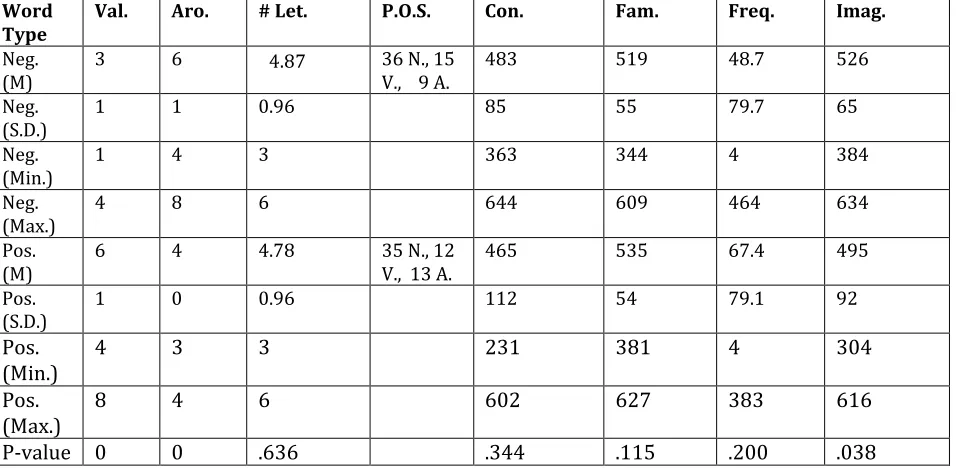
The present experiment presented a total of 240 word stimuli that were either
words with negatively valenced (“negative‐valence”) and highly arousing (“high‐arousal”)
connotations (such as bullet, cancer, murder, and coffin), or words with neutral valence
(“neutral‐valence”) and low arousal (“low‐arousal”) connotations (e.g., gentle, peace, calm,
and plain) in a MSPP. Table 1 details the word properties. Primes were presented very
rapidly (35 ms) and masked to ensure that they would not be processed at a conscious
level. Both ERP and behavioral measures were used to determine whether attention to the
words’ valence would elicit neural activity that was distinct from that produced when
participants focused on the orthographic features (case) of the same words. The goal was to
test whether modulation of attention can affect responses to the subliminal primes.