Statement on
Competitiveness
Priorities
Competitiveness Challenges for the New Government
Restoring the Irish economy to sustainable economic growth is essential both for reducing unemployment, restoring fiscal balance and for reducing the debt overhang to manageable proportions. Enhancing our international competitiveness is a necessary part of our recovery strategy. By competitiveness we mean the ability of businesses in Ireland to achieve success and increased share in international markets - leading to improved standards of living for all our citizens.
The Council welcomes the goals for economic development set out in “Government for National
Recovery 2011 -2016” and the emphasis placed by that document on the essential role of
competitiveness and exports. We look forward to working with the Government in restoring the economy to vigorous economic growth.
Context
There are a number of fundamental issues which must be acted upon to return Ireland to sustainable economic growth. Stabilising the banking system and the public finances (through reducing public sector borrowing and debt) are clearly immediate and essential requirements. But while necessary, these strategies will not be sufficient. The economy needs to be restored to economic growth leading to increased employment and prosperity. A return to economic growth will also ease the debt/GNP ratio.
As emphasised by Forfás in Making it Happen: Growing Enterprise for Ireland, we must maximise the competitiveness of all sectors and firms - those that trade internationally, hose that currently serve local markets with potential to internationalise and those that will continue to play a key role in serving local demand – in order to achieve this growth. Significantly increasing our exports, however, will be central to this recovery, and we can only increase our exports through enhancing our competitiveness. Growing our exports has a doubly positive effect. It leads to direct gains in output and employment, and to indirect benefits as exporting businesses and their employees buy more Irish goods and services.
A dramatic increase in exports is not an unrealistic aspiration. Our highly open economy and our strong existing export base provide us with opportunities which are not there to the same extent to other troubled countries – Ireland continually punches above its weight in international trading terms. Towards the end of the 1990s and until 2003 we were one of the most competitive economies in the world. We can achieve that situation again but to do so we must focus policy attention and actions on improving our competitiveness. This is already improving as indicated by our recent export performance. Costs have fallen; skills availability and our physical infrastructure have improved. However, some of the competitiveness gains to date have arisen as a consequence of the economic downturn. We must now take the structural policy decisions that will deliver more long-lasting, durable competitiveness gains.
Policy Actions
This paper highlights the main recommendations that the NCC believes need priority attention. These concentrate on four key areas: Enterprise; Competition and Productivity; Fiscal Policy; and Improving Ireland’s Skills, Research and Infrastructure Base.
Enterprise
1. Promote indigenous enterprise: Ireland’s trading success is driven by the performance of a small number of sectors and firms. Only through increasing the number of internationally trading indigenous businesses and their export intensity (exports as a share of sales) will Ireland be able to create broad based, employment intensive, sustainable growth. We must prioritise actions to enhance the export activity of indigenous firms – these include ensuring viable businesses have access to credit, deepening linkages between domestic and exporting firms and diversifying into high growth, emerging markets. The Forfás enterprise policy review, Making It
Happen, published in October 2010, outlines actions required to support enterprise
development. We must also expand the footprint of the exporting sectors of the economy. The export opportunities in sectors such as education, agriculture and tourism (and indeed
enhancing earnings from the provision of elective medical services) should be addressed vigorously.
2. Address bottlenecks in key sectors: The recently published programme for Government acknowledges that addressing sector specific challenges will result in tangible improvements in the competitiveness of important sectors. The NCC’s priority sector specific policy
recommendations are:
Ensure the provision of specialised courses for particular sectors such as ICT, financial services and environmental goods and services;
Support efforts of food companies to diversify into other euro markets which are dependent on quickly developing market knowledge and product adaptation/innovation;
Ensure that the various government departments and agencies involved in sectoral
development coordinate their activities to ensure coherent sectoral strategies that deliver the level of flexibility and responsiveness required to compete effectively on the global stage. (e.g. education services, food and tourism);
Deliver speedy implementation of “green” procurement to drive the environmental goods and services sector in Ireland; and
Enhance the clinical trials process to support the pharmaceutical and medical technologies sectors; in particular we need to consolidate and streamline approval processes for new products and technologies.
The allocation of government resources (human and financial) must better reflect the changes in our economy. The allocation of public funds should also reflect current and future opportunities and challenges. To this end, the NCC recommends the introduction of zero based budgeting by all government departments and the use of verifiable metrics to
assess the outcomes of investments;
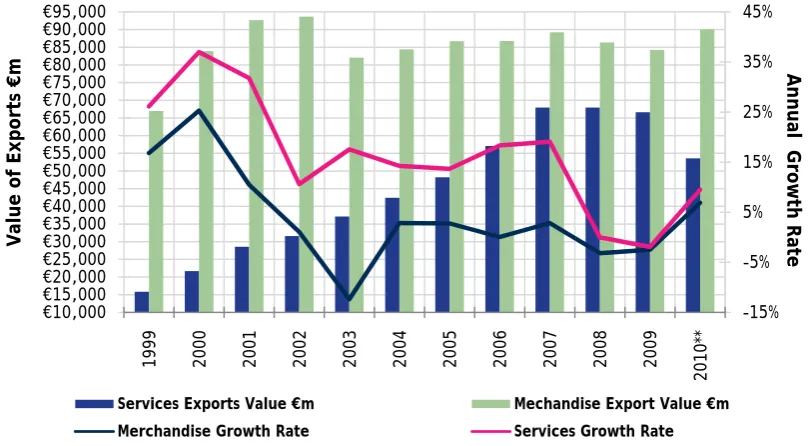
[image:4.595.74.479.247.470.2] Given limited resources, data collection must concentrate on the sectors which now drive our performance. For example, we have limited information on the business services exports which now account for 16 per cent of total exports.
Figure 1: Merchandise and Services Exports – Value (€m) and Growth (%), 1999-20101
Source: CSO, Online Database
Competition and Productivity
4. Competition policy should not be confined only to the exporting sectors of the economy. High costs and structural inefficiencies across all the so called sheltered or locally traded sectors in our economy including legal services, medicine, energy, and the public service all damage cost competitiveness. Hence there is an urgent need for a sustained programme to ensure vigorous competition in locally traded sectors of the economy. The NCC is concerned that there is not a strong appetite in Ireland to tackle high costs in sheltered sectors. A rigorous process to remove barriers to competition is essential. The competition measures in the IMF-EU programme on removing restrictions in sectors such as law and medical general practice are welcome and overdue.
5. Promote and deliver economy wide productivity growth: Higher productivity is the glue which sustains high living standards and competitiveness. There is an opportunity to enhance productivity performance in Irish based enterprise through:
1 Note: Figures for 2010 for Merchandise Exports are preliminary and 2010 figures for Services Exports include data from Q1-Q3 2010. The annual growth figure for service exports 2009-2010 thus relates to Q1-Q3 2009 and Q1-Q3 2010.
-15% -5% 5% 15% 25% 35% 45% €10,000 €15,000 €20,000 €25,000 €30,000 €35,000 €40,000 €45,000 €50,000 €55,000 €60,000 €65,000 €70,000 €75,000 €80,000 €85,000 €90,000 €95,000
1999 2000 2001 2002 2003 2004 2005 2006 2007 2008 2009
2010**
Value of
Exports
€m
Services Exports Value €m Mechandise Export Value €m
Merchandise Growth Rate Services Growth Rate
Annual
Investments in education and skills development, and energy and communications
infrastructures (to enable efficient movement of goods, electronic services and people, and to facilitate international trade);
Selected interventions at the firm level to encourage and support company transformation initiatives.
There is no part of Government responsible for promoting policies that drive productivity growth. To deliver the required improvements, it is imperative that one department has overall responsibility for prioritising productivity related policy actions, monitoring progress and driving implementation. Improving productivity across all sectors of the economy should be central to future policy and budgetary decisions. As part of its annual benchmarking report Benchmarking
Ireland’s Progress, the NCC produces an overview of Ireland’s productivity performance.
Efficient public services are a vital part of a competitive economy. Enhancing productivity within the public service should be an essential part of public service reform. We welcome the proposals for public service reform set out in Government for National Recovery 2011 -2016
including the emphasis placed on contestability, giving greater autonomy accompanied by accountability to senior public servants, and on external recruitment into the public service.
Fiscal Policy
6. Ensure a sustainable tax system: The NCC believes that broadening the tax base by introducing a valuation based tax on property and user charges for treated water and third level education (without creating a barrier to entry for prospective students), is central to repairing the public finances and ensuring adequate investment in these important areas. Without measures to broaden the tax base, taxes on income would inevitably have to rise further, which would damage competitiveness. Higher taxes on income can be a disincentive to people to remain in or return to the labour market whereas a valuation based residential tax system and user charges do not affect the incentive to work if structured correctly. A competitive tax wedge is also an important competitive advantage in attracting and retaining highly skilled and
internationally mobile workers. The Government’s commitment to consider a valuation based property tax is welcome but action is urgently required. We believe that the introduction of a broadly based and equitable residential property tax which would also provide a revenue stream for local authorities should be a policy priority.
7. Promote fiscal stability: There is a need for better fiscal planning and control mechanisms. The NCC supports the establishment of an independent Fiscal Advisory Council as proposed in
Government for National Recovery 2011-2016. Among the principles that should underpin the
establishment of a statutory fiscal council are independence, accountability, full access to the information available to Government and the capacity to stress test taxation and spending scenarios.
Improving Ireland’s Skills, Research and Infrastructure Base
8. Ensure the quality of education and training: Our education system suffers from significant competitiveness weaknesses. This has been emphasized by recent Programme for International Student Assessment (PISA) results, and concerns from industry and academia. Financial
constraints, however, should not be an excuse for deferring structural reform - the manner in which resources are used can be just as important as the absolute levels of funding. It has never been more important to ensure that the significant resources invested in education are spent in a manner that achieves the best possible outcomes in the most cost effective way.
We would urge that the priority measures highlighted in the NCC’s 2009 Statement on Education
and Training to enhance the performance of Ireland’s education and training system be
progressed immediately2. In particular, the NCC reiterates the importance of enhancing the
quality of teaching in Irish schools. Professional and in-service development should be frequent, continuing and progressive during a teacher’s career and not limited to introduction of new syllabi. Teachers should have opportunities to benefit from peer review and collaboration with colleagues. At third level, there is a need for adequate resourcing to enable Irish higher education institutions to equip students with the highest quality of education available. It is also essential that there is a continuous process of reform at institutional level to improve productivity.
9. Address skills shortages: Significant concerns remain over the availability of people with particular skills needed in the exporting sectors. Anecdotal evidence suggests that despite our unemployment crises, skills shortages are restraining enterprise development in growing firms and sectors. We support the range of actions identified by the Expert Group on Future Skills Needs for addressing specific sectoral skills needs in sectors such as ICT, medical devices, food and drink, green enterprise and the biopharma-pharma-chemicals sector3.
10.Public Investment in R&D: The progress made over the past decade in growing a world class research capability to underpin competitiveness should be maintained. Ireland is now ranked amongst the Top 20 countries in terms of scientific research (according to Thomson Reuters). This represents a newly acquired foundation for innovation, enterprise transformation and ultimately competitiveness. The shift in IDA Ireland’s investment profile over the past 5 years, where RD&I has grown from below 10 percent to almost 50 percent of annual investment, bears witness to this, as do employment, exports and gross value added in R&D-active firms over the past decade.
There is a strong rationale for State investment in R&D, particularly in relation to fundamental or basic research. The private sector tends to under-invest in this area, especially during an economic recession. The current pressure on exchequer resources has already meant that public investment has fallen behind the original projections laid out under the Strategy for Science,
Technology and Innovation (SSTI). In order to deliver the world class research base envisioned in
the SSTI, the NCC recommend that public investment in STI should be prioritised to meet the
2 NCC, Statement on Education and Training, February 2009. This statement makes a number of recommendations relating to: Generic skills, language skills, ICT literacy, mathematics, science, technology and engineering skills; the need to target educational disadvantage; improving the delivery of education in Irish schools; enhancing Ireland’s higher level and further education systems.
needs of current and future enterprise (including SMEs), and furthermore, should be maintained in the future with the objective of meeting the 3 percent of GDP target set by European
Commission in Europe 2020: A European Strategy for Smart, Sustainable and Inclusive Growth.
11.Prioritise and deliver infrastructure projects offering greatest return: We welcome the commitment in Government for National Recovery 2011 -2016 to publishing cost benefit
analyses for major infrastructure proposals given the need to maximise returns from more limited resources. It is essential that the identification of specific investment priorities is progressed immediately and that the agreed budgets are spent in a timely fashion to deliver important investments to support economic recovery. For example, the development of world class broadband infrastructure is required to enable many of our main exporting sectors to exploit future growth opportunities. We must also urgently address potential water shortages in Dublin and other key regional centres. With a curtailed public capital programme, a more integrated approach to infrastructure planning and delivery (e.g. combined broadband and water infrastructure) can promote improved efficiency, effectiveness and competitiveness.
12.Property Market: Distortions in the functioning of the property market are at the root of our current economic and financial difficulties. We should now take the opportunity to undertake a structured review in order to understand the causes of the recent property bubble and take action now to ensure than we minimise the risks of another bubble emerging in the future. It is important that taxation measures do not over-stimulate the market in future, and so the shift away from transaction based property taxes is welcome. A legally enforceable framework needs be put in place which ensures that the property market (both residential and commercial) operates in an efficient and transparent manner, and so that vendors and purchasers have readily accessible price and quantity information about property sales.
Background to the NCC
The National Competitiveness Council was established by Government in 1997. It reports to the Taoiseach on key competitiveness issues facing the Irish economy and offers recommendations on policy actions required to enhance Ireland’s competitive position.
Each year the NCC publishes the two-volume Annual Competitiveness Report:
Volume One, Benchmarking Ireland’s Performance, is a collection of statistical indicators of Ireland’s competitiveness performance in relation to 18 other economies and the OECD or EU average.
Volume Two, Ireland’s Competitiveness Challenge, uses this information along with the latest research to outline the main challenges to Ireland’s competitiveness and the policy responses required to meet them.
As part of its work, the NCC also publishes other papers on specific competitiveness issues, including business costs, energy, cities, education, productivity and sectoral competitiveness.
Members of the Council are drawn from business, trade unions, government departments and agencies, and academia. They give their time on a pro bono basis.
The work of the National Competitiveness Council is underpinned by research and analysis