S T U D Y P R O T O C O L
Open Access
Cornerstone program for transition-age
youth with serious mental illness: study
protocol for a randomized controlled trial
Michelle R. Munson
1*, Andrea Cole
1, Victoria Stanhope
1, Steven C. Marcus
2, Mary McKay
1, James Jaccard
1and Shelly Ben-David
1Abstract
Background:Transition-age youth have elevated rates of mental disorders, and they often do not receive services. This is a serious public health concern, as mental health conditions persist into adulthood. Continuing to engage this population has been a pervasive challenge for the mental health care system worldwide. Few mental health interventions have been developed for transition-age youth, and even fewer have been found to be effective over the transition to adulthood. Cornerstone, a theoretically guided intervention has shown promise for addressing the mental health and psychosocial needs of this population as they emerge into adulthood. Cornerstone provides case management, trauma-focused cognitive behavioral therapy, mentoring/peer support, community-based in vivo practice, and groups to address stigma, mistrust, and practical skill development to improve the transition to independence among transition-age youth with serious mental health conditions.
Methods/design:This study utilizes a hybrid research design and focuses on examining feasibility, acceptability and preliminary impact, along with factors that influence implementation, to maximize new knowledge. The study combines qualitative methods and a randomized controlled trial, using data to inform and refine protocols and manuals, while testing the preliminary impact of the intervention, compared to best available services (treatment as usual, TAU) at a partnering outpatient mental health clinic (n= 60). Contributors to the intervention development research (n= 20) are national experts on mental health services, clinic administrators and staff and young adults with direct experience. The intervention involves intensive staff training and 18 months of ongoing service provision, monitoring and supervision. Quantitative survey data will be collected at baseline, 3 months, 6 months, and 9 months measuring mental health and practical life outcomes via self-report measures. Medical records will be used to triangulate self-report data (i.e., primary diagnosis, treatment planning and attendance). Qualitative data focuses on the intervention development process and implementation research and will use constant comparison coding techniques. In this intention-to-treat analysis, we will conduct basic omnibus analyses to examine whether Cornerstone leads to improved outcomes relative to TAU utilizingttests across treatment conditions for each outcome measure specified. We will likewise examine whether changes in the proposed mediating variables differ across groups.
(Continued on next page)
* Correspondence:[email protected]
1New York University Silver School of Social Work, 1 Washington Square North, New York, NY 10003, USA
Full list of author information is available at the end of the article
(Continued from previous page)
Discussion:The aim of this study is to refine Cornerstone through an intensive preliminary trial, learning through collaboration with clinic staff, project team members, and leaders in New York State and nationwide on how to best serve transition-age youth with serious mental health conditions. Cornerstone has the potential to fill a large gap in the service system for transition-age youth with serious mental health conditions, and may enhance the menu of care options for those who have been recently diagnosed with a serious mental health condition, and yet, have a long life to live. The program is recovery-oriented, builds on the best evidence to date, and is in line with both local and national health care reform efforts.
Trial registration:This trial was registered with ClinicalTrials.gov (Identifier: NCT02696109) on 22 April 16 as Protocol Record R34-MH102525-01A1MRM, as New York University, Cornerstone program for transition-age youth with serious mental illness: study protocol for a randomized controlled trial.
Keywords:Transition-age youth and young adults, Serious mental health conditions, Psychosocial intervention, Peer mentoring
Background
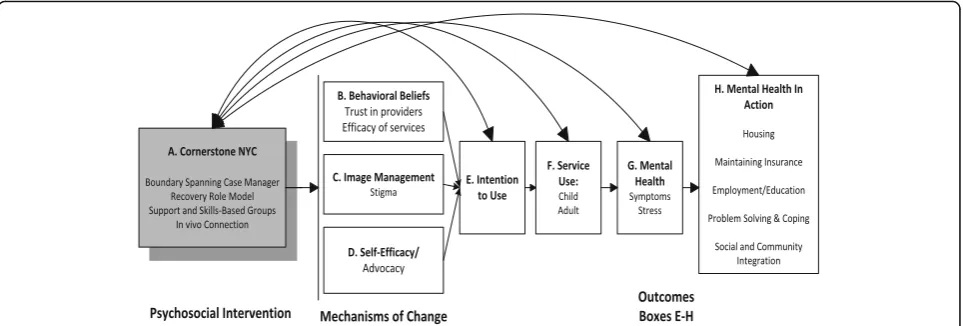
The goal of this small-scale randomized controlled trial is to refine and examine the feasibility, accept-ability, and preliminary impact of a theoretically guided intervention called Cornerstone (See Fig. 1). Cornerstone provides mental health and psychosocial services across the developmental transition to adult-hood. Cornerstone was designed to develop and test a service that spans the developmental and systemic transition to adulthood, of which there are only a few, and our team is aware of none that have been empirically tested across the transition. Services are designed to improve mental health symptoms, mental health service use, stigma, trust, acceptance, and ul-timately life outcomes for low-income transition-age youth and young adults with serious mental health conditions (SMHC), as they are moving from adolescence and entering adulthood. The Cornerstone protocol-driven approach addresses both mental health symptoms and practical obstacles that impede a successful transition to adulthood, such as depressed mood, anxiety, anger, lack of coping skills, and lack of knowledge and skills to achieve critical milestones (e.g., secure stable hous-ing, obtain employment). Cornerstone provides a ser-vice delivery strategy that spans the transition from childhood to adulthood. It integrates four main ser-vice components in order to make the transition more seamless: (1) licensed master’s level clinician, also known as a ‘boundary-spanning case manager’ (BSCM), (2) a peer mentor, also known as a ‘recovery role model’ (RRM), (3) in vivo community-based practice, and (4) knowledge and skills-based groups. Together, these components are conceptualized to provide a cornerstone for youth and young adults with SMHC, giving them consistency, coupled with developmentally appropriate supports and skills, which are often absent in their complicated lives which are filled with change and transience [1].
Mental health conditions among transition-age youth and young adults
Unmet mental health needs among transition-age youth and young adults (defined as 17- to 25-year-olds) with serious mental health conditions, who are predominately low-income, minority, and system-involved (i.e., public welfare, foster care) are well known; however, they have not been satisfactorily addressed. The onset of mental health conditions often occur in individuals during ado-lescence and young adulthood [2]. Epidemiological re-ports reveal that rates of mental health disorders among 18- to 24-year-olds are high when compared to older age cohorts [3] and studies of youth who have been in-volved with public systems of care reveal even more ele-vated rates of mental health conditions [4, 5]. Beyond prevalence, research has documented the extreme diffi-culties these young people face, such as poor education, underemployment, increased risk of harm to self and/or others, and substance abuse problems [6]. There are at least two major reasons this is of concern: (1) many transition-age youth and young adults stop receiving professional help during this critical developmental tran-sition [7], and (2) the mental health system has few evidence-based psychosocial interventions designed to address their needs [8].
Discontinuation of services
still struggling with emotional problems, to learn about their experiences with mental health services over the transition to adulthood. Results revealed that 42 % of the young adults were no longer using any mental health services and another 37 % reported gaps in service use during the transition [9]. Another study found that ap-proximately 60 % of a sample of youth aging out of fos-ter care discontinued services 1 month affos-ter exiting the system [7]. Similarly, longitudinal studies of child welfare-involved youth report decreasing use as young adults; one stating that while 47.3 % participated in men-tal health services as adolescents, only 14.3 % continued as young adults [12, 13]. Disengagement in services over the transition is a clearly documented problem, which we are still struggling to address.
Barriers to engagement
Research has identified barriers to mental health service use among transition-age youth, for example, lapses in insurance, mistrust, and stigma, among others [7]. For example, the belief that there is stigma associated with participating in treatment remains common among tran-sition-age youth with mental health conditions, [14, 15] and it may play a role in the reluctance to con-tinue treatment [16]. Also, studies have found that a lack of understanding and knowledge, sometimes re-ferred to as ‘mental health literacy,’ of mental health and treatment can be a significant barrier to service use [17]. Further, these young people report that pes-simistic messages from providers, irrelevant services, and mistrust are barriers to treatment continuation [18–20]. While the Affordable Care Act (ACA) can expand coverage for young adults, if implemented, without attention to perceptual obstacles that may be part of young adults’ beliefs, along with negative affective associations, continuous care is unlikely to be achieved. Such barriers must be addressed if we
are to minimize dropout, increase investment, and improve long-term health and functioning outcomes of transition-age youth with SMHC.
In sum, the present article provides a description of the background, theoretical framework, protocols and the study aims for this intervention development trial, which will refine and examine the feasibility, acceptabil-ity, and preliminary impact of a theoretically guided intervention focused on improving the mental health, service use, and young adult life outcomes of low-income individuals with SMHC. The project will develop revised manuals (i.e., treatment, training, and implemen-tation) and protocols with enhanced ‘real world’validity in the mental health clinical context, and test its prelim-inary efficacy among transition-age youth with SMHC.
Promising intervention strategies
[image:3.595.58.540.88.251.2]community-based settings [25]. The intervention that will be tested in this trial draws on some of the strengths of TIP, among other models, to test a components-based intervention within an urban‘real world’setting.
Peer support models are gaining support nationally. For example, in New York State and throughout the country peer support models are being explored for marginalized populations of youth in transition [26, 27]. Peer support services, in most cases are services pro-vided by individuals who also live with a mental illness and therefore, possess “lived experience” [28]. Lived ex-perience can make peers particularly credible, trust-worthy, and influential in communicating to youth and young adults who often are skeptical of professionals [29]. Ideas for the recovery role model position emerged out of previous research on understanding how peers can make a significant impact within the mental health system specifically through the role of mentorship [30]. Whereas recovery role models (RRMs) align with the peer support movement by taking advantage of the ben-efits of shared lived experience, they are distinct in that the relationship with the transition-age youth is intentionally hierarchical (e.g., mentor and protégé), not mutual. Also, they move beyond providing emotional support and companionship, as RRMs are recruited, screened, trained, and supervised as mentors who are older, wiser, and have something (knowledge, skills, and experience) to offer a younger, less-experienced protégé [31]. The role models employed in the Cornerstone trial mentor transition-age youth on the following: (1) con-sistent use of mental health services, (2) recovery (modeling hope for the possibility of a full life with a ser-ious mental health condition), (3) managing disclosure decisions of mental health challenges in a stigma-laden society, and (4) life outcomes (i.e., education, housing, employment), among other areas of young adulthood unique to each participant. Recovery role model mentors serve as trusted advisors who possess specific know-ledge, experiences, and skills associated with living with a SMHC. They also, by definition, are individuals who have some distance from their last episode of significant symptoms, whereas the participants who enroll in Cornerstone are in the midst of a significant episode of illness.
Mentoring can be particularly relevant for transition age youth and young adults with serious mental health conditions. Research has shown that the ‘transition years’ are often the developmental period when young people experience their first onset of a mental disorder, or serious mental health challenges [2]. Given that these years are a time of critical identity development, mentors may be particularly relevant in assisting youth in making sense of their life with a mental health condition [32]. Previous research suggests that transition-age youth
report recovery role models are engaging and helpful in a myriad of ways that feel important to youth in the process of getting better after an episode of illness [33]. Beyond representing a conceptual innovation the recov-ery role model fits with our transforming care system, which emphasizes outcomes-based reimbursement for non-professionals. Recovery role models can be a cost-effective strategy in the current health care landscape. The position also provides employment opportunities for adults in recovery from a mental health condition. Finally, the position builds upon current efforts through-out the nation to certify peer support specialists in pro-viding services to individuals with serious mental health conditions [34].
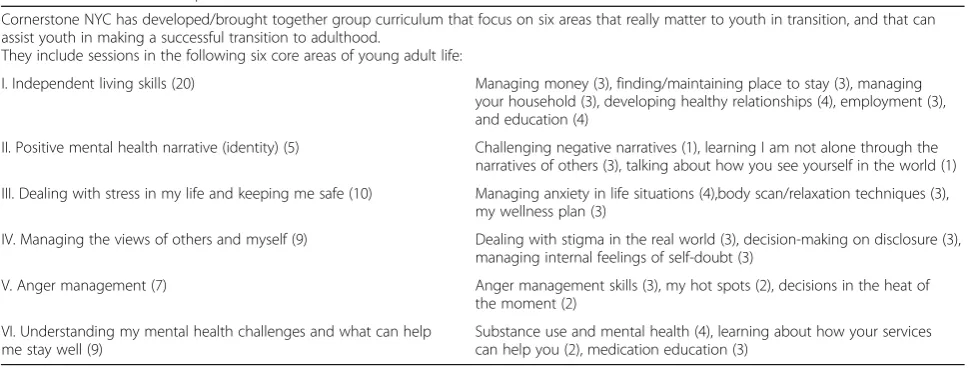
Group work is another approach that has been shown to be promising for transition-age youth who commonly have had experiences that have left them lacking in rela-tional trust [35]. A group approach where young adults in transition living with SMHC are allowed to process experiences, alongside a recovery role model who comes from a similar community who has been able to engage professionals, as needed, and move forward in their lives, may prove effective. Previous research has found that the participants find the group process to be particularly helpful and that it decreases feelings of isolation [33]. The groups in Cornerstone focus on areas of develop-ment that key stakeholders identified as critical and not well addressed, such as substance use prevention, healthy relationships, safety planning, employment skills, education planning, and safe housing, among others (See Table 1 for Cornerstone Group Manual Table of Contents). Group content will be flexible based on par-ticipant needs as well, but the manual provides a set of curriculum for providers to use.
to examine participants’ “transition readiness” and de-velop “transition planning”. Cornerstone staff use the assessment tool(s) to identify which areas should be the focus of services and linkage efforts. We will fol-low the CTI principle of reducing the role of staff in delivering services, gradually preparing the partici-pants with linkages in the community, and working to secure a support team for young adults once they are discharged from Cornerstone [38]. We hypothesize that this will reduce abrupt transitions to adulthood, while im-proving overall young adult outcomes.
Cornerstone: a components-based intervention
To date, interventions for transition-age youth and young adults with mental health conditions have largely been focused on principles of practice. This randomized controlled trial moves the field towards components-based interventions, which can be examined for feasibil-ity, acceptabilfeasibil-ity, impact, and fidelity. The four major components are boundary-spanning case managers, re-covery role models, knowledge and skills-based groups, and in vivo community practice. We describe compo-nents 1 and 2, which have compocompo-nents 3 and 4 embed-ded within their description, as they are delivered by the intervention clinical staff.
Component 1: boundary-spanning case managers (BSCMs)
BSCMs are full-time social workers, as social workers re-main the core workforce for mental health service deliv-ery in the United States [39]. Each full-time BSCM is assigned 15 clients to provide services over the transi-tion to adulthood. They provide scheduled 1:1 thera-peutic contact meetings (weekly), ongoing contact via phone, and they co-facilitate a weekly curriculum-driven, knowledge and skills-based group. They also de-velop goal-oriented in vivo visits for clients where they
go into the community with their young adult clients to work on a goal they have as part of their transition plans (i.e., a BSCM might work with a transition-age youth on his/her goal to lose weight by facilitating her joining a local gym). Participants can receive services from the BSCM for up to 9 months. The two primary goals of the BSCM are (1) successful continued engagement with mental health services, as needed, or discharge to less intensive services, and (2) success in adult outcomes and overall recovery (e.g., mental health, securing employ-ment). The BSCM role builds on existing models of case management, though it adds important innovative pro-gram elements. First, Cornerstone was designed to de-velop and test a service that spans the developmental and systemic transition to adulthood. BSCMs are situ-ated in community-based clinics where there are ser-vices for both children and adults. We are testing the feasibility, acceptability, and impact of whether or not access to BSCMs who are trained to manage cases over the transition will decrease the number of youth and young adults in need who are no longer receiving ser-vices as adults.
[image:5.595.56.545.96.280.2]Second, BSCMs are trained in case management, person-centered care-planning principles, trauma-focused cognitive behavioral therapy (weekly supervi-sion), problem-solving, and specific incremental know-ledge and skills needed to help clients address young adult developmental goals, e.g., seek employment (or apply for college). Training covers best clinical practice and specific knowledge/skills on assisting with ‘practical areas’ that are missing in some current models of prac-tice. Third, BSCMs plan in vivo visits with participants and execute these trips every other month. These social/ community integration experiences can be related to any facet of developing skills to facilitate independence, such as social events, college visits, or housing visits, to name
Table 1Cornerstone Group Manual Table of Contents
Cornerstone NYC has developed/brought together group curriculum that focus on six areas that really matter to youth in transition, and that can assist youth in making a successful transition to adulthood.
They include sessions in the following six core areas of young adult life:
I. Independent living skills (20) Managing money (3), finding/maintaining place to stay (3), managing your household (3), developing healthy relationships (4), employment (3), and education (4)
II. Positive mental health narrative (identity) (5) Challenging negative narratives (1), learning I am not alone through the narratives of others (3), talking about how you see yourself in the world (1)
III. Dealing with stress in my life and keeping me safe (10) Managing anxiety in life situations (4),body scan/relaxation techniques (3), my wellness plan (3)
IV. Managing the views of others and myself (9) Dealing with stigma in the real world (3), decision-making on disclosure (3), managing internal feelings of self-doubt (3)
V. Anger management (7) Anger management skills (3), my hot spots (2), decisions in the heat of the moment (2)
VI. Understanding my mental health challenges and what can help me stay well (9)
a few. Fourth, BSCMs co-facilitate curriculum-based groups, many of which were drawn from evidence-based practice models or promising programs (e.g., [40]).
Component 2: recovery role models
Recovery Role Models (RRMs) are a core component of Cornerstone. RRMs are at least a decade older than par-ticipants, identify as being in recovery from their own mental health challenges for at least 1 year (1-year dis-tance from serious mental health episode), and have found success in at least one ‘mental health in action outcome’(i.e., school, work). Also, they must be actively engaged in services, as needed, and be willing and able to speak about key mediating determinants of service use among transition-age youth, such as stigma and mis-trust of providers. RRM are a type of peer in that they also live with a history of and/or are living with a current mental health condition, but they are also not a peer in the sense that they are providing mentoring, as they are experienced and recruited to be a trusted ad-visor and guide, on how to live with a mental health condition. Building on the field of mentoring research, Cornerstone RRMs are screened for a specific set of knowledge, skills, and experiences, including the ability to model healthy relationships for transition-age youth and young adults with serious mental health conditions. RRMs show promise as a complementary model to trad-itional peer support models in the mental health field [33]. In part, this position was conceptualized to deal with challenges that surface in some peer support models with youth (e.g., turnover, boundary issues, less rigorous screening and training). The development of this position fits with our transforming system as well, which has increased its focus on the use a non-clinical workforce and outcomes-based reimbursement. The mental health system of care is emphasizing outcomes, and is less focused on who provides the services, a pro-fessional or a non-clinical staff member, as long as people are getting better and reaching their recovery goals. RRMs can be cost-effective colleagues in the men-tal health system. In Cornerstone, they co-facilitate groups, while also meeting participants one on one weekly at the clinic and/or for in vivo experiences. Cornerstone brings together these providers to serve transition-age youth with SMHC across what can be a precarious transition, the transition to adulthood.
Relevance of the Cornerstone program to current policy and practice context
Cornerstone has increased relevance as the mental health system is transforming with the implementation of the Affordable Care Act (ACA) and New York State’s Medicaid Redesign. In particular, changes will transform payment structures (connecting them to outcome
performance), expand the workforce beyond profes-sionals, and expand coverage for transition-age youth and young adults with serious mental health conditions, particularly Medicaid coverage. Further, the ACA is moving the nation into a healthcare landscape that will integrate care for mental health, substance abuse and physical health issues. Our proposed study is closely aligned with these changes, and a project aim is to re-search implementation questions related to the sustain-ability of Cornerstone within the urban outpatient mental health clinic context.
Conceptual framework
In our small trial, we apply an innovative framework of young adult mental health and mental health service use that examines multilevel factors that influence mental health service use among transition-age youth and young adults with serious mental health conditions [7] (See Fig. 1). This mid-level conceptual model illustrates the empirically based underlying mechanisms of change for study outcomes. The conceptual model, in part, fo-cuses on cognitive processes that are part of an individ-ual’s decision to use (or not use) professional mental health services. The proposed study will examine if Cornerstone impacts three key mediating factors that emerged as salient in previous research on the study population: (1) behavioral beliefs, defined as the percep-tions of the advantages/disadvantages of using mental health services, i.e., whether services are effective, whether providers are trustworthy; (2) image consider-ations, i.e., stigma, and (3) efficacy, i.e., one’s perceived ability to access and engage in mental health services. The conceptual model also proposes that Cornerstone, in particular, the providers of services can influence the-ses salient cognitive mediating factors discussed above, along with directly influencing service engagement and young adult mental health and life outcomes. These rela-tionships are depicted in Fig. 1 above.
Methods
This randomized controlled trial utilizes both quali-tative and quantiquali-tative data to develop and refine Cornerstone, test its feasibility for use across the transition to adulthood within an outpatient mental health clinic, and systematically uncovers factors that could facilitate or impede implementation. The project uses a hybrid model of examining feasibility, acceptability and preliminary impact, alongside implementation, to maximize new knowledge. We know from a feasibility study of youth approaching transition in Detroit that there is promise in the Cornerstone program model, and that it is a complicated proposition to implement a ‘ boundary-spanning’intervention over the transition to adulthood.
This research includes three phases. During phase 1 (months 1–12) we will prepare and set up research offices and databases, convene members of the Cornerstone Advisory Council, develop and modify all manuals and protocols, hire and train project staff, and collect and begin analyzing data for aim 1. In phase 2 (months 12–36) we will conduct the random-ized controlled trial of Cornerstone (aim 2), including all trainings, recruitment and enrollment, the inter-vention (up to 9 months of Cornerstone from base-line to completion), and all data collection (basebase-line, 3-month, 6-month and 9-month post-tests). Partici-pants in both conditions will be involved for approxi-mately 9 months between baseline and the final follow-up assessment. In phase 3 (months 30–36), we will also conduct a small implementation study. Methods for each phase are described in detail below.
Methods for aim 1: develop and refine Cornerstone (phase 1)
In months 1 to 12 we will refine and develop all Cornerstone manuals, building upon the draft manual from the pilot of Cornerstone in Detroit, Michigan. Re-search staff will meet one on one and in groups with members of the Cornerstone Advisory Council to solicit feedback on areas of the program and implementation for which they have expertise (i.e., billing, clinic patient flow, cognitive-behavioral therapy, critical time inter-vention, mentoring, and peer support). This process will assist in refining aspects of the manual and de-veloping additional protocols needed to strengthen the Cornerstone randomized controlled trial. We will also solicit feedback from telephone interviews and written surveys from national experts who cannot at-tend in-person meetings. Our work in phase 1 will focus on refinement predominately in the following area: (1) the Cornerstone Transition Readiness Scale (i.e., most salient domains of focus), (2) protocols to guide clinical practice decisions based on level of transition-readiness (i.e., ready, unclear, and not ready), (3) substance abuse screening, (4) protocols for in vivo
experiences in the community, (5) the phase-based ap-proach to Cornerstone service provision, (6) provider pro-tocols, and (7) training protocols. Year 1 will culminate with semi-structured interviews and group meetings be-tween months 9 and 12 with staff, transition-age youth and young adults with serious mental health conditions, and a select group of key experts (N= 20) in order to systematically gather data providing feedback on the Cornerstone manuals and protocols. This will allow for modifications that are relevant to our local clinic partners. Investigators will present an overview of Cornerstone, along with treatment and training manuals and collect feedback on the protocols. Interviewers will move through an interview guide designed to elicit feedback on the core components of Cornerstone. Aim 1 will deliver a complete set of Cornerstone manuals.
Methods for aim 2: randomized trial of Cornerstone (phase 2)
Aim 2 will be accomplished with a two-group (random assignment, treatment versus control) by four-assessment (baseline, 3-month, 6-month, 9-month post) design. Par-ticipants will be involved for approximately 9 months. We will use an intention-to-treat design, thus, continuing to collect data on individuals who decide to drop out of the program before clinically indicated.
Program delivery
We will train the interventionists, BSCMs and RRMs, at the partnering site in the program components, team work, and the overall research project. BSCMs will be master’s level social workers. RRMs will be adults who are at least a decade older than participants, who iden-tify as living“in recovery,”and are successfully screened and trained in aspects of both mentoring and peer sup-port. More specifically, they will be trained with proto-cols on mentorship adapted from the Elements of Evidence-Based Mentoring [41], and trained on peer support through completion of all the education mod-ules and exercises through the New York State Peer Support Academy [42]. In order to ensure that Cornerstone recovery role models meet these criteria and are sufficiently mature to handle the responsibil-ity of being a mentor, we utilized a detailed screening and interview process. Further, we build on mentoring protocols to provide bi-monthly monitoring and supervision on the mentoring matches.
Recruitment, screening, training, and supervision
First, we will discuss hiring criteria for the BSCM and RRM positions with agency staff and review, screen, and interview potential candidates together based on these criteria and typical agency procedures. Once hiring is completed, we will deliver Cornerstone training. We ex-pect that the training can be completed in three full days by two trainers, in part because master’s level social workers are already trained in many of the core areas of the BSCM role. Separate training of the BSCM and RRM will occur at the same time over 2 days, and the final day they will be trained together on team process, communication, and co-facilitating groups. The ‘team process and communication training’ will include all Cornerstone-involved staff, including the project coordi-nators (research staff ). Following the initial training, all providers will receive ongoing supervision from the pro-ject coordinator, the principal investigator (PI), and on-site individual and group supervisors (individual clinical supervision on all Cornerstone cases, and weekly group supervision of trauma-focused cognitive-behavioral ther-apy). Further, the PI will train the project coordinators on all aspects salient to data collection.
Fidelity
Fidelity checklists will be developed during phase 1. Staff will complete fidelity checklists after select individual and group sessions to examine the relationship between our planned and actual implementation of Cornerstone.
Comparison condition (treatment as usual, TAU)
The partner agency provides clinical treatment to transition-age youth and young adults with serious men-tal health conditions (SMHC). These services provide a safety net for clients, facilitate access for clients to a wide range of services in the community, coordinate care to ensure that clients receive psychiatric treatment, and other concrete services. Youth in the TAU condition will receive these services as delivered at the agency. Participants in this condition will transition from ser-vices following agency protocols.
Recruitment, informed consent, inclusion/exclusion criteria, and sample
Recruitment
An established and respected mental health agency has agreed to partner to execute the proposed project. In addition, we will draw on the resources of the National Council of Behavioral Health, Inc. and affiliated research centers. The agency will receive information about Cornerstone and materials to provide to their clients who meet inclusion criteria about participation. The PI and the project coordinators will oversee recruitment and informed consent procedures. The agency will
partner with research staff to develop a list of potential participants, who meet inclusion criteria. Potential par-ticipants and their caregivers/guardians will be approached by their service provider to introduce the study. The relationship already established with their providers will protect confidentiality and providers are in the best position to assess appropriateness for the Cornerstone project, particularly with the new protocols that will be developed for ‘phasing in and out’ partici-pants of Cornerstone. The project will be presented, in-cluding procedures for randomization and confidentiality. Then, if interest is shown, the provider will ask for verbal consent for the research staff to contact the potential par-ticipant. Research staff will explain the project and, if ap-propriate, go through the consent process. Both the young person and their caregiver will need to give consent/ assent if the potential participant is not an adult or is not capable for consenting for themselves.
Inclusion and exclusion criteria
Youth who are 17, 18, or 19, English-speaking, living with a serious mental health condition (i.e., mood, anx-iety, trauma-related or schizophrenia-spectrum), and ei-ther receiving services or newly in need of services will be considered eligible. The language restriction will allow us to test for feasibility, acceptability, and impact before translating the intervention. Youth who have communication problems that will interfere with com-pleting assessments will be excluded from the study, along with those who have a documented IQ < 70.
Randomization and sample
The PI utilized a random numbers table to generate the random allocation sequence. The PI has the list of condi-tion by case number and did not share the sequence with any team member. The condition was identified on a sheet of paper within the initial enrollment packet, and all study personnel were trained not to examine the condition before enrolling a transition-age youth and their family.
typically recommended. Still, with our sample size of 30 per group we will have 80 % power withp= 0.05 to detect a large effect of the intervention (Cohen’s d = 0.73).
Enrollment, retention, and tracking
The names and identification numbers (IDs) of partici-pants who consent to become involved will be entered into a tracking form. IDs will be substituted for names on all questionnaires and study forms. Confidentiality of data will be assured by maintaining locked file cabinets and protected electronic files that require a password. The PI and project coordinators will be responsible for maintaining IDs and data files. We have created a tracking system using established strategies [43]. The in-vestigative team has considerable experience with re-cruitment and retention of transition-age youth with serious mental health conditions in a variety of settings, and with individuals in poverty experiencing multiple stressors. Our strategies have resulted in high retention rates (90 %) in our previous studies [4, 44]. We will use these experiences to implement the tracking system and to help minimize logistical barriers for participation. Furthermore, some of the young people targeted for enrollment will already be receiving care at the clinic. Due to the close relationship between the staff and the investigators, we anticipate few participants will be lost to follow-up. Keeping a list of participant names, addresses, phone numbers, and contacts will enable us to make phone calls and send appointment reminders in an effort to maintain engagement. We will also ask each participant on a regular basis to update their phone numbers and addresses so that we have alternative ways of reaching them. This tracking system will be locked in a separate file cabinet from all study data that will only be identified by a study ID number. Based on our expe-riences, we do not anticipate many participants will be lost due to relocation. We are recruiting 60 transition-age youth (TAY) to achieve a final sample size of 55.
Addressing within-group randomization and potential for contamination: in the proposed study the experimen-tal/control assignment will be done within site and therefore issues of potential contamination must be addressed. Our research has revealed that we must consider contamination on both the participant and the provider level(s). It is possible that the partici-pants may discuss their involvement in Cornerstone with another young person who is in the control condition. However, we expect this to be minimal as these young people do not typically have involvement with each other either within or outside the outpatient clinic site. Contamination at the provider level is of some concern as well. It is possible that the Cornerstone staff might share materials from Cornerstone manuals and trainings; however, the
facilitation skills require practice and supervision to incorporate the services into overall care. Thus, con-tamination at this level will be minimal. We will take precautions by asking providers not to share materials and information until the study is over and explaining why this is important. We will also remind providers during our regular project meetings of this sensitive issue. We will also collect data to assess the nature and degree of contamination by asking providers if they have discussed Cornerstone content with col-leagues, and if so have they noticed service changes as a result of discussions.
Measures
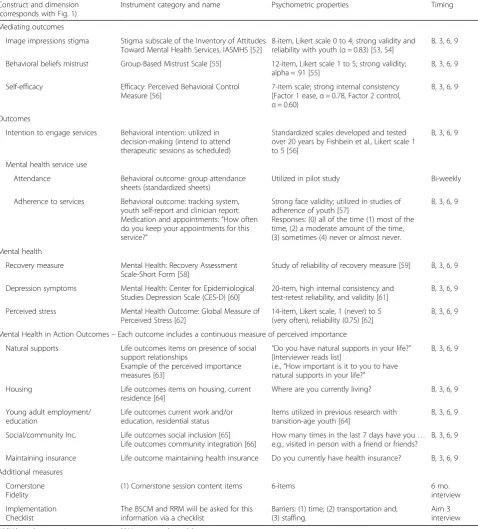
Most of the measures proposed in the study have been piloted with the target population and have been found to have good psychometric properties. We are also in-cluding a few measures in the battery in order to exam-ine their psychometric properties, as a cost-effective strategy in preparation for their use in future studies. Table 2 presents a summary of the major study measures and their psychometric characteristics. These measures include factors we hypothesize are going to make the greatest impact.
Interview protocol
Timing of assessment and procedures
psychosocial effects of poverty, trauma, mental illness and treatment, (g) desensitization to discussing poverty, trauma and mental illness, (h) interviewing participants from diverse cultural backgrounds, and (i) psychiatric interviewing. Then, weekly follow-up research staff meet-ings will be utilized to reinforce training and provide sup-port throughout the trial.
Methods for aim 3: the preliminary implementation study (phase 3)
[image:10.595.59.538.101.631.2]All interviews on implementation (n= 20) will take place during months 30 through 36 of the grant period. These interviews will be conducted with key informants on the national, state, and local levels. Participants will include policy experts, clinic staff (i.e., administrators, clinicians,
Table 2Measures for Cornerstone randomized trial Construct and dimension
(corresponds with Fig.1)
Instrument category and name Psychometric properties Timing
Mediating outcomes
Image impressions stigma Stigma subscale of the Inventory of Attitudes Toward Mental Health Services, IASMHS [52]
8-item, Likert scale 0 to 4; strong validity and reliability with youth (α= 0.83) [53,54]
B, 3, 6, 9
Behavioral beliefs mistrust Group-Based Mistrust Scale [55] 12-item, Likert scale 1 to 5; strong validity; alpha = .91 [55]
B, 3, 6, 9
Self-efficacy Efficacy: Perceived Behavioral Control Measure [56]
7-item scale; strong internal consistency [Factor 1 ease,α= 0.78, Factor 2 control, α= 0.60)
B, 3, 6, 9
Outcomes
Intention to engage services Behavioral intention: utilized in decision-making (intend to attend therapeutic sessions as scheduled)
Standardized scales developed and tested over 20 years by Fishbein et al., Likert scale 1 to 5 [56]
B, 3, 6, 9
Mental health service use
Attendance Behavioral outcome: group attendance sheets (standardized sheets)
Utilized in pilot study Bi-weekly
Adherence to services Behavioral outcome: tracking system, youth self-report and clinician report: Medication and appointments:“How often do you keep your appointments for this service?”
Strong face validity; utilized in studies of adherence of youth [57]
Responses: (0) all of the time (1) most of the time, (2) a moderate amount of the time, (3) sometimes (4) never or almost never.
B, 3, 6, 9
Mental health
Recovery measure Mental Health: Recovery Assessment Scale-Short Form [58]
Study of reliability of recovery measure [59] B, 3, 6, 9
Depression symptoms Mental Health: Center for Epidemiological Studies Depression Scale (CES-D) [60]
20-item, high internal consistency and test-retest reliability, and validity [61]
B, 3, 6, 9
Perceived stress Mental Health Outcome: Global Measure of Perceived Stress [62]
14-item, Likert scale, 1 (never) to 5 (very often), reliability (0.75) [62]
B, 3, 6, 9
Mental Health in Action Outcomes–Each outcome includes a continuous measure of perceived importance
Natural supports Life outcomes items on presence of social support relationships
Example of the perceived importance measures [63]
“Do you have natural supports in your life?” [Interviewer reads list]
i.e.,“How important is it to you to have natural supports in your life?”
B, 3, 6, 9
Housing Life outcomes items on housing, current residence [64]
Where are you currently living? B, 3, 6, 9
Young adult employment/ education
Life outcomes current work and/or education, residential status
Items utilized in previous research with transition-age youth [64]
B, 3, 6, 9
Social/community Inc. Life outcomes social inclusion [65] Life outcomes community integration [66]
How many times in the last 7 days have you… e.g., visited in person with a friend or friends?
B, 3, 6, 9
Maintaining insurance Life outcome maintaining health insurance Do you currently have health insurance? B, 3, 6, 9
Additional measures
Cornerstone Fidelity
(1) Cornerstone session content items 6-items 6 mo.
interview
Implementation Checklist
The BSCM and RRM will be asked for this information via a checklist
Barriers: (1) time; (2) transportation and; (3) staffing.
Aim 3 interview
recovery role models), and experts on transforming pay-ment structures. These interviews will follow a struc-tured interview guide, but interviewers will be open to probing into new areas that emerge. The interview will focus on aspects important to implementation of a boundary-spanning intervention, such as planning, train-ing, executtrain-ing, and payment for services. We will com-bine the quantitative data from the checklists discussed above with the qualitative data from interviews to create a comprehensive review of factors that facilitate and impede implementation, along with a Cornerstone Implementation Manual that, if efficacious, will assist us in moving toward testing effectiveness of a much-needed intervention for transition-age youth.
Analysis
Data analysis for aims 1 and 3: aims 1 and 3 involve qualitative data analysis, specifically grounded theory coding techniques [46, 47]. The qualitative data derives from in-depth interviews and group meetings. With par-ticipant permission, qualitative research activities will be recorded on digital audio recorders and in field notes. Analysis will proceed in two steps. Interviews will pro-duce large volumes of text to be content analyzed. We will use a data-reduction process in which emergent themes are identified and coded to yield a set of core themes. Step 1 involves writing analytic summaries, con-cise reviews of key findings in each interview and field note. Analytic summaries will allow us to discuss key findings during project meetings. Step 2 involves system-atic coding using a well-defined themsystem-atic codebook. Codebooks for qualitative analysis are theoretically in-formed manuals of codes and subcodes, defined by spe-cific definitional criteria that allow for systematic textual coding. We will derive an analytic codebook based on the analytic summaries produced during step 1 and emergent themes. Trained coders and project staff will conduct all coding. All data will be analyzed using Atlas.ti, which will allow investigators to develop the-matic units, or frequently occurring sets of explanatory statements [47]. In addition, the data will be explored for negative incidents and divergent themes vis-à-vis negative incident analysis [48]. With coded data in Atlas.ti, we will examine the range of variation of indi-vidual codes across our sample to obtain information about aggregate tendencies. This “vertical” analysis decontextualizes segments of data by removing them from the larger transcript, thereby permitting the ination of code-specific responses. Then, we will exam-ine individual cases by analyzing how instances of particular factors are related to the larger context of meaning, experience, and behavior. This “horizontal” analysis allows us to examine how contextual factors may vary for transition-age youth with serious mental
health conditions. We also will apply constant compari-son coding methods throughout the project [49, 50]. Re-sults will assist in modifying protocols and procedures at the local level, while also developing a Cornerstone Implementation Manual, and improved Cornerstone Intervention Manuals and Protocols.
Data analysis for aim 2: due to limited sample size we will proceed cautiously to conduct basic omnibus ana-lyses to examine whether Cornerstone leads to improved outcomes relative to TAU, as this study is intended for intervention feasibility and acceptability testing, and therefore we will conduct only exploratory statistical testing of study outcomes. Our primary goal in this pro-posal is to gather preliminary data to inform a future large-scale, fully powered, randomized control trial of Cornerstone [51]. For each study subject we will calcu-late the difference, relative to baseline, at the end of the study for each outcome specified (see Table 2 above). A simple t test will be used to assess whether these changes differ across treatment conditions. For example, we will examine whether the mean within-person differ-ence between the 9-month assessment and baseline as-sessment of intention to use services differs for subjects in Cornerstone versus those in TAU. We will likewise examine whether within person changes in the proposed mediating variables differ across intervention groups.
Ethical issues and dissemination
The RCT protocol for all research aims has been reviewed and approved by the New York University Committee on Activities Involving Human Subjects as of November 30, 2016 (IRB-FY2016-172). For protocol modifications the research team will submit an amend-ment to the Committee on Activities Involving Human Subjects. Consent (and assent for those under 18) to en-roll in the study will be processed and obtained by the PI or trained project research staff who have all been trained on activities involving human subjects.
Discussion
public and private insurance system(s) through the Affordable Care Act and New York State Medicaid Redesign, both of which are likely to result in more young adults having access to much-needed health in-surance, which will pave the way for increased access to mental health services.
Trial status
All hiring and training of experimental site personnel and research staff have been completed. We have re-cruited and enrolled 30 participants for aim 2 of the Cornerstone trial.
Abbreviations
ACA:Affordable Care Act; BSCM: Boundary-spanning case manager; CAC: Cornerstone Advisory Council; CTI: Critical Time Intervention; ID: Identification number; PI: Principal investigator; RCT: Randomized controlled trial; RRM: Recovery role model; SMHC: Serious mental health condition; TAU: Treatment as usual; TAY: Transition-age youth; TF: Transition facilitator; TIP: Transition to Independence Process Model
Acknowledgements
Authors would like to acknowledge the National Council of Behavioral Health, and Southwest Community Solutions, Inc., Detroit, Michigan.
Funding
This study is funded by the National Institute of Mental Health (grant R34-MH102525-01A1)
Availability of data and materials
The research staff will have access to the de-identified data during the project period, and 5 years following the completion of the trial for contributing to knowledge building through dissemination of research reports.
Authors’contributions
MRM conceived of the study, participated in its design and implementation, and drafted the manuscript. AC participated in the design and implementation of the study and drafted the manuscript. VS, MM, SCM, JJ, and SBD participated in the design and implementation of the study. All authors read and approved the final manuscript.
Competing interests
The authors declare that they have no competing interests.
Consent for publication
I consent to publication of the manuscript.
Ethics approval and consent to participate
The RCT protocol for all research aims has been reviewed and approved by the New York University Committee on Activities Involving Human Subjects as of 30 November 2016 (IRB-FY2016-172). Both the young person and their caregiver will need to give consent/assent.
Author details
1New York University Silver School of Social Work, 1 Washington Square North, New York, NY 10003, USA.2Univerisity of Pennsylvania, School of Social Policy and Practice, 3701 Locust Walk, Philadelphia, PA 19104, USA.
Received: 16 June 2016 Accepted: 23 September 2016
References
1. Munson MR, Smalling S, Spencer R, Scott Jr LD, Tracy EM. A steady presence in the midst of change: non-kin natural mentoring relationships among older youth exiting foster care. Child Youth Serv Rev. 2010;32(4):527–35. 2. Institute of Medicine and National Research Council. Investing in the health
and well-being of young adults. Washington: The National Academies Press; 2014.
3. Kessler RC, Birnbaum H, Bromet E, Hwang I, Sampson N, Shahly V. Age differences in major depression: results from the National Comorbidity Survey Replication (NCS-R). Psychol Med. 2009;40(2):225–37.
4. McMillen JC, Zima BT, Scott LD, Auslander WF, Munson MR. Prevalence of psychiatric disorders among older youths in the foster care system. J Am Acad Child Adolesc Psychiatry. 2005;44(1):88–95.
5. Teplin LA, Abram KR, McMlelland GM, Dulcan MK, Mericle AA. Psychiatric disorders in youth in juvenile detention. Arch Gen Psychiatry. 2002;59:1133–43. 6. Gralinski-Baker JH, Hauser ST, Billings RL, Allen JP. Risks along the road to
adulthood: challenges faced by youth with serious mental disorders. In: Osgood DW, Foster EM, Flanagan C, Ruth GR, editors. One your own without a net: the transition to adulthood for vulnerable populations. Chicago: University of Chicago Press; 2005.
7. Munson MR, Jaccard J, Smalling SE, Kim H, Werner JJ, Scott Jr LD. Static, dynamic, integrated and contextualized: a framework for understanding mental health service use among young adults. Soc Sci Med. 2012;75(8):1441–9.
8. Munson MR, Narendorf S, Zajac K, Cole A. Treating common behavioral health concerns in young adulthood. In: Juntunen C, editor. Counseling across the lifespan. 2nd ed. Thousand Oaks: Sage; 2015.
9. McMillen JC, Raghavan R. Pediatric to adult mental health service use of young people leaving the foster care system. J Adolesc Health. 2009;44(1):7–13.
10. Butler AC, Chapman JE, Forman EM, Beck AT. The empirical status of cognitive-behavioral therapy: a review of meta-analyses. Clin Psychol Rev. 2006;26(1):17–31.
11. Melfi CA, Chawla AJ, Crogham TW, Hanna MP, Kennedy S, Sredl K. The effects of adherence to antidepressant treatment guidelines on relapse and recurrence of depression. Arch Gen Psychiatry. 1998;55:1128–32.
12. Ringeisen H, Casanueva CE, Urato M, Stambaugh LF. Mental health service use during the transition to adulthood for adolescents reported to the child welfare system. Psychiatr Serv. 2009;60(8):1084–91.
13. Pottick KJ, Bilder S, Vander Stoep A, Warner LA, Alvarez MF. US patterns of mental health service utilization for transition-age youth and young adults. J Behav Health Serv Res. 2007;35(4):373–89.
14. McFarland BR, Klein DN. Mental health service use by patients with dysthymic disorder: Treatment use and dropout in a 7 1/2-year naturalistic follow up. Compr Psychiatry. 2005;46(4):246–53.
15. Kranke D, Guada J, Kranke B, Floersch J. What do African American youth with a mental illness think about help-seeking and psychiatric medication?: Origins of stigmatizing attitudes. Soc Work Ment Health. 2012;10:53–71. 16. Mendenhall AN, Fristad MA, Early TJ. Factors influencing service utilization
and mood symptom severity in children with mood disorders: effects of multifamily psychoeducation groups. J Consult Clin Psychol. 2009;77(3):463–73. 17. Scott J, Colom F, Popova E, Benabarre A, Cruz N, Valenti M, Goikolea JM,
Sanchez-Moreno J, Asenjo MA, Vieta E. Long-term mental health resource utilization and cost of care following group psychoeducation or unstructured group support for bipolar disorders: a cost-benefit analysis. J Clin Psychiatry. 2009;70(3):378–86.
18. Scott Jr LD, Munson MR, McMillen JC, Snowden LR. Predisposition to seek mental health care among Black males transitioning from foster care. Child Youth Serv Rev. 2007;29(7):870–82.
19. Jivanjee P, Kruzich J. Supports for young people with mental health conditions and their families in the transition years: youth and family voices. Best Pract Ment Health. 2011;7(1):115–33.
20. Delman J, Jones A. Voices of Youth in Transition: The Experience of Aging Out of the Adolescent Public Mental Health Service System in
Massachusetts: Policy Implications and Recommendations. Dorchester: Consumer Quality Initiatives; 2002. Retrieved on October 1, 2012 from http://www.cqi-mass.org/pdfs/Youth-in-Transition-Final-Report.pdf. 21. Clark H, Davis M, editors. Transition to adulthood: a resource for assisting
young people with emotional or behavioral difficulties. Baltimore: Paul H. Brookes, Co; 2000.
22. Clark HB, Deschênes N, Sieler D, Green M, White G, Sondheimer D. Services for Youth in Transition to Adulthood in Systems of Care. In B.A. Stroul & G. M. Blau (Eds.), The System of Care Handbook: Transforming Mental Health Services for Children, Youth, and Families. Baltimore, MD: Paul H. Brookes. 2008. p. 517–543.
24. Weisz JR, Ugueto AM, Cheron DM, Herren J. Evidence-based youth psychotherapy in the mental health ecosystem. J Clin Child Psychol. 2013;42(2):274–86.
25. Haber MG, Karpur A, Deschenes N, Clark HB. Predicting improvement in transitioning young people in the Partnerships for Youth Transition Initiative: findings from a multisite demonstration. J Behav Health Serv Res. 2008;35(4):488–513.
26. New York State Office of Alcoholism & Substance Abuse Services Addiction Services for Prevention, Treatment, Recovery. New York State Cooperative Agreement for State Adolescent Treatment Enhancement and Dissemination: New York Serving Adolescents in Need of treatment (NYSAINT); 2012.
27. Powers LE, Geenen S, Powers J, Pommier-Satya S, Turner A, Dalton LS, et al. My life: effects of a longitudinal, randomized study of self-determination enhancement on the transition outcomes of youth in foster care and special education. Child Youth Serv Rev. 2012;34(11):2179–87.
28. Davidson L, Chinman M, Sells D, Rowe M. Peer support among adults with serious mental illness: a report from the field. Schizophr Bull. 2006;32(3):443–50.
29. Munson MR, Jaccard J. Mental health service use among young adults: a communication framework for program development. Adm Policy Ment Health Ment Health Serv Res. 2016. doi:10.1007/s10488-016-0765-y. 30. Munson MR. Mentors value for recovery: healthy peer relationships heal.
New York City Voices: Consum J Ment Health Advocacy. 2003;8(3). 31. Rhodes JE. Stand by me: The risks and rewards of mentoring today’s youth.
Cambridge: Harvard University Press; 2002.
32. Munson MR, Floersch JE, Townsend L. Attitudes toward mental health services and illness perceptions among adolescents with mood disorders. Child Adolesc Soc Work J. 2009;26(5):447–66.
33. Munson MR, Cole A, Jaccard J, Kranke D, Farkas K, Frese III FJ. An engagement intervention for young adults with serious mental health conditions. J Behav Health Serv Res. 2016;43(4):542–63.
34. Academy of Peer Services. http://www.academyofpeerservices.org/. Accessed 6 Oct 2016.
35. Sparks E. Relational experiences of delinquent girls: a case study. In: Walker M, Rosen WB, editors. How connections heal: stories from relational-cultural therapy. New York: Guilford Press; 2004.
36. Herman D, Mandiberg J. Critical Time Intervention: model description and implications for the significance of timing social work interventions. Res Soc Work Pract. 2010;20:502–8.
37. Critical Time Intervention. 2013. http://www.criticaltime.org/. Accessed 6 Oct 2016.
38. Draine J, Herman D. Critical time intervention for reentry from prison for persons with mental illness. Psychiatr Serv. 2007;58(12):1577–81. 39. Duffy FF, West JC, Wilk J, Narrow WE, Hales D, Thompson J, Manderscheid
RW. Mental health practitioners and trainees. Mental health, United States, 2002. Rockville: US Department of Health and Human Services, Substance Abuse and Mental Health Services Administration, Center for Mental Health Services; 2004. p. 327–68.
40. Corrigan PW, Lundin RK, Nieweglowski K, Al-Khouja A. Honest. Proud to Eliminate the Stigma of Mental Illness: Open; 2015. www.hopprogram.org. 41. Garringer M, Kupersmidt J, Rhodes J, Stelter R, Tai T. Elements of effective
practice for mentoring. Boston: MENTOR: The National Mentoring Partnership; 2015.
42. New York Association of Psychiatric Rehabilitation, Inc. http://www.nyaprs. org/peer-services/academy-of-peer-services/index.cfm. Accessed 31 Oct 2016.
43. Gwadz M, Rotheram-Borus MJ. Tracking high-risk adolescents longitudinally. AIDS Educ Prev. 1992;Suppl:69–82.
44. McMillen JC, Zima B, Scott L, Ollie M, Munson MR, Spitznagel E. The Mental health service use of older youth in foster care. Psychiatr Serv. 2004;55(7):811–7.
45. Fishbein M, Pequegnat W. Evaluating AIDS prevention interventions using behavioral and biological outcome measures. Sex Transm Dis. 2000;27(2):101–10.
46. Strauss A, Corbin J. Basics of qualitative research: grounded theory procedures and techniques. Newbury Park: Sage Publications; 1990. 47. Miles MB, Huberman AM. Qualitative data analysis: an expanded
sourcebook. 2nd ed. Thousand Oaks: Sage Publications; 1994. 48. Padgett DK. Qualitative methods in social work research: challenges and
rewards. Thousand Oaks: Sage Publications; 1998.
49. Glaser B. The constant comparative method of qualitative analysis. Soc Probl. 1965;12(4):436–45.
50. Creswell JW. Qualitative inquiry and research design: choosing among five traditions. Thousand Oaks: Sage; 1998.
51. Kraemer HC, Kupfer DJ. Size of treatment effects and their importance to clinical research and practice. Biol Psychiatry. 2006;59(11):990–6. 52. MacKenzie CS, Knox VJ, Gekoski WL, Macaulay HL. An adaption and
extension of the attitudes towards seeking professional psychological help scale. J Appl Soc Psychol. 2004;34(11):2410–35.
53. Martin JK, Howe TR. Attitudes toward mental health services among homeless and matched housed youth. Child and Youth Services. 2016;37(1): 49–64.
54. Munson MR. Making the transition: supportive relationships, illness identity, and mental health service use. In Review for publication in Bi-Annual Report of funded research, Current Research in Mental Health. Ohio: Department of Mental Health; 2012.
55. Thompson HS, Valdimarsdottir HB, Winkel G, Jandorf L, Redd W. The Group-Based Medical Mistrust Scale: psychometric properties and association with breast cancer screening. Prev Med. 2004;38(2):209–18.
56. Fishbein M, Ajzen I. Predicting and changing behavior: the reasoned action approach. New York: Psychology Press, Taylor & Francis Group; 2010. 57. Munson MR, Floersch JE, Townsend L. Are health beliefs related to
adherence among adolescents living with mood disorders? Adm Policy Ment Health. 2010;37(5):408–16.
58. Corrigan and Salzer et al. Recovery Assessment Short-Form. As cited in the Mental Health Disparities Initiative (MHDI) Baseline Protocol 1.8, University of Pennsylvania Center for Mental Health Policy and Services Research. 2004.
59. Corrigan PW, Salzer M, Ralph RO, Sangster Y, Keck L. Examining the factor structure of the Recovery Assessment Scale. Schizophr Bull. 2004;30:1035–41. 60. Locke BA, Putman P. Center for Epidemiological Studies Depression Scale.
Washington: National Institute of Mental Health, Public Health Service, Epidemiology and Psychopathology Research Branch; 1971.
61. Radloff L. The CES-D scale: a self-report depression scale for research in the general population. Appl Psychol Meas. 1977;1:385–401.
62. Cohen S. Perceived stress scale. J Health Soc Behav. 1983;24(4):385–96. 63. Munson MR, McMillen JC. Non-kin natural mentors in the lives of older
youths in foster care. J Behav Health Serv Res. 2008;35(4):454–68. 64. Munson MR, McMillen JC. Natural mentoring and psychosocial outcomes
among older youth transitioning from foster care. Child Youth Serv Rev. 2009;31(1):104–11.
65. Lehman A. Quality of life measures. 2004. As cited in the Mental Health Disparities Initiative (MHDI) Baseline Protocol 1.8, University of Pennsylvania Center for Mental Health Policy and Services Research.
66. Kemp BJ, Ettelson D. Quality of life while living and aging with a spinal cord injury and other impairments. Topics Spinal Cord Inj Rehabil. 2001;6(3):116–27.
• We accept pre-submission inquiries
• Our selector tool helps you to find the most relevant journal
• We provide round the clock customer support
• Convenient online submission
• Thorough peer review
• Inclusion in PubMed and all major indexing services
• Maximum visibility for your research
Submit your manuscript at www.biomedcentral.com/submit