OCT-NOV, 2016, VOL. 3/18 www.srjis.com Page 4079 FUNCTIONING OF SCHOOL MANAGEMENT COMMITTEES (SMCS) IN
ELEMENTARY SCHOOLS OF TRIBAL AREAS OF HIMACHAL PRADESH:
TEACHERS’ REFLECTIONS
Ajender Singh1 & Vishal Sood2, Ph. D. 1
Ph. D. Research Scholar, H. P. University, Shimla-5
2
ICDEOL, H. P. University, Shimla-5
The present investigation was undertaken to study the reflections of elementary school teachers regarding thefunctioning of School Management Committees (SMCs) in elementary schools of tribal areas of Himachal Pradesh. For conducting this investigation, survey method was employed and a total of 181 elementary teachers were selected from 60 schools situated in two tribal districts i.e. Kinnaur and Lahaul-Spiti of Himachal Pradesh. The data were gathered with the help of a self-developed questionnaire for elementary school teachers which contained both close-ended and open-ended items. The data were analyzed by employing frequency count and percentage analysis. It was pointed out by elementary school teachers that the SMC members are moderately aware about their role and responsibilities and was not much enthusiastic for participating in various school affairs. The SMCs in elementary schools of tribal areas of Himachal Pradesh have been rated by teachers as moderately effective to less effective in terms of different educational aspects which has been explained in detail in this paper. In the last section of the paper, the findings have been discussed and recommendations have been made for improving the functioning of SMCs in tribal areas of Himachal Pradesh.
Keywords: School Management Committees, Tribal Areas, Elementary Schools
Universalisation of Elementary Education (U.E.E.) is an educational term refers to make
education available to all children in the age group of 6-14 years. It signifies that education is
for all and not for a selected few. This concept accepts that education is the birth right of
every child. This means all children belonging to the rich and the poor living in towns as well
as rural areas or hills and plains, which are accessible with difficulty; have to be provided
with facilities for elementary education. Universalisation of Elementary Education involves
Universalisation of provision, enrolment, retention and achievement.Universalisation of
elementary education is a response to the demand for quality basic education all over the
Scholarly Research Journal's is licensed Based on a work at www.srjis.com
OCT-NOV, 2016, VOL. 3/18 www.srjis.com Page 4080 country. It is an opportunity for promoting social-justice through basic education, an effort at
effectively involving the panchayati raj institutions school management committees, village
and urban slum level education committees, parents-teachers associations, mother-teacher
associations, tribal autonomous councils and other grass root level structures in the
management of elementary schools. For ensuring education for all or the goal of UEE, many
initiatives have been undertaken by the government in the recent past which included;
operation blackboard (OB), district primary education programme (DPEP) and Sarva Shiksha
Abhiyan (SSA). A recent effort in this direction is Right to Education Act, 2009 which came
into force on 1st April, 2010. A brief detail about RTE Act, 2009 is given below:
Right to Education (RTE) Act, 2009
The Right of Children to Free and Compulsory Education Act, 2009 or Rightto
Education Act (RTE) under Article 21A of Indian Constitution was enacted on 4 August
2009 which describes the modalities of the importance of free and compulsory education for
children between 6 and 14 years in India. The Act provides that no child shall be held back,
expelled, or required to pass a board examination until the completion of elementary
education. There is a provision for special training of school drop-outs to bring them at par
with students of the same age. The Right of Children to Free and Compulsory Education,
2009 (RTE Act) is a landmark legislation which has following provisions:
- Every child in the age group of 6-14 has the right to free and compulsory education in
a neighborhood school, till the completion of elementary education. Private schools
will have to take 25% of their class strength from the weaker sections and the
disadvantaged groups of the society through a random selection process. Government
will fund education of these children.
- No donation and capitation fee is allowed.
- No admission test or interview either for child or parents.
- There is provision for establishment of commissions to supervise the implementation
of the act.
- A fixed student and teacher ratio is to be maintained etc.
Specific provisions have also been made for democratization of schools and for
parents and local communities to play their due roles in shaping and running of the schools.
The school has to be viewed as a social organization, organically linked to the community.
Community must have an effective say in the management of the school. Over the years, an
almost complete disappearance of this space for the local community in managing schools,
OCT-NOV, 2016, VOL. 3/18 www.srjis.com Page 4081 able to effectively play that role, they need to be oriented/ trained and supported. To engage
with the school system, members of community need to develop technical skills like
collection of relevant information, analyzing it and finally designing appropriate
interventions, basing on norms set in the RTE Act. Keeping this in view, it has been made
mandatory under RTE Act to constitute school management committees (SMCs) in schools.
School Management Committees (SMCs)
SMC has a very crucial role in actualizing the goals of RTE. It has tremendous
potential to transform the existing system of education, characterizedby cynicism and a
defeatist outlook of the system functionaries and stakeholders, including teachers and parents.
Through its positive action and a constructive dialogue with other stakeholders, the SMC can
work towards reinstating a well-functioning school system. Consistency of positive action by
SMC will change the dynamics and solutions will begin to take shape, first at the local level
and then at the larger systemic levels. The RTE Act envisions an SMC as the basic unit of a
decentralized model of governance with active involvement of parents in the school’s
functioning.SMCs are primarily composed of parents, teachers, head teachers and local
authorities. Active parental participation has the potential to improve the efficiency of a
school as parents have the highest incentive to demand a better quality of education for their
children.However, it has been witnessed that in government schools, the quality of education
has declined to a great extent. The participation of local community in educational affairs is
very low. The parental participation is not properly ensured in the schools. Previously
constituted village education committees (VECs) in primary schools have not proved to be
successful in realizing its goal of community involvement in school activities. The review of
previous studies which shows the importance of community involvement also highlights such
issues. A glimpse of some studies undertaken in past is provided here:
Tyagi (1999) revealed that nearly half of VEC members (4 to 5 members each) were
not attending the VEC meetings regularly and not taking part in any school activities. They
did not even know the specific objectives of these bodies. No efforts were being made by
anyone to ensure that good people come to these committees who work with interest and
devotion. There was neither any formal mechanism for decision-making nor there was any
process for feed back to the VECs. One of the main difficulties which VECs face in
performing their functions was that they didn’t have any financial and administrative powers.
Narayana and Chandrakant (2000) observed that no proper notice was given by the secretary
of VEC to the members about the schedule of meeting. There was no proper representation in
OCT-NOV, 2016, VOL. 3/18 www.srjis.com Page 4082 done little with regard to proper monitoring the VEC meetings. No or very little attention was
being paid towards conducting any training programmes for the VEC members. On the other
hand, Sujatha and Rao (2000) found that the VECs had been clearly involved in planning and
implementation of educational intervention and conduct at least one meeting in a month.
Interestingly more than 80 percent heads of the household, even those who were not VEC
members, attended the VEC meetings. There were cases where the VEC collected money
from the community and paid salary to the teachers from the community funds. In about
three-fourth of the villages, new school buildings were also constructed by the community
either by providing manpower or material or money. Apart from this, Patil (2004) found that
the Gram Shikshan Samiti (GSS) members participated in enrolment scheme and they
promoted education by checking attendance registers of centers after every three months. It
was concluded that GSS understands its role in bringing about universalization of primary
education, but still far, very few GSS had actually performed quality work. Rao (2009)
revealed that the tribal community members were participating in some way or the other in
school-related activities. These community level structures i.e. SEMCs play a key role in
micro planning, especially in the development of a village education plan and school
improvement plans. On the other side, it was pointed out by Yadav (2006) that there was no
sharing of the responsibility among the VEC members while only four VECs have made
contribution towards construction of classrooms and drinking water facilities. There was no
coordination and rapport between Parent Teachers Association and the VEC although there
were two representatives of PTA in each VEC. In the similar manner, it was indicated
byBanerjeeet.al. (2007) that most parents do not know that a VEC exists, public participation
in improving education is negligible, and large numbers of children in the villages have not
acquired basic competencies of reading, writing, and arithmetic. It was suggested that in
order to stimulate an active participation of village people in improving education, direct
steps should be taken. It cannot be presumed that the mere presence of a VEC can create a
basis for community-based activism that would substantially transform the educational
scenario in these villages. In this context, it was remarked by Teron (2012) that SMCs were
formed as per guidelines, itsregular meetings were conducted and training was imparted to
SMC members regarding their roles and functions.However, it has been revealed by Nayak
(2009) found that the working of the SMCs was not at all satisfactory. The meetings are
either not held at all or, if held, they are just once in a year. One-third respondents stated that
the SMC members did not attend the SMC meetings whenever they are held. Various
OCT-NOV, 2016, VOL. 3/18 www.srjis.com Page 4083 poverty of members, lack of sufficient financial aids, lack of coordination among members,
inadequacy of classrooms, lack of incentives for SMC members, political interference and
reservation of SMC seats in the village community. Similarly, Owusu and Sam (2012) that
SMCs were ineffective in the monitoring and supervision of head teachers’, teachers’ and pupils’ attendance. Even though SMCs are not doing enough to assistteachers to improve
teaching and learning, they are seen as very effective in solving school community relations.
Verma and Singh (2014) reflect that VECs has played a good role in overall functioning of
the school but need to strengthen the regularity of students and teachers in school. Initiative
taken by VECs for the education of children with disability needs special attention.There is
also a need for the VEC to report the educational deficiencies to higher authorities. The
overall functioning of the present VECs need to be strengthened.
On the basis of review of previous studies, it appears that community participation is
very essential for improving quality of education at elementary level. There is dearth of
research studies in this area, especially in the state of Himachal Pradesh which is projected as
one of the leading state in education sector in India. Hence, it was thought worthwhile by the
researcher to undertake present investigation and study the reflections of elementary school
teachers regarding functioning of these committees in tribal areas of Himachal. The study
was undertaken with following objectives:
Objectives:
1. To study the views of elementary school teachers with regard to following aspects related
to functioning of SMCs in tribal areas of Himachal Pradesh:
(i) Awareness among SMC members.
(ii)SMC-related teacher training programmes.
(iii)Impact of SMCs on various educational aspects.
2. To identify the problems in proper functioning of SMCs in elementary schools of tribal
areas of Himachal Pradesh.
3. To suggest measures for improving the functioning of SMCs in tribal areas of Himachal
Pradesh.
Research Method Employed:
Survey technique under descriptive method of research was employed for present
investigation.
Sampling:
The data were collected from i.e. Kinnaur and Lahaul-Spiti districts of Himachal
OCT-NOV, 2016, VOL. 3/18 www.srjis.com Page 4084 adopting incidental sampling technique. Further, a total of 181elementary school teachers
were selected on the basis of their willingness to supply the required information related to
functioning of SMCs in elementary schools.
Research Tool Developed:
For ascertaining the views and perception of elementary teachers regarding different
aspects of SMCs and its functioning, a questionnaire was developed and validated by the
researcher. This questionnaire was comprised of a total of 12 questions which were either
close-ended or open-ended in nature.The content validity of questionnaire was appropriately
ensured by the researcher.
Data Analysis:
Data collected with the help of questionnaire on an individual basis were analyzed
with the help of frequency count and percentage analysis.
Main Findings of the Study:
On the basis of analysis and interpretation of data, the results were extracted which
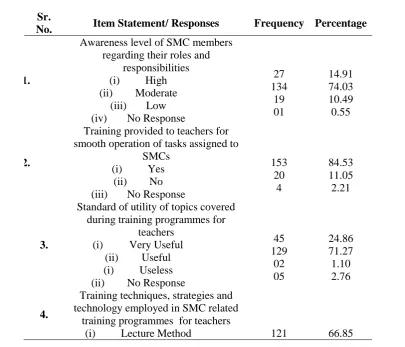
[image:6.595.99.505.427.774.2]are given in Table 1 and Table 2:
Table 1 Reflection of Elementary School Teachers Regarding Functioning Of School
Management Committees (Smcs) In Tribal Elementary Schools
Sr.
No. Item Statement/ Responses Frequency Percentage
1.
Awareness level of SMC members regarding their roles and
responsibilities
(i) High
(ii) Moderate
(iii) Low
(iv) No Response
27 134
19 01
14.91 74.03 10.49 0.55
2.
Training provided to teachers for smooth operation of tasks assigned to
SMCs
(i) Yes
(ii) No
(iii) No Response
153 20
4
84.53 11.05 2.21
3.
Standard of utility of topics covered during training programmes for
teachers
(i) Very Useful
(ii) Useful
(i) Useless
(ii) No Response
45 129
02 05
24.86 71.27 1.10 2.76
4.
Training techniques, strategies and technology employed in SMC related
training programmes for teachers
OCT-NOV, 2016, VOL. 3/18 www.srjis.com Page 4085
(ii) Discussion Method
(iii) Use of TV and Computer
(iv) Use of other Audio-Visual aids
(v) No Response
146 68 67 09 80.66 37.56 37.01 4.97 5.
Extent of achievement of goals of training programmes
(i) To a great extent
(ii) To some extent
(iii) Not at all
(iv) No Response
26 138 05 12 14.36 76.24 2.76 6.63 6.
Attendance status of SMC members in meetings
(i) High
(ii) Moderate
(iii) Low
(iv) No Response
28 139 11 03 15.46 76.79 6.08 1.66 7.
Enthusiasm among SMC members for effective functioning of school
(i) High
(ii) Less
(iii) Forcibly enthusiastic
(iv) No Response
79 94 03 05 43.65 51.93 1.66 2.77 8.
Annual evaluation of various school affairs/activities by SMC
(i) Yes
(ii) No
(iii) No Response
If Yes, implementation of recommendations for further
improvements
(i) Yes
(ii) No
(iii) No Response
115 52 14 77 02 36 63.53 28.72 7.73 66.96 1.73 31.30
Table 2 Impact of Functioning of Smcs on School Improvement
Sr. No. Item Statement/ Responses Frequency Percentage
9.
Improvement in functioning and quality of school due to activation of SMC
(i) Yes
(ii) No
(iii) No Response
118 44 19 65.19 24.30 10.49 10.
Impact of SMC on following aspects:
(i) Improvement in enrollment and retention of students
(i) Very effective
(ii) Moderately effective
(iii) Less effective
(iv) Ineffective
(ii) Improvement in girl education
(i) Very effective
(ii) Moderately effective
(iii) Less effective
(iv) Ineffective
(iii) Providing educational opportunity to children with
special needs
(i) Very effective
OCT-NOV, 2016, VOL. 3/18 www.srjis.com Page 4086
(ii) Moderately effective
(iii) Less effective
(iv) Ineffective
(iv) Arrangement of education to SC, ST and OBC children
(i) Very effective
(ii) Moderately effective
(iii) Less effective
(iv) Ineffective
(v) Arrangement of community mobilization programmes
(i) Very effective
(ii) Moderately effective
(iii) Less effective
(iv) Ineffective
(vi) Inspection and supervision of school activities
(i) Very effective
(ii) Moderately effective
(iii) Less effective
(iv) Ineffective
(vii) Use of financial grant
(i) Very effective
(ii) Moderately effective
(iii) Less effective
(iv) Ineffective
(viii) Maintenance of school infrastructure
(i) Very effective
(ii) Moderately effective
(iii) Less effective
(iv) Ineffective
(ix) Management of different school resources
(i) Very effective
(ii) Moderately effective
(iii) Less effective
(iv) Ineffective
(x) Maintenance of SMC record
(i) Very effective
(ii) Moderately effective
(iii) Less effective
(iv) Ineffective
(v) No Response
58 101 10 02 82 81 06 02 35 121 11 04 77 52 101 13 05 53 95 16 03 69 15 10 32 124 11 04 50 94 17 10 10 32.04 55.80 5.52 1.10 45.30 44.76 3.31 1.10 19.33 66.86 6.08 2.21 42.54 28.72 55.80 7.18 2.76 29.28 52.49 8.84 1.66 38.12 8.29 5.52 17.68 68.51 6.08 2.21 27.62 51.93 9.39 5.52 5.52
The major findings of the research study are presented below:
It was reported by a very large majority (74%) of elementary school teachers that
SMC members were aware about their roles and responsibilities to a moderate extent. There
were only about 15% elementary school teachers who remarked that SMC members were
aware to a higher extent. It was further indicated by a very large majority (84.53%) of
elementary school teachers that they were provided with training for smooth operation of
tasks assigned to SMCs. Similarly, a large majority of teachers (71.27%) reported that the
one-OCT-NOV, 2016, VOL. 3/18 www.srjis.com Page 4087 fourth (24.86%) elementary school teachers who considered the topics covered during
training programmes as very useful for them. The major techniques and strategies employed
during SMC related training programmes included lecture method and discussion method.
The use of TV, computers and other audio-visual aids during training programmes is not to a
much extent. A large majority (76.24%) of elementary school teachers pointed out that the
training programmes were successful only to some extent in terms of achievement of its
goals.
A large majority of elementary school teachers (76.79%) reported that the attendance
status of SMC members in meetings is moderate and majority of elementary teachers
(51.93%) revealed that SMC members were less enthusiastic for ensuring effective
functioning of schools. About two-third (63.53%) elementary school teachers indicated that
SMCs are involved in evaluating various school affairs and activities on an annual basis.
Further, two-third of such teachers also revealed that the recommendations on the basis of
evaluation are implemented for further improvements in school functioning.
Table 2 shows the impact of functioning of SMCs on various educational aspects. It
was observed that about two-third (65.19%) elementary school teachers agreed with regard to
improvement in functioning and quality of school due to activation of SMCs. However, there
were about one-fourth elementary teachers (24.30%) who were not in agreement with regard
to this. A good majority (60.22%) of elementary school teachers rated SMCs as very effective
in terms of its impact on improvement in girls’ education. SMCs in tribal elementary schools
have been rated as moderately effective in terms of providing educational opportunities to
CWSN, community mobilization, managing different school resources, maintaining school
records and improvement in students’ enrolment and retention by majority of elementary
school teachers (52% to 69%). Majority of elementary school teachers (55.80%) rated SMCs
as less effective in terms of inspection and supervision of school activities and use of
financial grant. With regard to impact of SMCs on arrangement of education to SC, ST and
OBC children and maintenance of school infrastructure, 44.76% and 38.12% elementary
school teachers rated the SMCs as moderately effective respectively.
The major problems in functioning of SMCs as perceived by elementary school
teachers included; (i) lack of co-ordination between SMC members and teachers due to
cultural differences (44.19%), (ii) less participation of male parents in school affairs
(35.91%), (iii) lack of infrastructure and human resources in schools (27.07%), (iv)
non-cooperativeness and unfavourable attitude of SMC members (26.52%), (v) lack of awareness
OCT-NOV, 2016, VOL. 3/18 www.srjis.com Page 4088 (20.44%), (vi) lack of funds with the school for development works (19.33%), (vii)
non-completion of tasks started by SSA and RMSA in time due to administrative reasons
(16.02%), (viii) less participation of SMC members due to unfavourable geographical
conditions (14.36%), (ix) irregularity in conducting SMC meetings (13.81%), (x) lack of
knowledge among parents regarding different education schemes and provisions (11.04%)
and, (xi) paucity of time and resources with SMC members for contributing towards school
improvement (11.04%).
For improving the functioning of SMCs, different suggestions were given by
elementary school teachers which included; (i) ensuring proper co-ordination between
teachers and SMC members (34.25%), (ii) making SMC members aware about their roles and
responsibilities (33.14%), (iii) proper training should be given to SMC members and teachers
(29.83%), (iv) educated and interested members (other than parents) should come forward in
SMCs (24.86%), (iv) funds should be released through SMC (24.86%), (vi) ensuring full
participation of SMC members (23.20%), (vii) SDP should be prepared scientifically
(16.02%) and, (viii) proper inspection of SMC works should be ensured (11.60%).
Discussion of Findings and Implications
On the basis of findings of the present study, it may be concluded that elementary
school teachers were of the opinion that SMC members are aware about their roles and
responsibilities only to a moderate extent. This is not a healthy indicator for effective
functioning of SMCs. Hence, it is required that SMC members should be made aware about
their role and responsibilities through different means like, training programmes, awareness
campaigns, publications etc. It has been observed that the teacher training programmes
related to SMC functioning were mostly dominated by lecture and discussion method. As a
result of this, these training programmes are not getting appropriate results. Therefore, it is
recommended that modern training techniques and technologies should be employed in these
training programmes so that these training programmes can achieve its goals to a greater
extent. In order to improve the participation of SMC members in meetings and make them
more enthusiastic, it is essential that the SMC members and teachers should develop proper
coordination and feeling of mutual co-operation for ensuring effective functioning of schools.
The elementary school teachers have rated SMCs in tribal areas as moderately effective in
terms of providing educational opportunities to CWSN, community mobilization, managing
school resources and improving students’ enrolment and retention. This needs proper
attention by the educational administrators and higher authorities. The role of SMCs in terms
OCT-NOV, 2016, VOL. 3/18 www.srjis.com Page 4089 from the concerned authorities. Moreover, there should be a provision for regular assessment
of various tasks and activities undertaken by the school management committees in
elementary schools of tribal areas of Himachal Pradesh.
References
Banerjee, Abhijit; Banerjee, Rukmini; Duflo, Esther; Glennerster, Rachel & Khemani, Stuti (2007). Can information campaigns raise awareness and local participation in primary education? Economic and Political Weekly, April 14, 1365-72.
Kernel, Teron (2012). A study of the functioning of SMCs in the Golaghat district of Assam: A research study. New Delhi: NUEPA.
Narayana, M. and Chandrakant (2000). Functioning of VEC in Satara district of Maharashtra, A study in reference to adult education. Unpublished Dissertation, New Delhi: NUEPA.
Nayak, P. M. (2009). Community participation in the universalisation of primary education. New Delhi: Academic Excellence Publishers and Distributors.
Owusu, Benedict Osei., and Sam, Francis Kwame (2012). Assessing the role of school management committees (SMCs) in improving quality teaching in learning in Ashanti Mampong municipal basic schools. Journal of Emerging Trends in Educational Research and Policy Status, 3(5), 611-615.
Patil, G.B. (2004). Role of gram shikshan samiti (GSS) in universalization of primary education. Unpublished Ph. D. Thesis, Mumbai: Mumbai University.
Rao, Vasanta Srinivasa (2009). Lack of community participation in the Sarva Shiksha Abhiyan: A case study. Economic and Political Weekly, .XLIV(8).
Sujatha, K. and Rao, M. S. (2000). Community participation in education in tribal areas: Study of Maabadies (community school) in Visakhapathnam district of Andhra Pradesh. Unpublished Doctoral Dissertation, New Delhi: NUEPA.
Verma, Snehlata. and Singh, Jaggar (2014). Functioning of village education committee (VEC) in educational management, an analytical study of selected villages of Punjab. Journal of International Academic Research for Multidisciplinary Studies.