http://dx.doi.org/10.4236/ojdm.2016.61002
On Mutually Orthogonal Graph-Path Squares
Ramadan El-Shanawany
Department of Physics and Engineering Mathematics, Faculty of Electronic Engineering, Menoufia University, Menouf, Egypt
Received 14 January 2015; accepted 14 December 2015; published 17 December 2015
Copyright © 2016 by author and Scientific Research Publishing Inc.
This work is licensed under the Creative Commons Attribution International License (CC BY). http://creativecommons.org/licenses/by/4.0/
Abstract
A decomposition =
{
G G0, 1,,Gs−1}
of a graph H is a partition of the edge set of H into edge- disjoint subgraphs G G0, 1,,Gs−1. If Gi≅G for all i∈{
0,1,,s−1}
, then is a decomposition of H by G. Two decompositions ={
G G0, 1,,Gn−1}
and ={
F F0, 1,,Fn−1}
of the completebipartite graph Kn n, are orthogonal if, E G
( )
i ( )
Fj =1 for all i j, ∈{
0,1,,n−1}
. A set of decompositions{
0, 1,,k−1}
of Kn n, is a set of k mutually orthogonal graph squares (MOGS)if i and j are orthogonal for all i j, ∈
{
0,1,,k−1}
and i≠ j. For any bipartite graph G withn edges, N n G
(
,)
denotes the maximum number k in a largest possible set{
0, 1,,k−1}
ofMOGS of Kn n, by 𝑮𝑮. Our objective in this paper is to compute N n G
(
,)
where G=d+1( )
F is apath of length d with d + 1 vertices (i.e. Every edge of this path is one-to-one corresponding to an isomorphic to a certain graph F).
Keywords
Orthogonal Graph Squares, Orthogonal Double Cover
1. Introduction
In this paper we make use of the usual notation: Km n, for the complete bipartite graph with partition sets of sizes m and n, Pn+1 for the path on n + 1 vertices, DF for the disjoint union of D andF, DLv F for the
union of D and F with Lv (set of vertices) that belong to each other (i.e. union of D and F with common ver-tices of the set Lv belong to F and D), Kn for the complete graph on n vertices, K1 for an isolated vertex. The other terminologies not defined here can be found in [1].
sub-graphs G G0, 1,,Gs−1. If Gi ≅G for all i∈
{
0,1,,s−1}
, then is a decomposition of H by G. Twode-compositions =
{
G G0, 1,,Gn−1}
and ={
F F0, 1,,Fn−1}
of the complete bipartite graph Kn n, are or- thogonal if, E G( )
i ( )
Fj =1 for all i j, ∈{
0,1,,n−1}
. Orthogonality requires that E G( )
i = =n E F( )
ifor all i∈
{
0,1,,n−1}
. A set of decompositions{
0, 1,,k−1}
of Kn n, is a set of k mutually orthogonal graph squares (MOGS) if i and j are orthogonal for all i j, ∈{
0,1,,k−1}
and i≠ j. We use the nota-tion N n G(
,)
for the maximum number k in a largest possible set{
0, 1,,k−1}
of MOGS of Kn n, by G, where G is a bipartite graph with n edges.If two decompositions and of Kn n, by G are orthogonal, then is an orthogonal double cover of Kn n, by G. Orthogonal decompositions of graphs and orthogonal double covers (ODC) of graphs have been studied by several authors; see the survey articles [2][3].
It is well-known that orthogonal Latin squares exist for every n∉
{ }
2, 6 . A family of k-orthogonal Latin squares of order n is a set of k Latin squares any two of which are orthogonal. It is customary to denote( )
max{
:}
N n = k ∃k MOLS be the maximal number of squares in the largest possible set of mutually ortho-gonal Latin squares MOLS of side n. A decomposition of Kn n, by nK2 is equivalent to a Latin square of side n; two decompositions and of Kn n, by nK2 are orthogonal if and only if the corresponding Latin squares of side n are orthogonal; and thus N n nK
(
, 2)
=N n( )
. The computation of N n( )
is one of the most difficult problems in combinatorial designs; see the survey articles by Abel et al.[4] and Colbourn and Dinitz in[5]. Since N n G
(
,)
is a natural extension of N n( )
, the study of N n G(
,)
for general graphs is interesting.El-Shanawany [6] establishes the following: i) N n K
(
, 1,n)
=2; ii)(
)
(
)
(
)
3 4
6
2, 2, 3, 3, 5, 5
N P = N P = N P = and
(
7, 8)
7N P = ; iii) let p>2 be a prime number, then N p K
(
, 2+(
(
p−1 2)
)
P3)
=p; iv) let p be a prime number, then N p p(
,(
−2)
K2+P3)
≥ −p 1. Based on ii), El-Shanawany [6] proposed:Conjecturer 1. Let p be a prime number. Then N p P
(
, p+1)
=p.Sampathkumar et al.[7] have proved El-Shanawany conjectured. In the following section, we present another technique to prove this conjecture as in Theorem 8.
The two sets
{
0 0(
)
}
0
0 ,1 ,, n−1 and
{
1 1(
)
}
1
0 ,1 ,, n−1 denote the vertices of the partite sets of Kn n, . The
length of the edge x y0 1 of Kn n, is defined to be the difference y−x, where x y, ∈n. Note that sums and
differences are carried over in n (that is, sums and differences are carried modulo n). Let G be a subgraph of
, n n
K without isolated vertices and let a∈
{
0,1,,n−1}
. The a-translate of G, denoted by G+a, is the edge- induced subgraph of Kn n, induced by{
(
x+a) (
0 y+a)
1:x y0 1∈E G( )
}
. A subgraph G of Kn n, is half-starterif E G
( )
=n and the lengths of all edges in G are mutually different.Lemma 2 (see [8]). If G is a half-starter, then the union of all translates of G forms an edge decomposition of
, n n
K (i.e.
( )
,(
)
n
n n a
E K =
∈ E G+a ).In what follows, we denote a half-starter G by the vector
( ) (
0 1 1)
times
, , , n nn n n n
n
v G = v v v− ∈ =× × × ,
where v v0, ,1,vn−1∈n and vi can be obtained from the unique edge
( ) (
vi 0 vi+i)
1 of length i in G.Theorem 3 (see [8]). Two half-starters
( ) (
0, ,1 , 1)
nn n
v G = v v v− ∈ and
( ) (
0, 1, , 1)
nn n
v F = u u u− ∈ are orthogonal if
{
vi−u ii: ∈n}
=n.If two half-starters v G
( )
and v F( )
are orthogonal, then the set of translates of G and the set of translates of F are orthogonal.A set of decompositions
{
(
)
( )
, : 0 1}
n
i=
a∈ E Gi+a =E Kn n ≤ ≤ −i k of Kn n, } is a set of k mutually or-
thogonal graph squares (MOGS) if i and j are orthogonal for all i j, ∈
{
0,1,,k−1}
and i≠ j. Note that(
)
(
)
(
)
1 1
,
0 0 n .
k k
i i n n
i i a E G a kE K
− −
= =
= ∈ + =
In the following, we define a G-square over additive group n.
( ) ( ) ( )
i{
, : , , , n}
E G = x y x y =i x y∈ are isomorphic to graph G.
We have already from Lemma 2 and Definition 4 that every half starter vector v G
( )
and its translates are equivalent to G-square. For more illustration, the first matrix 0 in equation (1) is equivalent to the first row inFigure 3, which represented by the half starter vector v G
( ) (
00 = 0, 0, 2)
and its translates.Definition 5. Two squares matrices 0 and 1 of order n are said to be orthogonal if for any ordered pair
( )
a b, , there is exactly one position(
x y,)
for 0(
x y,)
=a and 1(
x y,)
=b.Now, we shall derive a class of mutually orthogonal subgraphs of Kn n, by a given graph G as follow.
Definition 6. A set of matrices
{
i: 0≤ ≤ −i k 1}
of Kn n, is called a set of k mutually orthogonal graph squares (MOGS) if i and j are orthogonal for all i j, ∈{
0,1,,k−1}
and i≠ j.Definition 7 (see [9]). Let F be a certain graph, the graph F-path denoted by d+1
( )
F , is a path of a set of vertices ={
i: 0≤ ≤i d}
and a set of edges ={
i: 0≤ ≤ −i d 1}
if and only if there exists the following two bijective mappings:1) Ψ :→ defined by Ψ
( )
i =Fi, where ={
F F0, 1,,Fd−1}
is a collection of d graphs, each one is isomorphic to the graph F.2)
φ
:→ defined by φ( )
i =Xi, where ={
Xi: 0≤ ≤i d;
iXi= ∅}
is a class of disjoint sets ofvertices (i.e., decomposed into d+1 disjoint sets such that no two vertices within the same set are adja-cent).
As a special case if the given graph F is isomorphic to K1,1 then d+1
( )
K1,1 , is the natural path Pd+1 that is,( )
1 1,1 1
d+ K =Pd+
.
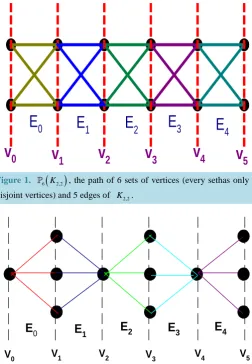
[image:3.595.186.439.335.700.2]For more illustration, see Figure 1, Figure 2.
Figure 1. 6
( )
K2,2 , the path of 6 sets of vertices (every sethas only 2 [image:3.595.193.436.337.503.2]disjoint vertices) and 5 edges of K2,2.
Figure 2. 6
( )
K1,3 , the path of 6 sets of vertices and 5 edges of K1,3.E
0
E
1
E
2
E
3
E
4
v
0
v
1
v
2
v
3
v
4
v
5
E
0E
1E
2E
3E
4Consider s≥0 paths of length k≥1, all attached to the same vertex (root vertex). This tree will be called
( )
,T s k . Clearly, T s
( )
,1 is the star with s edges and T( )
1,k is the path with k edges. Define Ls as a set of all leaves of T s k( )
, i.e. Ls={
v v: is a leaf in T s k( )
,}
and L_{ }
s =s.In the following section, we will compute N n G
(
,)
where G=d+1( )
F such that F=K1,1 as in theorem 8 and( )
31 3, 3 L
F=T K as in theorem 11.
2. Mutually Orthogonal Graph-Path Squares
The following result was shown in [7]. Here we present another technique for the proof.
Theorem 8. Let q be a prime number. Then N q
(
,q+1( )
K1,1)
=q.Proof. Let Gij be a subgraph of Kq q, with q edges; for fixed j∈q and 0≤ ≤ −i q 1, define the q half- starter vectors as follows, v G
( )
ij =(
j i, + −j 1, 2i+ −j 2 ,2 ,( )(
−2 i+ +2)
j,( )(
−1 i+ +1)
j)
; our task is to prove the orthogonality of those q half-stater vectors in mutually. Let us define the half starter vector v G( )
ij as( )
(
)
k ij
v G =k i−k + j for all k∈q. Then for all two different elements k l, ∈q, we have
( ) ( )
(
) (
) (
)
(
(
)
)
{
v Gk ij −v Gl ij =k i−k −l i− =l k−l i− k+l}
, then vk, vl are mutually orthogonal half-startervectors of graphs Gkj and Glj of Kq q, respectively iff
(
i−(
k+l)
,q)
=1. It remains to prove the isomor-phism of v Gk( )
ij half starter graphs Gij of Kq q, for all k∈q. Let( )
(
)
( ) (
)
k ij k is
v G =k i−k + =j v G =k i−k +s, and therefore j=s. Furthermore, if
( )
(
)
( )
(
)
k ij l ij
v G =k i−k + =j v G =l i l− + j, then
(
k−l)
(
i−(
k+l)
)
=0, since i−(
k+ ≠l)
0 (orthogonalityof vk and vl), and therefore k=l. Moreover, for any i j, ∈q the
th
ij graph isomorphic to Gij has the edges:
( )
{
(
2)
(
(
)
)
}
1 0 1 . ij
E G = − +i j i − +i j ■
An immediate consequence of the Theorem 8 and Conjecture 1 is the following result.
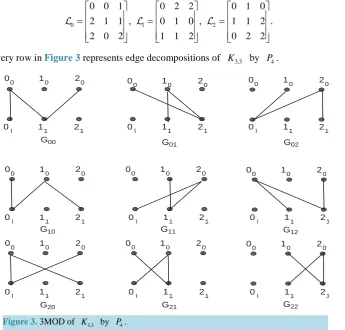
Example 9. The three mutually orthogonal decompositions (MOD) of K3,3 by P4 given in Figure 3 are associated with the three mutually orthogonal P4-squares as in Equation (1):
0 1 2
0 0 1 0 2 2 0 1 0
2 1 1 , 0 1 0 , 1 1 2 .
2 0 2 1 1 2 0 2 2
= = =
(1)
[image:4.595.147.493.391.721.2]Note that, every row in Figure 3 represents edge decompositions of K3,3 by P4.
Figure 3. 3MOD of K3,3 by P4.
0 0 0
G00 G01 G02
G11 G12
G20 G21 G22
G10
0 1 2
1 1
0 1 2
1 1
0 1 2
0 0 0
0 1 2 00 10 20
0 0 0
0 1 2 00 10 20
0 0 0
0 1 2
1 1
0 1 2
1 1
0 1 2 0 11 21
1 1
0 1 2
1 1
0 1 2 0 11 21
1 1
0 1 2
0 0 0
0 1 2 00 10 20
0 0 0
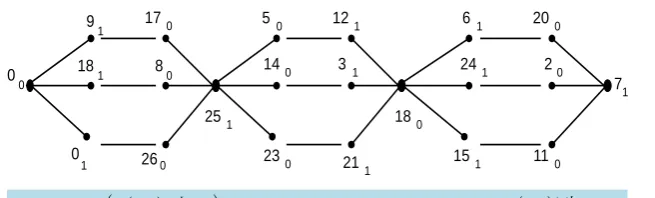
Figure 4.
(
( )
3)
4 3,3 1
L
T K
, the path of 4 vertices and 3 edges of
( )
31
3,3 L
T K .
The following result is a generalization of the Theorem 8.
Theorem 10. Let n be a prime power such that n=qx with integer power x≥1 of a prime number q and G be a subgraph of Kn n, . Then N n G
(
,)
≥q.Proof. For fixed j∈n, 0≤ ≤ −i q 1 and Gij ≅G, define the q half-starter vectors as follows,
( )
(
2( )(
)
( )(
)
)
, 1, 2 2 , , 2 2 , 1 1 .
ij
v G = j i+ −j i+ −j − i+ + j − i+ + j (2)
Our task is to prove the orthogonality of those q half-starter vectors in mutually. Let us define the half starter vector v G
( )
ij as v Gk( )
ij =k i(
−k)
+ j for all k∈q. Then for all two different elements k l, ∈q, wehave
{
v Gk( ) ( )
ij −v Gl ij =k i(
−k) (
−l i− =l) (
k−l)
(
i−(
k+l)
)
}
, and then vk, vl are mutually orthogonal half-stater vectors of graphs Gkj and Glj of Kn n, respectively iff(
i−(
k+l)
,n)
=1. It remains to prove the isomorphism of v Gk( )
ij half starter graphs Gij of Kn n, for all k∈q. Let( )
(
)
( ) (
)
k ij k is
v G =k i−k + =j v G =k i−k +s, and therefore j=s. Furthermore, if
( )
(
)
( )
(
)
k ij l ij
v G =k i−k + =j v G =l i l− + j, then
(
k−l)
(
i−(
k+l)
)
=0, since i−(
k+ ≠l)
0 (orthogonalityof vk and vl), and therefore k=l. Moreover, for any 0≤ ≤ −i q 1,j∈n the
th
ij graph Gij isomorphic to G has the edges:
( )
{
(
2)
(
( )
)
}
1
0 1 .
ij
E G = n i− +j n i i− − + j (3)
■ Note that, in the special case x=1 the Theorem 10 proved El-Shanawany conjecture; also, in the case
2, 1
q= x≠ , and G≠2K2, Theorem 10 constructed an orthogonal double cover of Kn n, by G. Furthermore, we can construct the following result using Theorem 10 in case x>1 and q=3.
Theorem 11. Let x≥2 be a positive integer such that 3x
n= and
(
( )
3)
2 1
3x 1 3, 3 L
T K
−+
be a subgraph of
3 ,3x x
K . Then
(
(
( )
3)
)
2 1
3 1
3 , x 3, 3 3.
L x
N − + T K ≥
Proof. The result follows from the vector in Equation (2) and its edges in Equation (3) with
( )
( )
31 , 3, 3 1
L d
G= + F F =T K such that E G
( )
=3x = E F d( )
=9d, imply that d=3x−2 which define the number of graphs isomorphic to F. As a direct application of Theorem 11; see Figure 4. ■Conjecture 12. N q
(
x,q+1( )
K1,1)
=qx if q is a prime number with an integer power x≥1.Conjecture 13.
(
( )
3)
1 1
, x 3, 3 L x
q sk
N q T K q
+
≥
if q is a prime number with an integer power x≥1 and
,
s k are positive integers.
References
[1] Balakrishnan, R. and Ranganathan, K. (2012) A Textbook of Graph Theory. Springer, Berlin.
http://dx.doi.org/10.1007/978-1-4614-4529-6
[2] Alspach, B., Heinrich, K. and Liu, G. (1992) Orthogonal Factorizations of Graphs. In: Dinitz, J.H. and Stinson, D.R., Eds., Contemporary Design Theory, Chapter 2, Wiley, New York, 13-40.
[3] Gronau, H.-D.O.F., Hartmann, S., Grüttmüller, M., Leck, U. and Leck, V. (2002) On Orthogonal Double Covers of
0 0 91 0 1 18
1 80
260
170 50
140
230
251 180
71 121
31
211
61 200
241 20
Graphs. Designs, Codes and Cryptography, 27, 49-91. http://dx.doi.org/10.1023/A:1016546402248
[4] Colbourn, C.J. and Dinitz, J.H. (eds.) (2007) Handbook of Combinatorial Designs. 2nd Edition, Chapman & Hall/CRC, London, Boca Raton.
[5] Colbourn, C.J. and Dinitz, J.H. (2001) Mutually Orthogonal Latin Squares: A Brief Survey of Constructions. Journal
of Statistical Planning and Inference, 95, 9-48. http://dx.doi.org/10.1016/S0378-3758(00)00276-7
[6] El-Shanawany, R. (2002) Orthogonal Double Covers of Complete Bipartite Graphs. Ph.D. Thesis, Universitat Rostock, Rostock.
[7] Sampathkumar, R. and Srinivasan, S. (2009) Mutually Orthogonal Graph Squares. Journal of Combinatorial Designs,
17, 369-373. http://dx.doi.org/10.1002/jcd.20216
[8] El-Shanawany, R., Gronau, H.-D.O.F. and Grüttmüller, M. (2004) Orthogonal Double Covers of Kn,n by Small Graphs.
Discrete Applied Mathematics, 138, 47-63. http://dx.doi.org/10.1016/S0166-218X(03)00269-5