Link to Leeds Beckett Repository record:
http://eprints.leedsbeckett.ac.uk/5274/
Document Version: Article
Creative Commons: Attribution-Noncommercial 4.0
The aim of the Leeds Beckett Repository is to provide open access to our research, as required by funder policies and permitted by publishers and copyright law.
The Leeds Beckett repository holds a wide range of publications, each of which has been checked for copyright and the relevant embargo period has been applied by the Research Services team.
We operate on a standard take-down policy. If you are the author or publisher of an output and you would like it removed from the repository, please contact us and we will investigate on a case-by-case basis.
O
ne of the key priorities for staff when dealing with intravenous (IV) drugs is to ensure the right dose is administered (Grissinger, 2010). Under-dosing can result in therapy failure in general (Roseau et al, 2016) and, for antibiotics, can lead to a risk of the emergence of resistant organisms (Fish and Ohlinger, 2006). Under-dosing can ariseNon-flushing of IV administration sets:
an under-recognised under-dosing risk
Dawn Michelle Cooper, Thomas Rassam, Adrian Mellor
ABSTRACT
Background: intravenous (IV) drugs are administered widely and under-dosing can result in therapy failure. The aim of this study was to quantify frequency, volume and dose of drug discarded within administration sets in the clinical setting. Methods: residual volume for 24 different administration sets was measured under controlled conditions in a laboratory. Clinical assessment of current practice regarding post-infusion flushing occurred in 6 departments of one teaching hospital in the UK over 7 days. Details of drug last infused, (concentration, diluent and volume) and type and brand of administration set were collected. Results: 74% of administration sets were not flushed. Non-flushing exceeded 90% and 61% for gravity and pump infusions respectively (p<0.001) in all areas excluding oncology. Oncology was the only area where flushing was standard practice for all infusions (p<0.001). Mean residual volume of the administration sets was 13.1 ml and 16.7 ml for gravity and pump sets respectively. Antibiotics were commonly infused and up to 21% of antibiotic dose was frequently discarded. Conclusions: the findings suggest disposal of substantial volumes of drugs occurs frequently in general hospital areas. Without clear national and local policies this unrecognised under-dosing will continue.
Key words: Under-dosing ■ Intravenous drugs ■ Post-infusion flushing ■ Administration sets
Dawn Michelle Cooper, Visiting Research Fellow, Sheffield Hallam University, Sheffield, [email protected]
Thomas Rassam, Medical Student, Newcastle University, Newcastle upon Tyne
Adrian Mellor, Consultant Anaesthetist, South Tees NHS Foundation Trust, Middlesbrough, and Visiting Professor, Carnegie Research Institute, Leeds Beckett University, Leeds
Accepted for publication: July 2018
due to errors in: calculation, transcription, or preparation of the drug (Patient Safety Observatory, 2007). However, a less widely known means of under-dosing arises when the administration system itself fails to administer all of the prescribed drug (Plagge, 2010).
IV drugs can be administered via either a bolus or an infusion (gravity or pump). For a bolus, the standard and recommended practice is to flush the cannula after the drug has been administered (Infusion Nurses Society, 2006). However, following intermittent infusion via an administration set, no such flushing recommendation exists—even though the discarded set includes residual drug volume. Although residual volume has been recognised in some studies, these have involved questionnaires and small-scale studies of clinical practice (Plagge, 2010). Furthermore, there is nothing in the literature published within the last 8 years or relating to practice in the UK. The significant proportion of patients who have an IV cannula and require IV drugs merits this issue being quantified and addressed by relevant health professionals.
The authors set out to quantify the problem in terms of frequency of drug discarded in the administration set in a purposeful sample of clinical areas in one teaching hospital and measure the potential volume of drug discarded in different administration sets.
Method
This single-site study took place in a large teaching hospital in the UK. Six clinical areas with high IV infusion use were identified: one oncology day ward, two surgical wards, a cardiac intensive care unit, a cardiac high-dependency unit (HDU) and an emergency admissions unit. This purposeful sample represents a cross-section of clinical areas with diverse IV infusion requirements. Data were collected over 7 consecutive days.
The number of 50 ml and 100 ml bags of saline and glucose were counted on each ward/department, demonstrating base line availability of potential ‘flush’ bags.
For 7 days, healthcare workers (HCWs) were asked to discard all administration sets, along with the attached bag/bottle, into a study container rather than the clinical waste container (excluding the oncology day ward). No other changes were made to the HCWs’ normal practice.
The study container was emptied daily by the research team and the following details for each administration set were recorded:
■ Type of set (pump or gravity) ■ Set brand
■ Drug
■ Concentration (%, mg/ml, µg/ml or mmol) ■ Diluent
■ Volume of bag/bottle attached.
The presence of a 50/100 ml bag of saline or glucose attached to the administration set was defined as use of a flush.
In the oncology day ward, to prevent exposure to chemotherapeutic agents and prevent contaminated administration sets being discarded outside of trust protocol, practice was observed (without the HCWs changing any procedures). The same information was recorded via observation.
Inclusions and exclusions were as follows:
■ Included: pump and gravity administration sets used for
intermittent infusion of drugs
■ Excluded: any other administration sets, hydration infusions
(≥500 ml), e.g. glucose, Hartmann’s solution, isotopes, sodium chloride and sodium chloride with additives (magnesium and potassium chloride or sodium bicarbonate) and continuous infusions e.g. insulin.
As practice was observed in the oncology day ward, hydration solutions from this area were included as flushes because hydration fluids were used to flush between each chemotherapeutic agent given and after the final dose before disposal of the administration set.
The medications infused were grouped according to the Anatomical Therapeutic Chemical (ATC) classification into drug classifications based on the World Health Organization (WHO) system. Drugs were grouped according to ATC level 2. To quantify discarded volume in administration sets, the maximum potential residual volume was measured for a range of gravity and pump administration sets available for purchase by hospitals in the UK. The administration sets identified in the clinical study were included. Five unused administration sets of each brand were filled with saline, then disconnected from the saline bottle and the fluid was run off until the drip chamber was empty, but the tubing below was full and the clamp was applied. The volume remaining in the tubing was measured (from the bottom of the drip chamber to the Luer attachment) by opening the clamp and running the remaining fluid into a 10 ml measuring cylinder. This maximum residual volume was used in data analysis to represent volume discarded in the administration sets in clinical practice.
Data were analysed descriptively: volume of IV drug bag/ bottle, calculated residual volume of IV drug in administration set, frequency of administration sets flushed and percentage of fluid not infused. Volumes of IV drug in bottle/bag and residual volume were not normally distributed and the average was expressed as median.
Data were analysed overall and by combined specialty, i.e. surgical, oncology day ward, medical critical care and high-dependency unit and the emergency assessment unit and by administration set type (pump or gravity).
Data were analysed using SPSS version 24. Data distribution was assessed using the Kolmogorov-Smirnov test and then used mean/median as appropriate. Chi-squared analysis was performed for nominal data with P <0.05 as significant.
This was a non-interventional observational feasibility study, involving no patient-identifiable markers, and was approved as a service evaluation by the research and development department of the study site.
Results
Data were collected from 411 administration sets and combined by specialty; 130 sets were excluded (124 hydration solutions, 5 continuous infusions, 1 epidural set). The remaining 281 sets were included for analysis.
None of the wards had 50 ml sodium chloride or glucose present. All wards had 100 ml sodium chloride present and all bar one of the surgical wards had 100 ml glucose available for use as a flush.
Table 1 illustrates the number of administration sets that were flushed or not by specialty and category (pump (n=106) or gravity (n=175)). Overall 209/281 administration sets were not flushed (74%) (Table 1). Apart from the oncology day ward, non-flushing exceeded 90% in gravity infusions and 61% in pump infusions (p<0.001) in all other departments; 16/17 (94%) pump administration sets that were flushed were burette administration sets. Of all administration sets used by the oncology day ward, 100% were flushed (p<0.001); all were pump administration sets.
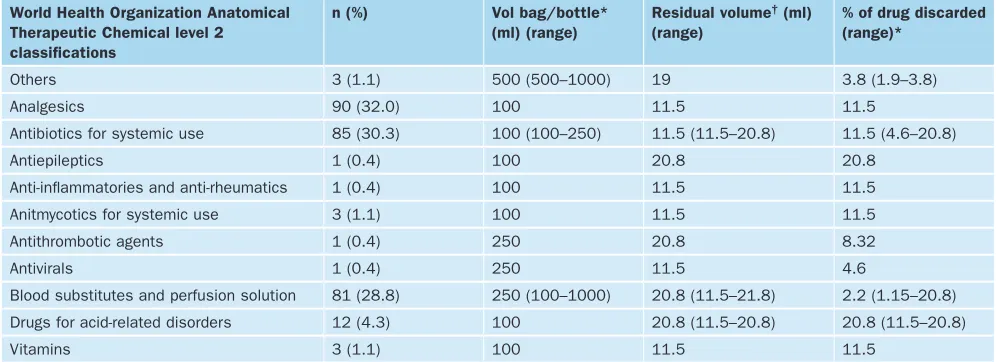
Table 2 demonstrates the range of drugs administered by
ATC 2 classification, detailing volume, associated residual volumes and calculated percent of drug discarded. Analgesics (90/281; 32%) and antibiotics (85/281; 30%) were the most common drugs administered, none of these were flushed. The next most common drug administered were blood substitutes and perfusion solutions (81/281; 29%) of which 72 were flush solutions of the infusions, the remaining 9 were unflushed drugs. Twenty-four brands of gravity and 13 brands of pump administration sets were measured separately for maximum residual volume. The mean residual volume was 13.1 ml (SD 2.98 ml, range 10.4-20.6 ml) for gravity administration sets and 16.7 ml (SD 3.33 ml, range 11.0-21.8 ml) for pump administration sets. In the clinical study, 242/281 administration sets were identifiable by brand. The maximum residual volume was 11.5 ml for gravity and ranged from 16.2 ml to 21.8 ml, with a median of 20.8 ml for pump administration sets. Table 2 shows the residual volume and calculated percentage of active drug discarded in the administration set. Up to 21% of last administered drug was calculated as discarded with the administration set.
Up to 21% of the antibiotic dose was calculated as discarded in the administration sets (range 5-21%). The majority, 57/85 (67%), of antibiotics were diluted in 100 ml of saline, 17/85 (20%) and 11/85 (13%) were diluted in 200 ml and 250 ml of saline respectively. Median volume of antibiotics was 100 ml.
Table 3 demonstrates the breakdown by drug name for the two
The most common antibacterial used was metronidazole, this was underdosed on 30 occasions with up to 21% of the drug being discarded within the administration sets. Here the median dose of metronidazole was 0.5 g and 62 mg was calculated as discarded per dose. With 6-hourly doses, after 2 days the equivalent of nearly one full dose (488 mg) will have been discarded as residual volume (Joint National Formulary, Committee, 2018a).
[image:4.652.38.612.117.338.2]Ciprofloxacin was recorded on 18 occasions, with up to 12% of the dose calculated as discarded in the administration set. The median dose of ciprofloxacin given here was 380 mg per dose and 27 mg per dose was calculated as discarded. When given in 8-hourly intervals (Joint National Formulary Committee, 2018b), in a 4-day course, the equivalent of one dose will have been discarded as residual volume by the end of the course.
Table 2. Details of the last fluid administered through set as Anatomical Therapeutic Chemical level 2 category, detailing volume, calculated residual volume and calculated percent of drug discarded (n=281)
World Health Organization Anatomical Therapeutic Chemical level 2 classifications
n (%) Vol bag/bottle*
(ml) (range)
Residual volume† (ml)
(range)
[image:4.652.113.611.393.574.2]% of drug discarded (range)*
Others 3 (1.1) 500 (500–1000) 19 3.8 (1.9–3.8)
Analgesics 90 (32.0) 100 11.5 11.5
Antibiotics for systemic use 85 (30.3) 100 (100–250) 11.5 (11.5–20.8) 11.5 (4.6–20.8)
Antiepileptics 1 (0.4) 100 20.8 20.8
Anti-inflammatories and anti-rheumatics 1 (0.4) 100 11.5 11.5
Anitmycotics for systemic use 3 (1.1) 100 11.5 11.5
Antithrombotic agents 1 (0.4) 250 20.8 8.32
Antivirals 1 (0.4) 250 11.5 4.6
Blood substitutes and perfusion solution 81 (28.8) 250 (100–1000) 20.8 (11.5–21.8) 2.2 (1.15–20.8) Drugs for acid-related disorders 12 (4.3) 100 20.8 (11.5–20.8) 20.8 (11.5–20.8)
Vitamins 3 (1.1) 100 11.5 11.5
*Expressed as median. † Residual volume of administration set as measured separately in the lab
Discussion
This study has demonstrated that while small (100 ml) bags of fluids are present in ward areas, they are not commonly used to flush intermittent IV infusions outside of the oncology day ward. The majority of administration sets were not flushed and the residual volume of active drug is commonly discarded, resulting in a frequent under-recognised under-dosing via IV infusions. The authors observed that flushing varies by department with the oncology day ward flushing all administration sets. The local hospital’s anticancer medicine policy addresses flushing administration sets in the statement ‘a flush of prescribed compatible solution should be administered between each medication and on completion of the patient’s regimen’. However, general trust polices do not discuss flushing after other intermittent infusions but rather refer the reader to the Royal Marsden Manual of Clinical Table 1. The number of administration sets flushed or not by type of administration set and by specialty area
Overall Gravity Pump
Speciality area Number of sets n Flushed n (%) Not flushed n (%) Number of sets n (%) Flushed n (%) Not flushed n (%) Number of sets n (%) Flushed n (%) Not flushed n (%)
Surgical 118 1
(0.8) 117 (99.2) 112 (94.9) 1 (0.9) 111 (99.1) 6 (5.1) 0 (0.0) 6 (100.0) Oncology day ward 51 51 (100) 0 (0) 0 (0)
n/a n/a 51
(100) 51 (100) 0 (0.0) Medical critical care and HDU 84 17 (20.2) 67 (79.8) 42 (50.0) 1 (2.4) 41 (97.6) 42 (50.0) 16 (38.1) 26 (61.9) Emergency admission unit 28 3 (10.7) 25 (89.3) 21 (62.3) 2 (9.5) 19 (90.5) 7 (37.7) 1 (14.3) 6 (85.7)
Overall 281 72
(25.6) 209 (74.4) 175 (62.3) 4 (0.3) 171 (97.7) 106 (37.7) 68 (64.2) 38 (35.8)
Nursing Procedures (Dougherty and Lister, 2015). These national
guidelines also omit the specific need to flush sets to ensure the full dose of drug is given. There is a side note in the national guidelines where a flush mini-bag may be considered in line with cost implications and risk to patient on restricted fluid intake, but there was no discussion of the benefit of total dosing (Dougherty and Lister, 2015). A lack of clear local and national guidelines appear to be reflected in practice here by the lack of conscious thought given to flushing the administration sets, resulting in the majority of intermittent infusions not being flushed.
This study was unable to measure residual drug levels if a continuous infusion followed an intermittent drug infusion using the same administration set. This possibly led to some overestimation of underinfusion. Also, residual volumes were calculated rather than individually measured in the clinical setting, which limits the accuracy of the data; however, this process enabled a larger number of administration sets to be included in the study across a wide variety of wards within the site, thus reducing any measurement bias.
Almost one third of the administration sets had antibiotics attached on disposal, with up to 21% of the prescribed dose being calculated as disposed of within the set. Dosing and efficacy of antibiotics remain under discussion (Deryke and Alexander, 2009; Roberts et al, 2011). The authors have demonstrated that the equivalent volume of one full dose of antibiotic could frequently be discarded through a course of treatment due to discarding residual volume within the administration set, which may affect clinical outcomes.
Some 30% of the administration sets had antibiotics attached—this is in line with national figures where 34.3% of patients within the NHS are on antimicrobials (Hopkins et al, 2011). Although this study did not look at the impact of under-dosing of antibiotics, there are several implications that may benefit from further investigation. Patients with reduced renal clearance are often given lower doses of antibiotics to prevent toxicity; however, these patients can be receiving sub-therapeutic levels of antibiotics during continuous haemodialysis (Wilson and Berns, 2012) requiring extra doses of antibiotic. Obese patients are another population where under-dosing may occur if dose adjustments are not implemented. A recent review of literature concluded that 23/34 (68%) of antibiotics were recommended for obesity-specific dosing (Meng et al, 2017). These problems may be further unknowingly amplified by the disposal of a residual volume of antibiotic within the administration set.
[image:5.652.36.617.124.423.2]A small-scale study by Plagge et al (2010) demonstrated that ‘dead space’ (residual volume) of administration sets and bottles can result in up to 32% of 50 ml infusions being discarded and up to 20% of 100 ml infusions being discarded. Plagge et al (2010) recommend a minimum of 100 ml should be used and the infusion should be stopped when the drip chamber is empty. However, in the present study the authors observed that infusion volumes of at least 100 ml were commonly used and yet a considerable volume is disposed of. The authors believe that flushing the administration set would be a more beneficial means of overcoming these issues.
Table 3. Drug details for the two most common Anatomical Therapeutic Chemical level 2 categories (ATC 2), detailing calculated residual volume, prescribed dose, total does, calculated dose and percent discarded.
ATC2 category Drug name n Residual
volume (ml) (range)*
Dose prescribed mg/ml (range)*
Total dose prescribed (g) (range)*
Dose discarded (mg) (range)*
% of total dose discarded (range)*
Analgesics Paracetamol 90 11.5 10.0 1.0 115.0 11.5
Antibacterials for systemic use
Ceftriaxone 2 11.5 15
(10.0–20.0)
1.5 (1.0–2.0)
172
(115.0–230.0)
11.5
Ciprofloxacin 18 11.5
(11.5–20.8)
2.0 0.4
(0.20–0.40) 23.0 (23.0–41.6)
5.75 5.8–11.5)
Clarithromycin 6 20.8
(11.5–20.8)
2.0 0.5 41.6
(23.0–41.6)
8.3 (4.8–8.4)
Co-amoxiclav 4 11.5 11.5 1.2 138.0 11.5
Levofloxacin 2 15.25
(11.5–19.0)
5.0 0.5 76.25
(57.5–95.0)
15.3 (11.5–19.0)
Meropenem 3 11.5 10.0 1.0 115.0 11.5
Metronidazole 30 11.8
(115–20.8)
5.0 0.5 57.5
(57.5–104.0)
11.5 (11.5–20.8)
Tazocin 6 11.5 45.0 4.5 517.5 11.5
Teicoplanin 4 16.2
(11.5–20.8) 5.5 (4.0–6.0)
0.6 (0.4–0.6)
96.9 (48.0–126.0)
16.2 (11.5–20.8)
Temocillin 7 11.5
(11.5–20.8) 10.0 (4.0–10.0)
1.0 115.0
(83.2–115.0)
11.5 (8.32–11.5)
Vancomycin 3 20.8 4.0
(3.0–4.0)
1.0 (0.75–1.0)
83.2 (62.4–83.2)
8.32
The work here demonstrates that disposal of residual volume in administration sets is potentially an under-appreciated and unrecognised issue outside of oncology departments and highlights the need for further work and national guidance to prevent frequent under-dosing. BJN
Declaration of interest: DMC is employed by B Braun. TR received sponsorship from B Braun to present this data at the Patient First conference, London, November 2017, and at the Association of Anaesthetists of Great Britain and Ireland, London, January 2018
Deryke CA, Alexander DP. Optimizing vancomycin dosing through pharmacodynamic assessment targeting area under the concentration-time curve/minimum inhibitory concentration. Hospital Pharmacy. 2009; 44(9):751–765. https://doi.org/10.1310/hpj4409-751
KEY POINTS
■ Intravenous infusion administration sets contain residual volume of active
drug at the end of infusion if not flushed
■ Flushing of Intravenous infusion administration sets is not common
practice outside of oncology departments, where guidelines specify the need to flush between and after chemotherapeutic agents
■ National guidelines do not cover the potential benefit of flushing to provide
total dosing
■ A study in one hospital found up to 21% of antibiotics can be discarded in
the administration set
CPD reflective questions
■ Think about the current policy with regard to total dosing and flushing of administration sets in your trust
■ If your trust introduced a policy to flush administration sets, consider what practices would need to be put into place
■ What drugs will need to be covered in a total dosing policy in the department in which you work?
Dougherty L, Lister S, eds. Chapter 12. Medicines management, 12.25: medication: intermittent infusion of intravenous drugs. In: The Royal Marsden manual of clinical nursing procedures. 9th edn. London: Wiley; 2015: 760-762
Fish DN, Ohlinger MJ. Antimicrobial resistance: factors and outcomes. Crit Care Clin. 2006; 22(2):291–311, vii. https://doi.org/10.1016/j. ccc.2006.02.006
Grissinger M. The five rights: a destination without a map. Pharmacy & Therapeutics. 2010; 35(10):542
Hopkins S, Shaw K, Simspon L, eds, for the Health Protection Agency. English national point prevalence survey on healthcare-associated infections and antimicrobial use. 2011. https://tinyurl.com/yaljd7lo (accessed 13 July 2018) Infusion Nurses Society. Infusion nursing standards of practice. J Infus Nurs.
2006; 29(1 Suppl):S1-92
Joint Formulary Committee. Metronidazole. British National Formulary. 2018a. https://tinyurl.com/ya9ljdjo (accessed 16 July 2018)
Joint Formulary Committee. Ciprofloxacin. British National Formulary. 2018b. https://tinyurl.com/ycl7v6dp (accessed 16 July 2018)
Meng L, Mui E, Holubar MK, Deresinski SC. Comprehensive guidance for antibiotic dosing in obese adults. Pharmacotherapy. 2017; 37(11):1415– 1431. https://doi.org/10.1002/phar.2023
Patient Safety Observatory. Safety in doses: medication safety incidents in the NHS: the fourth report from the Patient Safety Observatory. 2007 Plagge H, Golmick J, Bornand D, Deuster S. Evaluation of the dead volume in
intravenous short-term infusion. EJHP Science. 2010; 16(2):31–37 Roberts JA, Taccone FS, Udy AA, Vincent J-L, Jacobs F, Lipman J. Vancomycin
dosing in critically ill patients: robust methods for improved continuous-infusion regimens. Antimicrob Agents Chemother. 2011; 55(6):2704–2709. https://doi.org/10.1128/aac.01708-10
Roseau JB, Pradines B, Paleiron N et al. Failure of dihydroartemisinin plus piperaquine treatment of falciparum malaria by under-dosing in an overweight patient. Malar J. 2016; 15:479. https://doi.org/10.1186/ s12936-016-1535-8
Wilson FP, Berns JS. Vancomycin levels are frequently subtherapeutic during continuous venovenous hemodialysis (CVVHD). Clin Nephrol. 2012; 77(4):329–331
World Health Organization. Anatomical therapeutic chemical (ATC) classification. https://tinyurl.com/yd34ken6 (accessed 13 July 2018)
Helen McVeigh
n
n Essential guide to long-term conditions, exploring the key principles of practice,
skills and policy
n
n Part of the successful Fundamental Aspects of Nursing series
n
n Each chapter presents learning points, using a reflective approach
n
n Case history examples included to illustrate issues discussed
ISBN-13: 978-1-85642-392-2; 234 x 156 mm; paperback; 280 pages; publication 2010; £24.99
Support and care for patients
with long-term conditions
Order your copies by visiting
www.quaybooks.co.uk
or call
+44 (0) 333 800 1900*
Fundamental Aspects of Nursing seriesFundamental Aspects of
Long-Term Conditions
Edited by Helen McVeigh
Fun
dam
enta
l As
pec
ts o
f Lo
ng-T
erm
Co
ndit
ion
s
Edit
ed
by
Hele
n M
cVeig
h
9 7 8 1 8 5 6 4 2 3 9 2 2
ISBN 1-85642-392-1
www.quaybooks.co.uk
About the book
Providing support and care for individuals with a long-term condition is an essential feature of modern
health care. Over 15 million people in England currently have a long-term condition, and it is predicted that
these numbers will continue to rise. Treating the range of long-term conditions that affect the population
will therefore play an important role for health professionals. This book is an essential guide to long-term
conditions, exploring the key principles of practice, skills and policy. The chapters in this book can be read
as stand-alone chapters, or the book can be read in sequence. Full references are provided.
Like other books in this series, Fundamental Aspects of Long-Term Conditions provides a succinct, useful
basis from which both student nurses and adult nurses can extend their knowledge and skills.
About the author
Helen McVeigh is a Senior Lecturer in Primary Care at De Montfort University Leicester. She is a qualified
District Nurse. She has over 20 years experience of working in Primary Care working in both rural and inner
city practices.
Other titles in the Fundamental Aspects of Nursing series:
Series Editor: John Fowler
Children & Young Peoples Nursing Procedures Community Nursing Complementary therapies Finding Information Mental Health Nursing
Nursing Adults with Respiratory Disorders Nursing the Acutely Ill Adult Pain Assessment & Management Palliative Care Nursing 2nd edition Research for Nurses
FA LTCs cover.indd 1