Issue 5 November 2011
£4
Radical
Anthropology
Zanna Clay
Bonobo ‘girl power’
Sheila Coulson and Sigrid Staurset
Ritual at Rhino Cave
Camilla Power
Lunarchy in the Kingdom of England
Graham Purchase
Who we are and what we do
Radical: about the inherent, fundamental roots of an issue.Anthropology: the study of what it means to be human.
Radical Anthropology is the journal of the Radical Anthropology Group. Anthropology asks one big question: what does it mean to be human? To answer this, we cannot rely on common sense or on philosophical arguments. We must study how humans actually live – and the many different ways in which they have lived. This means learning, for example, how people in non-capitalist societies live, how they organise themselves and resolve conflict in the absence of a state, the different ways in which a ‘family’ can be run, and so on. Additionally, it means studying other species and other times. What might it mean to be almost – but not quite – human? How socially self-aware, for example, is a chimpanzee? Do nonhuman primates have a sense of morality?
Do they have language? And what about distant times? Who were the Australopithecines and why had they begun walking upright? Where did the Neanderthals come from and why did they become extinct? How, when and why did human art, religion, language and culture first evolve? The Radical Anthropology Group started in 1984 when Chris Knight’s popular ‘Introduction to Anthropology’ course at Morley College, London, was closed down, supposedly for budgetary reasons. Within a few weeks, the students got organised, electing a treasurer, secretary and other officers. They booked a library in Camden – and
invited Chris to continue teaching next year. In this way, the Radical Anthropology Group was born.
Later, Lionel Sims, who since the 1960s had been lecturing in sociology at the University of East London, came across Chris’s PhD on human origins and – excited by the backing it provided for the anthropology of Karl Marx and Friedrich Engels, particularly on the subject of ‘primitive communism’ – invited Chris to help set up Anthropology at UEL. During the 1990s several other RAG members including Ian Watts, Camilla Power, Isabel Cardigos and Charles Whitehead completed PhDs at University College London and Kings College London, before going onto further research and teaching. For almost two decades, Anthropology at UEL retained close ties with the Radical Anthropology Group, Chris becoming Professor of Anthropology in 2001. He was sacked by UEL’s corporate management in July 2009 for his role in organising and publicising demonstrations against the G20 in April.
While RAG has never defined itself as a political organization, the implications of some forms of science are intrinsically radical, and this applies in particular to the theory that humanity was born in a social revolution. Many RAG members choose to be active in Survival International and/or other indigenous rights movements to defend the land rights and cultural survival of hunter-gatherers. Additionally, some RAG members combine academic research with activist involvement in environmentalist, anti-capitalist and other campaigns. For more, see www.radicalanthropologygroup.org
Editor
Camilla Power
Email: [email protected]
Editorial Board
Chris Knight, anthropologist, activist.
Jerome Lewis, anthropologist at University College London.
Ana Lopes, anthropologist.
Brian Morris, emeritus professor of anthropology at Goldsmiths College,University of London.
Lionel Sims, anthropologist at the University of East London.
On the cover:
The journal’s logo represents the emergence of culture (dragons feature in myths and legends from around the world) from nature (the
DNA double-helix, or selfish gene).
The dragon is a symbol of solidarity, especially the blood solidarity that was a necessary precondition for the social revolution that made us human. For more on this, see our website at www.radicalanthropologygroup.org
The cover picture was taken at Lola Ya Bonobo Sanctuary in DR Congo, which rescues orphan bonobos who are typically victims of the bush-meat trade. These juvenile orphan females are currently being cared for in a nursery group at the sanctuary. See Zanna Clay’s article on p.5.
Back cover: images courtesy of Zanna Clay, Sheila Coulson and Wikicommons.
RA is designed by
Kypros Kyprianou & Ana Lopes
Contents
No sex please, we’re scientists!
The world authority on spermcompetition, Tim Birkhead, wrote a fascinating piece on how Victorian values affected Charles Darwin’s wilder explorations into animal sex lives.1 Darwin was bold and
unflinching in observation and
research into female strategies of promiscuity – especially when it came to barnacles. But the closer he got to consideration of monkey sexual behaviour in relation to human evolution, in The Descent of Man (1871) – for instance, male monkeys being able to detect women by odour – the more he resorted to Latin circumlocutions.2
This ensured his comments on ‘monkeys’ bottoms’ would not offend the ladies. He could jokingly write to John Ruskin man to man (although the art critic is now famous for his issues with mature women’s bodies) of his ‘deep and tender interest in the brightly coloured hinder parts of certain
monkeys’. But moral pressure exerted by members of his own family, particularly daughter Etty who corrected his proofs, made him nervous. He ended up emphasizing female tendencies to monogamy, neglecting the implications of his sexual selection theory of female choice.
In pioneering and controversial experiments on variability in ejaculate volume among Manchester University Ph.D students, Robin Baker and Mark Bellis3 found that a
man would top up extra (lots extra!) when ‘his’ woman had been out of sight and potentially able to sneak off with someone else. Are women well-designed for cuckoldry? Had this capacity evolved in response to female ancestors’ tactics of double-mating? Female primatologists, primarily Sarah Blaffer Hrdy with The Woman that Never Evolved (1981), led the way in looking at the social strategic nature of
non-human primate female sexuality, with a take-home message for hominin evolution.
In this issue, Zanna Clay, working in DR Congo, investigates sexual politics among bonobos, our ‘other’ closest living relative alongside chimpanzees. So, let’s focus on bonobo bottoms. They take us closer than ever to key questions about our evolution. Today, surely, we can boldly go where Darwin feared to tread.
Female bonobos use pronounced and extended oestrous swellings to forge coalitionary bonds with other females, especially junior incomers to a group targeting senior residents. And if a relatively low-ranked or newcomer female scores with a high-ranked female, she will make a lot of noise about it. Because there are so many female bottoms so close together – female bonobos, unlike female chimps have enough
Editorial
No sex please, we’re scientists!
Girl Power: the roots of female dominance and bonding in bonobos
Zanna Clay
looks into bonobo female behaviour
Middle Stone Age ritual at Rhino Cave, Botswana
Sheila Coulson
and
Sigrid Staurset
interpret ancient African ritual activity
Lunarchy in the Kingdom of England
Camilla Power
strips away the layers of the mysterious figure of Falstaff
The Art of not being Governed, by James C Scott
Feature review by
Graham Purchase
Debt: the first five thousand years, by David Graeber
Review by
Chris Knight
The Origin of our Species, by Chris Stringer
Review by
Simon Wells
Meat Market: Female flesh under capitalism, by Laurie Penny
Review by
Anna Heath
Sigmund
Poem by
Chris Gray
3
5
12
18
27
36
39
42
food all year round to aggregate in larger parties – and because they are so active and energetic, the males give up trying to keep track of any particular female bottom, or to monopolise them. Instead, they relax and join in the fun.
The fact that bonobo female sexual signals are so protracted, making it
difficult for a male to pinpoint actual
time of peak fertility, undermines reproductive advantage in male competition for rank. This is a crucial difference between bonobos and chimps. Female chimps’ bottoms
also produce magnificent periodic
sexual swellings, but the top males can garner information about their timing of maximum swelling, and get in on the act at exactly the right moment. This means there is huge reproductive advantage for a male
chimpanzee to fight for dominance
to claim this privilege.
So. Hominin evolution. Which ape tells us most about where we came from? Females forced to disperse or able to aggregate? Much depends on resources available and degree of female competition. Female sexual cycle continuously receptive, confusing actual moment of fertility, or marking out maximum likelihood to a dominant male? Females foraging and travelling together in intergenerational coalitions? At the very least, as Clay says, we have to take bonobo models into account as much as chimpanzee versions. Behavioural ecology does not deal in absolute answers, but highlights variability of factors affecting outcomes one way or another. Hominin evolution is complicated with many different branches of species evolving with differing outcomes. But if we are considering our hominin ancestors, larger-brained and bodied than bonobos, able to travel further
more efficiently, is that likely to
make female-female social bonds more or less critical to reproductive strategies? Could the cooperative breeding envisaged by Hrdy in Mothers and Others (2009) emerge if chimp-style male-male alliances were more central?
Possibly all those bonobo female bottoms are still today just a little too much for many scientists investigating human evolution?
‘Lately it has become fashionable to deny the existence of this initial stage in human sexual life,’ wrote Friedrich Engels in 1884, ‘Humanity must be spared this “shame”’.4 He was referring to the
Bachofen thesis, advanced also by Lewis Henry Morgan, of a stage of sexual promiscuity, from which
derived the earliest human forms of group marriage. Pretty much all of social anthropology after the Russian Revolution was aimed at suppression of this theory. Yet today we have similarly opposed camps in discussion of hominin mating systems. The male-bonding, male control of females via control of resources crew, fairly represented by Rob Foley, Clive Gamble and Richard Wrangham, vs the cooperative breeding/grandmother hypothesis sisterhood, who see females resisting male attempts at control, including Sarah Hrdy, Kristen Hawkes, and the editor of this journal.
In his boldly titled book, The Origin of Our Species, reviewed in this edition, top palaeontologist Chris Stringer gives a fair hearing to both sides. More credit to him
for being ready to flesh out the
fossils with discussion of social and sexual strategies. All too often these days, theoretical approaches from group and multilevel selection, not to mention cognitive and linguistic branches of evolutionary psychology, evade issues of sexual
conflict and cooperation. The
closer they get to human cultural behaviour, the more reticent they apparently become. Is sex still too risky for scientists who aim to stay respectable?
Most importantly in this edition, we have interviewed two women archaeologists, Sheila Coulson and Sigrid Staurset, who are excavating some of the earliest evidence for what looks like male-centred ritual in Botswana. Excitingly, they are using one of the key behavioural ecology theories of signal evolution, costly signalling, for their analysis of the Rhino Cave site. This is surely a big step forward for the interdisciplinary understanding of the emergence of the African Middle Stone Age symbolic record. They have the assistance of local expert, Xontae Xhao, with insight into the way the giant ‘snake’ head panel was utilised in recent historic ritual. Snake lore among the Khoisan has many links to trance medicine but equally to the potency of menarcheal maidens.
Radical Anthropology may be guilty of lèse majesté, but it appears that a human primate sexual signal is bang, slap in the middle of the English royal coat of arms, obfuscated by Latin circumlocutions (the motto of the Order of the Garter). The editor spent 25 hours from the eve of the Royal Wedding cast into a dungeon, for her proximity to a 12-foot tall guillotine, so at least her article examining the comedy of Falstaff and the English kingship
is scientifically and politically
consistent. Clearly, human female bottoms mattered in the representation of royal power. The main thing behavioural ecology teaches us is that in discussing any social system, we cannot leave out sex. Those group selectionists and cognitive anthropologists would do well to remember, ‘There are no gender-free human encounters’.5 1.Birkhead, T. 2009. Sex and sensibility. Feb 9, Times Higher Education, http:// www.timeshighereducation.co.uk/story. asp?storycode=405235
2. Darwin, C. 1981 [1871]. The Descent of Man, and Selection in relation to Sex. Princeton, NJ: Princeton UP, i, p.13. 3. Baker, R. and M. Bellis 1995. Human Sperm Competition. Copulation,
masturbation and infidelity. London: Chapman & Hall.
4. Engels, F. 1940 [1884]. The Origin of the Family, Private Property and the State. London: Lawrence & Wishart, p.30. 5. Provine, R. 2000. Laughter. A scientific
investigation. London: Penguin, p.27.
Zanna Clay
Girl Power: the roots of female
dominance and bonding in bonobos
Zanna Clay
has studied bonobos in captivity and the wild,
searching for the roots of human prosociality.
D
espite being one ofour closest living relatives, bonobos (Pan paniscus) are still one of the least well understood of the great apes, largely remaining in the shadow of their better known cousins, the chimpanzees (Pan troglodytes). For this reason, comparative models of human evolution are typically biased towards the chimpanzee model, where male dominance, ‘war’ between groups and competition prevail. However, despite an extremely close genetic relationship between chimpanzees and bonobos, there are some striking differences in their social behaviour, none more so than in the case of female dominance. This means insights from both Pan species are needed in order to construct a balanced model of human evolution.1 In contrast
to chimpanzees, in which males are more bonded, female bonobos are highly gregarious, form strong intra-sexual alliances and are able to dominate males. Factors such as relaxed feeding ecology, reduced levels of male aggression and female reproductive physiology are all thought to contribute to the enhanced power of females in bonobo society. Here I explore the roots of female power in bonobos, how their power may have emerged and how female alliances contribute to female dominance.
Female bonding and female philopatry
Bonding among female group members is a characteristic feature of most Old World primate social systems.2 In his seminal
socioecological model of primate
sociality, Richard Wrangham3
argued that social bonds between females facilitate their collective defence of resources against
foraging competiors. By affiliating
with one another, females incur a number of advantages. As well as the competive advantages gained through coalitionary support, female bonding helps to alleviate stress and to develop trust, especially through
grooming and remaining spatially close to chosen allies. A study of baboons revealed that female bonding also led to enhanced offspring survival.4 Generally,
female bonding is based on kinship as a result of female philopatry, a pattern seen in most Old World monkeys.2-3 While males disperse
from their natal groups, females remain together within kin-based
insights from both Pan species are needed
in order to construct a balanced model
another and other group members.6, 11-13 For most of the year, females
aggregate together and forage in large, mixed parties, sharing food as well as forming strong alliances to support each other in food defence against males.13-14 The formation
of close affiliations and alliances
between females subsequently facilitates a rise in dominance of females within bonobo society. Female bonobos exert considerable social power within their groups and are able to dominate males. In a comparative study of chimpanzees and bononbos, Parish15 found
that female bonobos were able to consistently control access to a limited feeding resource (an
artifical termite mound). This
sharply contrasted with results for chimpanzees: the dominant male chimpanzee was shown to monopolise all feeding access. Unlike other great ape species, the bonobo social system is described as female-biased; a female typically occupies the alpha position.6
However, female dominance is not Female ability to aggregate in parties with other females is at the base of bonobo female power.
matrilines and, consequently, are able to develop close social bonds. Female dispersal does, however, occur in a minority of primate species,5 including our closest
living ape relatives, the bonobos6
and chimpanzees.7
In contrast to the close female bonds seen in female-philopatric species, female social bonds in female-dispersing species are typically weak, presumably because females lack strong kin relationships. Female migration may also increase risk of infanticide (typically committed by males), a consequence being that females tend to form small family units and avoid contact with other group members.3,8 So female
chimpanzees, who emigrate from their natal groups at adolescence, generally show this tendency of low
affiliation with other females and,
except during oestrus, mostly avoid travelling in mixed parties with males, in order to avoid aggression and food competition.9 In general,
wild female chimpanzees remain
somewhat solitary for most of their lives, preferring to move with their dependent offspring within overlapping core areas. Of course, there are some exceptions – in communities such as Tai forest, Ivory Coast, females do also form
long-term affiliations with one
another.10 In contrast to what is seen
typically in females, however, male chimpanzees are highly sociable;
they form strong affiliations with
one another, develop alliances and travel in male-biased parties.7 In
this manner, chimpanzee society is based around male philopatry, male bonding and male dominance.
Bonobos: female bonding in a male-philopatric species
Compared to chimpanzees and other male-philopatric species, bonobos show some truly striking differences which challenge the traditional comparative models of Homo evolution. Despite an absence of genetic ties, female bonobos are highly gregarious and form strong
affiliations and alliances with one
Unlike other great ape species,
the bonobo social system is described as female-biased;
a female typically occupies the alpha position
absolute; rather their dominance depends strongly upon the context and the formation of alliances.11
Furthermore, though males are able to dominate some females, aggression by males against females is generally rare. A study of aggression within the context of mating revealed that males are able to gain more reproductive
benefits by affiliating with females,
rather than by being aggressive to them.16 This pattern of enhanced
female power and consequential reduction in male competition contrasts to what is seen in most other primates and, with bonobos among our closest living relatives, provides a different evolutionary slant onto the evolution of hominin social systems.
The impact of alliance formation
In both the wild and in captivity, the high status of female bonobos is strongly facilitated by the formation of alliances.11,14-15,17 In addition
to female-female coalitions, females may also join together with males in order to dominate other males. The formation of coalitions is exhibited in a variety of contexts, from securing feeding priority, instigating group travel and
to provide support during conflicts.
Forming alliances with established females appears especially important for immigrating females joining the group. During the period of integration, females exert
particular effort in affiliating with
high-ranked females. On arrival, newly immigrating females focus their bonding behaviours toward this female and in the case of party
fission, will generally remain close
to her, presumably so as not to
lose this potential ally.18 Against
the possibility that these targeted females are in fact relatives of female immigrants, genetic analyses have consistently supported the
assumption that affiliative relations
among females are not based upon kinship.13 Female alliances are
especially apparent during the context of feeding and defence of resources with females typically showing priority access to food in both the wild and captivity.
Female dominance is often reported to be much more pronounced in captivity than in the wild.19
Takeshi Furuichi, one of the most experienced researchers of wild bonobos, suggests that raised levels of female dominance in captive settings may be attributed to more frequent occurrence of competitive interactions over food, the context in which female dominance is at its strongest.
Relaxed feeding competition and the rise of female sociality
One obvious question is why this apparent rise in female
dominance and bonding has occurred in bonobos in comparison to chimpanzees, especially considering that both chimpanzees and bonobos share many other behavioural, cognitive and ecological similarities. Neverthless, despite living in apparently similar African forest habitats, two key ecological features of the forests to which bonobos are endemic appear to have promoted the increased sociality of female bonobos, as well
as the reduced level of aggression and high social tolerance that exists within and between bonobo groups.12,14,22 Bonobos are found in
the equatorial forests of the Congo basin in DR Congo, a forest habitat characterised by a high abundance of large, dense food patches, with low seasonality.14 As a result of a
year-round abundance of food, bonobos experience considerable reductions in both foraging competition and travel time between patches, as compared to chimpanzees.12,19-20,22
The current opinion is that these two ecological factors, relaxed feeding competition and reduced travel time
Zanna Clay
between patches, may promote both greater social tolerance and the formation of female aggregations within large, mixed foraging parties, which are generally more stable than for chimpanzees. For example, a study of the seasonal feeding ecology of wild bonobos in the Lomako forest revealed that, although there was some seasonal variation in fruit abundance, there was no period of food shortage in which large foraging parties and female sociality were not feasible.14
Cohesive female ranging strategies consequently appear to favour more
flexible and often solitary ranging
strategies in males.20 This follows
earlier predictions by van Hooff and van Schaik21 who suggested
that for species with females living in large or loose aggregations, monopolisation of females by males would be impossible or meaningless. In bonobos, males range more independently and although they join mixed-sex parties, they often remain at the periphery and are not able to monopolise females. For example, studies of male and female ranging patterns in the Lomako forest, DR
Congo, have revealed that during party travel, males frequently travel alone, in front of the main female-biased party.20 Upon discovery of
feeding sites, males may compete among themselves to gain priority access before the females arrive. Consequently, the successful male is able to both copulate with arriving females as well as gain improved foraging opportunities.
The influence of male relationships An absence of pronounced social bonds between male bonobos is also thought to contribute to the elevated status of females in bonobo society.1,15 In contrast to the strong
bonds and alliances seen between male chimpanzees, relationships
between bonobo males are generally weak, with a virtual absence of male-male alliances.6,13 Male
bonobos do form close associations and alliances with females; this
confers competitive benefits to
both the male and female.16 Adult
males maintain especially close and enduring relationships with their mothers, something which has been
shown to positively influence their
dominance rank and reproductive success.11,22 For example,
long-term studies of the wild bonobos in
Wamba, DR Congo, revealed a close link between the dominant males and females within each group, with alpha females often being the mothers of the alpha males.11 By
affiliating with their adult sons, mothers also reap benefits, both in
terms of gaining coalitionary support as well as indirect reproductive success, through their sons. In a recent study of wild bonobos in the Salonga forest, the presence of the mother was shown to increase her son’s mating success.22 Behavioural
observations indicated that mothers achieved this either by intervening in the matings of other males, or by increasing their son’s access to oestrous females by themselves remaining close to them. In this
case, both mother and son achieve
fitness benefits, via the son’s mating
success. So ‘meddling mothers’ are not only found in humans, but also appear among our Pan relatives.
The mechanisms of female sociality
A number of behavioural mechanisms are thought to underlie bond formation between females.
This includes grooming behaviour, high social tolerance, food sharing and particularly high levels of social play between adult individuals.6,15,23
Play is notably high among adult females, especially compared to chimpanzees and other female-dispersing primates, and appears to be important in the development
of their affiliative bonds, for social
assessment as well as for the alleviation of tension. A striking increase in adult play typically occurs during prefeeding periods,
when apprehension of social conflict
is high.23 This pattern goes against
the commonly held assumption that stress suppresses play and instead, highlights the role of play in tension relief and bond consolidation during moments of potential social instabilty.23 More generally,
considering that play typically declines after adolescence in most other primates, its prevalence into adulthood in bonobos has relevance for the evolutionary role of adult play in humans and its foundations within our ape lineage.
Zanna Clay
Females travelling: reduced time between foraging patches helps females maintain stable large groups.
In addition to play, bonobos seem to use sex as an additional tool to establish and maintain their social relationships.6,24-26 Homosexual
genital contacts have, in fact, been observed in all great apes (Gorilla
gorilla; Pan troglodytes; Pongo pygmaeus) as well as in a range of animal species, although bonobos are known to make particularly strong and habitual use of them, both in the wild and in captivity.
24-25 Furthermore, although sex is
freely incorporated into the lives of all group members, the habitual performance of homosexual genital contacts is thought to be particularly important in facilitating peaceful co-existence between females, and for establishing and maintaining their social bonds. Female genital contacts occur during face-to-face embraces, while both participants mutually swing their hips laterally and keep their vulvae in contact.25
Divorced from reproduction, homosexual genital contacts are
thought to fulfill a variety of social
functions for bonobos. Sex appears to be especially important for reducing social tension and the apprehension of social competition. 6,24-26 In both the
wild and in captivity, studies have shown that rates of female genital
contacts increase significantly
during periods of social instability and tension, occurring most commonly during feeding, but also
after conflict and during inter-group
encounters.24-25 In addition, sexual
contacts are thought to be relevant for enhancing social tolerance, enabling food sharing, reconciling
conflicts and for expressing social
status.15,24-25 Sexual contacts
also appear to be used as part of the integration strategy of newly arriving females. During the immigration period, newly arriving females frequently engage
in genital contacts with female group members and in particular, often try to interact sexually with high-ranking, established females.18 Thus, both for regulating
internal group interactions and for
facilitating the arrival of new group members, socio-sexual behaviour appears to serve as a kind of ‘social grease’ that alleviates tension and facilitates peaceful co-existence and
affiliation between group members,
who generally lack close genetic ties.
The performance of socio-sexual behaviours may be closely linked to a notably high level of social tolerance seen among bonobos; it may promote food sharing and access to preferred food patches. Indeed, sexual interactions occur most commonly during feeding and typically accompany co-feeding. For example, studies in both the wild and in captivity have demonstrated that females are more likely to co-feed in desirable food patches and gain food from other individuals after engaging in genital contacts with them.15 In food-sharing and
social tolerance studies, Brian Hare and colleagues reported that bonobo subjects frequently engaged in sexual behaviours during testing.
Reproductive factors
Reproductive factors relating to female physiology and sexual behaviour may also promote the enhanced status and sociability of females in bonobo society. Compared to other primate species, including chimpanzees, bonobo females exhibit an especially
both sexes are active during hunting, with
females frequently playing an active role
in both the hunting and meat sharing
prolonged period of oestrus, both in terms of extended swelling cycles, as well as in the duration of the peak swelling phase.26-27
A consequence of this prolonged perineal tumescence appears to be extended female attractivity and a presumably heightened sexuality. With prolonged attractivity, females may experience extended mate choice, leading to an elevation of their social status.6,26-27
Furthermore, homosexual
intreactions between females have also been shown to increase during the period of maximum swelling size, suggesting that the extended swelling cycle may be attractive to other females as well as males.26
In this way, prolonged oestrus is thought to underlie the formation of more stable and mixed foraging parties. In addition, the fact that females conceal ovulation and mate promiscuously may also account for an apparent lack of interest that male bonobos have in high status positions.26,-27 If males are not able
to dominate females during oestrous periods, there may be less adaptive
benefits for males to be aggressive
and compete for the high-ranked position.
Flexible female dominance styles
Although females regularly exhibit enhanced status and a female typically occupies the alpha position in a group, patterns of female dominance are nevethless dynamic
and flexible.16-17,28 In captivity, linear
dominance hierarchies, headed by an alpha female, have been demonstrated for several different groups.28 However, the steepness
and linearity of dominance hierarchies have also been shown to vary considerably among populations. In general, rather than being absolutely dominant over
well as with males, females are able to overcome the evolutionary trajectory of male dominance and acquire greater power and access to valuable resouces.
Female-female competition
Although aggression among females is generally quite rare, competition among females does sometimes occur, particularly within the context of mating.16 Thus,
developing intra-sexual bonds and alliances may also serve to protect females from competitive threats from other female group members. Furthermore, compared to the overt physical aggression of chimpanzee males, competition between female bonobos tends to be more subtle and hence may be harder to detect. Nevertheless, tendencies in their social and communicative behaviours indicate that it is present just below the surface. For instance, call patterns during female-female sexual interactions suggest that female are clearly aware of female dominance hierachies and may call to advertise social closeness and
affiliation with dominant group
members. For example, subordinate female bonobos produce loud and acoustically distinctive copulatory calls when sexually interacting with high-ranking females, but in contrast, like high-ranking females, remain totally silent when mating with low-ranking females.31
Conclusion
In sum, the intimate relationship between non-related female bonding, female power and its consequent reduction in male dominance in bonobos provide key comparative insights into the evolution of hominin social systems and the role of intra-sexual bonding and social tolerance in the emergence of social power. Furthermore, it highlights the importance of developing balanced models of Homo evolution that encompass the dominance systems of both Pan relatives, the chimpanzees and bonobos. With relaxed feeding competition and reduced travel males, female dominance appears
to depend upon both context and the formation of alliances, especially with high-ranked females.14,16-17,28
The flexible nature of female
dominance is especially seen in the wild. Individually, females in wild communities are most commonly shown to be equal to males in terms of social status.11,16 However, they
acquire considerable power within the context of foraging and following the formation of alliances.14 During
feeding, individual females can displace males to secure priority access to the best feeding patches, something which also extends to meat eating following hunting. In chimpanzees, hunting and meat sharing is very much a male affair, centered around dominant male alliances and male-male bonding. Having acquired the meat, male allies typically share the meat
among themselves as well as giving to begging group members and trading with females for sex.29 In
bonobos however, both sexes are active during hunting, with females frequently playing an active role in both the hunting and meat sharing.30 Though more studies are
required, the emerging data suggest that female bonobos, particularly compared to chimpanzees, have notable power during hunting and are able to secure meat to share with their offspring rather than having to beg from males. Evidence of the active role female bonobos play in hunting challenges previous evolutionary models of hunting in hominoid primates that generally indicate it to be a male-orientated behaviour which serves to enhance male dominance, bonding and mating opportunites. Rather, it suggests that, by developing strong alliances with other females as Genital contacts are key to female relationships.
Zanna Clay
References
1. de Waal, F. B. M. 1997. Bonobo. The forgotten ape. Berkeley: University of California Press.
2. Sterck, E. H. M., D. P. Watts and C. P. van Schaik 1997. The evolution of female social relationships in nonhuman primates.
Behavioral Ecology and Sociobiology 41: 291-309.
3. Wrangham, R. W. 1980. An ecological model of female-bonded primate groups.
Behaviour 75: 262-299.
4. Silk, J.B., J, C. Beehner, T. J. Berman, C. Crockford, A. L. Engh, L. R. Moscovice, R.M. Wittig, R.M. Seyfarth and D.L.
Cheney 2009. The benefits of social capital:
close social bonds among female baboons enhance offspring survival. Proceedings of the Royal Society London, Series B. 276: 3099-3014.
5. Moore, J. 1984. Female transfer in primates. International Journal of Primatolog 5: 537-589.
6. Kano, T. 1992. The last ape: Pygmy chimpanzee behavior and ecology. Stanford: Stanford University Press.
7. Goodall, J. 1986. The chimpanzees of Gombe: Patterns of behavior. Cambridge, MA: Harvard University Press.
8. Sterck, E. H. M., E. P. Willems, J.A.R.A.M. van Hooff and S. A. Wich 2005. Female dispersal, inbreeding avoidance and mate choice in Thomas langurs (Presbytis thomasi). Behaviour 142: 845-868. 9. Williams, J. M., A. E. Pusey, J. V. Carlis, B. P. Farm and J. Goodall 2002. Female competition and male territorial behaviour
influence female chimpanzees’ ranging
patterns. Animal Behaviour 63: 347-360. 10. Langergraber, K., J. Mitani, L. Vigilant 2009. Kinship and social bonds in female chimpanzees (Pan troglodytes). American Journal of Primatology 71: 840-851. 11. Furuichi, T. 1989. Social interactions and the life history of female Pan paniscus
in Wamba, Zaire. International Journal of Primatology 10: 173-197.
12. Furuichi, T. 2009. Factors underlying party size differences between chimpanzees and bonobos: A review and hypotheses for future study. Primates 50: 197-209. 13. Hohmann, G., U. Gerloff, D. Tautz and B. Fruth 1999. Social bonds and genetic
ties Kinship, association and affiliation in
a community of bonobos (Pan paniscus).
Behaviour, 136, 1219-1235.
14. White, F. J., and K. D. Wood 2007. Female feeding priority in bonobos,
Pan paniscus, and the question of female dominance. American Journal of Primatology 69: 837-850.
15. Parish, A. R. 1994. Sex and food control in the uncommon chimpanzee – How bonobo females overcome a phylogenetic legacy of male-dominance. Ethology and Sociobiology 15: 157-179.
16. Hohmann, G.,and B. Fruth 2003. Intra- and inter-sexual aggression by bonobos in the context of mating. Behaviour 140: 1389-1413.
17. Vervaecke, H., H. de Vries and L. van Elsacker 2000. Function and distribution of coalitions in captive bonobos (Pan paniscus). Primates 41: 249-265. 18. Idani, G. 1991. Social relationships between immigrant and resident bonobo (Pan paniscus) females at Wamba. Folia Primatologica 57: 83-95.
19. Furuichi, T., G. Idani, H. Ihobe, S. Kuroda, K. Kitamura, A. Mori, T. Enomoto, N. Okayasu, C. Hashimoto, and T. Kano 1998. Population dynamics of wild bonobos (Pan paniscus) at Wamba. International Journal of Primatology 19: 1029-1043. 20. White, F. J. 1998. Seasonality and socioecology: The importance of variation in fruit abundance to bonobo sociality.
International Journal of Primatology 19: 1013-1027.
21. van Hooff, J. A. R. A. M., and C. P.
van Schaik 1994. Male bonds: Affiliative
relationships among nonhuman primate males. Behaviour 130: 309-337.
22. Surbeck, M., R. Mundry and G. Hohmann 2011. Mothers matter! Maternal support, dominance status and mating success in male bonobos (Pan paniscus). Proceedings of the Royal Society B, Biological Sciences 278: 590-598. 23. Palagi, E., and T. Paoli 2007. Play in adult bonobos (Pan paniscus): Modality and potential meaning. American Journal of Physical Anthropology 134: 219-225. 24. Hohmann, G., and B. Fruth 2000. Use and function of genital contacts among female bonobos. Animal Behaviour 60:107-120.
25. de Waal, F. B. M. 1987. Tension regulation and nonreproductive functions of sex in captive bonobos. National Geographic Research 3: 318-335. 26. Paoli, T., E. Palagi, G. Tacconi, S. B. Tarli 2006. Perineal swelling, intermenstrual cycle, and female sexual behavior in bonobos (Pan paniscus). American Journal Of Primatology 68: 333-347.
27. Furuichi, T. 1987. Sexual swelling, receptivity, and grooming of wild pygmy chimpanzee females at Wamba, Zaire.
Primates 28: 309-318.
28. Stevens, J. M. G., H. Vervaecke and L. Elsacker 2008. The bonobo’s adaptive potential: social relations under captive conditions. In T. Furuichi and J. Thompson (eds.) The bonobos: Behaviour, ecology and conservation. New York: Springer, pp:19-38.
29. Mitani, J.C., and D. P. Watts 1999.
Demographic influences on the hunting
behavior of chimpanzees. American Journal of Physical Anthropology 109: 439–454. 30. Surbeck, M., and G. Hohmann 2008. Primate hunting by bonobos at LuiKotale, Salonga National Park. Current Biology 18: R906
31. Clay, Z., S. Pika, T. Gruber and K. Zuberbuhler 2011. Female bonobos use copulation calls as social signals. Biology Letters 7: 513-516.
Dr Zanna Clay is a Postdoctoral Research Fellow in the Living Links Primate Center at Emory University, Atlanta, USA. Currently, she is working with Dr Frans de Waal on a project exploring the origins of empathy and emotional intelligence in bonobos.
time between patches, females are able to aggregate together in large, mixed social groups, to co-exist peacfully together and to gather resouces. Using an array of
affiliative mechanisms, including
play, homosexual contacts, food-sharing and grooming, females are able to develop, express and consolidate their social relationships
and develop alliances. Furthermore, the existence of close mother-son
bonds, weak inter-male affiliations
and extended attractivity, via prolonged swelling cycles, all serve to further strengthen the power base of females within bonobo society. These patterns, combined together, contrast to what is seen in chimpanzees and other
Sheila Coulson and Sigrid Staurset
Middle Stone Age ritual
at Rhino Cave, Botswana
Rhino Cave, a small hidden fissure in Tsodilo Hills, Botswana,
has recently produced compelling evidence of ritual activity
during the Middle Stone Age, some 77,000 years ago.
Numerous colourful spearpoints appear to have been ‘sacrificed’. Burnt and smashed,
they were left in front of a massive natural rock formation, carved with hundreds of
cupules to resemble a snake. Archaeologists
Sheila Coulson
and
Sigrid Staurset
discuss their interpretations with
Radical Anthropology.
Radical Anthropology: What drew
you to Botswana in the first place?
Any particular reasons for your focus on the Middle Stone Age?
Sheila Coulson and Sigrid Staurset: We were both affiliated
with the Archaeology component of the University of Botswana/Tromsø Collaborative Programme for San Research. For over a decade the
component focused on finding and
testing new archaeological sites
in Ngamiland, in the northwest of Botswana. A number of these sites contained both Later Stone Age (LSA) and Middle Stone Age
(MSA) finds. When the
programme ended we continued our research with the MSA, as much less is known about this earlier period in Botswana. It is of particular importance as this period, especially in Southern Africa, has become a focal point for the origins of modern humans and the development of human culture.
RA: Tell us something about the Tsodilo Hills landscape and its local associations.
SC, SS: The vast majority of
Botswana is dominated by flat
lands and the Kalahari sands. Tsodilo Hills are outstanding exceptions, in that they are the only hills for over 100 km in any direction. They are an obvious aggregation place for meeting, hunting, acquiring resources (such as water, raw materials, colourants)
and also contain natural shelters. Perhaps due to this unusual setting,
Tsodilo Hills figure prominently
in the origin stories, mythologies and rituals of the inhabitants of the area.1,2 They are named by the
local Hambukushu and Ju/’hoansi San, as Male, Female, Child, and Grand child (alternatively North Hill or “The Hill that Wants to Live by Itself”).3 The Hills also
contain over 4,500 rock paintings, one of the highest concentrations of rock art in the world, as well as an archaeological record spanning from the MSA to recent times. In 2001, Tsodilo Hills was declared a World Heritage Site.
RA: How was Rhino Cave first
discovered? Describe what has been found there.
SC, SS: During registration of sites in the early 1990s, archaeologists
were first shown the cave by the
local Ju/’hoansi San. A small
hidden fissure, Rhino Cave is a
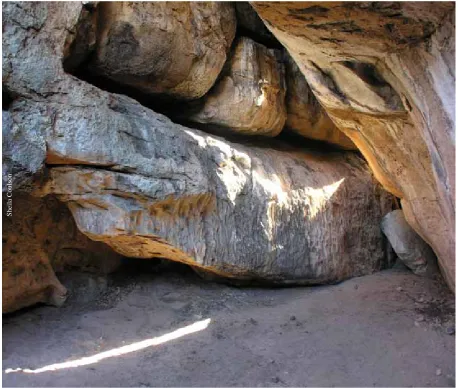
[image:12.595.3.256.323.571.2]hard to access location high up on Female Hill. Both main walls of the cave are decorated—the north wall contains a group of rock paintings (Fig.1), while virtually the entire quartzite outcrop that dominates the south wall has been ground to form an impressive series of grooves and depressions (Fig.2). Figure 1 Paintings on the north wall of Rhino Cave,
probably of Later Stone Age date
Excavations at the site revealed Early Iron Age material and traces of sporadic use during the LSA, but quite surprisingly the weight
of the evidence for use of the cave lies with the substantial body of material attributable to the MSA.4-6
RA: What about the issues of
dating at this site? How confident
can we be that the carved wall is dating back into the MSA? What about the points? The pigments?
SC, SS: Due to the small size of the cave, the proximity of the rock walls and the stringent requirements of modern dating techniques, the MSA deposits have yet to be satisfactorily dated. However, based on typological comparisons to the well-dated open air site of
≠Gi (77,000±11,000 BP) the Rhino Cave finds are considered to be of
a similar age.7 We have, therefore,
concentrated on the MSA points in
our analysis since these artefacts are unquestionably fossiles directeurs – that is, signature or hallmark artefacts only produced at this period. Our dating of the carved wall is based on the recovery of a spalled-off section of the carving and hand-held grinding stones for carving from well within the MSA levels. This is currently our only indication for when this panel was
made. When people first began and
when they ceased carving we do not know, however, as the carvings are in variable condition – some appear very fresh, while others are heavily eroded – it is obvious it was not all done at one time.
A large amount of specularite (a locally acquired colourant with a metallic silvery lustre) was also found in the MSA levels. As some
of these pieces have rounded edges from grinding it is tempting to speculate they could have been produced by grind ing against the carved rock face. The effect,
particularly under firelight, would
have been dramatic.
RA: Can you explain the importance of the chaîne opératoire methods you’ve utilised with the points and what that has shown?
[image:13.595.69.528.132.520.2]SC, SS: Unlike typology, which focuses on the morphological aspects of characteristic tool types, the chaîne opératoire constitutes an in-depth reading of the entire Figure 2 Carved rock panel on the south wall in afternoon light.
once complete, these tools...normally associated with hunting
and butchering, never left the cave.
Instead,...they were burnt, abandoned...or ...smashed
assemblage.8,9 While a common
approach in European archaeology,
this is the first application of
this method on material from Botswana. The growing popularity of the chaîne opératoire is due to its ability to surpass typological description by identifying the sequence of conscious choices made
by the original artefact makers. The combined results of these individual sequences provide insight into behaviour pat terns indicative of broader culturally determined traits and norms. This approach has
resulted in the production of firm
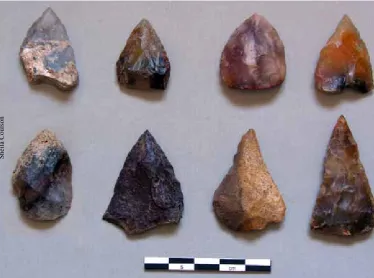
evidence for a variety of aspects of the MSA that in the past would have been be yond our reach. For example, at Rhino Cave there are an unexpectedly large number of MSA points (Fig.3), which for the most part were produced in selective, colourful raw materials that were acquired from a distance of at least 50km. Once complete, these tools, which are normally associated with hunting or butchering, never left the cave. Instead, they were burnt (along with their waste debitage), abandoned, or intentionally smashed. This apparently wasteful treatment of tools was, until now, unheard of in the MSA.
RA: How did you come to apply ‘costly signal’ models to the data? Were you aware of other examples where it had been done in Palaeolithic archaeology (such as the Kohn/Mithen handaxe theory)?
SC, SS: We were aware of how other applications of this theory to other archaeological investigations10-12
has refocused long-standing debates in new and controversial directions. We applied costly signalling theory because the behavioural patterns we found at Rhino Cave included
the destruction of costly objects. Furthermore, the MSA is so far back in time there are no direct ethnographic references that would help us explain these patterns. So we needed an approach that could address human material behaviour on a more general scale, although it should also be added that our
use of the ‘costly signal’ models was further inspired by its direct application to ritual studies.13 This
theory explains the surrendering of hard-won resources that frequently take time and energy away from other necessary pursuits – like human collective ritual.
RA: How does this kind of ‘potlatch’ wastefulness or extravagant destruction of valued resources lead to interpretations in terms of ritual behaviours?
SC, SS: We have argued that the points in Rhino Cave were
sacrificed, a feature of effortful
behaviour, and that the behavioural patterns associated with these actions gave these artefacts an alternative attribution. This behavioural patterning pro vides evidence of compulsion (one must perform a particu lar sequence), rigidity (it must be performed the way it was performed before, with no deviation from the remembered pattern), goal demotion (the actions are divorced from their usual goals), redundancy (the same actions are often repeat ed), and a restricted range of themes (in this instance, the same artefact type was selected for particular treatment). These are recurrent components of ritualized behaviour14-16 that can be applied
to archaeological materials even in instances where the modernity of the prehistoric peoples is in question.
The behaviours we have reported are, as yet, unique within the MSA. However, similar occurrences have been recorded albeit from much more recent periods and often from distant locations. For example, this combination of ritualized actions and alternative attribution has also been argued by Chris Ellis17 regarding the
smashing and intentional burning of newly manufactured Palaeo-Indian bifacial points. He proposes these points, which were made from exotic raw materials, were
sacrificed to imbue the landscape
with cultural, historic and sacred meanings. A similar conclusion was reached by Paul Taçon18 in a study
of the symbolic attributes of groups of stone artefacts produced over the past 6,000 years in western Arnhem
Land, Australia. Taçon identified
outcrops of brightly coloured stone, used to produce axes and spearheads that imbued the tool’s manufacturer and owner with power and prestige. Ethnoarchaeological investigations revealed that these outcrops, of particularly colourful, iridescent stone, were associated with powerful, dangerous forces: one source was considered to be
the petrified bones of Ancestral
interconnection of these artefacts with the larger symbolic complex and belief system of which they are an integral part.
RA: Can we risk any more specific
interpretations of what kind of ritual? For instance gender rituals?
SC, SS: Presently it is premature to hypothesize as to what kind of ritual was being performed at Rhino Cave. It is not known if these behaviours are found elsewhere, as the chaîne opératoire has yet to be applied to other MSA archaeological collections. Different methods of analysis, particularly typological
classifications for the retouched
tools, preclude virtually any possibility of identifying separate sequences of behaviour. We hope
that our findings will encourage
others to re-examine their data. However, there are a number of tempting speculative avenues of ritual that can be further explored. One of these involves the suitability of the location and setting of the cave for ritual purposes. Although the cave is hidden there are a number of ledges and rocks around the main entrance that are well-suited for spectators. Any activity occurring in the limited area of the cave
floor or on the cave walls is in
full view. There is also a narrow passage behind the carved panel that can be accessed from a small hole in the rocks above the site. This would offer an opportunity for a small-bodied person to enter and exit the cave without being seen. Any sounds made from that area would appear to be coming from the panel.
Another area of speculation centres on why the spearheads were the selected objects to be abandoned or destroyed at Rhino Cave. The MSA point is the diagnostic tool type of this period and is frequently reported to bear indications of use as a hunting weapon. As noted by Pierre Liénard and Thomas
Lawson19,20 artefacts are
ready-to-hand candidates to fulfil various
ritual functions, as they are immediately recognizable and their normally intended function can be readily transformed – a feature which is likely to be salient and attention-grabbing. At Rhino Cave the spearheads have no indications of use and were often elaborately and carefully made from vibrantly coloured stone. The most common colour choice was deep red, with some raw materials having been
altered by fire in such a manner
that they turned red: a colour well recognized for its sym bolic associations.10,12,21-24 These select
groups of artefacts were burnt but only to a degree that rendered them unusable as tools - but not unrecognizable. Again, these features are not found at other MSA sites.
RA: About the carved wall and cupules, you’ve advanced an interpretation of the rock wall as a snake (or perhaps tortoise), with mouth, head, eye (Fig.2), but
could this be critiqued because Khoisan narratives may focus on these animals in ritual contexts? Has there been any input on this from local Ju/’hoan people on what the wall might represent? To what extent have local people and Ju/’hoansi people in particular been involved in the discoveries or their interpretation?
SC, SS: Unfortunately, the MSA is a period with no suitable framework within which to discuss rock art; but
to modern eyes, both Western and San, the carving looks like a snake (or tortoise head). Regardless of what it represents, why choose to carve on just this panel, in a patterned style that is also unique to this cave? This is perhaps best explained by David Lewis-Williams25 who noted the use
of a particular rock panel as a prop brings to life a seemingly ‘dead’ cave wall: it becomes a living entity where the rest of the body is inside the wall.
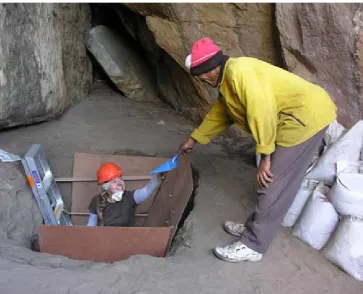
[image:15.595.217.592.253.531.2]The local San headman, Xontae Xhao, worked with us during our
Figure 3 Selection of Middle Stone Age points from Rhino Cave. Note burnt point with refitted
heat spall (bottom row, second from left) and the pink/red point (top row, second from right) where repeated attempts to smash the piece failed.
excavations (Fig.4). He told us of his father participating in male rituals involving the rubbing of wooden spears, coated in snake fat, along the grooves in the panel to gain the power of the snake. He and his father both felt the carving represented a powerful snake. A National Museum employee, Lopang Tatlhago, also told us that during the rainy season water
flows along the chamber behind the
carved panel and spills out directly under the ‘head’ of the snake. We did not know this information when we concluded the panel looked like a snake. Admittedly there are numerous myths about powerful snakes and tales of snakes that prefer to live near water. However, it is also a country with a great many dangerous snakes.
RA: And what about the way the wall appears under illumination, whether in sunlight at certain times
of year, or firelight? Does this suggest specific types of ritual?
SC, SS: During winter months the sunlight comes through a small crack in the ceiling in the late afternoon. These beams play only across the carved section of the panel. However, cross-culturally, rituals begin around dusk, ‘when shadows lurk and the hold of reality fails.’26 Night time experiments
with flickering light revealed the
‘eye’ and also made the panel appear to move and jut directly from with the rock face, very much bringing to mind the phrase above of bringing to life the living entity inside the wall. Keep in mind that during the MSA this panel would
have been head-height or higher
and in the confined space of this
small cave it is impossible to move any distance away from it. Unfortunately, there is as yet not enough comparative evidence from other MSA sites to determine if the ritual(s) involving the spearheads also included the use of the colourant, specularite, and incorporated the massive carved rock panel. Without question their association is suggestive.
RA: In East Africa, in rock shelter painting sites which may have considerable antiquity, and may be originally produced by
hunter-gatherers, we also find
very recent ritual activity ongoing, often by local farmers (usually rainmaking). Do the Tsodilo sites still have living or very recent historic ritual? And can we say at all how old is the painting in Rhino Cave is likely to be?
SC, SS: Tsodilo is well known as a site for ritual by both the local San and Hambukushu.2 Many of
the rock paintings are associated with San rainmaking, and there are several locations where hunting ceremonies have taken place or meat offerings have traditionally been left for the ancestors.27 In
addition various modern Christian groups visit the Hills to take the waters from sacred wells, and more recently, Western neo-shamans who come to experience the Hills as a site of ancient rituals.
Regarding the wall paintings (Fig.1), conventional wisdom is that they are from the more recent LSA or later.
RA: Any more you would like to say on other experience in Botswana and related sites, future work?
SC, SS: We are currently focusing on two projects. Firstly, locating the sources of the non-locally acquired stones used to produce the spearheads at Tsodilo Hills, a collaborative project with
[image:16.595.3.367.76.370.2]Xontae Xhao...told us of his father participating in
male rituals involving the rubbing of wooden spears,
coated in snake fat,...to gain the power of the snake
Figure 4 Sigrid excavating with local Ju/’hoansi headman Xontae Xhao.
Sheila Coulson is Associate Professor and Head of Department for Archaeology, University of Oslo. She was co-Director of the Archaeology Section in the University of Botswana/Tromsø San Research Project.
Sigrid Staurset is currently a PhD Student at the Department of Archaeology, Conservation and History, University of Oslo.
the University of Brighton.28
Determining the distance the raw material travelled will give us indications both as to just how costly these materials were, and may also shed light on whether exchange networks were necessary to acquire them. Secondly, a problem with the
unexpected discovery of MSA ritual in Rhino Cave is the question of whether this behaviour was limited
to this specific cave. Can it also be
found on other sites in the Tsodilo Hills or the surrounding areas? Therefore, we are re-examining
finds from the other main MSA sites
of Botswana, which are all located on the Hills and the surrounding areas. Together, we hope that these two avenues of research will shed more light on what our ancient ancestors were doing at Tsodilo Hills – and how like us they actually were.
Notes:
1. Biesele, M. 1974 A note on the beliefs of the modern Bushmen concerning the Tsodilo Hills. Newsletter of the South West Africa Scientific Society. 15:1-3.
2. Campbell, A.C., L.H. Robbins, and M.L. Murphy 1994. Oral Traditions and archaeology of the Tsodilo Hills Male Hill Cave. Botswana Notes and Records 26:37-54. 3. Campbell, A., L. Robbins, and M. Taylor, eds. 2010. Tsodilo Hills. Copper Bracelet of the Kalahari. East Lansing and Gaborone: Michigan State University Press and The Botswana Society.
4. Coulson, S., S. Staurset, and N.J. Walker 2011. Ritualized behaviour in the Middle Stone Age: evidence from Rhino Cave, Tsodilo Hills, Botswana.
PalaeoAnthropology 18-61, doi:10.4207/ PA.2011.ART42.
5. Robbins, L.H., et al., 2000. Late Quaternary archaeological and
palaeoenvironmental data from sediments at Rhino Cave, Tsodilo Hills, Botswana.
Southern African Field Archaeology 9:17-31. 6. Robbins, L.H., et al. 1996. Excavations at the Tsodilo Hills Rhino Cave. Botswana Notes and Records 28:23-45.
7. Brooks, A.S., P.E. Hare, J.E. Kokis, G.H. Miller, R.D. Ernst and F. Wendorf 1990. Dating Pleistocene archeological sites by protein diagenesis in ostrich eggshell.
Science 248: 60–64.
8. Pelegrin, J. 1990. Prehistoric lithic technology: some aspects of research.
Archaeological Review from Cambridge
9:116-125.
9. Dobres, M.-A. 2000. Technology and social agency: outlining a practice framework for archaeology (Social Archaeology). Oxford: Wiley-Blackwell.
10. Watts, I. 2002. Ochre in the Middle Stone Age of Southern Africa: Ritualized display or hide preservative? South African Archaeological Bulletin 57:1-14.
11. Kohn, M. and S. Mithen 1999. Handaxes: products of sexual selection?
Antiquity 73:518-526.
12. Knight, C. 2010. Language, lies and lipstick: a speculative reconstruction of the African Middle Stone Age “Human Revolution”, in P.M. Kappeler and J.B. Silk (eds) Mind the Gap. Berlin: Springer-Verlag, pp. 299-313.
13. Sosis, R. and C. Alcorta 2003. Signaling, solidarity, and the sacred: The evolution of religious behavior.
Evolutionary Anthropology 12:264-274. 14. Rappaport, R.A. 1979. Ecology, Meaning and Religion. Richmond, CA: North Atlantic Books.
15. Rappaport, R.A.1999. Ritual and Religion in the Making of Humanity.
Cambridge: Cambridge University Press. 16. Sperber, D. 1975. Rethinking Symbolism. Cambridge: Cambridge University Press.
17. Ellis, C.J. 2009. The Crowfield and
Caradoc Sites, Ontario: Glimpses of Palaeo-Indian sacred ritual and world view, in D.L. Keenlyside and J.-L. Pilon, (eds)
Painting the Past with a Broad Brush: Papers in Honour of James Valliere Wright.
Gatineau: Canadian Museum of Civilization, pp. 319-352.
18. Taçon, P.S.C. 1991. The power of stone: symbolic aspects of stone use and tool development in western Arnhem Land, Australia. Antiquity 65:192-207. 19. Liénard, P. and E.T. Lawson 2008. Evoked culture, ritualization and religious
rituals. Religion 38:157-171.
20. Liénard, P. and J. Sørensen, in press. Tools for thought, in A.W. Geertz (ed)
Origins of Religion, Cognition and Culture.
London: Equinox Publishers.
21. Knight, C. 2009. Language, ochre, and the rule of law, in R. Botha and C. Knight (eds) The Cradle of Language Studies in the evolution of language. Oxford: Oxford University Press, pp. 281-303.
22. Watts, I. 2009. Red ochre, body painting, and language: interpreting the Blombos ochre, in R. Botha and C. Knight, (eds) The Cradle of Language. Oxford: Oxford University Press, pp. 62-92.
23. Barham, L.S. 2002. Systematic pigment use in the Middle Pleistocene of South-Central Africa. Current Anthropology
43:181-190.
24. Hovers, E., S. Ilani, O. Bar-Yosef and B. Vandermeersch 2003. An Early Case of Color Symbolism. Ochre Use by Modern Humans in Qafzeh Cave. Current Anthropology 44:491-522.
25. Lewis-Williams, D. 2002. The Mind in the Cave: Consciousness and the Origins of Art. London: Thames & Hudson.
26. Knight, C.1999. Sex and Language as Pretend-play, in R. Dunbar, C. Knight, and C. Power (eds) The Evolution of Culture. An interdisciplinay approach. Edinburgh: Edinburgh University Press, pp. 228-247. 27. Coulson, S., P. Segadika, and N. Walker, in prep. Rituals in the Later Stone Age/Early Iron Age: evidence from sites in Tsodilo Hills, Botswana.
Camilla Power
Lunarchy in the Kingdom of England
Decoding comedy from Classical Athens to Elizabethan England,
Camilla Power
asks who is Falstaff, the ‘drunken king’?
‘T
here is more life andreality in the first act
of The Merry Wives of Windsor alone than in all German literature,’ wrote Fred Engels to Karl Marx on Dec.10, 1873. Engels had an unerring instinct for sexual communism wherever it lurked. Shakespeare’s play has a lot of fun with pompous husbands’ endeavours to assert their marital proprietorial rights, yet, structurally, the drama celebrates women’s collective carnival freedom. Ritually potent laughter, riot, rituals of licence, subversion of the established order were called ‘misrule’ by the powers that be. Comedy in the formal dramatic sense has its roots in popular, ritual action, ritual uprising. Most especially the female kind.
My hero is the mysterious figure of
Falstaff, one of the great original creations of English literature, a demiurge leader of the riot who, no matter how ridiculous he seems, is also numinous, tinged with the divine. His appetites are awe-inspiring – for food, for drink, for
sex, ‘fair hot wenches in
flame-coloured taffeta’ – his dedication
to the pleasures of the flesh is
religious. He is himself a ‘hill of
flesh’ – so described by a royal
wannabe – and he is also called the meat, the ‘sweet beef’, that people eat.
I’ve cast Falstaff in the role of lunar trickster, and I’ll bring out salient characteristics that conform to a very ancient type of trickster – one recognisable to the Khoisan peoples of southern Africa. But that’s not all there is to Falstaff – he is a Protean being changing shape all the time, and he has a whole
history of state power and kingship behind him. Some literary critics with a smattering of Frazerian anthropology have discussed him in terms of Divine Kingship, seeing his role in the Henry IV plays as a Mock King or Interrex. Obviously, there
he is defined in terms of his relation
to royalty. The ritual sequences of the Henry IV chronicles are enacted between Falstaff and Prince Hal on
fields of combat – allusion to mock
battles of kingship.1 In The Merry
Wives, the ritual sequences occur between Falstaff and the women, the Merry Wives themselves, but
even there, he occupies territory of royalty, as a kind of autochthonic genius of the English Kingdom. In apparent contradiction to such exalted status, Falstaff of The Merry Wives is also both the cuckolder
and the cuckold – he flips from one
to the other easily with no clear distinction –