T
HE
E
XPERIENCES OF
A
DOPTIVE
M
OTHERS
:
A
N
I
NTERPRETATIVE
P
HENOMENOLOGICAL
A
NALYSIS
C
HARLOTTE
H
ARRIS
This research is being submitted in partial fulfilment of the requirements of the Doctorate in Educational and Child Psychology.
ii
STUDENT DECLARATION
University of East London School of Psychology
Doctorate in Educational and Child Psychology
Declaration
This work has not previously been accepted for any degree and it is not being concurrently submitted for any degree.
This research is being submitted in partial fulfilment of the requirements of the Doctorate in Educational and Child Psychology.
This thesis is the result of my own work and investigation, except where otherwise stated. Other sources are acknowledged by explicit references in the text. A full reference list is appended.
I hereby give my permission for my thesis, if accepted, to be available for photocopying and for inter-library loans, and for the title and summary to be made available to outside organisations.
Name (please print) ...
iii
ACKNOWLEDGMENTS
Firstly, I would like to thank the participants for giving their time to this study and for their honesty throughout the interviews, without which I would not have had such rich data.
I would also like to thank my family and friends for their continued support, not only during the completion of this research, but also throughout the three years of training.
Special thanks go to my fellow trainees. Without the collaborative and supportive environment we created as a group this experience would have been a much harder task.
iv
ABSTRACT
v
CONTENTS
Student Declaration ... ii
Acknowledgments ... iii
Abstract ... iv
Contents ... v
List of Tables and Figures ... ix
List of Appendices ... x
Chapter 1 - Introduction ... 1
1.1 Overview... 1
1.2 Defining Adoption ... 1
1.3 Adoption Statistics ... 2
1.4 The Changing Context of Adoption ... 3
1.5 Adoption in the 21st Century: Policy and Practice... 5
1.6 The Need to Understand the Experiences of Adoptive Mothers ... 7
1.7 Research Aims ... 8
1.8 Personal Reflection ... 9
Chapter 2 - Literature Review ... 10
2.1 Overview... 10
2.2 Systematic Literature Search ... 10
2.3 Adoption Literature ... 11
2.3.1 Experiences of Adoptive Mothers ... 12
2.3.2 Experiences of Adoptive Parents ... 15
2.3.3 Adoption and Contact ... 19
2.3.4 Adoption and Identity ... 22
2.3.5 Adoption and Mental Health ... 23
2.4 Theoretical Perspectives and Adoption ... 24
2.4.1 Kirk’s Social-Role Theory ... 24
2.4.2 Brodzinsky’s Psychosocial Model ... 25
2.4.3 Attachment Theory ... 26
2.5 Motherhood Literature ... 28
2.6 This Research... 29
Chapter 3 - Methodology and Data Collection ... 31
vi
3.2 Research Aims and Purpose ... 31
3.3 Research Design ... 31
3.3.1 Rationale for a Qualitative Research Design ... 31
3.3.2 Choosing Interpretative Phenomenological Analysis (IPA) ... 32
3.3.3 Overview of Interpretative Phenomenological Analysis (IPA) ... 34
3.3.4 Epistemology ... 37
3.4 Research Procedures ... 39
3.4.1 Participants and Sampling ... 39
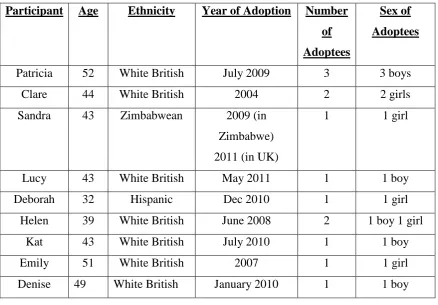
Table 3.4.1: Table to Illustrate Participant Demographics ... 41
3.4.2 Data Capture ... 41
3.4.3 Ethics ... 43
3.4.4 Transcription ... 45
3.5 Data Analysis ... 45
3.5.1 Rationale for the Analytic Process Undertaken ... 45
3.5.2 Individual Case Analysis ... 46
3.5.3 Cross Case Analysis ... 49
3.6 Quality Issues in Qualitative Research ... 50
Chapter 4 - Analysis ... 53
4.1 Overview... 53
4.2 The Participants – A Descriptive Summary ... 53
Patricia ... 53
Clare ... 54
Sandra... 54
Lucy ... 54
Deborah ... 54
Helen ... 55
Kat ... 55
Emily ... 55
Denise ... 55
4.3 Superordinate Themes ... 55
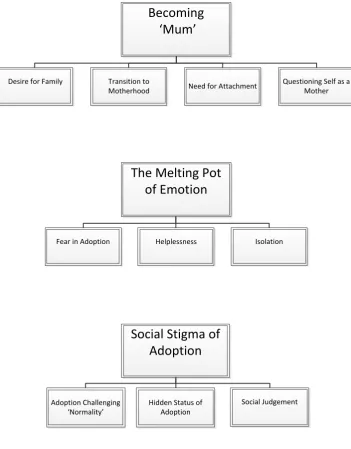
Figure 4.3: A Diagrammatic Representation of Superordinate and Subthemes 56 4.3.1 Becoming ‘Mum’ ... 57
Desire for a Family ... 58
vii
Need for Attachment ... 62
Questioning Self as a Mother ... 63
4.3.2 The Melting Pot of Emotion... 65
Fear in Adoption ... 66
Helplessness ... 67
Isolation ... 69
4.3.3 Social Stigma of Adoption ... 71
Adoption Challenging ‘Normality’ ... 72
Hidden Status of Adoption ... 73
Social Judgement ... 75
4.4 Less Common Themes ... 77
4.4.1 Fragility of Adoption ... 77
4.4.2 The Reward of Adoption ... 78
4.4.3 The Child Mediating the Experience ... 79
Chapter 5 - Discussion ... 80
5.1 Overview... 80
5.2 The Findings and Existing Research ... 80
5.2.1 Becoming ‘Mum’ ... 81
5.2.2 Identity ... 82
5.2.3 Attachment ... 85
5.2.4 Emotional Experience ... 87
5.2.5 Social Stigma in Adoption ... 88
5.3 Critical Evaluation of the Methodology ... 90
5.4 Implications and Suggestions for Future Research ... 93
5.4.1 For Adoption Professionals ... 93
5.4.2 For Educational Psychologists ... 95
5.4.3 Future Research ... 96
5.5 Final Reflections ... 97
Conclusion ... 100
References ... 102
Appendix 1 – Venn Diagram Outlining Systematic Literature Search ... 115
viii
Appendix 3 – Table Outlining Exclusion And Inclusion Criteria Employed For The
Systematic Literature Search... 125
Appendix 4 – Table To Show Papers Retrieved From Literature Search And Decision Making Process For Inclusion Within Literature Review... 126
Appendix 5 – Table To Show Decision Making Process For Papers Retrieved In Snowball Search ... 131
Appendix 6 – Outline Of The Main Procedures Undertaken During The Research .... 133
Appendix 7 – Thesis Paper Trail For Local Authority Approval ... 134
Appendix 8 – Research Information Guide For Participants ... 144
Appendix 9 – Consent Form ... 147
Appendix 10 – Initial Draft Of Interview Schedule ... 149
Appendix 11 – Second Draft Of Interview Schedule... 150
Appendix 12 – Final Draft Of Interview Schedule ... 151
Appendix 13 – Ethical Approval From The University Of East London ... 152
Appendix 14 – Example Of Unanalysed Transcript ... 154
Appendix 15 – Example Of An Initial Analytic Notation ... 169
Appendix 16 – Example Of Initial Table Of Themes ... 174
Appendix 17 – Example Of An Interpretative Summary... 183
Appendix 18 – Example Of Emergent Theme Groups ... 184
ix
LIST OF TABLES AND FIGURES
Table 3.4.1: Table to Illustrate Participant Demographics.
x
LIST OF APPENDICES
Appendix 1: Venn diagram for the systematic literature search.
Appendix 2: Diagrammatic representation of the systematic literature search
undertaken.
Appendix 3: Table outlining exclusion and inclusion criteria employed for the
systematic literature search.
Appendix 4: Table to show papers retrieved from literature search and decision making
process for inclusion within literature review.
Appendix 5: Table to show decision making process for papers retrieved in snowball
search.
Appendix 6: Outline of the main procedures undertaken during the research.
Appendix 7: Paper trail outlining the process of gaining Local Authority research
confirmation.
Appendix 8: Research information guide for participants.
Appendix 9: Consent form for participants.
Appendix 10: Initial draft of the interview schedule.
Appendix 11: Second draft of the interview schedule.
Appendix 12: Final draft of the interview schedule.
Appendix 13: University of East London Ethical Approval.
Appendix 14: Example of an unanalysed transcript.
Appendix 15: Example of an initial analytic notation.
Appendix 16: Example of an initial computerised table of themes.
Appendix 17: Example of an interpretative summary.
Appendix 18: Example of emergent theme groups.
Appendix 19: Example of final cluster tables with superordinate themes, subthemes,
1
CHAPTER 1-INTRODUCTION
1.1 Overview
The research presented in this thesis explores the experiences of adoptive mothers, and as such this chapter aims to introduce the concept and nature of adoption. Firstly, adoption as understood within this study is defined, followed by an overview of adoption statistics. The changing context of adoption is then discussed, bringing adoption policy and practice right up to May 2012. Finally, the aims and rationale underpinning the research are presented, along with a brief discussion and personal reflection about the chosen research topic.
1.2 Defining Adoption
In its simplest form, adoption is about providing a permanent family for children whose birth family are unable to care for them and meet their needs (Triseliotis, Shireman and Hundleby, 1997). It is about the long-term welfare of the child, but,
At its best, adoption also meets the needs of the adopting family who have wished for a child or further children, as well as the family into which the child was born, who have willingly or unwillingly surrendered the care of the child (Triseliotis et al., 1997, p.1).
Within current adoption policy there is an element of legality and regulation within the adoption definition. Adoption is defined by the Department of Health (2000, p.6) as a process that “irrevocably gives recognition to the legal transfer of a child from his or her birth family to the adoptive family”, and this forms the framework by which adoption is discussed within this research.
2
legally binding, this form of adoption is likely to be experienced differently, and these parents are likely to have “different concerns than many other people who choose to adopt in quite different circumstances” (Adoption and Fostering Information Line, 2011).
For the purposes of this study an adoptive mother is recognised as a woman who has been through the Local Authority adoption process, and been placed with a child for adoption through the Local Authority Adoption agency, either as part of a couple or as a single person. They have secured or are in the final stages of securing legal responsibility for the child via a final court order.
1.3 Adoption Statistics
The most recent Department for Education (DfE, 2011b) statistics show that 3,050 Looked After Children (LAC) were adopted, and a further 2,450 LAC were placed for adoption, between 31st March 2010 and 31st March 2011 in England. This was a 5% decrease from 2010, an 8% decrease from 2007, and a statistic that many feel is ‘of real concern’ (Pearce, 2011). The Office for National Statistics (2011) suggest that this trend may be accounted for by the introduction of Special Guardianships in December 2005, while Pearce (2011) attributes the reduction in adoptions over the last few years, in part, to the decreasing availability of adoptive parents. It is suggested by Pearce (2011) that not only have Local Authorities reduced their focus on the recruitment of adoptive parents, but also the current economic climate is deterring people from adopting when financial futures are unclear.
In addition to fewer adoptive parents, the 2011 data shows that fewer LAC children are being placed for adoption year-on-year (DfE, 2011b). This is despite the fact that the number of children Looked After by Local Authorities increased by 6% between 2009 and 2010, and is likely to continue to increase due in part to the controversy of the Baby P case and the Safeguarding and Child Protection debates that followed (Francis, 2010).
3
been finalised through an adoption order, and does not consider adoption placements where a child is placed with their adoptive parents, but a final order has not been agreed.
It is unclear how many adults become prospective adoptive parents each year, but the DfE (2010) statistics show that in the year ending 31st March 2010 2,900 adults were placed with a child, thus becoming adoptive parents. Locally, within the Authority in which this research took place, on average 60 new adopter enquiries are made each year and 10 prospective adoption households undergo assessments each month (statistics based on those recorded between March and September 2011 by the Local Authority Adoption and Fostering Services Team Manager). The DfE (2011b) statistics show that between 31st March 2010 and 31st March 2011 approximately 20 children were adopted within the Local Authority in which this research took place, with an average of 17 adoptions each year since 2007.
The various statistics discussed above reveal a striking proportion of the population (both children and adults) who experience, and are affected by, the complex adoption process. With new Government initiatives, discussed in later sections, these numbers are likely to increase in future years.
1.4 The Changing Context of Adoption
The population of adopted children, and the context and reasons for adoption, have changed dramatically since its legal introduction in the 1920’s, but adoption in its simplest form can be traced back approximately 2,000 years. Triseliotis et al. (1997) describe five distinct periods of adoption practice, each of which reflect the customs, beliefs and social ‘preoccupations’ of the time. It is clear that the focus of adoption changes at each point in time, with changing recognition of the various members of the ‘adoption triangle’ (Brodzinsky and Schechter, 1990) i.e. the child, adoptive parents, and birth parents, as being at the centre of the process.
4
security for all parties, starting with America in the 1850’s and then England in 1926. Triseliotis et al. (1997) argue that this reflects the more liberal nature of America at the time, compared to Britain’s class-conscious society in which adoption was less acceptable.
The end of World War II marked the beginning of Triseliotis et al.’s (1997) third period in adoption history. Adoption at this time was “viewed as a solution to the problem of infertility and became popular among middle classes” (Triseliotis et al., 1997, p.7). Adoption agencies became focused on ‘perfect’ matches which were as biologically similar as possible, thus creating the ‘perfect family’. Theories such as those of Freud and Bowlby became popular and seem to have influenced the adoption process quite dramatically at this time. While the debate regarding the outcomes for children adopted at an older age continues in modern day literature, at this time adoption agencies concentrated on infant adoption and early attachment, and older children placed for adoption therefore tended to be raised in residential settings. Unlike previous periods, the focus in this third period was on what Triseliotis et al. (1997, p.8) describe as “a child for a home”, demonstrating how quickly societal pressures can influence and shape adoption. This was also a period of great secrecy as many adoptive parents tried to hide the fact that their child came from an illegitimate home. As Keating (2009, p.4) states, adopters became concerned that “their respectability and social standing would be directly threatened if people knew their child was adopted”. This led to the idea of ‘closed adoptions’, with the ties between birth mother and child being severed, and the child growing up unaware of their adoptive status.
5
parenting that pervade our society”. Within this fourth period it can be seen that the concept of adoption saw a dramatic shift, with expansions in the definitions and decisions not only regarding which children should be put forward for adoption, but also which families were suitable to adopt.
The fifth period in adoption history identified by Triseliotis et al. (1997) includes the development of the 1989 Children’s Act, which saw the child’s welfare as paramount and gave impetus to the need to consider the child’s wishes in any decision making process. It also saw the rise of what Triseliotis et al. (1997, p.9) describe as the “family preservation movement”, in which there was an increased focus on keeping birth families together using “intensive and sustained birth family support” (Rushton, 2003, p.4).
1.5 Adoption in the 21st Century: Policy and Practice
Triseliotis et al.’s (1997) book is now quite dated and while covering a vast period in time cannot account for changes in adoption over the last 15 years. In 2002, the Adoption and Children Act (2002) was published to integrate adoption legislation with the Children’s Act (1989), and places “adopted children’s interests at the centre of policy and practice decisions, ensuring that the child’s welfare is the primary consideration for all decisions relating to adoption” (Hawkins et al., 2007, p.5).
While the main focus now lies firmly with the welfare of the child, the 2002 Act also recognises the affect that the often long and arduous process of adoption has on the prospective adoptive parents. The White Paper (Department of Health, 2000, p.34) argues for “fairer, faster and more transparent assessment procedures”, and sets out clear National Standards regarding both the pre- and post-assessment process, as well as post-placement support that should be available.
6
adoption and reiterates the ideas of the Government in 2002, which aimed to increase the numbers of children placed for adoption by 40% (Rushton, 2003).
From the statistics it is clear that this target was not met, and in fact quite the opposite trend ensued, but with the appointment of Martin Narey it seems that the Government is again attempting to radically increase the number of adoptions in the UK. Narey (2011, p.3) argues that, “Adoption is the ultimate intervention in the life of a child and one that, we know, can and does transform lives, particularly when the adoption is made at an early age”. However, Narey’s comments were based on a limited eight week investigation of adoption in the UK, and as an emotive subject, while receiving an initial positive response, evoked some debate as it was argued that the initial findings and suggestions were too simplistic (Lakhani, 2011; Pemberton, 2011).
Following Narey’s (2011) report, and an initial consultation period, in March 2012 the Government published ‘An Action Plan for Adoption: Tackling Long Delays’ (DfE, 2012a). This action plan sets out Government proposals to change the adoption process, looking to speed up the process for children, improve the service for prospective adopters, and strengthen Local Authority accountability (DfE, 2012b). The Queen’s Speech on 9th May 2012 outlined the forthcoming Children and Families Bill and also reiterated the Government proposals in the ‘Action Plan for Adoption’, focusing in particular on the need to speed up adoption (BBC News, 2012).
7
performance. In addition, Local Authorities have pointed out that the initiative may put prospective adoptive parents off adoption (Harrison, 2012). With a focus on speed, Simmonds (2012) argues that “it must not confuse timeliness with speediness that results in the wrong child being placed with the wrong adopters”, thus affecting the experiences of those involved and the overall success of the adoption.
It seems inevitable that further policy reforms are likely to affect all three parties of the adoption ‘triangle’. As Rushton (2003, p.7) states, “the successful recruitment of new adoptive parents can be considered the sine qua non of adoption policy”, and this is likely to be the case if Governmental policy looks to not only increase the numbers of adoptions taking place year on year, but the speed with which children pass through the adoption system. It is therefore important that the experiences of adoptive parents are explored now, and in the future, if they are to be seen as essential to increasing adoption in England.
1.6 The Need to Understand the Experiences of Adoptive Mothers
The exploration of adoption history demonstrates that adoption is continuously changing and evolving in line with social and Governmental pressures, and in this respect adoption “becomes a ‘moving target’ for researchers” (Rushton, 2003, p.vii). The changes to, and evolution of, legislation and the adoption process have undoubtedly affected the experiences and lives of all members of the ‘adoption triangle’, and will continue to do so as the Government interest increases. With this in mind, Hawkins et al. (2007, p.6) state that, “it is crucial to listen to the views of all involved in adoption”.
8
The Government in its recent publication (DfE, 2012a) has also acknowledged that there is limited research into the experiences of adoptive parents, and while now striving to demonstrate the value of adoptive parents, state that “It is symptomatic of a system which does not always pay enough attention to prospective adopters that we do not currently have any comprehensive national information about their experiences” (DfE, 2012a, p.28). Although not a nationwide exploration, it is argued that this research is an important step forward in this area, and may go some way to illuminating how adoption is experienced by adoptive mothers.
Additionally, given the professional domain in which this study was carried out, the experiences of adoptive mothers are of great interest to Educational Psychologists. Gaining a better understanding of the process of adoption, how it is lived, and the challenges faced by mothers bringing up children who have been adopted, will stand Educational Psychologists in good stead when working with adopted children and their parents. Cuckle and Bamford (2000) assert that all parents need reassurance that their opinions and contributions are valued by education professionals, particularly Educational Psychologists, and therefore it is important that such professionals listen to this group of parents.
1.7 Research Aims
9 Therefore, the overarching research question is:
“What is the experience of adoption for women who have become adoptive mothers?”
1.8 Personal Reflection
Shaw (2010, p.233) argues that “reflexivity is integral to experiential qualitative research in psychology”, with reflexivity being classed as an awareness and honesty about ones feelings and emotions surrounding the research. Although this will be discussed further in Chapter 3 and 5, it is important here that the reader gains an initial understanding of the researcher’s personal and professional positioning, along with the reasons why this particular research topic was chosen.
Since finishing my undergraduate degree, and having worked in a school with a very high proportion of Looked After Children, I have been interested in how Educational Psychologists can work to support this vulnerable group of children. This interest has stayed with me throughout my training as an Educational Psychologist, but I have also been drawn to work in closely related areas such as adoption. Through discussions with various professionals at the beginning of my Year 2 Trainee Educational Psychologist placement in a Local Authority, the idea of research in the area of adoption began to come to life. As this research took shape, I attended a post-adoption support group, and was humbled by the honesty the parents expressed about their experiences and the emotions that go with these experiences. It became apparent that a lot of these parents wanted their stories heard and would be happy to participate in research, and the decision was therefore made to explore the experiences of adoptive mothers.
10
CHAPTER 2-LITERATURE REVIEW
2.1 Overview
This chapter offers a systematic and critical review of the literature regarding the experiences of adoption from the perspective of adoptive parents. The review highlights the limited availability of literature and knowledge regarding the experiences of adoptive parents, specifically of adoptive mothers, who appear to be a hidden population within the academic literature (Gair, 1999). To this end, while the overarching focus is the experiences of adoptive mothers, literature pertaining to the experiences of adoptive parents is also considered. The review goes on to focus on pertinent aspects of adoption, including motherhood and identity, the experiences of contact in adoption, and mental health and adoption. A review of psychological issues in adoption and theoretical models relevant to the experiences of adoptive mothers is provided, and the chapter ends with a brief exploration of the motherhood literature.
2.2 Systematic Literature Search
A systematic literature search was completed to find the most relevant literature available that addresses the question ‘What is the experience of adoption for adoptive mothers?’. A Venn diagram was drawn to break the research question into its component parts, with a view to identifying key words (see Appendix 1). Key words identified included: adoption, mothers, adoptive mothers, parents, experiences, life experience, impact, and core issues. The key words were then combined using Boolean phrases such as ‘adoption AND mothers AND experience’ and entered in to a variety of databases. EBSCO was used to access articles from databases, including Academic Search Complete, Education Research Complete, PsycARTICLES, and PsycINFO. Searches were also completed in Education Resources Information Center (ERIC) and ingentaconnect. Appendix 2 provides a diagrammatic representation of the searches undertaken and the articles retrieved.
11
adoptions, and fathers, amongst others. Duplicate articles were then removed. Overall, 28 unique articles were identified across the various searches. Critical reading of the full journal articles, which re-applied the exclusion and inclusion criteria in Appendix 3, provided further exclusions, with 10 being included within the systematic literature review below. An outline of the inclusion and exclusion criteria, along with a table outlining the decision making process undertaken to reduce the original 28 papers to just 10 can be found in Appendices 3and 4. The final 10 papers included within the literature search can be seen in bold in Appendix 4.
Following electronic searches a snowball technique was used to search for relevant references within article reference lists. When reading the original 28 papers identified through the systematic literature search, references within the main body of the paper, which were of interest and potential relevance, were noted and investigated further. The inclusion and exclusion criteria employed in the systematic search (see Appendix 3) were used when deciding which papers to include. This identified a further four papers for inclusion within the review of adoption literature. A table outlining these four papers, the source of these papers, and the inclusion criteria employed can be found in Appendix 5.
2.3 Adoption Literature
12
With regards to adoptive mothers, much of the motherhood literature relates to the meaning of motherhood, and when adoption is included it seems that assumptions are made based on societal values rather than experiential research. While slightly dated, it is argued that Woollett and Phoenix’s (1991, p.228) statement still holds true, that “Most research on adoption is concerned with the impact of adoption on children’s development and as a consequence there is little information about how women who become mothers in this way…experience motherhood”.
2.3.1 Experiences of Adoptive Mothers
Probably the most comprehensive piece of research looking at the experiences of adoptive mothers comes from Gair (1996), and appears to be in direct response to the limited exploration of the experiences of adoptive mothers in previous research. In her Doctoral thesis Gair (1996) investigated the experiences of 50 adoptive mothers across the ‘life cycle’, looking specifically at two significant periods: early post adoption mothering, and mothering in the teenage years. Using a mixed methodology, Gair (1996) explored “the reality of adoption for adoptive mothers” (Gair, 1996, p.14) via qualitative, feminist research methods and a number of quantitative standardised scales. Mothers who had adopted children under the age of 12 months between 1960 and 1994 were interviewed about their experiences across the adoption lifecycle with a view to allowing them to define the nature of their experiences of motherhood. Gair (1996) sought to build a theory and explanation of how adoptive mothers experience their mothering role in adoption, thus supporting and informing social work practice in the future.
13
Overall, Gair’s (1996) findings help to shed some light on the experiences of adoptive mothers. Commonalities and divergences are evident in the research findings, and Gair (1996) herself points to the unexpected diversity in the experiences of adoptive mothers, contradicting her initial assumption that adoptive mothers would present a ‘united voice’. This unanticipated finding may be explained by the fact that the participant sample spanned 34years, during which time adoption policy and practice, and attitudes towards adoption, changed dramatically, not only in Queensland, Australia, but also across the world. Questions therefore lie with the applicability of the results to current adoption experiences if one considers the further developments that have taken place over the last 14 years. Additionally, one may question the validity of participant reports 36 years after the adoption, and given that Gair’s (1996) research took place in Queensland, Australia, the question of generalizability of these results must be considered.
Additionally, the specific method of analysis employed by Gair (1996) is ambiguous, and the analysis seems to have been conducted under the umbrella of ‘qualitative, feminist’ research methods. Gair (1996) purports to draw on different analytic methods, for example, Grounded Theory and McCraken’s (1988, as cited in Gair, 1996) five stage process to analysis, and the analytic technique employed seems to have developed as the analytic process progressed. In this respect, the description to a certain degree seems to lack transparency and coherence, which Yardley (2000, p.221) sees as key characteristics of ‘good’ qualitative research. Meyrick (2006, p.806) argues that transparency enables the reader to judge the decisions made by the researcher, while Yardley (2000, P.221) sees transparency and coherence as measures of the power and persuasiveness of the research. One may therefore argue that the results should be understood with some tentativeness, and that Gair’s (1996) research leaves scope for more rigorous research, which explores the experiences of adoptive mothers through an interpretative lens and seeks to understand rather than explain this ‘hidden’ phenomenon.
14
personal dimension, adoptive mothers saw themselves as empowered and self-sufficient, acknowledging that motherhood is not bound to ‘couplehood’. In contrast, within the interpersonal dimension adoptive mothers were confronted with, and in some instances, internalised cultural norms and assumptions around single parenthood. Adoptive mothers expressed desire to be seen as ‘normal’ and therefore attempted to minimise difference between themselves and birth mothers. Adoption was also seen as being influenced by fate, which in turn gave the relationship with the child a new ‘emotional quality’.
By exploring the experiences of single adoptive mothers, Ben-Ari and Weinberg-Kurnik (2007) have provided a unique contribution to the adoption literature. It shows how these mothers construct their realities, and provides insight into the conflict adoptive mothers experience between the personal and social narratives they create. The results also illustrate how experience and meaning making are often influenced by traditional, mainstream societal values and norms regarding the family structure. However, Ben-Ari and Weinberg-Kurnik (2007) concede that their findings are based on a homogenous sample of women, and therefore further research is required to explore the generalizability of the mothers’ narratives. Additionally, it is unclear whether such narratives are confined to single adoptive mothers or whether they are also experienced by adoptive mothers who have adopted as part of a couple.
More recently, Timm, Mooradian and Hock (2011) conducted research to explore the individual and marital experiences of adoptive mothers in the USA. Unlike Gair’s (1996) research, Timm et al. (2011) were guided by the theoretical literature, looking specifically at the degree to which adoptive mothers face eight ‘core issues’ based on Silverstein and Kaplan’s (1982, cited in Silverstein and Kaplan, 1988, p.45) theory of adoption. A mixed methodology was employed, with questions related to the impact each core issue had had for 104 adoptive mothers, and how much it had affected their relationship with their partner.
15
However, Daly (1988, p.46) argues that unlike ones overall identity, the identity of parenthood is “usually contingent on a shared construction”, and therefore another explanation may be more appropriate. Positively, the results also suggest that, when experienced, core issues can serve to strengthen couple relationships and marriage. In this respect, Timm et al. (2011, p.280) argue that, “the dominant deficit discourse about adoption should be challenged”.
The results for the most part give support to Silverstein and Kaplan’s (1982) theory of adoption, although the core issues may not be experienced universally by all adoptive mothers as was originally hypothesised. Timm et al. (2011) not only seek to explore the experiences of adoptive mothers, but also the mothers’ perceived influence core issues have on marital relationships, which may be advantageous when looking at pre- and post-adoption support. However, one may question whether this is truly an exploratory study of the experiences of adoptive mothers or whether it is simply designed to provide evidence to support an already developed theoretical model. Does the limited scope of the questioning, particularly with regards to the qualitative data, which is focused on eight specific core issues, provide the participants with the opportunity to discuss their true lived experiences? What is needed are further explorative studies, which look at the experiences of adoptive mothers away from a pre-defined theoretical model, and capture the phenomenon of adoption as it is experienced.
2.3.2 Experiences of Adoptive Parents
Baltimore and Crase (2009, p.69) argue that a “commonly cited criticism of adoption research is the failure to allow members of the adoption process to share their experiences without the researchers’ preconceived ideas and biases”. They therefore completed a qualitative, phenomenological analysis, exploring children’s and adult’s lived experiences of adoption, thus providing multiple perspectives on this “complex social phenomenon” (Baltimore and Crase, 2009, p.70). Of particular interest are the four themes identified in relation to the overall experiences of being an adoptive parent: positive experiences, faith-based responses, parents’ perceived differences from other parents, and parents’ perceived similarities from other parents.
16
showing increased feelings of appreciation for their children. This again challenges the dominant deficit discourse of adoption. However, Baltimore and Crase (2009, p.77) recognise that the nature of data collection, via self-reports, may have led to “positive portrayals of experience”. Metts, Sprecher and Cupach (1991) discuss four biases that can manifest when using retrospective self-report, one being social desirability, where “respondents attempt to present a positive and socially appropriate self-image”. They also allude to ways of reducing such biases, although it is unclear whether such measures were employed by Baltimore and Crase (2009).
Daniluk and Hurtig-Mitchell (2003) specifically addressed infertile couples’ experiences of adoption, considering the ‘vicissitudes’ and challenges of the adoption process. In their qualitative study, which employed a phenomenological analysis, three themes were identified from the interviews conducted: the couples’ decisions to adopt, the adoption process, and the experiences of becoming parents through adoption. Within each theme, emotions surrounding fear and rejection were coupled with a sense of optimism about the future and becoming parents. Interviewees felt that they had to work “their way through the emotional, legal, and social “land mines” of the adoption landscape” (Daniluk and Hurtig-Mitchell, 2003, p.394). Power and control were also strong under-arching themes that emerged from the interviews, and are presumably important concepts in adoption; taking on different meanings, both throughout the process and once a child has been placed.
Not only does Daniluk and Hurtig-Mitchell’s (2003) study look at the experiences of adoptive parents, and therefore have some relevance to the current research, it also considers how such work and findings have implications for professionals practicing within the Counselling domain. Of particular importance, Daniluk and Hurtig-Mitchell (2003) highlight how understanding the experiences of adoptive parents helps professionals to understand their needs at varying times throughout the process so that practice and support can be adapted appropriately.
17
in the UK. It may be the case that different policy and practice in these countries alter the way in which adoptive parents construct their adoption experiences, and that the larger dominant societal and cultural context plays a part in these constructions. It can therefore be argued that investigating the experiences of adoptive parents, in particular adoptive mothers, in the UK will add value to the research literature, and an interpretative phenomenological methodology can provide a greater understanding as to whether similar experiences are shared by adoptive parents despite policy and process.
Prynn (2001) conducted a study of 50 sets of adoptive parents within the UK, with a view to informing the ‘matching’ process within social work practice. Rather than looking to understand how adoptive parents experience adoption, the aim of Prynn’s (2001) study was to gain a better understanding of which aspects of the adoptive parents’ experiences, both pre- and post-adoption, should be considered when ‘matching’ parents and children. The interviews conducted covered the early lives of the adoptive parents and the reasons for adoption, their experiences as adoptive parents, and the overall family system. With regards to the overall experiences of adoptive parents, Prynn (2001) found that adopters have an apparent need for a connection with the child, and this may often be based on physical appearance, along with other similarities. Adoptive parents tried hard to identify similarities to their adopted children and had a desire to be seen as ‘ordinary’ families “because recognition affirms their legitimacy and normality” (Prynn, 2001, p.38). For adoptive mothers, the arrival of the child was seen as a ‘defining moment’, which had a lasting impact on the mother-child relationship.
These results highlight the dynamic nature of adoption, and the ways in which adoptive parents process the complex adoption experience. In addition, Prynn (2001) provides an understanding of the factors that may influence the outcome of adoption, and which aspects may need to be considered when ‘matching’ adoptive couples to their children. Prynn (2001) acknowledges her influence on the data and allows the reader to gain an insight in to her own experiences of adoption and the reasons for the research.
18
becoming parents and the factors that were considered before having a child differed across the groups, “new parents appear to share rather similar experiences” (Ceballo et al., 2004, p.46). Interestingly, Ceballo et al. (2004) found evidence to suggest that becoming a parent through adoption puts less strain on a marriage than becoming a biological parent, presumably because of the protracted preparation period and the elements of the adoption process. Additionally, the results showed that adoptive parents had a slight advantage in their parental role, particularly with regards to the satisfaction felt in their role as parents.
While Ceballo et al. (2004) contend that this is the first study of its kind, in that it compares the experiences of couples who have become parents by very different means, the quantitative data is unable to give clear examples of actual experiences, and is limited in the interpretation and further understanding it can provide. Ceballo et al. (2004) are only able to speculate as to the reasons for the similarities and differences demonstrated by the results, and as they themselves state, the results “warrant caution until future replication…[while] qualitative studies may be useful in helping to elucidate sources of stress and strength as children enter different types of families” (Ceballo et al., 2004, p.47).
Krusiewicz and Wood (2001) look exclusively at one interesting aspect of the experiences of adoptive parents, the moment they meet their child. They argue that the ‘Entrance Stories’ in adoption are important in identity formation, particularly for the adopted child who is trying to find a place within the family. A thematic analysis of the entrance stories of adoptive parents and the process by which the child became part of the family identified five themes: dialectical tensions, destiny, compelling connections, rescue, and legitimacy.
19
that many adoptive parents emphasised and looked for a physical resemblance with their adopted children and sought legitimacy as a family, supporting Prynn’s (2001) findings.
2.3.3 Adoption and Contact
Historically, secrecy within adoption was considered beneficial for all members of the adoption triangle and adoptions were therefore ‘closed’ with “complete severance from the child’s family of origin” (Logan, 2010, p.315). Adoptions now tend to be ‘open’, meaning there is open communication with the adopted child about their adoption and birth parents (MacDonald and McSherry, 2011). In the UK, the Adoption and Children Act 2002 recognises this change in adoption practice and highlights the importance of contact, specifying the need for careful exploration of contact issues during the adoption process (Logan, 2010).
Studies around contact tend to explore the impact different types of contact have on adoptive families, with a particular interest in the outcomes for adopted children (Neil, 2009; Grotevant, Wrobel, Korff, Skinner, Newell, Friese and McRoy, 2007). Sykes (2001; 2000) highlights the now widely accepted belief that continued contact with biological families following adoption is beneficial for children’s psycho-social development. While this may be true for adopted children, for adoptive parents continued contact with birth parents, be it ‘letterbox’ or face-to-face, is an issue “that can bring a nightmare of insecurity and fear…[and] one that increasing numbers of adopters are having to face” (Hines, 2010).
20
Despite interviewing couples together, Sykes (2001; 2000) was able to differentiate between the experiences of adoptive mother and fathers, noting gender differences in responses. Adoptive mothers initially felt criticised and undermined during contact. They experienced conflicting emotions around the ownership and entitlement of their adopted children, often feeling that they were competing with the birth mother for an emotional bond. Interestingly, acknowledgment by the birth mother that the child was in the right place had a key role to play in the empowerment and feelings of competence for adoptive mothers. These findings support the ideas of Watson and Bourguignon (1988, p.7) who postulate that difficulties experienced by adoptive families can be seen in seven related areas, with the first being ‘entitlement’. They argue that emotional entitlement develops through a nurturing process, which may be inhibited when the birth family continues to play an active role in the child’s life, for example through contact.
In a recent study, MacDonald and McSherry (2011) explored the experiences of different types of contact for 20 sets of adoptive parents living in Ireland. Using Interpretative Phenomenological Analysis (IPA) they explored adoptive parents’ experiences of talking to adopted children about adoption and the post-adoption experiences of contact with the birth family.
The results suggest that all forms of contact present challenges for adoptive parents and contact in general is seen as ‘hard’ and ‘stressful’. Contact was seen by adoptive parents as their responsibility and felt compelled to meet the needs of all parties, including those of the birth relatives, despite the emotional response it evoked in them. Interestingly, adoptive parents expressed empathy towards the birth mother. MacDonald and McSherry (2011) argue that the empathetic response felt by adoptive parents provides the motivation to maintain contact, and therefore may be seen as a positive experience. With regards to talking to their children about adoption, adoptive parents experienced conflicting emotions. The parents wanted to explore adoption sensitively and openly with their children, but acknowledged that this had an emotional cost for them as parents.
21
relationship with birth parents. Significantly, MacDonald and McSherry (2011) are able to demonstrate that their findings are grounded in previously understood theoretical conceptions of adoption and contact, namely Brodzinsky’s (2005) two dimension of openness in adoption: ‘structural’ and ‘communication’ openness. However, as with much of the previous research adoptive parents are the focus of the research, and it is uncertain whether adoptive mothers’ experience of contact is unique, as suggested by Sykes (2001; 2000). Additionally, one may question the use of IPA as an analytic tool given the sample and the data analysed. For example, the sample within MacDonald and McSherry’s (2011) research covers a broad range of contact arrangements, from face-to-face contact with birth parents and face-to-face-to-face-to-face contact with extended birth family, to ‘letterbox’ contact, and extending to no contact with the birth family. In this respect the sample may not represent a ‘homogenous’ experience, an underlying assumption when using IPA.
Logan (2010) looked specifically at face-to-face contact, exploring adoptive parents’ experiences of the preparation and planning process. 61 families were interviewed, and while parents were interviewed separately, findings have been generalised and gender differences in experience are not apparent. Logan (2010) found that adoptive parents did not feel emotionally prepared for coping with the realities of contact. The arrangements made for face-to-face contact tended to focus solely on the child’s well-being and were not tailored to meet the future needs of the adoptive family. The focus tended to be placed with ‘structural contact’ with “little attention being given to preparing adoptive parents for the longer term impact of contact on their daily lives” (Logan, 2010, p.322).
22
Overall, the contact research demonstrates important implications for professionals who work with adoptive parents, and “should encourage adoption workers to have confidence in the ability of adopters to make use of their experiences to inform their own decisions” (Sykes, 2000, p.30). However, despite shedding some light on the experiences of adoptive parents this research focuses very closely on just one issue in adoption, leaving room for further research, which looks at the wider picture of the adoption process from start to finish. Additionally, the mothers’ voice within this literature is, for the most part, hidden within a joint experience of contact. Sykes (2001; 2000) alludes to the unique experience of the adoptive mother, but as the interviews were conducted with both parents together it may be the case that the findings provide a co-constructed experience
2.3.4 Adoption and Identity
Within Western society there is a basic assumption that motherhood is a natural progression for all women, particularly following marriage (Shelton and Johnson, 2006; Daly, 1988). There are many ways by which women can become mothers, for example, through birth, step-parenthood, or adoption (Ceballo et al., 2004), with each leading to substantial changes in the individual’s life. Of particular significance is the change in identity that women may experience in the transition to motherhood. Shelton and Johnson (2006) assert that women may experience identity reconstruction in motherhood, with a new identity forming through a process of identity disruption and identity integrations.
For adoptive mothers, it could be argued that there are a number of identity changes taking place. Adoptive mothers may not only experience identity reconstruction as described by Shelton and Johnson (2006), but for those choosing adoption due to infertility they may also need to reshape and redefine their anticipated identity of parenthood (Daly, 1988) and accept their ‘new identity’ as an adoptive parent (Ben-Ari and Weinberg-Kurnik, 2007).
23
investigated the transformation of identity from biological parenthood to adoptive parenthood in infertile couples. It was found that dismantling and reconstructing ones identity within the context of parenthood is not shaped by a singular event, but is influenced by the decisions, choices, and issues adults face when confronted with infertility. The construction of a new identity was very much seen as a joint experience in which the identity of adoptive ‘parenthood’ was co-constructed, and in this respect seems to contradict the findings of Timm et al. (2011). Identity in this respect was negotiated and agreed, and the final concrete constructed identity was fundamental to the decision to adopt (Daly, 1988, p.63).
Daly’s (1988) research is of great value in understanding the decisions behind adoption when adults face infertility and the anticipated identity of parenthood is blocked. It also sheds light on how adoptive parenthood identity may take shape and is insightful in its findings that the transformation of this particular identity seems to be a co-constructed experience. However, the applications of Daly’s (1988) findings are limited in that they do not extend past the decision to adopt. What identity transformations, if any, take place during the remainder of the adoption life cycle? Do these transformations continue to be co-constructed, or do adoptive mothers experience a unique change in identity?
Ben-Ari and Weinberg-Kurnik’s (2007) research provides some insight into the identity that adoptive mothers construct, although it is limited to a certain degree as it focuses explicitly on single adoptive mothers. The results suggest that adoptive mothers experience a personal and public identity, which are constructed by the “differential interpretation of selected stories…[and the] exclusion of difficult and conflicting elements from the adoptive narrative” (Ben-Ari and Weinberg-Kurnik, 2007, p.830). This suggests that adoptive mothers do not define their identity based on the single event of adopting a child, but construct it in the moment as elements of adoptive motherhood are lived.
2.3.5 Adoption and Mental Health
24
feminist literature, and it is recognised that the experience of mothering may in fact give rise to complex emotional responses (Gair, 1999). While adoptive mothers face unique experiences and issues, Gair (1999, p.58) also argues “these mothers could also encounter many of the joyful and the distressing facets of new motherhood that most new mothers face”.
Gair (1999) reports findings from her 1996 large-scale study of the experiences of adoptive mothers, focusing exclusively on the emotional responses of adoptive mothers shortly after adoption. Results from interview data and the Edinburgh Postnatal Depression Scale showed that adoptive mothers experience a wide range of emotional responses. Many of the adoptive mothers coped well with the transition to adoptive motherhood. Others however experienced unexpected and ‘severe’ distress on the arrival of their child, with some suffering from what may be considered similar to postnatal depression in birth mothers. Factors implicated in the emotional responses experienced by adoptive mothers included the child’s temperament and behaviour, difficulties in adjusting to the role of motherhood, feelings of loss with regards to identity, and the pressure to perform as a ‘perfect mother’ (Gair, 1999, p.63).
These results suggest that adoptive mother’s experience, and are vulnerable to, the same pressures, stresses and even depression as many birth mothers. However the research focuses solely on mothers who adopted children between the ages of 3 days and 9 months, and therefore the question could be asked, are these emotional responses also experienced by mothers who adopt older children?
2.4 Theoretical Perspectives and Adoption
“Theory and research go hand in hand” (Kirk, 1964, p.52), and along with the research documenting the experiences of adoptive parents, a number of theoretical perspectives have been developed which are salient for looking at and understanding the experiences of adoptive mothers.
2.4.1 Kirk’s Social-Role Theory
25
remain secret and developed an important theoretical model, which emphasises the unique challenges that adoptive parents face and the coping patterns that parents adopt. Kirk (1964, p.50) describes a number of dilemmas faced by adoptive parents, which can result in what he terms ‘role handicap’ and often occur in response to the “cultural disadvantage of adoptive parenthood” (Wegar, 2000, p.366). The dilemmas include how adoptive parents see themselves in relation to other parents, how adoptive parents relate themselves to the child, and whether adoptive parents record and recall background information about their child (Kirk, 1964, p.51).
With these dilemmas and ‘role handicap’ in mind, according to Kirk’s (1964) model, adoptive parents demonstrate two patterns of coping, through “acknowledgement-of-difference” and “rejection-of-“acknowledgement-of-difference”. In this respect, and as the names suggest, to manage the stress they experience adoptive parents either try to deny the difference in adoptive family life or accept the reality that adoption is inherently different in terms of the way the family is formed. While “acknowledgement-of-difference” is understood to lead to better adjustment in adoptive families (Hoksbergen and Laak, 2005; Brodzinsky, 1987) the two patterns of coping are not seen to be mutually exclusive and adoptive parents vary in their use of the two patterns (Brodzinsky, 1987).
Although developed in the 1960’s Hoksbergen and Laak (2005, p.28) argue that Kirk’s (1964) social role theory still holds true and continues to be relevant in today’s society. This is evidenced in the recent research which demonstrates that parents continue to ‘down play’ difference between themselves and the adoptive child, for example using physical resemblance as a means of creating likeness, thus denying difference (Ben-Ari and Weinberg-Kurnik, 2007; Krusiewicz and Wood, 2001; Prynn, 2001). However, Brodzinsky (1987) recognizes that experiences within adoptive families may be more complex than Kirk’s (1964) model suggests, and that patterns of coping appear along a continuum and may be influenced by various factors. In addition to this, Brodzinsky (1987, p.42) criticises Kirk’s model for being ‘static’ and not acknowledging the family life-cycle changes within adoption, which may in turn change patterns of coping.
2.4.2 Brodzinsky’s Psychosocial Model
26
psychosocial conflicts or tasks that adoptive families face. The general thesis is that at each developmental stage children are faced with a psychosocial crisis (Erickson, 1963) and the adoptive family are faced with a number of difficult tasks, which need to be adequately resolved if an adoptive family is to “move forward to more mature, advanced levels of adoption adjustment” (Brodzinsky, 1987, p.30). In this sense, throughout the adoption life cycle and at each developmental stage, children strive to develop a sense of identity and understand what it means to be adopted, while parents are faced with developing ways of overcoming and coping with their own psychosocial crises.
Although slightly dated, the research literature seems to support Brodzinsky’s ideas, particularly the findings of Daniluk and Hurtig-Mitchell’s (2003) who identify a number of the tasks and challenges adoptive parents face in their overall themes. More importantly, Brodzinsky (1987) relates each factor back to the adjustment and wellbeing of children, thus placing the child at the centre, much like the Children and Adoption Act (2002). Brodzinsky (1987) himself however concedes that the theoretical model is simply based on his clinical experience and is therefore not necessarily grounded in empirical findings.
2.4.3 Attachment Theory
27
us. In this sense attachment “performs a natural, healthy function even in adult life” (Bretherton, 1992, p.763).
Johnson and Fein (1991, p.397) suggest that attachment is often central to the motivation and desire to adopt, and parents often cite difficulties with attachment as the reason for adoption breakdown. They identify a number of attachment concepts, including security and connection to the family, which are likely to be salient within adoptive mothers’ experiences. Additionally, they discuss conceptual issues within attachment which have a bearing on adoption and the various perspectives with which one can view attachment. For example, taking a Family Systems perspective of attachment, Johnson and Fein (1991, p.405) argue that we can move away from traditional views of mother-child relationships and look at attachment to the family unit and individuals as supporting a child’s integration into their adoptive family. In this sense, attachment is seen as an interactive phenomenon and a more comprehensive understanding of family dynamics can be achieved.
Attachment can also be viewed from a developmental perspective. This is seen by Johnson and Fein (1991) to be the most useful application of Bowlby’s theory, with attachment changing and evolving over time according to experience. In this respect, it can be postulated that adults have schemas which are shaped by their experiences across their life, and parents will therefore have Internal Working Models of themselves as caregivers. Prynn (2001) within her research into the experiences of adoptive parents explored the effect that Internal Working Models and attachment histories had on how parents experienced their role within an adoptive family. Interestingly, Prynn (2001) found that these concepts were helpful in trying to understand why parents experienced adoption in different ways. For example, those who had what Prynn (2001) termed a ‘comfortable’ experience had Internal Working Models that “showed positive familial relationships could exist beyond the nuclear family and biological relationships”, and this had allowed them to develop “helpful ways of thinking about adoption and managing adoptive parenthood” (Prynn, 2001, p.36).
28
relevant to evidence-based practice within adoption and fostering, and provide a structure and potential rationale for the selection of adoptive parents and assessment of potential support needs. It has also been acknowledged that “a comprehensive understanding of the impact of trauma [and] the nature of attachment difficulties”, for example, of Ainsworth’s (1978, as cited in Bretherton, 1992) three Attachment Patterns, can positively affect the experiences of adoptive parents “in order that they might better engage in the complex task of parenting” (Family Futures, 2006).
2.5 Motherhood Literature
A wealth of material on motherhood has been published over the past decades (Phoenix and Woollett, 1991), and given that Gair’s (1996) findings suggest that the experiences of adoptive mothers may have some parallels to the experiences of birth mothers, it is important here to provide a brief exploration of the motherhood literature.
The majority of the motherhood research is taken from a feminist perspective, in which the ideology of motherhood is seen to be socially constructed as a “critical aspect of femininity” (Choi, Henshaw, Baker and Tree, 2005, p.167). In this respect, motherhood is seen as a natural progression in a woman’s life and is the ultimate goal in a woman’s quest for a complete feminine identity (Arendell, 2000). Choi et al. (2005) undertook a qualitative study to investigate how mothers understood their experience of becoming a mother in relation to this feminine ideology. They found that despite a nine-month pregnancy the women remained unprepared and overwhelmed by the realities of motherhood, and experienced a realization that their expectations had been based on the “myths of motherhood” (Choi et al., 2005, p.167).
29
core category of ‘changes in the woman’s self-concept’. These findings suggest that for birth mothers the changes in one’s feelings of ‘self’ are of particular significance.
Smith (1999a; 1999b) used the qualitative methodology Interpretative Phenomenological Analysis (IPA) to explore identity and how the sense of ‘self’ changes in the transition to motherhood. Smith (1999a; 1999b) found that pregnancy acts as a strong psychological preparation for mothering, as the women’s focus during pregnancy changes from public world, for example, of work, to the more private world of the family and their new role. Women may look to others for guidance, and their relationship with key people, particularly their family, “can facilitate the women’s preparation for taking on the new role of mother” (Smith, 1999b, p.409).
However, these studies suggest that the transformative nature of motherhood begins in the early stages of pregnancy and it is therefore unclear how applicable these findings are to the experiences of adoptive mothers. At what stage in the adoption process do adoptive mothers begin to experience a change in ‘self’, and what aspects of their existing life help in their preparation for their new role as mother?
2.6 This Research
The literature review highlights that previous research has explored the experiences of adoptive mothers. However, an exploration of this phenomenon as a complete experience has not yet been conducted in the UK, and in this sense the experience of adoptive mothers is missing from the UK literature. In addition to this, while qualitative research methods have been employed in previous research, it is argued that the interpretative phenomenological stance taken within this research provides a unique insight, and a deeper understanding, of the experiences of adoptive mothers.
30
The motherhood literature highlights the use of qualitative research methods in exploring and understanding the experiences of women as they transition to motherhood, suggesting this may also be an appropriate research method when exploring the experiences of adoptive mothers. With regards to the adoption literature, the differences in design, sampling and country of origin, along with the dated nature of a number of studies, particularly Gair (1996), mean it is difficult to generalize the results, and as such scope remains for an up-to-date exploration of the experiences of adoptive mothers in the UK.
31
CHAPTER 3-METHODOLOGY AND DATA COLLECTION
3.1 Overview
This chapter firstly outlines the aims and purpose of this research as discussed in Chapter 1. It will then go on to discuss the research design, providing justification for the method chosen, and the procedures undertaken. Interpretative Phenomenological Analysis (IPA) and the specific method of data analysis will be outlined, with careful consideration being given to validity issues pertinent to psychological and qualitative research to finish the chapter.
3.2 Research Aims and Purpose
As outlined in Chapter 1, the aim and purpose of this research study is to explore, and gain a greater insight into, the ‘lived’ experiences of adoptive mothers and examine how these parents make sense of what one assumes to be an important, yet stressful, landmark in their life. Given that the academic and political literature suggests that very little research has been completed in this particular area, it is hoped that this research will go some way to illuminating how adoption is experienced by adoptive mothers.
3.3 Research Design
3.3.1 Rationale for a Qualitative Research Design
Given the aims of this research and the suggestions from the research discussed in Chapter 2, a qualitative, exploratory research method was considered suitable. This form of enquiry is seen to be useful when looking to “find out what is happening, particularly in little-understood situations…seek new insights…[and] assess phenomena in a new light” (Robson, 2002, p.59).
32
as a ‘science’, which therefore employed “quantitative methods which had acquired greater authority” (Miller at al., 2008, p.474). Over the past few decades, Educational Psychologists have slowly moved away from a positivist, deficit/medical model (Kelly, 2008) and qualitative methods have become more prominent in the literature, particularly in applied areas of sociological concern and as education professionals have begun to recognise the importance of listening to the voice of all their ‘clients’ (Miller et al., 2008). In this respect, given that the current research seeks to explore the experience of adoptive mothers, giving them a voice within the research literature, a qualitative methodology was again deemed appropriate.
In their simplest forms, quantitative research methods are concerned with theory testing, measurements, and numerical data (Creswell, 2003), whereas the aim of qualitative research is to “understand and represent the experiences and actions of people as they encounter, engage, and live through situations” (Elliot, Fischer and Rennie, 1999, p.216). With its focus on quantifiable variables and the production of statistical data, quantitative research does not allow for the exploration of personal meaning and cannot provide a true insight into the ‘lived’ experiences of participants.
Coyle (2007b, p.12) argues that within qualitative research, epistemology is much more at the fore of the researchers thinking. It is argued that within quantitative, experimental approaches epistemology is often taken for granted, and more often than not the epistemological stance taken is positivist-empiricist, two interrelated domains. Qualitative research in contrast, can be seen as covering a wide range of methods with a range of epistemologies (Coyle, 2007b; Madill, Jordan and Shirley, 2000), and “involves alternative conceptions of social knowledge, of meaning, reality and truth” (Kvale, 1996, p.11).
3.3.2 Choosing Interpretative Phenomenological Analysis (IPA)