IMPROVED GENERAL SELF-ORGANIZED TREE-BASED
ROUTING PROTOCOL FOR WIRELESS SENSOR NETWORK
M.SENGALIAPPAN1, Dr.A.MARIMUTHU2
1Research Scholar, Department of Computer Science, Government Arts College (Autonomous),
Coimbatore India.
2Associate Professor, Department of Computer Science, Government Arts College (Autonomous),
Coimbatore India.
Email: [email protected], [email protected]
ABSTRACT
Wireless Sensor Networks (WSNs) is a promising structure used to assist the stipulation of many military and industrial services. They have many different constraints, such as computational power, storage capacity, energy supply and etc are the important issue is their energy constraint. Many issues hold back the effectiveness of WSNs to support different applications, such as the resource confines of sensor devices and the finite battery power. To overcome this problem and to improve the performance need not only to minimize total energy consumption but also to balance WSN load. In this research, a novel tree based routing protocol is proposed which builds a routing tree using a process where, for each round, BS assigns a root node and broadcasts this selection to all sensor nodes. Subsequently, each node selects its parent by considering only itself and its neighbors’ information, thus making a dynamic protocol. The simulation results shows that the proposed approach performs better that other existing approaches.
Keywords: Wireless Sensor Network, Routing, Network Lifetime, Clustering, Tree Based Routing
1. INTRODUCTION
A wireless sensor network composed of small sensing devices, which generally function on battery power. Sensor nodes are closely organized in the region of interest [1]. Each device has sensing and wireless communication capabilities, which facilitate it to sense and collect information from the surroundings and then send the data to other nodes in the sensor network.
Earlier days, it has been received terrific concentration from both academia and industry area. A WSN in general consists of a large number of low-cost, less-power, and multifunctional wireless sensor nodes, with sensing, wireless communications and calculation capabilities [2]. These sensor nodes communicate over short distance through a wireless medium and work together to achieve a general task like environment monitoring, military observation and industrial process control [3]. The basic thing in WSNs is, the capability of each individual sensor node is restricted, and the aggregate power of the whole network is enough for the required task.
In spite of the several applications of WSNs, these networks have numerous restrictions, e.g., limited energy supply, limited computing power,
and limited bandwidth of the wireless links connecting sensor nodes. The main aim of WSNs is to perform data communication while trying to extend the lifetime of the network and avoid connectivity degradation by using aggressive energy management approaches. The design of routing protocols in WSNs is subjective by many risky factors. These risk factors can be triumph over before efficient communication can be attained in WSNs.
Considering the limited energy capabilities of an individual sensor, a sensor node can sense to very small area, so a wireless sensor network has a large number of sensor nodes organize in very high density which reasons for rigorous problems such as scalability, redundancy. Reducing the quantity of communication by eliminating redundant sensed data and by means of the energy-saving link would save large amount of energy, therefore the lifetime of the WSNs gets increased [4].
fusion, but approximately all of them consider that the length of the message transmitted by each relay node be supposed to be constant [6].PEGASIS [7], PEDAP [8] and TBC [9] are representative protocols based on this consideration and perform far better than LEACH [5] and HEED 10] in this case.
Hence, several advanced techniques that eliminate energy inefficiencies that would condense the lifetime of the network are highly essential. Such constraints combined with a typical deployment of large number of sensor nodes pose many challenges to the design and management of WSNs and necessitate energy-awareness at all layers of the networking protocol stack. In this research work, an efficient routing protocol is proposed to overcome the aforementioned issues in previous studies.
2. LITERATURE SURVEY
In [11] the author proposed a hybrid protocol called HECTOR protocol based on two sets of virtual coordinates. One set is correspond to rooted tree coordinates, and the other one is based on hop distances on the way to some landmarks. In HECTOR, the node presently holding the packet forwards it to its neighbor that optimizes ratio of power cost in excess of distance progress with landmark coordinates, along with nodes that lessen landmark coordinates and do not increase distance in tree coordinates. The experimental results theoretically shows that the packet delivery performance and propose an extension based on the use of multiple trees.
The author presented a novel routing protocol that considers sensors power limitation and increase the network’s lifetime by eliminating unnecessary messages between nodes [12]. This protocol is based on Tree Routing (TR). It routes the data over the shortest path via parent child links in convoy with neighbors' links. In addition, it solves the difficulty of node’s failure. The proposed protocol is examined and evaluated with other tree-based routing protocols.
A new hierarchical energy efficient routing protocol for sensor networks is proposed by the author, which regard as congestion management [13]. Routing protocol separate the network into several clusters using Dijkstra algorithm builds a routing tree for each cluster. In routing tree, most number of children for cluster nodes is determined. The protocols take care of congestion by routing tree, node’s neighbors average queue length and residual energy of nodes as parameters.
A new tree based routing protocol (TBRP) is introduced for improve network lifetime of the sensor nodes. TBRP accomplish with a better performance in lifetime by balancing the energy load with respect to all the nodes [14]. TBRP presents a new clustering factor for cluster head election, which can efficient to handle the heterogeneous energy capacities. It also introduces a fuzzy spanning tree for sending aggregated data to the base station. The author proposed an improved Dynamic Cluster-based WSN that make possible an efficient routing protocol [15]. Simulation results shows that the proposed routing protocol finds an optimal route with less length and less computational time.
In [16] an optimal routing protocol is proposed based on Tree on DAG (ToD), a semi structured strategy that uses Dynamic Forwarding on an totally constructed structure consist of multiple shortest path trees to maintain network scalability. The key standard at the back of ToD is adjacent nodes in a graph will have low down stretch in one of these trees in ToD, therefore ensuing in early aggregation of packets.
A configurable top-down cluster and cluster-tree formation algorithm, a cluster-tree self-optimization phase, a hierarchical cluster addressing scheme, and a routing scheme is proposed in [17]. Features of clusters, cluster tree and routing are employed to show the efficiency of the schemes over existing techniques.
The author presented a scheduling algorithm based on congestion rate of sensor nodes. In congestion-based scheduling algorithm, coloring the presented network is proficient correspond to scheduling is similar to node-based scheduling [18]. The performance of this algorithm is based on the distribution of the packets at various levels of the routing tree. The congestion-based scheduling results in the level-based scheduling and in evaluation to node-based scheduling is better for topologies that higher density of packets is at the high levels of the tree and alike for topologies that have equal density of packets across the network or higher density of packets at low levels of the tree.
3. GENERAL SELF-ORGANIZED
TREE-BASED ENERGY-BALANCE ROUTING PROTOCOL
The operation of GSTEB [19] is divided into • Initial Phase
• Self-Organized Data Collecting and Transmitting Phase, and
• Information Exchanging Phase.
In first block, BS assigns a root node and broadcasts its ID and its coordinates to all sensor nodes. Then in second block, the network computes the path either by transmitting the path information from BS to sensor nodes or by having the same tree structure being dynamically and individually built by each node. For both cases, GSTEB can change the root and reconstruct the routing tree with short delay and low energy consumption. In third block, after the routing tree is constructed, each sensor node collects information to generate a DATA_PKT which needs to be transmitted to BS. The TDMA time slot is also used for collecting the information from each and every node. In fourth block, the collected data is transmitted to the base station. The GSTEB protocol is compared with the other existing protocols LEACH, PEGASIS and HEED. The author showed that the performance of GSTEB is better than the others and it achieves the energy consumption. Although GSTEB protocol achieves it has some problems such as difficult to distribute the load evenly on all nodes in tree structure. Even though GSTEB needs BS to compute the topography, which leads to an increase in energy waste and a longer delay.
4. METHODOLOGY
To overcome the aforementioned issues in GSTEB protocol and also obtaining efficient results, proposing an improved GSTEB routing algorithm based on clustering.
In proposed approach, assume that the system model has the following properties:
• Sensor nodes are randomly distributed in the square field and there is only one BS deployed far away from the area.
• Sensor nodes are stationary and energy constrained. Once deployed, they will keep operating until their energy is exhausted.
• Sensor nodes are location-aware. A sensor node can get its location information through other mechanisms such as GPS or position algorithms.
• Each node has its unique identifier (ID).
The proposed algorithm consists of the phases which are similar to existing GSTEB but the operations of each and every block are different.
The main phases or blocks of the proposed algorithm is
• Initial Phase
• Tree Constructing Phase,
• Self-Organized Data Collecting and Transmitting Phase, and
• Information Exchanging Phase.
3.1 Initial Phase
In initial phase, the network parameters are initialized and the nodes are formed into group of clusters using fuzzy based clustering approach [20].
A fuzzy logic approach to cluster-head selection is proposed based on three descriptors, they are, energy, concentration and centrality. Based on network configuration a substantial increase in network lifetime can be proficient as compared to probabilistically choosing the nodes as cluster-heads by means of local information. For a cluster, the node is chosen by the base station which consists of maximum chance to become the cluster-head through three fuzzy descriptors.
Let c be integer which represents the number of clusters with 2 , where n is the number of nodes present in the network. Let be the parametric value such as energy, concentration and centrality of the kth node and the objective function of FCM algorithm is to minimize the following equation
Where
is node j’s degree of belonging to cluster i. is the Euclidean distance between node j and the center of cluster i. ‖ ‖ where is a center of the fuzzy cluster i.
While m is real number ∈ 1,∞ called the fuzzy constant
Cluster formation algorithm
Step 1: nodes are initialized and considered as a data points and k is a number of desired clusters Step 2: Choose a number of clusters.
Step 4: Assign each nodes to the cluster which has the highest membership values.
Step 5: Compute the centroid for each cluster using the below formula.
∑ ∙
∑
Step 6: update its membership values , of being in the clusters, using the below formula
1
∑
If ||– || ε, then STOP, else return to
step 5.
At last, information about every cluster nodes is delivered to cluster head. Each node in cluster sends its own information to the sink directly.It is noted that, this phase is done once; so direct communication between cluster nodes and the cluster head is avoided.
3.2 Cluster Tree Construction Phase
In this phase, using information delivered to cluster node in the former phase. In a routing tree structure, for every cluster node a path to its cluster head is identified.Cluster head knows position of all nodes located in its cluster. Tree formation is explained briefly in following steps
Step 1: Each and every cluster head generates sample packet and send it to base station. The sample packet contains cluster head ID and distance between the base station and cluster head. The distance between the nodes is calculated using Euclidean distance.
, !" #
Where , are two nodes.
Step 2: Based on the distance between the nodes and BS, the nodes are sorted in ascending order. The shortest distance node is selected as a root node and it broad cast its ID and coordinates to other cluster head as root node ID and root coordinates. Step 3: Again the distance between the root node and other cluster heads are calculated using the Euclidean distance and sort the nodes based on the distance.
Step 4: Shortest distance between the root node and the cluster head is considered as left node and second shortest distance is considered as right node. Step 5: This process is continued until the number of nodes ends in cluster.
Cluster head by means of node information, links cost and Dijkstra algorithm chooses least cost route among every cluster node and cluster head. By Dijkstra algorithm, route selected between every node and cluster head is optimum and only a single path is selected among each node and cluster head, therefore the set of all routes has a tree structure called routing tree. If a node uses selected least cost route for transmitting its traffic, network will consume least potential energy for its traffic. Other than that, it is significant to observe that, the least cost route is not constantly the best route. Pro-viding fairness in network nodes energy consumption is illustrated in Section 1. If constantly the path with least cost is selected to forward other nodes data, nodes which are situated in defined path die so sooner than other nodes which located on paths with higher cost. Generally, if some parts of network die sooner than other parts, network will be partitioned. Partitioned network in comparison with normal network consumes energy more and has higher reliability. By using mechanism which provides fairness in network, network lifetime will be increased and then wireless sensor network can do its task more reliable and longer.
3.3 Load Balancing In Cluster Tree Topology
After the tree construction, the load balancing process is initiated.The WSN routing tree is rooted in the base station. The load of child sensor nodes adds to the load of each upstream parent in the tree. Therefore, the sensor nodes close to the base station will be heavily loaded. The goal of node-centric load balancing is to evenly distribute packet traffic generated by sensor nodes across the different branches of the routing tree.
To measure how well the load is balanced across different branches of a routing tree, the Hölder's Inequalities is selected as the load balancing metric. The definition of the Hölder's Inequalities is defined as: for all $ ⊆ & $ ' ⊆ &
$ ($, $, $, … , $* ' (', ', ', … , '* And
$+ $+ $+ ⋯ + $
'+ '+ '+ ⋯ + '
Consequently,
$'+ - $
.
- '
.
degree of balance among the different branch weights of 0.
To assess the degree of balance among the different branch weights of 0. let $ ' 0. In this case, the inequalities will become
/+
- /
.
Or
1 + ∑ W
n ∑ W
with equality if and only ifW W W ⋯ W for all W, k ∈ 1, n and E should be largest. The balance factor 5 used in the algorithm is defined as
5 ∑ /
∑ /
Since the weights in each branch converge to the similar value, that is, the load across the different branches of the routing tree turn out to be more balanced. The balance factor increases towards 1. When the weights of all the branches are equal, the result of the inequality will be 1, i.e. the maximum value.
Together with the weight the residual energy is also evaluated for each and every node. The energy calculation is done using
6 789 $:/<=
Where E is an estimated energy value rather than a true one and i is the ID of each node. α is a constant which is the minimum energy unit and can be varied based on demands. By taking into consideration the network lifetime as the time the first node in the network fails (dies), with load balancing can imagine of all nodes being depleted of energy slowly and uniformly causing all nodes to die nearly at the same time. Through this, maintenance costs get reduced and improve overall performance.
3.4 Self-Organized Data Collecting and Transmitting Phase
After the routing tree is constructed, each sensor node collects information to generate a DATA_PKT which needs to be transmitted to BS. In simulation results, show that there may be many leaf nodes sharing one parent node in one time slot. If all the leaf nodes try to transmit their data at the same time, the data messages sent to the same parent node may interfere with each other. By applying Frequency Division Multiple Access (FDMA) or Code Division Multiple Access
(CDMA), the schedule generated under competition is able to avoid collisions.
However, the accompanying massive control packets will cause a large amount of energy to be wasted. By using the control of BS, the energy waste can be reduced and thus the process may be much simpler. At the beginning of each round, the operation is also divided into several time slots. In the time slot, the node whose ID is i turns on its radio and receives the message from BS. BS uses the same approach to construct the routing tree in each round, and then BS tells sensor nodes when to send or receive the data. In each TDMA time slot, the nodes work in turns defined by BS. When BS receives all the data, the network will start the next phase.
3.5 Information Exchanging Phase
Once the routing tree is constructed, the energy consumption of each sensor node in this round can be calculated by BS, thus the information needed for calculating the topology for the next round can be known in advance. However, because WSN may be deployed in an unfriendly environment, the actual EL of each sensor node may be different from the EL calculated by BS. To cope with this problem, each sensor node calculates its EL and detects its actual residual energy in each round. EL is defined as EL1 and the actual EL as EL2. When the two ELs of a sensor node are different, the sensor node generates an error flag and packs the information of actual residual energy into DATA_PKT, which needs to be sent to BS. When this DATA_PKT is received, BS will get the actual residual energy of this sensor node and use it to calculate the topology in the next round.
4. RESULTS AND DISCUSSIONS
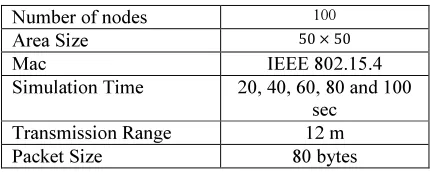
[image:5.595.299.514.595.681.2]The experiment is carried out to evaluate the performance of the proposed approach.
Table 1: Simulation Parameters
Number of nodes 100
Area Size 50 50
Mac IEEE 802.15.4
Simulation Time 20, 40, 60, 80 and 100 sec
Transmission Range 12 m
Packet Size 80 bytes
maximum Rate adjustment value is 70% and is also assumed that there is no interference from other nodes.
The lifetime of a wireless sensor network is constrained by the limited energy and processing capabilities of its nodes. To extend the life time of the sensor networks it is very important to have high energy efficiency at all the processing nodes.
Performance metrics: The performance of proposed protocol is compared with the GSTEB protocol. The performance is evaluated mainly, according to the following metrics.
[image:6.595.302.516.74.328.2]Throughput: It is the number of packets successfully received by the receiver.
Figure 1: Throughput Comparison of Routing Protocols
The graphical representation of throughput comparison is shown in the figure 1. The graph shows that the proposed protocol is better than the existing protocols such as EHCT (enhancement of hierarchy cluster-tree routing) and GSTEB.
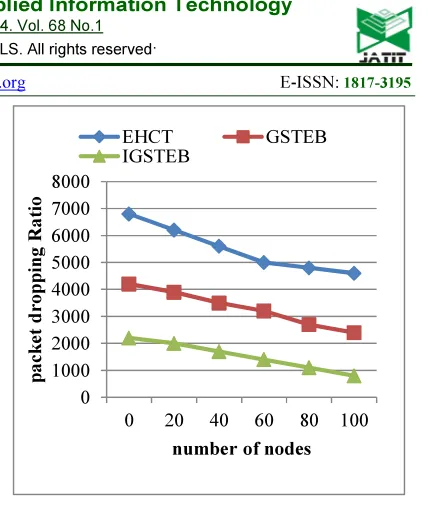
[image:6.595.89.292.308.503.2]Packet drop: It is the number of packets dropped during the data transmission.
Figure 2: Packet Drop Comparison of Routing Protocols
The graphical representation of packet drop comparison is shown in the figure 2. The graph shows that the proposed protocol is better than the existing protocols such as EHCT (enhancement of hierarchy cluster-tree routing) and GSTEB. The packet drop ratio is lesser when compared with existing algorithms such as EHCT and GSTEB.
Energy consumption: It is the average energy consumed by the nodes for the transmission process
Figure 3: Comparison of Load Balancing Factor In Routing Protocols
The graphical representation of load balancing factor comparison is shown in the figure 3. The graph shows that the proposed protocol is better than the existing protocols such as EHCT (enhancement of hierarchy cluster-tree routing) and GSTEB.
0 0.1 0.2 0.3 0.4 0.5 0.6 0.7 0.8 0.9 1
0 20 40 60 80 100
T
h
r
o
u
g
h
p
u
t
(i
n
m
b
p
s)
time (seconds)
EHCT GSTEB
IGSTEB
0 1000 2000 3000 4000 5000 6000 7000 8000
0 20 40 60 80 100
p
a
c
k
e
t
d
r
op
p
in
g
R
a
ti
o
number of nodes
EHCT GSTEB
IGSTEB
0 10 20 30 40 50 60 70
EHCT GSTEB IGSTEB
lo
a
d
b
a
la
n
c
in
g
f
a
c
tor
[image:6.595.306.507.463.605.2]
5. CONCLUSION AND FUTURE WORKS
In Wireless Sensor Networks (WSNs) have intrinsic and distinctive features rather than traditional networks. They have many different constraints, such as computational power, storage capacity; energy supply and etc are the important issue is their energy constraint. Energy aware routing protocol plays a significant part in the wireless sensor network, but it considers only energy supply of the system. Due to this the protocol is not more efficient. As a result considering other parameters adjacent to energy efficiency is essential for protocols efficiency. In this paper, GSTEB protocol is enhanced using the cluster tree topology and introducing the load balancing scheme in GSTEB. Routing protocol seperates network into more number of clusters, then by means of distance, protocol is proposed to constructs a routing tree for each cluster. In routing tree, most number of children for cluster nodes is determined. Proposed protocol manages load balancing, using routing tree, node’s neighbors average queue length and residual energy of nodes as parameters. The effectiveness of the protocol is validated by simulation. Simulation results show that our protocol achieved its goals.
REFRENCES
[1] S.K.Singh, M.P. Singh and D. K. Singh “Routing Protocols in Wireless Sensor Networks –A Survey”, International Journal of Computer Science & Engineering Survey
(IJCSES), Vol.1, No.2, November 2010.
[2] S.K. Singh, M.P. Singh, and D.K. Singh, “A survey of Energy-Efficient Hierarchical Cluster-based Routing in Wireless Sensor Networks”, International Journal of Advanced
Networking and Application (IJANA), Sept.–
Oct. 2010, vol. 02, issue 02, pp. 570–580. [3] Jun Zheng and Abbas Jamalipour, “Wireless
Sensor Networks: A Networking Perspective”,
a book published by A John & Sons, Inc, and IEEE, 2009.
[4] M.Liu, J.Cao, G.Chen and X.Wang, “An Energy-Aware Routing Protocol in Wireless Sensor Networks”, (Published Sensors 2009, 9), 445-462; doi:10.3390/s90100445.
[5] W. R. Heinzelman, A. Chandrakasan, and H. Balakrishnan, “Energy efficient communication protocols for wireless microsensor networks,” in Proc. 33rd Hawaii
Int. Conf. System Sci., Jan. 2000, pp. 3005–
3014.
[6] W. Liang and Y. Liu, “Online data gathering for maximizing network lifetime in sensor networks,” IEEE Trans Mobile Computing, vol. 6, no. 1, pp. 2–11, 2007.
[7] S. Lindsey and C. Raghavendra, “Pegasis: Power-efficient gathering in sensor information systems,” in Proc. IEEE
Aerospace Conf., 2002, vol. 3, pp. 1125–1130.
[8] H. O. Tan and I. Korpeoglu, “Power efficient data gathering and aggregation in wireless sensor networks,” SIGMOD Rec., vol. 32, no. 4, pp. 66–71, 2003.
[9] K. T. Kim and H. Y. Youn, “Tree-Based Clustering(TBC) for energy efficient wireless sensor networks,” in Proc. AINA 2010, 2010, pp. 680–685.
[10] O. Younis and S. Fahmy, “HEED: A hybrid, energy-efficient, distributed clustering approach for ad hoc sensor networks,” IEEE
Trans. Mobile Computing, vol. 3, no. 4, pp.
660–669, 2004.
[11]Nathalie Mitton , Tahiry Razafindralambo , David Simplot-Ryl and Ivan Stojmenovic , “Towards Hybrid Energy Efficient Multi-Tree-Based Optimized Routing Protocol for Wireless Networks” Sensors 2012, vol.12, no.12,pp.17295-17319.
[12]Iman ALMomani, Maha Saadeh, Mousa AL-Akhras, and Hamzeh AL Jawawdeh “A Tree-Based Power Saving Routing Protocol for Wireless Sensor Networks” International Journal of Computers and Communications
Issue 2, Volume 5, pp.84-92, 2011.
[13]Amir Hossein Mohajerzadeh, Mohammad Hossien Yaghmaee “Tree Based Energy and Congestion Aware Routing Protocol for Wireless Sensor Networks” Wireless Sensor
Network, 2010, February, 161-167.
[14]Mohammad Zeynali, Leili Mohammad Khanli, and Amir Mollanejad “TBRP: Novel Tree Based Routing Protocol in Wireless Sensor Network” International Journal of Grid and
Distributed Computing Vol. 2, No. 4,
December, 2009.
[15]A. K. M. Muzahidul Islam; Koichi Wada, Jiro Uchida and Wei Chen “A Better Dynamic Cluster-Based Structure Of Wireless Sensor Network For Efficient Routing” International Journal of Innovative Computing, Information
and Control , Volume 8, Number 10(A), pp.
6747-6760,October 2012.
Academy of Science, Engineering and
Technology Vol:3, pp.675-681, 2009.
[17]H.M. N. Dilum Bandara, Anura P. Jayasumana, and Tissa H. Illangasekare “A Top-Down Clustering and Cluster-Tree-Based Routing Scheme for Wireless Sensor Networks” International Journal of
Distributed Sensor Networks Volume 2011,
Article ID 940751, 17 pages.
[18]Vahid Zibakalam “A New TDMA Scheduling Algorithm for Data Collection over Tree-Based Routing inWireless Sensor Networks”
International Scholarly Research Network
ISRN Sensor Networks Volume 2012, Article
ID 864694, 7 pages
[19]Zhao Han, Jie Wu, Jie Zhang, Liefeng Liu, and Kaiyun Tian “A General Self-Organized Tree-Based Energy-Balance Routing Protocol for Wireless Sensor Network” IEEE transactions
on nuclear science, vol. 61, no. 2, april 2014.
[20]R.Suganya, R.Shanthi, “Fuzzy C- Means Algorithm- A Review” International Journal
of Scientific and Research Publications,