S T U D Y P R O T O C O L
Open Access
Initiation and continuation of randomized trials
after the publication of a trial stopped early for
benefit asking the same study question: STOPIT-3
study design
Gabriela J Prutsky
1,2,3, Juan Pablo Domecq
1,2,4*, Patricia J Erwin
1, Matthias Briel
5,6, Victor M Montori
1,2,7, Elie A Akl
6,8,
Joerg J Meerpohl
9, Dirk Bassler
10,11, Stefan Schandelmaier
12, Stephen D Walter
6, Qi Zhou
6, Pablo Alonso Coello
13,14,
Lorenzo Moja
15,16, Martin Walter
17, Kristian Thorlund
6, Paul Glasziou
18,19, Regina Kunz
12, Ignacio Ferreira-Gonzalez
20,
Jason Busse
6,21, Xin Sun
22, Annette Kristiansen
25, Benjamin Kasenda
5, Osama Qasim-Agha
1, Gennaro Pagano
23,
Hector Pardo-Hernandez
13, Gerard Urrutia
14, Mohammad Hassan Murad
1,24and Gordon Guyatt
6Abstract
Background:Randomized control trials (RCTs) stopped early for benefit (truncated RCTs) are increasingly common
and, on average, overestimate the relative magnitude of benefit by approximately 30%. Investigators stop trials early when they consider it is no longer ethical to enroll patients in a control group. The goal of this systematic review is to determine how investigators of ongoing or planned RCTs respond to the publication of a truncated RCT addressing a similar question.
Methods/design:We will conduct systematic reviews to update the searches of 210 truncated RCTs to identify
similar trials ongoing at the time of publication, or started subsequently, to the truncated trials (‘subsequent RCTs’). Reviewers will determine in duplicate the similarity between the truncated and subsequent trials. We will analyze the epidemiology, distribution, and predictors of subsequent RCTs. We will also contact authors of subsequent trials to determine reasons for beginning, continuing, or prematurely discontinuing their own trials, and the extent to which they rely on the estimates from truncated trials.
Discussion:To the extent that investigators begin or continue subsequent trials they implicitly disagree with the decision to stop the truncated RCT because of an ethical mandate to administer the experimental treatment. The results of this study will help guide future decisions about when to stop RCTs early for benefit.
Keywords:Randomized controlled trials stopped early for benefit, RCT, Systematic review, Protocol
Background
The decision of whether to stop a randomized control trial (RCT) for apparent benefit before its planned com-pletion is complex and requires consideration of ethical, statistical, and practical issues [1]. The main rationale for stopping is to avoid denying current and future
control group participants a beneficial treatment, and to ensure rapid dissemination of that treatment [2]. A correct decision requires the wise judgment of the study investigators and, preferably, of an independent data monitoring committee (DMC) typically including trialists with both clinical and statistical expertise [3]. The DMC needs to attend to the interests of future pa-tients and society at large, while considering the impact of their results on the wider community of clinicians, researchers, and evidence users [2]. Considerations in-clude the risk of disseminating an overestimation of the treatment effect on the primary outcome and ensuring
* Correspondence:[email protected]
1
Knowledge and Evaluation Research Unit, Mayo Clinic, Rochester, MN 55905, USA
2
Unidad de Conocimiento y Evidencia, Universidad Peruana Cayetano Heredia, Lima, Peru
Full list of author information is available at the end of the article
that the optimal information regarding toxicity and secondary outcomes is also captured, particularly if ad-verse events occur late in the course of the trial [4].
A systematic review (Study of Trial Policy of Interim Truncation-1 (STOPIT-1)) developed by our group to evaluate the epidemiology and reporting quality of RCTs stopped early for benefit (truncated RCTs (tRCTs)) found that this type of trial was becoming more com-mon, and often failed to adequately report relevant in-formation about the decision to stop early [5]. A subsequent systematic review (STOPIT-2) compared 91 tRCTs asking 63 different research questions to 424 non-tRCTs asking similar questions. tRCTs tended to overestimate the magnitude of benefit by one third (average), regardless of the use of statistical stopping rules. Moreover, almost two thirds of the pooled effects of the non-tRCTs failed to demonstrate benefit [6].
These results raise serious concerns about the poten-tial impact of stopping trials early on the body of evi-dence and therefore on current health policies. First, investigators have disseminated an estimate of effect that is, on average, substantially overestimated; how stake-holders best incorporate this evidence in generating sub-sequent best estimates of effect is uncertain. Second, this represents a lost opportunity to generate more precise and higher quality evidence about benefits and harms. Third, the publication of a trial stopped early for benefit may stop further research addressing the same question, which may distort the effect size (overestimating the ef-fect and making it more imprecise) of the whole body of evidence [7].
There are a number of possible reasons investigators launch a new study with a similar research question to that of a tRCT, or continue one in progress (we shall refer to trials continued or started despite a previous tRCT as ‘subsequent RCTs’ (sRCTs). First, they may be unaware of the existence of the tRCTs. This seems un-likely, given that researchers are usually aware of on-going research in their field, and that tRCTs are commonly published in high impact journals, and often receive appreciable media attention [5,6]. A second pos-sibility is that investigators are aware of the findings of the tRCT but remain unconvinced of the observed large benefit (even of whether there is any important benefit) and thus deem it ethical to allocate patients to not re-ceive the new treatment. The decision to continue a current trial or start a new one answering a similar re-search question may represent an implicit different judg-ment with the previous decision to stop early and to the body of evidence in general.
If sRCTs are common, it suggests that current practice of stopping RCTs for apparent benefit might not be ac-ceptable by many other scientists and not sufficiently conservative either by reaching different conclusions
than the body of evidence or showing highly unreliable estimates. Understanding the decisions to initiate, con-tinue, or begin sRCTs is likely to provide insights that ultimately improve the policies and procedures of clin-ical trial oversight and the credibility of clinclin-ical research.
Objective
The present study aims to examine how often random-ized trials are launched or continued after the publica-tion of a tRCT asking the same or sufficiently similar research question. We will also analyze trials that were stopped in response to such external evidence. Our study involved two primary research questions. First, what is the proportion of tRCTs that are followed by a sRCT addressing the same or closely similar research question? Second, what factors/rationale are associated with the launching or continuation of a sRCT after the publication of a tRCT?
Methods/design
Overview of methods
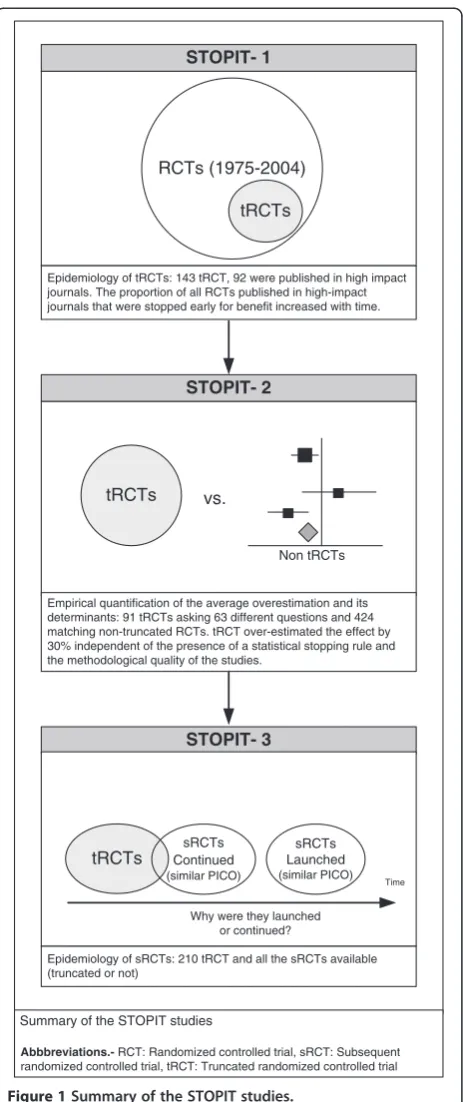
The design and findings of STOPIT-1, 2, and 3 are depicted in Figure 1. STOPIT-1 included 143 tRCTs. During the development of STOPIT-2, researchers iden-tified 14 additional tRCTs through hand search and per-sonal contact. Recently, the search strategy for tRCTs was updated yielding a total of 210 tRCTs.
In STOPIT-3, we will search for and analyze RCTs (truncated or not sRCTs) published after the publication of each primary tRCTs. If we have a tRCT with sRCT that is also a tRCT, each study will be analyzed inde-pendently and two search strategies will be developed. This means that we will include this tRCT as a sRCT for the first tRCT, but it will be also analyzed as a tRCT itself.
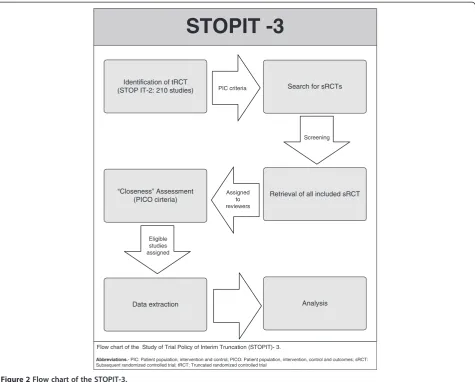
Following the same approach used in STOPIT-1, we will determine the prevalence of tRCTs reporting having stopped early for benefit. The methodology of this present study is summarized in Figure 2.
Literature search
and PsycINFO) from the stated date of publication of the tRCTs through to the present time.
Eligibility criteria
In order to consider a trial as an eligible sRCT it has to be either: 1) launched (that is, started enrollment) after
the publication date of a matching tRCT; sRCT may, or may not, be terminated prematurely for benefit based on its own data; or 2) ongoing at the time of publication of the tRCT, and achieving the calculated sample size and planned study duration after the tRCT publication date. It does not matter whether the sRCT was stopped early or not.
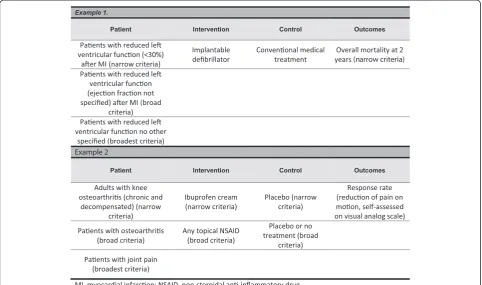
As a general approach we will consider trials as sRCTs of a tRCT if pooling them together in meta-analysis seems adequate. An example is shown in Figure 3.
Study selection
We will use an online reference management system (DistillerSR, Ottawa, ON, Canada) for study selection. Reviewers will first calibrate their judgments using a small set of reports. Two reviewers will independently screen for potential eligibility the title and abstract of each citation that result from the search strategy. We will obtain the full text version of any citation that either reviewer deems potentially eligible.
Two reviewers will independently evaluate each full text for eligibility. We will measure agreement using the kappa or phi statistics, as appropriate (the latter is appropriate when the distribution of agreement is extreme). This will be provided in real-time by the online system. Disagree-ments will be resolved by discussion or, if necessary, by third party adjudication. For all eligible sRCTs, during data extraction, reviewers will judge whether the patients, in-terventions, comparators, and outcomes match those of the corresponding tRCT as narrow (very closely matched), broad (closely matched), or broadest (matched, but appre-ciable differences). For this purpose we will use the criteria previously established in STOPIT-2.
Thus, we will classify each element of the sRCT (pa-tients, interventions, comparators, and outcomes; for the assessment of outcomes we will consider the outcome used for stopping the tRCT) as very close (termed as‘fits the narrow criteria’), moderately close (termed as ‘fits the broad criteria’), and less close (termed as ‘fits the broadest criteria’) relative to the tRCT elements. We will also check the level of agreement (kappa or phi statis-tics) for this judgment. Disagreements in relation to similarity of one level or greater will require adjudication by a third reviewer [6].
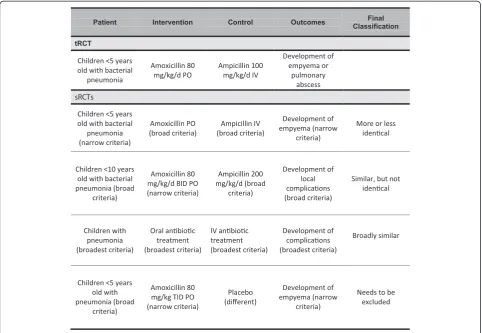
Based on these criteria we will classify each sRCT rela-tive to its tRCT as: more or less identical; similar, but not identical; and broadly similar.
This will be a subjective process done in duplicates. Disagreements will be resolved by consensus or, if neces-sary, third party arbitration (Figure 4).
Data collection and extraction
We will collect data in pre-piloted standardized elec-tronic forms designed using the online reference STOPIT- 1
RCTs (1975-2004)
tRCTs
STOPIT- 2
tRCTs vs.
Non tRCTs
Epidemiology of tRCTs: 143 tRCT, 92 were published in high impact journals. The proportion of all RCTs published in high-impact journals that were stopped early for benefit increased with time.
Empirical quantification of the average overestimation and its determinants: 91 tRCTs asking 63 different questions and 424 matching non-truncated RCTs. tRCT over-estimated the effect by 30% independent of the presence of a statistical stopping rule and the methodological quality of the studies.
Summary of the STOPIT studies
Abbbreviations.-RCT: Randomized controlled trial, sRCT: Subsequent randomized controlled trial, tRCT: Truncated randomized controlled trial
STOPIT- 3
tRCTs
Epidemiology of sRCTs: 210 tRCT and all the sRCTs available (truncated or not)
Time
sRCTs Continued
(similar PICO)
Why were they launched or continued?
sRCTs Launched
[image:3.595.59.291.86.638.2](similar PICO)
management system (DistillerSR). Two reviewers will in-dependently extract the information from each report. We selected these variables (Additional file 1: Table S1) based on possible hypothesized explanations of why sRCT investigators decided to continue or not with the conduct of their trial, or launched it despite the presence of a tRCT.
Outcomes of interest and statistical analysis
The main outcome of interest is the proportion and as-sociated 95% confidence interval (CI) of tRCTs that had at least one sRCT.
In multivariable regression, we will address the pos-sible associations between the presence or absence of a sRCT (dependent variable) and the characteristics of the tRCTs (independent variables) including: risk of bias, magnitude of effect, number of events, funding, presence of DMC, explicit use of a stopping rule, and impact fac-tor of journal of publication. The rationale for these var-iables is that increased risk of bias, small number of
events, conflicts of interest, lack of DMC or stopping rule, and low journal impact factors are all possible rea-sons for sRCT investigators to be less convinced of the tRCT results. We will adjust the analysis by the year of tRCT publication (more recent tRCTs are expected to have a lower number of sRCTs, since there would not be sufficient time for sRCTs to accrue, and previous publi-cations regarding the dangers of early stopping may have decreased the number of tRCTs in which early stopping is at highest risk of misleading overestimates).
Risk of bias assessment
The risk of bias of most of the included tRCTs was assessed during the development of the previous studies using the items of the Cochrane risk of bias tool [8]: allo-cation concealment (documented as central independent randomization facility or numbered/coded medication containers prepared and distributed by an independent fa-cility (for example, pharmacy)); blinding of participants, care providers, and outcome adjudicators (blinding of
Identification of tRCT
(STOP IT-2: 210 studies) Search for sRCTs
Retrieval of all included sRCT
Screening PIC criteria
Assigned to reviewers
“Closeness” Assessment (PICO cirteria)
Data extraction Analysis
Eligible studies assigned
Flow chart of the Study of Trial Policy of Interim Truncation (STOPIT)- 3.
Abbreviations.- PIC: Patient population, intervention and control; PICO: Patient population, intervention, control and outcomes; sRCT: Subsequent randomized controlled trial; tRCT: Truncated randomized controlled trial
[image:4.595.62.538.88.470.2]STOPIT -3
participants and care providers will be rated as ‘probably yes’ when trial report states‘double blinded’ or ‘placebo controlled’); loss to follow-up (difference between the number of participants randomized and the number of participants with data for the outcome of interest), and ad-herence to the intention-to-treat principle. We will follow the same approach for any new or not assessed tRCT.
Optimal information size and the progression of the body of evidence
We will calculate for each research question (tRCT and its sRCT) the optimal information size (relative risk re-duction (RRR) 25%, weighted mean control group event rate, α = 0.05, β = 0.90) and Lan-DeMets sequential monitoring boundaries at the time of publication of the tRCT using all relevant trials published to that point. We will also calculate the necessary information size to obtain conclusive evidence of a plausible RRR of 25%, that is, the difference between the optimal information size and the actually available information size at the time of publication of the tRCT. We will check how close the boundary of the 95% CI of the summary effect at the time of the tRCT publication is to no effect (that is, 1 since we will be dealing only with relative risks). Lastly, we will determine if there is an association be-tween the number of events and chances of the exist-ence of sRCTs.
In addition, we will estimate the prevalence of trials stopped early for benefit using the newly found sRCTs (after STOPIT-1) that were stopped early as the numer-ator, and all RCTs published in all MEDLINE-indexed journals or the subset of RCTs published in high impact journals as the denominator. Therefore, we will be able to compare the prevalence of stopping early before and after the publication of STOPIT-1 and 2, and determine if these publications had an impact on trial conduct.
Sensitivity analysis
We plan to conduct two sensitivity analyses. The first one will be based on the closeness of the sRCTs to the research question of the tRCTs (more or less identical; similar, but not identical; and broadly similar). Consider-ing that there is no objective method to assess closeness of research questions it is plausible that investigators of sRCTs would continue their trial if their question were less close to the tRCT. We will test the impact of our as-sumptions it the results using a sensitivity analysis in-cluding only the sRCT-tRCT pairs with clear identical research questions according to the closeness classifica-tion given to each sRCT during the study selecclassifica-tion phase.
[image:5.595.57.540.90.375.2]The second sensitivity analysis will compare two defi-nitions of sRCTs based on the timeframes of 6 and 12 months between the publication of the tRCT and the
launching of the sRCT. The rationale for this analysis is that at least 6 to 12 months are needed to assure that a sRCT is truly a subsequent trial and not a parallel trial, which would make it impossible for the investigators to be aware of the tRCT.
Author contact
We will contact the principal investigators of the sRCTs to further explore the reasons why they launched or continued trials after the tRCT. We will use a short, standardized web-based survey instrument developed with SurveyMonkey (Palo Alto, CA, USA) (Additional file 2: Table S2). We will make two attempts by email per contact author at a 2-week interval. If the author’s email address is not available we will make contact by mail or telephone. In an effort to increase our response rate we will also try to contact both the first and senior author following the same approach. If after these at-tempts we do not receive an answer we will try to contact them (contact, first, and senior authors) by telephone. As a last resource, we will try to contact the other authors listed in each publication following the same approach.
Reporting
We will report this study in accordance with the recom-mendations set forth by the Preferred Reporting Items for Systematic Reviews and Meta-Analyses (PRISMA) workgroup [9], and the recommendations developed by the International Society for Pharmacoeconomics and Outcomes Research (ISPOR) [10]. We will present evi-dence tables for each tRCT including description of the population characteristics, interventions, methodological quality, and main findings.
Discussion
[image:6.595.57.540.89.422.2]STOPIT-1 and 2 described the epidemiology of trials stopped early for benefit, including how often early stop-ping occurs, average overestimation of effect estimates, and its predictors (truncated RCTs having fewer than 500 events). In this systematic review, we will try to measure the impact of a tRCT on the body of evidence, and determine specifically the frequency of sRCTs and determinants of their occurrence. We will try to find the ideal information size for these trials.
Strengths and limitations of our protocol
The strengths of this study include a systematic and ex-tensive literature search for each of the included tRCTs performed by an experienced librarian and supported by methodological experts. We will also contact authors of sRCTs, and obtain their feedback and rationale. Two re-viewers with experience in the development of system-atic reviews will assess each study independently, thus decreasing the risk of error and strengthening confidence in the selection process. We have a priori developed this study protocol and included sensitivity analyses to deter-mine if the assumptions we made may affect study conclu-sions to a certain extension.
Limitations include our reliance on published and indexed publications to identify sRCTs. Considering that the previous publication of a tRCT may reduce the chances of a sRCT to be submitted and eventually pub-lished, we are facing a new potential factor for publica-tion bias. In addipublica-tion, a known limitapublica-tion of STOP-IT 1, 2, and 3 is the inaccuracy of identifying tRCTs, since truncation is frequently not clearly described in the ab-stracts or full reports of RCTs [11].
Ethical and data monitoring implications
The results of this systematic review will impact on the development of future trials and the decision-making process of DMCs. The ultimate goal of a DMC should be to share benefits of an effective treatment as soon as there is sufficient confidence in the magnitude of its effects, both benefits and harms [1]. Sufficient confidence would translate into an ethical mandate to offer the intervention to all patients, and to no longer randomize patients to the possibility of not receiving the intervention.
For each sRCT which their authors knew about the existence of previous tRCT on the same research ques-tion, we can infer that authors agreed that randomizing patients continues to be ethical. In such instances, we can conclude that the stopping rule used had serious limitations. If a large proportion of tRCTs are associated with sRCTs this would mandate a re-evaluation of the criteria currently used to judge the appropriateness of stopping early for benefit.
Public engagement in science
The results of this review will impact on several aspects of public interest. Many different interests converge into releasing the results earlier of a study showing signifi-cant benefits. Institutional review boards and funding agencies take into account previous research made in an area before approving a new trial. Following the same approach, journals should consider previous publications before accepting a new trial. Therefore, the publication of a tRCT may slow or prevent future trials answering the same or a similar question, generating a ‘freezing
effect’. It is possible that our study will identify such a freezing effect if we find an old tRCT that was not followed by any sRCTs and the body of evidence remained inconclusive after the publication of the tRCT [12]. Inference regarding a freezing effect involves the assumption that trial publication, continuation, or initi-ation is driven by the conclusiveness of the body of evi-dence and ignores other factors that relate to funding availability, economy, and other temporal trends.
tRCTs are published in higher impact journals and gain more media attention; therefore, the media and the public may be impacted more by their results, and they may have increased confidence in the findings. However, if we find a large number of sRCTs, this may suggest that the academic community did not accept the ethical judgment of trials DMCs and trialists. This would mandate a re-evaluation of the current stopping criteria and the confidence the public should have about the findings.
Conclusion
Given the increasing frequency of tRCTs published in high impact journals and the fact that these studies may overestimate the real effect of an intervention, it is im-portant to evaluate the impact of tRCTs on the body of evidence. Distortion of the body of evidence can subse-quently lead to biased systematic reviews, and impact guideline recommendations and patient care.
Trial status
The systematic review is currently in full text screening phase. Completion is expected by November 2013.
Additional files
Additional file 1: Table S1.Variables to be extracted.
Additional file 2: Table S2.Form for contacting the authors of sRCTs.
Abbreviations
CI:Confidence interval; DMC: Data monitoring committee; ISPOR: International Society for Pharmacoeconomics and Outcomes Research; PRISMA: Preferred Reporting Items for Systematic Reviews and Meta-Analyses; RCT: Randomized control trial; RRR: Relative risk reduction; sRCT: Subsequent randomized control trial; STOPIT: Study of Trial Policy of Interim Truncation; tRCT: Truncated randomized control trial.
Competing interests
The authors declare they have no competing interests.
Authors’contributions
manuscript before submission. VMM collaborated with the first version of the protocol, reviewed it, and approved it before submission. EAK, JJM, DB, SS, SDW, QZ, PAC, LM, MW, KT, PG, RK, IFG, JB, XS, AK, BK, OQA, GP, HP, and GU are reviewers and reviewed and provided feedback to the manuscript before submission. MHM participated in the design of the study, performed the statistical analysis, and reviewed and approved the manuscript before submission. GG participated in the design of the study, performed the statistical analysis, and reviewed and approved the manuscript before submission. All authors read and approved the final manuscript.
Acknowledgements
The author wish to thank all the KER Unit and CONEVID members for all of their help during the writing process.
Funding
This systematic review was funded by the Knowledge and Evaluation Research Unit (KER), Mayo Clinic, MN, USA.
Author details
1
Knowledge and Evaluation Research Unit, Mayo Clinic, Rochester, MN 55905, USA.2Unidad de Conocimiento y Evidencia, Universidad Peruana Cayetano
Heredia, Lima, Peru.3Department of Pediatrics, Children’s Hospital of Michigan, Wayne State University School of Medicine/Detroit Medical Center, Detroit, MI 48201, USA.4Department of Internal Medicine, Henry Ford Hospital, Detroit, MI 48202, USA.5Basel Institute for Clinical Epidemiology
and Biostatistics, University Hospital Basel, Basel, Switzerland.6Department of Clinical Epidemiology and Biostatistics, McMaster University, Hamilton, ON L8S 4L8, Canada.7Division of Endocrinology, Diabetes, Metabolism, Nutrition, Mayo Clinic, Rochester, MN 55905, USA.8Department of Medicine, State
University of New York at Buffalo, Buffalo, NY 14214, USA.9German Cochrane Centre, Institute of Medical Biometry and Medical Informatics, University Medical Center Freiburg, Berliner Allee 29, 79110, Freiburg, Germany.
10Center for Pediatric Clinical Studies, University Children’s Hospital
Tuebingen, Tuebingen, Germany.11Department of Neonatology, University Children’s Hospital Tuebingen, Tuebingen, Germany.12Academy of Swiss
Insurance Medicine, University Hospital Basel, Basel, Switzerland.
13Iberoamerican Cochrane Center, CIBER de Epidemiología y Salud Pública,
IIB, Sant Pau, 08041, Barcelona, Spain.14Epidemiology and Public Health CIBER (CIBERESP), Hospital de la Sant Pau Creu i, Sant Pau, 08041, Barcelona, Spain.15Department of Biomedical Sciences for Health, University of Milan, Milan, Italy.16IRCCS Galeazzi Orthopedic Institute, Milan, Italy.17Department
of Nuclear Medicine, University Hospital Bern, Bern, Switzerland.
18Department of Primary Health Care, University of Oxford, Oxford, UK.
19
Centre for Evidence-Based Medicine, University of Oxford, Oxford, UK.
20Epidemiology Unit, Department of Cardiology, Vall d’Hebron Hospital and
CIBER de Epidemiología y Salud Publica (CIBERESP), Barcelona, Spain.
21Department of Anesthesia, McMaster University, Hamilton ON L8S 4L8,
Canada.22Center for Health Research, Kaiser Permanente Northwest, Portland OR 97227, USA.23Department of Translational Medical Sciences, Federico II
University of Naples, Via Pansini 5, 80131, Naples, Italy.24Division of Preventive, Occupational and Aerospace Medicine, Mayo Clinic, RochesterMN 55905, USA.25Norwegian Knowledge Centre for the Health Services, Central Invoicing DFO, PO 41042307, Hamar, Norway.
Received: 3 June 2013 Accepted: 27 September 2013 Published: 16 October 2013
References
1. Pocock SJ:When to stop a clinical trial.BMJ1992,305:235–240. 2. Zannad F, GattisStough W, McMurray JJ, Remme WJ, Pitt B, Borer JS, Geller
NL, Pocock SJ:When to stop a clinical trial early for benefit: lessons learned and future approaches.Circ Heart Fail2012,5:294–302. 3. DAMOCLES Study Group:NHS Health Technology Assessment
Programme: A proposed charter for clinical trial data monitoring committees: helping them to do their job well.Lancet2005,365:711–722. 4. Mueller PS, Montori VM, Bassler D, Koenig BA, Guyatt GH:Ethical issues in
stopping randomized trials early because of apparent benefit.Ann Intern Med2007,146:878–881.
5. Montori VM, Devereaux PJ, Adhikari NK, Burns KE, Eggert CH, Briel M, Lacchetti C, Leung TW, Darling E, Bryant DM, Bucher HC, Schünemann HJ, Meade MO, Cook DJ, Erwin PJ, Sood A, Sood R, Lo B, Thompson CA, Zhou
Q, Mills E, Guyatt GH:Randomized trials stopped early for benefit: a systematic review.JAMA2005,294:2203–2209.
6. Bassler D, Briel M, Montori VM, Lane M, Glasziou P, Zhou Q, Heels-Ansdell D, Walter SD, Guyatt GH, STOPIT-2 Study Group, Flynn DN, Elamin MB, Murad MH, Abu Elnour NO, Lampropulos JF, Sood A, Mullan RJ, Erwin PJ, Bankhead CR, Perera R, Ruiz Culebro C, You JJ, Mulla SM, Kaur J, Nerenberg KA, Schünemann H, Cook DJ, Lutz K, Ribic CM, Vale N,et al:Stopping randomized trials early for benefit and estimation of treatment effects: systematic review and meta-regression analysis.Jama2010,303:1180–1187. 7. Ioannidis JP:Why most published research findings are false.PLoS Med
2005,2:e124.
8. Cochrane Handbook for Systematic Reviews of Interventions:Book Cochrane Handbook for Systematic Reviews of Interventions.Oxford: The Cochrane Collaboration: Higgins J, Green S; 2011.
9. Liberati A, Altman DG, Tetzlaff J, Mulrow C, Gotzsche PC, Ioannidis JP, Clarke M, Devereaux PJ, Kleijnen J, Moher D:The PRISMA statement for reporting systematic reviews and meta-analyses of studies that evaluate health care interventions: explanation and elaboration.J Clin Epidemiol2009, 62:e1–34.
10. Hoaglin DC, Hawkins N, Jansen JP, Scott DA, Itzler R, Cappelleri JC, Boersma C, Thompson D, Larholt KM, Diaz M, Barrett A:Conducting indirect-treatment-comparison and network-meta-analysis studies: report of the ISPOR task force on indirect treatment comparisons good research practices: part 2.Value Health2011,14:429–437.
11. Sydes MR, Altman DG, Babiker AB, Parmar MK, Spiegelhalter DJ:DAMOCLES Group: Reported use of data monitoring committees in the main published reports of randomized controlled trials: a cross-sectional study.Clin Trials2004,1:48–59.
12. Bassler D, Montori VM, Briel M, Glasziou P, Walter SD, Ramsay T, Guyatt G: Reflections on meta-analyses involving trials stopped early for benefit: Is there a problem and if so, what is it?.Stat Methods Med Res2013, 22:159–168.
doi:10.1186/1745-6215-14-335
Cite this article as:Prutskyet al.:Initiation and continuation of randomized trials after the publication of a trial stopped early for benefit asking the same study question: STOPIT-3 study design.Trials
201314:335.
Submit your next manuscript to BioMed Central and take full advantage of:
• Convenient online submission
• Thorough peer review
• No space constraints or color figure charges
• Immediate publication on acceptance
• Inclusion in PubMed, CAS, Scopus and Google Scholar
• Research which is freely available for redistribution